

Warbler birds are among the most vibrant and melodious songbirds found across North and Central America. In this guide, we explore 40 fascinating Types of Warbler Birds, detailing their unique appearances, behaviors, and habitats. Whether you are a beginner birdwatcher or an experienced enthusiast, this comprehensive review will help you identify, appreciate, and understand these incredible creatures. From the bright yellow of the Yellow Warbler to the subtle patterns of the Black-and-White Warbler, warblers are truly a delight for any wildlife observer. This article also includes practical identification tips and behavioral insights for each species.
40 Types of Warbler Birds
1. Yellow Warbler (Setophaga petechia)
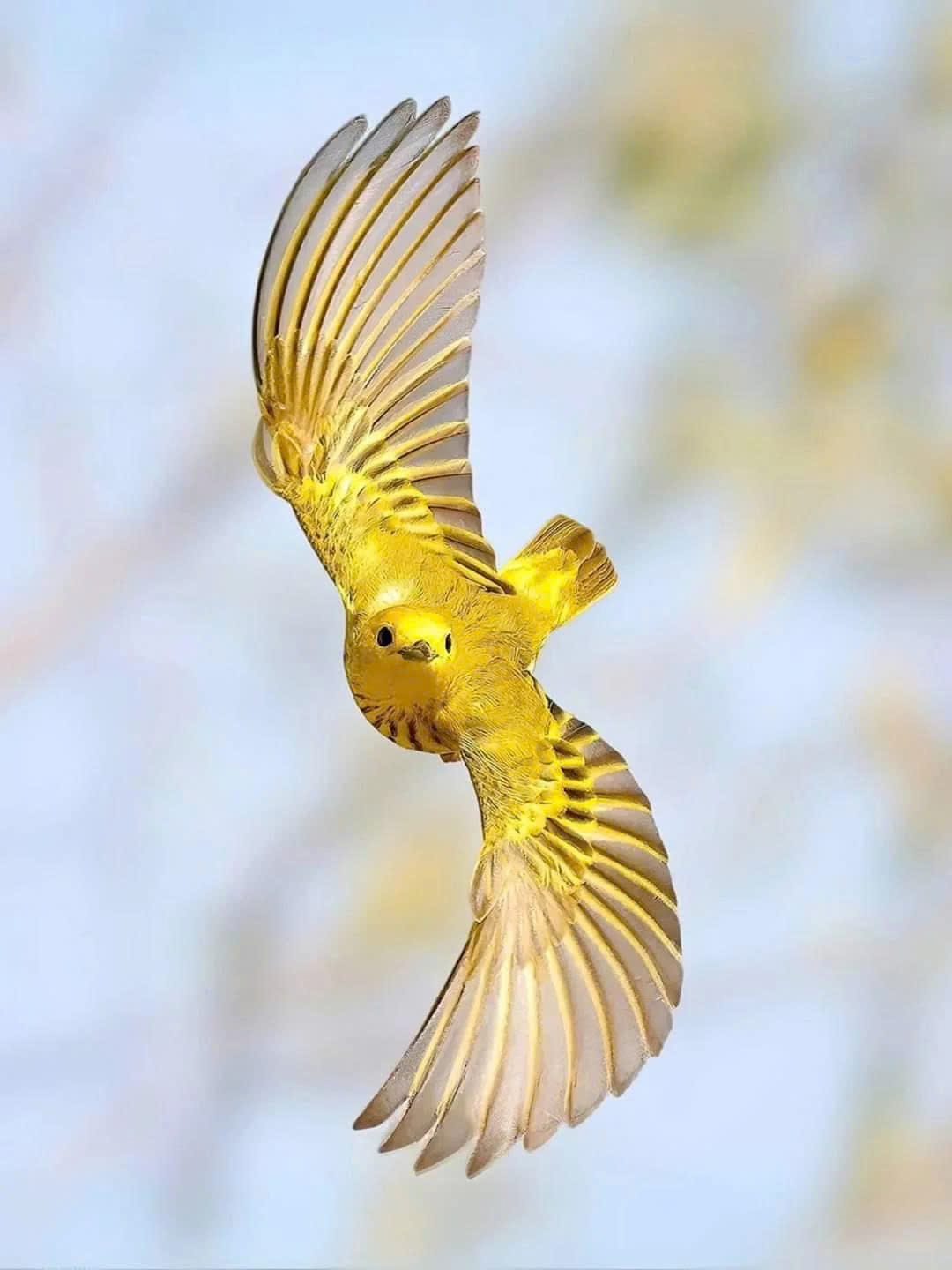
The Yellow Warbler is one of the most recognized warblers in North America due to its brilliant yellow plumage and melodious song. Adults are entirely yellow, with subtle reddish streaks on the chest, especially in males. Females are slightly paler, but equally vibrant. This bird inhabits open woodlands, wetlands, and edges of rivers, often perching in shrubs or small trees where it searches for insects. Its diet primarily consists of caterpillars, beetles, and other small invertebrates. During migration, Yellow Warblers travel vast distances from Canada and the United States to Central and South America, showcasing impressive stamina and navigational skills. Observing their nesting behavior is equally fascinating, as they weave delicate cup-shaped nests in shrubs and small trees, carefully camouflaged against predators.
The Yellow Warbler’s song is a series of sweet, musical notes often described as “sweet-sweet-sweet, I’m so sweet,” making them a favorite among birdwatchers. Conservation-wise, Yellow Warblers are generally abundant, though habitat loss can affect local populations. Their striking color, cheerful song, and active foraging behavior make them a quintessential example among Types of Warbler Birds.
2. Yellow-Rumped Warbler (Setophaga coronata)
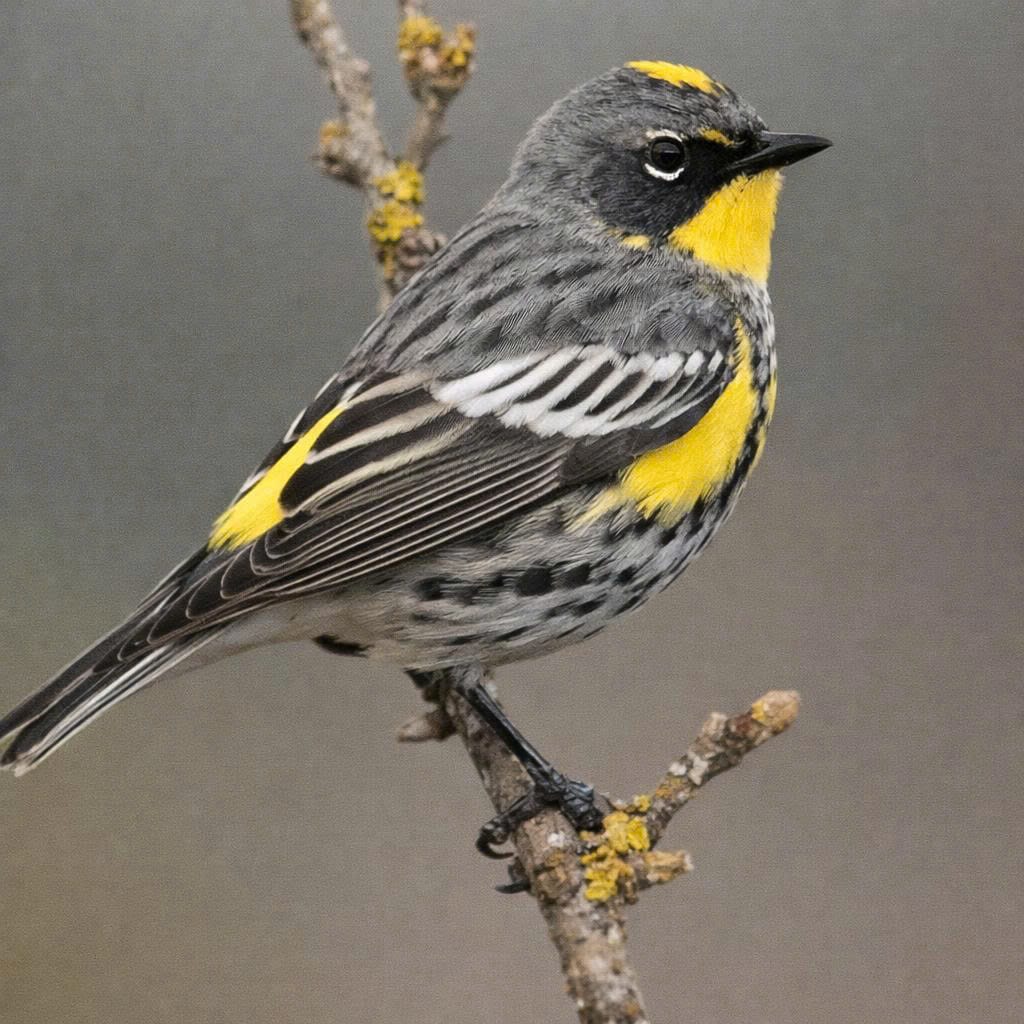
Yellow-Rumped Warblers are medium-sized warblers distinguished by the bright yellow patches on their rump, sides, and crown. These birds are highly adaptable, inhabiting forests, shrublands, and even suburban areas. Unlike the Yellow Warbler, this species displays more complex plumage patterns, including streaked gray, black, and white feathers. Migratory populations travel long distances, wintering in the southern United States, Mexico, and Central America. Their diet is highly versatile, including insects, berries, and seeds, making them one of the few warblers that can overwinter in colder climates by feeding on berries.
During breeding season, males perform impressive aerial displays to attract mates, highlighting their agility and endurance. The Yellow-Rumped Warbler’s adaptability, vibrant markings, and energetic foraging behavior illustrate the diversity within Types of Warbler Birds, appealing to both novice and experienced bird enthusiasts.
3. Common Yellowthroat (Geothlypis trichas)
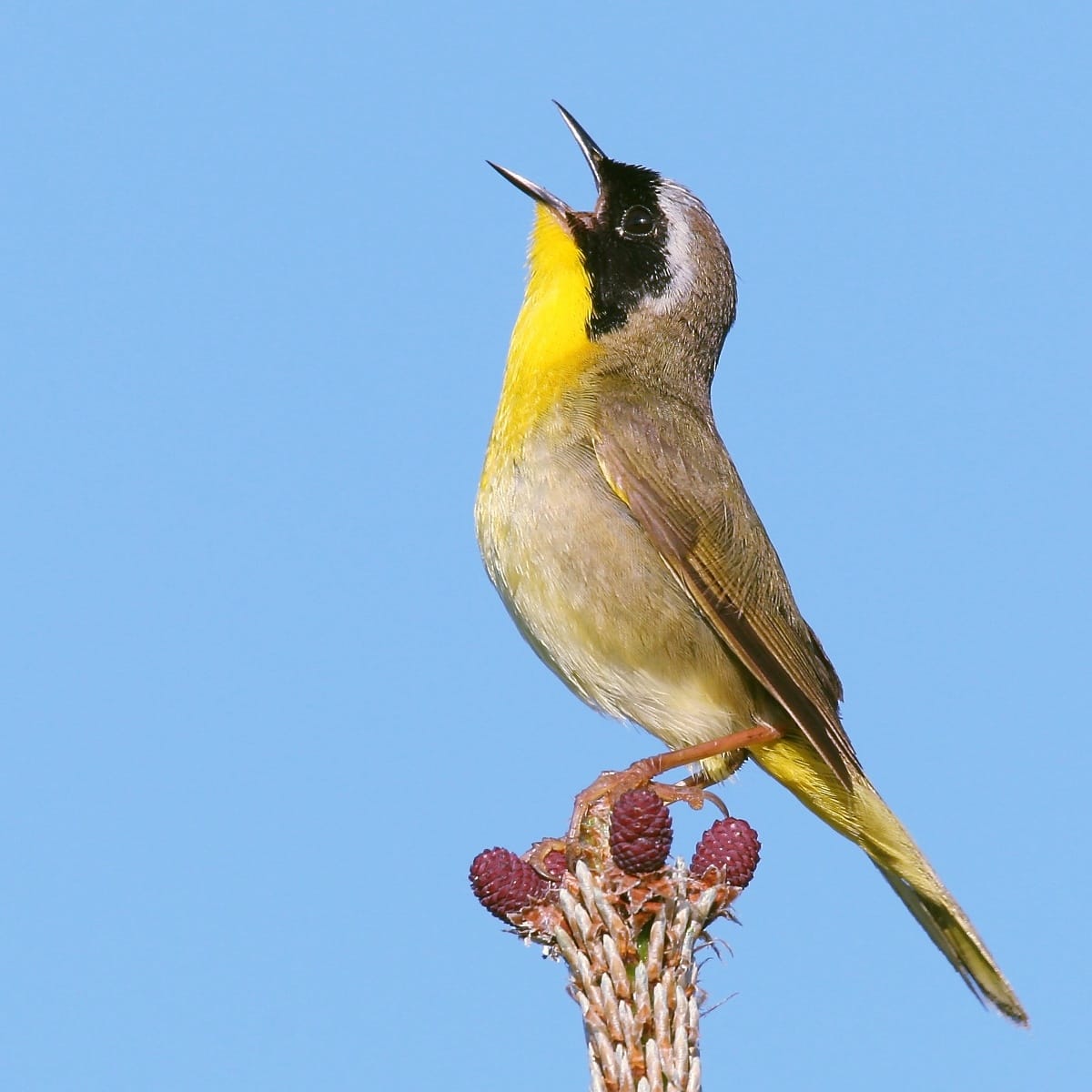
Common Yellowthroats are small, energetic warblers known for their distinctive black facial mask and bright yellow throat and chest. Males are striking, while females are paler and lack the bold mask. They thrive in dense marshes, wetlands, and grassy fields, often skulking in low vegetation where they hunt for insects and spiders. Despite their small size, their song—a rapid “wichity-wichity-wichity”—is unmistakable, often revealing their presence in dense habitats where they are otherwise hard to spot.
Breeding pairs construct cup-shaped nests hidden in tall grasses or reeds. Males aggressively defend their territory through song and display flights. Common Yellowthroats are adaptable, often observed in suburban wetlands, showcasing their resilience. Their bright coloration, energetic foraging, and distinctive song make them a highlight in any review of Types of Warbler Birds.
4. Black-and-White Warbler (Mniotilta varia)
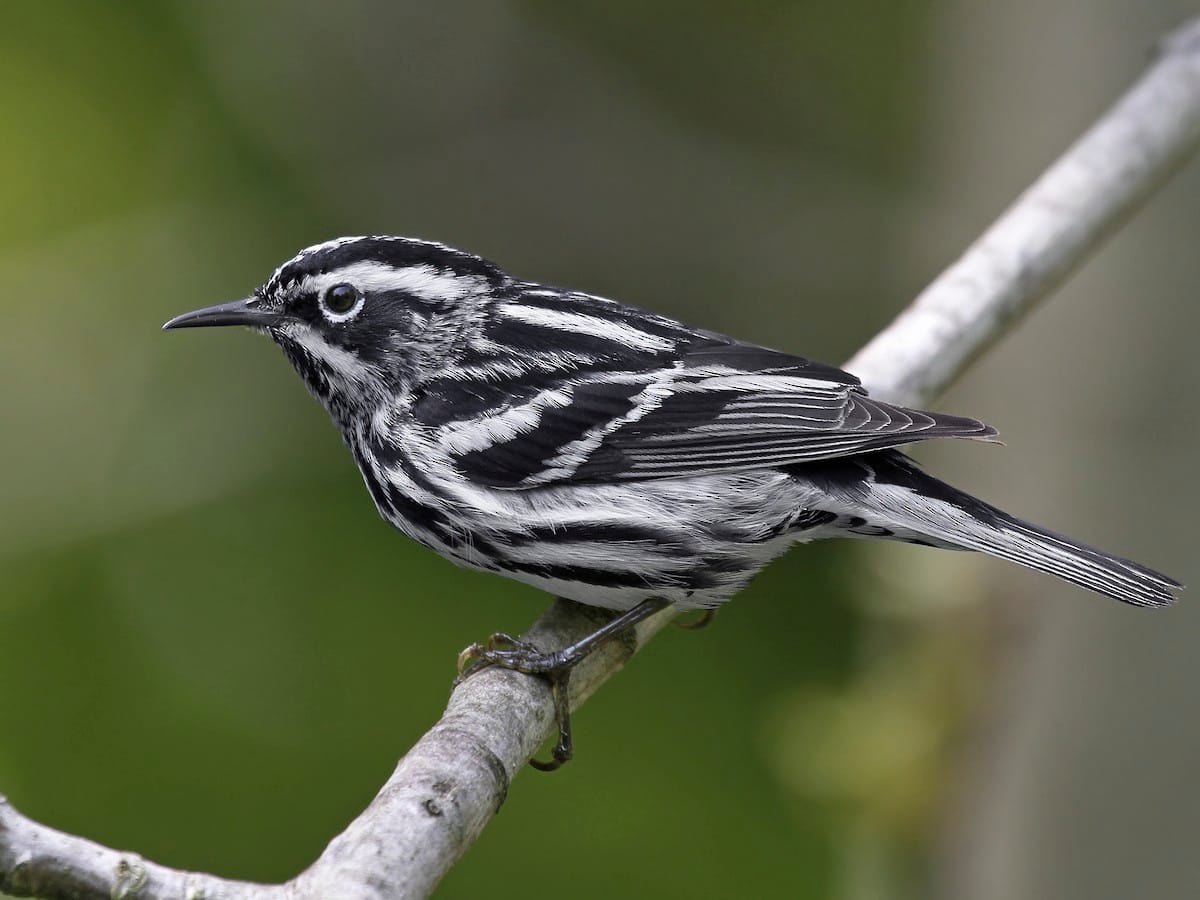
The Black-and-White Warbler stands out due to its striking striped plumage resembling a tiny woodpecker. These warblers exhibit black-and-white streaked feathers across their body, allowing excellent camouflage on tree bark while foraging. Unlike other warblers that glean insects mid-air, the Black-and-White Warbler often creeps along tree trunks and branches, probing into bark crevices for insects and spiders.
Their song is a high-pitched, musical trill that resonates throughout forested areas, assisting birdwatchers in locating them despite their cryptic appearance. Breeding occurs in deciduous and mixed forests, with nests placed on the ground or low shrubs. Their unique foraging technique, striking patterns, and energetic behavior make the Black-and-White Warbler an exemplary species in Types of Warbler Birds.
5. American Redstart (Setophaga ruticilla)
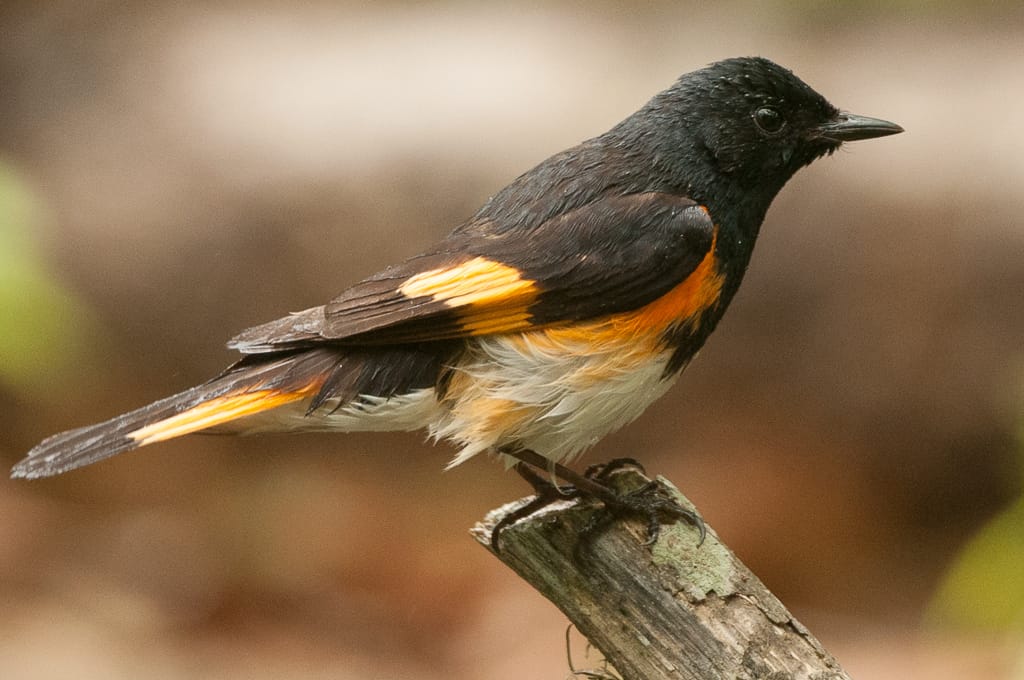
The American Redstart is among the most colorful warblers, with males displaying striking black plumage contrasted by vibrant orange patches on the wings, tail, and sides. Females are more subdued, exhibiting olive-gray bodies with yellow-orange highlights. These warblers are highly active, frequently fanning their tails and wings to flush out insects from foliage, making them fascinating to observe in their natural habitats, including deciduous forests and shrublands.
Their diet consists mainly of flying insects, supplemented by spiders and caterpillars. Breeding occurs in dense forests, where males establish territories through song and display. During migration, American Redstarts travel to Central and South America, demonstrating remarkable endurance. Their vibrant coloration, dynamic feeding behavior, and melodious song make them a prime example among Types of Warbler Birds, adored by birdwatchers and nature enthusiasts alike.
6. Pine Warbler (Setophaga pinus)
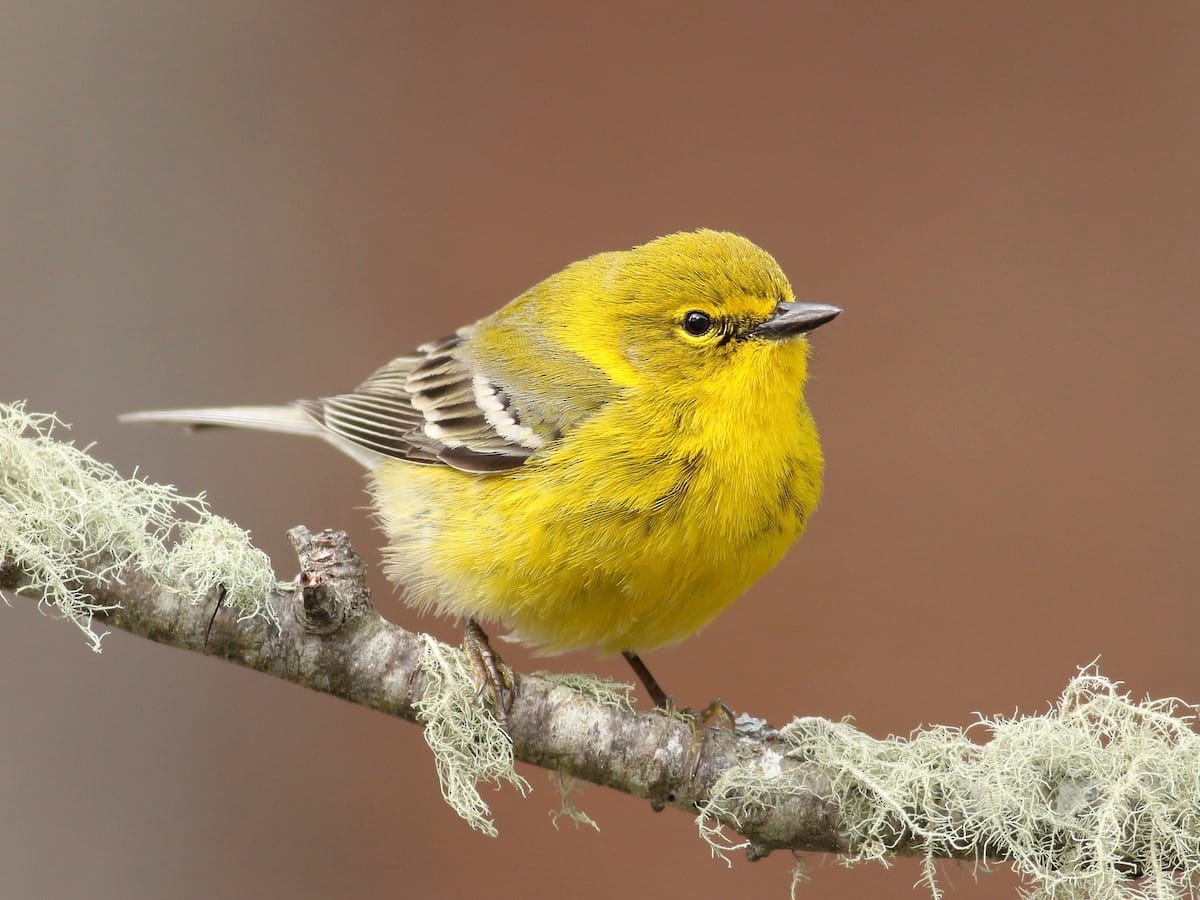
The Pine Warbler is a charming species found mainly in pine forests across eastern North America. Males have bright yellow-green plumage with streaked underparts, while females and juveniles display more muted tones. True to their name, Pine Warblers favor coniferous habitats, often seen foraging high in pine trees for insects, spiders, and pine seeds. Unlike other warblers that feed actively on foliage, Pine Warblers tend to move slowly along branches, gleaning food meticulously.
During breeding, males sing distinctive trills to attract mates and defend territories. Nests are usually built in pine trees, sometimes close to the trunk or nestled among dense branches. Their adaptability and calm demeanor make them a favorite among bird enthusiasts. Pine Warblers are excellent examples of Types of Warbler Birds, combining subtle beauty with fascinating forest behaviors.
7. Palm Warbler (Setophaga palmarum)
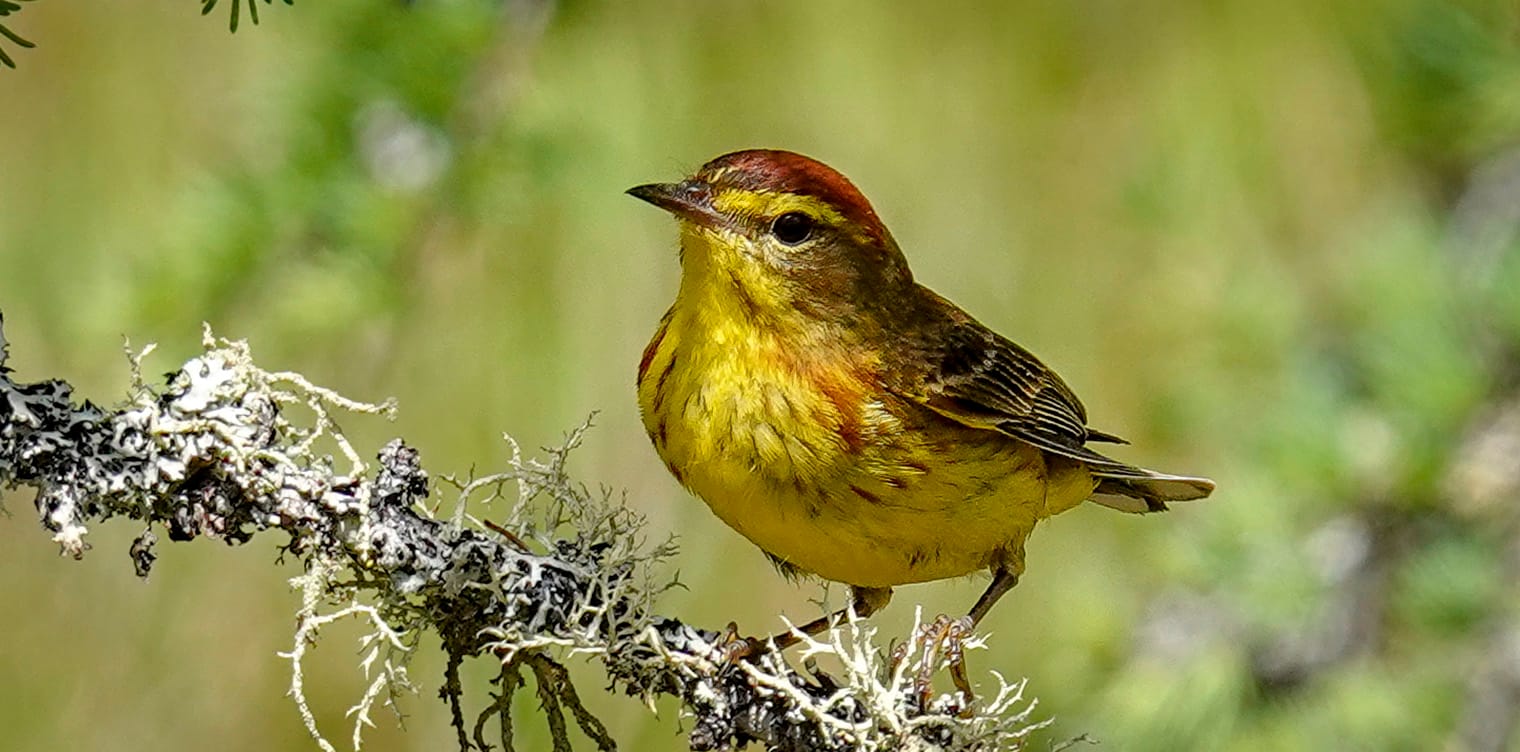
Palm Warblers are small migratory warblers distinguished by their olive-brown upperparts, yellow underparts, and a unique tail-wagging behavior. They breed in boreal forests of Canada and migrate to the southern United States, Central America, and the Caribbean. Palm Warblers are highly active foragers, often flicking their tails while probing for insects and small invertebrates on the ground or in low shrubs.
Their nesting sites are typically on or near the ground, sometimes hidden in low vegetation or moss. Palm Warblers’ energetic behavior, distinctive tail movements, and subtle coloration make them easily recognizable and a delightful member of Types of Warbler Birds observed during migration.
8. Tennessee Warbler (Leiothlypis peregrina)
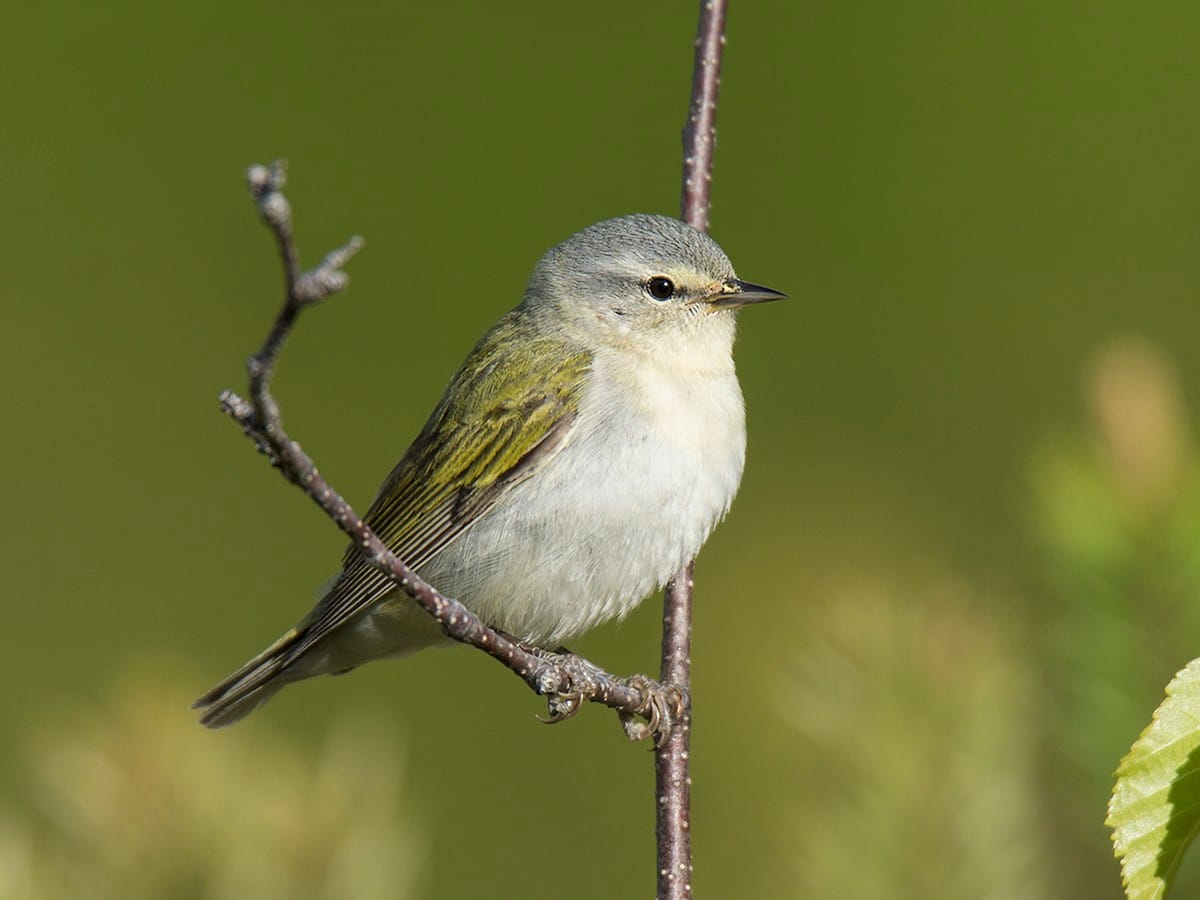
The Tennessee Warbler is a small, grayish-green migratory bird with a pale yellow underbelly and subtle wing bars. Breeding mainly occurs in northern forests of Canada, while wintering populations reach Central America. Tennessee Warblers primarily feed on insects, including caterpillars and beetles, making them vital for controlling forest pest populations.
Their song is a soft, repetitive trill that helps them communicate in dense foliage. Females build cup-shaped nests on or near the ground, often camouflaged among leaves. Tennessee Warblers’ subtle beauty, insect-hunting prowess, and impressive migration patterns make them an intriguing example of Types of Warbler Birds admired by birdwatchers across their range.
9. Nashville Warbler (Leiothlypis ruficapilla)
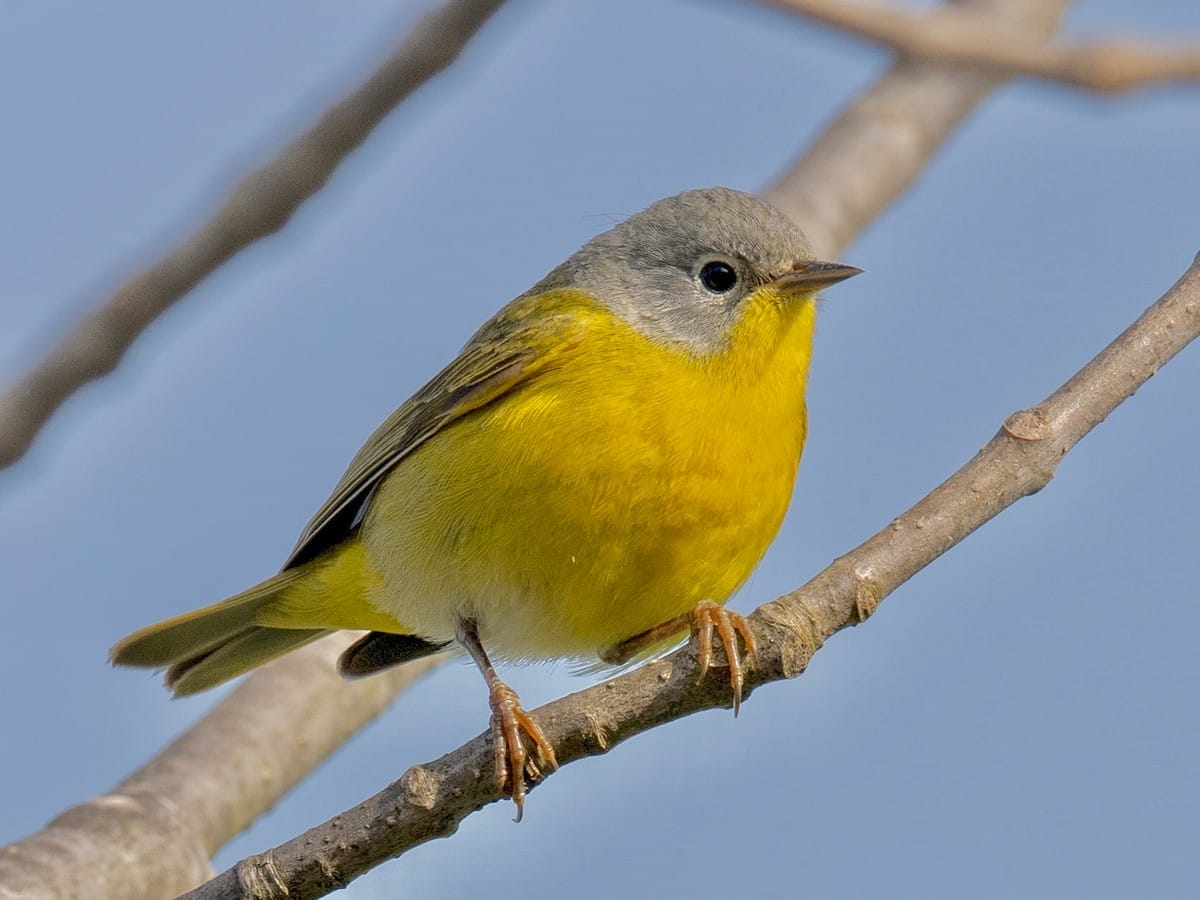
Nashville Warblers are small, agile songbirds with gray heads, olive-green backs, and bright yellow throats and underparts. Males often exhibit rufous crown patches, which can be subtle in females. They prefer open woodlands and edges of forests, particularly during migration, where they forage actively for insects and spiders among foliage.
During breeding, Nashville Warblers construct delicate nests on the ground or low shrubs, carefully concealed from predators. Their melodic songs, striking yellow coloration, and energetic behavior make them an essential species in any review of Types of Warbler Birds, providing both aesthetic appeal and ecological significance.
10. Orange‑Crowned Warbler (Leiothlypis celata)
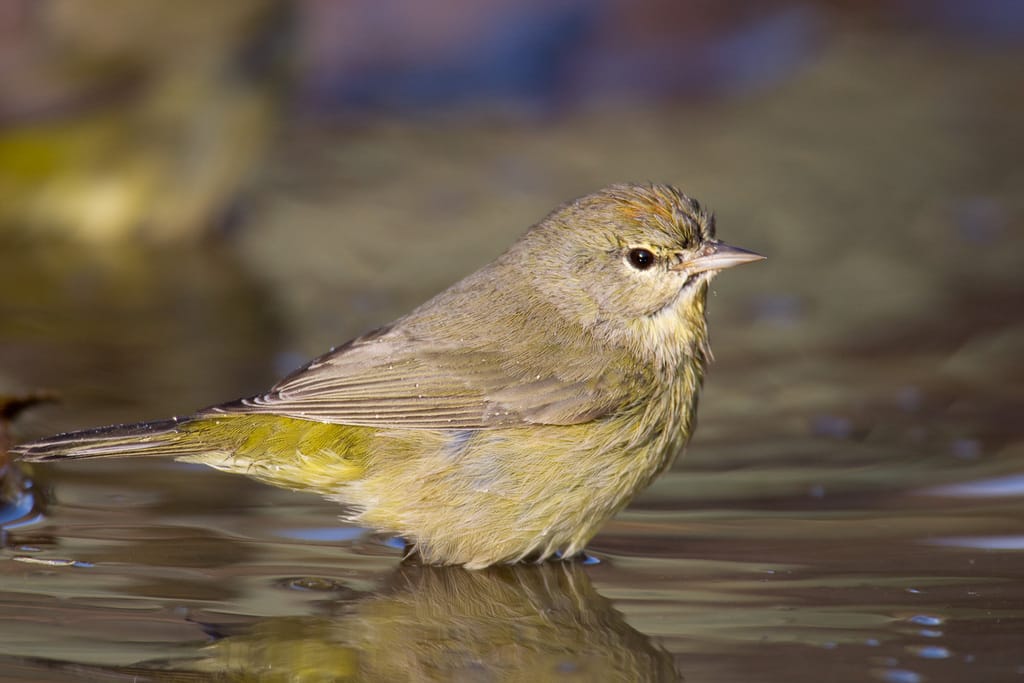
The Orange‑Crowned Warbler is a small, subtly colored warbler with olive-green upperparts and pale yellow underparts. Unlike many warblers, it lacks bright wing or tail markings, but displays a faint orange crown, more visible in males during the breeding season. These warblers inhabit open woodlands, shrubs, and brushy areas, often foraging near the ground for insects, spiders, and berries.
Orange‑Crowned Warblers are highly adaptable, migrating across North America and Central America depending on the season. Their nests are typically hidden in low vegetation, camouflaged to protect eggs and chicks. Their understated beauty, stealthy behavior, and widespread presence make them a fascinating member of Types of Warbler Birds, appealing to both beginners and experienced birdwatchers alike.
11. Magnolia Warbler (Setophaga magnolia)
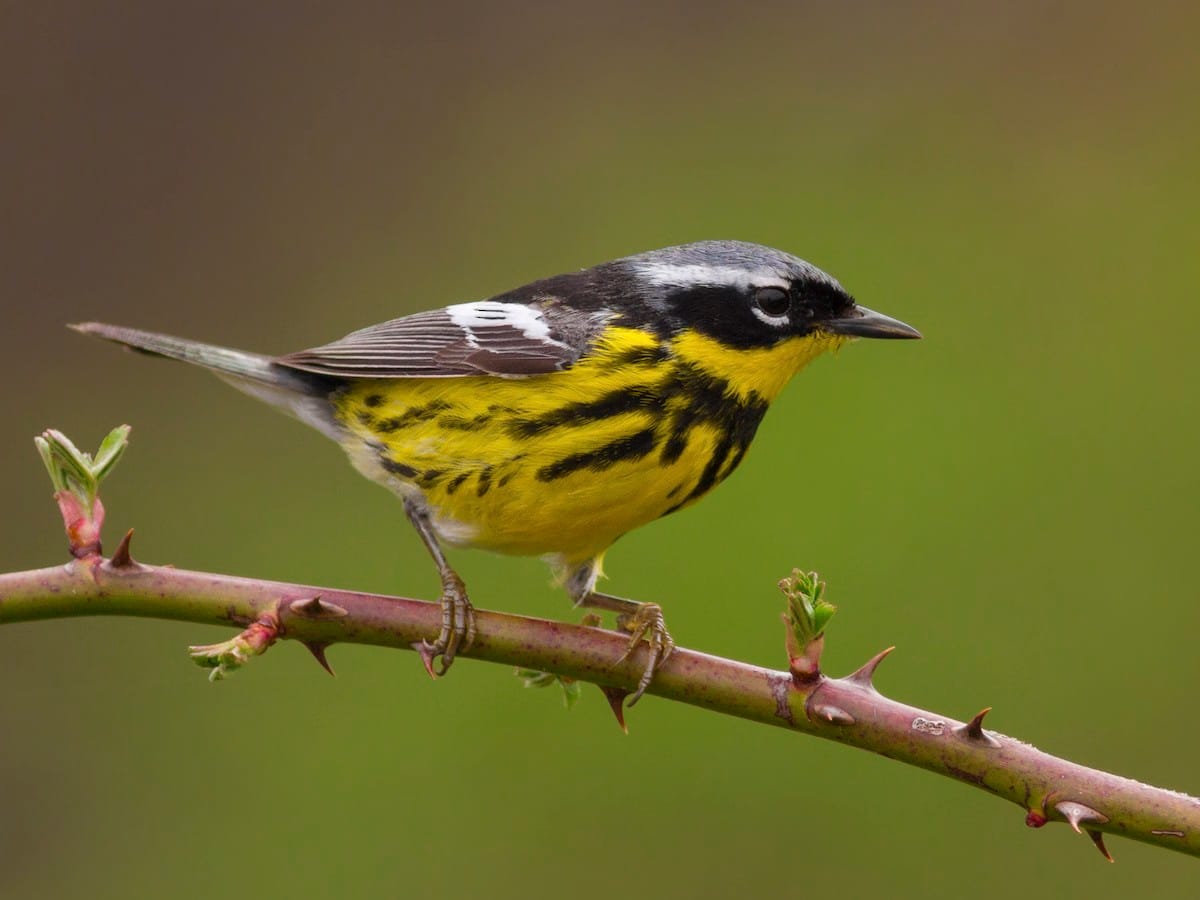
The Magnolia Warbler is a striking small bird, easily recognized by its bright yellow underparts with black streaks and a bold black mask across the face. Its olive-green back and white wing bars add to its distinctive appearance. Magnolia Warblers breed in dense coniferous forests of Canada and the northeastern United States, and migrate to Central America and the Caribbean for winter. They are highly active foragers, flitting through branches in search of caterpillars, insects, and spiders.
Males are particularly vibrant during breeding season, using their bright plumage and melodious songs to attract mates. Nests are typically well-hidden in shrubs or small trees, demonstrating careful parental strategies. Their striking colors, energetic foraging behavior, and wide migratory range make Magnolia Warblers a captivating example among Types of Warbler Birds for both birdwatchers and wildlife enthusiasts.
12. Black-throated Blue Warbler (Setophaga caerulescens)
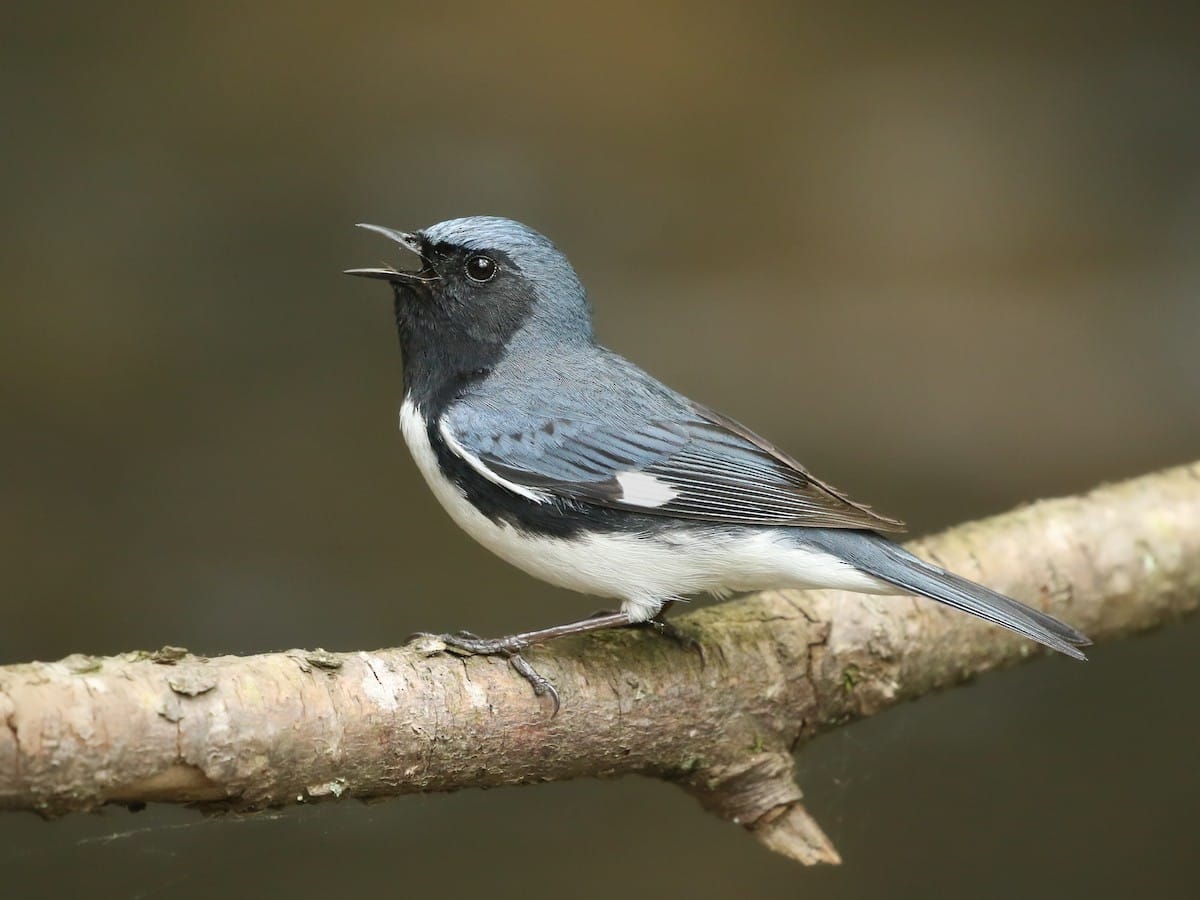
The Black-throated Blue Warbler is a medium-sized warbler with stunning male plumage featuring deep blue upperparts, black throat and face, and white underparts. Females are olive-brown with subtle yellowish underparts, providing excellent camouflage. This species breeds in deciduous and mixed forests of the northeastern United States and southeastern Canada, migrating to the Caribbean for the winter.
Black-throated Blue Warblers are highly territorial during the breeding season, with males using song and displays to defend their territory and attract mates. Their diet primarily consists of insects, spiders, and occasionally berries. This species’ bold coloration, distinct markings, and dynamic behavior make it a standout in any review of Types of Warbler Birds.
13. Chestnut-sided Warbler (Setophaga pensylvanica)
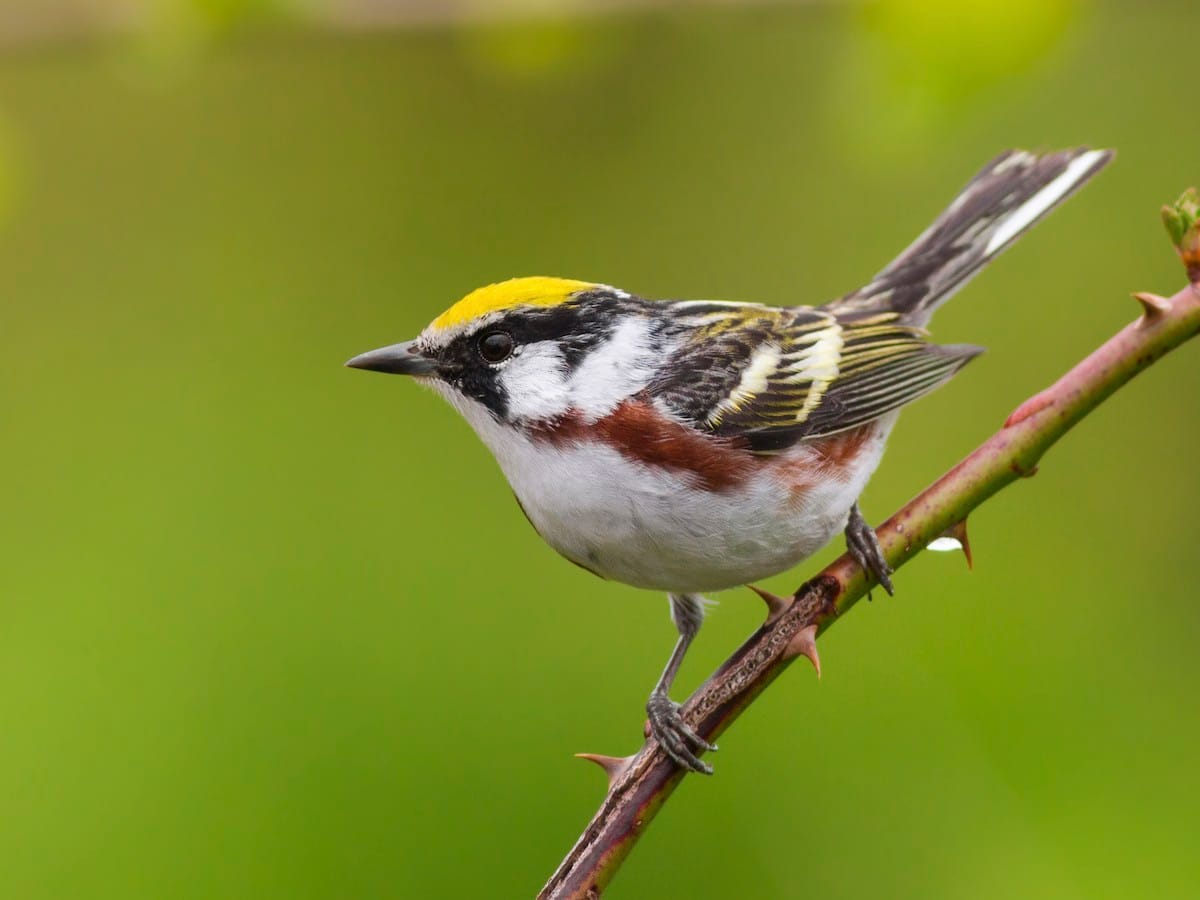
The Chestnut-sided Warbler is easily identified by its yellow crown, white underparts, and chestnut streaks along the sides during the breeding season. Non-breeding plumage is subtler, with more gray and olive tones. Breeding primarily occurs in shrubby deciduous forests in eastern North America, with migration to Central America in winter.
Chestnut-sided Warblers forage actively in shrubs and trees for insects, often displaying acrobatic movements as they glean prey from foliage. Males sing bright, high-pitched songs to defend territories, while females build carefully concealed cup-shaped nests. Their elegant appearance, lively behavior, and distinct coloration make them an essential species in the category of Types of Warbler Birds.
14. Hooded Warbler (Setophaga citrina)
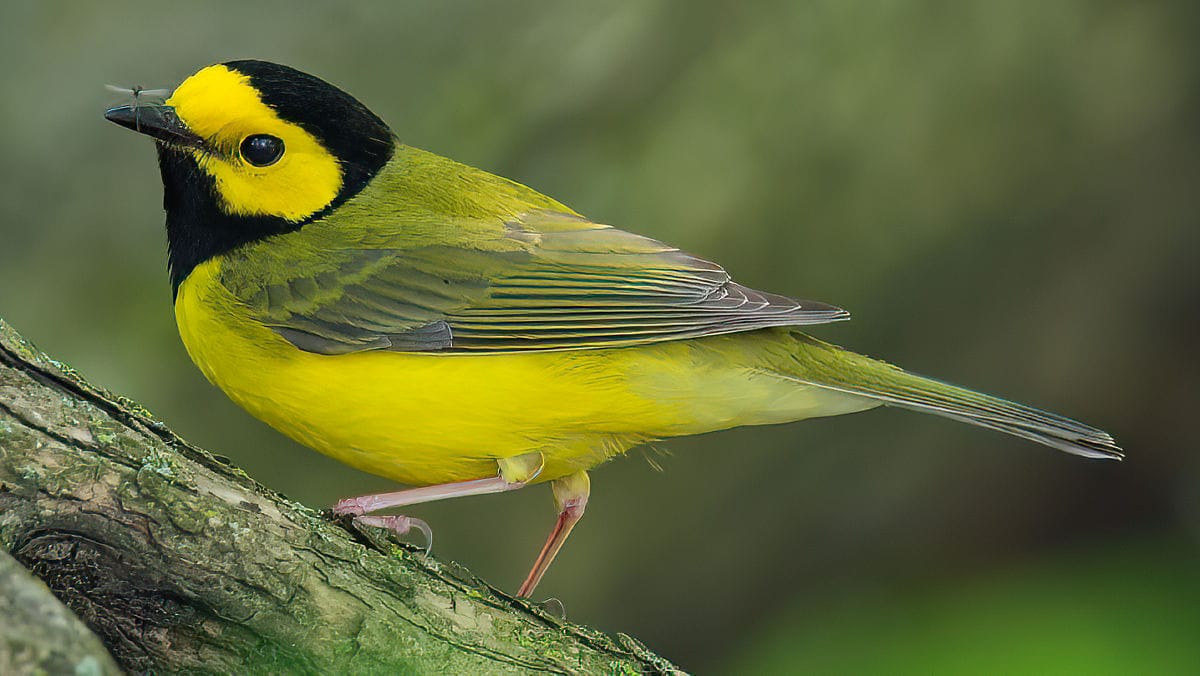
The Hooded Warbler is easily recognizable by its striking black hood and bright yellow face and underparts, creating a bold contrast with olive-green back feathers. It breeds in dense understory forests across the eastern United States and migrates to Central America during winter. Hooded Warblers are secretive but highly territorial, often revealed by their loud, clear song.
These warblers forage for insects and spiders close to the ground and in low shrubs, making them agile and attentive hunters. Their unique appearance, contrasting colors, and distinctive song make them an iconic member of Types of Warbler Birds and a favorite for birdwatchers interested in forest-dwelling species.
15. Prairie Warbler (Setophaga discolor)
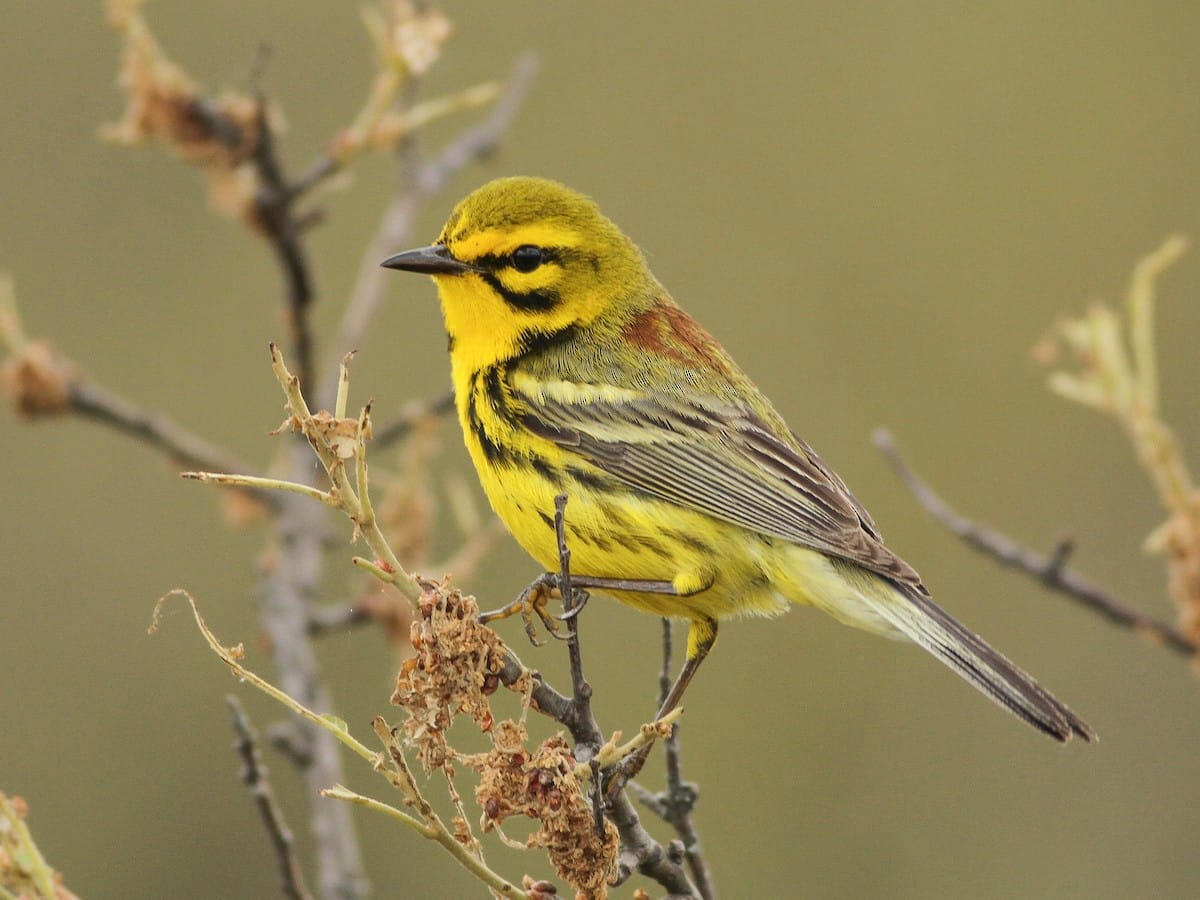
The Prairie Warbler is a small, brightly colored warbler with yellow underparts, grayish olive back, and dark streaks along the sides. Males have distinctive black streaks along the chest and sides, which intensify during breeding season. They are commonly found in shrubby fields, open woodlands, and edge habitats in the eastern United States.
Prairie Warblers are highly active, foraging for caterpillars, beetles, and other insects while moving quickly through low vegetation. Their song is a series of buzzy “zee-zee-zee-zee-zee” notes, loud and distinctive despite their small size. Nests are typically hidden in low shrubs, providing protection from predators. Their bright coloration, lively behavior, and distinctive song make Prairie Warblers a delightful example of Types of Warbler Birds in North American habitats.
16. Cape May Warbler (Setophaga tigrina)
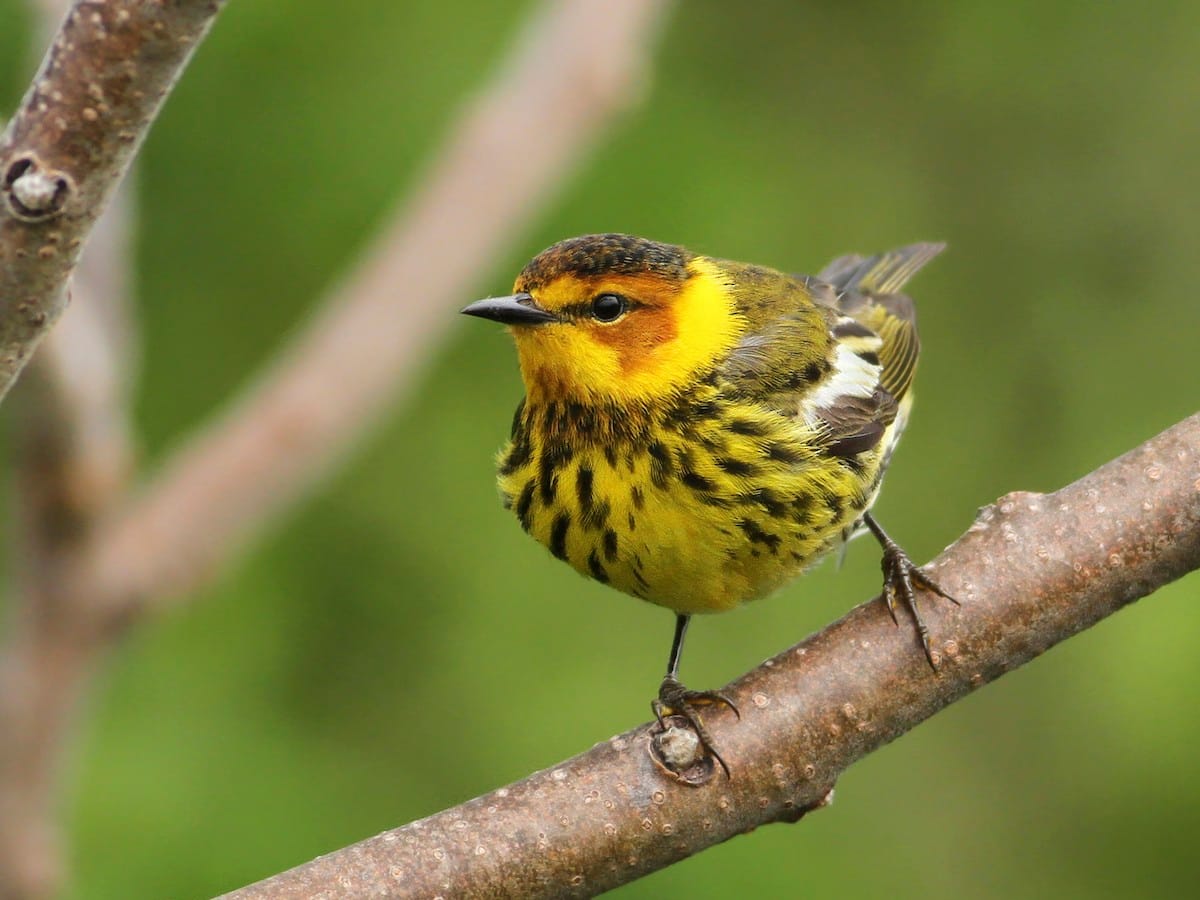
The Cape May Warbler is a strikingly patterned warbler known for its yellow underparts streaked with black and olive-brown upperparts. Males display a bright orange patch on the throat, while females are more muted but still feature bold streaking. Breeding occurs in spruce-fir forests in Canada and the northeastern United States, while wintering populations migrate to the Caribbean and Central America.
Cape May Warblers primarily feed on insects, especially caterpillars, and often hover near foliage or bark to capture prey. During the breeding season, males sing a high-pitched, musical trill to defend their territories. Their unique coloration, active foraging style, and migratory behavior make them a captivating example of Types of Warbler Birds admired by birdwatchers.
17. Blue-winged Warbler (Vermivora cyanoptera)
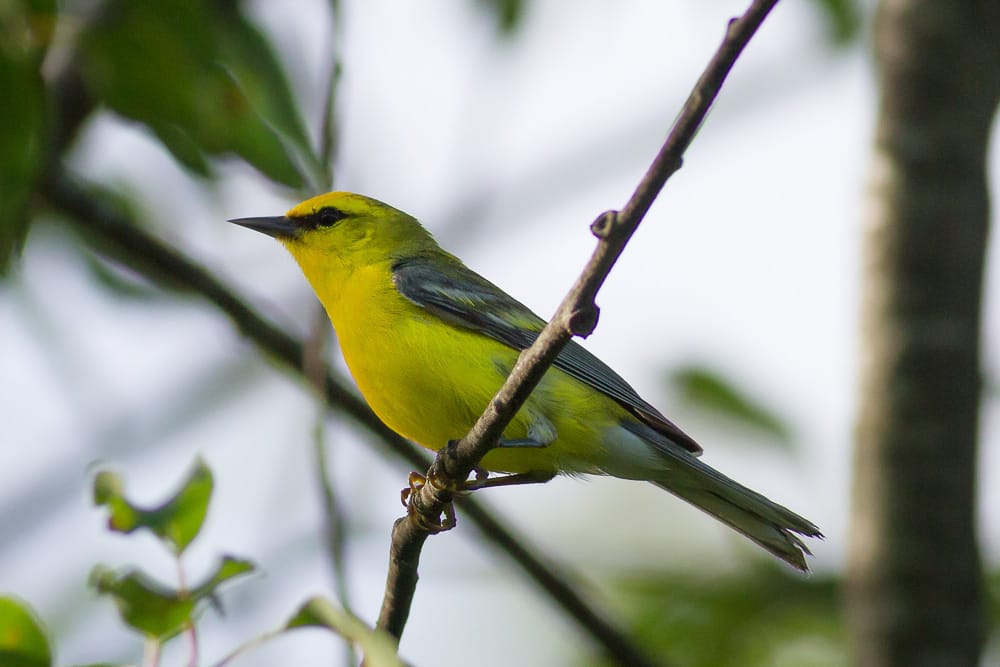
The Blue-winged Warbler is a small, vibrant bird with bright yellow underparts, grayish back, and striking blue-gray wings. Males also exhibit a faint black eye line, adding contrast to their vivid plumage. They inhabit shrubby fields, open woodlands, and forest edges in eastern North America. Migratory patterns take them to Central America during winter.
Blue-winged Warblers actively forage for insects among shrubs and low branches, using quick, darting movements. Nests are typically hidden in dense vegetation near the ground. Their bright yellow coloration, energetic behavior, and cheerful song make them a standout among Types of Warbler Birds, easily recognized even by beginner birdwatchers.
18. Wilson’s Warbler (Cardellina pusilla)
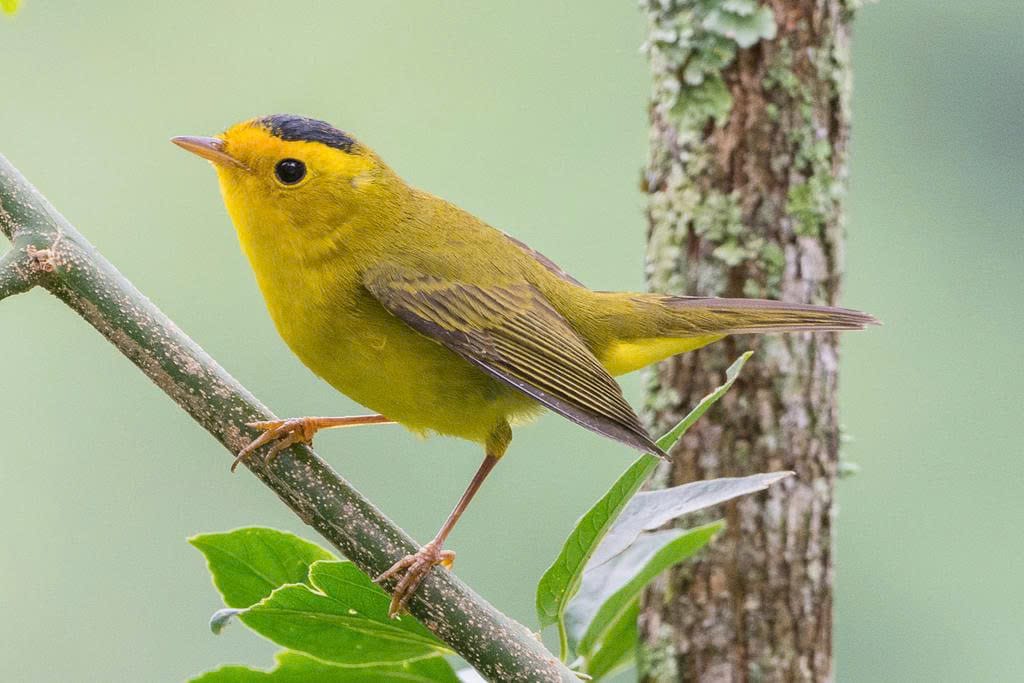
Wilson’s Warbler is a small, olive-green warbler with bright yellow underparts and a distinctive black cap on males. Females are similar but lack the prominent cap. They breed in northern forests and brushy areas across North America, migrating to Central America for the winter.
These warblers forage actively among shrubs and low trees, gleaning insects, spiders, and larvae. The male’s rapid, sweet trill is used to defend territory and attract a mate. Their small size, cheerful yellow coloration, and energetic behavior make Wilson’s Warbler an essential species within Types of Warbler Birds.
19. Prothonotary Warbler (Protonotaria citrea)
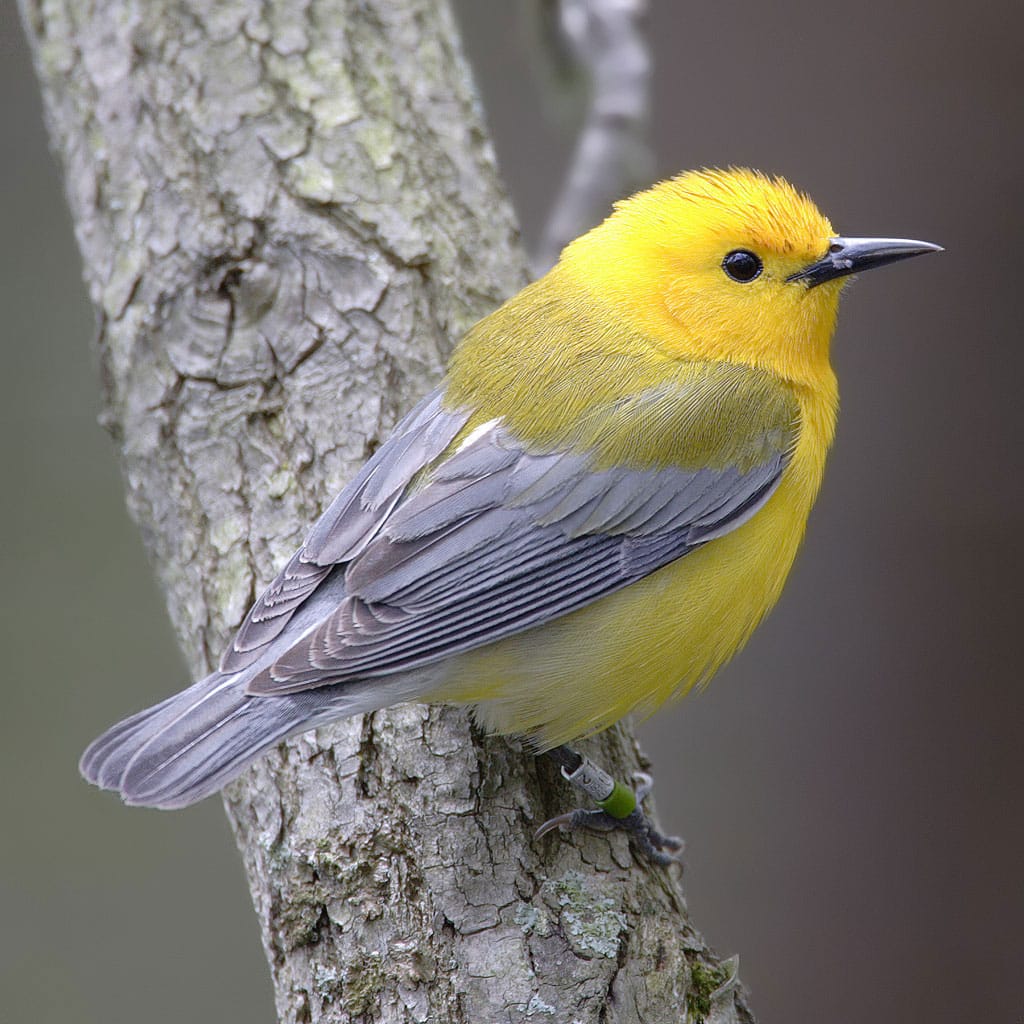
The Prothonotary Warbler is renowned for its brilliant golden-yellow body and bluish-gray wings and tail. Found primarily in wooded swamps and flooded forests, this species is unique among North American warblers for nesting in tree cavities. Males sing sweet, ringing whistles to establish territories and attract females.
Their diet consists mostly of insects and spiders, but they may occasionally eat small crustaceans near water. Nesting involves using abandoned woodpecker holes or natural cavities, often lined with soft plant material. The Prothonotary Warbler’s vivid color, specialized nesting behavior, and melodious song make it one of the most striking Types of Warbler Birds for birdwatchers and conservationists alike.
20. Golden-winged Warbler (Vermivora chrysoptera)
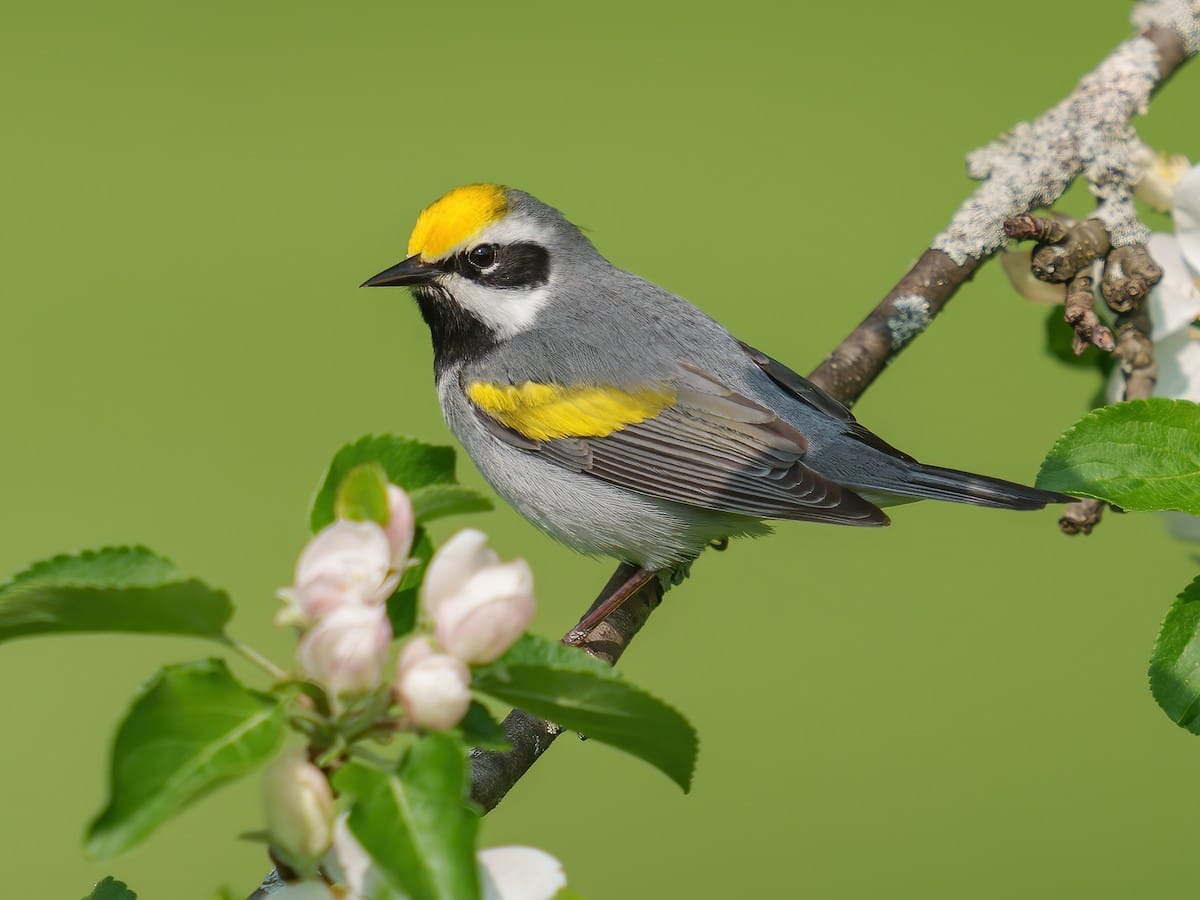
The Golden-winged Warbler is a small songbird with distinctive gray body plumage, bright yellow crown and wing patches, and a striking black throat bib in males. Females and juveniles are more muted but still display yellow highlights. They breed in young forests and shrubby habitats across the northeastern United States and parts of Canada, migrating to Central and South America during winter.
Golden-winged Warblers actively forage for insects and spiders, often hopping through dense underbrush. Males sing high-pitched trills to mark territories, while females build hidden cup-shaped nests. This warbler’s unique coloration, intricate patterns, and active behavior make it a remarkable example among Types of Warbler Birds and a favorite for bird enthusiasts.
21. Kirtland’s Warbler (Setophaga kirtlandii)
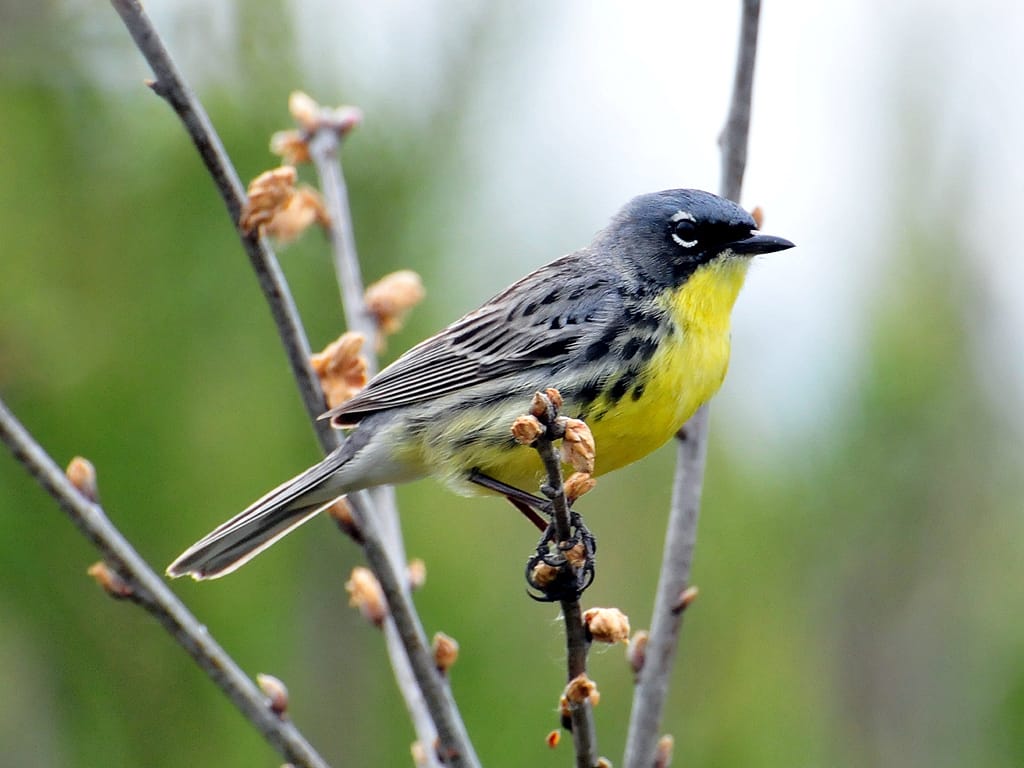
Kirtland’s Warbler is a rare and highly specialized species, known for its striking gray-blue plumage with subtle yellow underparts. This warbler breeds almost exclusively in young jack pine forests of Michigan and winters in the Bahamas. Kirtland’s Warbler is notable for its conservation success, as extensive habitat management has helped stabilize its population after near-extinction.
These birds forage low in shrubs for insects, particularly caterpillars, which form the bulk of their diet. Males sing loud, sweet trills to establish territories and attract females. Their rarity, specialized habitat requirements, and unique appearance make Kirtland’s Warbler a fascinating member of Types of Warbler Birds and a true highlight for conservationists and birdwatchers alike.
22. Swainson’s Warbler (Limnothlypis swainsonii)
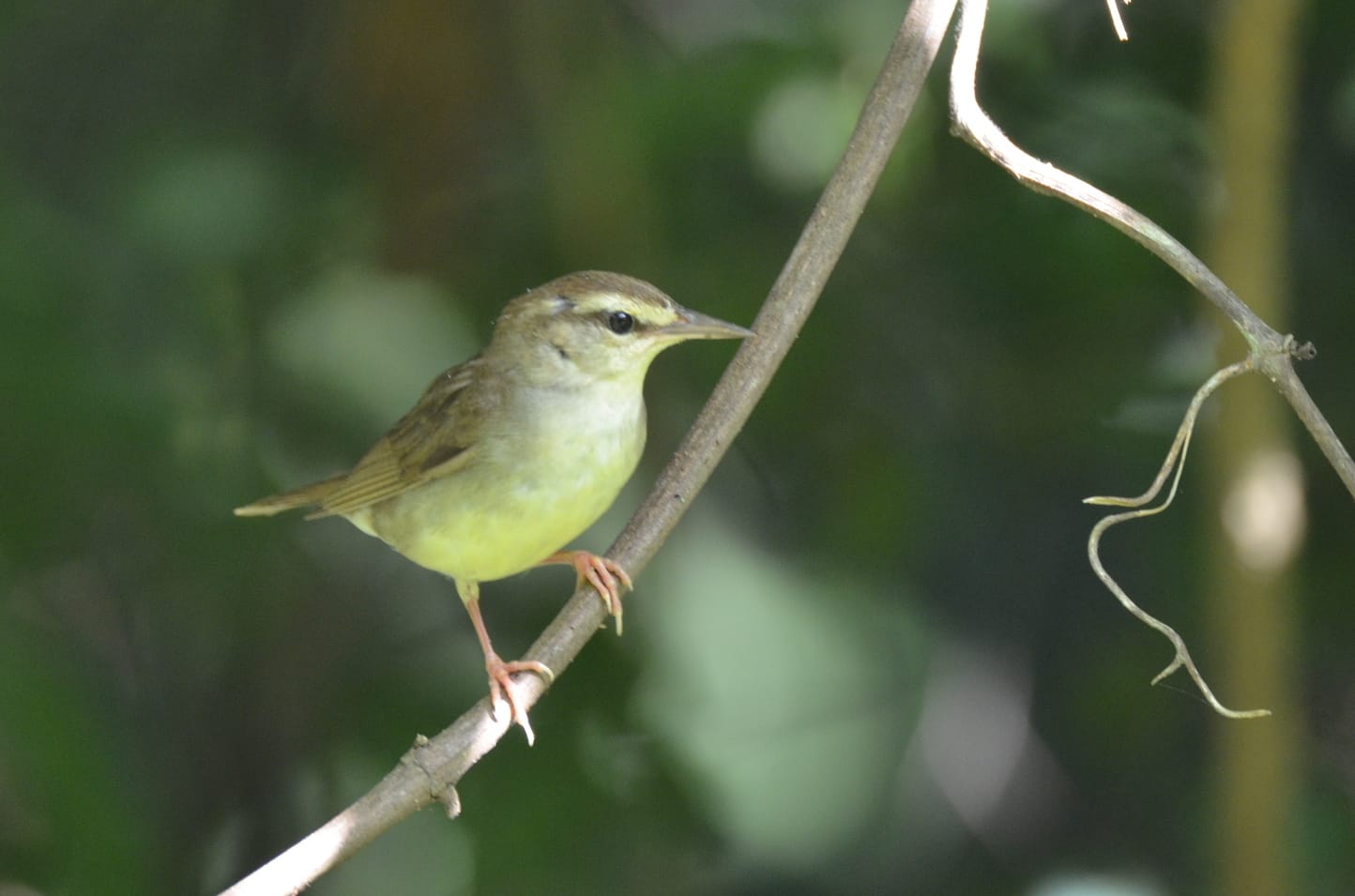
Swainson’s Warbler is a secretive forest-dwelling species with warm brown upperparts and pale underparts, often streaked on the breast. It breeds in dense understory habitats in the southeastern United States and migrates to Central America for winter. Known for its skulking behavior, Swainson’s Warbler is more often heard than seen, with a distinctive loud, musical song that echoes through the forest floor.
It forages on insects, spiders, and small invertebrates hidden among leaf litter. Nesting occurs in dense shrubs or low branches, often camouflaged to avoid predators. The combination of its elusive nature, subtle beauty, and specialized habitat makes Swainson’s Warbler a captivating example among Types of Warbler Birds.
23. Connecticut Warbler (Oporornis agilis)
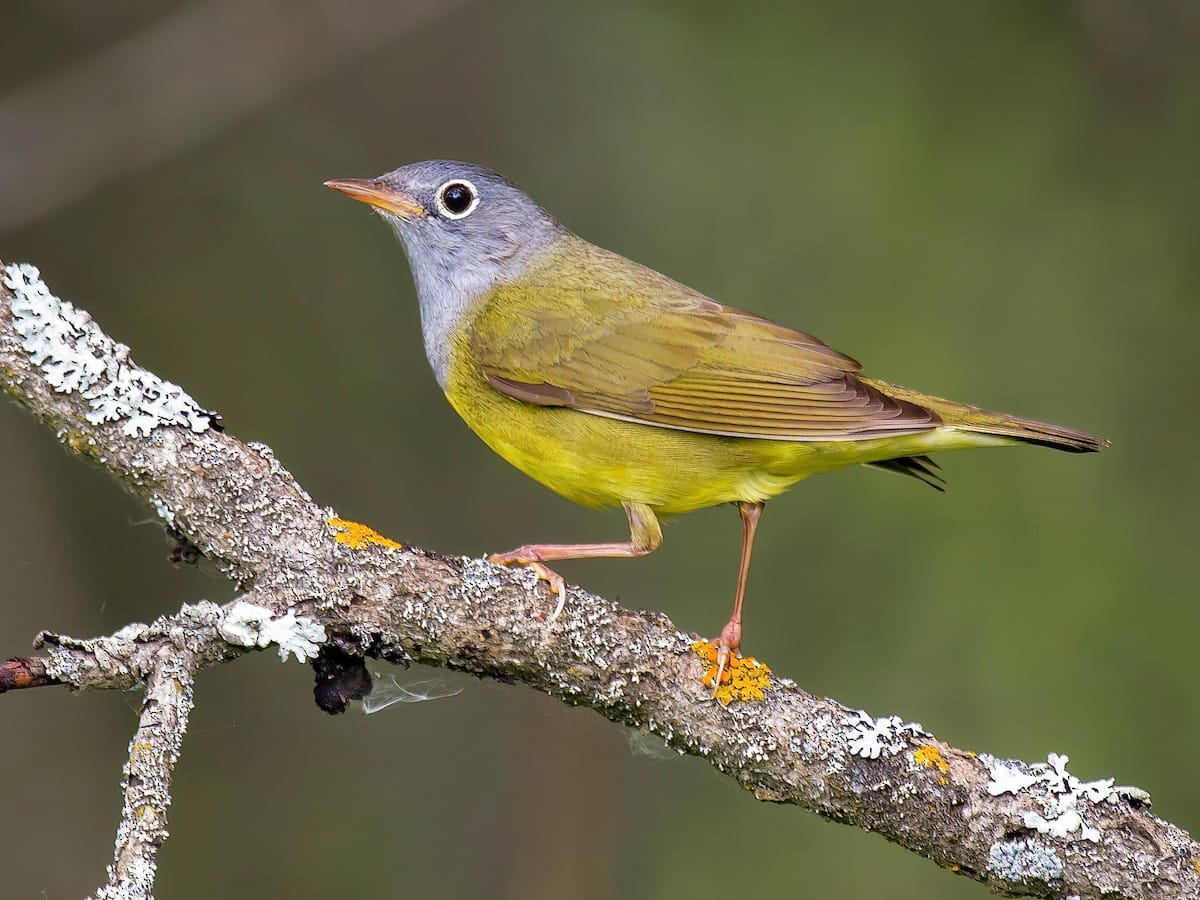
The Connecticut Warbler is a medium-sized warbler with olive-gray upperparts, bright yellow underparts, and a subtle white eye ring. It breeds in northern forests of Canada and the Great Lakes region, migrating to South America for the winter. Known for its shy, ground-foraging behavior, this warbler often remains hidden in dense undergrowth.
Connecticut Warblers feed on insects, spiders, and small invertebrates, hopping and gleaning among leaves and branches. Males sing a soft, sweet song to mark territory during breeding. Their elusive behavior, understated beauty, and long migratory journey make them a unique species among Types of Warbler Birds.
24. Lucy’s Warbler (Leiothlypis luciae)
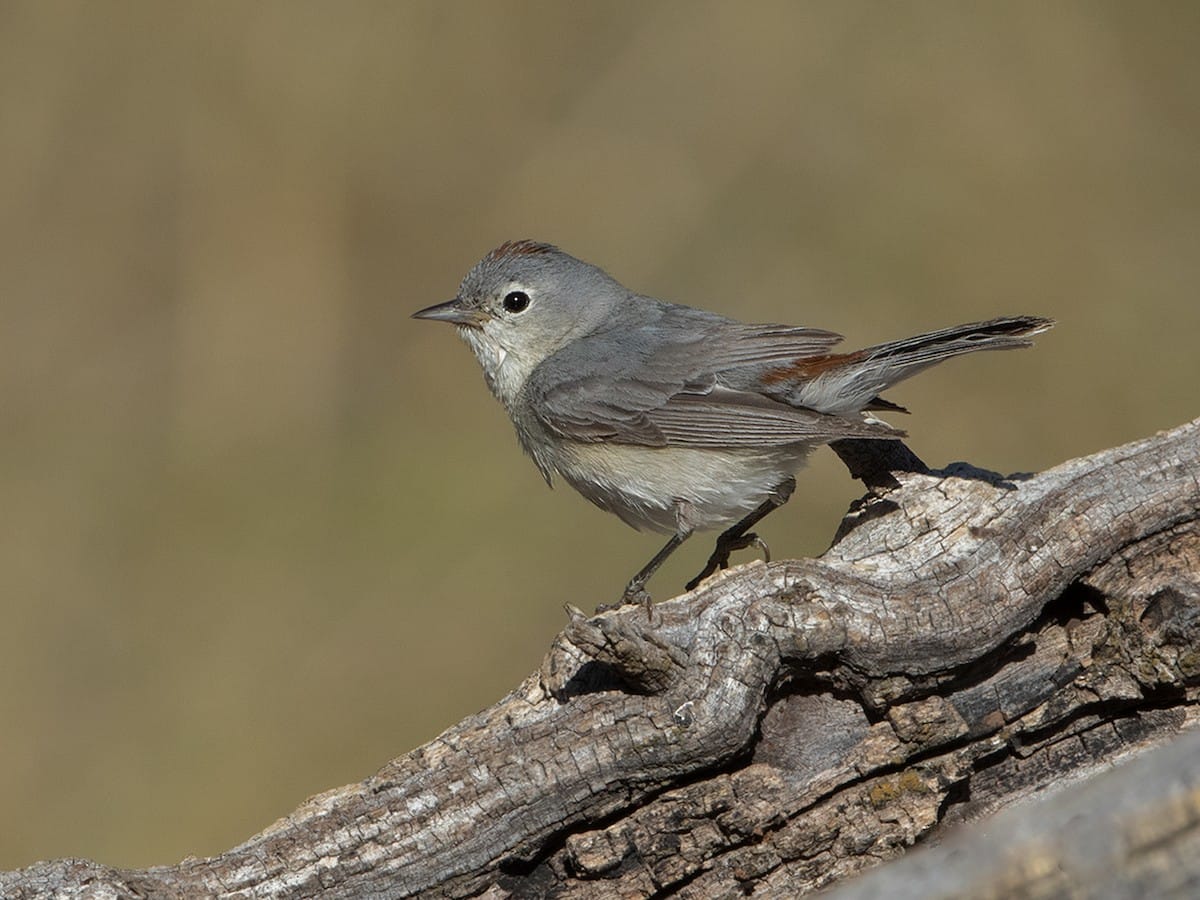
Lucy’s Warbler is a small, pale yellow warbler with grayish-olive upperparts and a subtle white eye ring. It breeds in arid southwestern North America, including desert scrub and riparian areas, and migrates to Mexico in winter. Lucy’s Warblers are cavity nesters, often using abandoned woodpecker holes or artificial nesting boxes.
They forage actively for insects and spiders, sometimes hovering briefly to capture prey. Males sing high, clear songs to attract females and defend territory. Their adaptability to arid habitats, delicate coloration, and interesting nesting behavior make Lucy’s Warbler a charming addition to Types of Warbler Birds.
25. Grace’s Warbler (Setophaga graciae)
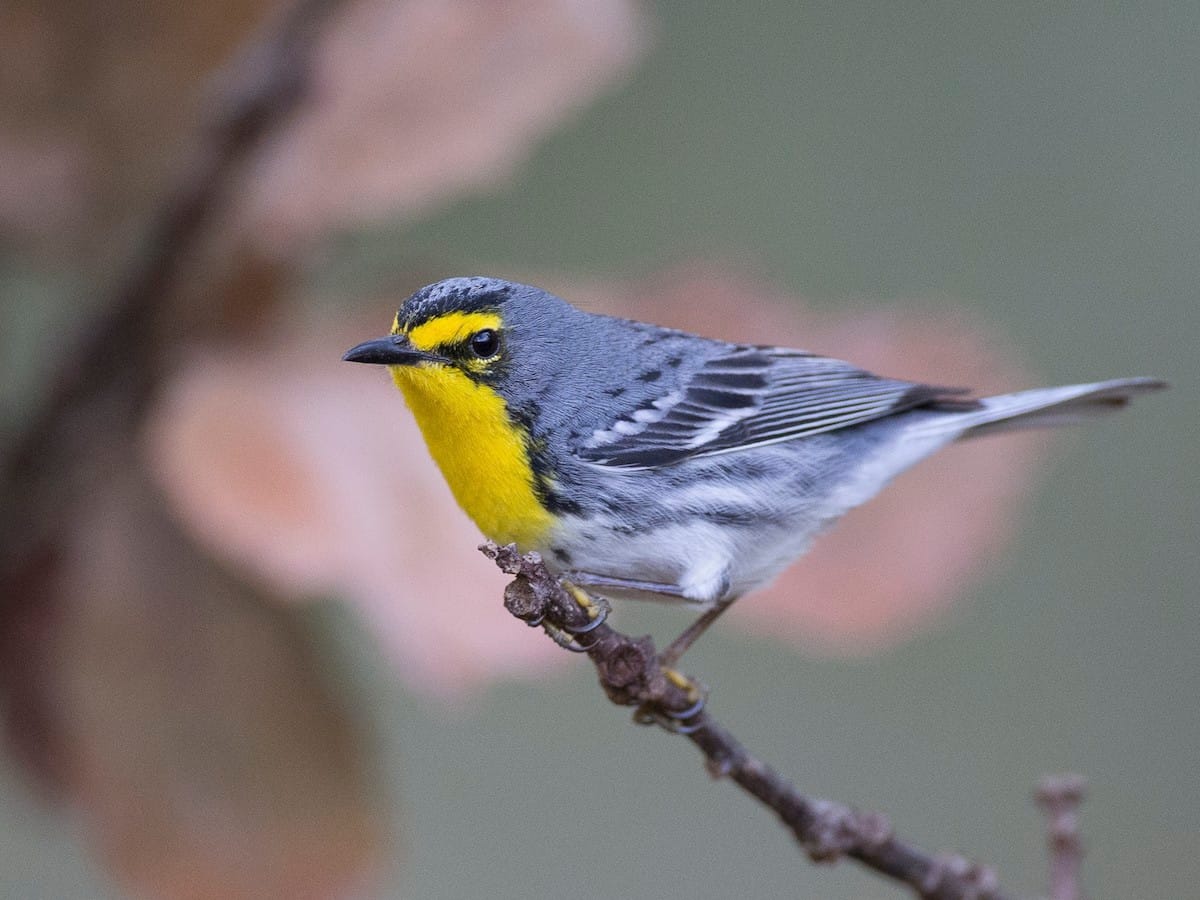
Grace’s Warbler is a small, active warbler with a gray head, black-and-white face markings, and bright yellow underparts. It primarily inhabits pine forests of the southwestern United States and Mexico. Grace’s Warblers are highly agile foragers, moving along pine branches to glean insects and spiders from needles and bark.
During breeding, males establish territories through song and display, while females build cup-shaped nests concealed among pine branches. Their vivid yellow underparts, bold facial markings, and energetic foraging behavior make Grace’s Warbler a standout species within Types of Warbler Birds for both amateur and professional birdwatchers.
26. Virginia’s Warbler (Leiothlypis virginiae)
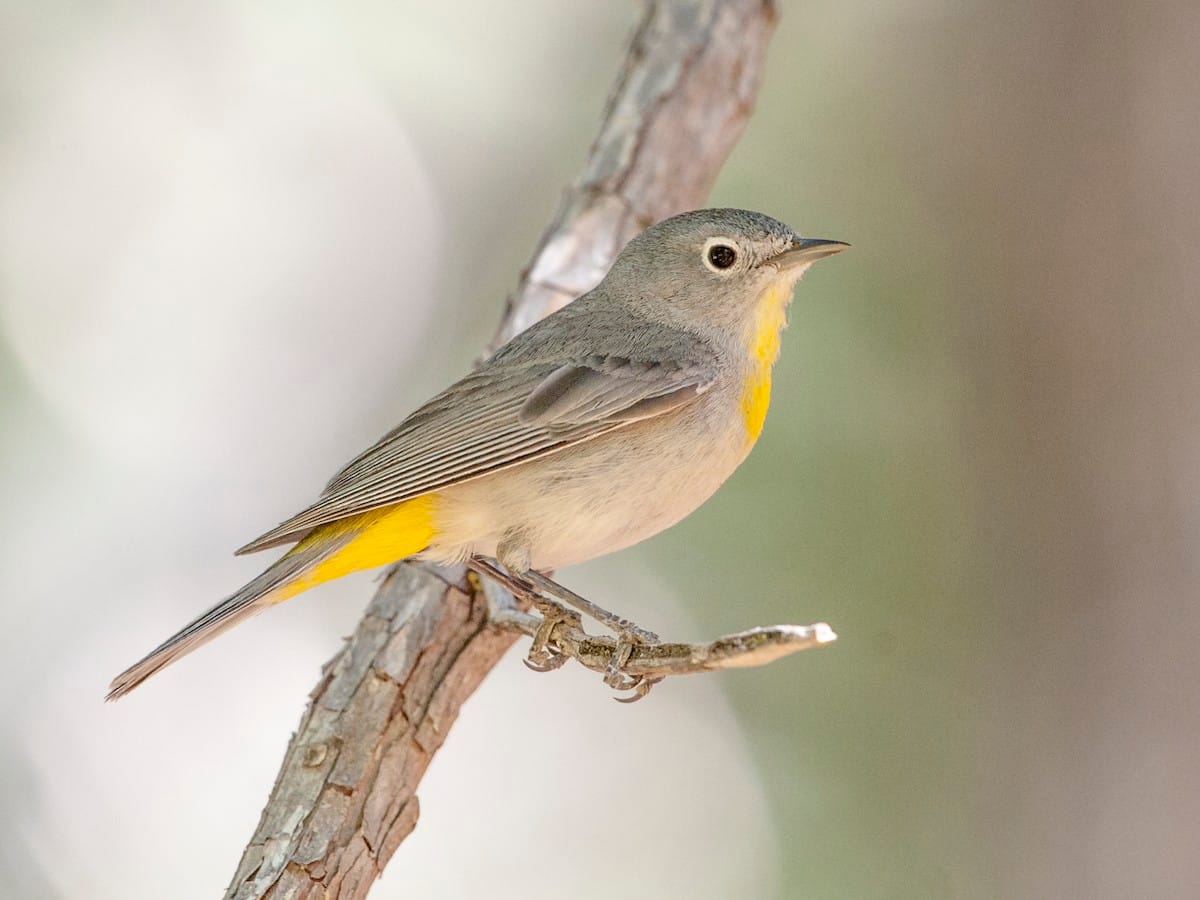
Virginia’s Warbler is a small, charming warbler with gray upperparts, pale yellow underparts, and a distinctive rufous crown patch. It breeds in shrubby forests and high-elevation woodlands of the western United States and migrates to Mexico during winter. These birds are highly active foragers, often flitting between shrubs and low trees in search of insects and spiders.
Males establish territories through song and display, while females construct cup-shaped nests hidden in dense vegetation. Their subtle yet vivid coloration, lively behavior, and adaptability to mountain habitats make Virginia’s Warbler a notable member of Types of Warbler Birds for both beginners and experienced birdwatchers.
27. Blackpoll Warbler (Setophaga striata)
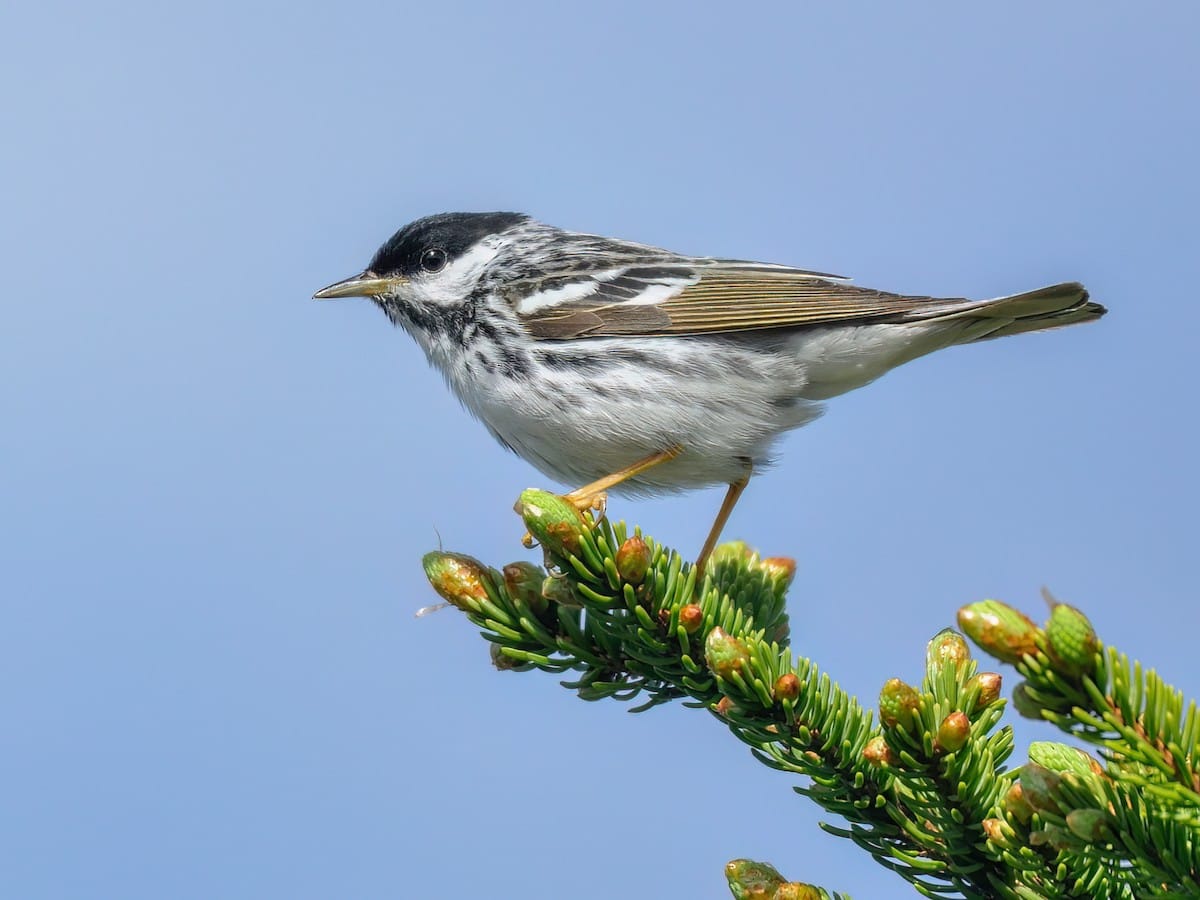
The Blackpoll Warbler is famous for its extraordinary migratory journey, traveling thousands of miles from northern North America to northern South America over the Atlantic Ocean. Breeding males display striking black and white plumage with bold streaks, while females and juveniles are paler with olive-gray tones.
Blackpoll Warblers forage actively for insects among branches and foliage, often in mixed-species flocks. Their long-distance migration, bold markings, and energetic foraging make them a captivating example of Types of Warbler Birds. Observing a Blackpoll Warbler during migration is a remarkable experience for birdwatchers and wildlife enthusiasts alike.
28. Townsend’s Warbler (Setophaga townsendi)
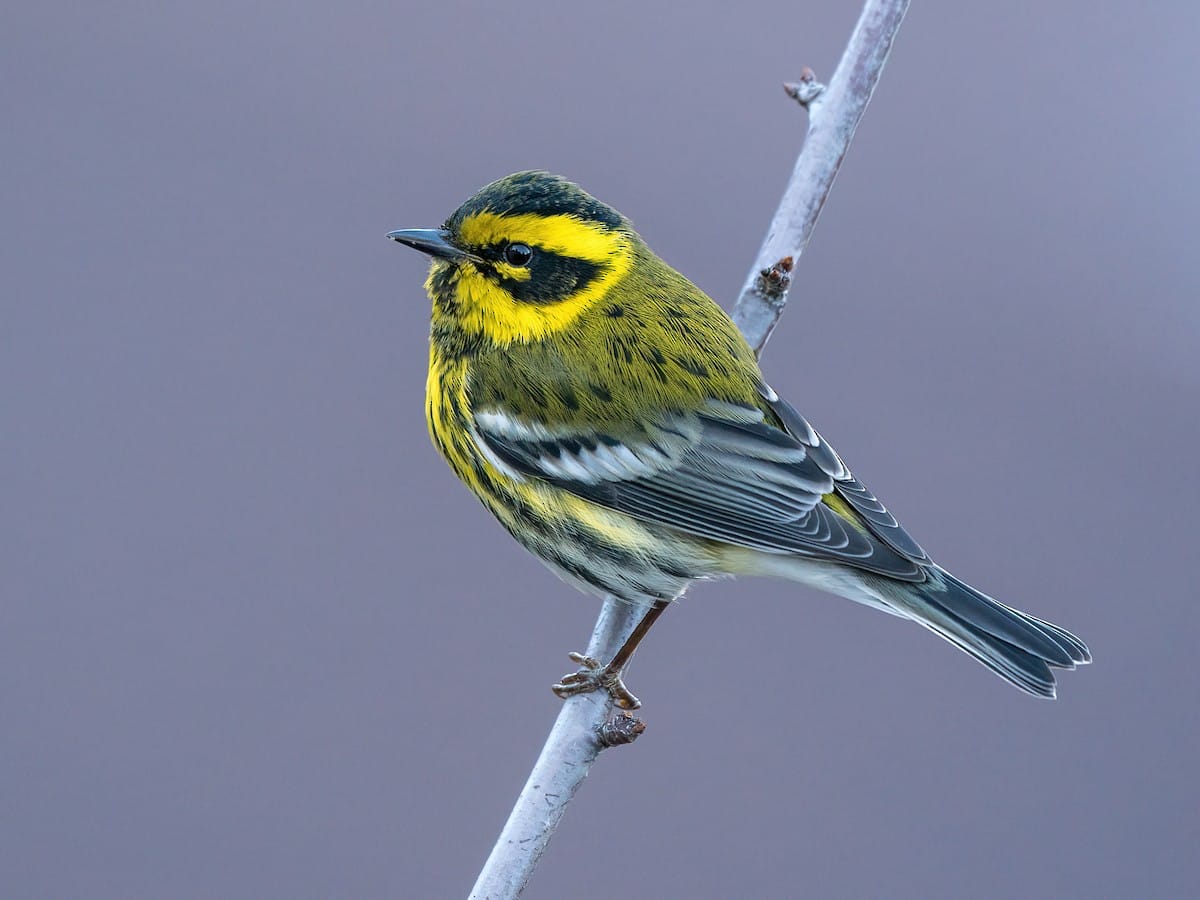
Townsend’s Warbler is a medium-sized warbler with a striking combination of black, yellow, and green plumage. Males display vivid black facial markings with bright yellow underparts, while females and juveniles are more muted with olive tones. They inhabit coniferous forests along the western coast of North America and migrate to Mexico during winter.
These warblers forage actively among tree branches for insects and spiders, often moving rapidly through foliage. Their bold coloration, energetic behavior, and unique range make Townsend’s Warbler a beautiful and memorable species within Types of Warbler Birds.
29. Ovenbird (Seiurus aurocapilla)
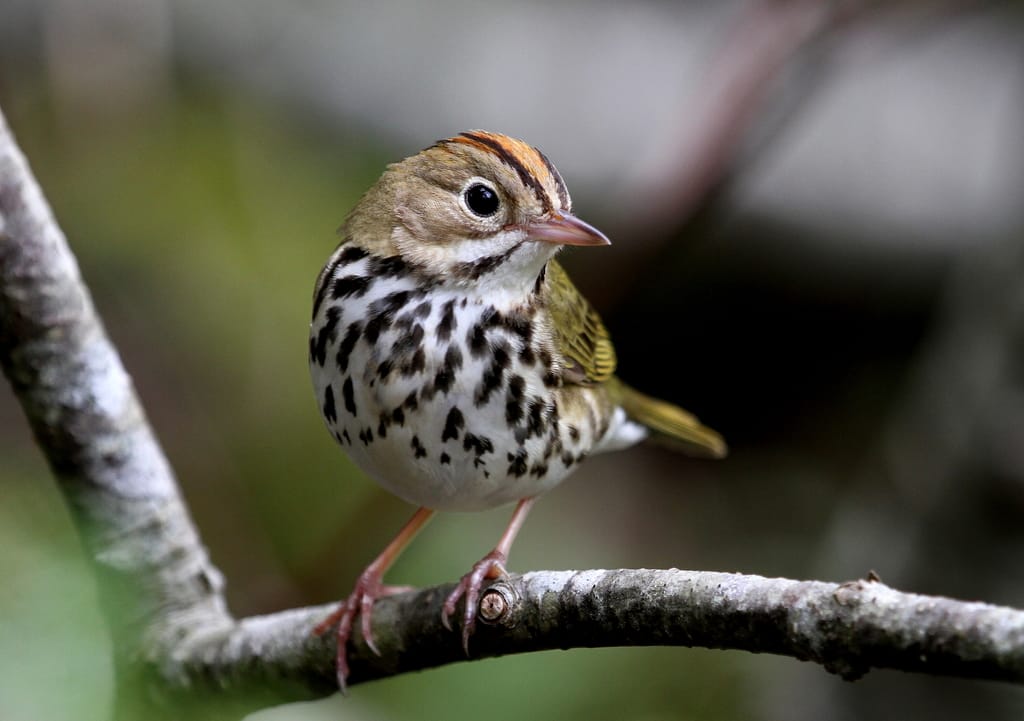
The Ovenbird is a small, ground-dwelling warbler with olive-brown upperparts, white underparts streaked with black, and a distinctive orange crown bordered by black. It breeds in deciduous and mixed forests of eastern North America and migrates to Central America and the Caribbean for winter.
Unlike most warblers, Ovenbirds forage primarily on the forest floor for insects, spiders, and other small invertebrates. Their name comes from their unique oven-shaped nest, built on the ground and covered with leaves. The Ovenbird’s unusual nesting style, energetic foraging, and striking crown make it a standout among Types of Warbler Birds.
30. Northern Parula (Setophaga americana)
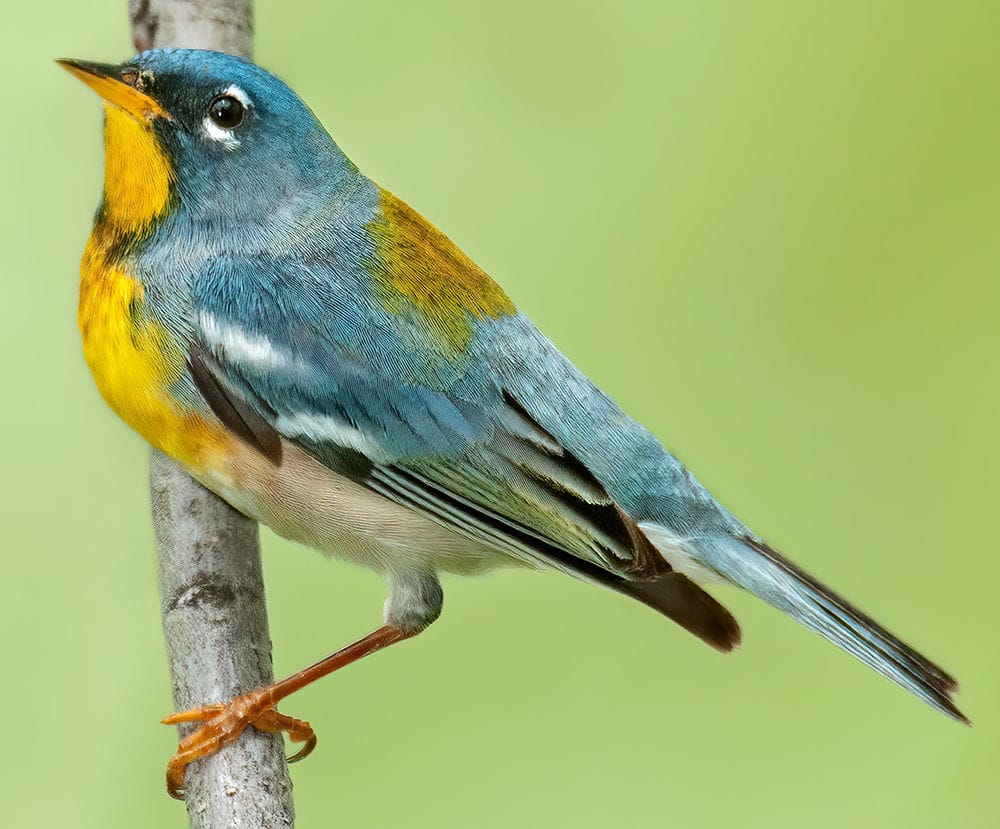
The Northern Parula is a tiny, brightly colored warbler with blue-gray upperparts, yellow throat and chest, and a distinctive greenish back patch. They breed in mature forests with ample epiphytic moss and lichen, often using hanging moss or old bird nests to build their own.
Northern Parulas forage for insects, spiders, and other small invertebrates, often flicking their wings and tails as they move through foliage. Their vibrant coloration, energetic behavior, and preference for mossy habitats make them an iconic species within Types of Warbler Birds and a favorite among birdwatchers.
31. Bay-breasted Warbler (Setophaga castanea)
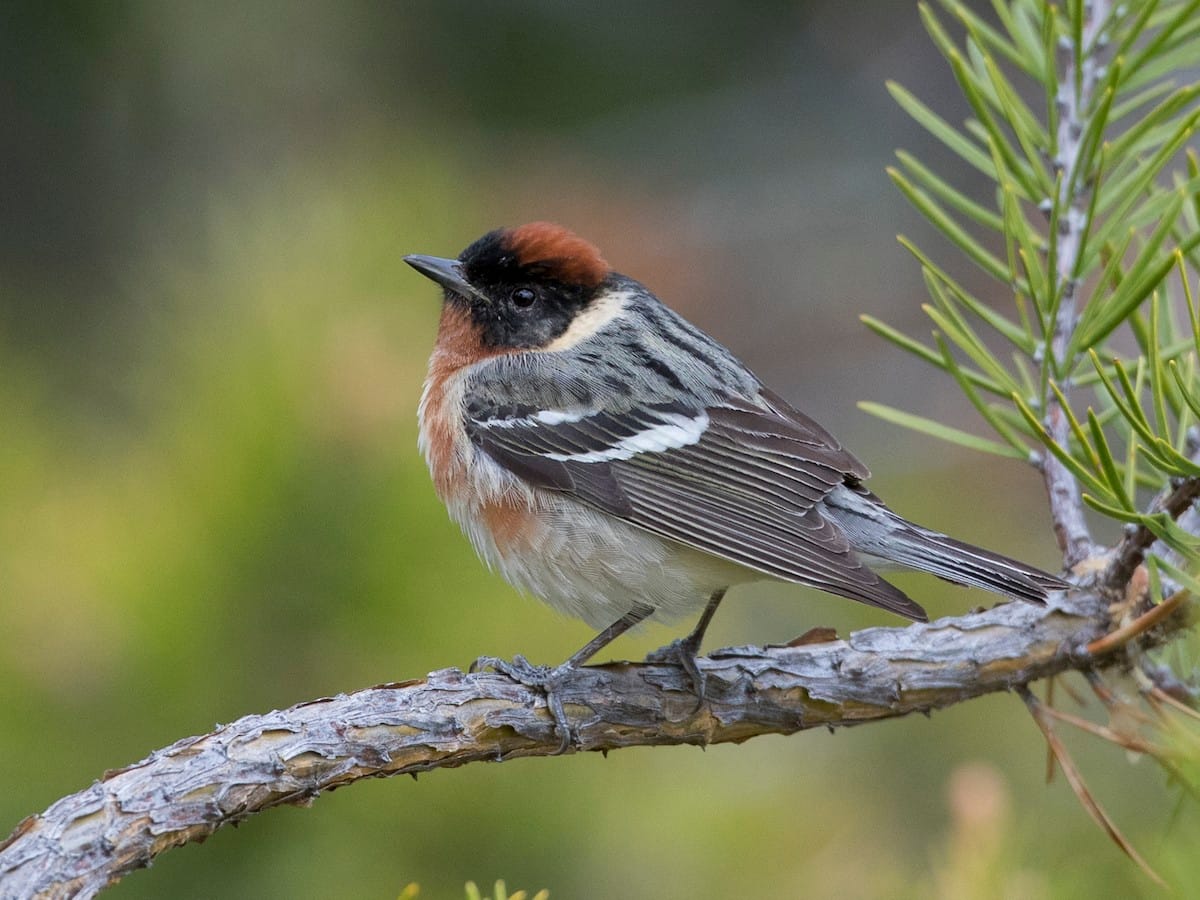
The Bay-breasted Warbler is a striking migratory warbler with males displaying chestnut-colored sides and flanks, black throat, and gray back, while females are more muted but still show warm chestnut tones. They breed in coniferous forests of Canada and the northeastern United States and migrate to Central and South America during winter.
Bay-breasted Warblers actively forage for insects among foliage, especially caterpillars and small arthropods, using rapid movements and acrobatic gleaning. Their vibrant plumage, energetic behavior, and long migratory routes make them an exceptional species among Types of Warbler Birds appreciated by bird enthusiasts.
32. Blackburnian Warbler (Setophaga fusca)
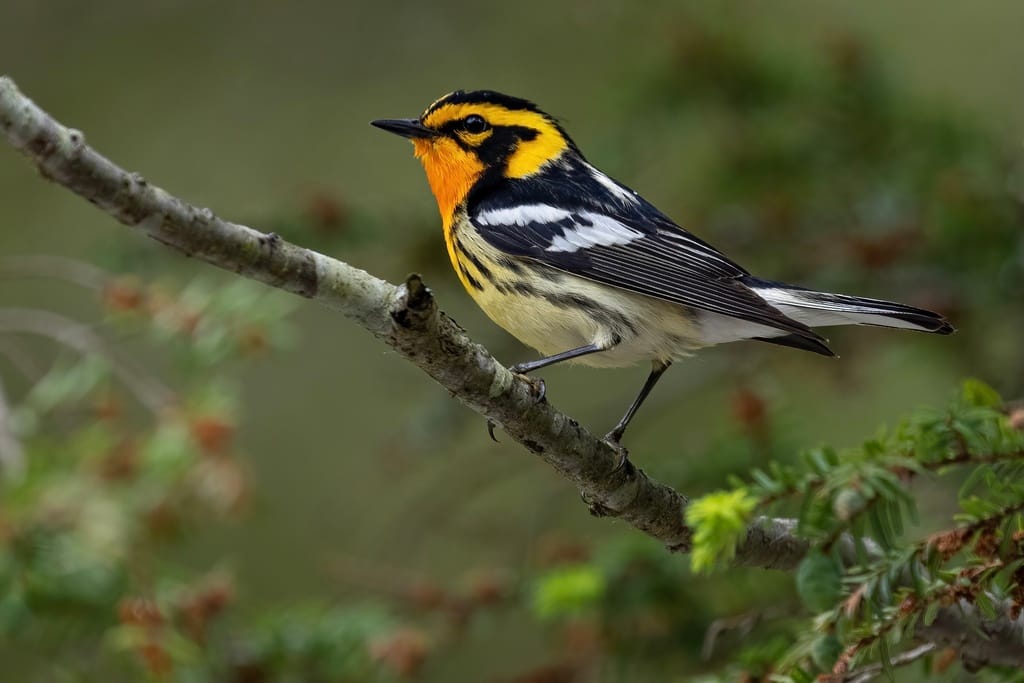
The Blackburnian Warbler is renowned for its bright orange throat and face contrasting with black and white patterned wings and back. Females and juveniles are less vivid, with yellow-orange coloring instead of deep orange. Breeding occurs in coniferous and mixed forests of North America, and these warblers migrate to northern South America for winter.
Blackburnian Warblers forage high in tree canopies for insects, spiders, and occasionally nectar. Their vivid coloration, striking patterns, and melodic song make them one of the most photographed and admired species among Types of Warbler Birds.
33. Black-throated Green Warbler (Setophaga virens)
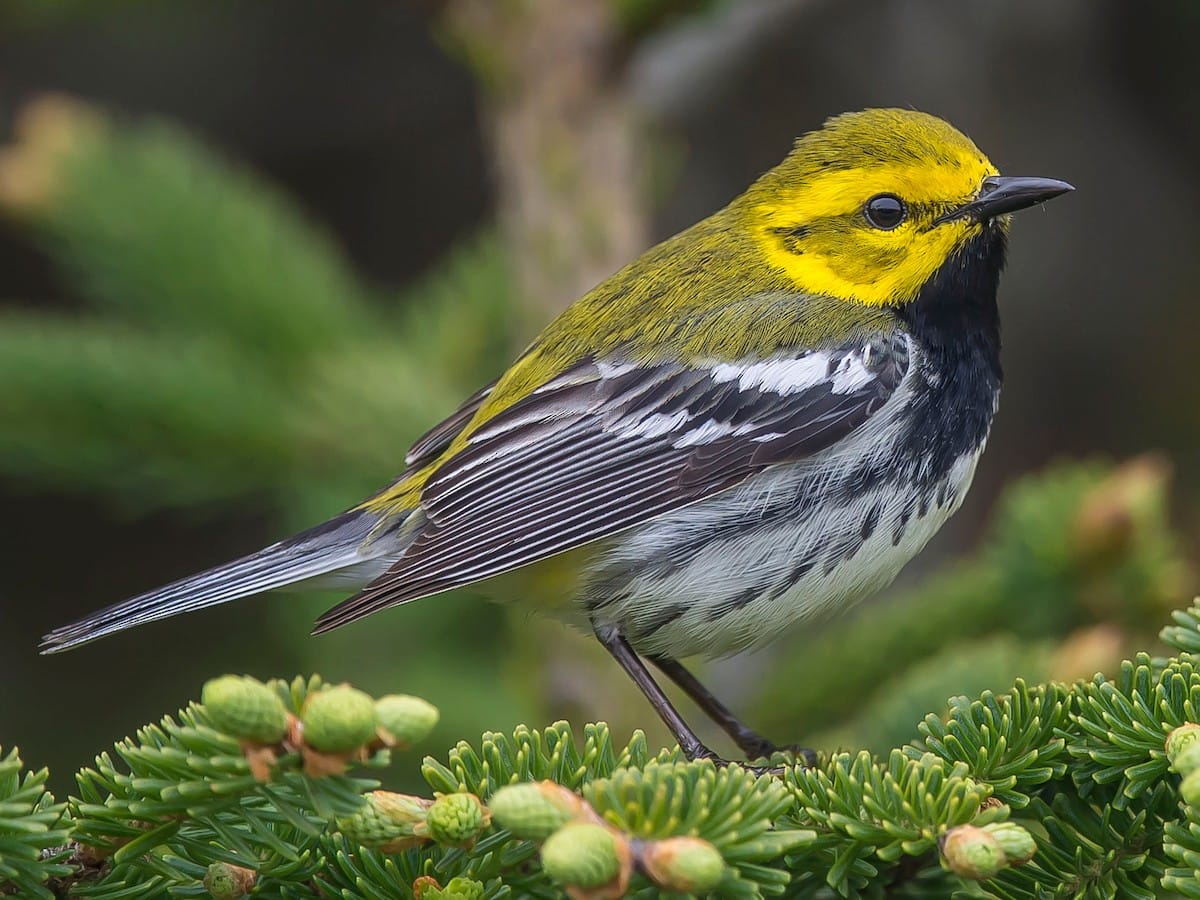
The Black-throated Green Warbler is a small forest warbler with olive-green upperparts, yellow face, and distinctive black throat and streaks. Females and juveniles display subtler markings but retain yellow highlights. They breed in coniferous and mixed forests across North America and migrate to Central America and the Caribbean for winter.
These warblers forage actively for insects and spiders, often hopping and flitting through dense foliage. Their melodic song and striking contrast between yellow and black make them a favorite for birdwatchers. Black-throated Green Warblers are a classic example of Types of Warbler Birds with both visual appeal and ecological significance.
34. Canada Warbler (Cardellina canadensis)
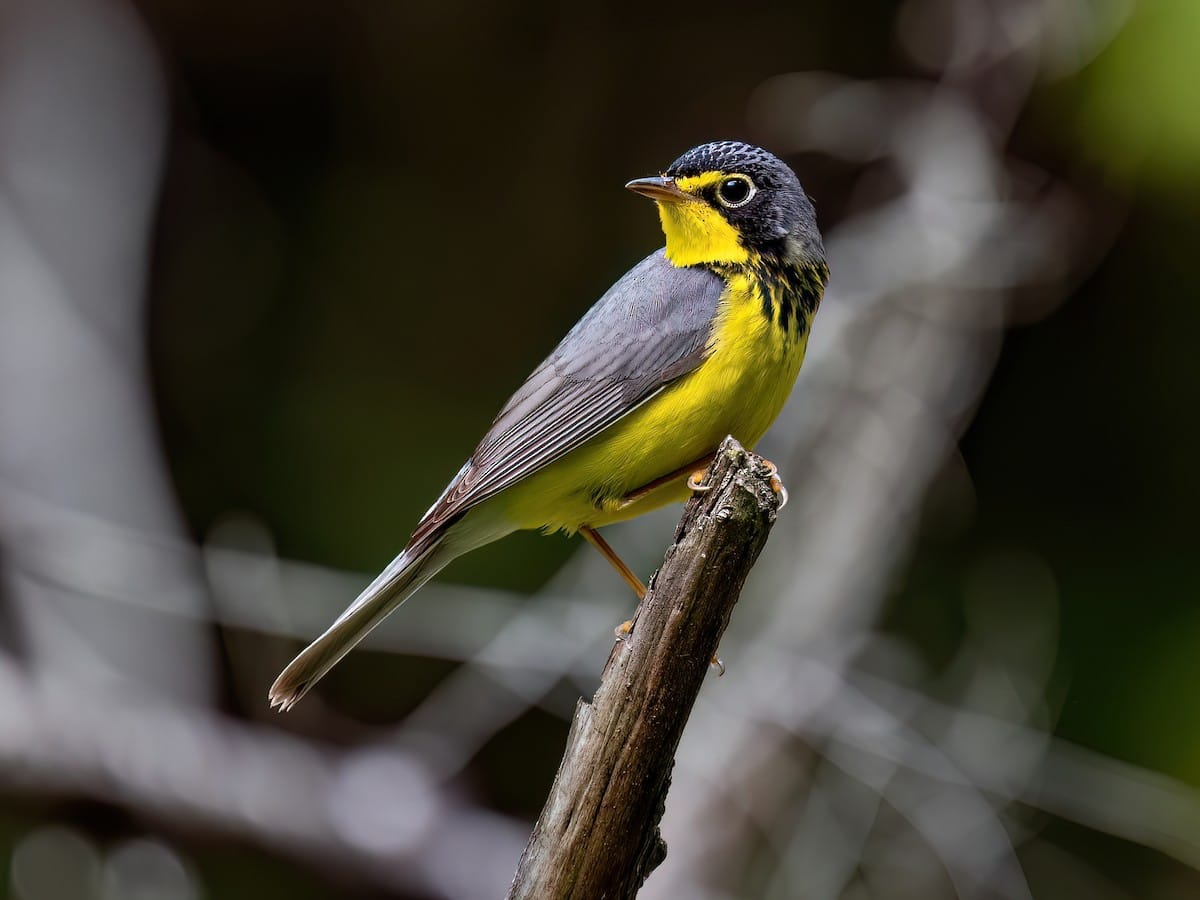
Canada Warbler is a small migratory bird with bright yellow underparts, gray upperparts, and a distinctive black “necklace” across the chest. Breeding primarily occurs in boreal forests and mixed woodlands of Canada and the northeastern United States, while wintering populations migrate to northern South America.
They forage for insects, spiders, and larvae among shrubs and low vegetation. Males use their melodic, clear song to defend territory and attract mates. The Canada Warbler’s vivid coloration, lively behavior, and long-distance migration make it an important species among Types of Warbler Birds for both study and observation.
35. Kentucky Warbler (Geothlypis formosa)
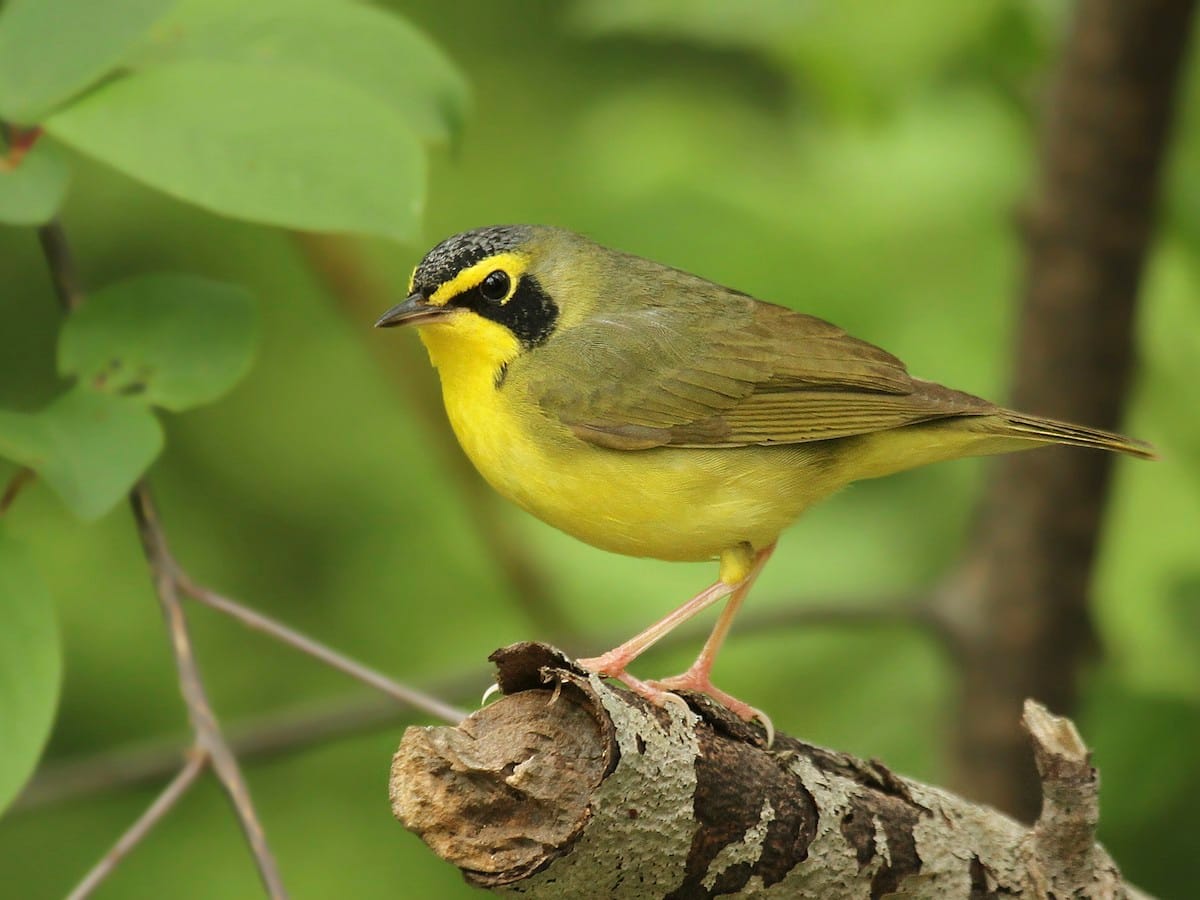
The Kentucky Warbler is a striking ground-dwelling warbler with olive-green upperparts, bright yellow underparts, and a bold black facial mask. It breeds in dense deciduous forests of the central and eastern United States and migrates to Central America for winter.
This warbler forages primarily on the forest floor for insects, spiders, and other small invertebrates. Males sing loud, rolling songs from hidden perches to attract mates and establish territory. Their bold facial markings, secretive ground-foraging behavior, and vivid underparts make the Kentucky Warbler a standout member of Types of Warbler Birds and a favorite among birdwatchers exploring dense forest habitats.
36. Mourning Warbler (Geothlypis philadelphia)
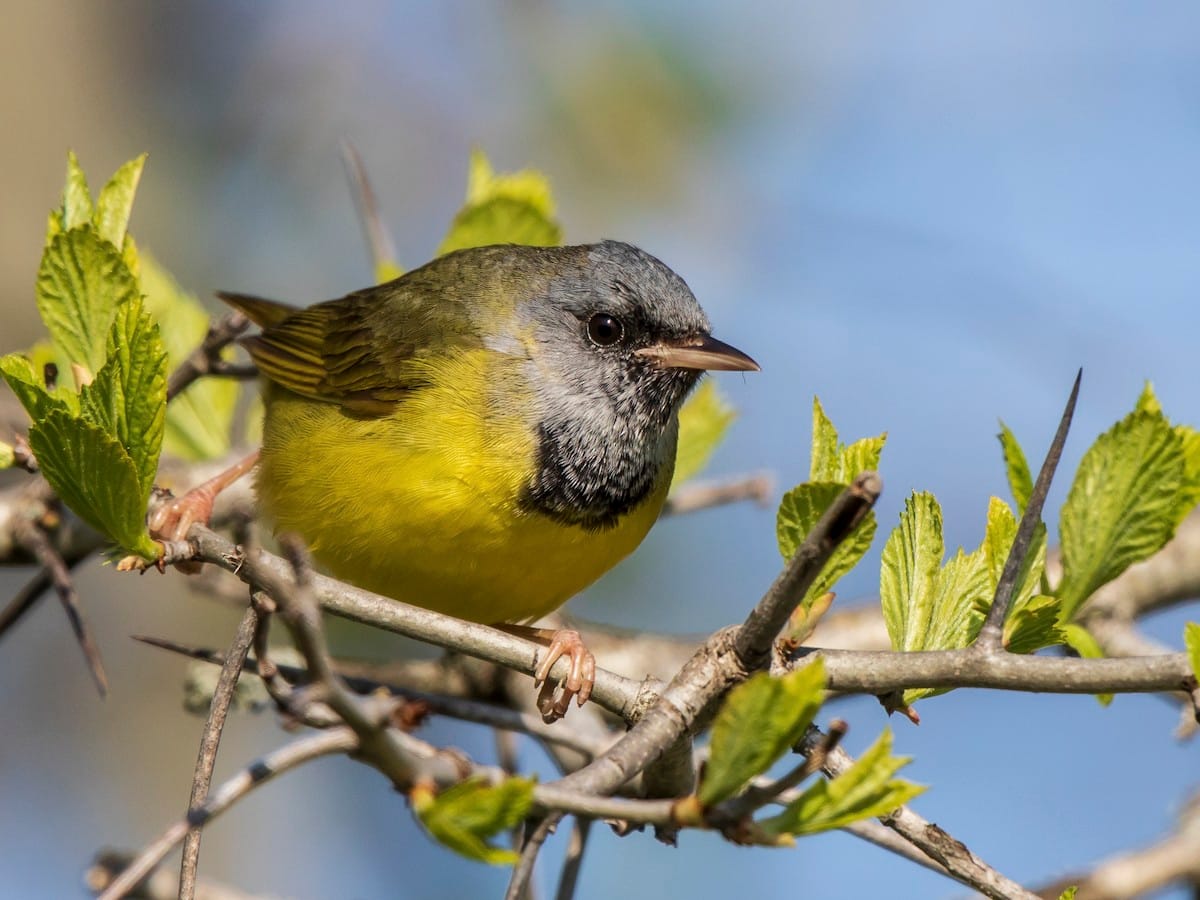
The Mourning Warbler is a medium-sized warbler with olive-green upperparts, gray head, and yellow underparts. Males have a subtle black “hood” that females lack, giving them a slightly more subdued appearance. They breed in dense, young forests across Canada and the northern United States and migrate to Central America for winter.
These warblers forage in low shrubs and on the forest floor for insects and spiders, often remaining hidden due to their secretive nature. Their soft, mournful song gives them their common name. The Mourning Warbler’s elusive behavior, subtle beauty, and importance in forest ecosystems make it a notable member of Types of Warbler Birds.
37. Worm-eating Warbler (Helmitheros vermivorum)
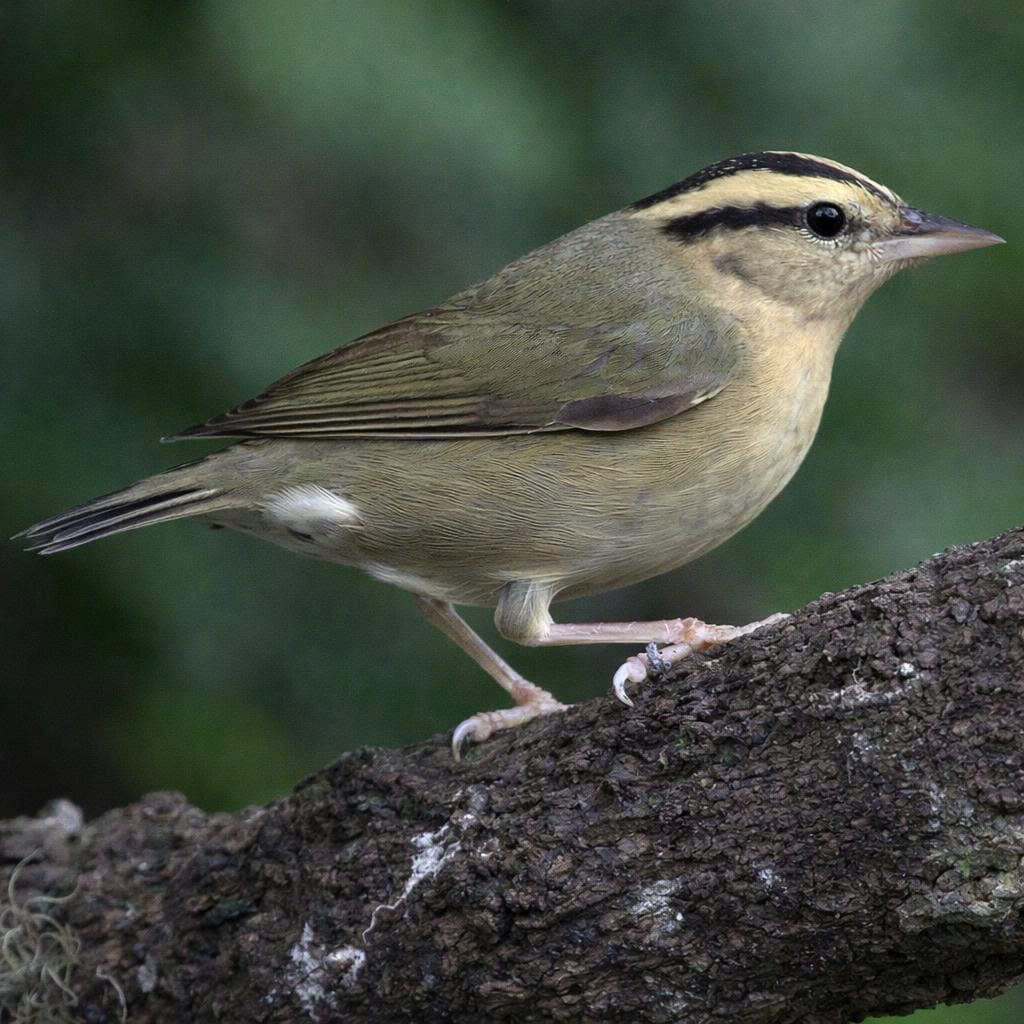
The Worm-eating Warbler is a small, ground-foraging species with olive-brown upperparts, pale yellow underparts, and bold black streaks along the face. It breeds in deciduous forests of the eastern United States and migrates to Central America for winter.
True to its name, this warbler specializes in feeding on worms, insects, and other small invertebrates found in leaf litter. Their nests are often built on the forest floor, concealed by leaves and vegetation. The Worm-eating Warbler’s secretive habits, subtle markings, and ecological role make it a unique example of Types of Warbler Birds.
38. Northern Waterthrush (Parkesia noveboracensis)
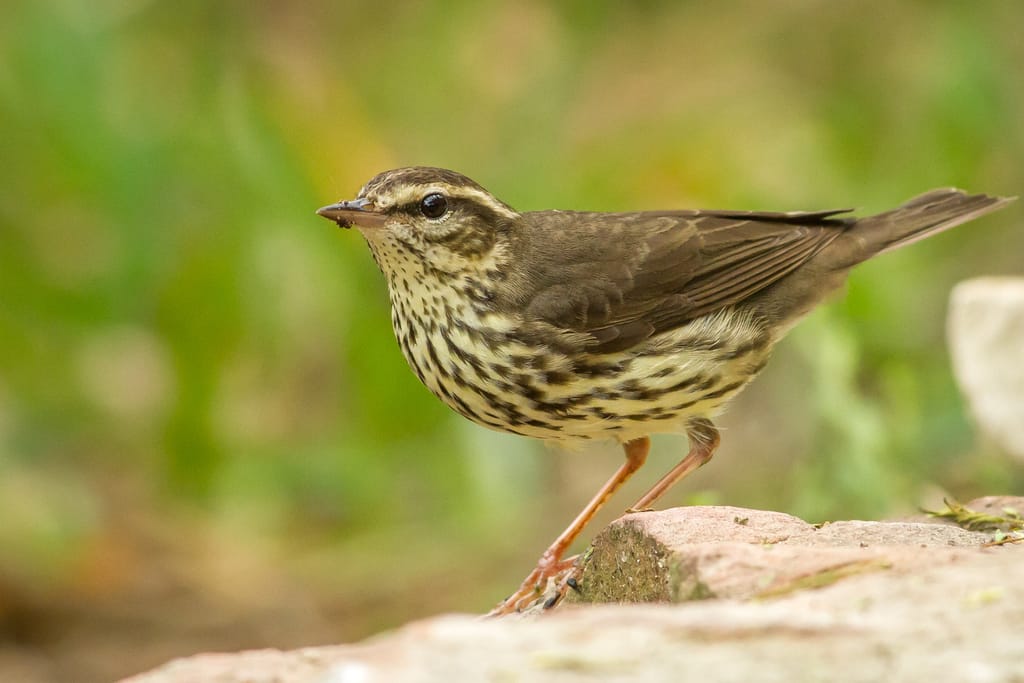
The Northern Waterthrush is a ground-foraging warbler with olive-brown upperparts, bold streaked underparts, and a distinct white eyebrow stripe. Breeding occurs near streams, ponds, and wetlands in North America, and these warblers migrate to Central and South America during winter.
Northern Waterthrushes forage by hopping along wet forest floors, probing leaf litter and mud for insects, small crustaceans, and larvae. Their loud, sharp song carries across wetlands, signaling territory and attracting mates. Their association with water, energetic foraging, and striking markings make them a remarkable member of Types of Warbler Birds.
39. Louisiana Waterthrush (Parkesia motacilla)
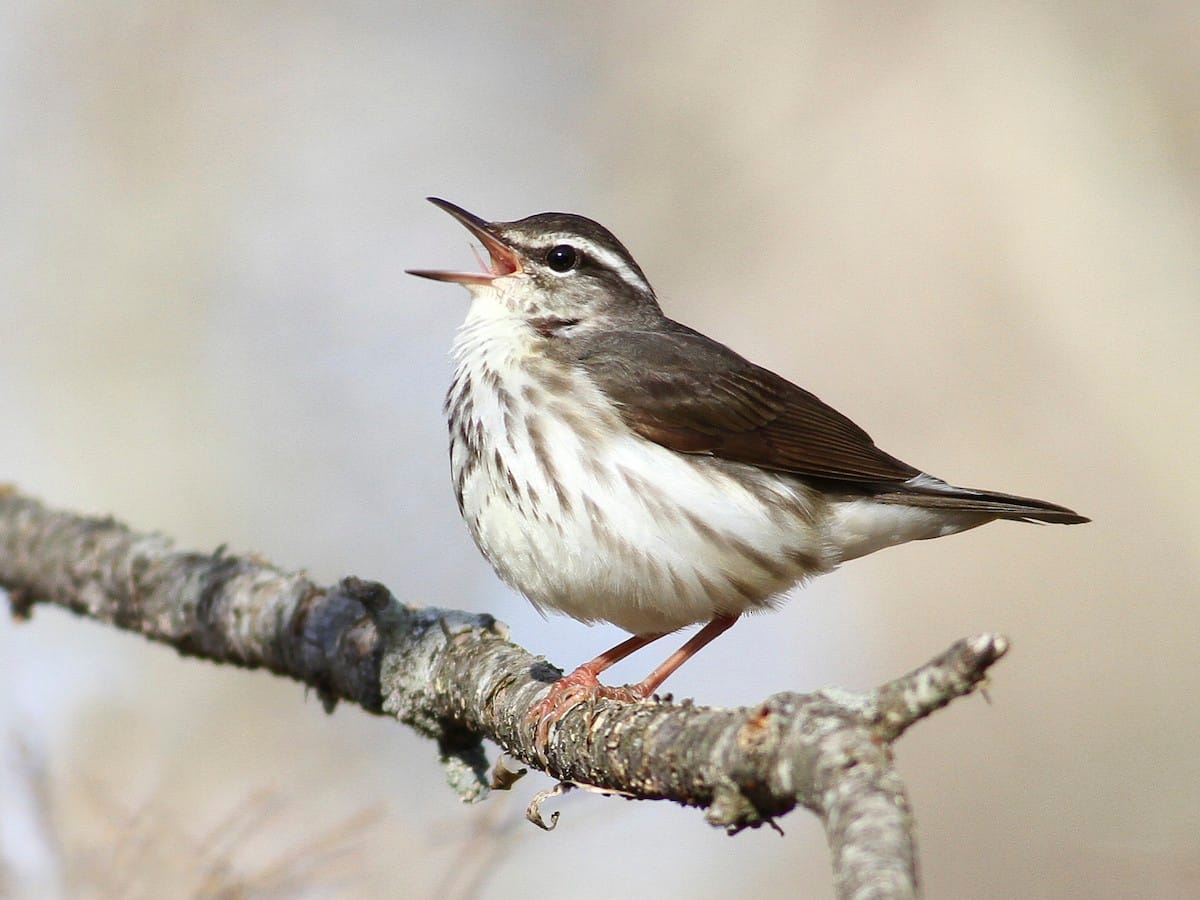
The Louisiana Waterthrush is a large, striking warbler with bold brown and white streaked underparts, olive-brown back, and white eyebrow stripe. Found near fast-flowing streams and forested wetlands in eastern North America, they migrate to the Caribbean and Central America for winter.
These warblers forage along stream edges, feeding on aquatic insects, larvae, and small invertebrates. Their loud, ringing song is used to defend territory and communicate with mates. The Louisiana Waterthrush’s specialized habitat preferences, active foraging behavior, and striking appearance make it a fascinating example of Types of Warbler Birds.
40. Cerulean Warbler (Setophaga cerulea)
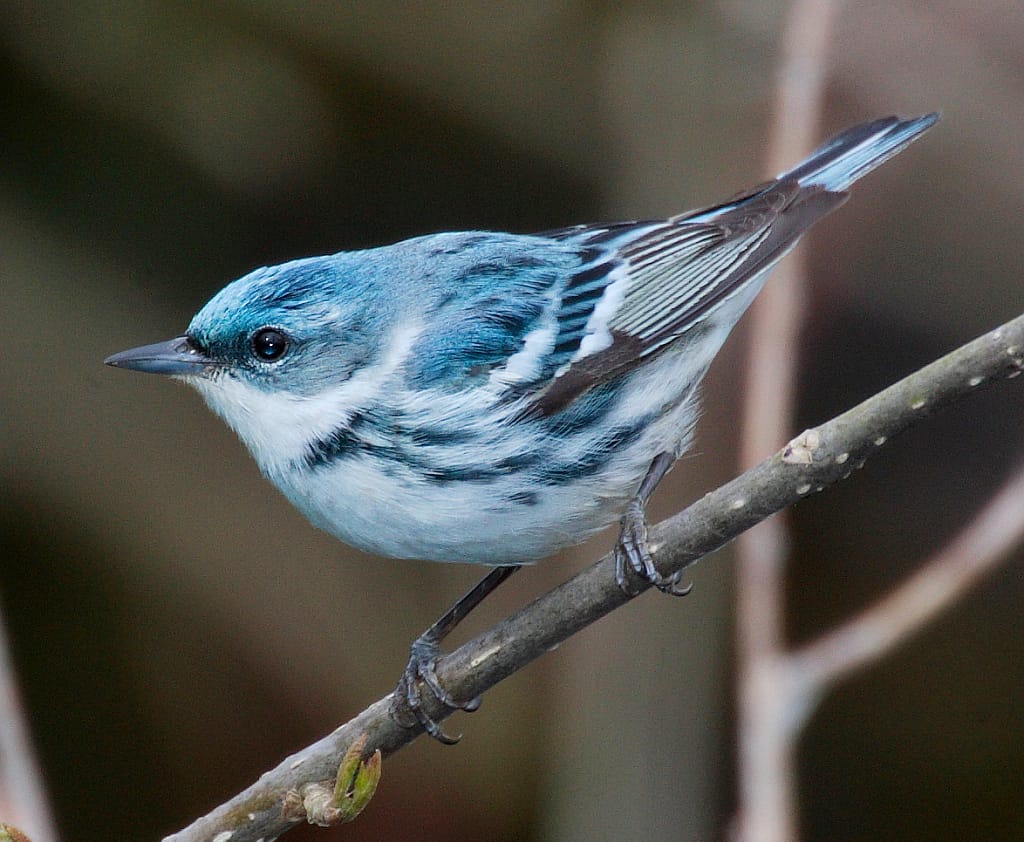
The Cerulean Warbler is a small, sky-blue warbler with pale underparts and subtle black streaks on the face and wings. It breeds in mature deciduous forests of eastern North America and migrates to the Andes of South America for winter.
Cerulean Warblers are canopy dwellers, foraging for insects and spiders high in trees. Their gentle song and delicate movements make them difficult to spot, but highly rewarding for birdwatchers. The Cerulean Warbler’s vibrant blue coloration, canopy-foraging behavior, and long migratory journey make it a prized species within Types of Warbler Birds.
Conclusion
Warbler Birds are among the most captivating and diverse songbirds found across North America and beyond. From the vibrant Cape May Warbler to the elusive Worm-eating Warbler, these 40 species showcase a remarkable range of colors, behaviors, and habitats. Whether nesting in forest canopies, foraging on the forest floor, or migrating thousands of miles to Central and South America, warblers demonstrate incredible adaptability and ecological importance.
Birdwatchers, wildlife enthusiasts, and conservationists alike are drawn to the beauty and diversity of these small but energetic birds. Understanding the different Types of Warbler Birds helps in appreciating their roles in ecosystems, tracking migration patterns, and contributing to habitat conservation efforts. By observing their plumage, songs, and foraging habits, one can gain a deeper connection to these remarkable birds and the environments they inhabit.
Whether you are a beginner birdwatcher or an experienced ornithologist, learning about the unique characteristics of each warbler can be both educational and rewarding. This comprehensive guide to Types of Warbler Birds provides detailed insights into 40 species, offering a foundation for recognition, observation, and conservation. These small songbirds may be tiny in size, but their beauty, behavior, and ecological significance make them giants in the world of avian wildlife.
50+ Frequently Asked Questions About Types of Warbler Birds
1. What are warbler birds?
Warbler birds are small, often colorful songbirds belonging to the family Parulidae. They are known for their vibrant plumage, melodious songs, and insect-eating habits. They inhabit forests, wetlands, and shrublands across North and Central America.
2. How many types of warbler birds are there?
There are over 40 recognized types of warbler birds in North America, each with unique plumage, song patterns, and habitats.
3. Where can I find warbler birds?
Warbler birds can be found in forests, wetlands, and shrublands. Many species migrate, spending summers in North America and winters in Central and South America.
4. What do warbler birds eat?
Warblers primarily eat insects, spiders, and other small invertebrates. Some may also consume berries and nectar, especially during migration or winter months.
5. Are warbler birds migratory?
Yes, most warbler species are migratory. They travel long distances between breeding grounds in North America and wintering grounds in Central and South America.
6. How can I identify warbler birds?
Identification involves observing plumage colors, patterns, wing and tail markings, size, behavior, and song. Field guides and birdwatching apps are helpful tools.
7. Which warbler is the most colorful?
The Blackburnian Warbler and Cerulean Warbler are among the most colorful, displaying vibrant oranges, yellows, and blues.
8. What is the smallest warbler bird?
Wilson’s Warbler is one of the smallest warbler species, measuring about 10–11 cm in length.
9. What is the largest warbler bird?
The Ovenbird is among the larger warblers, with a more robust body and strong, distinctive markings.
10. Can warbler birds sing?
Yes, warblers are known for their melodious and varied songs. Males often sing to attract mates and defend territories.
11. When do warbler birds migrate?
Most North American warblers migrate in spring and fall, timing their travel with food availability and breeding cycles.
12. What is the lifespan of a warbler bird?
Warbler lifespans vary by species, typically ranging from 2 to 8 years in the wild.
13. Which warbler birds are endangered?
Kirtland’s Warbler and Cerulean Warbler are examples of species with declining populations, requiring habitat conservation efforts.
14. How do warblers build nests?
Nesting styles vary. Some, like Ovenbirds, nest on the ground, while Prothonotary Warblers use tree cavities. Others build cup-shaped nests in shrubs or low trees.
15. Do warblers eat seeds?
Warblers primarily eat insects, but some species may consume seeds or berries occasionally.
16. What is a Kirtland’s Warbler?
Kirtland’s Warbler is a rare North American species that nests in young jack pine forests. It is a conservation success story after near-extinction.
17. Are warbler birds good for insect control?
Yes, warblers consume large numbers of insects, helping control pest populations in forests and gardens.
18. How fast do warbler birds migrate?
Migration speeds vary, but some warblers can cover hundreds of kilometers per day during long-distance migration.
19. What is a Prothonotary Warbler?
The Prothonotary Warbler is a cavity-nesting warbler with bright yellow plumage and bluish-gray wings, commonly found in wooded swamps.
20. Which warblers are canopy dwellers?
Cerulean Warblers and Blackburnian Warblers often forage in forest canopies, searching for insects and spiders high in the trees.
21. Do warbler birds return to the same nesting site?
Many species exhibit site fidelity, returning to the same breeding grounds each year if conditions are favorable.
22. How can I attract warbler birds to my backyard?
Plant native shrubs, provide water sources, and avoid pesticides to attract insects that warblers feed on during migration.
23. What is the Golden-winged Warbler?
Golden-winged Warbler is a small species with yellow crown and wing patches, black throat markings, and grayish body, known for breeding in shrubby habitats.
24. Do warblers migrate at night or day?
Many warblers migrate at night using the stars for navigation and resting during the day in forests or fields.
25. Which warblers forage on the ground?
Ovenbirds, Worm-eating Warblers, and Northern Waterthrush often forage on or near the forest floor for insects and invertebrates.
26. What is the Blackburnian Warbler?
Blackburnian Warbler is a vibrant forest species with orange throat, black streaked back, and bright markings that make it easily recognizable.
27. Are warblers social birds?
Most warblers are solitary or territorial during breeding but may join mixed-species flocks during migration.
28. What is the Mourning Warbler?
Mourning Warbler is a shy forest species with olive-green upperparts, yellow underparts, and a subtle black hood on males.
29. Do warblers eat spiders?
Yes, spiders are a common component of their diet, along with insects, larvae, and other small invertebrates.
30. What is the difference between a Northern and Louisiana Waterthrush?
Northern Waterthrush has bold streaks and forages along streams and wet forest floors, while Louisiana Waterthrush prefers fast-flowing streams and has more prominent streaking and distinctive song patterns.
31. Can warblers be kept as pets?
Warblers are wild birds and are not suitable as pets. They thrive best in their natural habitats.
32. What is the lifespan of migratory warblers?
Migratory warblers live around 3–6 years on average, though survival depends on migration hazards and habitat quality.
33. What is the Magnolia Warbler?
Magnolia Warbler is a small migratory warbler with bright yellow underparts, black streaked sides, and striking black mask markings.
34. How do warblers protect themselves from predators?
Warblers use camouflage, rapid flight, and dense vegetation to hide from predators, and some species nest in concealed or elevated locations.
35. Are warblers monogamous?
Most warblers are monogamous during the breeding season, forming temporary pair bonds to raise offspring.
36. What is the Northern Parula?
Northern Parula is a tiny warbler with sky-blue upperparts, yellow throat, and greenish back patch, often found in mossy canopy habitats.
37. What is the Ovenbird?
Ovenbird is a ground-nesting warbler with olive-brown upperparts, streaked underparts, and a distinctive orange crown bordered by black.
38. How far do warblers migrate?
Warblers can migrate thousands of kilometers between breeding and wintering grounds, with species like the Blackpoll Warbler performing transoceanic flights.
39. What is the Black-throated Green Warbler?
Black-throated Green Warbler is a forest-dwelling species with olive-green back, yellow face, and black throat and streaks, often foraging in tree canopies.
40. What is the Cerulean Warbler?
Cerulean Warbler is a sky-blue canopy-dwelling warbler with delicate movements and a preference for mature deciduous forests.
41. How can I help conserve warbler birds?
Protect natural habitats, plant native vegetation, reduce pesticide use, and support conservation organizations working to preserve migratory corridors.
42. Do warblers return to the same wintering grounds?
Yes, many warbler species exhibit strong site fidelity, returning to the same wintering areas each year.
43. What is the Hooded Warbler?
Hooded Warbler is a small warbler with bright yellow underparts and a black hood, found in deciduous forests of eastern North America.
44. What is the Prairie Warbler?
Prairie Warbler is a small songbird with bright yellow underparts, olive back, and streaked flanks, breeding in shrubby habitats in eastern North America.
45. Are warblers nocturnal during migration?
Many warblers migrate at night, resting during the day and feeding during stopovers.
46. What is the Bay-breasted Warbler?
Bay-breasted Warbler has chestnut-colored sides, gray back, and black throat, migrating long distances between Canada and South America.
47. What is the role of warblers in ecosystems?
Warblers control insect populations, contribute to pollination in some cases, and serve as indicators of forest health and habitat quality.
48. Can warblers be seen in urban areas?
While most warblers prefer forests and wetlands, some may be observed in parks or gardens with suitable vegetation during migration.
49. What is the Golden-winged Warbler?
Golden-winged Warbler is a small, gray-bodied warbler with yellow crown and wing patches, notable for its unique hybridization with Blue-winged Warblers.
50. How do I attract warblers during migration?
Provide native shrubs and trees, maintain water sources, and allow insect populations to flourish to create suitable stopover habitats.
Read more:
- 32 Types of Hummingbirds (Pictures, Identification)
- 12 Types of Hummingbirds in Colorado: Species, Identification, and Photos
- 20 Types of Hummingbirds in Texas: Species, Identification, and Photos
- 8 Types of Hummingbirds in Wisconsin: Species, Identification, and Photos
- 15 Types of Hummingbirds in Alabama: Species, Identification, and Photos
- 13 Types of Hummingbirds in Georgia: Species, Identification, and Photos
- 9 Types of Hummingbirds in Michigan: Species, Identification, and Photos
- 8 Types of Hummingbirds in Ohio: Species, Identification, and Photos
- 5 Types of Hummingbirds in Maine: Species, Identification, and Photos
- 30 Types of Wild Birds (Pictures And Identification)
- 200 Types of Birds (Pictures and Identification)
- 12 Types of Hummingbirds in Tennessee: Species, Identification, and Photos
- 17 Types of Quail Birds: Species Identification with Pictures
- 17 Types of Mockingbirds (Pictures and Identification)
- 35 Types of Woodpeckers (Pictures And Identification)
- 14 Types of Hummingbirds in California: Species, Identification, and Photos