

Hawks are among the most skilled aerial predators in the animal kingdom, belonging to the family Accipitridae. These birds of prey have evolved exceptional vision, powerful talons, and sharp hooked beaks that allow them to capture and consume a wide range of animals. Their diet is not limited to one food type, which is why they are found thriving in forests, deserts, grasslands, mountains, and even cities.
Unlike strict specialists, hawks are opportunistic hunters. Their diet shifts depending on habitat, season, and prey availability. Some species focus heavily on small mammals, while others target birds, reptiles, or amphibians. This flexibility is one of the key reasons hawks are so widespread across the globe.
What Do Hawks Eat in the Wild?
1. Mice
Mice are one of the most fundamental prey species in a hawk’s diet. Across nearly all continents where hawks exist, mice provide a stable and reliable food source due to their abundance and fast reproduction rates. Hawks often hunt mice in open fields, grasslands, farmlands, and even suburban environments where rodents thrive near human activity.
The hunting strategy used for mice typically involves perching or soaring at medium height while scanning the ground with extraordinary visual precision. Hawks possess eyesight that is several times sharper than humans, allowing them to detect even slight movements in grass or soil. Once a mouse is spotted, the hawk enters a rapid dive known as a stoop, extending its legs forward to strike with precision.
Nutritionally, mice are highly valuable because they provide a balanced combination of protein, fat, and moisture. For young hawks in the nest, mice are often a primary food source brought by parents, ensuring rapid growth and strong skeletal development. In colder seasons when larger prey becomes scarce, mice become even more critical to hawk survival.
2. Rats
Rats represent a larger and more challenging prey item compared to mice, but they are equally important in the hawk’s diet, particularly in urban ecosystems. Cities, farms, and industrial areas often support large rat populations, making them a consistent food source for adaptable hawk species such as the red-tailed hawk.
Hunting rats requires more precision and caution because rats are intelligent, cautious, and capable of quick escape. Hawks typically rely on stealth and surprise, positioning themselves on rooftops, poles, or tree branches before launching a sudden attack. In urban environments, rats may be caught near garbage sites, sewers, or alleyways where food waste is abundant.
From a nutritional perspective, rats provide a substantial meal due to their larger body size. A single successful hunt can sustain a hawk for an extended period, reducing the need for frequent hunting. This makes rats an especially valuable prey item during breeding seasons when energy demands are high for both adults and chicks.
3. Voles
Voles are small, burrowing rodents that play a significant role in grassland and agricultural ecosystems, and they are a staple prey species for many hawk populations. These animals live in underground tunnels or dense vegetation, making them slightly more difficult to detect than surface-dwelling prey.
Hawks hunt voles by hovering or perching above open ground and watching for subtle movements in grass or soil openings. Once a vole is detected, the hawk swoops down rapidly, using its sharp talons to seize the prey before it can retreat underground. This hunting method requires precision timing and exceptional visual tracking.
Voles are particularly important during breeding seasons because they are abundant and easy to catch in large numbers. Their high reproductive rate ensures that hawks can rely on them even when other prey fluctuates seasonally. In many ecosystems, voles form the backbone of the hawk’s food supply.
4. Shrews
Shrews are tiny insectivorous mammals with extremely high metabolisms, meaning they must eat frequently to survive. Although small, they are an important opportunistic prey item for hawks. Shrews are usually found in leaf litter, dense vegetation, and moist soil environments.
Because of their speed and erratic movement patterns, shrews are not the easiest prey for hawks to capture. However, hawks rely on quick reflexes and surprise attacks to secure them. Once captured, shrews provide a concentrated source of protein and energy despite their small size.
Shrews are not a primary prey species but contribute to dietary diversity. In environments where larger rodents are less available, hawks will increase their consumption of small mammals like shrews to maintain energy balance.
5. Squirrels
Squirrels represent one of the more challenging prey animals for hawks due to their agility, intelligence, and ability to climb trees rapidly. However, they are still an important part of the diet for larger hawk species capable of overpowering them.
Hawks often target squirrels when they are on the ground foraging or when young individuals are more vulnerable. The attack must be swift and precise, as squirrels can quickly escape into trees if given even a moment’s advantage.
Because of their larger body mass, squirrels provide a high-energy meal that can sustain a hawk for an extended time. This makes them particularly valuable during colder months when energy conservation is critical.
6. Chipmunks
Chipmunks are small, fast-moving rodents commonly found in woodland edges, rocky areas, and suburban gardens. For hawks, they represent a high-energy prey item that is both rewarding and challenging to capture. Their speed and agility make them difficult targets, but hawks rely on surprise attacks and superior aerial vision to successfully hunt them.
Hawks typically target chipmunks when they are foraging on the ground or momentarily exposed outside their burrows. The attack happens quickly, often from a concealed perch or a high glide overhead. Once seized, chipmunks provide a nutrient-dense meal rich in protein and fat, which is especially important during breeding season or colder months.
Ecologically, chipmunks are an important part of forest ecosystems, and their predation by hawks helps regulate rodent populations. This balance prevents overgrazing of seeds and vegetation, maintaining biodiversity in woodland habitats.
7. Rabbits
Rabbits are among the largest prey that hawks can consistently hunt, particularly for large species like the red-tailed hawk or ferruginous hawk. Young or juvenile rabbits are the most common targets, as adult rabbits are often too large and fast for most hawks to handle alone.
Hunting rabbits requires strength, precision, and timing. Hawks often watch from elevated perches or soar above open fields before diving at high speed. The powerful talons of a hawk are capable of immobilizing a rabbit almost instantly upon impact.
Because of their size, rabbits provide a substantial nutritional payoff. A single successful kill can sustain a hawk for a long period, reducing the need for frequent hunting. This makes rabbits especially valuable in open grassland ecosystems.
8. Hares
Hares are closely related to rabbits but are generally larger, faster, and more muscular. This makes them a more difficult and less common prey item for hawks. Only the largest hawk species are capable of successfully hunting hares, and even then, they typically target juveniles or weakened individuals.
The hunting process requires exceptional precision and strength. Hawks must strike with enough force to prevent escape, as hares can reach high speeds and change direction rapidly. In most cases, hawks rely on ambush tactics rather than prolonged pursuit.
Despite the difficulty, hares provide a very high-energy food source. Their large muscle mass and fat content make them extremely valuable when successfully captured, especially in harsh environments where food is scarce.
9. Small Birds
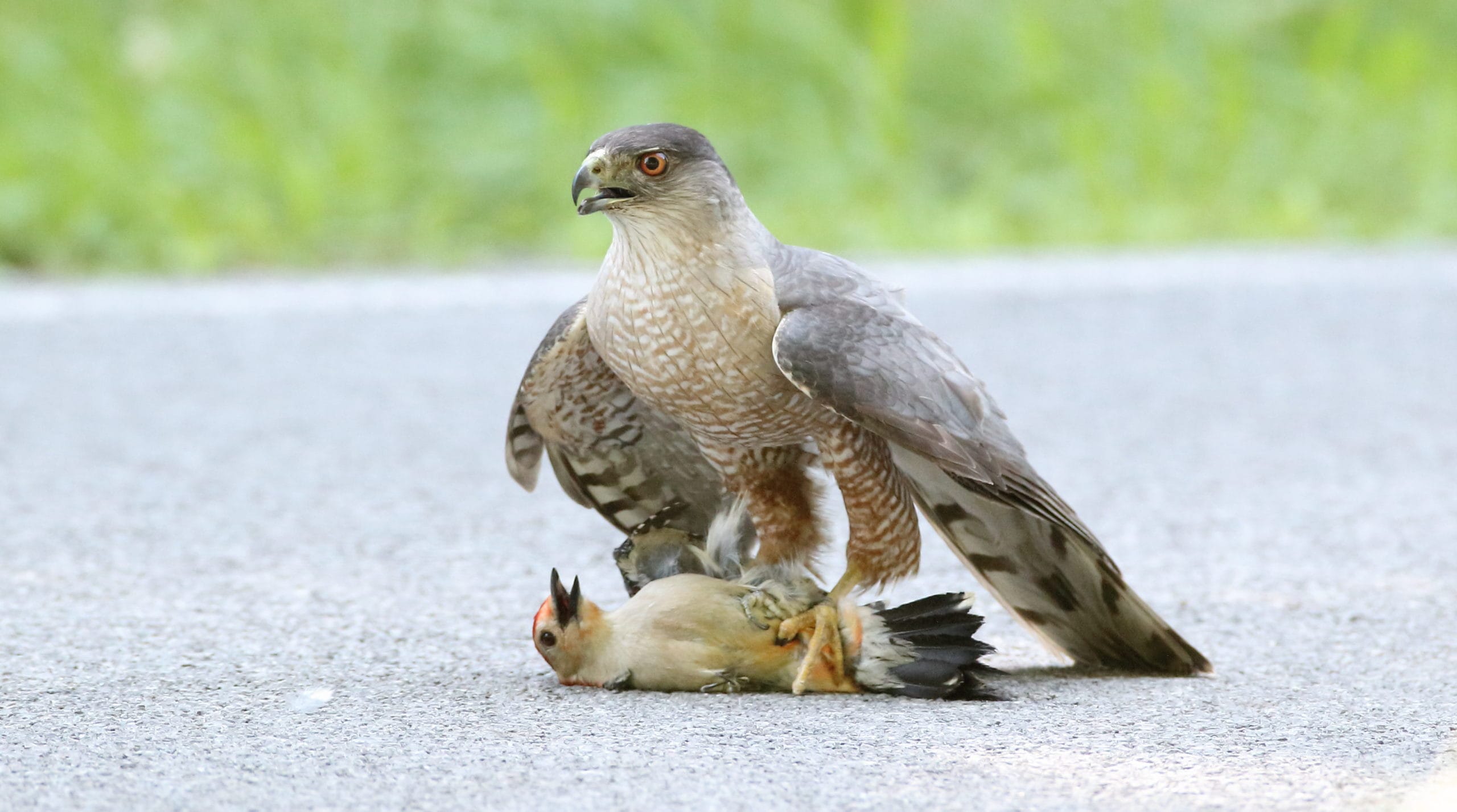
Small birds form one of the most common prey categories for many hawk species. This group includes sparrows, finches, warblers, and other similarly sized birds. Hawks that specialize in bird hunting, such as Cooper’s hawks, are particularly adept at capturing these fast-moving targets.
The hunting strategy for small birds often involves stealth and speed. Hawks may approach through dense vegetation or use sudden bursts of acceleration to surprise flocks in mid-flight or at feeding sites. Urban environments also increase opportunities, as bird feeders attract dense concentrations of prey.
Small birds provide moderate protein and are often consumed quickly. While individually smaller than mammalian prey, they are abundant and relatively easy to locate, making them a consistent food source throughout the year.
10. Songbirds
Songbirds are a highly diverse group of small perching birds and represent an important prey category for many hawk species. Their abundance in forests, gardens, and urban areas makes them frequently targeted prey.
Hawks rely on surprise and agility to capture songbirds, often attacking from concealed positions or during moments when birds are distracted while feeding. The success of these hunts depends heavily on timing and environmental cover.
Songbirds provide essential protein and are especially important during nesting season when hawks must feed both themselves and their chicks. Their widespread presence ensures they remain a stable part of the hawk diet across different habitats.
11. Pigeons
Pigeons are one of the most commonly hunted urban birds of prey targets for hawks. They are abundant in cities, parks, bridges, and industrial zones, making them a reliable food source for adaptable hawk species such as Cooper’s hawk and peregrine hawk in some regions.
Hawks use high-speed aerial pursuit or ambush tactics to catch pigeons. Because pigeons are strong flyers, hunts require precision timing and rapid acceleration. Hawks often attack from above or from hidden perches on buildings and trees.
Pigeons provide a substantial meal due to their size, offering high protein and fat content. This makes them especially valuable in urban ecosystems where mammals may be less available.
12. Doves
Doves are closely related to pigeons but are typically smaller and more delicate. They are common in both rural and suburban environments, where they feed on seeds and grains.
Hawks often target doves during flight or while they are feeding on the ground. Their calm behavior and predictable feeding patterns make them vulnerable to surprise attacks.
Doves provide moderate nutritional value and are frequently consumed whole, including feathers and bones, which hawks later regurgitate as pellets.
13. Ducks
Ducks are larger prey items that only powerful hawks or opportunistic hunters will target, often focusing on ducklings or injured individuals rather than healthy adults.
Hunting ducks requires access to wetlands, ponds, or rivers. Hawks may strike from above or attack from nearby perches along water edges. Success depends on timing and environmental advantage.
Ducks provide a large energy-rich meal, making them highly valuable when captured. However, due to their size and aquatic habitat, they are less commonly hunted than smaller birds or mammals.
14. Chicks (Young Birds)
Chicks of various bird species are highly vulnerable and represent an easy prey source for hawks. Nest raids or ground-level attacks often occur when parent birds are absent.
Hawks may target nests directly or seize fledglings during early flight stages. This opportunistic feeding behavior ensures a steady food supply during breeding seasons.
Chicks are rich in protein and easy to digest, making them especially valuable for feeding hawk offspring in the nest.
15. Snakes
Snakes are a common reptilian prey item for many hawk species. Hawks are known for their ability to handle venomous and non-venomous snakes alike using quick strikes and strong talons.
The hunting strategy involves spotting snakes from above and descending rapidly to pin them down before they can strike back. Hawks typically avoid prolonged physical struggle due to risk.
Snakes provide a nutritious meal rich in protein and fat, and are particularly important in warmer climates where reptile populations are abundant.
16. Lizards
Lizards are small, fast reptiles commonly hunted by hawks in desert, tropical, and rocky environments. Their abundance makes them a reliable food source.
Hawks capture lizards through rapid ground strikes or by picking them from exposed surfaces such as rocks and logs.
While individually small, lizards are plentiful and provide consistent protein intake, especially in arid ecosystems.
17. Frogs
Frogs are amphibians commonly found in wetlands, ponds, and marshes. Hawks often hunt them near water edges where they are most active.
Their slow movement on land makes them easy targets for hawks using low gliding attacks or perch hunting strategies.
Frogs are soft-bodied and easy to digest, making them a suitable prey item for both adult hawks and their chicks.
18. Toads
Toads are similar to frogs but often have thicker skin and toxic glands as a defense mechanism. Despite this, some hawk species can safely consume them.
Hawks typically select non-toxic or less toxic individuals and rely on instinct and experience to avoid harmful prey.
Toads are a secondary food source but still contribute to dietary diversity in wetland ecosystems.
19. Salamanders
Salamanders are small amphibians that live in moist forests, under logs, and near water sources. Hawks occasionally prey on them when encountered during foraging.
They are slow-moving and relatively easy to catch, making them opportunistic prey rather than primary targets.
Salamanders provide moderate nutritional value and are consumed when other prey is less available.
20. Fish
Some hawk species, especially those living near lakes, rivers, or coastal areas, actively hunt fish. This behavior is less common but still important in aquatic ecosystems.
Hawks typically catch fish by swooping down and grabbing them from shallow water using their talons. Accuracy and timing are essential to avoid water resistance.
21. Crayfish
Crayfish are freshwater crustaceans that live in rivers, ponds, marshes, and lakes. While not the primary prey for most hawk species, they become an important seasonal food source in wetland-rich environments. Hawks that live near water edges or migrate through aquatic regions often take advantage of crayfish abundance when other prey is less accessible.
The hunting method for crayfish typically involves low swooping flights over shallow water or shoreline probing. Hawks use their sharp talons to quickly grab crayfish before they retreat into burrows or underwater shelters. Timing is critical, as crayfish are fast-reacting and often hidden beneath rocks or vegetation.
Nutritionally, crayfish provide protein-rich meat and essential minerals. Although they are not as energy-dense as mammals or birds, they contribute valuable dietary diversity, especially in wetland ecosystems where prey variety fluctuates seasonally.
22. Crabs
Crabs are more commonly associated with coastal hawk species or those living near estuaries and mangrove ecosystems. They are strong, armored crustaceans that require skill and precision to capture safely. Hawks usually target smaller or juvenile crabs that are easier to handle.
Hunting crabs often involves walking or low hovering near tidal zones. Hawks must avoid the crab’s pincers while securing it with quick strikes. In some cases, repeated repositioning is needed to subdue larger individuals before consumption.
Crabs offer a rich source of protein and minerals, particularly calcium, which is beneficial for bone strength and egg production in breeding hawks. However, they remain a secondary food source compared to mammals and birds.
23. Large Insects
Large insects form an important supplemental food source for hawks, especially in warmer months when insect populations peak. These include beetles, grasshoppers, cicadas, and similar species that are easy to detect in open environments.
Hawks typically consume large insects opportunistically, either catching them mid-air or picking them from vegetation. Although small compared to vertebrate prey, insects are abundant and provide quick energy boosts.
Insects are particularly important for juvenile hawks learning to hunt, as they offer a low-risk introduction to prey capture and handling.
24. Grasshoppers
Grasshoppers are highly abundant in grasslands, agricultural fields, and open habitats. They are one of the most commonly consumed insect prey items for hawks in summer and early autumn.
Hawks capture grasshoppers by scanning fields from perches or while gliding low over vegetation. Their jumping movement makes them visible and relatively easy to target compared to other insects.
Although small, grasshoppers are rich in protein and are often consumed in large numbers when available, contributing significantly to seasonal dietary intake.
25. Beetles
Beetles are one of the most diverse insect groups and are frequently consumed by hawks in a wide range of habitats. Their hard exoskeleton provides protection, but hawks are capable of crushing them easily with their beaks.
Beetles are often found in soil, under bark, or in vegetation, making them accessible to ground-foraging hawks. Some species are particularly active at night, but diurnal species are more commonly taken.
They provide moderate protein and are especially useful during periods when larger prey is scarce.
26. Caterpillars
Caterpillars are soft-bodied larvae of butterflies and moths and are an extremely important seasonal food source, especially in spring and early summer when vegetation is rich.
Hawks may pick caterpillars directly from leaves or branches, often in wooded or garden environments. Their slow movement makes them easy targets compared to other prey.
Caterpillars are highly nutritious and play a major role in feeding hawk chicks, as they are easy to digest and rich in protein and moisture.
27. Dragonflies
Dragonflies are fast-flying insects typically found near water bodies. While challenging to catch, hawks may opportunistically capture them during low glides or ambush flights.
Their aerial agility makes them one of the more difficult insect prey types, but their size makes them worthwhile when successfully captured.
Dragonflies provide quick energy and are usually consumed immediately after capture.
28. Carrion (Dead Animals)
Although hawks are primarily active hunters, some species will occasionally feed on carrion when fresh kills are available. This behavior is more opportunistic and depends heavily on environmental conditions.
Feeding on carrion reduces energy expenditure since no active hunting is required. Hawks may share carcasses with other scavengers, although they prefer freshly dead animals.
Carrion provides protein and fat but is not a primary dietary source compared to live prey.
29. Rodent Pups
Rodent pups are young rodents such as mice, rats, and voles. They are especially vulnerable due to their lack of mobility and defensive ability.
Hawks often locate nests or burrows and capture pups when they are exposed or during early development stages. This makes them easy, energy-efficient prey.
Rodent pups are extremely nutritious and are often preferred when available, particularly during breeding season when hawks require high-protein food for chick development.
30. Baby Rabbits (Leverets)
Baby rabbits, also known as leverets, are among the most energy-rich prey available to hawks. They are small, slow-moving, and highly vulnerable compared to adult rabbits.
Hawks typically hunt leverets in open fields where they are left unattended by parents for periods of time. The attack is swift and relies on surprise and precision.
Because of their size and nutritional value, leverets provide one of the most rewarding meals in a hawk’s diet, supporting survival during demanding biological periods.
Conclusion
Hawks are highly adaptable predators with one of the most diverse diets among birds of prey. From small insects and amphibians to rodents, birds, reptiles, and even fish, their feeding habits reflect both opportunity and ecological balance. This flexibility allows hawks to thrive in forests, deserts, wetlands, grasslands, and urban environments.
Their diet plays a crucial ecological role by controlling populations of rodents and other small animals, reducing agricultural damage, and maintaining natural food chain stability. Without hawks, many ecosystems would experience overpopulation of prey species and resulting environmental imbalance.
Understanding what hawks eat not only highlights their importance as apex aerial hunters but also reveals how interconnected wildlife ecosystems truly are. Each prey species contributes to the survival and success of these powerful birds.
Frequently Asked Questions About What Hawks Eat
1. What do hawks mainly eat?
Hawks mainly eat small to medium-sized animals such as mice, rats, voles, birds, and rabbits, depending on their species and habitat.
2. Are hawks carnivores?
Yes, hawks are strict carnivores and rely entirely on animal-based food for survival.
3. Do hawks eat mice?
Yes, mice are one of the most common and important prey items in a hawk’s diet.
4. Do hawks eat rats?
Yes, hawks often hunt rats, especially in urban and agricultural environments.
5. Do hawks eat rabbits?
Yes, larger hawk species can hunt rabbits, especially young or small ones.
6. Do hawks eat birds?
Yes, hawks frequently hunt small birds such as sparrows, pigeons, and doves.
7. Do hawks eat snakes?
Yes, many hawks hunt snakes and are skilled at handling both venomous and non-venomous species.
8. Do hawks eat lizards?
Yes, lizards are commonly eaten in warm and dry habitats.
9. Do hawks eat frogs?
Yes, hawks eat frogs when hunting near wetlands and ponds.
10. Do hawks eat fish?
Some hawk species eat fish, especially those living near lakes and rivers.
11. Do hawks eat insects?
Yes, hawks eat large insects like grasshoppers, beetles, and dragonflies.
12. Do hawks eat squirrels?
Yes, hawks can hunt squirrels, especially in wooded areas.
13. Do hawks eat chipmunks?
Yes, chipmunks are a common prey species for forest-dwelling hawks.
14. Do hawks eat pigeons?
Yes, pigeons are frequently hunted in urban environments.
15. Do hawks eat doves?
Yes, doves are commonly targeted due to their predictable feeding behavior.
16. Do hawks eat ducks?
Yes, but usually ducklings or weak individuals rather than healthy adults.
17. Do hawks eat chickens?
Yes, hawks may prey on chickens if they are left unprotected in open areas.
18. Do hawks eat carrion?
Yes, some hawks occasionally feed on carrion, but they prefer live prey.
19. Do hawks eat earthworms?
Rarely, but they may opportunistically consume worms when available.
20. Do hawks eat crabs?
Yes, coastal hawks may eat crabs, especially smaller species.
21. Do hawks eat crayfish?
Yes, hawks living near freshwater habitats may consume crayfish.
22. Do hawks eat rodents?
Yes, rodents form the foundation of many hawk diets.
23. Do hawks eat baby animals?
Yes, hawks often target young animals such as chicks, leverets, and rodent pups.
24. Do hawks eat frogs and toads?
Yes, amphibians are part of their diet in wetland ecosystems.
25. Do hawks eat bats?
Rarely, but some hawks may opportunistically catch bats.
26. Do hawks eat other hawks?
Very rarely, but territorial conflicts can sometimes lead to attacks.
27. Do hawks eat large prey whole?
Hawks tear prey into pieces using their beaks before consuming it.
28. Do hawks eat bones?
They may swallow small bones, which are later broken down or regurgitated as pellets.
29. Do hawks eat feathers?
Yes, feathers are often ingested but later regurgitated as pellets.
30. Do hawks eat every day?
No, hawks may not eat daily; they often consume large meals that last multiple days.
31. Do hawks hunt at night?
No, hawks are primarily diurnal hunters and are active during daylight.
32. Do hawks eat in groups?
No, hawks are solitary hunters and rarely feed in groups.
33. Do hawks store food?
Some hawks may cache food temporarily, but most do not store food long-term.
34. Do hawks eat urban animals?
Yes, urban hawks often hunt pigeons, rats, and squirrels.
35. Do hawks eat garden pests?
Yes, hawks help control pests like rodents and insects.
36. Do hawks drink water?
Hawks get most of their moisture from prey but may also drink water when available.
37. Do hawks eat dead animals only?
No, hawks primarily hunt live prey but may occasionally scavenge.
38. Do hawks eat slowly or quickly?
They eat relatively quickly to avoid losing prey to competitors.
39. Do hawks prefer certain prey?
Yes, they often prefer abundant and easy-to-catch prey like rodents.
40. Do hawks eat insects all year?
Insects are eaten mostly in warm months when they are abundant.
41. Do hawks eat snakes whole?
They typically swallow smaller snakes whole or tear larger ones apart.
42. Do hawks eat prey bigger than themselves?
Usually no, but they may hunt prey close to their own size.
43. Do hawks eat farm animals?
They may attack small farm animals like chickens or ducklings.
44. Do hawks eat fish often?
Only some species do, and it depends on habitat availability.
45. Do hawks eat during migration?
Yes, they hunt opportunistically during migration journeys.
46. Do hawks eat more in winter?
Yes, they may increase feeding due to higher energy demands.
47. Do hawks eat prey alive?
Yes, hawks typically kill prey immediately after capture.
48. Do hawks chew food?
No, they tear food into pieces instead of chewing.
49. Do hawks regurgitate food?
Yes, they regurgitate pellets containing bones and feathers.
50. What is a hawk’s favorite food?
Rodents such as mice and voles are among the most preferred prey.
51. Why are hawks important in nature?
Hawks help control populations of rodents and other small animals, maintaining ecological balance.
Read more: