

Lizards are among the most diverse and adaptable reptiles on Earth, found in deserts, forests, grasslands, urban gardens, and even inside homes. With more than 6,000 species worldwide, their diets vary widely depending on size, habitat, and species type. Some lizards are strict insect-eaters, others are plant-eaters, and many are opportunistic omnivores that consume whatever food is available in their environment.
Understanding what lizards eat is essential for several reasons. In the wild, diet plays a critical role in their survival, growth, reproduction, and overall ecosystem balance. For pet owners, knowing the correct diet is equally important because improper feeding can lead to serious health problems such as metabolic bone disease, obesity, or nutritional deficiencies.
Unlike mammals, lizards do not chew their food. Instead, they rely on quick strikes to capture prey and swallow it whole or in large pieces. Their feeding behavior is closely tied to their environment and body structure. For example, fast-moving lizards like geckos and anoles primarily hunt insects, while larger species like monitor lizards may consume small mammals, birds, or even other reptiles.
Diet also varies depending on life stage. Juvenile lizards typically require high-protein diets rich in insects to support rapid growth, while some adult species gradually incorporate more plant matter into their meals. Environmental factors such as temperature, humidity, and food availability further influence what they eat in the wild.
One of the most fascinating aspects of lizard feeding behavior is their adaptability. Many species are opportunistic feeders, meaning they will take advantage of any available food source, whether it is moving prey like insects or stationary food such as fruits and vegetation. This flexibility has allowed lizards to thrive in a wide range of ecosystems across the globe.
In this detailed guide, we will explore 30 of the most common foods that lizards eat in the wild and in captivity. Each food item reflects their natural hunting instincts, nutritional needs, and ecological role. From protein-rich insects to leafy greens and sweet fruits, the lizard diet is far more varied than many people realize.
By the end of this article, you will have a complete understanding of lizard nutrition, feeding behavior, and dietary diversity—helping you better appreciate these remarkable reptiles and their place in nature.
What Do Lizards Eat in the Wild ?
1. Crickets
Crickets are one of the most important staple foods for many lizard species, especially small to medium insectivores such as geckos, anoles, and young bearded dragons. In the wild, crickets are abundant in grasslands, forests, and even urban edges, making them an easy and reliable food source.
Nutritionally, crickets are rich in protein, moderate in fat, and contain essential amino acids that support muscle growth, tissue repair, and energy production. They also provide moisture, which is especially important in dry environments where water is limited.
Lizards hunt crickets using a combination of patience and speed. They often remain motionless until prey comes within striking distance, then launch a rapid tongue flick or bite. Their excellent vision allows them to detect even subtle movements in grass or leaf litter.
2. Grasshoppers
Grasshoppers are another highly nutritious insect commonly consumed by lizards. They are larger than crickets and provide a substantial energy boost, making them particularly valuable for growing juveniles and active adults.
Grasshoppers are rich in protein and contain beneficial fats that help sustain energy levels. Their size makes them a more rewarding prey item, though they are also faster and more difficult to catch.
Lizards typically hunt grasshoppers in open areas such as fields and meadows. They rely on ambush tactics, waiting for the insect to land before striking with precision.
3. Mealworms
Mealworms, the larval stage of darkling beetles, are a common food source for both wild and captive lizards. In nature, they are found in decaying organic matter, making them an accessible source of protein.
They are high in protein and fat, which makes them especially useful for energy storage and growth. However, they should be balanced with other foods due to their relatively high fat content.
Lizards consume mealworms by locating them under logs, soil, or leaf litter. Their soft bodies make them easy to swallow and digest.
4. Earthworms
Earthworms are a nutrient-rich food source found in moist soil environments. Many lizard species feed on them opportunistically when they become exposed after rain or soil disturbance.
Earthworms contain high levels of protein, moisture, and essential minerals such as iron and calcium. This makes them particularly beneficial for hydration and overall health.
Lizards detect earthworms through movement in the soil or on the surface. Once located, they quickly grab and swallow them whole.
5. Ants
Ants are consumed by many small lizard species, especially those living in arid or tropical environments. They are extremely abundant, making them a consistent food source.
Although individually small, ants provide protein and form part of the natural diet of many insectivorous lizards. Some species even specialize in eating ants exclusively.
Lizards forage near ant trails or nests, snapping up individuals as they move. Their fast reflexes are essential for capturing these tiny, quick-moving insects.
6. Flies
Flies and other flying insects are an important part of the lizard diet, especially for arboreal species that live in trees and shrubs. These insects are highly mobile and require precise timing to catch.
Flies provide protein and are easy to digest, making them suitable for both juveniles and adults. They are often consumed in large quantities when available.
Lizards typically catch flies mid-air or while they rest on surfaces. Their quick tongue strikes allow them to capture prey in fractions of a second.
7. Spiders
Spiders are another common prey item for many lizard species. They are found in a wide range of habitats, from forests to human dwellings, making them easily accessible.
Spiders are rich in protein and contain essential nutrients that support growth and energy metabolism. Some larger spiders may even provide a substantial meal for smaller lizards.
Lizards hunt spiders cautiously due to their potential defensive behaviors. They often approach slowly before striking quickly to avoid being bitten or entangled.
8. Beetles
Beetles are one of the most diverse insect groups and a frequent food source for lizards. Their hard exoskeletons provide calcium and other minerals.
While beetles can be more difficult to digest than softer insects, they are still an important part of the diet, especially in environments where other prey is limited.
Lizards hunt beetles on the ground, often flipping them over or targeting softer-bodied species for easier consumption.
9. Caterpillars
Caterpillars are soft-bodied larvae of butterflies and moths and are highly nutritious for lizards. They are rich in protein and fat, making them an excellent energy source.
Because they move slowly and are easy to catch, caterpillars are a preferred food for many insectivorous lizards.
Lizards often find caterpillars on leaves and vegetation, where they feed before pupation. Their slow movement makes them easy targets.
10. Cockroaches
Cockroaches are highly resilient insects that serve as a significant food source for many lizards, especially in tropical and urban environments.
They are rich in protein and fat, providing a dense nutritional profile that supports growth and energy needs.
Lizards hunt cockroaches at night or in dark, humid areas where these insects are most active. Their speed and stealth make them effective predators of this elusive prey.
11. Small mice
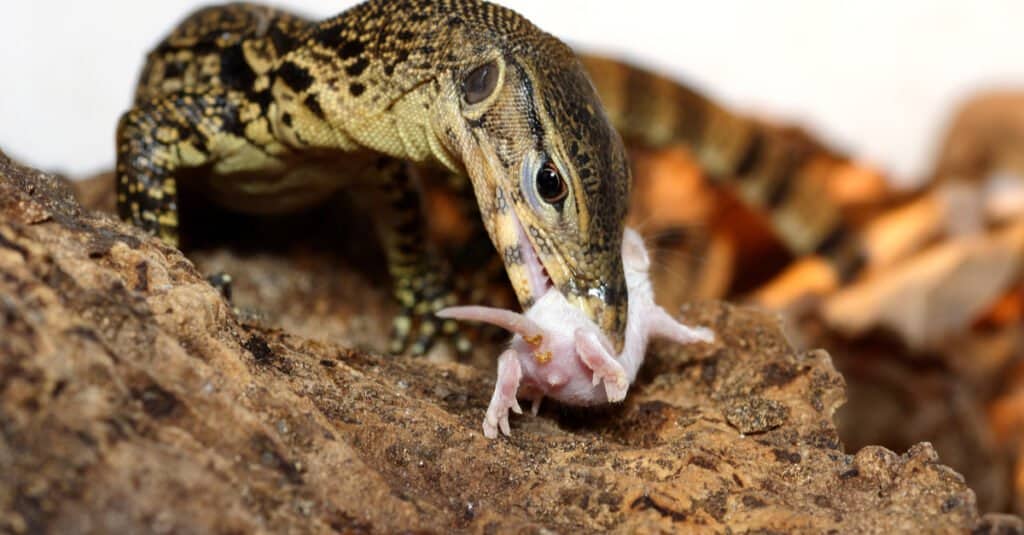
Small mice are consumed primarily by larger lizard species such as monitor lizards and some tegus. These reptiles have powerful jaws and digestive systems capable of processing vertebrate prey, making small mammals an important high-energy food source.
Nutritionally, mice are extremely rich in protein and fat, providing sustained energy for growth, reproduction, and survival in harsh environments. They also contain essential nutrients like calcium and phosphorus derived from bones.
Lizards typically hunt small mice opportunistically, often ambushing them at night or near burrows. The prey is subdued quickly with a strong bite before being swallowed in large sections.
12. Baby birds
Baby birds, or nestlings, are another high-protein food source for larger predatory lizards. They are especially vulnerable in nests, making them an accessible target in forested and suburban environments.
These nestlings are rich in protein and fats, supporting rapid growth in predatory lizards. They also provide a concentrated source of nutrients in a single meal.
Lizards often raid nests in trees, shrubs, or ground cover, using climbing ability and stealth to access eggs or chicks when parent birds are absent.
13. Other lizards
Many larger lizard species are known to be cannibalistic or opportunistic predators of smaller lizards. This includes both juveniles and weaker individuals of other species.
This behavior provides a high-protein, energy-dense food source and helps regulate population density in some ecosystems.
Predatory lizards rely on speed and ambush tactics to capture other lizards, often striking suddenly before the prey has time to escape.
14. Frogs
Frogs are commonly eaten by medium to large lizards in wetland and tropical environments. They are abundant near water sources, making them a reliable seasonal food.
Frogs are rich in protein and moisture, which helps maintain hydration in dry or warm climates. Their soft bodies make them easy to swallow and digest.
Lizards typically hunt frogs at night or near ponds and streams, using stealth to avoid detection before striking quickly.
15. Snails
Snails are a slow-moving food source that many lizards consume, especially in humid environments. They are often found on vegetation, soil, or damp surfaces.
Snails provide calcium, protein, and moisture. The shell also contributes minerals that support bone health in lizards.
Some lizards use specialized jaw strength to crack shells, while others consume smaller snails whole without difficulty.
16. Slugs
Slugs are closely related to snails but lack a hard shell, making them easier for lizards to consume. They are common in moist environments such as gardens and forests.
Slugs are rich in moisture and provide moderate protein, making them useful for hydration and nutrition.
Lizards locate slugs by scent and movement, often hunting them during early morning or after rainfall when they are most active.
17. Shrimp
Shrimp are part of the diet for some semi-aquatic and coastal lizard species. These crustaceans are found in shallow waters, mangroves, and wetland edges.
They are high in protein and contain beneficial minerals like iodine and calcium, supporting metabolic and skeletal health.
Lizards hunt shrimp by wading into shallow water or capturing them near shorelines during low tide or in freshwater pools.
18. Larvae
Insect larvae, such as beetle or fly larvae, are a highly nutritious and soft-bodied food source for many lizards. They are commonly found in soil, decaying matter, or plant material.
Larvae are rich in fat and protein, making them ideal for energy storage and growth, especially in juvenile lizards.
Lizards locate larvae by digging into soil, wood, or leaf litter, using their keen sense of smell and movement detection.
19. Termites
Termites are a major food source for many desert and tropical lizard species. They often appear in large swarms, providing an abundant feeding opportunity.
Termites are rich in protein and fats and are easy to catch in large numbers, making them highly efficient prey.
Lizards consume termites during swarming events, snapping them up quickly as they emerge from colonies or fly through the air.
20. Wasps
Wasps are occasionally eaten by lizards, although they are more difficult prey due to their ability to sting and defend themselves.
Despite this, wasps provide protein and are consumed opportunistically when other food sources are limited.
Lizards carefully target wasps, often striking quickly to avoid stings and consuming them before they can react.
21. Collard greens
Collard greens are a leafy vegetable commonly consumed by herbivorous and omnivorous lizard species such as iguanas and bearded dragons. In the wild, similar wild greens are an important part of their natural diet, especially in areas where vegetation is abundant.
These greens are rich in calcium, fiber, and essential vitamins like A and K. Calcium is particularly important for bone development and preventing metabolic bone disease in reptiles.
Lizards typically feed on collard greens by browsing low vegetation. They tear leaves with their jaws and consume them slowly, allowing for efficient digestion of plant fiber.
22. Dandelion leaves
Dandelion leaves are highly nutritious wild greens that many lizards consume in natural environments. They are especially common in meadows, grasslands, and disturbed habitats.
They provide high levels of calcium, antioxidants, and vitamins that support immune health and growth. Their slightly bitter taste does not deter herbivorous lizards.
Lizards graze on dandelion leaves while basking in sunny areas, often selecting younger leaves that are more tender and easier to digest.
23. Turnip greens
Turnip greens are another leafy plant consumed by herbivorous lizards. These greens are often found in open fields and cultivated areas where wild lizards may forage.
They are rich in fiber, calcium, and vitamin C, making them an excellent dietary component for digestion and bone health.
Lizards feed on turnip greens by biting off small portions of leaves, often combining them with other vegetation for a balanced intake.
24. Carrots
Carrots are occasionally eaten by omnivorous lizards, particularly those that consume a mix of plant and animal matter. While not a wild staple, they are similar to naturally available root vegetables.
Carrots are high in beta-carotene, which supports eye health and immune function. They also provide natural sugars for energy.
Lizards consume carrots in small amounts, usually when they are softened or broken into manageable pieces.
25. Squash
Squash is a soft vegetable that some lizards consume in environments where fruiting plants are available. It is similar to wild gourds found in tropical regions.
Squash provides hydration, fiber, and vitamins that support digestive health and energy balance.
Lizards feed on squash by biting into soft flesh, often preferring ripe or overripe portions.
26. Sweet potatoes
Sweet potatoes are starchy vegetables that provide a rich source of carbohydrates for energy. In the wild, lizards may encounter similar tubers or roots.
They contain vitamin A, fiber, and natural sugars that support metabolism and growth.
Lizards consume sweet potatoes when available in fragmented or softened forms, often in human-influenced environments.
27. Apples
Apples are fruits that some omnivorous lizards may consume when available in their habitat. They are not a primary wild food but resemble natural fallen fruits.
Apples provide hydration, natural sugars, and small amounts of fiber and vitamins.
Lizards typically feed on softened or overripe fruit pieces found on the ground.
28. Berries
Berries are a natural food source for many omnivorous lizards, especially in forested and shrub-rich environments. They are commonly found during fruiting seasons.
They are rich in antioxidants, vitamins, and natural sugars that provide quick energy.
Lizards feed on berries directly from plants or after they fall to the ground, often consuming them in small quantities.
29. Melons
Melons are juicy fruits that provide hydration and energy for lizards in warm climates. They are similar to wild melons found in tropical and subtropical regions.
Melons contain high water content and natural sugars, helping lizards stay hydrated in dry environments.
Lizards consume melon flesh when it is soft and accessible, usually feeding on fallen or damaged fruit.
30. Grapes
Grapes are another fruit consumed by omnivorous lizards. In the wild, they may eat similar small berries or vine fruits.
Grapes provide quick energy through natural sugars and contain antioxidants that support cellular health.
Lizards typically feed on grapes when they are ripe and soft, often consuming them opportunistically.
Conclusion
Lizards are remarkably adaptable reptiles with diets that range from strictly insect-based feeding to fully omnivorous habits depending on the species and environment. From crickets, grasshoppers, and beetles to fruits, leafy greens, and even small vertebrates, their food choices reflect one of the most flexible feeding strategies in the animal kingdom.
Insectivorous lizards rely heavily on protein-rich prey such as crickets, termites, and worms to fuel growth and energy. Larger predatory species expand their diet to include frogs, small mammals, and even other reptiles, showcasing their role as important mid-to-top level predators in many ecosystems.
Omnivorous and herbivorous lizards, on the other hand, contribute to seed dispersal and plant control by consuming fruits, flowers, and vegetation. This makes them important participants in maintaining ecological balance, especially in tropical and subtropical environments.
Overall, the diversity of foods that lizards consume highlights their evolutionary success and ecological importance. Whether controlling insect populations or aiding plant regeneration, lizards play a vital role in keeping ecosystems healthy and balanced.
Frequently Asked Questions (FAQs) About What Lizards Eat
1. What do lizards eat the most?
Most lizards primarily eat insects such as crickets, grasshoppers, beetles, and ants. These foods provide high protein and are easy to catch in most environments.
2. Are all lizards carnivores?
No. Some lizards are carnivores, some are herbivores, and many are omnivores depending on the species and habitat.
3. Do lizards eat plants?
Yes, many lizards eat plants including leaves, fruits, flowers, and vegetables, especially herbivorous and omnivorous species.
4. Can lizards eat fruit?
Yes, many lizards eat fruits such as berries, apples, grapes, and melons, which provide natural sugars and hydration.
5. Do lizards eat meat?
Yes, carnivorous lizards eat meat in the form of insects, small animals, birds, frogs, and even other lizards.
6. Do lizards eat crickets?
Crickets are one of the most common foods for insect-eating lizards due to their high protein content.
7. Do lizards eat ants?
Yes, many small lizards regularly eat ants because they are abundant and easy to catch.
8. Do lizards eat spiders?
Yes, spiders are a common food source for many lizard species.
9. Do lizards eat worms?
Yes, earthworms and larvae are frequently eaten by lizards, especially in moist environments.
10. Do lizards eat flies?
Yes, many lizards catch and eat flies, especially fast-moving insectivorous species.
11. Do lizards eat cockroaches?
Yes, cockroaches are a rich protein source and are commonly eaten by lizards.
12. Do lizards eat beetles?
Yes, beetles are part of the diet of many lizards, although their hard shells can make them harder to digest.
13. Do lizards eat grasshoppers?
Yes, grasshoppers are a highly nutritious and common prey item for lizards.
14. Do lizards eat mealworms?
Yes, mealworms are often eaten by lizards and provide a good source of protein and fat.
15. Do lizards eat caterpillars?
Yes, caterpillars are soft-bodied and easy for lizards to consume.
16. Do lizards eat small mice?
Large lizard species such as monitor lizards may eat small mice.
17. Do lizards eat baby birds?
Some large lizards may opportunistically eat baby birds or eggs.
18. Do lizards eat frogs?
Yes, frogs are commonly eaten by medium to large lizards in wet environments.
19. Do lizards eat other lizards?
Yes, some species are cannibalistic and may eat smaller lizards.
20. Do lizards eat snails?
Yes, snails are eaten by some lizards, especially in humid environments.
21. Do lizards eat slugs?
Yes, slugs are a soft and easy food source for many lizards.
22. Do lizards eat shrimp?
Some semi-aquatic lizards eat shrimp found in shallow waters.
23. Do lizards eat termites?
Yes, termites are a highly nutritious and common food for many lizards.
24. Do lizards eat wasps?
Yes, but carefully, since wasps can sting as a defense mechanism.
25. Do lizards eat leaves?
Yes, herbivorous lizards consume leaves like dandelion and collard greens.
26. Do lizards eat carrots?
Yes, some omnivorous lizards eat carrots in small amounts.
27. Do lizards eat squash?
Yes, squash is sometimes eaten by plant-eating lizards.
28. Do lizards eat sweet potatoes?
Yes, sweet potatoes can be eaten by omnivorous lizards.
29. Do lizards eat apples?
Yes, apples are eaten by some omnivorous lizards.
30. Do lizards eat berries?
Yes, berries are a natural food source for many lizards.
31. Do lizards eat melons?
Yes, melons provide hydration and are sometimes eaten.
32. Do lizards eat grapes?
Yes, grapes are consumed by some omnivorous species.
33. Why do lizards eat insects?
Insects provide high protein and are easy for lizards to hunt.
34. How do lizards catch food?
Lizards use quick strikes, speed, and excellent vision to capture prey.
35. Do lizards hunt at night?
Some species are nocturnal, while others hunt during the day.
36. Do lizards drink water from food?
Yes, many foods like insects and fruits provide moisture.
37. Do baby lizards eat the same food as adults?
Baby lizards usually eat smaller insects than adults.
38. Do lizards need live food?
Many insect-eating lizards prefer live prey for movement stimulation.
39. Can lizards survive without insects?
Most insectivorous lizards cannot survive without insects as their main food source.
40. Do lizards eat dead insects?
Some lizards may eat dead insects, but live prey is preferred.
41. Do lizards eat in groups?
Lizards are generally solitary feeders.
42. Do lizards eat every day?
It depends on the species; some eat daily while others eat less frequently.
43. Do lizards overeat?
In captivity, some lizards can overeat if not properly managed.
44. Do lizards eat plants in the wild?
Yes, many wild lizards consume available vegetation.
45. What is a lizard’s favorite food?
Most insectivorous lizards prefer crickets and grasshoppers.
46. Do lizards eat during winter?
Cold-blooded lizards often reduce feeding activity in cold seasons.
47. Do lizards eat continuously?
No, they eat based on energy needs and environmental conditions.
48. Are lizards picky eaters?
Some species are selective, especially in captivity.
49. Do lizards eat humans food?
Some omnivorous species may eat safe human fruits and vegetables.
50. Why do lizards need a varied diet?
A varied diet ensures proper nutrition, growth, and immune system health.
51. What happens if lizards eat wrong food?
Improper diets can lead to malnutrition, illness, or metabolic bone disease.
52. Can lizards survive on one type of food?
No, most lizards require a varied diet for long-term health and survival.
Read more: