
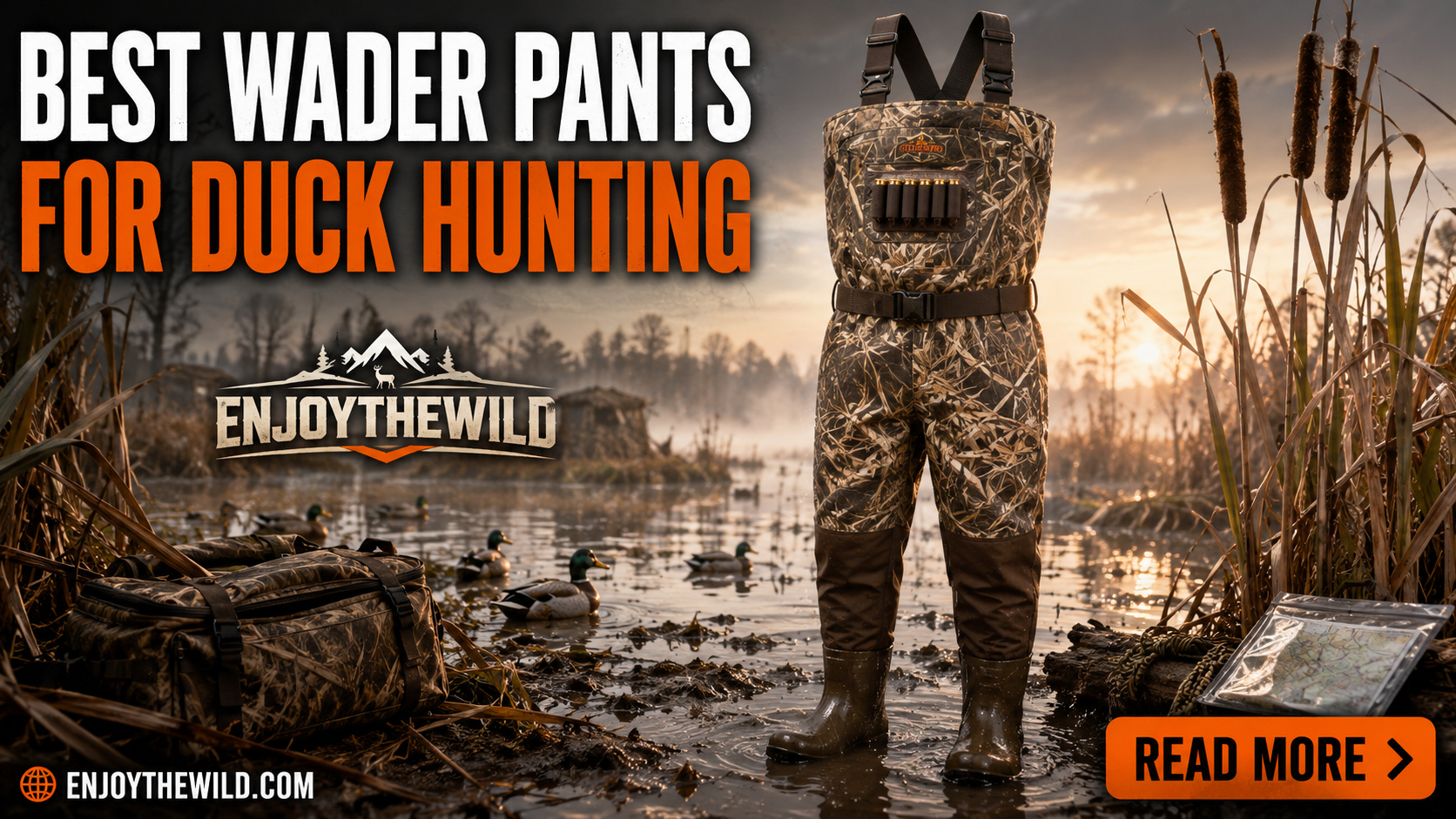
Choosing the best wader pants for duck hunting is about staying dry, moving safely, and matching your gear to the depth, temperature, mud, and walking distance of your hunt. Waist-high wader pants can be a smart choice for shallow marshes, warm early-season hunts, flooded fields, creek crossings, boat launches, and hunters who want more mobility than full chest waders.
However, wader pants are not the right tool for every waterfowl setup. If you hunt deep water, heavy current, icy conditions, or unpredictable marsh holes, chest waders may be safer and more protective. This guide compares practical wader pants and a few chest-wader alternatives for duck hunters who want dry lower-body protection without buying the wrong gear.
Before hunting, always check local waterfowl seasons, licenses, Federal Duck Stamp requirements, state permits, legal equipment rules, public land access rules, firearm safety rules, boating rules, and manufacturer instructions. In the United States, waterfowl hunters age 16 or older generally need a current signed Federal Duck Stamp along with required state licenses and permits. The U.S. Fish & Wildlife Service also requires nontoxic shot for hunting waterfowl and coots. :contentReference[oaicite:2]{index=2} :contentReference[oaicite:3]{index=3}
Quick Picks
- Best Overall: FROGG TOGGS Pilot II Guide Pant Wader
- Best Budget Option: Caddis Breathable Stockingfoot Wading Pants
- Best for Beginners: Paramount Outdoors Deep Eddy Pant Wader
- Best for Shallow Marsh Walking: Compass 360 Deadfall Stockingfoot Wading Pant
- Best Chest-Wader Alternative for Deeper Duck Water: FROGG TOGGS Canyon II Chest Wader
Product Comparison Table
| Product | Best For | Key Features | Important Notes | Check Details |
|---|---|---|---|---|
| FROGG TOGGS Pilot II Guide Pant Wader | Best overall wader pants | Breathable design, stockingfoot style, waist-high coverage | Best for shallow water; pair with proper wading boots | Check Price |
| FROGG TOGGS Hellbender Guide Pant Wader | Durability-focused buyers | Guide-style build, breathable upper, stockingfoot format | Check sizing carefully before buying | Check Price |
| Paramount Outdoors Deep Eddy Pant Wader | Beginners and casual duck hunters | Breathable stockingfoot pant wader, simple fit, easy layering | Not ideal for deep water or heavy current | Check Price |
| Caddis Breathable Stockingfoot Wading Pants | Budget shallow-water use | Lightweight feel, stockingfoot construction, simple waist fit | May need extra insulation in cold water | Check Price |
| Compass 360 Deadfall Stockingfoot Wading Pant | Shallow marsh walking | Breathable pant-style design, stockingfoot build, compact profile | Confirm availability and size range | Check Price |
| FROGG TOGGS Canyon II Chest Wader | Deeper duck water | Chest coverage, breathable waterproof construction, stockingfoot style | More coverage than pants but less ventilation | Check Price |
| TIDEWE Bootfoot Chest Wader | Budget duck hunting setup | Bootfoot design, chest coverage, camo options | Boot fit matters; heavier than pant waders | Check Price |
| HISEA Neoprene Chest Waders | Cold-water budget hunts | Neoprene insulation, bootfoot design, chest protection | Can feel warm and bulky for active walking | Check Price |
| Foxelli Neoprene Chest Waders | Cold marsh and flooded timber | Neoprene build, bootfoot coverage, insulated feel | Better for cold than hot weather | Check Price |
| Simms Tributary Stockingfoot Wader | Premium breathable alternative | Fishing-oriented stockingfoot chest wader, breathable design, quality-focused build | Not a pant wader, but useful for deeper water | Check Price |
Best Wader Pants for Duck Hunting Reviews
1. FROGG TOGGS Pilot II Guide Pant Wader
The FROGG TOGGS Pilot II Guide Pant Wader is one of the strongest choices for hunters who want waist-high coverage instead of full chest waders. It is better suited for shallow marshes, flooded edges, dog training days, boat launches, and early-season duck hunts where full chest waders may feel too warm or restrictive.
Key Features
- Waist-high pant-style wader design for shallow water use.
- Stockingfoot construction designed to be worn with separate wading boots.
- Breathable build intended for better comfort during walking and active use.
Pros
- More mobile than many chest waders.
- Good choice for hunters who walk levees, shallow marsh edges, and muddy fields.
- Easier to layer under than tight bootfoot waders.
Cons
- Not safe for deep water, sudden drop-offs, or strong current.
- Requires separate wading boots, which adds cost.
Field Notes
This is the kind of wader pant that makes sense when you already know the water depth. It is not meant for chest-deep flooded timber or unknown marsh holes. For duck hunting, the biggest advantage is mobility. You can walk, bend, set decoys, and climb in and out of a boat with less bulk than a chest wader.
Safety and Legal Notes
Do not rely on waist waders in water that may rise above the beltline. Check water depth before entering, avoid strong current, wear a personal flotation device when boating, and follow all waterfowl regulations, including license, stamp, shot, firearm safety, and public land rules.
Best For
Best for duck hunters who mostly hunt shallow water, flooded fields, marsh edges, and mild-to-cool conditions.
2. FROGG TOGGS Hellbender Guide Pant Wader
The FROGG TOGGS Hellbender Guide Pant Wader is a practical pick for hunters who want a guide-style pant wader with a balance of comfort, durability, and breathable performance. It is best for waterfowlers who walk more than they sit and need lower-body waterproof protection without the full coverage of a chest wader.
Key Features
- Breathable pant-wader style for active use.
- Stockingfoot design for pairing with traction-focused wading boots.
- Useful for shallow water, creek crossings, and muddy marsh work.
Pros
- Good balance of mobility and protection.
- Works well for hunters who already own quality wading boots.
- Less bulky than neoprene chest waders.
Cons
- Not insulated like neoprene waders.
- Still requires careful sizing and layering.
Field Notes
Breathable pant waders are most useful when you are hiking to a blind, setting decoys in shallow water, or hunting early season. If the water is cold, use moisture-wicking base layers and avoid cotton. If you often break through soft mud, prioritize boots with good ankle support and traction.
Safety and Legal Notes
Wader pants are not flotation gear and should not be used as a substitute for water safety planning. Avoid crossing water you cannot read. Always check local regulations before waterfowl hunting and use only legal ammunition and equipment for your area.
Best For
Best for hunters who want a durable-feeling shallow-water wader pant for active duck hunting setups.
3. Paramount Outdoors Deep Eddy Breathable Stockingfoot Pant Wader
The Paramount Outdoors Deep Eddy Pant Wader is a beginner-friendly option for hunters who want a straightforward breathable wading pant. It is a sensible choice for shallow waterfowl hunts, fishing crossover use, and outdoor buyers who want one pair of wader pants for multiple wet-weather tasks.
Key Features
- Breathable stockingfoot pant-wader design.
- Waist-high coverage for shallow water and muddy terrain.
- Useful for duck hunting, fishing, marsh work, and wet field access.
Pros
- Good crossover option for fishing and hunting.
- Simple design is easy for beginners to understand.
- Less restrictive than chest waders in warmer weather.
Cons
- Not enough coverage for deeper waterfowl setups.
- May require careful layering in cold conditions.
Field Notes
This wader pant makes the most sense for hunters who know they will be in knee-deep or thigh-deep water rather than deeper marsh holes. Because it is stockingfoot, the boot choice will strongly affect comfort, traction, and safety.
Safety and Legal Notes
Use a wading belt correctly, avoid deep crossings, and scout water depth in daylight when possible. Follow state and federal waterfowl regulations, including season dates, bag limits, licensing, stamp requirements, and nontoxic shot rules.
Best For
Best for beginner duck hunters, fishing crossover users, and shallow-water hunters who want breathable comfort.
4. Caddis Breathable Stockingfoot Wading Pants
Caddis Breathable Stockingfoot Wading Pants are a budget-conscious choice for hunters who need basic shallow-water protection. They are not a replacement for heavy-duty duck hunting chest waders, but they can work well for mild weather, shallow marshes, and hunters who want a lighter setup.
Key Features
- Stockingfoot design for use with separate boots.
- Breathable pant-style construction.
- Simple waist-high protection for shallow water.
Pros
- Good budget-friendly entry point.
- Lightweight compared with many neoprene chest waders.
- Useful for warm or mild early-season hunts.
Cons
- Not built for deep or icy water.
- May not offer the same long-term durability as premium waders.
Field Notes
This is a practical option for hunters who do not need premium features. If your duck season includes sharp brush, flooded timber, ice edges, or rough boat use, you may want a more reinforced wader. For casual shallow hunts, the lighter build may be enough.
Safety and Legal Notes
Inspect seams, stocking feet, and fabric before each hunt. Stop using any wader that leaks badly, restricts movement, or creates a tripping hazard. Never enter water beyond the safe limit of pant waders.
Best For
Best for budget-minded hunters, early-season duck hunting, and shallow water access.
5. Compass 360 Deadfall Stockingfoot Wading Pant
The Compass 360 Deadfall Stockingfoot Wading Pant is another useful shallow-water choice for duck hunters who prefer breathable wader pants. It is especially appealing for hunters who want mobility and do not want to wear full chest waders when the water does not require them.
Key Features
- Stockingfoot pant-wader construction.
- Designed for breathable comfort during active movement.
- Low-bulk profile for walking, setting decoys, and boat access.
Pros
- Good for mobile hunters and shallow marsh scouting.
- Less restrictive than chest waders.
- Works with the wading boots of your choice.
Cons
- Availability and sizing may vary.
- Not suitable for deep flooded timber or heavy current.
Field Notes
For duck hunting, pant waders are most useful when you know the route, bottom type, and water level. If your access path includes hidden ditches, muskrat holes, or soft muck, use extra caution and consider a chest wader or a safer route.
Safety and Legal Notes
Use a wading staff or walking stick in unfamiliar bottoms, tell someone your plan, carry communication gear in a waterproof pouch, and never assume shallow water is safe just because it looks calm.
Best For
Best for shallow marsh walking, decoy setup, and hunters who want more mobility than chest waders.
6. FROGG TOGGS Canyon II Breathable Stockingfoot Chest Wader
The FROGG TOGGS Canyon II is not a wader pant, but it deserves consideration if your duck hunting water is too deep or unpredictable for waist-high pants. It gives chest-level protection while still using breathable material, making it a better match for many real waterfowl conditions.
Key Features
- Chest-wader coverage for deeper water.
- Breathable stockingfoot design.
- Useful for duck hunting, fishing, and cold wet access routes.
Pros
- More protective than wader pants.
- Good option for hunters who sometimes encounter deeper water.
- Breathable construction may feel less clammy than neoprene in mild weather.
Cons
- Bulkier than pant waders.
- Still requires separate wading boots.
Field Notes
If you are unsure whether wader pants are enough, this type of chest wader may be the safer choice. For flooded timber, boat-in marshes, and changing water levels, chest coverage provides more margin than waist-high pants.
Safety and Legal Notes
Chest waders are not a reason to enter unsafe water. Use a wading belt, avoid fast current, wear a PFD around boats or deep water, and keep firearm handling safe and controlled around slippery banks and boat ramps.
Best For
Best for hunters who like breathable waders but need more coverage than pant waders provide.
7. TIDEWE Bootfoot Chest Wader
The TIDEWE Bootfoot Chest Wader is a popular budget-style option for duck hunters who want attached boots and full chest protection. It is not as light as wader pants, but it can be easier for beginners who do not want to buy separate wading boots.
Key Features
- Bootfoot design with attached boots.
- Chest coverage for deeper water and wet marsh conditions.
- Often available in hunting-friendly color and camo options.
Pros
- No separate boot purchase required.
- Better coverage than waist-high wader pants.
- Budget-friendly for occasional hunters.
Cons
- Boot fit may not be as precise as separate boots.
- Can feel heavier and warmer than breathable pant waders.
Field Notes
Bootfoot waders are convenient, but fit matters. If the boot is too loose, you may get heel slip, blisters, or poor stability in mud. If it is too tight, thick socks can make cold-weather hunts uncomfortable.
Safety and Legal Notes
Check tread, boot fit, and seam integrity before every hunt. Use extra caution on slick boat ramps, muddy banks, ice edges, and submerged logs.
Best For
Best for budget duck hunters who want full coverage and attached boots.
8. HISEA Neoprene Chest Waders
HISEA Neoprene Chest Waders are better for cold duck hunts than warm early-season walking. Neoprene adds warmth and a rugged feel, which can be useful in cold marshes, icy flooded fields, and slow hunts where you are standing still for long periods.
Key Features
- Neoprene construction for warmth.
- Bootfoot chest-wader coverage.
- Useful for cold waterfowl conditions.
Pros
- Warmer than most breathable pant waders.
- Good coverage for deeper water.
- Useful for late-season duck hunting.
Cons
- Can be too hot for active walking or mild weather.
- Bulkier than breathable wader pants.
Field Notes
Neoprene waders are often comfortable when you are standing in cold water, but they can overheat when walking long distances. If your hunt involves a long hike, think carefully about breathability and layering.
Safety and Legal Notes
Cold water increases risk. Bring dry backup layers, avoid sweating heavily before sitting still, and carry emergency communication tools in waterproof storage.
Best For
Best for late-season duck hunters who prioritize warmth over lightweight mobility.
9. Foxelli Neoprene Chest Waders
Foxelli Neoprene Chest Waders are another cold-weather alternative for duck hunters who need more than wader pants. They are best for hunters who spend time in cold water, muddy blinds, and flooded timber where breathable waist waders may not offer enough protection.
Key Features
- Neoprene chest-wader design.
- Attached boot style for simple setup.
- Cold-weather waterfowl focus.
Pros
- Good for cold and wet duck hunting conditions.
- More protective than waist-high pants.
- Convenient bootfoot design.
Cons
- Less breathable than pant waders.
- Can feel bulky when climbing into boats or walking long distances.
Field Notes
If you hunt mostly from a blind and do not walk far, neoprene can be comfortable. If you move frequently, breathable waders or wader pants may be easier to manage.
Safety and Legal Notes
Always test mobility before hunting. You should be able to step, kneel, climb, sit, and shoulder gear without losing balance or restricting movement.
Best For
Best for cold-water duck hunters who want warmth and full coverage.
10. Simms Tributary Stockingfoot Wader
The Simms Tributary Stockingfoot Wader is a fishing-oriented chest wader, but it may interest duck hunters who want a more premium breathable alternative. It is not the best choice if you need heavy camouflage, built-in boots, or thick insulation, but it can work well for hunters who value fit, breathability, and movement.
Key Features
- Breathable stockingfoot chest-wader design.
- Useful for hunters who also fish.
- More coverage than pant waders.
Pros
- Good crossover value for fishing and shallow-to-moderate water hunting.
- Less bulky than many neoprene hunting waders.
- Works with separate wading boots for better fit control.
Cons
- Not a dedicated duck hunting camo wader.
- May cost more than basic hunting waders.
Field Notes
This is a good example of why product type matters. A fishing wader may be very comfortable, but it may not have the same concealment, insulation, boot design, or pocket layout that waterfowl hunters prefer.
Safety and Legal Notes
Do not assume a premium wader is automatically right for duck hunting. Check color, fit, insulation, traction, water depth, and field needs before buying.
Best For
Best for hunters who also fish and want a breathable, higher-quality chest-wader alternative.
How to Choose the Best Wader Pants for Duck Hunting
Choose the Right Type
Duck hunters usually choose between pant waders, hip waders, chest waders, bootfoot waders, and stockingfoot waders. Wader pants are waist-high and work best in shallow water. Hip waders cover each leg separately and can be useful for quick crossings. Chest waders provide the most coverage and are usually better for deeper or colder duck hunting conditions.
Match the Gear to Your Hunting Style
If you hunt shallow flooded fields, warm early-season marshes, or boat launches, wader pants can be comfortable and efficient. If you hunt flooded timber, deep marsh pockets, coastal water, or unpredictable public land, chest waders are usually the safer and more practical choice.
Check Fit, Sizing, and Comfort
Good wader fit gives you room to layer without sagging, pulling, or restricting movement. You should be able to step over logs, kneel, climb into a boat, set decoys, and sit in a blind without stress on the seams. For stockingfoot waders, boot sizing is just as important as pant sizing.
Consider Weight and Packability
Breathable wader pants are usually easier to pack and walk in than thick neoprene chest waders. If you hike long distances to public land, lighter waders can reduce fatigue. If you mostly stand in cold water, heavier neoprene may feel more comfortable.
Look at Materials and Durability
Breathable fabrics are better for active movement and mild weather. Neoprene is warmer but bulkier. Reinforced knees, gravel guards, strong seams, and durable stocking feet matter if you hunt brushy marshes, timber, rocks, or muddy banks.
Think About Weather Protection
For early season, breathability matters. For late season, warmth and layering matter more. Wader pants can keep your lower body dry, but they do not protect your upper body from splashing, rain, or deeper water. Match your wader height to real water depth, not just the forecast.
Check Compatibility
Stockingfoot wader pants require separate wading boots. This can improve fit and traction, but it also adds cost. Bootfoot waders are simpler, but the boot fit may not be perfect for every hunter. Also check compatibility with base layers, socks, knee pads, shell jackets, decoy bags, boat seats, and your normal hunting clothing system.
Understand Safety and Legal Requirements
Waders are outdoor gear, not safety equipment. Hunters still need good judgment, legal licenses, safe firearm handling, a trip plan, proper ammunition, and awareness of water depth and weather. In the United States, many duck hunters must have a Federal Duck Stamp, state license, permits, and legal nontoxic shot before hunting waterfowl.
Understand the Product’s Limits
No wader pants can guarantee warmth, dryness, safety, or hunting success in every condition. Even waterproof waders can leak after damage, poor fit, seam wear, punctures, or misuse. Always inspect your gear before relying on it in cold or remote conditions.
Important Hunting, Outdoor, and Firearm Safety Tips Before You Buy
- Follow local hunting laws, public land rules, private land access rules, firearm safety rules, boating rules, and manufacturer instructions.
- Check season dates, licenses, tags, legal equipment rules, Federal Duck Stamp requirements, transport rules, and storage laws before hunting.
- Use only legal ammunition for waterfowl hunting. In the United States, waterfowl hunters must follow nontoxic shot rules.
- Carry navigation, first aid, water, weather protection, communication tools, a light source, and a trip plan.
- Practice walking, kneeling, sitting, and climbing with your waders before using them in the field.
- Do not enter water that is too deep, too cold, too fast, or unfamiliar for your skill level.
- Wear a personal flotation device around boats, deep water, current, or uncertain conditions.
- Store firearms securely and keep them away from children or unauthorized users.
- Contact a local wildlife agency, land manager, boating authority, or qualified instructor if you are unsure about legal or safety requirements.
Common Mistakes to Avoid
The biggest mistake is buying wader pants when you actually need chest waders. Pant waders are comfortable, but they only make sense in shallow water. If your hunting spot has hidden ditches, deep potholes, tidal movement, or fast-changing water levels, chest waders may be safer.
- Buying based only on price instead of fit, depth, warmth, and durability.
- Choosing waist waders for water that may rise above the waist.
- Forgetting that stockingfoot waders require separate boots.
- Ignoring boot traction for mud, boat ramps, wet grass, and submerged logs.
- Wearing cotton layers under waders in cold weather.
- Not using a wading belt correctly.
- Failing to inspect seams and stocking feet before the hunt.
- Assuming waterproof gear replaces planning, scouting, or water safety.
- Buying neoprene for hot active hunts and then overheating.
- Ignoring waterfowl laws, public land rules, firearm safety, and legal shot requirements.
Troubleshooting Common Problems
| Problem | Possible Cause | What to Do |
|---|---|---|
| Feet get wet | Punctured stocking foot, bad seam, or water entering over the top | Inspect for leaks, patch if appropriate, and avoid water above the safe height |
| Feet are cold | Poor sock system, tight boots, or no insulation | Use moisture-wicking socks, avoid tight boots, and choose warmer waders for cold water |
| Waders feel too hot | Too much insulation or poor breathability | Use breathable waders for active hunts and adjust base layers |
| Boots slip in mud | Wrong outsole or poor fit | Choose boots with better traction and ankle support |
| Waders pull when kneeling | Wrong size or not enough room in the seat and knees | Size up carefully or choose a cut with more mobility |
| Condensation inside waders | Sweat buildup from active walking | Use breathable layers and avoid overdressing during the hike in |
| Leaks after brush contact | Thorns, sharp grass, ice, or timber punctures | Inspect and patch small leaks; choose reinforced waders for rough terrain |
| Difficulty climbing into a boat | Bulky waders or poor mobility | Practice movement before hunting and avoid unsafe boat entry points |
When to Get Professional Help
Contact the gear manufacturer if your waders leak, the seams fail, the boots fit poorly, or you are unsure about care instructions. Contact a local wildlife agency or land manager if you have questions about waterfowl seasons, licenses, public land access, legal equipment, or Federal Duck Stamp rules. Contact a qualified firearms instructor for firearm safety training and a boating safety professional if you hunt from boats, kayaks, or deep-water setups.
For emergencies, cold-water exposure, injury, hypothermia symptoms, lost hunters, or dangerous water conditions, contact emergency services immediately. A wader is not a rescue device and should never replace a safe trip plan.
Maintenance and Care Tips
- Rinse mud, sand, and vegetation from your waders after each hunt.
- Dry waders fully before storage to reduce odor and material breakdown.
- Inspect seams, knees, stocking feet, boots, gravel guards, and belt loops before every trip.
- Store waders loosely in a cool, dry place away from direct heat and sunlight.
- Use manufacturer-approved patch kits for small punctures.
- Do not dry waders over a heater, open flame, or hot exhaust.
- Check boot tread and replace worn boots before hunting slick terrain.
- Keep zippers, buckles, and straps clean and functional.
- Separate wet base layers from dry gear after the hunt.
- Replace waders when leaks, seam damage, or poor fit create safety concerns.
Final Verdict
The best wader pants for duck hunting are the ones that match your real water depth, weather, walking distance, and safety needs. For most shallow-water hunters, the FROGG TOGGS Pilot II Guide Pant Wader is the best overall starting point. The Paramount Outdoors Deep Eddy and Caddis Breathable Stockingfoot Wading Pants are practical options for beginners and budget-minded hunters. If your duck hunting spot includes deeper water, cold conditions, flooded timber, or unpredictable marsh holes, a chest wader such as the FROGG TOGGS Canyon II, TIDEWE Bootfoot Chest Wader, HISEA Neoprene Chest Wader, or Foxelli Neoprene Chest Wader may be a better choice.
Do not choose waders based only on price or appearance. Fit, traction, water depth, layering, breathability, insulation, and safe movement matter more. Before every hunt, inspect your gear, check regulations, follow firearm safety rules, use legal waterfowl ammunition, and respect wildlife, landowners, and public land rules.
Frequently Asked Questions
1. What are the best wader pants for duck hunting?
The best wader pants for duck hunting are breathable, properly sized, easy to move in, and appropriate for shallow water. The FROGG TOGGS Pilot II Guide Pant Wader is a strong overall option, while Paramount Outdoors, Caddis, and Compass 360 offer practical alternatives.
2. Are wader pants good for duck hunting?
Yes, wader pants can be good for duck hunting in shallow water, flooded fields, marsh edges, and warm early-season conditions. They are not ideal for deep water, strong current, or unknown bottoms.
3. Are wader pants better than chest waders?
Wader pants are better for mobility and warm shallow water. Chest waders are better for deeper water, cold conditions, and unpredictable duck hunting spots.
4. When should I avoid wader pants?
Avoid wader pants when water may rise above your waist, when the bottom is unknown, when current is strong, or when cold water creates serious safety concerns.
5. What is the difference between stockingfoot and bootfoot waders?
Stockingfoot waders have soft stocking feet and require separate wading boots. Bootfoot waders have boots attached. Stockingfoot models often fit better with quality boots, while bootfoot models are simpler for beginners.
6. Do I need separate boots with wader pants?
Most wader pants are stockingfoot, so you usually need separate wading boots. Check the product listing before buying.
7. Are breathable wader pants warm enough for duck hunting?
Breathable wader pants can be warm enough with proper layers in mild or cool weather. For very cold water, neoprene chest waders may be warmer.
8. Are neoprene waders better for duck hunting?
Neoprene waders are better for cold, stationary hunts. They are warmer but heavier and less breathable than many pant-style waders.
9. Can I wear fishing wader pants for duck hunting?
Yes, fishing wader pants can work for shallow duck hunting if the color, durability, fit, and water depth are appropriate. They may not have hunting-specific camouflage or pockets.
10. Are wader pants waterproof?
Wader pants are designed to keep water out below their coverage height, but waterproof performance depends on seams, material condition, fit, and proper use.
11. Can wader pants leak?
Yes. Punctures, worn seams, damaged stocking feet, poor storage, and brush contact can cause leaks.
12. How high do wader pants go?
Most wader pants reach the waist. Exact height depends on the brand, size, and design.
13. Are wader pants safe in deep water?
No. Wader pants are not designed for deep water. Use chest waders and proper water safety gear when conditions require more coverage.
14. Should I wear a wading belt with wader pants?
Yes, if the design allows it. A belt can help reduce water entry if you stumble, but it does not make unsafe water safe.
15. What should I wear under wader pants?
Wear moisture-wicking base layers. Avoid cotton in cold weather because it holds moisture and can make you colder.
16. Can I wear jeans under waders?
You can, but jeans are usually not ideal. They restrict movement, hold moisture, and can be uncomfortable under waders.
17. Are wader pants good for early-season duck hunting?
Yes. Breathable wader pants can be excellent for early-season hunts when water is shallow and temperatures are mild.
18. Are wader pants good for late-season duck hunting?
Sometimes, but only with proper layers and shallow water. For icy or very cold water, insulated or neoprene chest waders may be safer and warmer.
19. What size wader pants should I buy?
Choose a size that allows layering and movement without being baggy enough to sag or catch. Check the brand’s size chart carefully.
20. Should wader pants fit loose or tight?
They should fit with enough room for movement and layers, but not so loose that they drag, fold excessively, or create a tripping hazard.
21. What boots should I wear with stockingfoot wader pants?
Wear wading boots with good traction, ankle support, and enough room for the stocking foot and socks.
22. Are felt soles good for duck hunting?
Felt soles can grip some wet surfaces, but they may be restricted in some areas because of invasive species concerns. Check local rules before using them.
23. What outsole is best for muddy duck hunting?
Rubber outsoles with aggressive tread are often better for mud, boat ramps, wet grass, and marsh edges.
24. Do wader pants work in flooded timber?
Only if the water is shallow and predictable. Many flooded timber areas have holes, logs, and sudden depth changes, so chest waders are often safer.
25. Are wader pants good for boat hunting?
They can be useful for launching boats or standing in shallow water, but wear a PFD and avoid relying on waders as safety gear.
26. Can I use wader pants for kayak duck hunting?
Use extreme caution. Kayak hunting involves water safety risks. Wear a PFD, understand re-entry, avoid dangerous water, and follow boating rules.
27. Are wader pants noisy?
Some breathable fabrics can make noise when rubbing against brush or other clothing. Test your setup before hunting close-range birds.
28. Are camo wader pants necessary?
Not always. Concealment depends on your blind, movement, background, and hunting setup. Camo may help, but fit and safety matter more.
29. Can I patch leaking wader pants?
Small punctures can often be patched with manufacturer-approved repair products. Large seam failures may require warranty support or replacement.
30. How do I find a leak in waders?
Dry the waders, inspect suspected areas, and follow the manufacturer’s leak-detection instructions. Avoid methods that could damage the material.
31. How long do wader pants last?
It depends on material, frequency of use, terrain, storage, and care. Brush, ice, sharp shells, and poor drying can shorten their life.
32. Are expensive wader pants worth it?
Premium wader pants may offer better fit, durability, and comfort, but they are only worth it if they match your hunting conditions.
33. Are budget wader pants okay for beginners?
Yes, if they fit well and match shallow-water use. Beginners should avoid buying cheap waders for deep, cold, or dangerous water.
34. Should I buy pant waders or hip waders?
Pant waders usually feel more like pants and can be more comfortable for walking. Hip waders are simple for quick shallow crossings. Choose based on your route and water depth.
35. Do wader pants protect against cold water?
They keep water off your legs, but warmth depends on material, fit, layering, and water temperature.
36. Can I wear insulated pants under breathable waders?
Yes, if the waders have enough room and the pants do not restrict movement. Avoid bulky layers that stress seams.
37. What socks are best with wader pants?
Use moisture-wicking socks. In cold weather, wool or synthetic insulating socks are usually better than cotton.
38. Do wader pants need gravel guards?
Gravel guards help keep debris out of boots. They are useful when walking through sand, gravel, mud, or vegetation.
39. Can women use men’s wader pants?
Yes, but fit may not be ideal. Women should check inseam, waist, hip, stockingfoot size, and layering room carefully.
40. Can youth hunters use wader pants?
Only with proper sizing, supervision, safe water depth, and legal compliance. Youth hunters should never enter risky water without experienced adult guidance.
41. Are wader pants good for public land hunting?
They can be useful for public land if the water is shallow and known. Public land often has unpredictable holes and mud, so scout carefully.
42. What should I carry with wader pants?
Carry a light, navigation, communication device, first aid, dry layers, water, snacks, license documents, and any required hunting permits.
43. Do wader pants replace rain pants?
No. Wader pants protect against water below the waist, while rain pants are for rain and wet vegetation. They serve different purposes.
44. Can I wear wader pants all day?
You can if they fit well and the weather is appropriate. Take breaks if you overheat, feel restricted, or notice rubbing.
45. How do I clean wader pants?
Rinse mud and debris with clean water, follow manufacturer instructions, and dry fully before storage.
46. How should I store wader pants?
Store them dry, loose, and away from heat, sunlight, sharp objects, and chemicals.
47. Can wader pants be used for fishing too?
Yes. Many wader pants are originally designed for fishing and also work for shallow duck hunting when conditions are suitable.
48. Do I need chest pockets for duck hunting?
Chest pockets are helpful on chest waders but not always available on pant waders. Use a waterproof pouch or blind bag for essentials.
49. Are bootfoot waders better for beginners?
Bootfoot waders are simpler because the boots are attached. However, stockingfoot waders can provide better boot fit if chosen carefully.
50. What is the safest wader type for duck hunting?
The safest wader type is the one that matches the water depth, temperature, bottom type, and your experience. For unpredictable water, chest waders usually provide more coverage than pants.
51. Do waders help prevent hypothermia?
Waders help keep water off your body, but they do not guarantee protection from cold exposure. Layer properly and avoid dangerous cold-water situations.
52. What legal rules should duck hunters check before using waders?
Waders themselves may not be heavily regulated, but duck hunters should check licenses, seasons, bag limits, Federal Duck Stamp rules, public land access, boating rules, firearm transport, and legal ammunition requirements.
53. Should I test new wader pants before opening day?
Yes. Walk, kneel, sit, climb, and check for leaks before the hunt. Waiting until opening morning can create preventable problems.
54. What should I not do with wader pants?
Do not enter deep or fast water, ignore leaks, overdress until you sweat, hunt without required licenses, or assume waders make unsafe terrain safe.
55. What is the final buying advice for wader pants?
Buy wader pants if you hunt shallow water and want mobility. Buy chest waders if your duck hunting conditions are deep, cold, muddy, or unpredictable. Always choose fit, safety, and legal compliance over hype.
Find the best wader pants for duck hunting, with waterproof, breathable, budget, and cold-weather options.