
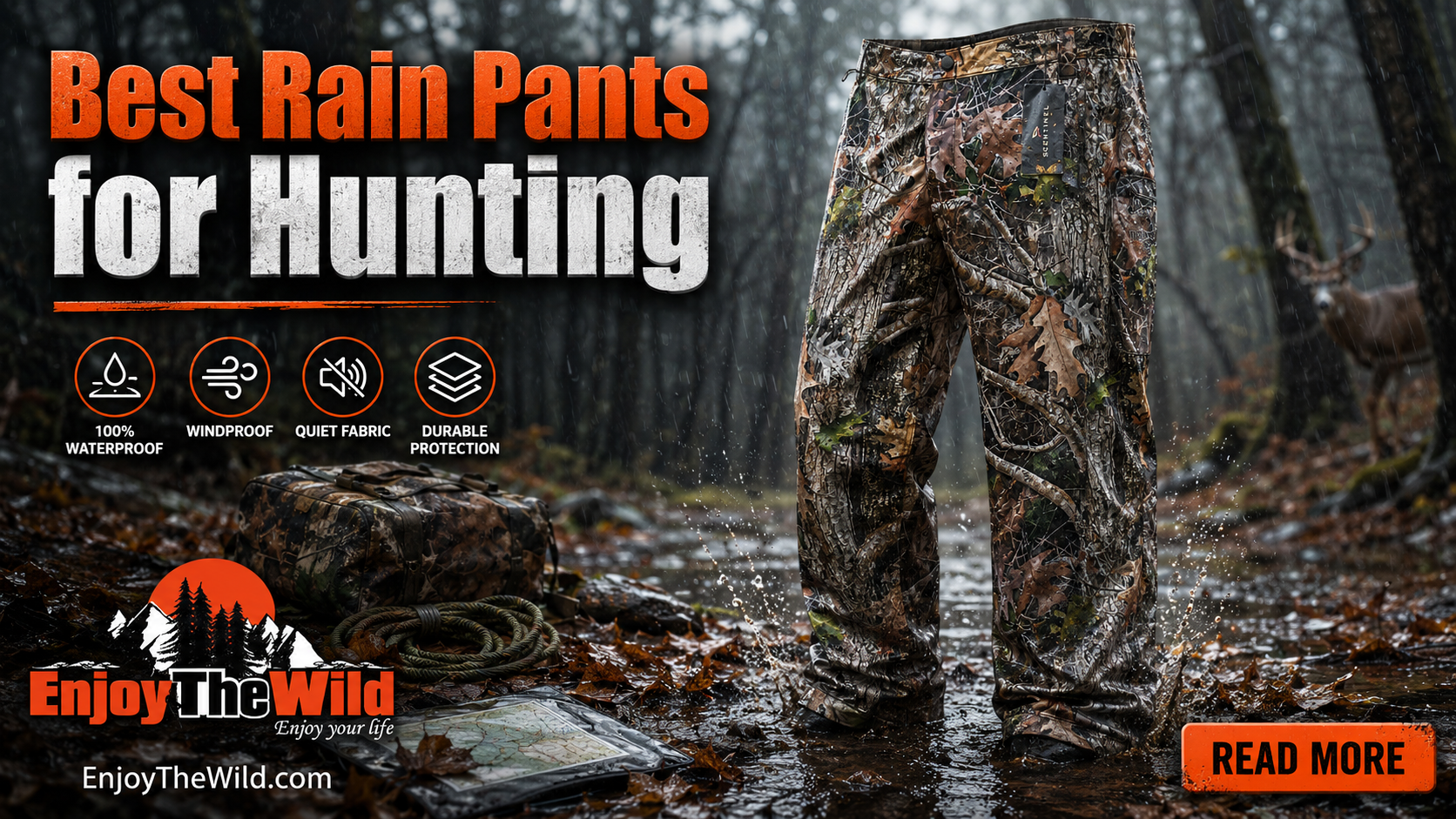
The best rain pants for hunting keep your lower body dry without making you overheat, sound loud in the brush, or lose mobility when you hike, climb, kneel, glass, sit in a blind, or set decoys. Good hunting rain pants matter because wet legs can quickly make a hunt uncomfortable, especially when wind, cold weather, long sits, or remote terrain are involved.
Rain pants are generally waterproof or water-resistant trousers worn to protect against rain, and they are often paired with a rain jacket as part of a rain suit. Modern options may use coated nylon, laminated waterproof-breathable membranes, or similar weather-resistant fabrics. :contentReference[oaicite:2]{index=2}
This guide is for deer hunters, elk hunters, turkey hunters, waterfowl hunters, bowhunters, saddle hunters, backcountry hunters, and public-land hunters who need rain protection that fits real field conditions. The right choice depends on your hunting style, weather, terrain, activity level, layering system, noise tolerance, and budget.
Rain gear is not a substitute for judgment, safety training, trip planning, legal compliance, or proper layering. Breathable rainwear can improve comfort, but poor layering, overheating, or wet base layers can still create problems in cold weather. A hunting-focused rain system should work with your boots, pack, insulation, gloves, jacket, weapon safety practices, and local hunting regulations.
Quick Picks
- Best Overall: SITKA Dew Point Pant
- Best Premium Option: Stone Glacier M5 Pant
- Best Lightweight Packable Option: First Lite Vapor Stormlight Ultralight Rain Pant
- Best for Backcountry Hunting: KUIU Chugach TR Rain Pant
- Best Budget Option: FROGG TOGGS Pilot II Guide Packable Rain Pant
Product Comparison Table
| Product | Best For | Key Features | Important Notes | Check Details |
|---|---|---|---|---|
| SITKA Dew Point Pant | Best overall hunting rain pant | Lightweight shell design, packable build, hunting-focused fit | Premium price; best for hunters who need dependable packable rain protection | Check Price |
| First Lite Vapor Stormlight Ultralight Rain Pant | Ultralight packable use | Lightweight rain shell style, compact carry, hunting-oriented design | Better for emergency rain protection than heavy brush abuse | Check Price |
| KUIU Chugach TR Rain Pant | Backcountry hunting | Technical hunting shell, weather protection, active fit | Choose sizing carefully if layering over insulated pants | Check Price |
| Stone Glacier M5 Pant | Premium mountain hunting | Technical shell pant, durable field design, mountain-oriented use | Premium option; may be more than casual hunters need | Check Price |
| FORLOH AllClima 3L Rain Pant | All-around serious rain protection | 3-layer shell style, hunting/outdoor focus, wet-weather design | Check fit, inseam, and layering room before buying | Check Price |
| SITKA Thunderhead Pant | Quiet whitetail and treestand hunts | Quiet hunting shell style, wet-weather protection, close-range hunting focus | May be warmer and less compact than ultralight rain pants | Check Price |
| King’s Camo XKG Preacher Rain Pant | Western and all-season hunting | Hunting camo shell, weather resistance, field-focused pattern options | Check current fabric details and sizing by retailer | Check Price |
| Nomad Harvester NXT Pant | Waterfowl and wet-field crossover | Hunting pant design, field utility, wet-weather use | Better for field and blind use than ultralight backpacking | Check Price |
| FROGG TOGGS Pilot II Guide Packable Rain Pant | Budget packable rain protection | Packable rain shell style, lightweight carry, affordable option | Not ideal for heavy briars or long-term rough cover abuse | Check Price |
| Columbia Rebel Roamer Rain Pant | Budget hiking and hunting crossover | Simple rain pant design, easy layering, affordable price point | Not a dedicated quiet hunting pant; best for backup use | Check Price |
| Outdoor Research Foray Pants | Backpacking crossover | Outdoor shell pant, packable design, hiking-friendly fit | Not hunting-specific; check noise level and color choice | Check Price |
| Marmot PreCip Eco Pants | Affordable emergency rain layer | Lightweight rain pant, packable design, outdoor crossover use | Best as a backup layer, not heavy-duty hunting brush gear | Check Price |
Best Rain Pants for Hunting Reviews
1. SITKA Dew Point Pant
The SITKA Dew Point Pant is one of the best rain pants for hunting if you want a lightweight, packable shell that can ride in your hunting pack until the weather turns. It is especially useful for backcountry hunters, elk hunters, deer hunters, and public-land hunters who need rain protection without carrying heavy outerwear all day.
Key Features
- Lightweight rain shell design for packable weather protection.
- Hunting-focused fit for layering over base layers or hunting pants.
- Useful for mountain hunts, wet glassing sessions, and sudden storms.
Pros
- Good balance of weight, packability, and rain protection.
- Better suited to hunting than generic city rain pants.
- Strong choice for hunters who carry rain gear as part of a full layering system.
Cons
- Premium price may not fit every budget.
- Thin packable rain pants should not be treated like briar pants.
Field Notes
The Dew Point Pant makes the most sense when you need rain pants that stay in your pack until the weather gets serious. For western hunts, spring turkey, or long public-land hikes, packability can matter as much as waterproofing. If you push through briars or sharp brush often, be realistic about durability and consider a tougher outer layer.
Safety and Legal Notes
Rain pants can help reduce wet-weather discomfort, but they do not replace navigation, first aid, warm layers, communication tools, or a trip plan. In cold rain, manage sweat carefully because moisture inside your layers can become a safety problem.
Best For
Best for hunters who want a premium, packable rain pant for serious wet-weather hunts.
2. First Lite Vapor Stormlight Ultralight Rain Pant
The First Lite Vapor Stormlight Ultralight Rain Pant is a strong pick for hunters who prioritize low pack weight. It is best for early-season elk hunters, backpack hunters, turkey hunters, and mobile deer hunters who want emergency rain protection without carrying bulky rain gear.
Key Features
- Ultralight rain pant style for compact carry.
- Designed for hunters who need weather protection in a layering system.
- Useful for sudden storms, wet brush, and glassing in light-to-moderate rain.
Pros
- Excellent choice when pack weight matters.
- Easy to justify carrying on hunts with uncertain weather.
- Good for active hunters who move frequently.
Cons
- Ultralight fabric may not be ideal for heavy brush.
- May not feel as protective as heavier rain pants in prolonged storms.
Field Notes
Ultralight rain pants are most valuable when you actually carry them. A heavy rain pant left in the truck does not help when weather changes on a ridge, marsh, or public-land access route. The tradeoff is durability, so avoid using ultralight rain pants as brush pants.
Safety and Legal Notes
Do not rely on ultralight rain gear as your only cold-weather protection. Pair it with a proper base layer, insulation layer, dry socks, and emergency gear when weather can turn dangerous.
Best For
Best for hunters who want an ultralight backup rain pant for pack-based hunting.
3. KUIU Chugach TR Rain Pant
The KUIU Chugach TR Rain Pant is a technical option for hunters who spend time in steep, wet, changing weather. It fits the needs of mountain hunters, backpack hunters, western big-game hunters, and serious hunters who need protection that works with active movement.
Key Features
- Technical hunting rain pant design for active field use.
- Useful for backcountry layering and changing mountain weather.
- Designed for hunters who need mobility, packability, and weather protection.
Pros
- Good match for elk, mule deer, sheep, goat, and mountain hunts.
- More hunting-focused than many generic backpacking rain pants.
- Works well as part of a technical layering system.
Cons
- Premium hunting rain gear can be expensive.
- Sizing over heavy insulation should be checked carefully.
Field Notes
For backcountry hunts, rain pants must do more than keep rain off. They need to work with boots, packs, gaiters, base layers, and steep terrain. Pay close attention to how easily you can put them on over boots and how they feel while climbing.
Safety and Legal Notes
Mountain rain can quickly become a bigger safety issue when paired with wind, sweat, and falling temperatures. Carry navigation, communication tools, a headlamp, first aid, insulation, and a realistic plan for getting back safely.
Best For
Best for backcountry hunters who need technical rain pants for active use.
4. Stone Glacier M5 Pant
The Stone Glacier M5 Pant is a premium rain pant for hunters who want a serious mountain-ready shell. It is a good fit for western hunters, guides, backpack hunters, and anyone who spends long days in rough weather where cheap rain pants may not be enough.
Key Features
- Technical shell pant style for mountain hunting conditions.
- Durable field design for wet, windy, and active use.
- Useful for glassing, hiking, and layered cold-weather systems.
Pros
- Premium choice for serious mountain hunters.
- Good option for hunters who need more than emergency rain gear.
- Works well for long hunts with changing weather.
Cons
- More expensive than basic rain pants.
- May be overkill for casual whitetail or short blind hunts.
Field Notes
The M5 Pant is best for hunters who regularly face long exposure, wind-driven rain, and mountain weather. If you mostly hunt from a covered blind near the truck, a simpler rain pant may be enough.
Safety and Legal Notes
Premium rain pants can improve comfort, but they do not remove weather risk. Know when to turn back, carry emergency insulation, and keep electronics and fire-starting tools protected from water.
Best For
Best for premium mountain hunting and serious wet-weather backcountry use.
5. FORLOH AllClima 3L Rain Pant
The FORLOH AllClima 3L Rain Pant is a solid all-around option for hunters who want a serious shell pant rather than a disposable emergency layer. It is suited for hunters who expect real rain, wet brush, wind, and long sits where weather protection matters.
Key Features
- 3-layer rain shell style for wet-weather use.
- Hunting and outdoor-oriented design.
- Useful for deer, elk, turkey, and general bad-weather hunting.
Pros
- Good option for hunters who want durable rain protection.
- Works for multiple hunting styles and weather conditions.
- More serious than basic hiking rain pants.
Cons
- May cost more than budget hunters want to spend.
- Fit and layering room should be checked before buying.
Field Notes
A 3-layer-style rain pant is often best for hunters who expect repeated use, not just occasional emergencies. If you hunt wet climates, spend hours glassing, or sit through steady rain, a stronger shell can be worth the extra cost.
Safety and Legal Notes
Do not assume any rain pant is silent, fully waterproof forever, or suitable for all terrain. Inspect seams, zippers, cuffs, and wear areas before relying on them far from the truck.
Best For
Best for hunters who want a durable all-around rain pant for repeated wet-weather use.
6. SITKA Thunderhead Pant
The SITKA Thunderhead Pant is a strong choice for hunters who care about quiet movement in wet weather. It is especially relevant for whitetail hunters, bowhunters, treestand hunters, and close-range hunters who need rain protection without loud, crinkly fabric.
Key Features
- Quiet hunting rain pant style for close-range use.
- Designed for wet-weather whitetail and treestand hunting.
- Useful for bowhunting, saddle hunting, and damp forest conditions.
Pros
- Better for noise-sensitive hunts than many generic rain pants.
- Good option for long sits in damp conditions.
- Pairs well with a quiet rain jacket and insulated layers.
Cons
- May not pack as small as ultralight rain pants.
- Can be more specialized than a basic shell pant.
Field Notes
Noise matters when bowhunting deer or turkey at close range. A rain pant that is technically waterproof but loud in the brush can hurt your setup. For whitetail and turkey hunting, test the fabric while walking, sitting, drawing, and brushing against vegetation.
Safety and Legal Notes
For treestand or saddle hunting, use a full-body safety harness and follow manufacturer instructions. Rain makes steps, platforms, sticks, and ladders more slippery, so move slowly and deliberately.
Best For
Best for quiet whitetail, bowhunting, and treestand rain protection.
7. King’s Camo XKG Preacher Rain Pant
The King’s Camo XKG Preacher Rain Pant is a useful hunting rain pant for hunters who want camo, weather protection, and field-ready performance without going straight to the highest-priced technical brands. It can fit deer, elk, turkey, and western hunting styles depending on the season and terrain.
Key Features
- Hunting camo rain pant design.
- Useful for layering over hunting pants in wet weather.
- Good fit for hunters who want hunting-specific patterns and features.
Pros
- Good option for hunters who prefer camo rain gear.
- Works across several hunting styles.
- More field-specific than generic hiking rain pants.
Cons
- Availability can vary by size and pattern.
- Check current product details carefully before buying.
Field Notes
Camo rain pants can help hunters who want a consistent outerwear system, but pattern is not everything. Fit, quietness, waterproofing, zipper function, and layering comfort matter more than matching every piece perfectly.
Safety and Legal Notes
During firearm seasons, camo does not replace required blaze orange or visibility rules. Always check local regulations before hunting public or private land.
Best For
Best for hunters who want camo rain pants for mixed western, deer, and turkey hunting.
8. Nomad Harvester NXT Pant
The Nomad Harvester NXT Pant is a practical option for hunters who spend time around blinds, wet fields, waterfowl setups, and mixed field conditions. It is not the lightest backpacking rain pant, but it can make sense for hunters who need wet-weather utility more than ultralight packability.
Key Features
- Hunting field pant design for wet-weather use.
- Useful for blinds, decoy work, and damp field conditions.
- Designed for hunters who value field utility and weather protection.
Pros
- Good waterfowl and wet-field crossover option.
- More hunting-oriented than basic rain pants.
- Useful for hunters who sit, kneel, and work around blinds.
Cons
- Not the best choice for ultralight backpack hunting.
- May be more specialized toward waterfowl and field hunting.
Field Notes
Waterfowl hunters often need rain pants that handle kneeling, mud, wet grass, dog work, decoys, and boat launches. If you regularly hunt around water, pair rain pants with appropriate waterproof boots, gloves, and a jacket.
Safety and Legal Notes
For waterfowl hunting, check boating rules, water conditions, legal ammunition, season dates, licenses, public access, and personal flotation device requirements when relevant.
Best For
Best for waterfowl, wet-field, and blind-based hunters who need practical rain protection.
9. FROGG TOGGS Pilot II Guide Packable Rain Pant
The FROGG TOGGS Pilot II Guide Packable Rain Pant is a budget-friendly option for hunters who need rain protection but do not want to spend premium money. It is best as a packable emergency layer for mild-to-moderate weather and occasional use.
Key Features
- Packable rain pant style.
- Budget-friendly wet-weather protection.
- Useful for keeping in a daypack, truck, boat bag, or blind bag.
Pros
- Affordable compared with premium hunting rain pants.
- Good backup layer for unexpected weather.
- Easy to carry for casual hunts and general outdoor use.
Cons
- Not ideal for heavy brush, briars, or repeated rough use.
- May not be as quiet or durable as premium hunting-specific options.
Field Notes
Budget rain pants are valuable if they are light enough and affordable enough that you actually bring them. They are not the best choice for serious mountain storms or thick brush, but they are much better than having no rain pants at all.
Safety and Legal Notes
Emergency rain gear should be tested before the hunt. Make sure you can put it on quickly over boots and pants, and check that it does not restrict your ability to walk safely or handle gear responsibly.
Best For
Best for budget hunters who want a packable backup rain pant.
10. Columbia Rebel Roamer Rain Pant
The Columbia Rebel Roamer Rain Pant is a simple outdoor rain pant that can work for hunters who want an affordable backup layer. It is not a dedicated hunting pant, but it can be useful for scouting, truck kits, short hunts, fishing crossover use, and rainy camp chores.
Key Features
- Simple rain pant design for general outdoor use.
- Easy to layer over regular pants.
- Budget-friendly option for occasional rain protection.
Pros
- Affordable and easy to find.
- Good for backup use in a pack or vehicle.
- Useful for hunting, fishing, camping, and outdoor chores.
Cons
- Not hunting-specific.
- May be louder or less durable than premium hunting rain pants.
Field Notes
This is a reasonable option for hunters who need basic rain protection but do not hunt in harsh weather often. If you bowhunt close-range whitetails or move through thorny cover, test the noise and durability before trusting it on opening day.
Safety and Legal Notes
Basic rain pants can make slick terrain even more awkward if they fit poorly. Check inseam, cuffs, and boot compatibility before using them in steep or muddy terrain.
Best For
Best for hunters who want an affordable general-purpose rain pant for backup use.
11. Outdoor Research Foray Pants
The Outdoor Research Foray Pants are backpacking-style rain pants that can work for hunters who value packability and outdoor versatility. They are not built specifically for hunting, but they can be useful for hikers, backpack hunters, scouting trips, and wet-weather camp use.
Key Features
- Outdoor shell pant design for rain protection.
- Packable style suitable for backpacking and hiking crossover use.
- Useful for hunters who also hike, camp, and fish.
Pros
- Good crossover value for outdoor users.
- Useful for backpacking and hunting packs.
- Often easier to layer than tight softshell pants.
Cons
- Not hunting-specific in noise, camo, or brush durability.
- Color choices may not suit every hunting style.
Field Notes
Backpacking rain pants can be a smart choice if your hunts involve more hiking than sitting. For close-range bowhunting, test fabric noise. For rifle seasons, check blaze orange and visibility rules for your area.
Safety and Legal Notes
Outdoor crossover gear can work well, but hunting adds firearm, archery, access, and visibility considerations. Always match clothing with the rules and risks of the hunt.
Best For
Best for hunters who want one rain pant for hiking, scouting, backpacking, and occasional hunting.
12. Marmot PreCip Eco Pants
The Marmot PreCip Eco Pants are another affordable outdoor rain pant that can serve hunters as a lightweight backup layer. They are best for mild hunts, scouting, camping, and emergency rain protection rather than heavy brush or serious late-season storms.
Key Features
- Lightweight rain pant style for general outdoor use.
- Packable backup layer for uncertain weather.
- Useful for hunting, hiking, fishing, camping, and travel.
Pros
- Good budget-friendly emergency rain layer.
- Light enough to keep in a pack.
- Versatile for several outdoor activities.
Cons
- Not designed as a dedicated hunting rain pant.
- May not be quiet or tough enough for every hunting setup.
Field Notes
The PreCip Eco Pants are a practical choice if you want basic rain pants for occasional hunts and general outdoor use. For serious backcountry hunting or close-range bowhunting, a more hunting-focused rain pant may be a better investment.
Safety and Legal Notes
Emergency rain pants should be inspected before each season. Damaged coatings, torn seams, and worn cuffs can reduce protection when you need it most.
Best For
Best for affordable emergency rain protection and general outdoor crossover use.
How to Choose the Best Rain Pants for Hunting
Choose the Right Type
Most hunting rain pants fall into four categories: ultralight packable shells, quiet whitetail rain pants, technical backcountry rain pants, and budget emergency rain pants. Ultralight shells are best when weight matters. Quiet rain pants are best for bowhunting and close-range deer or turkey hunting. Technical backcountry pants are best for long exposure in mountains. Budget rain pants are useful as backup layers.
Match the Gear to Your Hunting Style
For deer hunting, choose quiet fabric and enough room to layer. For elk and backcountry hunting, prioritize weight, packability, breathability, and durability. For turkey hunting, avoid loud fabric. For waterfowl hunting, consider wet grass, mud, boat use, and waterproof boots. For saddle and treestand hunting, check whether the pants work safely with harnesses, steps, and platforms.
Check Fit, Sizing, and Comfort
Rain pants should fit over your normal hunting pants without binding. You should be able to climb, kneel, sit, glass, draw a bow, shoulder a pack, and step over logs. If they are too tight, they can restrict movement. If they are too loose, they can snag on brush or flap in wind.
Consider Weight and Packability
Packable rain pants are easier to carry, but lighter fabrics may be less durable. Heavier rain pants can feel more protective, but they may stay in the truck because they are bulky. The best rain pants for hunting are the ones that match how far you walk and how often you actually expect rain.
Look at Materials and Durability
Rain pants may use coated nylon, waterproof-breathable membranes, laminated fabrics, soft face fabrics, or 3-layer shell constructions. Tougher materials usually handle brush and kneeling better, but they may weigh more and breathe less. Lighter materials pack well but should be protected from briars, sharp rocks, barbed wire, and rough deadfall.
Think About Weather Protection
Rain protection is more than waterproof fabric. Look at seam construction, zippers, cuffs, waistband, pocket design, and whether the pants can be put on over boots. Wind resistance, breathability, and layering room also matter. Waterproof-breathable materials are helpful, but no rain pant can remove all sweat during hard hiking.
Check Compatibility
Your rain pants should work with hunting boots, gaiters, base layers, insulated pants, knee pads, backpacks, saddle systems, treestand harnesses, blind bags, waders, and your rain jacket. Try the full system before hunting. A pant that fits fine at home may feel wrong with boots, a pack belt, or thick base layers.
Understand Safety and Legal Requirements
Rain pants do not change hunting regulations. Check season dates, licenses, tags, legal equipment, blaze orange requirements, public land rules, private land permission, firearm transport rules, and local restrictions before hunting. Wet weather can also increase risk around treestands, boats, steep slopes, and creek crossings.
Understand the Product’s Limits
No rain pant can guarantee dryness, warmth, comfort, safety, or hunting success in every condition. Waterproof coatings can wear down, seams can leak, zippers can fail, and fabric can tear. Always carry backup safety items and inspect your gear before relying on it.
Important Hunting, Outdoor, and Firearm Safety Tips Before You Buy
- Follow local hunting laws, public land rules, private land access rules, firearm safety rules, archery safety rules, boating rules, and manufacturer instructions.
- Check season dates, licenses, tags, legal equipment rules, blaze orange requirements, firearm transport rules, and storage laws before hunting.
- Carry basic safety gear such as navigation, first aid, water, weather protection, communication tools, a light source, and a trip plan.
- Practice putting on rain pants over boots before relying on them in a storm.
- Do not use rain gear as a substitute for training, judgment, preparation, and safe hunting practices.
- Be extra careful on wet rocks, muddy slopes, slick logs, boat ramps, ladders, treestand steps, and saddle platforms.
- Store firearms, ammunition, knives, and sharp tools securely and away from children or unauthorized users.
- Keep firearms pointed in a safe direction, keep your finger off the trigger until ready, and follow all range and field safety rules.
- Contact a qualified professional, wildlife agency, land manager, or local authority if you are unsure about safe setup or legal requirements.
Common Mistakes to Avoid
The biggest mistake is buying rain pants based only on waterproof claims. Hunters also need to think about noise, fit, breathability, boot access, packability, durability, layering, and hunting style. A rain pant that works for hiking may not be quiet enough for bowhunting. A quiet whitetail rain pant may not pack small enough for backpack elk hunting.
- Buying rain pants without checking whether they fit over boots.
- Choosing loud rain pants for close-range deer or turkey hunting.
- Using ultralight rain pants in heavy briars or rough brush.
- Ignoring breathability during active hiking.
- Assuming water-resistant means fully waterproof.
- Buying too small and losing layering room.
- Buying too large and creating flapping fabric or snag points.
- Forgetting to test rain pants with your boots, pack, harness, and jacket.
- Not maintaining waterproof treatments or cleaning the pants correctly.
- Waiting until a storm to learn how the zippers, cuffs, and waistband work.
- Ignoring local blaze orange and safety rules.
- Thinking rain gear replaces a safe trip plan.
Troubleshooting Common Problems
| Problem | Possible Cause | What to Do |
|---|---|---|
| Legs feel wet inside | Sweat buildup, poor breathability, or overdressing | Use moisture-wicking layers, vent when possible, and reduce insulation during hard hiking |
| Rain pants leak | Damaged seams, worn coating, puncture, or water entering at the waist or cuffs | Inspect for damage, follow manufacturer repair guidance, and replace badly worn pants |
| Fabric is too loud | Stiff shell material or poor fit | Choose quieter hunting-specific pants for bowhunting and close-range setups |
| Pants are hard to put on over boots | Narrow cuffs or short side zippers | Look for wider leg openings, ankle zips, or full-length side zips |
| Pants bind when climbing | Wrong size or poor mobility cut | Choose a larger size or a pant with better articulation and layering room |
| Water runs into boots | Cuffs not overlapping boots correctly | Adjust cuffs, use gaiters when appropriate, and check pant length |
| Pants tear in brush | Fabric is too light for the terrain | Use tougher rain pants, brush pants, gaiters, or avoid heavy briars with ultralight shells |
| Overheating during hikes | Rain pants are too warm or worn too early | Put rain pants on only when needed and manage your pace and layers |
When to Get Professional Help
Contact the gear manufacturer if your rain pants leak early, zippers fail, seams separate, waterproofing breaks down unexpectedly, or care instructions are unclear. Contact a boot fitter or experienced gear shop if your rain pants do not work well with your boots, gaiters, or layering system.
Contact a local wildlife agency, land manager, or local authority if you have questions about hunting seasons, licenses, tags, public land access, private land permission, blaze orange requirements, firearm transport, waterfowl rules, or legal equipment. Contact a qualified firearms instructor if you need help with safe firearm handling in wet, slippery, or low-light conditions.
Seek medical or emergency help immediately for hypothermia symptoms, serious falls, injury, disorientation, water accidents, lightning exposure, or any situation where weather creates a real safety risk.
Maintenance and Care Tips
- Follow the manufacturer’s washing and drying instructions.
- Do not use harsh detergents, bleach, or fabric softener unless the care label allows it.
- Dry rain pants fully before storage to reduce odor, mildew, and coating damage.
- Inspect seams, zippers, cuffs, knees, seat, and pocket areas before each season.
- Clean mud, blood, seeds, and plant debris after each hunt.
- Reapply DWR or waterproofing treatment only when recommended by the manufacturer.
- Store rain pants away from heat, direct sunlight, fuel, solvents, and sharp objects.
- Patch small holes early before they become larger field failures.
- Check that rain pants still fit over your current boots and base layers.
- Replace rain pants when leaks, worn coatings, or fabric damage make them unreliable.
Final Verdict
The best rain pants for hunting depend on how you hunt. For most hunters who want a premium packable rain pant, the SITKA Dew Point Pant is the best overall choice. For ultralight pack-based hunting, the First Lite Vapor Stormlight Ultralight Rain Pant is a strong option. For backcountry and mountain hunters, the KUIU Chugach TR Rain Pant and Stone Glacier M5 Pant are serious technical choices. For quiet whitetail and bowhunting setups, the SITKA Thunderhead Pant is worth considering. For budget buyers, FROGG TOGGS, Columbia, Outdoor Research, and Marmot rain pants can work well as backup layers.
Choose rain pants based on weather, terrain, noise level, pack weight, durability, boot access, and layering needs. Then test them before the hunt. Good rain pants can help you stay focused and comfortable, but safe hunting still depends on preparation, legal compliance, firearm safety, proper clothing layers, and good judgment.
Frequently Asked Questions
1. What are the best rain pants for hunting?
The best rain pants for hunting are waterproof or water-resistant, quiet enough for your hunting style, breathable enough for your activity level, and durable enough for your terrain. SITKA Dew Point, First Lite Vapor Stormlight, KUIU Chugach TR, Stone Glacier M5, and FORLOH AllClima are strong premium options.
2. Are rain pants worth it for hunting?
Yes, rain pants are worth it if you hunt in wet climates, unpredictable mountain weather, spring turkey seasons, waterfowl conditions, or long sits where wet legs can ruin comfort and safety.
3. What is the difference between rain pants and hunting rain pants?
General rain pants focus on staying dry. Hunting rain pants also consider noise, camo, layering, field mobility, boot access, durability, and compatibility with packs, harnesses, and hunting jackets.
4. Should hunting rain pants be waterproof or water-resistant?
For steady rain, choose waterproof rain pants. For brief showers or wet grass, water-resistant pants may be enough. Always check the manufacturer’s claims and care instructions.
5. Are waterproof-breathable rain pants really breathable?
They can breathe better than non-breathable plastic-style rain pants, but they still trap some heat and moisture during hard hiking. Layering and pace matter.
6. Why do I feel wet inside my rain pants?
You may be sweating, overdressed, or wearing non-wicking layers. Sometimes the pants may also be leaking. Check both your layering system and the garment condition.
7. Are rain pants good for deer hunting?
Yes, especially for wet treestand sits, saddle hunting, ground blinds, and public-land walks. Quiet fabric is especially important for close-range deer hunting.
8. Are rain pants good for elk hunting?
Yes. Elk hunters often need packable rain pants because mountain weather can change quickly. Weight, breathability, and durability matter for elk hunting.
9. Are rain pants good for turkey hunting?
Yes, but choose quiet rain pants. Loud, crinkly fabric can be a problem when turkeys are close.
10. Are rain pants good for waterfowl hunting?
Yes, rain pants can help around wet fields, blinds, and boat launches. For standing in water, waders may be more appropriate than rain pants.
11. Can I wear rain pants over hunting pants?
Yes. Many rain pants are designed to layer over hunting pants. Make sure the fit allows movement without pulling or sagging.
12. Should rain pants fit loose or tight?
They should fit loose enough for layers and movement, but not so loose that they flap, snag, or interfere with walking.
13. Do I need full-length side zippers?
Full-length side zippers make it easier to put rain pants on over boots. They are useful for backcountry hunters and anyone who changes layers in the field.
14. Are ankle zippers enough?
Ankle zippers can help, but they may not be enough for bulky boots. Check the opening size before buying.
15. What are the quietest rain pants for hunting?
Quiet hunting-specific rain pants, such as soft-faced whitetail rain pants, are usually quieter than slick backpacking shells. Test any pant before close-range hunting.
16. What are the best rain pants for bowhunting?
Bowhunters should prioritize quiet fabric, good fit, and easy movement. SITKA Thunderhead-style rain pants are better suited to quiet close-range hunting than loud generic shells.
17. What are the best rain pants for backcountry hunting?
Backcountry hunters should look at technical rain pants such as SITKA Dew Point, First Lite Vapor Stormlight, KUIU Chugach TR, and Stone Glacier M5.
18. What are the best budget rain pants for hunting?
FROGG TOGGS, Columbia Rebel Roamer, Marmot PreCip Eco, and Outdoor Research Foray-style pants can be good budget or crossover options depending on your needs.
19. Are cheap rain pants good enough?
Cheap rain pants can work as backup gear for light or occasional use. For heavy rain, long hunts, rough terrain, or close-range bowhunting, premium hunting-specific pants may perform better.
20. Are rain pants good for cold weather?
Rain pants can block rain and wind, but they are usually not insulation by themselves. Use proper base and mid layers in cold weather.
21. Are rain pants good for hot weather?
They can be useful in hot rain, but breathability becomes very important. Lightweight rain pants and careful venting help reduce overheating.
22. Can rain pants replace hunting pants?
Usually no. Rain pants are normally an outer shell. You still need suitable base layers or hunting pants underneath for comfort and durability.
23. Can rain pants replace waders?
No. Rain pants protect against rain and wet vegetation. Waders are for standing or walking in water. Choose the correct gear for the situation.
24. Do rain pants protect from wet grass?
Yes, good rain pants can help protect against wet grass, dew, and rain-soaked brush. Cuffs and boot overlap still matter.
25. Do rain pants protect against wind?
Many rain pants also help block wind, but wind protection depends on the fabric and construction.
26. Are hunting rain pants durable in brush?
Some are, but ultralight rain pants can tear in briars or rough brush. Use brush pants or gaiters when thorn protection is the main need.
27. Can I wear rain pants with gaiters?
Yes. Gaiters can help protect cuffs and keep water, snow, seeds, and debris away from boots.
28. Should rain pants go over boots?
Usually yes. Rain pants should overlap boots so water sheds downward instead of running into your footwear.
29. What material is best for hunting rain pants?
Waterproof-breathable shell fabrics are common. The best material depends on whether you need packability, quietness, durability, or heavy-weather protection.
30. What does 3-layer rain gear mean?
A 3-layer shell generally uses an outer face fabric, a waterproof-breathable membrane, and an inner protective layer. It is often used in more durable technical rain gear.
31. Are 2.5-layer rain pants good for hunting?
They can be good for lightweight packable use, but may not be as durable or comfortable as heavier 3-layer rain pants for repeated hard hunting.
32. Do I need camo rain pants?
Camo can help with concealment, but fit, noise, weather protection, and safety rules matter more. During some seasons, blaze orange may be required regardless of camo.
33. Are black or gray rain pants okay for hunting?
They can be okay for some hunts, especially backpacking or general outdoor use, but check visibility rules, concealment needs, and your hunting environment.
34. Do rain pants need pockets?
Pockets are useful, but rain pants often work better as a shell layer. Too many pockets can add bulk, leaks, or snag points.
35. Do rain pants need belt loops?
Not always. Elastic waists, suspenders, or adjustable tabs can work. Make sure the waistband stays secure under a pack belt or hunting jacket.
36. Are suspenders useful on rain pants?
They can help keep rain pants in place, especially when layering over bulky pants. However, they may interfere with packs or bib systems.
37. Are rain bibs better than rain pants?
Rain bibs provide more coverage and can be better for waterfowl, boat use, and heavy rain. Rain pants are usually lighter, easier to pack, and more versatile.
38. What are the best rain pants for treestand hunting?
Choose quiet rain pants with enough room to layer and move safely. Make sure they do not interfere with a safety harness, climbing sticks, or stand steps.
39. What are the best rain pants for saddle hunting?
Saddle hunters need quiet fabric, good mobility, and compatibility with a saddle, lineman’s belt, knee pads, and safety system.
40. Are rain pants safe around treestands?
They can be safe if they fit properly and do not snag or restrict movement. Wet treestand equipment is slippery, so use a safety harness and move carefully.
41. How do I clean hunting rain pants?
Follow the care label. Use appropriate technical-wash products when recommended and avoid fabric softeners unless the manufacturer allows them.
42. Can I put rain pants in the dryer?
Only if the care label allows it. Some waterproof garments need low heat to refresh water repellency, while others can be damaged by heat.
43. How do I restore waterproofing?
Clean the pants first, then use a manufacturer-approved DWR or waterproofing treatment if recommended. Do not apply random chemicals to technical rain gear.
44. How long do hunting rain pants last?
It depends on use, fabric, care, terrain, and storage. Rough brush, mud, poor washing, and repeated abrasion can shorten their life.
45. Can rain pants be repaired?
Small punctures can often be patched with appropriate repair tape or manufacturer-recommended products. Large seam failures may need warranty support or replacement.
46. Should I size up rain pants?
You may need to size up if you plan to layer over insulated pants. Check size charts and consider your full clothing system.
47. Are women’s hunting rain pants different?
Women’s rain pants may have different waist, hip, inseam, and rise measurements. Fit matters more than label, so choose what moves well and layers properly.
48. Can youth hunters wear adult rain pants?
Only if they fit safely. Oversized rain pants can create tripping, snagging, or mobility problems for youth hunters.
49. Do rain pants help with snow?
They can help block wet snow and wind, but they are not always insulated. Use proper cold-weather layers underneath.
50. Are rain pants good for sitting in wet blinds?
Yes, rain pants can help keep your legs dry in wet blinds. Check seat durability and avoid sitting on sharp edges or rough wood.
51. Do rain pants make you sweat?
They can, especially during hard hiking. Breathable fabrics help, but pacing, venting, and layering are still important.
52. What should I wear under rain pants?
Wear moisture-wicking base layers and season-appropriate hunting pants or insulation. Avoid cotton in cold wet weather.
53. What should I do before hunting in new rain pants?
Try them on with boots, base layers, hunting pants, pack, jacket, harness, and gloves. Practice walking, kneeling, climbing, and putting them on quickly.
54. What legal rules should hunters check before using rain gear?
Check hunting seasons, licenses, tags, blaze orange requirements, legal equipment, public land access, private land permission, firearm transport rules, and species-specific regulations.
55. What is the final buying advice for hunting rain pants?
Buy premium technical rain pants for hard backcountry use, quiet rain pants for close-range whitetail and turkey hunting, durable rain pants for repeated storms, and budget rain pants for backup protection. Match the pants to your terrain, weather, and hunting style.