

Australia is home to some of the world’s most unusual and recognizable wildlife. From kangaroos and koalas to platypuses, crocodiles, colorful parrots, and thorny lizards, the country’s animals have adapted to deserts, rainforests, woodlands, rivers, reefs, and remote islands. This guide to the types of animals in Australia highlights 25 notable native species and groups, including their appearance, habitat, diet, behavior, and conservation importance.
What Are the Main Types of Animals in Australia?
The main types of animals in Australia include marsupials, monotremes, reptiles, birds, marine mammals, and distinctive native mammals such as dingoes. Australia is especially famous for its marsupials, which raise developing young in a pouch, and its two egg-laying mammals: the platypus and echidnas. These animals live across a wide range of environments, from tropical northern wetlands to cool Tasmanian forests and dry inland deserts.
1. Red Kangaroo
Scientific name: Osphranter rufus. The red kangaroo is Australia’s largest kangaroo and one of its most iconic animals. Adult males may stand more than 1.5 meters tall and have reddish-brown fur, while females are usually smaller and blue-gray to brown.
Red kangaroos live across much of inland Australia, especially in open grasslands, scrub, and desert-edge country. They feed mainly on grasses and other vegetation, obtaining much of their moisture from food. Their powerful hind legs allow them to travel efficiently over long distances, and their tails provide balance while hopping.
2. Koala
Scientific name: Phascolarctos cinereus. Koalas are tree-dwelling marsupials recognized by their round ears, gray fur, large noses, and stocky bodies. They live mainly in eucalyptus forests and woodlands along eastern and southeastern Australia.
Koalas eat mostly eucalyptus leaves, which provide limited energy. As a result, they spend much of the day resting in tree forks. Young koalas, called joeys, develop in the mother’s pouch before riding on her back. Habitat loss, disease, bushfires, and vehicle strikes remain important threats.
3. Common Wombat
Scientific name: Vombatus ursinus. The common wombat is a sturdy, burrowing marsupial with a broad head, short legs, and coarse brown or gray fur. It is found mainly in southeastern Australia and Tasmania.
Wombats graze on grasses, roots, and other tough plants. They are mostly nocturnal and use strong claws to excavate extensive burrows. A wombat’s pouch opens toward the rear, which helps prevent soil from entering while the mother digs. Their cube-shaped droppings help mark territory.
4. Tasmanian Devil
Scientific name: Sarcophilus harrisii. The Tasmanian devil is a muscular carnivorous marsupial with black fur, white markings, a powerful jaw, and a famously loud vocalization. Wild populations are native primarily to Tasmania.
These animals eat carrion, small mammals, birds, reptiles, and insects. They are mostly nocturnal and can travel considerable distances while searching for food. Devil facial tumor disease has severely affected wild populations, making disease monitoring, captive breeding, and habitat protection important conservation efforts.
5. Platypus
Scientific name: Ornithorhynchus anatinus. The platypus is a semiaquatic mammal with a flat bill, webbed feet, dense waterproof fur, and a broad tail. It lives in freshwater streams, rivers, and lakes in eastern Australia and Tasmania.
Platypuses feed on aquatic invertebrates, larvae, worms, and small freshwater animals. They close their eyes and ears underwater and use sensitive receptors in the bill to detect prey. Platypuses are monotremes, meaning they lay eggs rather than giving birth to live young.
6. Short-Beaked Echidna
Scientific name: Tachyglossus aculeatus. The short-beaked echidna is a spiny monotreme found across much of Australia, including Tasmania. Its body is covered with sharp spines and coarse hair, while its long snout helps it locate food.
Echidnas eat ants, termites, and other small invertebrates using a long, sticky tongue. They can curl into a defensive ball or dig rapidly into soil when threatened. Like the platypus, the echidna lays eggs, making it one of the world’s few living egg-laying mammals.
7. Dingo
Scientific name: Canis lupus dingo. Dingoes are medium-sized wild canids with erect ears, bushy tails, and coats ranging from sandy yellow to reddish brown, black, or white. They occur in many parts of mainland Australia, from deserts to forests and tropical regions.
Dingoes hunt rabbits, wallabies, rodents, birds, and other animals, although they may also scavenge. They can live alone, in pairs, or in family groups. Dingoes have cultural importance for Aboriginal Australians and play a complex ecological role as predators.
8. Numbat
Scientific name: Myrmecobius fasciatus. The numbat is a small, striped marsupial with a narrow face and bushy tail. It is one of Australia’s few daytime insect-eating mammals and is now found mainly in protected areas of Western Australia.
Numbats feed almost exclusively on termites. They use their long, sticky tongues to collect insects from shallow soil and natural crevices. Numbats do not have a conventional pouch; young cling to fur on the mother’s underside. Predation by introduced foxes and habitat loss have contributed to their decline.
9. Sugar Glider
Scientific name: Petaurus breviceps. Sugar gliders are small nocturnal marsupials with gray fur, a dark stripe down the back, and a membrane stretching between the wrists and ankles. This membrane allows them to glide between trees.
They live in forests and woodlands across eastern and northern Australia. Sugar gliders eat nectar, tree sap, insects, and small animals. They are social and often live in family groups. Their gliding ability helps them move through the canopy while avoiding open ground.
10. Quokka
Scientific name: Setonix brachyurus. The quokka is a small wallaby with a rounded face, short ears, and a compact body. It is best known from Rottnest Island and other parts of southwestern Australia.
Quokkas eat grasses, leaves, stems, and other vegetation. They are mainly nocturnal but may be active during the day. Although often associated with island populations, quokkas also live in some mainland forests and wetlands. Habitat changes, predators, and drought can affect their populations.
11. Common Brushtail Possum
Scientific name: Trichosurus vulpecula. The common brushtail possum has large ears, a pointed face, thick fur, and a long, gripping tail. It is widespread across Australia and can live in forests, farmland, parks, and urban neighborhoods.
Brushtail possums eat leaves, flowers, fruit, bark, and occasionally insects or eggs. They are nocturnal and shelter in tree hollows, roof spaces, or dense vegetation. Their adaptability allows them to persist in modified landscapes, although conflicts can occur where they enter buildings.
12. Eastern Grey Kangaroo
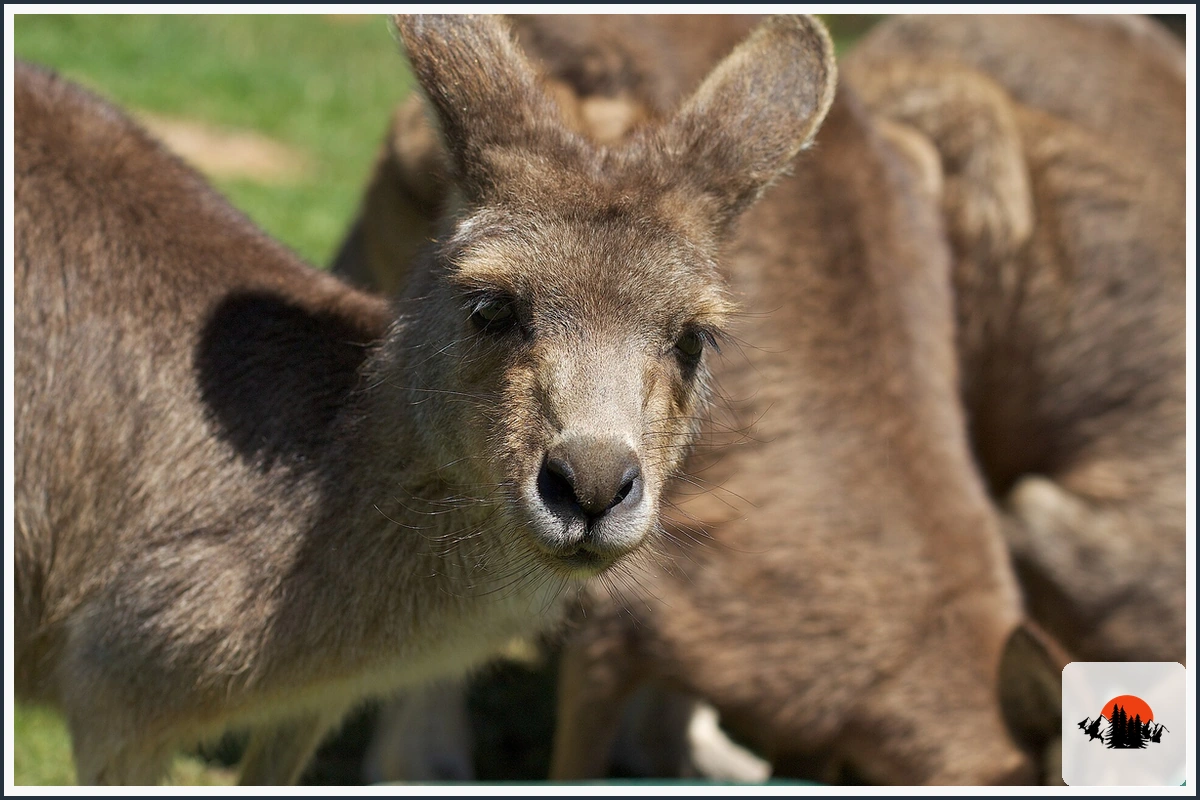
Scientific name: Macropus giganteus. Eastern grey kangaroos have soft gray fur, a pale underside, long hind legs, and a powerful tail. They are common in eastern and southeastern Australia, especially in grasslands, open forests, and coastal areas.
These kangaroos graze mainly on grasses and other low vegetation. They often gather in groups called mobs and are most active around dawn, dusk, and at night. Their strong legs allow them to cover ground efficiently and escape many predators.
13. Southern Hairy-Nosed Wombat
Scientific name: Lasiorhinus latifrons. This wombat has a broad head, a large nose covered with fine hair, and a compact body adapted for digging. It occurs in dry regions of South Australia and western Victoria.
Southern hairy-nosed wombats feed on grasses and other tough plants. They live in interconnected burrow systems that provide shelter from heat and predators. Drought, competition for food, disease, and habitat changes can place pressure on local populations.
14. Yellow-Footed Rock-Wallaby
Scientific name: Petrogale xanthopus. The yellow-footed rock-wallaby is recognized by its orange-yellow limbs, striped tail, gray-brown body, and pale facial markings. It lives among rocky outcrops, gorges, and rugged ranges in parts of South Australia and New South Wales.
These wallabies eat grasses, leaves, herbs, and other vegetation. Their strong feet help them move across steep rock surfaces. They shelter in caves and rock crevices and are often most active during cooler parts of the day.
15. Green Tree Python
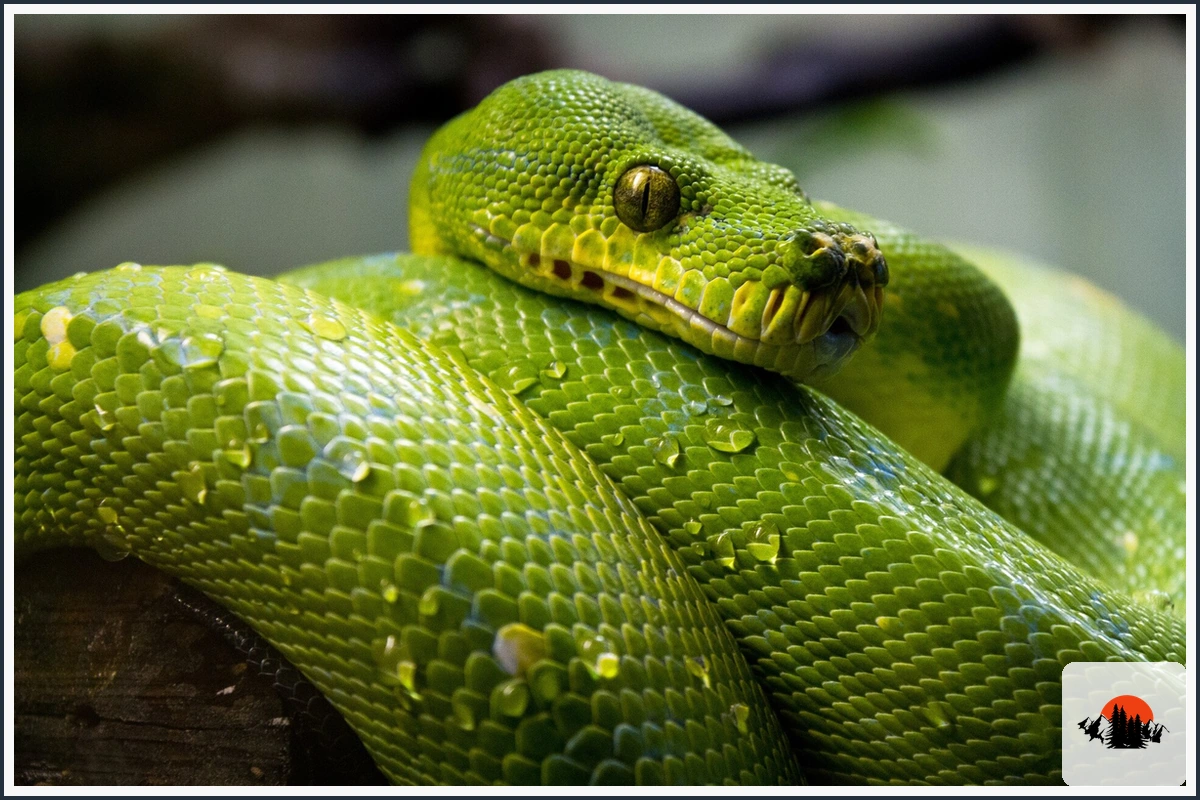
Scientific name: Morelia viridis. Green tree pythons are slender, arboreal snakes with bright green coloration in adults, although young snakes may be yellow, orange, or red. In Australia, they occur mainly in tropical northern Queensland.
They spend much of their time coiled on branches and ambush small mammals, birds, lizards, and frogs. Green tree pythons are nonvenomous and use constriction to subdue prey. Their prehensile tails and muscular bodies help them remain secure in the canopy.
16. Inland Taipan
Scientific name: Oxyuranus microlepidotus. The inland taipan is a highly venomous snake with a slender body and seasonal color changes, often becoming darker in cooler months. It lives in remote, dry inland areas of Queensland and South Australia.
Its diet consists mainly of small mammals, especially rodents. The inland taipan is secretive and rarely encountered by people because of its remote habitat. It is best observed only by trained professionals at a safe distance.
17. Frilled Lizard
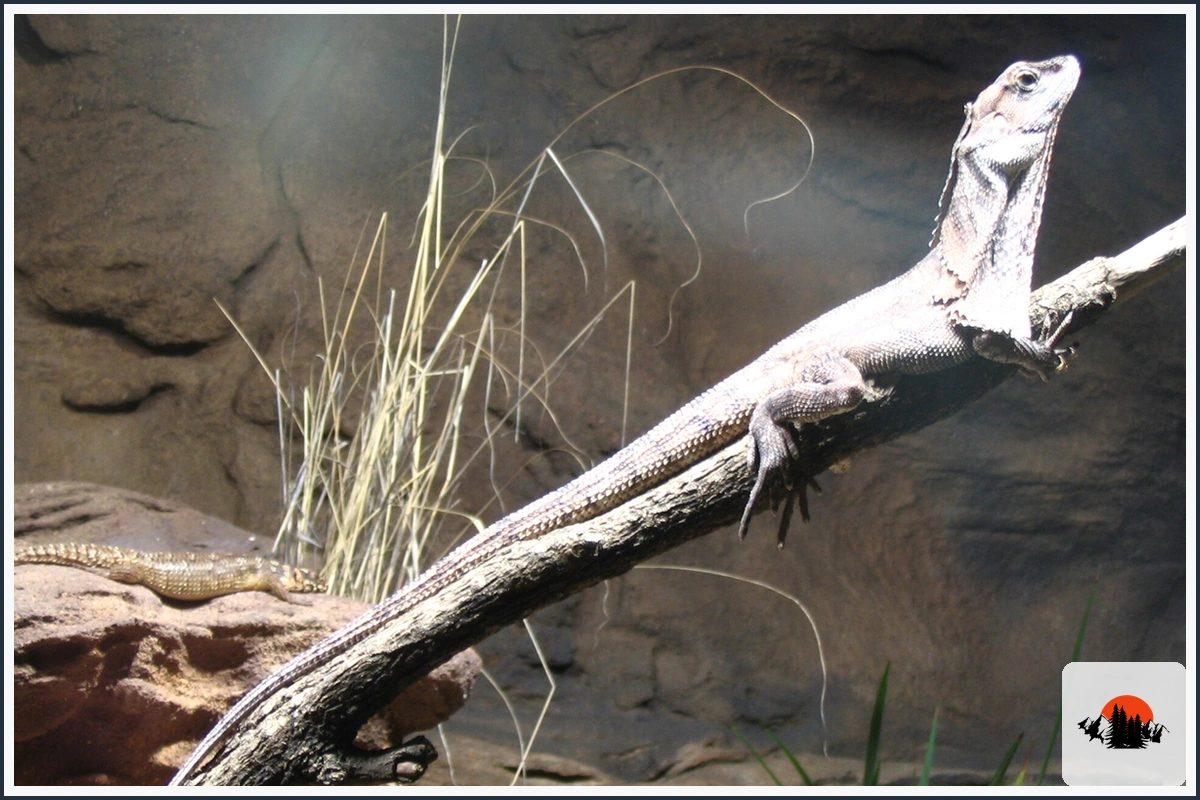
Scientific name: Chlamydosaurus kingii. The frilled lizard has a large circular frill around its neck, long limbs, and a tail that may exceed the length of its body. It lives in northern Australia’s savannas, woodlands, and tropical forests.
When threatened, it opens its mouth and expands the colorful frill to appear larger. Frilled lizards eat insects, spiders, small reptiles, and other prey. They are excellent climbers and often retreat into trees when alarmed.
18. Thorny Devil
Scientific name: Moloch horridus. The thorny devil is a small desert lizard covered in sharp conical spines. Its tan, brown, yellow, and reddish colors help it blend into Australia’s arid landscapes.
Thorny devils specialize in eating ants and may consume thousands in a day. Tiny grooves between their scales can channel water toward the mouth, helping them use dew or rain on their body. Their spiny appearance discourages many predators.
19. Saltwater Crocodile

Scientific name: Crocodylus porosus. The saltwater crocodile is the world’s largest living reptile. It has a broad snout, powerful jaws, armored skin, and a muscular tail. In Australia, it occurs mainly in northern rivers, wetlands, estuaries, and coastal waters.
Young crocodiles eat fish, insects, frogs, and small animals, while adults can take fish, birds, mammals, and other large prey. Saltwater crocodiles are excellent swimmers and may travel between freshwater and marine habitats. People should always follow local warning signs and wildlife regulations in crocodile country.
20. Emu
Scientific name: Dromaius novaehollandiae. The emu is Australia’s largest native bird and the second-largest living bird by height. It has long legs, a long neck, shaggy feathers, and small wings that cannot support flight.
Emus eat plants, fruit, seeds, insects, and other available foods. They can travel long distances in search of water and food. Males incubate the eggs and care for the young, an unusual reversal of typical parental roles among birds.
21. Laughing Kookaburra
Scientific name: Dacelo novaeguineae. The laughing kookaburra is a large kingfisher with a white head, brown wings, a strong bill, and a distinctive laughing call. It is common in eastern Australia and has also been introduced to some other regions.
Kookaburras eat insects, reptiles, frogs, small birds, and rodents. They often sit quietly on branches before dropping onto prey. Their loud calls help family groups communicate and defend territories.
22. Superb Fairywren
Scientific name: Malurus cyaneus. The superb fairywren is a small bird found in southeastern Australia. Breeding males have bright blue plumage on the head, back, and chest, while females and nonbreeding birds are mostly brown.
Fairywrens eat insects and other small invertebrates, along with some seeds and plant material. They live in groups and move quickly through shrubs and grasses. Dense vegetation provides food, nesting sites, and protection from predators.
23. Australian Sea Lion
Scientific name: Neophoca cinerea. Australian sea lions have streamlined bodies, external ear flaps, strong front flippers, and whiskered faces. They breed on coastal islands and haul out on beaches and rocky shores in southern and western Australia.
They eat fish, squid, octopus, and other marine prey. Australian sea lions are known for their relatively long breeding cycle compared with many other pinnipeds. Entanglement, fishing interactions, pollution, disease, and disturbance can affect their recovery.
24. Dugong
Scientific name: Dugong dugon. Dugongs are large marine mammals with rounded bodies, paddle-like flippers, and a downturned tail similar to a whale’s. They inhabit warm coastal waters and seagrass meadows across northern Australia.
Dugongs graze primarily on seagrass and may travel between feeding areas. Healthy seagrass beds are essential to their survival, but coastal development, boat strikes, fishing gear, pollution, and habitat damage create ongoing risks.
25. Little Penguin
Scientific name: Eudyptula minor. The little penguin is the world’s smallest penguin, standing about 30 centimeters tall. It has blue-gray upperparts, a white belly, and a compact body adapted for swimming.
Little penguins feed on small fish, squid, and other marine animals. They nest in burrows, rock shelters, and coastal vegetation along southern Australia and Tasmania. They return to colonies after feeding at sea and are especially vulnerable to introduced predators, coastal disturbance, and marine pollution.
How Are These Australian Animals Classified?
Australia’s wildlife belongs to several major animal groups:
- Marsupials: Mammals such as kangaroos, koalas, wombats, quokkas, and Tasmanian devils raise young after birth, usually in a pouch or protected pouch area.
- Monotremes: Platypuses and echidnas are egg-laying mammals.
- Reptiles: Crocodiles, snakes, and lizards are cold-blooded animals with scales or protective skin coverings.
- Birds: Emus, kookaburras, fairywrens, and penguins have feathers and lay eggs.
- Marine mammals: Dugongs and sea lions depend on oceans and coastal habitats but breathe air.
- Placental mammals: Dingoes give birth to live young that develop inside the mother before birth.
Where Do These Animals Live?
Australian animals occupy nearly every major habitat on the continent and surrounding islands. Kangaroos, emus, and dingoes often use grasslands, open woodland, and inland scrub. Koalas and possums depend heavily on trees, while wombats and echidnas use soil, burrows, and forest floors. Northern Australia supports saltwater crocodiles, frilled lizards, and tropical pythons. Coastal waters and seagrass meadows provide habitat for dugongs, sea lions, and little penguins.
| Habitat | Examples of Animals |
|---|---|
| Deserts and dry inland areas | Red kangaroo, thorny devil, inland taipan, emu |
| Forests and woodlands | Koala, sugar glider, brushtail possum, kookaburra |
| Wetlands and rivers | Platypus, saltwater crocodile, frilled lizard |
| Rocky ranges | Yellow-footed rock-wallaby, echidna, dingo |
| Coasts and oceans | Dugong, Australian sea lion, little penguin |
What Do Australian Animals Eat?
- Plant eaters: Kangaroos, wombats, koalas, dugongs, and many wallabies feed mainly on vegetation.
- Insect specialists: Numbats eat termites, while thorny devils specialize in ants.
- Carnivores: Dingoes, Tasmanian devils, crocodiles, and inland taipans eat other animals.
- Omnivores: Emus, kookaburras, brushtail possums, and some other species eat a mixture of plant and animal foods.
- Marine feeders: Sea lions and little penguins eat fish and squid, while dugongs graze on seagrass.
How to Identify Different Animals in Australia
- Look at body shape: Long hind legs suggest a kangaroo or wallaby, while a broad armored body may indicate a crocodile.
- Check the habitat: A freshwater stream points toward platypus habitat, while tropical mangroves may support saltwater crocodiles.
- Notice movement: Hopping, gliding, climbing, swimming, and burrowing each narrow the possibilities.
- Study distinctive features: A frill, spines, a duck-like bill, a striped tail, or a blue chest can be highly useful clues.
- Listen for calls: Kookaburra laughter and other bird calls can reveal animals hidden in vegetation.
- Consider timing: Koalas, possums, quokkas, and many wombats are more active around dusk or at night.
- Keep a safe distance: Never approach snakes, crocodiles, or unfamiliar wildlife for a closer look.
Outdoor Tips for Finding and Observing Australian Wildlife
- Use binoculars and a telephoto lens instead of approaching animals.
- Watch quietly near waterholes, forest edges, beaches, and flowering or fruiting trees.
- Search at dawn and dusk when many mammals and birds are most active.
- Stay on marked trails and avoid entering burrows, nests, or breeding areas.
- Do not feed wild animals, because human food can cause health and behavior problems.
- Carry water, sun protection, and suitable clothing when exploring remote areas.
- Check local park notices for fire danger, crocodile warnings, closures, and wildlife rules.
Safety, Sustainability, and Conservation Notes
Australia has both vulnerable wildlife and potentially dangerous animals. Never swim in waterways marked for crocodiles, handle snakes, or approach injured wildlife. Keep dogs leashed where required, especially in areas with penguin colonies, nesting birds, or threatened mammals.
Responsible wildlife tourism supports conservation when it follows local rules and avoids disturbance. Protecting forests, wetlands, seagrass beds, grasslands, and coastal habitat is essential. Reducing plastic pollution, driving carefully in wildlife areas, and reporting injured animals to local wildlife authorities can also help.
Fun Facts About Animals in Australia
- Australia is famous for having two living monotremes: the platypus and echidnas.
- Male emus incubate the eggs and care for newly hatched chicks.
- Thorny devils can channel moisture across their skin toward their mouths.
- Little penguins are the smallest penguins in the world.
- Koalas have fingerprints that can resemble human fingerprints.
- Numbats are active during the day, which is unusual for many small Australian mammals.
- Frilled lizards can run on their hind legs when escaping danger.
- Wombat droppings are famously cube-shaped.
- Saltwater crocodiles can live in both freshwater and marine environments.
- Some kangaroos use their tails as a powerful support when moving slowly or fighting.
Final Thoughts on Types of Animals in Australia
These types of animals in Australia show how wildlife can adapt to deserts, forests, rivers, rocky ranges, and oceans. Learning to recognize an animal’s body shape, habitat, diet, and behavior makes outdoor encounters more rewarding and safer. Whether you are planning a wildlife trip or simply exploring nature from home, Australia offers an extraordinary variety of species worth protecting.
Frequently Asked Questions
1. What animals is Australia best known for?
Australia is best known for kangaroos, koalas, wombats, platypuses, echidnas, emus, dingoes, Tasmanian devils, and saltwater crocodiles.
2. How many types of animals live in Australia?
Australia has thousands of native animal species, including mammals, birds, reptiles, amphibians, fish, insects, and other invertebrates. The exact number depends on how species and regional populations are counted.
3. Are most Australian mammals marsupials?
Many of Australia’s most recognizable native mammals are marsupials, but Australia also has monotremes, rodents, bats, seals, sea lions, and dingoes.
4. What is a marsupial?
A marsupial is a mammal whose young are born relatively undeveloped and usually continue developing while attached to a teat, often inside a pouch.
5. What are Australia’s monotremes?
Australia’s living monotremes are the platypus and the echidnas. Unlike most mammals, they lay eggs.
6. What is the largest animal in Australia?
The saltwater crocodile is the largest living reptile found in Australia. Among land mammals, the red kangaroo is the largest native species.
7. What is Australia’s smallest penguin?
The little penguin is Australia’s smallest penguin and the smallest penguin species in the world.
8. Are kangaroos dangerous?
Kangaroos are usually wary of people, but large males can injure someone if cornered or approached. Observe them from a safe distance and never feed or chase them.
9. Where can visitors see koalas?
Koalas can be found in suitable eucalyptus forests and wildlife reserves across parts of eastern and southeastern Australia. Local sightings vary with habitat and season.
10. What do koalas eat?
Koalas eat mostly eucalyptus leaves. They select particular eucalyptus species and may spend many hours resting because their food provides limited energy.
11. What do wombats eat?
Wombats mainly eat grasses, roots, herbs, and other tough vegetation. Their continuously growing teeth help them process fibrous plants.
12. Can platypuses breathe underwater?
No. Platypuses hold their breath underwater and return to the surface to breathe air.
13. Are platypuses venomous?
Male platypuses have venomous spurs on their hind legs. They are not normally a threat to people when left undisturbed, but should never be handled.
14. What do echidnas eat?
Echidnas mainly eat ants and termites. Their long, sticky tongues allow them to collect insects from narrow spaces.
15. What is the difference between a kangaroo and a wallaby?
Kangaroo and wallaby are common names rather than strict scientific categories. Kangaroos generally refer to larger species, while wallabies usually describe smaller members of the kangaroo family.
16. Are dingoes wild dogs?
Dingoes are wild canids closely related to domestic dogs, but they are a distinct population with a long history in Australia. They live independently of people in many regions.
17. What is Australia’s most dangerous snake?
The inland taipan has extremely potent venom, but it is secretive and lives in remote areas. Several other Australian snakes are also medically important, so unfamiliar snakes should never be approached.
18. Do frilled lizards really open a frill?
Yes. A frilled lizard can extend a large neck frill when frightened, making itself appear larger and more intimidating.
19. What does a thorny devil eat?
Thorny devils specialize in ants and may consume large numbers of them during active periods.
20. Where do saltwater crocodiles live?
Saltwater crocodiles live mainly in northern Australia, using rivers, billabongs, estuaries, wetlands, and coastal waters.
21. Are saltwater crocodiles found only in salt water?
No. Despite their name, saltwater crocodiles also live in freshwater rivers, lagoons, wetlands, and billabongs.
22. What is Australia’s largest bird?
The emu is Australia’s largest native bird and one of the world’s tallest living birds.
23. What do kookaburras eat?
Kookaburras eat insects, reptiles, frogs, small birds, rodents, and other small animals.
24. Are quokkas found only on Rottnest Island?
No. Rottnest Island is famous for its quokkas, but wild quokkas also occur in parts of southwestern mainland Australia.
25. What do dugongs eat?
Dugongs mainly graze on seagrass in shallow coastal waters. Their survival depends on healthy seagrass meadows.
26. Are Australian sea lions seals?
Australian sea lions are pinnipeds, a group that includes seals and sea lions. They have external ear flaps and strong front flippers used for movement on land.
27. What Australian animals live in deserts?
Red kangaroos, thorny devils, inland taipans, emus, echidnas, and several wallaby species can live in or near Australia’s dry inland environments.
28. What Australian animals live in trees?
Koalas, sugar gliders, brushtail possums, kookaburras, and green tree pythons spend much of their lives in trees or forest canopies.
29. What is the best time to see Australian wildlife?
Dawn and dusk are often productive because many animals are most active during cooler periods. Nocturnal species are best observed through responsible guided experiences.
30. How can people help Australian wildlife?
People can help by protecting habitat, keeping pets controlled, driving carefully in wildlife areas, reducing pollution, avoiding wildlife feeding, supporting conservation programs, and following park regulations.