

Crickets are one of the most widespread and ecologically important insects on Earth, belonging to the order Orthoptera. They are found in grasslands, forests, agricultural fields, caves, and even urban environments. Known for their distinctive chirping sound, crickets play a crucial role in food chains as both consumers of organic matter and as prey for birds, reptiles, amphibians, and mammals.
Understanding what crickets eat is essential for studying ecosystem balance, soil health, and even pet care, since crickets are commonly used as feeder insects for reptiles and amphibians. Their diet is highly flexible, allowing them to survive in a wide range of environments with varying food availability.
Crickets are omnivorous scavengers and opportunistic feeders. This means they consume both plant-based and animal-based materials depending on what is available. In the wild, they primarily feed on decaying plant matter, fresh vegetation, fungi, and organic debris. However, they are also known to consume smaller insects, eggs, and even weak or dead organisms when the opportunity arises.
One of the most important characteristics of cricket feeding behavior is their role as natural decomposers. By breaking down dead plant material and organic waste, crickets contribute significantly to nutrient recycling in soil ecosystems. This process helps enrich soil quality and supports plant growth in natural habitats.
Crickets are also highly adaptable feeders in captivity. When kept as feeder insects or pets, they consume a wide variety of foods such as vegetables, grains, dry pet food, and specially formulated cricket diets. This adaptability is one of the reasons they are so easy to breed and maintain in controlled environments.
Seasonal changes also influence cricket diets. During warmer months, fresh plant material such as grass, leaves, and fruits becomes abundant. In contrast, during cooler or drier periods, crickets rely more heavily on decaying organic matter and stored plant material.
Their feeding habits not only sustain their own survival but also make them a critical energy source for many other animals. Crickets are an essential link in terrestrial food webs, transferring energy from plants and decomposing material up to higher-level predators.
In the following sections, we will explore 30 specific foods that crickets consume in the wild and in captivity, grouped to show how diverse and adaptable their diet truly is.
What Do Crickets Eat in the Wild ?
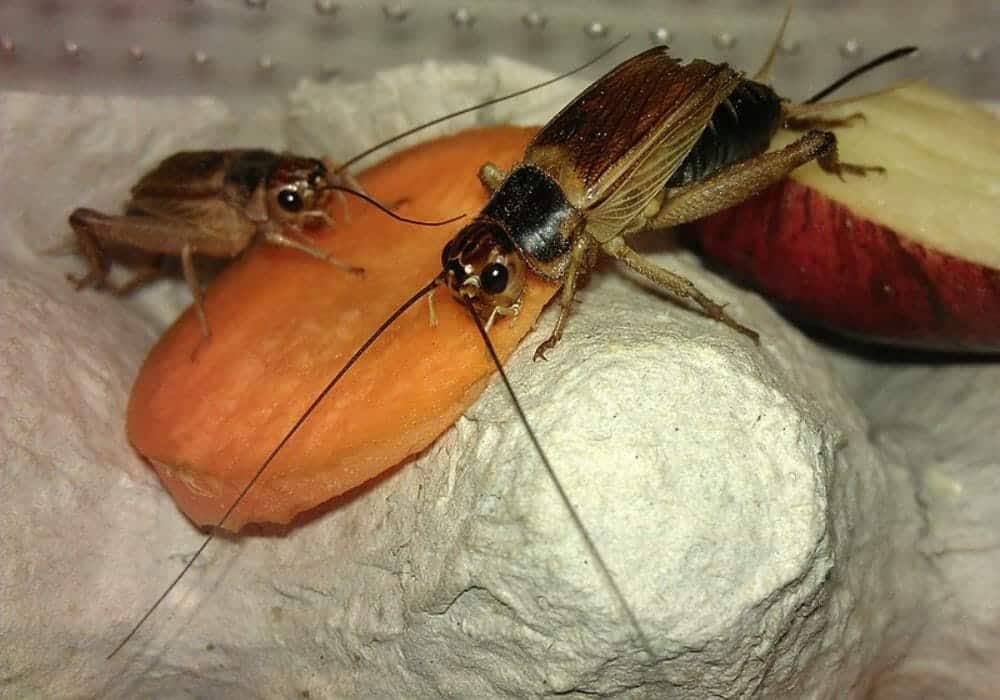
1. Grass
Grass is one of the most common and foundational food sources for crickets in natural ecosystems. It is widely available in nearly all terrestrial habitats, including meadows, forests, lawns, and agricultural fields. Crickets graze on both fresh and slightly dried grass blades, especially during nighttime when they are most active.
Nutritionally, grass provides carbohydrates, fiber, and small amounts of plant proteins. While it is not extremely nutrient-dense compared to animal matter, it serves as a steady energy source that supports basic metabolic activity. Crickets often consume grass in large quantities to meet their daily energy requirements.
Feeding behavior on grass is typically slow and continuous. Crickets use their mandibles to chew through soft plant tissue, gradually breaking it down into digestible material. They often remain hidden in vegetation while feeding to avoid predators such as birds and lizards.
Grass also plays an indirect role in cricket survival by supporting microhabitats that retain moisture and provide shelter. This makes it both a food source and a structural habitat component.
2. Leaves
Leaves are another essential component of the cricket diet, particularly young and tender leaves that are easier to digest. Crickets feed on a wide variety of plant species depending on habitat availability.
Leaves provide carbohydrates, fiber, and plant-based micronutrients. While mature leaves may be tougher and less nutritious, young leaves contain higher moisture and nutrient content, making them more desirable.
Crickets typically feed on leaves at night, using their mandibles to chew small sections at a time. They often target the edges of leaves, gradually consuming plant tissue while remaining hidden beneath vegetation.
This feeding behavior contributes to natural plant pruning and nutrient cycling within ecosystems, although crickets rarely cause significant damage unless populations are extremely high.
3. Seeds
Seeds are a valuable and energy-rich food source for crickets, especially in dry environments or seasonal conditions when fresh vegetation is limited. They are commonly found on the ground or within dried plant matter.
Seeds contain carbohydrates, fats, and plant proteins, making them a concentrated source of energy compared to leafy material. This helps crickets sustain activity during periods of food scarcity.
Crickets use their mandibles to crack or chew seeds, depending on size and hardness. Smaller seeds are consumed whole, while larger ones are broken down gradually.
Seed feeding is especially important in agricultural areas where grain crops are present, providing a consistent and abundant food supply.
4. Fruits
Fruits are a seasonal but highly nutritious food source for crickets. They are typically consumed when overripe or fallen to the ground, making them easily accessible.
Fruits provide natural sugars, moisture, vitamins, and carbohydrates. These nutrients support energy production and hydration, particularly in dry environments.
Crickets feed on soft fruit tissue using their mandibles, often gathering in areas where fruit has begun to ferment or decay slightly, as this softens the material.
This behavior also contributes to decomposition processes in ecosystems, as crickets help break down organic matter and recycle nutrients back into the soil.
5. Flowers
Flowers are another plant-based food source for crickets, especially in habitats with abundant flowering vegetation. They are typically consumed in small portions rather than as a primary food source.
Flowers provide nectar sugars, pollen proteins, and trace nutrients. These components offer quick energy and nutritional variety compared to other plant materials.
Crickets feed on petals and reproductive parts of flowers, often targeting soft tissues that are easier to chew and digest.
While not a major dietary staple, flowers contribute to dietary diversity and seasonal feeding variation.
6. Grains
Grains such as wheat, corn, rice, and barley are important food sources for crickets, especially in agricultural environments. These are often found in fields, storage areas, or fallen crop residues.
Grains are rich in carbohydrates and provide a dense energy source that supports cricket activity and reproduction. They are especially important during periods when fresh vegetation is limited.
Crickets consume grains by chewing them directly or feeding on broken fragments. Their mandibles allow them to process moderately hard plant material effectively.
In farming regions, grains can become a major part of the cricket diet due to their abundance and accessibility.
7. Vegetables
Vegetables are frequently consumed by crickets, particularly soft or decaying plant parts. In natural environments, this includes wild vegetation, while in human-influenced areas it may include garden crops.
Vegetables provide a mix of water, fiber, vitamins, and plant sugars. These nutrients help maintain hydration and energy balance.
Crickets prefer softer vegetables such as lettuce, cucumber, and squash, which are easier to chew and digest compared to tougher plant materials.
This feeding behavior makes crickets important decomposers in both natural and agricultural ecosystems.
8. Roots
Roots are an underground food source that crickets consume when accessible, particularly in moist soil environments. They are typically encountered when crickets burrow or forage close to the ground surface.
Roots contain carbohydrates, starches, and minerals that provide steady energy release. While tougher than leaves, they are still consumable with strong mandibles.
Crickets feed on fine root hairs and softer root sections rather than thick woody roots. This selective feeding allows them to avoid overly fibrous material.
Root feeding contributes to soil nutrient cycling but is generally a minor component of their overall diet.
9. Soft shoots
Soft shoots refer to young plant growth and new sprouts, which are highly nutritious and tender. Crickets actively seek out these plant parts in spring and early growing seasons.
Soft shoots are rich in moisture, sugars, and plant proteins, making them one of the most nutritious plant-based foods available to crickets.
Crickets feed on shoots by chewing small sections at a time, often focusing on the most tender and nutrient-rich areas.
This feeding behavior can influence plant growth patterns, although it rarely causes major ecological disruption.
10. Bark (soft or decaying)
Soft or decaying bark is consumed by crickets when other food sources are limited. This typically occurs in forested or wooded environments where decomposing plant matter is abundant.
Bark provides fiber and trace plant nutrients, but it is not highly energy-dense. It serves more as a supplementary food source rather than a primary diet component.
Crickets feed on softened bark using their mandibles to scrape away decomposing layers, often targeting areas already weakened by fungi or moisture.
This behavior contributes to decomposition processes and nutrient recycling in forest ecosystems.
11. Decaying plant matter
Decaying plant matter is one of the most important ecological food sources for crickets. It includes dead leaves, decomposed stems, rotting vegetation, and organic debris found on forest floors, grasslands, and agricultural fields. This material is especially abundant in humid environments where decomposition occurs rapidly.
From a nutritional perspective, decaying plant matter provides carbohydrates, fiber, and microbial byproducts that emerge during decomposition. While not as nutrient-dense as fresh plant tissue, it is a stable and reliable energy source that supports cricket survival during periods when fresh food is limited.
Crickets play a dual role here: they are both consumers and decomposers. By feeding on decaying plant matter, they help break down organic material into smaller particles, accelerating nutrient cycling in the soil. This process enriches the ecosystem by returning nutrients to the ground for plant reuse.
Crickets locate decaying matter using chemical cues and moisture gradients. They are especially active at night, when humidity is higher and predators are less active. Their feeding behavior is slow and methodical, chewing through softened plant tissue and organic fragments.
12. Fungi (mushrooms and mold)
Fungi, including mushrooms and mold, are a valuable but often overlooked part of the cricket diet. These organisms thrive in moist, shaded environments where organic matter is decomposing.
Fungi provide carbohydrates, amino acids, and microbial nutrients that are not typically found in fresh plant material. They also contain enzymes that may aid digestion when crickets consume decomposing organic matter.
Crickets feed on fungal growth found on wood, soil, or decaying vegetation. They scrape and chew soft fungal tissue using their mandibles, often targeting areas where mold has softened plant material.
This feeding behavior helps regulate fungal growth in ecosystems and contributes to the decomposition cycle by dispersing spores and breaking down organic structures.
13. Algae
Algae are a minor but important food source for crickets in damp or aquatic-adjacent environments. They are typically found on wet soil, rocks, plant surfaces, and shallow water edges.
Algae provide carbohydrates, minerals, and trace nutrients that support hydration and metabolic function. While not a primary food source, they contribute to dietary diversity.
Crickets feed on algae films by scraping surfaces with their mouthparts. This behavior is more common in humid environments where algae growth is abundant.
Algae consumption is particularly useful during dry conditions when other food sources are scarce, providing a supplemental energy boost.
14. Aphids
Aphids are small sap-sucking insects that crickets occasionally consume when encountered. They are commonly found on plants, especially in gardens, crops, and wild vegetation.
Aphids are rich in sugars and plant-derived nutrients due to their sap-based diet. This makes them a quick source of energy for crickets.
Crickets feed on aphids opportunistically, often consuming them while grazing on the same plants the aphids infest. This makes them incidental but beneficial prey.
Although not a primary food source, aphids add protein and variety to the cricket’s insect-based diet.
15. Insect larvae
Insect larvae represent a high-protein food source for crickets and include the immature stages of beetles, flies, and other insects. These larvae are typically found in soil, decaying matter, or plant material.
Larvae are rich in protein and fat, making them significantly more nutritious than many plant-based foods. This supports growth, reproduction, and energy storage in crickets.
Crickets locate larvae by foraging through soil and decomposing organic matter. Their mandibles allow them to break down soft-bodied prey efficiently.
This feeding behavior highlights the cricket’s opportunistic omnivory and role as both decomposer and predator in the ecosystem.
16. Dead insects
Dead insects are a readily available food source in most environments where crickets live. These may include naturally deceased insects or those killed by predators or environmental factors.
Dead insects provide concentrated protein, fats, and micronutrients, making them an efficient energy source compared to plant matter.
Crickets often scavenge dead insects found in leaf litter, soil, or near other feeding sites. This scavenging behavior helps recycle nutrients within ecosystems.
By consuming dead insects, crickets contribute to decomposition and reduce organic waste accumulation in natural habitats.
17. Other crickets
Cannibalism, or the consumption of other crickets, can occur in certain conditions such as overcrowding, food scarcity, or injury. While not a primary behavior, it is part of their opportunistic survival strategy.
Other crickets provide high levels of protein and fat, making them a valuable but situational food source.
Crickets may attack weakened, injured, or molting individuals. This behavior increases survival chances when resources are limited.
Although not preferred, this feeding strategy reflects their adaptability in challenging environments.
18. Caterpillars
Caterpillars are soft-bodied larvae of butterflies and moths that serve as a nutritious food source for crickets. They are commonly found on leaves and vegetation.
Caterpillars are rich in protein and fat, making them highly beneficial for growth and energy.
Crickets consume caterpillars opportunistically, especially when feeding on the same plants where caterpillars are present.
Their soft bodies make them easy to chew and digest compared to harder insects.
19. Beetle larvae
Beetle larvae, also known as grubs, are a nutrient-dense food source found in soil and decomposing organic matter. They are widely consumed by crickets in natural ecosystems.
These larvae provide high protein and fat content, making them an excellent energy source for reproduction and growth.
Crickets locate beetle larvae by digging through soil or foraging in decaying plant material. Their strong mandibles allow them to consume soft-bodied larvae efficiently.
This feeding behavior contributes to soil nutrient cycling and ecosystem balance.
20. Ants
Ants are a common insect prey for crickets, especially in environments where ant colonies are abundant. Crickets may feed on both live and dead ants depending on opportunity.
Ants provide protein and small amounts of fat, making them a useful supplemental food source.
Crickets typically consume ants opportunistically, often while foraging near ant trails or disturbed colonies.
Although ants can defend themselves, crickets target isolated individuals or weak ants to minimize risk.
21. Flies
Flies are a widely available and opportunistic food source for crickets, especially in environments rich in organic decay such as forests, farms, compost areas, and urban waste sites. While crickets are primarily scavengers and herbivores, they will readily consume soft-bodied or weakened insects like flies when encountered. This opportunistic feeding behavior reflects their flexible digestive system and their role as generalist feeders in many ecosystems.
Nutritionally, flies provide a compact source of protein and moisture. Although individually small, they are abundant in most environments, especially during warmer seasons. This makes them an efficient supplemental food source when crickets are actively foraging. The soft exoskeleton of flies also makes them easier to consume compared to harder insects like beetles.
Crickets typically encounter flies in areas where organic material is decomposing, such as rotting fruit, manure, or decaying plant matter. They do not actively hunt flies in a highly specialized way but instead seize opportunities when flies land nearby or become trapped in confined spaces. Their mandibles allow them to quickly process soft insect tissue without requiring complex handling behaviors.
Ecologically, crickets consuming flies contribute to waste breakdown and nutrient recycling. By feeding on flies that are themselves part of decomposition cycles, crickets indirectly participate in controlling insect populations associated with decay. This reinforces their role as secondary decomposers in ecosystems.
In captivity or controlled environments, crickets may also consume dead or weakened flies introduced as supplemental protein sources. This demonstrates their adaptability and willingness to exploit nearly any available protein resource.
22. Mosquito larvae
Mosquito larvae represent an important aquatic or semi-aquatic food source for crickets in moist environments such as wetlands, puddles, and slow-moving water edges. While crickets are primarily terrestrial insects, some species are capable of exploiting damp habitats where mosquito breeding occurs.
Mosquito larvae are highly nutritious, containing protein, fats, and easily digestible organic matter derived from microorganisms and algae they feed on. This makes them a valuable energy source for crickets when accessible.
Crickets typically encounter mosquito larvae in shallow water margins or damp organic material near water bodies. They may consume larvae that are stranded in moist soil or exposed during low water conditions. This opportunistic feeding does not involve aquatic hunting but rather surface-level foraging where larvae are accessible.
The consumption of mosquito larvae highlights the cricket’s ability to exploit microhabitats that provide temporary food abundance. During rainy seasons, these environments become especially productive, allowing crickets to supplement their diet with protein-rich aquatic organisms.
From an ecological perspective, crickets feeding on mosquito larvae contributes indirectly to controlling mosquito populations, although they are not primary biological control agents.
23. Earthworm eggs
Earthworm eggs are a rare but highly nutritious food source for crickets in soil-rich environments. These eggs are typically found within moist soil, compost, or organic-rich substrates where earthworms reproduce.
Earthworm eggs are rich in protein and lipids, making them a concentrated source of energy compared to plant-based materials. Due to their small size and high nutritional density, they are especially valuable when encountered.
Crickets locate earthworm eggs by foraging through soil and organic matter. Their mandibles allow them to break into protective cocoons or consume exposed eggs when soil disturbance reveals them. This feeding behavior is opportunistic rather than targeted, as eggs are not easily detectable.
This food source plays a minor but important role in cricket nutrition, particularly in nutrient-rich soils where earthworm populations are high. It also reflects the cricket’s role as a soil-level scavenger and micro-predator.
By consuming earthworm eggs, crickets participate in regulating invertebrate populations within the soil ecosystem, although this impact is generally minimal due to the rarity of encounters.
24. Rotting fruit
Rotting fruit is one of the most important energy-rich food sources for crickets in natural and human-influenced environments. Fallen fruit is commonly found in orchards, forests, gardens, and agricultural fields, especially during late summer and autumn.
As fruit decomposes, its sugars become more accessible, and microbial activity breaks down tough plant tissues, making it easier for crickets to feed. Rotting fruit provides carbohydrates, moisture, and small amounts of vitamins, making it an excellent energy source.
Crickets feed on softened fruit surfaces using their mandibles to scrape and consume decaying tissue. They are especially attracted to fermenting fruit, which emits strong odors that guide them to food sources.
This feeding behavior also plays a significant ecological role. By breaking down rotting fruit, crickets accelerate decomposition and help return nutrients to the soil more quickly. They often share these food sources with other decomposers such as flies and beetles.
Rotting fruit consumption is particularly important during dry seasons when fresh vegetation is less available, ensuring crickets maintain energy balance throughout the year.
25. Compost material
Compost material is a highly diverse food source for crickets, consisting of decomposing plant matter, organic waste, fungi, and microbial-rich substrates. This environment is often rich in nutrients due to active decomposition processes.
Compost provides carbohydrates, microbial proteins, and organic compounds that support cricket growth and metabolism. It is one of the most nutritionally diverse feeding environments available in nature.
Crickets thrive in compost piles, where moisture and warmth create ideal feeding conditions. They actively burrow through material, feeding on partially decomposed matter and associated microorganisms.
This behavior highlights their important ecological role as decomposers. By breaking down compost material, crickets accelerate nutrient cycling and contribute to soil fertility.
In agricultural ecosystems, crickets in compost areas help transform waste into usable organic matter, indirectly supporting plant growth and soil health.
26. Animal carcass remains
Animal carcass remains are an important but opportunistic food source for crickets. While they do not actively hunt large animals, they readily consume soft tissues from dead organisms when available.
Carcass remains provide high levels of protein, fats, and minerals, making them an extremely energy-rich food source. These nutrients are especially valuable in environments where other food is scarce.
Crickets typically feed on exposed soft tissue at the edges of decomposing carcasses, often sharing the resource with other scavengers such as beetles and flies. They rely on odor cues to locate these food sources.
This scavenging behavior plays a key ecological role in decomposition processes, helping break down organic matter and recycle nutrients back into the environment.
Although not a primary food source, carcass feeding demonstrates the cricket’s adaptability and ability to survive in nutrient-rich but competitive environments.
27. Fabric fibers (in captivity)
In captivity or human-influenced environments, crickets may occasionally consume fabric fibers, especially natural fibers such as cotton or wool. This behavior is not typical in the wild but occurs when other food sources are limited.
Fabric fibers do not provide significant nutritional value but may contain trace organic residues or serve as a source of structural material in digestive processes.
Crickets may chew on fabric due to curiosity, moisture attraction, or residual food particles embedded in the material. This behavior is generally considered opportunistic rather than dietary preference.
While not beneficial nutritionally, this behavior demonstrates the cricket’s ability to explore and interact with diverse environmental materials.
28. Paper (in captivity)
Paper consumption in crickets is another example of opportunistic feeding in artificial environments. Paper is primarily composed of plant cellulose, which crickets can partially digest.
Although paper offers minimal nutritional value, it may provide fiber and residual organic compounds. Crickets may chew paper when other food sources are unavailable.
This behavior is more common in captivity, where crickets are kept in containers with limited natural food sources.
It reflects their generalist feeding behavior and ability to process cellulose-based materials.
29. Fish flakes (in captivity)
Fish flakes are commonly used as supplemental food for crickets in captivity due to their high protein content. These processed foods are designed for aquatic pets but provide balanced nutrition for insects as well.
Fish flakes contain protein, fats, vitamins, and minerals that support cricket growth and reproduction. They are especially useful in breeding environments where high nutritional intake is required.
Crickets consume fish flakes readily when provided, often feeding in groups due to the high attractiveness of the nutrient content.
This highlights their adaptability to processed food sources in controlled environments.
30. Dry pet food (dog/cat food in captivity)
Dry pet food is one of the most nutritionally dense supplemental foods crickets consume in captivity. It contains a balanced mixture of proteins, fats, carbohydrates, and micronutrients.
This food is not naturally part of their wild diet but is widely used in insect-rearing systems to enhance nutritional quality for feeder insects.
Crickets feed actively on crushed or softened kibble, extracting protein and fat content to support growth and reproduction.
This demonstrates the extreme dietary flexibility of crickets and their ability to adapt to artificial feeding systems.
Conclusion
Crickets are highly adaptable omnivorous insects with one of the most flexible diets in the animal kingdom. From fresh vegetation like grass, leaves, and fruits to decomposing organic matter, fungi, and even small insects, their feeding habits reflect both survival efficiency and ecological importance.
In natural ecosystems, crickets play a key role as decomposers. By breaking down decaying plant material, rotting fruit, and organic waste, they help recycle nutrients back into the soil. This process improves soil fertility and supports plant growth, making crickets an essential part of healthy terrestrial ecosystems.
At the same time, crickets also function as a food source for many predators, including birds, reptiles, amphibians, and small mammals. Their position in the food web helps transfer energy from plants and organic matter up to higher trophic levels, maintaining ecological balance.
Their ability to consume both plant-based and animal-based foods, including insects, larvae, seeds, grains, and even carrion, highlights their opportunistic nature. This dietary flexibility allows crickets to survive in diverse environments ranging from forests and grasslands to urban areas and agricultural fields.
In captivity, crickets demonstrate even greater dietary adaptability, consuming processed foods such as pet food, fish flakes, and vegetable scraps. This has made them one of the most commonly used feeder insects in reptile and amphibian care.
Overall, the cricket’s diet is a clear example of evolutionary efficiency. Their ability to exploit nearly any organic food source ensures not only their survival but also their critical role in nutrient cycling, decomposition, and food web dynamics across ecosystems worldwide.
50+ FAQs About What Crickets Eat
1. What do crickets eat in the wild?
Crickets eat a wide variety of foods in the wild, including grass, leaves, seeds, fruits, fungi, decaying plant matter, small insects, and organic waste. They are omnivores and highly adaptable feeders.
2. Are crickets herbivores or carnivores?
Crickets are omnivores, meaning they eat both plant-based and animal-based foods depending on availability.
3. Do crickets eat plants?
Yes, crickets commonly feed on plants such as grass, leaves, shoots, flowers, and roots.
4. Do crickets eat grass?
Yes, grass is one of their most common food sources, especially in meadows and lawns.
5. Do crickets eat fruits?
Yes, crickets eat fruits, especially soft or overripe ones that have fallen to the ground.
6. Do crickets eat vegetables?
Yes, they feed on vegetables such as lettuce, squash, and soft garden crops.
7. Do crickets eat seeds?
Yes, seeds are an important energy source, especially in dry environments.
8. Do crickets eat grains?
Yes, crickets consume grains like wheat, corn, rice, and barley when available.
9. Do crickets eat leaves?
Yes, especially young and soft leaves, which are easier to digest.
10. Do crickets eat flowers?
Yes, they may feed on flower petals, nectar, and soft floral tissues.
11. Do crickets eat fungi?
Yes, crickets consume mushrooms and mold growing on decaying organic matter.
12. Do crickets eat decaying matter?
Yes, decaying plant material is a major part of their natural diet.
13. Do crickets eat insects?
Yes, crickets occasionally eat insects such as larvae, ants, and flies.
14. Do crickets eat dead animals?
Yes, they may feed on small amounts of carrion when available.
15. Do crickets eat other crickets?
Yes, in rare cases, crickets may eat other crickets, especially when food is scarce.
16. Do crickets eat ants?
Yes, ants are occasionally consumed as part of their opportunistic diet.
17. Do crickets eat beetles or larvae?
Yes, they may consume beetle larvae and soft-bodied insects.
18. Do crickets eat flies?
Yes, they sometimes feed on flies, especially dead or weakened ones.
19. Do crickets eat mosquito larvae?
Yes, in damp environments, they may consume mosquito larvae.
20. Do crickets eat worms?
Yes, they may feed on earthworm eggs or small organic matter associated with worms.
21. Do crickets eat roots?
Yes, they occasionally feed on soft plant roots in soil.
22. Do crickets eat bark?
Yes, but only soft or decaying bark, not hard wood.
23. Do crickets eat algae?
Yes, crickets may feed on algae in moist or aquatic environments.
24. Do crickets eat rotting fruit?
Yes, rotting fruit is highly attractive due to its soft texture and sugar content.
25. Do crickets eat compost?
Yes, compost is an excellent food source rich in organic matter and microbes.
26. Do crickets eat animal carcasses?
Yes, they may feed on small parts of dead animals.
27. Do crickets eat paper?
In captivity, crickets may chew paper, but it has little nutritional value.
28. Do crickets eat fabric?
In captivity, they may chew fabric fibers out of curiosity.
29. Do crickets eat fish food?
Yes, fish flakes are commonly used as high-protein food in captivity.
30. Do crickets eat dog or cat food?
Yes, dry pet food is often used in cricket farming due to its high nutrition.
31. What do baby crickets eat?
Baby crickets eat similar foods to adults but prefer softer plant matter and fine organic particles.
32. Do crickets drink water?
Yes, they absorb moisture from food and may drink from droplets in their environment.
33. How do crickets find food?
They use smell, touch, and environmental cues like moisture and decay.
34. Do crickets eat at night?
Yes, crickets are primarily nocturnal feeders.
35. Do crickets eat during the day?
They may eat during the day if undisturbed, but are more active at night.
36. Do crickets eat soil?
They may ingest small amounts while feeding on organic matter in soil.
37. Do crickets eat roots of crops?
Yes, sometimes they feed on tender crop roots in agricultural fields.
38. Are crickets picky eaters?
No, crickets are highly opportunistic and will eat many types of organic material.
39. Why do crickets eat decaying matter?
Because it is rich in nutrients and easier to digest due to decomposition.
40. Are crickets important for ecosystems?
Yes, they help recycle nutrients and support food chains as prey for many animals.
41. Do crickets eat in groups?
They may gather in areas with abundant food but do not coordinate feeding.
42. Do crickets eat crops?
Yes, in some cases they may feed on agricultural crops like grains and vegetables.
43. What foods help crickets grow faster?
Protein-rich foods like insects, fish flakes, and pet food support faster growth.
44. What foods do crickets avoid?
They avoid toxic or highly dry materials with no nutritional value.
45. Can crickets survive without plants?
They can survive temporarily on organic waste and animal matter but prefer plant-based foods.
46. Do crickets eat dead leaves?
Yes, dead leaves are an important part of their diet.
47. Do crickets eat moldy food?
Yes, moldy or fungal food is often consumed in decomposition areas.
48. Why are crickets used as feeder insects?
Because they are nutritious, easy to breed, and adapt to many food types.
49. What is the main diet of crickets in captivity?
They are fed vegetables, grains, dry pet food, and commercial cricket feed.
50. Do crickets eat anything they find?
Crickets are opportunistic feeders and will consume most edible organic material they encounter.
51. Why are crickets considered omnivores?
Because they consume both plant matter and animal-based food sources throughout their life cycle.
Read more: