

The Caribbean Sea supports an extraordinary variety of fish, from colorful reef residents and powerful predators to small schooling species hidden among seagrass and mangroves. This guide to the types of fish in the Caribbean highlights 30 recognizable species and groups, with practical details about appearance, habitat, diet, behavior, size, and identification.
Whether you are snorkeling, scuba diving, fishing, visiting an aquarium, or simply learning about tropical marine life, these examples provide a useful introduction to Caribbean fish diversity.
What Are the Main Types of Fish in the Caribbean?
The main types of fish in the Caribbean include parrotfish, angelfish, groupers, snappers, grunts, jacks, surgeonfish, wrasses, damselfish, butterflyfish, triggerfish, puffers, rays, and many other reef and coastal species. They live across coral reefs, rocky bottoms, seagrass beds, mangroves, sandy flats, and open water. Their colors, body shapes, teeth, fins, and swimming behavior are useful identification clues.
1. Blue Tang
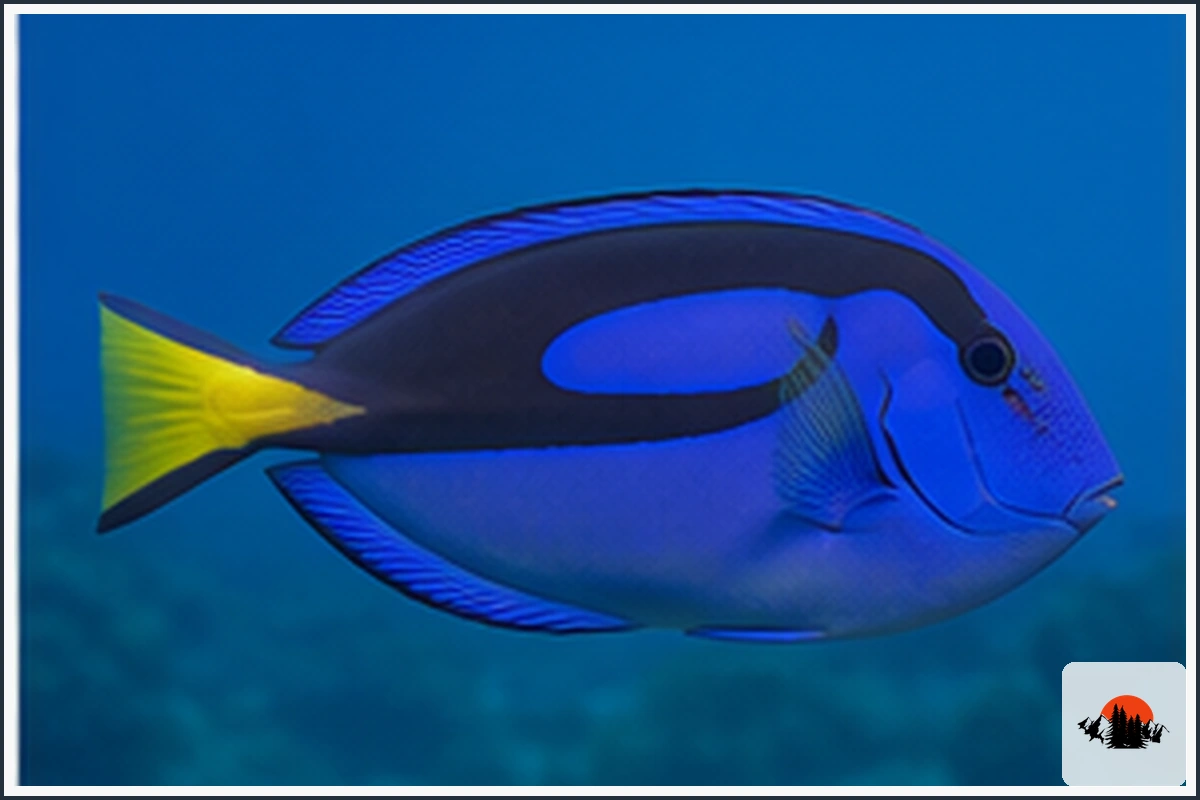
Scientific name: Acanthurus coeruleus
The blue tang is one of the most recognizable Caribbean reef fish. Adults are usually deep blue, while juveniles may be bright yellow or blue with yellow markings. A sharp spine beside the tail gives surgeonfish their name and helps protect them from predators.
Blue tangs commonly inhabit coral reefs, rocky areas, and seagrass beds from shallow water to moderate depths. They feed mainly on algae scraped from rocks and reef surfaces. Adults may reach about 15 inches long. Divers often see them singly, in pairs, or in small groups grazing across reef flats.
2. Queen Angelfish
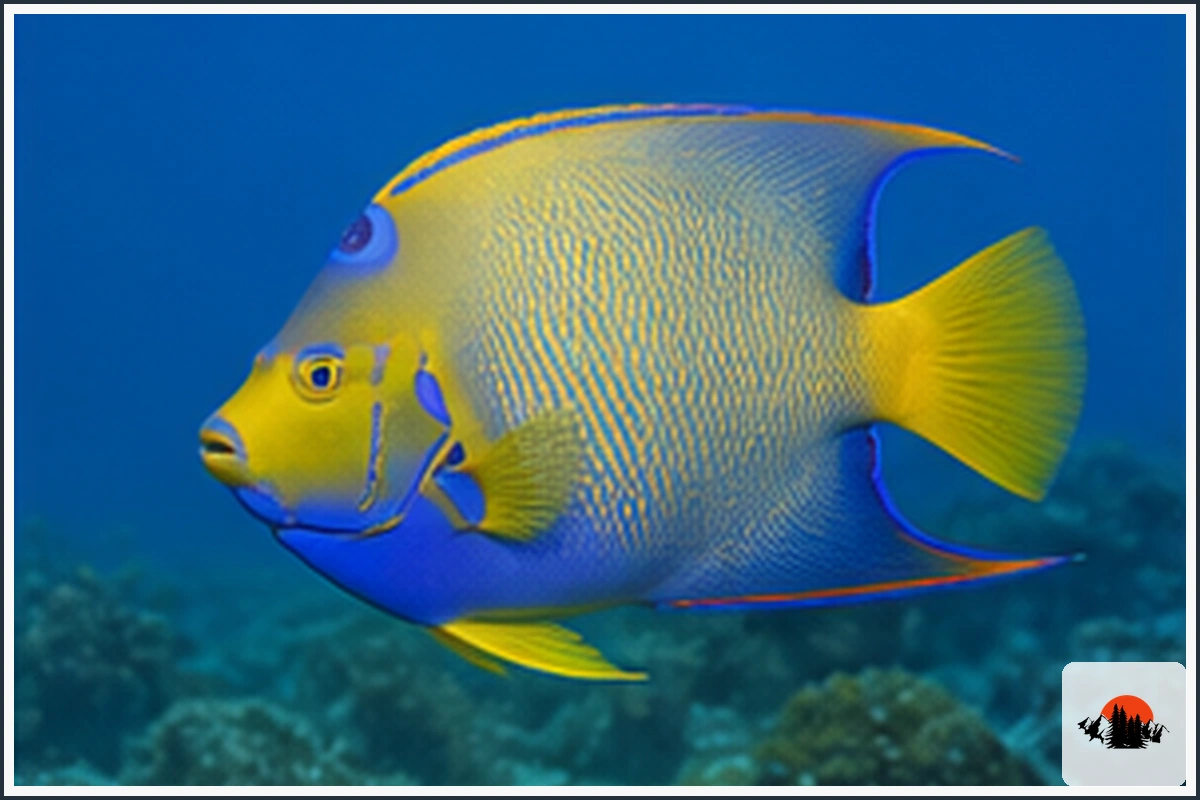
Scientific name: Holacanthus ciliaris
Queen angelfish are large, vividly colored reef fish with blue and yellow bodies, a rounded shape, and a distinctive blue crown-like marking on the head. Their bright coloration makes them easy to spot around coral formations.
They live near reefs, rocky ledges, and sponge-rich habitats throughout much of the tropical western Atlantic and Caribbean. Queen angelfish eat sponges, algae, corals, and small invertebrates. They are often observed alone or as pairs and can grow to more than 18 inches.
3. French Angelfish
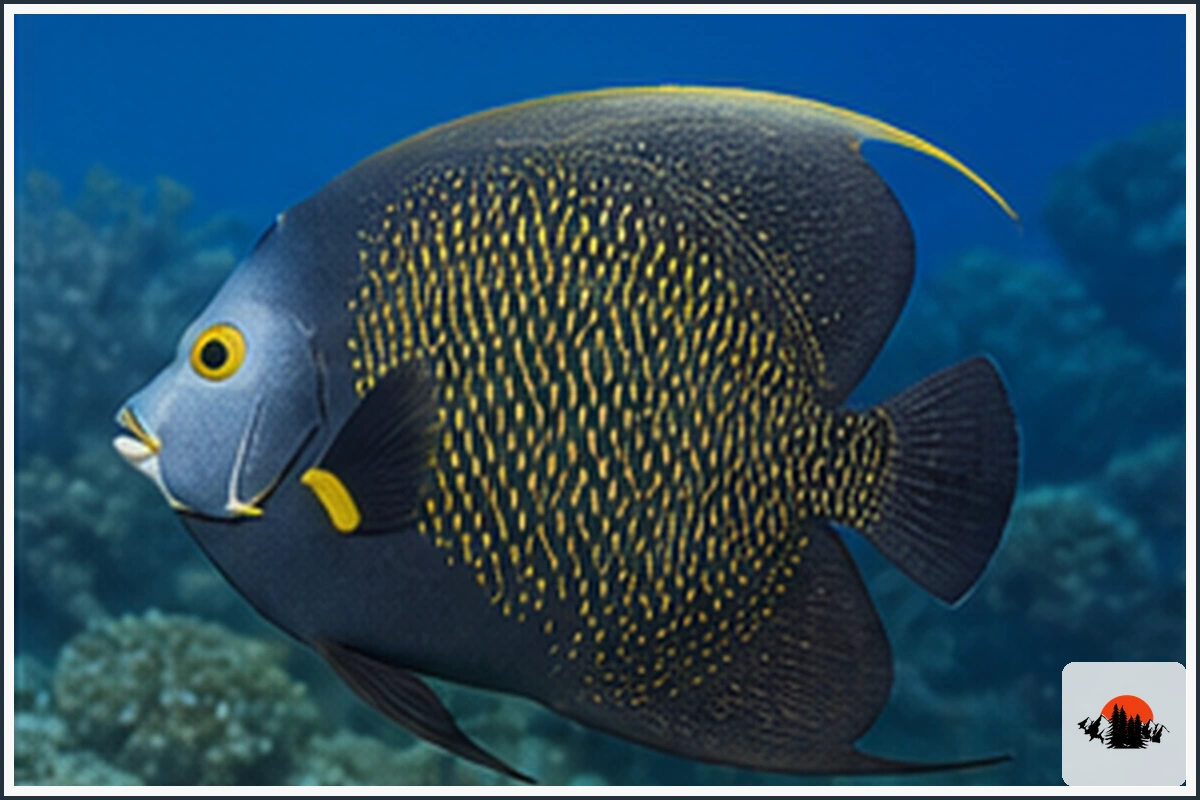
Scientific name: Pomacanthus paru
French angelfish have dark gray to black bodies crossed by yellow-edged scales. Their yellow pectoral fins and bright facial markings are useful identification features. Young fish look different, with strong yellow and black striping.
This species favors coral reefs, rocky structures, wrecks, and sponge-covered walls. It feeds on sponges, algae, soft corals, and small marine animals. French angelfish often travel in pairs and may grow to roughly 15 inches long.
4. Stoplight Parrotfish
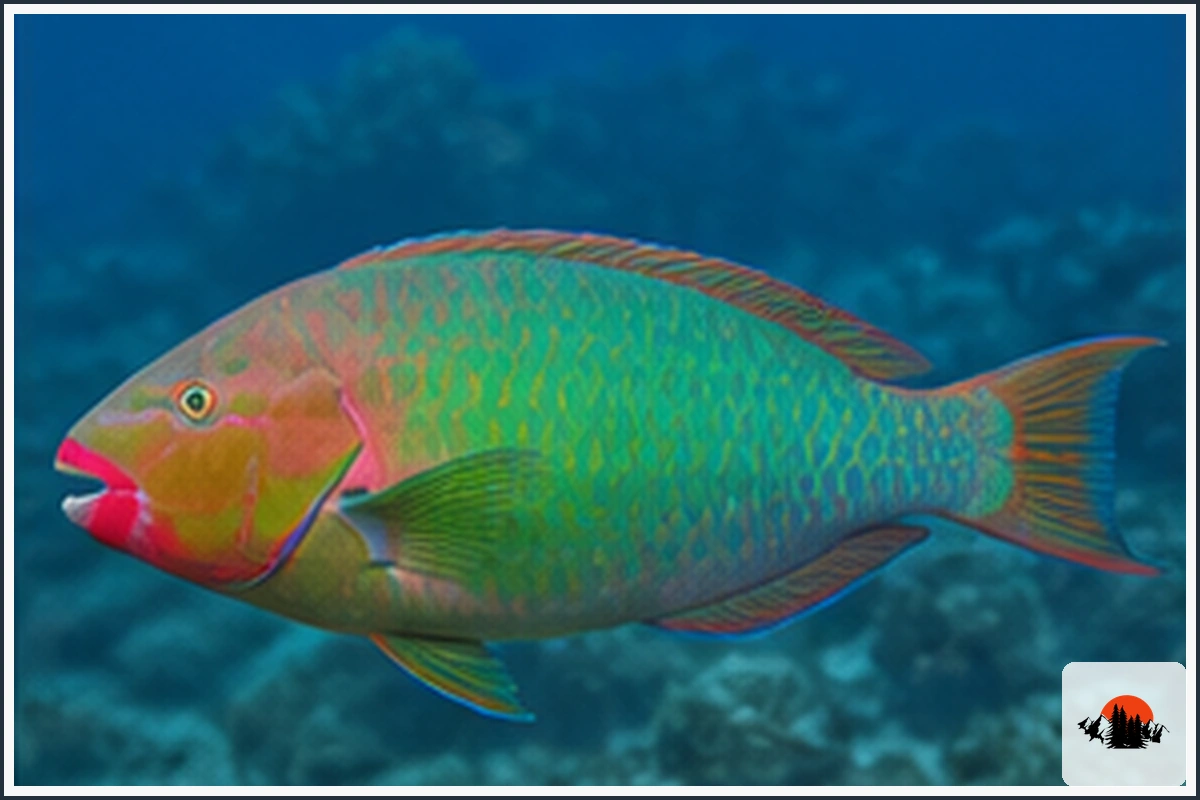
Scientific name: Sparisoma viride
The stoplight parrotfish changes appearance as it matures. Adult males are often green with orange, yellow, and blue markings, while females and juveniles may be reddish or brownish. A yellow spot near the pectoral fin is a helpful clue.
Parrotfish use strong, beak-like teeth to scrape algae from dead coral and rocks. Their feeding helps control algae and contributes to the production of reef sand. Stoplight parrotfish live around Caribbean coral reefs and may reach approximately 18 inches.
5. Rainbow Parrotfish
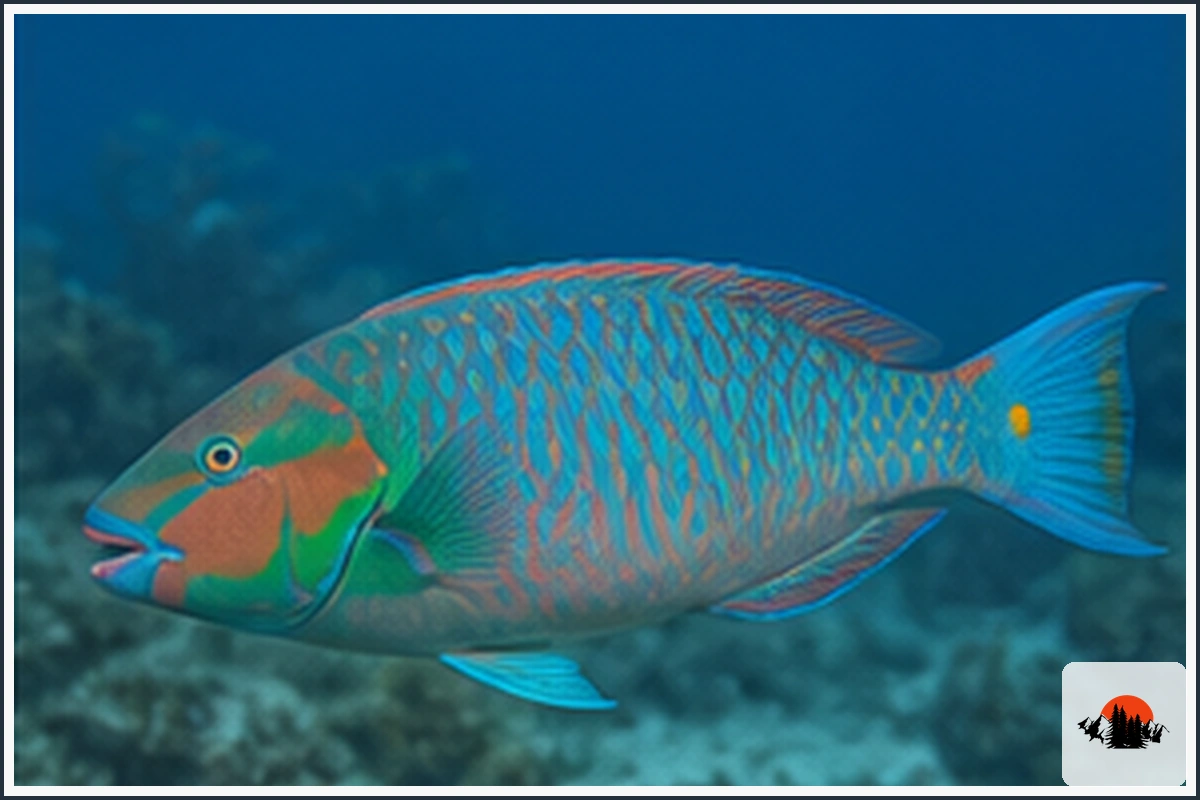
Scientific name: Scarus guacamaia
The rainbow parrotfish is among the largest parrotfish in the Caribbean. Its body can show green, blue, orange, and yellow tones, although the exact pattern varies with age and sex.
It uses fused teeth to graze on algae-covered reef surfaces and dead coral. This feeding behavior makes parrotfish important reef grazers. Rainbow parrotfish usually occur near coral reefs and rocky habitats and can grow beyond three feet in length.
6. Midnight Parrotfish
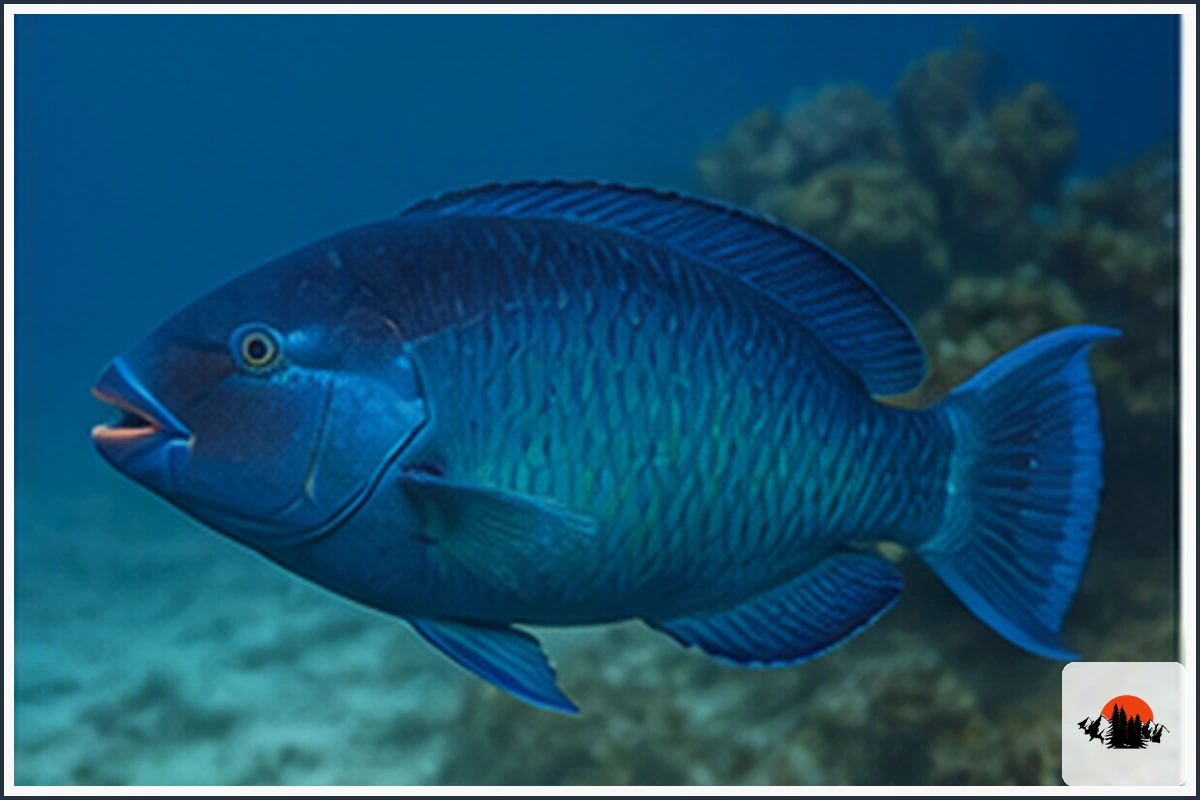
Scientific name: Scarus coelestinus
Midnight parrotfish have dark blue to nearly black bodies, often with blue highlights that become more visible in clear water. Their heavy bodies and parrot-like mouths distinguish them from ordinary reef fish.
They feed by scraping algae and other growth from hard surfaces. Midnight parrotfish favor coral reefs, reef slopes, and rocky areas across the Caribbean. Large adults may approach two feet long.
7. Yellowtail Snapper
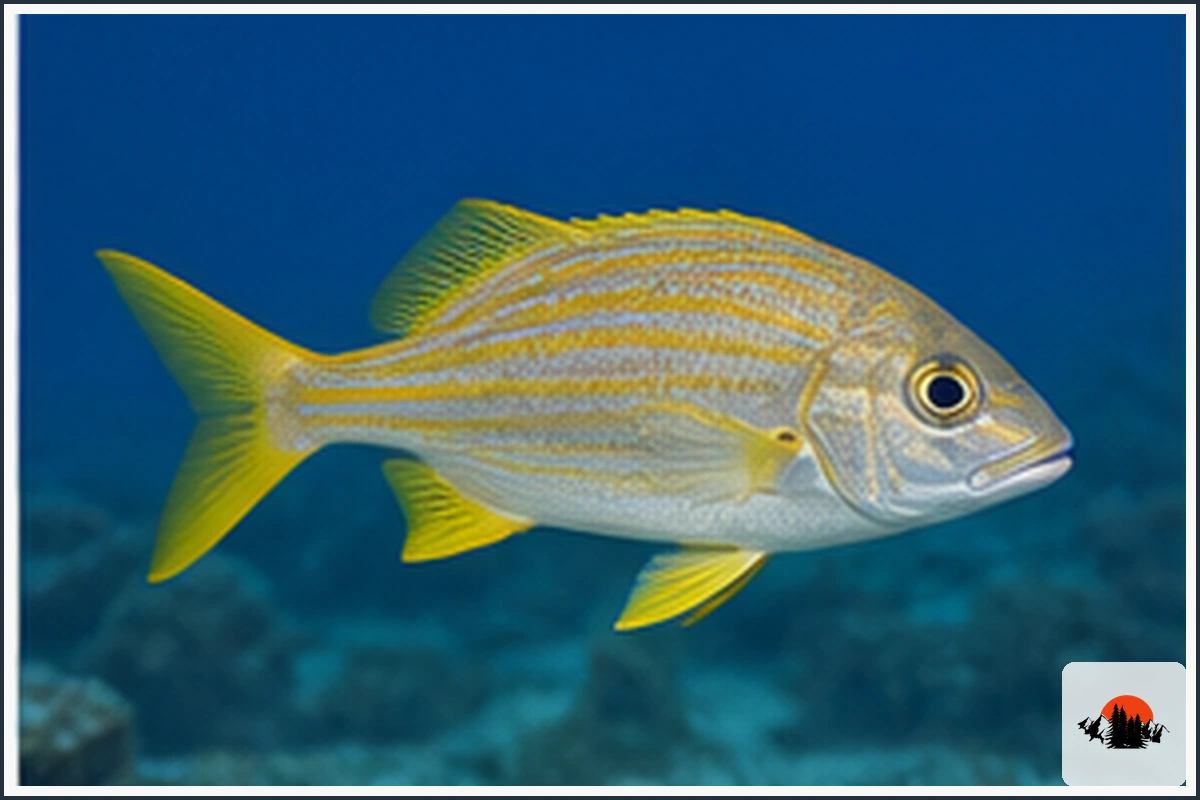
Scientific name: Ocyurus chrysurus
Yellowtail snapper have slender pinkish or silvery bodies, a yellow stripe running along the side, and a bright yellow tail. Their pointed snout and forked tail help separate them from many other reef fish.
They commonly gather around reefs, wrecks, ledges, and coral outcrops. Yellowtail snapper eat small fish, shrimp, crabs, and other invertebrates. They are important recreational and commercial fish and may grow to about 30 inches.
8. Red Hind Grouper
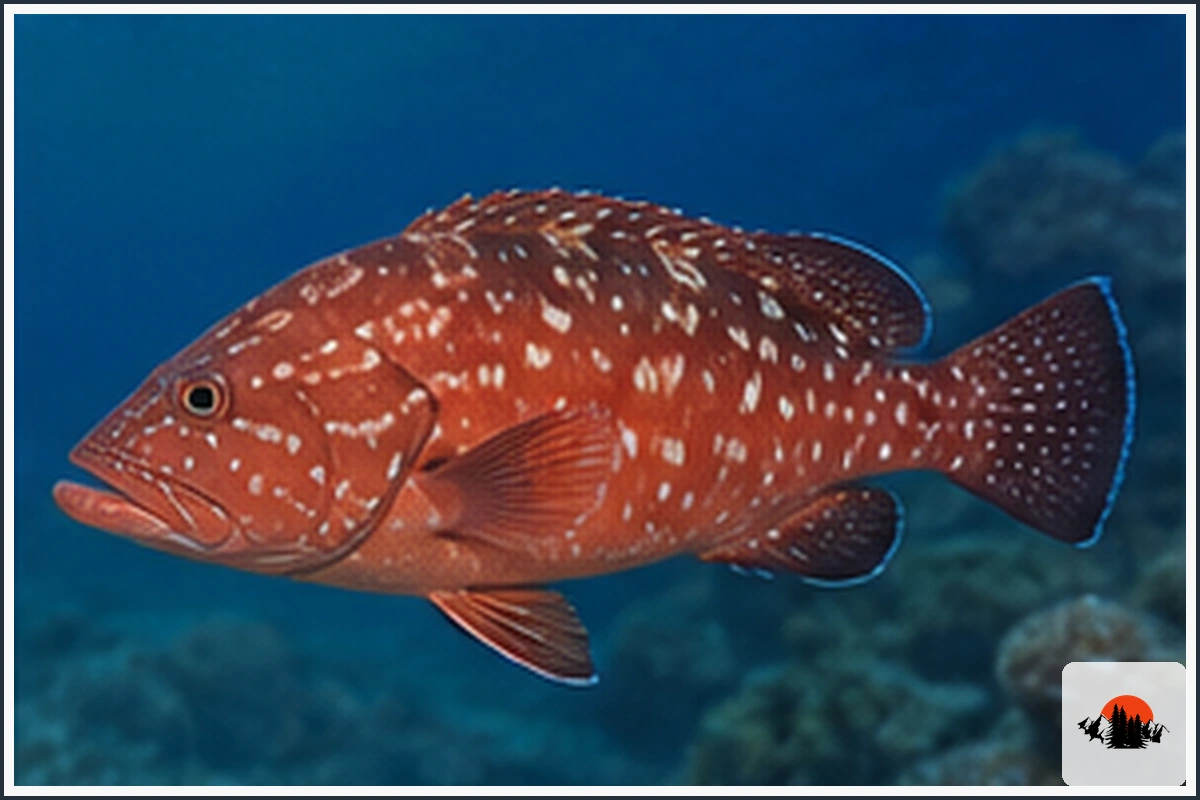
Scientific name: Epinephelus guttatus
Red hind groupers have stout bodies covered with reddish-brown spots and pale markings. Their large mouths and thick lips are typical grouper features.
They live around rocky reefs, coral formations, caves, and ledges. Red hinds ambush small fish, crabs, and other reef animals. They are important predators and popular targets for anglers, although local fishing regulations and seasonal protections may apply.
9. Nassau Grouper
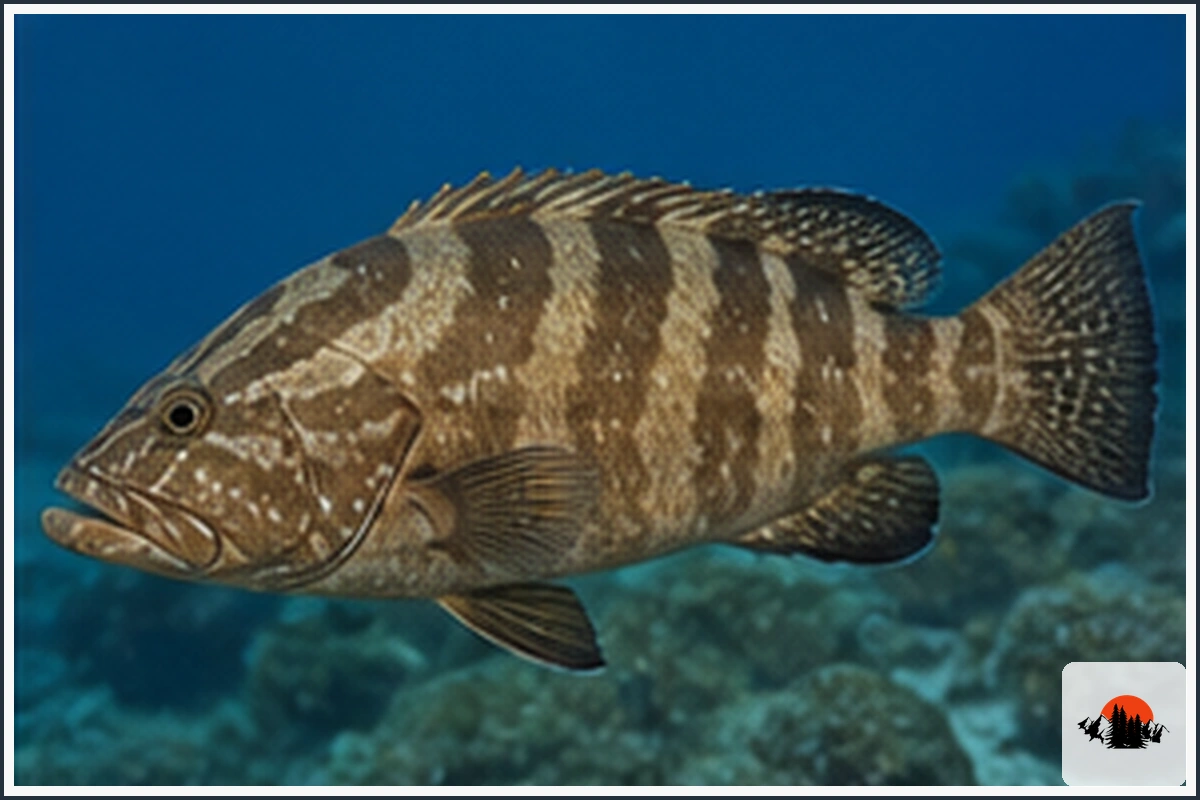
Scientific name: Epinephelus striatus
The Nassau grouper has a thick body, vertical dark bars, a dark line running through the eye, and a large mouth. Color can change depending on mood, habitat, and activity.
This grouper uses reefs, caves, drop-offs, and rocky shelters. It eats fish, crustaceans, and other reef animals. Nassau groupers form spawning aggregations, which has made them vulnerable to overfishing. The species is considered endangered, so protection and responsible observation are especially important.
10. Black Grouper
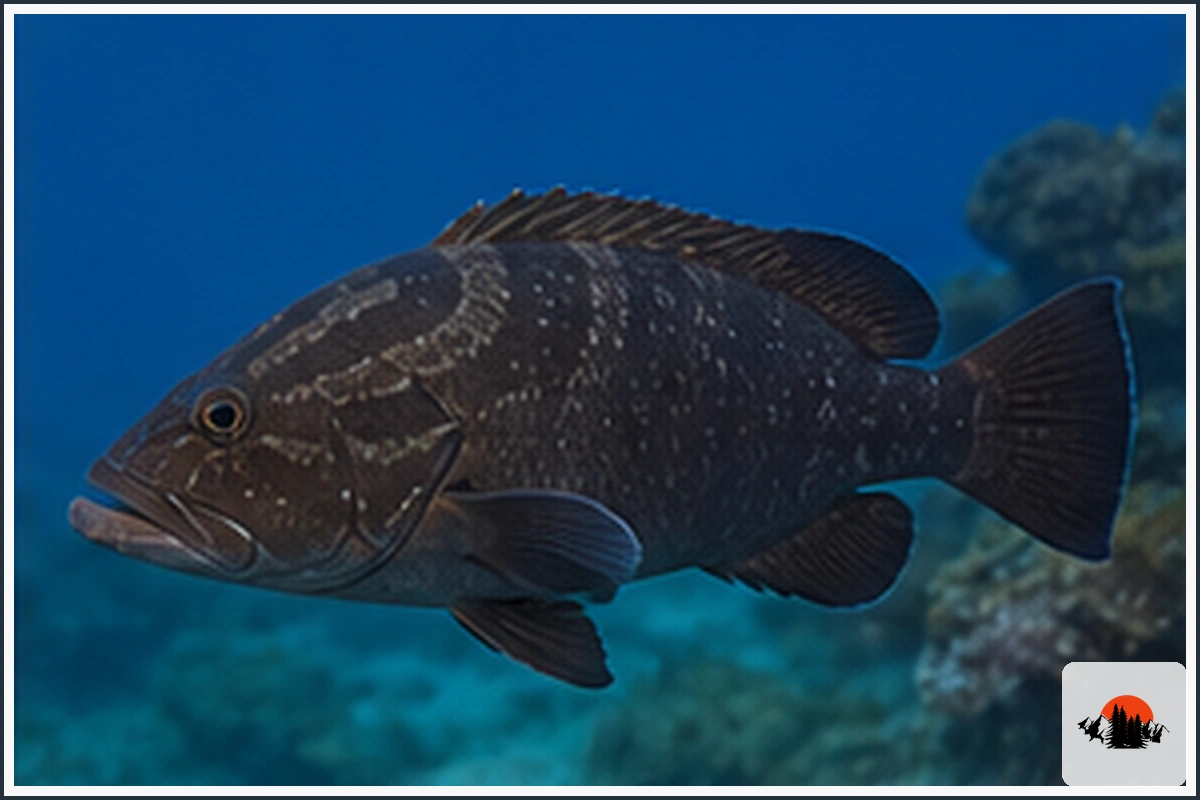
Scientific name: Mycteroperca bonaci
Black groupers are large, powerful fish with olive-gray to dark bodies marked by irregular darker patches. Their broad heads, heavy jaws, and elongated bodies help distinguish them from smaller reef fish.
They inhabit reefs, walls, wrecks, and rocky bottoms. Black groupers are ambush predators that eat fish, lobsters, crabs, and other animals. Adults can exceed four feet and are highly valued by anglers, making size limits and local regulations important.
11. Nassau Hogfish
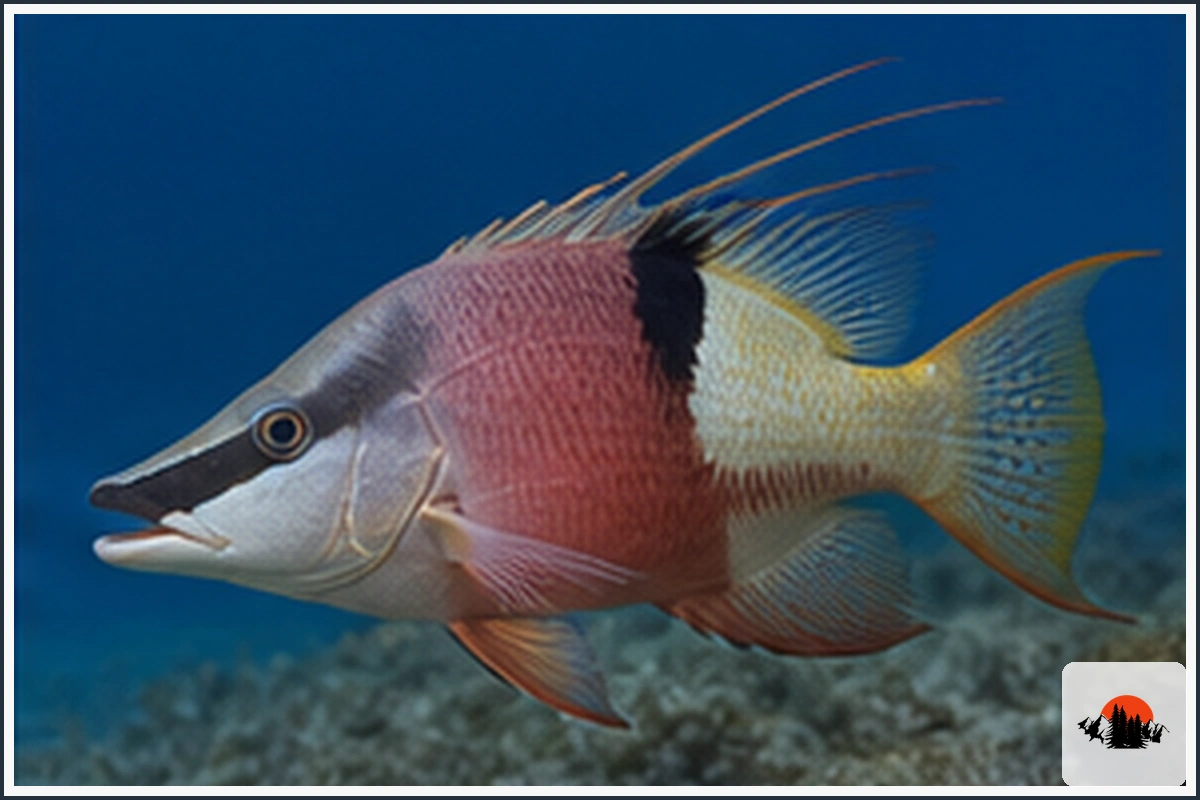
Scientific name: Lachnolaimus maximus
The hogfish has a long, pig-like snout, a high dorsal fin, and changing colors that may include pink, orange, yellow, and white. Its unusual profile makes it easy to recognize.
Hogfish use their protruding jaws to search for crabs, shrimp, mollusks, and other bottom-dwelling prey. They live around reefs, rocky bottoms, and sandy patches. Large individuals may reach more than three feet. Regulations often protect this popular food fish.
12. Bluehead Wrasse
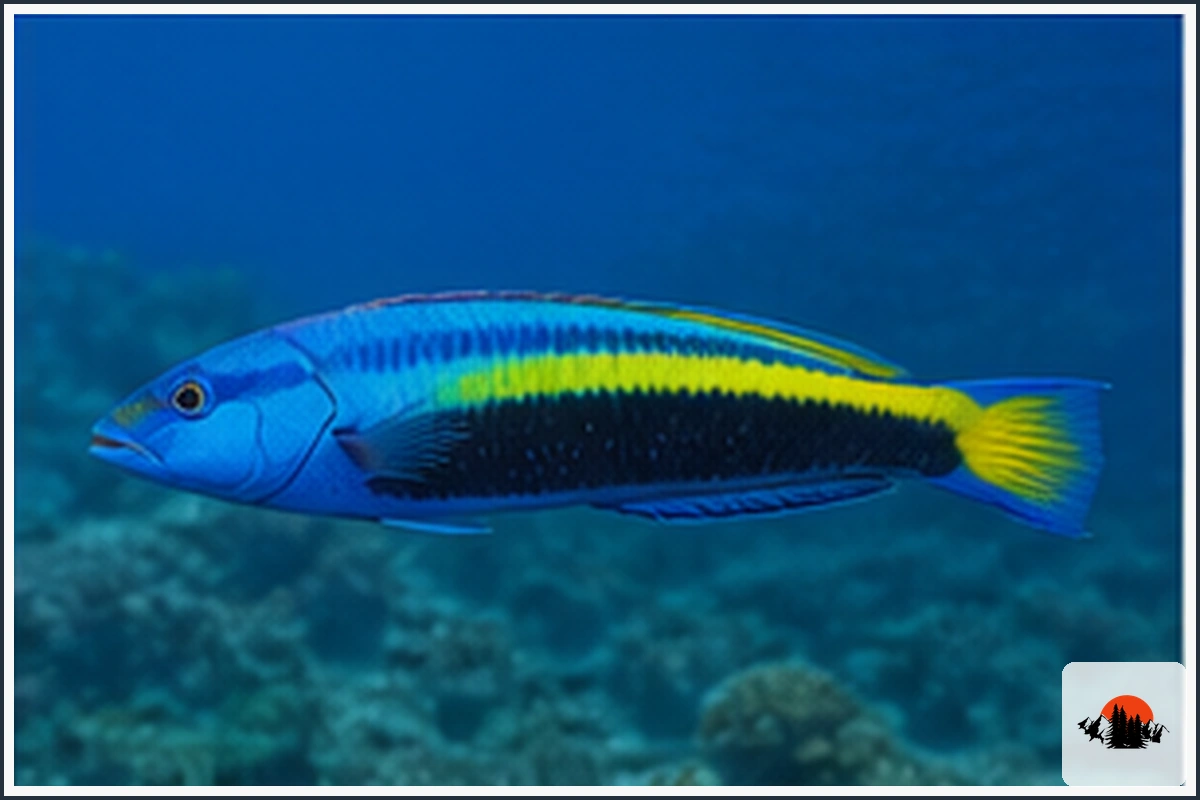
Scientific name: Thalassoma bifasciatum
Bluehead wrasses are small, active fish with distinctive color changes. Adults commonly have blue heads, yellow or green body sections, and dark markings behind the head. Juveniles often look more uniformly yellow.
They are common around Caribbean coral reefs, where they feed on small crustaceans, worms, and other invertebrates. Bluehead wrasses constantly move among coral and rock, making their quick darting behavior a useful identification clue.
13. Hogfish Wrasse
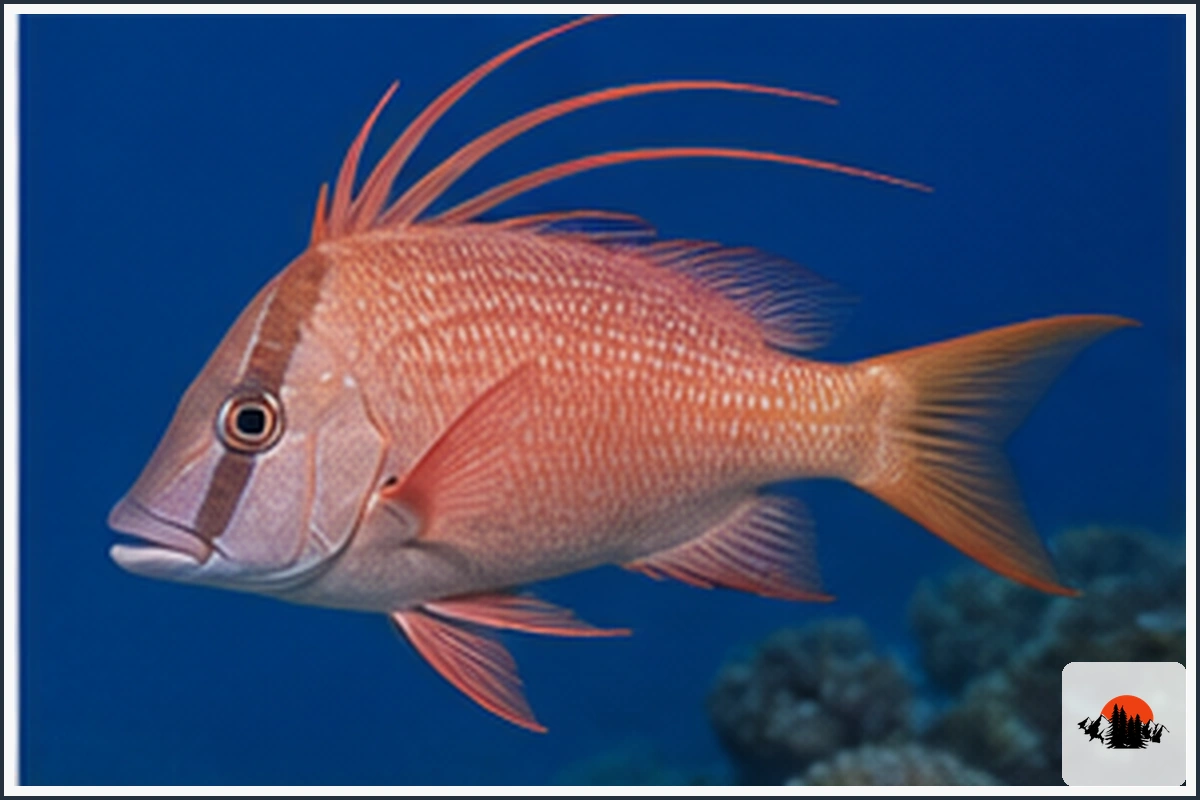
Scientific name: Lachnolaimus maximus
Often called simply hogfish, this large wrasse has a long snout, a pointed head, and an elongated body. Adults may display pink, orange, yellow, or white shades, while younger fish usually show stronger contrasting patterns.
Hogfish search the seafloor for crustaceans and mollusks. They are commonly found near coral reefs and rocky habitats. Their unusual feeding style and body shape make them one of the easiest larger Caribbean wrasses to identify.
14. Stoplight Wrasse
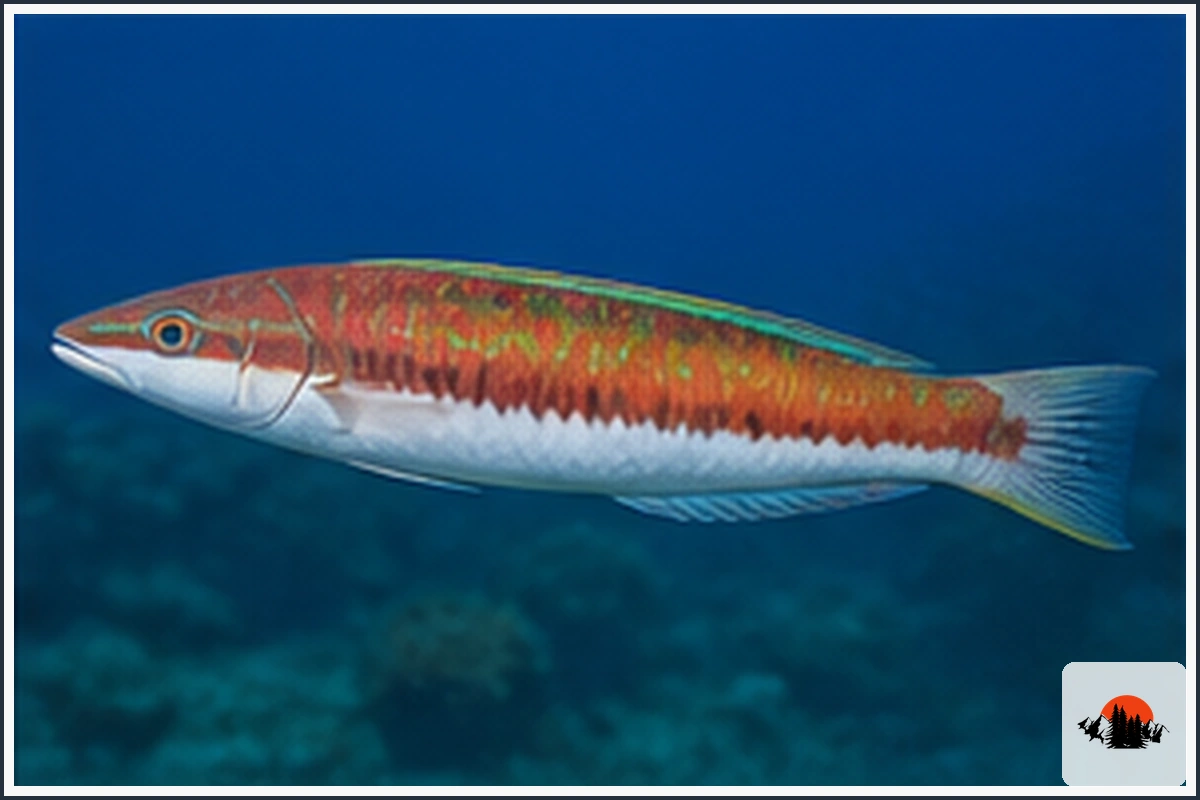
Scientific name: Halichoeres bivittatus
Stoplight wrasses are slender reef fish with changing patterns that may include green, blue, yellow, and reddish tones. They often show horizontal stripes or lines along the body.
They live over coral, rock, rubble, and sandy areas. Their diet includes small crustaceans, worms, mollusks, and other invertebrates. Stoplight wrasses are active during the day and may bury themselves in sand when resting or escaping danger.
15. Sergeant Major
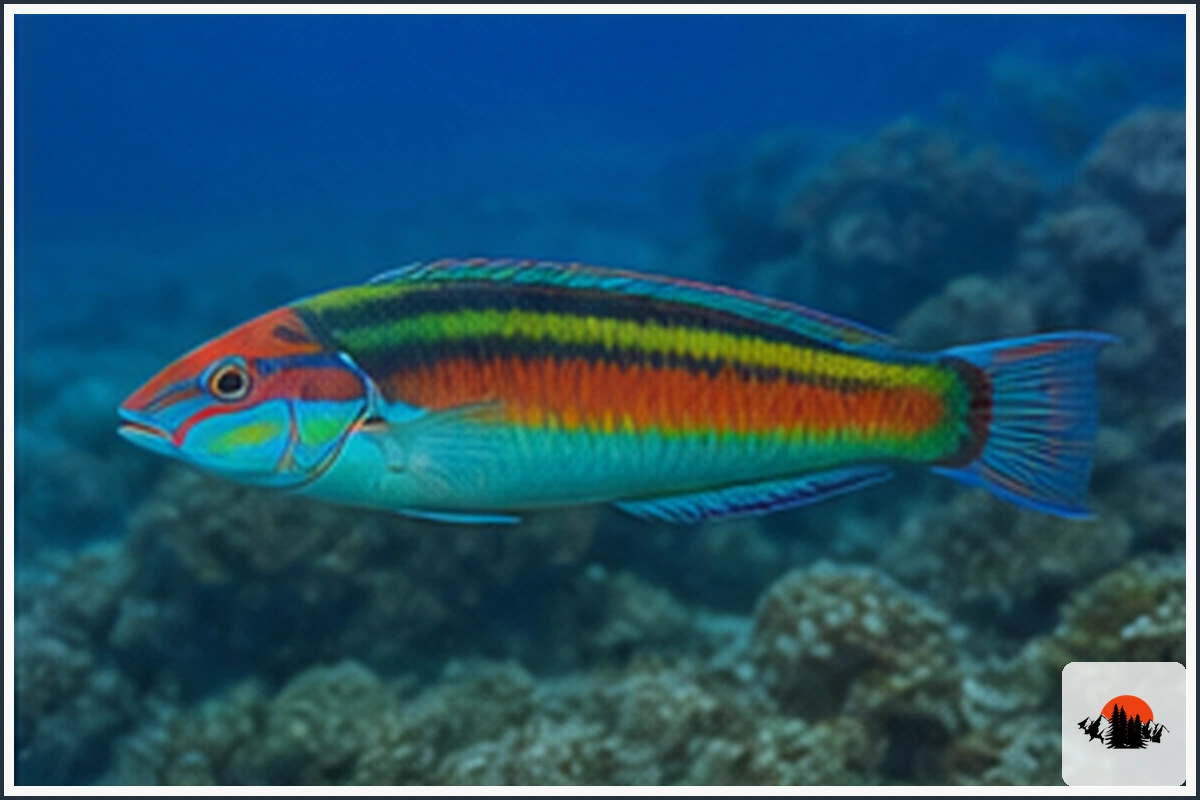
Scientific name: Abudefduf saxatilis
Sergeant majors are oval-bodied damselfish with five dark vertical bars over a silvery or yellowish body. The clear striping makes them one of the easiest Caribbean fish to identify.
They are common in shallow reefs, piers, rocks, wrecks, and coastal structures. Sergeant majors eat algae, plankton, and small invertebrates. Adults defend nesting areas, while young fish often gather around floating objects and sheltered reef surfaces.
16. Blue Chromis
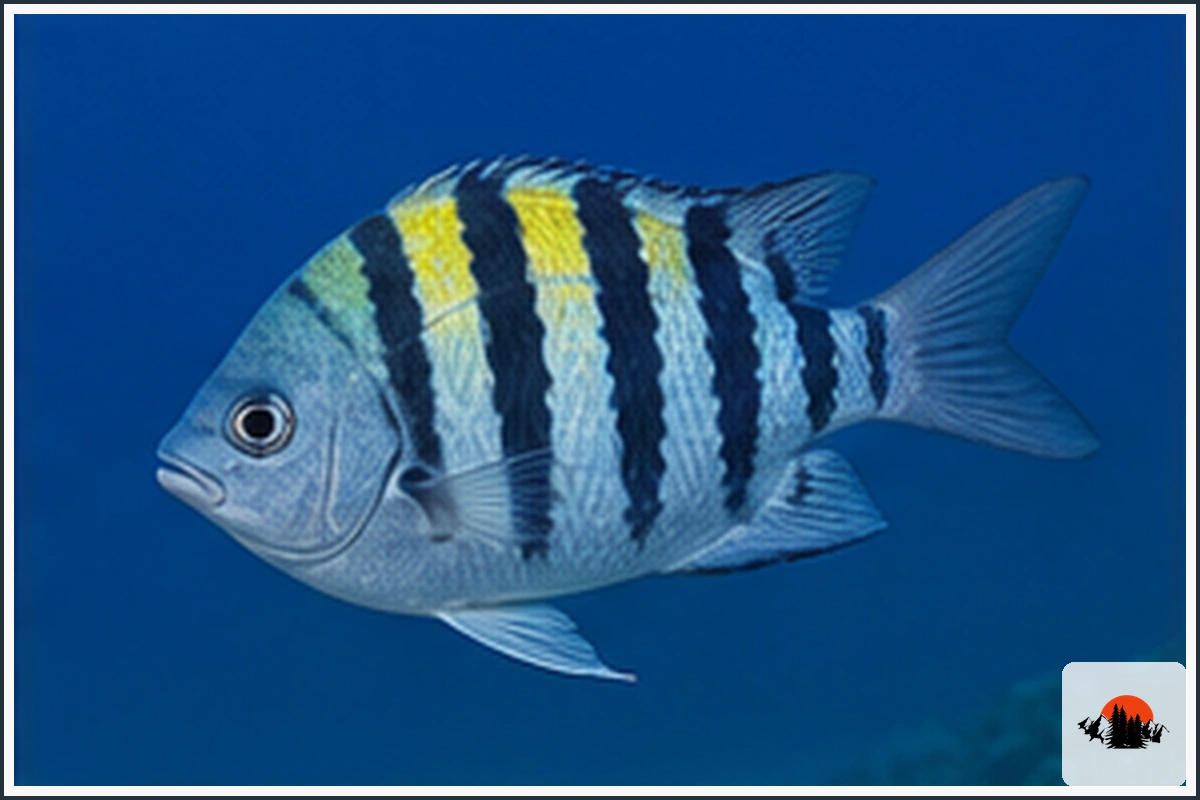
Scientific name: Chromis cyaneus
Blue chromis are small, bright blue damselfish that often swim in groups above coral heads. Their slim oval bodies and shimmering color are particularly noticeable in clear sunlight.
They feed mainly on plankton and small drifting organisms. Blue chromis prefer shallow to mid-depth reefs and retreat quickly into coral when threatened. Their schooling behavior is one of their most useful identification features.
17. Blue Rock Beauty
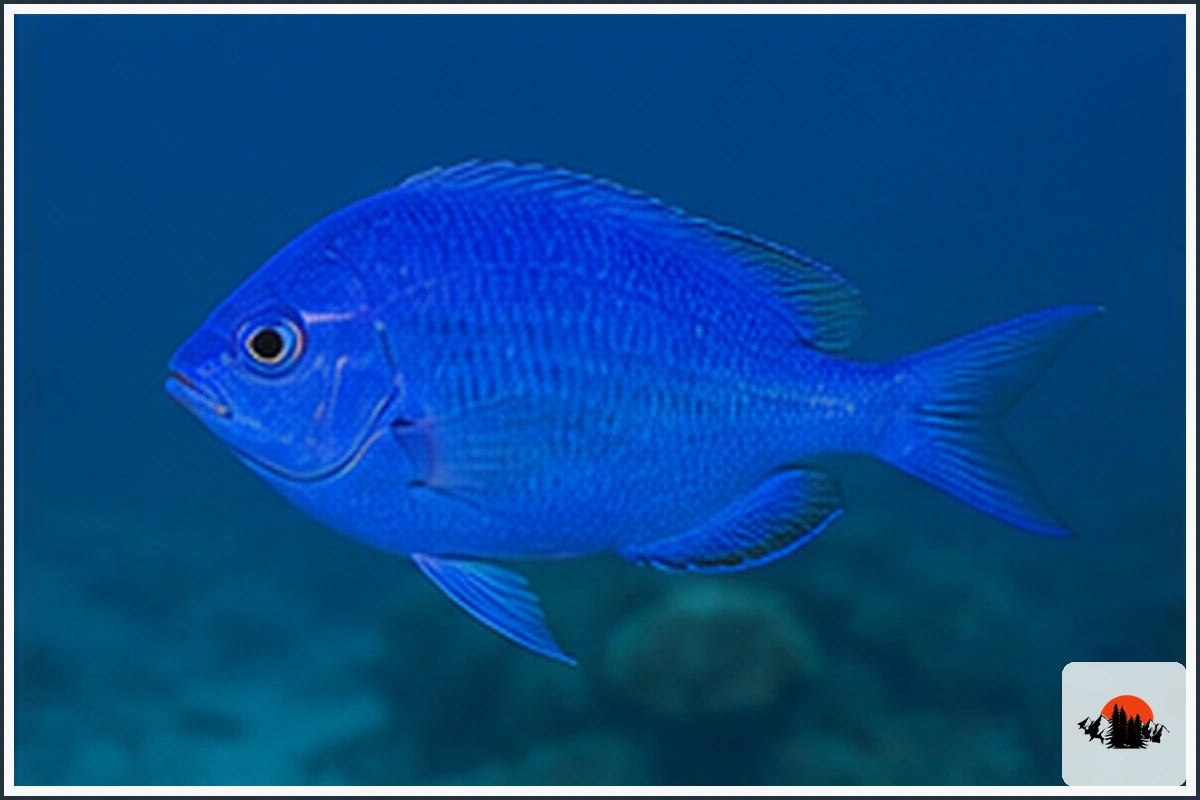
Scientific name: Holacanthus tricolor
The blue rock beauty has a dark blue to black front half, a yellow rear section, and a bright blue edge on the tail and fins. Juveniles often show more yellow than adults.
This angelfish lives around coral reefs, rocky areas, and sponge-rich structures. It feeds heavily on sponges along with algae and small reef organisms. It is smaller than queen and French angelfish, usually reaching about 10 inches.
18. Butterflyfish
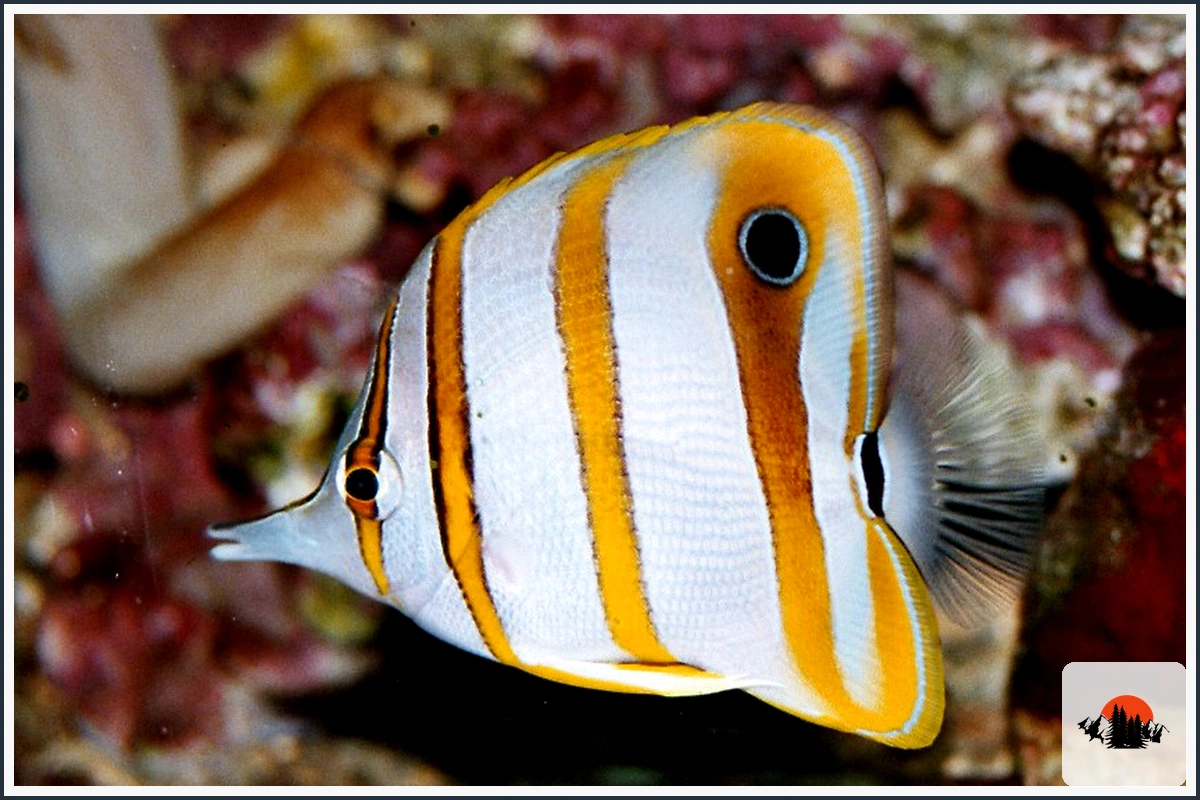
Common Caribbean examples: banded butterflyfish and four-eye butterflyfish
Butterflyfish are thin, disk-shaped reef fish with small mouths, bright colors, and strong facial markings. Many have dark bands through the eye or false eye spots near the rear of the body.
They commonly live in pairs around coral reefs and feed on coral polyps, worms, small crustaceans, and other invertebrates. Their narrow bodies allow them to move between coral branches. Careful observation is important because several species look similar.
19. French Grunt
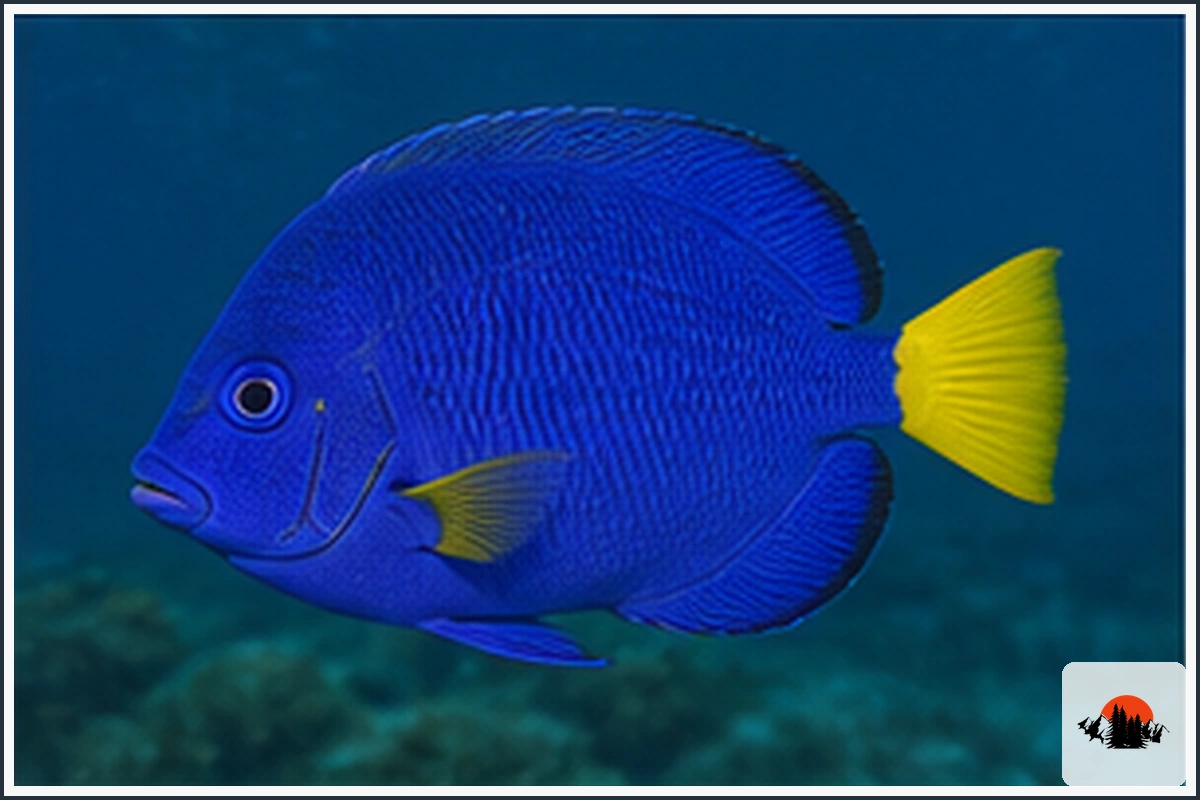
Scientific name: Haemulon flavolineatum
French grunts have yellow and silver bodies with thin horizontal stripes and a yellow face. They often gather in schools beneath ledges, overhangs, or beside coral formations.
These fish feed at night on shrimp, crabs, worms, and other small bottom animals. During daylight, they shelter together in reef structures. Their schooling behavior and striped pattern are useful identification clues.
20. Bluestriped Grunt
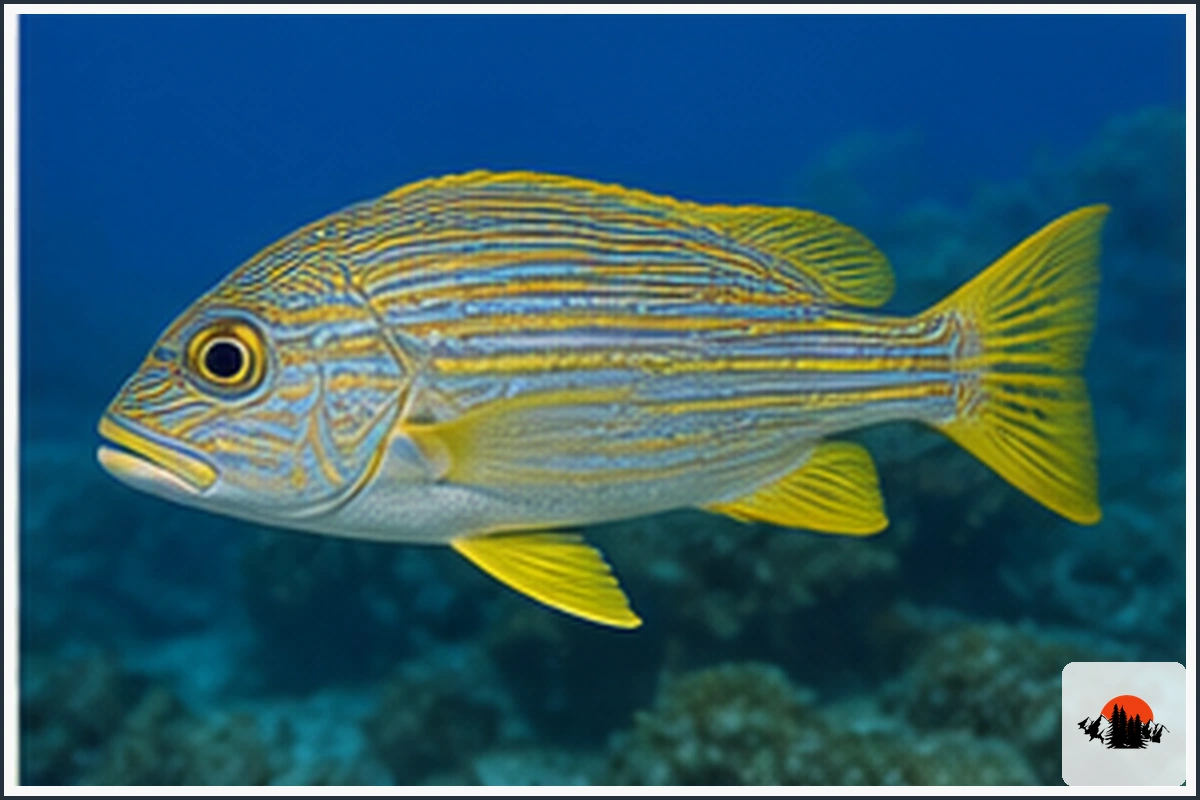
Scientific name: Haemulon sciurus
Bluestriped grunts have yellow bodies marked by narrow blue lines. Their pointed faces and deeply forked tails give them a streamlined appearance.
They are often seen schooling near reefs, mangroves, docks, and rocky structures. Bluestriped grunts feed mainly at night on crustaceans and other small seafloor animals. They may produce grunting sounds by rubbing parts of their teeth and swim bladder.
21. Gray Snapper
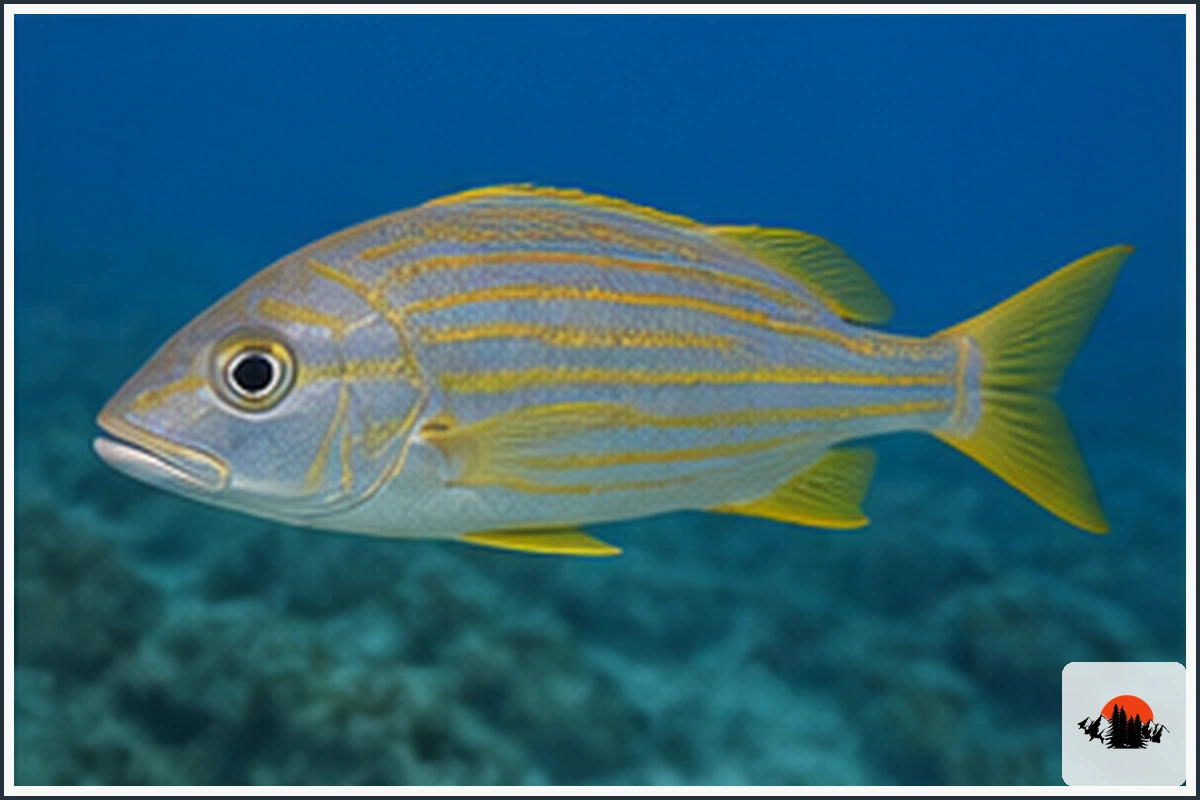
Scientific name: Lutjanus griseus
Gray snapper vary from gray to olive or reddish brown, sometimes with faint darker markings. Juveniles may show stronger stripes or coloration than adults.
This adaptable snapper uses mangroves, seagrass beds, reefs, channels, and rocky shorelines. It eats fish, shrimp, crabs, and other small animals. Gray snapper are important predators and popular in recreational fisheries.
22. Cubera Snapper
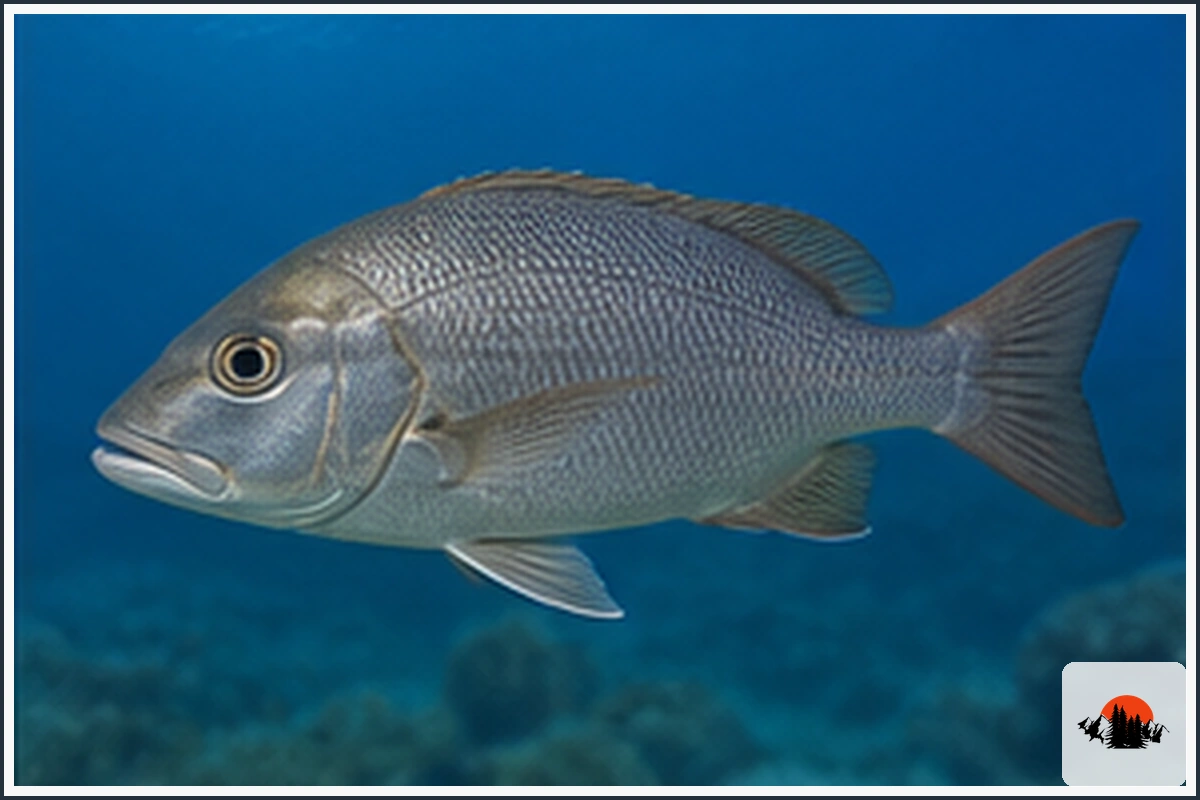
Scientific name: Lutjanus cyanopterus
Cubera snapper are the largest snapper species in the Caribbean. They have bulky bodies, powerful jaws, enlarged canine teeth, and a gray to brown coloration.
Adults favor deep reefs, ledges, caves, and wrecks, while young fish may use coastal nursery habitats. Cubera snapper eat fish, lobsters, crabs, and other large prey. Their size and strength make them challenging sport fish.
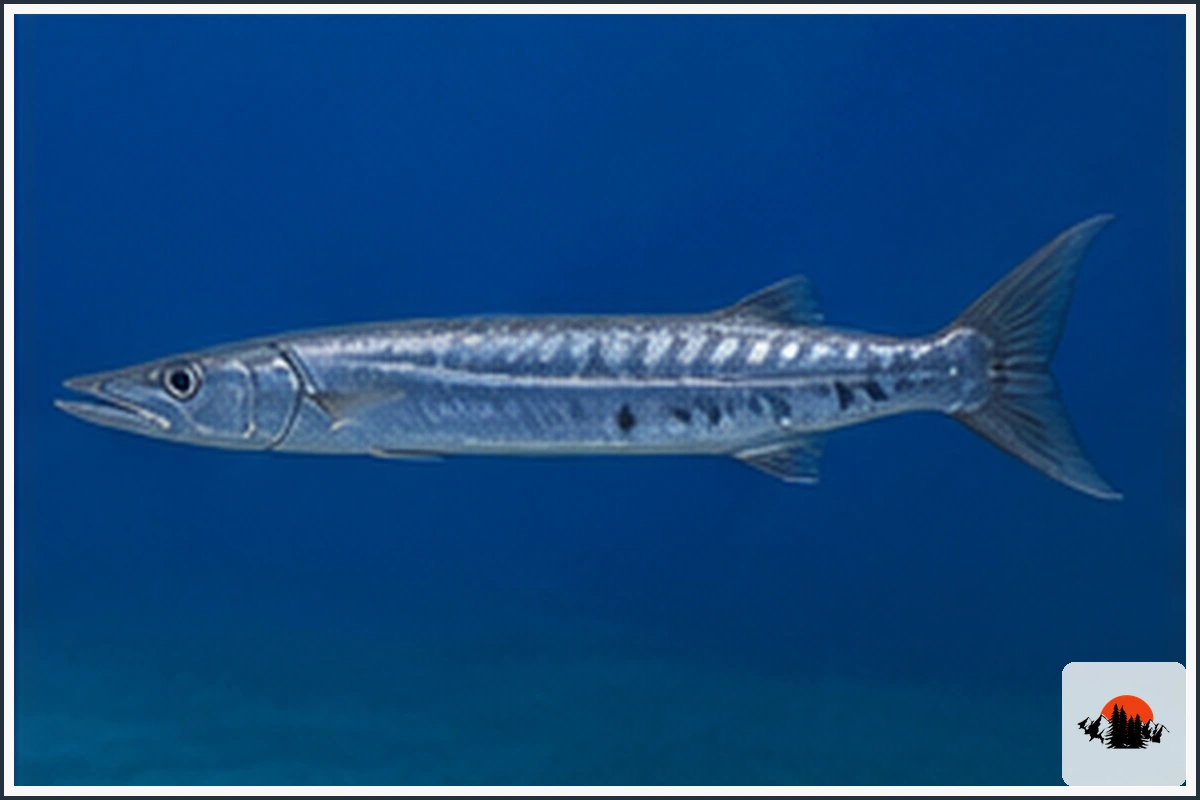
23. Great Barracuda
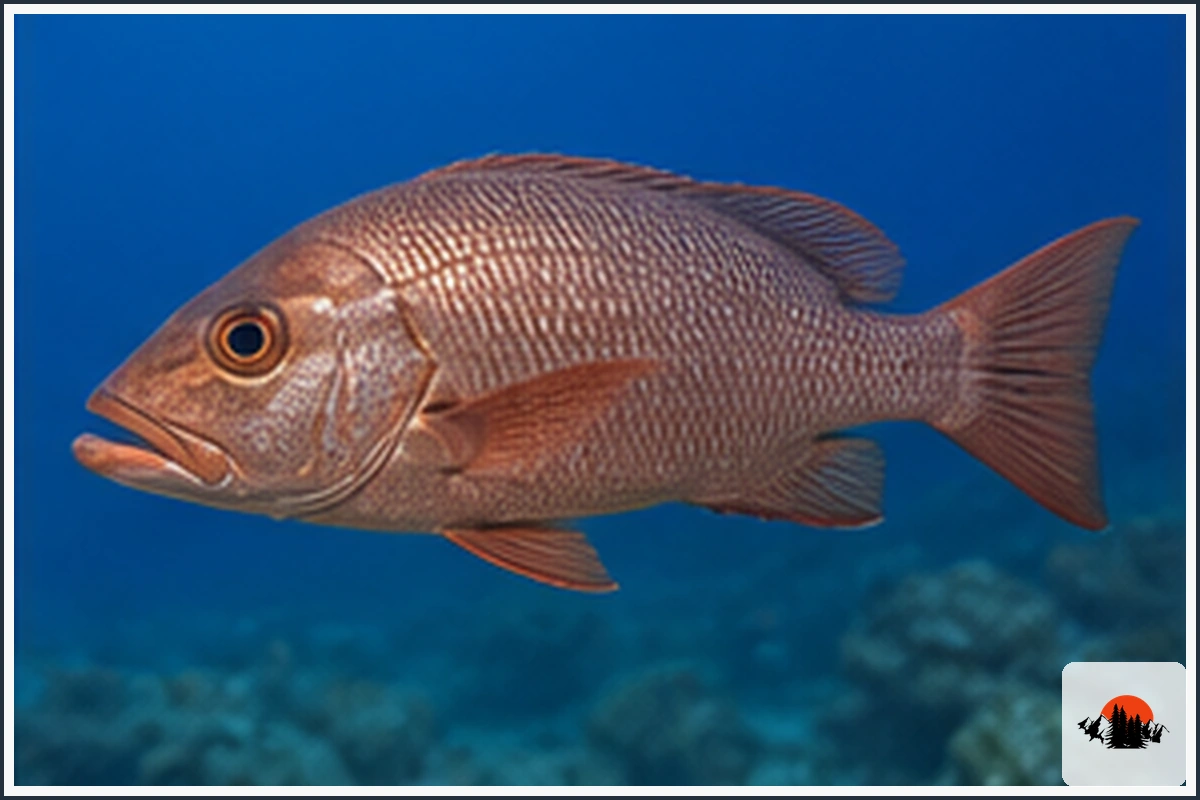
Scientific name: Sphyraena barracuda
Great barracuda have long, streamlined bodies, pointed heads, large jaws, and sharp teeth. Dark spots and a silver body help identify them, although color varies with habitat.
They occur around reefs, mangroves, seagrass, wrecks, and open coastal water. Barracuda are visual predators that ambush fish with sudden bursts of speed. Large individuals may exceed five feet. Divers should observe them calmly and avoid feeding wildlife.
24. Caribbean Reef Shark
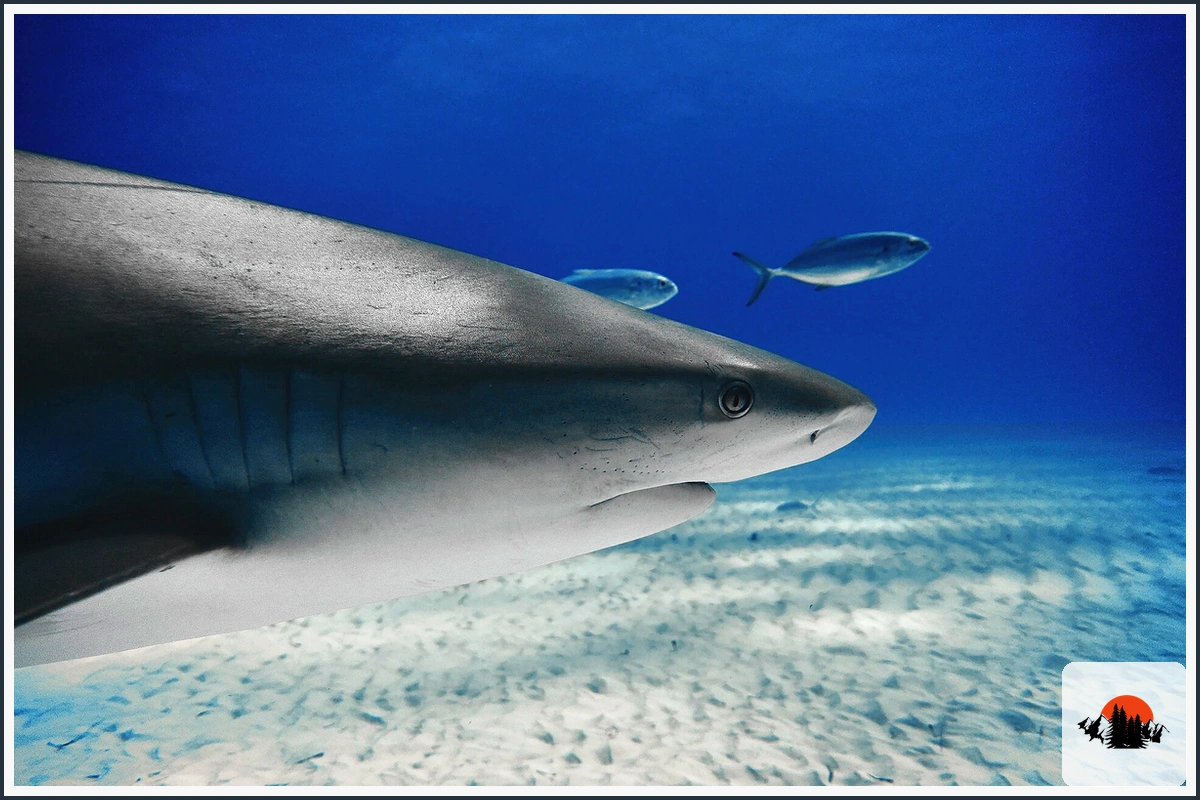
Scientific name: Carcharhinus perezi
Caribbean reef sharks have a streamlined gray body, a pale underside, a broad rounded snout, and a tall first dorsal fin. They are usually seen cruising steadily along reef edges and drop-offs.
They feed on fish, rays, squid, and crustaceans. This species is an important reef predator and can grow to approximately 10 feet. It is generally wary of divers, but responsible behavior and respect for local safety guidance are essential.
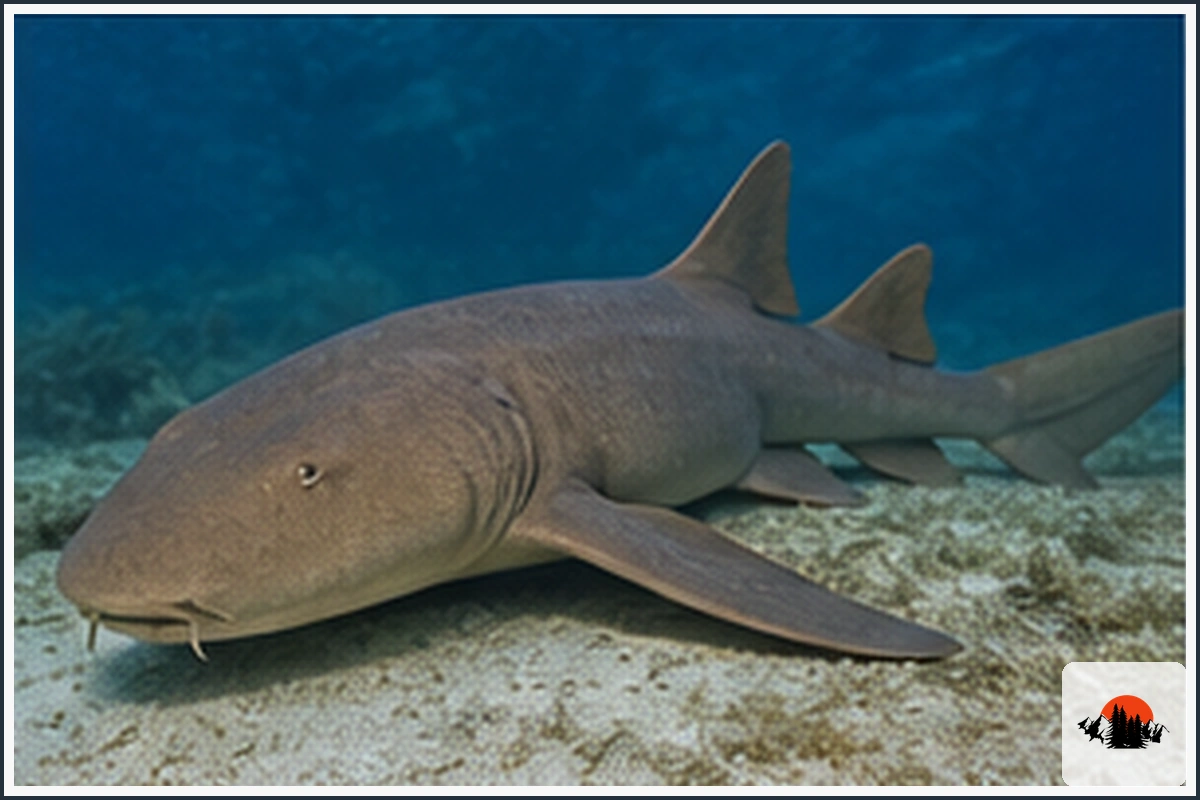
25. Nurse Shark
Scientific name: Ginglymostoma cirratum
Nurse sharks have broad, flattened heads, small eyes, barbels near the mouth, and a brownish body. They often rest motionless on sandy bottoms or beneath ledges.
They feed by suctioning prey from the seafloor, including fish, squid, shrimp, crabs, and mollusks. Nurse sharks are common around reefs, caves, and shallow coastal habitats. They are usually docile but should never be touched, cornered, or fed.
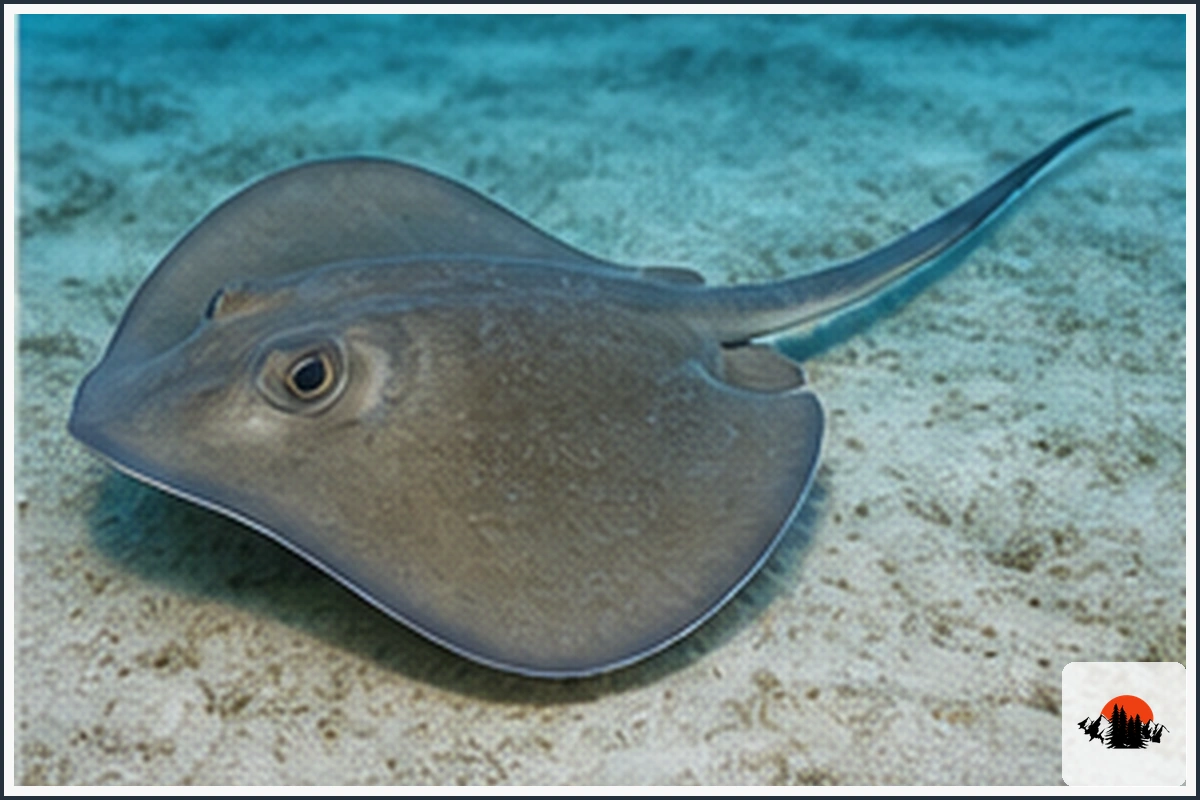
26. Southern Stingray
Scientific name: Hypanus americanus
Southern stingrays have broad diamond-shaped bodies, winglike fins, and a long tail with a venomous spine. Their upper surface is often brown or gray, helping them blend with sand.
They live on sandy flats, seagrass beds, and shallow coastal bottoms. Southern stingrays use their flattened bodies to uncover worms, shrimp, crabs, and small fish. They may reach several feet across. Shuffle your feet rather than stepping heavily in shallow stingray habitat.
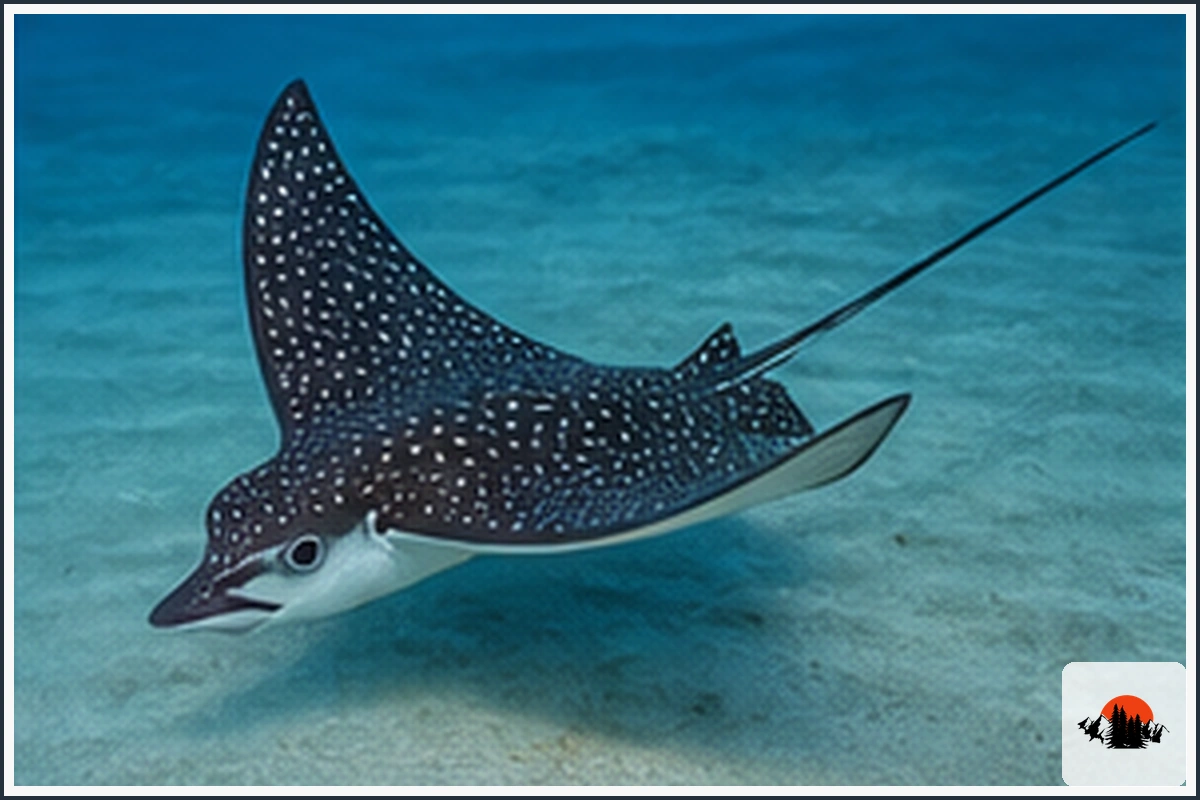
27. Spotted Eagle Ray
Scientific name: Aetobatus narinari
Spotted eagle rays have wide triangular wings, a long tail, and distinctive white spots on a dark back. Their graceful swimming style makes them a favorite sight for snorkelers and divers.
They travel over reefs, sandy bottoms, and coastal waters while searching for mollusks, crustaceans, and other seafloor prey. Spotted eagle rays are not aggressive, but observers should keep a respectful distance and avoid chasing them.
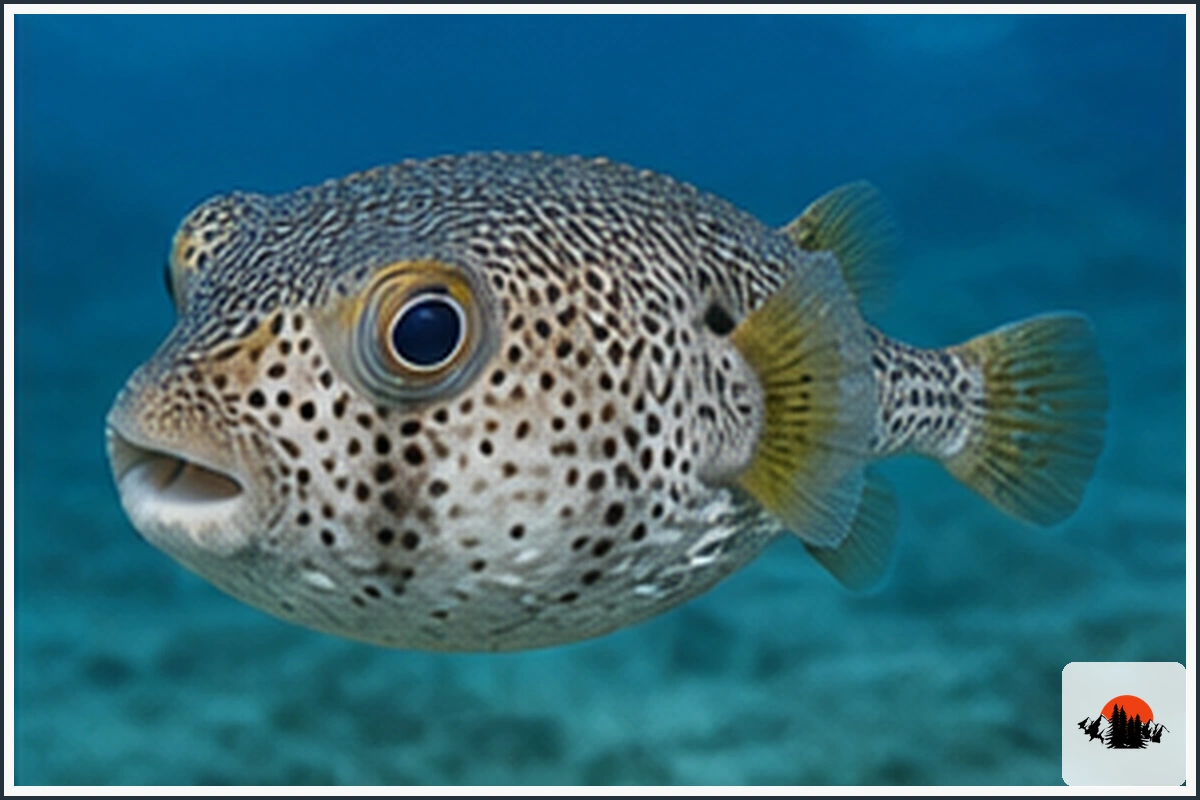
28. Porcupinefish
Scientific name: Diodon hystrix
Porcupinefish have large eyes, a rounded body, and movable spines that become more obvious when the fish inflates. Their slow swimming style and expressive appearance make them easy to recognize.
They live around reefs, caves, rocky bottoms, and sometimes seagrass areas. Porcupinefish eat hard-shelled prey such as crabs, snails, and sea urchins. They should never be handled, and their body can contain dangerous toxins.
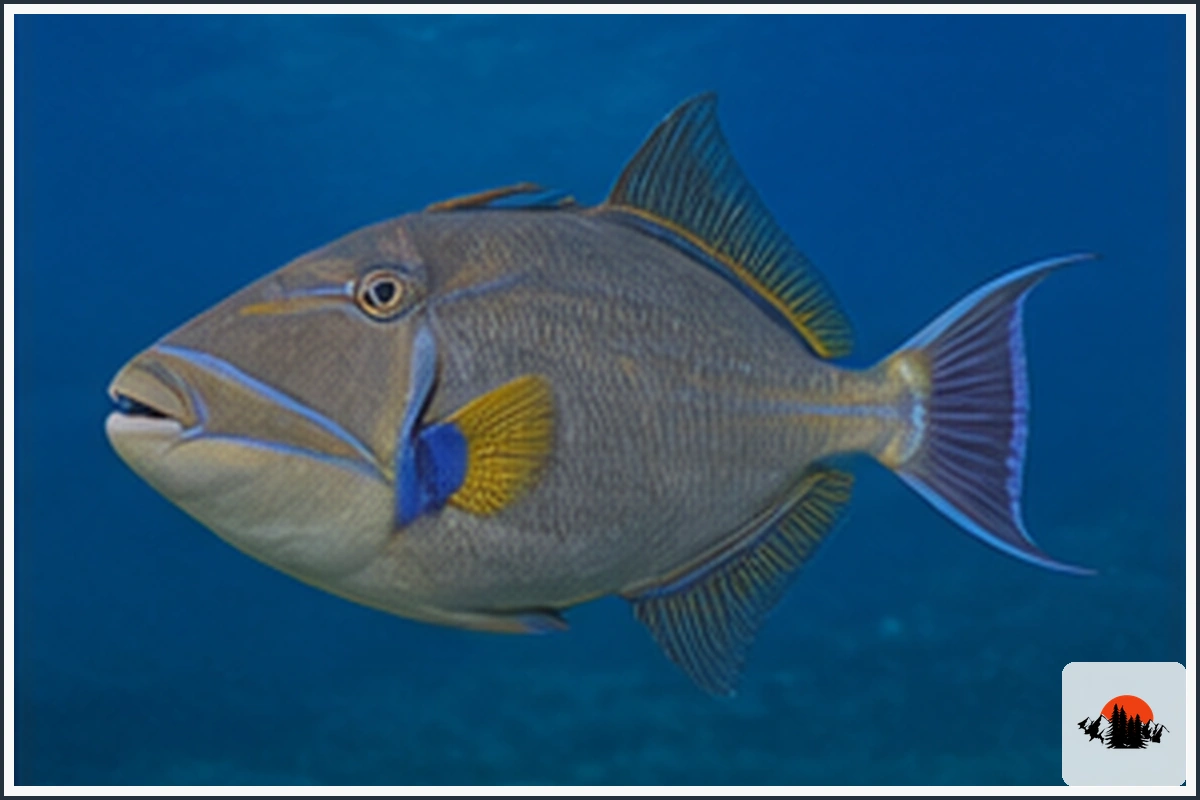
29. Queen Triggerfish
Scientific name: Balistes vetula
Queen triggerfish have a deep, laterally compressed body with blue-green coloration, yellow accents, and bright lines across the face. Their small but powerful mouth is adapted for hard prey.
They feed on sea urchins, crabs, mollusks, and other invertebrates, often crushing shells with strong teeth. Queen triggerfish live near reefs, rocky bottoms, and sandy areas and can become territorial around nesting sites.
30. Ocean Sunfish
Scientific name: Mola mola
The ocean sunfish has a huge, flattened body, tall dorsal and anal fins, and no conventional tail fin. It can appear strangely shaped compared with ordinary reef fish.
Sunfish travel through warm and temperate ocean waters and may occasionally be seen in the wider Caribbean region. They eat jellyfish and other soft-bodied animals, along with additional drifting prey. Their enormous size and unusual shape make every sighting memorable.
How Are These Types of Fish Classified?
Caribbean fish can be classified in several useful ways:
- Scientific groups: Fish belong to families such as snappers, groupers, wrasses, surgeonfish, parrotfish, damselfish, and sharks.
- Body shape: Disk-shaped butterflyfish, streamlined barracuda, deep-bodied angelfish, and flattened rays have different forms suited to different habitats.
- Feeding style: Some graze on algae, some scrape coral surfaces, some crush shells, and others ambush prey.
- Habitat: Reef fish, mangrove fish, seagrass fish, sandy-bottom fish, and open-water species occupy different environments.
- Behavior: Schooling, territorial defense, bottom resting, nocturnal feeding, and long-distance movement can help identify a fish.
Where Do These Fish Live?
Caribbean fish occupy a patchwork of connected habitats. Coral reefs provide shelter, feeding areas, and nesting sites. Mangroves and seagrass beds serve as important nurseries for young fish, while sandy flats support rays, grunts, snappers, and bottom-feeding species. Rocky ledges, caves, wrecks, and reef drop-offs attract groupers, sharks, barracuda, and larger predators.
Many species move between habitats during their lives. A young snapper may shelter among mangrove roots before moving to deeper reef areas as an adult. Water depth, temperature, food, currents, reef structure, and human activity all influence where a fish is found.
What Do Caribbean Fish Eat?
- Parrotfish and surgeonfish mainly graze on algae.
- Angelfish and butterflyfish often eat sponges, coral polyps, worms, or small invertebrates.
- Snappers, groupers, barracuda, and sharks eat fish and larger crustaceans.
- Grunts and rays commonly feed on shrimp, crabs, worms, and mollusks.
- Chromis and some damselfish capture plankton from the water column.
- Porcupinefish and triggerfish crush hard-shelled prey.
How to Identify Different Types of Fish in the Caribbean
- Start with body shape: Note whether the fish is slender, oval, deep-bodied, disk-shaped, flattened, or shark-like.
- Study the mouth: Beak-like teeth suggest a parrotfish, while a large jaw may indicate a grouper or snapper.
- Look at the tail: Forked, rounded, long, or whip-like tails can narrow the possibilities.
- Check markings: Count vertical bars, look for stripes, spots, eye bands, crowns, or false eye markings.
- Watch behavior: Schooling grunts, hovering chromis, grazing tangs, and cruising barracuda behave differently.
- Consider habitat: A fish on sand may be a ray, while a fish inside coral branches may be a small damselfish or wrasse.
- Estimate size carefully: Size helps, but young fish may look very different from adults.
- Use regional guides: Photograph the fish when possible and compare several features rather than relying on color alone.
Outdoor Tips for Finding and Observing These Species
- Observe from a distance and avoid chasing fish into hiding places.
- Move slowly, breathe steadily, and keep your hands off coral and wildlife.
- Visit reefs during good visibility and calm conditions when possible.
- Look beneath ledges for grunts, groupers, nurse sharks, and resting fish.
- Search seagrass and mangroves for juveniles, rays, snappers, and small schooling fish.
- Carry a waterproof fish guide or use photographs for later identification.
- Never feed wild fish, especially predators and large reef species.
- Follow local rules for fishing, protected areas, catch limits, and equipment.
Safety, Sustainability, and Conservation Notes
Coral reefs and coastal habitats face pressure from warming water, pollution, coastal development, overfishing, disease, and physical damage. Responsible visitors can help by using reef-safe practices, avoiding contact with coral, reducing plastic waste, and supporting protected areas.
Fishing regulations vary across Caribbean nations and territories. Check local rules before keeping any fish, especially groupers, snappers, sharks, rays, and species protected during spawning seasons. Do not collect live coral or marine animals, release aquarium species into the ocean, or handle unfamiliar fish such as porcupinefish and stingrays.
Fun Facts About Fish in the Caribbean
- Parrotfish teeth are fused into beak-like structures for scraping algae.
- Parrotfish contribute to the creation of reef sand through digestion.
- Some reef fish change color as they mature.
- Blue tang juveniles can look very different from adults.
- Many groupers begin life as females and may change sex as they grow.
- Sergeant majors defend eggs attached to hard surfaces.
- Grunts can produce sounds using their teeth and swim bladder.
- Nurse sharks often rest on the seafloor during the day.
- Southern stingrays can bury themselves beneath thin layers of sand.
- Great barracuda can accelerate rapidly when ambushing prey.
Final Thoughts on Types of Fish in the Caribbean
The types of fish in the Caribbean range from tiny schooling damselfish to enormous groupers, sharks, rays, and sunfish. Learning to compare body shape, markings, habitat, feeding style, and behavior makes identification easier and helps you appreciate how closely each species is connected to its environment. Explore carefully, follow local rules, and protect the reefs, seagrass beds, mangroves, and coastal waters these fish depend on.
Frequently Asked Questions
1. What are the most common types of fish in the Caribbean?
Common sightings include blue tangs, sergeant majors, grunts, snappers, parrotfish, angelfish, wrasses, butterflyfish, barracuda, and groupers.
2. How many fish species live in the Caribbean?
The Caribbean supports hundreds of marine fish species. The exact number depends on the boundaries used and whether uncommon, deep-water, and seasonal species are included.
3. What is the most recognizable Caribbean reef fish?
The blue tang, queen angelfish, stoplight parrotfish, sergeant major, and French angelfish are among the most recognizable because of their bright colors and distinctive patterns.
4. What is the largest fish commonly found in the Caribbean?
Whale sharks can visit Caribbean waters and are much larger than the reef fish listed here. Among familiar reef-associated fish, large groupers, sharks, rays, and ocean sunfish are notable for their size.
5. Are Caribbean fish dangerous to divers?
Most Caribbean fish avoid people. Risks are usually linked to handling, feeding, cornering, stepping near stingrays, or approaching large predators too closely.
6. Which Caribbean fish are colorful?
Queen angelfish, French angelfish, parrotfish, blue tangs, queen triggerfish, butterflyfish, and blue chromis are especially colorful.
7. What fish live around Caribbean coral reefs?
Coral reefs support angelfish, parrotfish, surgeonfish, groupers, snappers, wrasses, damselfish, grunts, butterflyfish, triggerfish, and many smaller species.
8. What fish live in Caribbean mangroves?
Mangroves provide shelter for young snappers, grunts, jacks, barracuda, tarpon, gobies, and other juvenile and coastal fish.
9. What fish live in Caribbean seagrass beds?
Seagrass beds attract juvenile fish, rays, grunts, snappers, parrotfish, wrasses, and small predators searching for food and shelter.
10. Which Caribbean fish eat algae?
Parrotfish, surgeonfish, some damselfish, and several other reef grazers eat algae from rocks and coral surfaces.
11. Which Caribbean fish are predators?
Groupers, snappers, barracuda, reef sharks, nurse sharks, jacks, and larger wrasses are important predators.
12. What is the difference between a grouper and a snapper?
Groupers usually have larger mouths, thicker bodies, and heavier heads. Snappers are often more streamlined with forked tails and pointed snouts.
13. What is the difference between parrotfish and surgeonfish?
Parrotfish have beak-like teeth for scraping algae, while surgeonfish have a sharp spine near the tail and usually more streamlined bodies.
14. Are blue tangs native to the Caribbean?
Yes. Blue tangs are native to tropical western Atlantic waters, including the Caribbean Sea.
15. Are Caribbean parrotfish important to reefs?
Yes. Parrotfish graze on algae that can otherwise cover reef surfaces, and their feeding also helps produce carbonate sand.
16. Are Nassau groupers endangered?
Nassau groupers are considered endangered because spawning aggregations and adult fish have been heavily affected by fishing pressure and habitat decline.
17. Can you eat Caribbean reef fish?
Some Caribbean reef fish are eaten, but local rules, size limits, seasonal closures, and health advisories should always be checked before keeping or consuming a fish.
18. Which Caribbean fish are popular with anglers?
Snappers, groupers, barracuda, jacks, hogfish, and some mackerel are popular with anglers, subject to local regulations.
19. What is the best way to identify a Caribbean fish?
Note its body shape, markings, mouth, tail, habitat, size, and behavior. Comparing several features is more reliable than using color alone.
20. Why do juvenile fish look different from adults?
Young fish may use different habitats and need camouflage, so their colors and patterns can change dramatically as they mature.
21. Do Caribbean fish migrate?
Some species move between reefs, mangroves, seagrass beds, and deeper water. Others make longer seasonal or spawning movements.
22. What is the most common shark in Caribbean reef areas?
Caribbean reef sharks and nurse sharks are familiar reef-associated species, although abundance varies by location and protection level.
23. Are nurse sharks dangerous?
Nurse sharks are generally calm, but they are wild animals with strong jaws. Never touch, ride, feed, or corner one.
24. Are stingrays fish?
Yes. Stingrays are cartilaginous fish related to sharks, with skeletons made primarily of cartilage rather than bone.
25. What should you do if you see a stingray while snorkeling?
Give it space, move calmly, and avoid stepping directly on the seafloor near it. In shallow water, shuffling your feet can reduce accidental contact.
26. Can porcupinefish be handled?
No. Porcupinefish should not be handled or encouraged to inflate. Some members of the pufferfish family contain dangerous toxins.
27. Why do some Caribbean fish school?
Schooling can improve predator detection, confuse attackers, and help fish find food or suitable habitat.
28. Are Caribbean reef fish affected by climate change?
Yes. Warmer water, coral bleaching, stronger storms, changing food supplies, and habitat degradation can affect reef fish populations.
29. How can tourists protect Caribbean fish?
Do not touch coral or wildlife, avoid feeding fish, use reef-conscious boating and sunscreen practices, reduce plastic waste, and follow protected-area rules.
30. Can aquarium fish from the Caribbean be released into the ocean?
No. Releasing aquarium fish can spread disease, introduce invasive species, and harm native ecosystems. Contact a responsible aquarium organization instead.