

Types of flounder fish is a broader topic than it first appears. Flounder is a common name applied to dozens of bottom-dwelling flatfish across several families, from familiar coastal game fish and major commercial species to small reef specialists most anglers never encounter. This guide compares 25 recognizable flounders and flounder-like flatfish by scientific name, eye side, markings, range, habitat, and fishing relevance.
“Flounder” is a practical common name rather than a single scientific category. The species below belong to several flatfish families, and market names such as sole, plaice, halibut, and fluke sometimes overlap with the broader flounder group.
What Are the Main Types of Flounder Fish?
The best-known types include summer, southern, Gulf, winter, European, starry, yellowtail, olive, arrowtooth, and peacock flounder. They fall broadly into lefteye flounders, righteye flounders, shallow estuary species, deep offshore species, and tropical reef species. The most reliable identification clues are eye position, mouth size, body spots, fin markings, scale texture, and where the fish was caught.
| Type | Scientific name | Region | Best identification clue |
|---|---|---|---|
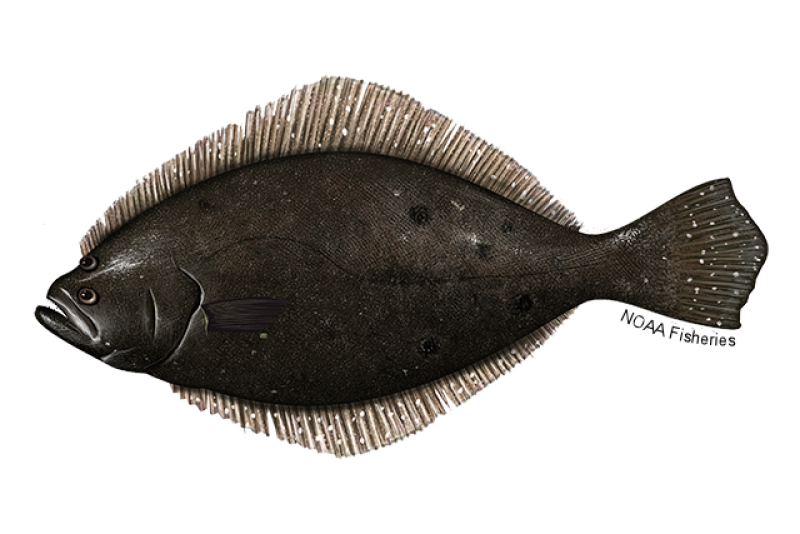
| Summer Flounder (Fluke) | Paralichthys dentatus | Western North Atlantic | Large mouth, sharp teeth, left-side eyes, mottled olive-brown body |
| Southern Flounder | Paralichthys lethostigma | Atlantic and Gulf coasts of the United States | Broad oval body, large mouth, usually no distinct eye-side spots |
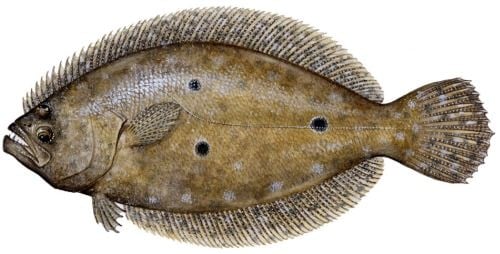
| Gulf Flounder | Paralichthys albigutta | Gulf of Mexico and nearby western Atlantic | Three prominent dark eye-like spots arranged in a triangle |
| California Halibut | Paralichthys californicus | Pacific coast of North America | Large, predatory flatfish; eyes may occur on either side |
| Olive Flounder | Paralichthys olivaceus | Northwest Pacific | Olive-brown upper side with pale and dark spotting |
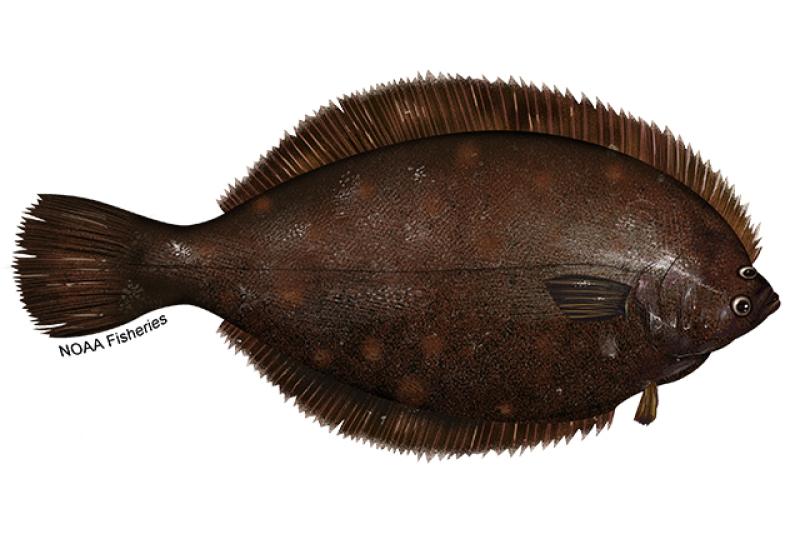
| Winter Flounder | Pseudopleuronectes americanus | Northwest Atlantic | Small mouth, right-side eyes, rough scales, dark mottling |
| Yellowtail Flounder | Limanda ferruginea | Northwest Atlantic | Yellowish tail and fin margins, small mouth, right-side eyes |
| European Flounder | Platichthys flesus | Northeast Atlantic, Baltic, Mediterranean-connected waters | Rough bony bumps near fin bases; usually right-side eyes |
| Starry Flounder | Platichthys stellatus | North Pacific coasts | Bold black-and-white bands on dorsal and anal fins |
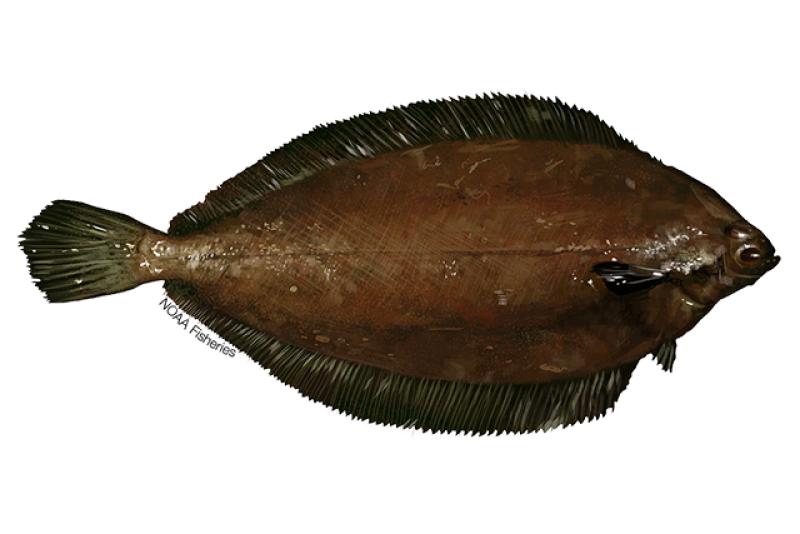
| Witch Flounder | Glyptocephalus cynoglossus | North Atlantic | Long, narrow body, very small mouth, smooth-looking outline |
| American Plaice | Hippoglossoides platessoides | North Atlantic | Large mouth, rough scales, reddish-brown eye side |
| Alaska Plaice | Pleuronectes quadrituberculatus | Bering Sea and North Pacific | Right-eyed, oval body, noticeable bony bumps on the head |
| Arrowtooth Flounder | Atheresthes stomias | Northeast Pacific | Large mouth with prominent arrow-like teeth |
| Kamchatka Flounder | Atheresthes evermanni | North Pacific and Bering Sea | Large predatory mouth, elongated body, resembles arrowtooth flounder |
| Pacific Dover Sole | Microstomus pacificus | Northeast Pacific | Long, slender body, tiny mouth, soft texture |
| Lemon Sole | Microstomus kitt | Northeast Atlantic | Rounded body, small head, warm brown color with fine mottling |
| Petrale Sole | Eopsetta jordani | Northeast Pacific | Oval body, large mouth, uniform brown eye side |
| Rex Sole | Glyptocephalus zachirus | Northeast Pacific | Very slender body, small mouth, relatively large eyes |
| Rock Sole | Lepidopsetta bilineata | North Pacific | Rough-scaled right-eyed flatfish with a curved lateral line |
| Northern Rock Sole | Lepidopsetta polyxystra | Bering Sea and northern North Pacific | Nearly identical to rock sole; separated by range and fin-ray counts |
| Flathead Sole | Hippoglossoides elassodon | North Pacific | Relatively broad head, large mouth, right-side eyes |
| Bering Flounder | Hippoglossoides robustus | Bering and Chukchi seas | Compact right-eyed flatfish adapted to cold water |
| Fourspot Flounder | Paralichthys oblongus | Western North Atlantic | Four dark spots on the eye side and a large predatory mouth |
| Fringed Flounder | Etropus crossotus | Western Atlantic and Gulf of Mexico | Small, rounded lefteye flounder with a finely fringed outline |
| Peacock Flounder | Bothus lunatus | Tropical western Atlantic | Bright blue ringed spots on a brown, highly changeable background |
1. Summer Flounder (Fluke)
Summer Flounder, or fluke (Paralichthys dentatus), lives in the Western North Atlantic. It has a large, sharp-toothed mouth, left-side eyes, and a mottled olive-brown body, favoring coastal bays, sandy bottoms, and estuaries. It’s a major recreational and commercial species that ambushes small fish and squid near the bottom.
2. Southern Flounder
The Southern Flounder (Paralichthys lethostigma) ranges along the Atlantic and Gulf coasts of the United States. Look for a broad oval body and large mouth, usually without distinct eye-side spots. It tolerates low salinity well and is often found in estuaries, rivers, and marsh creeks, sometimes moving well into fresh water.
3. Gulf Flounder
The Gulf Flounder (Paralichthys albigutta) is found in the Gulf of Mexico and nearby western Atlantic waters. Its three prominent dark, eye-like spots arranged in a triangle are the quickest field mark, though eye side and mouth size should also be checked. It favors sandy areas near reefs, passes, and coastal structure.
4. California Halibut
Despite its name, California Halibut (Paralichthys californicus) is a paralichthyid flounder rather than a true halibut. It’s a large, predatory flatfish found along the Pacific coast of North America, with eyes that may occur on either side. It uses bays, sandy beaches, estuaries, and the continental shelf.
5. Olive Flounder
The Olive Flounder (Paralichthys olivaceus), also called Japanese flounder, is native to the Northwest Pacific. It has an olive-brown upper side with pale and dark spotting and lives over coastal sand and mud bottoms. It’s an important species in both wild fisheries and aquaculture.

6. Winter Flounder
The Winter Flounder (Pseudopleuronectes americanus) occurs in the Northwest Atlantic. It has a small mouth, right-side eyes, rough scales, and dark mottling, and is named for its strong inshore presence during the cold season in bays, estuaries, and muddy or sandy bottoms.
7. Yellowtail Flounder
The Yellowtail Flounder (Limanda ferruginea) is a relatively thin-bodied commercial groundfish from the Northwest Atlantic. It’s identified by yellowish tail and fin margins, a small mouth, and right-side eyes, and lives over offshore sand and mud bottoms.

8. European Flounder
The European Flounder (Platichthys flesus) is found along the Northeast Atlantic, in the Baltic, and in Mediterranean-connected waters. Rough bony bumps near the fin bases and usually right-side eyes help identify it. It tolerates brackish water well and can move far upstream into rivers.

9. Starry Flounder
The Starry Flounder (Platichthys stellatus) is one of the easiest flatfish to identify, thanks to bold black-and-white bands on its dorsal and anal fins. It’s found along North Pacific coasts in estuaries, bays, river mouths, and shallow marine bottoms.
10. Witch Flounder
The Witch Flounder (Glyptocephalus cynoglossus), also sold as gray sole, has a long, narrow body, a very small mouth, and a smooth-looking outline. It lives on deep, soft bottoms of continental shelves and slopes across the North Atlantic.
11. American Plaice
The American Plaice (Hippoglossoides platessoides) is a right-eyed flatfish from the North Atlantic, often confused with other offshore flounders. It has a large mouth, rough scales, and a reddish-brown eye side, and lives on cold offshore bottoms.

12. Alaska Plaice
The Alaska Plaice (Pleuronectes quadrituberculatus) is an important Bering Sea groundfish. It’s right-eyed with an oval body and noticeable bony bumps on the head, living over cold shelf waters of sand and mud in the Bering Sea and North Pacific.
13. Arrowtooth Flounder
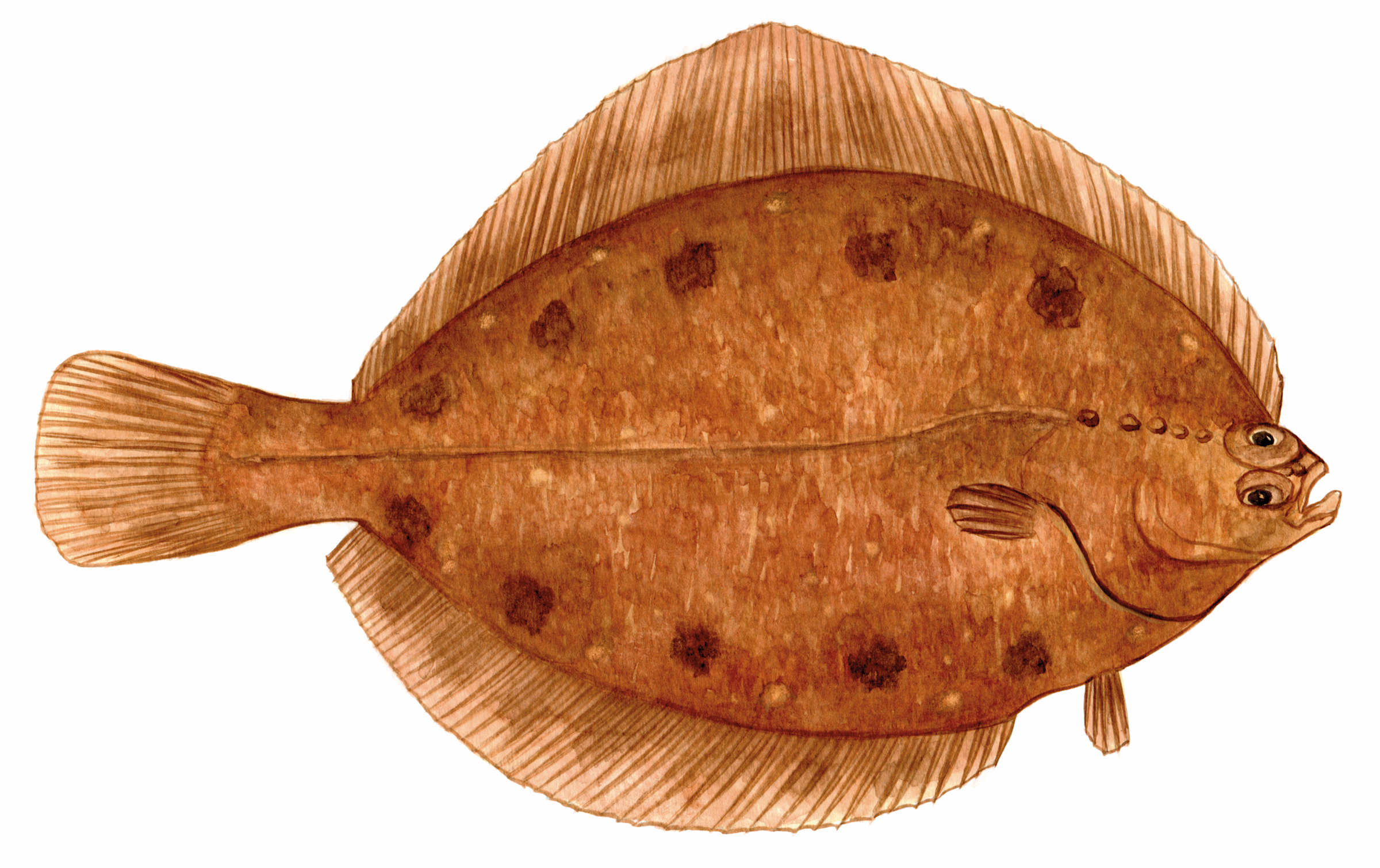
The Arrowtooth Flounder (Atheresthes stomias) is a Northeast Pacific species with a large mouth and prominent arrow-like teeth, found in deep continental shelf and slope waters. Its flesh contains natural enzymes that can soften the texture if the fish isn’t processed and chilled quickly.
14. Kamchatka Flounder
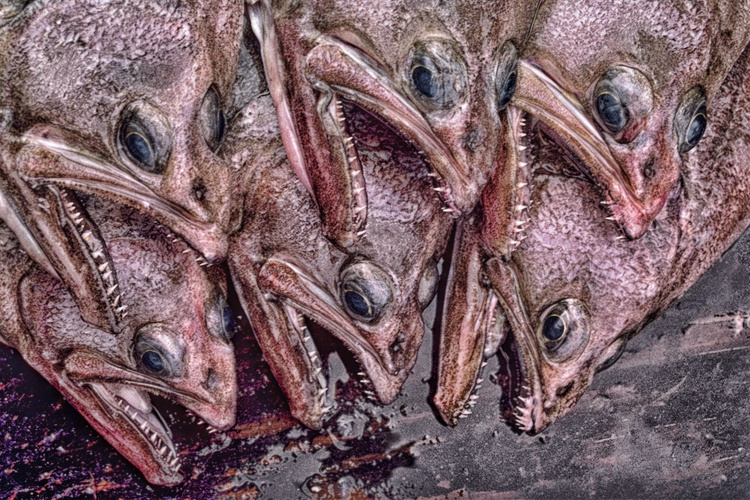
The Kamchatka Flounder (Atheresthes evermanni) closely resembles the arrowtooth flounder, with a large predatory mouth and an elongated body. It’s found in deep shelf and slope habitats across the North Pacific and Bering Sea, and is usually distinguished from arrowtooth flounder by range and detailed anatomy.
15. Pacific Dover Sole
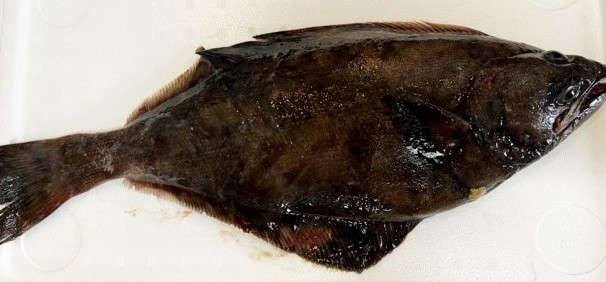
The Pacific Dover Sole (Microstomus pacificus) is not a true sole, but it’s valued as a mild, delicate flatfish. It has a long, slender body, a tiny mouth, and soft texture, and lives on deep muddy bottoms in the Northeast Pacific.

16. Lemon Sole
The Lemon Sole (Microstomus kitt) has a rounded body, small head, and warm brown color with fine mottling. Its name doesn’t refer to a citrus flavor. It’s found over rocky and mixed seabeds in the Northeast Atlantic.
17. Petrale Sole
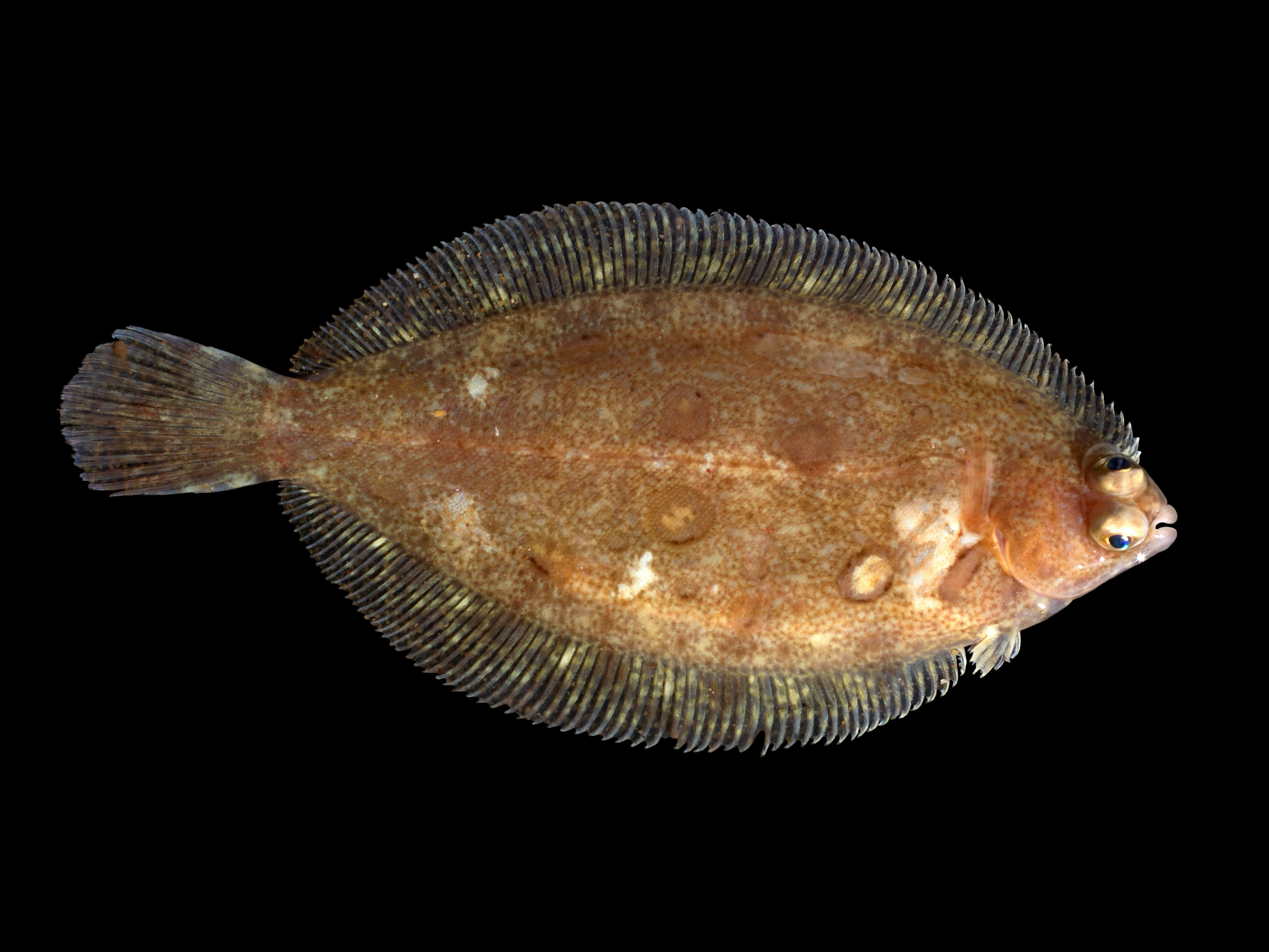
The Petrale Sole (Eopsetta jordani) is a prized food fish with firm, fine-flaked flesh. It has an oval body, large mouth, and uniform brown eye side, and lives on the continental shelf and upper slope of the Northeast Pacific.
18. Rex Sole
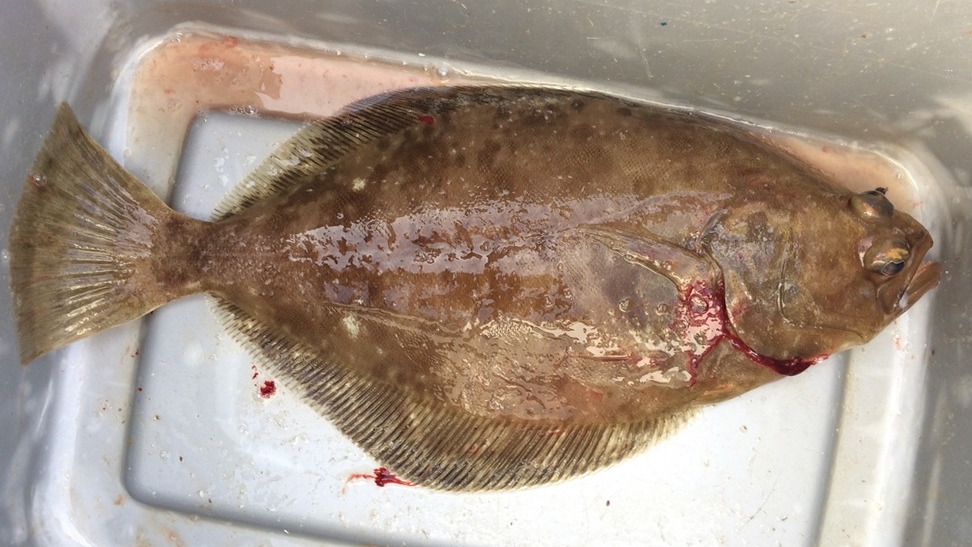
The Rex Sole (Glyptocephalus zachirus) is often marketed as a mild, delicate flatfish. It has a very slender body, small mouth, and relatively large eyes, and lives on deep, soft bottoms in the Northeast Pacific.

19. Rock Sole
The Rock Sole (Lepidopsetta bilineata) is common in coastal fisheries from the eastern to western North Pacific. It’s a rough-scaled, right-eyed flatfish with a curved lateral line, typically found over shallow shelf areas of gravel, sand, and mixed bottoms.

20. Northern Rock Sole
The Northern Rock Sole (Lepidopsetta polyxystra) is a close relative of rock sole and an important species in Bering Sea ecosystems. It’s nearly identical to rock sole and often requires fin-ray counts and range knowledge to tell apart, living over cold shelf bottoms in the Bering Sea and northern North Pacific.
21. Flathead Sole
The Flathead Sole (Hippoglossoides elassodon) has a relatively broad head, large mouth, and right-side eyes. It feeds on bottom invertebrates and small fish over continental shelf mud and sand in the North Pacific.
22. Bering Flounder
The Bering Flounder (Hippoglossoides robustus) is a compact, right-eyed flatfish adapted to cold water and less familiar to consumers than major commercial flounders. It lives on shallow arctic and subarctic shelves of the Bering and Chukchi seas.
23. Fourspot Flounder
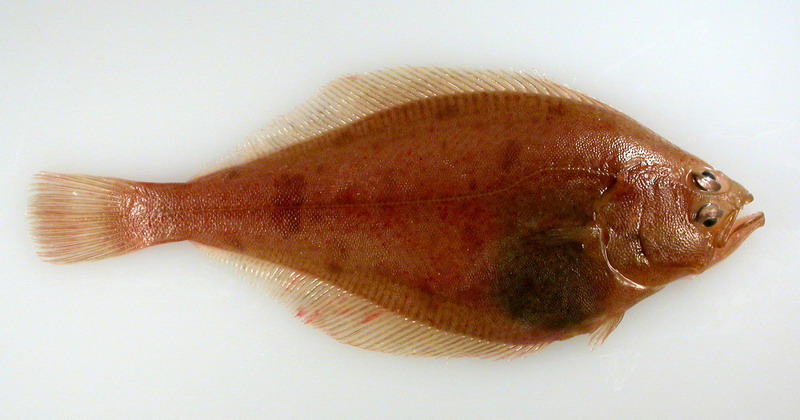
The Fourspot Flounder (Paralichthys oblongus) is named for the four dark spots on its eye side, paired in a pattern that helps distinguish it from related flukes. It has a large predatory mouth and lives over coastal and offshore sand or mud in the Western North Atlantic.

24. Fringed Flounder
The Fringed Flounder (Etropus crossotus) is a small, rounded lefteye flounder with a finely fringed outline, usually much smaller than popular sport flounders. It lives in shallow bays, lagoons, and sandy bottoms of the Western Atlantic and Gulf of Mexico.
25. Peacock Flounder
The Peacock Flounder (Bothus lunatus) is a striking reef species known for rapid camouflage, with bright blue ringed spots on a brown, highly changeable background. It’s found on coral reefs, sandy patches, and seagrass edges in the tropical western Atlantic.

How Are These Types of Fish Classified?
Flounders belong to the flatfish order Pleuronectiformes. During development, a young flatfish changes from a symmetrical larva into a flattened juvenile, and one eye migrates to the side that faces upward. Lefteye flounders commonly belong to Bothidae or Paralichthyidae, while many righteye flounders, plaices, and halibuts belong to Pleuronectidae. Common names are inconsistent, so scientific names provide the clearest identification.
| Practical group | Examples | Typical features |
|---|---|---|
| Lefteye flounders | Summer, southern, Gulf, olive, peacock | Both eyes usually on the left side; many have larger mouths and predatory habits. |
| Righteye flounders | Winter, yellowtail, European, starry, rock sole | Both eyes usually on the right side; body shape and scale texture vary widely. |
| Shallow estuary species | Southern, Gulf, winter, European, starry | Frequently use bays, tidal creeks, river mouths, and brackish water. |
| Deep offshore species | Witch, arrowtooth, Dover sole, rex sole | Live on continental shelves or slopes, often over soft sediment. |
| Tropical reef species | Peacock and fringed flounders | Smaller species associated with reefs, lagoons, sand, or seagrass. |
Where Do These Fish Live?
Flounders occur on soft sand, mud, gravel, shell, reef edges, seagrass beds, estuaries, and deep continental slopes. Juveniles of many coastal species use protected bays and marsh creeks as nursery habitat, while adults may move offshore to spawn. Temperature, salinity, depth, and prey availability often matter more than distance from open water.
How to Identify Different Types of Flounder Fish
- Check the eye side: decide whether both eyes are on the left or right side when the fish is viewed from above.
- Study the mouth: large-toothed predators such as flukes differ from small-mouthed soles and plaices.
- Look for stable markings: Gulf flounder has three strong spots, starry flounder has banded fins, and peacock flounder has blue rings.
- Feel scale texture carefully: some species feel rough while others appear smoother; avoid sharp spines and teeth.
- Use location and depth: an estuary fish and a deep-slope fish may look similar in a photo but occupy very different habitats.
- Measure body proportions: head length, body width, lateral-line curve, and fin shape can separate close relatives.
- Consult local keys: difficult species may require fin-ray counts or professional confirmation.
Fishing Tips and Notes
- Present bait or lures close to the bottom, since flounders are ambush predators.
- Work channel edges, sandy drop-offs, tidal drains, docks, passes, and transitions between mud and shell.
- Move the offering slowly enough for a flatfish to track it, with occasional pauses or hops.
- Use tackle strong enough for the target species while keeping terminal gear sensitive to subtle bites.
- Handle the fish with a wet hand or landing net, watch for teeth, and measure it accurately before keeping it.
- Always confirm current local seasons, size limits, quotas, and gear rules, since these vary by coast and by species.
Safety, Sustainability, and Conservation Notes
Flatfish populations respond differently to fishing pressure, habitat change, warming water, and bycatch. Choose seafood from well-managed fisheries, avoid wasting undersized or unwanted catch, and release fish promptly when required. Coastal nursery habitats such as marshes, seagrass beds, and clean estuaries are especially important. Never assume that two similar flatfish share the same legal limit.
Fun Facts About Flounder Fish
- Young flatfish begin life with one eye on each side of the head.
- Eye migration occurs during metamorphosis as the body becomes asymmetrical.
- Many flounders can change shade and pattern to blend with sand, mud, or reef rubble.
- “Fluke” is a common name for summer flounder in the western Atlantic.
- California halibut is a lefteye-flounder relative, not a true halibut.
- Some flatfish regularly enter brackish water and lower rivers.
- Starry flounder is known for its bold dark-and-light fin bands.
- Peacock flounder displays vivid blue-ringed spots.
- Small-mouthed soles often feed more on bottom invertebrates than on large fish.
- Scientific names are more reliable than seafood-market names.
Final Thoughts on Types of Flounder Fish
Learning the main types of flounder fish becomes easier when you compare eye side, mouth size, markings, habitat, and geographic range. Start with locally common species, photograph both sides of the fish where regulations allow, and verify uncertain catches with a regional field guide. Better identification supports safer fishing, more informed seafood choices, and a greater appreciation for these unusual bottom-dwelling predators.
Frequently Asked Questions
1. Are all flounders the same species?
No. Flounder is a broad common name used for many flatfish species across several families.
2. Why are both flounder eyes on one side?
During larval development, one eye migrates as the body flattens and the fish adopts a bottom-dwelling life.
3. What is the difference between a flounder and a flatfish?
Flatfish is the broader scientific and practical group. Flounder is one of several common names used within that group.
4. Is a fluke a flounder?
Yes. In the western Atlantic, “fluke” commonly refers to the summer flounder.
5. Is halibut a type of flounder?
Halibuts are flatfish, but true halibuts belong to a different lineage from many fish commonly called flounder. California halibut, despite its name, is actually a paralichthyid flounder.
6. How can I tell summer and southern flounder apart?
Range, spot pattern, and body proportions help. Because they overlap in some areas, use a current regional identification key.
7. Which flounder has three spots?
Gulf flounder typically shows three prominent eye-like spots arranged in a triangular pattern.
8. Which flounder has striped fins?
Starry flounder has conspicuous alternating dark and pale bands on its dorsal and anal fins.
9. Do flounders live in freshwater?
Most are marine, but several coastal species tolerate brackish water and may enter rivers.
10. Where do flounders hide?
They often bury partly in sand or mud near channels, structure, reef edges, seagrass, or prey-rich transitions.
11. What do flounders eat?
Their diet can include worms, crustaceans, mollusks, squid, and small fish, depending on the species and its size.
12. Are flounders active at night?
Many feed actively in low light, but tides, water temperature, and prey movement also affect their behavior.
13. What is the best bait for flounder?
Locally common small fish, shrimp, strips of fish, and bottom-oriented soft plastics are widely used where legal.
14. Why do flounder bites feel light?
A flounder may hold or reposition prey before swallowing, so the first sensation on the line can be subtle.
15. Can flounder change color?
Many species can adjust shade and pattern to better match the bottom.
16. Are all flounders left-eyed?
No. Some are left-eyed and others are right-eyed, and occasional reversed individuals also occur.
17. What is the largest flounder in this guide?
California halibut and several other large predatory flounders can grow much larger than small soles or reef flounders.
18. Are sole and plaice flounders?
They are flatfish and are often included in broad flounder discussions, though the common names refer to different groups.
19. Is flounder good to eat?
Many species have mild white flesh, but flavor, texture, regulations, and sustainability status vary by species and location.
20. How should fresh flounder smell?
Fresh fish should smell mild and clean rather than strongly sour, ammonia-like, or unpleasant.
21. Can I freeze flounder?
Yes. Wrap it tightly, remove excess air, label it, and keep it consistently frozen for best quality.
22. Why does thin flounder overcook easily?
Thin fillets lose moisture quickly, so gentle heat and close timing are important.
23. Are arrowtooth flounder fillets soft?
They can become soft if natural enzymes aren’t controlled during processing, which is why proper handling and temperature management matter.
24. What habitat is most important for juvenile flounder?
Protected estuaries, marsh creeks, seagrass beds, and shallow bays are important nursery areas for many species.
25. How do I release a flounder safely?
Minimize air exposure, wet your hands, support the body, remove hooks carefully, and return the fish promptly.
26. Can I identify a flounder by color alone?
Usually not. Camouflage changes color, so combine eye side, mouth, spots, fin pattern, range, and habitat when identifying a fish.
27. What time of year is best for flounder fishing?
It depends on local migration patterns and regulations. Consult regional reports and current legal seasons.
28. Do flounders have scales?
Yes, although scale size and texture differ among species.
29. Why are common names confusing?
Names such as sole, plaice, flounder, dab, fluke, and halibut developed regionally and don’t always match taxonomy.
30. How many flounder species exist?
Far more than the 25 practical examples in this guide, since “flounder” spans multiple flatfish families worldwide.
Read more:
30 Types of White Flaky Fish for Cooking