

Types of flowerhorn fish are better described as strains, lineages, crosses, and trade varieties rather than separate species. Flowerhorns are human-created hybrid cichlids selected for intense color, pearling, a dark “flower line,” body shape, and the forehead hump called a kok. Names are not controlled by a universal registry, so the same fish may be sold under different labels. This guide explains 16 widely used names and shows which traits are useful when comparing individual fish.
What Are the Main Types of Flowerhorn Fish?
The four broad historical groups most often discussed are Zhen Zhu, Kamfa, Golden Base, and Golden Monkey, with many later crosses and sales categories built around them. Popular modern names include King Kamfa, Red Dragon, Super Red Dragon, Thai Silk, Kamfamalau, IndoMalau, Red Texas Flowerhorn, Rainbow Flowerhorn, and short-body forms. Because flowerhorns are hybrids, no variety breeds perfectly true and juveniles can change dramatically as they mature.
Quick Comparison of 16 Flowerhorn Types
| No. | Type | Lineage or Category | Typical Look |
|---|---|---|---|
| 1 | Classic Luohan | Early Malaysian flowerhorn lines | Variable red, orange, silver, black flower line, and a developing forehead hump |
| 2 | Zhen Zhu (Pearlscale) | A major derived flowerhorn line | Heavy pearling, red eyes, rounded tail, prominent flower line, and pointed mouth |
| 3 | Kamfa | Hybrid line influenced by parrot-type and flowerhorn ancestry | Square body, fan-shaped tail, smaller pale or yellow eyes, wrapped fins, and dense pearling |
| 4 | King Kamfa | Premium Kamfa selection | Large kok, compact square frame, strong flower line, white or yellow eyes, and intense pearling |
| 5 | Golden Base (Fader) | Flowerhorns carrying a fading color trait | Juveniles may darken, then lose black pigment and become orange, red, yellow, or pale gold |
| 6 | Golden Trimac | Golden-base line showing trimac influence | Red-orange body, dark lateral flower markings, and a shape reminiscent of trimac cichlids |
| 7 | Golden Monkey | Rare, selectively bred line associated with Malaysian flowerhorn history | Compact body, strong red or orange color, pearling, flower line, and pronounced kok |
| 8 | Red Dragon | Popular red flowerhorn phenotype | Bright red face and front body, pearling, dark flower line, and a large kok in selected males |
| 9 | Super Red Dragon | Intensely selected Red Dragon form | Deeper red coverage, heavier pearling, thick body, and prominent forehead hump |
| 10 | Thai Silk | Metallic-color ornamental line | Uniform blue, silver, turquoise, or lavender sheen with little dark flower pattern |
| 11 | Blue Dragon | Blue-toned flowerhorn trade type | Blue-green pearling over a darker body, often with red on the face or belly |
| 12 | Kamfamalau | Kamfa crossed with Malau-type flowerhorn | Kamfa-like frame with strong pearling, deeper color, and variable flower markings |
| 13 | IndoMalau | Indonesian Malau-derived flowerhorn line | Dense fine pearling, rich red or maroon color, elongated flower line, and a strong face profile |
| 14 | Red Texas Flowerhorn | Crosses incorporating Red Texas cichlid traits | Red or orange base with white-blue pearls; some individuals fade dramatically |
| 15 | Rainbow Flowerhorn | Multicolor trade category | Red, orange, yellow, blue, or green areas with contrasting pearls and dark markings |
| 16 | Short Body Flowerhorn | A body-shape mutation or selected short-bodied line | Compressed body, short back, rounded profile, and oversized-looking head |
1. Classic Luohan
Lineage or category: Early Malaysian flowerhorn lines. Typical appearance: Variable red, orange, silver, black flower line, and a developing forehead hump.
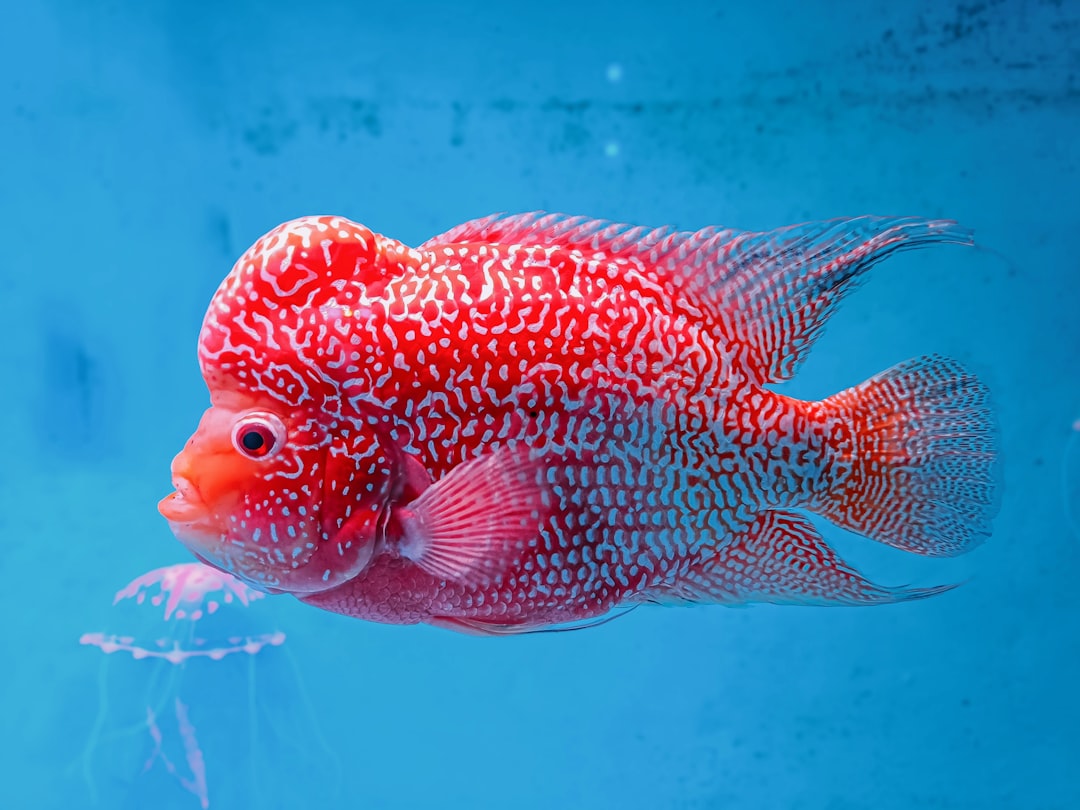
An umbrella term for early flowerhorn forms; quality and adult appearance vary widely. As with every flowerhorn, adult traits depend on genetics, sex, health, age, diet, stress, water quality, and breeder selection. A label should never replace inspection of the actual fish. Choose an alert specimen with clear eyes, normal gill movement, an even body line, intact fins, steady swimming, and no pits, white feces, skin lesions, or exaggerated deformity.
2. Zhen Zhu (Pearlscale)
Lineage or category: A major derived flowerhorn line. Typical appearance: Heavy pearling, red eyes, rounded tail, prominent flower line, and pointed mouth.
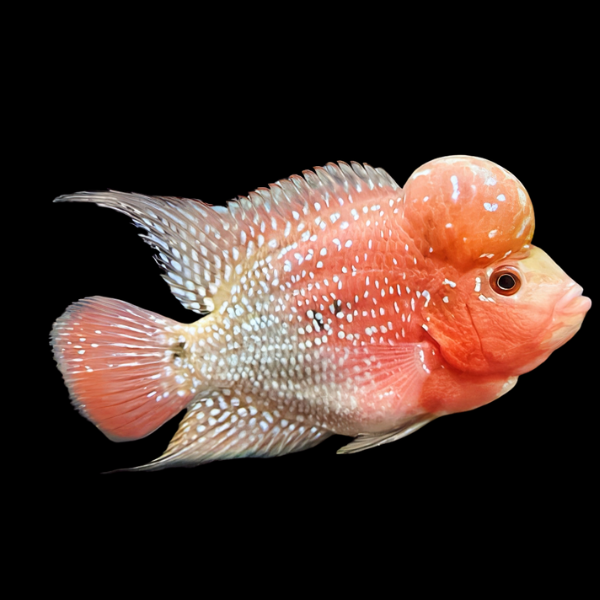
Often matures quickly and may develop a strong kok, but body shape is usually less square than Kamfa. As with every flowerhorn, adult traits depend on genetics, sex, health, age, diet, stress, water quality, and breeder selection. A label should never replace inspection of the actual fish. Choose an alert specimen with clear eyes, normal gill movement, an even body line, intact fins, steady swimming, and no pits, white feces, skin lesions, or exaggerated deformity.
3. Kamfa
Lineage or category: Hybrid line influenced by parrot-type and flowerhorn ancestry. Typical appearance: Square body, fan-shaped tail, smaller pale or yellow eyes, wrapped fins, and dense pearling.
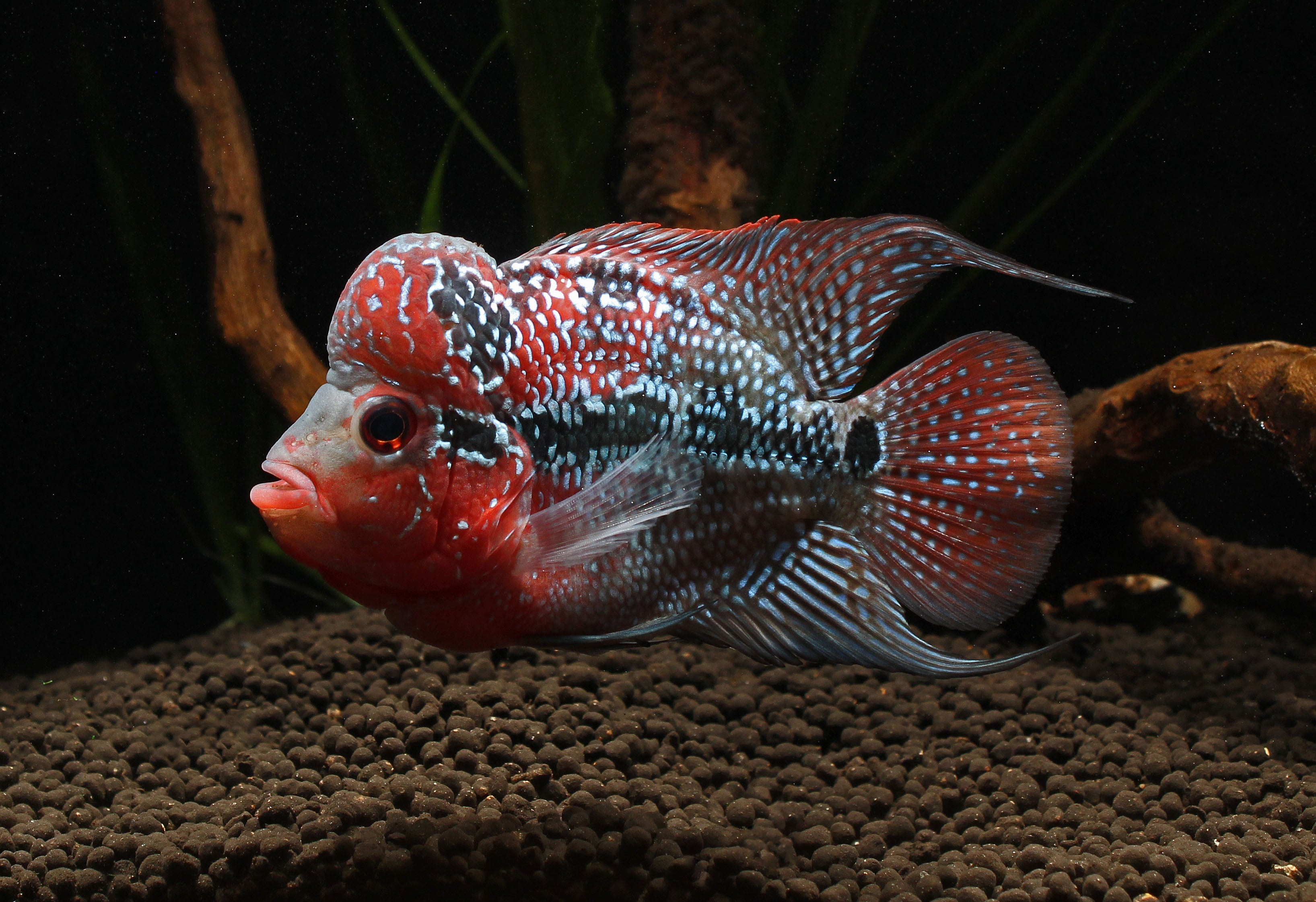
Usually slower to mature than Zhen Zhu; males from some lines may have reduced fertility. As with every flowerhorn, adult traits depend on genetics, sex, health, age, diet, stress, water quality, and breeder selection. A label should never replace inspection of the actual fish. Choose an alert specimen with clear eyes, normal gill movement, an even body line, intact fins, steady swimming, and no pits, white feces, skin lesions, or exaggerated deformity.
4. King Kamfa
Lineage or category: Premium Kamfa selection. Typical appearance: Large kok, compact square frame, strong flower line, white or yellow eyes, and intense pearling.

A trade classification based on phenotype and lineage rather than a scientifically fixed breed standard. As with every flowerhorn, adult traits depend on genetics, sex, health, age, diet, stress, water quality, and breeder selection. A label should never replace inspection of the actual fish. Choose an alert specimen with clear eyes, normal gill movement, an even body line, intact fins, steady swimming, and no pits, white feces, skin lesions, or exaggerated deformity.
5. Golden Base (Fader)
Lineage or category: Flowerhorns carrying a fading color trait. Typical appearance: Juveniles may darken, then lose black pigment and become orange, red, yellow, or pale gold.

Color transition can be uneven and final pattern is difficult to predict from a small juvenile. As with every flowerhorn, adult traits depend on genetics, sex, health, age, diet, stress, water quality, and breeder selection. A label should never replace inspection of the actual fish. Choose an alert specimen with clear eyes, normal gill movement, an even body line, intact fins, steady swimming, and no pits, white feces, skin lesions, or exaggerated deformity.
6. Golden Trimac
Lineage or category: Golden-base line showing trimac influence. Typical appearance: Red-orange body, dark lateral flower markings, and a shape reminiscent of trimac cichlids.

Often more athletic in body shape and may show strong territorial behavior. As with every flowerhorn, adult traits depend on genetics, sex, health, age, diet, stress, water quality, and breeder selection. A label should never replace inspection of the actual fish. Choose an alert specimen with clear eyes, normal gill movement, an even body line, intact fins, steady swimming, and no pits, white feces, skin lesions, or exaggerated deformity.
7. Golden Monkey
Lineage or category: Rare, selectively bred line associated with Malaysian flowerhorn history. Typical appearance: Compact body, strong red or orange color, pearling, flower line, and pronounced kok.
Authentic lineage claims are difficult to verify; buy the individual fish, not the label alone. As with every flowerhorn, adult traits depend on genetics, sex, health, age, diet, stress, water quality, and breeder selection. A label should never replace inspection of the actual fish. Choose an alert specimen with clear eyes, normal gill movement, an even body line, intact fins, steady swimming, and no pits, white feces, skin lesions, or exaggerated deformity.
8. Red Dragon
Lineage or category: Popular red flowerhorn phenotype. Typical appearance: Bright red face and front body, pearling, dark flower line, and a large kok in selected males.
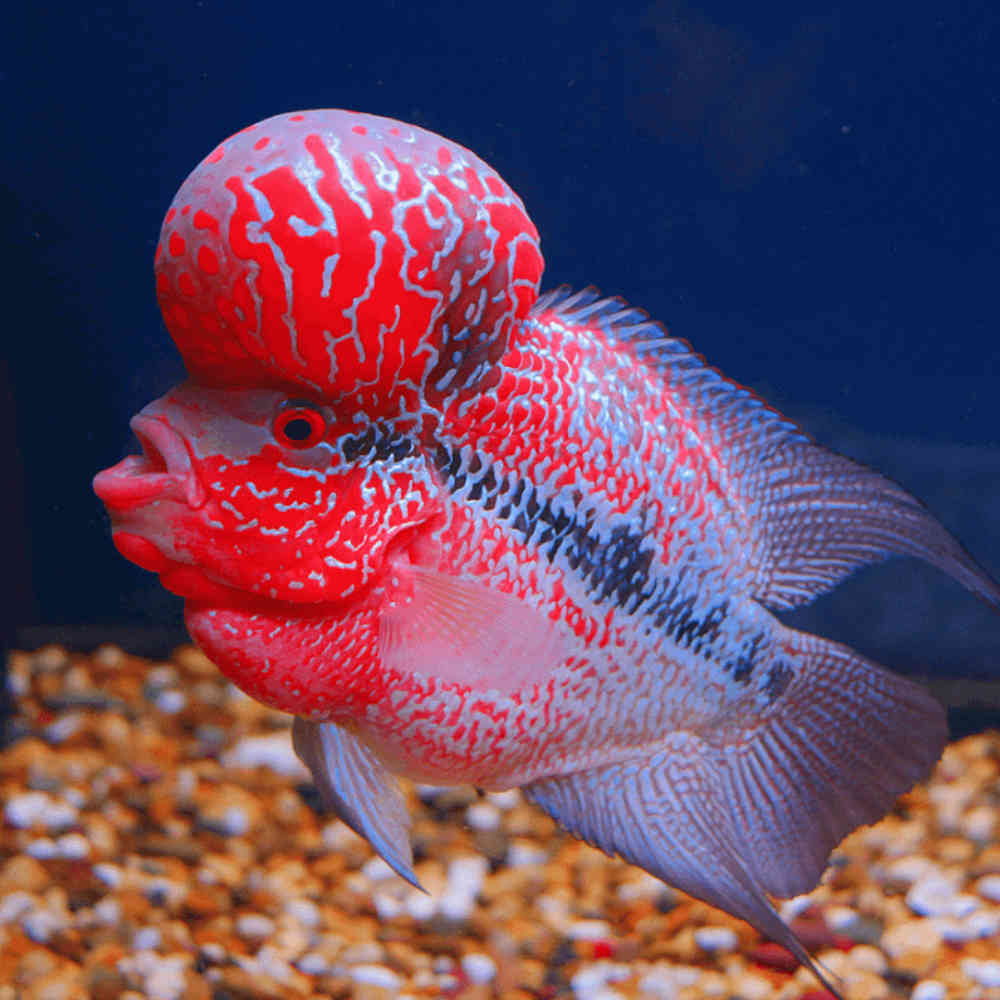
One of the most recognizable retail types and often associated with Zhen Zhu-style traits. As with every flowerhorn, adult traits depend on genetics, sex, health, age, diet, stress, water quality, and breeder selection. A label should never replace inspection of the actual fish. Choose an alert specimen with clear eyes, normal gill movement, an even body line, intact fins, steady swimming, and no pits, white feces, skin lesions, or exaggerated deformity.
9. Super Red Dragon
Lineage or category: Intensely selected Red Dragon form. Typical appearance: Deeper red coverage, heavier pearling, thick body, and prominent forehead hump.
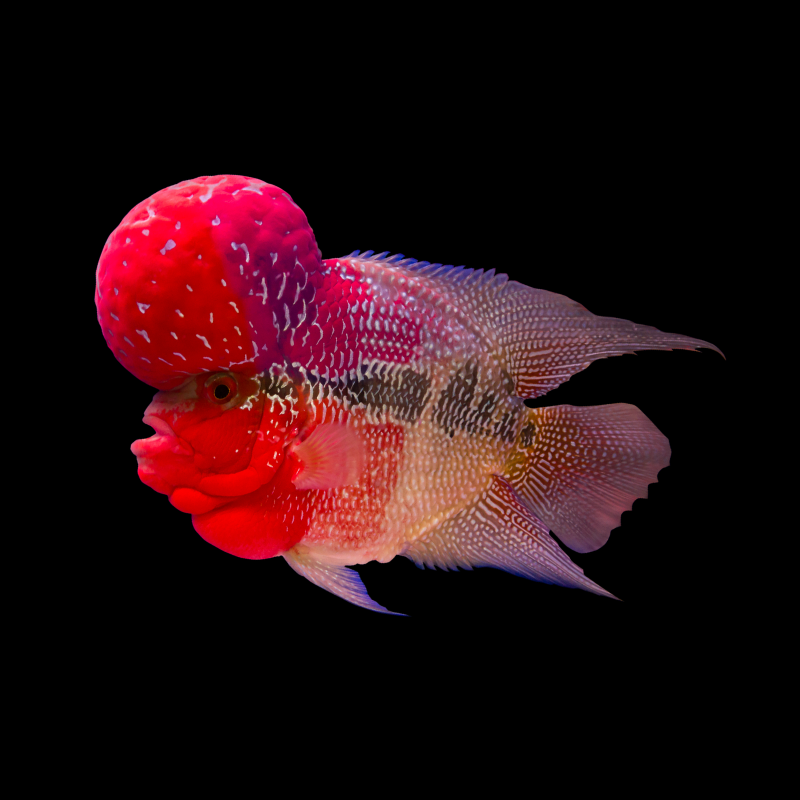
The name is a marketing grade and does not guarantee future color or kok size. As with every flowerhorn, adult traits depend on genetics, sex, health, age, diet, stress, water quality, and breeder selection. A label should never replace inspection of the actual fish. Choose an alert specimen with clear eyes, normal gill movement, an even body line, intact fins, steady swimming, and no pits, white feces, skin lesions, or exaggerated deformity.
10. Thai Silk
Lineage or category: Metallic-color ornamental line. Typical appearance: Uniform blue, silver, turquoise, or lavender sheen with little dark flower pattern.
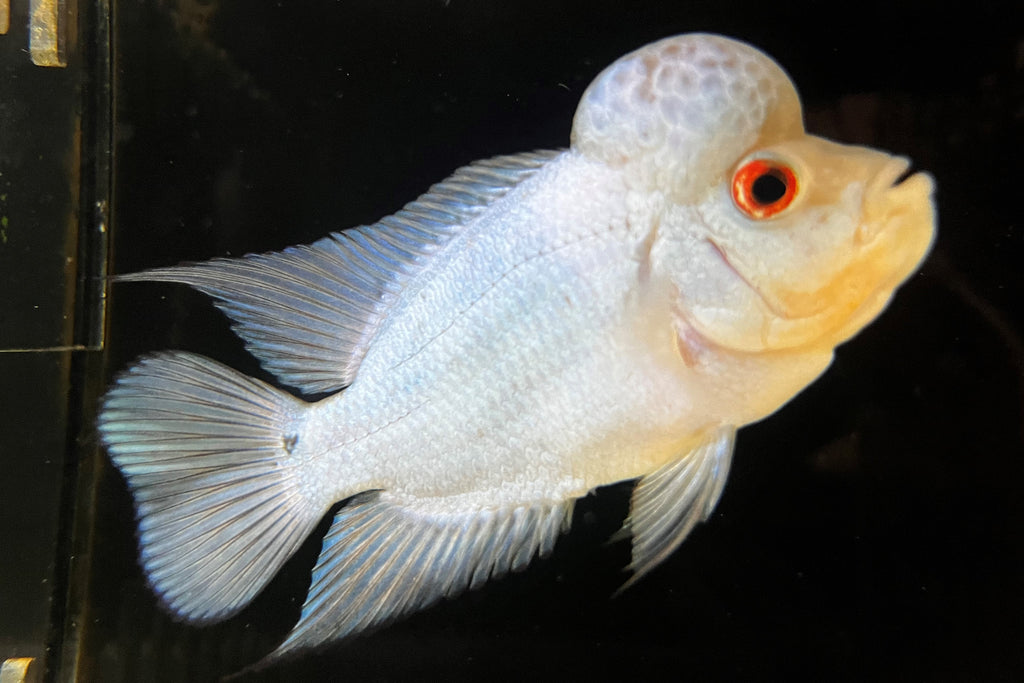
Its appeal comes from smooth metallic color rather than red coverage or a bold flower line. As with every flowerhorn, adult traits depend on genetics, sex, health, age, diet, stress, water quality, and breeder selection. A label should never replace inspection of the actual fish. Choose an alert specimen with clear eyes, normal gill movement, an even body line, intact fins, steady swimming, and no pits, white feces, skin lesions, or exaggerated deformity.
11. Blue Dragon
Lineage or category: Blue-toned flowerhorn trade type. Typical appearance: Blue-green pearling over a darker body, often with red on the face or belly.
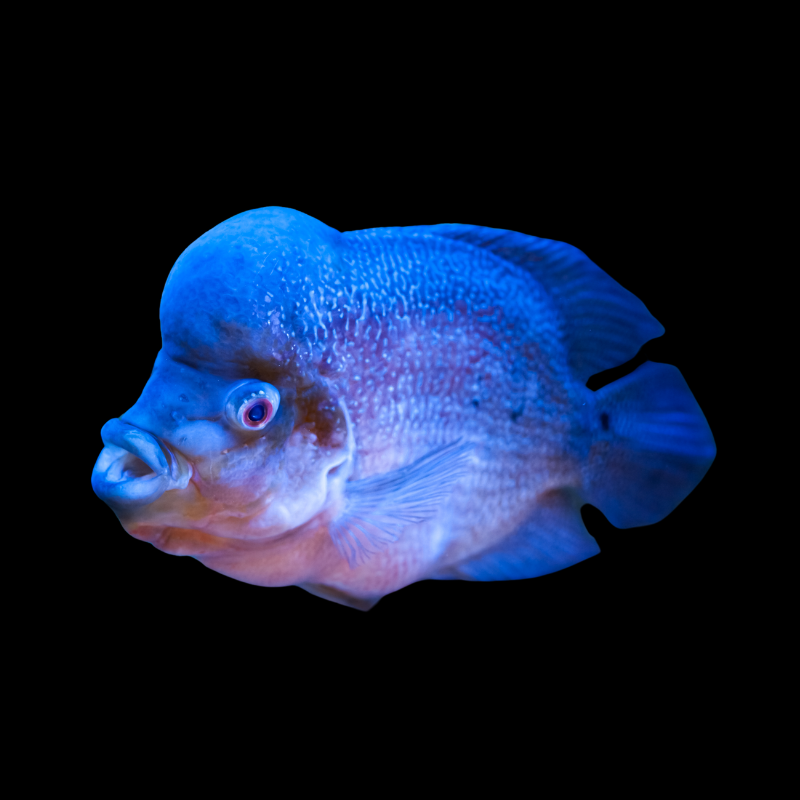
Naming varies among breeders and may overlap with blue Zhen Zhu or metallic crosses. As with every flowerhorn, adult traits depend on genetics, sex, health, age, diet, stress, water quality, and breeder selection. A label should never replace inspection of the actual fish. Choose an alert specimen with clear eyes, normal gill movement, an even body line, intact fins, steady swimming, and no pits, white feces, skin lesions, or exaggerated deformity.
12. Kamfamalau
Lineage or category: Kamfa crossed with Malau-type flowerhorn. Typical appearance: Kamfa-like frame with strong pearling, deeper color, and variable flower markings.
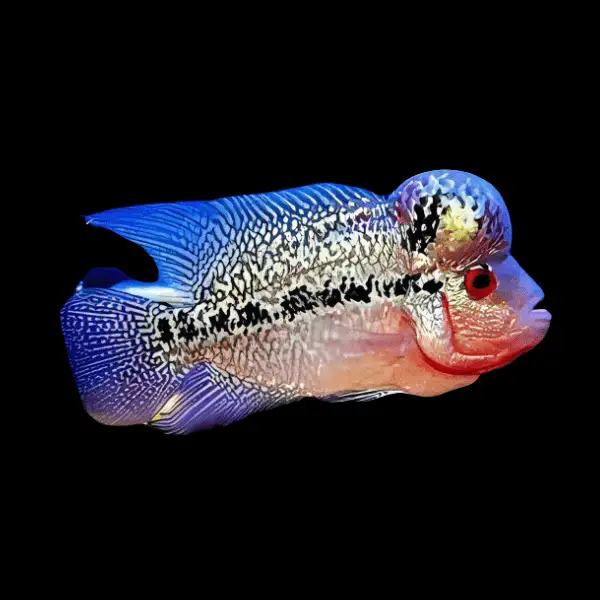
Traits are not fully standardized, so siblings can differ substantially. As with every flowerhorn, adult traits depend on genetics, sex, health, age, diet, stress, water quality, and breeder selection. A label should never replace inspection of the actual fish. Choose an alert specimen with clear eyes, normal gill movement, an even body line, intact fins, steady swimming, and no pits, white feces, skin lesions, or exaggerated deformity.
13. IndoMalau
Lineage or category: Indonesian Malau-derived flowerhorn line. Typical appearance: Dense fine pearling, rich red or maroon color, elongated flower line, and a strong face profile.
Often selected for pearling quality and color balance rather than only kok size. As with every flowerhorn, adult traits depend on genetics, sex, health, age, diet, stress, water quality, and breeder selection. A label should never replace inspection of the actual fish. Choose an alert specimen with clear eyes, normal gill movement, an even body line, intact fins, steady swimming, and no pits, white feces, skin lesions, or exaggerated deformity.
14. Red Texas Flowerhorn
Lineage or category: Crosses incorporating Red Texas cichlid traits. Typical appearance: Red or orange base with white-blue pearls; some individuals fade dramatically.
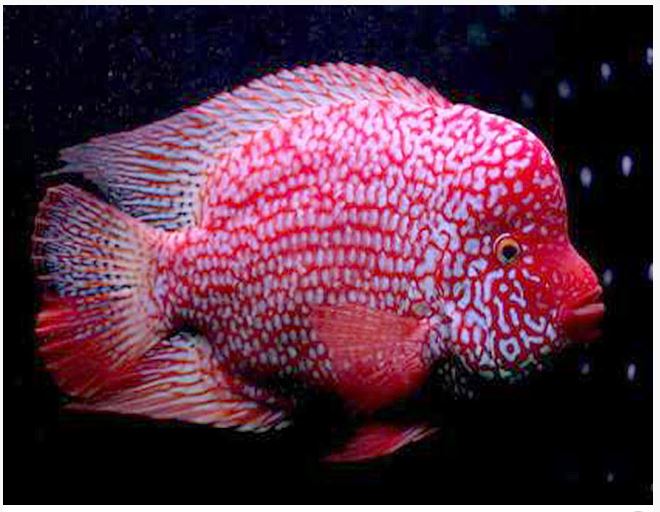
Not every juvenile fades or becomes red, and fertility can vary because several hybrid generations may be involved. As with every flowerhorn, adult traits depend on genetics, sex, health, age, diet, stress, water quality, and breeder selection. A label should never replace inspection of the actual fish. Choose an alert specimen with clear eyes, normal gill movement, an even body line, intact fins, steady swimming, and no pits, white feces, skin lesions, or exaggerated deformity.
15. Rainbow Flowerhorn
Lineage or category: Multicolor trade category. Typical appearance: Red, orange, yellow, blue, or green areas with contrasting pearls and dark markings.

A visual sales category rather than one stable lineage; evaluate body structure and health individually. As with every flowerhorn, adult traits depend on genetics, sex, health, age, diet, stress, water quality, and breeder selection. A label should never replace inspection of the actual fish. Choose an alert specimen with clear eyes, normal gill movement, an even body line, intact fins, steady swimming, and no pits, white feces, skin lesions, or exaggerated deformity.
16. Short Body Flowerhorn
Lineage or category: A body-shape mutation or selected short-bodied line. Typical appearance: Compressed body, short back, rounded profile, and oversized-looking head.
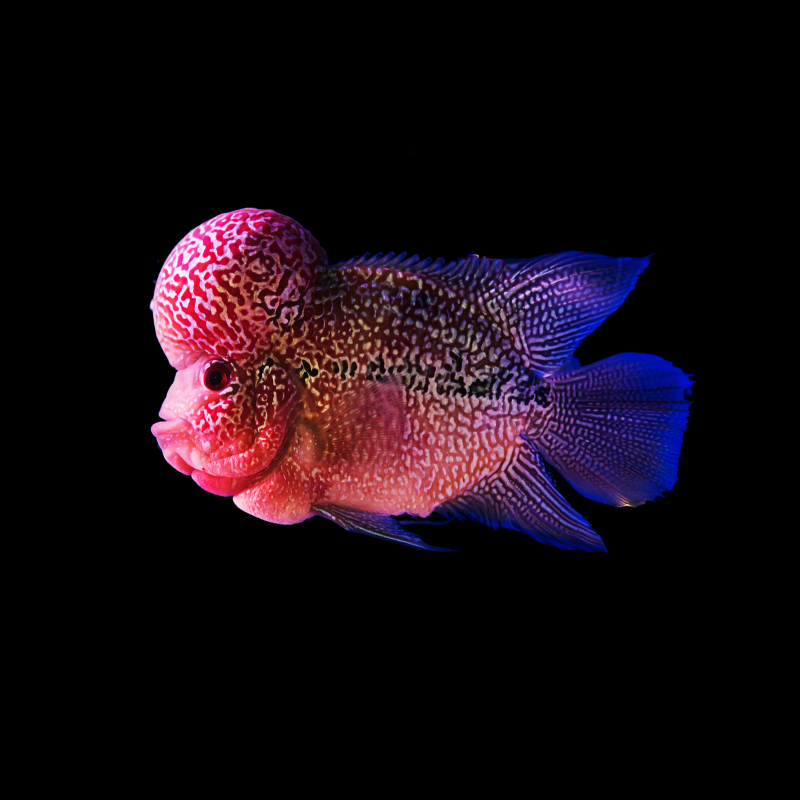
Extreme compression can be associated with swimming or organ problems, so avoid fish with impaired movement or breathing. As with every flowerhorn, adult traits depend on genetics, sex, health, age, diet, stress, water quality, and breeder selection. A label should never replace inspection of the actual fish. Choose an alert specimen with clear eyes, normal gill movement, an even body line, intact fins, steady swimming, and no pits, white feces, skin lesions, or exaggerated deformity.
How Are These Types of Flowerhorn Fish Classified?
Flowerhorn classification is informal. Hobbyists use ancestry, body frame, tail shape, eye color, pearling, flower line, fading behavior, kok shape, and overall color to assign names. Zhen Zhu types often show red eyes, a rounded tail, strong flower markings, and heavy pearls. Kamfa types are commonly associated with a squarer body, fan tail, wrapped fins, and pale eyes. Golden Base fish lose much of their dark pigment as they fade. Crosses can show traits from several categories, so borderline fish are common.
Where Do Flowerhorn Fish Come From?
Flowerhorns were developed in Southeast Asian ornamental-fish culture through selective crossing of Central American cichlid lineages. They are not a naturally occurring wild species and should never be released into rivers, canals, ponds, or lakes. Released hybrids can compete with native fish, spread disease, and establish invasive populations in warm climates. Responsible owners keep them in secure aquariums or rehome them through experienced aquarists.
How to Identify Different Types of Flowerhorn Fish
- Body shape: Kamfa-style fish are often compact and square, while many Zhen Zhu fish are more tapered.
- Eye color: pale or yellow eyes are associated with Kamfa traits; red eyes are common in Zhen Zhu lines, but exceptions occur.
- Tail and fins: a broad fan tail and wrapped fins suggest Kamfa influence.
- Pearling: compare pearl density, size, brightness, and whether pearls cross the head.
- Flower line: dark side markings may form a continuous line, separate flowers, or nearly disappear.
- Fading: Golden Base and Red Texas crosses may pass through a dark phase before losing black pigment.
- Kok: judge symmetry and health, but remember that size changes with age, hormones, stress, and condition.
Aquarium Care Notes
- Plan on a large aquarium for one adult, with strong filtration and ample open swimming space.
- Keep water temperature stable in the warm tropical range recommended by the breeder or aquatic veterinarian.
- Maintain zero detectable ammonia and nitrite, control nitrate, and perform regular partial water changes.
- Use a secure lid because large cichlids can jump or splash.
- Choose smooth, stable decor; flowerhorns dig, push objects, and may injure themselves on sharp rock.
- Base the diet on a reputable complete cichlid pellet and use treats sparingly.
- Do not use hormones, dyes, or unsafe “kok booster” products; genetics and overall health determine appearance.
- House singly unless an experienced keeper has a safe breeding or divided-tank plan.
Safety, Welfare, and Environmental Responsibility
Flowerhorns are intelligent, territorial fish that need space, clean water, enrichment, and stable care. Extreme body shapes, forced color enhancement, tattooing, and selection for harmful deformities raise welfare concerns. Avoid purchasing fish that cannot swim or feed normally. Quarantine new fish, never release unwanted specimens, and contact an aquarium club, responsible retailer, rescue, or experienced keeper for rehoming. Because these hybrids can survive in warm outdoor waters, release may create ecological damage.
Fun Facts About Flowerhorn Fish
- The forehead hump is commonly called a kok or nuchal hump.
- Flowerhorns are hybrids rather than a naturally occurring species.
- Juvenile color can change dramatically during growth.
- Golden Base fish may turn dark before fading to orange, red, yellow, or pale tones.
- Pearling refers to reflective spots or lines across the scales and fins.
- The flower line is the row of dark side markings that inspired the name.
- Some flowerhorns learn to follow their keeper and interact at the glass.
- A large kok is influenced by genetics, sex, maturity, and condition.
- Trade names are not governed by one universal standard.
- Releasing flowerhorns can threaten native aquatic communities.
Final Thoughts on Types of Flowerhorn Fish
The major types of flowerhorn fish are useful as visual and lineage categories, but they are not scientifically fixed breeds. Zhen Zhu, Kamfa, Golden Base, Golden Monkey, Red Dragon, Thai Silk, Malau crosses, and Red Texas crosses can overlap in appearance. Choose a healthy individual, verify the breeder’s claims, provide a spacious filtered aquarium, and place welfare above extreme color or kok size.
Frequently Asked Questions
1. Are flowerhorns a natural species?
No. Flowerhorns are human-created hybrid cichlids developed through selective breeding.
2. What are the main flowerhorn types?
Common broad groups include Zhen Zhu, Kamfa, Golden Base, and Golden Monkey, with many later crosses and trade varieties.
3. Is King Kamfa a separate species?
No. King Kamfa is a premium trade classification within Kamfa-style flowerhorns.
4. What is the difference between Kamfa and Zhen Zhu?
Kamfa types are often more square-bodied with fan tails, wrapped fins, and pale eyes. Zhen Zhu types commonly have red eyes, rounded tails, strong flower lines, and heavy pearling. Crosses blur these traits.
5. What is a Golden Base flowerhorn?
Golden Base describes flowerhorns with a fading trait that reduces black pigment and reveals red, orange, yellow, or pale coloration.
6. What is a fader flowerhorn?
Fader is another name for a fish that passes through a dark phase and later loses much of its black pigment.
7. What is a Thai Silk flowerhorn?
Thai Silk is a metallic blue, silver, turquoise, or lavender type selected for smooth reflective color.
8. What is a Red Dragon flowerhorn?
Red Dragon is a popular red-bodied trade type, often with Zhen Zhu-like pearling, flower markings, and red eyes.
9. What is a Super Red Dragon?
It is an intensely selected or marketed Red Dragon form with deeper red coverage and strong ornamental traits. The label is not standardized.
10. What is a Kamfamalau?
Kamfamalau is a cross combining Kamfa and Malau-type flowerhorn traits.
11. What is an IndoMalau?
IndoMalau is an Indonesian Malau-derived line typically valued for dense pearling, rich color, and flower markings.
12. What is a Red Texas Flowerhorn?
It is a hybrid line incorporating Red Texas cichlid traits. Some fish fade to red or orange with bright pearling, but results vary.
13. Do flowerhorn types breed true?
Not reliably. Because they are complex hybrids, offspring may show a wide range of body shapes, colors, fertility, and markings.
14. Why do breeders use different names for similar fish?
There is no universal registry or enforced standard. Names may reflect lineage, appearance, breeder branding, or sales grade.
15. What is pearling on a flowerhorn?
Pearling is the reflective white, blue, green, or metallic pattern across the body, head, and fins.
16. What is the flower line?
The flower line is a row of dark lateral markings that may resemble Chinese characters or separate flower-like spots.
17. What is the kok?
The kok is the nuchal hump on the forehead. It is usually larger in selected males but varies with genetics, age, sex, and condition.
18. Can food make a flowerhorn kok grow dramatically?
A balanced diet supports normal growth, but no safe food can override genetics. Avoid hormones and unverified booster products.
19. Can food improve flowerhorn color?
Complete nutrition and carotenoid-containing ingredients can support natural color, but they cannot create genes the fish does not have.
20. How large do flowerhorns grow?
Many adults reach roughly 10 to 14 inches, but size varies with genetics, sex, health, and care.
21. What tank size does a flowerhorn need?
A single adult generally needs a large aquarium, commonly around 75 gallons or more, with greater volume preferred for large individuals and easier water-quality control.
22. Can two flowerhorns live together?
They are highly territorial. Cohabitation can cause severe injury and should be attempted only by experienced keepers using very large or divided systems.
23. Can flowerhorns live with other fish?
Most are safest alone. Large tank mates sometimes work in very spacious aquariums, but aggression remains unpredictable.
24. What water conditions do flowerhorns need?
They need warm, stable, clean freshwater, strong biological filtration, zero ammonia and nitrite, and regular water changes. Avoid sudden changes.
25. What should flowerhorns eat?
Use a high-quality complete cichlid pellet as the staple, with limited suitable frozen or fresh treats. Avoid feeder fish and excessive fatty foods.
26. How often should a flowerhorn be fed?
Healthy adults are often fed one or two measured meals daily. Juveniles may need smaller, more frequent meals. Remove uneaten food.
27. Why is my flowerhorn turning black?
Stress, poor water quality, temperature change, illness, social pressure, or a normal fading phase can darken color. Test the water and evaluate behavior.
28. Why is my flowerhorn losing color?
Color may change with maturity, stress, lighting, diet, genetics, illness, or the fading trait. Sudden change with lethargy needs investigation.
29. Are short-body flowerhorns healthy?
Some live normally, but extreme compression can be linked to swimming, skeletal, or internal-organ problems. Choose fish with normal function.
30. Can flowerhorns be released outdoors?
No. They may become invasive, spread disease, or harm native fish. Rehome unwanted fish responsibly.