

Types of drum fish include familiar inshore game fish, small reef species, freshwater croakers, and large coastal food fish. Most belong to the family Sciaenidae, a diverse group often called drums or croakers because many species produce low knocks, grunts, or drumming sounds with muscles associated with the swim bladder. This guide focuses on 40 practical and recognizable species from North America, South America, Africa, Asia, Australia, the Caribbean, and the Indo-Pacific.
What Are the Main Types of Drum Fish?
The best-known drum fish include red drum, black drum, freshwater drum, Atlantic croaker, spotted seatrout, weakfish, white seabass, meagre, mulloway, yellow croakers, and colorful reef drums. They can be grouped by habitat into freshwater species, estuarine and surf-zone fish, offshore coastal fish, and reef-associated drums. Although the family contains hundreds of species, anglers and nature observers are most likely to encounter the representative types covered below.
Quick Comparison of 40 Drum Fish Species
| No. | Common Name | Scientific Name | Main Range |
|---|---|---|---|
| 1 | Red Drum | Sciaenops ocellatus | Western Atlantic and Gulf of Mexico |
| 2 | Black Drum | Pogonias cromis | Western Atlantic and Gulf of Mexico |
| 3 | Freshwater Drum | Aplodinotus grunniens | Central and eastern North America |
| 4 | Atlantic Croaker | Micropogonias undulatus | Western Atlantic and Gulf of Mexico |
| 5 | Whitemouth Croaker | Micropogonias furnieri | Western Atlantic from the Caribbean to South America |
| 6 | Spot | Leiostomus xanthurus | Western Atlantic and Gulf of Mexico |
| 7 | Weakfish | Cynoscion regalis | Atlantic coast of North America |
| 8 | Spotted Seatrout | Cynoscion nebulosus | Western Atlantic and Gulf of Mexico |
| 9 | Sand Seatrout | Cynoscion arenarius | Gulf of Mexico |
| 10 | Silver Seatrout | Cynoscion nothus | Western Atlantic and Gulf of Mexico |
| 11 | Gulf Corvina | Cynoscion othonopterus | Northern Gulf of California |
| 12 | Shortfin Corvina | Cynoscion parvipinnis | California and Gulf of California |
| 13 | White Seabass | Atractoscion nobilis | Eastern Pacific from California to Baja California |
| 14 | White Croaker | Genyonemus lineatus | Eastern Pacific |
| 15 | California Corbina | Menticirrhus undulatus | Eastern Pacific |
| 16 | Northern Kingfish | Menticirrhus saxatilis | Atlantic coast of North America |
| 17 | Southern Kingfish | Menticirrhus americanus | Western Atlantic and Gulf of Mexico |
| 18 | Gulf Kingfish | Menticirrhus littoralis | Gulf of Mexico and southeastern Atlantic coast |
| 19 | Spotfin Croaker | Roncador stearnsii | California and Baja California |
| 20 | Yellowfin Croaker | Umbrina roncador | California and Baja California |
| 21 | Black Croaker | Cheilotrema saturnum | California and Baja California |
| 22 | Queenfish | Seriphus politus | California and Baja California |
| 23 | Totoaba | Totoaba macdonaldi | Northern and central Gulf of California |
| 24 | Spotted Drum | Equetus punctatus | Western Atlantic, Caribbean, and Florida |
| 25 | Jackknife Fish | Equetus lanceolatus | Western Atlantic and Caribbean |
| 26 | High-hat | Pareques acuminatus | Western Atlantic and Caribbean |
| 27 | Cubbyu | Pareques umbrosus | Western Atlantic and Caribbean |
| 28 | Reef Croaker | Odontoscion dentex | Western Atlantic and Caribbean |
| 29 | Meagre | Argyrosomus regius | Eastern Atlantic, Mediterranean, and nearby waters |
| 30 | Mulloway | Argyrosomus japonicus | Southern Africa, Indian Ocean, and Australia |
| 31 | Dusky Kob | Argyrosomus coronus | Southwestern Africa |
| 32 | Silver Kob | Argyrosomus inodorus | Southern Africa |
| 33 | Large Yellow Croaker | Larimichthys crocea | Northwestern Pacific |
| 34 | Small Yellow Croaker | Larimichthys polyactis | Northwestern Pacific |
| 35 | Mi-iuy Croaker | Miichthys miiuy | Northwestern Pacific |
| 36 | Yellow Drum | Nibea albiflora | Northwestern Pacific |
| 37 | Boeseman Croaker | Boesemania microlepis | Mekong and other Southeast Asian rivers |
| 38 | Chinese Bahaba | Bahaba taipingensis | Estuaries of southern China |
| 39 | Blackspotted Croaker | Protonibea diacanthus | Indo-West Pacific |
| 40 | Tigertooth Croaker | Otolithes ruber | Indo-West Pacific |
1. Red Drum
Scientific name: Sciaenops ocellatus. Range: Western Atlantic and Gulf of Mexico. Identification: Copper-red body, one or more dark tail-base spots, blunt head.
Estuaries, bays, surf zones, and nearshore water; a major sport fish commonly called redfish. Like other sciaenids, this species is generally associated with the lower water column and feeds on fish, shrimp, crabs, worms, or other bottom animals according to its size and habitat. Identification should combine body shape, mouth position, barbels, fin color, spots or bars, geographic range, and local regulations. Common names overlap between countries, so the scientific name is the safest way to confirm a record.
2. Black Drum
Scientific name: Pogonias cromis. Range: Western Atlantic and Gulf of Mexico. Identification: Deep body, chin barbels, juvenile dark vertical bars.
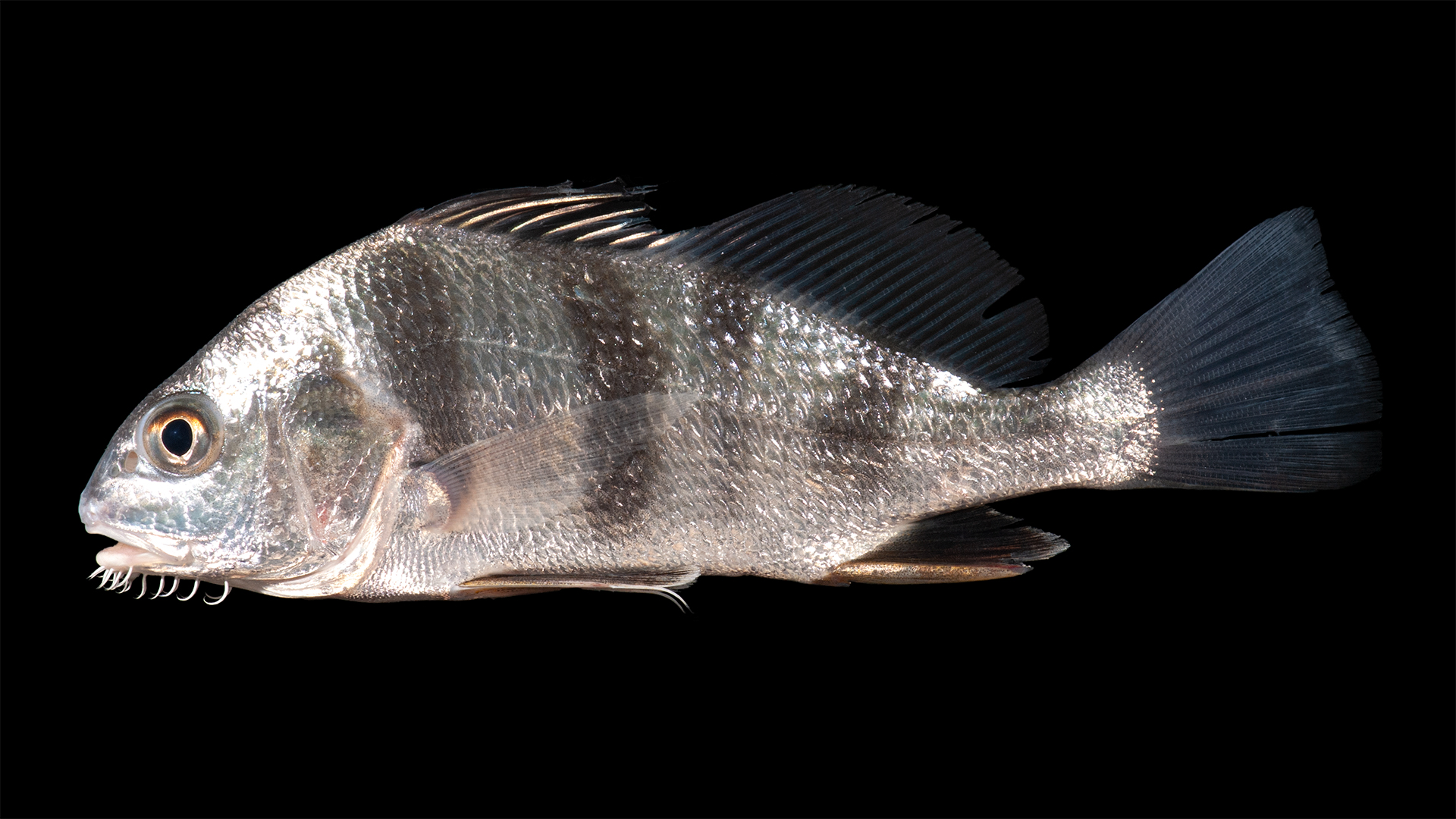
Bays, channels, oyster beds, and surf; large adults often feed on crabs and mollusks. Like other sciaenids, this species is generally associated with the lower water column and feeds on fish, shrimp, crabs, worms, or other bottom animals according to its size and habitat. Identification should combine body shape, mouth position, barbels, fin color, spots or bars, geographic range, and local regulations. Common names overlap between countries, so the scientific name is the safest way to confirm a record.
3. Freshwater Drum
Scientific name: Aplodinotus grunniens. Range: Central and eastern North America. Identification: Silvery deep body, arched back, long dorsal fin.
Rivers and lakes; the only widely distributed North American drum that lives entirely in fresh water. Like other sciaenids, this species is generally associated with the lower water column and feeds on fish, shrimp, crabs, worms, or other bottom animals according to its size and habitat. Identification should combine body shape, mouth position, barbels, fin color, spots or bars, geographic range, and local regulations. Common names overlap between countries, so the scientific name is the safest way to confirm a record.
4. Atlantic Croaker
Scientific name: Micropogonias undulatus. Range: Western Atlantic and Gulf of Mexico. Identification: Silvery-gold body with wavy back markings and small chin barbels.

Estuaries and coastal bottoms; common, vocal, and important to recreational and commercial fisheries. Like other sciaenids, this species is generally associated with the lower water column and feeds on fish, shrimp, crabs, worms, or other bottom animals according to its size and habitat. Identification should combine body shape, mouth position, barbels, fin color, spots or bars, geographic range, and local regulations. Common names overlap between countries, so the scientific name is the safest way to confirm a record.
5. Whitemouth Croaker
Scientific name: Micropogonias furnieri. Range: Western Atlantic from the Caribbean to South America. Identification: Elongate silver body, oblique bars, pale mouth lining.

Coastal and estuarine mud or sand bottoms; a major South American food fish. Like other sciaenids, this species is generally associated with the lower water column and feeds on fish, shrimp, crabs, worms, or other bottom animals according to its size and habitat. Identification should combine body shape, mouth position, barbels, fin color, spots or bars, geographic range, and local regulations. Common names overlap between countries, so the scientific name is the safest way to confirm a record.
6. Spot
Scientific name: Leiostomus xanthurus. Range: Western Atlantic and Gulf of Mexico. Identification: Small silvery fish with a distinct black shoulder spot.
Shallow estuaries and coastal waters; schools are often caught from piers and surf. Like other sciaenids, this species is generally associated with the lower water column and feeds on fish, shrimp, crabs, worms, or other bottom animals according to its size and habitat. Identification should combine body shape, mouth position, barbels, fin color, spots or bars, geographic range, and local regulations. Common names overlap between countries, so the scientific name is the safest way to confirm a record.
7. Weakfish
Scientific name: Cynoscion regalis. Range: Atlantic coast of North America. Identification: Slender body, dark spots on upper sides, yellowish fins.
Bays and nearshore water; named for its delicate mouth tissue, not weak swimming. Like other sciaenids, this species is generally associated with the lower water column and feeds on fish, shrimp, crabs, worms, or other bottom animals according to its size and habitat. Identification should combine body shape, mouth position, barbels, fin color, spots or bars, geographic range, and local regulations. Common names overlap between countries, so the scientific name is the safest way to confirm a record.
8. Spotted Seatrout
Scientific name: Cynoscion nebulosus. Range: Western Atlantic and Gulf of Mexico. Identification: Numerous round black spots on upper body and fins.
Seagrass beds, lagoons, and estuaries; a highly valued inshore game fish. Like other sciaenids, this species is generally associated with the lower water column and feeds on fish, shrimp, crabs, worms, or other bottom animals according to its size and habitat. Identification should combine body shape, mouth position, barbels, fin color, spots or bars, geographic range, and local regulations. Common names overlap between countries, so the scientific name is the safest way to confirm a record.
9. Sand Seatrout
Scientific name: Cynoscion arenarius. Range: Gulf of Mexico. Identification: Pale silver body with few or no dark spots.
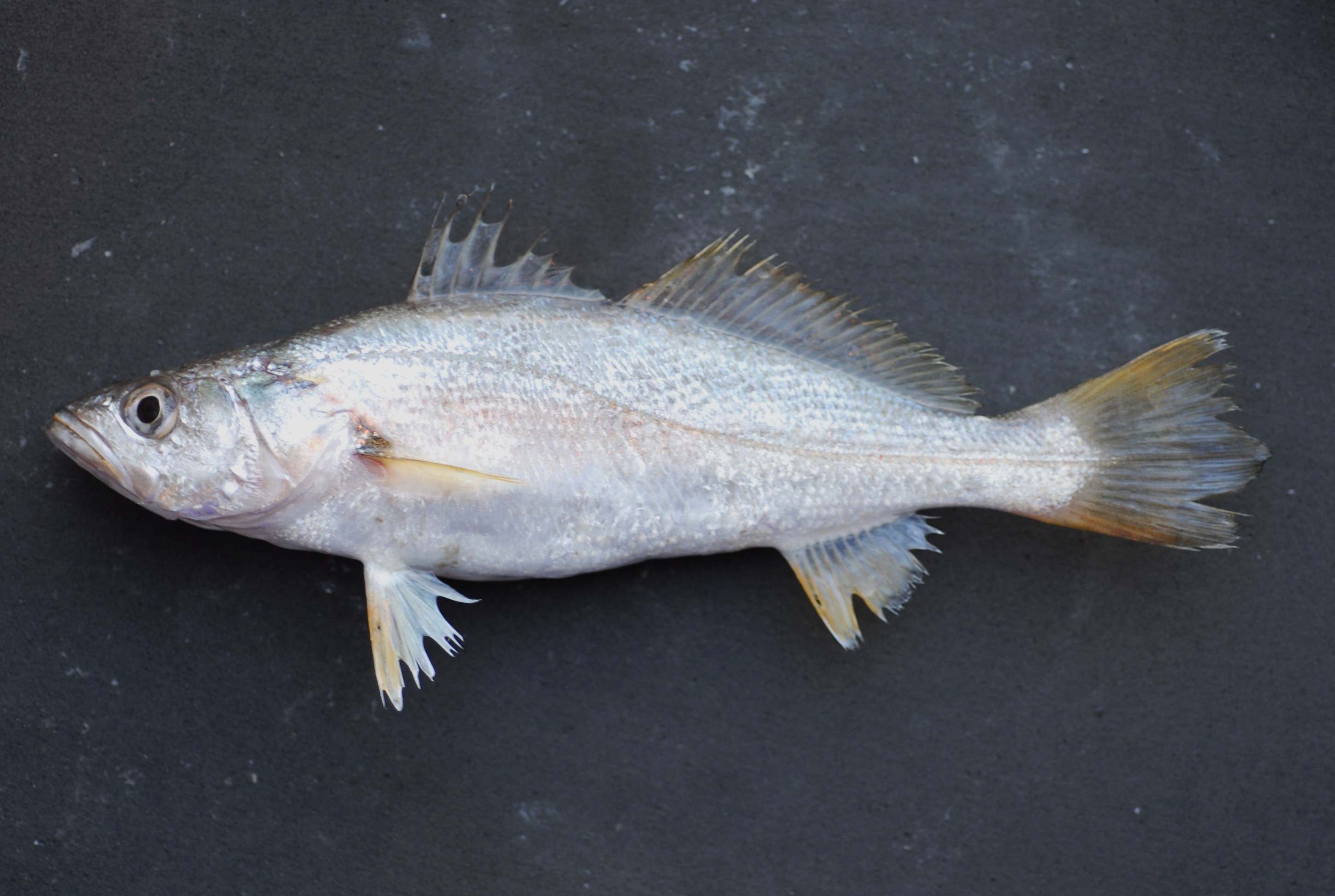
Sandy bays and nearshore areas; usually smaller and less spotted than spotted seatrout. Like other sciaenids, this species is generally associated with the lower water column and feeds on fish, shrimp, crabs, worms, or other bottom animals according to its size and habitat. Identification should combine body shape, mouth position, barbels, fin color, spots or bars, geographic range, and local regulations. Common names overlap between countries, so the scientific name is the safest way to confirm a record.
10. Silver Seatrout
Scientific name: Cynoscion nothus. Range: Western Atlantic and Gulf of Mexico. Identification: Slender bright-silver body with yellowish mouth interior.
Coastal water and deeper bays; often forms schools over soft bottoms. Like other sciaenids, this species is generally associated with the lower water column and feeds on fish, shrimp, crabs, worms, or other bottom animals according to its size and habitat. Identification should combine body shape, mouth position, barbels, fin color, spots or bars, geographic range, and local regulations. Common names overlap between countries, so the scientific name is the safest way to confirm a record.
11. Gulf Corvina
Scientific name: Cynoscion othonopterus. Range: Northern Gulf of California. Identification: Large silvery croaker with elongated body.
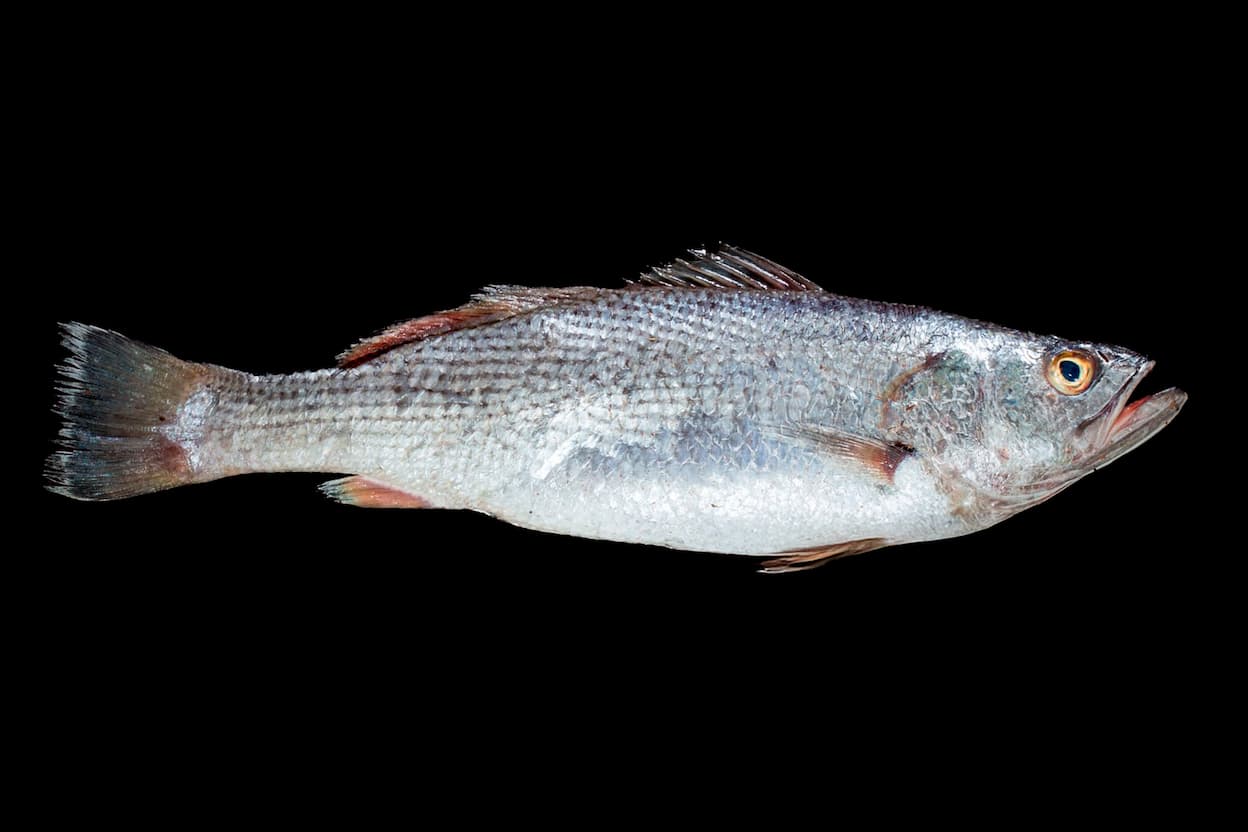
Spawns in aggregations near the Colorado River delta, making careful fishery management essential. Like other sciaenids, this species is generally associated with the lower water column and feeds on fish, shrimp, crabs, worms, or other bottom animals according to its size and habitat. Identification should combine body shape, mouth position, barbels, fin color, spots or bars, geographic range, and local regulations. Common names overlap between countries, so the scientific name is the safest way to confirm a record.
12. Shortfin Corvina
Scientific name: Cynoscion parvipinnis. Range: California and Gulf of California. Identification: Long silver-gray body, large mouth, short pectoral fins.
Surf, bays, and shallow coastal habitats; targeted by shore and small-boat anglers. Like other sciaenids, this species is generally associated with the lower water column and feeds on fish, shrimp, crabs, worms, or other bottom animals according to its size and habitat. Identification should combine body shape, mouth position, barbels, fin color, spots or bars, geographic range, and local regulations. Common names overlap between countries, so the scientific name is the safest way to confirm a record.
13. White Seabass
Scientific name: Atractoscion nobilis. Range: Eastern Pacific from California to Baja California. Identification: Long gray-silver body, dark lateral line, large size.

Kelp edges, reefs, and coastal water; despite the name, it is a croaker, not a true sea bass. Like other sciaenids, this species is generally associated with the lower water column and feeds on fish, shrimp, crabs, worms, or other bottom animals according to its size and habitat. Identification should combine body shape, mouth position, barbels, fin color, spots or bars, geographic range, and local regulations. Common names overlap between countries, so the scientific name is the safest way to confirm a record.
14. White Croaker
Scientific name: Genyonemus lineatus. Range: Eastern Pacific. Identification: Small silver-gray body with a single chin barbel.
Sandy and muddy coastal bottoms; commonly caught from California piers. Like other sciaenids, this species is generally associated with the lower water column and feeds on fish, shrimp, crabs, worms, or other bottom animals according to its size and habitat. Identification should combine body shape, mouth position, barbels, fin color, spots or bars, geographic range, and local regulations. Common names overlap between countries, so the scientific name is the safest way to confirm a record.
15. California Corbina
Scientific name: Menticirrhus undulatus. Range: Eastern Pacific. Identification: Slender silver fish with a downturned mouth and single chin barbel.

Shallow surf zones where it feeds on sand crabs and other invertebrates. Like other sciaenids, this species is generally associated with the lower water column and feeds on fish, shrimp, crabs, worms, or other bottom animals according to its size and habitat. Identification should combine body shape, mouth position, barbels, fin color, spots or bars, geographic range, and local regulations. Common names overlap between countries, so the scientific name is the safest way to confirm a record.
16. Northern Kingfish
Scientific name: Menticirrhus saxatilis. Range: Atlantic coast of North America. Identification: Elongate body, dark angled bars, single chin barbel.
Surf and shallow coastal bottoms; also called northern kingcroaker or sea mullet. Like other sciaenids, this species is generally associated with the lower water column and feeds on fish, shrimp, crabs, worms, or other bottom animals according to its size and habitat. Identification should combine body shape, mouth position, barbels, fin color, spots or bars, geographic range, and local regulations. Common names overlap between countries, so the scientific name is the safest way to confirm a record.
17. Southern Kingfish
Scientific name: Menticirrhus americanus. Range: Western Atlantic and Gulf of Mexico. Identification: Silvery body with irregular bars and a downturned mouth.
Sandy surf and estuaries; a bottom feeder often caught on shrimp or worms. Like other sciaenids, this species is generally associated with the lower water column and feeds on fish, shrimp, crabs, worms, or other bottom animals according to its size and habitat. Identification should combine body shape, mouth position, barbels, fin color, spots or bars, geographic range, and local regulations. Common names overlap between countries, so the scientific name is the safest way to confirm a record.
18. Gulf Kingfish
Scientific name: Menticirrhus littoralis. Range: Gulf of Mexico and southeastern Atlantic coast. Identification: Pale, slender body with subtle markings.
Very shallow surf and sandy beaches; often called Gulf whiting. Like other sciaenids, this species is generally associated with the lower water column and feeds on fish, shrimp, crabs, worms, or other bottom animals according to its size and habitat. Identification should combine body shape, mouth position, barbels, fin color, spots or bars, geographic range, and local regulations. Common names overlap between countries, so the scientific name is the safest way to confirm a record.
19. Spotfin Croaker
Scientific name: Roncador stearnsii. Range: California and Baja California. Identification: Large black spot at pectoral-fin base, bronze-silver body.
Sandy beaches, bays, and harbor areas; feeds heavily on bottom invertebrates. Like other sciaenids, this species is generally associated with the lower water column and feeds on fish, shrimp, crabs, worms, or other bottom animals according to its size and habitat. Identification should combine body shape, mouth position, barbels, fin color, spots or bars, geographic range, and local regulations. Common names overlap between countries, so the scientific name is the safest way to confirm a record.
20. Yellowfin Croaker
Scientific name: Umbrina roncador. Range: California and Baja California. Identification: Silver-bronze body, yellowish fins, chin barbel.
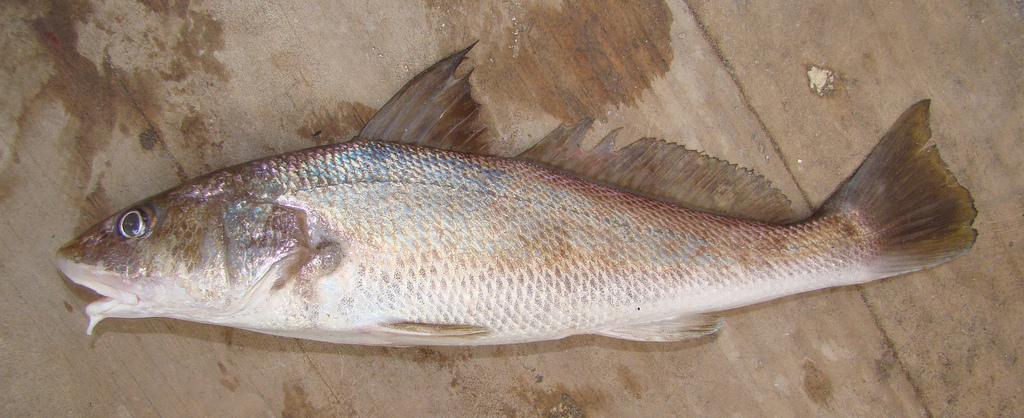
Surf and shallow bays; common near beaches and piers. Like other sciaenids, this species is generally associated with the lower water column and feeds on fish, shrimp, crabs, worms, or other bottom animals according to its size and habitat. Identification should combine body shape, mouth position, barbels, fin color, spots or bars, geographic range, and local regulations. Common names overlap between countries, so the scientific name is the safest way to confirm a record.
21. Black Croaker
Scientific name: Cheilotrema saturnum. Range: California and Baja California. Identification: Dark gray to blackish body, thick lips.
Rocky reefs, kelp, and mixed bottoms; less tied to open sand than many croakers. Like other sciaenids, this species is generally associated with the lower water column and feeds on fish, shrimp, crabs, worms, or other bottom animals according to its size and habitat. Identification should combine body shape, mouth position, barbels, fin color, spots or bars, geographic range, and local regulations. Common names overlap between countries, so the scientific name is the safest way to confirm a record.
22. Queenfish
Scientific name: Seriphus politus. Range: California and Baja California. Identification: Small slender silver fish with a large mouth.
Schools in bays, piers, and nearshore water; often used as live bait or caught on small lures. Like other sciaenids, this species is generally associated with the lower water column and feeds on fish, shrimp, crabs, worms, or other bottom animals according to its size and habitat. Identification should combine body shape, mouth position, barbels, fin color, spots or bars, geographic range, and local regulations. Common names overlap between countries, so the scientific name is the safest way to confirm a record.
23. Totoaba
Scientific name: Totoaba macdonaldi. Range: Northern and central Gulf of California. Identification: Very large silver-gray croaker with a powerful body.
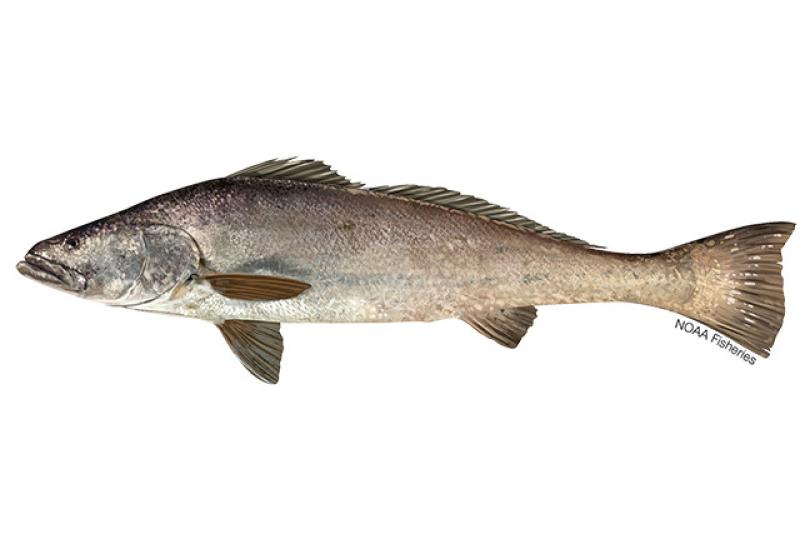
Endemic to the Gulf of California and protected; illegal trade has caused severe conservation problems. Like other sciaenids, this species is generally associated with the lower water column and feeds on fish, shrimp, crabs, worms, or other bottom animals according to its size and habitat. Identification should combine body shape, mouth position, barbels, fin color, spots or bars, geographic range, and local regulations. Common names overlap between countries, so the scientific name is the safest way to confirm a record.
24. Spotted Drum
Scientific name: Equetus punctatus. Range: Western Atlantic, Caribbean, and Florida. Identification: Black-and-white bands, spots, and long flowing dorsal fin.
Coral and rocky reefs; juveniles have especially dramatic fins and patterns. Like other sciaenids, this species is generally associated with the lower water column and feeds on fish, shrimp, crabs, worms, or other bottom animals according to its size and habitat. Identification should combine body shape, mouth position, barbels, fin color, spots or bars, geographic range, and local regulations. Common names overlap between countries, so the scientific name is the safest way to confirm a record.
25. Jackknife Fish
Scientific name: Equetus lanceolatus. Range: Western Atlantic and Caribbean. Identification: Bold black-and-white bands and a very long first dorsal fin.
Reefs and ledges; a visually distinctive small drum often observed by divers. Like other sciaenids, this species is generally associated with the lower water column and feeds on fish, shrimp, crabs, worms, or other bottom animals according to its size and habitat. Identification should combine body shape, mouth position, barbels, fin color, spots or bars, geographic range, and local regulations. Common names overlap between countries, so the scientific name is the safest way to confirm a record.
26. High-hat
Scientific name: Pareques acuminatus. Range: Western Atlantic and Caribbean. Identification: Black-and-white diagonal bands and tall dorsal fin.
Reefs, caves, and overhangs; often active near shelter during low light. Like other sciaenids, this species is generally associated with the lower water column and feeds on fish, shrimp, crabs, worms, or other bottom animals according to its size and habitat. Identification should combine body shape, mouth position, barbels, fin color, spots or bars, geographic range, and local regulations. Common names overlap between countries, so the scientific name is the safest way to confirm a record.
27. Cubbyu
Scientific name: Pareques umbrosus. Range: Western Atlantic and Caribbean. Identification: Dark body with pale stripes and a high arched back.

Rocky reefs and sheltered ledges; a small nocturnal or crepuscular drum. Like other sciaenids, this species is generally associated with the lower water column and feeds on fish, shrimp, crabs, worms, or other bottom animals according to its size and habitat. Identification should combine body shape, mouth position, barbels, fin color, spots or bars, geographic range, and local regulations. Common names overlap between countries, so the scientific name is the safest way to confirm a record.
28. Reef Croaker
Scientific name: Odontoscion dentex. Range: Western Atlantic and Caribbean. Identification: Silvery body with yellowish fins and a relatively large eye.
Rocky and coral reefs, often in schools near structure. Like other sciaenids, this species is generally associated with the lower water column and feeds on fish, shrimp, crabs, worms, or other bottom animals according to its size and habitat. Identification should combine body shape, mouth position, barbels, fin color, spots or bars, geographic range, and local regulations. Common names overlap between countries, so the scientific name is the safest way to confirm a record.
29. Meagre
Scientific name: Argyrosomus regius. Range: Eastern Atlantic, Mediterranean, and nearby waters. Identification: Large elongated silver fish with bronze tones.
Estuaries, lagoons, and coastal water; important in fisheries and aquaculture. Like other sciaenids, this species is generally associated with the lower water column and feeds on fish, shrimp, crabs, worms, or other bottom animals according to its size and habitat. Identification should combine body shape, mouth position, barbels, fin color, spots or bars, geographic range, and local regulations. Common names overlap between countries, so the scientific name is the safest way to confirm a record.
30. Mulloway
Scientific name: Argyrosomus japonicus. Range: Southern Africa, Indian Ocean, and Australia. Identification: Large silver-bronze body and strong tail.
Estuaries, surf zones, reefs, and coastal channels; also called jewfish in Australia. Like other sciaenids, this species is generally associated with the lower water column and feeds on fish, shrimp, crabs, worms, or other bottom animals according to its size and habitat. Identification should combine body shape, mouth position, barbels, fin color, spots or bars, geographic range, and local regulations. Common names overlap between countries, so the scientific name is the safest way to confirm a record.
31. Dusky Kob
Scientific name: Argyrosomus coronus. Range: Southwestern Africa. Identification: Large bronze-gray croaker with heavy body.
Surf and nearshore habitats; vulnerable to overfishing because large adults are highly prized. Like other sciaenids, this species is generally associated with the lower water column and feeds on fish, shrimp, crabs, worms, or other bottom animals according to its size and habitat. Identification should combine body shape, mouth position, barbels, fin color, spots or bars, geographic range, and local regulations. Common names overlap between countries, so the scientific name is the safest way to confirm a record.
32. Silver Kob
Scientific name: Argyrosomus inodorus. Range: Southern Africa. Identification: Silver body with a more streamlined form than dusky kob.

Coastal waters over sand and mud; supports regional fisheries. Like other sciaenids, this species is generally associated with the lower water column and feeds on fish, shrimp, crabs, worms, or other bottom animals according to its size and habitat. Identification should combine body shape, mouth position, barbels, fin color, spots or bars, geographic range, and local regulations. Common names overlap between countries, so the scientific name is the safest way to confirm a record.
33. Large Yellow Croaker
Scientific name: Larimichthys crocea. Range: Northwestern Pacific. Identification: Golden-yellow body and orange-yellow fins.
Coastal and estuarine waters; widely farmed and culturally important in East Asia. Like other sciaenids, this species is generally associated with the lower water column and feeds on fish, shrimp, crabs, worms, or other bottom animals according to its size and habitat. Identification should combine body shape, mouth position, barbels, fin color, spots or bars, geographic range, and local regulations. Common names overlap between countries, so the scientific name is the safest way to confirm a record.
34. Small Yellow Croaker
Scientific name: Larimichthys polyactis. Range: Northwestern Pacific. Identification: Smaller golden-silver croaker with yellow fins.

Shallow coastal waters; commercially important and often sold fresh, frozen, or dried. Like other sciaenids, this species is generally associated with the lower water column and feeds on fish, shrimp, crabs, worms, or other bottom animals according to its size and habitat. Identification should combine body shape, mouth position, barbels, fin color, spots or bars, geographic range, and local regulations. Common names overlap between countries, so the scientific name is the safest way to confirm a record.
35. Mi-iuy Croaker
Scientific name: Miichthys miiuy. Range: Northwestern Pacific. Identification: Gray-silver body, large mouth, and tapered tail.
Coastal bottoms and estuaries; important in East Asian fisheries and aquaculture research. Like other sciaenids, this species is generally associated with the lower water column and feeds on fish, shrimp, crabs, worms, or other bottom animals according to its size and habitat. Identification should combine body shape, mouth position, barbels, fin color, spots or bars, geographic range, and local regulations. Common names overlap between countries, so the scientific name is the safest way to confirm a record.
36. Yellow Drum
Scientific name: Nibea albiflora. Range: Northwestern Pacific. Identification: Silver body with yellowish lower fins.

Coastal waters over sand or mud; valued as a food fish. Like other sciaenids, this species is generally associated with the lower water column and feeds on fish, shrimp, crabs, worms, or other bottom animals according to its size and habitat. Identification should combine body shape, mouth position, barbels, fin color, spots or bars, geographic range, and local regulations. Common names overlap between countries, so the scientific name is the safest way to confirm a record.
37. Boeseman Croaker
Scientific name: Boesemania microlepis. Range: Mekong and other Southeast Asian rivers. Identification: Large freshwater drum with small scales and broad head.
Deep river channels; one of several sciaenids adapted to fresh water. Like other sciaenids, this species is generally associated with the lower water column and feeds on fish, shrimp, crabs, worms, or other bottom animals according to its size and habitat. Identification should combine body shape, mouth position, barbels, fin color, spots or bars, geographic range, and local regulations. Common names overlap between countries, so the scientific name is the safest way to confirm a record.
38. Chinese Bahaba
Scientific name: Bahaba taipingensis. Range: Estuaries of southern China. Identification: Large croaker with elongated silver body.

Critically threatened by overfishing and demand for its swim bladder; should not be purchased. Like other sciaenids, this species is generally associated with the lower water column and feeds on fish, shrimp, crabs, worms, or other bottom animals according to its size and habitat. Identification should combine body shape, mouth position, barbels, fin color, spots or bars, geographic range, and local regulations. Common names overlap between countries, so the scientific name is the safest way to confirm a record.
39. Blackspotted Croaker
Scientific name: Protonibea diacanthus. Range: Indo-West Pacific. Identification: Large gray fish with black spots in younger individuals.
Estuaries and coastal waters; known regionally as black jewfish and subject to fishing controls. Like other sciaenids, this species is generally associated with the lower water column and feeds on fish, shrimp, crabs, worms, or other bottom animals according to its size and habitat. Identification should combine body shape, mouth position, barbels, fin color, spots or bars, geographic range, and local regulations. Common names overlap between countries, so the scientific name is the safest way to confirm a record.
40. Tigertooth Croaker
Scientific name: Otolithes ruber. Range: Indo-West Pacific. Identification: Slender silver body with large canine-like teeth.
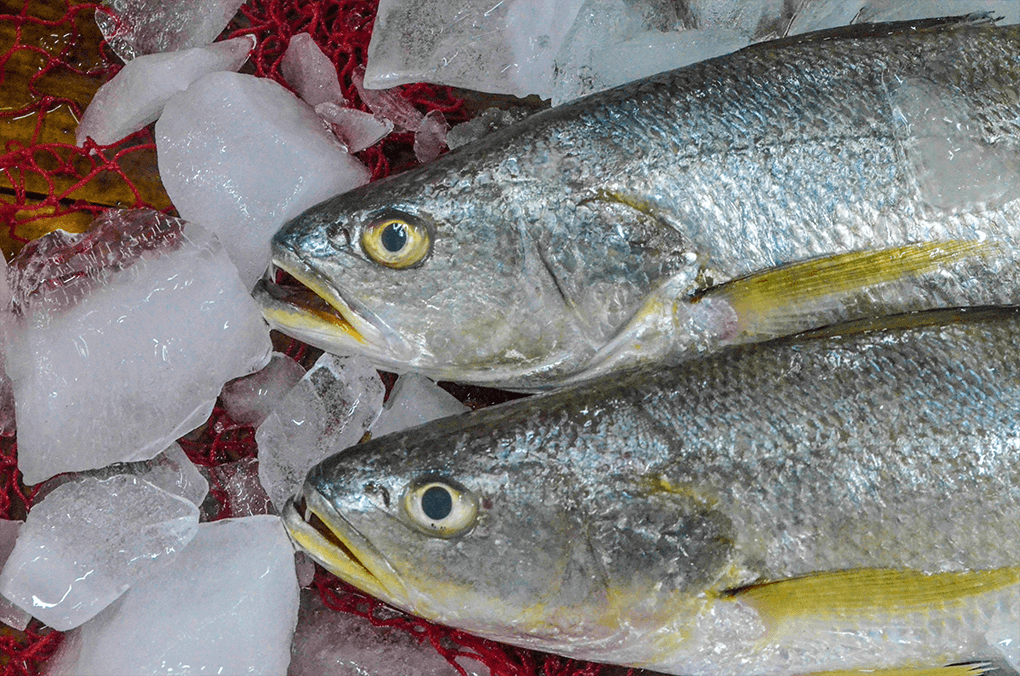
Coastal waters and estuaries; predatory on fish and shrimp. Like other sciaenids, this species is generally associated with the lower water column and feeds on fish, shrimp, crabs, worms, or other bottom animals according to its size and habitat. Identification should combine body shape, mouth position, barbels, fin color, spots or bars, geographic range, and local regulations. Common names overlap between countries, so the scientific name is the safest way to confirm a record.
How Are These Types of Drum Fish Classified?
Most drums and croakers belong to the family Sciaenidae. Taxonomists separate them into genera by features such as teeth, chin barbels, swim-bladder structure, fin rays, otoliths, body proportions, and genetics. Names such as drum, croaker, corvina, seatrout, kingfish, kob, and weakfish are common names rather than strict scientific groups. White seabass is a drum, for example, while freshwater drum is not a bass. The family includes marine, estuarine, brackish, and fully freshwater members.
Where Do Drum Fish Live?
Drum fish are especially diverse in warm-temperate and tropical coastal waters. Many live over sand or mud in estuaries, bays, surf zones, river mouths, and the inner continental shelf. Reef drums occupy rocky ledges, caves, and coral structure. A smaller number, including freshwater drum and Boeseman croaker, live in rivers and lakes. Young fish often use estuaries as nursery grounds, so healthy wetlands, seagrass, oyster reefs, and river flow are important to many populations.
How to Identify Different Types of Drum Fish
- Listen for croaking or drumming sounds when handling a legally caught fish, but do not rely on sound alone.
- Check for chin barbels: black drum has several, while kingfish typically have a single prominent barbel.
- Look at spots and bars, including the tail-base spot of red drum and the body spots of spotted seatrout.
- Compare mouth position: bottom-feeding species often have a lower or downturned mouth.
- Note habitat and range because similar-looking croakers may not overlap geographically.
- Inspect dorsal-fin shape, tail shape, pectoral-fin length, and fin color.
- Use current regional fish guides and regulations before keeping a catch.
Fishing Tips and Notes
- Fish soft bottoms, channels, oyster edges, surf troughs, seagrass margins, and bridge structure according to the target species.
- Shrimp, crabs, clams, worms, and small baitfish are widely effective natural baits.
- Soft-plastic jigs, spoons, plugs, and vibration lures work well for active species such as red drum and seatrout.
- Use tackle strong enough to land fish quickly and release them in good condition.
- Support the body horizontally, minimize air exposure, and avoid placing fingers in the gills.
- Expect seasonal movement related to temperature, salinity, prey, river flow, and spawning.
- Never assume a common name identifies the legal species; verify local size, season, bag, and protected-status rules.
Safety, Sustainability, and Conservation Notes
Several drum fisheries are healthy when carefully managed, while others are depleted, protected, or threatened by habitat loss and illegal trade. Totoaba and Chinese bahaba require special attention because trade and targeted fishing have caused severe conservation harm. Large spawning aggregations can also make species such as corvinas unusually easy to overharvest. Follow local regulations, avoid buying protected swim bladders, release oversized breeding fish where recommended, and support habitat protection in estuaries and river deltas.
Fun Facts About Drum Fish
- Many drums make sound by contracting specialized muscles near the swim bladder.
- Freshwater drum has exceptionally large ear stones, called otoliths.
- Red drum and black drum are different species despite sharing many habitats.
- White seabass is scientifically a croaker rather than a true sea bass.
- Spotted drum juveniles have long ribbon-like fins and bold black-and-white patterns.
- Some croakers spend their entire lives in fresh water.
- Chin barbels help bottom-feeding drums detect prey in cloudy water.
- Drum fish often thrive in estuaries where salinity changes with tides and rainfall.
- Large spawning groups can be heard with underwater microphones.
- Common names such as kingfish and jewfish can refer to unrelated fish in different regions.
Final Thoughts on Types of Drum Fish
The many types of drum fish range from tiny reef species to powerful inshore game fish and large river croakers. The most reliable identification comes from combining scientific name, location, body markings, barbels, mouth shape, fins, and habitat. Whether fishing, diving, photographing wildlife, or choosing seafood, learning the regional species and current conservation rules makes every encounter more responsible and rewarding.
Frequently Asked Questions
1. Why are they called drum fish?
Many species produce drumming, croaking, or knocking sounds using specialized muscles and the swim bladder. The sounds are used in communication and may be especially noticeable during spawning.
2. Are drum fish and croakers the same?
The names overlap. Most fish called drums or croakers belong to the family Sciaenidae, but regional common names vary and do not represent strict scientific divisions.
3. How many drum fish species are there?
The family Sciaenidae contains roughly 300 recognized species, depending on the taxonomic source and current revisions.
4. Is red drum the same as redfish?
In much of the United States, redfish commonly means red drum. In other regions, redfish may refer to unrelated species, so location matters.
5. Is black drum the same as red drum?
No. They are separate species. Black drum commonly has chin barbels and juvenile vertical bars, while red drum usually has a copper body and one or more dark spots near the tail.
6. Is freshwater drum a saltwater fish?
No. Freshwater drum completes its life cycle in rivers and lakes, although most members of the drum family are marine or estuarine.
7. Can drum fish make noise out of water?
A freshly caught drum may produce audible croaks or vibrations. The exact sound and mechanism differ among species.
8. What do drum fish eat?
Most eat bottom or near-bottom prey such as shrimp, crabs, worms, mollusks, and small fish. Tooth and mouth shape reflect the preferred diet.
9. Where are drum fish commonly found?
They are common in estuaries, bays, surf zones, river mouths, coastal shelves, reefs, and a smaller number of rivers and lakes.
10. What is the largest drum fish?
Several species become very large, including totoaba, Chinese bahaba, black drum, meagre, mulloway, and some Argyrosomus species. Maximum size varies by source and population.
11. Do all drum fish have chin barbels?
No. Black drum and many kingfish use barbels to locate bottom prey, while red drum, seatrout, and many reef drums lack prominent chin barbels.
12. Are spotted seatrout actually trout?
No. Spotted seatrout is a marine drum in the genus Cynoscion, not a salmonid trout.
13. Is white seabass a true bass?
No. White seabass belongs to the drum family and is more closely related to croakers than to true sea basses.
14. What bait catches drum fish?
Shrimp, crabs, clams, worms, cut bait, and small live fish are common choices. The best bait depends on the target species and local rules.
15. What lures work for red drum and seatrout?
Soft-plastic jigs, spoons, topwater plugs, suspending plugs, and shrimp imitations are widely used. Match lure size and retrieve speed to water temperature and prey.
16. Can drum fish live in brackish water?
Many species are well adapted to changing salinity and move between rivers, estuaries, bays, and coastal water.
17. Are drum fish good to eat?
Many are valued food fish, but quality, legal status, contaminant advice, and sustainability vary by species, size, and location.
18. Why do large black drum sometimes have worms?
Some large coastal fish can carry visible parasites. Proper cleaning and cooking reduce food-safety risks, but local fish-consumption advice should also be followed.
19. How can I tell a juvenile black drum from a sheepshead?
Both may have vertical bars. Juvenile black drum generally has chin barbels and a different tooth pattern, while sheepshead has prominent incisor-like front teeth.
20. What is a corvina?
Corvina is a Spanish-derived common name used for several drum and croaker species, especially in the genera Cynoscion and related groups.
21. What is a kob?
Kob is a regional name for large Argyrosomus drums in southern Africa and Australia, including mulloway and dusky kob.
22. Are reef drums suitable for home aquariums?
Some small reef drums appear in marine aquariums, but they require expert care, ample shelter, suitable food, and enough space. Adults may look different from juveniles.
23. Why are juvenile spotted drums so different from adults?
Juveniles have exaggerated fins and bold patterns that may help with concealment or predator confusion. The shape and markings become less dramatic with age.
24. What time of day is best for drum fishing?
Dawn, dusk, moving tides, and periods of active current are often productive, but species, season, water clarity, and local prey can be more important than clock time.
25. Do drum fish migrate?
Many make seasonal movements between estuaries, beaches, offshore grounds, and spawning areas. Freshwater species may also move within river systems.
26. Why are estuaries important to drums?
Estuaries provide food, shelter, warm shallow water, and nursery habitat for juveniles of many species.
27. Are any drum fish endangered?
Yes. Chinese bahaba is critically threatened, and totoaba is protected. Other populations may be locally depleted or tightly regulated.
28. Why is totoaba trade a conservation problem?
Illegal demand for totoaba swim bladders has driven poaching in the Gulf of California and has also harmed the critically endangered vaquita through gillnet bycatch.
29. How should a drum fish be released?
Use appropriate tackle, wet your hands, support the fish horizontally, avoid gill contact, remove hooks quickly, and revive it in the water when necessary.
30. What is the safest way to identify a drum fish?
Use a current regional field guide, compare several physical features, and confirm the scientific name before harvesting or reporting the fish.
Read more:
40 Types of Flat Fish: Species and Identification