

Types of flathead fish are mainly marine bottom predators in the family Platycephalidae. Unlike true flatfish, they do not lie permanently on one side and their eyes do not migrate during development. Instead, they have a broad, dorsally flattened head, a normal fish-shaped body, upward-facing eyes, a large mouth, and excellent camouflage. This guide covers 25 representative flathead species, including popular Australian sport fish and tropical crocodilefish seen by divers.
What Are the Main Types of Flathead Fish?
The most familiar flatheads include dusky, sand, tiger, blue-spotted, bartail, yellowtail, black, marbled, crocodile, fringelip, tentacled, rough, spiny, and longsnout flatheads. Many belong to the genus Platycephalus, which includes several of the larger Australian fishing species. Tropical genera such as Cymbacephalus, Cociella, Onigocia, and Thysanophrys contain smaller reef and soft-bottom species with elaborate camouflage.
Quick Comparison of 25 Flathead Fish Species
| No. | Common Name | Scientific Name | Main Range |
|---|---|---|---|
| 1 | Dusky Flathead | Platycephalus fuscus | Eastern Australia |
| 2 | Sand Flathead | Platycephalus bassensis | Southern Australia |
| 3 | Tiger Flathead | Platycephalus richardsoni | Southern Australia |
| 4 | Blue-spotted Flathead | Platycephalus caeruleopunctatus | Eastern Australia |
| 5 | Southern Blue-spotted Flathead | Platycephalus speculator | Southern and western Australia |
| 6 | Bartail Flathead | Platycephalus indicus | Indo-West Pacific and eastern Mediterranean |
| 7 | Australian Bartail Flathead | Platycephalus australis | Northern and eastern Australia |
| 8 | Yellowtail Flathead | Platycephalus endrachtensis | Western and northern Australia |
| 9 | Black Flathead | Platycephalus laevigatus | Southern Australia |
| 10 | Longspine Flathead | Platycephalus grandispinis | Southern Australia |
| 11 | Marbled Flathead | Platycephalus marmoratus | Eastern and southern Australia |
| 12 | Deepwater Flathead | Platycephalus conatus | Southern Australia |
| 13 | Toothy Flathead | Platycephalus aurimaculatus | Australia |
| 14 | Big-tooth Flathead | Platycephalus chauliodous | Australia |
| 15 | Steindachner’s Flathead | Platycephalus angustus | Northern Australia and New Guinea |
| 16 | Western Australian Flathead | Platycephalus orbitalis | Western Australia |
| 17 | Crocodile Flathead | Cociella crocodila | Indo-West Pacific |
| 18 | Fringelip Flathead | Cymbacephalus nematophthalmus | Indo-West Pacific |
| 19 | Crocodilefish | Cymbacephalus beauforti | Indo-West Pacific reefs |
| 20 | Tentacled Flathead | Papilloculiceps longiceps | Western Indian Ocean, Red Sea, and Mediterranean |
| 21 | Rough Flathead | Grammoplites scaber | Indian Ocean and western Pacific |
| 22 | Japanese Flathead | Inegocia japonica | Northwestern Pacific |
| 23 | Spiny Flathead | Onigocia spinosa | Indo-West Pacific |
| 24 | Large-scale Flathead | Onigocia macrolepis | Indo-West Pacific |
| 25 | Longsnout Flathead | Thysanophrys chiltonae | Indo-West Pacific |
1. Dusky Flathead
Scientific name: Platycephalus fuscus. Range: Eastern Australia. Identification: Large estuarine species with a broad flattened head and mottled brown body.
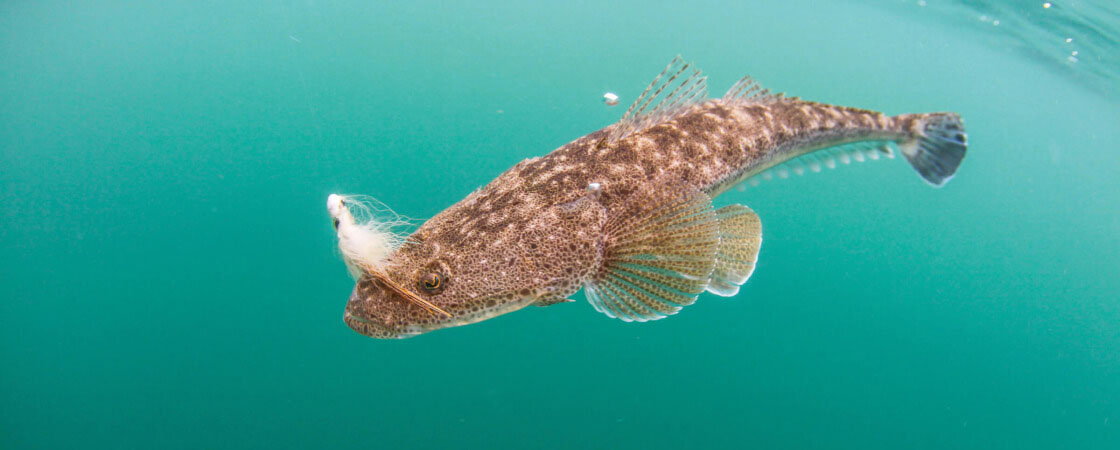
This species follows the classic flathead ambush strategy: it rests on sand, mud, rubble, or mixed bottom and may partly bury itself while watching for shrimp, crabs, squid, or small fish. The broad mouth opens rapidly when prey comes close. Identification can be difficult because colors change with habitat and several species share mottled patterns. Head spines, tail markings, scale counts, fin rays, geographic range, depth, and professional field guides are often needed for a confident identification.
2. Sand Flathead
Scientific name: Platycephalus bassensis. Range: Southern Australia. Identification: Slender sandy-brown flathead common over coastal sand.
This species follows the classic flathead ambush strategy: it rests on sand, mud, rubble, or mixed bottom and may partly bury itself while watching for shrimp, crabs, squid, or small fish. The broad mouth opens rapidly when prey comes close. Identification can be difficult because colors change with habitat and several species share mottled patterns. Head spines, tail markings, scale counts, fin rays, geographic range, depth, and professional field guides are often needed for a confident identification.
3. Tiger Flathead
Scientific name: Platycephalus richardsoni. Range: Southern Australia. Identification: Offshore species with strong mottled or banded patterning.
This species follows the classic flathead ambush strategy: it rests on sand, mud, rubble, or mixed bottom and may partly bury itself while watching for shrimp, crabs, squid, or small fish. The broad mouth opens rapidly when prey comes close. Identification can be difficult because colors change with habitat and several species share mottled patterns. Head spines, tail markings, scale counts, fin rays, geographic range, depth, and professional field guides are often needed for a confident identification.
4. Blue-spotted Flathead
Scientific name: Platycephalus caeruleopunctatus. Range: Eastern Australia. Identification: Brown-gray fish marked with small blue spots.
This species follows the classic flathead ambush strategy: it rests on sand, mud, rubble, or mixed bottom and may partly bury itself while watching for shrimp, crabs, squid, or small fish. The broad mouth opens rapidly when prey comes close. Identification can be difficult because colors change with habitat and several species share mottled patterns. Head spines, tail markings, scale counts, fin rays, geographic range, depth, and professional field guides are often needed for a confident identification.
5. Southern Blue-spotted Flathead
Scientific name: Platycephalus speculator. Range: Southern and western Australia. Identification: Blue-spotted upper body with regional southern distribution.

This species follows the classic flathead ambush strategy: it rests on sand, mud, rubble, or mixed bottom and may partly bury itself while watching for shrimp, crabs, squid, or small fish. The broad mouth opens rapidly when prey comes close. Identification can be difficult because colors change with habitat and several species share mottled patterns. Head spines, tail markings, scale counts, fin rays, geographic range, depth, and professional field guides are often needed for a confident identification.
6. Bartail Flathead
Scientific name: Platycephalus indicus. Range: Indo-West Pacific and eastern Mediterranean. Identification: Tail marked with dark bars; widespread coastal species.
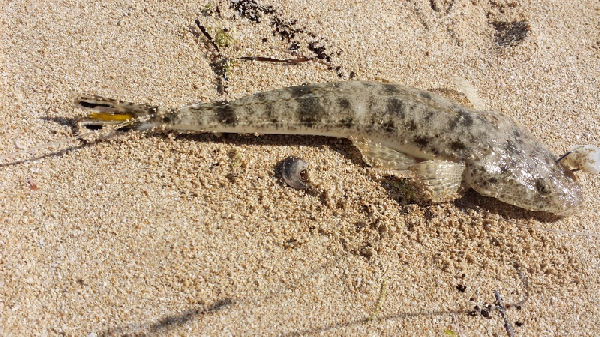
This species follows the classic flathead ambush strategy: it rests on sand, mud, rubble, or mixed bottom and may partly bury itself while watching for shrimp, crabs, squid, or small fish. The broad mouth opens rapidly when prey comes close. Identification can be difficult because colors change with habitat and several species share mottled patterns. Head spines, tail markings, scale counts, fin rays, geographic range, depth, and professional field guides are often needed for a confident identification.
7. Australian Bartail Flathead
Scientific name: Platycephalus australis. Range: Northern and eastern Australia. Identification: Australian species separated taxonomically from similar bartail forms.
This species follows the classic flathead ambush strategy: it rests on sand, mud, rubble, or mixed bottom and may partly bury itself while watching for shrimp, crabs, squid, or small fish. The broad mouth opens rapidly when prey comes close. Identification can be difficult because colors change with habitat and several species share mottled patterns. Head spines, tail markings, scale counts, fin rays, geographic range, depth, and professional field guides are often needed for a confident identification.
8. Yellowtail Flathead
Scientific name: Platycephalus endrachtensis. Range: Western and northern Australia. Identification: Mottled body with a noticeably yellowish tail.

This species follows the classic flathead ambush strategy: it rests on sand, mud, rubble, or mixed bottom and may partly bury itself while watching for shrimp, crabs, squid, or small fish. The broad mouth opens rapidly when prey comes close. Identification can be difficult because colors change with habitat and several species share mottled patterns. Head spines, tail markings, scale counts, fin rays, geographic range, depth, and professional field guides are often needed for a confident identification.
9. Black Flathead
Scientific name: Platycephalus laevigatus. Range: Southern Australia. Identification: Darkly mottled estuarine and coastal flathead.
This species follows the classic flathead ambush strategy: it rests on sand, mud, rubble, or mixed bottom and may partly bury itself while watching for shrimp, crabs, squid, or small fish. The broad mouth opens rapidly when prey comes close. Identification can be difficult because colors change with habitat and several species share mottled patterns. Head spines, tail markings, scale counts, fin rays, geographic range, depth, and professional field guides are often needed for a confident identification.
10. Longspine Flathead
Scientific name: Platycephalus grandispinis. Range: Southern Australia. Identification: Recognized by long preopercular spines and elongated body.
This species follows the classic flathead ambush strategy: it rests on sand, mud, rubble, or mixed bottom and may partly bury itself while watching for shrimp, crabs, squid, or small fish. The broad mouth opens rapidly when prey comes close. Identification can be difficult because colors change with habitat and several species share mottled patterns. Head spines, tail markings, scale counts, fin rays, geographic range, depth, and professional field guides are often needed for a confident identification.
11. Marbled Flathead
Scientific name: Platycephalus marmoratus. Range: Eastern and southern Australia. Identification: Marbled brown pattern that blends with sand and reef rubble.
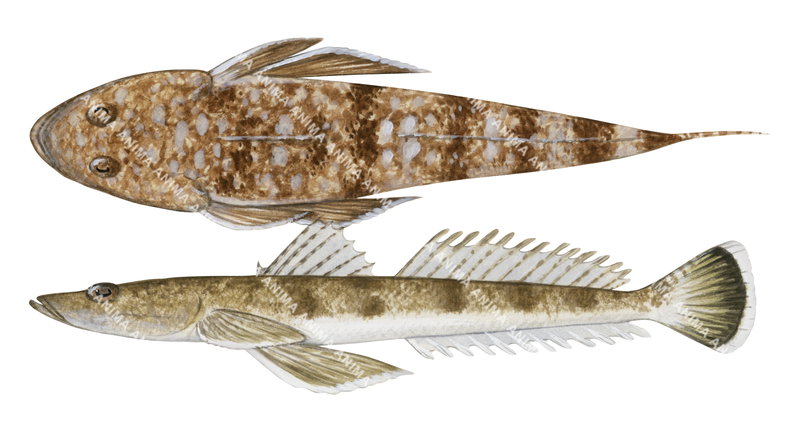
This species follows the classic flathead ambush strategy: it rests on sand, mud, rubble, or mixed bottom and may partly bury itself while watching for shrimp, crabs, squid, or small fish. The broad mouth opens rapidly when prey comes close. Identification can be difficult because colors change with habitat and several species share mottled patterns. Head spines, tail markings, scale counts, fin rays, geographic range, depth, and professional field guides are often needed for a confident identification.
12. Deepwater Flathead
Scientific name: Platycephalus conatus. Range: Southern Australia. Identification: Offshore flathead associated with deeper shelf habitat.
This species follows the classic flathead ambush strategy: it rests on sand, mud, rubble, or mixed bottom and may partly bury itself while watching for shrimp, crabs, squid, or small fish. The broad mouth opens rapidly when prey comes close. Identification can be difficult because colors change with habitat and several species share mottled patterns. Head spines, tail markings, scale counts, fin rays, geographic range, depth, and professional field guides are often needed for a confident identification.
13. Toothy Flathead
Scientific name: Platycephalus aurimaculatus. Range: Australia. Identification: Large-toothed flathead with spotted or mottled coloration.
This species follows the classic flathead ambush strategy: it rests on sand, mud, rubble, or mixed bottom and may partly bury itself while watching for shrimp, crabs, squid, or small fish. The broad mouth opens rapidly when prey comes close. Identification can be difficult because colors change with habitat and several species share mottled patterns. Head spines, tail markings, scale counts, fin rays, geographic range, depth, and professional field guides are often needed for a confident identification.
14. Big-tooth Flathead
Scientific name: Platycephalus chauliodous. Range: Australia. Identification: Predatory flathead distinguished by enlarged teeth.

This species follows the classic flathead ambush strategy: it rests on sand, mud, rubble, or mixed bottom and may partly bury itself while watching for shrimp, crabs, squid, or small fish. The broad mouth opens rapidly when prey comes close. Identification can be difficult because colors change with habitat and several species share mottled patterns. Head spines, tail markings, scale counts, fin rays, geographic range, depth, and professional field guides are often needed for a confident identification.
15. Steindachner’s Flathead
Scientific name: Platycephalus angustus. Range: Northern Australia and New Guinea. Identification: Relatively narrow-bodied species from tropical coastal waters.
This species follows the classic flathead ambush strategy: it rests on sand, mud, rubble, or mixed bottom and may partly bury itself while watching for shrimp, crabs, squid, or small fish. The broad mouth opens rapidly when prey comes close. Identification can be difficult because colors change with habitat and several species share mottled patterns. Head spines, tail markings, scale counts, fin rays, geographic range, depth, and professional field guides are often needed for a confident identification.
16. Western Australian Flathead
Scientific name: Platycephalus orbitalis. Range: Western Australia. Identification: Regional species with a relatively restricted western range.
This species follows the classic flathead ambush strategy: it rests on sand, mud, rubble, or mixed bottom and may partly bury itself while watching for shrimp, crabs, squid, or small fish. The broad mouth opens rapidly when prey comes close. Identification can be difficult because colors change with habitat and several species share mottled patterns. Head spines, tail markings, scale counts, fin rays, geographic range, depth, and professional field guides are often needed for a confident identification.
17. Crocodile Flathead
Scientific name: Cociella crocodila. Range: Indo-West Pacific. Identification: Broad crocodile-like head and mottled bottom-camouflage pattern.
This species follows the classic flathead ambush strategy: it rests on sand, mud, rubble, or mixed bottom and may partly bury itself while watching for shrimp, crabs, squid, or small fish. The broad mouth opens rapidly when prey comes close. Identification can be difficult because colors change with habitat and several species share mottled patterns. Head spines, tail markings, scale counts, fin rays, geographic range, depth, and professional field guides are often needed for a confident identification.
18. Fringelip Flathead
Scientific name: Cymbacephalus nematophthalmus. Range: Indo-West Pacific. Identification: Fringed lips and head appendages that break up its outline.

This species follows the classic flathead ambush strategy: it rests on sand, mud, rubble, or mixed bottom and may partly bury itself while watching for shrimp, crabs, squid, or small fish. The broad mouth opens rapidly when prey comes close. Identification can be difficult because colors change with habitat and several species share mottled patterns. Head spines, tail markings, scale counts, fin rays, geographic range, depth, and professional field guides are often needed for a confident identification.
19. Crocodilefish
Scientific name: Cymbacephalus beauforti. Range: Indo-West Pacific reefs. Identification: Large flattened head, elaborate camouflage, and eyelid-like iris lappets.

This species follows the classic flathead ambush strategy: it rests on sand, mud, rubble, or mixed bottom and may partly bury itself while watching for shrimp, crabs, squid, or small fish. The broad mouth opens rapidly when prey comes close. Identification can be difficult because colors change with habitat and several species share mottled patterns. Head spines, tail markings, scale counts, fin rays, geographic range, depth, and professional field guides are often needed for a confident identification.
20. Tentacled Flathead
Scientific name: Papilloculiceps longiceps. Range: Western Indian Ocean, Red Sea, and Mediterranean. Identification: Long head with tentacles and elaborate reef camouflage.

This species follows the classic flathead ambush strategy: it rests on sand, mud, rubble, or mixed bottom and may partly bury itself while watching for shrimp, crabs, squid, or small fish. The broad mouth opens rapidly when prey comes close. Identification can be difficult because colors change with habitat and several species share mottled patterns. Head spines, tail markings, scale counts, fin rays, geographic range, depth, and professional field guides are often needed for a confident identification.
21. Rough Flathead
Scientific name: Grammoplites scaber. Range: Indian Ocean and western Pacific. Identification: Rough-textured head and body with brown saddles.

This species follows the classic flathead ambush strategy: it rests on sand, mud, rubble, or mixed bottom and may partly bury itself while watching for shrimp, crabs, squid, or small fish. The broad mouth opens rapidly when prey comes close. Identification can be difficult because colors change with habitat and several species share mottled patterns. Head spines, tail markings, scale counts, fin rays, geographic range, depth, and professional field guides are often needed for a confident identification.
22. Japanese Flathead
Scientific name: Inegocia japonica. Range: Northwestern Pacific. Identification: Small coastal species with fine mottling and a broad head.
This species follows the classic flathead ambush strategy: it rests on sand, mud, rubble, or mixed bottom and may partly bury itself while watching for shrimp, crabs, squid, or small fish. The broad mouth opens rapidly when prey comes close. Identification can be difficult because colors change with habitat and several species share mottled patterns. Head spines, tail markings, scale counts, fin rays, geographic range, depth, and professional field guides are often needed for a confident identification.
23. Spiny Flathead
Scientific name: Onigocia spinosa. Range: Indo-West Pacific. Identification: Small species with noticeable head spines and patterned fins.
This species follows the classic flathead ambush strategy: it rests on sand, mud, rubble, or mixed bottom and may partly bury itself while watching for shrimp, crabs, squid, or small fish. The broad mouth opens rapidly when prey comes close. Identification can be difficult because colors change with habitat and several species share mottled patterns. Head spines, tail markings, scale counts, fin rays, geographic range, depth, and professional field guides are often needed for a confident identification.
24. Large-scale Flathead
Scientific name: Onigocia macrolepis. Range: Indo-West Pacific. Identification: Small tropical flathead named for its relatively large scales.
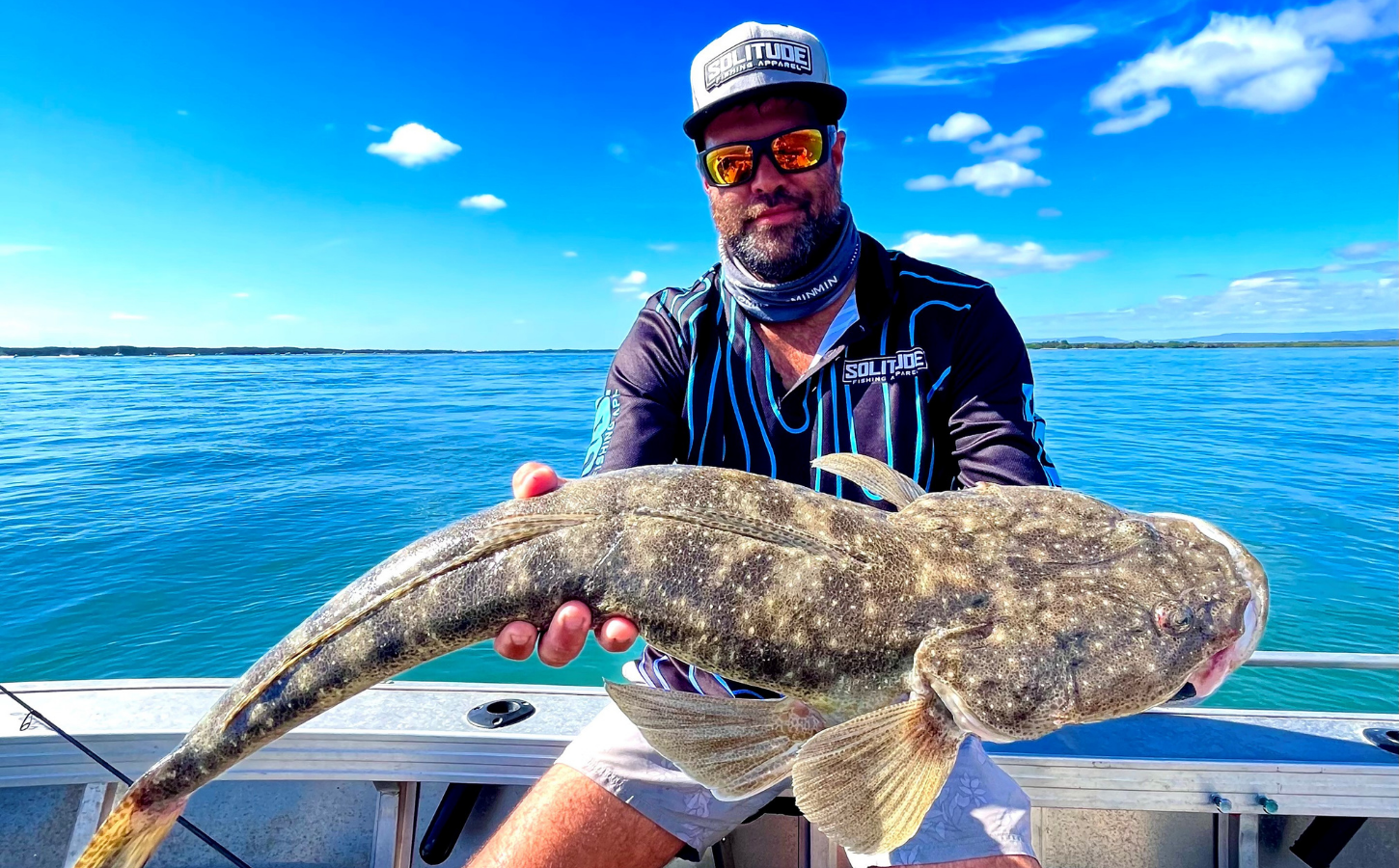
This species follows the classic flathead ambush strategy: it rests on sand, mud, rubble, or mixed bottom and may partly bury itself while watching for shrimp, crabs, squid, or small fish. The broad mouth opens rapidly when prey comes close. Identification can be difficult because colors change with habitat and several species share mottled patterns. Head spines, tail markings, scale counts, fin rays, geographic range, depth, and professional field guides are often needed for a confident identification.
25. Longsnout Flathead
Scientific name: Thysanophrys chiltonae. Range: Indo-West Pacific. Identification: Elongated snout and cryptic sandy coloration.
This species follows the classic flathead ambush strategy: it rests on sand, mud, rubble, or mixed bottom and may partly bury itself while watching for shrimp, crabs, squid, or small fish. The broad mouth opens rapidly when prey comes close. Identification can be difficult because colors change with habitat and several species share mottled patterns. Head spines, tail markings, scale counts, fin rays, geographic range, depth, and professional field guides are often needed for a confident identification.
How Are These Types of Fish Classified?
True flathead fish belong to the family Platycephalidae, which contains more than 80 recognized species in multiple genera. They are related to other scorpaenoid or perciform lineages depending on the classification system used. The name flathead is also applied to unrelated animals, including flathead catfish, some gobies, and regional freshwater fish. A scientific name is therefore important. Platycephalus contains many larger temperate Australian species, while several tropical genera contain smaller reef and shelf species.
Where Do Flathead Fish Live?
Most true flatheads live in the Indo-Pacific, with especially high diversity around Australia and Southeast Asia. They occupy estuaries, bays, coastal sand flats, seagrass edges, reef rubble, and offshore continental-shelf bottoms. Some stay in very shallow water, while others occur hundreds of meters deep. Their flattened head and upper-facing eyes are adaptations for life on the seabed, not for the sideways body posture of flounders and soles.
How to Identify Different Types of Flathead Fish
- Confirm that only the head is strongly flattened; the body behind it remains normally upright.
- Look for two dorsal fins, with stout spines in the first dorsal fin.
- Examine tail bars, spots, fin colors, and blue or yellow markings.
- Check head ridges, preopercular spines, lip fringes, and iris flaps.
- Note whether the fish came from an estuary, shallow reef, open sand, or deep shelf.
- Use geographic range to separate similar Australian and Indo-Pacific species.
- Avoid handling the head and dorsal spines carelessly because sharp spines can cause painful wounds.
Fishing Tips and Notes
- Work soft-plastic jigs, vibes, diving lures, or bait close to the bottom.
- Target channel edges, drop-offs, sand beside seagrass, current lines, and warm shallow flats.
- Allow the fish time to turn a bait before setting the hook, especially with large natural baits.
- Use a landing net and long-nose pliers to control the fish without gripping near sharp gill-cover spines.
- Handle large breeding females carefully and follow local slot limits, closed seasons, and bag limits.
- Release fish in the water when possible and support the belly horizontally for photos.
- Learn local species because regulations may differ between dusky, sand, tiger, and other flatheads.
Safety, Sustainability, and Conservation Notes
Flathead spines can puncture hands, and large fish have strong mouths, so careful handling is essential. From a conservation perspective, slow-growing or heavily targeted populations can decline when large breeding fish are removed. Some regional fisheries have introduced slot limits, possession limits, or spawning protections. Use legal tackle, respect habitat such as seagrass and estuary margins, avoid unnecessary deep-hooking, and check the current rules for the exact species and state or country.
Fun Facts About Flathead Fish
- Flatheads are not true flatfish such as flounder or sole.
- Their head is flattened from top to bottom rather than the whole body being flattened side to side.
- Many wait nearly invisible beneath a thin layer of sand.
- The eyes sit high on the head for watching prey above the bottom.
- Some tropical crocodilefish have fringed iris flaps that disguise the eyes.
- Dusky flathead can grow much larger than most family members.
- Flatheads use a rapid upward lunge rather than long pursuit.
- Tail patterns are important identification clues in several species.
- Some individuals make surprisingly long seasonal movements.
- Australia has one of the world’s greatest diversities of flathead fish.
Final Thoughts on Types of Flathead Fish
The most useful way to learn the types of flathead fish is to separate them first from true flatfish and flathead catfish, then compare head shape, spines, tail markings, habitat, depth, and range. Larger Platycephalus species are important sport and table fish, while tropical crocodilefish are masters of reef camouflage. Accurate identification and careful handling help protect both anglers and the fish.
Frequently Asked Questions
1. What is a flathead fish?
A true flathead is a bottom-dwelling marine fish in the family Platycephalidae with a broad flattened head, upward-facing eyes, a large mouth, and a normally upright body.
2. Is a flathead fish the same as a flatfish?
No. Flounder and sole lie on one side and have both eyes on one side of the head. A flathead remains upright and is flattened mainly across the head.
3. Is flathead catfish a true flathead fish?
No. Flathead catfish is a North American freshwater catfish, Pylodictis olivaris, and is unrelated to marine Platycephalidae.
4. How many true flathead species are there?
The family contains more than 80 recognized species, although totals change with taxonomic revisions.
5. Where are flathead fish found?
They are concentrated in the Indo-Pacific, especially around Australia, Southeast Asia, Japan, the Indian Ocean, and nearby tropical and temperate coasts.
6. Do flatheads live in fresh water?
True Platycephalidae are mainly marine and estuarine. Fish called flathead in freshwater may belong to unrelated families.
7. What do flathead fish eat?
They are ambush predators that eat fish, shrimp, crabs, squid, and other bottom animals.
8. How do flatheads camouflage themselves?
Their mottled upper surface matches sand, mud, rubble, or seagrass, and many partly bury the body while leaving the eyes exposed.
9. Which flathead grows the largest?
Dusky flathead is generally regarded as the largest familiar species in the family and can exceed one meter, although such fish are uncommon.
10. What is the difference between dusky and sand flathead?
Dusky flathead is a larger estuarine species of eastern Australia. Sand flathead is generally smaller and common over coastal sand in southern Australia.
11. What is a tiger flathead?
Tiger flathead is an offshore southern Australian species with strong patterning and commercial importance.
12. Are crocodilefish flatheads?
Yes. Crocodilefish is a common name for several tropical flatheads with broad heads and elaborate camouflage.
13. Can flathead fish hurt you?
Sharp dorsal and gill-cover spines can puncture skin, and large fish can bite. Use a net and pliers and keep hands away from the head and spines.
14. Are flathead spines venomous?
They are related to spiny fish groups, but the principal practical hazard for most flatheads is a painful puncture and infection risk. Seek medical advice for severe symptoms.
15. What bait catches flathead?
Small live fish, pilchards, prawns, squid, strips of fish, and other local baits can work. Use only legal bait species.
16. What lures catch flathead?
Soft-plastic jigs, diving minnows, metal vibes, blades, and shallow-running lures are effective when kept near the bottom.
17. Where should I cast for flathead?
Try channel edges, sand beside weed beds, drop-offs, creek mouths, current seams, and shallow flats where baitfish move.
18. What tide is best for flathead fishing?
Moving water is often productive. Falling tides can concentrate prey along drains and edges, while rising tides may bring fish onto warming flats.
19. Can flathead fish change color?
They can adjust shade and contrast to match the bottom, although they do not transform as dramatically as some cephalopods.
20. How should I hold a flathead?
Use wet hands, support the belly, control the fish with a net or safe lip-grip method, and avoid sharp spines around the gill cover and dorsal fin.
21. Why are large female flathead important?
Large females can produce many eggs and may be protected by slot limits. Releasing them carefully can support future recruitment.
22. Are flathead good to eat?
Many larger species have mild white flesh and are popular table fish. Keep only legal species and sizes from clean water.
23. How do I fillet a flathead?
Use a sharp knife, work around the broad head and rib bones, and be cautious of spines. Local cleaning methods vary with species and size.
24. What is a bartail flathead?
Bartail flatheads have distinct dark bands on the tail. The name may cover closely related regional forms, so scientific identification matters.
25. Why are flathead species hard to identify?
Many share brown mottling and similar body shape. Accurate identification may require head-spine patterns, fin-ray counts, scales, and location.
26. Do flatheads migrate?
Some populations show seasonal or spawning movements, while others remain attached to relatively small home areas.
27. What depth do flatheads live at?
Species occur from very shallow estuaries and reefs to the edge of the continental shelf, with some found around several hundred meters.
28. Are flathead populations sustainable?
Status varies by species and region. Fishing pressure, habitat condition, and protection of large breeders all influence sustainability.
29. How can divers find crocodilefish?
Search sandy patches and rubble near reefs, look for the outline of a broad head, and scan for eyes with fringed iris flaps.
30. What is the best way to identify a flathead?
Photograph the head, tail, fins, and full body, record location and depth, and compare with a current regional fish guide or fisheries source.
Read more:
16 Types of Flowerhorn Fish: Strains and Traits