

Orioles are among the most striking songbirds in North America, admired for their bright orange and black plumage and their rich, flute-like songs. These birds belong to the Icteridae family and are commonly found in woodlands, gardens, and suburban areas where food sources are abundant. Orioles are not only visually captivating but also fascinating in their feeding behavior, as they have a diverse and adaptable diet that changes with the seasons.
Understanding what orioles eat is essential for both bird enthusiasts and wildlife lovers. Their diet plays a key role in their survival, reproduction, and migration. Additionally, knowing their preferred foods can help people attract orioles to their yards, support local ecosystems, and ensure these birds thrive in both natural and human-influenced environments.
What Do Orioles Eat in the Wild?
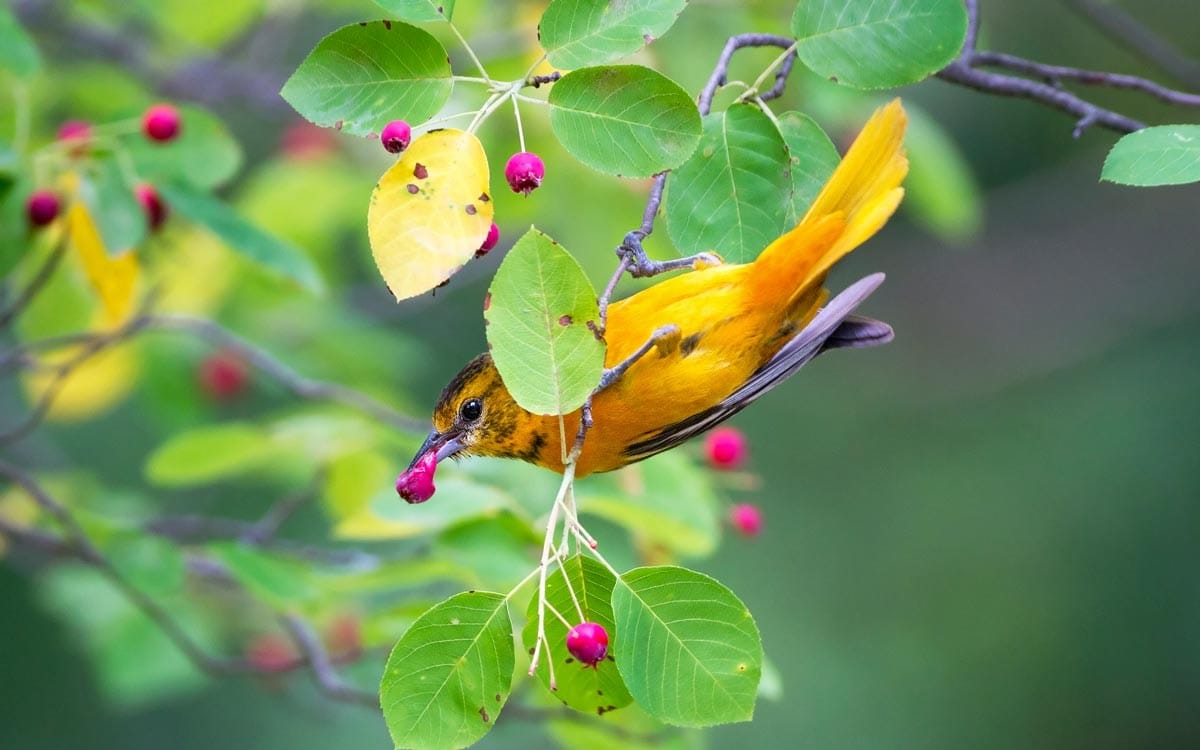
Orioles are omnivorous birds with a diet that includes both animal-based and plant-based foods. In the wild, they primarily consume insects, fruits, and nectar, adjusting their diet depending on availability and seasonal needs. During breeding season, protein-rich insects dominate their diet to support growth and energy demands, while fruits and nectar become more important during migration and warmer months.
Their feeding habits are highly adaptable. Orioles forage in trees, shrubs, and sometimes on the ground, using their sharp beaks to pick insects from leaves, sip nectar from flowers, or tear into soft fruits. This flexibility allows them to thrive in various habitats, from dense forests to urban gardens.
Below are the 30 most common foods orioles love, each playing a unique role in their diet and survival.
1. Insects
Insects form the foundation of an oriole’s diet, especially during the breeding season when protein demands are at their highest. Orioles actively hunt insects among tree canopies, shrubs, and even in mid-air, demonstrating remarkable agility and precision. This protein-rich food source is essential for maintaining energy levels and supporting feather growth.
In the wild, orioles rely heavily on insects to feed their chicks. Young birds require high-protein diets to grow rapidly, and insects provide exactly that. Without a steady supply of insects, nesting success can decline significantly, making this food source critical for population sustainability.
In addition to their nutritional value, insects also help orioles maintain a balanced diet. They provide essential amino acids and fats that are not found in plant-based foods. This makes insects one of the most important dietary components for orioles throughout their life cycle.
2. Caterpillars
Caterpillars are one of the most preferred insect foods for orioles. They are soft-bodied, easy to digest, and packed with nutrients, making them ideal for both adult birds and their young. Orioles often search for caterpillars along leaves and branches, carefully picking them off with their slender beaks.
During spring and early summer, caterpillars become especially abundant, coinciding perfectly with the oriole breeding season. This timing ensures that parent birds can easily find food to nourish their growing chicks.
Caterpillars also play an ecological role by helping orioles control insect populations. By feeding on them, orioles contribute to natural pest control in forests and gardens.
3. Beetles
Beetles are another important part of an oriole’s insect-based diet. These insects provide a mix of protein and fats, helping orioles maintain energy during active periods such as migration and nesting.
Orioles typically forage for beetles by scanning tree bark, leaves, and ground surfaces. Their sharp beaks allow them to grasp and crush smaller beetles, making them easier to consume.
Although beetles are not as soft as caterpillars, they are still a valuable food source that adds diversity to the oriole’s diet, ensuring they receive a broad range of nutrients.
4. Grasshoppers
Grasshoppers are larger insects that provide a substantial meal for orioles. They are rich in protein and are especially valuable during times when smaller insects are less available.
Orioles catch grasshoppers either from vegetation or directly from the ground. This requires quick reflexes and precise timing, as grasshoppers can jump rapidly to escape predators.
Because of their size, a single grasshopper can provide significant energy, making them an efficient food source for adult orioles.
5. Crickets
Crickets are commonly consumed by orioles, particularly in areas where these insects are abundant. They provide protein and are relatively easy to catch compared to more agile insects.
Orioles often find crickets in grassy areas or among leaf litter. Their feeding behavior involves quick pecks and swift movements to capture prey before it escapes.
Crickets contribute to dietary variety and help ensure orioles receive balanced nutrition from different insect sources.
6. Ants
Ants may seem like a small food item, but they are surprisingly important in an oriole’s diet. They are abundant and easy to find, making them a reliable food source.
Orioles often consume ants directly from surfaces such as tree trunks or the ground. While ants are smaller than other insects, they provide valuable nutrients and can be eaten in large quantities.
This ability to utilize small prey highlights the oriole’s adaptability and efficiency as a forager.
7. Spiders
Spiders are another protein-rich food that orioles frequently consume. They are often found in webs, leaves, or hidden among branches, requiring careful searching to locate.
Orioles may also use spider silk when building nests, making spiders doubly important for both feeding and reproduction.
By eating spiders, orioles help regulate insect populations and maintain ecological balance in their habitats.
8. Larvae
Larvae are an essential part of the oriole diet due to their high fat and protein content. These immature insects are soft-bodied and easy to digest, making them ideal for feeding chicks.
Orioles often find larvae hidden under bark or within plant material. Their ability to locate these concealed food sources demonstrates their keen observational skills.
Larvae provide concentrated nutrition, helping orioles sustain energy during demanding periods such as breeding and migration.
9. Wasps
Wasps may seem like a dangerous prey choice, but orioles have adapted to handle them carefully. They often remove or avoid the stinger before consuming the insect.
Wasps provide protein and are typically consumed when other insect sources are less abundant. Orioles may also raid wasp nests to access larvae, which are safer and more nutritious.
This behavior showcases the oriole’s intelligence and adaptability in securing food from a wide range of sources.
10. Bees
Bees are occasionally eaten by orioles, although they are handled cautiously due to their ability to sting. Orioles may target weaker or dead bees to minimize risk.
Like other insects, bees provide protein and essential nutrients that support the bird’s overall health. However, they are not a primary food source due to the risks involved.
The inclusion of bees in the diet demonstrates the oriole’s opportunistic feeding behavior and willingness to exploit available resources.
11. Moths
Moths are a valuable food source for orioles, especially during dawn and dusk when these insects are most active. Orioles often catch moths in mid-air or pick them off surfaces such as tree bark and leaves. Their ability to hunt in low-light conditions gives them access to this abundant insect group.
Moths provide protein and essential fats that help sustain orioles during periods of high activity, such as migration or breeding. While not as commonly targeted as caterpillars, moths still play a consistent role in the diet.
By consuming moths, orioles also contribute to controlling populations of species that may otherwise damage vegetation.
12. Butterflies
Butterflies are occasionally consumed by orioles, though they are less common prey compared to other insects. Orioles may catch them during flight or while they rest on flowers.
These insects provide a moderate source of protein and are typically eaten opportunistically. Their bright colors and erratic flight patterns make them harder to catch, so orioles rely on quick reflexes when targeting them.
Although not a primary food source, butterflies add variety to the oriole’s diet and demonstrate their flexible feeding behavior.
13. Flies
Flies are a readily available and easy-to-catch food source for orioles. These insects are abundant in many habitats, making them a reliable dietary component.
Orioles often catch flies mid-air, showcasing their agility and precision. This hunting style helps them efficiently gather food without expending too much energy.
Flies provide protein and contribute to a balanced insect diet, especially when other prey types are scarce.
14. Aphids
Aphids are tiny insects that orioles may consume in large quantities. They are often found clustered on plant stems and leaves, making them easy targets.
Although small, aphids provide nutrients and can be consumed quickly, allowing orioles to gather energy efficiently. Their abundance during certain seasons makes them a convenient food source.
By feeding on aphids, orioles help protect plants from damage, contributing to natural pest control in ecosystems.
15. Fruit
Fruit becomes a major part of an oriole’s diet during warmer months when it is widely available. Orioles are especially attracted to soft, ripe fruits that are easy to pierce and consume.
Fruits provide natural sugars, hydration, and vitamins, offering a quick source of energy. This is particularly important during migration when birds need to replenish energy reserves.
Orioles often feed on fruit in trees, shrubs, or even in backyard feeders, showing their adaptability to different environments.
16. Oranges
Oranges are one of the most well-known foods used to attract orioles. Their bright color and sweet, juicy flesh make them highly appealing to these birds.
Orioles are drawn to the high sugar content and moisture in oranges, which provide both energy and hydration. Many bird enthusiasts place halved oranges in feeders specifically to attract orioles.
This fruit has become a staple in human-assisted feeding, helping support orioles during migration and breeding seasons.
17. Apples
Apples are another fruit that orioles readily consume when available. They are typically eaten when soft and ripe, allowing birds to easily access the flesh.
Apples provide hydration and natural sugars, though they are not as attractive as citrus fruits. Orioles may peck at exposed fruit surfaces or feed on fallen fruit.
Including apples in their diet adds variety and helps meet energy needs, especially when other food sources are limited.
18. Grapes
Grapes are soft, juicy fruits that orioles can easily eat. Their high sugar content makes them an excellent quick energy source.
In both wild and backyard settings, orioles may consume grapes when available, often preferring them cut open for easier access.
Grapes are particularly useful during migration periods when orioles require rapid energy replenishment.
19. Berries
Berries are a natural and important part of an oriole’s diet. Wild berries such as elderberries and serviceberries are commonly consumed when in season.
These fruits provide vitamins, antioxidants, and sugars that support overall health and energy levels. Orioles often forage for berries in shrubs and trees.
Berries also play a role in seed dispersal, as orioles help spread plant species through their feeding habits.
20. Cherries
Cherries are sweet fruits that orioles may eat when available. They are similar to berries in their nutritional profile and provide hydration and energy.
Orioles typically consume the flesh while avoiding the pit. In wild habitats, they may feed on naturally occurring cherry species.
Cherries contribute to dietary diversity and help orioles maintain energy during active seasons.
21. Bananas
Bananas are soft, sweet fruits that orioles readily consume when available. Their texture makes them easy to eat, even for birds with slender beaks. Orioles are particularly attracted to ripe bananas due to their strong scent and high sugar content.
In backyard settings, sliced bananas are often used to attract orioles, especially during migration. While not a natural staple in the wild, bananas mimic the soft fruits orioles would typically consume.
They provide quick energy but should be considered a supplemental food rather than a primary dietary source.
22. Mulberries
Mulberries are a favorite natural fruit for orioles. These berries grow on trees and are commonly found in many regions where orioles live or migrate.
They are rich in sugars, vitamins, and antioxidants, making them a nutritious and energy-dense food source. Orioles often forage in mulberry trees, consuming large quantities when the fruit is in season.
Mulberries also play an ecological role, as orioles help disperse seeds through their feeding habits.
23. Nectar
Nectar is a key part of an oriole’s diet, especially during warmer months. Orioles are attracted to sweet liquid sources, similar to hummingbirds, though they do not hover while feeding.
They obtain nectar from flowers or artificial feeders filled with sugar water. This provides quick energy needed for flight and daily activity.
Nectar feeding highlights the oriole’s adaptability and ability to exploit a wide range of food sources.
24. Flower Nectar
Flower nectar is a natural source of sugar that orioles consume directly from blossoms. They often visit tubular flowers where nectar is easily accessible.
While feeding, orioles may also contribute to pollination, transferring pollen between plants. This interaction benefits both the bird and the ecosystem.
Flower nectar is especially important during spring and summer when blooms are abundant.
25. Tree Sap
Tree sap is occasionally consumed by orioles, especially when other food sources are limited. They may drink sap from tree wounds or areas where sap is exposed.
Sap provides sugars and moisture, offering a quick energy boost. Orioles sometimes take advantage of sap wells created by woodpeckers.
Although not a primary food source, tree sap demonstrates the bird’s opportunistic feeding behavior.
26. Jelly (Grape Jelly)
Grape jelly is one of the most popular foods used to attract orioles in backyard environments. Its sweetness closely resembles the natural sugars found in fruit.
Orioles are highly attracted to jelly feeders and will visit them regularly during migration and breeding seasons. It provides an easy energy source with minimal effort.
However, jelly should be offered in moderation, as excessive sugar intake is not ideal for long-term health.
27. Sugar Water
Sugar water is commonly used in feeders to attract orioles. It mimics natural nectar and provides a quick source of energy.
Unlike hummingbirds, orioles prefer perches while feeding rather than hovering. Clean feeders and proper sugar-to-water ratios are essential for their safety.
Sugar water is particularly useful during migration when natural food sources may be scarce.
28. Mealworms
Mealworms are a high-protein food often provided in backyard feeders. They closely resemble natural insect prey and are especially beneficial during breeding season.
Orioles readily consume mealworms, using them to feed their chicks or replenish energy. They are easy to digest and highly nutritious.
Providing mealworms can significantly increase the chances of attracting orioles to a garden.
29. Suet
Suet is a high-fat food that provides concentrated energy, especially useful during colder months or migration. Orioles may occasionally consume suet when available.
Although not a primary food source, suet can supplement the diet when insects are scarce. It is typically offered in specialized feeders.
Suet supports energy needs but should be provided carefully to avoid overconsumption.
30. Fig Fruit
Figs are soft, sweet fruits that orioles may consume in regions where fig trees are present. Their texture and sugar content make them highly appealing.
Figs provide hydration, energy, and nutrients, making them a valuable seasonal food. Orioles often feed on ripe figs directly from trees.
Like other fruits, figs are part of a varied diet that supports the bird’s nutritional needs.
How Diet Varies by Species
Different oriole species show slight variations in diet depending on habitat and geography. For example, Baltimore orioles consume more fruit and nectar during migration, while orchard orioles may rely more heavily on insects during breeding. These differences reflect adaptation to local environments and food availability.
Seasonal Diet Changes
Orioles adjust their diet throughout the year. In spring and summer, insects dominate due to the need for protein during breeding. In late summer and fall, fruits and nectar become more important as birds prepare for migration. During migration, high-energy foods like fruit and sugar sources are essential.
What Do Orioles Eat Around Humans?
In human environments, orioles often consume oranges, grape jelly, sugar water, and mealworms. These foods are commonly provided in feeders to attract them. However, processed or artificial foods should be avoided, as they can harm the birds.
Feeding Behavior & Foraging Techniques
Orioles use their sharp, pointed beaks to capture insects, pierce fruit, and sip nectar. They are skilled foragers, often searching tree canopies and shrubs. Their feeding behavior includes hovering briefly, gleaning insects, and perching while feeding on fruit or nectar.
Ecological Role of Orioles
Orioles play an important role in ecosystems by controlling insect populations and aiding in pollination and seed dispersal. Their diet helps maintain balance in plant and insect communities.
Fun Facts About Orioles’ Eating Habits
- Orioles have a strong preference for orange-colored foods.
- They can drink nectar but do not hover like hummingbirds.
- They help control pest insects naturally.
- Orioles may follow woodpeckers to access tree sap.
- They use their beaks to skillfully extract fruit pulp.
Conclusion
Orioles are highly adaptable birds with a diverse diet that includes insects, fruits, nectar, and human-provided foods. Their ability to switch between food sources allows them to thrive in various environments.
By understanding what orioles eat, bird enthusiasts can better support these beautiful birds and enjoy their presence in gardens and natural spaces. Providing safe, natural foods can help ensure their continued survival and ecological importance.
Frequently Asked Questions About What Orioles Eat
1. What do orioles eat in the wild?
Orioles eat a mix of insects, fruits, nectar, and occasionally tree sap depending on the season and food availability.
2. What is the main food for orioles?
Insects are the primary food source, especially during breeding season when protein is essential.
3. Do orioles eat fruit?
Yes, orioles love soft, ripe fruits like oranges, berries, grapes, and cherries.
4. Why are orioles attracted to oranges?
Orioles are drawn to the bright color and sweet juice, which provides energy and hydration.
5. Can orioles eat grape jelly?
Yes, grape jelly is commonly used to attract orioles, but it should be offered in moderation.
6. Do orioles eat insects?
Yes, insects like caterpillars, beetles, and flies are essential for their diet.
7. What insects do orioles prefer?
They prefer soft-bodied insects like caterpillars and larvae because they are easy to digest.
8. Do orioles eat nectar?
Yes, orioles drink nectar from flowers and feeders for quick energy.
9. Can orioles eat sugar water?
Yes, sugar water mimics nectar and is safe when prepared correctly.
10. Do orioles eat mealworms?
Yes, mealworms are a great protein source and are commonly used in feeders.
11. Do orioles eat berries?
Yes, wild berries are a natural and nutritious part of their diet.
12. Can orioles eat apples?
Yes, especially when ripe and soft, making them easy to eat.
13. Do orioles eat bananas?
Yes, ripe bananas are soft and sweet, making them attractive to orioles.
14. Can orioles eat grapes?
Yes, grapes are a good source of hydration and sugar for quick energy.
15. Do orioles eat figs?
Yes, figs are soft fruits that orioles enjoy when available.
16. Do orioles eat spiders?
Yes, spiders provide protein and are part of their insect-based diet.
17. Can orioles eat ants?
Yes, orioles may consume ants, especially when other insects are scarce.
18. Do orioles eat bees?
Occasionally, but they usually avoid them due to the risk of stings.
19. Do orioles eat wasps?
Yes, orioles may eat wasps or their larvae, handling them carefully.
20. Do orioles eat moths?
Yes, moths are part of their diet, especially during dawn and dusk.
21. Can orioles eat butterflies?
Yes, but they are not a primary food source.
22. Do orioles eat aphids?
Yes, they consume aphids in large numbers when available.
23. Do orioles drink water?
Yes, orioles need fresh water for drinking and bathing.
24. What do orioles feed their babies?
They mainly feed insects and larvae to provide protein for growth.
25. Do orioles eat tree sap?
Yes, they may drink sap from trees, especially from woodpecker holes.
26. What fruits attract orioles the most?
Oranges, grapes, berries, and bananas are among their favorites.
27. Do orioles eat cherries?
Yes, they eat the soft flesh of cherries but avoid the pits.
28. Can orioles eat watermelon?
Yes, small pieces can be offered as a treat.
29. Do orioles eat seeds?
No, they generally do not eat seeds like many other birds.
30. Can orioles eat bread?
No, bread is not suitable and offers little nutritional value.
31. Do orioles eat suet?
Yes, occasionally, especially when insects are scarce.
32. Do orioles eat grasshoppers?
Yes, grasshoppers are a good source of protein.
33. Do orioles eat crickets?
Yes, crickets are commonly eaten when available.
34. Do orioles eat flies?
Yes, they catch flies mid-air with great precision.
35. Do orioles migrate based on food availability?
Yes, migration is influenced by seasonal changes in food supply.
36. When do orioles eat the most?
They feed heavily during breeding and migration seasons.
37. Can orioles eat processed food?
No, processed foods can harm orioles and should be avoided.
38. How do orioles find food?
They forage in trees, shrubs, and sometimes catch insects in flight.
39. Do orioles eat nectar from feeders?
Yes, they are attracted to nectar feeders designed for them.
40. What color attracts orioles?
Bright orange is highly attractive to orioles.
41. Do orioles eat during winter?
Most orioles migrate to warmer regions where food is available.
42. Can orioles eat raisins?
Yes, soaked raisins can be offered occasionally.
43. Do orioles eat peaches?
Yes, soft fruits like peaches can attract orioles.
44. Do orioles eat nectar like hummingbirds?
Yes, but they perch instead of hovering while feeding.
45. Do orioles eat jelly every day?
No, jelly should be limited to avoid excess sugar intake.
46. What is the best food to attract orioles?
Oranges, grape jelly, nectar, and mealworms are the most effective.
47. Do orioles eat during the day?
Yes, they are active daytime feeders.
48. Do orioles eat in groups?
They may feed alone or in small groups depending on food availability.
49. Can orioles eat plums?
Yes, soft fruits like plums are suitable when ripe.
50. Do orioles return to the same feeders?
Yes, orioles often return to reliable food sources.
51. How often should you feed orioles?
Feeders should be kept filled and cleaned regularly during active seasons.
52. Are orioles picky eaters?
They are selective but adaptable, choosing foods based on availability.
Read more: