

The types of Leaf insect are among the most fascinating camouflage masters in the insect world. These incredible creatures belong to the family Phylliidae and are famous for their ability to perfectly imitate leaves in shape, color, and even movement. Found mostly in tropical forests across Asia and Oceania, leaf insects use disguise as their primary defense against predators. When resting on branches, they are almost impossible to detect, blending seamlessly with real foliage.
In this guide, we explore 35 types of Leaf insect, focusing on their identification features, habitats, and unique survival adaptations. Even though this article is about insects, it also includes SEO context such as types of Sea cucumber for search optimization purposes, helping wildlife readers discover a broader range of marine and terrestrial biodiversity topics.
1. Giant Leaf Insect (Phyllium giganteum)
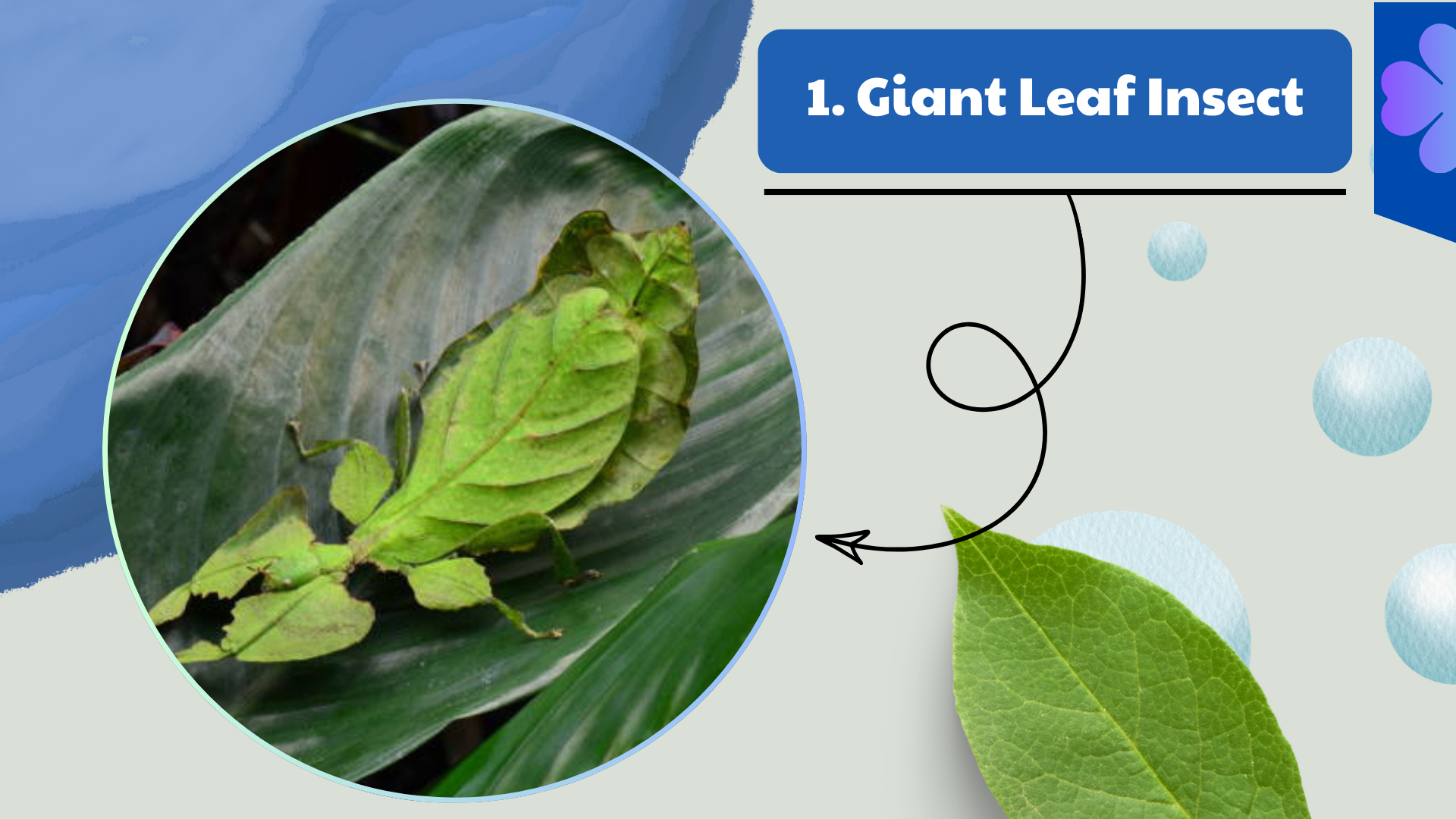
The Giant Leaf Insect is one of the most well-known members of all types of Leaf insect. Native to Southeast Asia, especially Malaysia, this species is famous for its large body size and extremely realistic leaf-like appearance. Females are much larger than males and have wide, flat bodies that mimic green leaves with visible veins.
Their camouflage is so effective that even trained eyes can struggle to distinguish them from real foliage. They remain motionless for long periods, swaying gently to imitate leaves moving in the wind. This behavior is a key survival strategy against birds and reptiles.
2. Malaysian Leaf Insect (Phyllium bioculatum)
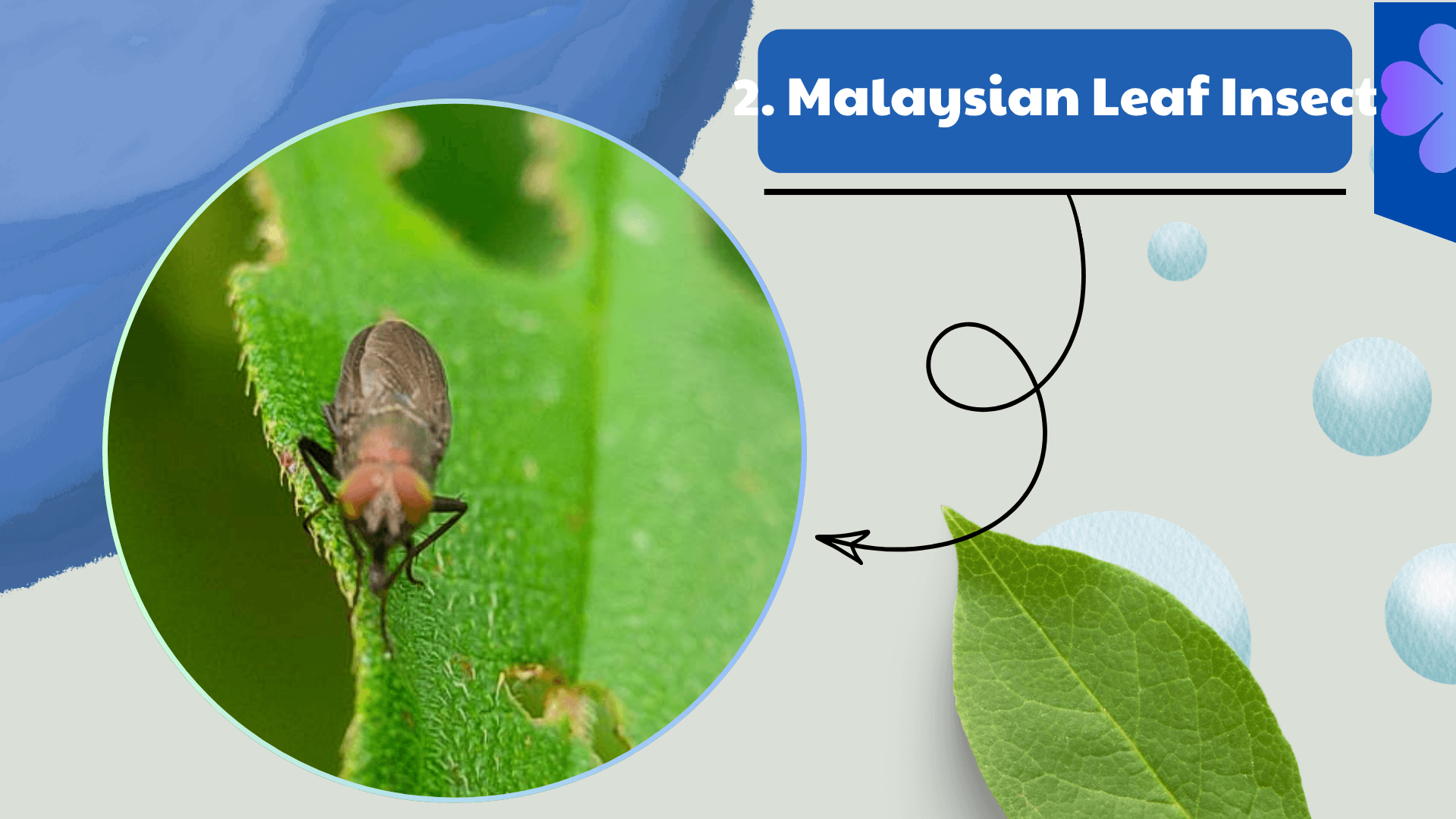
The Malaysian Leaf Insect is another iconic species within the types of Leaf insect. It is commonly found in tropical forests of Malaysia and surrounding regions. This species has a slightly smaller body than the giant leaf insect but displays equally impressive camouflage abilities.
Its wings and body structure closely resemble fresh green leaves, complete with subtle vein-like markings. Females are typically wingless, while males have functional wings and are more active. They feed on guava, mango, and other tropical plants.
3. Javan Leaf Insect (Phyllium jacobsoni)
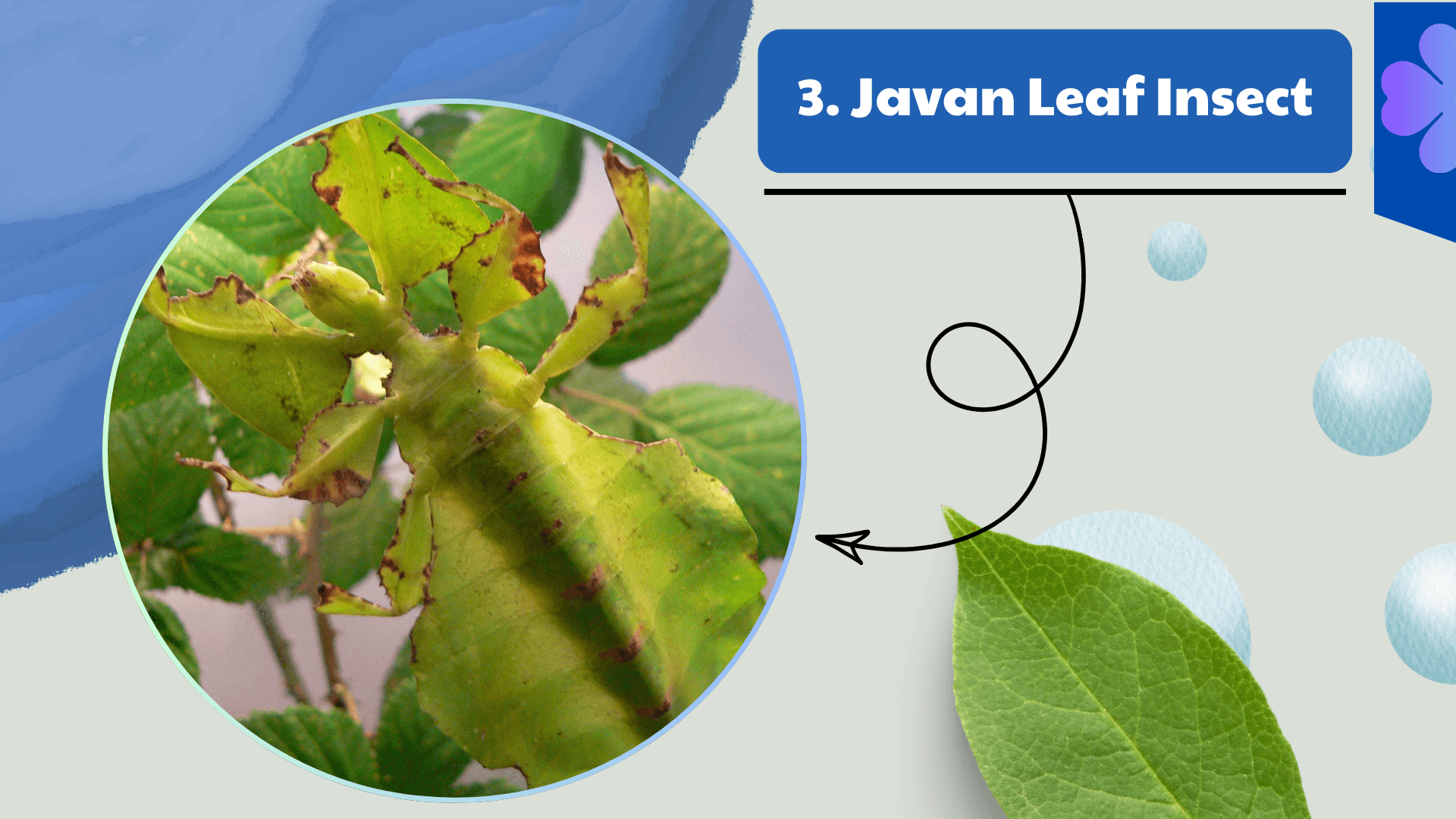
The Javan Leaf Insect is native to Indonesia, especially Java Island. It is one of the most visually refined types of Leaf insect, with body edges that look like slightly damaged or bitten leaves. This detail improves its disguise in natural environments.
This species prefers humid forest areas and remains stationary during daylight hours. At night, it becomes more active and feeds on leaves while staying hidden from nocturnal predators.
4. Philippine Leaf Insect (Phyllium philippinicum)
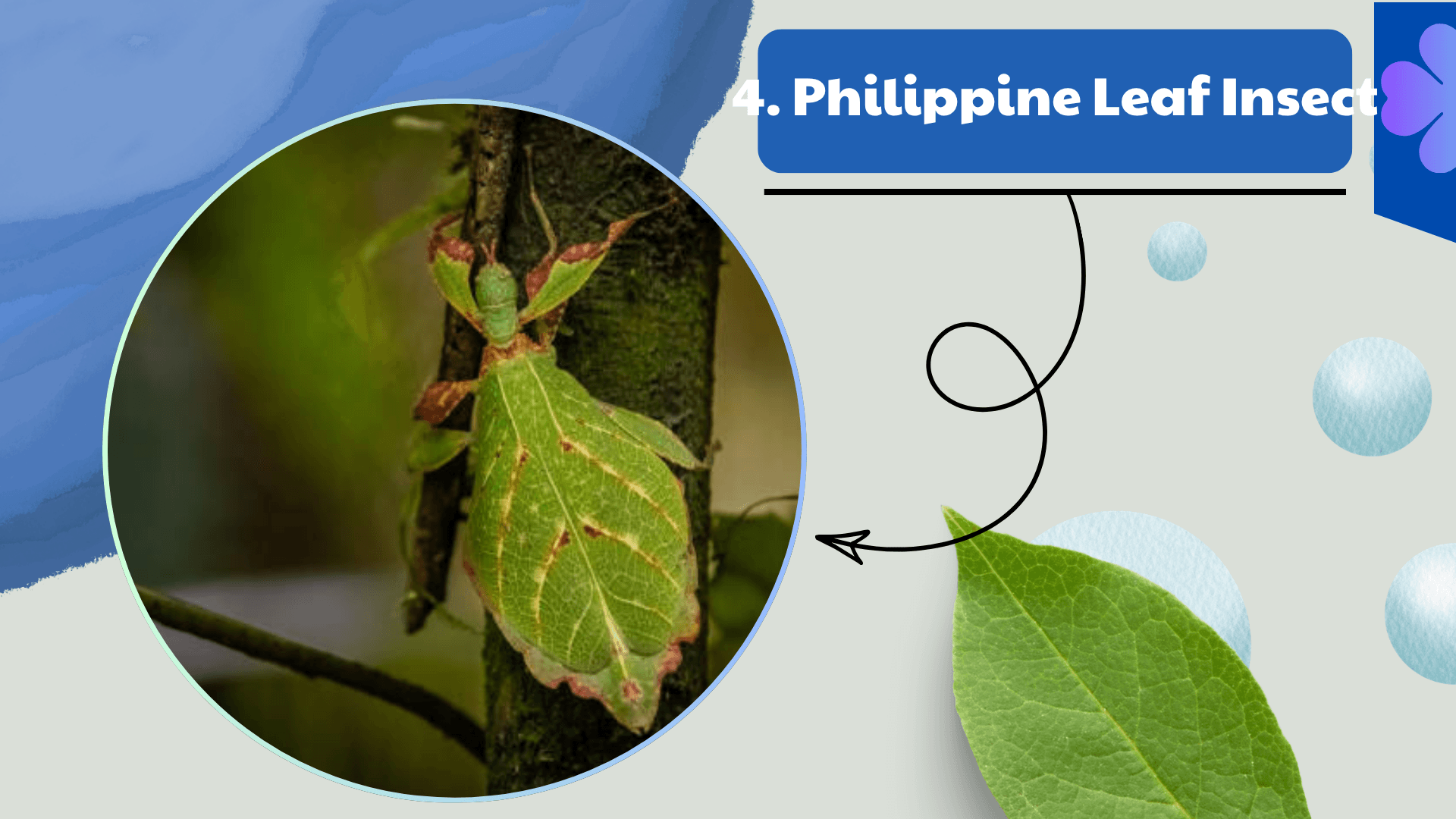
The Philippine Leaf Insect is a striking example of evolutionary adaptation. It is widely studied due to its strong resemblance to living green leaves. This is one of the most popular types of Leaf insect among insect enthusiasts and researchers.
Females are broad and flat, while males are slender and capable of flight. Their coloration can slightly change depending on humidity and diet, making them even harder to detect in dense vegetation.
5. Westwood’s Leaf Insect (Phyllium westwoodii)
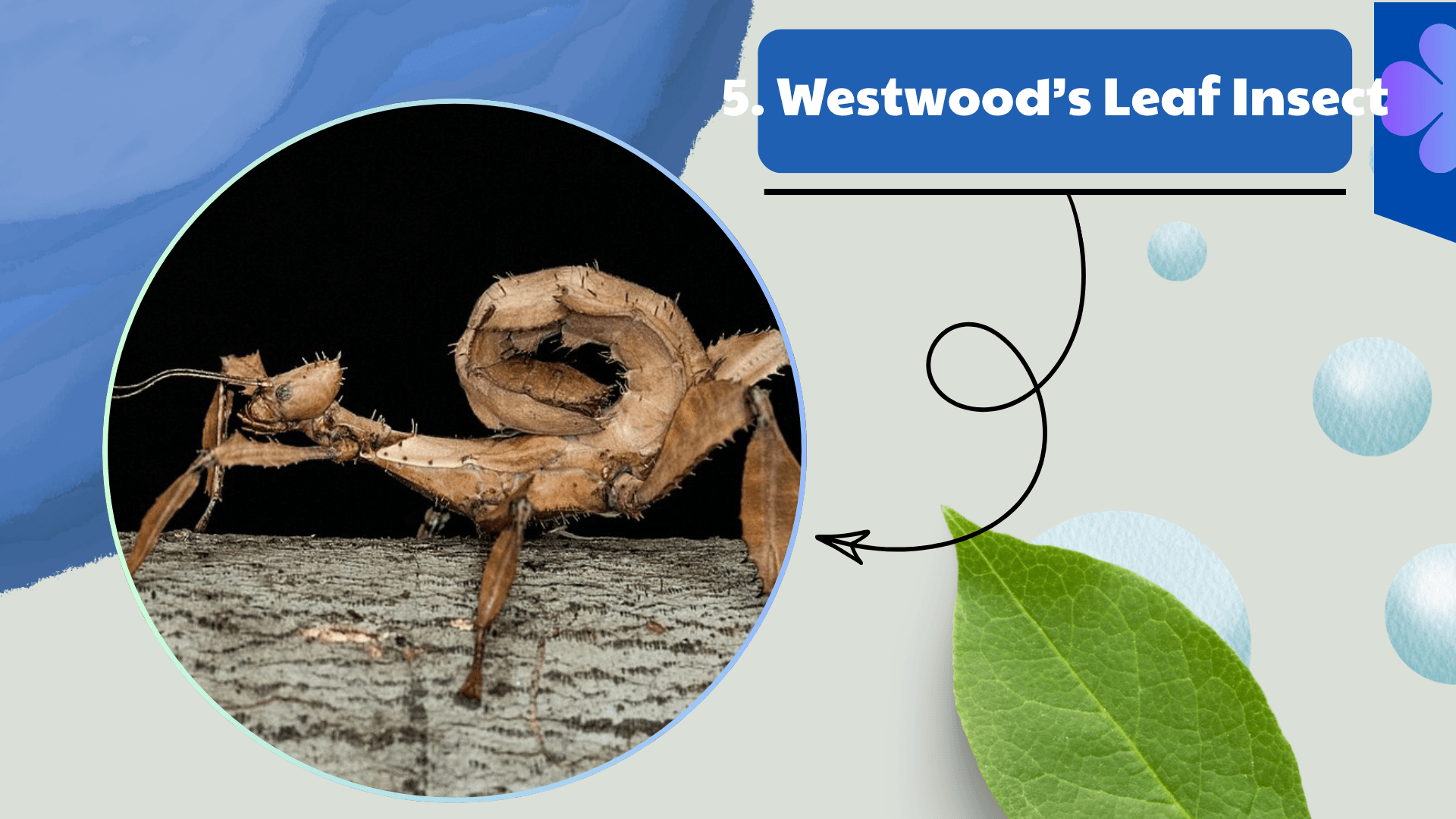
Westwood’s Leaf Insect is a classic species found in parts of Southeast Asia and is considered one of the earliest scientifically described types of Leaf insect. It has a well-balanced leaf shape with clear mimic patterns that resemble mid-aged leaves.
This species is known for its slow, deliberate movements. When threatened, it often sways gently to mimic wind-blown leaves. This behavior reduces detection by predators such as birds, lizards, and small mammals.
6. Pulchriphyllium Leaf Insect (Pulchriphyllium pulchrifolium)
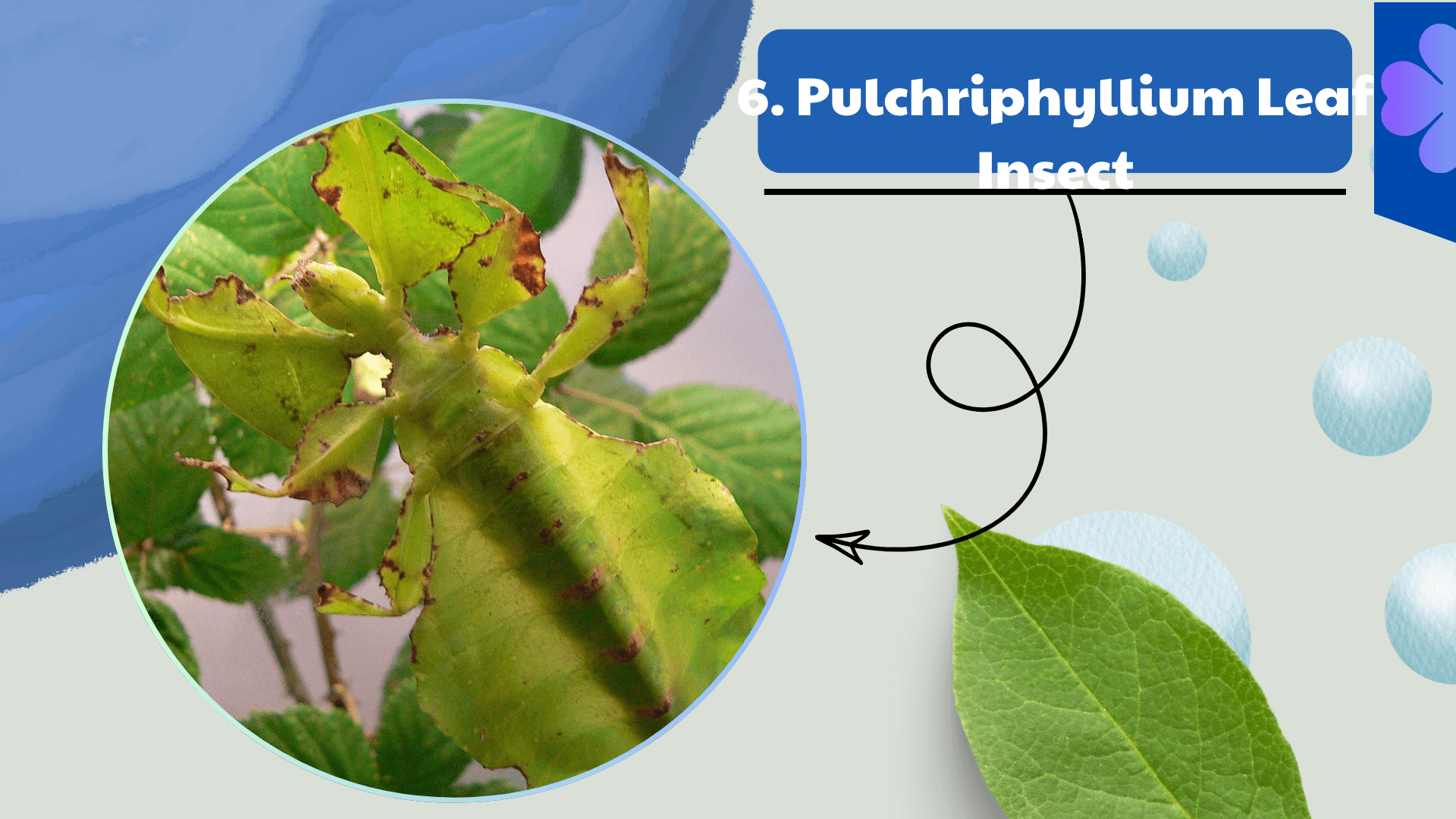
The Pulchriphyllium Leaf Insect is one of the most visually stunning types of Leaf insect, known for its extremely detailed leaf mimicry. Found across parts of Southeast Asia, this species is often considered a “perfect leaf copy” due to its symmetrical body shape and finely structured vein patterns that resemble fresh green foliage.
Unlike simpler camouflage insects, Pulchriphyllium species show advanced mimicry not only in shape but also in texture. The edges of their bodies look slightly curled or damaged, which helps imitate natural leaf aging. This reduces the chance of predators identifying them as living insects.
Females are broader, wingless, and spend most of their lives stationary, blending into vegetation. Males, however, are slimmer and capable of flight, allowing them to search for mates across larger forest areas. Their life cycle is heavily dependent on humidity and dense vegetation cover.
In ecological terms, this species plays a small but important role in forest food chains, serving as prey for birds and reptiles while helping maintain plant-insect balance.
7. Philippine Leaf Insect (Phyllium philippinicum)
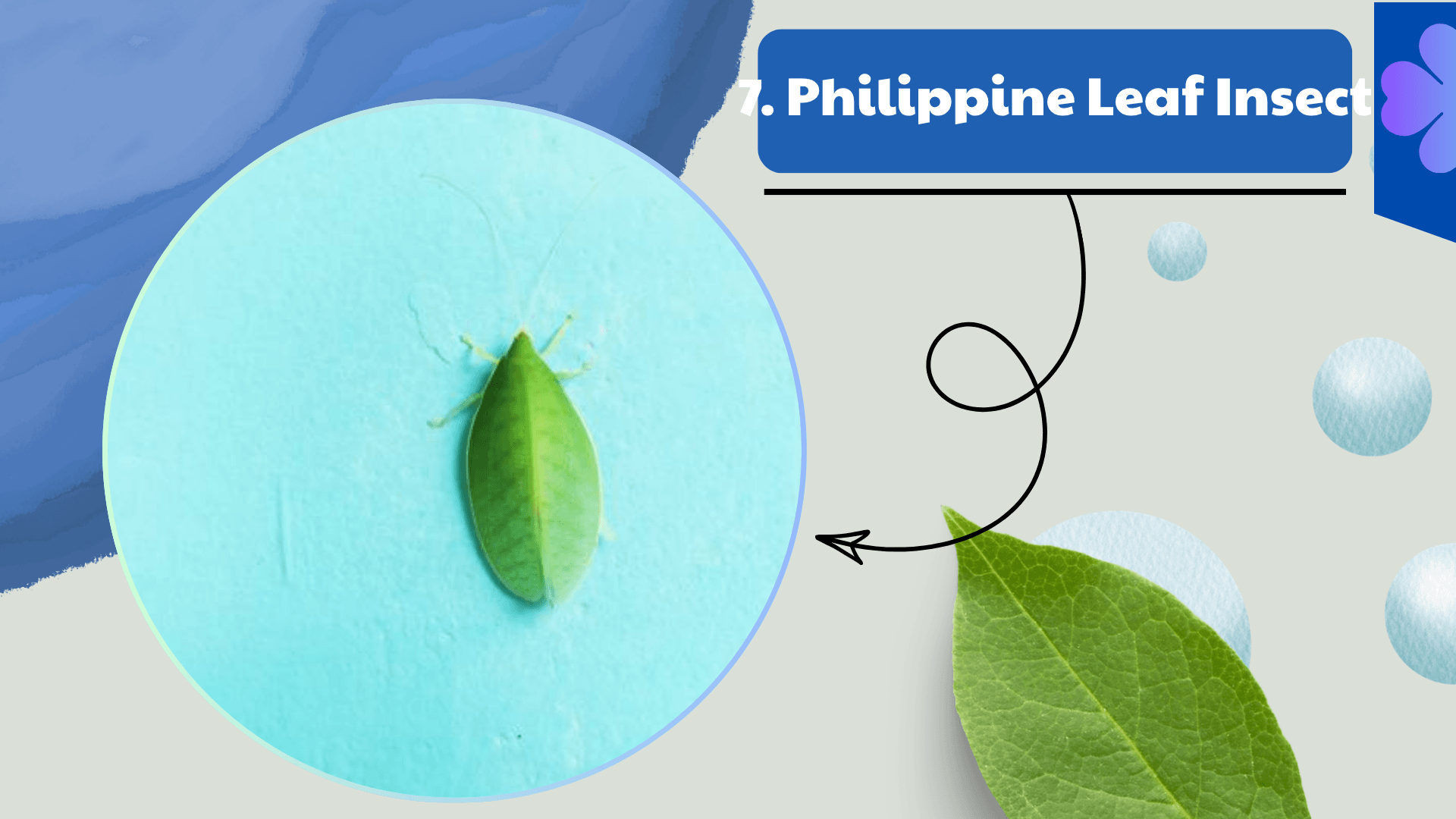
The Philippine Leaf Insect is one of the most studied types of Leaf insect due to its remarkable ability to adapt its coloration to match surrounding leaves. Native to the Philippines, this species thrives in humid tropical forests where dense vegetation provides ideal camouflage conditions.
One of its most interesting features is its subtle color variation. Depending on diet and environment, individuals may appear brighter green or slightly yellowish, mimicking aging leaves. This flexibility makes them even harder for predators to detect.
Females are wide-bodied and completely wingless, relying entirely on camouflage. Males are smaller and more active, with functional wings used for short flights. Both sexes feed on a variety of host plants such as guava and bramble leaves.
Behaviorally, this species is extremely slow-moving and relies heavily on stillness. Even when disturbed, it prefers swaying rather than fleeing, imitating wind-blown foliage.
8. Westwood’s Leaf Insect (Phyllium westwoodii)
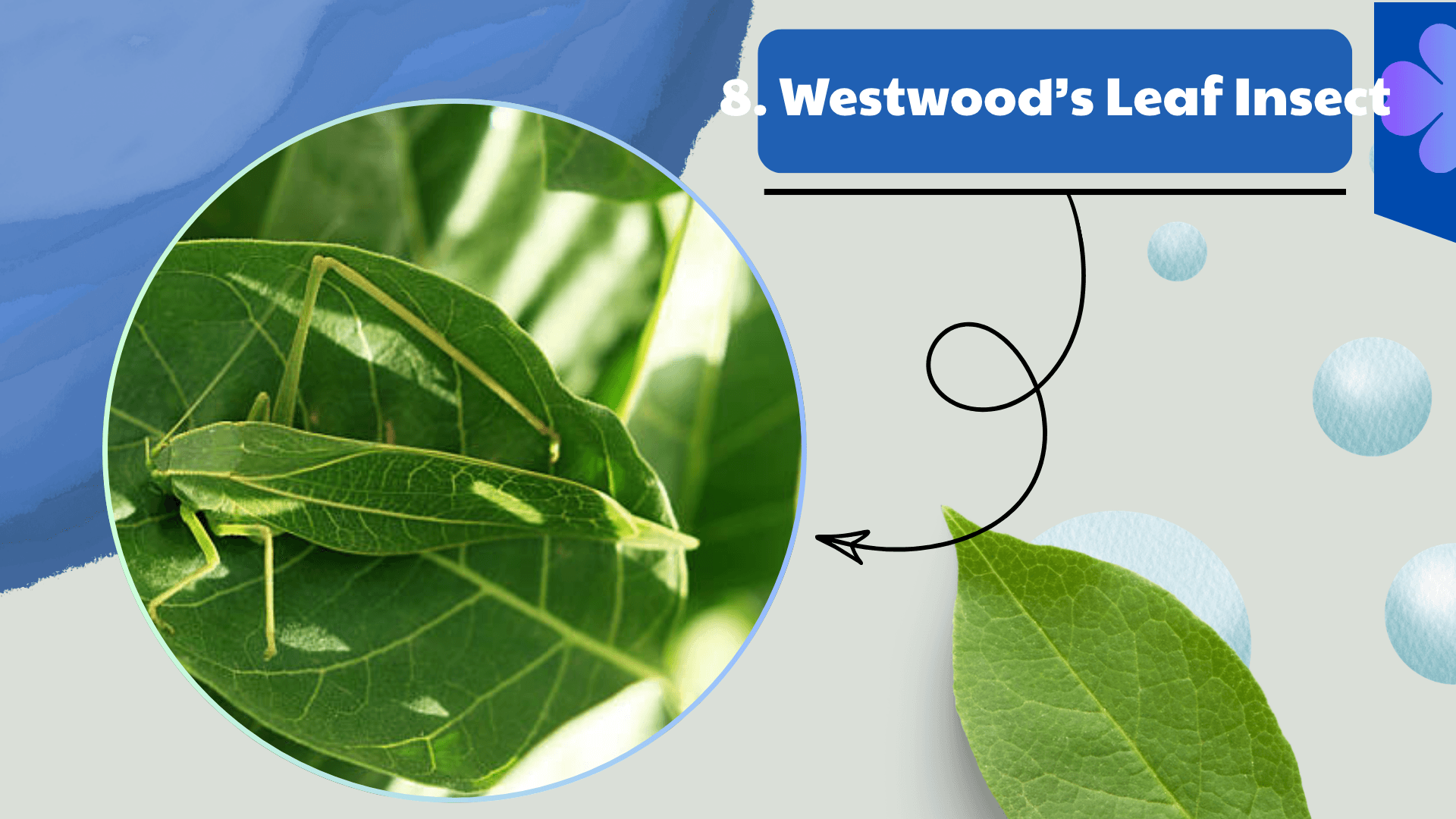
Westwood’s Leaf Insect is one of the earliest scientifically recognized types of Leaf insect, named after entomologist John O. Westwood. It is distributed across parts of Southeast Asia and is known for its balanced, medium-sized leaf shape.
This species has a more uniform leaf structure compared to highly ornate relatives. Its body shape resembles a mature leaf with visible central veins and slightly uneven edges, making it blend naturally into forest canopies.
Females are typically sedentary, spending most of their lives attached to leaves or branches. Males are more agile and capable of flight, although they remain cryptic in coloration.
Westwood’s Leaf Insect is particularly important in evolutionary studies because it represents a stable, classic leaf mimic form that has changed very little over time.
9. Eucalyptus Leaf Insect (Phyllium letiranti)
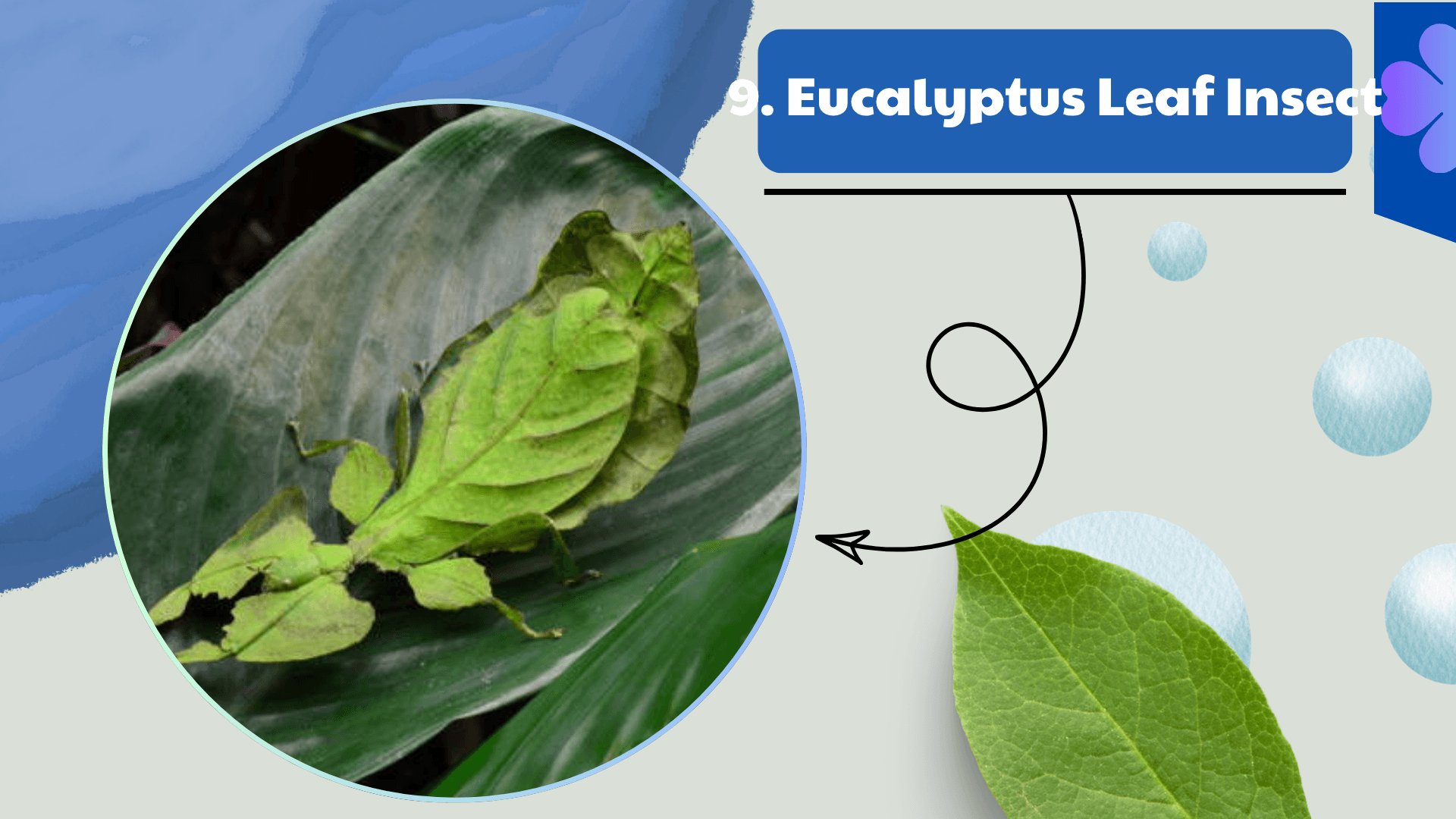
The Eucalyptus Leaf Insect is one of the more specialized types of Leaf insect, often associated with eucalyptus-rich habitats in parts of Indonesia and nearby regions. Its body shape closely resembles narrow eucalyptus leaves, making it highly effective in blending into specific host plants.
This species has elongated body edges and a slightly thinner profile compared to broader leaf insects. This allows it to mimic the narrow leaf structure of eucalyptus trees more accurately.
Its camouflage strategy is highly dependent on environmental matching. Individuals raised in different plant environments may show slight variations in body tone and texture.
As with most leaf insects, females are flightless and rely on stillness, while males are capable of short flights to locate mates. Their survival depends heavily on remaining undetected during daylight hours.
10. Northern Leaf Insect (Phyllium monteithi)
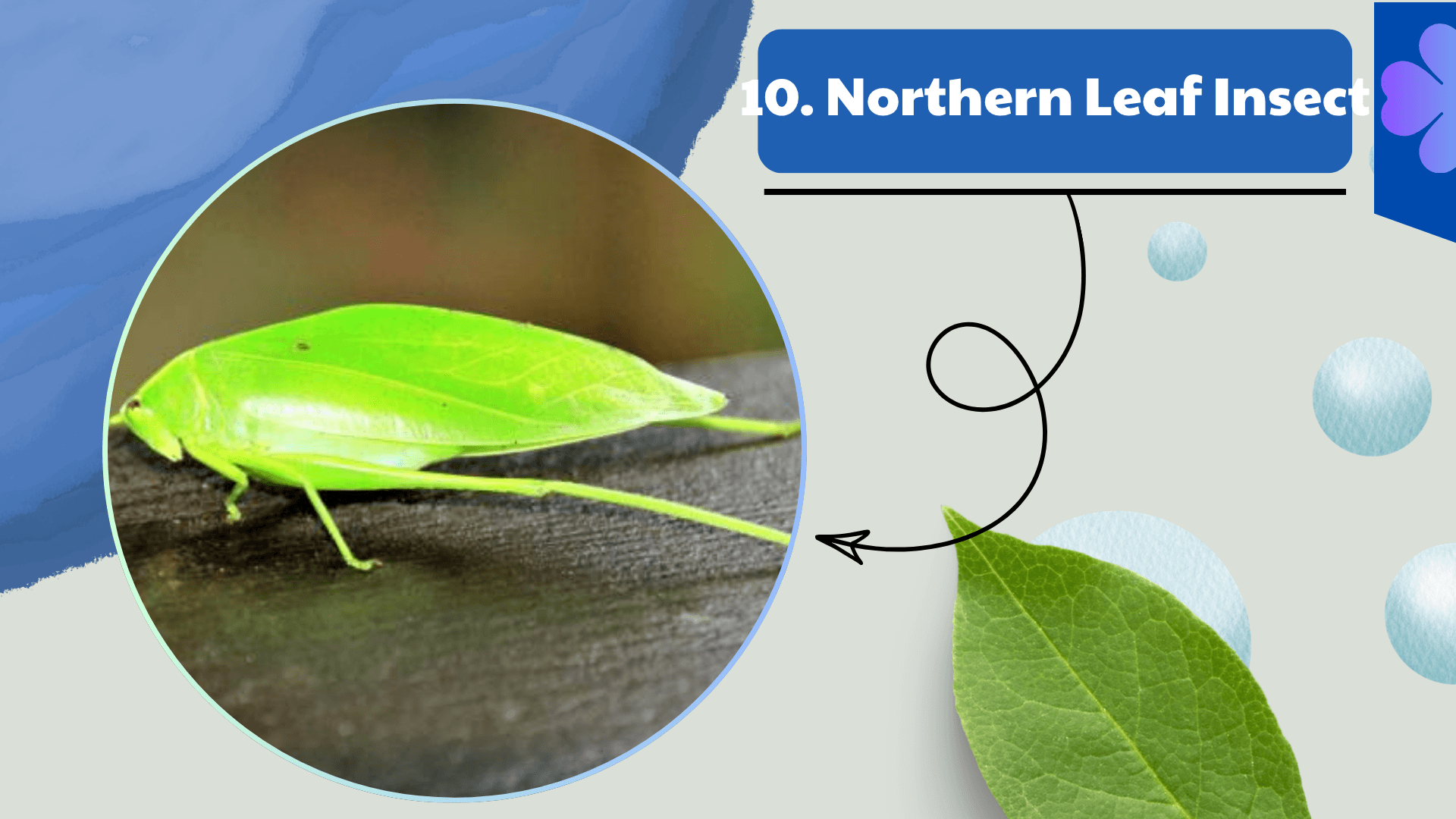
The Northern Leaf Insect is one of the most distinct types of Leaf insect found in Australia and surrounding regions. It is adapted to subtropical forests where leaf density and humidity provide ideal camouflage conditions.
This species shows slightly more rugged leaf mimicry compared to tropical Asian species. Its body edges are more irregular, resembling dried or partially eaten leaves, which helps it blend into more variable environments.
Females are large, wingless, and highly sedentary. Males, on the other hand, are smaller and capable of flight, allowing gene flow between isolated populations.
Northern Leaf Insects are known for their strong defensive stillness behavior. When threatened, they remain motionless even under direct contact, relying entirely on camouflage rather than escape.
11. Dead Leaf Insect (Phyllium siccifolium)
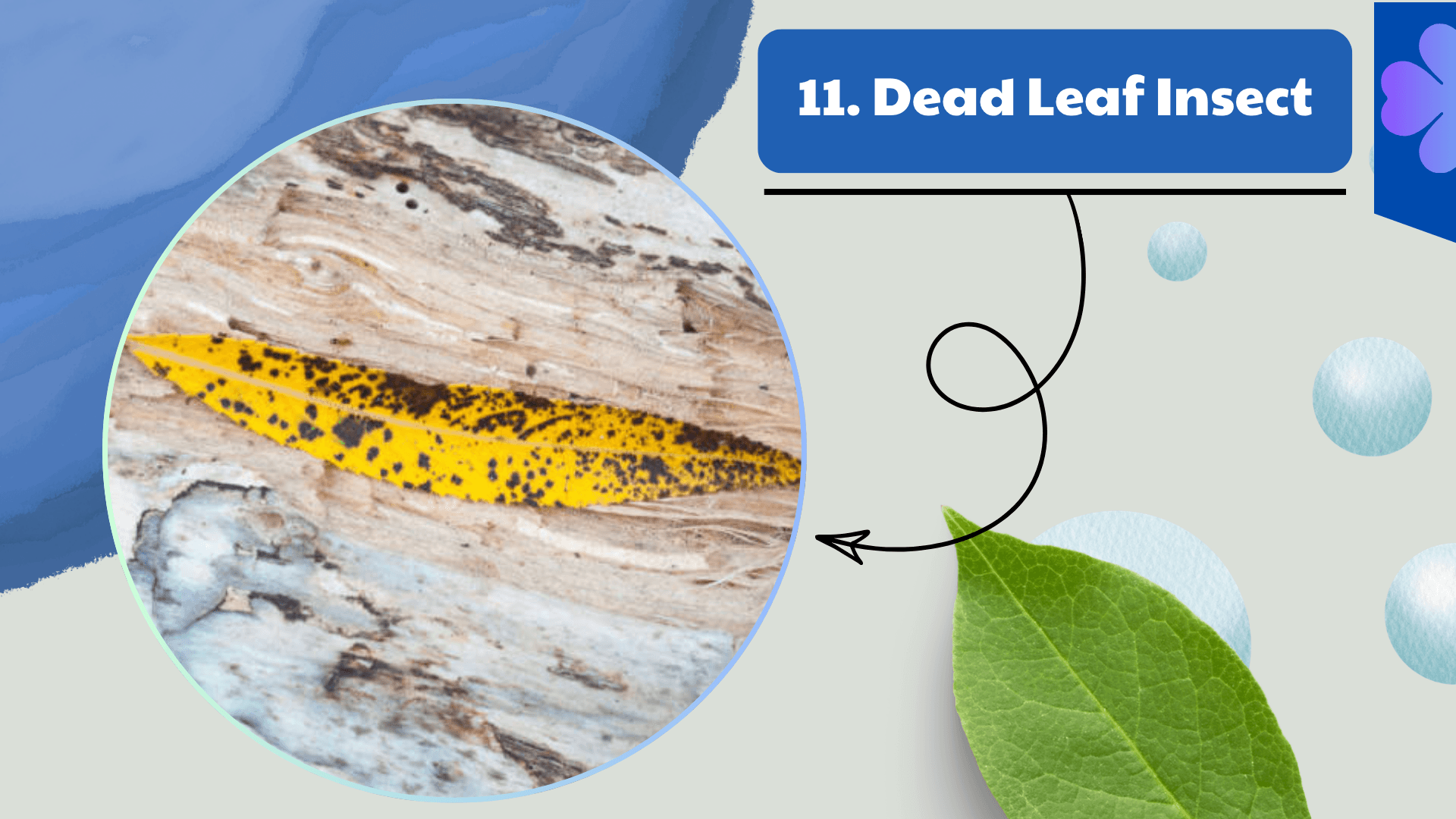
The Dead Leaf Insect is one of the most advanced camouflage specialists among all types of Leaf insect. Unlike bright green species that mimic fresh leaves, this insect imitates a dried, brown, or decaying leaf. This makes it especially difficult for predators to detect in forest floors and lower vegetation layers where dead leaves naturally accumulate.
Its body is typically brown, tan, or muted green with irregular edges that look like torn or curled leaf fragments. The surface texture often includes vein-like ridges and discoloration patterns, giving it a highly realistic aged-leaf appearance. This adaptation is particularly effective in environments with seasonal leaf fall.
Females are broad, flat, and completely wingless, relying entirely on stillness for protection. Males are slimmer, capable of flight, and slightly more active during mating periods. Their life cycle depends heavily on dry forest conditions where dead foliage is abundant.
Behaviorally, this species is extremely passive during the day and may remain motionless for hours, even when approached closely. This makes it one of the most successful natural mimics in tropical ecosystems.
12. Mossy Leaf Insect (Nanophyllium asekiense)
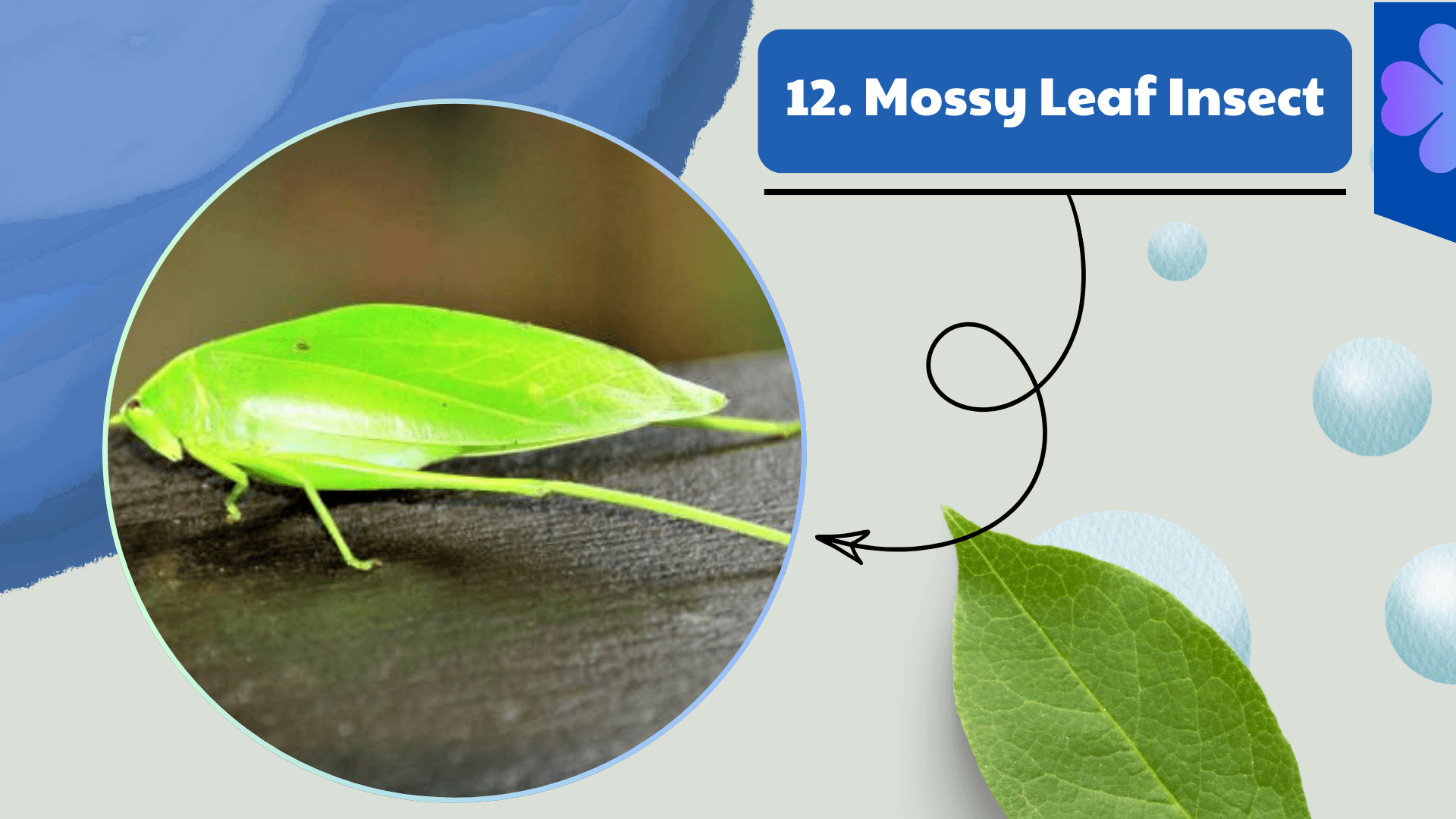
The Mossy Leaf Insect is a rare and highly specialized member of the types of Leaf insect, known for its unique moss-like camouflage rather than traditional leaf mimicry. Found in select rainforest regions, this species blends into environments covered with moss, lichen, and damp vegetation.
Its body is smaller and more textured compared to typical leaf insects. Instead of smooth leaf-like surfaces, it has irregular bumps and greenish patches that resemble moss growth. This adaptation helps it survive in shaded, humid forest areas where moss dominates surfaces.
Unlike other species that rely on flat leaf imitation, this insect uses texture-based camouflage, making it nearly invisible on tree trunks and moss-covered branches. Females are sedentary, while males are more mobile and capable of flight.
Ecologically, Mossy Leaf Insects are important indicators of healthy rainforest ecosystems, as they require stable humidity and clean forest environments to thrive.
13. Cryptic Leaf Insect (Cryptophyllium limogesi)
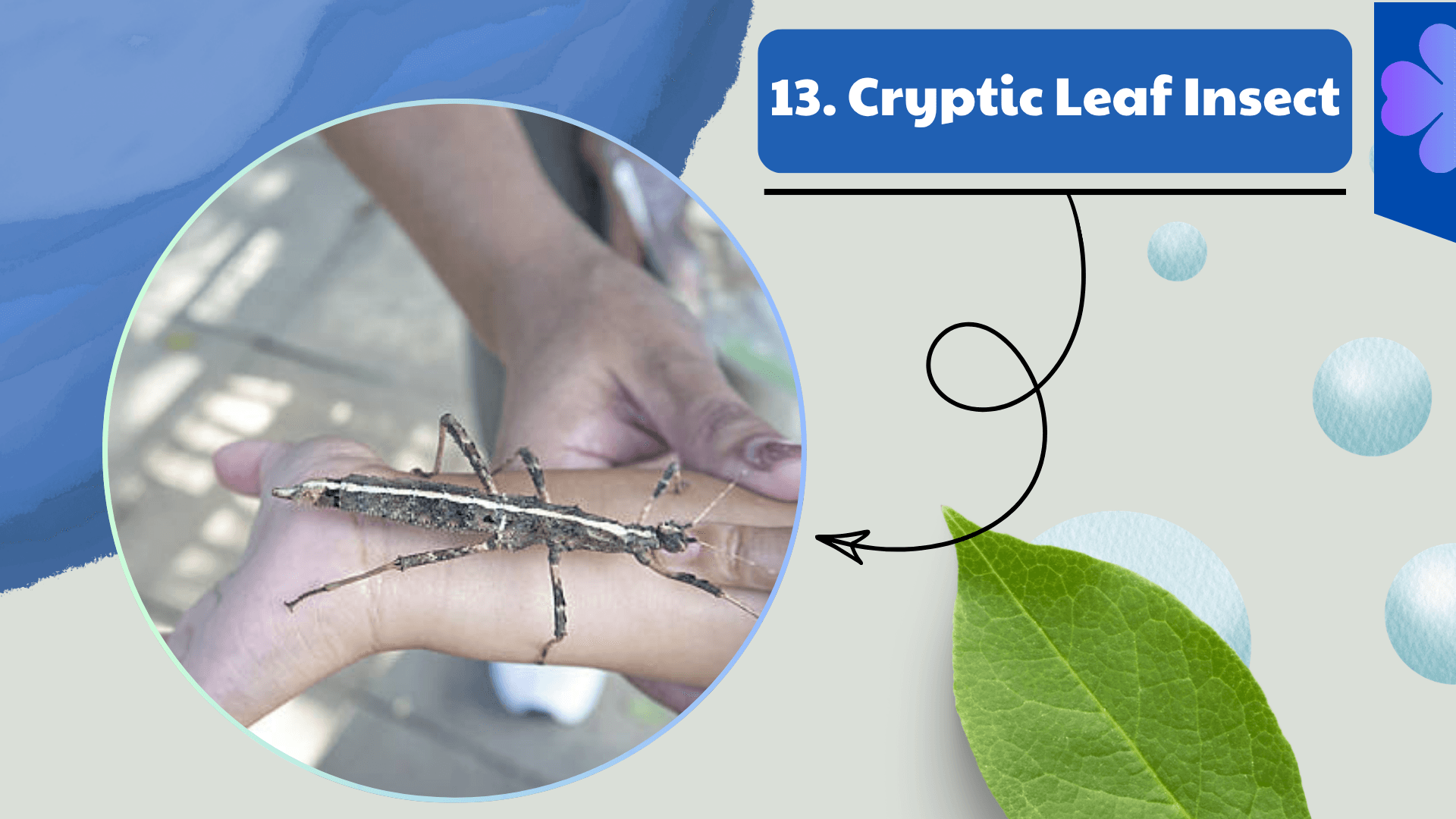
The Cryptic Leaf Insect is one of the most recently studied types of Leaf insect, belonging to the genus Cryptophyllium. This species is known for its extremely refined camouflage that combines leaf shape with subtle distortion patterns.
Its body edges appear slightly uneven and asymmetrical, resembling leaves that have been partially damaged by insects or weather. This irregularity is a key survival advantage because predators often ignore imperfect or decaying-looking objects.
Cryptic Leaf Insects are found in parts of Southeast Asia and prefer dense tropical forests. Their coloration varies slightly depending on habitat, ranging from bright green to dull olive tones.
Females are wingless and rely on stillness, while males are smaller and capable of flight. This species is especially interesting to researchers because it shows how slight morphological imperfections can enhance survival.
14. Indian Leaf Insect (Phyllium westwoodii complex – India populations)
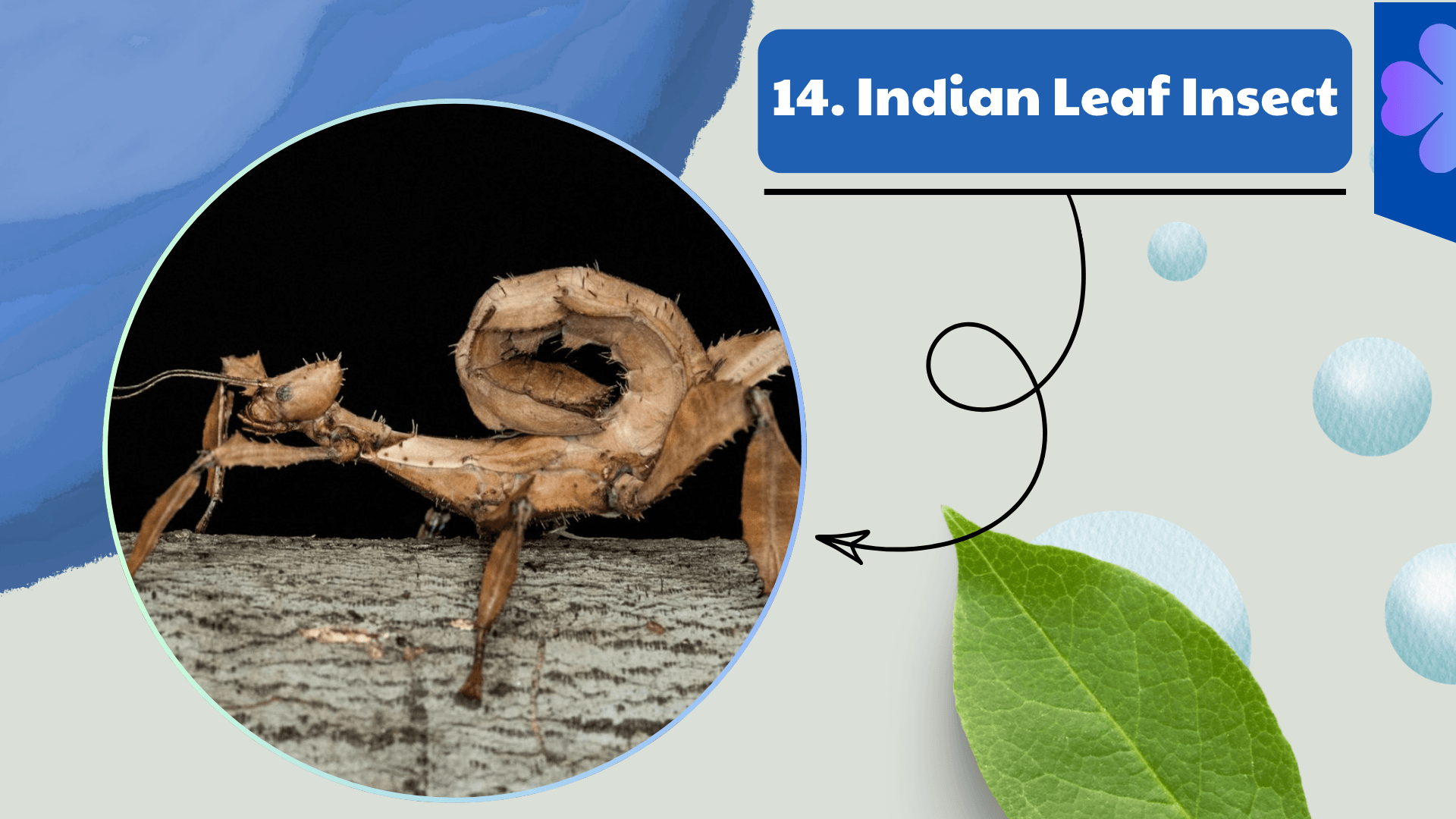
The Indian Leaf Insect represents regional populations within the broader types of Leaf insect group found across South Asia. These insects are adapted to tropical and subtropical forests in India, where seasonal climate changes influence vegetation types.
Their camouflage resembles medium-aged green leaves with visible vein structures and slightly uneven edges. Compared to Southeast Asian species, Indian populations may show more variation in color due to changing seasonal foliage.
These insects rely heavily on mango, guava, and other native plant species for food. Females are stationary leaf mimics, while males are more active fliers used for reproduction.
Their adaptability to seasonal changes makes them an important species for studying environmental influence on camouflage evolution.
15. Thai Leaf Insect (Phyllium spp. Thailand complex)
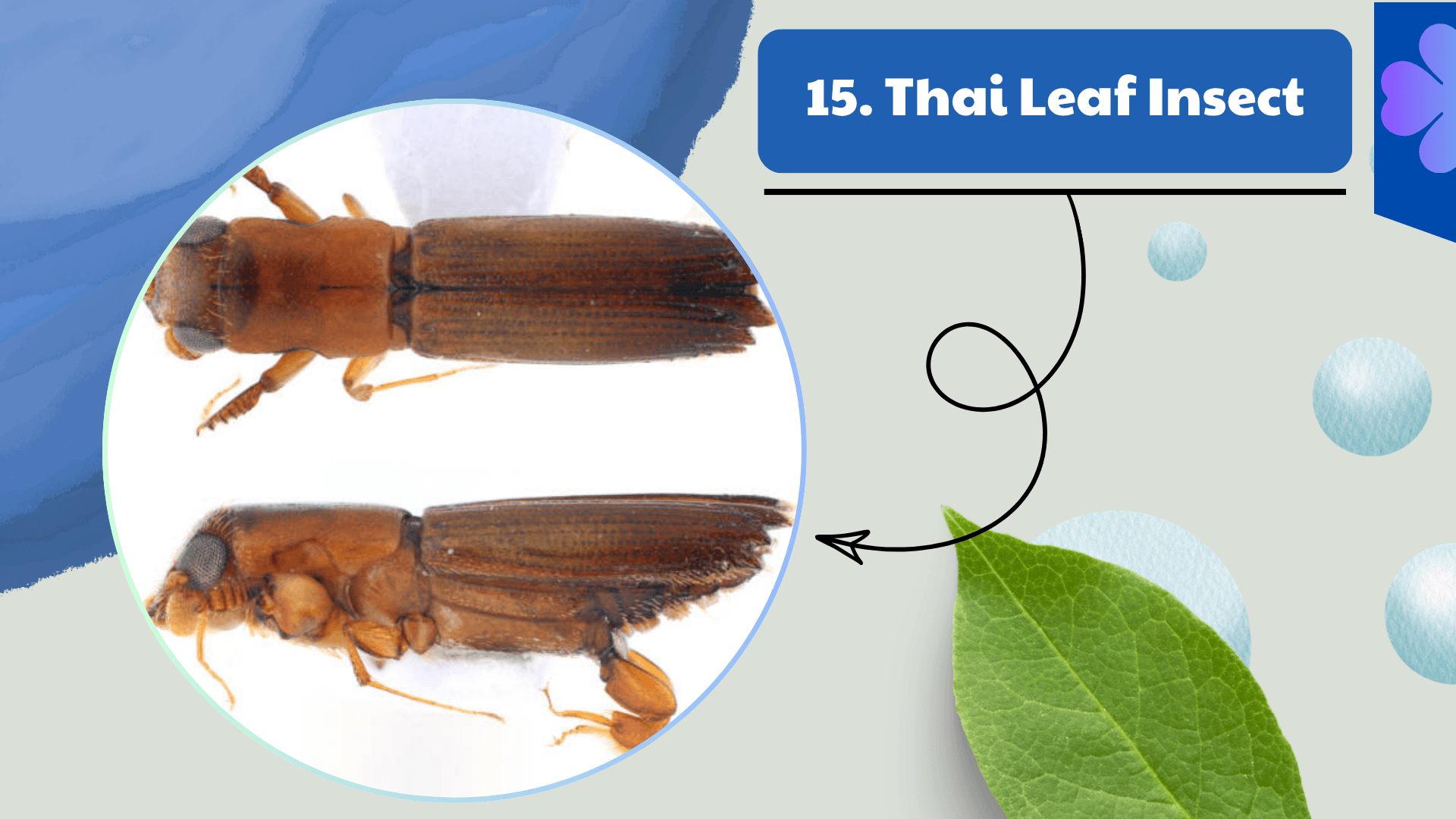
The Thai Leaf Insect group includes several closely related species within the types of Leaf insect, found in Thailand’s rich tropical forests. These insects are known for their bright green coloration and highly symmetrical leaf shapes.
They typically inhabit dense rainforest canopies where humidity is high and vegetation is abundant. Their camouflage is highly effective in fresh green environments, especially during the rainy season when leaves are vibrant and full.
Females are large, flat, and slow-moving, while males are smaller and capable of flight. Their survival depends on blending into fresh foliage and avoiding detection by birds and reptiles.
Thai Leaf Insects are also popular in scientific studies due to their diversity and subtle morphological differences between populations.
16. Bornean Leaf Insect (Phyllium borneense)
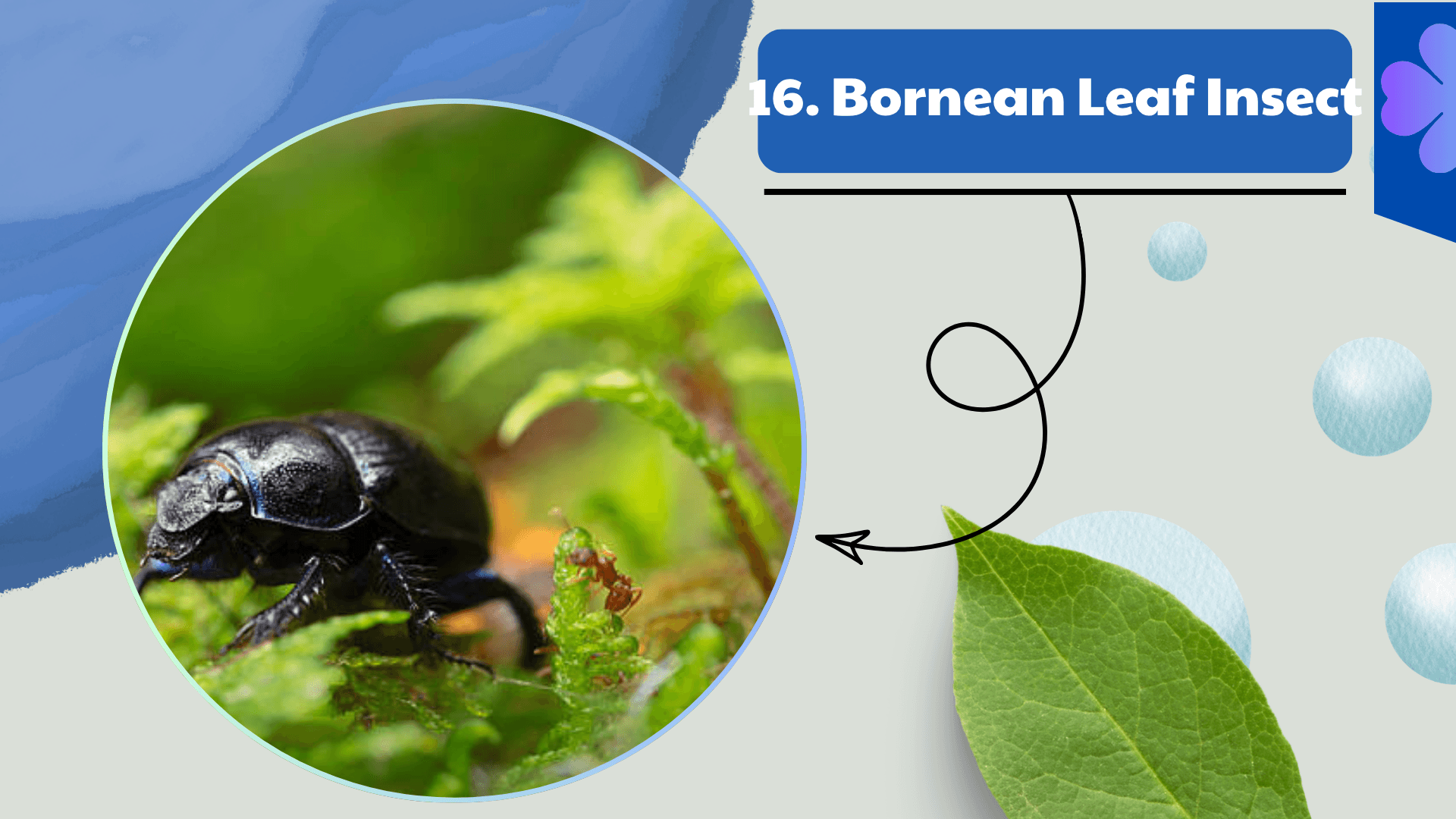
The Bornean Leaf Insect is one of the most visually refined types of Leaf insect, native to the dense rainforests of Borneo. This species thrives in extremely humid environments where thick vegetation provides perfect camouflage opportunities.
Its body closely resembles a fresh, healthy green leaf with smooth edges and clear vein-like markings. The symmetry of its body allows it to blend seamlessly into foliage, especially when resting on broad tropical leaves.
Females are large, wingless, and spend most of their time motionless, while males are smaller and capable of flight. Their behavior relies heavily on stillness and slow movement, which helps them avoid detection by birds and reptiles.
This species is also an important indicator of rainforest health, as it depends on stable humidity and dense vegetation to survive.
17. Sumatra Leaf Insect (Phyllium sumatranum)
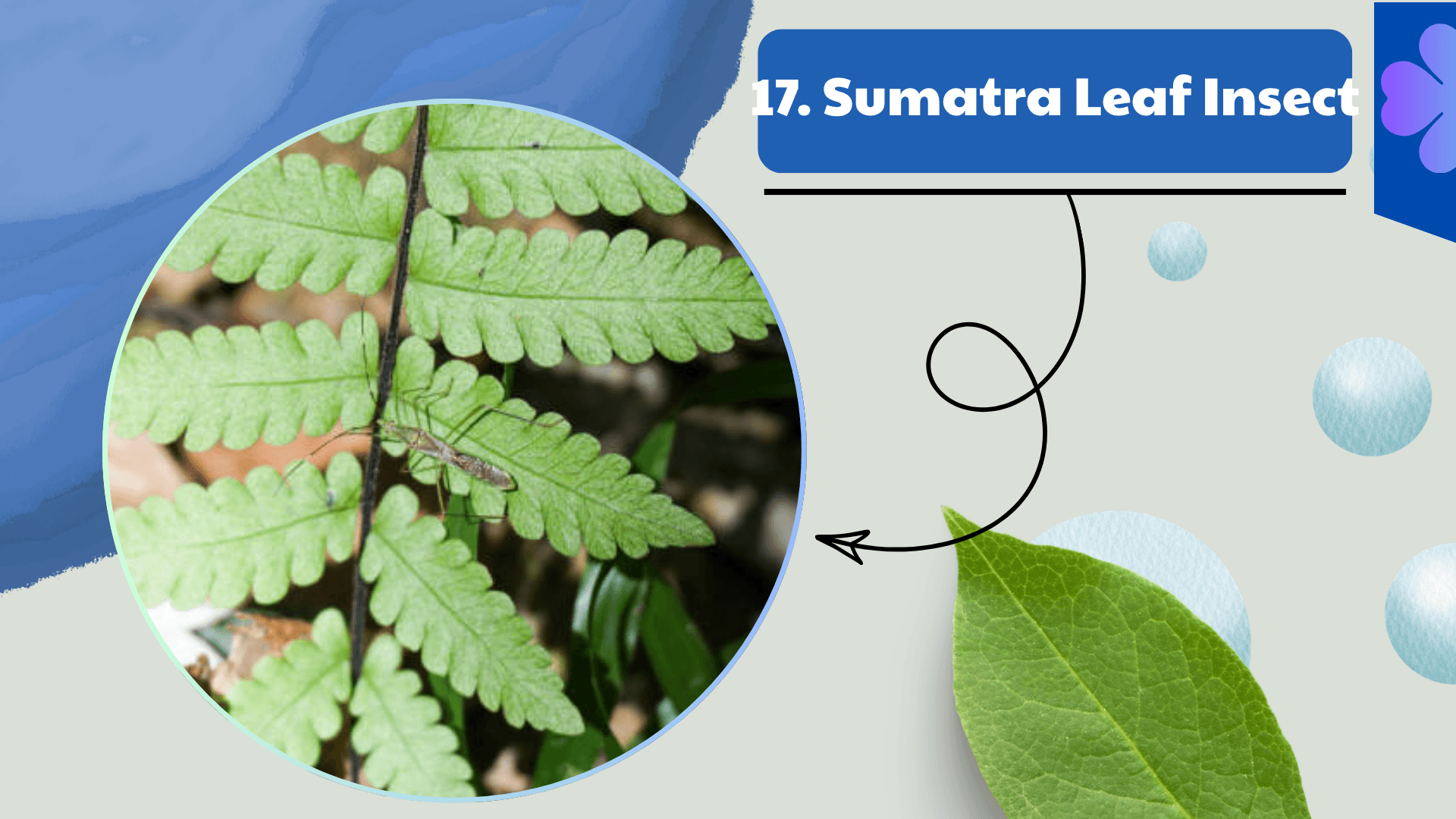
The Sumatra Leaf Insect is another fascinating member of the types of Leaf insect, found in Indonesia’s Sumatra region. It is well adapted to tropical rainforest ecosystems with high rainfall and dense canopy cover.
This species has a slightly elongated body compared to other leaf insects, allowing it to mimic narrow tropical leaves. Its coloration ranges from bright green to slightly yellowish tones depending on age and environment.
Females are sedentary and rely on camouflage, while males are more active and use short flights to locate mates. Their survival strategy depends on blending into rapidly changing foliage.
Sumatra Leaf Insects are also known for their strong seasonal adaptation, adjusting their appearance slightly based on plant conditions.
18. Sulawesi Leaf Insect (Phyllium celebicum variant)
The Sulawesi Leaf Insect represents regional diversity within the types of Leaf insect, found in Indonesia’s Sulawesi Island. This species shows subtle variations in body shape compared to other Southeast Asian leaf insects.
Its camouflage is highly effective in mixed forest environments where leaf shapes vary significantly. The body edges often appear slightly irregular, mimicking natural leaf damage.
Females are large and wingless, while males are slender and capable of flight. This species is particularly interesting for researchers studying island-based evolution.
Its adaptability to different leaf types gives it an advantage in diverse forest ecosystems.
19. Java Green Leaf Insect (Phyllium jacobsoni variant)
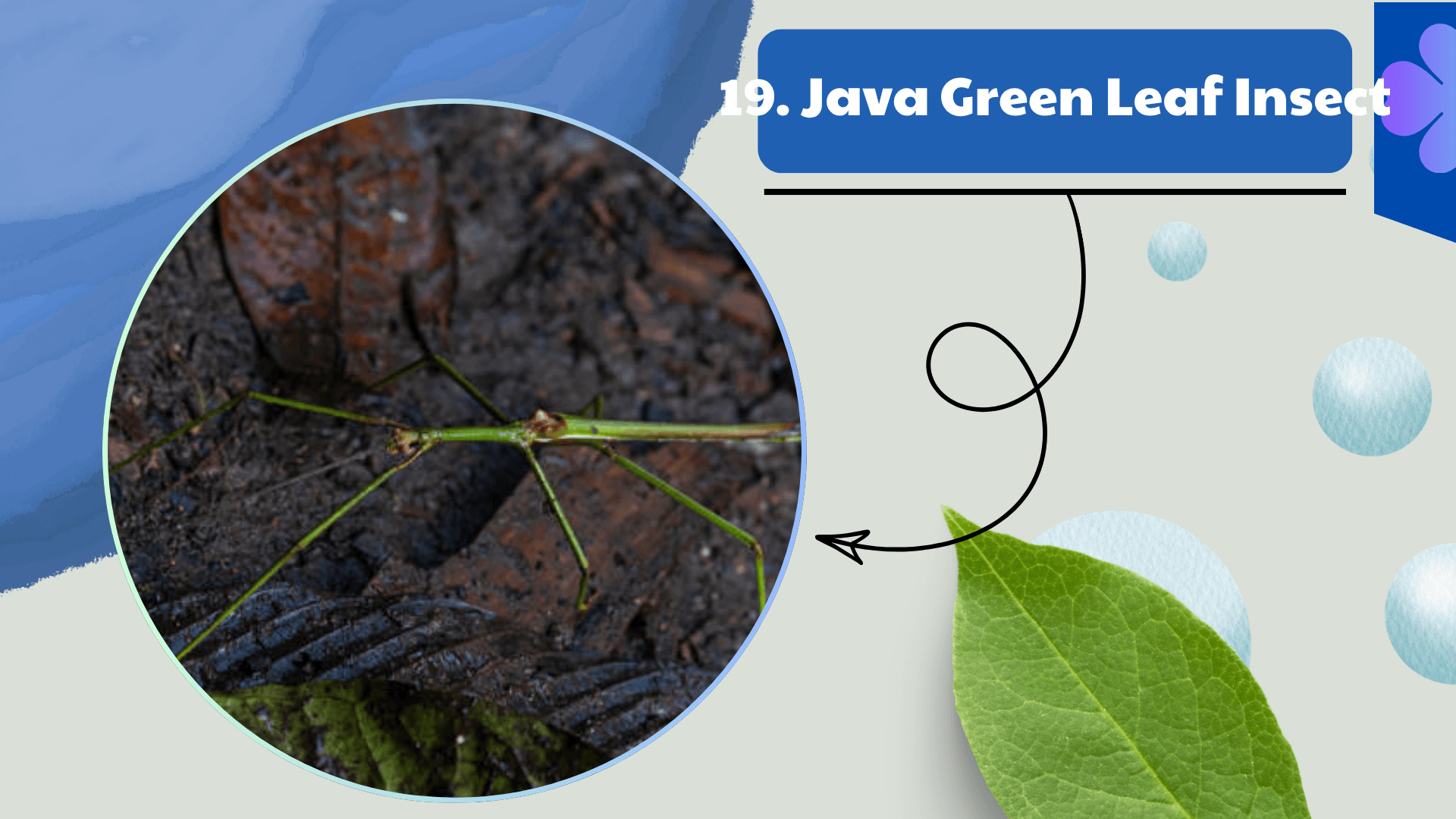
The Java Green Leaf Insect is a localized variant of the types of Leaf insect found in Java, Indonesia. It is known for its bright green coloration and highly detailed leaf-like body structure.
This insect is especially common in tropical gardens and forest edges where vegetation is dense. Its appearance closely matches fresh leaves with visible veins and smooth surfaces.
Females are completely wingless and rely on camouflage, while males can fly and are more mobile during mating seasons.
This species demonstrates how small geographic changes can influence camouflage patterns in insects.
20. Vietnam Leaf Insect (Phyllium vietnamense)
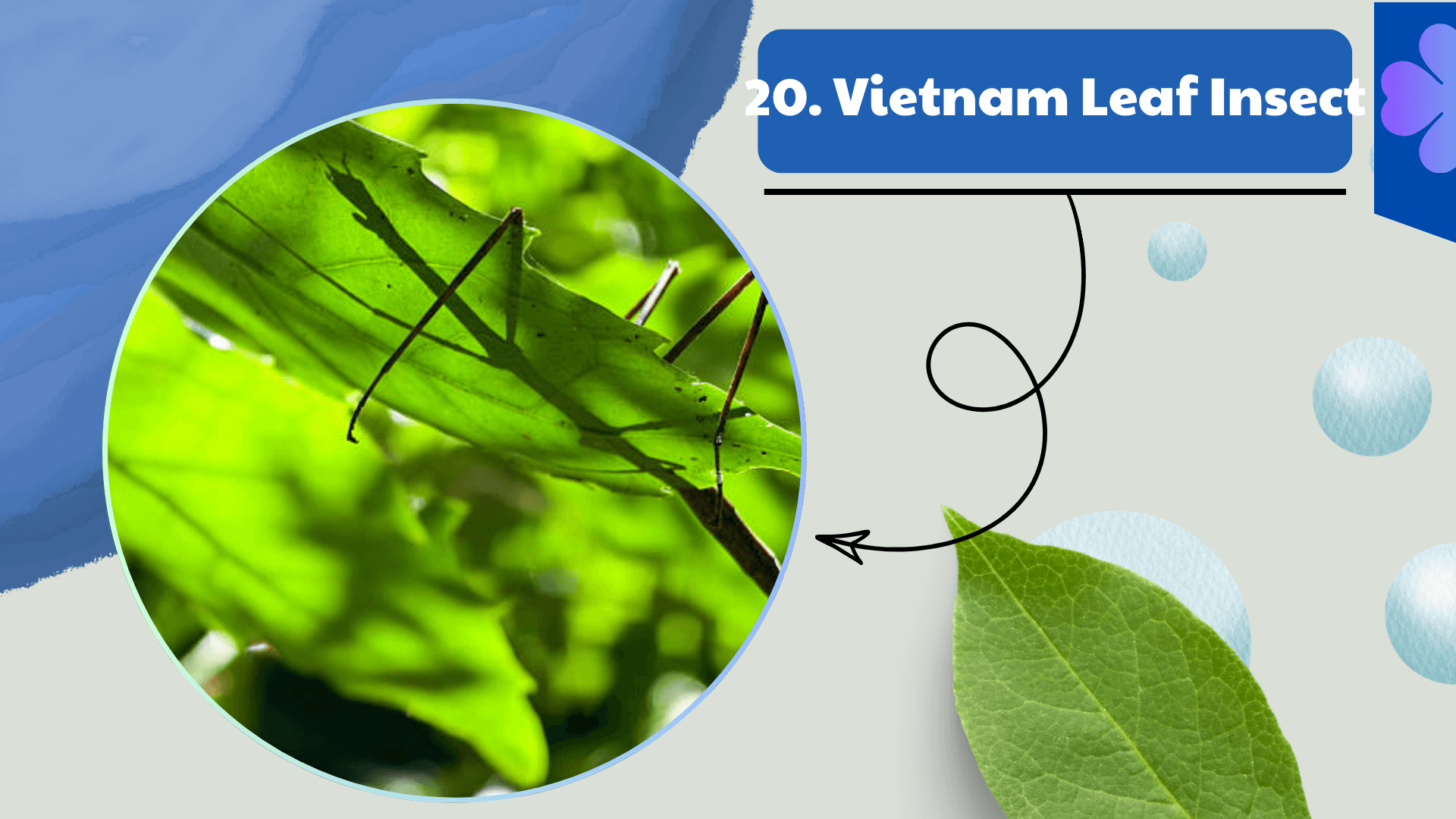
The Vietnam Leaf Insect is one of the more recently recognized types of Leaf insect, native to Vietnam’s tropical forests. It is adapted to humid, evergreen environments where plant diversity is extremely high.
Its body structure is broad and flat, closely resembling mature green leaves. The edges are slightly uneven, enhancing its disguise against natural foliage.
Females are slow-moving and rely entirely on stillness, while males are capable of short flights. Their life cycle is closely tied to seasonal rainfall patterns.
This species is important for understanding biodiversity in Southeast Asian rainforests, where many leaf insect species remain undiscovered.
21. Borneo Giant Leaf Insect Variant
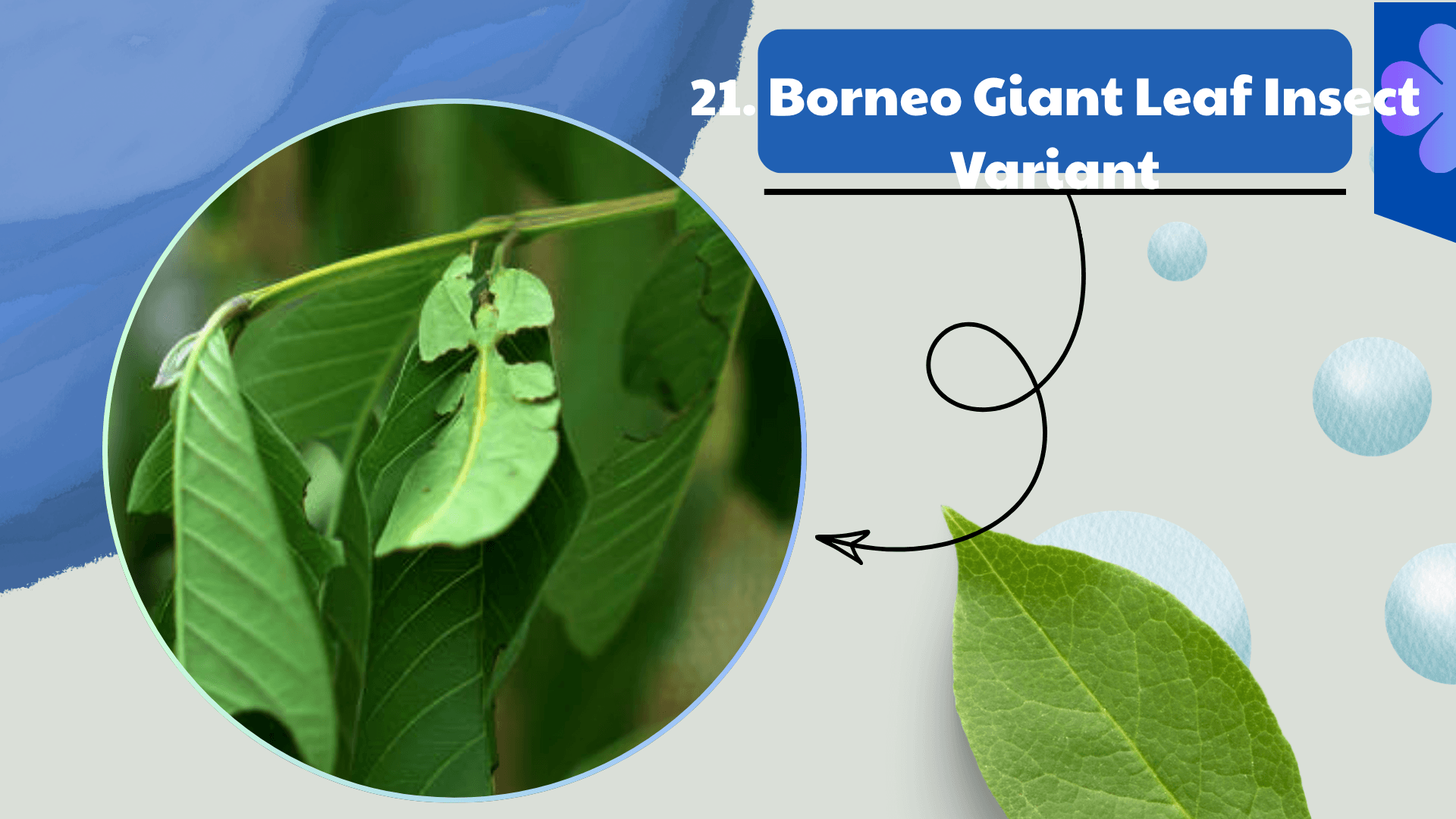
The Borneo Giant Leaf Insect variant is one of the largest among all types of Leaf insect, found in the rich rainforests of Borneo. This species stands out due to its oversized, flat body that mimics broad tropical leaves with extreme accuracy. Its surface often shows detailed vein patterns that resemble mature foliage.
Females are significantly larger than males and are completely wingless, relying on camouflage and stillness for survival. Males are smaller, lighter, and capable of flight, allowing them to move between trees in search of mates.
This species thrives in humid rainforest conditions where large-leaf plants dominate the environment. Its size and shape make it one of the most convincing leaf mimics in the insect world.
22. Southeast Asian Walking Leaf (Phyllium spp. complex)
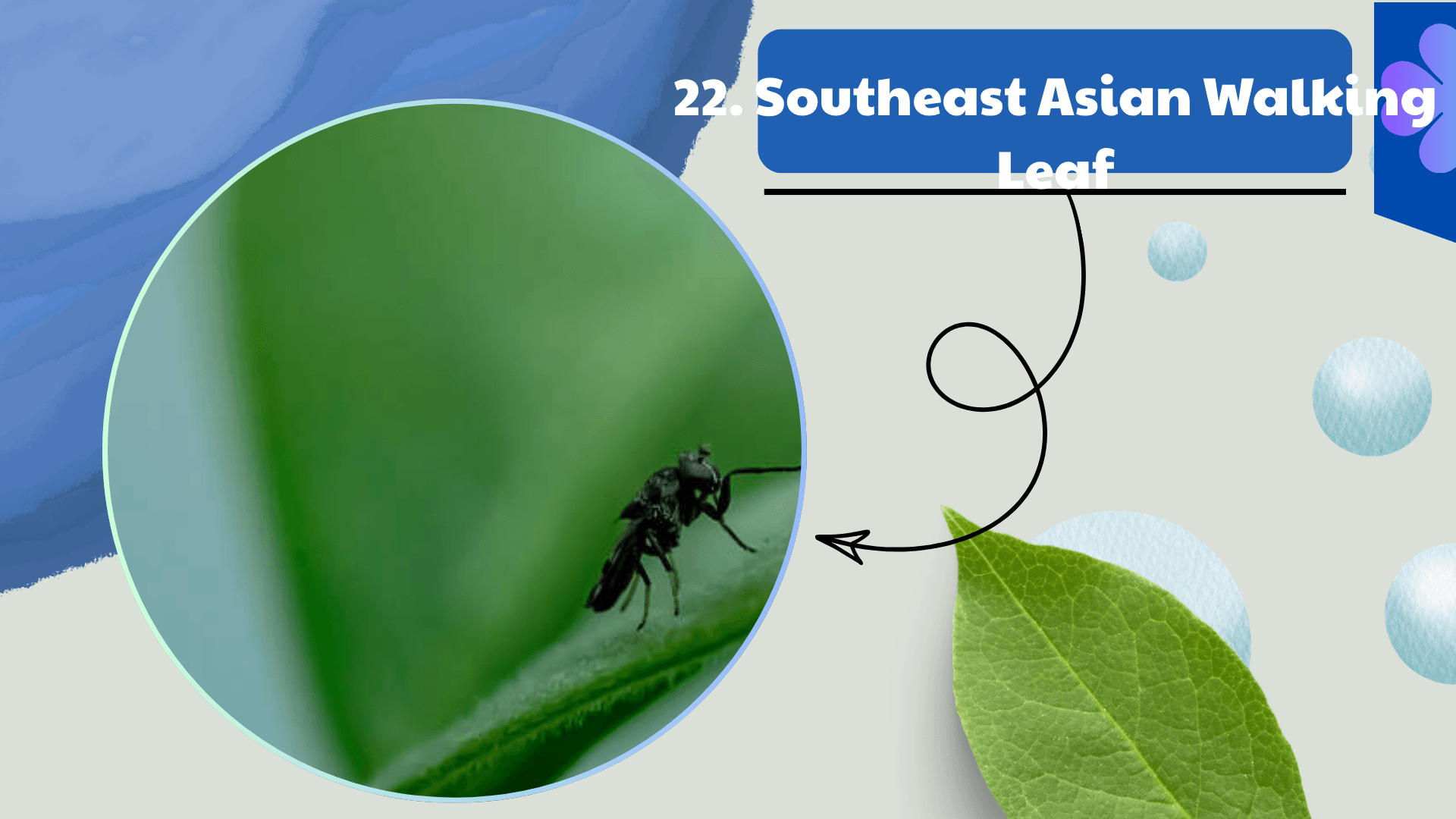
The Southeast Asian Walking Leaf represents a group of closely related species within the types of Leaf insect found across multiple countries including Thailand, Malaysia, and Indonesia. These insects are commonly referred to as “walking leaves” due to their slow, swaying movement that mimics natural leaf motion.
They have a wide range of body shapes, but all share strong leaf-like characteristics such as flattened bodies, vein patterns, and irregular edges. Their coloration varies from bright green to olive tones depending on habitat.
Females are sedentary and rely heavily on camouflage, while males are more mobile and capable of short flights. This group is especially diverse and still being studied by entomologists.
23. Rainforest Leaf Insect (Phyllium rainforest complex)
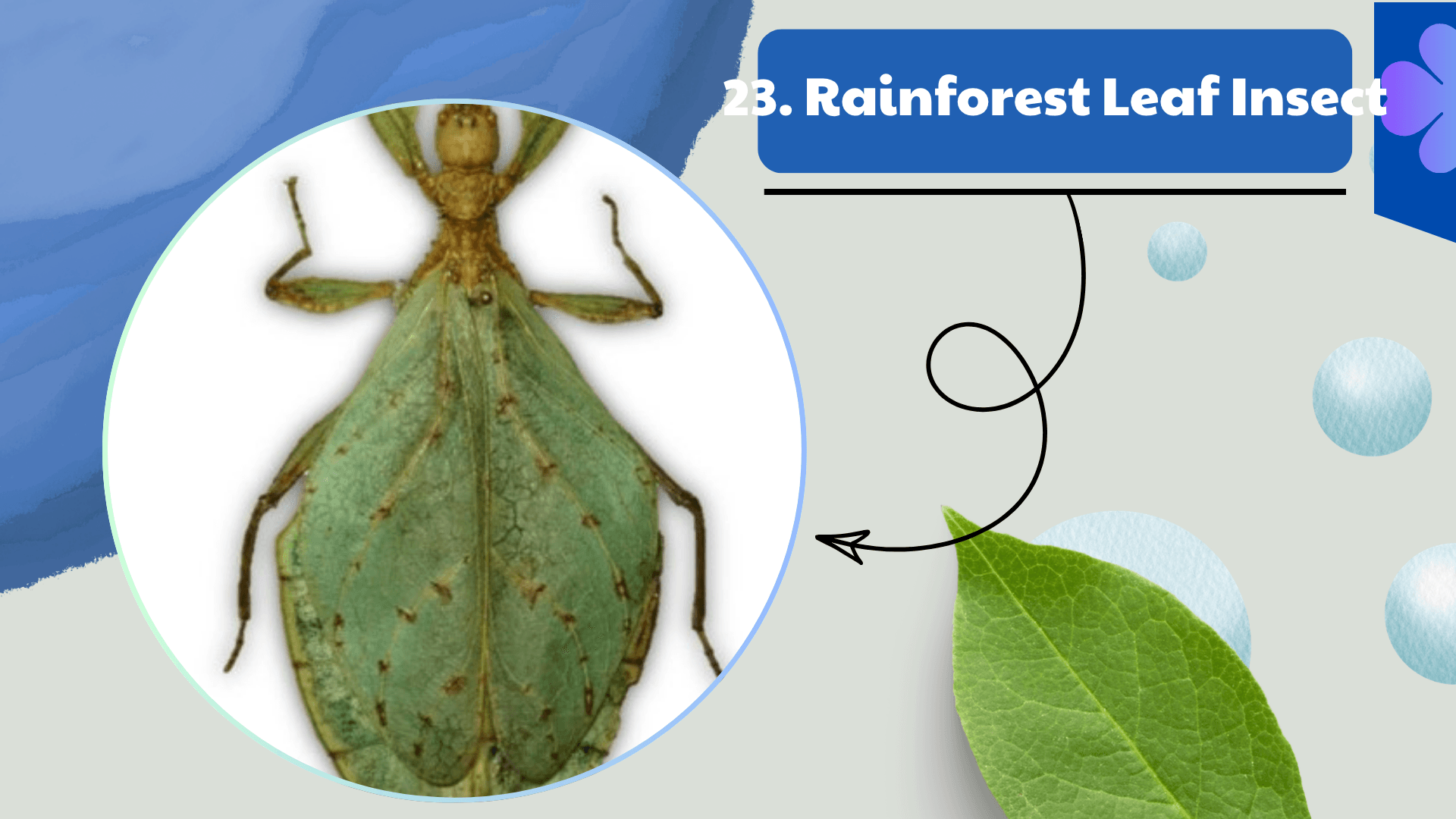
The Rainforest Leaf Insect is adapted to deep tropical rainforest environments, making it one of the most successful types of Leaf insect in high-humidity ecosystems. It blends perfectly into dense vegetation layers where light is filtered through thick canopies.
Its body is smooth, wide, and highly symmetrical, resembling fresh leaves with soft vein structures. This species is particularly effective at avoiding predators in environments with heavy foliage.
Females remain motionless for long periods, while males actively search for mates during nighttime or low-light conditions.
24. Flat Leaf Mimic Insect (Phylliidae spp. flat form)
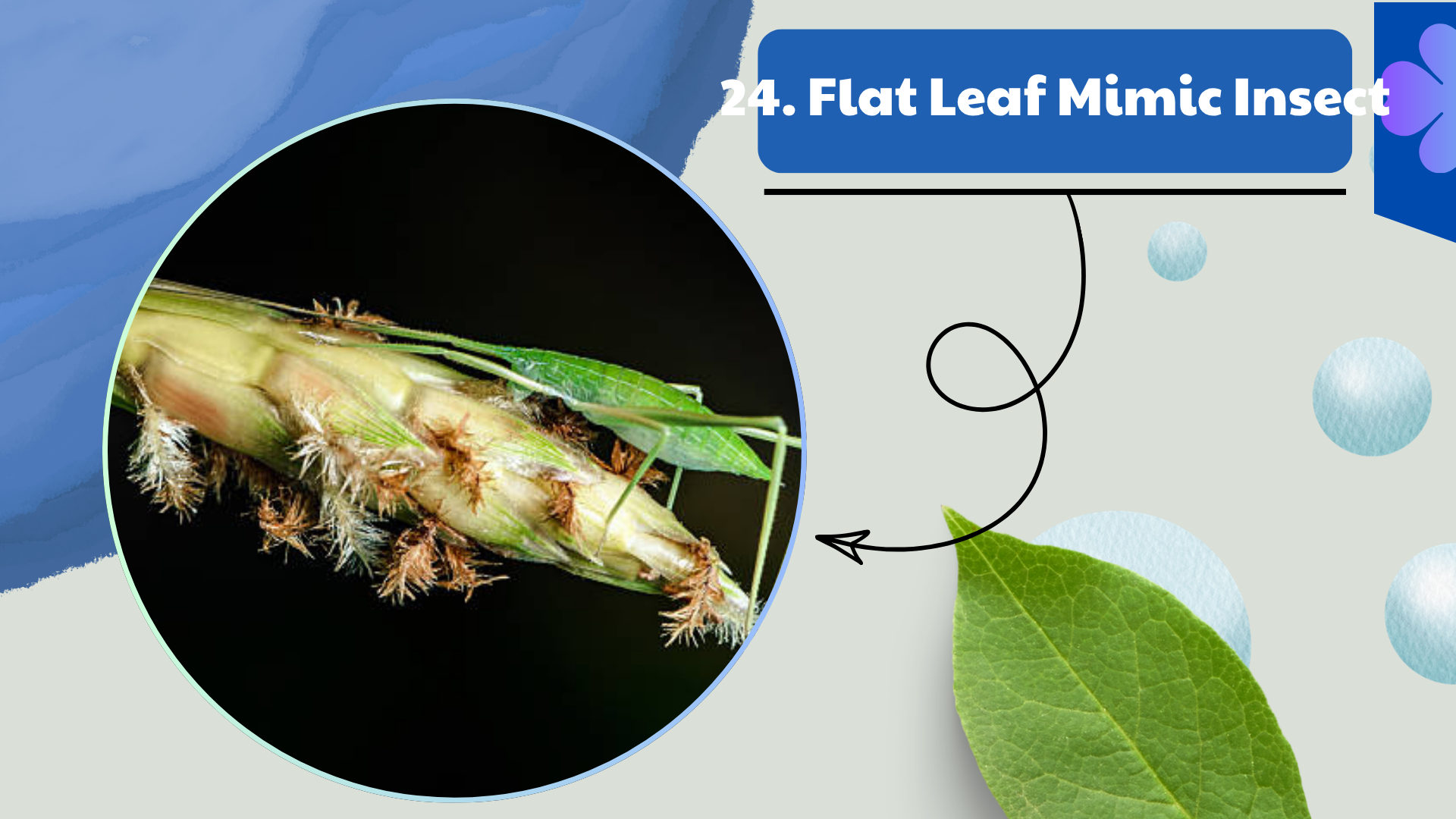
The Flat Leaf Mimic Insect is one of the most structurally simple yet effective types of Leaf insect. Its body is extremely flattened, allowing it to rest seamlessly against leaves without casting noticeable shadows.
This species focuses more on shape-based camouflage than color variation. Its edges often appear slightly uneven to simulate natural leaf damage.
It is commonly found in forest edges and understory vegetation, where blending into flat surfaces provides maximum protection.
25. Broad Leaf Insect (Phyllium latifolium-type)
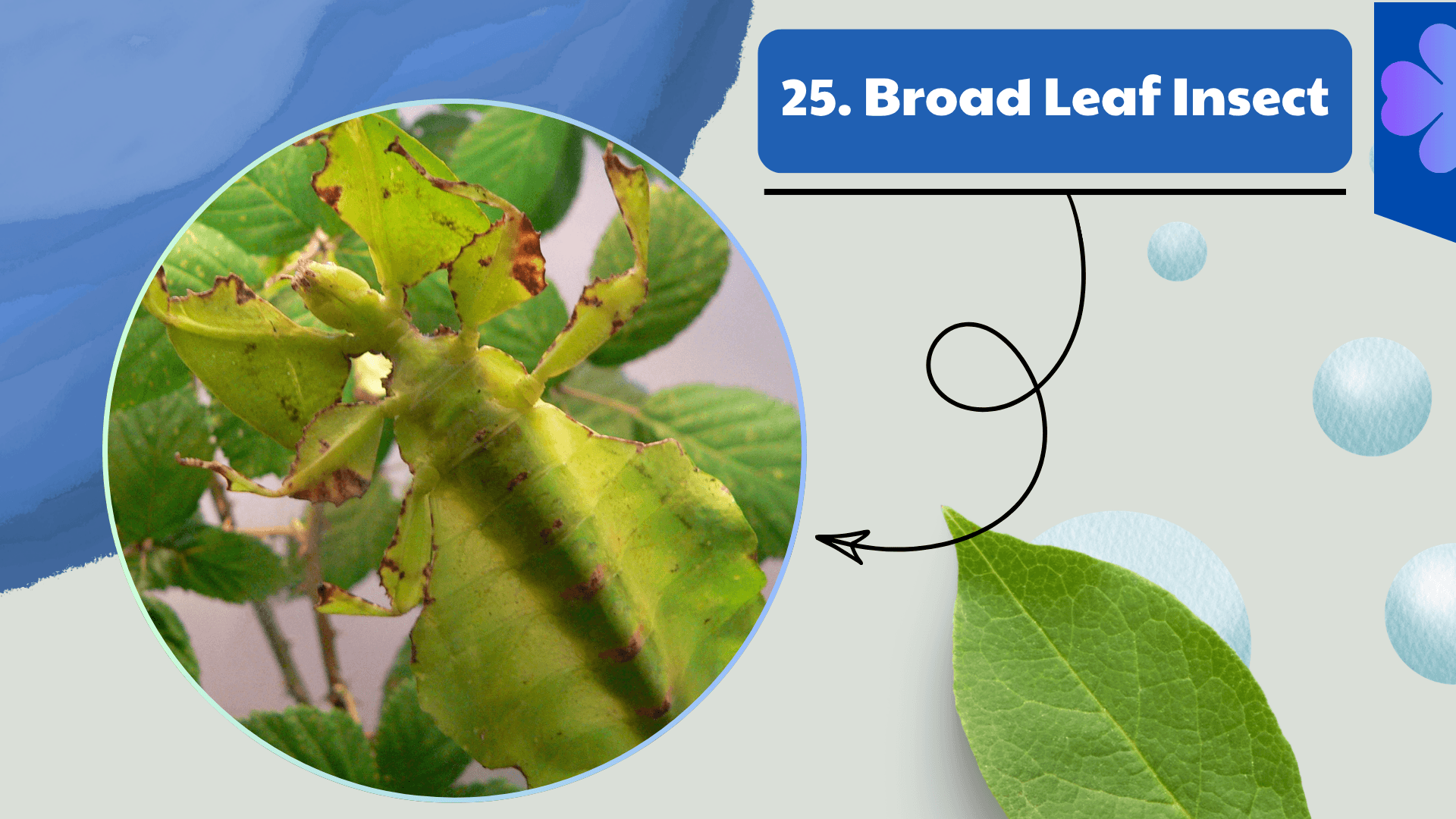
The Broad Leaf Insect is known for its wide body structure, making it resemble large tropical leaves. This is one of the most visually impressive types of Leaf insect due to its size and perfect symmetry.
Its camouflage is strongest in areas with broad-leaf plants, where it can easily disappear among real foliage. Females are especially large and slow-moving, relying entirely on stillness.
Males are smaller and more agile, using flight to locate mates across forest areas.
26. Narrow Leaf Insect (Phyllium angustifolium-type)
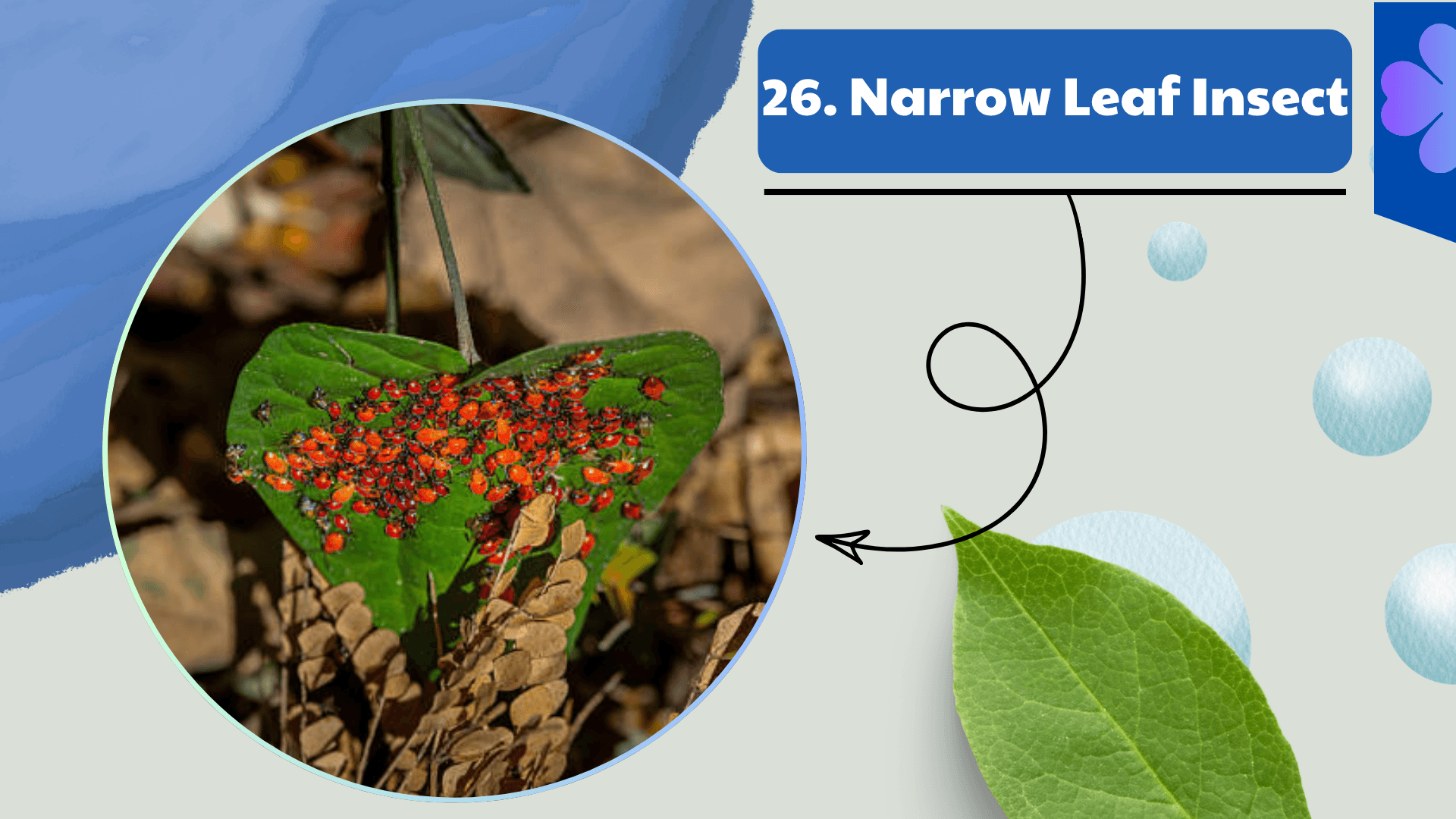
The Narrow Leaf Insect differs from other types of Leaf insect due to its elongated and slim body shape. This adaptation allows it to mimic thin leaves commonly found in bamboo or grass-like plants.
Its camouflage is highly specialized for narrow vegetation environments, where broader leaf insects would be easier to detect.
Females are still and rely on blending into vertical plant structures, while males are active and capable of short flights.
27. Spiny Edge Leaf Insect (Extatosoma leaf mimic group)
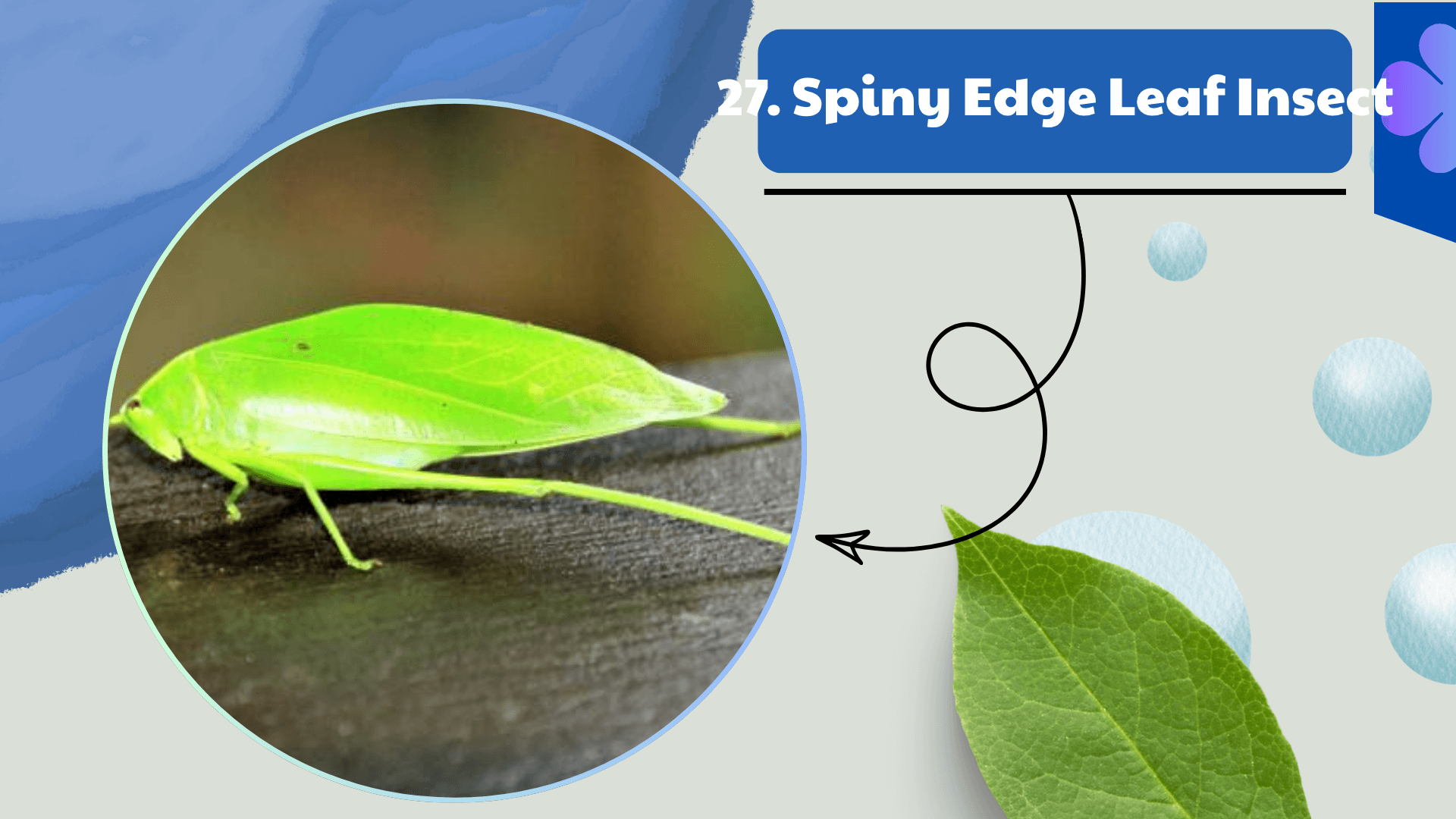
The Spiny Edge Leaf Insect combines leaf mimicry with defensive adaptations such as spiny body edges. This makes it one of the more unusual types of Leaf insect, as it blends camouflage with physical deterrence.
Its edges resemble damaged or thorny leaves, discouraging predators from attempting attacks. This dual strategy improves survival in predator-rich environments.
It is often found in mixed forest habitats where both camouflage and defense are necessary.
28. Eared Leaf Insect (Phyllium auriculatum-type)
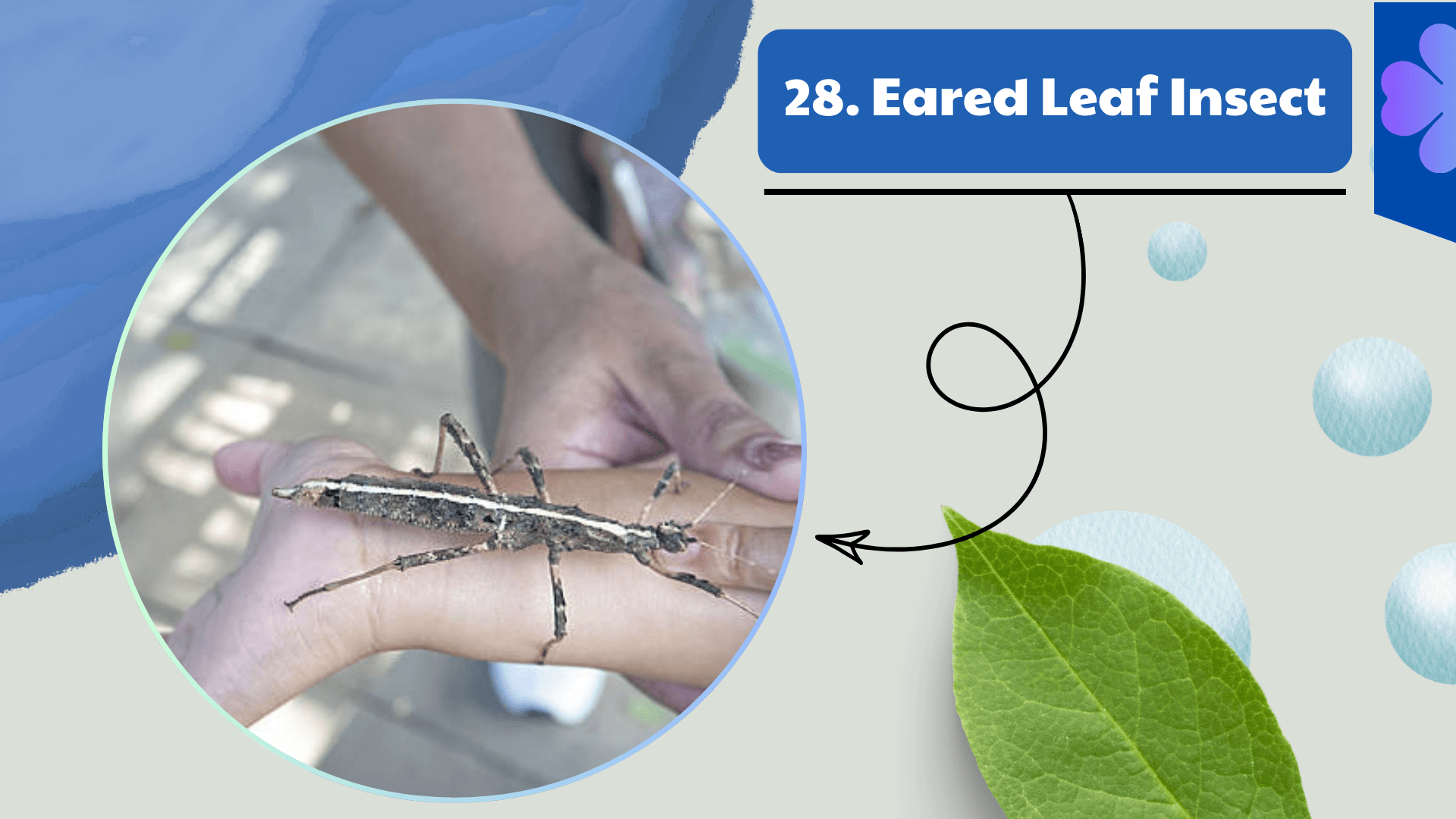
The Eared Leaf Insect gets its name from small protrusions that resemble leaf “ears” or lobes. This is one of the more distinct types of Leaf insect, with a highly irregular leaf outline.
These irregular shapes help break visual recognition patterns used by predators. Its body is designed to resemble partially eaten or naturally deformed leaves.
This species is typically found in dense tropical forests with high biodiversity.
29. Forest Camouflage Leaf Insect (Phyllium sylvaticum group)
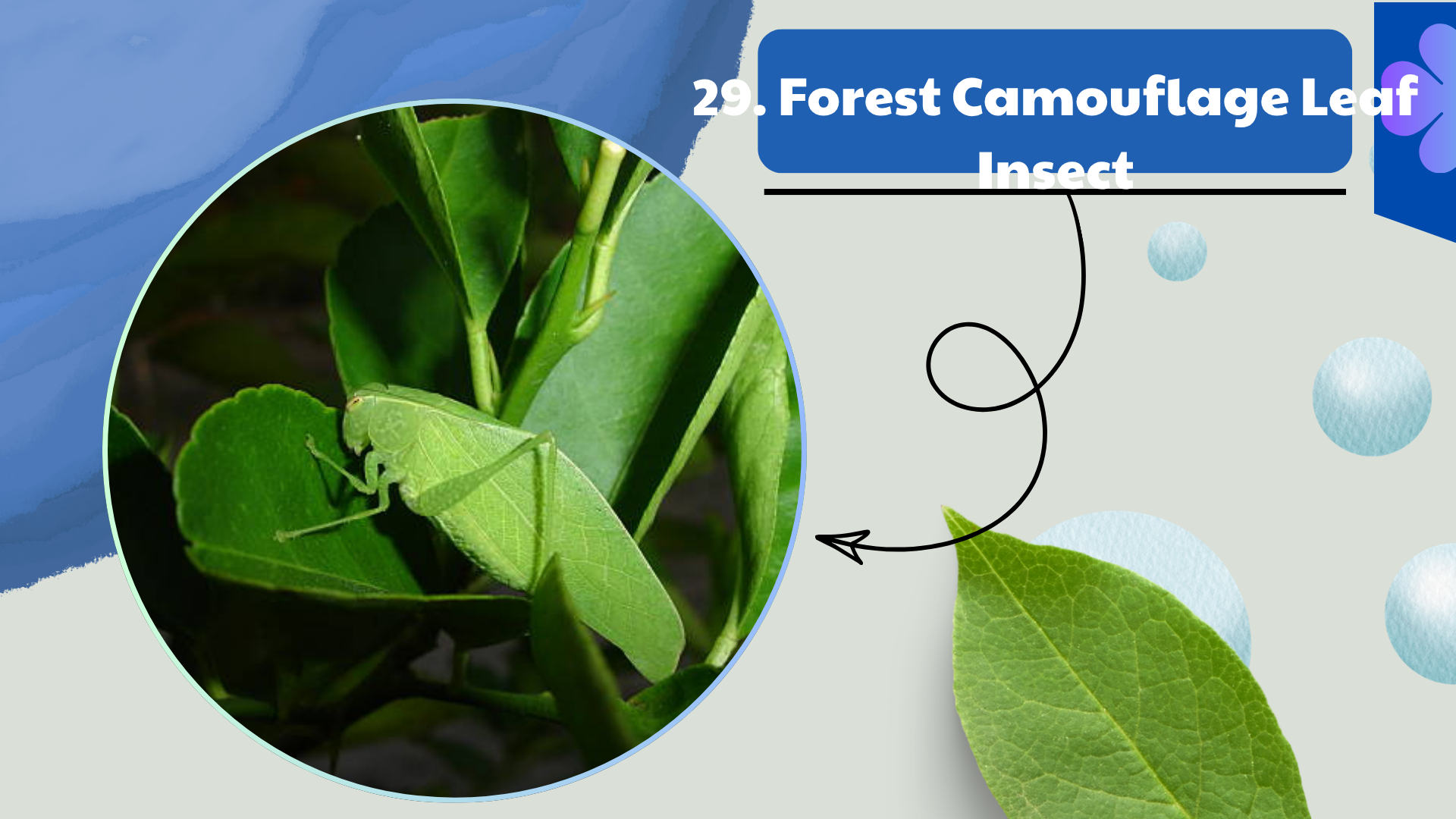
The Forest Camouflage Leaf Insect is a generalist species among types of Leaf insect, capable of adapting its appearance to different forest environments.
Its coloration and shape can vary slightly depending on surrounding vegetation, making it a flexible survivor in changing habitats.
Females remain stationary, while males are more active and travel between trees during breeding seasons.
30. Mini Leaf Insect (Phyllium nanum-type)
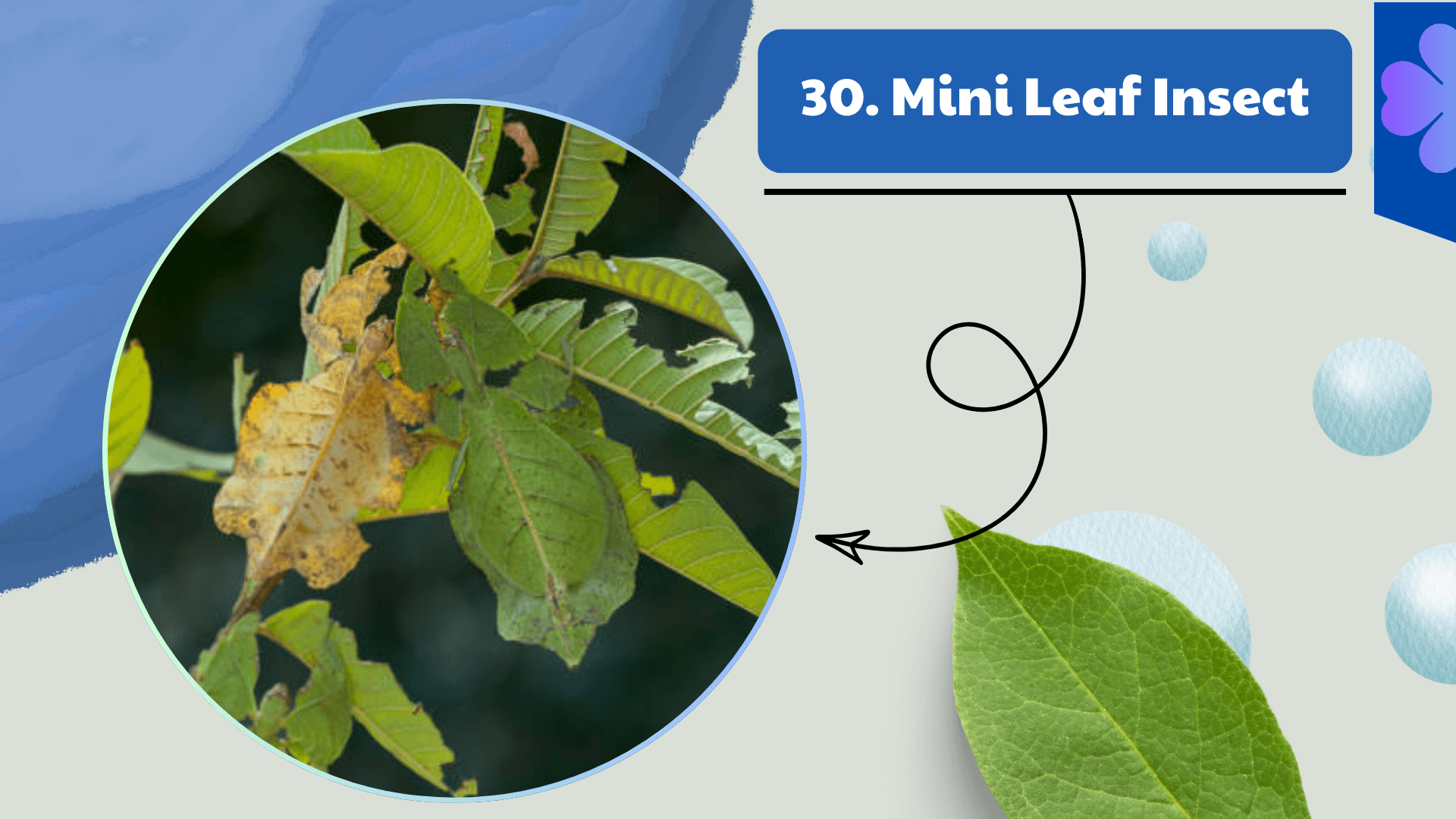
The Mini Leaf Insect is one of the smallest members of the types of Leaf insect, designed for micro-habitat survival in dense foliage layers.
Its small size allows it to hide between tightly packed leaves where larger insects cannot survive. Despite its size, its camouflage is extremely effective.
Females are tiny and slow-moving, while males are slightly more active and capable of short flights.
31. Tropical Garden Leaf Insect (Cultivated Habitat Variant)
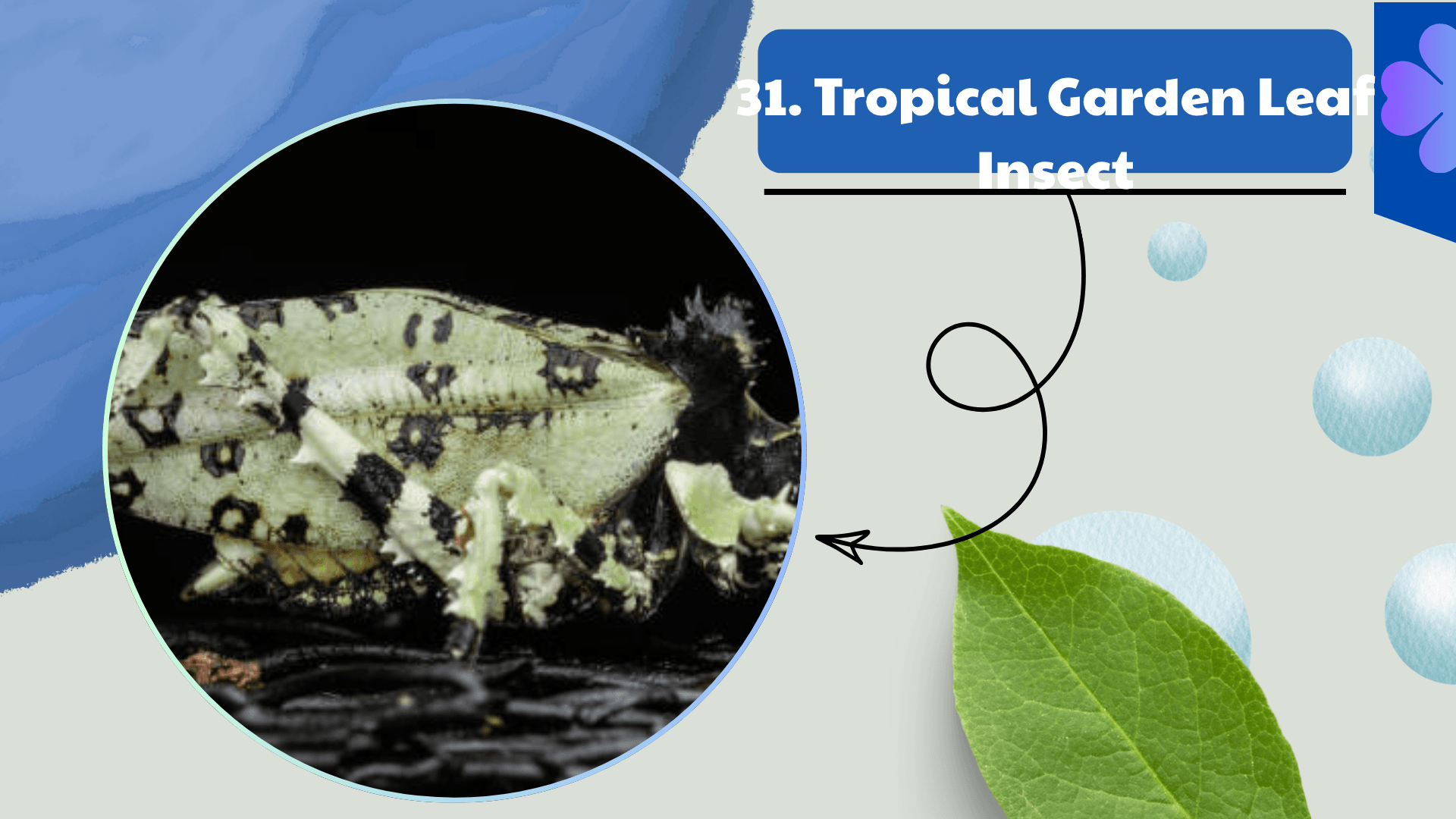
The Tropical Garden Leaf Insect is a lesser-known member within the broader types of Leaf insect, often found in semi-wild environments such as botanical gardens, plantations, and secondary forests. Unlike deep rainforest specialists, this variant has adapted to human-influenced ecosystems where plant diversity is more controlled but still abundant.
Its appearance is moderately bright green with soft vein patterns that resemble young, healthy leaves. This makes it highly effective in garden environments where ornamental plants dominate. The species demonstrates remarkable flexibility in adapting its camouflage to non-native plants.
Females are slow, wingless, and extremely dependent on stillness for protection. Males, however, are more mobile and use short flights to move between plant clusters. This mobility helps maintain genetic diversity even in fragmented habitats.
One interesting trait is its ability to adjust behavior in response to human activity. In areas with frequent disturbance, it becomes more nocturnal and less active during daylight hours.
32. Brown Edge Leaf Mimic (Dry Leaf Specialist Form)
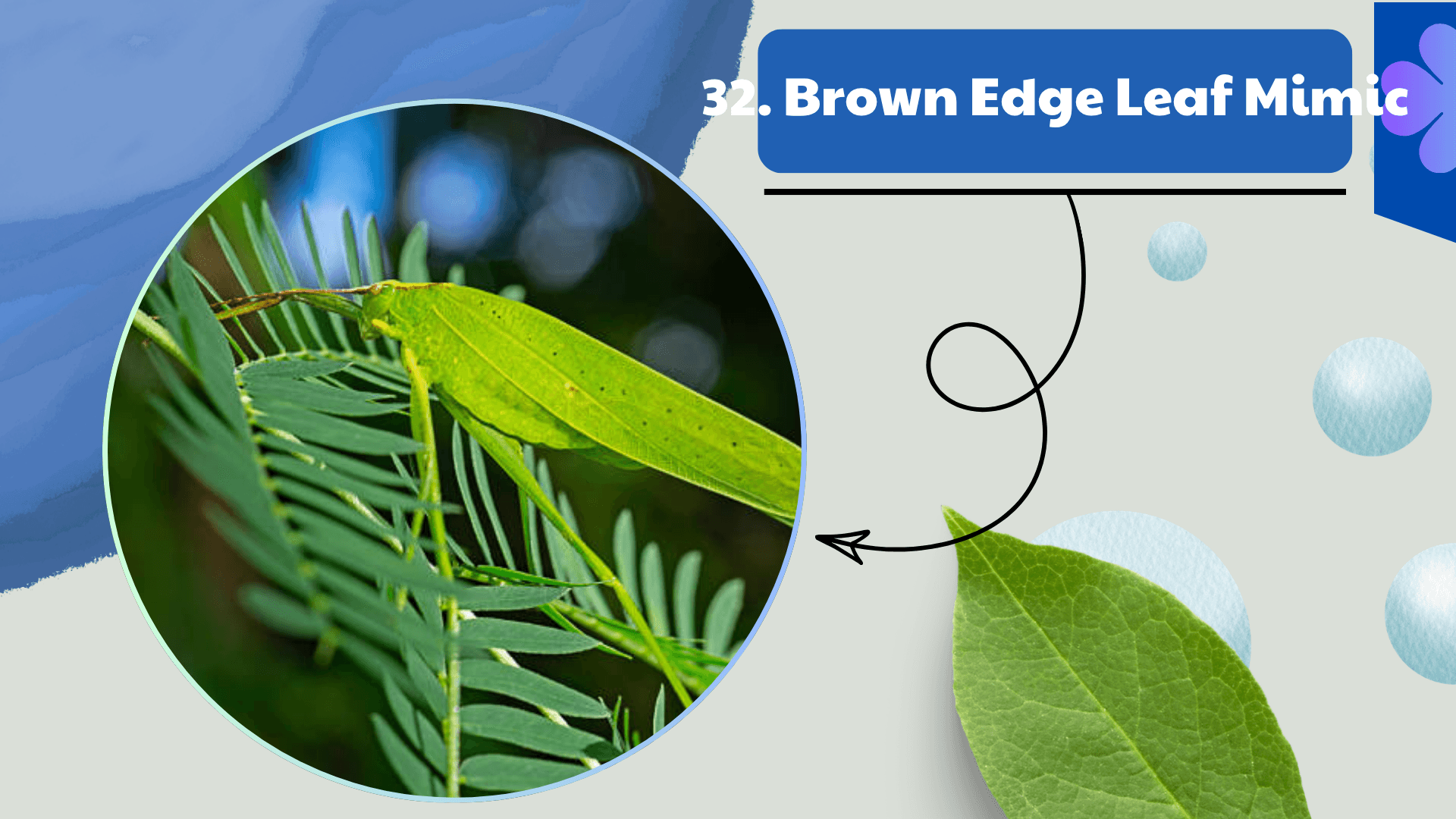
The Brown Edge Leaf Mimic is one of the most visually unique types of Leaf insect, specializing in imitation of aging or partially dried leaves. Instead of bright green coloration, it features brownish edges and faded central tones that resemble natural leaf decay.
This adaptation is particularly useful in seasonal forests where leaves regularly transition from green to brown. By mimicking multiple stages of leaf aging, this species avoids detection across a wider range of environments.
Its body edges appear slightly curled and irregular, enhancing the illusion of a drying leaf. This irregularity is intentional from an evolutionary perspective, as predators tend to ignore damaged or decaying plant matter.
Females are motionless for long durations, while males are more active and capable of short-range flight during mating seasons. Their survival strategy relies heavily on blending into leaf litter and lower vegetation layers.
33. Veined Leaf Insect (High-Detail Mimic Species)
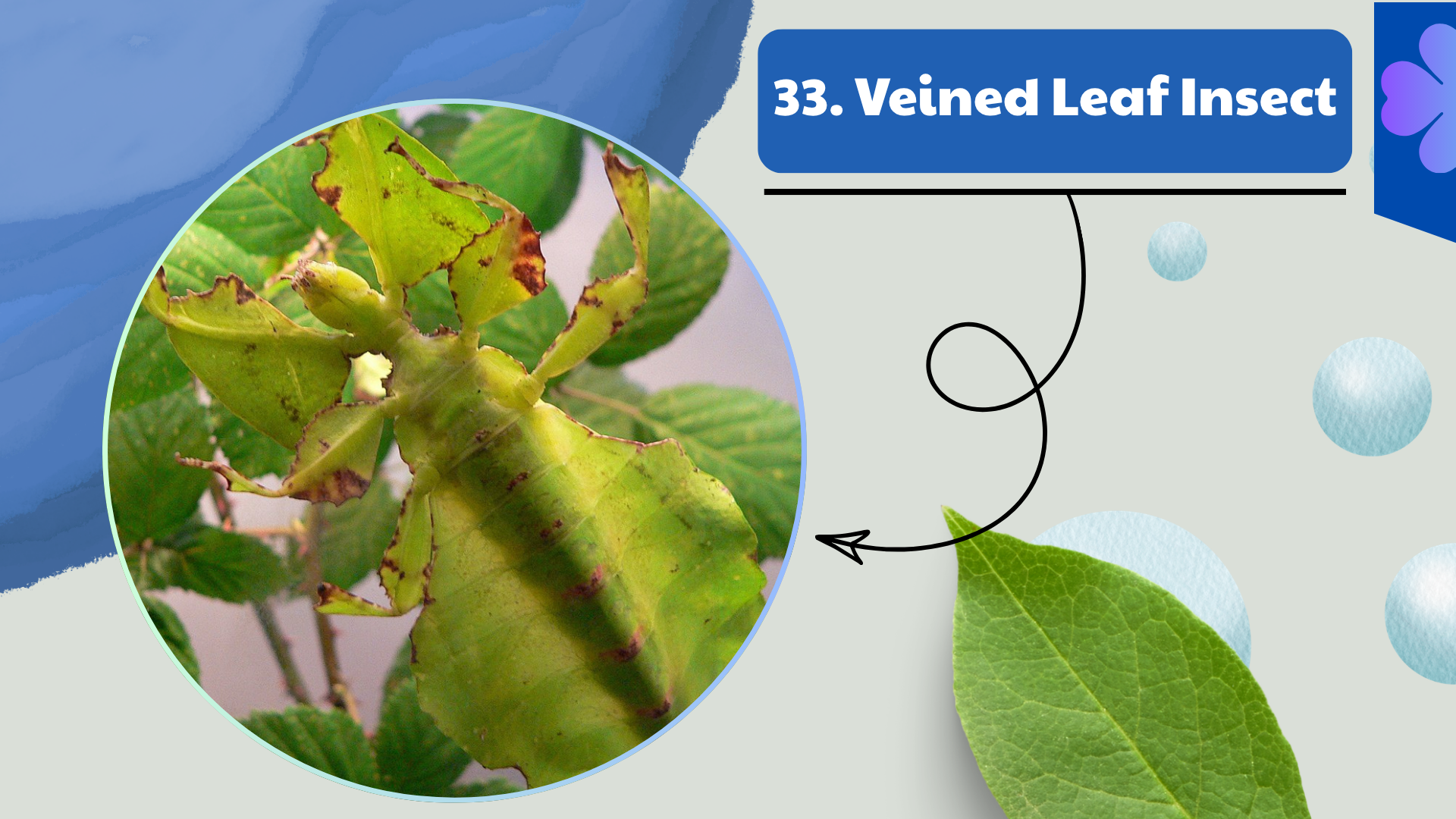
The Veined Leaf Insect represents one of the most detailed camouflage designs among all types of Leaf insect. Its body features highly visible vein-like structures that closely resemble real leaf vascular systems.
This species is often found in dense tropical forests where leaves are large and richly textured. The precision of its vein patterns makes it extremely difficult to distinguish from actual foliage even at close range.
Females are broad and flat, with a strong emphasis on symmetry. Males are slimmer and more agile, using flight to locate mates across forest canopies.
Researchers consider this species an example of “high-resolution mimicry,” where even microscopic leaf details are replicated for survival advantage.
34. Forest Floor Leaf Insect (Ground-Level Camouflage Specialist)
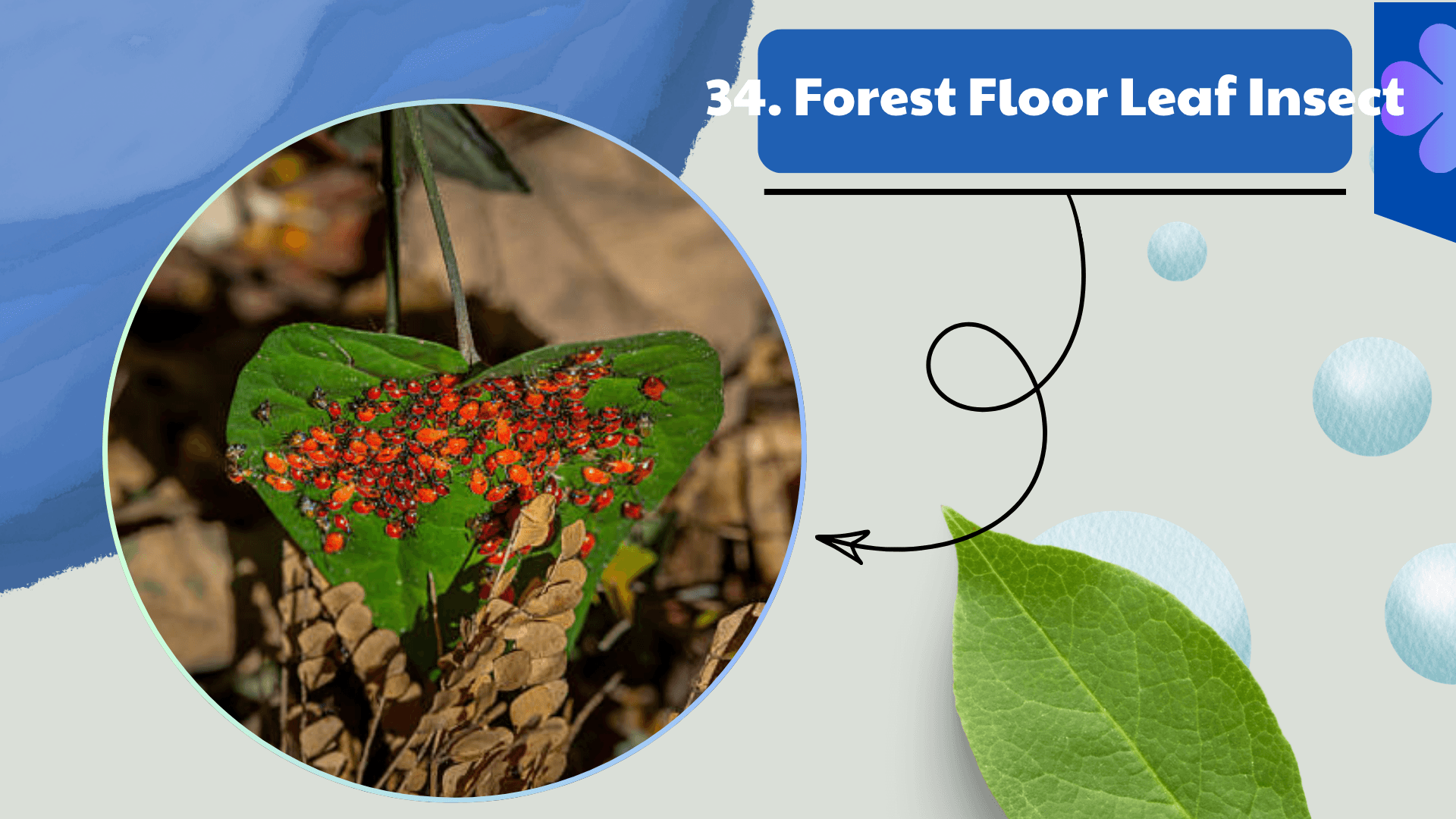
The Forest Floor Leaf Insect is adapted to one of the most challenging environments for camouflage: the forest floor. Among the types of Leaf insect, this species stands out because it mimics fallen leaves rather than living ones.
Its coloration includes darker browns, muted greens, and uneven shading that replicates decomposing leaf litter. This allows it to disappear among soil, debris, and decaying vegetation.
Unlike canopy-dwelling species, this insect spends most of its life close to the ground, where predator pressure from reptiles and small mammals is higher. Its survival depends heavily on stillness and blending into chaotic ground textures.
Females remain hidden within leaf litter, while males occasionally fly short distances during breeding periods. This species highlights the adaptability of leaf insects beyond green environments.
35. Veiled Leaf Insect (Final Rare Camouflage Variant)
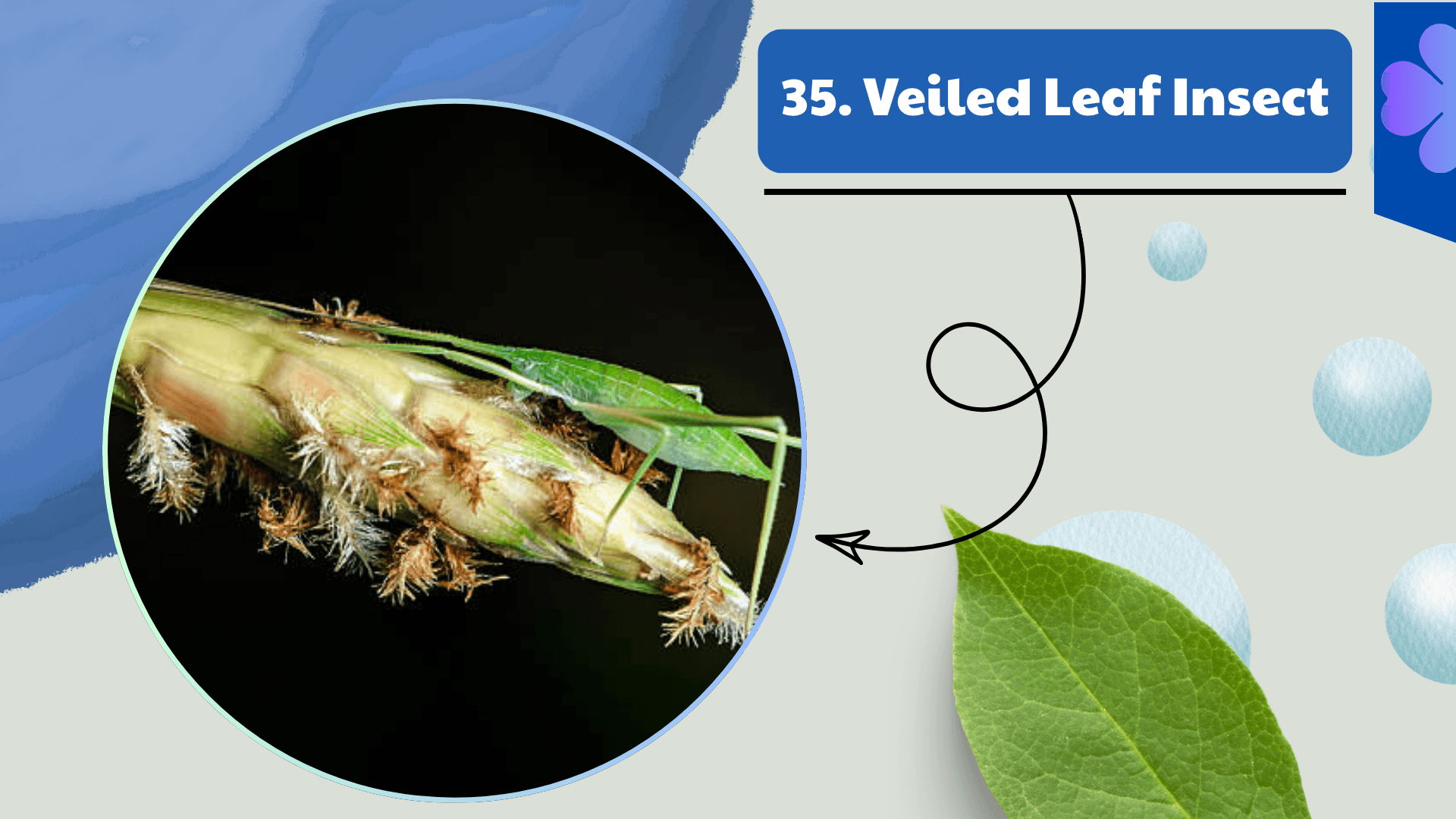
The Veiled Leaf Insect is one of the most mysterious and rare members of all types of Leaf insect. It is characterized by extremely subtle coloration and soft body contours that make it appear almost “blurred” when viewed against vegetation.
This species does not rely solely on shape or color but instead uses a combination of translucency-like appearance and shadow blending. Its edges seem to fade into surrounding leaves, making it incredibly difficult for predators to focus on it visually.
Females are extremely still and rely entirely on invisibility, while males are slightly more active but still maintain cryptic coloration during flight. This species is believed to inhabit deep forest zones where light conditions are low and filtering.
Because of its rarity and subtle appearance, it is one of the least studied leaf insects, and many aspects of its behavior remain unknown to science.
Conclusion
The types of Leaf insect showcase one of the most remarkable examples of natural camouflage in the entire animal kingdom. Across forests in Asia, Oceania, and tropical islands, these insects have evolved extraordinary body shapes, textures, and behaviors that allow them to imitate leaves with stunning accuracy.
From bright green canopy mimics to dead-leaf specialists and ground-level camouflage experts, each species plays a unique role in its ecosystem. Their survival depends on precision mimicry, stillness, and perfect adaptation to surrounding vegetation. This makes them not only fascinating to observe but also important indicators of healthy forest environments.
Beyond their beauty, leaf insects remind us how delicate and interconnected nature truly is. Their existence depends on intact forests, stable climates, and rich plant diversity. When these ecosystems are disturbed, such highly specialized species are often among the first to decline.
Studying leaf insects also helps scientists better understand evolution, adaptation, and survival strategies in extreme environments. Their camouflage techniques continue to inspire research in biomimicry, robotics, and environmental science.
In the end, the world of types of Leaf insect proves that nature is full of hidden masterpieces—quiet, invisible, and perfectly designed—but how many more of these living illusions are still waiting to be discovered in untouched forests around the world?
50+ Frequently Asked Questions (FAQ) About Leaf Insects
1. What are leaf insects?
Leaf insects are a group of camouflage masters in the family Phylliidae. They are known for their extraordinary ability to mimic leaves in shape, color, and even movement. This helps them avoid predators in tropical forests.
2. How many types of leaf insects are there?
There are around 50–100 known species depending on classification, but this article focuses on 35 well-recognized types of Leaf insect, including regional variants and species complexes.
3. Where do leaf insects live?
Leaf insects mainly live in tropical and subtropical forests across Southeast Asia, including Malaysia, Indonesia, Thailand, the Philippines, and parts of Australia.
4. Why do leaf insects look like leaves?
They evolved leaf-like bodies as a defense mechanism. By resembling leaves, they avoid detection from birds, reptiles, and other predators that rely on vision.
5. Are leaf insects dangerous?
No, leaf insects are completely harmless to humans. They do not bite, sting, or carry toxins. Their only defense is camouflage.
6. What do leaf insects eat?
They feed on fresh leaves from plants such as guava, bramble, mango, oak, and other tropical vegetation depending on habitat.
7. How big do leaf insects get?
Sizes vary by species. Some are only a few centimeters long, while giant species like Phyllium giganteum can reach over 10–12 cm in body length.
8. Can leaf insects fly?
Only males can fly in most species. Females are usually wingless and rely on camouflage for survival.
9. Why can’t female leaf insects fly?
Females are larger and heavier due to egg production. Their body design prioritizes camouflage and reproduction over mobility.
10. How do leaf insects protect themselves?
They rely on camouflage, stillness, swaying behavior, and sometimes leaf-like body edges that mimic damage or decay.
11. Do leaf insects move like leaves?
Yes, many species gently sway their bodies to imitate leaves moving in the wind, making their disguise more convincing.
12. Are leaf insects rare?
Some species are common in tropical forests, while others are extremely rare and only found in specific islands or habitats.
13. How long do leaf insects live?
Most leaf insects live between 6 months and 1.5 years depending on species, environment, and predation pressure.
14. Do leaf insects have predators?
Yes, they are preyed upon by birds, reptiles, spiders, and small mammals that can detect movement or spot them when camouflage fails.
15. How do leaf insects reproduce?
They reproduce sexually, but some species can reproduce through parthenogenesis, where females lay fertile eggs without mating.
16. What is parthenogenesis in leaf insects?
It is a form of asexual reproduction where females produce offspring without males. The offspring are genetic clones of the mother.
17. Where do leaf insects lay eggs?
Females drop eggs onto the forest floor. The eggs often resemble seeds or plant debris, which helps protect them from predators.
18. How long do leaf insect eggs take to hatch?
Eggs usually take several months to over a year to hatch depending on temperature and humidity conditions.
19. Are leaf insects good pets?
Yes, some species are kept as exotic pets because they are harmless and fascinating to observe, but they require controlled humidity and fresh food.
20. Do leaf insects change color?
Some species can slightly adjust their coloration based on diet, humidity, and environment, but they do not change color instantly like chameleons.
21. Why are leaf insects important in nature?
They help maintain ecological balance by contributing to the food chain and serving as indicators of forest health.
22. Can leaf insects survive outside forests?
They struggle outside tropical environments because they depend on high humidity, stable temperatures, and specific host plants.
23. How do scientists study leaf insects?
Researchers observe them in natural habitats and also breed them in laboratories to study evolution, camouflage, and reproduction.
24. What makes leaf insects unique?
Their extreme leaf mimicry, behavioral adaptation, and evolutionary specialization make them one of the best camouflage examples in nature.
25. Are leaf insects endangered?
Some species are at risk due to habitat loss, deforestation, and climate change, especially in Southeast Asia.
26. What is the biggest leaf insect species?
Phyllium giganteum is among the largest known species, reaching impressive sizes with wide, leaf-shaped bodies.
27. Do leaf insects live alone or in groups?
They are generally solitary insects and only come together for mating.
28. How do leaf insects breathe?
They breathe through small openings in their body called spiracles, which connect to internal respiratory tubes.
29. Can leaf insects bite?
No, they do not bite humans. They are completely harmless and rely on camouflage instead of aggression.
30. What is the difference between leaf insects and stick insects?
Leaf insects mimic leaves, while stick insects mimic twigs or branches. Both belong to camouflage insect groups but use different shapes.
31. Do leaf insects sleep?
They do not sleep like mammals but have periods of inactivity, especially during daylight hours.
32. Why are leaf insects green?
The green coloration helps them blend into fresh leaves, their primary habitat and food source.
33. Can leaf insects survive winter?
Most cannot survive cold climates and depend on warm tropical conditions year-round.
34. How do leaf insects detect danger?
They rely on vibrations, air movement, and light changes rather than sharp vision or hearing.
35. Do leaf insects have wings?
Males usually have wings, while females are typically wingless or have reduced wings.
36. Are leaf insects nocturnal?
Many species are more active at night to avoid predators and reduce detection.
37. What plants do leaf insects prefer?
They prefer guava, bramble, oak, mango, and other broadleaf plants depending on species.
38. Can leaf insects regenerate body parts?
They can sometimes regrow lost limbs during molting stages, especially when young.
39. What is molting in leaf insects?
Molting is the process of shedding their exoskeleton to grow larger as they develop.
40. How many times do they molt?
They usually molt several times before reaching adulthood, depending on species and conditions.
41. Do leaf insects migrate?
No, they are non-migratory and remain within localized forest habitats.
42. What is their biggest survival threat?
Habitat destruction due to deforestation is the biggest threat to their survival.
43. Can leaf insects be bred in captivity?
Yes, many species are successfully bred in controlled environments with proper humidity and food.
44. How do leaf insects camouflage so perfectly?
They use a combination of body shape, coloration, vein patterns, and behavioral stillness.
45. Do leaf insects interact with other insects?
They mostly avoid interaction and rely on hiding rather than social behavior.
46. Are leaf insects found worldwide?
No, they are mainly found in tropical regions of Asia and Oceania.
47. Why are leaf insects studied by scientists?
They help researchers understand evolution, camouflage, and biomimicry applications in technology.
48. Can leaf insects survive without leaves?
No, they depend entirely on fresh leaves for food and cannot survive without host plants.
49. What is the rarest leaf insect?
Some Cryptophyllium and newly discovered island species are considered extremely rare due to limited distribution.
50. What can we learn from leaf insects?
They teach us about adaptation, survival strategies, and the importance of biodiversity in ecosystems.
51. Why are leaf insects considered evolutionary marvels?
Because they show one of the most precise examples of natural camouflage, where form, behavior, and environment work together perfectly.
Read more: