

Anacondas are among the most powerful and fascinating snakes in the world, captivating both wildlife enthusiasts and casual observers alike. Known for their massive size, aquatic lifestyle, and unique hunting abilities, anacondas are true giants of the reptile world. In this article, we will explore the types of Anaconda, providing detailed information on their appearance, habitat, behavior, and distinguishing characteristics. Whether you are interested in the immense Green Anaconda or the lesser-known Bolivian Anaconda, this guide will give you an educational and friendly overview of these remarkable reptiles.
With a focus on accurate identification and understanding of each species, our review covers five major types of anacondas. Each description is crafted to be engaging and easy to read, while still providing enough scientific depth to satisfy curious readers and wildlife students alike.
1. Green Anaconda (Eunectes murinus)
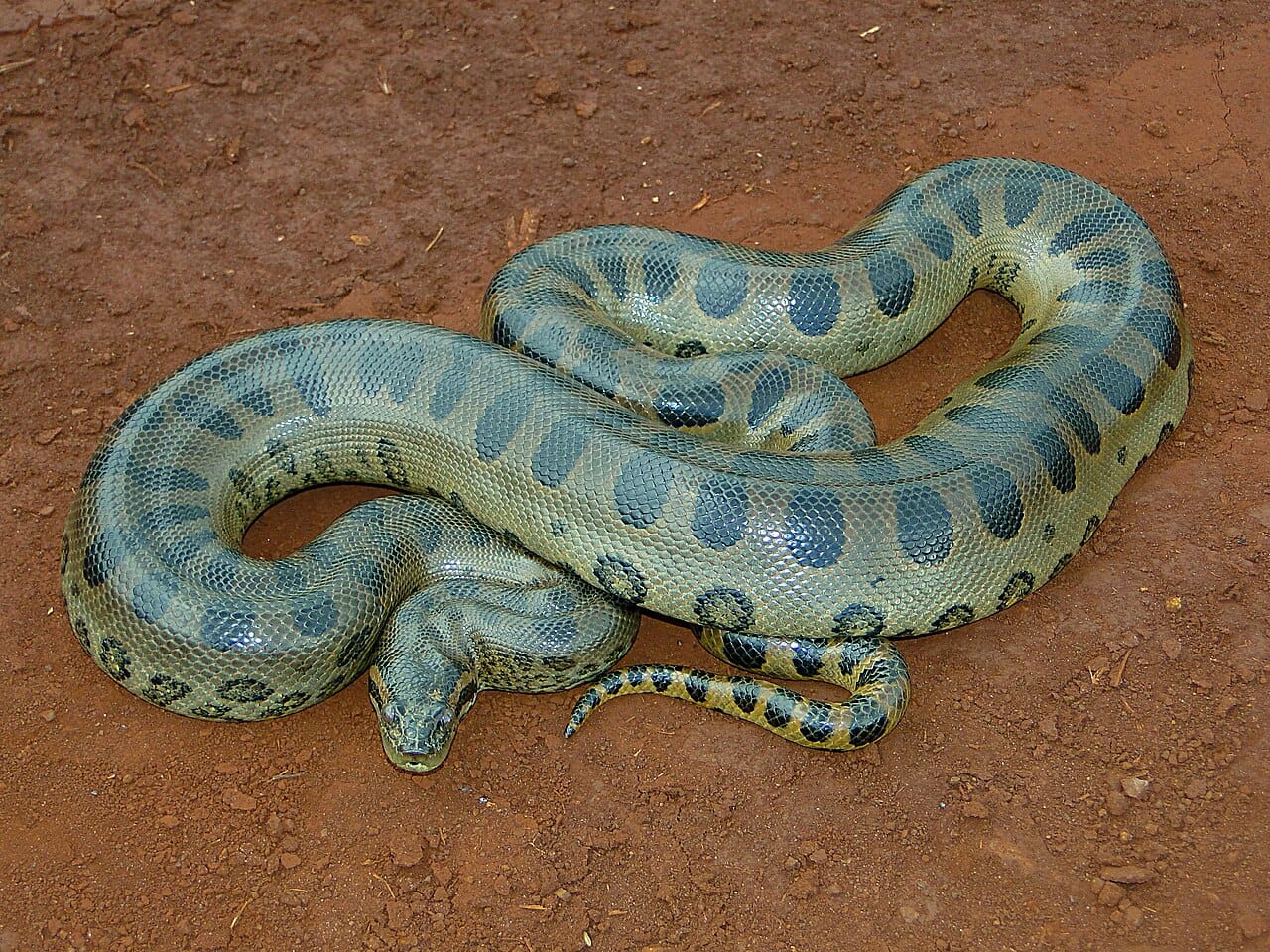
The Green Anaconda is perhaps the most famous and iconic of all anacondas. Native to the Amazon Basin, this enormous snake is renowned for being the heaviest snake in the world, sometimes reaching lengths of over 29 feet (8.8 meters) and weighing more than 550 pounds (250 kg). Its olive-green body is adorned with black oval spots, providing excellent camouflage in the murky waters of rivers and swamps.
Green Anacondas are primarily aquatic, spending most of their time submerged. This adaptation allows them to ambush prey silently and efficiently. Their diet is diverse, including fish, birds, mammals, and occasionally caimans and capybaras. Their muscular body allows them to constrict their prey with incredible strength.
Behaviorally, Green Anacondas are mostly nocturnal hunters, using their acute sense of smell and heat-sensitive pits to detect prey. Females are significantly larger than males, a trait known as sexual dimorphism. Reproduction involves internal fertilization, and females give birth to live young, often in litters of 20–40 pups. Green Anacondas are non-venomous but highly dangerous due to their size and strength.
In terms of conservation, Green Anacondas are not currently endangered, but habitat loss and hunting pose threats in certain regions. Observing them in the wild requires patience and respect for their aquatic environment. Understanding the Green Anaconda provides a window into the evolutionary adaptations that make this species one of the most formidable snakes in South America.
2. Yellow Anaconda (Eunectes notaeus)
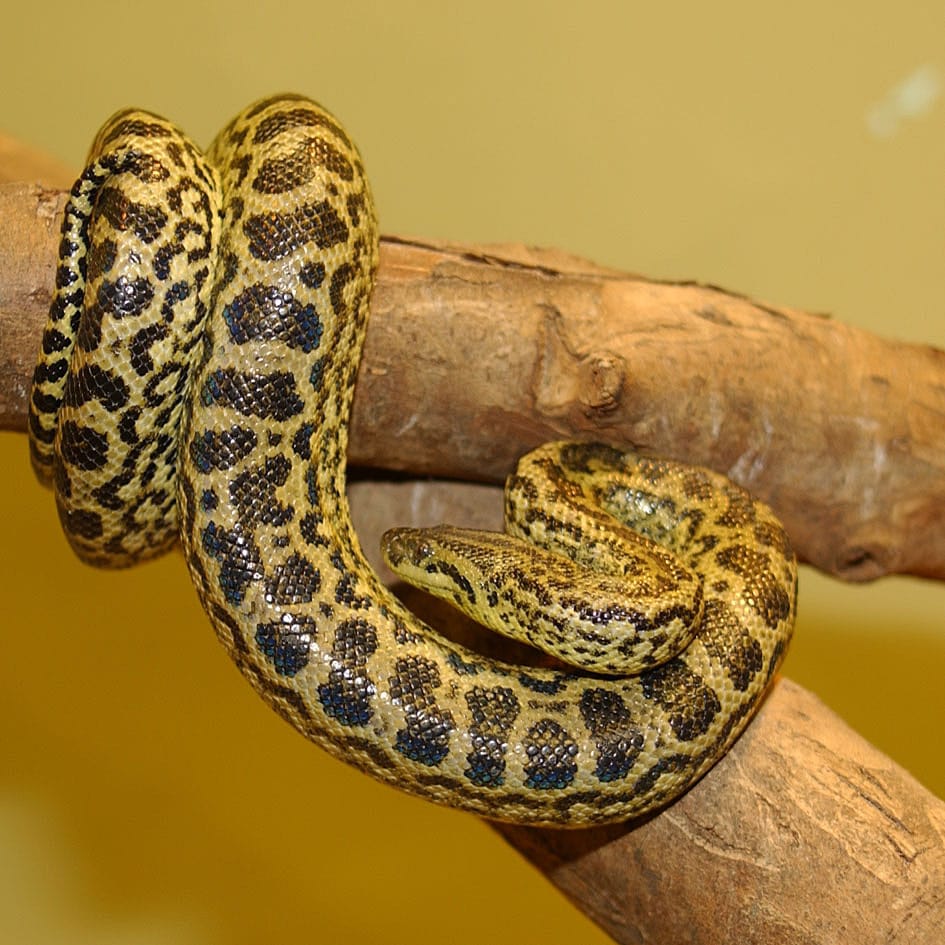
The Yellow Anaconda is smaller than the Green Anaconda but equally fascinating. Found primarily in Paraguay, Argentina, Bolivia, and Brazil, this species thrives in slow-moving rivers, marshes, and wetlands. Its yellowish-brown body, marked with black blotches, allows it to blend seamlessly into its aquatic surroundings.
Yellow Anacondas are excellent swimmers, spending much of their lives submerged to hunt and avoid predators. Their diet includes fish, amphibians, small mammals, and birds. They are known for their patience, often lying in wait for hours before striking with precision and strength. Similar to their green relatives, they constrict prey to subdue it, relying on muscular power rather than venom.
Behaviorally, Yellow Anacondas are mostly nocturnal and secretive. During the breeding season, males actively search for females, sometimes forming “breeding balls” where multiple males coil around a single female. Females give birth to live young, usually numbering 20–30, which immediately begin independent lives in the water-rich environment.
Despite their impressive size and predatory skills, Yellow Anacondas are generally not a threat to humans unless provoked. Conservation concerns include habitat destruction and water pollution, which can reduce prey availability. Observing Yellow Anacondas in their natural habitat provides insight into their unique adaptations for a semi-aquatic lifestyle.
3. Dark-Spotted Anaconda (Eunectes deschauenseei)
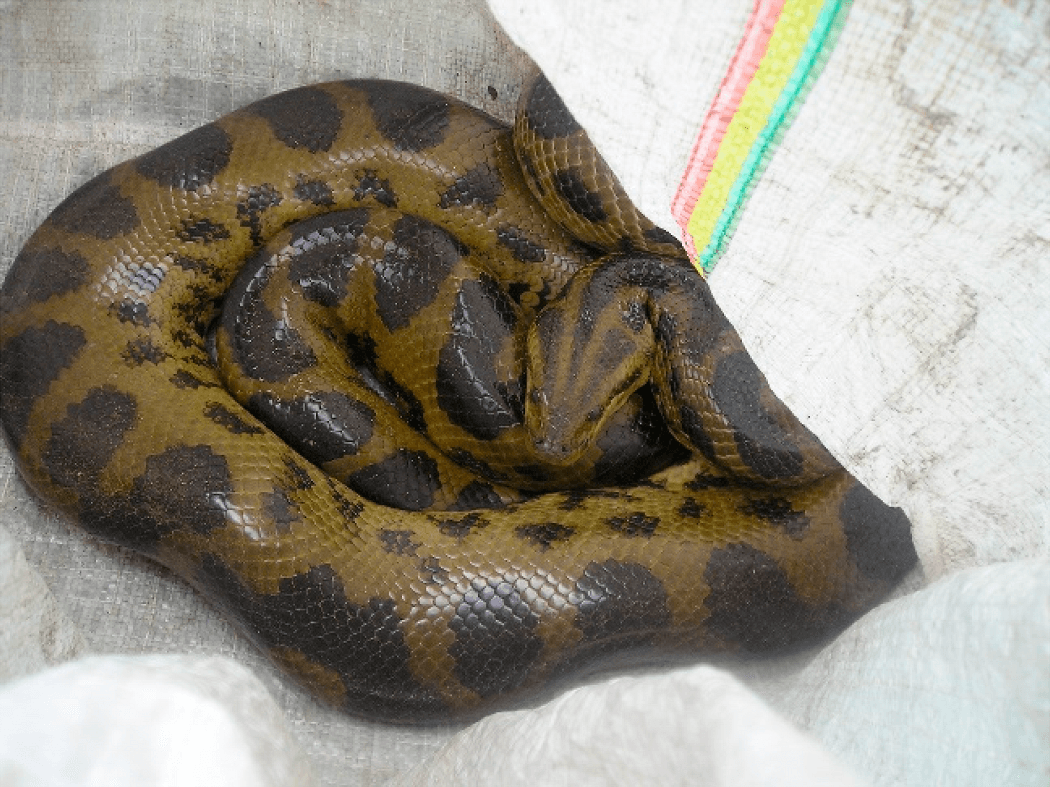
Also known as De Schauensee’s Anaconda, the Dark-Spotted Anaconda is one of the lesser-known species of the genus Eunectes. Found in northeastern South America, particularly in Brazil and the Guianas, this snake is distinguished by its darker blotches and more muted green-brown coloration compared to its famous green cousin.
Dark-Spotted Anacondas inhabit rivers, marshes, and floodplains. They are adept swimmers, using stealth and strength to capture fish, birds, and small mammals. While slightly smaller than Green or Yellow Anacondas, they can still reach lengths of 13–15 feet (4–4.5 meters) and display impressive constriction strength.
Reproduction in this species is viviparous, with females giving birth to live young. Males are smaller and less conspicuous, focusing primarily on locating receptive females during the breeding season. Their secretive nature and preference for dense aquatic habitats mean they are rarely observed in the wild.
Dark-Spotted Anacondas highlight the diversity within the anaconda genus, showcasing unique patterns and adaptations that allow them to thrive in specialized niches within South America’s wetlands.
4. Northern Green Anaconda (Eunectes akayima)
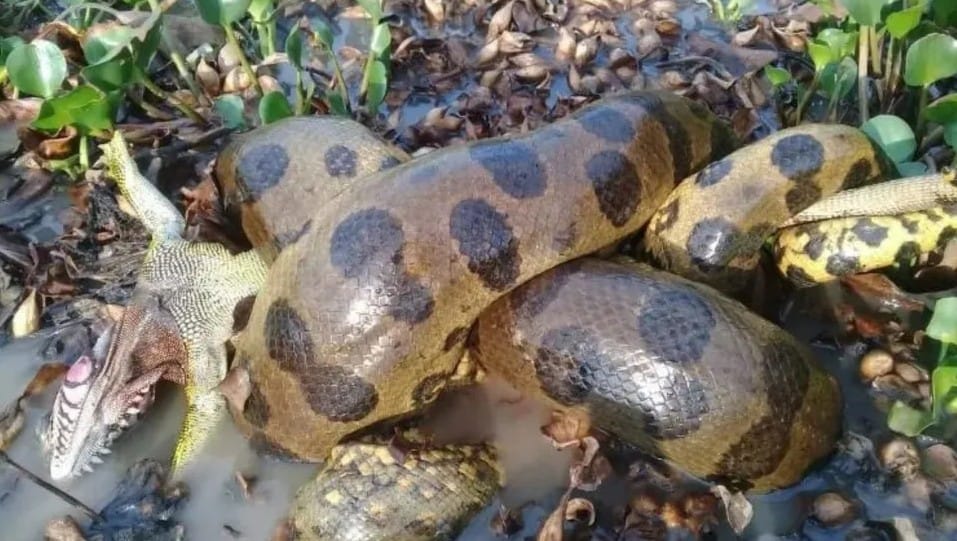
The Northern Green Anaconda is a recently recognized species closely related to the Green Anaconda. Native to northern South America, particularly the Amazonian regions of Venezuela and Colombia, it exhibits subtle differences in scale patterning and body morphology that distinguish it from its southern counterpart.
This species thrives in swampy rivers and dense rainforest waterways. Like other anacondas, it is an ambush predator, relying on camouflage and patience to capture prey. Its diet includes a range of vertebrates, with an emphasis on fish and mammals. Northern Green Anacondas are also non-venomous constrictors, using their muscular bodies to overpower prey.
Reproductive behavior mirrors that of Green Anacondas, with live births ranging from 15–30 offspring. Males actively compete for females during mating season, often forming coils around the female to secure mating opportunities. Northern Green Anacondas are highly adapted to life in watery environments, demonstrating both agility and stealth in hunting.
Understanding this species is essential for herpetologists and wildlife enthusiasts, as it underscores the genetic and ecological diversity present in the anaconda genus across different regions of South America.
5. Bolivian Anaconda (Eunectes beniensis)
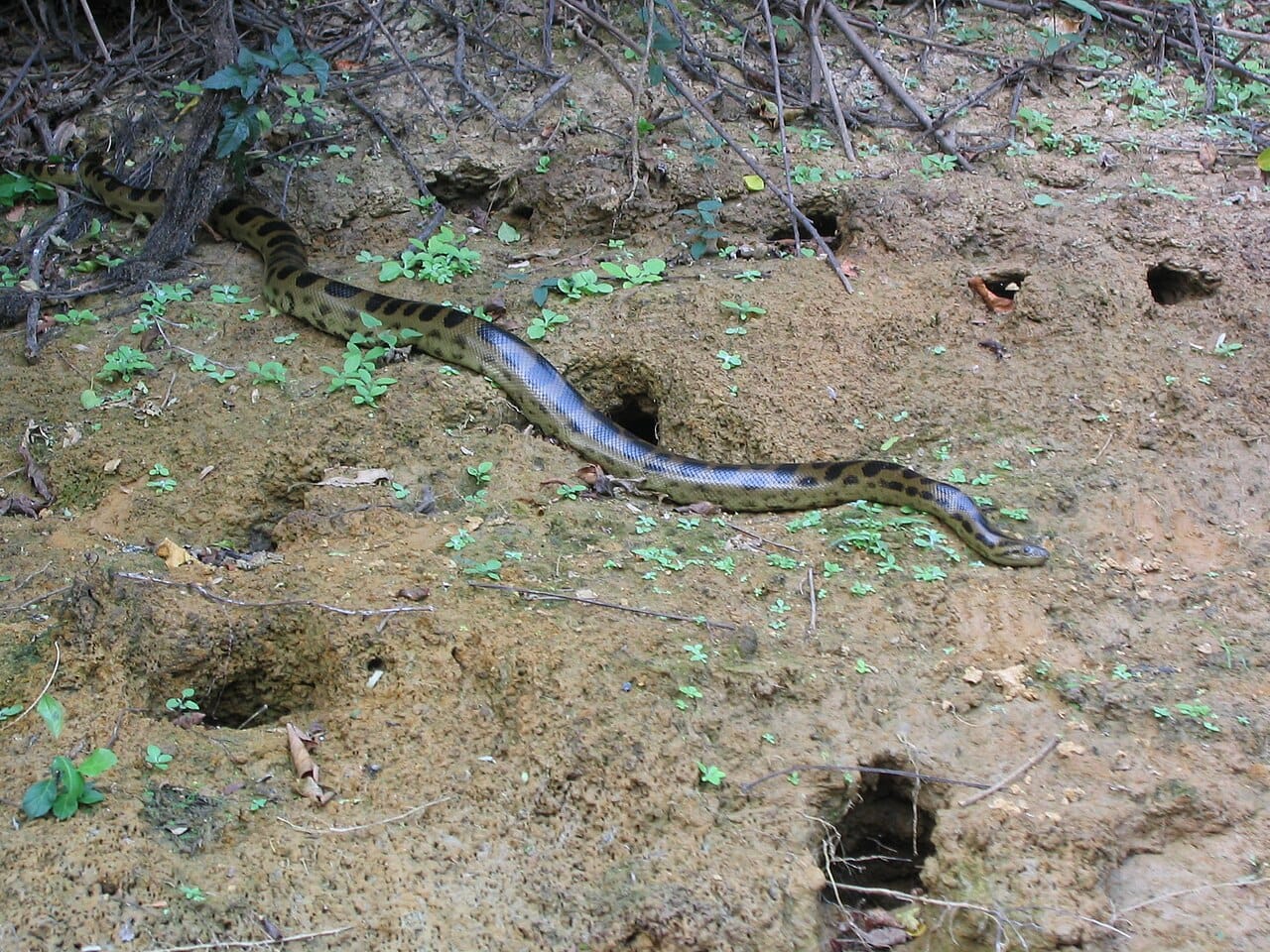
The Bolivian Anaconda is endemic to the Beni region of Bolivia, inhabiting swampy wetlands and slow-flowing rivers. This species is robust and powerful, with olive to brown coloration and distinctive black patterning. It is smaller than the Green Anaconda but still a formidable predator in its ecosystem.
Bolivian Anacondas are highly aquatic and rely on camouflage and ambush hunting strategies to capture fish, amphibians, and small mammals. Their muscular build allows them to constrict prey efficiently, making them apex predators in their habitat.
Reproductive behavior is similar to other anaconda species, with females giving birth to live young numbering around 20. Males are smaller and less noticeable, often engaging in competitive mating behaviors. Due to their remote habitat, Bolivian Anacondas are rarely observed, making them of particular interest to researchers studying South American reptiles.
Conservation of this species focuses on habitat protection, as wetland drainage and human encroachment pose potential threats. Studying Bolivian Anacondas provides insight into evolutionary adaptation, ecological roles, and the diversity of South American constrictors.
Overall, these five species showcase the remarkable diversity within the genus Eunectes. From the massive Green Anaconda to the elusive Bolivian Anaconda, each species demonstrates unique adaptations that allow them to thrive in South America’s varied aquatic ecosystems. Understanding these types of Anaconda helps us appreciate their role as apex predators and the ecological balance they maintain in their habitats.
Conclusion
Exploring the types of Anaconda reveals the fascinating diversity of these giant constrictors, from the world-renowned Green Anaconda to the elusive Bolivian Anaconda. Each species exhibits unique adaptations that allow it to thrive in the rivers, swamps, and wetlands of South America. Their immense strength, stealthy hunting techniques, and aquatic lifestyles make them apex predators in their ecosystems, maintaining a delicate ecological balance.
Understanding these anacondas not only satisfies curiosity for wildlife enthusiasts but also highlights the importance of conserving their habitats. Despite their size and power, most anacondas are non-venomous and avoid human interaction when possible. Protecting wetlands, rivers, and floodplains ensures that these remarkable reptiles continue to flourish in the wild.
From the patient ambush tactics of the Yellow Anaconda to the rarely observed Northern Green and Bolivian Anacondas, each species teaches us about evolutionary specialization and survival strategies. By learning about these types of Anaconda, we gain a deeper appreciation for one of the most extraordinary snake genera on the planet, emphasizing the need for responsible wildlife observation and conservation efforts.
FAQ About Types of Anaconda
1. What is an Anaconda?
An Anaconda is a large, non-venomous snake belonging to the genus Eunectes. They are known for their massive size, aquatic lifestyle, and powerful constriction abilities.
2. How many types of Anaconda are there?
There are five recognized types of Anaconda: Green Anaconda, Yellow Anaconda, Dark-Spotted Anaconda, Northern Green Anaconda, and Bolivian Anaconda.
3. Where do Anacondas live?
Anacondas are native to South America, primarily found in the Amazon Basin, Paraguay, Bolivia, Brazil, and surrounding regions, inhabiting rivers, swamps, and wetlands.
4. Are Anacondas venomous?
No, Anacondas are non-venomous snakes. They kill prey by constriction, coiling around their prey and suffocating it.
5. How big do Green Anacondas get?
Green Anacondas can grow up to 29 feet (8.8 meters) in length and weigh over 550 pounds (250 kg), making them one of the heaviest snakes in the world.
6. What do Anacondas eat?
Anacondas are carnivorous. Their diet includes fish, birds, mammals, and sometimes larger prey like caimans or capybaras.
7. Are Anacondas dangerous to humans?
Although powerful, Anacondas generally avoid humans. Attacks are extremely rare and usually occur only when the snake is provoked or threatened.
8. How do Anacondas reproduce?
Anacondas are ovoviviparous, meaning females give birth to live young after internal fertilization. Litter sizes can range from 15–40 pups depending on species and size.
9. What is the difference between Green and Yellow Anacondas?
Green Anacondas are larger, darker, and found mainly in the Amazon Basin, while Yellow Anacondas are slightly smaller, yellowish in color, and found in southern South America.
10. How do Anacondas hunt?
Anacondas use ambush predation, lying in wait in water to strike unsuspecting prey. They rely on camouflage, stealth, and powerful constriction to capture animals.
11. What is the Northern Green Anaconda?
The Northern Green Anaconda is a recently recognized species, closely related to the Green Anaconda, native to northern parts of South America.
12. Where is the Bolivian Anaconda found?
The Bolivian Anaconda is endemic to Bolivia’s Beni region, living in swamps, marshes, and slow-flowing rivers.
13. How long do Anacondas live?
In the wild, Anacondas can live up to 10–15 years, while in captivity, some individuals can live over 20 years with proper care.
14. Are Anacondas good swimmers?
Yes, Anacondas are excellent swimmers. They spend most of their lives submerged, which helps them hunt and avoid predators.
15. What is the Dark-Spotted Anaconda?
Also known as De Schauensee’s Anaconda, this species has darker markings and inhabits northeastern South America, particularly Brazil and the Guianas.
16. Can Anacondas climb trees?
Although primarily aquatic, some smaller Anacondas may climb low branches or bushes near water, but large adults rarely do.
17. How fast do Anacondas move?
Anacondas are relatively slow on land due to their size but are agile and fast in water.
18. Do Anacondas shed their skin?
Yes, like all snakes, Anacondas shed their skin periodically to allow for growth and remove parasites.
19. What is the lifespan difference between male and female Anacondas?
Females generally live longer than males and grow larger due to sexual dimorphism, which is common among Anaconda species.
20. Are Anacondas solitary animals?
Yes, Anacondas are mostly solitary, coming together only for mating or in occasional hunting areas with abundant prey.
21. What is the largest species of Anaconda?
The Green Anaconda is the largest species, both in length and weight.
22. How do Anacondas detect prey?
They use heat-sensitive pits, a keen sense of smell, and vibration detection to locate prey, even in murky waters.
23. Can Anacondas survive outside water?
Yes, they can move on land, but they prefer aquatic environments where hunting and temperature regulation are easier.
24. Are Anacondas endangered?
Most Anaconda species are not currently endangered, but habitat destruction and human activity pose localized threats.
25. What is the heaviest Anaconda species?
The Green Anaconda holds the record as the heaviest, reaching up to 550 pounds (250 kg).
26. How do Anacondas interact with other predators?
Anacondas are apex predators but may occasionally compete with caimans, jaguars, or large birds of prey for resources.
27. Can Anacondas see underwater?
Yes, their eyes are adapted for both above and below water vision, allowing them to detect movements of prey effectively.
28. What is the average length of a Yellow Anaconda?
Yellow Anacondas typically reach lengths of 10–15 feet (3–4.5 meters), smaller than Green Anacondas.
29. How many eggs do Anacondas lay?
Unlike egg-laying snakes, Anacondas give birth to live young instead of laying eggs.
30. Can Anacondas eat humans?
Attacks on humans are extremely rare, but theoretically, very large individuals could pose a danger. Most avoid human interaction.
31. What is the habitat of the Northern Green Anaconda?
They inhabit flooded forests, rivers, and swamps in northern South America, especially in Colombia and Venezuela.
32. What is the diet of the Bolivian Anaconda?
Bolivian Anacondas eat fish, amphibians, and small mammals, relying on stealth and water camouflage.
33. How does the Dark-Spotted Anaconda differ from Green Anaconda?
It is smaller, has darker markings, and is less studied due to its elusive habitat.
34. Do Anacondas have natural predators?
Young Anacondas may fall prey to birds, caimans, and other snakes, but adults are largely apex predators.
35. Can Anacondas swim long distances?
Yes, they are strong swimmers capable of traveling long stretches of rivers and wetlands.
36. How often do Anacondas eat?
They can go weeks or even months between meals due to their large size and slow metabolism.
37. Are Anacondas cold-blooded?
Yes, they are ectothermic reptiles, relying on external heat sources to regulate their body temperature.
38. What adaptations help Anacondas hunt in water?
Camouflaged bodies, nostrils positioned on top of the head, and excellent swimming abilities make them efficient aquatic hunters.
39. How many offspring does a Green Anaconda have?
A female Green Anaconda may give birth to 20–40 live young, depending on her size and health.
40. Can Anacondas survive in captivity?
Yes, with proper care, diet, and space, Anacondas can live in captivity, sometimes exceeding 20 years of age.
41. What is the primary threat to Anacondas?
Habitat loss, water pollution, and hunting for skins or the exotic pet trade are the main threats to Anacondas.
42. How do Anacondas breathe underwater?
They cannot breathe underwater; they must surface to inhale air, but they can hold their breath for long periods while submerged.
43. Do Anacondas hibernate?
In colder regions, they may enter periods of reduced activity, but true hibernation is rare in tropical species.
44. Are there albino Anacondas?
Albino variants are extremely rare but do exist in captivity due to selective breeding.
45. How fast can Anacondas strike?
They strike quickly when ambushing prey, using powerful muscles to secure and constrict targets.
46. Do Anacondas climb trees?
Smaller Anacondas may climb low branches, but adult Anacondas rarely leave water.
47. What is the conservation status of Bolivian Anaconda?
Currently, it is not considered endangered but may be vulnerable to habitat degradation.
48. Can Anacondas live in saltwater?
No, they are freshwater snakes and do not survive in marine environments.
49. How do researchers study Anacondas?
They use tagging, telemetry, and observation in natural habitats to understand behavior, size, and movement patterns.
50. What is the lifespan of a Northern Green Anaconda?
Typically 10–15 years in the wild, but they can live longer in protected captive conditions.
Read more:
- 35 Types of Bass Fish (Pictures And Identification)
- 15 Types of Sea Snakes (Pictures And Identification)
- 29 Types of Pythons (Pictures and Identification)
- 29 Types of Venomous Snakes: Identification and Facts
- 20 Types of Wild Snakes (Pictures And Identification)
- What Do Snakes Eat? 50 Foods They Love the Most