

Pufferfish are one of the most fascinating marine creatures you’ll ever encounter. Known scientifically as members of the Tetraodontidae family, Types of Pufferfish come in a dazzling array of colors, shapes, and sizes. These slow-moving, yet highly intelligent fish are famous for their ability to inflate into a spiny ball when threatened—a defense mechanism that makes predators think twice. From freshwater rivers to tropical coral reefs, pufferfish thrive in diverse habitats across the globe. In this article, we’ll explore 25 Types of Pufferfish, offering identification tips, behavior insights, and fun facts for each. Whether you’re an aquarium hobbyist, a marine enthusiast, or just curious, this guide will make pufferfish feel like old friends. By the end, you’ll understand why these remarkable fish captivate scientists and divers alike.
1. Green Spotted Pufferfish (Dichotomyctere nigroviridis)
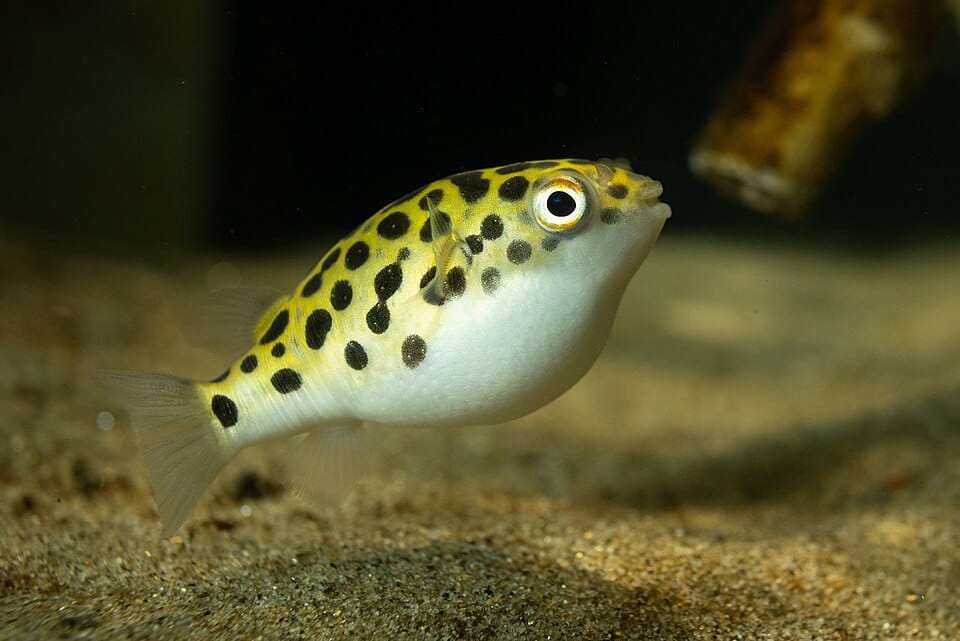
The freshwater marvel of Southeast Asia
The Green Spotted Pufferfish, a freshwater-to-brackish species, is a small but striking fish native to rivers and estuaries in Southeast Asia. Its olive-green body speckled with bright yellow or green dots gives it a look like a living gemstone. Aquarists prize this species for its intelligence and quirky behaviors. Despite its small size, it exhibits complex hunting patterns, often inspecting its tank environment carefully before moving. Green Spotted Puffers are highly social when kept in groups, yet they can become territorial. This fish thrives in water with variable salinity, showing a remarkable adaptability that has helped it survive in the ever-changing estuarine habitats of Asia.
Diet and Feeding
Green Spotted Puffers are omnivorous, enjoying snails, crustaceans, and even hard-shelled mollusks. Their beak-like teeth grow continuously, allowing them to crush shells efficiently. Observing them feed is like watching a tiny underwater engineer at work, delicately breaking apart prey with precision. This diet contributes to the species’ healthy growth and longevity.
Behavior and Personality
Known for their curiosity, these puffers investigate new objects in their tank or natural habitat. Their personality ranges from shy to feisty, making them a joy for marine observers. Interestingly, Green Spotted Puffers can recognize individual humans, often approaching their caretaker when food is offered. In the wild, their inflation defense is their first line of protection against predators such as larger fish and birds.
2. Blue-Spotted Pufferfish (Arothron caeruleopunctatus)
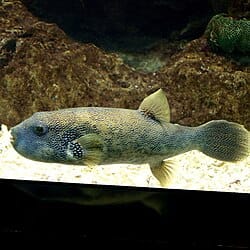
The coral reef jewel
The Blue-Spotted Pufferfish is a dazzling marine species found primarily in Indo-Pacific coral reefs. Its deep, dark body is adorned with bright blue spots, giving it a celestial appearance reminiscent of a night sky dotted with stars. Reef divers often spot these fish hovering slowly near coral heads, inspecting the surroundings with almost human-like curiosity. These puffers grow larger than many freshwater varieties, reaching up to 45 centimeters in length. Despite their slow swimming style, they are agile when threatened, inflating rapidly to ward off predators. Their bold colors serve as a warning, signaling potential toxicity from tetrodotoxin, a potent chemical defense.
Habitat and Range
Blue-Spotted Puffers prefer shallow coral reefs and lagoons where crevices provide shelter. They often form small groups but can exhibit territorial behavior around favorite feeding spots. The complex reef environment supports a diet rich in mollusks, crustaceans, and occasionally algae, contributing to their survival in competitive ecosystems.
Interaction and Conservation
While not currently endangered, Blue-Spotted Puffers are sensitive to reef degradation. Conservation efforts focusing on coral health indirectly benefit these fish. Their striking appearance and fascinating behavior make them a favorite for responsible aquarists who understand their dietary and environmental needs.
3. Flower Pufferfish (Takifugu rubripes)
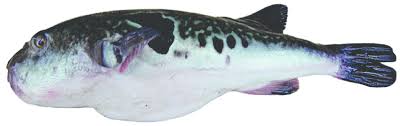
The delicate delicacy of Japan
The Flower Pufferfish, also called the Japanese Pufferfish, is famous both for its ornamental beauty and its controversial culinary role. Native to the coastal waters of Japan, Korea, and China, this species sports a silvery body with intricate floral-like markings, giving it its common name. Despite its small size, around 30 centimeters, the Flower Puffer carries a powerful tetrodotoxin, which has made it a highly regulated delicacy known as fugu in Japanese cuisine. Observing these puffers in the wild reveals their cautious and slow-moving nature, often lingering near sandy bottoms and rocky crevices.
Diet and Adaptations
Flower Puffers primarily consume small invertebrates and shellfish. Their strong beak allows them to crush hard shells, and their keen eyesight helps them detect prey quickly. This species demonstrates remarkable patience during hunting, approaching prey slowly and steadily—a true lesson in the value of slow, deliberate actions.
Behavior and Defense
As with other puffers, Flower Puffers inflate when threatened, turning into a spiny orb that discourages predators. Their slow movements and camouflage, combined with toxicity, make them well-protected despite their small stature. Divers who spot these puffers often describe their graceful, almost floating presence as hypnotic, a subtle ballet in the underwater world.
4. Northern Pufferfish (Sphoeroides maculatus)
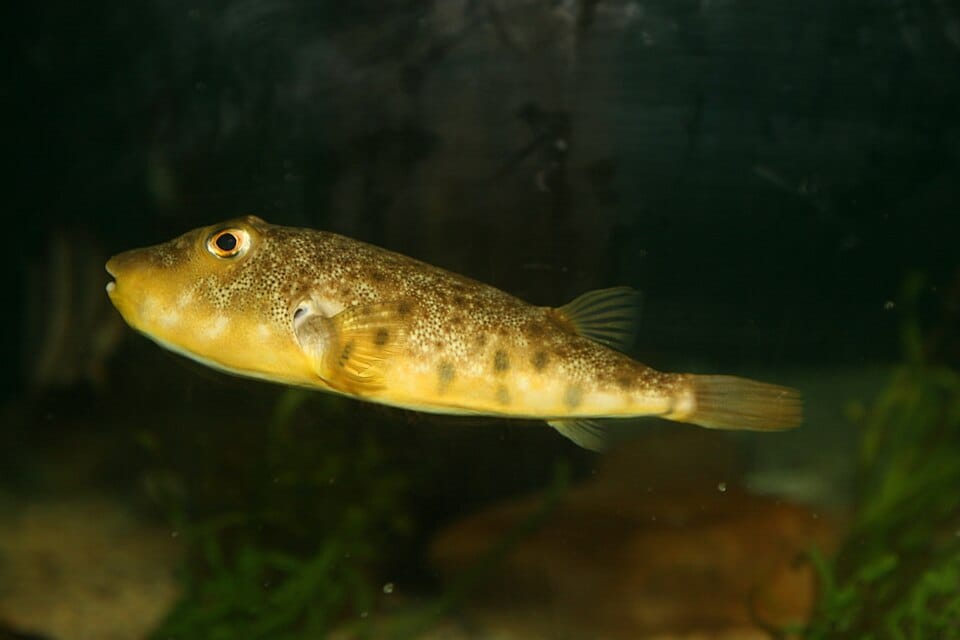
The Atlantic coast resident
Found along the Atlantic coast of North America, the Northern Pufferfish inhabits estuaries, bays, and shallow coastal waters. Its muted brown or olive coloring with small darker spots makes it a master of disguise against sandy or muddy bottoms. This species is moderately small, usually around 20 centimeters, and is highly sought after by anglers for its unique characteristics. Unlike tropical puffers, the Northern Puffer tolerates cooler water temperatures, making it a hardy and adaptable species.
Feeding Habits
Northern Puffers feed on mollusks, crustaceans, and other benthic invertebrates. Using their beak to crush shells, they play an important role in controlling invertebrate populations in coastal ecosystems. Their slow, deliberate movements ensure energy conservation, a hallmark of pufferfish biology.
Behavior and Ecology
This species often burrows slightly in sandy bottoms, leaving only its eyes visible, waiting for unsuspecting prey. Its inflation ability is a critical defense against larger fish such as striped bass. The Northern Pufferfish is also a fascinating example of how pufferfish adapt to temperate environments, expanding the diversity of Types of Pufferfish beyond tropical reefs.
5. Immaculate Pufferfish (Arothron immaculatus)
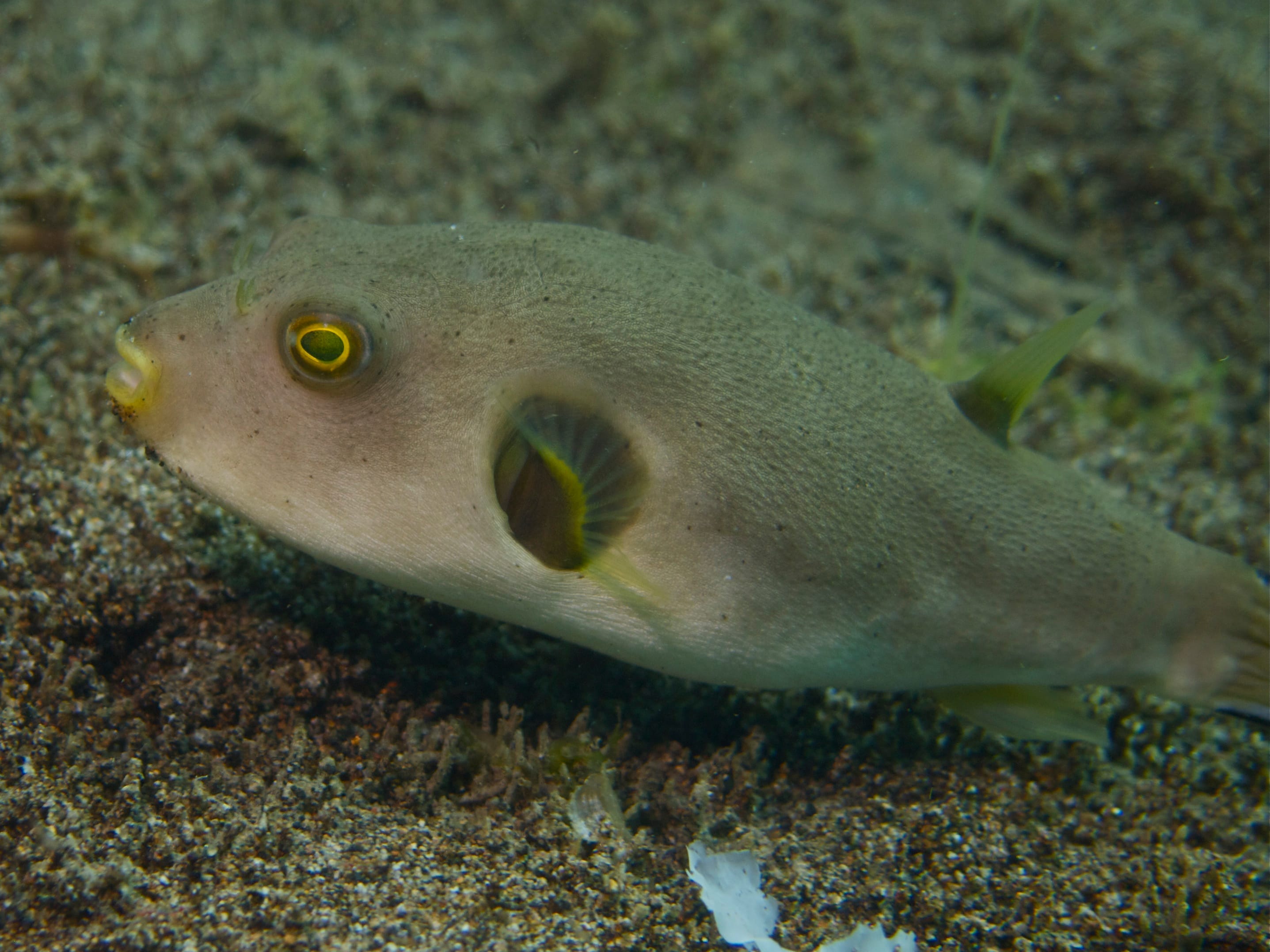
The spotless reef wonder
The Immaculate Pufferfish is a medium-sized marine species found in Indo-Pacific reefs. Its smooth, pale body with minimal markings stands out in contrast to the more colorful reef fish around it. Despite its understated appearance, it carries the signature puffer defense mechanism—an ability to inflate into a rigid sphere. Its calm demeanor and slow movements make it a serene sight for divers exploring coral gardens.
Habitat and Lifestyle
Immaculate Puffers inhabit lagoons and outer reef slopes, often preferring areas with coral rubble and caves. They are solitary but will tolerate other puffers in overlapping territories. Feeding mainly on invertebrates, this puffer helps maintain the balance of reef ecosystems.
Defense Mechanisms
Inflation and toxicity protect the Immaculate Puffer from predators like moray eels and sharks. When inflated, it appears larger and less palatable, a trick that usually works effectively in the predator-rich reef environment.
These first five Types of Pufferfish highlight the diversity and intrigue of the pufferfish family, from freshwater rivers to coral reefs. Each species demonstrates fascinating adaptations, unique coloration, and behaviors that make them stand out in their ecosystems. Stay tuned as we explore the next five species in the following section, continuing our journey through 25 Types of Pufferfish.
6. Fahaka Pufferfish (Tetraodon lineatus)
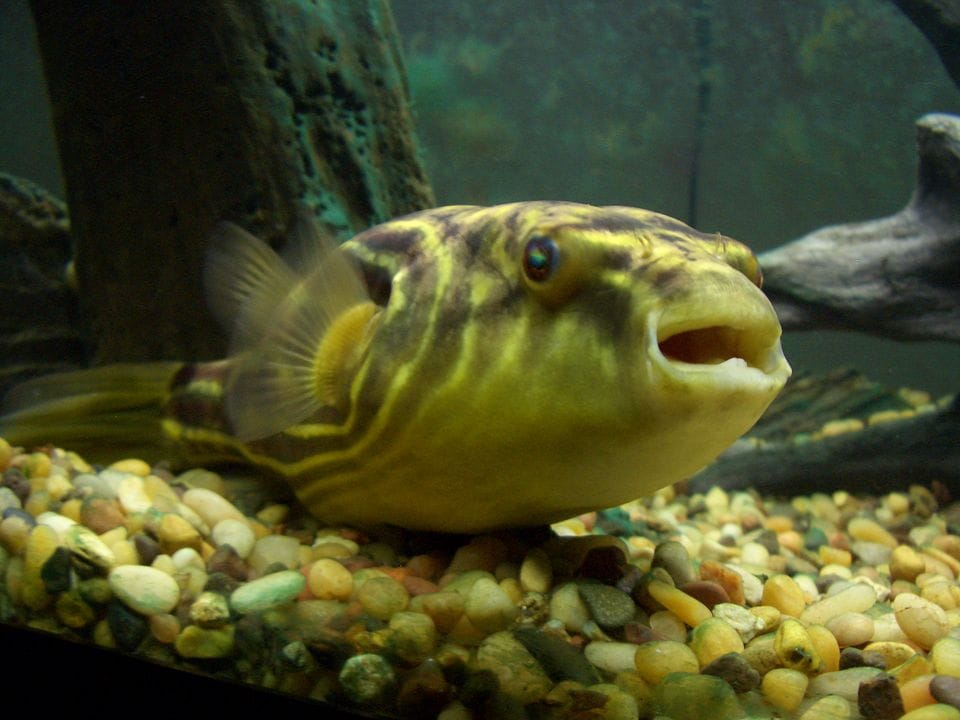
The freshwater giant of Africa
The Fahaka Pufferfish is a freshwater powerhouse native to rivers and lakes across Africa, including the Nile and Niger basins. Distinguished by its elongated body and bold black-and-white stripes, this pufferfish is one of the largest freshwater species, reaching lengths of up to 75 centimeters. Its striking appearance and formidable size make it a standout among Types of Pufferfish. Unlike smaller puffers, Fahaka Puffers exhibit a mix of curiosity and cautious aggression, especially when defending territory. Observing these fish in their natural habitat reveals an intelligent predator that balances slow, deliberate movements with sudden bursts of speed when capturing prey or avoiding threats.
Diet and Feeding
Fahaka Puffers are carnivorous, feeding primarily on crustaceans, mollusks, and smaller fish. Their beak-like teeth are strong and continuously growing, allowing them to crush shells with ease. In captivity, they require a varied diet rich in hard-shelled prey to maintain healthy dental growth. Watching a Fahaka Puffer methodically hunt is like observing a patient strategist at work, planning every move with precision.
Behavior and Personality
These puffers are highly intelligent, often recognizing their caretakers and interacting with their environment. While they are relatively solitary, Fahaka Puffers can display social behaviors during feeding or breeding. Their inflation ability is especially impressive, as they can rapidly expand to ward off predators, a necessary skill given their riverine habitats that host numerous threats, from large fish to birds of prey.
7. Striped (Manila) Pufferfish (Arothron manilensis)
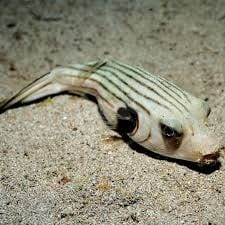
The tropical reef specialist
Native to the Indo-Pacific, the Striped Pufferfish is a medium-sized marine species known for its horizontal brown or black stripes on a creamy body. Reaching around 30–40 centimeters, it inhabits shallow coral reefs, lagoons, and rocky coastal areas. Its calm demeanor and slow movements allow it to navigate the complex reef environment with ease. Divers often spot these puffers hovering near coral heads, inspecting crevices and feeding grounds. The Striped Puffer’s coloration serves as both camouflage and warning, signaling potential toxicity to predators.
Feeding and Diet
This species feeds on a variety of invertebrates, including mollusks, small crustaceans, and occasionally algae. Their robust beak is adapted for crushing shells, providing them access to food sources that other reef fish cannot exploit. The feeding behavior of Striped Puffers is fascinating—they carefully approach prey and execute precise strikes, demonstrating intelligence uncommon in many reef species.
Behavior and Ecology
Typically solitary, these puffers can become territorial, especially during breeding periods. Their defense mechanism involves inflating their bodies to discourage predators like reef sharks or larger fish. Observing Striped Puffers in action highlights the adaptability and resilience of Types of Pufferfish in coral reef ecosystems, balancing caution with curiosity in a colorful, competitive habitat.
8. Bandtail Pufferfish (Sphoeroides spengleri)
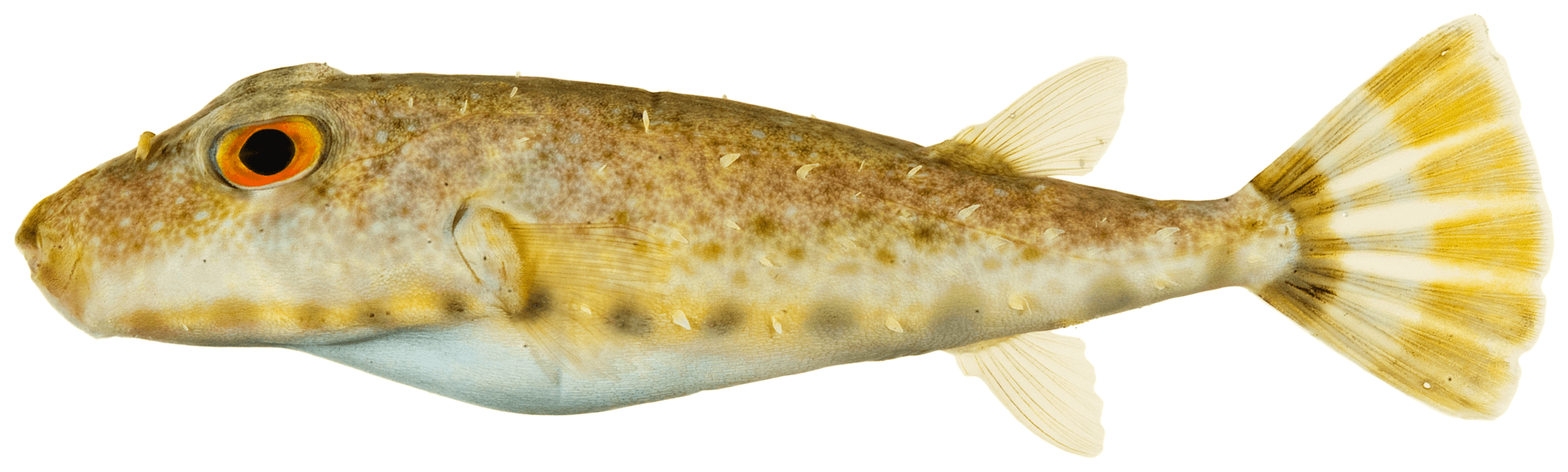
The Atlantic coastline puffer
The Bandtail Pufferfish is found along the western Atlantic, from Massachusetts to Brazil, inhabiting seagrass beds, estuaries, and shallow coastal waters. It features a rounded body with a small, banded tail, and a subtle pattern of spots across its back. Smaller than many tropical puffers, this species rarely exceeds 20 centimeters but exhibits a captivating personality. Bandtail Puffers are slow-moving yet agile enough to escape predators when needed, often inflating into a spiny ball to deter threats.
Diet and Feeding
Feeding primarily on benthic invertebrates like mollusks, worms, and small crustaceans, Bandtail Puffers play an important role in controlling prey populations. Their specialized teeth allow them to crush hard shells, making them efficient hunters despite their relatively modest size.
Behavior and Adaptations
This pufferfish is mostly solitary, favoring sandy or seagrass areas for camouflage. Its inflation defense is critical against predatory fish such as snappers or striped bass. Observing Bandtail Puffers reveals a fascinating balance between patience and sudden bursts of energy, a hallmark of pufferfish survival strategies.
9. Golden Pufferfish (Auriglobus modestus)
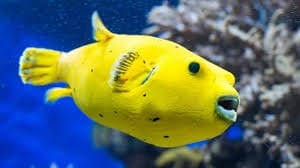
The jewel of Southeast Asia rivers
The Golden Pufferfish, also called the Modest Puffer, inhabits freshwater rivers and streams in Southeast Asia. Sporting a luminous golden-yellow body, this small fish reaches around 12–15 centimeters, yet its bright hue makes it highly visible in shaded river habitats. Despite its size, it is an active predator, using stealth and intelligence to locate and consume prey. Golden Puffers are a favorite among aquarists due to their vivid coloration and engaging personality, often investigating every corner of their tank.
Diet and Feeding
Golden Puffers primarily eat snails, small crustaceans, and worms. They require hard-shelled prey to keep their continuously growing teeth in check. Feeding them is an educational experience, revealing their problem-solving skills as they manipulate objects to access food.
Behavior and Personality
These puffers display a blend of curiosity and caution. They often interact with humans, exploring hands or new objects in their environment. Their inflation defense is subtle but effective against predators, and their bright color serves as a warning for potential toxicity.
10. Canthigaster Pufferfish (Canthigaster valentini)
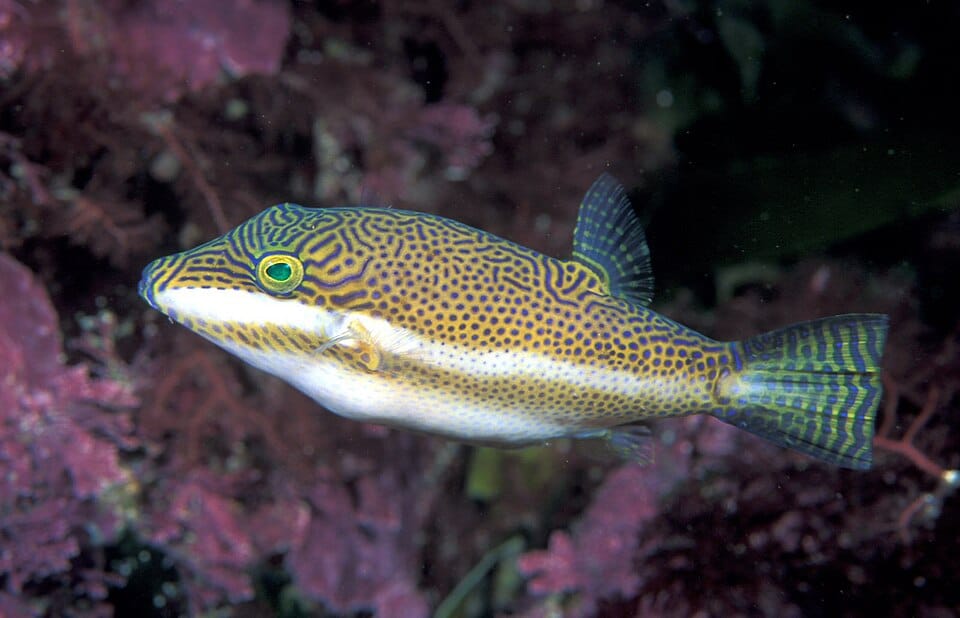
The striking dwarf reef puffer
The Valentini Pufferfish, or Canthigaster Puffer, is a small but visually stunning marine species, reaching only 10 centimeters. Native to the Indo-Pacific reefs, it is known for its vibrant blue, yellow, and black patterns that make it one of the most photographed puffers in the wild. These puffers exhibit bold behavior despite their size, often defending territories and exploring reefs actively. Their ability to inflate, while less dramatic than larger puffers, still serves as an effective deterrent against small predators.
Diet and Habitat
Canthigaster Puffers feed on algae, sponges, and tiny invertebrates, playing a vital role in reef ecosystems. They prefer shallow reef slopes with abundant hiding spots, allowing them to evade predators while foraging actively.
Behavior and Interaction
These puffers are social, sometimes forming small groups, and are known for their inquisitive nature. Their bright colors signal potential toxicity, while their inflation behavior adds an extra layer of protection. Observing them highlights how even small pufferfish can have big personalities and significant ecological roles.
11. Giant (MBU) Pufferfish (Tetraodon mbu)
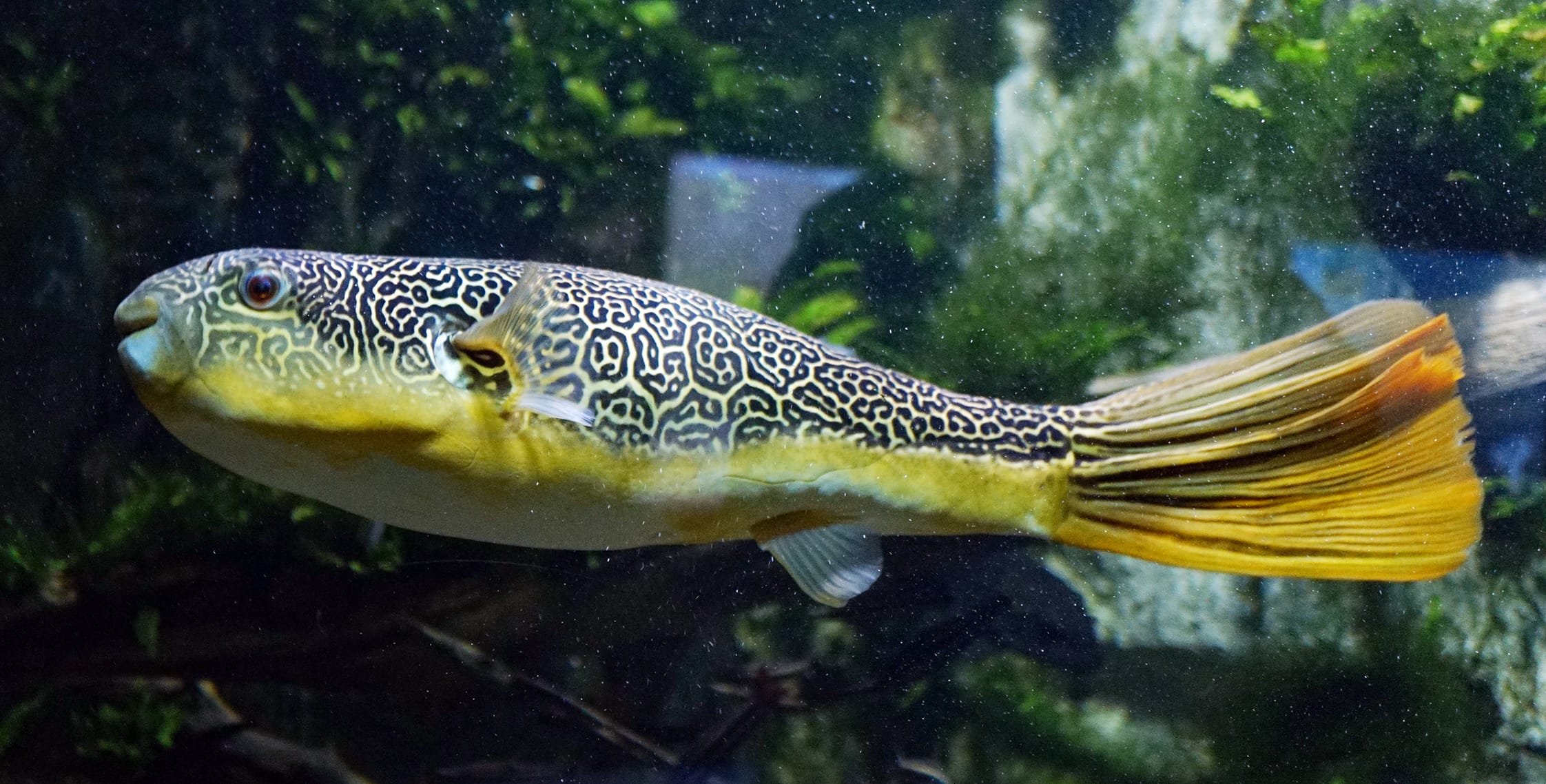
The freshwater leviathan
The MBU Pufferfish, also called the Giant Freshwater Puffer, is a true spectacle, native to the Congo River basin in Africa. With a body that can reach over 65 centimeters and covered in striking black-and-white patterns, it commands attention in any freshwater setting. Despite its size, the MBU exhibits the slow, deliberate movements typical of puffers, only accelerating when hunting or defending territory.
Diet and Feeding
MBU Puffers are carnivorous, favoring snails, shrimp, and smaller fish. Their powerful beaks can crush even the toughest shells, showcasing an evolutionary adaptation for survival in dense river ecosystems. Feeding these puffers requires care and a varied diet to prevent overgrowth of teeth.
Behavior and Personality
Highly intelligent, MBU Puffers recognize individual caregivers in captivity and display problem-solving skills during feeding. In the wild, their inflation ability deters predators like large catfish or crocodiles. Their imposing presence and fascinating behavior make them a favorite for freshwater enthusiasts and researchers alike.
12. Guineafowl Pufferfish (Arothron meleagris)
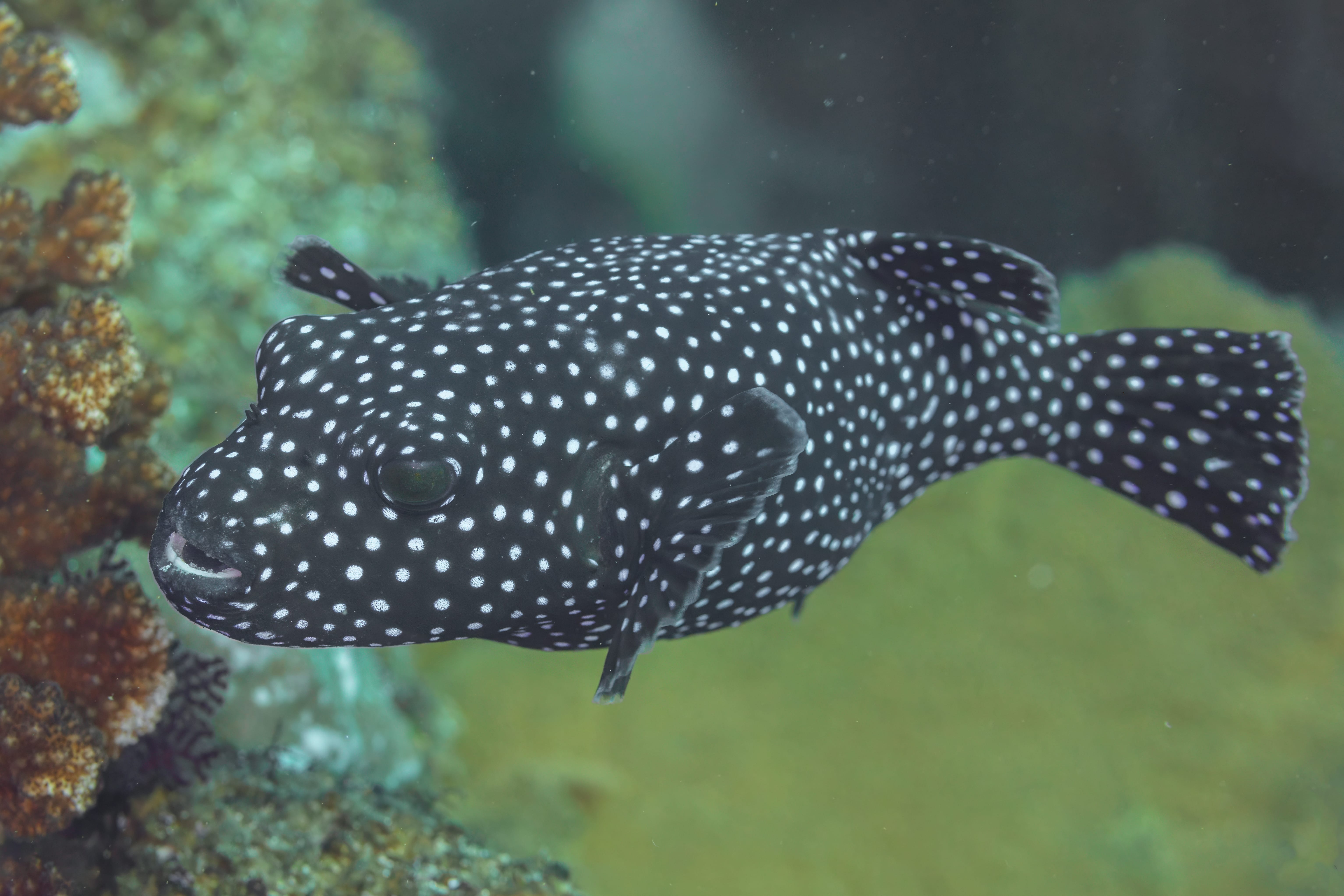
The spotted reef charmer
Guineafowl Puffers are medium-sized reef fish, commonly found in the Indo-Pacific. Their distinctive white spots on dark bodies resemble the plumage of a guineafowl, giving the species its name. They are slow-moving and inquisitive, often hovering near coral heads and crevices to explore or hunt.
Diet and Habitat
This species feeds on invertebrates and occasionally algae. Preferring shallow reefs, they find shelter among coral branches and rocks, balancing foraging with safety.
Behavior and Defense
Guineafowl Puffers inflate when threatened, deterring predators with their spiny, rounded appearance. Their spotted pattern also provides camouflage against the reef background, a classic example of survival through both offense and stealth.
13. Redeye Pufferfish (Carinotetraodon lorteti)
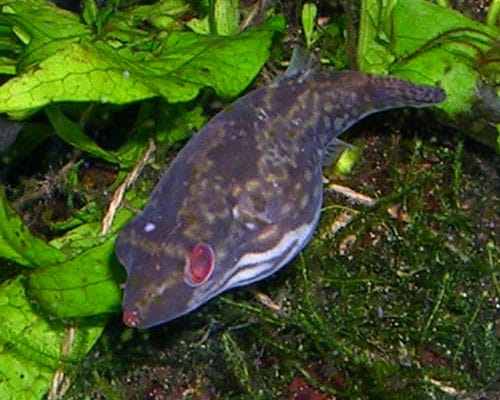
The tiny jewel of Southeast Asian rivers
Redeye Puffers are freshwater dwarf species, native to slow-moving streams and rivers in Southeast Asia. With bright red eyes and small, agile bodies, they reach only about 3–4 centimeters. Despite their diminutive size, they display fascinating behaviors, including interactive foraging and territorial displays.
Diet and Feeding
These puffers feed mainly on small invertebrates and snails. They are active hunters, often demonstrating remarkable problem-solving abilities to access food in confined spaces.
Behavior and Interaction
Redeye Puffers are curious and bold, often exploring tank structures or natural river habitats thoroughly. Their inflation defense, while subtle, protects them from small predatory fish and other threats.
14. Hairy Pufferfish (Pao baileyi)
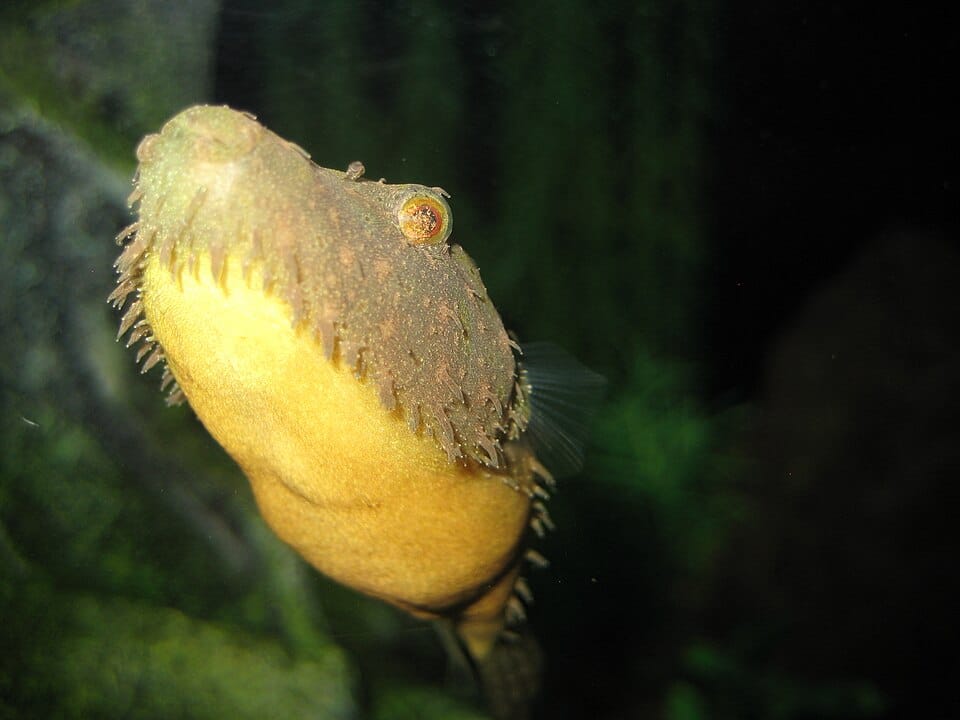
The freshwater oddity
Native to Southeast Asian rivers, the Hairy Pufferfish is aptly named for the filament-like projections on its skin, giving it a slightly fuzzy appearance. This small puffer reaches around 8–10 centimeters and is primarily nocturnal, feeding under the cover of darkness.
Diet and Feeding
Hairy Puffers consume snails, worms, and other benthic invertebrates. Their feeding habits are methodical, reflecting the slow, deliberate style common to most pufferfish.
Behavior and Ecology
Solitary and secretive, Hairy Puffers are rarely aggressive but will inflate when threatened. They are a fascinating example of how adaptation shapes morphology and behavior in freshwater puffers.
15. Congo Pufferfish (Tetraodon schoutedeni)
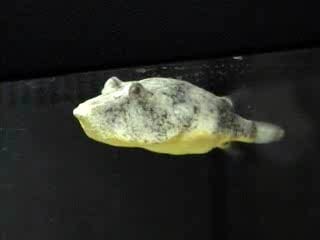
The Congo river gem
Congo Puffers, also called Potato Puffers, are small African freshwater species, typically reaching 10–12 centimeters. Their brownish-yellow bodies with subtle patterns make them both attractive and well-camouflaged in river habitats. Known for their intelligence, these puffers are a favorite in the aquarium hobby, though they require careful diet management due to their continuous tooth growth.
Diet and Feeding
They primarily consume snails and other small invertebrates, cracking shells with impressive precision. Congo Puffers demonstrate problem-solving skills while hunting, making them highly interactive in captivity.
Behavior and Interaction
Solitary and cautious, they inflate when threatened, deterring predators with their rounded, spiny form. Watching a Congo Puffer navigate a tank or riverbed is a lesson in patience and observation, embodying the cleverness characteristic of Types of Pufferfish.
16. Dogface Pufferfish (Arothron nigropunctatus)
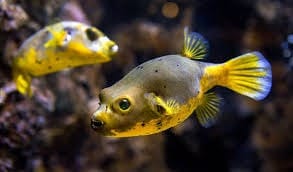
The charismatic reef giant
The Dogface Pufferfish, also called the Blackspotted Puffer, is a large marine species that can reach over 50 centimeters in length. Found across Indo-Pacific coral reefs, its expressive facial markings resemble a canine grin, giving it a friendly, almost cartoonish appearance. This species is slow-moving but highly inquisitive, often approaching divers to investigate new objects or disturbances in the reef. Their intelligence and awareness make them stand out among Types of Pufferfish. Despite their gentle appearance, Dogface Puffers are equipped with strong teeth and a potent toxin, making them a species that commands respect.
Diet and Feeding
Dogface Puffers feed primarily on crustaceans, mollusks, and occasionally algae. They use their powerful beaks to crush hard shells, displaying remarkable dexterity and patience. Observing them feed is akin to watching a skilled craftsman at work, carefully dismantling prey with precision and efficiency.
Behavior and Ecology
Generally solitary, Dogface Puffers maintain a slow, deliberate patrol over their reef territories. Their inflation defense mechanism, combined with vivid patterns, serves to deter predators like reef sharks and groupers. Their unique personality traits and striking appearance make them favorites for underwater photographers and marine enthusiasts alike.
17. Blackspotted Pufferfish (Arothron diadematus)
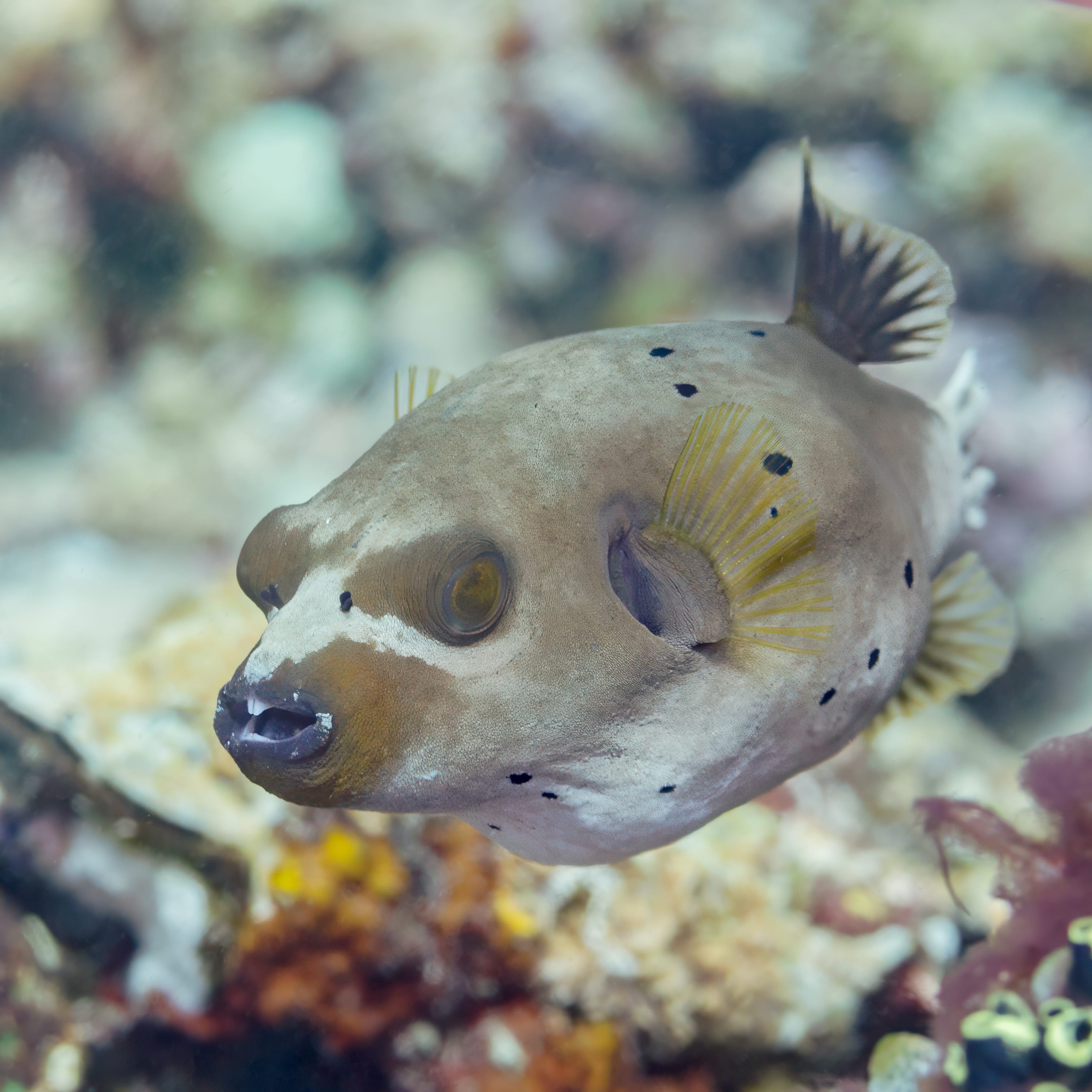
The Pacific reef sentinel
Native to the tropical Pacific, the Blackspotted Pufferfish exhibits a silvery-white body decorated with small, dark spots. It grows up to 40 centimeters and thrives in coral-rich environments where it can find shelter and prey. This species is noted for its calm demeanor and intelligence, often inspecting reef structures or tank decorations in captivity with careful curiosity.
Diet and Feeding
Feeding on mollusks, crabs, and occasionally algae, Blackspotted Puffers display methodical hunting skills. Their beak-like teeth allow them to access prey hidden in hard-to-reach crevices, highlighting their resourcefulness. Watching this puffer in action offers insights into the patience and strategy employed by reef-dwelling fish.
Behavior and Defense
The Blackspotted Puffer uses inflation to deter predators and can remain inflated for minutes if necessary. Its spotted camouflage and cautious movements reduce encounters with larger fish, while its intelligence ensures efficient energy use while hunting or exploring. It exemplifies how even moderately sized puffers thrive through clever adaptations.
18. Golden Pufferfish (Arothron meleagris)
The tropical river and reef dweller
The Golden Pufferfish, not to be confused with the freshwater Modest Puffer, is a marine species known for its golden-yellow body marked with subtle spots or patterns. Found in shallow tropical reefs, it often hovers near coral heads or rocky outcrops, blending its radiant color with sun-dappled waters. This puffer can reach about 30 centimeters, exhibiting calm, deliberate movements while exploring the reef or foraging.
Diet and Feeding
Golden Puffers are omnivorous, feeding on small invertebrates, algae, and occasional crustaceans. Their strong beak allows them to crush shells and snails with ease. Observing their feeding behavior reveals a careful balance of patience and efficiency, a testament to their evolved hunting techniques.
Behavior and Personality
Golden Puffers are curious and occasionally interact with other reef species, sometimes forming temporary groups while foraging. Their inflation defense and subtle toxicity keep predators at bay, highlighting the dual strategy of defense and stealth employed by many Types of Pufferfish.
19. Spotted Pufferfish (Arothron hispidus)
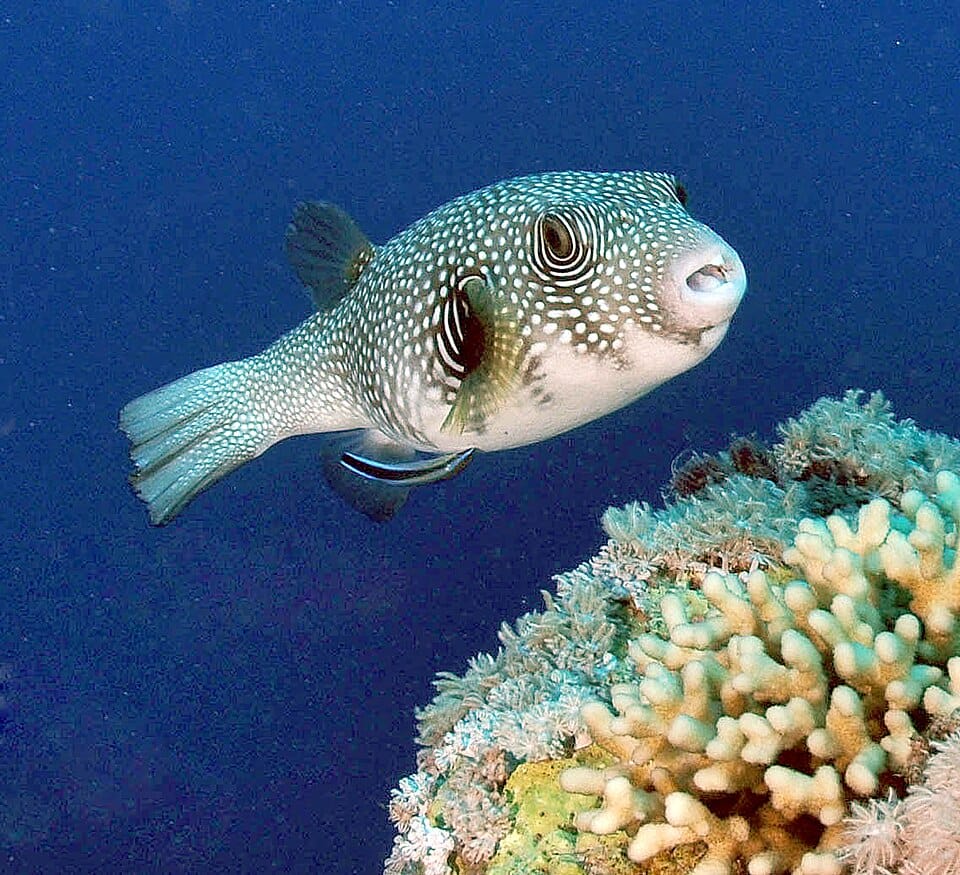
The globe-trotting reef resident
The Spotted Pufferfish inhabits reefs across the Indo-Pacific, exhibiting a sandy-brown or olive body dotted with numerous white or yellow spots. Reaching about 50 centimeters, this species is notable for its calm, deliberate swimming and intelligent behavior. Its spots provide camouflage among coral and sand, making it a master of subtle survival strategies.
Diet and Feeding
Spotted Puffers consume a wide variety of invertebrates, including snails, crabs, and worms. Their strong jaws allow them to tackle hard-shelled prey, and they demonstrate patience and problem-solving while feeding. Observing them shows an intricate understanding of their environment, as they navigate complex reef structures with precision.
Behavior and Defense
Typically solitary, these puffers rely on inflation and toxicity for protection. When threatened, they can puff into a spiny orb, deterring predators like moray eels and larger reef fish. Spotted Puffers are a perfect example of how intelligence and physical defense mechanisms coexist in the pufferfish family.
20. Smooth Pufferfish (Arothron lemur)
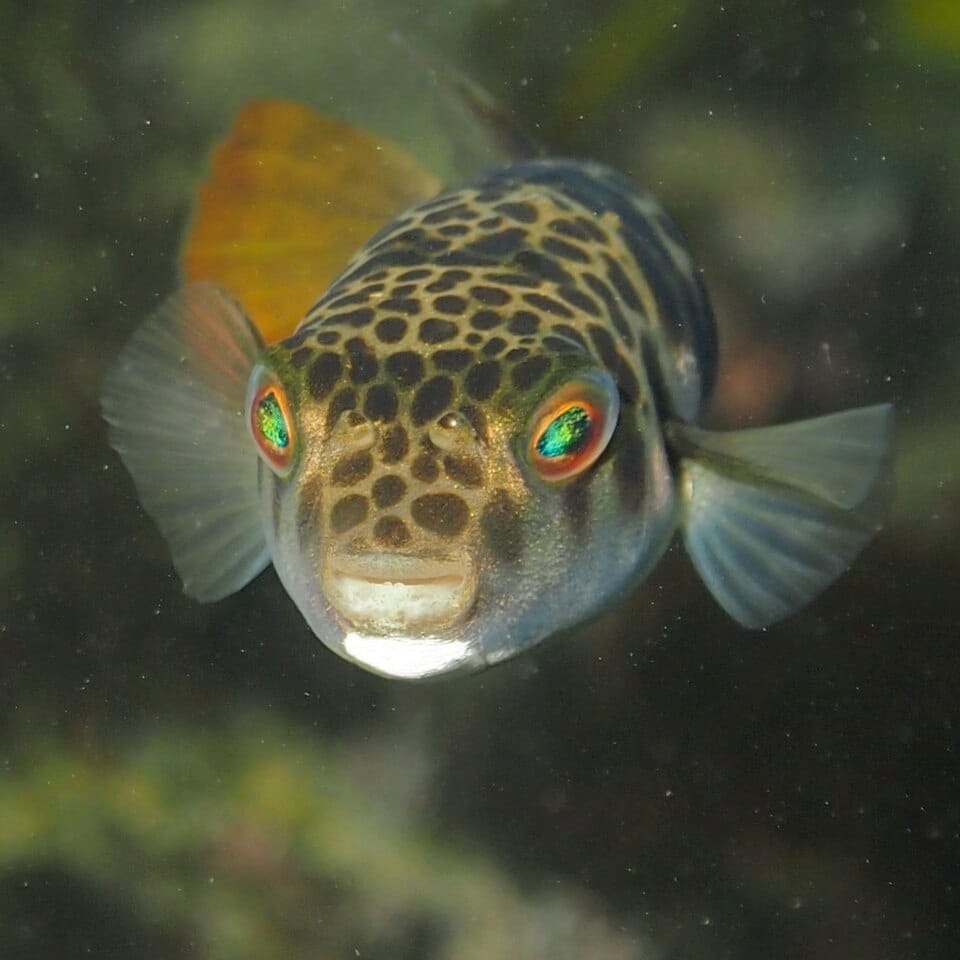
The calm and curious reef dweller
The Smooth Pufferfish, found in Indo-Pacific reefs, is known for its gentle temperament and lack of prominent body markings, giving it a sleek appearance. It grows to about 40 centimeters and navigates shallow reefs and lagoons with deliberate, measured movements. Its calm presence belies a potent defense system and sharp intelligence, traits shared by many Types of Pufferfish.
Diet and Feeding
This species feeds on mollusks, crustaceans, and occasional algae. The smooth puffer’s beak is specialized for crushing shells and extracting prey efficiently. Their feeding behavior demonstrates patience and adaptability, key factors for survival in the competitive reef environment.
Behavior and Interaction
Smooth Puffers are mostly solitary but display curiosity toward divers and tank mates. Inflation provides protection from predators, and their subtle camouflage ensures they can evade detection while foraging or resting.
21. Dogface Puffer (Arothron nigropunctatus)
The reef comedian
Dogface Puffers, with their expressive faces and large size, are charismatic reef residents. Their playful appearance and inquisitive behavior make them a favorite among divers and photographers. They thrive in coral-rich habitats where they feed on mollusks, crabs, and occasionally algae.
Defense Mechanisms
Like all puffers, Dogface Puffers can inflate into a spiny sphere to ward off predators. Their toxin adds an extra layer of protection, ensuring survival despite curiosity-driven interactions.
22. White-Spotted Pufferfish (Arothron hispidus)
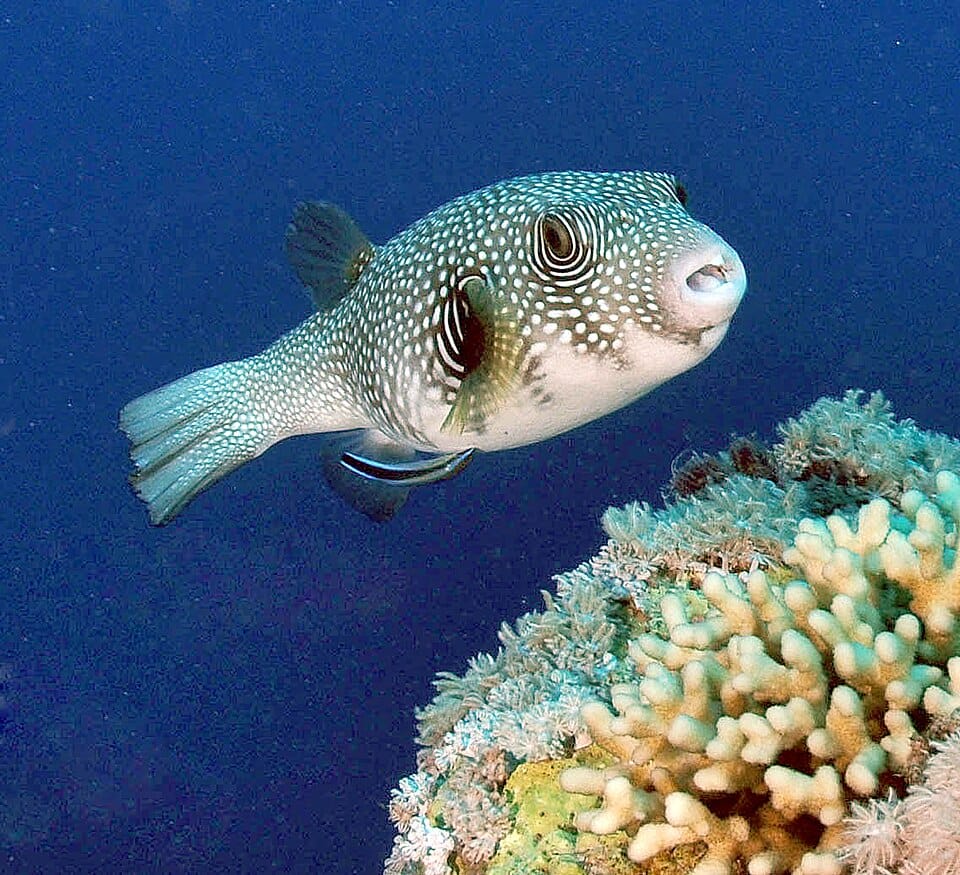
The striking reef jewel
White-Spotted Puffers exhibit light-colored spots against darker bodies, blending beautifully with reef textures. They are medium-sized and slow-moving, often hovering near coral heads to search for prey. Their intelligence and subtle interactions make them engaging to observe.
23. Masked Pufferfish (Arothron diadematus)
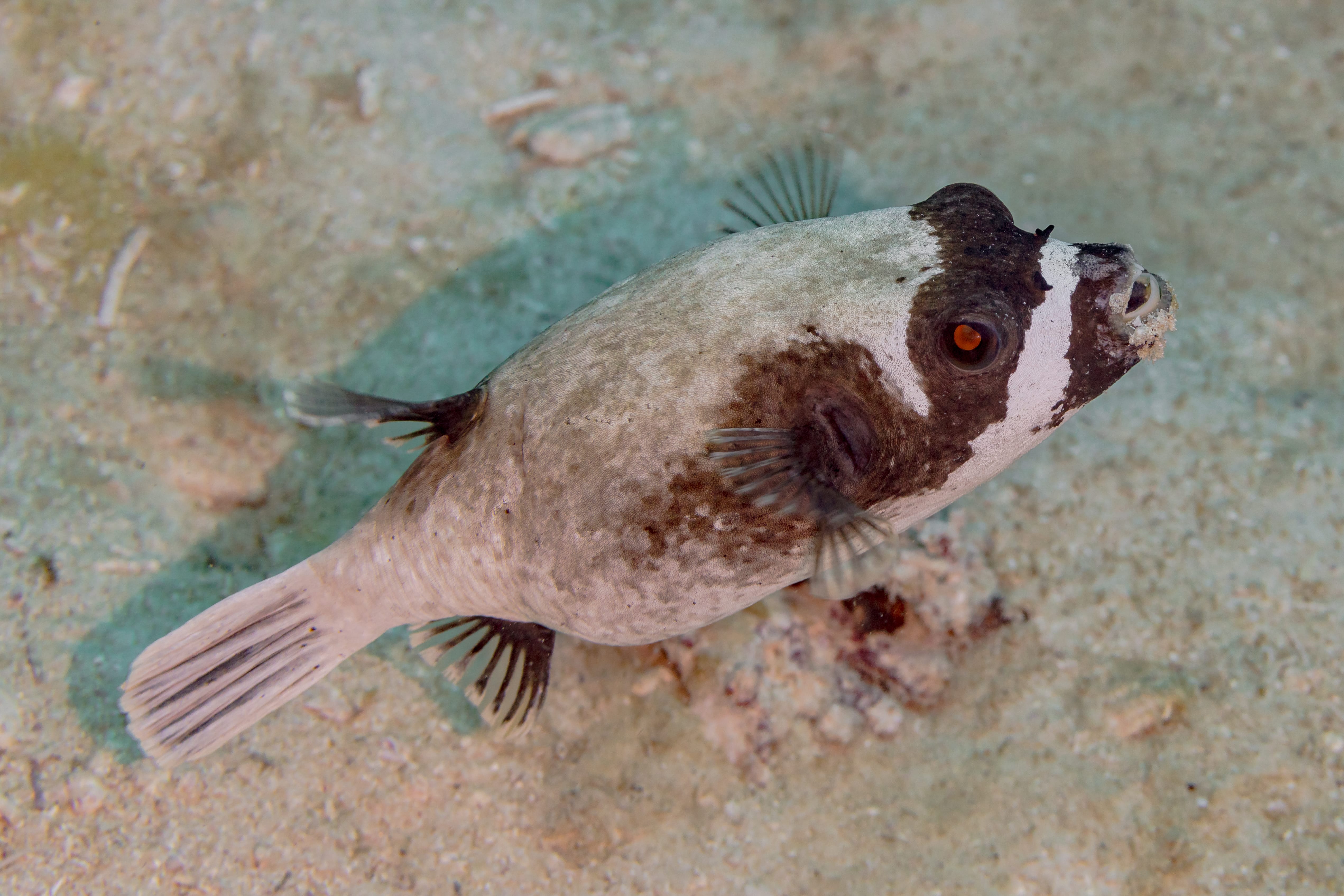
The mysterious reef explorer
Named for its facial markings resembling a mask, this species adds intrigue to coral reef ecosystems. It exhibits deliberate swimming patterns, feeding mainly on invertebrates. Inflation and toxin defense mechanisms make it both fascinating and well-protected.
24. Blackspotted Puffer (Arothron meleagris)
The speckled reef dweller
Blackspotted Puffers are known for their dark spots and calm demeanor. They inhabit shallow coral reefs and feed on snails, crabs, and small invertebrates. Their inflation defense and intelligence make them adept survivors.
25. Golden Puffer (Arothron nigropunctatus)
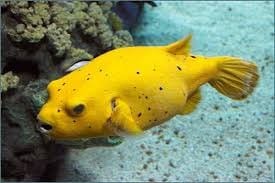
The reef golden beauty
Golden Puffers dazzle with their bright yellow coloring. Found in Indo-Pacific reefs, they are slow-moving but highly observant. Their diet consists of mollusks and small crustaceans, and inflation protects them from predators. This final puffer in our list of 25 highlights the variety and brilliance of pufferfish species.
Conclusion: Exploring the Fascinating World of Pufferfish
From the tiny Redeye Pufferfish darting through Southeast Asian streams to the massive Fahaka Puffer dominating African rivers, the diversity among Types of Pufferfish is truly astounding. Each species brings its own set of adaptations, behaviors, and personality traits, whether it’s the intelligent hunting strategies of freshwater giants or the colorful, reef-dwelling charm of tropical puffers. Observing these fish, whether in the wild or in aquariums, offers insights into evolution, survival strategies, and the delicate balance of aquatic ecosystems.
For wildlife enthusiasts, divers, and aquarium hobbyists, understanding pufferfish is more than appreciating their vibrant patterns—it’s about recognizing their intelligence, unique defense mechanisms, and ecological importance. Next time you spot a pufferfish inflating or crushing a snail with its beak, take a moment to marvel at the fascinating evolutionary story behind this captivating family of fish. Embrace the adventure of learning about these incredible creatures, and continue exploring the diverse, ever-engaging world of marine life.
Ready to dive deeper? Explore more species, observe their behaviors, and share your discoveries with fellow wildlife enthusiasts. Every encounter with a pufferfish is an opportunity to witness nature’s creativity and resilience firsthand.
Frequently Asked Questions About Types of Pufferfish
1. What are pufferfish?
Pufferfish are a group of fish known for their ability to inflate their bodies as a defense mechanism. They are found in both freshwater and marine environments and belong to the family Tetraodontidae.
2. How many types of pufferfish are there?
There are over 25 recognized types of pufferfish, each with unique features, sizes, and habitats ranging from rivers to coral reefs.
3. What is the largest pufferfish species?
The Fahaka Pufferfish and MBU Pufferfish are among the largest, growing over 60 centimeters in length.
4. Are pufferfish dangerous?
Yes, many pufferfish contain tetrodotoxin, a potent neurotoxin, making them potentially deadly if ingested.
5. How do pufferfish inflate?
Pufferfish inflate by rapidly swallowing water or air into their stomachs, creating a ball-like shape to deter predators.
6. Where do pufferfish live?
Pufferfish inhabit tropical and subtropical waters, including oceans, coral reefs, estuaries, and some freshwater rivers.
7. Can pufferfish be kept in aquariums?
Yes, but they require specialized care, ample space, and a diet rich in hard-shelled prey to maintain dental health.
8. What do pufferfish eat?
Pufferfish are primarily carnivorous, feeding on crustaceans, mollusks, and small invertebrates, though some species also consume algae.
9. How long do pufferfish live?
Lifespan varies by species, ranging from 5 to 15 years in the wild or captivity.
10. Why do pufferfish have beak-like teeth?
Their teeth are fused into strong beaks that allow them to crush shells of snails, crabs, and other hard-shelled prey.
11. Are all pufferfish toxic?
Most pufferfish species contain some level of tetrodotoxin, though toxicity levels vary between species and individual fish.
12. How can you identify different pufferfish types?
Identification is based on body size, coloration, patterns, habitat, and geographic location.
13. What is the smallest pufferfish?
The Redeye Pufferfish is one of the smallest species, reaching just 3–4 centimeters in length.
14. Do pufferfish have predators?
Yes, despite their defenses, larger fish, sharks, and birds sometimes prey on pufferfish, though inflation and toxins provide protection.
15. How do pufferfish reproduce?
Most pufferfish lay eggs on substrates or within shallow nests. Males often guard the eggs until hatching.
16. Are pufferfish social animals?
Many species are solitary, though some reef dwellers may interact with other puffers or fish during feeding or breeding.
17. How fast can a pufferfish swim?
Pufferfish are generally slow swimmers but can use quick bursts of speed to escape predators.
18. What is the lifespan of a MBU Pufferfish?
MBU Puffers can live 10–15 years in captivity with proper care and diet.
19. Can pufferfish recognize humans?
Some freshwater puffers, like the Fahaka and MBU, are known to recognize caretakers and interact playfully.
20. How do pufferfish defend themselves besides inflating?
Their bright colors warn predators of toxicity, and some species have spiny skin to make swallowing difficult.
21. Are pufferfish good for beginners in aquariums?
No, pufferfish require careful maintenance, specialized diets, and ample space, making them more suitable for experienced aquarists.
22. Do pufferfish migrate?
Most species are sedentary, staying within a specific range of reef, river, or lagoon habitats.
23. How can you tell if a pufferfish is healthy?
Healthy pufferfish have bright, consistent coloration, clear eyes, active feeding behavior, and smooth inflation when threatened.
24. What is the difference between freshwater and marine pufferfish?
Freshwater puffers live in rivers and lakes, while marine puffers inhabit oceans and reefs. Their sizes, behaviors, and diet preferences differ accordingly.
25. Can pufferfish bite humans?
Yes, they have strong beaks capable of delivering painful bites if provoked or handled improperly.
26. Why do some pufferfish have spots?
Spots and patterns provide camouflage, warning signals, or play roles in mating displays.
27. What is the inflation mechanism for pufferfish?
Pufferfish draw water or air into an elastic stomach to expand their bodies, deterring predators.
28. Are pufferfish solitary or social?
Most puffers are solitary, but some reef species may interact with other fish for feeding or courtship.
29. How do pufferfish interact with their environment?
Pufferfish explore crevices, forage for prey, and use reef structures or river vegetation for camouflage and protection.
30. Can pufferfish recognize prey?
Yes, they demonstrate intelligence and strategic hunting, particularly in capturing snails and crustaceans.
31. Are all puffers good swimmers?
They are slow-moving but capable of quick bursts to escape predators or catch prey.
32. How do pufferfish affect their ecosystem?
Pufferfish control populations of invertebrates, algae, and small fish, contributing to balanced aquatic ecosystems.
33. Can pufferfish live in brackish water?
Some species tolerate brackish conditions, especially transitional habitats between freshwater and the ocean.
34. What colors do pufferfish display?
Colors range from muted browns and greens to vibrant yellows, blues, and patterned designs depending on species and habitat.
35. How long can a pufferfish stay inflated?
Typically, a pufferfish can remain inflated for several minutes, enough to discourage predators.
36. Do pufferfish sleep?
Yes, they enter resting states while maintaining alertness for threats and opportunities in their environment.
37. What are some common pufferfish diseases?
Common issues include bacterial infections, parasites, and dental overgrowth in captive puffers without proper diet.
38. Can pufferfish change color?
Some species slightly adjust coloration for camouflage or mood signaling, but drastic changes are uncommon.
39. How intelligent are pufferfish?
They demonstrate problem-solving skills, environmental awareness, and individual recognition in certain species, especially freshwater puffers.
40. Are pufferfish endangered?
Some species face threats from habitat destruction, overfishing, and aquarium trade. Conservation efforts are ongoing in several regions.
41. Can pufferfish be poisonous to touch?
While toxicity mainly affects ingestion, handling should be cautious as some species secrete toxins from skin and internal organs.
42. Do pufferfish have natural predators?
Yes, larger fish, birds, and some reptiles can prey on puffers, though their defenses are usually effective.
43. How do puffers reproduce in the wild?
Males often create nests or clean areas for females to lay eggs, after which they may guard or leave depending on species.
44. Are puffers aggressive?
Generally, they are peaceful unless threatened or competing for food or territory.
45. How do puffers contribute to coral reef health?
By controlling populations of invertebrates and algae, puffers help maintain the ecological balance essential for reef health.