

Wisconsin hosts a fascinating array of weasels and mustelids that thrive in its diverse landscapes, from dense forests and farmlands to wetlands and rivers. These small but skilled predators play a crucial role in controlling rodent populations, balancing ecosystems, and adding a touch of hidden wild energy to the state. While often elusive and rarely seen, their presence is revealed through tracks, dens, or the occasional glimpse darting through underbrush. In this guide, we explore 5 types of weasels in Wisconsin, delving into their physical traits, behaviors, habitats, diets, reproduction, and interactions with humans. Whether you’re a wildlife enthusiast, hiker, or photographer, understanding these nimble hunters enhances your appreciation for the state’s rich biodiversity.
1. Long-Tailed Weasel (Mustela frenata)

Physical Characteristics & Identification Tips
The Long-Tailed Weasel is instantly recognizable by its reddish-brown coat on top and creamy-white underbelly. Its signature feature is the elongated black-tipped tail, which provides balance and a dramatic flair during high-speed chases. Males can reach 14–16 inches in body length, while females are slightly smaller. During winter, this weasel may turn white, blending seamlessly with snow while the black tail tip remains a striking visual cue.
Behavior
Primarily nocturnal, Long-Tailed Weasels may venture out during the day in quiet areas. They are energetic and territorial, known for pursuing prey several times their own size with astonishing agility. Watching one in motion is like observing a small acrobat weaving through the brush, leaping, twisting, and turning with surgical precision. Their fearless hunting style makes them formidable despite their small stature.
Habitat and Range
These weasels occupy forests, farmlands, grasslands, and riparian zones throughout Wisconsin. They favor areas with dense cover, abandoned burrows, or rock crevices, providing both shelter and strategic hunting sites. Long-Tailed Weasels adapt well near human activity if food sources are abundant.
Diet
Long-Tailed Weasels are carnivorous, feeding on mice, voles, shrews, and occasionally small birds or amphibians. They often store extra prey near their dens for times of scarcity. High metabolic demands keep them hunting almost continuously, making them effective natural pest controllers.
Reproduction and Life Cycle
Breeding occurs in summer, but delayed implantation ensures kits are born the following spring. Litters typically range from 5–8 young, born blind and fully dependent. Within a few weeks, they develop the agility and hunting skills needed for survival in Wisconsin’s varied habitats.
Fun Facts / Traits
- Can tackle prey much larger than themselves.
- Exceptional climbers and swimmers.
- Black-tipped tail remains a distinguishing mark even in winter landscapes.
Human Interaction
These weasels rarely interact directly with humans but are appreciated for their role in controlling rodent populations. Tracks and dens are more commonly observed than the animals themselves.
2. Short-Tailed Weasel / Ermine (Mustela erminea)

Physical Characteristics & Identification Tips
The Short-Tailed Weasel is compact with brown summer fur that turns white in winter, except for its black-tipped tail. Adults range 7–13 inches in length, with males slightly larger than females. The white winter coat provides excellent camouflage in snow, helping them ambush prey unnoticed.
Behavior
Stealthy and precise, Ermines hunt by following prey into burrows or dense vegetation. Their movements are quick, fluid, and almost dance-like, reflecting both agility and cunning. They are primarily nocturnal but may be active during daylight in quiet, undisturbed winter areas.
Habitat and Range
Ermines are widespread across Wisconsin, occupying forests, wetlands, and open fields. They prefer dense ground cover and abandoned burrows for shelter. While rarely seen, their presence is indicated by tracks or small prey remains.
Diet
Short-Tailed Weasels feed on mice, voles, small birds, frogs, and occasionally insects. Hunting in confined spaces allows them to control rodent populations efficiently, playing a vital role in the ecosystem.
Reproduction and Life Cycle
Breeding occurs in midsummer, with delayed implantation leading to spring births. Litters usually contain 4–9 kits, which develop rapidly and begin practicing hunting skills within a few weeks.
Fun Facts / Traits
- Winter fur historically prized for ceremonial garments.
- Fearless hunters capable of taking down larger prey.
- Important species for maintaining ecological balance.
Human Interaction
Farmers and wildlife enthusiasts value Ermines for natural rodent control. Direct sightings are rare, making indirect observations such as tracks essential for study.
3. Least Weasel (Mustela nivalis)
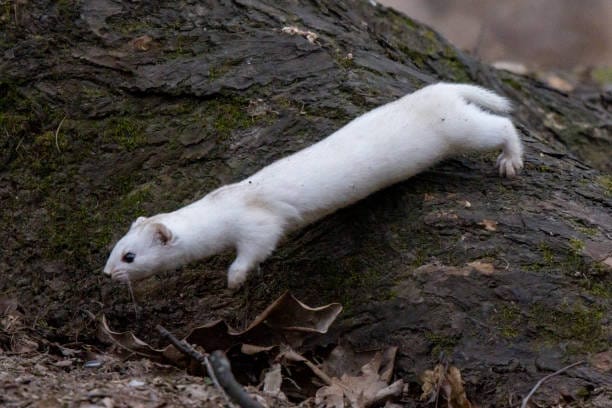
Physical Characteristics & Identification Tips
The Least Weasel is the smallest carnivore in Wisconsin, measuring 6–8 inches long. Brown above and white below in summer, it turns completely white during winter. Its short tail lacks the black tip found on other weasels, making it easier to distinguish. Despite its tiny size, it is an efficient predator.
Behavior
Solitary, energetic, and fearless, Least Weasels move rapidly through underbrush and burrows. Their twisting, unpredictable movements make them highly effective hunters despite their small stature.
Habitat and Range
They inhabit open fields, meadows, forest edges, and sometimes agricultural areas. They favor places with high rodent density and can adapt to fragmented habitats, especially in northern Wisconsin.
Diet
Least Weasels feed primarily on mice, voles, and small birds, occasionally consuming insects. Their high metabolism requires near-constant hunting activity, making them voracious and relentless predators.
Reproduction and Life Cycle
Breeding occurs multiple times per year, depending on food availability. Litters contain 4–6 kits that grow quickly and become independent hunters within weeks.
Fun Facts / Traits
- Formidable hunters despite small size.
- Can access narrow burrows inaccessible to other predators.
- High-energy, rapid metabolism supports constant activity.
Human Interaction
Least Weasels are rarely seen but play a crucial role in controlling rodent populations. Spotting one is a delight for wildlife enthusiasts exploring Wisconsin’s fields and forests.
4. American Mink (Neogale vison)

Physical Characteristics & Identification Tips
The American Mink is a sleek, semi-aquatic mustelid with dense, glossy brown fur, often slightly lighter on the throat and chest. Adults measure 12–18 inches in body length, with an additional 4–6 inch tail. Their water-resistant coat and flexible body make them excellent swimmers and agile hunters. Males are noticeably larger than females, displaying clear sexual dimorphism.
Behavior
Minks are primarily nocturnal but can be seen during the day in quiet areas. They are solitary and territorial, using scent markings to delineate their ranges. Minks are opportunistic hunters, often targeting fish, amphibians, and small mammals. Observing one hunting along a riverbank reveals their stealth and precision.
Habitat and Range
American Minks inhabit rivers, streams, lakes, and wetlands throughout Wisconsin. Dense vegetation along waterways provides cover and denning sites. They adapt to human presence if food and shelter are available.
Diet
Minks are carnivorous, feeding on fish, crayfish, frogs, small birds, and rodents. They may cache extra prey near dens to prepare for lean periods, which helps them survive harsh winters.
Reproduction and Life Cycle
Breeding occurs from late winter to early spring, with delayed implantation ensuring kits are born when resources are plentiful. Litters usually contain 3–6 kits, born blind and dependent on their mother. By 6–8 weeks, the young begin exploring and learning to hunt.
Fun Facts / Traits
- Highly skilled swimmers and climbers.
- Hunt both in water and on land.
- Historically valued for their fur.
Human Interaction
Minks generally avoid humans but are beneficial in controlling rodent populations. Sightings are rare, making them an intriguing target for wildlife enthusiasts.
5. Fisher (Pekania pennanti)
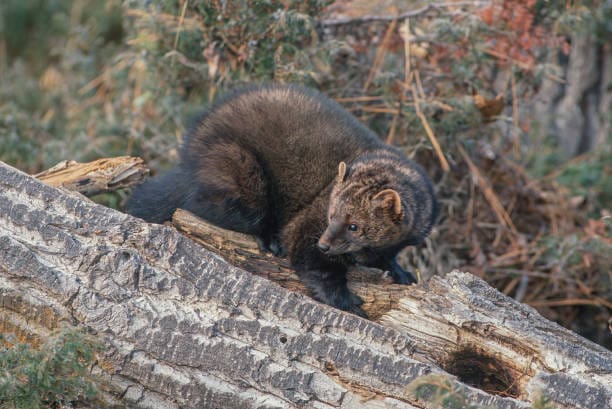
Physical Characteristics & Identification Tips
Fishers are large, powerful mustelids with long, slender bodies and bushy tails. Adults measure 30–45 inches including the tail and can weigh up to 6 kg. Their dark brown fur, pointed face, and rounded ears distinguish them from other Wisconsin mustelids. Strong limbs and sharp claws make them expert climbers.
Behavior
Fishers are mostly nocturnal and solitary. They are agile hunters, preying on rodents, birds, and even porcupines, which few predators can tackle. Watching a fisher navigate trees and dense forests reveals remarkable balance and dexterity.
Habitat and Range
They prefer mature forests with dense canopy cover and abundant prey. Fishers can be found throughout northern and central Wisconsin, occasionally moving into fragmented woodlands if food sources are sufficient.
Diet
Fishers eat small to medium mammals, birds, carrion, and sometimes fruits. Their specialized hunting strategies allow them to tackle difficult prey, such as porcupines, by targeting vulnerable areas.
Reproduction and Life Cycle
Breeding occurs in late winter, with delayed implantation leading to spring births. Litters usually contain 1–4 kits, which stay in dens for several weeks before venturing out to learn hunting and survival skills.
Fun Facts / Traits
- One of the few predators capable of hunting porcupines successfully.
- Excellent tree climbers and stealthy hunters.
- Playful yet cautious behavior makes them fascinating to observe.
Human Interaction
Fishers rarely interact with humans but help control rodent populations and maintain forest ecosystem balance. They are often appreciated by wildlife enthusiasts for their elusive and fascinating behavior.
Conclusion
Wisconsin’s weasels and mustelids showcase the state’s incredible wildlife diversity, ranging from the tiny, energetic Least Weasel to the powerful and agile Fisher. Each species plays a vital role in controlling rodent populations, maintaining ecological balance, and enriching the forest, field, and wetland ecosystems. While often elusive, these animals leave their mark through tracks, dens, and hunting behavior, reminding us of the hidden wildlife thriving just beyond our sight.
Observing these weasels—whether spotting an American Mink by a riverbank or noticing the winter-white coat of an Ermine—offers a glimpse into the subtle, intricate dynamics of Wisconsin’s natural landscapes. Protecting their habitats ensures these skilled hunters continue to thrive, highlighting the importance of conservation efforts and mindful coexistence. From casual wildlife enthusiasts to dedicated naturalists, understanding and appreciating these remarkable mustelids deepens our connection to the wild side of Wisconsin.
Frequently Asked Questions (FAQs)
1. What types of weasels are found in Wisconsin?
Wisconsin is home to several weasel species, including the Long-Tailed Weasel, Short-Tailed Weasel (Ermine), Least Weasel, American Mink, and Fisher. These mustelids inhabit forests, wetlands, grasslands, and areas near human settlements.
2. How can I identify a weasel in Wisconsin?
Identification depends on size, coat color, and tail characteristics. Long-Tailed Weasels have reddish-brown fur with a black-tipped tail, Ermines turn white in winter, Least Weasels are very small, American Minks are sleek and semi-aquatic, and Fishers are large with bushy tails and dark fur.
3. Are weasels in Wisconsin dangerous to humans?
Weasels are generally not dangerous to humans. They are shy, elusive predators that avoid direct contact. Their primary role in the ecosystem is controlling rodent populations.
4. What do weasels eat in Wisconsin?
Weasels are carnivorous. Their diets include mice, voles, small birds, amphibians, insects, and occasionally fish. Fishers can even hunt porcupines, making them unique predators in the state.
5. When is the best time to see weasels in Wisconsin?
Weasels are mostly nocturnal, but some activity can be observed at dawn or dusk. Winter can reveal tracks in snow, and you might spot Ermines with their distinctive white coats or Minks along waterways.
6. How do weasels impact Wisconsin’s ecosystem?
Weasels help control rodent populations, reducing damage to crops and forests. They also serve as prey for larger predators, maintaining the balance of Wisconsin’s diverse wildlife.
6. What is the largest weasel in Wisconsin?
The Long-tailed Weasel (Neogale frenata) is the largest weasel in Wisconsin. Adults typically measure 12–18 inches long, not including the tail, and weigh around 3–7 ounces.
7. What family do weasels belong to?
Weasels belong to the Mustelidae family, which includes other carnivorous mammals such as minks, martens, fishers, otters, and badgers.
8. What type of weasels live in Wisconsin?
Wisconsin is home to two main weasel species: the Long-tailed Weasel and the Short-tailed Weasel (Ermine, Mustela erminea). They live in forests, grasslands, wetlands, and farmland, hunting small mammals and birds.
9. Are American badgers weasels?
No, American Badgers (Taxidea taxus) are not true weasels, but they are part of the same Mustelidae family. They are larger, burrowing carnivores that primarily eat rodents.
10. Are lynx in Wisconsin?
Yes, Canada Lynx (Lynx canadensis) have been occasionally spotted in northern Wisconsin, but they are very rare. More commonly, the state has bobcats, which are smaller wild cats and top predators in Wisconsin forests.
Conclusion
Wisconsin’s weasels and mustelids showcase the state’s incredible wildlife diversity, ranging from the tiny, energetic Least Weasel to the powerful and agile Fisher. Each species plays a vital role in controlling rodent populations, maintaining ecological balance, and enriching the forest, field, and wetland ecosystems. While often elusive, these animals leave their mark through tracks, dens, and hunting behavior, reminding us of the hidden wildlife thriving just beyond our sight.
Observing these weasels—whether spotting an American Mink by a riverbank or noticing the winter-white coat of an Ermine—offers a glimpse into the subtle, intricate dynamics of Wisconsin’s natural landscapes. Protecting their habitats ensures these skilled hunters continue to thrive, highlighting the importance of conservation efforts and mindful coexistence. From casual wildlife enthusiasts to dedicated naturalists, understanding and appreciating these remarkable mustelids deepens our connection to the wild side of Wisconsin.
Read more:
- 20 Types of Weasels: Species Identification with Pictures
- 5 Types of Weasels in Michigan (Pictures and Identification)
- 5 Types of Weasels in Ontario (Pictures And Identification)
- 5 Types of Weasels in New York | Identification & Facts
- 5 Types of Weasels in Vermont (Pictures And Identification)
- 6 Types of Weasels in Maine (Pictures and Identification)
- 5 Types of Weasels in Alberta | Identification & Facts
- 5 Types of Weasels in Pennsylvania (Pictures and Identification)
- 8 Types of Weasels in Minnesota | Identification & Facts
- 5 Types of Weasels in Ohio | Identification & Facts