

Sea turtles are among the most fascinating marine reptiles on Earth, having roamed the oceans for over 100 million years. These ancient creatures are not only symbols of longevity and resilience but also play a crucial role in maintaining the health of marine ecosystems. From tropical coral reefs to open oceans and coastal lagoons, sea turtles occupy a wide range of habitats—and their diet reflects this diversity.
Understanding what sea turtles eat is essential for several reasons. First, their feeding habits directly impact ocean ecosystems, including seagrass beds and coral reefs. Second, diet plays a major role in their survival, growth, and reproduction. Finally, with increasing threats such as pollution and habitat destruction, knowing what they consume helps conservationists protect these species more effectively.
Sea turtles are not all the same when it comes to food. Some species are herbivores, feeding mainly on plants, while others are carnivores or omnivores, consuming a mix of animal and plant matter. In this guide, we’ll explore 30 foods sea turtles love the most and take a deep dive into how their diets shape their lives in the wild.
What Do Sea Turtles Eat in the Wild?
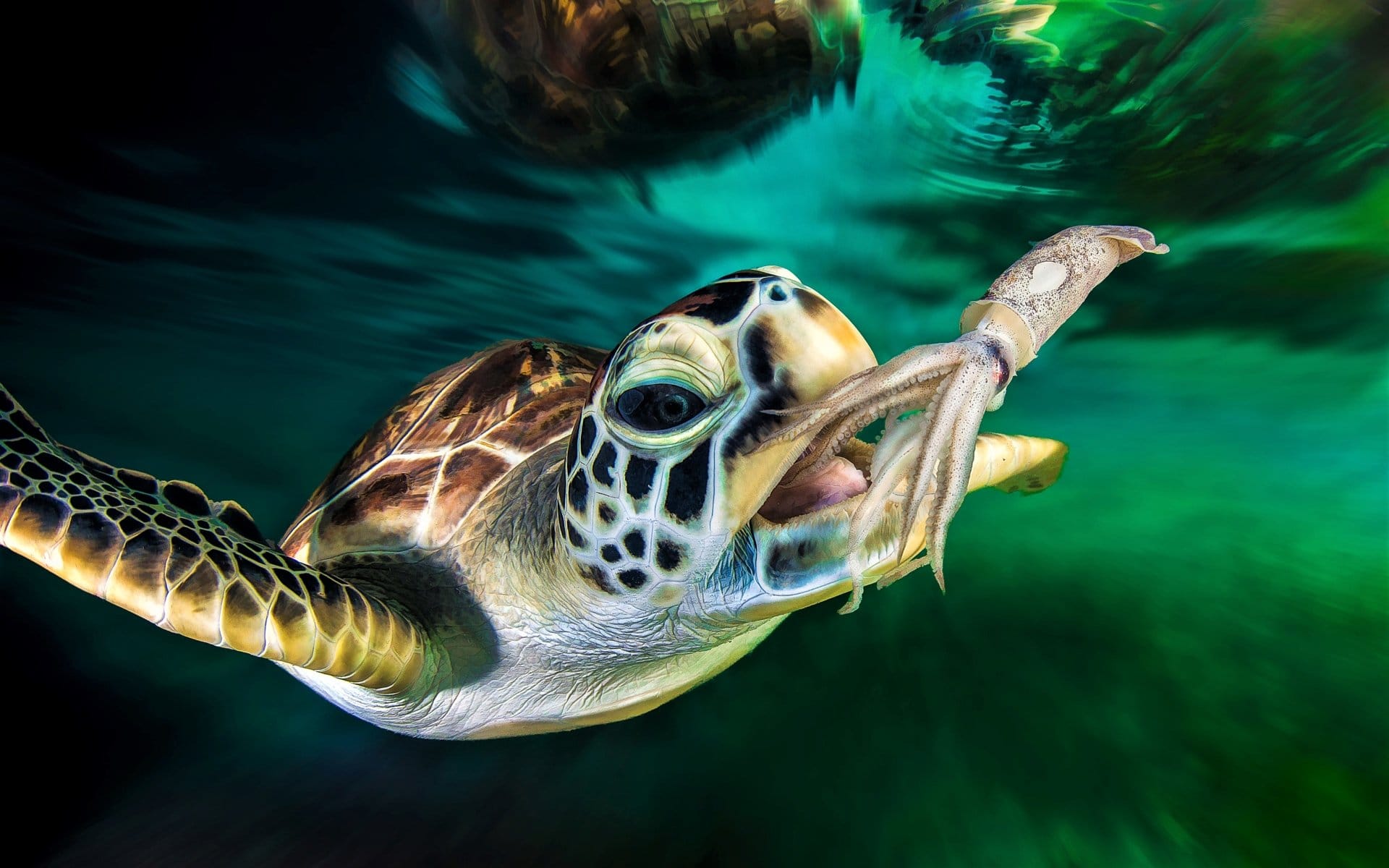
In the wild, sea turtles have highly varied diets depending on their species, age, and habitat. Hatchlings and juveniles often have different feeding habits compared to adults, typically starting as omnivores and becoming more specialized over time. Their diets range from soft-bodied creatures like jellyfish to tough marine vegetation such as seagrass.
Each type of food provides essential nutrients that help sea turtles thrive in challenging ocean environments. Some foods are rich in protein, supporting growth and muscle development, while others provide fiber and minerals necessary for digestion and shell health. Below, we begin exploring the first group of foods that form the foundation of many sea turtle diets.
1. Seagrass
Seagrass is one of the most important food sources for many sea turtle species, particularly green sea turtles, which are known for their largely herbivorous diet as adults. Found in shallow coastal waters, seagrass meadows are rich in nutrients and provide an abundant, renewable food supply. Sea turtles graze on these underwater plants much like terrestrial herbivores graze on grasslands, carefully cropping the blades to promote healthy regrowth.
This feeding behavior is essential for maintaining the health of seagrass ecosystems. By trimming the grass, sea turtles prevent overgrowth and promote nutrient cycling, which benefits other marine species. Seagrass is rich in fiber, aiding digestion, and contains important vitamins and minerals that support overall health and shell development.
Seagrass beds also serve as critical habitats for young turtles, offering both food and protection from predators. Without sea turtles, these ecosystems could become overgrown and less productive, highlighting the deep ecological connection between diet and environment.
2. Algae
Algae are another staple in the diet of many sea turtles, especially herbivorous species. These simple aquatic organisms grow on rocks, coral, and other submerged surfaces, making them easily accessible for grazing turtles. Algae come in many forms, from microscopic phytoplankton to larger macroalgae, and provide a valuable source of nutrients.
Algae are rich in antioxidants, vitamins, and minerals, which contribute to the overall health of sea turtles. They are also easier to digest compared to some tougher plant materials, making them an ideal food source for younger turtles transitioning into herbivorous diets.
In addition to their nutritional benefits, algae play a role in maintaining balanced ecosystems. By feeding on algae, sea turtles help prevent excessive growth that could otherwise smother coral reefs and disrupt marine habitats.
3. Seaweed
Seaweed is a broad term that includes various types of marine algae, such as kelp and other macroalgae. It is commonly consumed by sea turtles, particularly in coastal environments where it grows abundantly. Seaweed is packed with essential nutrients, including iodine, calcium, and vitamins, making it a highly beneficial food source.
Different species of seaweed offer varying textures and nutritional profiles, allowing turtles to diversify their diet. Some seaweeds are soft and easy to digest, while others are tougher and require stronger jaws to break down.
Sea turtles often forage in areas where seaweed accumulates, such as tidal zones and reef edges. This feeding behavior not only supports their nutritional needs but also helps regulate the growth of marine vegetation in these areas.
4. Marine Plants
Marine plants encompass a wide range of underwater vegetation beyond seagrass and seaweed. These include various flowering plants and submerged vegetation found in coastal and estuarine environments. Sea turtles consume these plants as part of a balanced herbivorous diet.
These plants provide essential nutrients such as fiber, which aids digestion, and minerals that contribute to shell strength. Marine plants also play a role in detoxifying the digestive system by helping eliminate harmful substances.
Feeding on marine plants allows sea turtles to thrive in diverse habitats, from lagoons to shallow bays. Their ability to adapt to different plant sources is a key factor in their long-term survival.
5. Sea Lettuce
Sea lettuce is a type of green algae that is particularly appealing to sea turtles due to its soft texture and high nutritional value. It grows in shallow waters and is easily accessible, making it a convenient food source.
Rich in vitamins A and C, as well as iron and calcium, sea lettuce supports immune function and overall health. Its soft structure makes it easy to digest, especially for younger turtles.
Sea turtles often consume sea lettuce in large quantities when available, taking advantage of its abundance in nutrient-rich coastal waters. This feeding habit helps maintain balanced algae levels in these ecosystems.
6. Red Algae
Red algae are a diverse group of marine plants that are commonly found in coral reef environments. They are rich in proteins, vitamins, and antioxidants, making them a valuable addition to the sea turtle diet.
Some species of red algae contain compounds that may help protect turtles from diseases and parasites. Their unique chemical composition also contributes to improved digestion and nutrient absorption.
Sea turtles often graze on red algae growing on rocks and coral surfaces, helping to keep reef ecosystems healthy and free from overgrowth.
7. Brown Algae
Brown algae, including kelp, are another important food source for sea turtles. These algae are typically found in cooler coastal waters and can grow to large sizes, forming underwater forests.
Brown algae are rich in iodine, which supports metabolic functions, as well as other essential nutrients. Their tougher texture requires stronger jaws, making them more suitable for larger or more experienced turtles.
By feeding on brown algae, sea turtles help maintain the balance of these ecosystems, preventing excessive growth that could limit sunlight penetration and affect other marine life.
8. Phytoplankton
Phytoplankton are microscopic plants that form the base of the marine food web. While not a primary food source for most adult sea turtles, they are often consumed indirectly or by younger turtles.
These tiny organisms are rich in nutrients and play a crucial role in ocean ecosystems by producing oxygen and supporting marine life. Juvenile turtles may ingest phytoplankton while feeding on other small organisms.
Phytoplankton contribute to the overall health of the ocean, and their presence supports the broader food chain that sea turtles rely on.
9. Mangrove Leaves
Mangrove leaves are occasionally consumed by sea turtles, particularly in coastal areas where mangrove forests are present. These leaves may fall into the water and become accessible to foraging turtles.
While not a primary food source, mangrove leaves provide additional nutrients and fiber. They also represent the adaptability of sea turtles in utilizing available food sources.
Mangrove ecosystems are vital for coastal protection and biodiversity, and sea turtles play a small but meaningful role in these environments through their feeding habits.
10. Aquatic Vegetation
Aquatic vegetation includes a wide range of plant life found in freshwater and brackish environments. Some sea turtles, especially juveniles, may venture into these areas and feed on available vegetation.
These plants provide essential nutrients and help diversify the turtle’s diet. Aquatic vegetation is often softer and easier to digest, making it suitable for younger individuals.
The ability to consume different types of vegetation allows sea turtles to adapt to changing environments and food availability, ensuring their survival across diverse habitats.
11. Jellyfish
Jellyfish are one of the most well-known foods associated with sea turtles, especially leatherback sea turtles, which specialize in feeding on these gelatinous creatures. Floating through the open ocean, jellyfish are abundant in many marine environments, making them a reliable food source. Sea turtles use their sharp beaks and specially adapted throats lined with backward-pointing spines (called papillae) to capture and swallow jellyfish without letting them escape.
Although jellyfish are mostly made up of water, they still provide essential nutrients, including proteins and some minerals. Leatherback turtles, in particular, consume large quantities daily to meet their energy needs. This high-volume feeding strategy allows them to survive on what would otherwise be considered a low-calorie food.
However, this dietary preference also puts sea turtles at risk. Floating plastic bags can resemble jellyfish, leading turtles to ingest them accidentally. This can cause serious health problems or even death, making plastic pollution one of the biggest threats to sea turtles worldwide.
12. Sea Squirts
Sea squirts, also known as tunicates, are soft-bodied marine animals that attach themselves to rocks and other underwater surfaces. They are filter feeders, drawing in water to extract plankton, and are commonly found in coastal environments where sea turtles forage.
Sea turtles consume sea squirts as part of a varied carnivorous or omnivorous diet. These organisms are relatively easy to capture due to their stationary nature, making them a convenient food source for turtles exploring reef systems or rocky seabeds.
Nutritionally, sea squirts provide protein and other essential nutrients that support growth and maintenance. Their soft bodies make them easy to digest, especially for turtles that prefer softer prey.
13. Salps
Salps are gelatinous, barrel-shaped organisms that drift in the ocean, often forming long chains. They are similar in appearance and texture to jellyfish and are frequently consumed by sea turtles that feed in open waters.
Like jellyfish, salps are low in calories but can be abundant, allowing turtles to consume them in large quantities. This makes them a practical food source for species adapted to high-volume feeding.
Salps play an important role in the ocean by filtering water and cycling nutrients. By feeding on them, sea turtles help maintain balance within the marine ecosystem.
14. Comb Jellies
Comb jellies, or ctenophores, are delicate, transparent marine animals that resemble jellyfish but belong to a different biological group. They move using rows of tiny hair-like structures called cilia, giving them a shimmering appearance.
Sea turtles that feed on gelatinous organisms may also consume comb jellies. Their soft bodies make them easy to ingest, and they are often encountered in open ocean habitats.
Although not highly nutritious on their own, comb jellies contribute to a varied diet that helps sustain turtles in environments where food options may be limited.
15. Soft-Bodied Invertebrates
Soft-bodied invertebrates include a wide range of marine animals such as worms, small jelly-like creatures, and other delicate organisms. These are commonly consumed by juvenile sea turtles, which tend to have more generalized diets.
These organisms are easy to catch and digest, making them ideal for young turtles that are still developing their feeding skills. They provide essential proteins and nutrients necessary for growth.
As turtles mature, they may shift toward more specialized diets, but soft-bodied invertebrates often remain an important supplemental food source.
16. Crabs
Crabs are a significant part of the diet for many carnivorous sea turtle species, particularly loggerhead turtles. These turtles have powerful jaws designed to crush hard shells, allowing them to access the nutritious meat inside.
Crabs are rich in protein, calcium, and other essential nutrients, making them an excellent food source. They are commonly found in coastal and reef environments where turtles forage.
By feeding on crabs, sea turtles help regulate crustacean populations, contributing to ecological balance in marine ecosystems.
17. Shrimp
Shrimp are small, agile crustaceans that are widely distributed in marine environments. Sea turtles capture shrimp using quick, precise movements, often while foraging along the ocean floor.
Shrimp provide a good source of protein and are relatively easy to digest. They are particularly important for younger turtles that require high-energy foods for growth.
In addition to their nutritional value, shrimp are often abundant, making them a reliable food source in many habitats.
18. Lobsters
Lobsters are larger crustaceans that require strong jaws to break open. Species like loggerhead turtles are well adapted to consuming such prey, using their powerful beaks to crush shells.
Lobsters are rich in protein and minerals, supporting muscle development and overall health. They are typically found in rocky or reef environments where turtles can forage effectively.
Although not as commonly consumed as smaller crustaceans, lobsters provide a high-energy meal when available.
19. Barnacles
Barnacles are small, hard-shelled organisms that attach themselves to rocks, ships, and even other animals. Sea turtles may consume barnacles while grazing on surfaces or cleaning their own shells.
While not a primary food source, barnacles provide additional nutrients and contribute to a varied diet. Their presence on turtle shells may also encourage incidental feeding.
This behavior highlights the opportunistic nature of sea turtles, which often take advantage of whatever food sources are available.
20. Horseshoe Crabs
Horseshoe crabs are ancient marine arthropods with hard exoskeletons. Some sea turtle species, particularly those with strong jaws, are capable of feeding on them.
These creatures are rich in nutrients, including protein and minerals, making them a valuable food source. However, they require effort to capture and consume due to their tough shells.
Feeding on horseshoe crabs demonstrates the adaptability and strength of certain sea turtle species, allowing them to exploit a wide range of prey types in their environment.
21. Snails
Marine snails are a common food source for many carnivorous sea turtle species, especially those equipped with strong, crushing jaws like loggerhead turtles. These slow-moving mollusks are found on the ocean floor, attached to rocks, coral, and sandy substrates, making them relatively easy targets for foraging turtles.
Snails are protected by hard shells, but sea turtles have evolved powerful beaks capable of breaking through these defenses. Once cracked open, the soft tissue inside provides a rich source of protein, calcium, and essential nutrients that contribute to shell strength and overall health.
By feeding on snails, sea turtles help regulate mollusk populations, preventing overgrazing on algae and maintaining balance within marine ecosystems.
22. Conchs
Conchs are large marine snails with thick, spiral shells. They are a more challenging prey item, requiring significant strength and skill to consume. Species like loggerhead turtles are particularly well-adapted to handling such tough prey.
The meat inside conchs is highly nutritious, offering a dense source of protein and minerals. While not consumed as frequently as smaller prey, conchs provide a substantial meal that can sustain turtles for longer periods.
Conchs are typically found in sandy or seagrass habitats, where turtles forage by digging or searching along the seabed.
23. Whelks
Whelks are predatory sea snails with robust shells, commonly found in coastal waters. They are similar to conchs but are often smaller and more abundant, making them a more frequent part of a sea turtle’s diet.
Sea turtles use their strong jaws to crush whelk shells and access the soft tissue inside. This provides valuable nutrients, including proteins and trace minerals essential for growth and maintenance.
Feeding on whelks also contributes to controlling their populations, which helps maintain ecological balance in marine environments.
24. Clams
Clams are bivalve mollusks that live buried in sand or mud. Sea turtles locate them by foraging along the ocean floor, using their sense of touch and sight to detect movement or disturbances in the sediment.
Once found, turtles use their powerful beaks to crush the shells and consume the soft flesh inside. Clams are rich in protein, iron, and other nutrients that support overall health.
Clams are a dependable food source in many coastal areas, making them an important part of the diet for bottom-feeding sea turtle species.
25. Mussels
Mussels are another type of bivalve that attach themselves to rocks and other hard surfaces. They often form dense clusters, providing an abundant and easily accessible food source for sea turtles.
Sea turtles break open mussel shells to access the nutrient-rich meat inside. Mussels are particularly high in protein and essential fatty acids, which support energy needs and growth.
Their abundance and nutritional value make mussels a valuable component of the diet for many sea turtle species.
26. Small Fish
Small fish are commonly consumed by omnivorous and carnivorous sea turtles, especially during their juvenile stages. These fish are typically caught in shallow waters or near reefs where turtles actively forage.
Fish provide a high-protein, energy-rich food source that supports rapid growth and development. Sea turtles use quick movements and sharp beaks to capture their prey.
Although not the primary diet for all species, small fish contribute to a balanced and varied nutritional intake.
27. Fish Eggs
Fish eggs, also known as roe, are nutrient-dense and often found in large clusters in marine environments. Sea turtles may consume them opportunistically while foraging.
These eggs are rich in proteins, fats, and essential nutrients, making them a valuable food source, especially for younger turtles.
Feeding on fish eggs can influence fish populations, highlighting the interconnected nature of marine food webs.
28. Sea Urchins
Sea urchins are spiny marine animals found on rocky seabeds and coral reefs. Despite their protective spines, some sea turtle species are capable of consuming them.
Sea urchins are rich in nutrients and provide a unique food source that requires skill and adaptation to handle safely. Turtles often target the softer underside to access the edible parts.
By feeding on sea urchins, turtles help control their populations, which is important because overabundant urchins can damage coral reefs.
29. Sea Cucumbers
Sea cucumbers are soft-bodied marine animals that live on the ocean floor. They feed on organic material in the sediment and are an easy target for foraging sea turtles.
These creatures provide a good source of nutrients and are easy to digest due to their soft bodies. They are particularly important for turtles that prefer bottom-feeding.
Sea cucumbers also play a role in cleaning the ocean floor, and their consumption contributes to nutrient cycling within marine ecosystems.
30. Coral
Some sea turtle species, such as hawksbill turtles, feed on coral and the organisms associated with it, including sponges. While coral itself is not highly nutritious, it often contains small animals that provide essential nutrients.
Hawksbill turtles have specialized beaks that allow them to reach into crevices and extract food from coral reefs. This feeding behavior helps maintain reef health by controlling sponge populations that could otherwise overgrow coral.
Although coral consumption is relatively specialized, it highlights the unique adaptations of different sea turtle species and their important role in reef ecosystems.
How Diet Varies by Species
Sea turtle diets vary significantly depending on the species. Green sea turtles are primarily herbivores as adults, feeding mostly on seagrass and algae. Leatherback turtles are specialized carnivores that primarily consume jellyfish. Loggerhead turtles are omnivores with strong jaws designed for crushing hard-shelled prey like crabs and mollusks.
Hawksbill turtles are known for their preference for sponges and coral-associated organisms, while olive ridley and Kemp’s ridley turtles have more varied diets that include both plant and animal matter. These dietary differences are closely linked to each species’ physical adaptations, such as beak shape and jaw strength.
Seasonal Diet Changes
Sea turtles may experience seasonal changes in diet based on food availability and migration patterns. During warmer months, food sources such as seagrass and jellyfish may be more abundant, allowing turtles to feed more actively.
In colder seasons or during long migrations, turtles may rely on stored energy or shift to whatever food is available in their new location. Juveniles, in particular, may adapt their diet more frequently as they explore different habitats.
What Do Sea Turtles Eat in Captivity or Around Humans?
In captivity, such as in aquariums or rescue centers, sea turtles are typically fed a controlled diet that mimics their natural food sources. This may include fish, squid, leafy greens, and specially formulated feeds designed to meet their nutritional needs.
However, feeding sea turtles in the wild is strongly discouraged. Human food or inappropriate items can harm their health and disrupt natural feeding behaviors. Plastic waste is especially dangerous, as turtles may mistake it for food like jellyfish.
Feeding Behavior & Foraging Techniques
Sea turtles use a variety of techniques to find and capture food. Some graze on vegetation, while others actively hunt or scavenge. Their beaks are specially adapted for their diets—sharp for tearing, strong for crushing, or narrow for reaching into crevices.
They rely on keen eyesight and sensitivity to movement to locate prey. In some cases, they use ocean currents to their advantage, feeding on drifting organisms like jellyfish and salps.
Ecological Role of Sea Turtles’ Diet
Sea turtles play a vital role in maintaining healthy marine ecosystems. By grazing on seagrass, they promote healthy growth and nutrient cycling. By feeding on jellyfish, they help control populations that could otherwise explode and disrupt ecosystems.
Their feeding habits also influence coral reef health and contribute to the balance of marine food webs. Without sea turtles, many marine ecosystems would become less stable and less productive.
Fun Facts About Sea Turtles’ Eating Habits
- Leatherback turtles can eat their body weight in jellyfish in a single day.
- Green sea turtles switch from omnivores to herbivores as they mature.
- Some turtles can crush hard shells with incredible jaw strength.
- Sea turtles can travel thousands of miles in search of food.
- They often mistake plastic bags for jellyfish, which can be fatal.
Conclusion
Sea turtles have incredibly diverse diets that reflect their adaptability and ecological importance. From seagrass and algae to crabs and jellyfish, these animals rely on a wide range of food sources to survive and thrive in marine environments.
Understanding what sea turtles eat not only helps us appreciate their unique biology but also highlights the importance of protecting their habitats. By preserving ocean ecosystems and reducing pollution, we can ensure that sea turtles continue to play their vital role in maintaining the health of our oceans for generations to come.
Frequently Asked Questions (FAQ) About What Sea Turtles Eat
1. What do sea turtles eat the most?
Sea turtles commonly eat seagrass, algae, jellyfish, crustaceans, and mollusks depending on their species and habitat.
2. Are all sea turtles herbivores?
No, only green sea turtles are mostly herbivores as adults, while others are omnivores or carnivores.
3. Do sea turtles eat jellyfish?
Yes, especially leatherback sea turtles, which rely heavily on jellyfish as their primary food source.
4. Why do sea turtles eat plastic?
Sea turtles often mistake floating plastic bags for jellyfish, leading to accidental ingestion.
5. Do baby sea turtles eat the same food as adults?
No, juveniles are usually omnivorous and eat more protein-rich foods before shifting diets as they grow.
6. What plants do sea turtles eat?
They eat seagrass, algae, seaweed, and other marine vegetation.
7. Do sea turtles eat fish?
Yes, some species eat small fish, especially during their younger stages.
8. Do sea turtles eat crabs?
Yes, species like loggerhead turtles commonly eat crabs and other crustaceans.
9. Are sea turtles carnivores?
Some species are carnivorous, such as leatherbacks, while others are omnivores.
10. Do sea turtles eat shrimp?
Yes, shrimp are part of the diet for many sea turtles.
11. How do sea turtles find food?
They use their eyesight, sense of movement, and sometimes ocean currents to locate food.
12. Do sea turtles eat coral?
Some species, like hawksbill turtles, feed on coral and reef organisms.
13. What do green sea turtles eat?
They mainly eat seagrass and algae as adults.
14. What do loggerhead turtles eat?
They eat hard-shelled animals like crabs, clams, and snails.
15. What do leatherback turtles eat?
They primarily eat jellyfish and other soft-bodied organisms.
16. Do sea turtles eat seaweed?
Yes, seaweed is a common food source for many species.
17. Can sea turtles eat meat?
Yes, many species consume animal-based foods such as fish and crustaceans.
18. Do sea turtles eat plankton?
They may consume phytoplankton indirectly or during early life stages.
19. Do sea turtles eat mollusks?
Yes, they eat clams, mussels, snails, and similar shellfish.
20. How often do sea turtles eat?
Feeding frequency depends on species, age, and food availability, but many eat daily.
21. Do sea turtles hunt or scavenge?
They do both, depending on the type of food they are consuming.
22. Do sea turtles eat barnacles?
Yes, they may eat barnacles while grazing or cleaning their shells.
23. Do sea turtles eat sea urchins?
Some species consume sea urchins despite their spines.
24. Do sea turtles eat sea cucumbers?
Yes, sea cucumbers are part of their diet, especially for bottom feeders.
25. Do sea turtles eat fish eggs?
Yes, they may eat fish eggs when encountered.
26. Are sea turtles picky eaters?
No, most sea turtles are opportunistic feeders and eat what is available.
27. Do sea turtles eat in groups?
They usually feed alone but may gather in areas with abundant food.
28. Do sea turtles eat on land?
No, they primarily feed in the water.
29. What do sea turtles drink?
They drink seawater and excrete excess salt through specialized glands.
30. Do sea turtles eat every day?
Many do, but feeding patterns vary depending on conditions.
31. Can sea turtles starve?
Yes, lack of food or ingestion of harmful materials can lead to starvation.
32. Do sea turtles eat sponges?
Yes, especially hawksbill turtles.
33. Do sea turtles eat insects?
Rarely, but they may consume small invertebrates incidentally.
34. What is the main threat to sea turtle diets?
Plastic pollution is one of the biggest threats.
35. Do sea turtles eat algae?
Yes, algae are a major food source for many species.
36. Do sea turtles eat mangrove leaves?
Occasionally, especially in coastal areas.
37. Do sea turtles eat lobsters?
Yes, some species consume lobsters.
38. Do sea turtles eat conchs?
Yes, particularly species with strong jaws.
39. Do sea turtles eat whelks?
Yes, they are part of the mollusk diet.
40. Do sea turtles eat clams?
Yes, clams are a common food source.
41. Do sea turtles eat mussels?
Yes, mussels provide important nutrients.
42. Do sea turtles eat small fish?
Yes, especially younger turtles.
43. Do sea turtles eat salps?
Yes, they consume salps in open water.
44. Do sea turtles eat comb jellies?
Yes, especially species that feed on soft-bodied prey.
45. Do sea turtles eat sea squirts?
Yes, they are part of a varied diet.
46. Do sea turtles eat aquatic vegetation?
Yes, particularly in shallow or coastal environments.
47. Do sea turtles eat brown algae?
Yes, it is a nutritious plant source.
48. Do sea turtles eat red algae?
Yes, they graze on it in reef environments.
49. Do sea turtles eat sea lettuce?
Yes, it is a soft and nutrient-rich food.
50. Why is diet important for sea turtles?
Diet supports growth, reproduction, and ecosystem balance.
51. How does diet affect sea turtle survival?
A proper diet ensures energy, health, and resilience against environmental changes.
52. Can humans feed sea turtles?
No, feeding wild sea turtles is discouraged as it can harm them.
Read more: