

Peacocks are among the most recognizable birds in the world, admired for their brilliant plumage, regal posture, and dramatic courtship displays. Native primarily to South Asia but now found in many parts of the world, peacocks (the males of peafowl species) are not only visually striking but also ecologically fascinating.
Understanding what peacocks eat is important for several reasons. Diet influences their health, feather development, breeding success, behavior, and even lifespan. For people who keep peafowl on farms, estates, or in conservation settings, knowing their nutritional needs is essential to keeping them healthy and stress-free.
A common misconception is that peacocks eat only grains or bird feed. In reality, they are highly adaptable omnivores with a broad and flexible diet that includes insects, plants, seeds, fruits, and even small animals.
So, what do peacocks eat? In short, peacocks consume a diverse mix of plant-based foods and animal matter, adjusting their diet based on availability, season, and environment.
What Do Peacocks Eat in the Wild?
In the wild, peacocks are opportunistic omnivores. Their natural diet reflects millions of years of evolution in forest edges, grasslands, agricultural areas, and semi-open habitats. Wild peafowl spend much of their day foraging on the ground, carefully scanning for edible items.
Their diet in natural environments can be divided into several main categories:
- Insects and Invertebrates: Beetles, ants, termites, grasshoppers, caterpillars, spiders, and worms provide high-quality protein.
- Seeds and Grains: Wild grasses, fallen seeds, rice, wheat, and other grains are staple energy sources.
- Fruits and Berries: Wild berries, figs, fallen fruits, and soft plant matter supply sugars, vitamins, and hydration.
- Leaves and Plant Matter: Tender shoots, flower petals, and leafy greens are eaten regularly.
- Small Animals: Occasionally, peacocks consume small reptiles, frogs, rodents, or bird eggs.
Peacocks eat these foods because they offer a balanced mix of protein, carbohydrates, fats, vitamins, and minerals. Their omnivorous diet allows them to survive in varied habitats and cope with seasonal food shortages.
Main Food Categories of Peacocks
1. Insects and Animal Protein
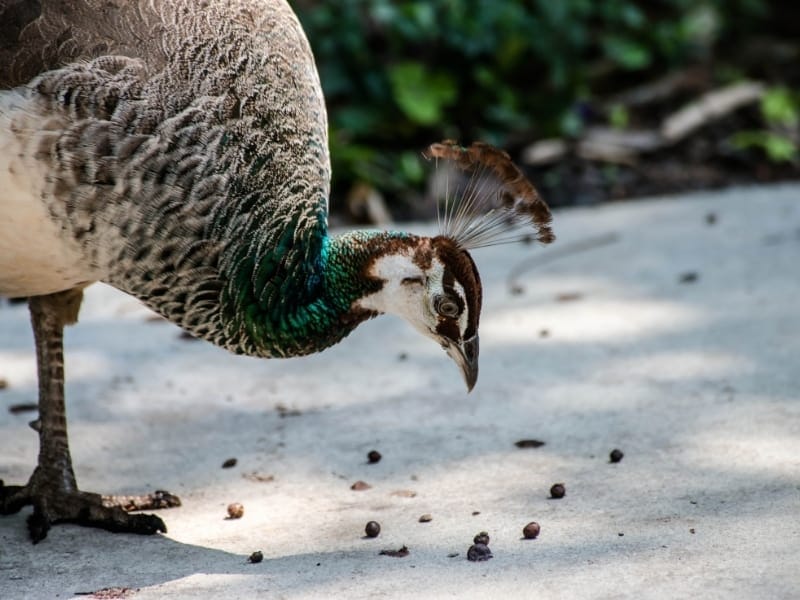
Insects are one of the most important components of a peacock’s natural diet, especially in the wild. Beetles, ants, termites, grasshoppers, crickets, caterpillars, spiders, and worms are frequently consumed. These foods are rich in protein, which is essential for muscle development, immune health, and feather growth.
Peacocks actively forage for insects by walking slowly through grass, leaf litter, and soil, pecking rapidly when they spot movement. During the breeding season, males increase protein intake to support the growth and maintenance of their long, elaborate tail feathers. Females rely heavily on insects during egg production and chick-rearing.
Animal protein also includes small vertebrates. Peacocks have been observed eating frogs, small snakes, lizards, mice, and even baby birds. While this behavior is less frequent, it highlights their opportunistic feeding strategy. In regions where venomous snakes are present, peacocks are sometimes credited with reducing snake populations.
Chicks rely heavily on insects during their early development. High-protein diets are crucial for rapid growth, bone formation, and survival during the first few weeks of life.
2. Seeds and Grains
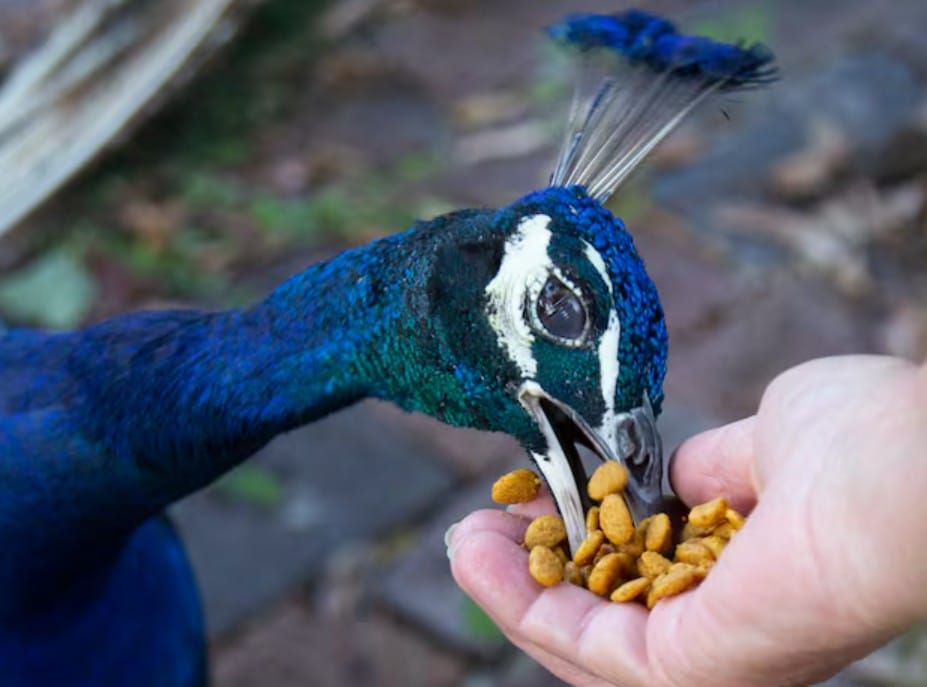
Seeds and grains form the backbone of a peacock’s diet, particularly in agricultural and semi-rural areas. Peacocks readily eat rice, wheat, corn, barley, millet, oats, and sorghum. These foods provide carbohydrates that fuel daily activity and maintain body weight.
In the wild, peacocks consume fallen seeds from grasses and plants. In human-modified landscapes, they often forage in fields or near farms, sometimes leading to conflicts with farmers. Their strong beaks allow them to crack open harder seeds with ease.
Grains are especially important during dry seasons or periods when insects are scarce. The slow-digesting carbohydrates help peacocks maintain stable energy levels throughout the day.
3. Fruits and Berries

Fruits and berries add variety and essential micronutrients to a peacock’s diet. Wild figs, berries, guavas, mangoes, bananas, and fallen orchard fruits are commonly eaten when available.
Fruits provide natural sugars for quick energy, as well as vitamins such as vitamin A and C, which support immune function and feather coloration. The water content in fruits also helps with hydration, particularly in hot climates.
Peacocks usually consume fruits that have fallen to the ground or are easily accessible. They may peck open soft fruits to reach the pulp and seeds inside. This feeding behavior contributes to seed dispersal, helping plants regenerate across their habitat.
4. Leaves, Shoots, and Plant Matter

Although not strict herbivores, peacocks regularly consume plant material. Tender leaves, young shoots, grass tips, flower petals, and buds are eaten during routine foraging.
Plant matter supplies fiber, which aids digestion, and provides trace minerals necessary for overall health. This part of their diet becomes more important when insects or fruits are less abundant.
Peacocks tend to avoid tough or toxic plants, relying on instinct and experience to select safe vegetation. Their digestive system is well-adapted to processing a mixed diet of animal and plant matter.
5. Small Animals

Although peacocks are often thought of as grain- and insect-eating birds, small animals play a notable secondary role in their diet. Peacocks are opportunistic omnivores, and when the opportunity arises, they will consume a range of small vertebrates and animal matter. This behavior reflects both their adaptability and their evolutionary history as ground-foraging birds.
Small animals eaten by peacocks may include frogs, lizards, small snakes, rodents, baby birds, and bird eggs. While these foods do not make up the majority of their diet, they provide valuable protein, fats, and minerals that support muscle development, feather growth, and overall health.
Types of Small Animals Peacocks Eat
Peacocks have been observed eating a variety of small animals, particularly in rural and wild environments. Common examples include:
- Small snakes: Peacocks are well known for preying on small snakes, including venomous species. This has earned them a reputation in some regions as natural snake deterrents.
- Lizards: Quick-moving reptiles found in grasslands and forest edges are sometimes captured during foraging.
- Frogs and toads: Especially during the rainy season, amphibians become more available and are occasionally eaten.
- Rodents: Mice and other very small mammals may be consumed if encountered.
- Bird eggs and nestlings: Opportunistically eaten when nests are accessible and other food sources are limited.
Why Peacocks Eat Small Animals
The consumption of small animals provides peacocks with concentrated animal protein and essential amino acids that are harder to obtain from plant-based foods alone. Protein is particularly important during the breeding season, when males must maintain large, elaborate tail feathers and females require extra nutrients for egg production.
Small animals are also rich in calcium, phosphorus, and trace minerals, which support bone strength and eggshell formation. For growing chicks, these nutrients are critical for proper skeletal development.
Hunting and Capture Behavior
Peacocks do not actively hunt in the same way predatory birds do. Instead, they rely on sharp eyesight and quick reflexes while foraging on the ground. When a small animal is spotted, the peacock may rapidly peck, pin the prey, and swallow it whole or in large pieces.
Unlike birds of prey, peacocks lack talons designed for killing. Instead, their strong beaks and neck muscles allow them to subdue small animals effectively. This feeding behavior is usually brief and opportunistic rather than sustained or deliberate.
Seasonal and Environmental Influence
The likelihood of peacocks eating small animals increases during certain times of year. During the rainy season, frogs, insects, and reptiles become more active, increasing encounter rates. In dry seasons or during food shortages, peacocks may rely more heavily on animal matter to meet their nutritional needs.
In agricultural or human-dominated landscapes, small rodents and reptiles may be more abundant, further increasing opportunities for this type of feeding behavior.
Ecological Impact
By consuming small animals, peacocks contribute to population control of certain species, particularly insects, rodents, and reptiles. Their predation on snakes, in particular, has ecological significance in some regions where venomous snakes pose risks to humans and livestock.
This aspect of their diet reinforces the peacock’s role as a versatile omnivore and an active participant in maintaining ecological balance within its habitat.
How Diet Varies by Species or Subspecies
There are three main species of peafowl: the Indian peafowl, the Green peafowl, and the Congo peafowl. While their diets are broadly similar, subtle differences exist based on habitat and regional food availability.
Indian peafowl commonly feed on grains, insects, and cultivated crops, reflecting their close association with human environments. Green peafowl, which inhabit denser forests, consume more wild fruits, insects, and plant matter. Congo peafowl rely heavily on forest-floor invertebrates and fallen fruits.
Body size, beak strength, and habitat preference all influence what each species eats and how it forages.
Seasonal Diet Changes
Peacock diets change throughout the year. In spring and summer, insects are abundant, making protein-rich foods more accessible. This timing supports breeding, egg-laying, and chick growth.
During the rainy season, plant growth and insect populations increase, expanding food options. In fall and dry seasons, peacocks rely more on grains, seeds, and hardy plant matter.
Unlike migratory birds, peacocks remain in the same general area year-round. Their dietary flexibility allows them to survive seasonal shortages without migrating or hibernating.
What Do Peacocks Eat in Captivity or Around Humans?

In captivity, peacocks are often fed commercial game bird or poultry feed formulated to meet their nutritional needs. This is usually supplemented with grains, fruits, vegetables, and insects.
Common human-provided foods include cracked corn, rice, wheat, mealworms, leafy greens, and fruit scraps. While these foods are generally safe, peacocks should not be fed salty, sugary, processed, or spoiled foods.
Chocolate, caffeine, alcohol, and foods high in salt or fat are harmful and should always be avoided.
Feeding Behavior & Foraging Techniques
Peacocks are ground foragers. They walk slowly, scanning the soil and vegetation, then peck quickly when food is spotted. Their strong legs and sharp eyesight make them efficient hunters of insects and small animals.
Their beaks are sturdy and slightly curved, suitable for picking up seeds, tearing plant matter, and capturing prey. A muscular digestive system allows them to process a wide variety of foods.
Ecological Role of the Peacock’s Diet
Peacocks play an important ecological role. By consuming insects, they help control pest populations. Their fruit-eating habits contribute to seed dispersal, supporting plant regeneration.
Predation on small animals helps maintain balance within local ecosystems. As both predator and prey, peacocks are integral to the food web.
Fun Facts About Peacocks’ Eating Habits
- Peacocks can eat small snakes, including venomous species.
- Chicks require a much higher protein diet than adults.
- Peacocks often forage in groups for safety.
- They can remember reliable feeding locations.
- Fruit consumption helps spread seeds across large areas.
Conclusion
Peacocks are adaptable omnivores with a diverse and flexible diet. From insects and grains to fruits, plants, and small animals, their feeding habits reflect both opportunity and evolution.
Understanding what peacocks eat helps ensure their health in the wild and in human care, while also highlighting their important role in ecosystems. These magnificent birds are not just symbols of beauty, but active participants in maintaining ecological balance.
Peacock Diet FAQ
1. What do peacocks eat?
Peacocks are omnivores that eat insects, grains, seeds, fruits, leaves, small animals, and plant matter.
2. Are peacocks herbivores or carnivores?
Peacocks are omnivores, meaning they eat both plant-based foods and animal protein.
3. Do peacocks eat insects?
Yes, insects such as beetles, ants, termites, grasshoppers, and caterpillars are a major part of their natural diet.
4. Do peacocks eat snakes?
Peacocks have been observed eating small snakes, including venomous species, although this is not their primary food source.
5. What grains do peacocks eat?
Peacocks eat rice, wheat, corn, barley, millet, oats, and other cereal grains.
6. Do peacocks eat fruits?
Yes, peacocks eat a variety of fruits including berries, figs, bananas, mangoes, and fallen orchard fruits.
7. Can peacocks eat vegetables?
Peacocks can eat leafy greens, tender shoots, and soft vegetables, although vegetables are a supplemental food.
8. Do peacocks eat seeds?
Yes, seeds from grasses, plants, and cultivated crops are a regular part of their diet.
9. Do peacocks eat plants?
Peacocks eat leaves, buds, flower petals, and young shoots as part of their mixed diet.
10. Do peacocks eat meat?
Peacocks occasionally eat small animals such as frogs, lizards, rodents, and insects, providing animal protein.
11. Do peacocks eat worms?
Yes, worms and grubs are commonly eaten when peacocks forage in soil and leaf litter.
12. What do baby peacocks eat?
Peacock chicks eat mainly insects and high-protein foods during early growth stages.
13. How often do peacocks eat?
Peacocks forage throughout the day, eating small amounts frequently rather than in one large meal.
14. Do peacocks drink water?
Yes, peacocks drink water daily and also get moisture from fruits and insects.
15. Do peacocks eat bird feed?
In captivity, peacocks commonly eat commercial poultry or game bird feed.
16. Can peacocks eat chicken feed?
Yes, chicken feed can be eaten, but game bird feed is nutritionally more suitable.
17. Do peacocks eat rice?
Yes, both cooked and uncooked rice can be eaten, as long as it is plain and unsalted.
18. Do peacocks eat corn?
Yes, corn is a common food and provides carbohydrates and energy.
19. Can peacocks eat bread?
Bread is not recommended as it offers little nutrition and can cause digestive issues.
20. Do peacocks eat fruit seeds?
Yes, peacocks often consume fruit seeds, which may pass through their digestive system.
21. Do peacocks eat eggs?
Occasionally, peacocks may eat bird eggs, especially if other protein sources are limited.
22. Do peacocks eat mice?
Rarely, peacocks may eat small rodents, demonstrating opportunistic feeding behavior.
23. Are peacocks picky eaters?
No, peacocks are highly adaptable and will eat a wide range of foods.
24. Do peacocks eat grass?
Peacocks may nibble on grass tips, but grass is not a major food source.
25. Can peacocks eat kitchen scraps?
Some fruit and vegetable scraps are safe, but processed, salty, or spoiled foods should be avoided.
26. What foods are harmful to peacocks?
Chocolate, caffeine, alcohol, salty foods, and spoiled food are toxic or dangerous.
27. Do peacocks eat during winter?
Yes, they continue foraging year-round, relying more on grains and seeds in colder months.
28. Do peacocks migrate for food?
No, peacocks are non-migratory and adjust their diet seasonally instead.
29. How does diet change during breeding season?
Protein intake increases to support egg production and feather growth.
30. Do peacocks eat berries in the wild?
Yes, wild berries are an important seasonal food source.
31. Do peacocks help control pests?
Yes, by eating insects, peacocks help reduce pest populations.
32. Can peacocks eat sunflower seeds?
Yes, sunflower seeds are safe and nutritious in moderation.
33. Do peacocks eat at night?
No, peacocks are diurnal and feed during daylight hours.
34. Do peacocks forage alone or in groups?
They often forage in small groups for safety.
35. How do peacocks find food?
They rely on sharp eyesight to spot movement and edible items on the ground.
36. Can peacocks digest hard seeds?
Yes, their digestive system is adapted to process hard seeds and grains.
37. Do peacocks eat insects in the soil?
Yes, they scratch and peck at soil to find insects and grubs.
38. Do peacocks eat flowers?
They may eat flower petals and buds, especially tender or fallen ones.
39. Can peacocks eat peanuts?
Unsalted, raw peanuts are safe in small quantities.
40. Do peacocks eat fruit peels?
They may peck at peels if soft, but usually prefer the fruit flesh.
41. How much food does a peacock eat daily?
An adult peacock eats several hundred grams of food per day, depending on size and activity.
42. Do peacocks eat during rain?
Yes, rain often increases insect activity, making feeding easier.
43. Do peacocks eat invasive insects?
Yes, they may help reduce invasive insect populations.
44. Can peacocks survive without insects?
They can survive short-term but require protein for long-term health.
45. Do peacocks eat fallen crops?
Yes, fallen grains and crops are frequently eaten in agricultural areas.
46. Do peacocks eat fruit daily?
Fruit intake depends on availability and season.
47. Are peacocks aggressive when feeding?
They can be territorial around food but are generally peaceful.
48. Does diet affect feather quality?
Yes, proper nutrition directly influences feather color, strength, and shine.
49. Do peacocks eat toxic plants?
They instinctively avoid most toxic plants.
50. Can peacocks eat dog or cat food?
Occasionally they may eat it, but it is not recommended due to imbalance.
51. Do peacocks eat grain year-round?
Yes, grains remain an important food source throughout the year.
52. Do peacocks eat insects more in summer?
Yes, insect consumption increases during warm seasons.
53. Can peacocks eat cooked food?
Plain cooked grains are acceptable, but seasoning must be avoided.
54. Do peacocks eat fruit from trees?
They usually eat fallen fruit rather than picking from branches.
55. Why is a varied diet important for peacocks?
A diverse diet ensures proper nutrition, strong immunity, healthy feathers, and successful reproduction.
Read more: What Do Turkeys Eat? A Complete Guide to the Wild and Domestic Turkey Diet