

Beauty is subjective, so a useful guide to beautiful flowers should not pretend there is one objective ranking. These 30 choices were selected for distinctive form, color, fragrance, season, landscape value, or usefulness as cut flowers. The list mixes botanical groups intentionally, but every entry is labeled by its actual growth habit so readers can choose plants rather than simply browse pretty names.
Which Types of Beautiful Flowers Are Most Popular?
Roses, peonies, tulips, dahlias, orchids, hydrangeas, lilies, irises, ranunculus, anemones, magnolias, and cherry blossoms are among the most widely admired ornamental flowers. Their appeal comes from very different traits—fragrance, symmetry, petal texture, color, scale, or season—so the best choice depends on climate and intended use rather than appearance alone.
Related Flower Guides
- 80 Types of Flowers: Names, Colors & Uses
- 40 Types of Flowers in Spring
- 30 Types of Flowers for Bouquets
Quick Comparison
| Flower | Scientific name | Main colors | Typical season | Best use |
|---|---|---|---|---|
| Rose | Rosa spp. | white, yellow, pink, red, peach, blends | late spring to fall | borders, cutting, hedges |
| Peony | Paeonia lactiflora and hybrids | white, blush, pink, coral, red | late spring to early summer | specimen borders, cut flowers |
| Tulip | Tulipa spp. | very broad color range | spring | spring beds, containers, cutting |
| Dahlia | Dahlia hybrids | wide range except true blue | summer to frost | cutting, borders |
| Orchid | Orchidaceae | white, pink, purple, yellow, green, patterned | varies by genus | houseplants, tropical displays, cut flowers |
| Hydrangea | Hydrangea spp. | white, pink, blue, purple, green | summer | shrubs, cut and dried flowers |
| True Lily | Lilium spp. | white, yellow, orange, pink, red | summer | cutting, borders |
| Lotus | Nelumbo nucifera | pink, white | summer | ponds, water gardens |
| Water Lily | Nymphaea spp. and hybrids | white, pink, red, blue, yellow | summer | ponds |
| Japanese Camellia | Camellia japonica | white, pink, red, variegated | winter to spring | woodland gardens, specimen shrubs |
| Magnolia | Magnolia spp. | white, cream, pink, purple | late winter to spring; some summer | specimen trees |
| Cherry Blossom | Prunus serrulata and ornamental cherries | white, pale pink, deep pink | spring | specimen and avenue planting |
| Iris | Iris spp. | blue, purple, white, yellow, pink, brown blends | spring to summer | borders, cutting, water margins |
| Delphinium | Delphinium hybrids | blue, purple, pink, white | late spring to summer | vertical borders, cut flowers |
| Ranunculus | Ranunculus asiaticus | white, yellow, orange, pink, red, purple | spring | cut flowers, containers |
| Anemone | Anemone coronaria | red, pink, white, blue-violet | spring | cut flowers, spring beds |
| Gardenia | Gardenia jasminoides | white to cream | late spring to summer | fragrance gardens, containers |
| Freesia | Freesia hybrids | white, yellow, orange, pink, red, purple | spring or greenhouse seasonal | fragrant cut flowers |
| Lisianthus | Eustoma grandiflorum | white, cream, pink, lavender, purple, green | summer | premium cut flowers |
| Zinnia | Zinnia elegans | nearly every warm and pastel color | summer to frost | cutting, pollinator gardens |
| Sunflower | Helianthus annuus | yellow, gold, bronze, burgundy, cream | summer to fall | cutting, pollinator planting, seed heads |
| Cosmos | Cosmos bipinnatus | white, pink, rose, crimson | summer to frost | meadows, cutting |
| Lavender | Lavandula angustifolia and hybrids | lavender-purple, violet, pink, white | summer | fragrance gardens, edging, dried flowers |
| Hellebore | Helleborus hybrids | white, green, pink, purple, near-black | late winter to spring | winter woodland gardens |
| Bird of Paradise | Strelitzia reginae | orange and blue | seasonal in warm climates | tropical landscapes, cut flowers |
| Protea | Protea spp. | pink, red, cream | seasonal by species | dry-climate landscapes, cut flowers |
| Poppy | Papaver orientale and related garden poppies | red, orange, pink, white | late spring to early summer | meadow and border color |
| Bleeding Heart | Lamprocapnos spectabilis | pink and white, white | spring | woodland borders |
| Gladiolus | Gladiolus hybrids | wide color range | summer | cutting, vertical borders |
| Sweet Pea | Lathyrus odoratus | white, pink, lavender, purple, red, bicolors | spring to early summer | trellises, fragrant cut flowers |
30 Types of beautiful flowers
The entries below are selected and labeled according to the article’s search intent. Names, botanical ranks, and horticultural categories are kept distinct so the list does not inflate the count with duplicate common names.
1. Rose
Scientific name: Rosa spp.
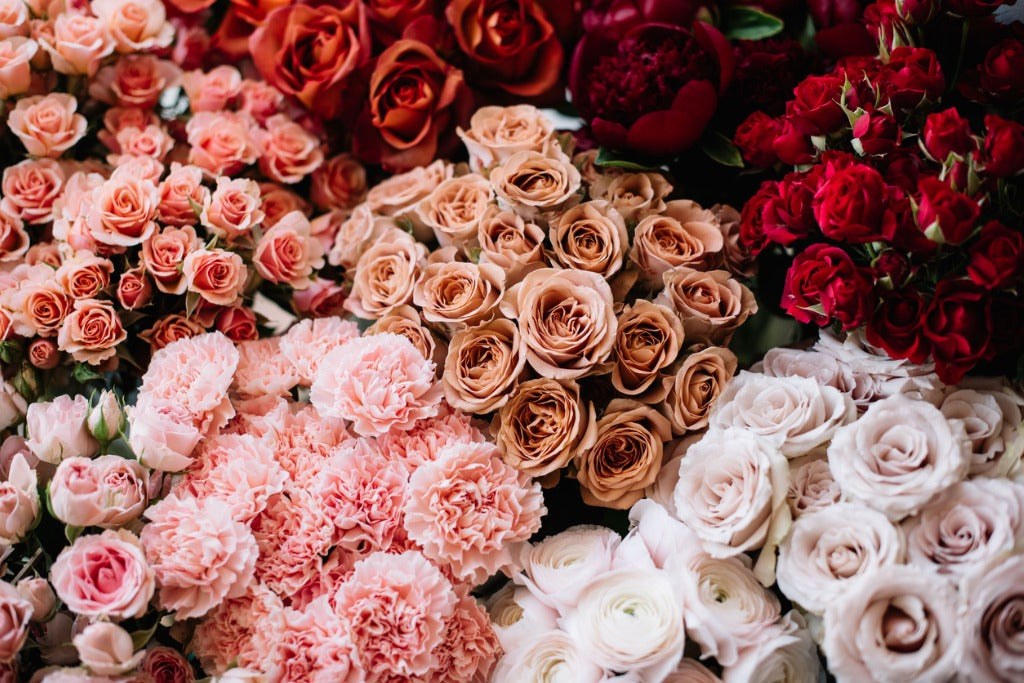
Rose is a shrub or climber with white, yellow, pink, red, peach, blends flowers, typically blooming late spring to fall. It generally performs best in full sun and is useful for borders, cutting, hedges. The most reliable visual clue is layered petals around a central floral structure; foliage usually compound and prickled stems common.
Thousands of cultivars exist, so fragrance, repeat bloom, disease resistance, and size vary. Bloom time, size, and garden performance can shift with cultivar, weather, soil, and region, so use the botanical name and plant label when making a final selection.
2. Peony
Scientific name: Paeonia lactiflora and hybrids
:max_bytes(150000):strip_icc()/annuals-and-perennials-peonies-0719-0da72088f00c4255b585198640c22da0.jpg)
Peony is a herbaceous perennial with white, blush, pink, coral, red flowers, typically blooming late spring to early summer. It generally performs best in full sun and is useful for specimen borders, cut flowers. The most reliable visual clue is large bowl- to bomb-shaped blooms above divided foliage.
Plant crowns at the correct depth because excessively deep planting can reduce flowering. Bloom time, size, and garden performance can shift with cultivar, weather, soil, and region, so use the botanical name and plant label when making a final selection.
3. Tulip
Scientific name: Tulipa spp.
:max_bytes(150000):strip_icc()/tulip-types-for-spring-garden-1315804-hero-5c10c927e00c459eb24c702be447e50d.jpg)
Tulip is a bulb with very broad color range flowers, typically blooming spring. It generally performs best in full sun and is useful for spring beds, containers, cutting. The most reliable visual clue is upright cup-shaped six-part flowers.
Garden performance varies among classes and cultivars. Bloom time, size, and garden performance can shift with cultivar, weather, soil, and region, so use the botanical name and plant label when making a final selection.
4. Dahlia
Scientific name: Dahlia hybrids
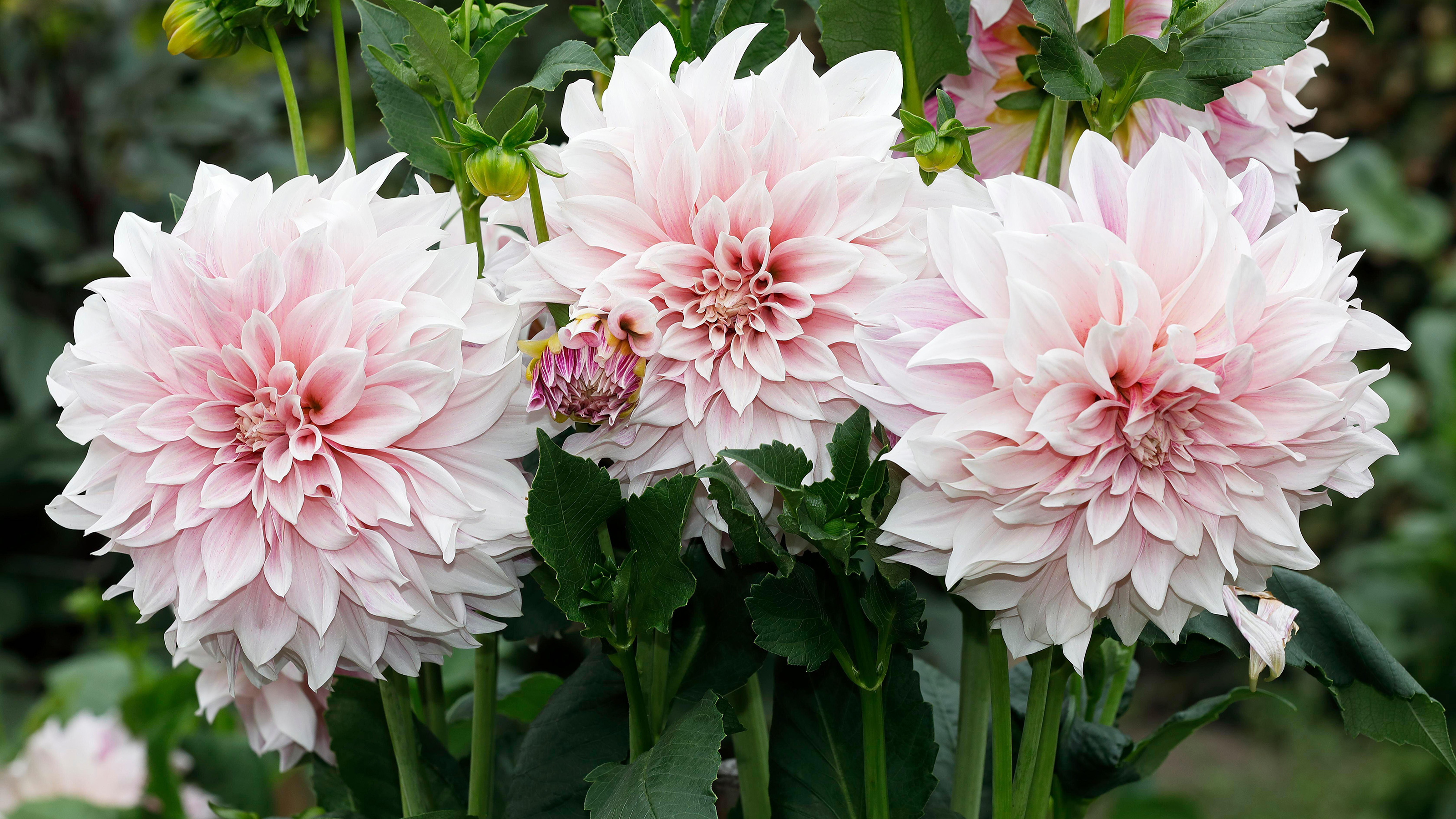
Dahlia is a tuberous perennial with wide range except true blue flowers, typically blooming summer to frost. It generally performs best in full sun and is useful for cutting, borders. The most reliable visual clue is flowerheads range from single to ball, cactus, decorative, and more.
Not cold-hardy everywhere; tubers may need winter storage. Bloom time, size, and garden performance can shift with cultivar, weather, soil, and region, so use the botanical name and plant label when making a final selection.
5. Orchid
Scientific name: Orchidaceae
Orchid is a epiphyte or terrestrial perennial with white, pink, purple, yellow, green, patterned flowers, typically blooming varies by genus. It generally performs best in species-dependent filtered light to sun and is useful for houseplants, tropical displays, cut flowers. The most reliable visual clue is bilaterally symmetric flowers often with a distinctive lip.
Orchid care varies enormously; avoid one-size-fits-all watering advice. Bloom time, size, and garden performance can shift with cultivar, weather, soil, and region, so use the botanical name and plant label when making a final selection.
6. Hydrangea
Scientific name: Hydrangea spp.
Hydrangea is a deciduous shrub or climber with white, pink, blue, purple, green flowers, typically blooming summer. It generally performs best in part sun to sun depending climate and is useful for shrubs, cut and dried flowers. The most reliable visual clue is large mophead, lacecap, panicle, or oakleaf inflorescences.
Blue color in some bigleaf hydrangeas depends partly on soil chemistry and aluminum availability. Bloom time, size, and garden performance can shift with cultivar, weather, soil, and region, so use the botanical name and plant label when making a final selection.
7. True Lily
Scientific name: Lilium spp.
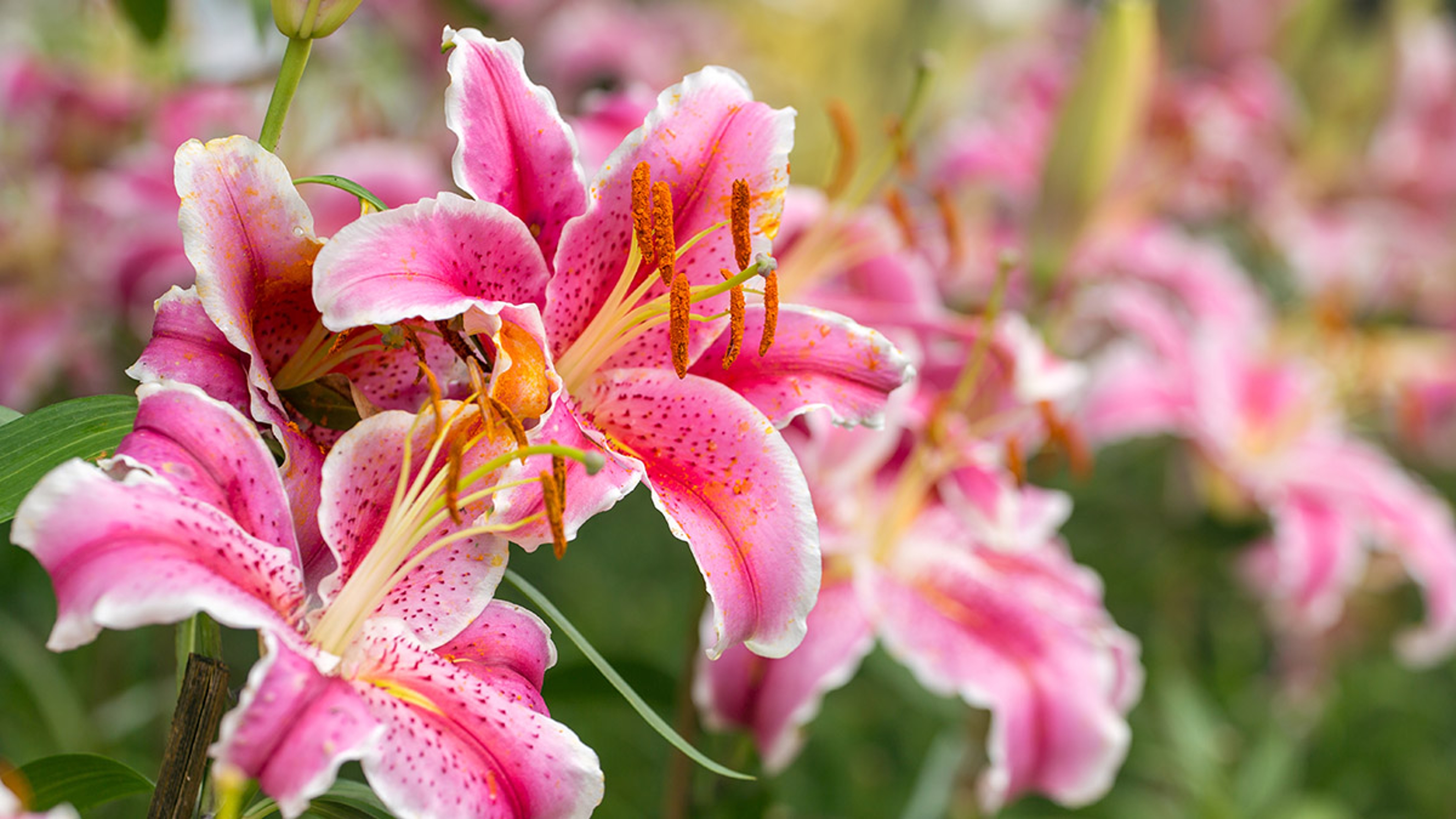
True Lily is a bulbous perennial with white, yellow, orange, pink, red flowers, typically blooming summer. It generally performs best in sun with cool roots and is useful for cutting, borders. The most reliable visual clue is six tepals and prominent stamens on upright stems.
Highly dangerous to cats. Bloom time, size, and garden performance can shift with cultivar, weather, soil, and region, so use the botanical name and plant label when making a final selection.
8. Lotus
Scientific name: Nelumbo nucifera
Lotus is a aquatic perennial with pink, white flowers, typically blooming summer. It generally performs best in full sun and is useful for ponds, water gardens. The most reliable visual clue is large emergent round leaves and showy many-petaled flowers above water.
Needs a warm growing season and contained aquatic conditions. Bloom time, size, and garden performance can shift with cultivar, weather, soil, and region, so use the botanical name and plant label when making a final selection.
9. Water Lily
Scientific name: Nymphaea spp. and hybrids
Water Lily is a aquatic perennial with white, pink, red, blue, yellow flowers, typically blooming summer. It generally performs best in full sun and is useful for ponds. The most reliable visual clue is floating round leaves and radial flowers on or just above water.
Tropical and hardy water lilies have different winter needs. Bloom time, size, and garden performance can shift with cultivar, weather, soil, and region, so use the botanical name and plant label when making a final selection.
10. Japanese Camellia
Scientific name: Camellia japonica

Japanese Camellia is a evergreen shrub with white, pink, red, variegated flowers, typically blooming winter to spring. It generally performs best in part shade and is useful for woodland gardens, specimen shrubs. The most reliable visual clue is glossy evergreen leaves and waxy symmetrical flowers.
Protect roots from drying and avoid harsh reflected heat. Bloom time, size, and garden performance can shift with cultivar, weather, soil, and region, so use the botanical name and plant label when making a final selection.
11. Magnolia
Scientific name: Magnolia spp.
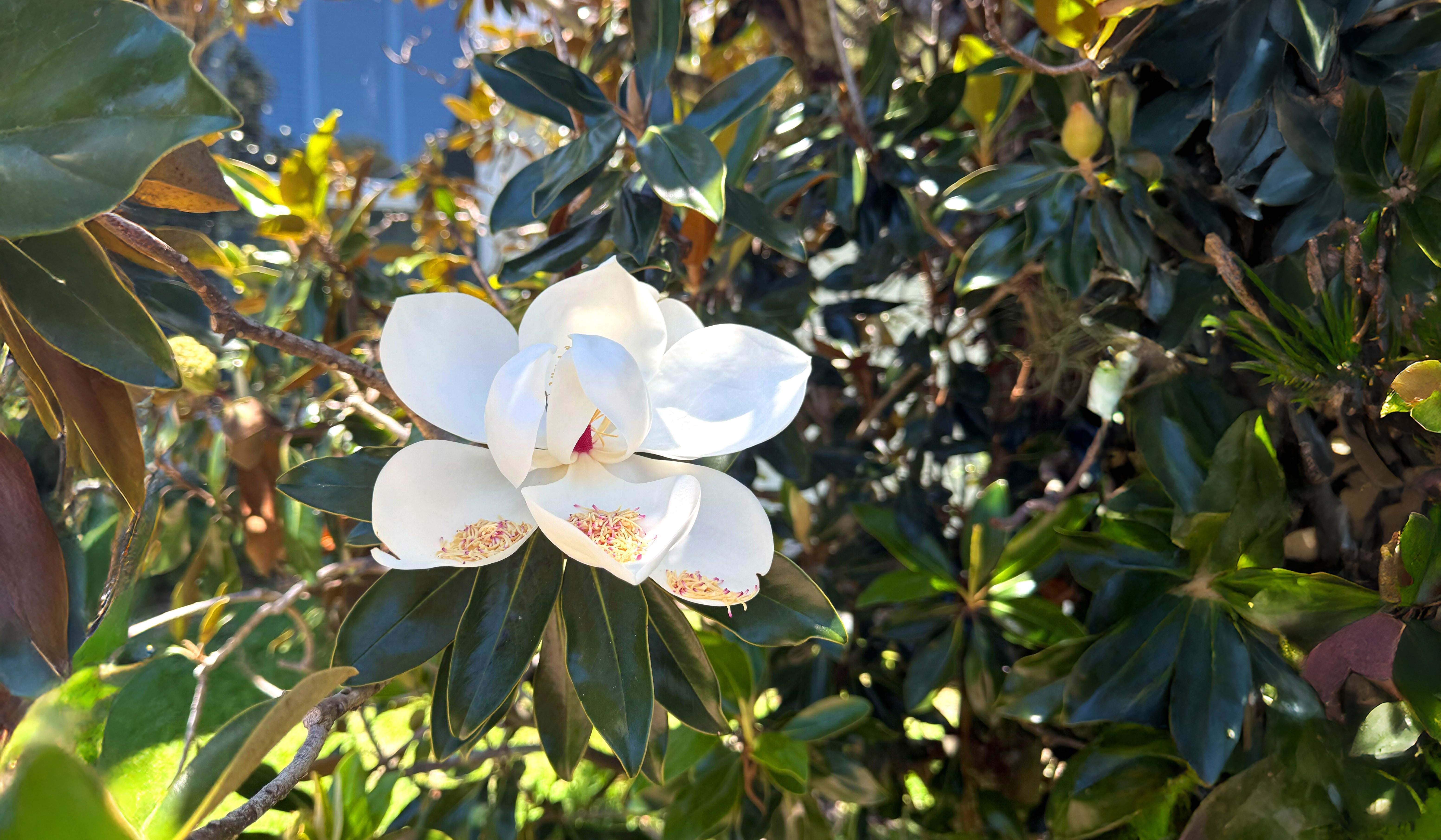
Magnolia is a tree or shrub with white, cream, pink, purple flowers, typically blooming late winter to spring; some summer. It generally performs best in sun to part shade and is useful for specimen trees. The most reliable visual clue is large tepaled flowers often opening before or with leaves.
Choose species by mature size and local climate. Bloom time, size, and garden performance can shift with cultivar, weather, soil, and region, so use the botanical name and plant label when making a final selection.
12. Cherry Blossom
Scientific name: Prunus serrulata and ornamental cherries
Cherry Blossom is a deciduous tree with white, pale pink, deep pink flowers, typically blooming spring. It generally performs best in full sun and is useful for specimen and avenue planting. The most reliable visual clue is clusters of single or double blossoms on bare or emerging branches.
Ornamental cherries are selected for flowers, not necessarily edible fruit. Bloom time, size, and garden performance can shift with cultivar, weather, soil, and region, so use the botanical name and plant label when making a final selection.
13. Iris
Scientific name: Iris spp.
Iris is a rhizomatous or bulbous perennial with blue, purple, white, yellow, pink, brown blends flowers, typically blooming spring to summer. It generally performs best in sun to part shade by species and is useful for borders, cutting, water margins. The most reliable visual clue is three upright standards and three falls in many bearded types.
The genus contains dry-land and moisture-loving species with different needs. Bloom time, size, and garden performance can shift with cultivar, weather, soil, and region, so use the botanical name and plant label when making a final selection.
14. Delphinium
Scientific name: Delphinium hybrids
:max_bytes(150000):strip_icc()/GettyImages-542318356-1-685a822332fb455cab39002fd7a44fd8.jpg)
Delphinium is a herbaceous perennial with blue, purple, pink, white flowers, typically blooming late spring to summer. It generally performs best in full sun and is useful for vertical borders, cut flowers. The most reliable visual clue is tall flower spikes with many spurred florets.
Plant parts are toxic if eaten. Bloom time, size, and garden performance can shift with cultivar, weather, soil, and region, so use the botanical name and plant label when making a final selection.
15. Ranunculus
Scientific name: Ranunculus asiaticus
Ranunculus is a tuberous perennial with white, yellow, orange, pink, red, purple flowers, typically blooming spring. It generally performs best in full sun and is useful for cut flowers, containers. The most reliable visual clue is dense concentric layers of thin petals.
Best in cool-season conditions and well-drained soil. Bloom time, size, and garden performance can shift with cultivar, weather, soil, and region, so use the botanical name and plant label when making a final selection.
16. Anemone
Scientific name: Anemone coronaria

Anemone is a tuberous perennial with red, pink, white, blue-violet flowers, typically blooming spring. It generally performs best in full sun and is useful for cut flowers, spring beds. The most reliable visual clue is poppy-like blooms often with dark central stamens.
Do not treat ornamental anemones as edible flowers. Bloom time, size, and garden performance can shift with cultivar, weather, soil, and region, so use the botanical name and plant label when making a final selection.
17. Gardenia
Scientific name: Gardenia jasminoides
Gardenia is a evergreen shrub with white to cream flowers, typically blooming late spring to summer. It generally performs best in bright filtered light to sun in mild climates and is useful for fragrance gardens, containers. The most reliable visual clue is waxy white blooms with intense fragrance and glossy leaves.
Prefers acidic, well-drained soil and stable moisture. Bloom time, size, and garden performance can shift with cultivar, weather, soil, and region, so use the botanical name and plant label when making a final selection.
18. Freesia
Scientific name: Freesia hybrids
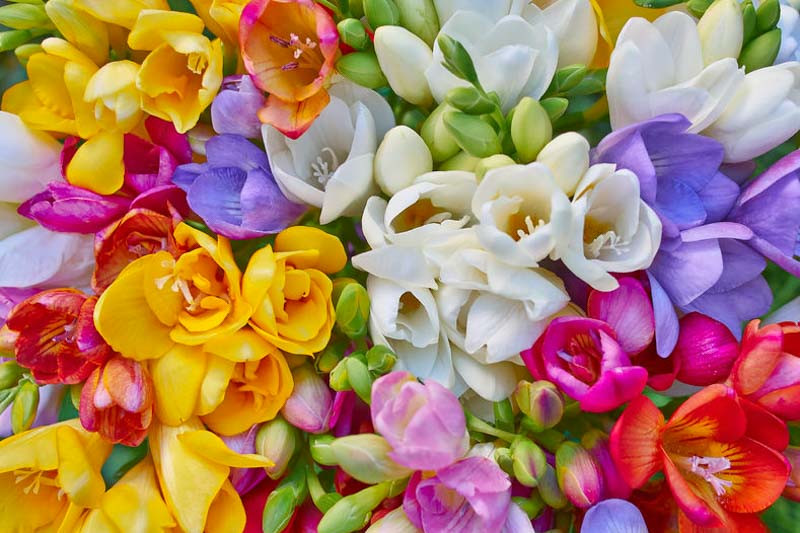
Freesia is a cormous perennial with white, yellow, orange, pink, red, purple flowers, typically blooming spring or greenhouse seasonal. It generally performs best in bright light and is useful for fragrant cut flowers. The most reliable visual clue is arching one-sided stems of funnel-shaped blooms.
Frost tender in many regions. Bloom time, size, and garden performance can shift with cultivar, weather, soil, and region, so use the botanical name and plant label when making a final selection.
19. Lisianthus
Scientific name: Eustoma grandiflorum
Lisianthus is a tender perennial grown as annual with white, cream, pink, lavender, purple, green flowers, typically blooming summer. It generally performs best in full sun and is useful for premium cut flowers. The most reliable visual clue is rose-like buds opening to broad silky cups.
Slow from seed and commonly grown from plugs for cutting. Bloom time, size, and garden performance can shift with cultivar, weather, soil, and region, so use the botanical name and plant label when making a final selection.
20. Zinnia
Scientific name: Zinnia elegans
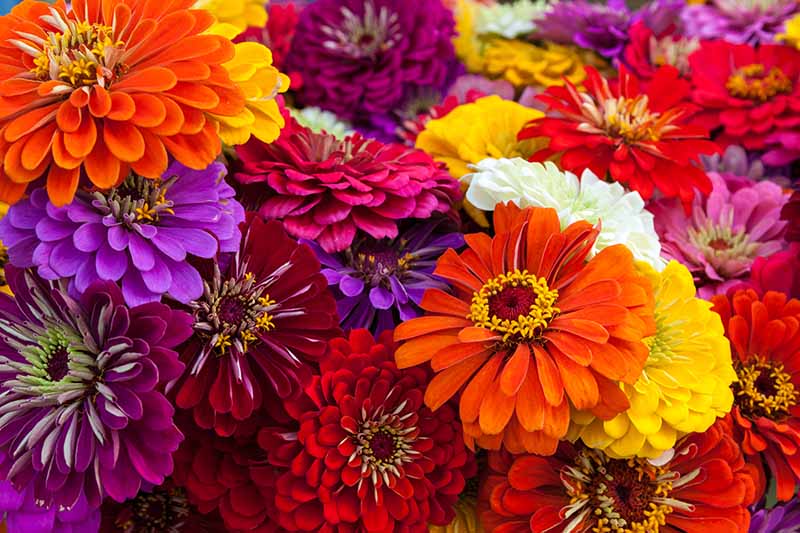
Zinnia is a annual with nearly every warm and pastel color flowers, typically blooming summer to frost. It generally performs best in full sun and is useful for cutting, pollinator gardens. The most reliable visual clue is single to fully double composite flowerheads on stiff stems.
Good airflow reduces foliar disease pressure. Bloom time, size, and garden performance can shift with cultivar, weather, soil, and region, so use the botanical name and plant label when making a final selection.
21. Sunflower
Scientific name: Helianthus annuus
Sunflower is a annual with yellow, gold, bronze, burgundy, cream flowers, typically blooming summer to fall. It generally performs best in full sun and is useful for cutting, pollinator planting, seed heads. The most reliable visual clue is large composite heads with ray florets around a central disk.
Pollenless cut-flower hybrids and pollen-bearing garden forms serve different uses. Bloom time, size, and garden performance can shift with cultivar, weather, soil, and region, so use the botanical name and plant label when making a final selection.
22. Cosmos
Scientific name: Cosmos bipinnatus
Cosmos is a annual with white, pink, rose, crimson flowers, typically blooming summer to frost. It generally performs best in full sun and is useful for meadows, cutting. The most reliable visual clue is airy stems, finely divided foliage, open daisy-like blooms.
Too much fertility can reduce flowering. Bloom time, size, and garden performance can shift with cultivar, weather, soil, and region, so use the botanical name and plant label when making a final selection.
23. Lavender
Scientific name: Lavandula angustifolia and hybrids
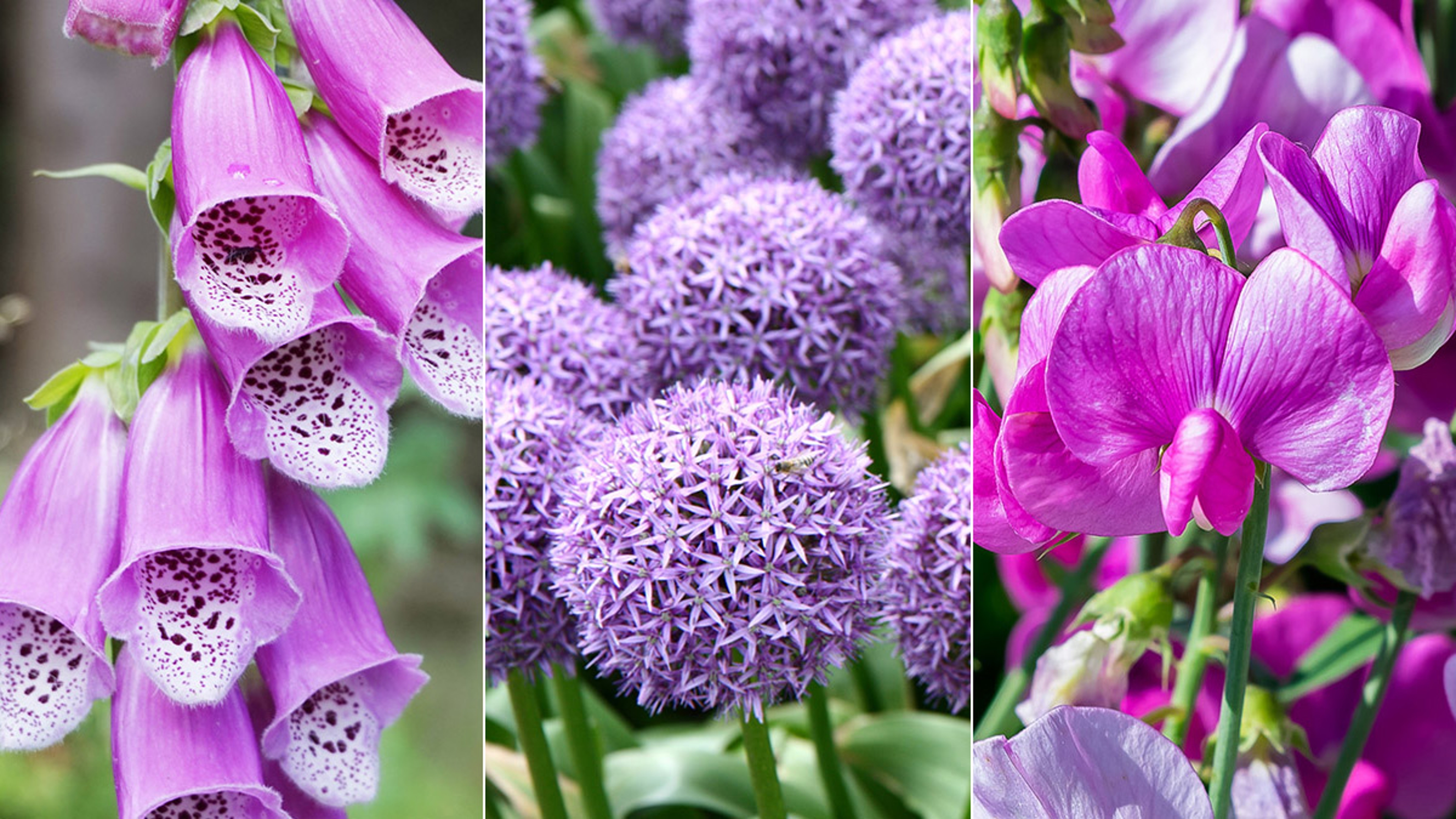
Lavender is a woody perennial with lavender-purple, violet, pink, white flowers, typically blooming summer. It generally performs best in full sun and is useful for fragrance gardens, edging, dried flowers. The most reliable visual clue is slender aromatic spikes above narrow gray-green foliage.
Needs excellent drainage. Bloom time, size, and garden performance can shift with cultivar, weather, soil, and region, so use the botanical name and plant label when making a final selection.
24. Hellebore
Scientific name: Helleborus hybrids
Hellebore is a evergreen perennial with white, green, pink, purple, near-black flowers, typically blooming late winter to spring. It generally performs best in part shade and is useful for winter woodland gardens. The most reliable visual clue is nodding five-tepaled flowers, often speckled or doubled.
Not edible; sap may irritate. Bloom time, size, and garden performance can shift with cultivar, weather, soil, and region, so use the botanical name and plant label when making a final selection.
25. Bird of Paradise
Scientific name: Strelitzia reginae
Bird of Paradise is a evergreen perennial with orange and blue flowers, typically blooming seasonal in warm climates. It generally performs best in sun to bright light and is useful for tropical landscapes, cut flowers. The most reliable visual clue is rigid orange and blue flowers emerge from a boat-shaped bract.
Needs protection from freezing temperatures. Bloom time, size, and garden performance can shift with cultivar, weather, soil, and region, so use the botanical name and plant label when making a final selection.
26. Protea
Scientific name: Protea spp.
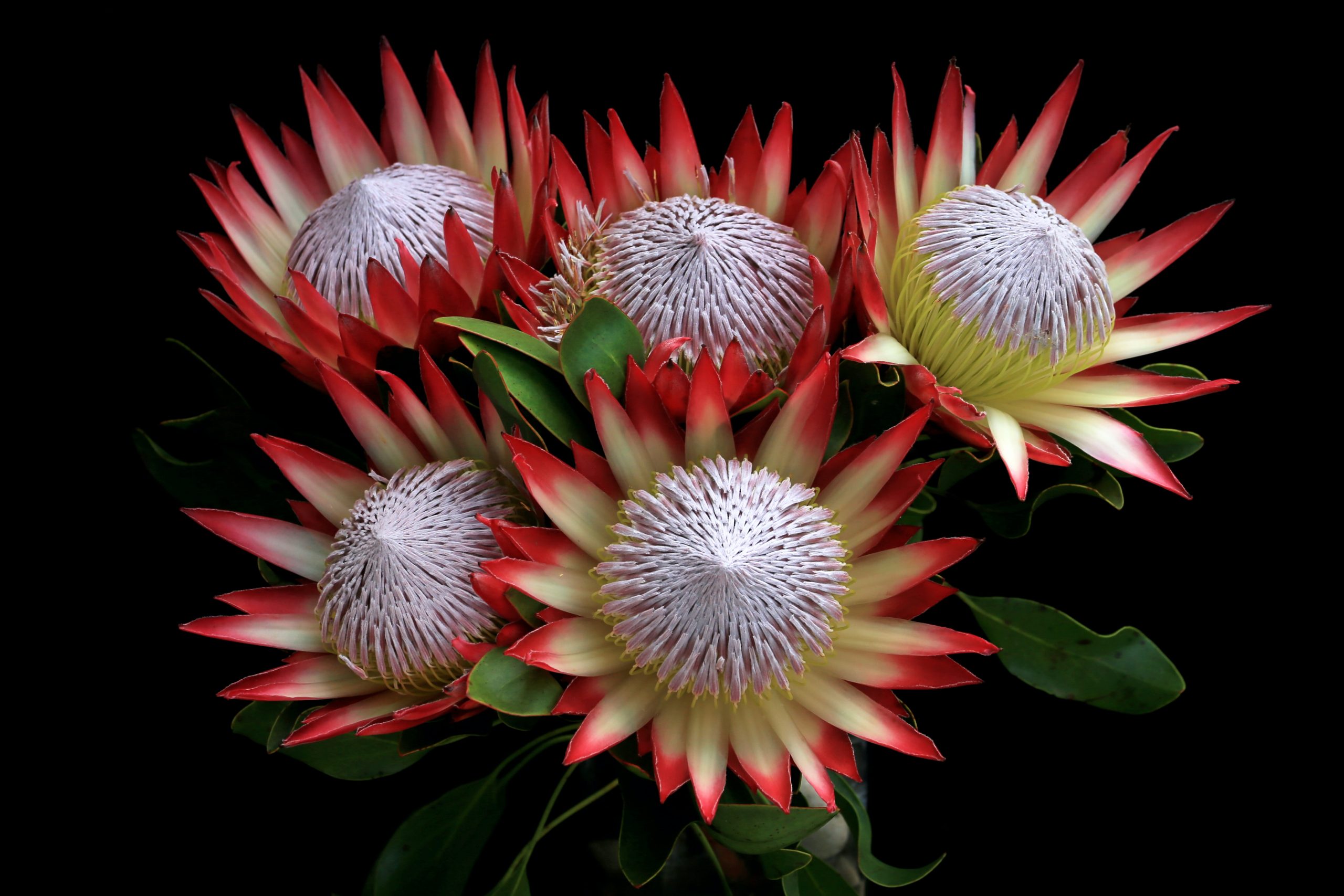
Protea is a woody shrub with pink, red, cream flowers, typically blooming seasonal by species. It generally performs best in full sun and is useful for dry-climate landscapes, cut flowers. The most reliable visual clue is large bracted flowerheads with bold geometric form.
Best in low-phosphorus, sharply drained conditions typical of many proteaceous plants. Bloom time, size, and garden performance can shift with cultivar, weather, soil, and region, so use the botanical name and plant label when making a final selection.
27. Poppy
Scientific name: Papaver orientale and related garden poppies
Poppy is a perennial or annual by species with red, orange, pink, white flowers, typically blooming late spring to early summer. It generally performs best in full sun and is useful for meadow and border color. The most reliable visual clue is silky crinkled petals around a prominent capsule.
Species differ in legal status and chemistry; grow only permitted ornamentals. Bloom time, size, and garden performance can shift with cultivar, weather, soil, and region, so use the botanical name and plant label when making a final selection.
28. Bleeding Heart
Scientific name: Lamprocapnos spectabilis
Bleeding Heart is a herbaceous perennial with pink and white, white flowers, typically blooming spring. It generally performs best in part shade and is useful for woodland borders. The most reliable visual clue is arching stems lined with heart-shaped pendant flowers.
Often goes dormant in summer heat. Bloom time, size, and garden performance can shift with cultivar, weather, soil, and region, so use the botanical name and plant label when making a final selection.
29. Gladiolus
Scientific name: Gladiolus hybrids
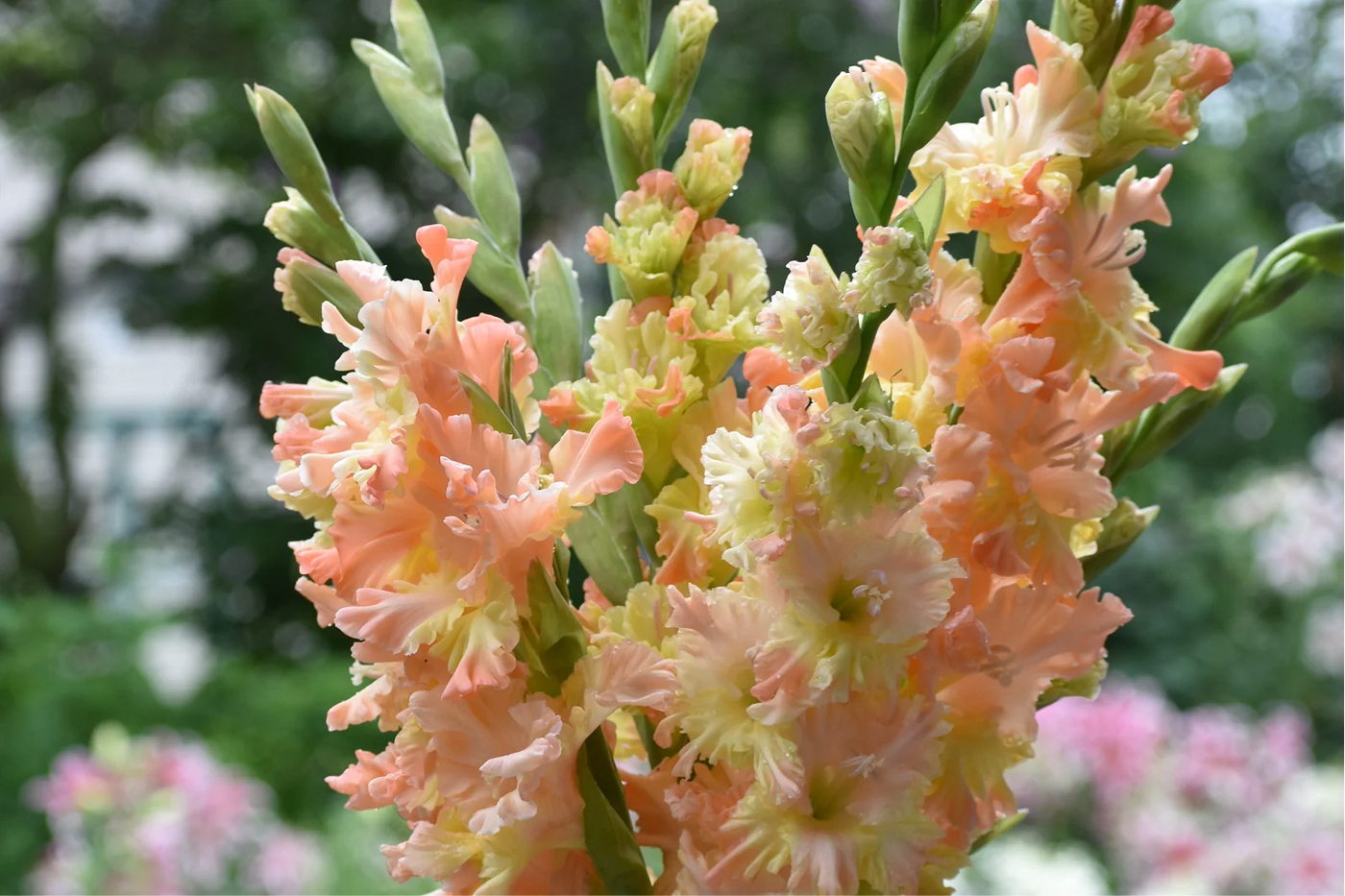
Gladiolus is a cormous perennial with wide color range flowers, typically blooming summer. It generally performs best in full sun and is useful for cutting, vertical borders. The most reliable visual clue is tall spikes of funnel-shaped blooms.
Corms may need lifting in cold climates. Bloom time, size, and garden performance can shift with cultivar, weather, soil, and region, so use the botanical name and plant label when making a final selection.
30. Sweet Pea
Scientific name: Lathyrus odoratus
Sweet Pea is a annual vine with white, pink, lavender, purple, red, bicolors flowers, typically blooming spring to early summer. It generally performs best in full sun and is useful for trellises, fragrant cut flowers. The most reliable visual clue is ruffled butterfly-like blooms and tendrils.
Seeds and pods are toxic if eaten. Bloom time, size, and garden performance can shift with cultivar, weather, soil, and region, so use the botanical name and plant label when making a final selection.
How This List of Beautiful Flowers Was Selected
This is a curated horticultural list, not a botanical ranking. It includes annuals, perennials, bulbs, shrubs, trees, aquatic plants, and tropicals because searchers looking for beautiful flowers usually want inspiration across several garden and floral-design categories. Each plant remains botanically distinct, and cultivars within a group may differ strongly in size, hardiness, fragrance, and color.
How to Identify Beautiful Flowers Beyond Color
Color is only one clue. Look at petal or tepal arrangement, whether flowers are solitary or clustered, foliage shape, stem habit, plant size, fragrance, and season. A rose and ranunculus may both look layered, but their leaves and growth habits are entirely different; lilies and daylilies can share a common name while belonging to different genera.
How to Choose Beautiful Flowers for Your Garden
Start with conditions: light, drainage, winter temperature, summer heat, available space, and maintenance tolerance. Then choose a visual role—focal flower, vertical accent, ground-level color, fragrant plant, or cut-flower crop. A plant that matches the site will usually look better than a fashionable flower forced into unsuitable conditions.
Bloom Time and Climate Matter
Spring bulbs, cool-season cut flowers, summer annuals, tropicals, and woody ornamentals follow different calendars. A “spring flower” in one climate may bloom earlier or later elsewhere, and Southern Hemisphere seasons are reversed from Northern Hemisphere schedules. Use local phenology and extension guidance rather than a universal month-by-month chart.
Safety Notes for Popular Ornamental Flowers
Beautiful does not mean edible or pet-safe. True lilies are especially dangerous to cats, delphiniums and hellebores should not be eaten, and sweet pea seeds and pods are toxic. Keep botanical labels, supervise pets and children around unfamiliar ornamentals, and use only flowers specifically grown and identified for culinary use.
Common Mistakes When Choosing or Identifying Types of beautiful flowers
- Choosing by appearance without checking mature size.
- Assuming every “lily” has the same botany or toxicity.
- Planting shade-loving flowers in reflected full sun.
- Expecting bloom months to be identical in every climate.
- Treating florist flowers as edible decorations.
Fun Facts About Types of beautiful flowers
- Many showy flowers are actually clusters of many tiny flowers, as in sunflowers and hydrangeas.
- Orchid flowers are bilaterally symmetrical rather than radially symmetrical.
- Lotus leaves typically stand above the water, while many water-lily leaves float.
- Peony flowers can persist for decades on a well-sited plant.
- Dahlias offer an unusually wide range of formal flower shapes.
- Some magnolias bloom before their leaves fully emerge.
- Blue hydrangea color in some types is influenced by soil chemistry.
- Cosmos often flowers better in modestly fertile soil than in heavily fertilized ground.
- Lavender’s ornamental value comes from both flowers and aromatic foliage.
- Cut-flower quality depends on harvest stage as much as cultivar choice.
Final Thoughts on Types of beautiful flowers
The most useful list of types of beautiful flowers is one that helps you move from inspiration to a plant that actually fits your site. Choose for climate and growth habit first, then color, fragrance, and flower form; the result is both more attractive and easier to maintain.
Frequently Asked Questions
1. What are the main types covered in this guide?
This guide compares 30 factual, useful examples, including Rose, Peony, Tulip, Dahlia. The entries may be species, cultivars, or horticultural groups depending on what the search term actually describes.
2. Are all of these entries separate botanical species?
No. Where a named cultivar or horticultural form is used, it is labeled as such rather than being presented as a species. Botanical rank matters for accurate identification.
3. Which types are easiest for beginners?
Beginner-friendly choices depend on climate, but Rose, Peony, Tulip are useful starting points when their light, soil, and temperature needs match the site.
4. Which types are best for full sun?
Many flowering plants in the list prefer full sun, but the exact requirement varies. Check the individual entry and local heat conditions before planting.
5. Which types tolerate part shade?
Several species tolerate some shade, especially woodland or cool-climate plants. Part shade should be interpreted in the context of local sun intensity.
6. When do these flowers bloom?
Bloom time ranges from spring through fall depending on species. Climate, latitude, elevation, cultivar, and weather can shift the stated season.
7. Are these flowers annuals or perennials?
The list can include annuals, perennials, bulbs, shrubs, or vines when they genuinely fit the topic. Each entry identifies its growth habit.
8. Can these flowers grow in containers?
Many can, provided the container is large enough and drains well. Match pot size to mature root system and plant height.
9. Which flowers are good for cutting?
Flowers with strong stems and good postharvest performance are best for cutting. The individual entries note arrangement or cutting value where it is important.
10. Which flowers attract pollinators?
Open, accessible flowers often provide nectar or pollen to bees, butterflies, or other visitors, but pollinator value varies by species and region.
11. How should I choose flowers for my climate?
Use local hardiness, summer heat, winter moisture, frost dates, and rainfall as filters. USDA zones are useful for cold hardiness in the United States but do not describe every climate factor.
12. What soil do these flowers need?
Most garden flowers benefit from well-drained soil, but moisture and pH preferences vary. Some species prefer consistently moist soil while others resent wet roots.
13. How often should flowering plants be watered?
Water according to plant type, soil, weather, and establishment stage rather than a fixed weekly rule. Deep, less frequent irrigation is appropriate for many established garden plants.
14. Should these flowers be deadheaded?
Many repeat-blooming annuals and perennials benefit from deadheading, while plants grown for seed, wildlife value, or ornamental seed heads may be left standing.
15. Can I grow these flowers from seed?
Many species can be seed-grown, but named cultivars may not come true from seed. Bulbs, divisions, cuttings, or tissue culture are used when clonal consistency is needed.
16. What is the difference between a species and a cultivar?
A species is a botanical taxonomic unit. A cultivar is a named plant selected and maintained for particular horticultural traits.
17. What is a hybrid flower?
A hybrid results from crossing genetically distinct parents. Horticultural hybrids may occur between species, cultivars, or breeding lines and should not be described as separate wild species.
18. Why do common names cause confusion?
One common name can refer to several unrelated plants, and one plant can have several common names. Scientific names help resolve that ambiguity.
19. Can flower color change with soil or climate?
Color can shift with temperature, light, plant age, and genetics. In a few plants such as some hydrangeas, soil chemistry also influences pigment expression.
20. Are all varieties the same height?
No. Cultivars within one species can differ dramatically in height and spread. Use the specific plant label rather than a genus-wide size assumption.
21. Can I use these flowers in bouquets?
Many can be cut, but vase life and stem strength vary. Harvest stage and conditioning are important for good performance.
22. Are any of these flowers edible?
Do not infer edibility from a general flower guide. Edibility must be confirmed for the exact species and plant part, with food-safe growing conditions.
23. Are any of these flowers toxic to pets?
Some ornamental flowers can be harmful to cats, dogs, horses, or livestock. Check species-specific veterinary guidance before planting or arranging flowers around animals.
24. Can these flowers become invasive?
Some ornamental plants spread aggressively or are invasive in particular regions. Invasiveness is location-specific, so check state or regional invasive-plant guidance.
25. How can I identify an unknown flower?
Compare flower shape, petal or floret arrangement, leaves, stems, growth habit, bloom season, and habitat. Avoid identifying from color alone.
26. What are the best flowers for a low-maintenance garden?
Choose species adapted to the site’s light, soil, moisture, and winter conditions. A well-matched plant is usually lower maintenance than one that must be constantly corrected.
27. How can I extend the bloom season?
Combine early-, mid-, and late-season plants, select long-blooming cultivars, deadhead where appropriate, and maintain steady nutrition and moisture without overfeeding.
28. Do flowers need fertilizer to bloom?
Many benefit from adequate nutrients, but excessive nitrogen can produce leaves instead of flowers. Test soil when possible and fertilize according to plant needs.
29. How far apart should flowers be planted?
Spacing depends on mature width, airflow needs, and design goals. Follow species- or cultivar-specific guidance rather than using one spacing for all flowers.
30. How do I choose the best type for my garden?
Start with site conditions—sun, drainage, climate, available space—then choose for bloom season, color, pollinator value, cut-flower use, maintenance, and safety.
SEO Title
Types of Beautiful Flowers: 30 Stunning Picks
Meta Description
Suggested URL Slug
types-of-beautiful-flowers