

Kansas may be known for prairies, but its reservoirs, rivers, state fishing lakes, community waters, and farm ponds support a varied freshwater fish community. This guide to types of fish in Kansas focuses on 22 species and stocked hybrids highlighted for anglers, with practical notes on appearance, habitat, behavior, and fishing relevance.
What Are the Main Types Of Fish In Kansas?
The main Kansas sport fish include catfish, black bass, crappie, sunfish, temperate bass, walleye relatives, trout, northern pike, paddlefish, and freshwater drum. Largemouth bass, channel catfish, bluegill, and crappie are widespread favorites, while paddlefish, northern pike, trout, and striped bass are more dependent on particular waters or management programs.
Quick Comparison of Types Of Fish In Kansas
| # | Common Name | Scientific Name | Group | Typical Habitat |
|---|---|---|---|---|
| 1 | Black Bullhead | Ameiurus melas | Catfish | Ponds, slow creeks, reservoirs, and muddy backwaters |
| 2 | Black Crappie | Pomoxis nigromaculatus | Sunfish family | Clear lakes, reservoirs, and vegetated coves |
| 3 | Blue Catfish | Ictalurus furcatus | Catfish | Large rivers and major reservoirs |
| 4 | Bluegill | Lepomis macrochirus | Sunfish | Farm ponds, community lakes, reservoirs, and quiet river margins |
| 5 | Channel Catfish | Ictalurus punctatus | Catfish | Rivers, reservoirs, state fishing lakes, and stocked ponds |
| 6 | Freshwater Drum | Aplodinotus grunniens | Drum | Large reservoirs and rivers with firm or mixed bottoms |
| 7 | Flathead Catfish | Pylodictis olivaris | Catfish | Large rivers, reservoirs, woody cover, and deep holes |
| 8 | Green Sunfish | Lepomis cyanellus | Sunfish | Small streams, ponds, rocky shorelines, and disturbed waters |
| 9 | Largemouth Bass | Micropterus salmoides | Black bass | Vegetated lakes, reservoirs, ponds, coves, and woody cover |
| 10 | Northern Pike | Esox lucius | Pike | Selected cool reservoirs and waters with vegetation |
| 11 | Paddlefish | Polyodon spathula | Primitive bony fish | Large rivers and connected reservoirs |
| 12 | Rainbow Trout | Oncorhynchus mykiss | Trout | Seasonally stocked cool-water lakes and urban fishing waters |
| 13 | Redear Sunfish | Lepomis microlophus | Sunfish | Warm ponds and lakes with vegetation and firm bottoms |
| 14 | Sauger | Sander canadensis | Perch family | Turbid rivers, tailwaters, and some reservoirs |
| 15 | Saugeye | Sander vitreus × Sander canadensis | Hybrid perch | Stocked reservoirs and lakes |
| 16 | Smallmouth Bass | Micropterus dolomieu | Black bass | Clearer reservoirs, rocky shorelines, and flowing water |
| 17 | Spotted Bass | Micropterus punctulatus | Black bass | Reservoirs and rivers with rock, points, and channels |
| 18 | Striped Bass | Morone saxatilis | Temperate bass | Large reservoirs with abundant open-water forage |
| 19 | Walleye | Sander vitreus | Perch family | Large reservoirs, rocky points, dams, and windblown shorelines |
| 20 | White Bass | Morone chrysops | Temperate bass | Reservoirs, tributary runs, and open-water flats |
| 21 | White Crappie | Pomoxis annularis | Sunfish family | Reservoirs, murky lakes, brush, and standing timber |
| 22 | Wiper | Morone chrysops × Morone saxatilis | Hybrid temperate bass | Large reservoirs and open-water forage zones |
1. Black Bullhead
Black Bullhead (Ameiurus melas) belongs to the catfish group. It is most closely associated with ponds, slow creeks, reservoirs, and muddy backwaters. Look for a rounded tail, dark barbels, smooth skin, and a compact dark body when making an identification.
This hardy bottom-feeder eats insects, small fish, and organic material. It tolerates warm, cloudy water better than many sport fish and is often caught after sunset with worms or cut bait.
2. Black Crappie
The Black Crappie, scientifically known as Pomoxis nigromaculatus, is a sunfish family. It is most closely associated with clear lakes, reservoirs, and vegetated coves. Look for irregular dark speckles scattered across a deep, silvery body when making an identification.

Black crappie commonly gather around submerged brush, docks, and standing timber. Small jigs and minnows are productive, especially during spring spawning movements.
3. Blue Catfish
Among the most recognizable fish in this guide is the Blue Catfish (Ictalurus furcatus), a catfish. It is most closely associated with large rivers and major reservoirs. Look for a deeply forked tail, bluish-gray body, high back, and a long anal fin when making an identification.
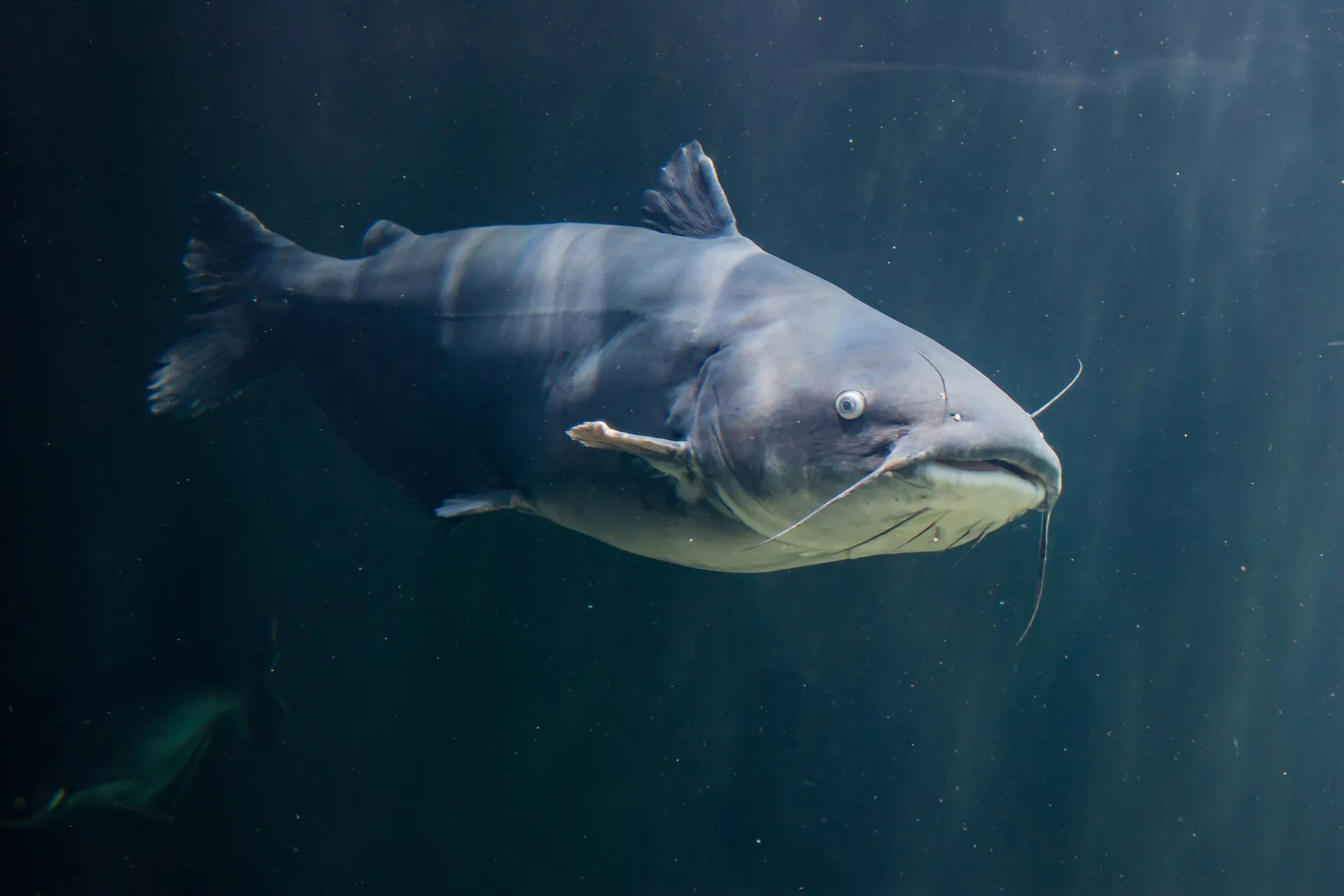
Blue catfish are powerful predators and scavengers that may reach very large sizes. Anglers often use fresh cut shad near channels, flats, and current breaks.
4. Bluegill
Bluegill is the common name used here for Lepomis macrochirus, a member of the sunfish group. It is most closely associated with farm ponds, community lakes, reservoirs, and quiet river margins. Look for a small mouth, dark ear flap, vertical bars, and a deep disk-shaped body when making an identification.

Bluegill are among the easiest Kansas fish for beginners to catch. They feed on insects and small aquatic animals and respond well to worms, crickets, and tiny artificial lures.
5. Channel Catfish
Channel Catfish (Ictalurus punctatus) belongs to the catfish group. It is most closely associated with rivers, reservoirs, state fishing lakes, and stocked ponds. Look for a forked tail, slender body, barbels, and scattered spots on younger fish when making an identification.

Channel catfish are widely stocked and support year-round fishing. Prepared bait, worms, cut fish, and live bait can all work, with dawn, dusk, and night often producing strong action.
6. Freshwater Drum
The Freshwater Drum, scientifically known as Aplodinotus grunniens, is a drum. It is most closely associated with large reservoirs and rivers with firm or mixed bottoms. Look for a high back, blunt head, long dorsal fin, and silvery sides when making an identification.

Freshwater drum crush snails and mussels with strong throat teeth. They are often caught while anglers are targeting catfish or walleye and can put up a surprisingly strong fight.
7. Flathead Catfish
Among the most recognizable fish in this guide is the Flathead Catfish (Pylodictis olivaris), a catfish. It is most closely associated with large rivers, reservoirs, woody cover, and deep holes. Look for a broad flattened head, projecting lower jaw, mottled yellow-brown body, and squared tail when making an identification.
Unlike many scavenging catfish, adults strongly favor live prey. Flatheads often hold near logjams, rock ledges, and channel edges and become especially active in warm weather after dark.
8. Green Sunfish
Green Sunfish is the common name used here for Lepomis cyanellus, a member of the sunfish group. It is most closely associated with small streams, ponds, rocky shorelines, and disturbed waters. Look for a relatively large mouth, blue-green facial lines, and pale yellow or orange fin edges when making an identification.
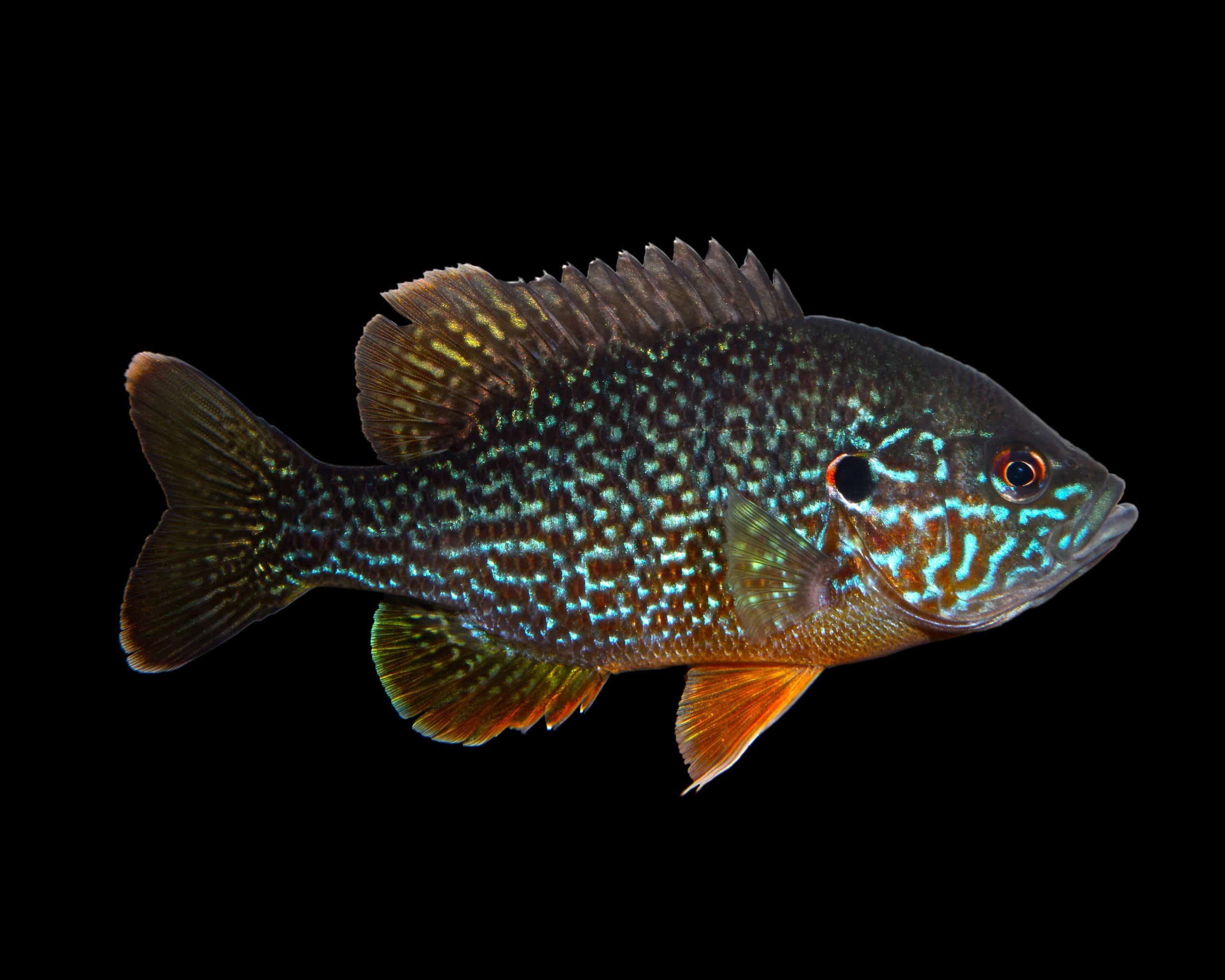
Green sunfish are aggressive, adaptable, and easy to catch on small baits. Their ability to survive in small or warm waters makes them one of the most familiar Kansas sunfishes.
9. Largemouth Bass
Largemouth Bass (Micropterus salmoides) belongs to the black bass group. It is most closely associated with vegetated lakes, reservoirs, ponds, coves, and woody cover. Look for the upper jaw extends beyond the eye and a dark horizontal stripe runs along the side when making an identification.
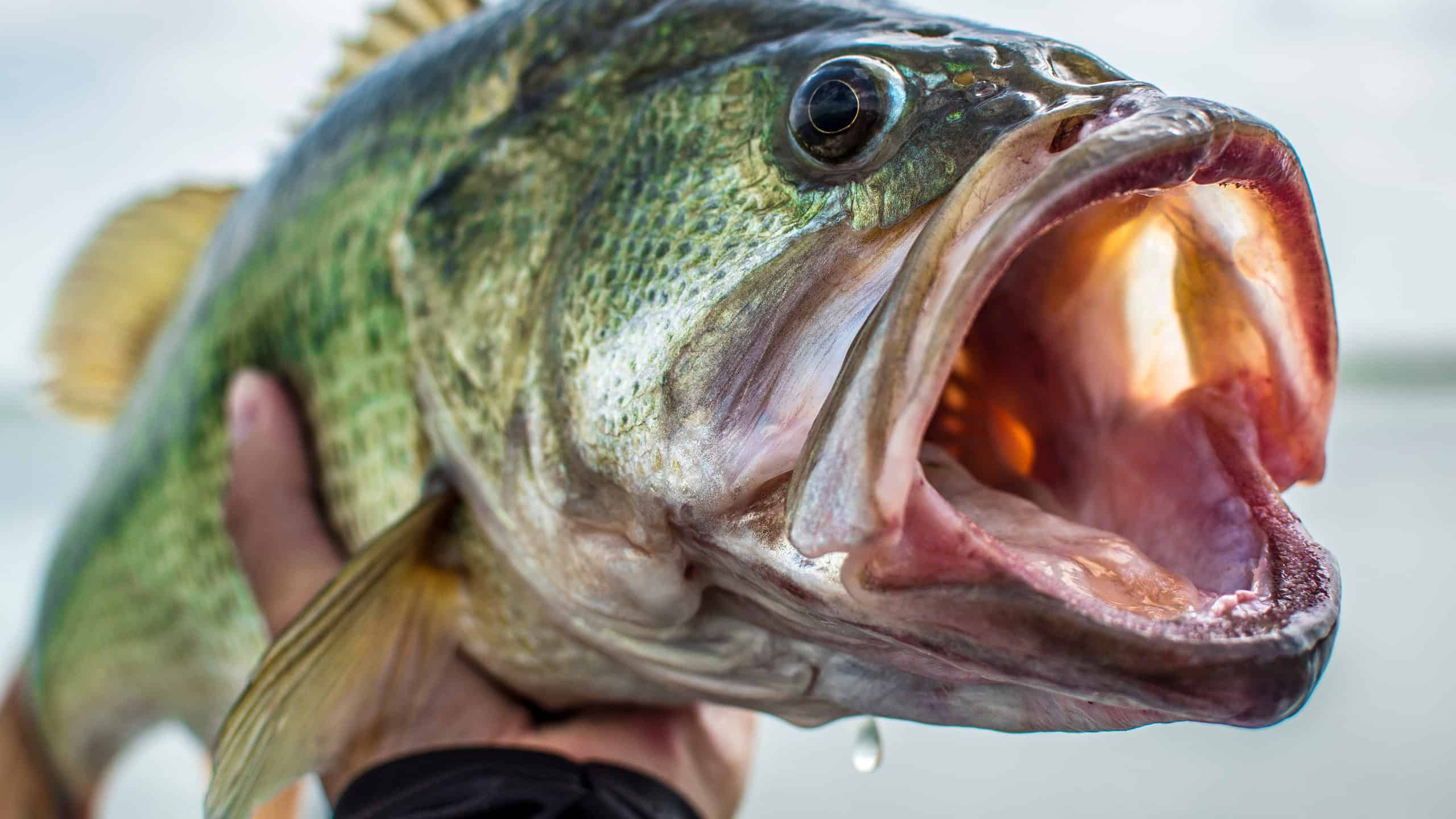
Largemouth bass ambush shad, sunfish, crayfish, and frogs. Cast around weed edges, docks, brush, and shallow cover with soft plastics, spinnerbaits, crankbaits, or topwater lures.
10. Northern Pike
The Northern Pike, scientifically known as Esox lucius, is a pike. It is most closely associated with selected cool reservoirs and waters with vegetation. Look for a long torpedo-shaped body, duckbill-like snout, and pale spots on a dark green background when making an identification.

Northern pike are fast ambush predators. In Kansas they are less widespread than bass or catfish, so anglers should confirm local distribution before planning a trip.
11. Paddlefish
Among the most recognizable fish in this guide is the Paddlefish (Polyodon spathula), a primitive bony fish. It is most closely associated with large rivers and connected reservoirs. Look for a long paddle-shaped snout, huge mouth, smooth skin, and shark-like tail when making an identification.
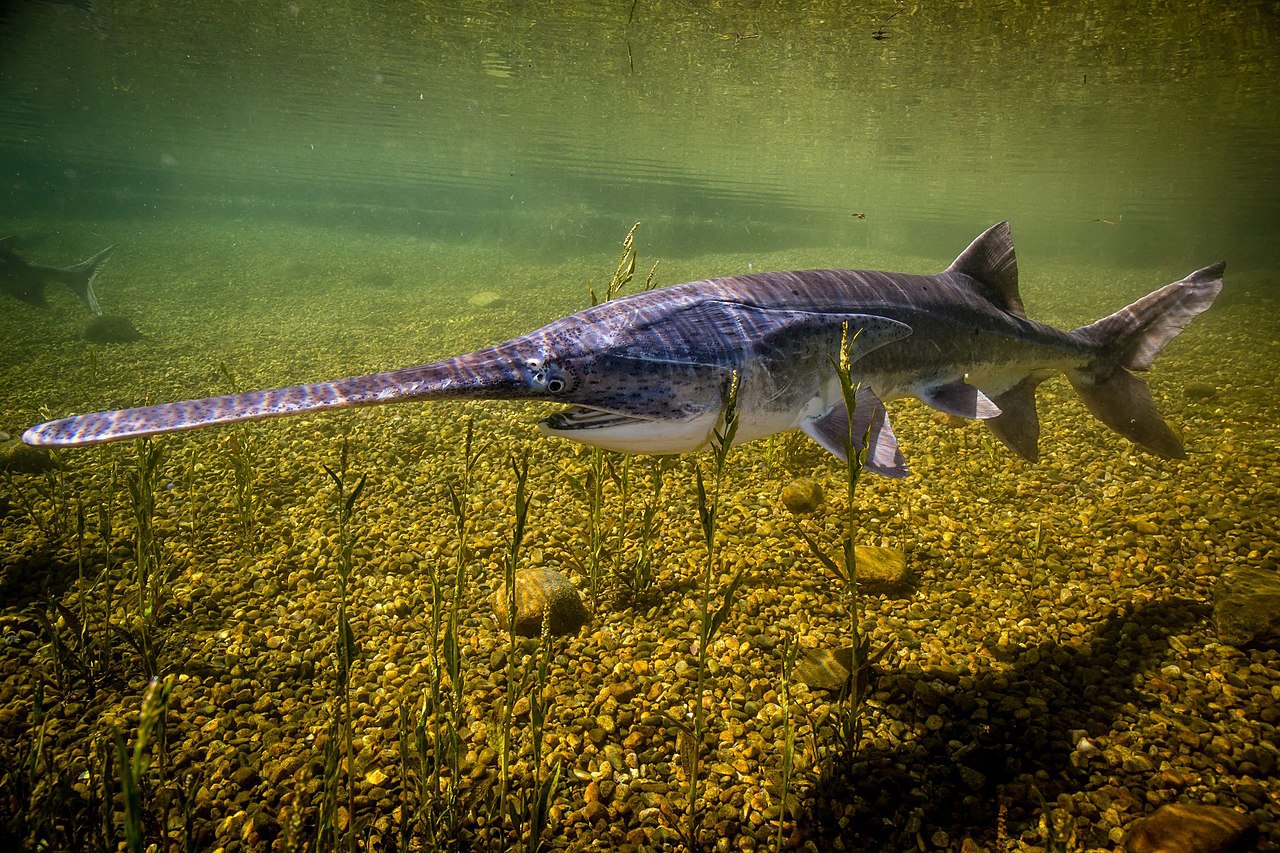
Paddlefish filter tiny plankton rather than chasing normal bait. Where legal seasons are offered, they are usually taken by snagging under tightly controlled regulations.
12. Rainbow Trout
Rainbow Trout is the common name used here for Oncorhynchus mykiss, a member of the trout group. It is most closely associated with seasonally stocked cool-water lakes and urban fishing waters. Look for a pink-red side stripe, dark spots, and a streamlined body when making an identification.
Kansas trout fishing depends heavily on seasonal stocking because summer water temperatures are usually too warm. Small spoons, spinners, flies, and prepared trout bait are common choices.
13. Redear Sunfish
Redear Sunfish (Lepomis microlophus) belongs to the sunfish group. It is most closely associated with warm ponds and lakes with vegetation and firm bottoms. Look for a dark ear flap with a red or orange edge and a deep-bodied profile when making an identification.
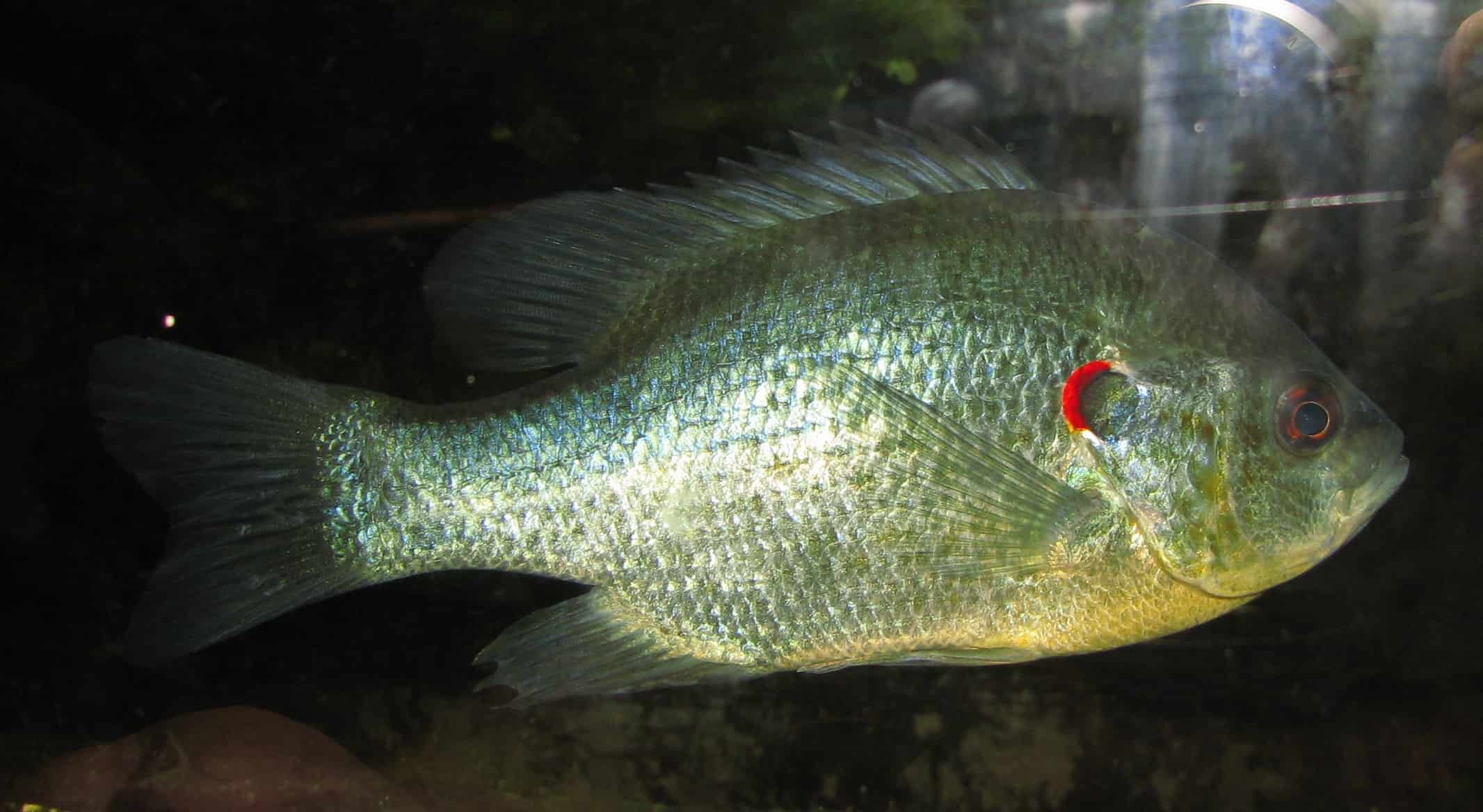
Often called shellcrackers, redear sunfish specialize in snails and other bottom-dwelling prey. They are usually less aggressive at the surface than bluegill and are often caught near the bottom.
14. Sauger
The Sauger, scientifically known as Sander canadensis, is a perch family. It is most closely associated with turbid rivers, tailwaters, and some reservoirs. Look for a slender body, dark saddle-like marks, rough cheek scales, and spots on the dorsal fin when making an identification.
Sauger tolerate stronger current and cloudier water than walleye. Jigs tipped with minnows and worked close to the bottom are a standard approach.
15. Saugeye
Among the most recognizable fish in this guide is the Saugeye (Sander vitreus × Sander canadensis), a hybrid perch. It is most closely associated with stocked reservoirs and lakes. Look for a blend of walleye and sauger traits, often with dark saddles and a white lower tail tip when making an identification.
Saugeye are hatchery-produced hybrids valued for fast growth and adaptability. They often relate to rocky points, dams, and drop-offs and strike jigs, crankbaits, and live bait.
16. Smallmouth Bass
Smallmouth Bass is the common name used here for Micropterus dolomieu, a member of the black bass group. It is most closely associated with clearer reservoirs, rocky shorelines, and flowing water. Look for bronze sides, vertical bars, and a jaw that usually ends near the eye when making an identification.
Smallmouth bass favor rock, gravel, and current more than heavy vegetation. Crayfish-colored lures, tubes, small swimbaits, and jerkbaits are reliable choices.
17. Spotted Bass
Spotted Bass (Micropterus punctulatus) belongs to the black bass group. It is most closely associated with reservoirs and rivers with rock, points, and channels. Look for a rough patch on the tongue, rows of dark spots below the side stripe, and a jaw shorter than a largemouth’s when making an identification.
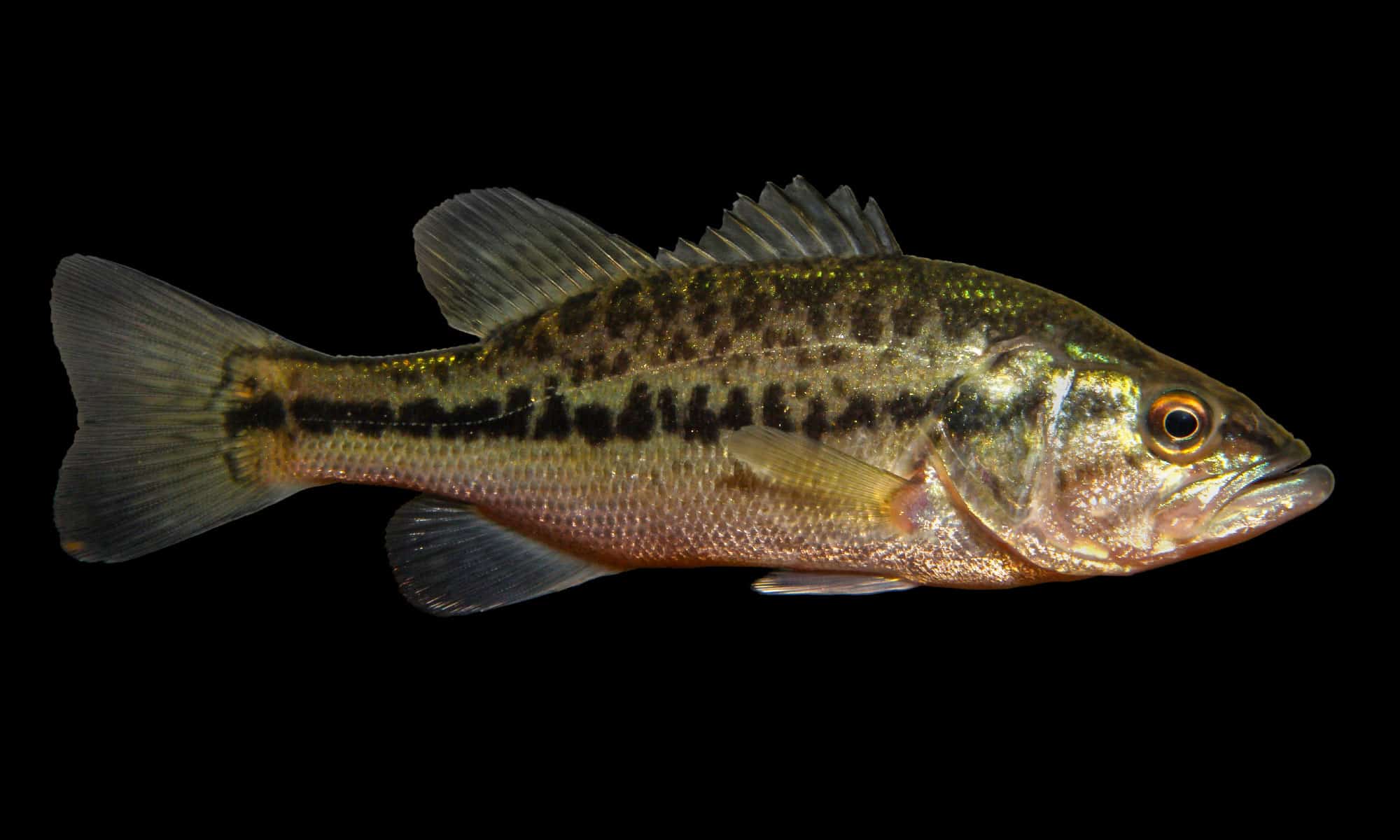
Spotted bass often suspend or hold deeper than largemouth bass. They are active predators that readily take small crankbaits, finesse plastics, and jigs.
18. Striped Bass
The Striped Bass, scientifically known as Morone saxatilis, is a temperate bass. It is most closely associated with large reservoirs with abundant open-water forage. Look for several dark horizontal stripes on bright silver sides and a streamlined body when making an identification.
Striped bass roam open water in schools while following shad. Trolling, live-bait drifting, and casting to surface-feeding schools are common methods.
19. Walleye
Among the most recognizable fish in this guide is the Walleye (Sander vitreus), a perch family. It is most closely associated with large reservoirs, rocky points, dams, and windblown shorelines. Look for large glassy eyes, olive-gold sides, canine teeth, and a white tip on the lower tail when making an identification.

Walleye see well in low light and often feed during cloudy weather, dawn, dusk, or night. Bottom-bounced live bait, jigs, and crankbaits are popular techniques.
20. White Bass
White Bass is the common name used here for Morone chrysops, a member of the temperate bass group. It is most closely associated with reservoirs, tributary runs, and open-water flats. Look for silvery sides with dark horizontal stripes and a deeper body than striped bass when making an identification.

White bass form large schools and may create visible surface feeding. Spring tributary runs and summer shad-chasing activity can produce fast fishing.
21. White Crappie
White Crappie (Pomoxis annularis) belongs to the sunfish family group. It is most closely associated with reservoirs, murky lakes, brush, and standing timber. Look for distinct vertical dark bars on a silvery, deep body when making an identification.
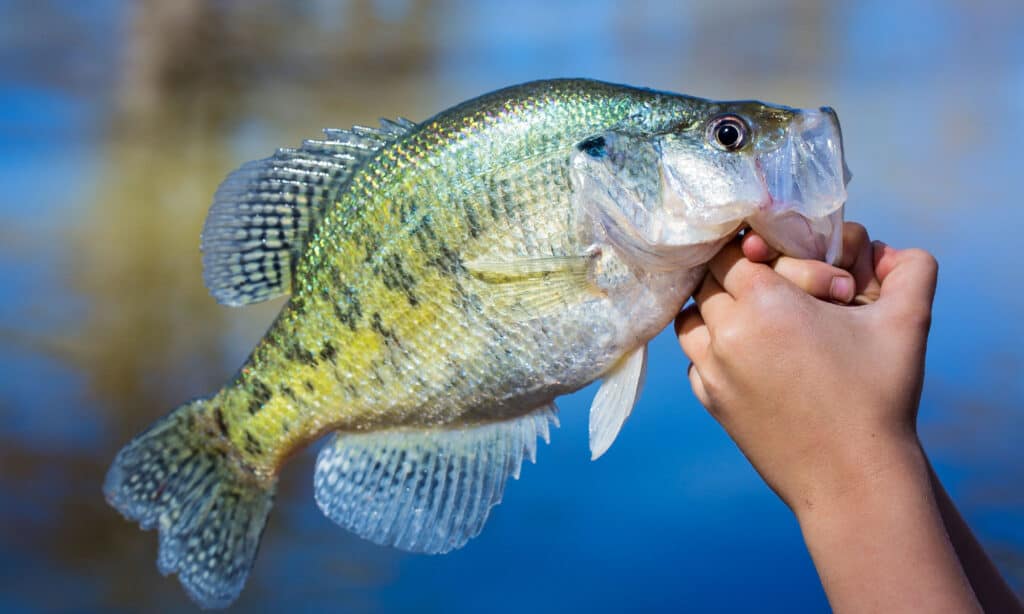
White crappie tolerate more turbid water than black crappie. Anglers often find them around brush piles, bridge pilings, docks, and creek channels.
22. Wiper
The Wiper, scientifically known as Morone chrysops × Morone saxatilis, is a hybrid temperate bass. It is most closely associated with large reservoirs and open-water forage zones. Look for broken horizontal stripes, a muscular silver body, and traits between white and striped bass when making an identification.
Also called hybrid striped bass, wipers are stocked for their speed and fighting power. They frequently chase shad in open water and respond to spoons, swimbaits, crankbaits, and live bait.
How Are These Types of Fish Classified?
Kansas fish in this guide fall into several practical families: catfish, sunfishes and black bass, temperate bass, perch relatives, trout, pike, drum, and primitive paddlefish. Wiper and saugeye are stocked hybrids. Classification helps explain body shape and feeding behavior, but anglers should still use local identification materials because similar species can overlap.
Where Do These Fish Live?
Kansas fish occupy everything from muddy prairie rivers to clear reservoirs, vegetated ponds, rocky dams, tailwaters, and seasonally stocked trout lakes. Reservoirs create both shallow warmwater habitat and deeper open-water zones, while rivers provide current, migration routes, and large-catfish habitat.
How to Identify Different Types of Fish
- Body shape: Decide whether the fish is deep-bodied, eel-like, torpedo-shaped, flattened, or armored.
- Mouth and teeth: Note whether the mouth points upward, forward, or downward and whether teeth or barbels are visible.
- Tail shape: Forked, rounded, squared, and three-lobed tails are valuable clues.
- Fin pattern: Count separate dorsal fins and look for spines, spots, colored margins, or long filaments.
- Color and markings: Use bars, spots, stripes, mottling, and breeding colors, but do not rely on color alone.
- Habitat: Match the fish to water temperature, depth, current, vegetation, reef, or bottom type.
- Range: Confirm that the species is documented in the state, country, drainage, lake, or ocean region.
Fishing and Outdoor Observation Tips
- Check the current Kansas fishing forecast and reservoir report before traveling.
- Match tackle to habitat: small hooks for panfish, abrasion-resistant leaders near rock, and heavier gear for large catfish.
- Use polarized glasses to locate weed edges, shallow beds, and cruising fish.
- Fish dawn, dusk, cloudy periods, or windblown shorelines when predators move shallower.
- Confirm species before keeping it, especially when sauger, walleye, and saugeye occur together.
Safety, Sustainability, and Conservation Notes
Always follow current Kansas license, length, creel, snagging, and bait rules. Drain water and clean equipment to limit aquatic invasive species. Never move live fish between waters without authorization, and treat paddlefish, large catfish, and other slow-growing fish with extra care when releasing them.
Fun Facts About Types Of Fish In Kansas
- Kansas manages more than 40 state fishing lakes.
- Channel catfish are among the most widely stocked fish in Kansas.
- Wipers are hybrids between striped bass and white bass.
- Saugeye are hybrids between walleye and sauger.
- Paddlefish feed by filtering plankton rather than biting conventional bait.
- Freshwater drum can produce audible grunting or drumming sounds.
- Redear sunfish are often called shellcrackers because they eat snails.
- Rainbow trout fisheries in Kansas rely heavily on cool-season stocking.
- White crappie have vertical bars, while black crappie show scattered speckles.
- Blue catfish can grow much larger than the common bullheads found in ponds.
Final Thoughts on types of fish in Kansas
The 22 types of fish in Kansas covered here represent the state’s most useful identification and angling targets. Learn the differences among similar bass, crappie, catfish, and walleye relatives, then verify local regulations and water-specific reports before every trip.
Frequently Asked Questions
1. How many fish are included in this types of fish in Kansas guide?
This guide covers 22 carefully selected fish. The number is kept below 50 and focuses on species or common-name groups that directly match the topic.
2. What are the best-known types of fish in Kansas?
Widely recognized examples include Black Bullhead, Black Crappie, Blue Catfish, Bluegill, Channel Catfish. Which fish is best known depends on location, fishing culture, and whether the reader is interested in food, sport, aquariums, or conservation.
3. Why do common fish names sometimes cause confusion?
A single common name may refer to different species in different countries, while one species may have several local names. Scientific names are included where useful to reduce confusion.
4. How can beginners identify a fish accurately?
Start with body shape, fin placement, mouth size, color pattern, tail shape, scales or skin, and habitat. Then compare those features with a trusted regional field guide.
5. Does habitat help with fish identification?
Yes. A fish seen on a coral reef, in a cold deep lake, in a muddy pond, or in a fast river belongs to a very different set of likely species.
6. Can fish color change?
Yes. Color can vary with age, sex, breeding condition, stress, water clarity, depth, and lighting. Shape and fin features are often more reliable than color alone.
7. Why is fish size not always a reliable clue?
Young fish may look very different from adults, and growth depends on food, temperature, habitat, and age. Use size together with several other traits.
8. What is the safest way to handle an unfamiliar fish?
Keep hands wet, support the body, avoid gills and eyes, and watch for sharp teeth, fin spines, or venomous spines. When uncertain, minimize contact and use appropriate tools.
9. Should every caught fish be released?
Release decisions depend on local regulations, species status, harvest goals, and whether the fish is invasive. Learn the rules before fishing and never release a prohibited invasive species where regulations forbid it.
10. Why are fishing regulations different between waters?
Fish populations and habitat conditions vary across Kansas lakes, reservoirs, ponds, and rivers. Managers adjust seasons, size limits, bag limits, and permitted methods to protect breeding stocks and balance fisheries.
11. What equipment helps with identification?
A regional fish guide, measuring board, camera, polarized glasses, and small notebook are useful. Photograph both sides, the mouth, fins, and distinctive markings when legal and safe.
12. Can an aquarium fish be released into the wild?
No. Aquarium releases can introduce disease, invasive populations, and genetic problems. Rehome unwanted fish through responsible aquarium channels instead.
13. What do these fish eat?
Diets range from plankton and algae to insects, mollusks, crustaceans, and other fish. Mouth position and tooth shape often provide clues to feeding style.
14. Why do some fish school?
Schooling can reduce predation risk, improve feeding efficiency, and help fish find mates. Open-water species are especially likely to form large coordinated groups.
15. Why do some fish stay near the bottom?
Bottom habitats provide insects, mollusks, shelter, and cooler or calmer water. Catfish, loaches, suckers, and many reef fish are adapted to feeding near the substrate.
16. What is the difference between freshwater and marine fish?
Freshwater fish maintain body salts in water with very low salinity, while marine fish manage water loss in salty environments. Some species move between both and are called diadromous or euryhaline.
17. Can the same fish live in rivers and lakes?
Many species use both. Rivers may provide spawning habitat, while lakes offer feeding and nursery areas. Dams and barriers can interrupt these movements.
18. Why are wetlands important to fish?
Wetlands provide nursery habitat, shelter, seasonal food, and flood connections. Losing wetlands can reduce recruitment even when the main lake or river remains.
19. What are the biggest threats to fish diversity?
Common threats include habitat loss, pollution, excessive harvest, dams, water withdrawal, climate change, and invasive species. The most important threat differs by region.
20. How can anglers support conservation?
Follow regulations, prevent litter, clean and dry gear, avoid moving live bait, report tagged or unusual fish, and handle released fish quickly and gently.
21. Why should live bait not be moved between waters?
Bait buckets can carry invasive fish, plants, parasites, and pathogens. Use bait legally and dispose of unused bait on land where required.
22. Are all fish safe to eat?
No. Some species may be protected, too small, contaminated, naturally toxic, or subject to local health advisories. Check current regional guidance before keeping fish for food.
23. How should a fish photograph be taken for identification?
Use natural light, include a size reference, and capture the side profile, head, tail, and fins. Avoid delaying release merely to obtain a perfect photo.
24. What is a native fish?
A native fish occurs naturally in a region without human introduction. Native status can be specific to a drainage basin, not just a country or state.
25. What is an introduced fish?
An introduced fish has been moved by people beyond its natural range, intentionally or accidentally. Some introductions support fisheries, while others damage native ecosystems.
26. What is an invasive fish?
An invasive fish is a non-native species that spreads and causes ecological, economic, or social harm. Not every introduced species becomes invasive.
27. Why are scientific names useful?
Scientific names identify one species consistently across languages and regions. They are especially valuable when common names overlap or change.
28. Can hybrids be included in fish guides?
Yes, when they are common, stocked, or important to anglers. Hybrids should be labeled clearly because they are not the same as naturally occurring parent species.
29. What season is best for observing fish?
Spring and early summer often bring fish into shallow water for spawning, while hot or cold periods may push them deeper. Timing varies by climate and species.
30. What is the main lesson from this guide to types of fish in Kansas?
Use several identification clues, respect local rules, and consider habitat and conservation status. A careful observer learns more than someone relying on color or a single common name.