

Arizona is home to a remarkable variety of caterpillars, each more fascinating than the last. From fuzzy, colorful larvae to spiny, eye-catching types, these tiny creatures are a testament to nature’s creativity. In this guide, we explore 25 Arizona caterpillars, their habitats, diets, behaviors, and interactions with humans. Whether you’re a beginner in entomology or just curious about backyard wildlife, this article will serve as an educational, friendly, and detailed companion. Understanding these caterpillars helps you appreciate their role in local ecosystems and the broader desert and forest environments of Arizona.
1. Woolly Bear Caterpillar (Pyrrharctia isabella)
Physical Characteristics
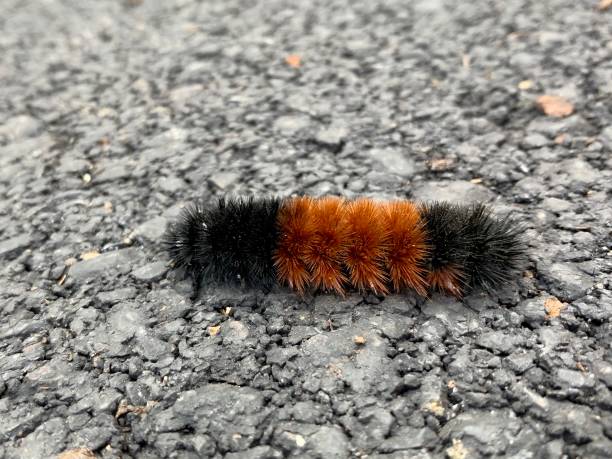
The Woolly Bear Caterpillar is instantly recognizable by its dense coat of bristly hairs, which are typically black at both ends and rusty orange in the middle. These hairs, or setae, give it a fuzzy appearance reminiscent of a tiny walking caterpillar pillow. Adults can grow up to 2 inches in length, and their coloration may slightly vary depending on age and environmental conditions.
Behavior
This species is largely slow-moving but surprisingly resilient. In the face of danger, it curls into a tight spiral, protecting its softer underparts. Its iconic orange and black bands are thought to signal unpalatability to predators, although they are harmless to humans. Observers often find Woolly Bears crawling across roads in autumn, seemingly on a determined march, leading to folklore about predicting winter severity.
Habitat and Range
Woolly Bears are widespread across Arizona’s grasslands, woodlands, and gardens. They adapt well to varying climates and are commonly spotted in suburban areas where leafy vegetation provides shelter and nourishment.
Diet
These caterpillars are polyphagous, consuming a broad range of herbaceous plants. They particularly enjoy clovers, dandelions, plantains, and other common garden plants. Their feeding behavior helps control some plant populations naturally, contributing to ecological balance.
Reproduction and Life Cycle
Adult Woolly Bears emerge from cocoons in late summer, with females laying eggs on low-growing plants. The larvae hatch and feed through fall before overwintering under leaf litter. In spring, they resume feeding and eventually pupate, transforming into the drab yet elegant Isabella Tiger Moth.
Fun Facts / Unique Traits
The band width folklore suggests that a broader orange band indicates a milder winter, though this is more fun than fact. Nevertheless, it highlights humanity’s long-standing fascination with these fuzzy creatures. Their hairs are also mildly irritating if handled, providing a natural defense without venom.
Human Interaction
Woolly Bears are popular among children and amateur naturalists. They are harmless and easy to observe, making them excellent “first caterpillar” encounters. People often photograph or gently relocate them if they cross roads during autumn.
2. Mesquite Stinger Caterpillar (Norape tener)
Physical Characteristics
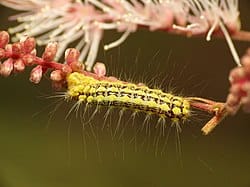
The Mesquite Stinger Caterpillar is covered with long, venomous spines that deliver a painful sting if touched. Its body is generally pale green or yellowish, blending well with mesquite leaves. The spines stand erect when threatened, creating a formidable defensive barrier. Adults transform into small white moths with subtle wing patterns.
Behavior
This caterpillar moves cautiously along branches, often hugging the leaf undersides. When disturbed, it raises its spines in a threatening display. Unlike non-stinging species, the Mesquite Stinger is solitary and relies on its venomous defenses rather than speed or camouflage to avoid predators.
Habitat and Range
As its name suggests, it thrives in mesquite-rich areas of southern and central Arizona. It is also occasionally found on other desert shrubs but prefers the dense foliage of mesquite for feeding and protection.
Diet
Leaves of mesquite trees form the bulk of its diet, although it may nibble on other legumes. Its feeding can cause localized defoliation, but it rarely harms the overall health of mature trees.
Reproduction and Life Cycle
Adult moths lay eggs on mesquite leaves, with larvae emerging in the warmer months. The caterpillars grow quickly, molting several times before spinning cocoons in leaf litter or soil. The adult moths emerge in late summer to continue the cycle.
Fun Facts / Unique Traits
Its venomous spines serve as a cautionary tale for humans: even in a dry desert, tiny creatures can pack a punch. Entomologists admire its defensive adaptations and the precision with which it deploys its spines when threatened.
Human Interaction
People should avoid handling this caterpillar due to its sting. However, it is an excellent subject for photography and ecological observation. Residents often learn to identify it to prevent accidental contact while hiking or gardening.
3. Two-Tailed Swallowtail Caterpillar (Papilio multicaudata)
Physical Characteristics
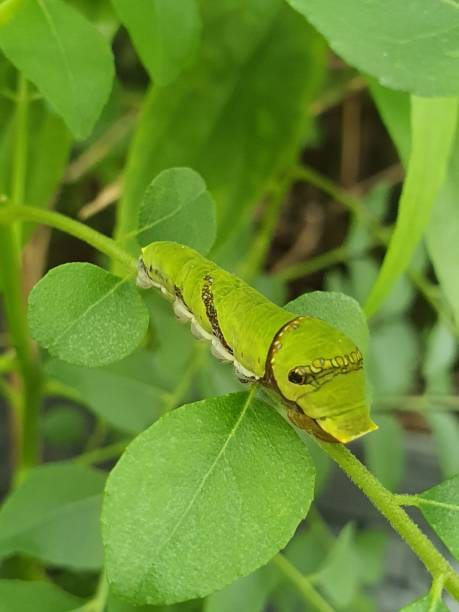
This caterpillar is bright green with yellow and black markings along its body. Its head bears false eyespots to deter predators, giving it a comical, watchful appearance. As it matures, it can reach lengths of 2.5 inches and develop more pronounced coloration and markings.
Behavior
Two-Tailed Swallowtail Caterpillars are slow-moving and rely on camouflage and their false eyespots for defense. When threatened, they extend their thoracic “osmeterium,” a forked orange organ that emits a foul smell to repel predators. They are active feeders but retreat quickly to foliage when disturbed.
Habitat and Range
These caterpillars inhabit Arizona’s riparian zones, open woodlands, and canyons where host trees like ash, cottonwood, and willow are present. They are commonly found along streams and riverbanks where moisture supports lush vegetation.
Diet
The larvae primarily consume the leaves of native trees, particularly ash and citrus relatives. Their voracious appetite supports rapid growth before pupation.
Reproduction and Life Cycle
Eggs are laid individually on host leaves. Caterpillars go through multiple instars, molting between stages, and eventually form chrysalises attached to branches. Adults emerge as the stunning Two-Tailed Swallowtail Butterfly, showcasing their elegant twin tails.
Fun Facts / Unique Traits
The osmeterium is like a little chemical sword, a reminder that even small caterpillars have clever tricks. Their false eyes also make them appear more threatening to birds and lizards than they truly are.
Human Interaction
They are safe to handle gently but are best appreciated without touching to avoid stress. Gardeners often encourage their presence to enjoy the subsequent butterflies and support local pollination.
4. Palo Verde Webworm Caterpillar (Hyphantria cunea)
Physical Characteristics
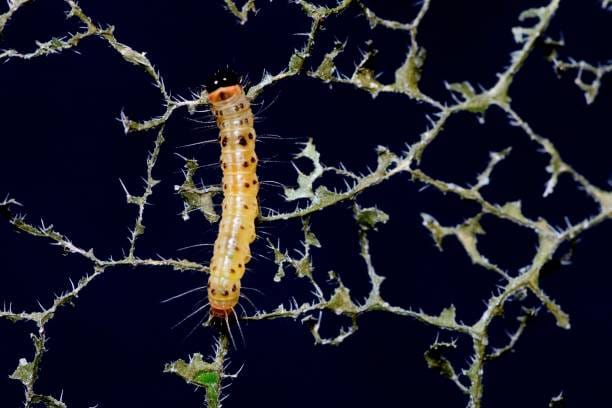
This species is white with fine, soft hairs covering its body, giving it a cottony appearance. It rarely grows beyond 1.5 inches but can be found in groups, which enhances their visual impact. Larvae often create silky webs over the leaves they inhabit, giving the appearance of miniature tents.
Behavior
Palo Verde Webworms are gregarious. They spin communal silk shelters and move in clusters to feed. Their activity is mostly nocturnal, although the webs are visible in daylight. When threatened, they retreat deeper into the silk.
Habitat and Range
Native to Arizona’s desert regions, they are most commonly found on Palo Verde trees. They also occupy desert parks, gardens, and roadside trees where host plants are plentiful.
Diet
Leaves of Palo Verde trees are their primary diet, although occasional feeding on adjacent desert shrubs occurs. Their feeding can defoliate small branches but usually does not endanger mature trees.
Reproduction and Life Cycle
Adults lay eggs in clusters on leaves. Larvae hatch and immediately begin web spinning and group feeding. After several instars, they pupate in cocoons within leaf litter or tree crevices, emerging as small white moths.
Fun Facts / Unique Traits
Web formation helps protect them from predators and temperature extremes in Arizona’s harsh desert climate. It’s like a tiny cotton fortress built by the young caterpillars.
Human Interaction
They are non-threatening to humans but can alarm casual observers with their white webbing. Children and photographers enjoy spotting them for their quirky silk shelters.
5. Io Moth Caterpillar (Automeris io)
Physical Characteristics
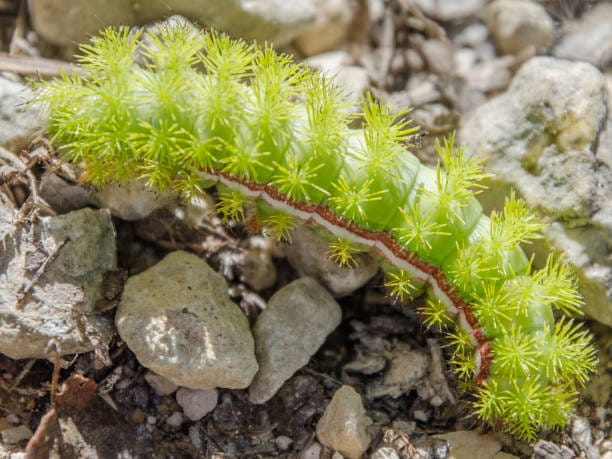
Vivid green with yellow stripes and clusters of sharp spines, the Io Moth Caterpillar is both beautiful and defensive. Its spines deliver a mild sting, serving as a deterrent to predators. Fully grown, it can reach 2 inches in length, and its bright coloration makes it stand out against desert foliage.
Behavior
Io caterpillars are mostly solitary and hide during the day under leaves. When threatened, they arch their body and reveal their spines. Their green coloration helps them blend with leaves, while their stinging ability discourages curious predators.
Habitat and Range
Found across eastern and southern Arizona, they inhabit gardens, desert washes, and open woodlands. They prefer areas with abundant host plants.
Diet
They feed on a wide range of plants, including willows, maples, corn, and various legumes. Their flexibility in diet allows them to survive in diverse habitats.
Reproduction and Life Cycle
Eggs are laid on the undersides of leaves. Larvae feed and grow, molting several times before pupating in soil. Adults emerge as moths with spectacular hindwing eyespots used to startle predators.
Fun Facts / Unique Traits
Its spines are a natural chemical defense, a tiny but effective “warning sign” in the desert. The adult moth’s eyespots are among the most dramatic in North America.
Human Interaction
Handle with care! While the sting is not dangerous, it can cause irritation. Observers enjoy photographing its bright green body and later seeing the stunning adult moth emerge.
6. Buck Moth Caterpillar (Hemileuca spp.)
Physical Characteristics
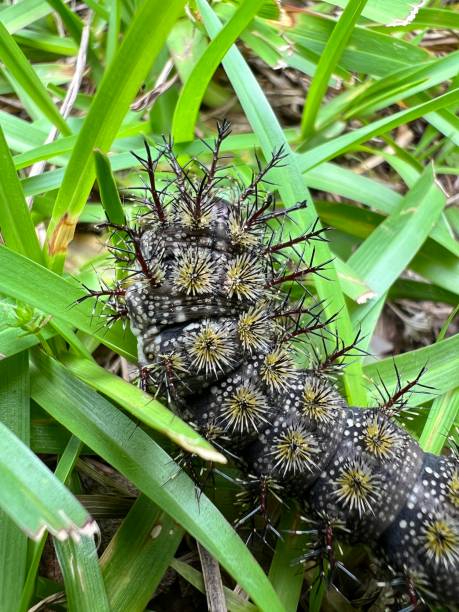
The Buck Moth Caterpillar is unmistakable with its glossy black body highlighted by vivid red or orange bands along its segments. Sharp spines protrude from each segment, giving it a formidable appearance. Fully grown, these caterpillars measure around 2 inches long, and their coloration intensifies as they near pupation.
Behavior
This species is active during the day and often crawls slowly across oak leaves. When disturbed, it raises its spines and may drop from the tree, using gravity to escape predators. Buck Moth Caterpillars are generally solitary but occasionally cluster during feeding.
Habitat and Range
Native to Arizona’s woodlands and riparian zones, these caterpillars prefer oak-dominated forests. They are particularly abundant in mid-elevation areas where oak trees thrive.
Diet
They feed primarily on oak leaves, especially Gambel and Emory oaks. Larvae are voracious eaters, consuming foliage rapidly to store energy for pupation.
Reproduction and Life Cycle
Adult moths emerge in autumn, laying eggs in small clusters on tree branches. The larvae hatch in spring, feeding heavily before spinning silk cocoons in leaf litter or on tree bark. The pupal stage lasts a few weeks, culminating in the emergence of the striking adult Buck Moth.
Fun Facts / Traits
Their bold colors and spiny bodies are an effective visual warning to predators. Though they appear menacing, their sting is mild and primarily deters small predators rather than humans.
Human Interaction
Encountering these caterpillars is usually harmless if you avoid direct contact with their spines. They are often admired by photographers and entomologists for their vivid appearance and interesting behaviors.
7. Spiny Elm Caterpillar (Nymphalis antiopa)
Physical Characteristics
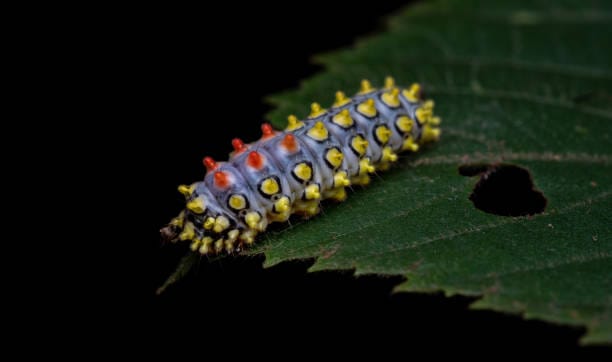
The Spiny Elm Caterpillar is adorned with black, spiny protrusions along its body, interspersed with subtle yellow dots. Its spines are soft enough to touch gently, but they provide some protection from birds. Mature larvae can reach lengths of 2.5 inches and display a slightly velvety texture beneath their spines.
Behavior
These caterpillars are primarily solitary feeders, moving slowly and deliberately across host leaves. When threatened, they may arch their body or roll into a small coil, presenting their spines outward. They are diurnal and can often be seen basking in the sun on tree branches.
Habitat and Range
Common throughout Arizona’s riparian zones and forested areas, Spiny Elm Caterpillars favor regions with abundant elm or willow trees. They also occur in suburban parks with ornamental trees of these species.
Diet
Elm leaves form the main part of their diet, but they will also consume willow and hackberry leaves. Their feeding plays a minor but valuable role in pruning foliage naturally.
Reproduction and Life Cycle
Eggs are laid in clusters on the undersides of leaves, hatching in late spring. Caterpillars undergo multiple instars, growing quickly before pupating in leaf litter or attached to twigs. Adults emerge as the elegant mourning cloak butterfly, notable for its dark wings with pale edges.
Fun Facts / Traits
Their spiny appearance deters most predators, and the mourning cloak butterfly is among the longest-lived North American butterflies, sometimes surviving up to 10 months. The caterpillar stage is critical in accumulating the energy for this long adult life.
Human Interaction
They are safe to observe from a distance, and many gardeners welcome them for their aesthetic value and ecological role. Handling is not recommended due to minor skin irritation from the spines.
8. Venezuelan Tiger Moth Caterpillar (Spilosoma virginica)
Physical Characteristics
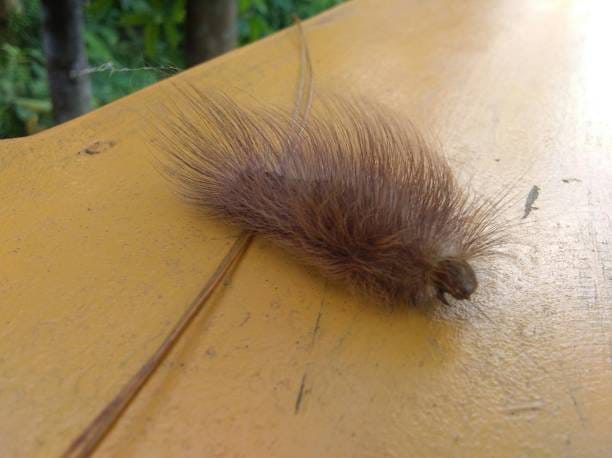
This caterpillar has a striking appearance, with a soft white body accented by black spots and tufts of fine hair. It measures around 2 inches at maturity and is entirely covered in dense, plush setae, giving it a fluffy, almost toy-like appearance.
Behavior
The Venezuelan Tiger Moth Caterpillar moves slowly along plant stems, feeding steadily. When threatened, it rolls slightly or elevates its hairy tufts as a visual and tactile deterrent. Its behavior is non-aggressive and highly predictable, making it popular among naturalists.
Habitat and Range
In Arizona, it is commonly found in meadows, gardens, and open woodland edges. It prefers areas with abundant herbaceous plants and minimal disturbance from human activity.
Diet
This caterpillar consumes a wide variety of plants, including clovers, dandelions, and garden vegetables. Its flexible diet supports survival across varied environments.
Reproduction and Life Cycle
Eggs are laid in clusters on host plants, hatching in warm months. Larvae feed for several weeks, molting multiple times, then pupate in soil or leaf litter. Adults emerge as creamy-white moths with small black spots, flying primarily at night.
Fun Facts / Traits
Despite its harmless appearance, the hairs can cause mild irritation to sensitive skin. The caterpillar’s fluffy exterior has made it a favorite for photography and educational programs.
Human Interaction
Children and beginners often find them charming due to their softness. They are safe to observe closely, but direct handling should be minimal to avoid skin irritation.
9. Lonomia Caterpillar (Lonomia obliqua)
Physical Characteristics
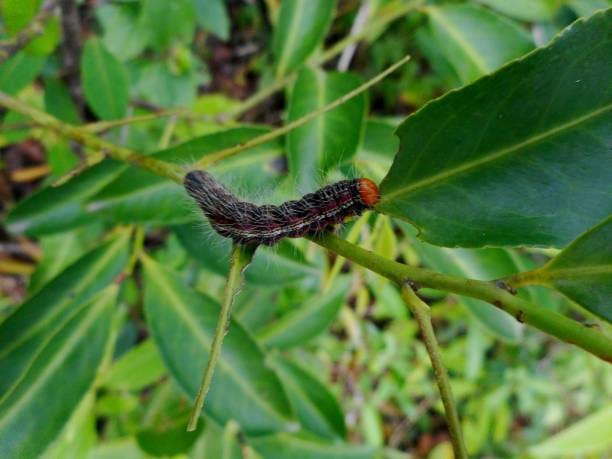
The Lonomia caterpillar is a smooth, green larva with subtle red or brown striping. It is covered in tiny, barely visible spines that contain venom capable of causing irritation or a mild rash. Adults can reach 2 inches long, blending effectively with foliage.
Behavior
Lonomia caterpillars are mostly nocturnal feeders, remaining hidden under leaves during daylight. They move slowly, relying on camouflage and their subtle spines to avoid predation. Group feeding is rare, with individuals usually solitary.
Habitat and Range
In Arizona, they inhabit riparian areas, gardens, and forested patches. They prefer locations with consistent host plants and moisture.
Diet
Leaves of native trees and shrubs form their primary diet. They are generalist feeders, which aids in their survival across varied microhabitats.
Reproduction and Life Cycle
Females lay eggs on host leaves, and larvae hatch to feed during warmer months. Pupation occurs in soil or leaf litter. Adults emerge as drab brown moths with subtle patterning to blend into the environment.
Fun Facts / Traits
Though venomous, this species is rarely harmful to humans in Arizona. Their low-profile appearance and nocturnal habits make them less conspicuous than other caterpillars.
Human Interaction
Handling should be avoided due to venomous spines. Observers are encouraged to admire them from a distance, appreciating their role in local ecosystems.
10. Tussock Moth Caterpillar (Lonomia spp.)
Physical Characteristics
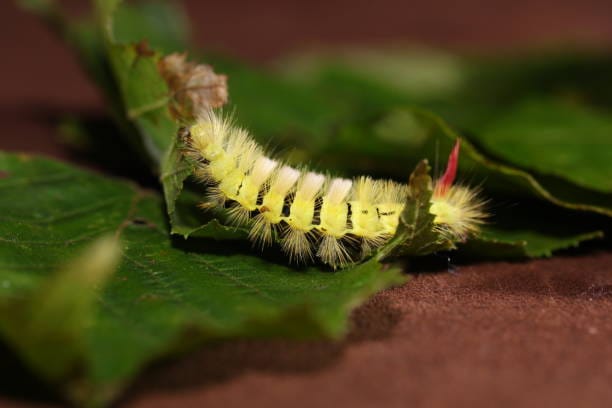
The Tussock Moth Caterpillar is known for its tufts of bristly hair and bright coloration. Colors can vary from white and yellow to orange and black, making them visually striking. They grow up to 2 inches long and have elongated bodies with prominent setae along the dorsal side.
Behavior
These caterpillars are active feeders, often climbing plant stems and branches to access tender leaves. When threatened, they elevate their hairs as a deterrent. They are mostly solitary and move methodically through foliage.
Habitat and Range
They inhabit gardens, meadows, and forest edges across Arizona. Preference is given to areas with broadleaf plants and shrubs.
Diet
Their diet is diverse, including oak, willow, and garden plants. They can defoliate small areas but generally do not threaten mature vegetation.
Reproduction and Life Cycle
Adults lay eggs on leaves, which hatch into larvae that feed for several weeks. Pupation occurs within leaf litter or in silken cocoons, with adults emerging as small moths that are nocturnal in activity.
Fun Facts / Traits
The tufts of hair provide both defense and a distinctive appearance, which makes them easy to identify. The diversity of coloration among individuals is remarkable, even within a single population.
Human Interaction
They are generally harmless if observed without contact. Their bright colors and hair tufts make them educational examples of insect defense strategies.
11. Cinnabar Moth Caterpillar (Tyria jacobaeae)
Physical Characteristics
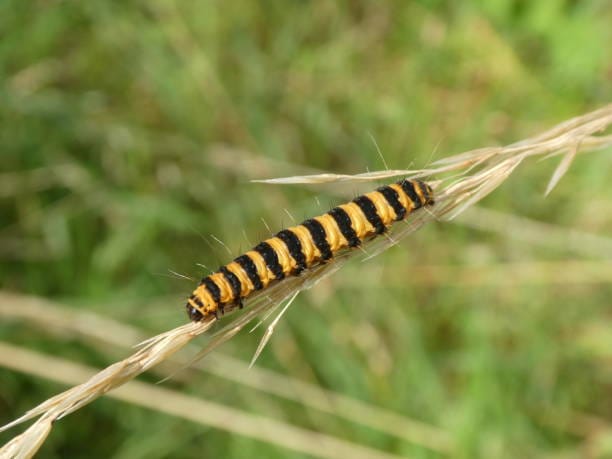
The Cinnabar Moth Caterpillar is visually striking with alternating black and bright yellow-orange bands. It grows up to 1.5 inches long, and its body is smooth, lacking spines or hairs. This bold coloration serves as a warning to predators about its unpalatability, derived from the toxic plants it consumes.
Behavior
Cinnabar caterpillars are active during the day and feed in groups, forming clusters on the host plant. Their gregarious nature increases their visibility but also amplifies the warning to predators. They are slow movers, relying on coloration rather than speed to avoid danger.
Habitat and Range
In Arizona, these caterpillars are commonly found in open fields, disturbed areas, and meadows where their primary food plants, ragworts, are abundant. They thrive in sunny, well-vegetated habitats.
Diet
The larvae feed almost exclusively on ragwort species, extracting toxic compounds that render them distasteful to birds and other predators. This specialized diet is crucial to their survival.
Reproduction and Life Cycle
Adult moths emerge in early summer, lay eggs on ragwort plants, and the larvae hatch within a week. Caterpillars feed for several weeks before pupating in the soil. Adults emerge as black moths with vivid red markings, completing the cycle.
Fun Facts / Traits
The bright coloration is a classic example of aposematism—a natural “keep away” sign. Despite their toxicity, they are harmless to humans if not ingested.
Human Interaction
These caterpillars are safe to observe and popular in gardens where ragwort is present. They are excellent for teaching children about plant-insect interactions and chemical defenses.
12. Citheronia splendens Caterpillar
Physical Characteristics
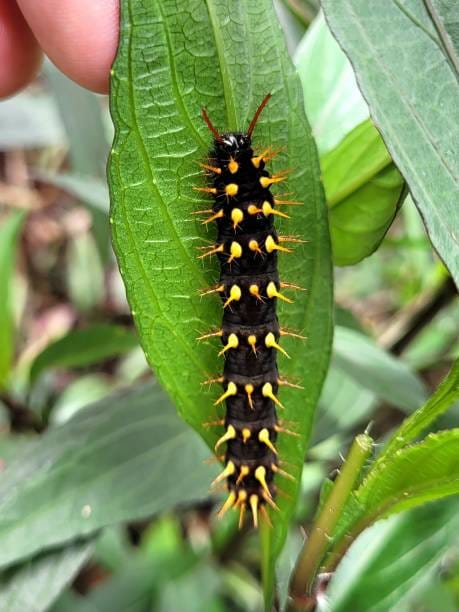
The Citheronia splendens Caterpillar is large and impressive, reaching lengths of 3–4 inches. Its body is green with subtle brown markings and stubby orange tubercles along the sides. The texture is smooth and plump, making it appear almost like a miniature tree branch.
Behavior
This caterpillar is mostly nocturnal, feeding under the cover of darkness. When threatened, it arches its head and tail to appear larger and more intimidating. Unlike smaller species, it does not rely on speed but on size and coloration for protection.
Habitat and Range
Native to Arizona’s desert and semi-desert areas, it prefers areas with mesquite, acacia, and other native shrubs. It is particularly abundant in protected desert washes where host plants are plentiful.
Diet
Leaves of mesquite, acacia, and other native desert plants are its main food sources. The caterpillar’s large size allows it to consume substantial foliage, supporting its rapid growth.
Reproduction and Life Cycle
Adult moths emerge in late summer, laying eggs on the undersides of leaves. Larvae hatch and feed for several weeks, molting multiple times before pupating underground. Adults are large, brown moths with subtle patterning that helps them blend into the desert landscape.
Fun Facts / Traits
Its size alone makes it a standout among Arizona caterpillars. Observers are often amazed at the transformation from such a hefty larva to a delicate moth.
Human Interaction
These caterpillars are safe to observe, and their impressive size makes them excellent subjects for educational programs and photography.
13. Tricolor Buck Moth Caterpillar
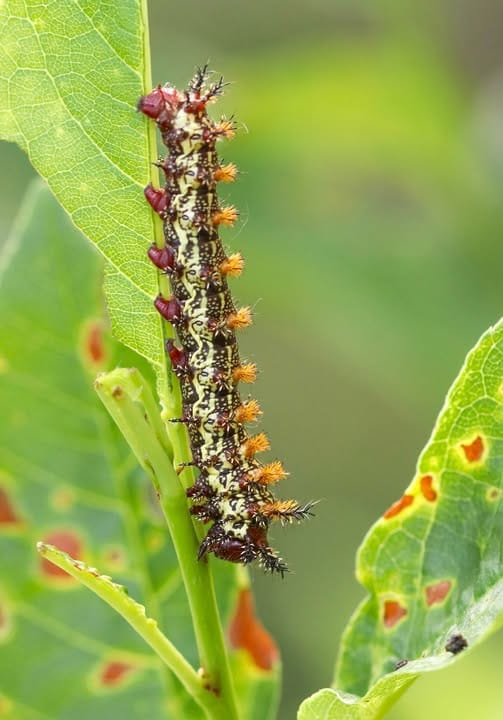
Physical Characteristics
The Tricolor Buck Moth Caterpillar is vibrant, displaying black, orange, and white stripes along its spiny body. The spines can cause mild irritation if handled, but they primarily serve as a deterrent to predators. It grows to approximately 2 inches in length.
Behavior
This species is active during the day and feeds methodically on host leaves. When threatened, it arches its body and elevates its spines as a defensive posture. Solitary by nature, it avoids large groups.
Habitat and Range
It is commonly found in Arizona’s oak woodlands and riparian zones. The caterpillar favors areas where oak leaves are abundant and protected from extreme environmental conditions.
Diet
Its diet consists primarily of oak foliage. Feeding is consistent but not destructive to mature trees, making it an integral part of the local ecosystem.
Reproduction and Life Cycle
Adults emerge in autumn and lay eggs on oak branches. Larvae feed in spring and early summer, undergoing multiple molts before pupating in the leaf litter. Adults are nocturnal moths with subtle wing patterning.
Fun Facts / Traits
The spiny coloration acts as a natural warning sign. Its tricolor pattern also makes it easy to identify among other oak-feeding caterpillars.
Human Interaction
While mildly irritating to touch, these caterpillars are generally safe to observe. Photographers and educators often use them to demonstrate insect defense strategies.
14. Snowberry Clearwing Caterpillar
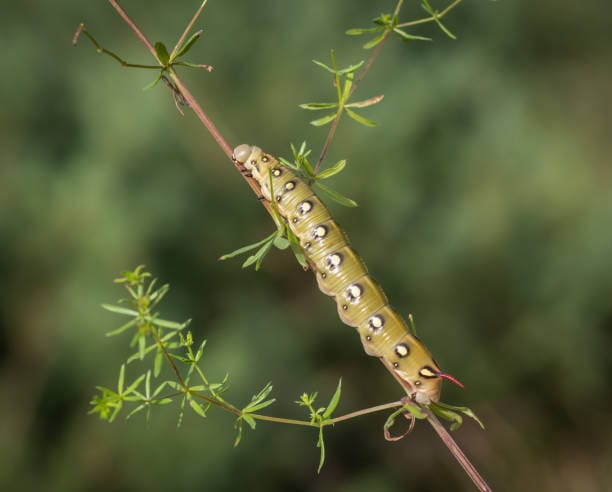
Physical Characteristics
Snowberry Clearwing Caterpillars are small, green, and smooth-bodied, often with a faint white lateral stripe. Their subtle appearance allows them to blend seamlessly with host plants, reducing predation risks. They reach about 1.5 inches in length when fully grown.
Behavior
These caterpillars are relatively fast-moving for their size and feed during the day. They exhibit gentle curling when disturbed but generally rely on camouflage to avoid detection. Group feeding is rare, making them solitary for most of their larval stage.
Habitat and Range
Common across Arizona’s gardens, meadows, and desert shrublands, they favor areas with snowberry plants or related shrubs. They are particularly abundant where host plants are densely clustered.
Diet
Their diet consists mainly of snowberry leaves, although they occasionally consume nearby herbaceous plants. Their feeding is usually not extensive enough to harm mature plants.
Reproduction and Life Cycle
Adult moths lay eggs singly or in small clusters on the leaves of host plants. Larvae feed for several weeks, molting through multiple instars before pupating within leaf litter or soil. Adults emerge as day-flying moths with transparent wings and subtle color accents.
Fun Facts / Traits
Their transparent wings as adults make them a remarkable sight. The larvae’s ability to blend into green foliage highlights nature’s skill in designing camouflage.
Human Interaction
These caterpillars are harmless and enjoyable for observation. Gardeners often spot them while pruning or inspecting snowberry shrubs.
15. Black Swallowtail Caterpillar (Papilio polyxenes)
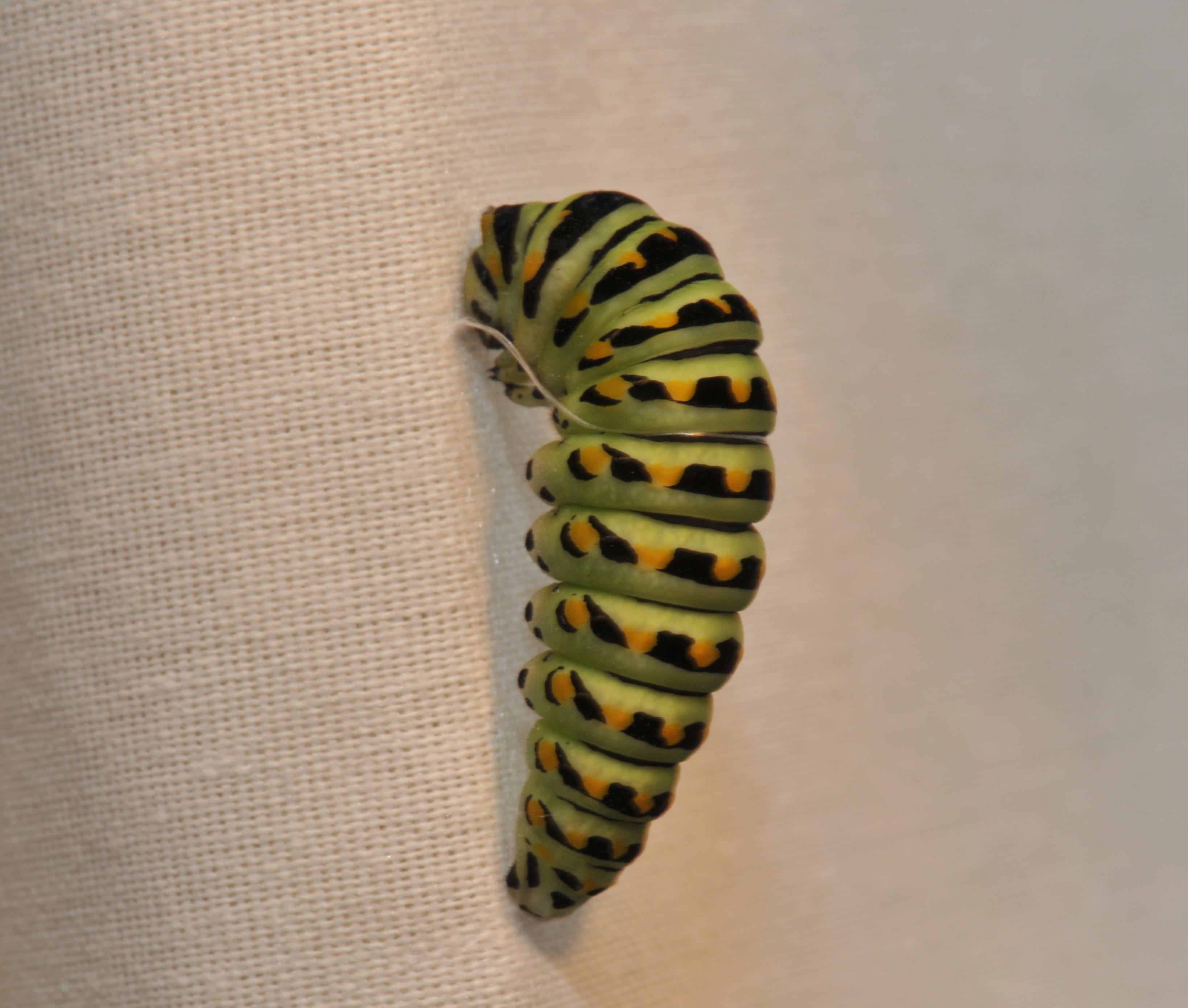
Physical Characteristics
The Black Swallowtail Caterpillar is bright green with black bands and yellow spots. It can grow up to 2 inches long, with a smooth body and small thoracic projections. Its coloration changes slightly with each instar, providing a visual cue of growth stage.
Behavior
These caterpillars are active feeders and can often be seen moving across parsley, dill, or carrot plants. When threatened, they extrude a bright orange osmeterium, a forked organ that emits a strong odor to deter predators.
Habitat and Range
Black Swallowtail Caterpillars are commonly found in gardens, meadows, and fields throughout Arizona. They favor open, sunny areas with plenty of host plants for feeding.
Diet
They feed on parsley, dill, fennel, and carrot leaves, making them common in herb gardens. Their diet supports rapid growth and successful metamorphosis into striking adult butterflies.
Reproduction and Life Cycle
Eggs are laid individually on host plant leaves. Larvae hatch, feed, and molt multiple times before pupating. The chrysalis stage may last from a few weeks to several months, depending on environmental conditions. Adults are elegant black butterflies with vivid blue and yellow markings.
Fun Facts / Traits
The osmeterium is a fascinating defense mechanism, acting like a tiny chemical sword. Their metamorphosis from a green caterpillar to a colorful butterfly is a popular example of insect transformation.
Human Interaction
They are safe to observe and popular among gardeners and educators. Encouraging their presence in herb gardens helps with both pollination and environmental education.
16. Beet Armyworm Caterpillar (Spodoptera exigua)
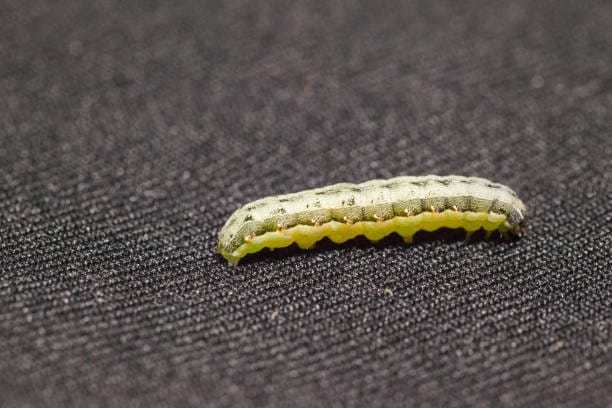
Physical Characteristics
The Beet Armyworm Caterpillar is slender and smooth-bodied, typically green or brown with faint longitudinal stripes along its back. It can grow up to 2 inches in length, and its head is slightly darker than the body. The subtle patterning allows it to blend with leafy crops and vegetation.
Behavior
These caterpillars are primarily nocturnal, feeding under the cover of darkness and hiding during the day in the soil or under leaves. They are known for their voracious appetite and may move in small groups when searching for food.
Habitat and Range
Beet Armyworms are widespread across Arizona’s agricultural fields, gardens, and disturbed areas. They prefer crops such as beets, spinach, lettuce, and other leafy greens.
Diet
They are generalist feeders, consuming a wide variety of plants. Their feeding can occasionally lead to significant damage in commercial crops, making them a pest species in some areas.
Reproduction and Life Cycle
Adult moths lay clusters of eggs on the undersides of leaves. Larvae hatch and feed for several weeks, molting multiple times before pupating in the soil. The adult moths are small and brown with subtle patterning, primarily nocturnal in activity.
Fun Facts / Traits
Despite their pest status, they play a role in the ecosystem by serving as food for birds and predatory insects. Their rapid growth and adaptability make them a fascinating species for entomologists to study.
Human Interaction
Gardeners and farmers monitor them closely to prevent crop damage. Observing them in natural areas can provide insights into insect-plant dynamics and ecological balance.
17. Dill Moth Caterpillar (Plutella xylostella)
Physical Characteristics
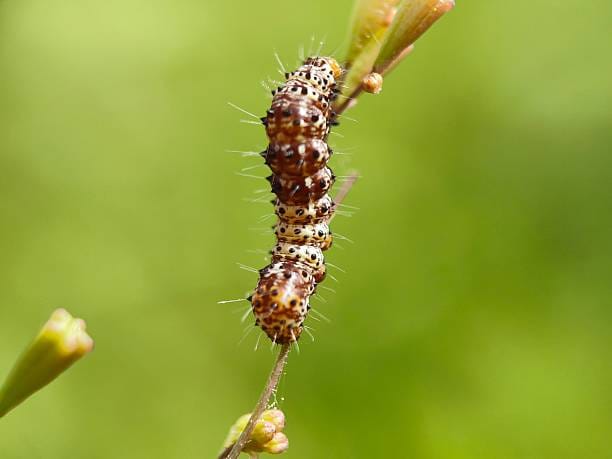
The Dill Moth Caterpillar is small, slender, and pale green with a smooth surface. Its diminutive size, about 1–1.5 inches long, allows it to move inconspicuously among host plants. Subtle longitudinal lines may be present along the body.
Behavior
These caterpillars are primarily nocturnal feeders. During the day, they hide under leaves to avoid predation. They are solitary in nature but can be found in higher numbers where host plants are abundant.
Habitat and Range
Dill Moth Caterpillars inhabit Arizona gardens, fields, and areas with herb cultivation. They are particularly common in places growing dill, parsley, fennel, or related plants.
Diet
Their diet consists mainly of leaves of parsley, dill, and fennel. They feed steadily, consuming foliage necessary for growth and development before pupation.
Reproduction and Life Cycle
Adults lay eggs on the undersides of leaves. Caterpillars hatch and feed for several weeks, undergoing multiple molts before pupating. Adults are small, grayish moths with narrow wings, flying primarily at night.
Fun Facts / Traits
Their feeding habits make them both a garden nuisance and a subject of scientific interest for pest management. Their small size and subtle coloration make them easy to overlook despite their impact.
Human Interaction
Gardeners often employ natural predators or mild insecticides to manage populations. Observing them can help people understand pest dynamics and sustainable garden care.
18. Garden Webworm Caterpillar (Loxostege sticticalis)
Physical Characteristics
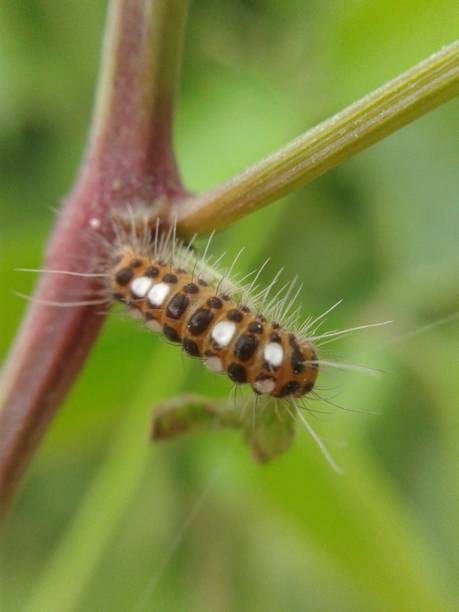
The Garden Webworm Caterpillar is pale green with fine longitudinal stripes and sparse hair. It reaches approximately 1.5 inches in length. Its delicate appearance is offset by the silk webbing it produces, which can cover clusters of leaves.
Behavior
These caterpillars are gregarious and spin silk tents or webs as protective shelters while feeding. They are primarily nocturnal feeders, retreating to their silk structures during daylight.
Habitat and Range
They are commonly found in Arizona gardens, agricultural fields, and meadows. They favor areas with abundant host plants and relatively undisturbed foliage.
Diet
Their feeding includes a variety of garden vegetables and flowering plants, particularly tender leaves of beans, spinach, and other leafy crops. The silk webs help protect them from predators and environmental stresses.
Reproduction and Life Cycle
Eggs are laid in clusters on host plants, hatching into larvae that feed collectively. Caterpillars undergo multiple instars before pupating within soil or leaf litter. Adults emerge as small, inconspicuous moths that are nocturnal.
Fun Facts / Traits
The silk webbing is a fascinating behavior, acting as both a shelter and a way to keep larvae together. It’s almost like a miniature neighborhood built by caterpillars.
Human Interaction
They are considered minor pests but are harmless to humans. Observing their web-building behavior can provide insight into insect social behaviors and plant-insect interactions.
19. Mint Root Borer Caterpillar (Scolioplecta ustulatella)
Physical Characteristics
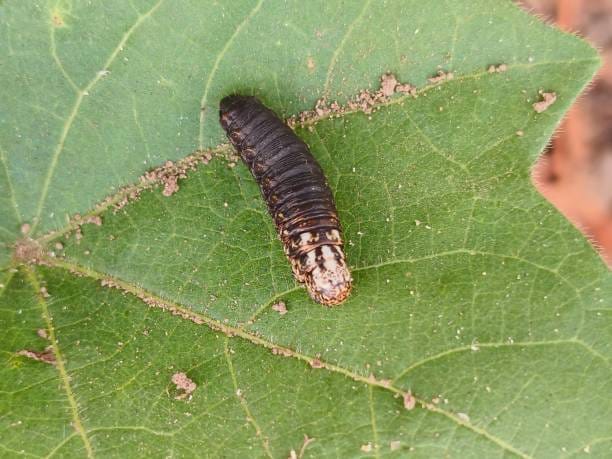
This small caterpillar is pale cream to light green, with subtle longitudinal stripes and a smooth body. It measures approximately 1 inch in length. Its unassuming coloration allows it to blend with soil and plant roots.
Behavior
Unlike many foliage-feeding caterpillars, Mint Root Borers live primarily underground, feeding on plant roots. They are slow-moving and mostly solitary, surfacing only when necessary for pupation or dispersal.
Habitat and Range
They inhabit herb gardens and agricultural areas throughout Arizona, especially where mint and related plants are cultivated. Soil with sufficient organic matter provides ideal conditions for their development.
Diet
The larvae feed on roots of mint, basil, and other aromatic herbs. This subterranean feeding can weaken plants, but it rarely causes total destruction.
Reproduction and Life Cycle
Adults lay eggs near the base of host plants. Larvae hatch and burrow into the soil to feed on roots, pupating underground before emerging as small nocturnal moths.
Fun Facts / Traits
Their underground lifestyle is a unique adaptation among garden caterpillars, making them less visible but ecologically significant. They help aerate the soil, albeit while feeding on roots.
Human Interaction
They are largely unnoticed unless plant growth is stunted. Gardeners monitor them in herb beds to prevent significant damage. They are harmless to humans and non-invasive.
20. Parsley Worm Caterpillar (Papilio polyxenes)
Physical Characteristics
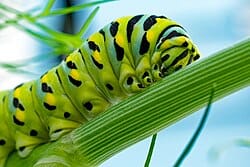
The Parsley Worm Caterpillar is bright green with black bands and yellow spots along its smooth, cylindrical body. It grows to about 2 inches long. The green color helps it blend with parsley and related herb plants, making it nearly invisible to predators.
Behavior
These caterpillars are active feeders during the day, moving slowly across host plants. When disturbed, they extend their forked osmeterium, emitting a strong odor to repel potential predators. They are generally solitary but can appear in small groups when food is abundant.
Habitat and Range
Found in Arizona gardens, fields, and open meadows, Parsley Worms favor areas with abundant parsley, dill, fennel, or carrot plants. They thrive in sunny locations with moderate moisture.
Diet
Leaves of parsley, dill, fennel, and related plants are their main food source. They consume steadily to store energy for pupation, supporting their eventual transformation into Black Swallowtail butterflies.
Reproduction and Life Cycle
Eggs are laid individually on host plant leaves. Larvae hatch and feed, molting several times before pupating in soil or leaf litter. Adults emerge as elegant Black Swallowtail butterflies with black wings and vivid blue and yellow accents.
Fun Facts / Traits
The osmeterium is a fascinating chemical defense. The transformation from caterpillar to butterfly is dramatic, illustrating the remarkable metamorphosis that insects undergo.
Human Interaction
These caterpillars are harmless and welcome in gardens for both educational purposes and to enjoy the butterflies they produce. Observing their feeding and defensive behaviors can be a delightful learning experience.
21. Tobacco Budworm Caterpillar (Heliothis virescens)
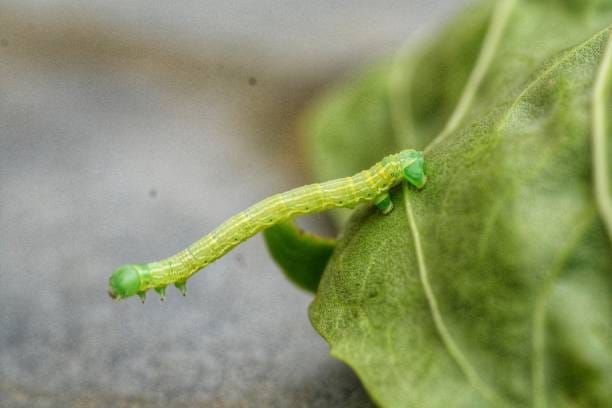
Physical Characteristics
The Tobacco Budworm Caterpillar is smooth-bodied and variable in color, ranging from green to brown or pinkish tones. It grows up to 1.5 inches long and displays subtle longitudinal stripes that help it blend with the stems and leaves of host plants.
Behavior
These caterpillars are primarily nocturnal, hiding during the day and feeding actively at night. They are solitary feeders, crawling along stems and buds in search of succulent plant parts. When threatened, they may drop off the plant or curl slightly to avoid detection.
Habitat and Range
They are widespread in Arizona gardens, agricultural fields, and open desert areas with host plants such as tobacco, tomato, and related Solanaceae species. They adapt well to cultivated landscapes.
Diet
Leaves, flowers, and buds of tobacco, tomato, cotton, and pepper plants form the main diet. They can occasionally damage crops if populations are high, making them a notable pest species.
Reproduction and Life Cycle
Adults lay eggs on the undersides of host plant leaves. Larvae hatch and feed for several weeks, undergoing multiple molts before pupating in soil or leaf litter. Adult moths are nocturnal and brown with subtle wing patterns, primarily active at night.
Fun Facts / Traits
Despite their status as crop pests, Tobacco Budworms play a role in food webs, serving as prey for predatory insects and birds. Their adaptability to different host plants makes them a resilient species.
Human Interaction
Gardeners and farmers monitor them carefully to prevent crop damage. Observation is harmless and can be educational for learning about insect-plant relationships.
22. Elm Sawfly Larva (Cimbex americana)
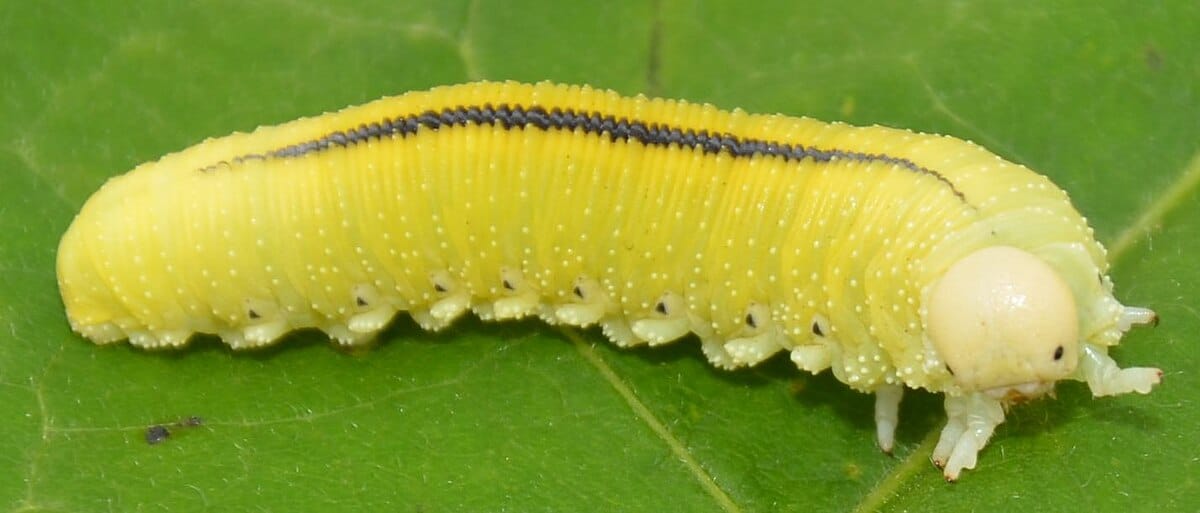
Physical Characteristics
The Elm Sawfly Larva is a stout, green caterpillar with pale stripes along the sides. It can reach up to 2 inches long and is covered with fine hairs, giving it a slightly fuzzy appearance. Its head capsule is darker, providing contrast with the body.
Behavior
These larvae are slow-moving and primarily feed during the day. When disturbed, they may curl their bodies slightly but rely mainly on camouflage for protection. They are generally solitary but sometimes feed in small aggregations.
Habitat and Range
Elm Sawfly Larvae are found in Arizona’s woodlands, gardens, and riparian areas, favoring elm and willow trees. They are particularly abundant in areas with abundant foliage and moderate humidity.
Diet
Leaves of elm, willow, and related trees form their primary diet. Feeding occurs steadily, but mature trees generally tolerate minor defoliation without harm.
Reproduction and Life Cycle
Adults are large sawflies resembling wasps. Eggs are laid on host plant leaves, and larvae hatch to feed for several weeks. After multiple instars, they pupate in the soil, emerging later as adult sawflies.
Fun Facts / Traits
Despite looking like caterpillars, sawfly larvae belong to a different insect order (Hymenoptera). Their resemblance to caterpillars is a great example of convergent evolution.
Human Interaction
These larvae are harmless to humans. Gardeners enjoy observing them, and they serve as educational tools for distinguishing between caterpillars and sawfly larvae.
23. Exorista mella Larva
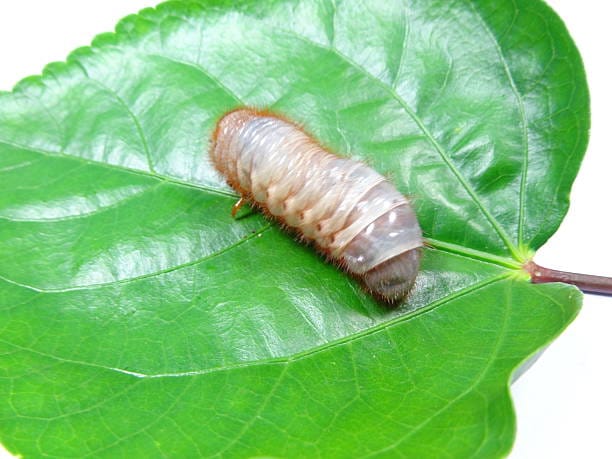
Physical Characteristics
The Exorista mella Larva is small, pale, and smooth, typically cream or light green in color. It grows up to 1 inch in length and has a soft, cylindrical body. Its minimalistic appearance allows it to blend with host insect hosts rather than foliage.
Behavior
This species is parasitic, living inside other insect hosts during its larval stage. It remains hidden while feeding on internal tissues, emerging later to pupate outside the host. Its movements are confined to the host until the final instar.
Habitat and Range
Exorista mella Larvae occur in Arizona where suitable host insects are abundant. They inhabit gardens, fields, and riparian zones, primarily where caterpillars or other larvae are present.
Diet
They are obligate parasitoids, consuming the internal tissues of host caterpillars or larvae. This feeding ensures the larva gains all necessary nutrients for development.
Reproduction and Life Cycle
Adults lay eggs on or near host insects. Larvae enter the host and feed internally, eventually emerging to pupate in soil or leaf litter. Adult flies are free-living and seek new hosts to continue the cycle.
Fun Facts / Traits
Parasitic behavior is fascinating, highlighting the diverse survival strategies insects employ. They help naturally regulate populations of herbivorous insects in Arizona.
Human Interaction
These larvae are harmless to humans and beneficial in gardens as natural pest controllers. Observing their lifecycle can be educational for understanding parasitic relationships in ecosystems.
24. Pale Tussock Moth Caterpillar (Calliteara pudibunda)
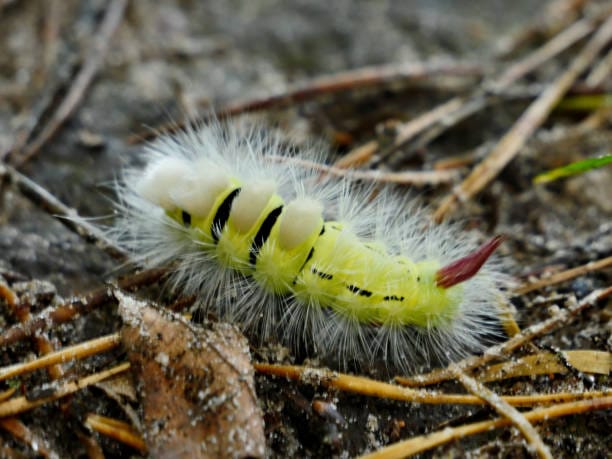
Physical Characteristics
The Pale Tussock Moth Caterpillar has a soft, pale yellow body adorned with distinctive tufts of hairs along its back. It can grow up to 2.5 inches long, and its dorsal hair tufts serve as a defensive mechanism against predators.
Behavior
This caterpillar feeds actively on leaves during the night and hides among foliage during daylight. When threatened, it raises its hair tufts and may curl slightly to appear larger. It is solitary in feeding habits.
Habitat and Range
In Arizona, it inhabits gardens, woodlands, and meadows, preferring areas with broadleaf trees and shrubs. It is especially common in locations with dense foliage for concealment.
Diet
Leaves of oaks, willows, and other deciduous trees make up its diet. Its feeding is moderate and rarely causes serious damage to healthy trees.
Reproduction and Life Cycle
Eggs are laid on host leaves, hatching into larvae that feed and molt several times before pupating. Adults emerge as pale moths with subtle markings, usually active at night.
Fun Facts / Traits
The hair tufts are a signature defensive trait, deterring predators with both appearance and mild irritants. Their coloration and posture make them easily recognizable.
Human Interaction
They are safe to observe and handle lightly, although direct contact with hairs may cause minor skin irritation. Their attractive appearance makes them favorites for nature enthusiasts and educational programs.
25. Virginia Ctenucha Caterpillar (Ctenucha virginica)
Physical Characteristics
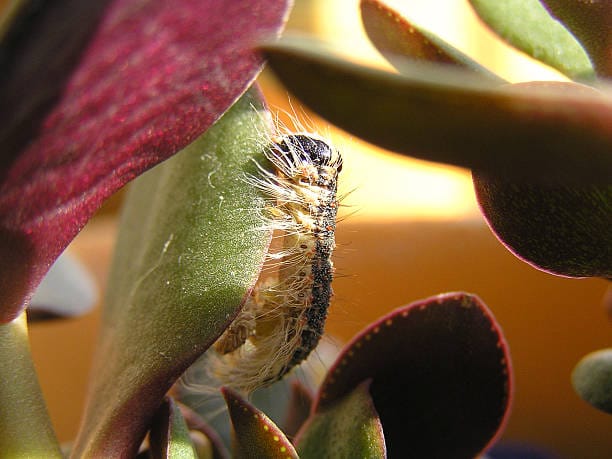
The Virginia Ctenucha Caterpillar is black and covered in long, fine hairs that give it a striking, bristly appearance. It grows up to 2 inches long, with vivid coloration contrasting sharply against its host plants.
Behavior
These caterpillars are primarily nocturnal, feeding under the cover of darkness and remaining concealed during the day. They move slowly and rely on their hair coverage for protection from predators.
Habitat and Range
They are found throughout Arizona in meadows, gardens, and open woodland edges. They prefer areas where grasses and sedges are abundant for feeding.
Diet
Larvae feed mainly on grasses and sedges, occasionally consuming herbaceous plants. Their diet supports their rapid development into adult moths.
Reproduction and Life Cycle
Eggs are laid on host plants, hatching into larvae that feed and molt through several instars. Pupation occurs in soil or leaf litter, and adults emerge as striking metallic-blue moths with orange-tipped antennae.
Fun Facts / Traits
The long hairs not only provide protection but also give the caterpillar a visually impressive silhouette. Adults are day-flying moths, unusual for nocturnal moth species.
Human Interaction
They are harmless to humans and excellent subjects for photography and education. Their striking appearance makes them memorable for children and nature enthusiasts alike.
FAQ’s
1. Does Arizona have caterpillars?
Yes, Arizona has many caterpillar species. From fuzzy woolly bears to large green hornworms, the state’s diverse habitats support dozens of types that later become moths or butterflies.
2. Can I touch a black swallowtail caterpillar?
Yes, black swallowtail caterpillars are generally safe to touch. They may release a harmless orange organ called an osmeterium when threatened, which smells bad but isn’t dangerous.
3. What is the most common insect in Arizona?
Ants, mosquitoes, and various beetles are among the most common insects in Arizona. Desert-adapted species, like the honey ant and harvester ant, are very abundant in the dry regions.
4. What can be mistaken for a caterpillar?
Many insect larvae can look like caterpillars, including sawfly larvae, inchworms, and even some fly or beetle larvae. Worms and maggots can also be confused with small caterpillars.
5. What are the big green caterpillars in Arizona?
Big green caterpillars in Arizona are often Tomato Hornworms or Tobacco Hornworms. They’re large, bright green, and have a distinctive horn-like tail, eventually turning into hawk moths.
6. What is the state insect for Arizona?
Arizona’s state insect is the Two-tailed Swallowtail Butterfly. Its caterpillars are often seen in gardens and along riparian areas.
7. What is the deadliest insect in Arizona?
The Arizona bark scorpion is considered the deadliest insect-like creature in the state. While technically a scorpion, its sting can be dangerous, especially to children and pets. Insects like bees or wasps can also be risky for allergic individuals.
8. Can I touch tomato hornworm?
Yes, tomato hornworms are safe to touch, though they are large and may look intimidating. Handle gently if needed for gardening purposes, and avoid rough contact to prevent harming them.
9. What is the most common garden caterpillar?
In Arizona gardens, the most common caterpillars include Tomato Hornworms, Cabbage Loopers, and Woolly Bear Caterpillars. They feed on vegetables and leafy plants.
10. Do mosquitoes prefer fat or skinny people?
Mosquitoes are attracted to carbon dioxide, body heat, and sweat. People with higher body mass may emit more CO2, making them slightly more attractive, but both fat and skinny people can get bitten.
11. What is Arizona’s national insect?
Arizona does not have a national insect, but its official state insect is the Two-tailed Swallowtail Butterfly.
12. Which state has the worst bug problem?
States with hot and humid climates, like Florida, Louisiana, and Texas, often have the worst bug problems due to mosquitoes, flies, and other insects thriving in the heat.
13. What is the most poisonous thing in Arizona?
The most poisonous creatures in Arizona include the Arizona bark scorpion, certain spiders like the black widow, and some desert plants with toxic sap. Among insects, the scorpion is the most notable danger.
14. What is biting me in my bed if it’s not bed bugs?
If it’s not bed bugs, bites could come from fleas, mites, or even spiders. Check pets for fleas and inspect bedding carefully to identify the cause.
15. What insect has killed the most humans?
Mosquitoes are responsible for the most human deaths worldwide. They carry deadly diseases like malaria, dengue, and Zika virus, making them far more dangerous than spiders, bees, or scorpions.
Conclusion
Arizona is home to an incredible diversity of caterpillars, each with its own fascinating appearance, behavior, and ecological role. From the striking Black Swallowtail and the fluffy Venezuelan Tiger Moth Caterpillar to the subtle Mint Root Borer and the gregarious Garden Webworm, these larvae demonstrate the variety and complexity of insect life in the region. Observing Arizona caterpillars not only provides a window into their unique adaptations but also highlights their importance in local ecosystems as pollinators, prey, and natural plant pruners.
Whether you are a budding entomologist, a gardener, or simply a nature enthusiast, understanding these caterpillars helps foster a deeper appreciation for the natural world. By respecting their habitats and recognizing their roles, we can enjoy these remarkable creatures safely while supporting biodiversity in our gardens, parks, and wild landscapes. Exploring the types of Arizona caterpillars can be both educational and enchanting, offering countless opportunities to observe the delicate balance of life in the desert and woodland areas.
Next time you spot a caterpillar on an oak leaf, a herb plant, or a meadow grass, take a closer look. Each species has a story to tell, from its feeding habits and life cycle to its ingenious defense mechanisms. Arizona caterpillars are living reminders of nature’s creativity and the intricate web of life that surrounds us.
Read more:
- 25 Types of Moth Caterpillars (Pictures and Identification)
- 40 Types of Black and Yellow Caterpillars | Identification & Pictures
- 20 Black and Brown Caterpillars (Pictures And Identification)
- 35 Types of Horned Caterpillars (Pictures and Identification)
- 40 Types of Striped Caterpillars (Pictures and Identification)
- 25 Types of Furry Caterpillars (Pictures and Identification)
- 45 Types of Moths (Pictures And Identification)
- 40 Types of Butterflies (Pictures And Identification)
- 50 Types of Beetles (Pictures and Identification)