

Searching for different types of stoats can be confusing because the words stoat, ermine, and short-tailed weasel are often used interchangeably. For many years, animals across Eurasia and North America were grouped under one species, Mustela erminea. Modern genetic research now supports three closely related species within the wider stoat or ermine group.
This guide explains the Eurasian stoat, American ermine, and Haida ermine. You will learn how their ranges differ, what they look like, where they live, how their coats change, and how to distinguish them from least weasels and long-tailed weasels.
What Are the Main Types of Stoats?
There are three closely related living species commonly included in the stoat or ermine group: the Eurasian stoat or Beringian ermine, the American ermine, and the Haida ermine. They were historically treated as populations of one widespread species but are now separated mainly through genetic evidence. All three have elongated bodies, short legs, predatory habits, and a black tail tip that remains visible even when the coat turns white.
| Common Name | Scientific Name | Primary Range | Key Feature |
|---|---|---|---|
| Eurasian stoat | Mustela erminea | Eurasia, Alaska, Greenland, and parts of northern North America | The most widely recognized Old World stoat |
| American ermine | Mustela richardsonii | Most of Canada and the northern United States | North American species formerly included in M. erminea |
| Haida ermine | Mustela haidarum | Pacific Northwest islands | Rare island species with a restricted distribution |
1. Eurasian Stoat
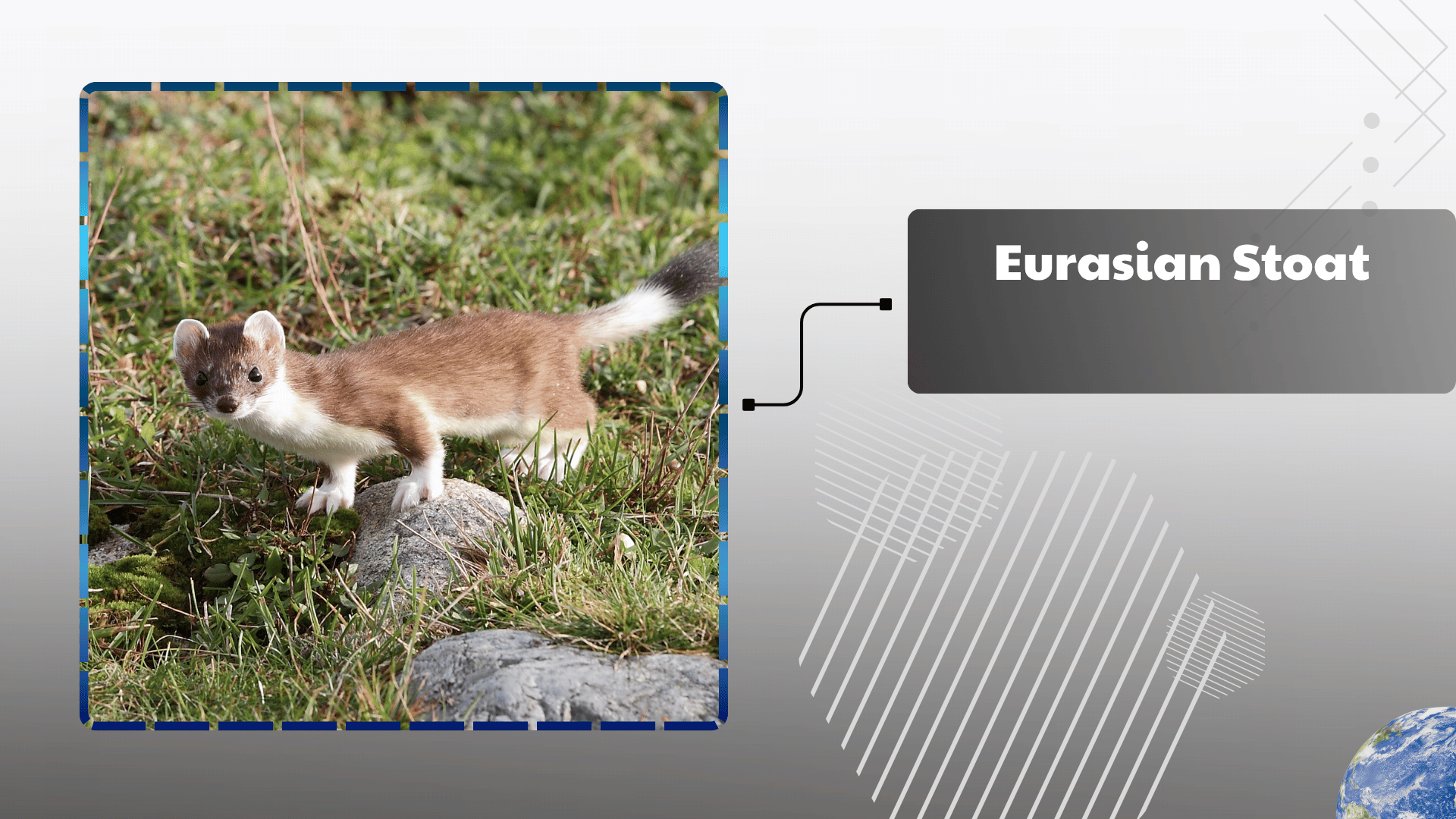
The Eurasian stoat, scientifically named Mustela erminea, is the animal most people picture when they hear the word “stoat.” It is also called the Eurasian ermine and, under some modern classifications, the Beringian ermine. Its native range extends across much of Europe and northern Asia, with populations also occurring in Alaska, Greenland, and certain northern areas of North America.
This species has a long, flexible body, short legs, a narrow head, rounded ears, and a moderately long tail. During summer, most individuals are reddish brown or chestnut brown across the back, head, and outer legs. The belly is cream or white. The end of the tail is black, creating the most reliable visual feature for identifying a stoat.
In cold, snowy regions, the brown summer coat is replaced by white winter fur. The black tail tip remains unchanged. This seasonal camouflage helps the animal blend into snow while hunting and avoiding larger predators. Stoats living in warmer climates may remain brown throughout winter or develop only a partly white coat.
Eurasian stoats occupy diverse environments, including tundra, woodland edges, grasslands, farmland, mountain valleys, wetlands, hedgerows, and rocky areas. They usually favor landscapes that provide both abundant prey and protective cover. Their narrow bodies allow them to pursue rodents through tunnels, stone gaps, and dense vegetation.
Small mammals form the core of the diet. Voles, mice, lemmings, and young rabbits are common prey, although stoats may also catch birds, eggs, insects, amphibians, and other small animals. They are energetic hunters capable of killing prey larger than themselves. Unused food may be carried away and cached for later.
The species has also been introduced to New Zealand, where it became a damaging invasive predator. Native birds that evolved without similar land mammals are especially vulnerable. This situation demonstrates why an animal can be ecologically valuable within its native range but destructive when introduced elsewhere.
2. American Ermine
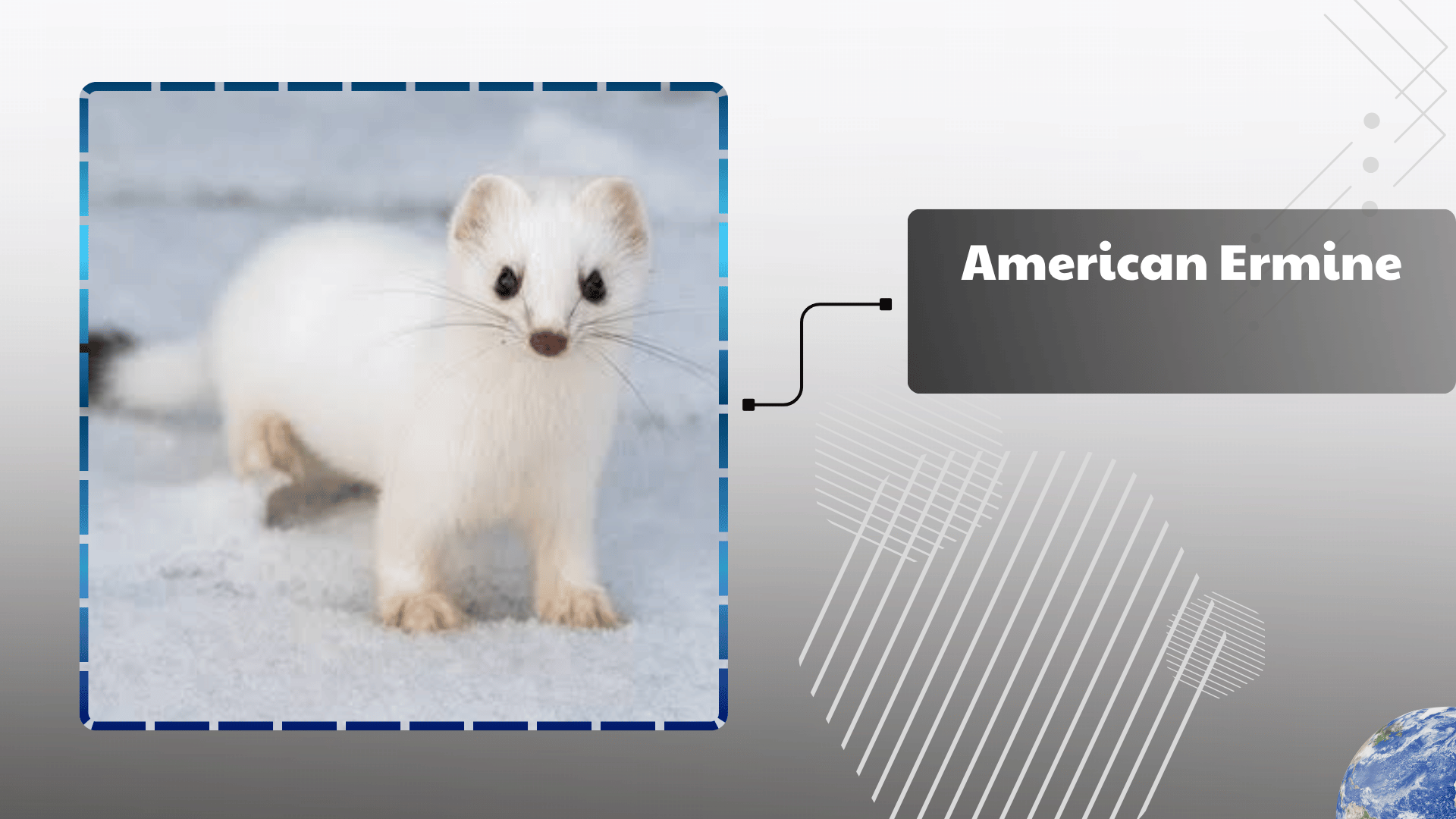
The American ermine, Mustela richardsonii, is also known as the American stoat or American short-tailed weasel. It was once classified as part of Mustela erminea, but genetic studies revealed that it represents a separate North American lineage.
This species occurs across much of Canada and parts of the northern United States. Its exact boundary with the Eurasian or Beringian stoat is difficult to recognize in the field because the two animals look extremely similar. Their separation is based more strongly on genetics and geographic history than on an obvious difference in coat color or body shape.
The American ermine has the familiar weasel-like form: an elongated body, short limbs, small rounded ears, a pointed face, and a tail with a conspicuous black end. Its summer coat is normally brown above and pale below. Northern populations frequently become white in winter, although snow duration, latitude, elevation, and local genetics can influence the completeness and timing of the color change.
American ermines live in coniferous and mixed forests, forest openings, marsh edges, brushy fields, stream corridors, alpine areas, and other habitats with adequate cover. They may shelter in rock piles, hollow logs, tree roots, abandoned burrows, and cavities originally created by prey animals.
Voles, mice, shrews, and other small mammals make up much of the diet. Larger males can tackle bigger prey, while smaller females can follow rodents farther into narrow tunnels. Birds, eggs, insects, and young rabbits may also be eaten when available.
Like other stoats, the American ermine is primarily solitary. Individuals communicate through scent marks and defend areas where they hunt. They are active during both daylight and darkness, although sightings are brief because they move quickly and spend considerable time under vegetation, snow, or ground cover.
The American ermine should not be confused with the long-tailed weasel. Both can have a black-tipped tail, but the long-tailed weasel generally has a proportionally longer tail. Location, body proportions, and clear photographs of the entire animal are useful when attempting an identification.
3. Haida Ermine
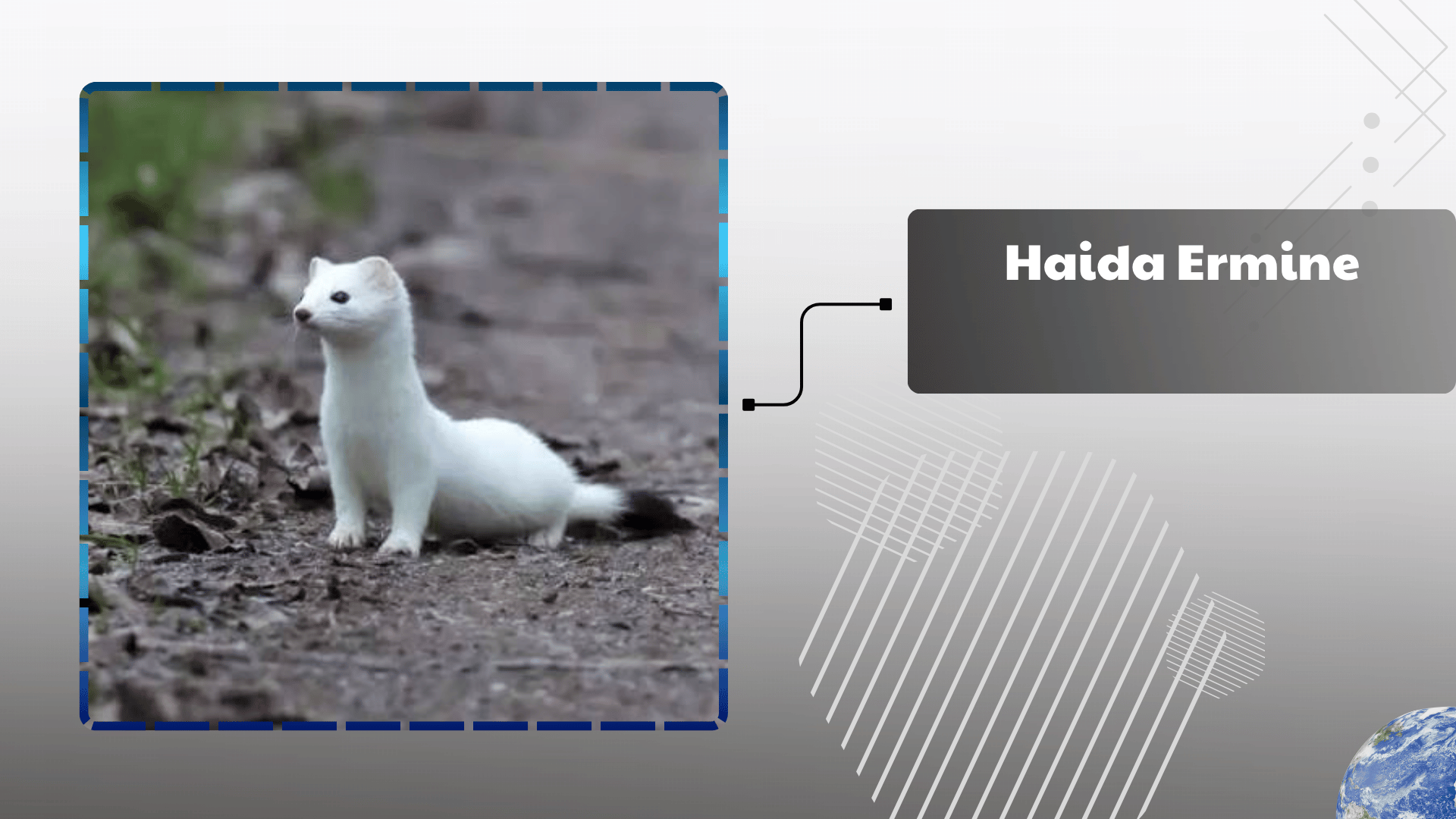
The Haida ermine, Mustela haidarum, is the least familiar and most geographically restricted of the three types of stoats. It is associated with islands along the Pacific Northwest coast of North America, including Haida Gwaii and parts of the Alexander Archipelago.
This ermine was formerly treated as a subspecies within the widespread Mustela erminea complex. Genetic research indicates that it has a distinctive evolutionary history connected to ancient populations of Eurasian and American ermines. Its isolation on coastal islands helped preserve that unusual genetic identity.
Haida ermines retain the classic shape of the group. They have low, elongated bodies, short legs, rounded ears, narrow faces, and black-tipped tails. Their summer coloration is generally brown above and pale below. Seasonal coat appearance may vary according to island climate, elevation, snow conditions, and individual genetics.
Temperate rainforests, forest edges, wetlands, shorelines, rocky slopes, and dense ground cover can provide suitable habitat. Island populations are naturally limited by the amount of available land, connections between habitats, prey abundance, and competition with other predators.
The Haida ermine hunts small mammals and may also take birds or other appropriately sized prey. However, its ecology is less thoroughly documented than that of widespread mainland stoats. Because the animal is elusive, occurs at low densities, and inhabits remote landscapes, researchers may have difficulty estimating its population size.
Its restricted distribution makes habitat protection particularly important. A widespread species can sometimes persist after local losses, but an island endemic has fewer alternative populations. Habitat change, introduced predators, declining prey, disease, and other disturbances may therefore have greater consequences.
Visual identification alone is rarely enough to separate a Haida ermine from its close relatives. Geographic location provides the strongest initial clue, while genetic analysis may be required for a scientifically reliable identification. Wildlife watchers should record the location, date, coat color, tail pattern, surrounding habitat, and photographs without pursuing or disturbing the animal.
How Are These Types of Stoats Classified?
All three species belong to the family Mustelidae, which also includes other weasels, ferrets, mink, martens, badgers, and otters. Within this family, stoats belong to the genus Mustela.
| Taxonomic Rank | Classification |
|---|---|
| Kingdom | Animalia |
| Phylum | Chordata |
| Class | Mammalia |
| Order | Carnivora |
| Family | Mustelidae |
| Genus | Mustela |
Older references may list the Eurasian stoat, American ermine, and Haida ermine as one species. That does not necessarily mean those sources are careless; they may follow an earlier taxonomic system. Scientific classifications change when new genetic, anatomical, and geographic evidence becomes available.
There are also regional forms or subspecies within the three-species group. Names such as Irish stoat, British stoat, Japanese stoat, tundra stoat, and Tobolsk stoat generally describe geographic populations rather than additional full species. The exact number and boundaries of recognized subspecies vary among authorities.
Where Do Stoats Live?
Stoats and ermines are primarily animals of the Northern Hemisphere. They occupy Arctic tundra, boreal forest, temperate woodland, grassland, farmland, wetlands, mountain areas, and coastal islands. They are especially successful where populations of voles, mice, lemmings, or rabbits are available.
A stoat does not require deep forest. Hedgerows, brush piles, stone walls, stream banks, woodland margins, and rough fields can all provide hunting cover. The animal often uses burrows created by rodents rather than excavating an entirely new den.
In New Zealand, introduced Eurasian stoats live in forests, grasslands, wetlands, farmland, and alpine environments. They are controlled as invasive predators because they kill native birds, chicks, and eggs.
How to Identify Different Types of Stoats
- Black tail tip: A stoat has a distinct black section at the end of its tail in both summer and winter.
- Body shape: Look for a long, slender body supported by very short legs.
- Summer color: Most stoats are brown above and cream or white underneath.
- Winter color: Cold-climate individuals may turn partly or completely white while retaining the black tail tip.
- Movement: Stoats often travel with a fast, bounding gait and may briefly stand upright to inspect their surroundings.
- Tail length: The tail is longer and more noticeable than that of a least weasel but usually proportionally shorter than that of a long-tailed weasel.
- Location: Geographic range is essential when separating Eurasian, American, and Haida ermines.
- Habitat: Brushy edges, rock piles, rodent burrows, wetlands, and forest openings are promising places to find signs.
- Tracks: Stoats leave small five-toed prints, although not every toe registers clearly.
- Genetic similarity: The three species may be impossible to distinguish reliably by appearance alone.
Stoat vs. Weasel vs. Ermine
| Name | Meaning | Useful Identification Note |
|---|---|---|
| Stoat | A common name most strongly associated with Mustela erminea | Usually has a prominent black tail tip |
| Ermine | A name for stoat-group animals, especially when wearing white winter fur | It is not simply any white weasel |
| Least weasel | A different species, Mustela nivalis | Smaller, with a shorter tail that lacks a bold black tip |
| Long-tailed weasel | A separate American species, Neogale frenata | Has a proportionally longer tail, usually with a black tip |
Outdoor Tips for Finding and Observing Stoats
- Search quietly along hedgerows, stone walls, stream banks, forest edges, and field margins.
- Scan for movement rather than waiting to see an entire animal standing still.
- Look after fresh snowfall, when tracks and dark tail tips may be easier to notice.
- Use binoculars or a telephoto lens so the animal does not need to be approached.
- Record the date, location, habitat, coat color, tail length, and tail-tip pattern.
- Never corner a stoat or place your hands near a suspected den.
- Do not use live prey or food to attract wild stoats for photographs.
- Keep dogs under control in areas where small wild mammals are active.
- Follow local rules concerning wildlife cameras, protected land, and trapping equipment.
- Report unusual island sightings to an appropriate wildlife or conservation organization.
Safety, Sustainability, and Conservation Notes
Stoats are small, but they are wild carnivores with sharp teeth. They normally avoid people, yet any animal may bite when trapped, injured, or handled. Observe from a distance and contact a wildlife professional if an individual appears sick or is trapped inside a building.
Conservation needs depend heavily on location. Native stoats can contribute to natural predator-prey relationships by controlling rodents and serving as prey for larger animals. Habitat loss, fragmented populations, changing snow cover, and declines in prey may affect local populations.
The situation is very different in places where stoats were introduced. In New Zealand, they are invasive predators and a major threat to native wildlife. Visitors should not interfere with authorized monitoring stations, traps, or conservation projects.
Seasonal coat mismatch is an emerging concern in snowy environments. A white stoat on brown, snow-free ground may become more visible to predators and prey. The effect differs among regions because coat change is influenced by day length, climate, elevation, and genetics.
Fun Facts About Stoats
- The black tip of a stoat’s tail remains black when the rest of the coat turns white.
- The word “ermine” is often associated with the white winter coat.
- Not every stoat becomes completely white during winter.
- Stoats can enter narrow rodent tunnels because of their long, flexible bodies.
- They may cache prey and return to eat it later.
- A stoat can hunt animals considerably larger than itself.
- Males are generally larger than females.
- Stoats use scent to communicate and mark their territories.
- They may occupy nests and burrows originally made by other animals.
- Modern genetic research separated the wider ermine group into three species.
Final Thoughts on Types of Stoats
The three main types of stoats in the modern ermine group are the Eurasian stoat, American ermine, and Haida ermine. Although they look remarkably similar, genetics and geography reveal separate evolutionary histories. The black tail tip remains the best field mark for recognizing the group, while range information is essential for deciding which species may be present.
Understanding these animals also requires geographic context. Stoats are valuable native predators across much of their natural range, but introduced populations can seriously damage vulnerable wildlife. Responsible observation, accurate reporting, and respect for local conservation programs allow people to appreciate these agile hunters without disturbing them.
Frequently Asked Questions
1. How many types of stoats are there?
Modern taxonomy recognizes three closely related species in the wider stoat or ermine group: the Eurasian stoat, American ermine, and Haida ermine. Older sources may combine them under Mustela erminea.
2. What are the three stoat species?
They are Mustela erminea, Mustela richardsonii, and Mustela haidarum. Common names vary by region and scientific authority.
3. Are stoats and ermines the same animal?
Ermine commonly refers to a stoat-group animal, especially one wearing its white winter coat. The term is also used broadly for several closely related species.
4. Is a short-tailed weasel a stoat?
Short-tailed weasel is a North American name historically applied to stoats or ermines. It may refer to more than one species under modern classification.
5. What is the scientific name of the Eurasian stoat?
The Eurasian stoat is Mustela erminea. It is also called the Eurasian ermine and sometimes the Beringian ermine.
6. What is an American ermine?
The American ermine, Mustela richardsonii, is a North American species formerly classified as part of Mustela erminea.
7. What is a Haida ermine?
The Haida ermine, Mustela haidarum, is a rare island species found along parts of the Pacific Northwest coast.
8. What is the easiest way to identify a stoat?
Look for a long, low body and a tail ending in a clearly defined black tip. The tail remains black-tipped during every season.
9. Do all stoats turn white in winter?
No. Complete winter whitening is most common in cold, snowy regions. Stoats in milder areas may remain brown or develop patchy white fur.
10. Why do stoats turn white?
The white winter coat provides camouflage in snow. Coat change is strongly influenced by seasonal day length, with temperature and local genetics also affecting its appearance.
11. What is the difference between a stoat and a least weasel?
Stoats are generally larger and have longer tails with black tips. Least weasels have shorter tails without the prominent black terminal section.
12. What is the difference between a stoat and a long-tailed weasel?
Both may have black-tipped tails, but the long-tailed weasel has a proportionally longer tail. Geographic range and clear photographs help with identification.
13. Where do Eurasian stoats live?
They occur across much of Europe and northern Asia, as well as Alaska, Greenland, and some northern parts of North America under modern taxonomy.
14. Where do American ermines live?
American ermines inhabit much of Canada and portions of the northern United States. Their range meets or approaches that of related ermines in some regions.
15. Where are Haida ermines found?
They occur on islands along the Pacific Northwest coast, including Haida Gwaii and parts of southeastern Alaska’s Alexander Archipelago.
16. What habitats do stoats prefer?
Stoats use forests, tundra, wetlands, grasslands, farmland, mountain areas, hedgerows, and rocky landscapes where prey and hiding places are available.
17. What do stoats eat?
Their diet consists mainly of voles, mice, lemmings, and other small mammals. They may also eat rabbits, birds, eggs, insects, amphibians, and carrion.
18. Can a stoat kill a rabbit?
Yes. Stoats are capable predators that can subdue prey larger than themselves, including young and sometimes adult rabbits.
19. Are stoats active during the day?
They may be active during daylight or darkness. Activity patterns change with prey availability, season, weather, and human disturbance.
20. Do stoats live in groups?
Stoats are generally solitary outside mating and family-related interactions. Adults maintain hunting areas and communicate through scent.
21. Where do stoats make their dens?
They often use abandoned rodent burrows, spaces beneath roots, rock crevices, hollow logs, brush piles, and other protected cavities.
22. Are stoats dangerous to people?
Stoats usually avoid humans. However, they can bite if captured, cornered, or handled, so wild individuals should always be observed from a distance.
23. Can stoats be kept as pets?
Stoats are wild predators with specialized behavioral and dietary needs. Keeping one may be illegal and is generally unsuitable for both the animal and owner.
24. Are stoats endangered?
Conservation status varies among species and regional populations. Widespread stoats may remain common, while restricted island populations require closer attention.
25. Why are stoats considered pests in New Zealand?
They were introduced outside their native range and prey heavily on native birds, chicks, and eggs. Many New Zealand species evolved without similar mammalian predators.
26. Are stoats useful in native ecosystems?
Yes. Within their natural ranges, they help regulate small-mammal populations and participate in established food webs.
27. Do stoats have black tails?
The entire tail is not normally black. Instead, the final section forms a permanent black tip, while the rest generally matches the body coat.
28. How can I photograph a stoat responsibly?
Use a telephoto lens, remain quiet, keep your distance, and avoid blocking escape routes. Never bait, chase, trap, or uncover a den for a photograph.
29. Can the three stoat species be distinguished by sight?
Not reliably in every case. Their appearances overlap considerably, so geographic location and genetic evidence may be more informative than coat details.
30. Why do sources list different numbers of stoat types?
Some sources follow older taxonomy, while others count subspecies, regional forms, coat phases, or similar weasel species. Modern genetic classification recognizes three species in the wider ermine group.