

The types of Warthog are among the most recognizable wild pigs in Africa, known for their tusked faces, tough survival skills, and ability to thrive in harsh savannah environments. These animals belong to the pig family (Suidae) and are commonly seen in open grasslands, woodlands, and semi-desert regions across sub-Saharan Africa. Despite their rugged appearance, warthogs play an important ecological role by digging for roots, aerating soil, and providing food for predators.
In this guide, we explore 15 types of Warthog, including species, subspecies, and regional populations. Each type shows unique adaptations based on habitat, climate, and food availability. Let’s begin with the first five important forms found across Africa.
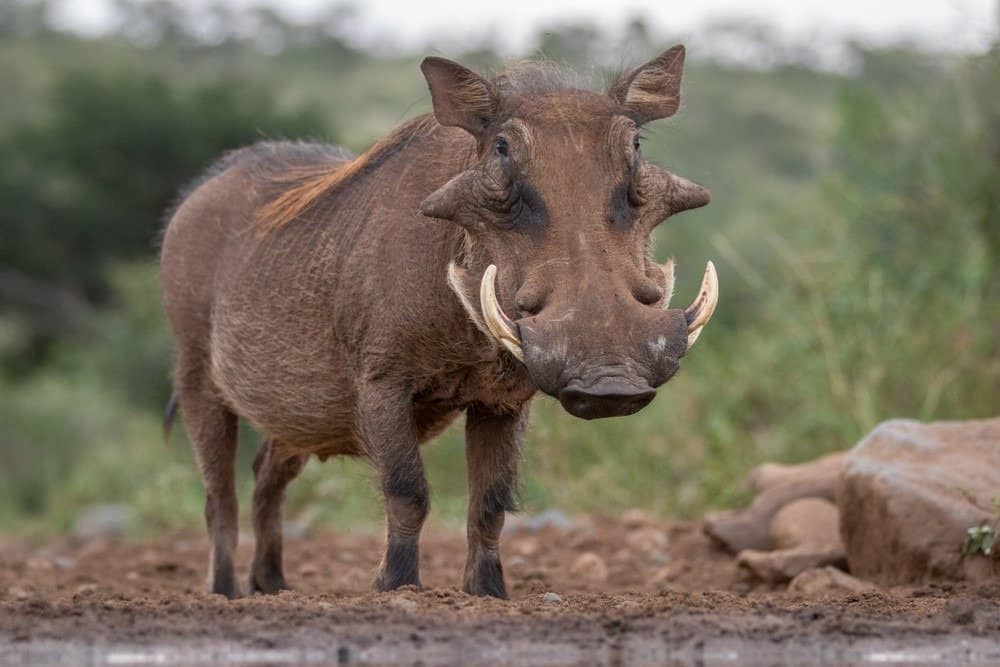
1. Common Warthog (Phacochoerus africanus)
The Common Warthog is the most widespread of all types of Warthog, found across much of sub-Saharan Africa including Kenya, Tanzania, Botswana, and South Africa. It is easily recognized by its large head, curved tusks, and facial “warts” that are actually protective pads.
This species has a coarse brown-gray coat with a sparse mane along its back. Common Warthogs are highly adaptable and can survive in grasslands, savannahs, and even semi-arid regions. They are diurnal animals, meaning they are most active during the day.
One of their most famous behaviors is feeding while kneeling on their front legs. This helps them graze short grasses or dig for roots and bulbs using their snouts. They are also strong diggers, often using abandoned burrows for shelter.
Ecologically, Common Warthogs help maintain soil health and vegetation balance while serving as prey for lions, leopards, and hyenas.
2. Desert Warthog (Phacochoerus aethiopicus)
The Desert Warthog is one of the rarer types of Warthog, adapted specifically to arid environments in parts of East Africa such as Somalia and Ethiopia. Unlike the Common Warthog, it is more specialized for dry climates and sandy soils.
This species tends to have a lighter body structure and less prominent facial “warts.” Its tusks are still well-developed but slightly different in curvature compared to its common relative.
Desert Warthogs rely heavily on underground roots, tubers, and drought-resistant vegetation. They are excellent diggers, allowing them to survive in areas where surface water is extremely limited.
Because of their habitat specialization, they are less widespread and more vulnerable to environmental changes compared to other warthog types.
3. Maasai Warthog (Regional Population of Common Warthog)
The Maasai Warthog is a well-known regional form of the types of Warthog, primarily found in Kenya and northern Tanzania. It is named after the Maasai ecosystem, where it thrives in open savannah landscapes.
This population is slightly larger than some other regional forms and has more pronounced facial features. The tusks are strong and curved, used for both defense and digging.
Maasai Warthogs live in small family groups and are often seen near water sources. They are highly alert animals, relying on speed and burrow retreat to escape predators.
They play a key role in savannah ecosystems by recycling nutrients through digging and feeding behavior.
4. Eritrean Warthog (Phacochoerus africanus aeliani)
The Eritrean Warthog is one of the northeastern African types of Warthog, found in Eritrea, Sudan, and parts of Ethiopia. It is adapted to dry savannah and scrubland environments.
This subspecies is slightly smaller than other warthogs and has a lighter coloration, which helps with heat regulation in hot climates. Its facial pads are well-developed to protect against fighting injuries.
Eritrean Warthogs are opportunistic feeders, consuming grasses, roots, berries, and occasionally insects. Their diet flexibility allows them to survive in harsh, unpredictable environments.
They are typically shy and rely heavily on burrows for shelter during the hottest parts of the day.
5. Southern Warthog (Phacochoerus africanus sundevallii)
The Southern Warthog is one of the most stable types of Warthog found in southern Africa, including Botswana, Namibia, Zimbabwe, and South Africa. It is well adapted to both savannah and woodland habitats.
This population is known for its strong tusks and robust body structure. It has a thick skin that provides protection from predators and environmental challenges.
Southern Warthogs often live in family groups and use abandoned burrows of animals like aardvarks for shelter. They are highly alert and rely on quick sprinting and underground escape strategies.
Ecologically, they are important soil engineers, helping to aerate ground and support plant growth through their digging behavior.
6. Northern Common Warthog (Phacochoerus africanus africanus)
The Northern Common Warthog is one of the most widespread types of Warthog across East and Central Africa, including regions of Kenya, Uganda, South Sudan, and Ethiopia. It represents the typical form of the Common Warthog but is adapted to slightly more seasonal savannah environments where rainfall can vary significantly throughout the year.
This warthog has a coarse, bristly coat that ranges from grayish-brown to darker tones depending on the habitat. Its most recognizable features include two pairs of facial “warts,” which are actually thickened skin pads that protect the face during fights. The upper tusks curve upward, while the lower tusks are sharper and used for defense and digging.
Northern Common Warthogs are highly social and usually live in small family groups called sounders. These groups consist of females and their young, while males are often more solitary except during mating periods. They rely heavily on abandoned burrows for shelter, often entering tail-first to quickly escape predators such as lions and hyenas.
Their diet includes grasses, roots, berries, and occasionally bark. During dry seasons, they rely more on underground food sources, demonstrating their impressive digging ability. This behavior also helps aerate the soil, making them important ecological engineers in savannah systems.
7. East African Warthog Population
The East African Warthog population is one of the most ecologically significant types of Warthog, commonly found across Kenya, Tanzania, and parts of Uganda. It is closely associated with the open plains of the Serengeti and Masai Mara ecosystems.
These warthogs are highly adaptable grazers and are often seen alongside large herbivore migrations such as wildebeest and zebras. Their survival strategy depends on mobility, vigilance, and quick access to burrows when threatened.
Physically, East African Warthogs are robust with strong forelimbs used for digging. Their facial pads are well-developed, providing protection during aggressive encounters, especially among males competing for territory or mates.
They play a key role in maintaining grassland health by grazing selectively and disturbing soil layers while searching for food. This contributes to seed dispersal and nutrient cycling across ecosystems.
8. Central African Warthog Population
The Central African Warthog population represents one of the more forest-edge adapted types of Warthog, found in regions such as the Democratic Republic of Congo, Cameroon, and the Central African Republic. Unlike open savannah populations, these warthogs often inhabit woodland-savannah mosaics.
This population tends to be slightly more secretive due to denser vegetation and higher predator pressure. They rely heavily on thick cover for concealment and often move cautiously between feeding areas and shelter.
Their diet is more varied compared to savannah populations and may include roots, tubers, fallen fruits, and insects. This dietary flexibility allows them to survive in environments where grass availability is inconsistent.
Central African Warthogs are less studied than other populations, but they are believed to have slightly smaller group sizes and more localized home ranges.
9. West African Warthog Population
The West African Warthog population is one of the least studied but ecologically important types of Warthog, found in countries such as Ghana, Nigeria, and Senegal. It inhabits savannah woodlands and open grassland regions that are increasingly fragmented by human activity.
These warthogs are typically smaller in size compared to East African populations, possibly as an adaptation to hotter and more resource-limited environments. Their coloration is often lighter, helping reflect heat in dry climates.
They are highly adaptable feeders and may consume a broader range of vegetation types, including agricultural crops in some areas, which sometimes brings them into conflict with farmers.
Despite these challenges, West African Warthogs remain important for ecosystem balance by contributing to soil turnover and serving as prey for large carnivores where populations still exist.
10. Sahel Warthog Variant Group
The Sahel Warthog Variant Group represents a transitional set of types of Warthog found along the Sahel region, which stretches across Africa just south of the Sahara Desert. This region includes parts of Mali, Niger, Chad, and Sudan.
These warthogs are adapted to extremely dry and seasonal environments where rainfall is unpredictable. Their bodies are generally leaner, and they rely heavily on underground food sources such as roots and tubers.
They often travel longer distances between water and food sources compared to more stable populations. Burrow use is critical for survival, providing shelter from extreme heat and predators.
Sahel Warthogs are highly resilient and demonstrate strong survival adaptations that allow them to persist in one of the harshest ecological zones in Africa.
11. Somali Desert Warthog Population
The Somali Desert Warthog population is one of the most heat-adapted types of Warthog, found in Somalia and parts of eastern Ethiopia. This group lives in extremely arid environments where temperatures are high and water sources are limited. Their survival in such harsh conditions makes them one of the most specialized warthog populations in Africa.
Physically, these warthogs tend to have a lighter coat color compared to savannah populations, which helps reflect sunlight and reduce heat absorption. Their bodies are also slightly leaner, allowing them to conserve energy in environments where food is scarce. Their facial pads and tusks are still well-developed, providing protection and defense when needed.
Somali Desert Warthogs are highly dependent on underground food sources such as roots, tubers, and bulbs. They use their strong snouts and forelimbs to dig efficiently in hard, dry soil. Water is rarely available on the surface, so they obtain most of their moisture from food.
Behaviorally, they are cautious and often active during cooler parts of the day, such as early morning or late afternoon. Burrows play a critical role in their survival, offering protection from heat and predators.
12. Ethiopian Highland Warthog Group
The Ethiopian Highland Warthog Group represents one of the more unique types of Warthog, adapted to elevated terrains and cooler climates in Ethiopia’s highlands. This environment is very different from typical African savannahs, featuring rocky landscapes, grass patches, and cooler temperatures.
These warthogs are typically more robust and stocky, which helps them conserve heat in cooler high-altitude environments. Their feeding behavior is also more varied, including grasses, roots, and occasionally shrubs found in mountainous terrain.
Unlike lowland populations, Ethiopian Highland Warthogs often move across uneven and rocky terrain, requiring strong limbs and stable footing. Their movement is slower but more deliberate compared to open-savannah populations.
They are less studied but are believed to form smaller groups, possibly due to limited space and food distribution in highland ecosystems.
13. Kenyan Savanna Warthog Population
The Kenyan Savanna Warthog is one of the most visible types of Warthog, commonly seen in iconic parks such as the Masai Mara and Amboseli. These warthogs thrive in open grasslands where visibility is high and predator encounters are frequent.
They are highly social and often live in family groups. Their behavior is strongly influenced by predator presence, leading them to rely heavily on vigilance and rapid escape into burrows when threatened.
Physically, they have strong forelimbs for digging and well-developed tusks used for both defense and competition among males. Their feeding habits focus mainly on grasses, but they also consume roots and small plants.
This population plays an important ecological role in savannah systems by disturbing soil, controlling vegetation, and supporting predator diets.
14. Tanzanian Bushland Warthog Group
The Tanzanian Bushland Warthog Group is one of the more adaptable types of Warthog, found in mixed habitats that include both open savannah and dense bushland areas. This flexibility allows them to survive in changing environmental conditions.
They are slightly more secretive than open-plains populations, often using thicker vegetation for cover during rest periods. Their diet is diverse, including grasses, roots, fruits, and occasionally insects.
These warthogs are highly alert and rely on a combination of speed and burrow use to avoid predators. Their home ranges can overlap with other herbivores, especially during dry seasons when resources become limited.
Ecologically, they contribute to both grassland maintenance and bushland soil turnover, making them important for multiple habitat types.
15. Zambian Lowland Warthog Population
The Zambian Lowland Warthog Population represents the final group in our list of types of Warthog. Found in Zambia’s lowland savannahs and floodplain ecosystems, this group is well adapted to seasonal wetlands and grass-rich environments.
These warthogs often experience seasonal flooding, which influences their movement patterns. During wet seasons, they spread out across floodplains, while in dry seasons they concentrate near permanent water sources.
They are strong diggers and feed on a wide variety of vegetation, including grasses and underground plant parts. Their ability to adapt to changing water levels is key to their survival in this dynamic environment.
Zambian Lowland Warthogs also play an important role in maintaining wetland ecosystems by disturbing soil and supporting nutrient flow.
Conclusion
The exploration of the types of Warthog reveals just how adaptable and resilient these fascinating African animals truly are. From desert-adapted populations in Somalia to savannah dwellers in Kenya and floodplain survivors in Zambia, warthogs have successfully evolved to thrive in a wide range of environments across the continent.
Although they may look rugged and simple at first glance, warthogs play a crucial ecological role. Their constant digging helps aerate soil, their feeding behavior supports plant regeneration, and their presence provides a vital food source for Africa’s top predators such as lions, leopards, and hyenas. In this way, they are an essential link in maintaining healthy savannah ecosystems.
What makes warthogs especially remarkable is their survival strategy. Instead of relying on strength alone, they depend on speed, awareness, group behavior, and underground burrows for protection. This combination of traits allows them to survive in some of the harshest and most predator-rich environments in the world.
However, like many wild species, warthogs face increasing pressure from habitat loss, human expansion, and environmental change. Protecting their natural habitats is essential not only for their survival but also for the stability of the ecosystems they support.
Ultimately, the study of the types of Warthog gives us a deeper understanding of Africa’s wildlife complexity and resilience—but how many more survival secrets might these tough animals still hold in the wild?
50+ Frequently Asked Questions (FAQ) About Warthogs
1. What is a warthog?
A warthog is a wild member of the pig family (Suidae) native to Africa. It is easily recognized by its large head, curved tusks, and facial “warts,” which are actually protective skin pads.
2. How many types of warthogs are there?
There are two main species: the Common Warthog and the Desert Warthog. Within these, there are multiple regional populations and subspecies, bringing the total recognized types to around 10–15 depending on classification.
3. Where do warthogs live?
Warthogs live across sub-Saharan Africa, including savannahs, grasslands, woodlands, semi-deserts, and even some mountainous regions in Ethiopia.
4. Why do warthogs have “warts” on their faces?
The so-called “warts” are thick skin pads that protect their faces during fights, especially when males clash during mating competition.
5. What do warthogs eat?
Warthogs are omnivores but mostly herbivores. They eat grasses, roots, tubers, berries, bark, and sometimes insects or eggs when available.
6. Are warthogs dangerous to humans?
Warthogs are not typically aggressive toward humans, but they can become dangerous if threatened or cornered, especially males with large tusks.
7. How fast can a warthog run?
Warthogs can run up to 48 km/h (30 mph), which helps them escape predators quickly despite their stocky build.
8. How long do warthogs live?
In the wild, warthogs typically live between 10 and 15 years, depending on predation and environmental conditions.
9. What predators hunt warthogs?
Lions, leopards, hyenas, crocodiles, and wild dogs are the main predators of warthogs in Africa.
10. Do warthogs live in groups?
Yes, females and young live in groups called sounders, while males are often solitary except during mating season.
11. Why do warthogs kneel when eating?
Warthogs kneel on their front legs to reach short grasses and dig more efficiently for roots and tubers.
12. Do warthogs dig burrows?
No, they usually use abandoned burrows made by other animals like aardvarks instead of digging their own.
13. Why do warthogs enter burrows backwards?
Entering backwards allows them to quickly defend themselves with their tusks if a predator tries to attack from behind.
14. Are warthogs aggressive?
They are generally peaceful but can become aggressive when defending territory, young, or during mating competition.
15. What is the difference between Common and Desert Warthog?
The Common Warthog is more widespread and adaptable, while the Desert Warthog is specialized for arid environments and is more limited in range.
16. How do warthogs survive droughts?
They dig for underground food like roots and tubers, which contain moisture, helping them survive long dry periods.
17. Do warthogs migrate?
No, warthogs do not migrate long distances, but they may move locally in search of food and water.
18. Are warthogs nocturnal?
Warthogs are mostly diurnal (active during the day) but may rest during hot midday hours and become active in cooler periods.
19. How many babies do warthogs have?
A female warthog usually gives birth to 2–4 piglets after a gestation period of about 5–6 months.
20. Do warthogs protect their babies?
Yes, mothers are very protective and often keep piglets hidden in burrows for safety during early life stages.
21. Can warthogs swim?
Yes, warthogs can swim when necessary, especially during river crossings or flooding events.
22. Why do warthogs wag their tails?
They often raise and wag their tails while running, possibly as a visual signal to keep group members together.
23. Are warthogs smart animals?
Warthogs are not highly intelligent compared to primates, but they have strong survival instincts and good memory of safe burrows.
24. Do warthogs fight each other?
Yes, males fight using tusks to establish dominance and win mating rights.
25. How do warthogs communicate?
They use grunts, snorts, body posture, and scent marking to communicate within groups.
26. What makes warthogs important in ecosystems?
They help aerate soil, control vegetation, and serve as prey for large carnivores, supporting ecological balance.
27. Do warthogs have good eyesight?
No, warthogs have relatively poor eyesight but compensate with strong hearing and smell.
28. Why do warthogs roll in mud?
Mud helps protect their skin from sunburn, parasites, and insect bites.
29. Can warthogs be domesticated?
No, warthogs remain wild animals and do not adapt well to domestication.
30. What is a group of warthogs called?
A group of warthogs is called a sounder.
31. Do warthogs sleep at night?
Yes, they sleep in burrows at night for protection from predators.
32. How do warthogs avoid predators?
They rely on speed, burrows, alertness, and group behavior to escape danger.
33. Why do warthogs have tusks?
Tusks are used for defense, fighting, and digging for food.
34. Are warthogs related to pigs?
Yes, warthogs are members of the pig family (Suidae).
35. Do warthogs lose their tusks?
No, tusks grow continuously throughout their lives.
36. How do warthogs find food?
They use their strong sense of smell to locate roots and edible plants underground.
37. Can warthogs live in forests?
They prefer open savannahs but can survive in woodland and bushy areas.
38. Why are warthogs important to tourism?
They are commonly seen in African safaris and are popular among wildlife photographers.
39. Do warthogs fight lions?
They avoid lions but may defend themselves aggressively if cornered.
40. What is the biggest threat to warthogs?
Habitat loss, hunting, and predation are the main threats.
41. How do warthogs adapt to heat?
They rest in shade or burrows and use mud to regulate body temperature.
42. Do warthogs drink water daily?
Yes, but they can survive for some time by obtaining moisture from food.
43. Are warthogs fast learners?
They learn quickly about predator threats and safe burrow locations.
44. Why do warthogs have sparse hair?
Thin hair helps reduce overheating in hot African climates.
45. Do warthogs hibernate?
No, they remain active year-round.
46. Can warthogs climb?
No, they are ground-dwelling animals and do not climb trees.
47. What is the lifespan of a warthog in captivity?
They may live slightly longer in captivity, up to 18–20 years with proper care.
48. Do warthogs migrate with other animals?
They may follow grazing opportunities but do not participate in large migrations like wildebeest.
49. Why are warthogs called “wild pigs”?
Because they belong to the pig family but live entirely in the wild.
50. How do warthogs help the soil?
Their digging aerates soil, improves nutrient mixing, and supports plant growth.
51. What would happen if warthogs disappeared?
Loss of warthogs would disrupt predator diets, reduce soil health, and negatively impact savannah ecosystems.
Read more: