

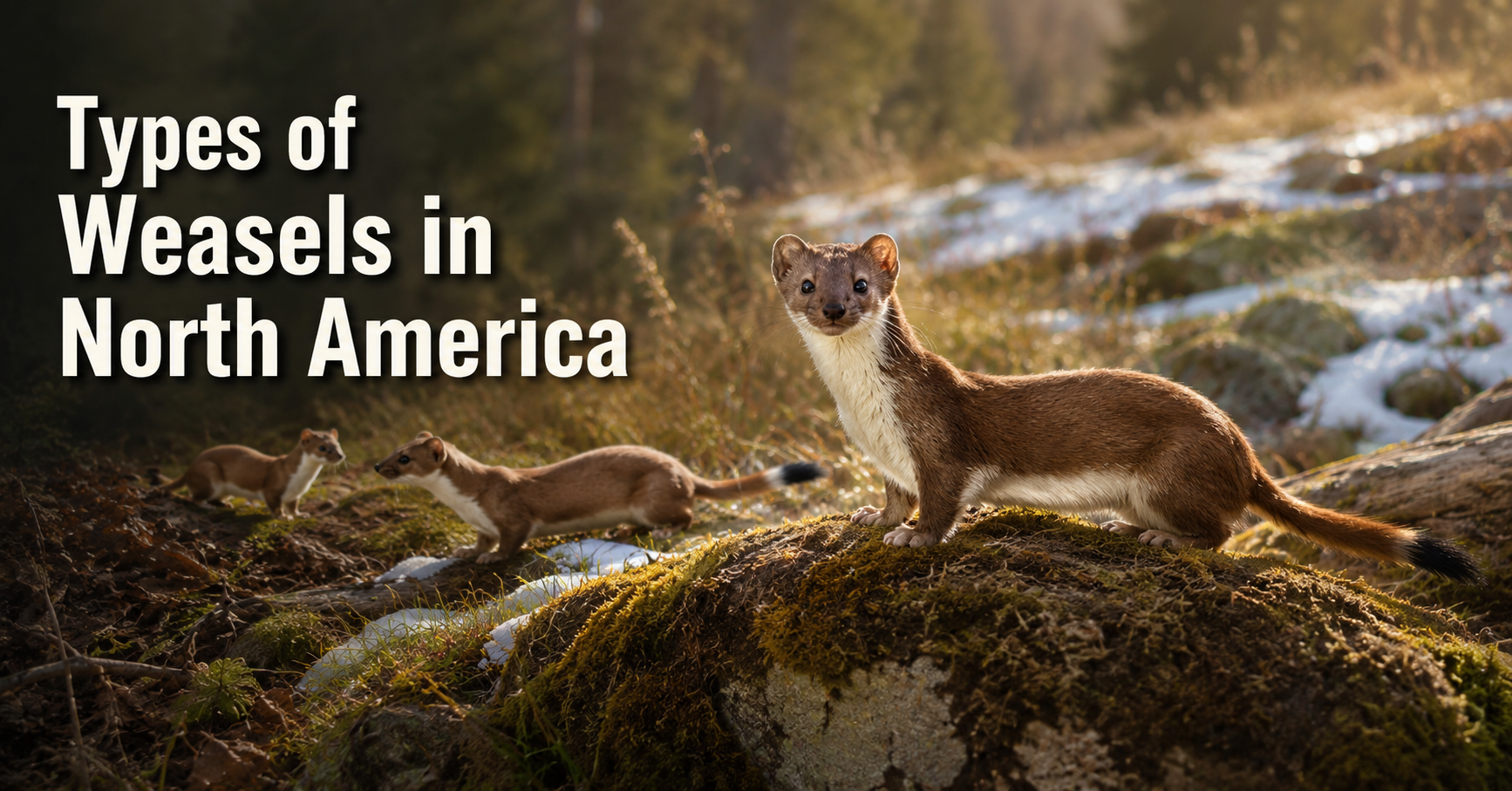
The different types of weasels in North America can be difficult to identify because most have slender bodies, short legs, brown summer coats, and fast bounding movements. Older field guides usually list three species: the least weasel, short-tailed weasel, and long-tailed weasel. Modern genetic research, however, divides the traditional short-tailed weasel or ermine into three distinct species.
Using this updated classification, five living weasel species occur in North America: the least weasel, American ermine, Beringian ermine, Haida ermine, and long-tailed weasel. This guide explains their appearances, ranges, habitats, diets, seasonal coats, and most useful identification features.
What Are the Main Types of Weasels in North America?
North America has five living species that are commonly classified as true weasels. Three belong to the ermine complex and were formerly combined under the name short-tailed weasel. The easiest field marks are tail length, the presence or absence of a black tail tip, body size, winter coat color, and geographic location.
| Common Name | Scientific Name | Primary North American Range | Best Identification Feature |
|---|---|---|---|
| Least weasel | Mustela nivalis | Alaska, Canada, and parts of the northern United States | Very small with no black tail tip |
| American ermine | Mustela richardsonii | Most of Canada and the northern United States | Short black-tipped tail and widespread continental range |
| Beringian ermine | Mustela erminea | Alaska, western Yukon, Arctic Canada, and Greenland | Black-tipped tail and far northern distribution |
| Haida ermine | Mustela haidarum | Haida Gwaii and islands of southeastern Alaska | Restricted Pacific Northwest island range |
| Long-tailed weasel | Neogale frenata | Southern Canada through the United States, Mexico, and Central America | Long tail with a black tip |
1. Least Weasel
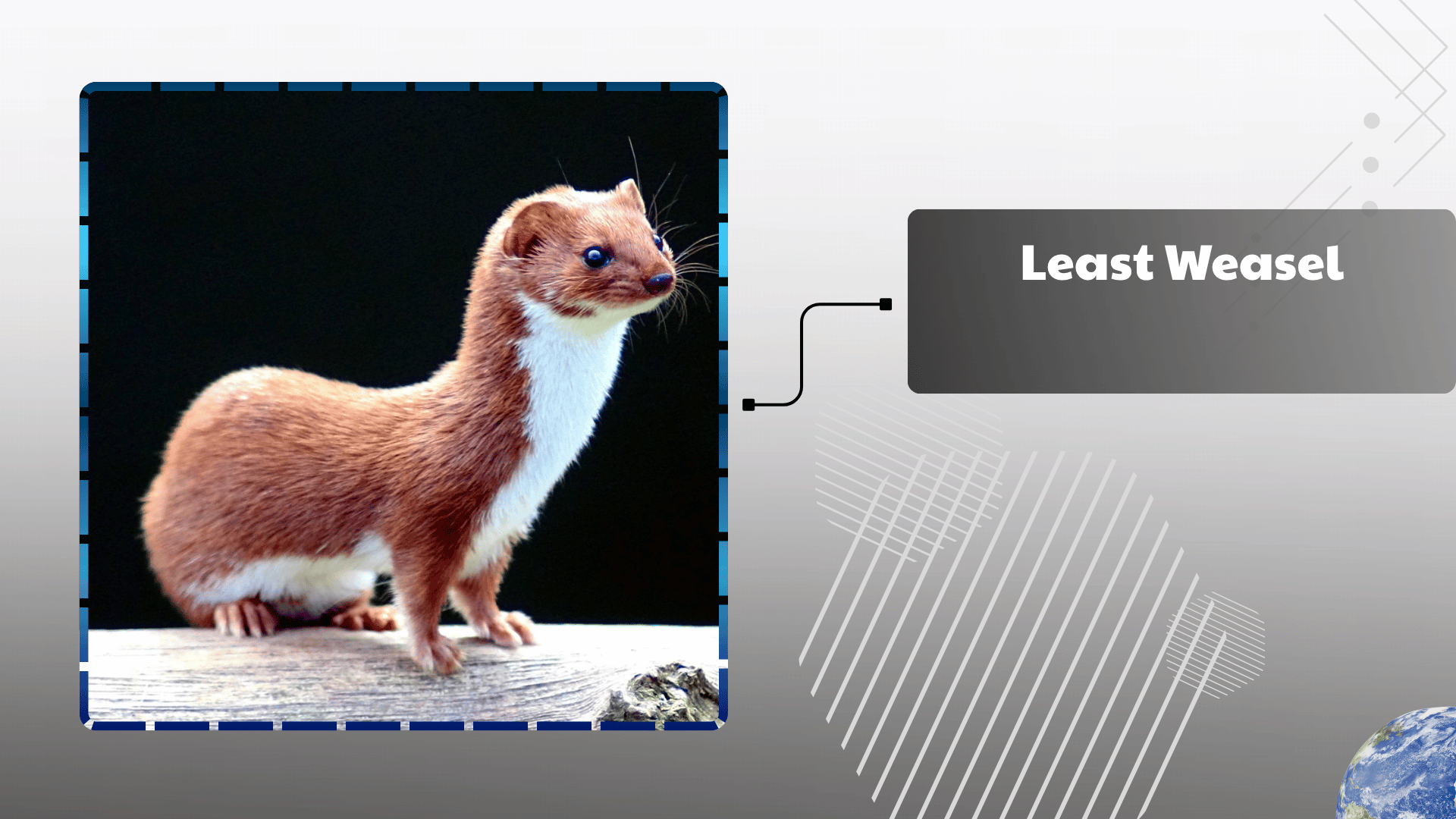
The least weasel, Mustela nivalis, is the smallest of the types of weasels in North America and one of the smallest mammalian carnivores in the world. Adults vary considerably by sex and region, but many are approximately 6 to 10 inches long, including the short tail. Males are noticeably larger than females.
During summer, a least weasel normally has brown fur across its head, back, sides, and tail. The chin, throat, chest, and belly are white or cream. Northern individuals may turn completely white during winter, but the tail remains white rather than developing the bold black tip seen on ermines.
The absence of a black tail tip is the most useful field mark. The least weasel’s tail is also proportionally shorter than the tails of other North American weasels. However, size can be difficult to judge when the animal is moving quickly or when there is no nearby object for comparison.
Least weasels occur across Alaska, much of Canada, and scattered parts of the northern United States. Their distribution can be local and uneven, so they may be absent from apparently suitable landscapes. They inhabit grasslands, marsh edges, tundra, agricultural fields, brushy areas, open forests, and places with abundant small rodents.
Voles and mice dominate the diet. The least weasel’s narrow body allows it to enter tiny tunnels that larger predators cannot access. It may also eat shrews, young rabbits, small birds, eggs, insects, and other appropriately sized prey.
Least weasels have extremely active metabolisms and must hunt frequently. They search beneath vegetation, snow, logs, and rocks, often using the burrow systems of their prey. When food is abundant, an individual may cache extra prey for later use.
Although least weasels can be beneficial rodent predators, they may occasionally enter poultry areas. Preventing access by sealing very small openings is more effective and humane than attempting to handle or relocate a wild weasel.
2. American Ermine
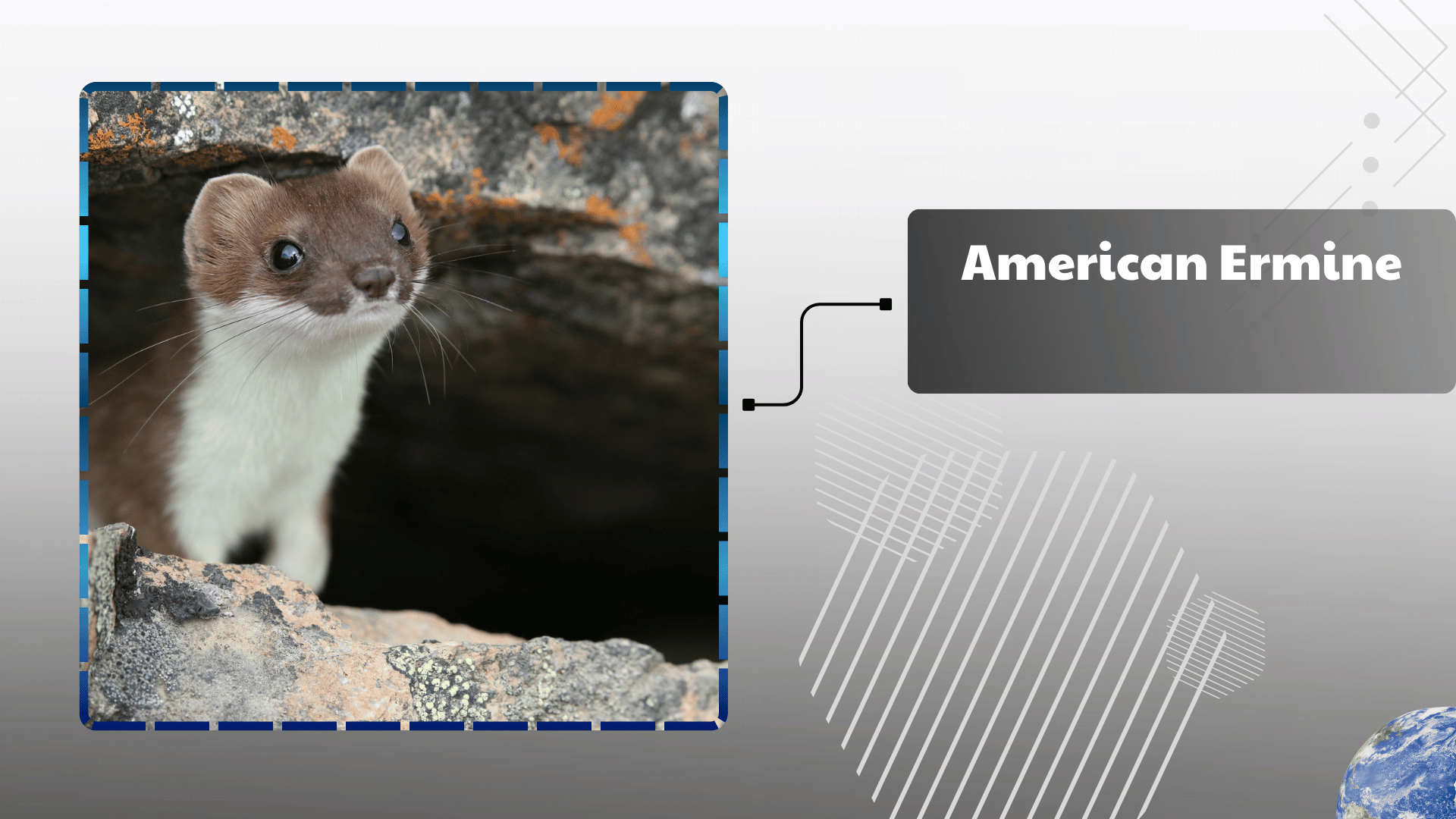
The American ermine, Mustela richardsonii, is the widespread North American animal historically called the short-tailed weasel, ermine, or stoat. It was formerly grouped with the Eurasian species Mustela erminea, but genetic evidence now supports its recognition as a separate species.
American ermines have elongated bodies, short legs, narrow heads, rounded ears, and tails that end in a permanent black tip. They are larger than most least weasels but generally smaller and shorter-tailed than long-tailed weasels. Adult size varies by sex, latitude, food supply, and regional population.
The summer coat is usually rich brown above and white or cream below. In cold areas, the coat becomes white during winter, leaving only the tail tip black. Farther south or at lower elevations, an individual may remain brown, turn partly white, or retain patches of both colors.
This species occupies much of Canada and extends into the northern and mountainous United States. It can be found in coniferous forest, mixed woodland, willow thickets, wetlands, meadows, agricultural edges, alpine areas, and rocky landscapes. Dense cover and plentiful small mammals are more important than any single vegetation type.
American ermines eat voles, mice, shrews, rats, chipmunks, young rabbits, and other small mammals. Birds, eggs, amphibians, insects, and carrion may supplement the diet. They can kill animals larger than themselves by using speed, agility, and a targeted bite.
These weasels are generally solitary. Individuals mark their ranges with scent and use shelters beneath roots, inside rock piles, in hollow logs, or within abandoned rodent burrows. Their activity can occur during either day or night.
A black tail tip separates an American ermine from a least weasel. Distinguishing it from the long-tailed weasel requires closer attention to proportions: the American ermine has a shorter tail relative to its head and body. Separating it visually from other ermine species may be impossible without location data or genetic analysis.
3. Beringian Ermine
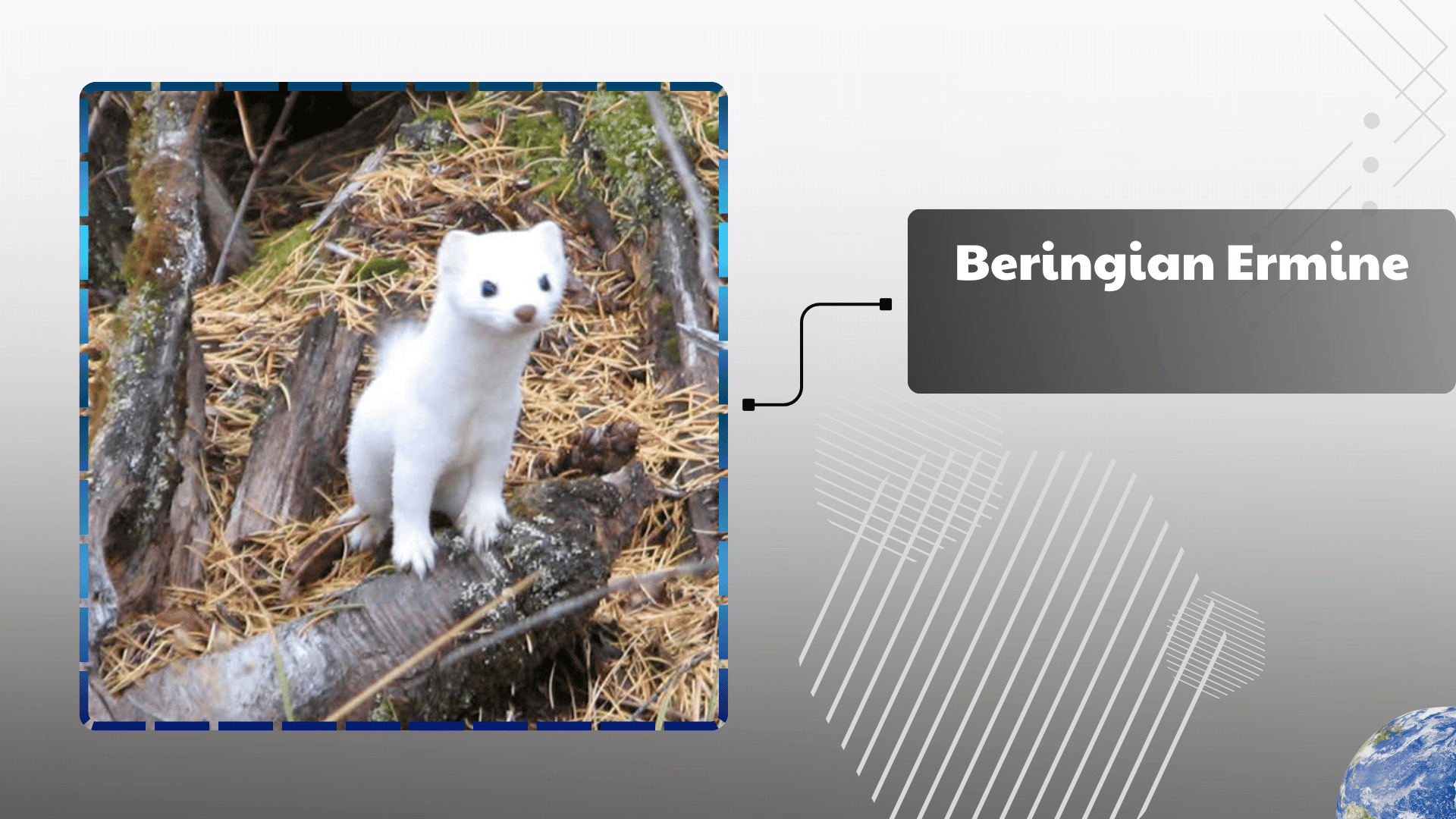
The Beringian ermine, Mustela erminea, represents the North American portion of a species that is primarily distributed across Eurasia. It may also be called the Eurasian ermine or stoat. Genetic research showed that many North American ermines belong to Mustela richardsonii, while populations associated with Beringia remain within Mustela erminea.
In North America, the Beringian ermine occurs primarily in Alaska, western Yukon, portions of Arctic Canada, Greenland, and some northern islands. Exact range boundaries can be complicated because older distribution maps treated most ermines as a single species.
The animal closely resembles the American ermine. It has a cylindrical body, short legs, small rounded ears, a pointed face, and a relatively short tail with a black terminal section. Summer fur is typically brown above and pale below. Most individuals living in snowy northern environments develop white winter coats.
Physical differences between Beringian and American ermines are subtle and inconsistent in ordinary field observations. Researchers use geographic records, skull characteristics, and genetic information to classify specimens accurately. A photograph alone may establish that an animal is an ermine without proving which ermine species it represents.
Beringian ermines occupy tundra, boreal forest, willow thickets, rocky slopes, wetlands, river corridors, and alpine areas. They often hunt along habitat edges or in places where snow, rocks, roots, and vegetation conceal networks of small-mammal tunnels.
Lemmings, voles, mice, shrews, pikas, and other small mammals are important prey. Birds, eggs, insects, and young rabbits may also be taken. The ability to follow prey beneath snow makes the ermine an effective winter hunter.
Within its native range, the Beringian ermine is part of natural northern food webs. It helps regulate rodent populations and may be hunted by foxes, raptors, owls, and larger carnivores. Local conditions such as snow cover, prey cycles, habitat disturbance, and climate change can influence its abundance.
4. Haida Ermine
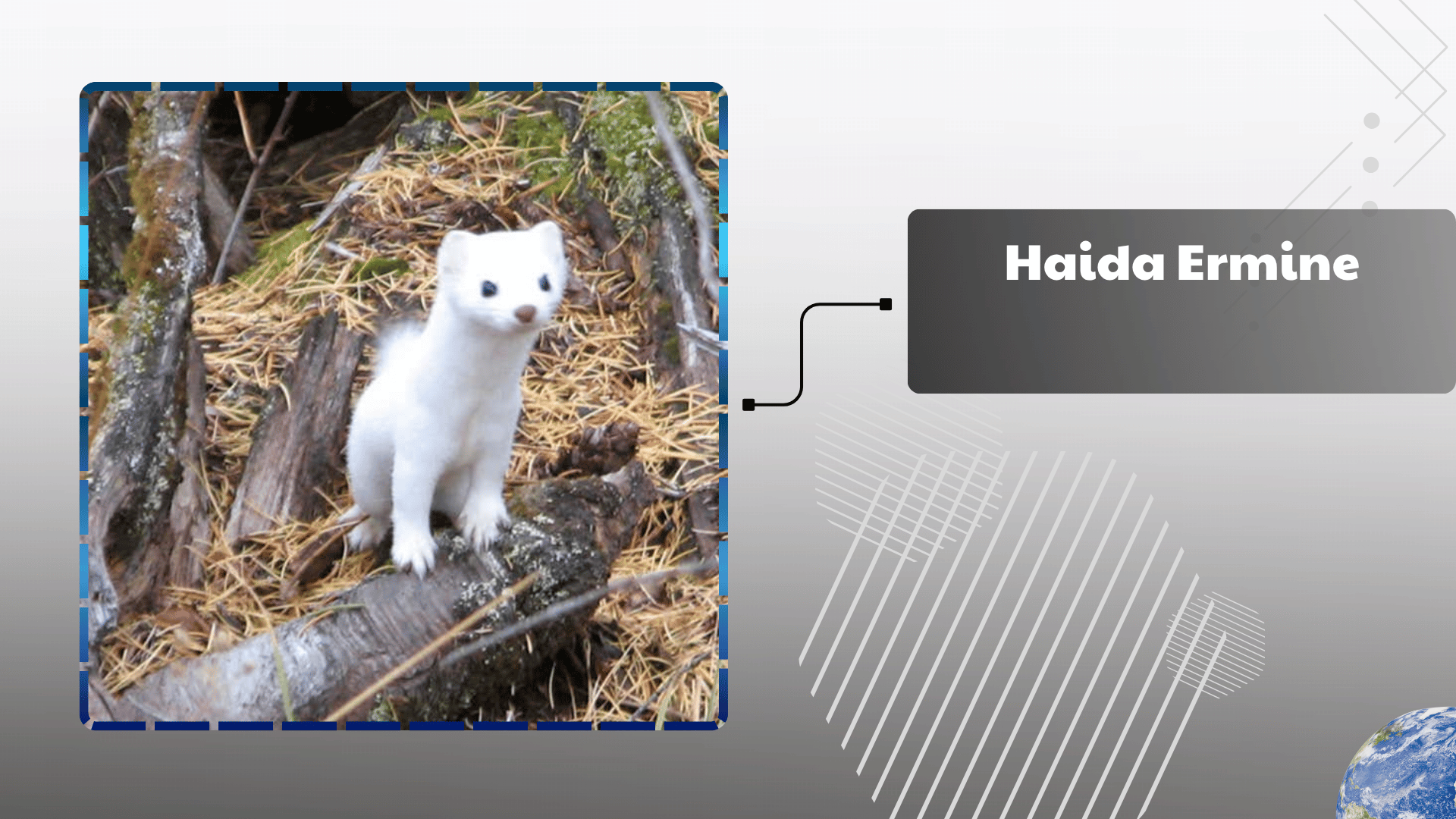
The Haida ermine, Mustela haidarum, is the most geographically restricted North American weasel. It lives on islands along the Pacific Northwest coast, including parts of Haida Gwaii in British Columbia and the Alexander Archipelago of southeastern Alaska.
For many years, the Haida ermine was classified as a regional form of the short-tailed weasel. Genetic and morphological studies now support its recognition as a separate species with an unusual evolutionary history. It appears to preserve ancestry connected to both Beringian and American ermine lineages.
The Haida ermine has the familiar slender body, short limbs, narrow face, rounded ears, and black-tipped tail of other ermines. Its summer coat is brown above and cream to white below. The winter coat may become white, although seasonal appearance depends on local snow conditions, elevation, and genetics.
Visual identification is extremely difficult because coat color and body proportions overlap with those of related species. Geographic location is therefore the strongest practical clue. A short-tailed, black-tipped weasel observed on an island within the known Haida ermine range may belong to this species, but expert examination may still be necessary.
Haida ermines inhabit coastal temperate rainforest, wet forest edges, stream corridors, rocky areas, shorelines, and dense ground vegetation. They use crevices, fallen timber, roots, and small-mammal burrows for shelter and hunting access.
Small mammals make up much of their diet, while birds and other small prey may be taken opportunistically. The ecology of this elusive island species remains less thoroughly documented than that of widespread continental weasels.
A restricted island distribution makes the Haida ermine more vulnerable to local environmental change. Old-growth forest loss, habitat fragmentation, introduced diseases, changes in prey populations, and other island disturbances may have disproportionate effects. Wildlife watchers should report credible sightings without chasing, feeding, or attempting to trap the animal.
5. Long-Tailed Weasel
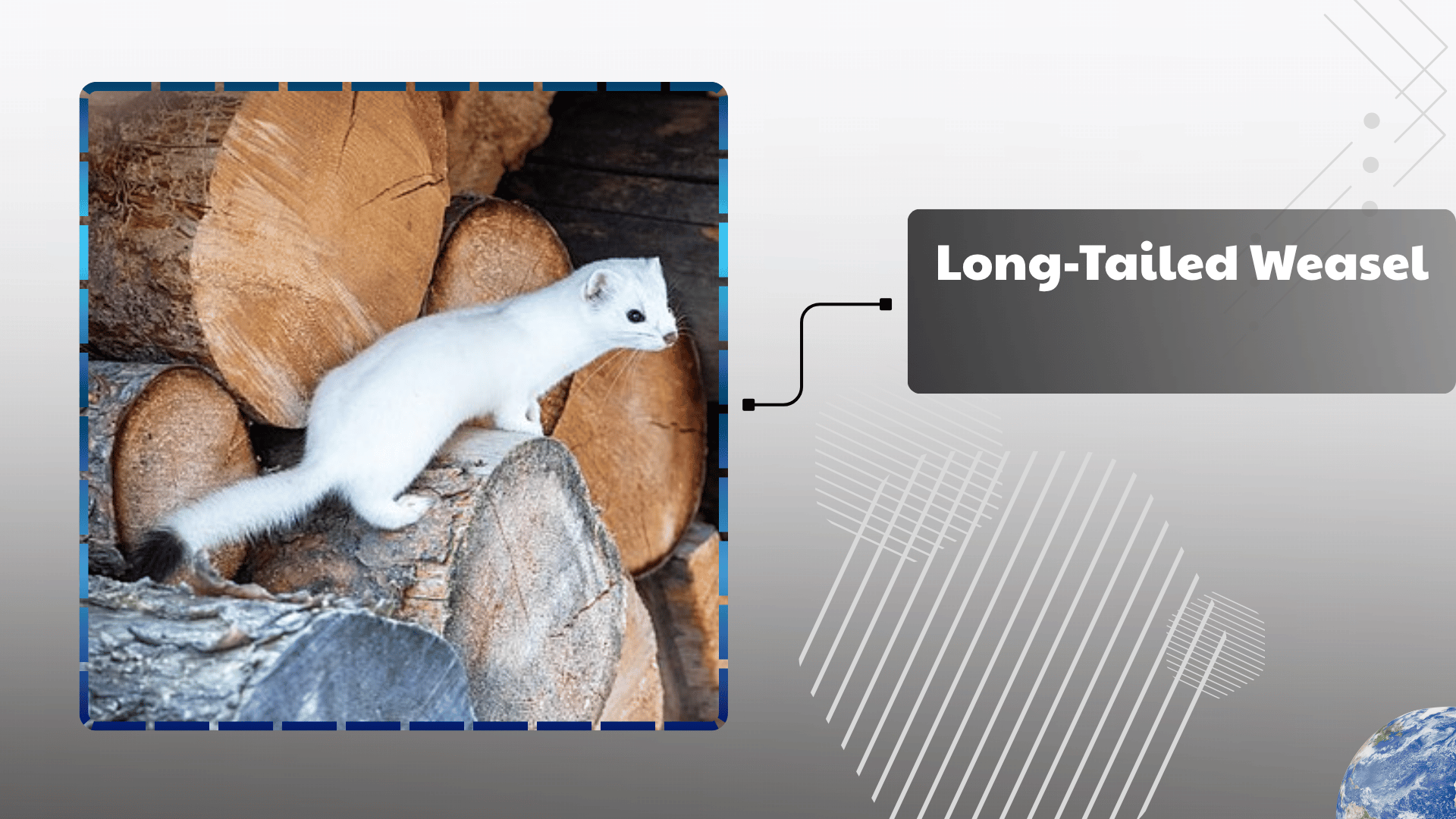
The long-tailed weasel, Neogale frenata, has the broadest north-to-south distribution of any weasel in the Americas. It occurs from southern Canada through most of the United States and Mexico into Central America and northern South America. Older sources commonly use the scientific name Mustela frenata.
This species is generally the largest of the five North American weasels covered here. Adults commonly measure approximately 11 to 22 inches from nose to tail, although sex and region produce considerable variation. Males can be substantially larger than females.
The long-tailed weasel is brown, reddish brown, or cinnamon above and pale cream to yellowish below. Its tail has a clear black tip. Northern populations may become white in winter, while animals in warmer climates remain brown throughout the year. Some southern populations have pale facial markings.
As its name suggests, tail length is the most helpful identification characteristic. The tail commonly approaches half the combined length of the head and body and looks noticeably longer than an ermine’s tail. Because both species have black tail tips, observers should compare proportions rather than color alone.
Long-tailed weasels inhabit forests, open meadows, marshes, brushlands, agricultural edges, mountain areas, desert waterways, and suburban green spaces. They often travel along fencerows, drainage ditches, forest edges, stream banks, and other narrow corridors with protective cover.
Voles, mice, rats, pocket gophers, ground squirrels, chipmunks, and rabbits are common prey. Long-tailed weasels may also catch birds, eggs, reptiles, amphibians, and insects. Their flexible bodies allow them to enter burrows, while their larger size helps them overpower relatively substantial prey.
Long-tailed weasels are fast, alert, and usually solitary. They may be active during daylight or at night, depending on weather, prey activity, and disturbance. Like other weasels, they use scent marks and may store surplus prey in protected locations.
How Are North American Weasels Classified?
True weasels belong to the family Mustelidae, a diverse group that also includes ferrets, mink, martens, fishers, badgers, wolverines, and otters. However, not every member of the weasel family is a true weasel in the narrow sense used in this guide.
| Taxonomic Rank | Classification |
|---|---|
| Kingdom | Animalia |
| Phylum | Chordata |
| Class | Mammalia |
| Order | Carnivora |
| Family | Mustelidae |
| Main Genera in This Guide | Mustela and Neogale |
The least weasel and the three ermine species remain in the genus Mustela. The long-tailed weasel is now commonly placed in Neogale with the American mink and certain South American weasels.
This article uses the modern five-species treatment supported by recent mammal research. Older field guides often combine the American, Beringian, and Haida ermines under “short-tailed weasel,” producing a total of three North American weasels instead of five.
Where Do North American Weasels Live?
Collectively, North American weasels occupy environments from Arctic tundra to Central American forests. Their distributions are closely connected to prey abundance, protective cover, climate, elevation, and geographic history.
| Habitat | Weasels Commonly Associated With It |
|---|---|
| Arctic tundra | Least weasel and Beringian ermine |
| Boreal forest | Least weasel, American ermine, and Beringian ermine |
| Temperate forest | American ermine, Haida ermine, and long-tailed weasel |
| Grassland and farmland | Least weasel, American ermine, and long-tailed weasel |
| Wetlands and stream edges | All five species where their ranges permit |
| Pacific coastal islands | Haida ermine |
| Mexico and Central America | Long-tailed weasel |
Weasels generally need dense ground cover and healthy populations of small mammals. Brush piles, rock walls, hollow logs, tree roots, grassy edges, and abandoned burrows provide shelter and hunting opportunities.
How to Identify Different Types of Weasels
- Check the tail tip: Least weasels lack the bold black tail tip found on ermines and long-tailed weasels.
- Compare tail length: Least weasels have very short tails, ermines have moderately short tails, and long-tailed weasels have proportionally long tails.
- Consider body size: The least weasel is usually smallest, while the long-tailed weasel is generally largest.
- Observe the belly: North American weasels commonly have white, cream, buff, or yellowish underparts.
- Note the season: Northern animals may be white in winter and brown during summer.
- Do not rely on white fur alone: Several species can develop a white winter coat.
- Record the location: Range is essential for separating American, Beringian, and Haida ermines.
- Watch the movement: Weasels typically run with a quick, arching, or bounding gait.
- Look for tracks: Weasels have five toes, although not all toes are always visible in a print.
- Use several features: A reliable identification should combine tail pattern, proportions, size, habitat, season, and location.
North American Weasel Comparison
| Species | Relative Size | Black Tail Tip | May Turn White | Most Useful Clue |
|---|---|---|---|---|
| Least weasel | Smallest | No | Yes | Tiny body and unmarked short tail |
| American ermine | Small to medium | Yes | Yes | Continental range and short tail |
| Beringian ermine | Small to medium | Yes | Yes | Alaskan or Arctic distribution |
| Haida ermine | Small to medium | Yes | Yes | Pacific Northwest island location |
| Long-tailed weasel | Usually largest | Yes | Yes in northern areas | Tail approaching half the head-and-body length |
Weasel, Mink, Ferret, or Marten?
Several North American mustelids are casually called weasels even though they belong to different ecological and taxonomic groups. American mink are heavier, darker, and strongly associated with water. Martens have bushier tails, broader feet, and a more tree-adapted appearance. Fishers are much larger than true weasels.
The black-footed ferret is closely related to true weasels and belongs to the genus Mustela, but it is normally classified and discussed as a ferret. It has a pale body with a dark facial mask, dark feet, and a black-tipped tail. It is a specialized prairie-dog predator and one of North America’s most conservation-dependent mammals.
Domestic ferrets are not native wild weasels. An unusually colored animal near a house could be an escaped domestic ferret, especially if it approaches people or displays domestic coat patterns.
Outdoor Tips for Finding and Observing Weasels
- Search along field margins, stone walls, stream banks, forest edges, and brushy corridors.
- Look for tracks after fresh snowfall or in soft mud near cover.
- Watch openings near rodent burrows without standing directly beside them.
- Use binoculars or a telephoto lens instead of approaching the animal.
- Record the date, exact location, habitat, tail length, tail-tip color, and coat pattern.
- Take several photographs that show the entire body and tail.
- Never release domestic mice or other animals as photographic bait.
- Do not reach into burrows, hollow logs, or rock crevices.
- Keep pets controlled when observing wildlife.
- Share unusual or geographically important sightings with a state, provincial, territorial, or national wildlife agency.
Safety, Sustainability, and Conservation Notes
Weasels usually avoid people, but they have sharp teeth and may defend themselves when captured or cornered. Never handle a wild weasel. If one enters a building, give it an escape route or contact a qualified wildlife professional.
These predators play important ecological roles by consuming rodents and participating in natural food webs. Killing a weasel simply because it appears near a property is rarely necessary. Removing food sources, securing poultry, closing structural openings, and protecting animal feed can prevent conflicts.
Poultry enclosures require particular attention because weasels can pass through surprisingly small gaps. Use durable small-mesh hardware cloth, repair openings around doors, cover ventilation gaps, and secure the enclosure before dusk.
Legal protections and trapping regulations differ among jurisdictions. Some weasels are managed as furbearers, while rare populations may receive additional conservation attention. Always check current local regulations before trapping, relocating, or interfering with dens.
Climate change may create seasonal camouflage problems for populations that turn white. When snow arrives late or melts early, a white weasel can become conspicuous against brown ground. Island species such as the Haida ermine also face risks associated with their limited ranges and habitat changes.
Fun Facts About North American Weasels
- North America has five living weasel species under modern taxonomy.
- Older guides often list only three because all ermines were treated as one species.
- The least weasel is among the smallest mammalian carnivores.
- Least weasels do not have black tail tips.
- Ermines retain their black tail tips when their coats turn white.
- The long-tailed weasel ranges from Canada into Central and South America.
- Weasels can follow rodents through underground tunnels and spaces beneath snow.
- Male weasels are generally larger than females of the same species.
- Weasels may store prey when hunting is especially successful.
- The Haida ermine is restricted to islands along the Pacific Northwest coast.
Final Thoughts on Types of Weasels in North America
The five types of weasels in North America are the least weasel, American ermine, Beringian ermine, Haida ermine, and long-tailed weasel. The least weasel can be recognized by its tiny size and lack of a black tail tip, while the long-tailed weasel has the longest tail. Distinguishing the three ermine species usually depends more on geographic range than visible differences.
These small carnivores are secretive but ecologically important. Careful observation, clear photographs, accurate location records, and respect for wildlife regulations can help naturalists identify them while protecting both the animals and their habitats.
Frequently Asked Questions
1. How many types of weasels live in North America?
Five living species occur in North America under modern taxonomy: the least weasel, American ermine, Beringian ermine, Haida ermine, and long-tailed weasel.
2. Why do older sources say North America has three weasels?
Older guides group the three ermine species together as the short-tailed weasel. They therefore list only the least, short-tailed, and long-tailed weasels.
3. What is the smallest North American weasel?
The least weasel is the smallest. It has a very slender body, a short tail, and no bold black marking at the end of the tail.
4. What is the largest North American weasel?
The long-tailed weasel is generally the largest true weasel in North America, although large male ermines may overlap with small female long-tailed weasels.
5. Which North American weasels have black-tipped tails?
American, Beringian, and Haida ermines have black-tipped tails. The long-tailed weasel also has a black tail tip, while the least weasel does not.
6. Which weasels turn white in winter?
Least weasels, ermines, and long-tailed weasels may turn white in cold northern regions. Individuals in warmer climates often remain brown.
7. Is an ermine a type of weasel?
Yes. Ermines are small members of the genus Mustela and belong to the true weasel group.
8. Is a stoat the same as an ermine?
Stoat and ermine are overlapping common names. Stoat is used especially for Mustela erminea, while ermine may refer to several closely related species or their white winter coats.
9. What is a short-tailed weasel?
Short-tailed weasel is a traditional name for ermines formerly grouped as Mustela erminea. Modern research separates this complex into three species.
10. How can I distinguish a least weasel from an ermine?
Check the tail. A least weasel has a short tail without a black tip, while an ermine has a clearly black-tipped tail.
11. How can I distinguish an ermine from a long-tailed weasel?
Compare tail proportions. An ermine’s tail is relatively short, while a long-tailed weasel’s tail approaches roughly half the length of its head and body.
12. Can American and Beringian ermines be identified visually?
Not reliably in many cases. Their physical features overlap, so geographic location, specimen measurements, and genetic evidence may be necessary.
13. Where do American ermines live?
They occur across much of Canada and extend into northern and mountainous parts of the United States.
14. Where do Beringian ermines live?
In North America, they are associated mainly with Alaska, western Yukon, parts of Arctic Canada, Greenland, and certain northern islands.
15. Where do Haida ermines live?
Haida ermines are restricted to islands of Haida Gwaii in British Columbia and parts of the Alexander Archipelago in southeastern Alaska.
16. Where do long-tailed weasels live?
Their range extends from southern Canada through most of the United States, Mexico, and Central America into northern South America.
17. Are weasels found in Mexico?
Yes. Long-tailed weasels occur across Mexico, including populations adapted to forests, mountains, grasslands, and other regional habitats.
18. Are weasels found in Alaska?
Yes. Alaska supports least weasels and multiple ermine populations, including Beringian and Haida ermines in appropriate regions.
19. What do North American weasels eat?
They primarily eat small mammals such as voles, mice, lemmings, shrews, gophers, and young rabbits. Birds, eggs, amphibians, reptiles, and insects may supplement the diet.
20. Can weasels kill animals larger than themselves?
Yes. Their speed, strong necks, sharp teeth, and flexible bodies allow them to attack rabbits, ground squirrels, and other relatively large prey.
21. Are weasels dangerous to humans?
Wild weasels generally avoid humans. They can bite when cornered or handled, so people should observe them from a safe distance.
22. Do weasels attack chickens?
Weasels may enter unsecured poultry enclosures and kill chickens, chicks, or other small birds. Strong small-mesh barriers are the best preventive measure.
23. How small a hole can a weasel enter?
The exact opening depends on the species and individual, but small weasels can pass through gaps that appear surprisingly narrow. Poultry keepers should seal every opening larger than the approved mesh spacing for their enclosure.
24. Are weasels good for rodent control?
Weasels naturally consume many rodents and can benefit native ecosystems. However, they should not be introduced or handled as a deliberate pest-control method.
25. Do weasels live underground?
They hunt and shelter in underground tunnels but often use burrows made by rodents rather than digging extensive systems themselves.
26. Are weasels nocturnal?
Weasels can be active during either day or night. Their schedules vary with prey activity, weather, season, and human disturbance.
27. Do weasels hibernate?
No. North American weasels remain active throughout winter and continue hunting beneath vegetation and snow.
28. Can weasels be kept as pets?
Wild weasels are unsuitable pets and may be legally protected or regulated. Domestic ferrets are different animals bred for life with people.
29. Is the black-footed ferret a weasel?
It belongs to the genus Mustela and the weasel family, but it is normally classified as a ferret rather than one of the five true weasels covered here.
30. Are mink and weasels the same?
No. Mink and true weasels are related mustelids, but mink are larger, more aquatic, and generally darker in appearance.
31. What tracks do weasels leave?
Weasels have five toes on each foot, although only four may register clearly. Their bounding gait often produces paired or grouped prints.
32. What should I record when reporting a weasel sighting?
Record the date, precise location, habitat, estimated size, tail length, tail-tip color, coat pattern, and photographs showing the entire animal.
33. Are North American weasels endangered?
Status varies by species and population. Widespread species may remain secure overall, while restricted populations such as the Haida ermine require greater conservation attention.
34. What should I do if a weasel enters my house?
Keep people and pets away, close interior doors, and provide a safe route outside if practical. Contact a licensed wildlife professional when safe removal is not possible.
35. Why is geographic location important for identification?
Several weasels look nearly identical. Location can eliminate species that do not occur in the region and is especially important when identifying ermines.