

Goats are highly adaptable herbivores known for their ability to thrive in a wide range of environments, from dry mountains and rocky hillsides to farms and grasslands. Unlike animals with highly restricted diets, goats are natural foragers with an incredibly diverse menu that allows them to survive in challenging conditions where other livestock might struggle.
Understanding what goats eat is essential for farmers, livestock keepers, and animal enthusiasts because diet directly influences their health, productivity, milk quality, and overall behavior. A well-fed goat is active, curious, and resilient, while a poorly fed goat can quickly develop nutritional deficiencies, digestive issues, and reduced immunity.
In the wild and semi-wild environments, goats are not limited to grazing like cattle or sheep. Instead, they are browsers, meaning they prefer to feed on a wide variety of plant materials including leaves, shrubs, vines, and tree bark. This browsing behavior allows them to access nutrients that many other grazing animals cannot reach.
Domestic goats retain this natural instinct, which is why their diet is much more varied than it may first appear. In managed care, goats are typically fed a balanced combination of grasses, hay, grains, and supplemental fruits and vegetables to meet their nutritional needs.
A proper goat diet must provide fiber for healthy digestion, energy for activity, protein for growth and milk production, and essential vitamins and minerals for immune support. Because goats have sensitive digestive systems designed for constant grazing, sudden dietary changes or poor-quality feed can quickly lead to health problems.
In this guide, we will explore 30 common foods that goats love and benefit from, ranging from natural pasture grasses and hay to grains, vegetables, and fruits. Each food plays a specific role in maintaining energy balance, digestive health, and overall well-being.
By the end of this article, you will have a clear understanding of how goats eat, what they prefer, and how their natural diet supports their survival and productivity in both wild and domestic settings.
Let’s begin by exploring the core foundation of their diet: natural grazing and forage foods.
What Do Goats Eat in the Wild?
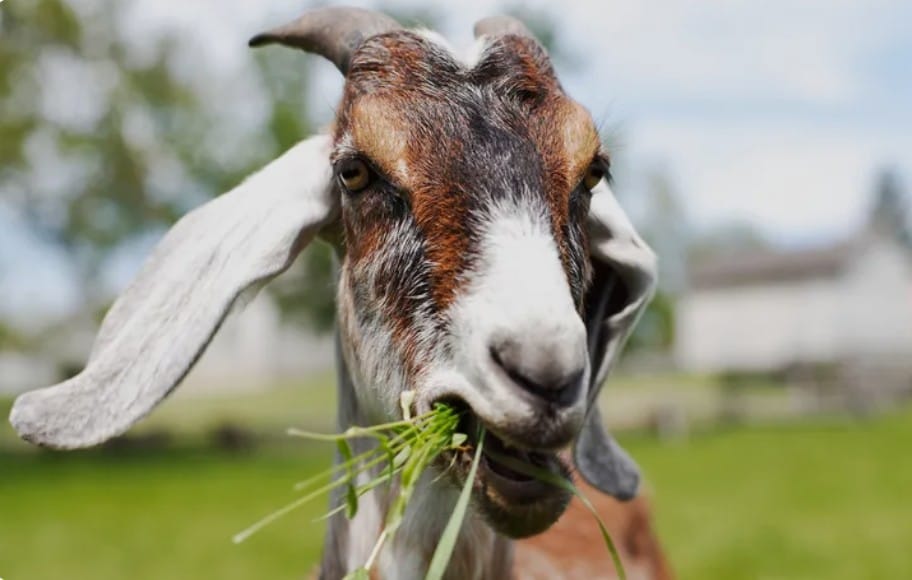
In natural environments, goats rely heavily on browsing and grazing to meet their nutritional needs. Their diet is dominated by fibrous plants, grasses, leaves, and woody vegetation. These foods provide the essential nutrients needed for energy, digestion, and long-term survival in rugged habitats.
1. Grass (Pasture Grass)
Grass is one of the most fundamental foods in a goat’s diet, especially in open pasture environments. While goats are not strict grazers like cattle, they still consume significant amounts of grass when it is available. Grass provides essential fiber, which supports healthy rumen function and steady digestion.
In natural conditions, goats will selectively graze young, tender grass shoots because they are more nutrient-rich and easier to digest. Grass also supplies moisture, helping goats maintain hydration in warm climates.
2. Timothy Hay
Timothy hay is a high-quality forage widely used in domestic goat feeding. It is rich in fiber and supports healthy rumen activity. Goats consume it slowly throughout the day, mimicking natural grazing behavior.
Because it is low in protein compared to legumes, Timothy hay is ideal for maintaining digestive balance without excessive weight gain. It is often used as a staple forage source.
3. Alfalfa Hay
Alfalfa hay is a nutrient-dense forage rich in protein, calcium, and energy. It is particularly beneficial for pregnant goats, lactating does, and growing kids who require higher nutritional intake.
However, due to its richness, it should be fed in moderation to prevent digestive imbalance. Alfalfa supports muscle development, milk production, and overall vitality.
4. Orchard Grass
Orchard grass is a palatable and soft hay variety that goats readily consume. It is high in fiber and provides a balanced nutritional profile suitable for maintenance diets.
Its mild texture makes it easy to digest, and it is often combined with other hay types to create a varied forage base.
5. Bermuda Grass
Bermuda grass is commonly found in warmer climates and serves as a reliable grazing option. It is hardy, drought-resistant, and provides consistent fiber intake for goats.
While not as nutrient-dense as legumes, it plays an important role in maintaining digestive health and natural grazing behavior.
6. Ryegrass
Ryegrass is a fast-growing forage that offers high digestibility and good energy levels. Goats often prefer it due to its soft texture and palatability.
It supports active metabolism and is especially useful during periods of growth or lactation when energy demands are higher.
7. Oat Hay
Oat hay is harvested from oat plants before full grain development. It provides both fiber and mild energy content, making it a balanced forage option.
Goats benefit from its combination of stems and leaves, which support chewing activity and rumen function.
8. Barley Hay
Barley hay offers moderate fiber and energy levels. It is less commonly used than other hay types but still provides valuable roughage for goats.
Its structure supports digestive health and helps maintain steady rumen fermentation.
9. Haylage
Haylage is a fermented forage that retains higher moisture content than dry hay. It is highly palatable and nutrient-rich, making it attractive to goats.
Because of its fermentation process, haylage provides improved digestibility and energy availability, especially during colder months or limited grazing periods.
10. Straw (Limited Use)
Straw is the dried stalk of cereal plants and is primarily used as a bedding material. However, goats may consume small amounts when other forage is limited.
It is low in nutrition but provides fiber that can help maintain gut movement. It should not be considered a primary feed source.
These foundational forage foods form the base of a goat’s natural diet, ensuring proper digestion and continuous energy flow. In the next section, we will explore grains, energy feeds, and supplemental foods that support growth and productivity.
11. Oats
Oats are one of the most widely used grains in goat diets due to their balanced energy profile and easy digestibility. They provide carbohydrates that supply steady energy without overwhelming the digestive system.
In managed feeding, oats are often fed whole or rolled. They support body condition in underweight goats and help maintain energy levels during cold seasons or periods of high activity.
12. Corn (Maize)
Corn is a highly energy-dense grain that provides goats with concentrated calories. It is especially useful for weight gain and maintaining body condition in growing or lactating animals.
However, because corn is rich in starch, it must be fed carefully to avoid digestive upset. When used correctly, it serves as an efficient energy booster.
13. Barley Grain
Barley grain is a moderately energy-rich feed that offers a balance between digestibility and nutrition. It is often used in combination with other grains to create a well-rounded feeding program.
Goats benefit from its carbohydrate content, which supports muscle activity and overall metabolic function.
14. Wheat Bran
Wheat bran is a fibrous byproduct of wheat processing. It is commonly used as a supplemental feed that supports digestive health and provides additional fiber.
It is often mixed with other feeds to improve palatability and encourage feed intake, especially in younger goats or those recovering from stress.
15. Rice Bran
Rice bran is a nutrient-rich feed containing fats, fiber, and energy. It is particularly valuable for weight gain and improving coat condition.
Its fat content provides slow-release energy, making it useful for sustained activity and body maintenance.
16. Molasses Feed
Molasses is a sweet, energy-rich supplement derived from sugar processing. It is commonly added to goat feed to improve taste and increase calorie intake.
Because goats are naturally attracted to sweet flavors, molasses helps encourage feed consumption, especially in picky eaters or stressed animals.
17. Beet Pulp
Beet pulp is a highly digestible fiber source that provides energy through fermentation in the rumen. It is especially beneficial for goats needing weight gain or digestive support.
It is often soaked before feeding to improve hydration and ease of digestion, making it a gentle but effective feed option.
18. Pelleted Goat Feed
Pelleted goat feed is a commercially formulated ration designed to provide balanced nutrition in every bite. It contains a mix of grains, fiber, vitamins, and minerals.
This type of feed helps ensure goats receive consistent nutrition without selective feeding, making it especially useful in managed herds.
19. Sweet Feed Mix
Sweet feed is a grain blend often combined with molasses for improved taste and energy content. It typically includes oats, corn, and barley.
Goats enjoy its palatability, but it must be fed in moderation due to its high sugar and starch content.
20. Ration Balancer Pellets
Ration balancer pellets are nutrient-dense supplements designed to provide essential vitamins, minerals, and protein without excessive calories.
They are particularly important for goats consuming mostly forage-based diets, ensuring they do not develop nutritional deficiencies.
These energy-rich feeds and supplements play a crucial role in supporting goats during growth, lactation, and periods of increased nutritional demand. In the next section, we will explore fruits, vegetables, and natural treats that goats love to eat.
21. Carrots
Carrots are one of the most popular treats for goats due to their natural sweetness and crunchy texture. They are easy to chew and digest, making them a safe and enjoyable snack when fed in moderation.
Nutritionally, carrots are rich in beta-carotene, which supports eye health and immune function. They also provide fiber and natural sugars that give a quick energy boost.
22. Apples
Apples are widely loved by goats and are often used as training treats or rewards. Their juicy texture makes them highly palatable and refreshing.
They contain natural sugars, fiber, and vitamin C, contributing to hydration and mild energy support. However, seeds should be removed in large quantities due to potential toxicity concerns.
23. Bananas
Bananas are a soft, energy-rich fruit that goats enjoy for their sweetness and smooth texture. They are not a natural forage item but are safe as an occasional treat.
Bananas provide potassium, carbohydrates, and small amounts of vitamins that support muscle and nerve function.
24. Pears
Pears are juicy fruits that goats may consume readily when offered. They are soft enough to eat easily and provide hydration along with natural sugars.
Their fiber content supports digestion, while their sweetness makes them highly appealing.
25. Pumpkins
Pumpkins are a seasonal food that goats enjoy chewing and exploring. Both the flesh and seeds can be consumed safely in moderate amounts.
They provide fiber, beta-carotene, and hydration, making them a nutritious enrichment food during autumn months.
26. Watermelon
Watermelon is a highly hydrating fruit that goats love, especially in warm weather. Its juicy flesh helps maintain hydration levels during hot seasons.
It contains natural sugars, water, and small amounts of vitamins A and C, making it a refreshing and safe treat.
27. Strawberries
Strawberries are sweet, aromatic fruits that goats may enjoy when offered in small quantities. They are not a staple food but serve as an occasional treat.
They contain antioxidants and vitamin C, which support immune health and general vitality.
28. Celery
Celery is a crunchy vegetable that goats often enjoy due to its texture and hydration content. It is low in calories and easy to digest.
It provides fiber, water, and small amounts of vitamins such as vitamin K.
29. Lettuce
Lettuce is a leafy vegetable that goats may eat when available. It is soft, hydrating, and easy to chew.
While not highly nutrient-dense, it contributes water and fiber to the diet and can be used as a light snack.
30. Zucchini
Zucchini is a mild, soft vegetable that goats can safely consume. It is easy to digest and often well accepted due to its neutral flavor.
It contains water, fiber, and small amounts of vitamins that contribute to hydration and digestive health.
These fruits and vegetables provide variety, hydration, and enrichment to a goat’s diet. In the final section, we will summarize key dietary insights and explore best practices for feeding goats in both natural and domestic environments.
Conclusion: What Do Goats Eat and Why It Matters
Goats are highly adaptable herbivores with one of the most diverse diets among domesticated livestock. Their natural behavior as browsers allows them to consume a wide variety of plants, including grasses, shrubs, leaves, and woody vegetation. This flexibility is one of the main reasons goats thrive in challenging environments where other animals may struggle.
At the core of a healthy goat diet is forage—grass, hay, and browse materials that provide essential fiber for proper rumen function. Fiber is not just a dietary component for goats; it is the foundation of their digestive health and energy production. Without it, their complex stomach system cannot function properly.
In addition to forage, goats benefit from controlled amounts of grains and energy feeds such as oats, barley, and corn. These provide extra calories needed for growth, lactation, and physical activity. However, these foods must always be balanced carefully to avoid digestive disturbances caused by excess starch or sugar.
Fruits and vegetables like apples, carrots, pumpkins, and watermelon add hydration, vitamins, and enrichment to their diet. While these foods are enjoyed by goats, they should be treated as supplements rather than dietary staples due to their natural sugar content.
Overall, a well-balanced goat diet is built on three key principles: fiber for digestion, controlled energy for performance, and variety for enrichment. When these elements are properly managed, goats remain healthy, active, and productive throughout their lives.
Understanding what goats eat not only improves their health and welfare but also helps farmers and caretakers make better feeding decisions that support long-term sustainability and productivity.
50+ FAQs About What Goats Eat
1. What do goats mainly eat?
Goats mainly eat forage, including grass, leaves, shrubs, and hay. Their digestive system is designed to process fibrous plant material, so roughage is the most important part of their diet. In both wild and domestic settings, goats spend most of their day browsing and grazing.
2. Are goats grazers or browsers?
Goats are primarily browsers, meaning they prefer eating leaves, shrubs, and woody plants rather than only grass. This behavior allows them to access a wider range of nutrients compared to strict grazers like sheep or cattle.
3. Can goats eat grass alone?
Yes, goats can survive on grass alone if it is high quality and plentiful. However, in most managed systems, grass is combined with hay, grains, and supplements to ensure a balanced intake of nutrients.
4. Why is fiber important for goats?
Fiber is essential because it supports rumen fermentation, which is how goats digest food. Without enough fiber, goats can develop serious digestive issues such as bloating or reduced gut function.
5. Do goats need hay if they eat pasture?
Yes, hay is often needed when pasture quality is poor or during winter months. It ensures goats still receive enough fiber when fresh forage is limited.
6. What is the best hay for goats?
Timothy hay, orchard grass, and alfalfa are among the best options. Timothy and orchard grass provide balanced fiber, while alfalfa offers higher protein for growth and lactation.
7. Can goats eat alfalfa every day?
Goats can eat alfalfa, but it should be fed in moderation due to its high protein and calcium content. Overfeeding can lead to digestive imbalance or weight issues.
8. Do goats eat grains in the wild?
In the wild, goats rarely eat grains naturally. Grains like corn and barley are mostly part of domesticated feeding systems to provide extra energy.
9. Is corn safe for goats?
Corn is safe when fed in controlled amounts. It is energy-dense and helps with weight gain, but excessive feeding can cause digestive problems due to its high starch content.
10. Can goats eat oats?
Yes, oats are one of the safest grains for goats. They provide balanced energy and are easy to digest, making them a common choice in goat diets.
11. What vegetables can goats eat?
Goats can eat vegetables such as carrots, celery, zucchini, lettuce, and pumpkins. These foods provide hydration, vitamins, and variety in their diet.
12. Are carrots good for goats?
Carrots are a healthy treat for goats. They contain beta-carotene, which supports immune function and eye health, and are safe when fed in moderation.
13. Can goats eat apples?
Yes, goats enjoy apples and they are safe when seeds are limited. Apples provide natural sugars and hydration, making them a popular treat.
14. Do goats like bananas?
Goats often enjoy bananas because of their soft texture and sweetness. They are safe as an occasional treat and provide potassium for muscle function.
15. Can goats eat watermelon?
Yes, watermelon is safe and highly hydrating. Goats enjoy its juicy flesh, especially during hot weather.
16. Are fruits healthy for goats?
Fruits are healthy in moderation. They provide vitamins, hydration, and energy, but should not replace forage due to their sugar content.
17. Can goats eat strawberries?
Yes, strawberries are safe and contain antioxidants. They should be given occasionally as a treat rather than a staple food.
18. Do goats eat lettuce?
Goats can eat lettuce, and it provides hydration and fiber. However, it is not very nutrient-dense and should be part of a varied diet.
19. Can goats eat zucchini?
Yes, zucchini is safe for goats and is easy to digest. It is often used as a low-calorie treat or enrichment food.
20. What foods should goats avoid?
Goats should avoid toxic plants, moldy feed, chocolate, and processed human foods. These can cause serious digestive and health issues.
21. Can goats eat bread?
Bread is not recommended for goats. It lacks nutritional value and can cause digestive upset if fed in large amounts.
22. Do goats need supplements?
Some goats require mineral and vitamin supplements depending on diet quality. Ration balancers help fill nutritional gaps in their daily intake.
23. What is beet pulp used for?
Beet pulp is used as a high-fiber feed that supports digestion and provides steady energy. It is especially useful for weight gain and gut health.
24. Do goats need salt?
Yes, goats need salt to maintain electrolyte balance. It is usually provided as a free-choice mineral block.
25. What is molasses feed?
Molasses feed is a sweet energy supplement used to improve feed taste and increase calorie intake. It should be used in moderation.
26. Can goats overeat?
Yes, goats can overeat, especially high-energy feeds like grains. This can lead to bloating, obesity, or metabolic disorders.
27. How often should goats eat?
Goats should have access to food throughout the day. They naturally eat small amounts frequently rather than large meals.
28. Why do goats chew constantly?
Goats chew constantly because their digestive system relies on fiber breakdown and rumination to extract nutrients efficiently.
29. Can goats drink water while eating?
Yes, goats drink water regularly while eating. Clean, fresh water is essential for digestion and overall health.
30. How much water do goats need?
Goats typically need 2–5 liters of water per day depending on size, diet, and environmental conditions.
31. Do goats eat differently in winter?
Yes, goats eat more hay and stored forage in winter because fresh pasture is limited or unavailable.
32. What is haylage?
Haylage is fermented forage that retains moisture and nutrients. It is highly palatable and digestible for goats.
33. Can goats eat straw?
Straw can be eaten in small amounts but is not very nutritious. It is mainly used as bedding rather than feed.
34. Do goats like sweet food?
Yes, goats are naturally attracted to sweet foods like fruits and molasses, but these should be limited.
35. Why is overfeeding grains dangerous?
Overfeeding grains can disrupt rumen balance and lead to serious digestive issues like acidosis.
36. Can goats eat leaves from trees?
Yes, goats naturally browse on leaves from many trees and shrubs, which is part of their normal diet.
37. Do goats eat bark?
Yes, goats may chew bark when forage is limited. It provides fiber but low nutritional value.
38. Can goats eat weeds?
Yes, many weeds are safe and nutritious for goats, and they often consume them while browsing.
39. Are goats picky eaters?
Goats are not picky in general but are selective browsers, choosing high-quality plant parts when available.
40. Do goats eat flowers?
Yes, goats may eat flowers while browsing, although they are not a primary food source.
41. What is the best diet for goats?
The best diet includes high-quality forage, limited grains, mineral supplements, and occasional fruits or vegetables.
42. Do baby goats eat the same food?
Baby goats (kids) start with milk and gradually transition to hay, forage, and soft feeds as they grow.
43. When do goats start eating solid food?
Kids usually begin nibbling solid food within a few weeks after birth while still relying on milk.
44. Can goats eat cooked food?
Cooked human food is not recommended for goats because their digestive system is adapted for raw plant material.
45. Do goats need protein?
Yes, protein is essential for growth, milk production, and muscle maintenance. It is obtained from forage and supplements.
46. What happens if goats eat too much sugar?
Too much sugar can lead to digestive imbalance, obesity, and metabolic disorders in goats.
47. Can goats survive without grains?
Yes, goats can survive without grains if they have access to high-quality forage and proper nutrients.
48. Why is forage more important than grain?
Forage is essential because it maintains rumen health, while grain only provides extra energy and is not a dietary base.
49. Do goats eat like cows?
No, goats browse more selectively than cows, which are primarily grazers.
50. What is the most important rule in goat feeding?
The most important rule is to provide constant access to high-quality forage while balancing grains and treats carefully.
51. What keeps goats healthiest?
A balanced diet of fiber-rich forage, clean water, minerals, and controlled energy feeds keeps goats healthy and productive.
Read more: