

Bighorn sheep are among the most recognizable wild mammals of western North America, but the phrase types of bighorn sheep can be confusing. Older field guides often list as many as seven named subspecies, while modern genetic research generally supports three living subspecies: the Rocky Mountain bighorn sheep, Sierra Nevada bighorn sheep, and desert bighorn sheep. Each is adapted to a different combination of elevation, temperature, vegetation, and water availability.
This guide explains how the three types differ in appearance, body size, habitat, geographic range, diet, behavior, and conservation needs. It also clears up commonly confused names such as California, Nelson’s, Mexican, and Peninsular bighorn sheep. Whether you are planning a wildlife-viewing trip or simply want to identify a sheep seen on a rocky slope, the habitat and location are usually more useful than horn size alone.
What Are the Main Types of Bighorn Sheep?
The three main living types of bighorn sheep are the Rocky Mountain bighorn sheep (Ovis canadensis canadensis), Sierra Nevada bighorn sheep (Ovis canadensis sierrae), and desert bighorn sheep (Ovis canadensis nelsoni). They are subspecies of one species, Ovis canadensis, rather than three separate species. Some wildlife agencies and older references retain additional regional names, especially for desert populations, so readers may encounter more than three labels.
Bighorn Sheep Types at a Glance
| Type | Scientific Name | Primary Range | Typical Habitat | Useful Identification Clue |
|---|---|---|---|---|
| Rocky Mountain bighorn sheep | Ovis canadensis canadensis | Canadian and U.S. Rocky Mountains and nearby ranges | Alpine meadows, open mountain slopes, foothills, and cliffs | Usually the largest-bodied type; found in cool mountain country |
| Sierra Nevada bighorn sheep | Ovis canadensis sierrae | Sierra Nevada of eastern California | High, steep, open alpine and subalpine terrain | Restricted California range and relatively wide-spreading horn curl |
| Desert bighorn sheep | Ovis canadensis nelsoni | Southwestern United States and northwestern Mexico | Dry mountain ranges, canyons, rocky slopes, washes, and fans | More slender build and strong association with arid landscapes |
1. Rocky Mountain Bighorn Sheep
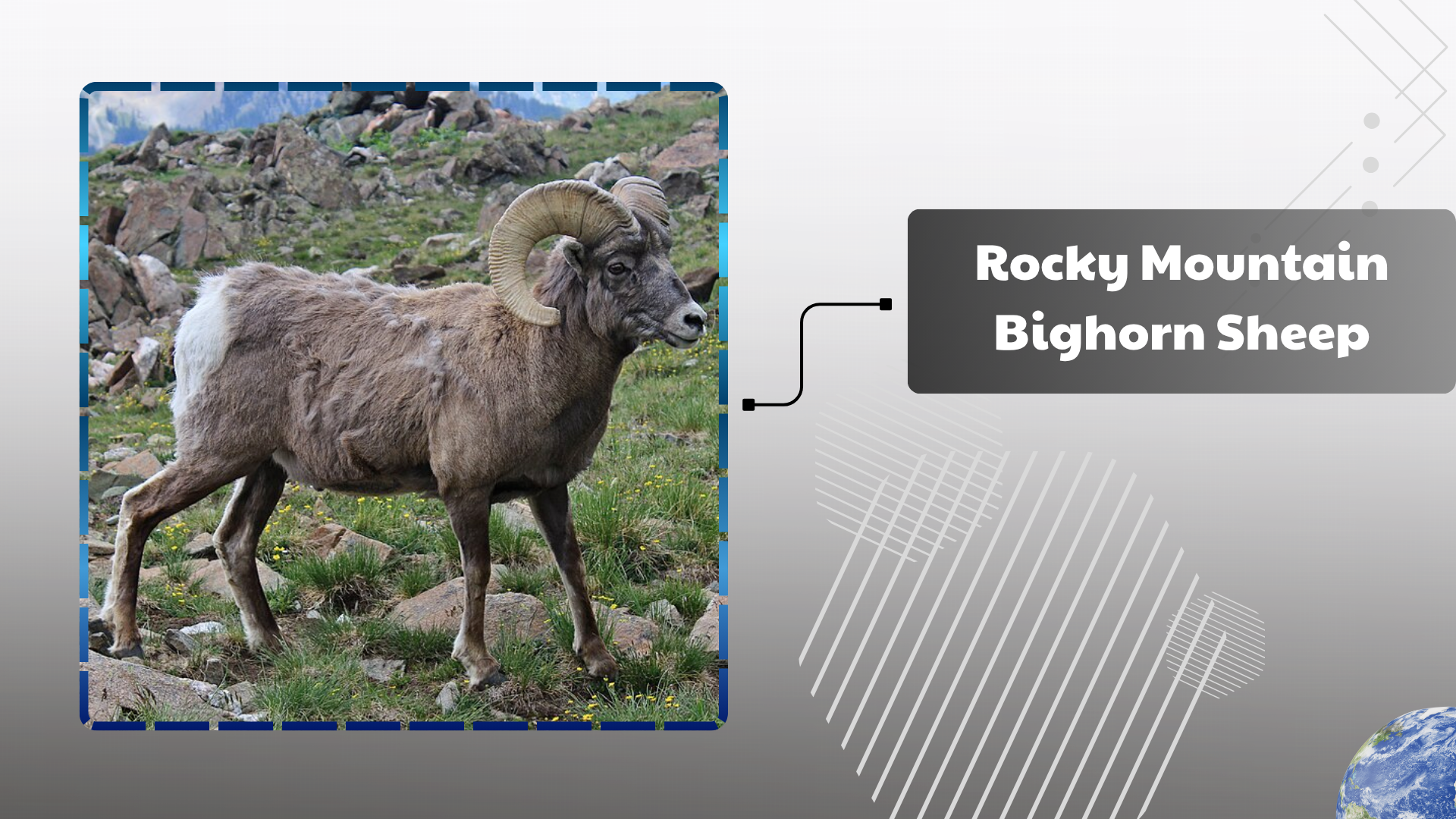
The Rocky Mountain bighorn sheep (Ovis canadensis canadensis) is the largest and most widely recognized of the three modern subspecies. It occupies portions of the Canadian and U.S. Rocky Mountains as well as suitable nearby mountain ranges. Its distribution includes scattered native, restored, and reintroduced herds, so a range map may show separated pockets rather than one continuous population. Open slopes beside cliffs are especially valuable because the sheep can feed where visibility is good and quickly reach steep escape terrain when threatened.
Adult rams are heavy, muscular animals with massive horns that curl beside the face. Mature males can become much larger than ewes, and their horns develop growth rings, scars, and worn tips over time. Ewes have shorter, slimmer horns that curve only slightly. Both sexes generally have a brown to gray-brown coat, pale muzzle, and conspicuous white rump patch. Color changes with season and individual condition, so body color alone is not a dependable way to separate this subspecies from other bighorns.
Rocky Mountain bighorns feed mainly on grasses, sedges, and other herbaceous plants during productive seasons. In winter they make greater use of shrubs and other browse, including plants available on windswept slopes where snow is shallow. Like other sheep, they are ruminants: they can gather forage and later chew the cud from a safer resting place. They also visit natural mineral licks, particularly when seasonal forage does not supply enough sodium and other minerals.
Rams and ewe-lamb groups often remain socially separated outside the breeding season. During the fall rut, mature rams compete for status through displays, pushing, and spectacular horn clashes. Wildlife watchers should observe these animals from a generous distance. Approaching a herd can force it to leave feeding or resting habitat, and domestic sheep or goats should never be allowed to contact wild bighorns because respiratory pathogens can trigger serious pneumonia outbreaks.
2. Sierra Nevada Bighorn Sheep
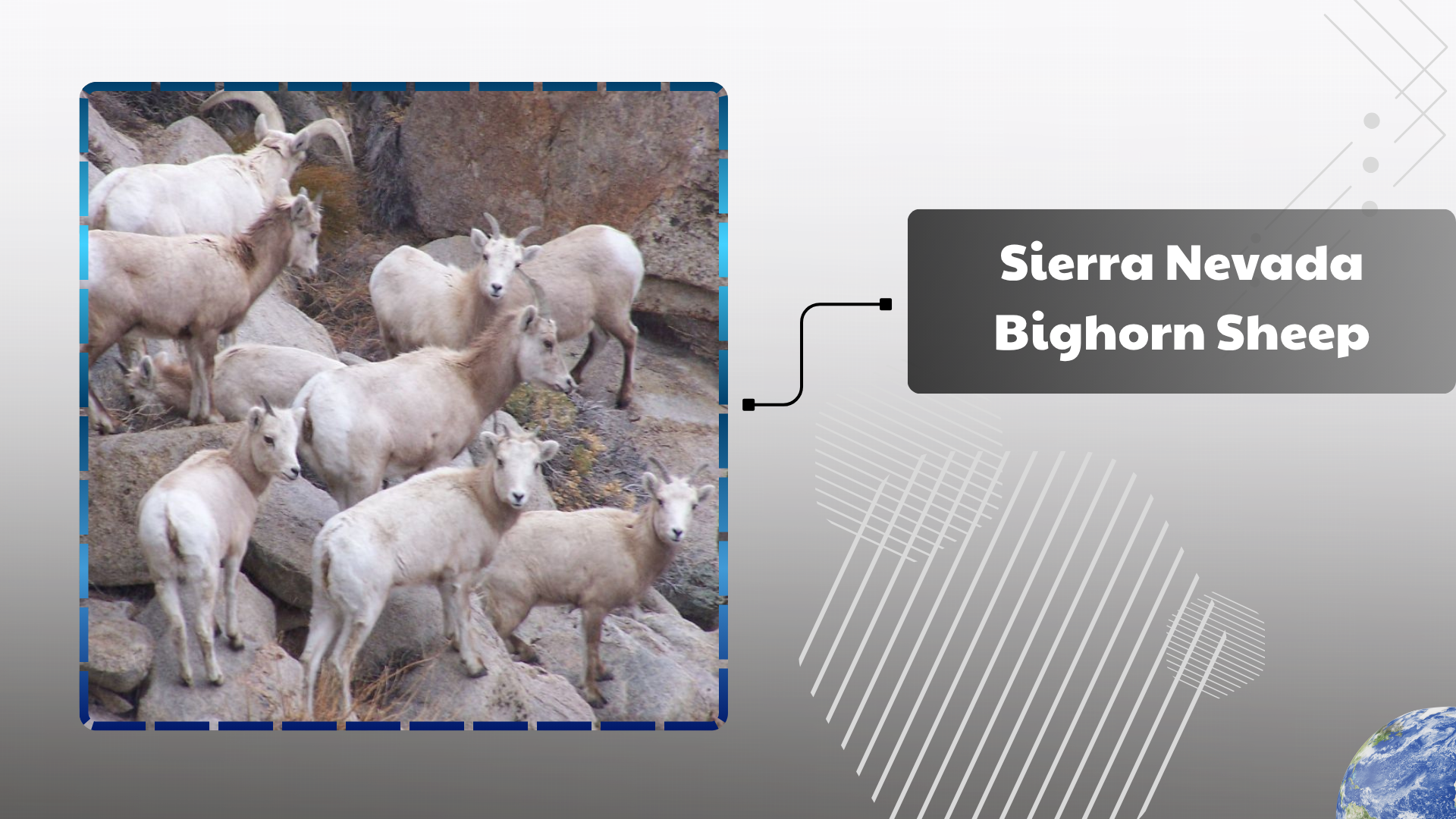
The Sierra Nevada bighorn sheep (Ovis canadensis sierrae) is the rarest and most geographically restricted of the three living subspecies. It is native to the Sierra Nevada of eastern California, where herds use rugged terrain from lower winter slopes to high alpine country. These sheep are closely associated with steep, open landscapes that offer both visibility and rapid access to rocky escape routes. Seasonal movement is important: suitable low-elevation winter habitat can help animals avoid deep snow and reach forage when high-country plants are unavailable.
Sierra Nevada bighorns share the classic features of the species: a compact body, pale rump patch, strong legs, and specialized hooves with hard outer edges and more flexible inner pads. Rams grow thick curling horns, while ewes carry shorter horns. In mature Sierra Nevada rams, the horn curls often spread outward noticeably from the skull. That feature may assist trained observers, but it should not be used by itself. Location is the strongest identification clue because this subspecies occurs only in its limited Sierra Nevada range.
The diet changes with elevation and season. Grasses, sedges, flowering herbaceous plants, and shrubs can all be important. During summer, sheep select nutritious new growth in alpine and subalpine areas; during colder periods, they rely on whatever quality forage remains accessible. They balance feeding opportunities against the need to avoid predators, especially mountain lions. Ewes with lambs often choose terrain that provides good visibility and a quick route onto steep rock.
This subspecies is federally endangered in the United States. Historic losses were linked to hunting, disease associated with domestic livestock, and changes in habitat use. Modern recovery work has included habitat protection, monitoring, strategic translocations, disease-risk reduction, and management of unusually severe predation where necessary. Visitors can help by obeying seasonal closures, keeping dogs controlled where required, staying on permitted routes, and viewing from a distance. A sighting is special, but the animal’s ability to feed and move undisturbed matters more than a close photograph.
3. Desert Bighorn Sheep
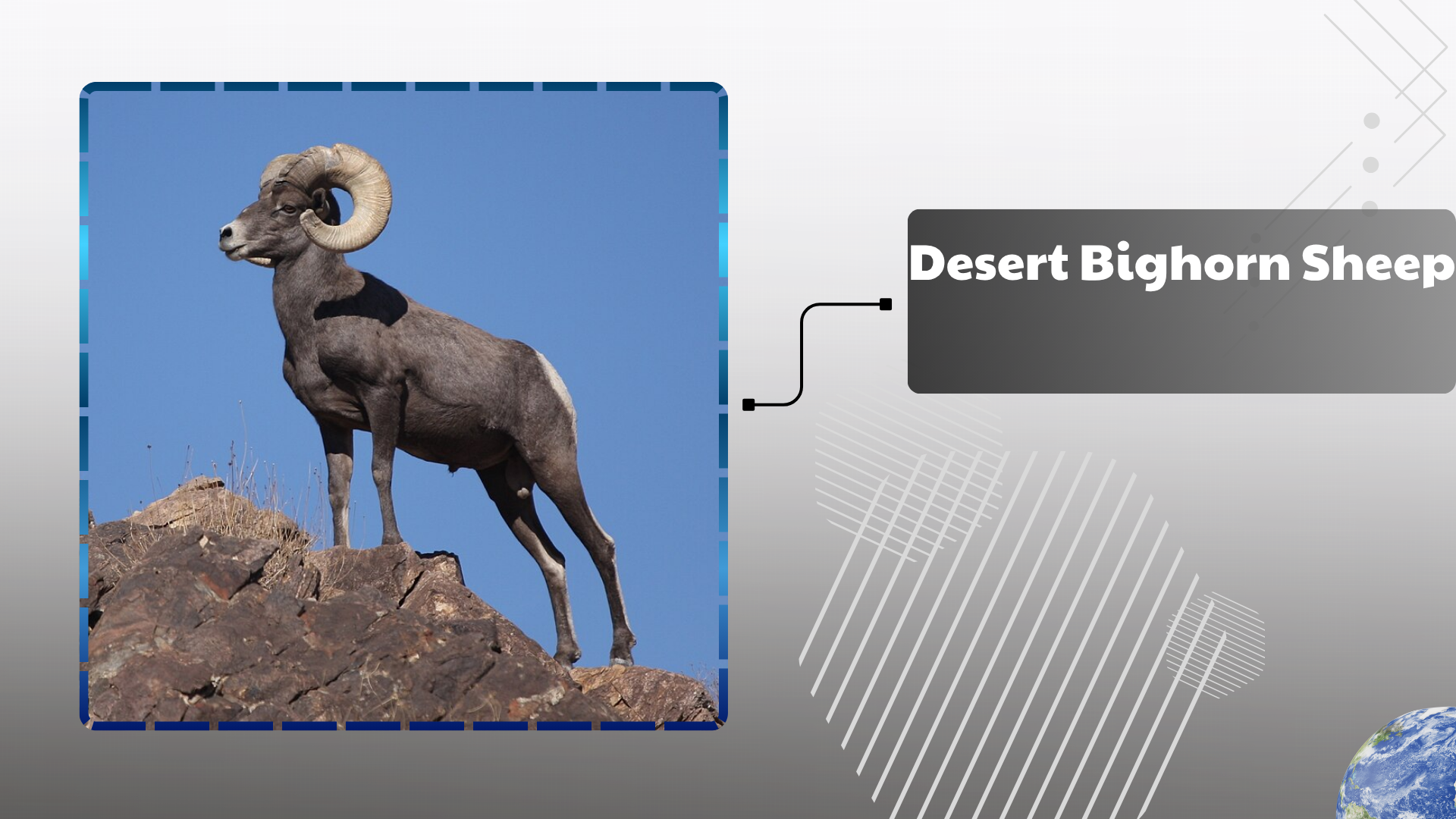
The desert bighorn sheep (Ovis canadensis nelsoni) lives in dry mountain systems across the southwestern United States and northwestern Mexico. Its habitat includes rocky slopes, cliffs, canyons, washes, and alluvial fans. Although people often picture these sheep crossing flat, open desert, rugged mountains are the center of their world. Broken rock provides escape terrain, while shaded slopes, canyon bottoms, springs, and seasonal plant growth help them cope with extreme heat and scarce water.
Desert bighorns generally look more lightly built than Rocky Mountain bighorns. Their long legs and relatively slender bodies suit travel through steep, hot terrain. Coat color ranges from tan to gray-brown and may blend almost perfectly with sunlit rock. Rams carry the familiar heavy curl, and ewes have shorter horns. Reliable identification depends on the entire setting: a lean bighorn in an arid southwestern mountain range is more likely a desert bighorn than a mountain subspecies, but geographic records should confirm unusual sightings.
These sheep are flexible herbivores. Their diet may include grasses, leafy forbs, shrubs, cacti, and small amounts of tree foliage. Moisture-rich plants can reduce the need to drink, and individuals may go several days between visits to water depending on temperature, forage moisture, and physiological demands. Ewes nursing lambs have especially high water needs. During intense summer heat, sheep may concentrate near dependable water or use cooler slopes and shaded rock, making springs and movement corridors critical habitat features.
Several traditional regional names have been applied to desert bighorns, including Nelson’s, Mexican, Peninsular, and Weems’ bighorn sheep. Modern treatments often combine these within the desert subspecies, although agencies may preserve older scientific names or manage a distinctive population separately. The Peninsular Ranges population in southern California, for example, is protected in the United States as an endangered distinct population segment. Across the desert, major concerns include habitat fragmentation, blocked movement between mountain ranges, disease, human disturbance, and loss or alteration of water sources.
How Are Bighorn Sheep Classified?
All bighorn sheep belong to the species Ovis canadensis in the family Bovidae, which also includes goats, cattle, antelope, and other hollow-horned mammals. Within the species, modern genetic evidence generally supports three living subspecies. A subspecies is a geographically or genetically distinguishable population within a species; members still share the core characteristics of the species and are not equivalent to separate species.
| Rank | Classification |
|---|---|
| Kingdom | Animalia |
| Phylum | Chordata |
| Class | Mammalia |
| Order | Artiodactyla |
| Family | Bovidae |
| Genus | Ovis |
| Species | Ovis canadensis |
Why Do Some Sources List Seven Types?
A widely used twentieth-century classification divided bighorn sheep into seven subspecies: Rocky Mountain, Audubon’s, California, Nelson’s, Mexican, Peninsular, and Weems’. Later genetic and morphometric studies found that several of those boundaries did not represent deeply distinct subspecies. As a result, many modern summaries recognize three living groups.
The old names have not disappeared. They remain useful in historical writing, hunting traditions, regional management, and some government databases. Audubon’s bighorn is generally treated as extinct, while “California bighorn” may still be used informally for northwestern populations that are usually assigned to the Rocky Mountain subspecies rather than to the Sierra Nevada subspecies. Taxonomy and management labels serve different purposes, so context matters.
Where Do Bighorn Sheep Live?
Bighorn sheep occupy western North America from parts of southwestern Canada through the western United States and into northwestern Mexico. They do not live in every mountain range within that broad area. Herds require a workable combination of forage, open visibility, steep escape terrain, seasonal movement routes, and, in deserts, adequate access to water.
- Rocky Mountain bighorns use alpine meadows, open forests, foothills, canyon walls, and windswept slopes near cliffs.
- Sierra Nevada bighorns occupy the eastern Sierra Nevada, moving between high summer ranges and lower or less snowy winter areas when conditions allow.
- Desert bighorns live in isolated arid mountain ranges, rocky canyons, washes, and adjacent fans in the Southwest and northwestern Mexico.
Steep rock is more than scenery. It is escape terrain where bighorns can use balance, vision, and specialized hooves to reduce the advantage of predators. Open sightlines are also important. Dense vegetation can make it harder for a sheep to detect danger, while highways, fences, canals, and development can separate a herd from water, forage, or neighboring populations.
How to Identify Different Types of Bighorn Sheep
- Start with location: A verified geographic range is usually the most dependable clue to subspecies.
- Check the habitat: Cool alpine slopes suggest a mountain form, while dry canyon and desert-mountain habitat points toward desert bighorns.
- Compare body build: Rocky Mountain bighorns are generally heavier; desert bighorns tend to look leaner and longer-legged.
- Study the horns carefully: Rams have massive curls and ewes have shorter horns, but age, sex, wear, and viewing angle can make horn comparisons misleading.
- Look for the white rump: All bighorn types have a pale rump patch, so this confirms the species but does not identify a subspecies.
- Notice seasonal movement: High-elevation herds may move downslope in winter, while desert animals may shift toward water or seasonal forage.
- Observe behavior: Bighorns usually remain close enough to rugged rock to escape quickly when disturbed.
- Use local wildlife information: Park and state or provincial wildlife pages can confirm which managed herd occupies a particular area.
Bighorn Sheep Versus Mountain Goats
Mountain goats are not sheep. They usually appear white or creamy, have shaggy coats, and carry narrow black horns that curve backward. Bighorn sheep are brown or gray-brown, show a white rump, and have tan to brown horns. Mature bighorn rams develop broad, heavy curls rather than the slim pointed horns of a mountain goat.
Bighorn Sheep Versus Dall Sheep
Dall sheep (Ovis dalli) are a separate North American wild sheep species found mainly in Alaska and northwestern Canada. They are generally white to pale gray, whereas bighorn sheep are brown. Both can have curling horns, but location and coat color usually make the distinction straightforward.
Outdoor Tips for Finding and Observing Bighorn Sheep
- Research a known viewing area. Choose a park, refuge, or wildlife area with a resident herd rather than wandering into sensitive habitat.
- Scan escape terrain. Use binoculars to study cliff bands, rocky benches, open slopes, and canyon rims.
- Look during cooler hours. Early morning and late afternoon often provide better activity and softer light, especially in deserts.
- Watch for movement, not color. A still bighorn can disappear against gray or tan rock.
- Keep substantial distance. If the animals stop feeding, stare continuously, bunch together, or move away, you are too close.
- Never feed or attract them. Food, salt, calls, and close approaches can alter natural behavior and create danger.
- Protect water access. In arid habitat, never block a trail between sheep and a spring or water development.
- Follow local closures. Seasonal rules may protect lambing grounds, winter range, or recovery herds.
- Keep pets controlled. Dogs can alarm or chase wildlife even when their owners believe they are being playful.
- Photograph ethically. Use a long lens, remain quiet, and value an undisturbed animal over a frame-filling image.
Safety, Sustainability, and Conservation Notes
Bighorn sheep are powerful wild animals. Rams are not looking for people to fight, but no visitor should approach, corner, or attempt to touch one. Stay especially cautious near roads, mineral licks, water sources, and breeding groups. Follow the distance rules of the park or wildlife agency managing the site.
Disease prevention is one of the most important conservation issues. Wild bighorns can experience severe pneumonia outbreaks after exposure to respiratory pathogens associated with domestic sheep and goats. Livestock owners near bighorn range should work with wildlife and agricultural authorities on separation measures. Hikers should never encourage contact between pack goats or domestic sheep and wild herds.
Habitat connectivity is another priority. A mountain “island” may contain food and escape cover, but a herd can still struggle if development blocks access to seasonal range, water, or other populations. Responsible recreation means honoring closures, staying out of restoration sites, packing out waste, and avoiding prolonged disturbance. Hunting is legal only in designated jurisdictions and seasons and is tightly regulated; hunters must consult the current agency rules rather than relying on general online information.
Fun Facts About Bighorn Sheep
- Both male and female bighorn sheep grow permanent horns rather than annually shed antlers.
- A mature male is called a ram, an adult female is a ewe, and a young sheep is a lamb.
- Rams establish social rank through body displays, horn presentation, pushing, and head-to-head clashes.
- Bighorn hooves combine a firm outer edge with a more flexible inner surface for grip on uneven rock.
- The white rump patch is one of the easiest field marks to see when a sheep turns away.
- Bighorns are ruminants with a four-compartment stomach that helps them extract nutrients from fibrous plants.
- Ewes commonly use particularly rugged nursery terrain to improve the safety of newborn lambs.
- Different sexes often form separate groups outside the breeding season.
- Desert bighorns can obtain meaningful moisture from the plants they eat.
- The Rocky Mountain bighorn is Colorado’s state animal, while the desert bighorn is Nevada’s state animal.
Final Thoughts on Types of Bighorn Sheep
The three living types of bighorn sheep are the Rocky Mountain, Sierra Nevada, and desert bighorn subspecies. Their shared curling horns and white rump patches reveal their close relationship, while body build, range, seasonal movement, and habitat show how each has adapted to a different western landscape. Older regional names remain common, but they should not be mistaken automatically for separate modern subspecies. For the best identification, begin with location and habitat, confirm the local herd with a wildlife agency, and observe without disrupting the animals’ feeding, movement, or access to water.
Frequently Asked Questions
1. How many types of bighorn sheep are there?
Modern genetic research generally supports three living subspecies: Rocky Mountain, Sierra Nevada, and desert bighorn sheep. Older classifications listed more subspecies, and some regional or agency sources continue to use those traditional names.
2. What is the scientific name of the bighorn sheep?
The species is Ovis canadensis. A third name identifies a subspecies, as in Ovis canadensis canadensis for the Rocky Mountain bighorn sheep.
3. Are the three bighorn types separate species?
No. They are generally treated as subspecies within one species. Dall sheep, by comparison, belong to a separate species called Ovis dalli.
4. Why do older books list seven bighorn subspecies?
Earlier classification relied heavily on geography, skull measurements, horn form, and coat characteristics. Later genetic work found less support for several of those divisions, leading many scientists to favor three living subspecies.
5. What happened to Audubon’s bighorn sheep?
Audubon’s bighorn was a historically named Great Plains and Badlands form that is generally considered extinct. It is part of the reason historical lists can contain more names than modern lists of living subspecies.
6. Is the California bighorn sheep still recognized?
“California bighorn” remains a common regional name, especially in wildlife management and hunting contexts. In many modern taxonomic treatments, northwestern populations once given that name are included with Rocky Mountain bighorns, while the distinct Sierra Nevada animal is called Ovis canadensis sierrae.
7. Is the Peninsular bighorn a separate subspecies?
Many modern treatments place Peninsular bighorns within the desert subspecies. In the United States, the Peninsular Ranges population is managed as an endangered distinct population segment, a legal conservation category that does not require it to be a separate subspecies.
8. Are Mexican bighorn sheep desert bighorns?
They are commonly treated as part of the broader desert bighorn group, although some databases and wildlife sources retain the name Ovis canadensis mexicana. This is an example of taxonomy varying among authorities.
9. Which type of bighorn sheep is the largest?
Rocky Mountain bighorn sheep are generally the largest-bodied subspecies. Sex, age, nutrition, season, and local conditions also create substantial size differences within every type.
10. Which bighorn sheep type is the rarest?
The Sierra Nevada bighorn has the smallest and most restricted overall distribution of the three recognized subspecies. It is federally listed as endangered in the United States and remains the focus of intensive recovery work.
11. Where are Rocky Mountain bighorn sheep found?
They occur in scattered herds in the Canadian and U.S. Rocky Mountains and suitable nearby western ranges. Their habitat usually combines open forage areas with cliffs or steep rocky slopes.
12. Where are Sierra Nevada bighorn sheep found?
They live only in the Sierra Nevada of eastern California. Herds use a range of elevations and may move between alpine summer habitat and lower winter slopes.
13. Where are desert bighorn sheep found?
Desert bighorns inhabit arid mountain systems in the southwestern United States and northwestern Mexico. Their range includes parts of California, Nevada, Arizona, Utah, New Mexico, Texas, and Mexico, although distribution is patchy.
14. Do bighorn sheep live only at high elevations?
No. Mountain populations frequently use high alpine country, but they can descend seasonally. Desert bighorns may live at much lower elevations as long as rugged escape terrain, forage, and adequate water are available.
15. What do bighorn sheep eat?
They are herbivores that eat grasses, sedges, leafy forbs, and shrubs. The exact mix changes with season and habitat; desert animals may also eat cacti and foliage from drought-adapted plants.
16. Do desert bighorn sheep need to drink water?
Yes, but they can obtain part of their moisture from food and may go several days between drinks under suitable conditions. Needs increase with heat, dry forage, activity, pregnancy, and lactation, making reliable water especially important in summer.
17. How can bighorn sheep climb steep cliffs?
Their balance, powerful legs, and specialized hooves help them travel across rock. Each hoof has a hard edge for catching small projections and a more flexible inner pad that improves contact and grip.
18. Do female bighorn sheep have horns?
Yes. Ewes have permanent horns, but theirs are usually much shorter and slimmer than the massive curling horns of mature rams.
19. Do bighorn sheep shed their horns?
No. Horns grow throughout life and are not shed annually. This differs from deer antlers, which are made of bone and are normally cast and regrown each year.
20. Can horn rings reveal a bighorn sheep’s age?
Trained biologists and experienced observers can use major annual horn segments to estimate a ram’s age. Small surface ridges, broken tips, wear, and poor viewing angles can cause mistakes, so casual ring counting is not always reliable.
21. Why do bighorn rams butt heads?
Rams clash and use other displays to establish social rank, especially around the breeding season. Their large horns, skull structure, neck muscles, and behavior are adapted to these contests, but the encounters still demand enormous force and energy.
22. When is the bighorn sheep breeding season?
The rut usually occurs in fall or early winter, with timing varying by region. Lambs are generally born in spring after a gestation lasting roughly six months.
23. What predators hunt bighorn sheep?
Mountain lions are important predators of adults in many regions. Coyotes, bobcats, bears, wolves, and golden eagles may prey on lambs or vulnerable individuals depending on location.
24. How long do bighorn sheep live?
A lifespan around 10 to 15 years is possible, though survival varies with sex, habitat, disease, predation, weather, and population conditions. Rams often have shorter average lives than ewes.
25. Are bighorn sheep endangered?
The species as a whole is not federally listed as endangered in the United States, but specific groups receive stronger protection. Sierra Nevada bighorns and the Peninsular Ranges distinct population segment are federally listed as endangered.
26. What is the biggest threat to bighorn sheep?
Threats differ by herd, but respiratory disease is among the most serious. Habitat loss, fragmented movement routes, human disturbance, drought, changing fire patterns, and predation can also affect local populations.
27. Why are domestic sheep a danger to wild bighorns?
Domestic sheep and goats can carry respiratory pathogens that cause severe pneumonia in bighorn herds. Preventing direct or close contact is therefore a central part of wild sheep conservation.
28. What should I do if I see a bighorn sheep?
Enjoy the sighting quietly from a distance, use binoculars or a long camera lens, and leave the animal an open escape route. Never feed it, approach for a close photo, or stand between desert sheep and water.
29. Are bighorn sheep dangerous to hikers?
They normally avoid people, but any wild animal can defend itself when crowded, surprised, or blocked. Give rams and ewe-lamb groups ample room and follow all local wildlife-viewing rules.
30. What is the easiest way to identify a bighorn subspecies?
Begin with the exact location and local range information, then consider habitat and overall build. Horn shape and coat shade vary too much with age, sex, season, and individual genetics to serve as the only evidence.