

Carnations are not best understood as dozens of separate species. Most garden and florist carnations are selections related to Dianthus caryophyllus, and horticulturists classify them by growth habit, production style, flower size, and color pattern. This guide separates those overlapping categories clearly so a spray carnation, pot carnation, picotee, and Chabaud strain are not falsely presented as different botanical species.
What Are the Main Types of Carnation Flowers?
The most practical carnation groups are border carnations, perpetual-flowering standard carnations, perpetual-flowering spray carnations, compact pot carnations, and seed-grown garden strains such as Chabaud and Grenadin. Historic exhibition terms such as self, picotee, and fancy describe color pattern rather than species. Many modern florist colors—green, burgundy, white, bicolor—are cultivar categories that overlap with standard or spray production forms.
Related Flower Guides
Quick Comparison
| Carnation type | Plant or production form | Typical use | Typical season | Key distinction |
|---|---|---|---|---|
| Border Carnations | perennial | garden borders, exhibition, cutting | late spring to summer outdoors | upright grey-green foliage and relatively large ruffled flowers |
| Perpetual-Flowering Standard Carnations | half-hardy evergreen perennial under glass | commercial standard cut flowers | potentially year-round under controlled conditions | one large terminal bloom per prepared flowering stem |
| Perpetual-Flowering Spray Carnations | half-hardy evergreen perennial under glass | spray bouquets, mass and filler | potentially year-round under controlled conditions | several smaller flowers and buds on one branching stem |
| Pot Carnations | compact perennial | containers, patios, gift plants | spring to summer; greenhouse schedules vary | naturally short growth with multiple ruffled blooms |
| Chabaud Carnations | tender perennial often grown as annual | seed-grown cutting gardens | summer from spring sowing | double fragrant flowers on long stems |
| Grenadin Carnations | perennial or biennial culture depending climate | borders, cutting | late spring to summer | double spicy-scented flowers on sturdy stems |
| Malmaison Carnations | heritage greenhouse carnation | heritage collections, exhibition | summer under traditional culture | large loosely arranged double blooms with strong fragrance |
| Self Carnations | horticultural color class | exhibition, formal borders | varies | petals display one principal color rather than striping or edging |
| Picotee Carnations | horticultural color pattern | exhibition, specialty cutting | varies | petal margins carry a contrasting rim or edge |
| Fancy Carnations | horticultural color pattern | exhibition, specialty cutting | varies | irregular contrasting markings on a paler ground |
| Bicolor Carnations | cultivar color group | modern bouquets | widely available | two clearly contrasting colors may appear as edge, eye, stripe, or petal zones |
| Green Carnations | cultivar color group | modern arrangements, contrast work | widely available commercially | dense ruffled petals in green tones |
| Burgundy Carnations | cultivar color group | formal and moody arrangements | widely available | deep red-purple ruffled blooms |
| White Carnations | cultivar color group | weddings, memorials, modern monochrome | widely available | clean white ruffled flowers |
| Fragrant Clove Carnation | evergreen perennial | scent gardens, heritage borders | summer | single or double flowers with spicy clove-like scent and narrow grey-green leaves |
15 Carnation Types, Forms, and Styles
The entries below are selected and labeled according to the article’s search intent. Names, botanical ranks, and horticultural categories are kept distinct so the list does not inflate the count with duplicate common names.
1. Border Carnations
Scientific name: Dianthus caryophyllus horticultural group
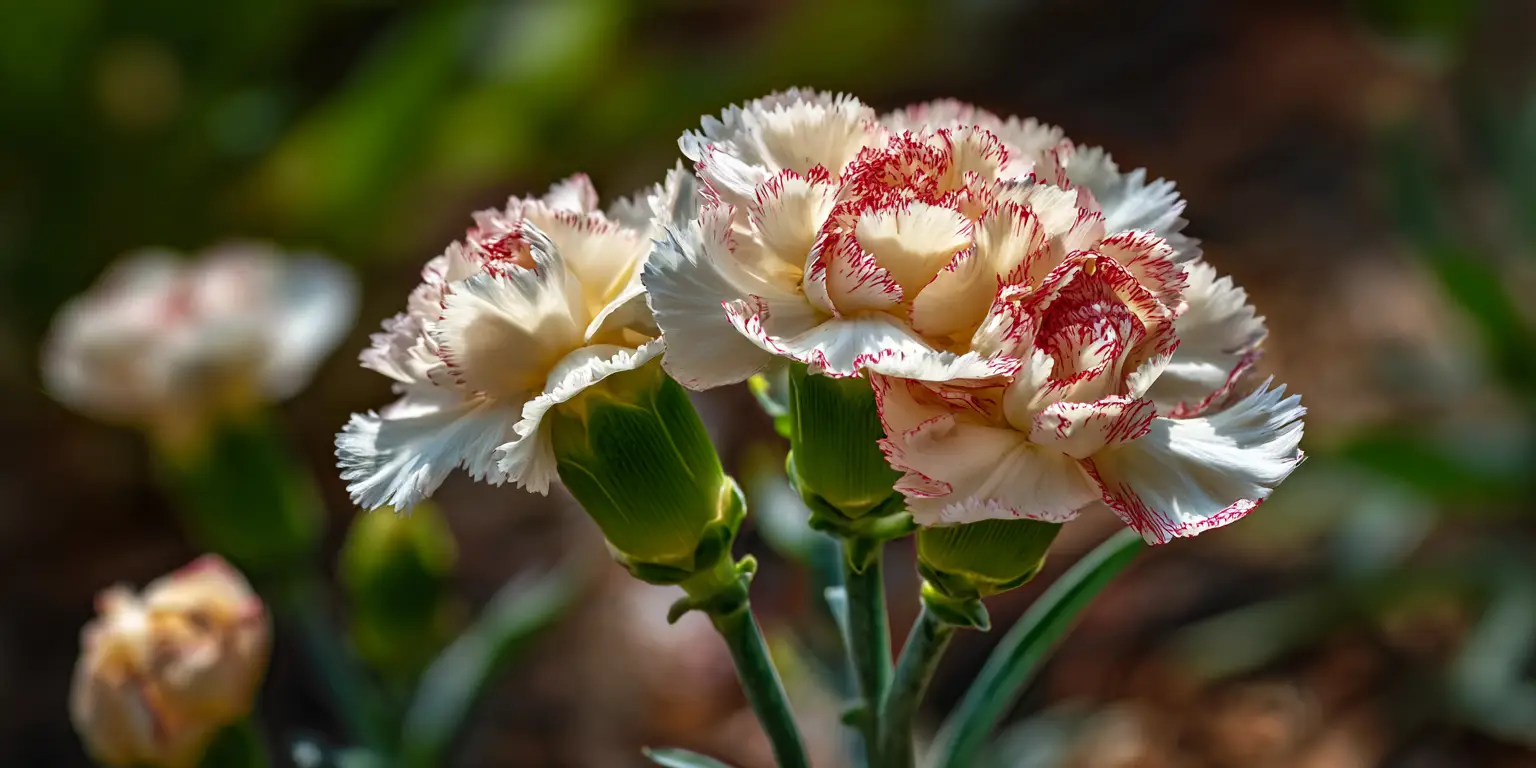
Border Carnations describe perennial within cultivated carnations. Typical colors include many colors and patterns, and the category is most relevant in late spring to summer outdoors. The quickest clue is upright grey-green foliage and relatively large ruffled flowers.
Use and culture: garden borders, exhibition, cutting. A traditional horticultural group rather than a separate species. Because carnation labels can combine production form, garden habit, flower size, and color pattern, this category may overlap with other entries in the list rather than representing a distinct species.
2. Perpetual-Flowering Standard Carnations
Scientific name: Dianthus caryophyllus hybrids
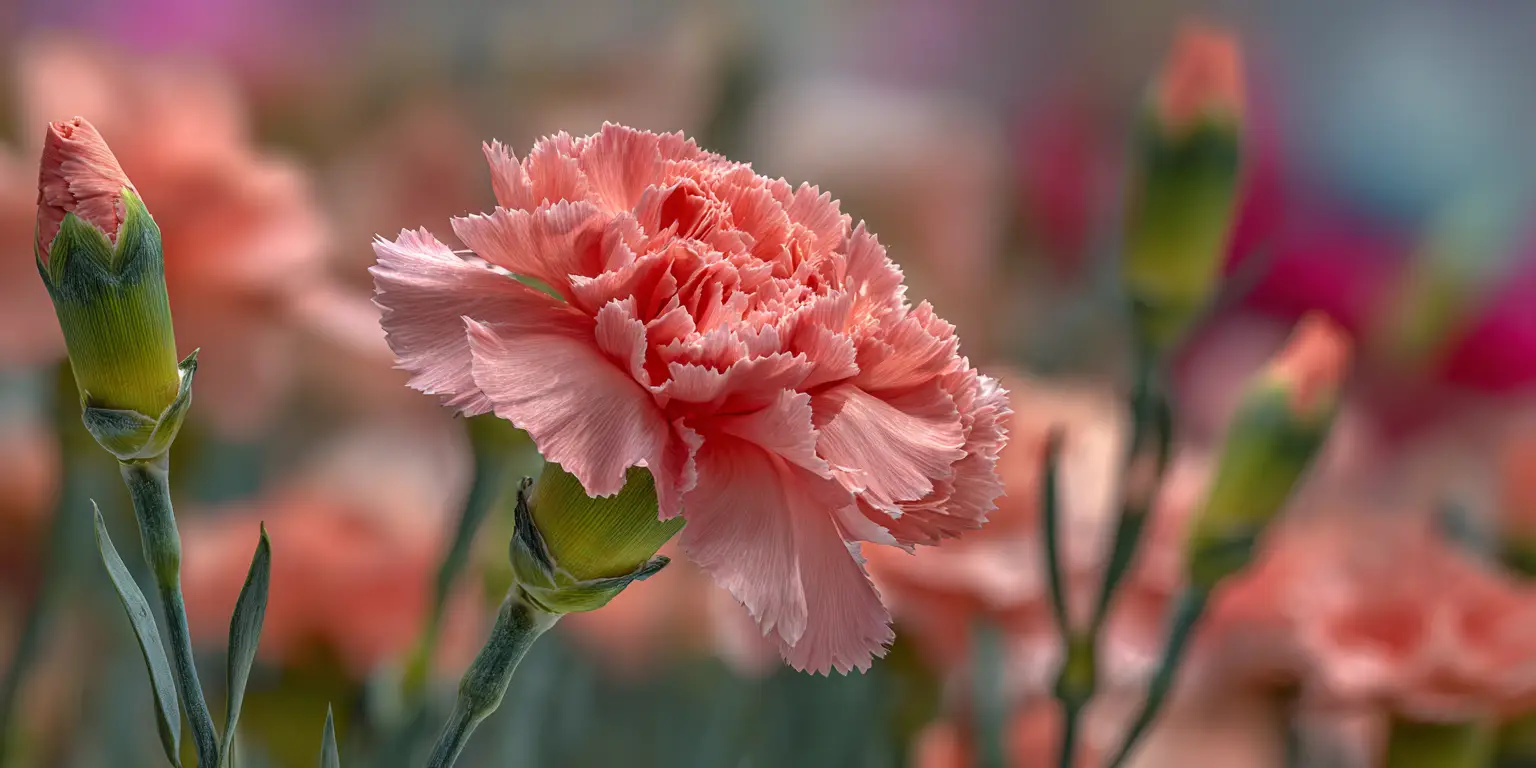
Perpetual-Flowering Standard Carnations describe half-hardy evergreen perennial under glass within cultivated carnations. Typical colors include broad florist color range, and the category is most relevant in potentially year-round under controlled conditions. The quickest clue is one large terminal bloom per prepared flowering stem.
Use and culture: commercial standard cut flowers. Commercial crops are often disbudded so one primary flower develops. Because carnation labels can combine production form, garden habit, flower size, and color pattern, this category may overlap with other entries in the list rather than representing a distinct species.
3. Perpetual-Flowering Spray Carnations
Scientific name: Dianthus caryophyllus hybrids
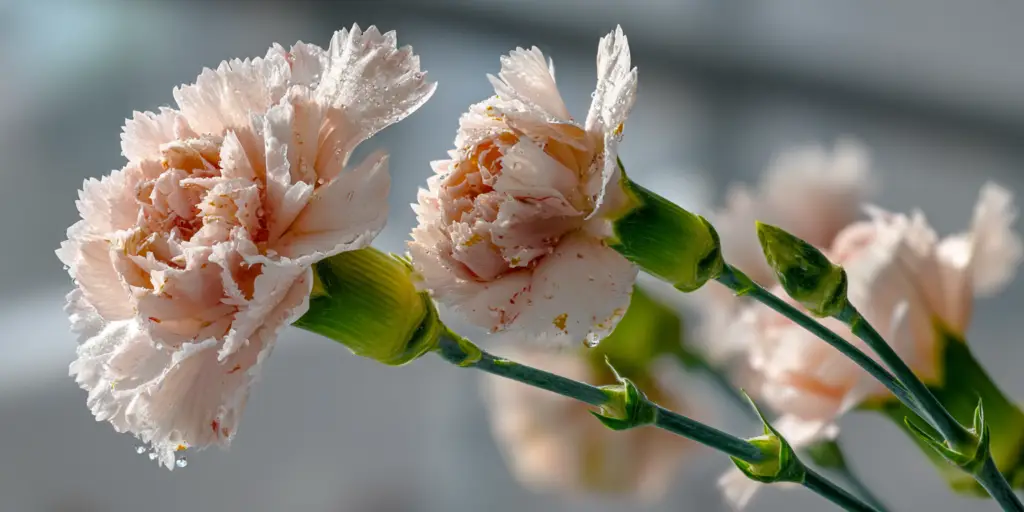
Perpetual-Flowering Spray Carnations describe half-hardy evergreen perennial under glass within cultivated carnations. Typical colors include broad florist color range, and the category is most relevant in potentially year-round under controlled conditions. The quickest clue is several smaller flowers and buds on one branching stem.
Use and culture: spray bouquets, mass and filler. The difference from standard carnations is production form, not species. Because carnation labels can combine production form, garden habit, flower size, and color pattern, this category may overlap with other entries in the list rather than representing a distinct species.
4. Pot Carnations
Scientific name: Dianthus caryophyllus compact hybrids
Pot Carnations describe compact perennial within cultivated carnations. Typical colors include pink, red, white, salmon, bicolors, and the category is most relevant in spring to summer; greenhouse schedules vary. The quickest clue is naturally short growth with multiple ruffled blooms.
Use and culture: containers, patios, gift plants. Compact breeding makes them easier for containers than tall florist standards. Because carnation labels can combine production form, garden habit, flower size, and color pattern, this category may overlap with other entries in the list rather than representing a distinct species.
5. Chabaud Carnations
Scientific name: Dianthus caryophyllus Chabaud Group
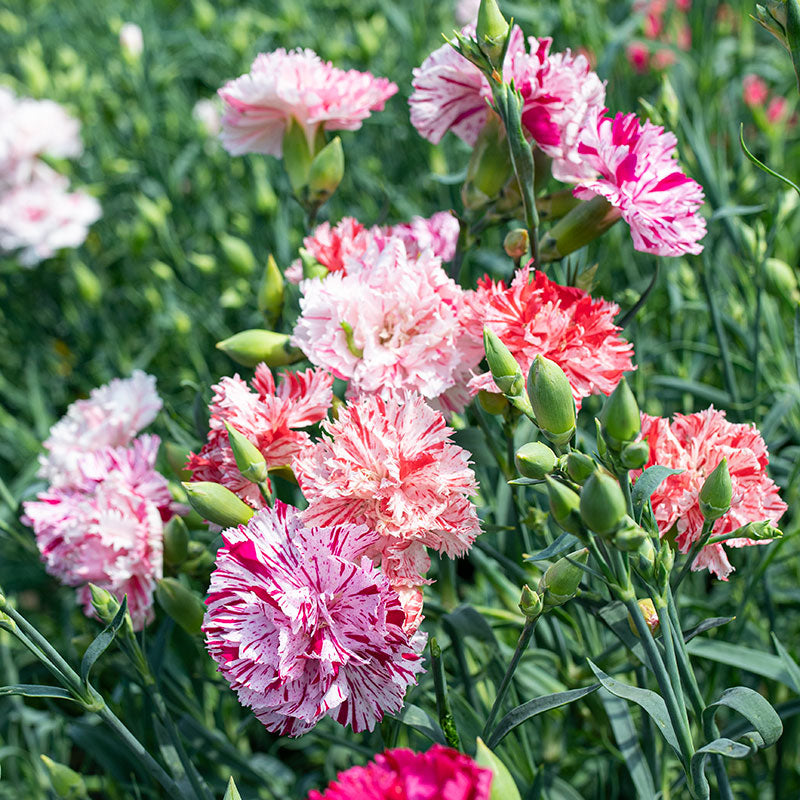
Chabaud Carnations describe tender perennial often grown as annual within cultivated carnations. Typical colors include white, yellow, pink, salmon, red, purple, bicolors, and the category is most relevant in summer from spring sowing. The quickest clue is double fragrant flowers on long stems.
Use and culture: seed-grown cutting gardens. Often grown from seed where gardeners want classic carnation fragrance and cut stems. Because carnation labels can combine production form, garden habit, flower size, and color pattern, this category may overlap with other entries in the list rather than representing a distinct species.
6. Grenadin Carnations
Scientific name: Dianthus caryophyllus Grenadin Group
Grenadin Carnations describe perennial or biennial culture depending climate within cultivated carnations. Typical colors include red, pink, white, yellow, mixes, and the category is most relevant in late spring to summer. The quickest clue is double spicy-scented flowers on sturdy stems.
Use and culture: borders, cutting. An older garden strain commonly sold as seed. Because carnation labels can combine production form, garden habit, flower size, and color pattern, this category may overlap with other entries in the list rather than representing a distinct species.
7. Malmaison Carnations
Scientific name: Dianthus caryophyllus Malmaison Group
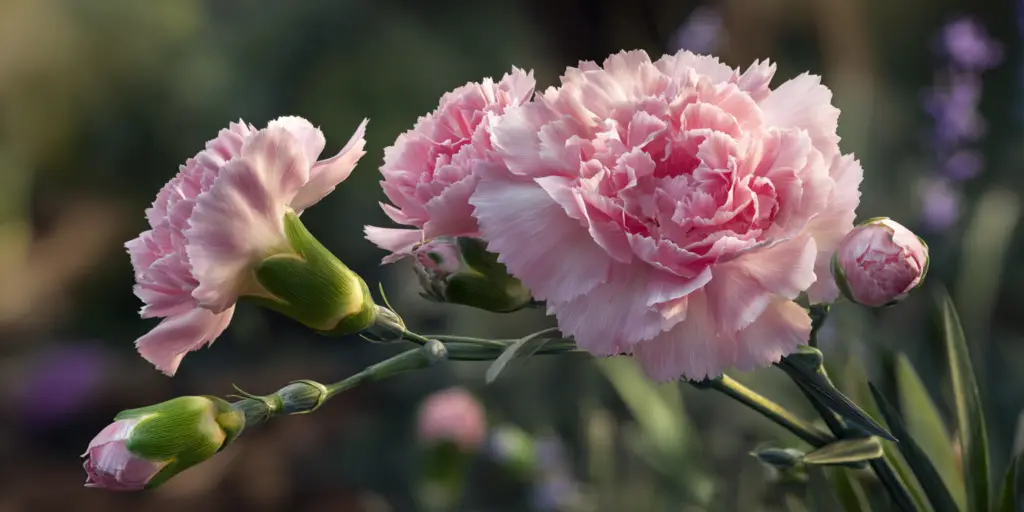
Malmaison Carnations describe heritage greenhouse carnation within cultivated carnations. Typical colors include soft pink, white, salmon and historical colors, and the category is most relevant in summer under traditional culture. The quickest clue is large loosely arranged double blooms with strong fragrance.
Use and culture: heritage collections, exhibition. Historically important but less common in modern mass-market floristry. Because carnation labels can combine production form, garden habit, flower size, and color pattern, this category may overlap with other entries in the list rather than representing a distinct species.
8. Self Carnations
Scientific name: Dianthus caryophyllus exhibition forms
Self Carnations describe horticultural color class within cultivated carnations. Typical colors include one clear petal color, and the category is most relevant in varies. The quickest clue is petals display one principal color rather than striping or edging.
Use and culture: exhibition, formal borders. “Self” describes color pattern and can overlap with other carnation groups. Because carnation labels can combine production form, garden habit, flower size, and color pattern, this category may overlap with other entries in the list rather than representing a distinct species.
9. Picotee Carnations
Scientific name: Dianthus caryophyllus exhibition forms
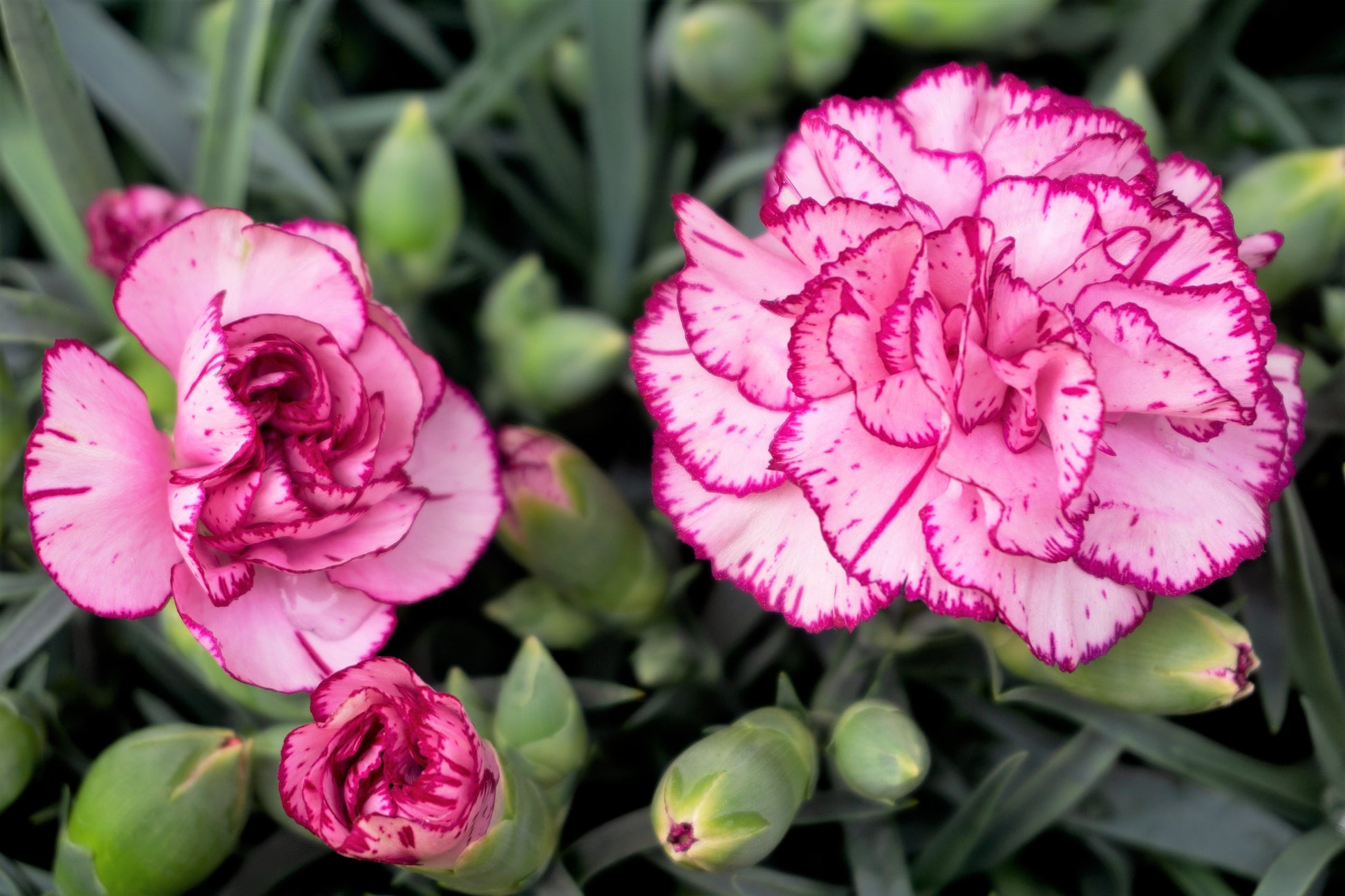
Picotee Carnations describe horticultural color pattern within cultivated carnations. Typical colors include pale ground with contrasting petal edge, and the category is most relevant in varies. The quickest clue is petal margins carry a contrasting rim or edge.
Use and culture: exhibition, specialty cutting. Picotee is a pattern category, not a botanical species. Because carnation labels can combine production form, garden habit, flower size, and color pattern, this category may overlap with other entries in the list rather than representing a distinct species.
10. Fancy Carnations
Scientific name: Dianthus caryophyllus exhibition forms
Fancy Carnations describe horticultural color pattern within cultivated carnations. Typical colors include multicolored flakes, stripes, or markings, and the category is most relevant in varies. The quickest clue is irregular contrasting markings on a paler ground.
Use and culture: exhibition, specialty cutting. Historic terminology varies among societies, so labels should be interpreted in context. Because carnation labels can combine production form, garden habit, flower size, and color pattern, this category may overlap with other entries in the list rather than representing a distinct species.
11. Bicolor Carnations
Scientific name: Dianthus caryophyllus hybrids
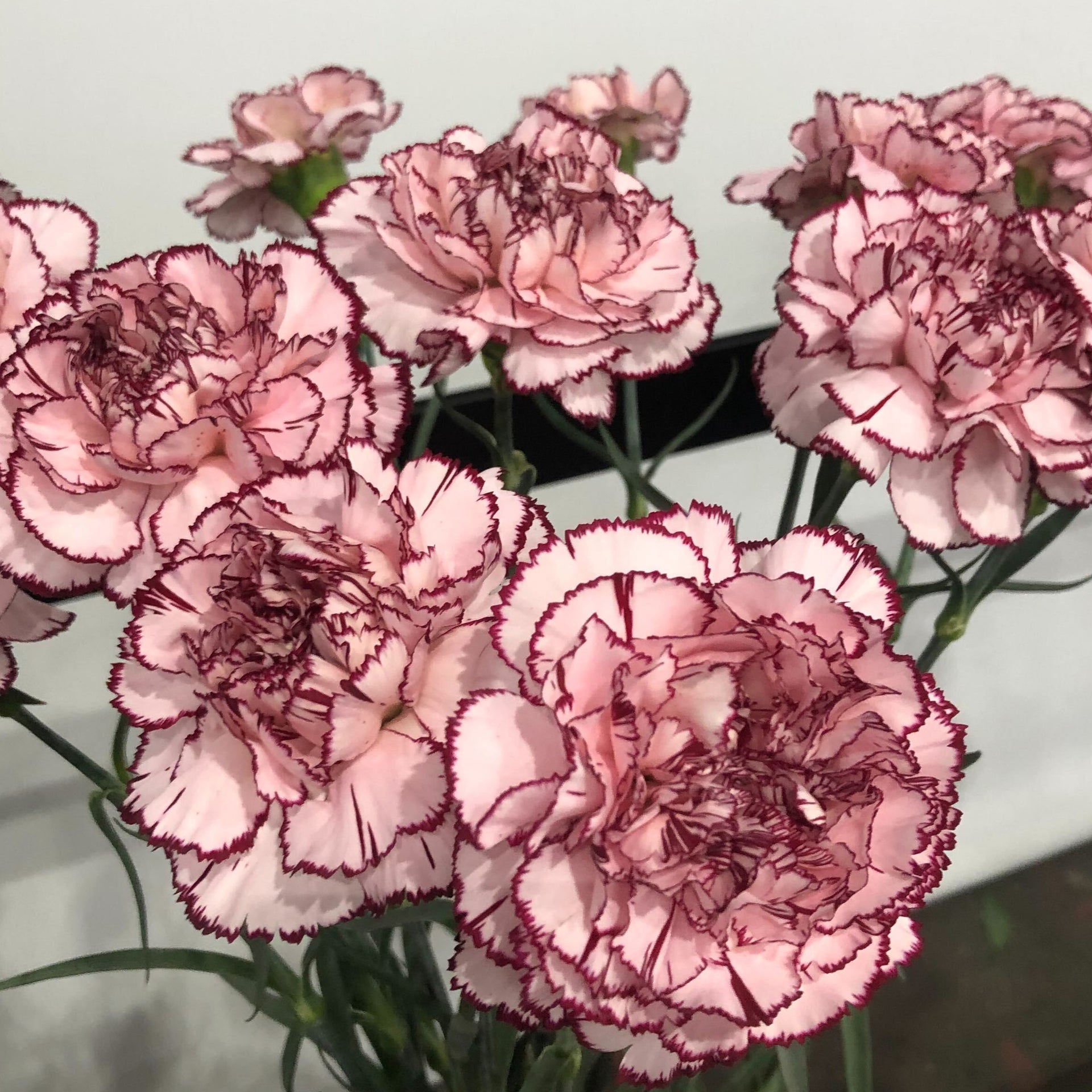
Bicolor Carnations describe cultivar color group within cultivated carnations. Typical colors include two-tone combinations, and the category is most relevant in widely available. The quickest clue is two clearly contrasting colors may appear as edge, eye, stripe, or petal zones.
Use and culture: modern bouquets. A market color category rather than a formal universal taxonomic class. Because carnation labels can combine production form, garden habit, flower size, and color pattern, this category may overlap with other entries in the list rather than representing a distinct species.
12. Green Carnations
Scientific name: Dianthus caryophyllus hybrids
Green Carnations describe cultivar color group within cultivated carnations. Typical colors include lime to medium green, and the category is most relevant in widely available commercially. The quickest clue is dense ruffled petals in green tones.
Use and culture: modern arrangements, contrast work. Color comes from cultivar genetics and breeding, not dye in commercially grown natural-green types. Because carnation labels can combine production form, garden habit, flower size, and color pattern, this category may overlap with other entries in the list rather than representing a distinct species.
13. Burgundy Carnations
Scientific name: Dianthus caryophyllus hybrids
Burgundy Carnations describe cultivar color group within cultivated carnations. Typical colors include wine red to burgundy, and the category is most relevant in widely available. The quickest clue is deep red-purple ruffled blooms.
Use and culture: formal and moody arrangements. Actual shade varies by cultivar and lighting. Because carnation labels can combine production form, garden habit, flower size, and color pattern, this category may overlap with other entries in the list rather than representing a distinct species.
14. White Carnations
Scientific name: Dianthus caryophyllus hybrids
White Carnations describe cultivar color group within cultivated carnations. Typical colors include white to ivory, and the category is most relevant in widely available. The quickest clue is clean white ruffled flowers.
Use and culture: weddings, memorials, modern monochrome. Symbolism varies by culture and occasion. Because carnation labels can combine production form, garden habit, flower size, and color pattern, this category may overlap with other entries in the list rather than representing a distinct species.
15. Fragrant Clove Carnation
Scientific name: Dianthus caryophyllus species and fragrant selections

Fragrant Clove Carnation describe evergreen perennial within cultivated carnations. Typical colors include pink, purple, many cultivar colors, and the category is most relevant in summer. The quickest clue is single or double flowers with spicy clove-like scent and narrow grey-green leaves.
Use and culture: scent gardens, heritage borders. Not every modern cut-flower cultivar is strongly fragrant. Because carnation labels can combine production form, garden habit, flower size, and color pattern, this category may overlap with other entries in the list rather than representing a distinct species.
How Carnations Are Classified
The RHS is the International Cultivar Registration Authority for Dianthus, covering carnations and pinks. In practice, carnation labels combine several layers: botanical identity, horticultural group, growth habit, commercial production form, and color pattern. That is why a cultivar can simultaneously be a perpetual-flowering carnation, a spray type, and a bicolor.
How to Tell Carnation Types Apart
Start with stem architecture. Standard cut carnations usually present one large flower per prepared stem, while spray carnations carry several flowers and buds. Pot carnations are compact. Border and seed-grown garden carnations are selected for outdoor performance. After growth habit, describe flower pattern—self, picotee, bicolor, striped, or fancy—without mistaking that pattern for a separate species.
Growing and Care Tips
Garden carnations prefer full sun and sharply drained soil. Avoid persistent winter wet around crowns. Deadheading supports continued bloom in garden strains, and cutting non-flowering shoots is a common propagation method for named cultivars. Florist carnations grown under glass are managed differently from outdoor border plants, so greenhouse production advice should not be copied directly into a home perennial bed.
Garden Carnations vs. Florist Carnations
Outdoor performance depends on cultivar, winter moisture, and local climate. Many florist carnations are produced under protected conditions for stem length and year-round supply, while garden strains are selected for beds, borders, or seasonal cutting. When buying a plant, check whether it is a pot plant, border type, or commercial cut-flower selection.
Safety and Handling Notes
Dianthus caryophyllus can cause skin sensitivity in some people, and carnations may cause gastrointestinal upset in pets if chewed. Avoid presenting decorative florist carnations as edible unless the exact species and food-safe production are confirmed; flowers grown for the floral trade may have pesticide treatments not intended for consumption.
Common Mistakes When Choosing or Identifying Types of carnation flowers
- Treating spray and standard carnations as different species.
- Calling every Dianthus a carnation.
- Confusing color patterns with botanical classification.
- Growing greenhouse cut-flower cultivars as if they were proven garden perennials.
- Planting carnations in persistently wet soil.
Fun Facts About Types of carnation flowers
- The RHS maintains an international cultivar register for Dianthus.
- Standard and spray carnations can belong to the same broader horticultural background.
- Carnation fragrance often has a spicy clove character.
- Narrow grey-green leaves are a useful identification clue.
- Picotee describes contrasting petal edging.
- A self flower has one principal petal color.
- Pot carnations are bred for compact growth.
- Commercial carnations can be available year-round because of protected production.
- Many old and modern carnations trace to Dianthus caryophyllus.
- Carnation symbolism varies by color and culture.
Final Thoughts on Types of carnation flowers
The clearest way to compare types of carnation flowers is to separate botanical identity from horticultural use. First ask whether the plant is a border, perpetual-flowering, spray, standard, or pot type; then describe its color pattern and cultivar. That prevents the common mistake of turning every florist style into a fake species.
Frequently Asked Questions
1. How many types of carnation flowers are there?
There is no single simple botanical count because carnation categories overlap. This guide uses 15 useful horticultural forms, production types, strains, and color patterns rather than pretending they are separate species.
2. What is the botanical name of the common carnation?
The florist and garden carnation is primarily associated with Dianthus caryophyllus, though cultivated carnations have complex breeding histories.
3. What is a standard carnation?
A standard cut carnation is trained to produce one large terminal flower per marketable stem by removing side buds.
4. What is a spray carnation?
A spray carnation carries several smaller flowers and buds on a branched stem, creating a fuller cluster for bouquets.
5. What is a border carnation?
Border carnations are garden-oriented carnations selected for outdoor beds and borders rather than exclusively for greenhouse cut-flower production.
6. What is a perpetual-flowering carnation?
Perpetual-flowering carnations are bred and managed to flower over a long period, traditionally under protected cultivation for the cut-flower trade.
7. What is a pot carnation?
Pot carnations are compact selections bred for containers and seasonal displays. Their shorter growth makes them different in use from tall florist standards.
8. What is a Chabaud carnation?
Chabaud carnations are classic seed-grown garden strains known for double, often fragrant blooms and a useful cutting habit.
9. What is a Grenadin carnation?
Grenadin is another seed-grown carnation strain used for garden beds and cutting, often valued for relatively early flowering and fragrance.
10. What does ‘self’ mean in carnations?
A self carnation has petals in one principal color rather than a contrasting edge, stripe, or marked pattern.
11. What is a picotee carnation?
Picotee describes a flower whose petals have a contrasting narrow edge. It is a color-pattern term, not a separate species.
12. What is a fancy carnation?
Fancy is a traditional exhibition-style term for more complex or irregular color markings. Exact class terminology can vary by society and era.
13. Are green carnations natural?
Green-flowered carnation cultivars exist, although shade intensity varies. A green color category still belongs within the broader cultivated carnation group.
14. Are blue carnations natural?
True naturally blue carnations are not a standard color of Dianthus caryophyllus. Some commercial blue or vivid purple products are dyed or result from specialized biotechnology.
15. Are carnations fragrant?
Many carnations have a spicy clove-like scent, but fragrance strength varies by cultivar and commercial selection.
16. Are carnations annuals or perennials?
Dianthus caryophyllus is a short-lived perennial in suitable conditions, but some seed strains are grown as annuals or biennials depending on climate.
17. Do carnations need full sun?
Garden carnations generally flower best in full sun with well-drained soil. Very hot climates may benefit from afternoon protection.
18. What soil do carnations prefer?
They perform best in well-drained soil and dislike persistent winter wet around the crown. Soil fertility should support flowering without excessive soft growth.
19. Can carnations grow in pots?
Yes. Compact pot carnations are bred for containers, and other smaller garden types can also succeed in pots with excellent drainage.
20. How often should carnations be watered?
Water according to soil and weather rather than a fixed schedule. Let the root zone drain well and avoid keeping crowns constantly soggy.
21. Should carnations be deadheaded?
Deadheading garden carnations can encourage a tidier plant and continued flowering by preventing energy from going into unwanted seed.
22. Can carnations be grown from cuttings?
Yes. Non-flowering shoots are commonly used to propagate named cultivars so the new plants remain genetically identical to the parent.
23. Can carnations be grown from seed?
Yes, especially strains such as Chabaud and Grenadin. Seed-grown plants can show more variation than named clonal cultivars.
24. Are carnations good cut flowers?
Yes. They are valued commercially for strong stems, broad color range, transport tolerance, and generally good vase life.
25. How long do cut carnations last?
Fresh carnations are among the more durable common cut flowers, but actual vase life depends on cultivar, harvest stage, sanitation, temperature, and care.
26. Are carnations edible?
Do not eat decorative florist carnations simply because some Dianthus flowers have culinary uses. Confirm the exact species and food-safe growing history first.
27. Are carnations toxic to pets?
Carnations can cause mild gastrointestinal or skin effects in pets if ingested. Keep arrangements out of reach if an animal chews plants.
28. What is the difference between carnations and pinks?
Both are in the genus Dianthus. ‘Carnation’ usually refers to D. caryophyllus-derived cultivated forms, while ‘pinks’ commonly refers to other Dianthus species and garden hybrids.
29. Why are carnation classifications confusing?
One plant can be described simultaneously by production type, plant habit, flower size, color pattern, and cultivar name. Those labels answer different questions.
30. How do I choose a carnation type?
For a garden, choose a border or suitable seed strain with local hardiness. For bouquets, choose standard or spray forms according to desired scale and texture.
SEO Title
Meta Description
Learn 15 types of carnation flowers, including standard, spray, border, pot, Chabaud, picotee, and color forms, with care tips.
Suggested URL Slug
types-of-carnation-flowers