

Choosing among the many types of aquarium fish is easier when you compare adult size, water type, social behavior, minimum tank space, feeding needs, and care level. This guide covers 80 popular freshwater, brackish, and marine fish, from nano schooling species to large cichlids and surgeonfish. The goal is not to create a shopping list, but to help you build a humane, compatible, fully cycled aquarium.
What Are the Main Types of Aquarium Fish?
The main categories are freshwater community fish, cichlids, catfish and loaches, cool-water fish, brackish fish, and marine reef fish. Freshwater community species are usually the easiest starting point, while brackish and marine systems demand tighter control of salinity and water chemistry. Adult size and social needs matter more than the fish’s size at the store.
| Category | Examples | Main Planning Issue |
|---|---|---|
| Livebearers and schooling fish | Guppies, platies, tetras, rasboras | Group size, breeding, and compatibility |
| Cichlids | Angelfish, rams, oscars, peacocks | Territory, adult size, and aggression |
| Bottom dwellers | Corydoras, loaches, plecos | Substrate, group size, and feeding access |
| Cool-water fish | Goldfish, white clouds, ricefish | Temperature and oxygen |
| Brackish fish | Archerfish, monos, figure eight puffers | Stable salinity and large adult size |
| Marine fish | Clownfish, grammas, tangs | Mature filtration, salinity, quarantine, and swimming space |
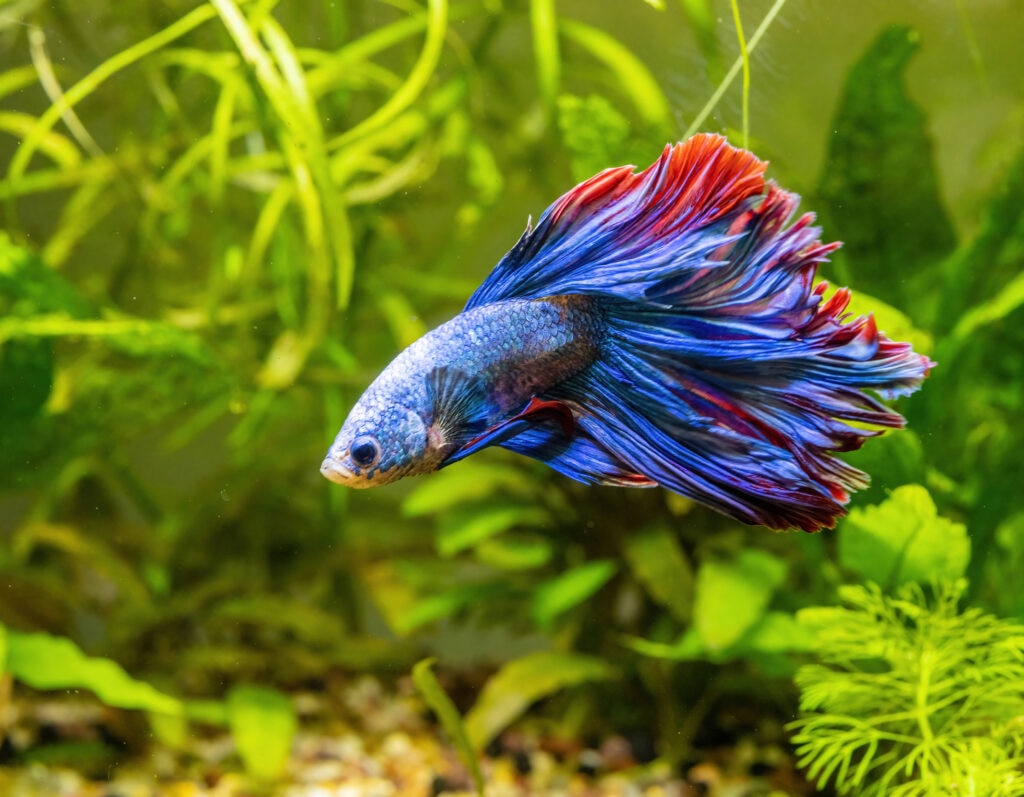
1. Betta
Betta (Betta splendens). Betta is a freshwater labyrinth fish valued for its recognizable appearance and behavior. Adults are commonly around 2.5 in, and a practical starting enclosure is 5+ gal, adjusted upward for groups, aquascaping, and filtration. Its usual temperament is semi-aggressive, so tank mates should be chosen by size, speed, fin shape, and feeding behavior. Cycle the aquarium fully before purchase, keep ammonia and nitrite at zero, and avoid sudden temperature or pH changes. Care level: Beginner with research.
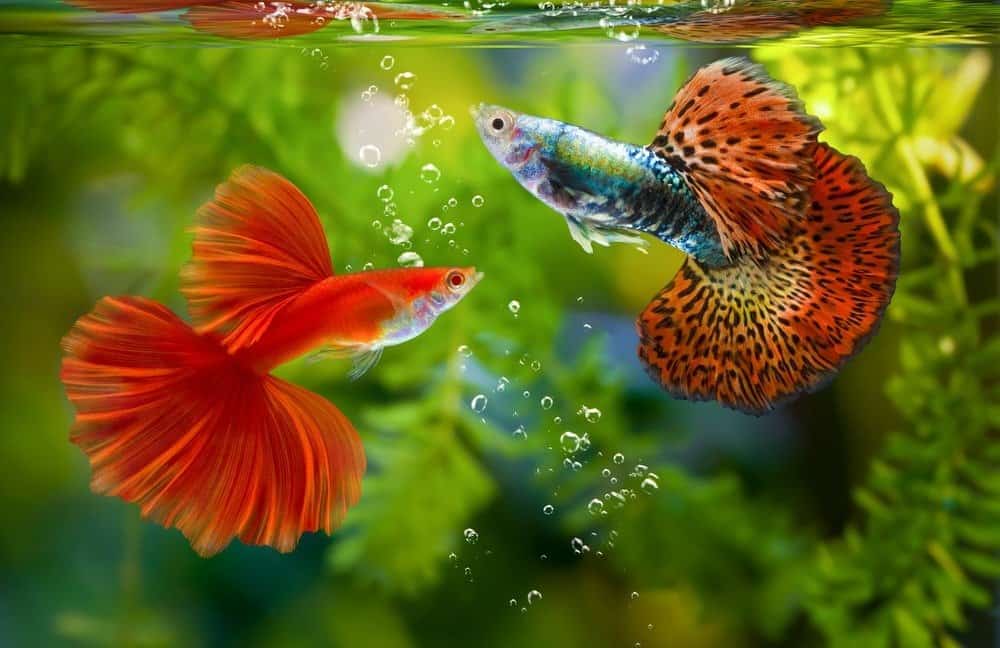
2. Guppy
Guppy (Poecilia reticulata). Among home-aquarium choices, the Guppy stands out as a freshwater livebearer with clear space and social needs. Adults are commonly around 2 in, and a practical starting enclosure is 10+ gal, adjusted upward for groups, aquascaping, and filtration. It is generally described as peaceful; observe individuals because breeding condition and cramped space can change behavior. Provide hiding places or open swimming room according to its natural behavior, and maintain a consistent weekly care routine. Care level: Beginner.
3. Endler’s Livebearer
Endler’s Livebearer (Poecilia wingei). The Endler’s Livebearer is best understood as a freshwater livebearer, not simply as a decorative fish. Adults are commonly around 1.5 in, and a practical starting enclosure is 10+ gal, adjusted upward for groups, aquascaping, and filtration. Compatibility is guided by its peaceful nature and by whether it needs a school, territory, cave, or surface zone. Research group size and adult dimensions before stocking because juvenile store size can be misleading. Care level: Beginner.
4. Platy
Platy (Xiphophorus maculatus). For aquarists comparing species, the Platy is a useful example of a freshwater livebearer with specific compatibility requirements. Adults are commonly around 2.5 in, and a practical starting enclosure is 15+ gal, adjusted upward for groups, aquascaping, and filtration. Its usual temperament is peaceful, so tank mates should be chosen by size, speed, fin shape, and feeding behavior. Feed a varied species-appropriate diet in portions the fish can finish without polluting the water. Care level: Beginner.
5. Swordtail
Swordtail (Xiphophorus hellerii). Swordtail is a freshwater livebearer valued for its recognizable appearance and behavior. Adults are commonly around 4 in, and a practical starting enclosure is 20+ gal, adjusted upward for groups, aquascaping, and filtration. It is generally described as peaceful to active; observe individuals because breeding condition and cramped space can change behavior. Cycle the aquarium fully before purchase, keep ammonia and nitrite at zero, and avoid sudden temperature or pH changes. Care level: Beginner.
6. Molly
Molly (Poecilia sphenops). Among home-aquarium choices, the Molly stands out as a freshwater livebearer with clear space and social needs. Adults are commonly around 4 in, and a practical starting enclosure is 20+ gal, adjusted upward for groups, aquascaping, and filtration. Compatibility is guided by its peaceful nature and by whether it needs a school, territory, cave, or surface zone. Provide hiding places or open swimming room according to its natural behavior, and maintain a consistent weekly care routine. Care level: Beginner with hard water.
7. Neon Tetra
Neon Tetra (Paracheirodon innesi). The Neon Tetra is best understood as a freshwater tetra, not simply as a decorative fish. Adults are commonly around 1.5 in, and a practical starting enclosure is 15+ gal, adjusted upward for groups, aquascaping, and filtration. Its usual temperament is peaceful schooling, so tank mates should be chosen by size, speed, fin shape, and feeding behavior. Research group size and adult dimensions before stocking because juvenile store size can be misleading. Care level: Beginner.
8. Cardinal Tetra
Cardinal Tetra (Paracheirodon axelrodi). For aquarists comparing species, the Cardinal Tetra is a useful example of a freshwater tetra with specific compatibility requirements. Adults are commonly around 2 in, and a practical starting enclosure is 20+ gal, adjusted upward for groups, aquascaping, and filtration. It is generally described as peaceful schooling; observe individuals because breeding condition and cramped space can change behavior. Feed a varied species-appropriate diet in portions the fish can finish without polluting the water. Care level: Intermediate.
9. Ember Tetra
Ember Tetra (Hyphessobrycon amandae). Ember Tetra is a freshwater tetra valued for its recognizable appearance and behavior. Adults are commonly around 0.8 in, and a practical starting enclosure is 10+ gal, adjusted upward for groups, aquascaping, and filtration. Compatibility is guided by its peaceful schooling nature and by whether it needs a school, territory, cave, or surface zone. Cycle the aquarium fully before purchase, keep ammonia and nitrite at zero, and avoid sudden temperature or pH changes. Care level: Beginner.

10. Black Neon Tetra
Black Neon Tetra (Hyphessobrycon herbertaxelrodi). Among home-aquarium choices, the Black Neon Tetra stands out as a freshwater tetra with clear space and social needs. Adults are commonly around 1.5 in, and a practical starting enclosure is 15+ gal, adjusted upward for groups, aquascaping, and filtration. Its usual temperament is peaceful schooling, so tank mates should be chosen by size, speed, fin shape, and feeding behavior. Provide hiding places or open swimming room according to its natural behavior, and maintain a consistent weekly care routine. Care level: Beginner.
11. Rummy-nose Tetra
Rummy-nose Tetra (Hemigrammus bleheri). The Rummy-nose Tetra is best understood as a freshwater tetra, not simply as a decorative fish. Adults are commonly around 2 in, and a practical starting enclosure is 20+ gal, adjusted upward for groups, aquascaping, and filtration. It is generally described as peaceful schooling; observe individuals because breeding condition and cramped space can change behavior. Research group size and adult dimensions before stocking because juvenile store size can be misleading. Care level: Intermediate.
12. Glowlight Tetra
Glowlight Tetra (Hemigrammus erythrozonus). For aquarists comparing species, the Glowlight Tetra is a useful example of a freshwater tetra with specific compatibility requirements. Adults are commonly around 1.5 in, and a practical starting enclosure is 15+ gal, adjusted upward for groups, aquascaping, and filtration. Compatibility is guided by its peaceful schooling nature and by whether it needs a school, territory, cave, or surface zone. Feed a varied species-appropriate diet in portions the fish can finish without polluting the water. Care level: Beginner.
13. Serpae Tetra
Serpae Tetra (Hyphessobrycon eques). Serpae Tetra is a freshwater tetra valued for its recognizable appearance and behavior. Adults are commonly around 1.75 in, and a practical starting enclosure is 20+ gal, adjusted upward for groups, aquascaping, and filtration. Its usual temperament is active; may nip fins, so tank mates should be chosen by size, speed, fin shape, and feeding behavior. Cycle the aquarium fully before purchase, keep ammonia and nitrite at zero, and avoid sudden temperature or pH changes. Care level: Intermediate.

14. Black Skirt Tetra
Black Skirt Tetra (Gymnocorymbus ternetzi). Among home-aquarium choices, the Black Skirt Tetra stands out as a freshwater tetra with clear space and social needs. Adults are commonly around 2.5 in, and a practical starting enclosure is 20+ gal, adjusted upward for groups, aquascaping, and filtration. It is generally described as active schooling; observe individuals because breeding condition and cramped space can change behavior. Provide hiding places or open swimming room according to its natural behavior, and maintain a consistent weekly care routine. Care level: Beginner.
15. Lemon Tetra
Lemon Tetra (Hyphessobrycon pulchripinnis). The Lemon Tetra is best understood as a freshwater tetra, not simply as a decorative fish. Adults are commonly around 2 in, and a practical starting enclosure is 20+ gal, adjusted upward for groups, aquascaping, and filtration. Compatibility is guided by its peaceful schooling nature and by whether it needs a school, territory, cave, or surface zone. Research group size and adult dimensions before stocking because juvenile store size can be misleading. Care level: Beginner.
16. Harlequin Rasbora
Harlequin Rasbora (Trigonostigma heteromorpha). For aquarists comparing species, the Harlequin Rasbora is a useful example of a freshwater rasbora with specific compatibility requirements. Adults are commonly around 2 in, and a practical starting enclosure is 15+ gal, adjusted upward for groups, aquascaping, and filtration. Its usual temperament is peaceful schooling, so tank mates should be chosen by size, speed, fin shape, and feeding behavior. Feed a varied species-appropriate diet in portions the fish can finish without polluting the water. Care level: Beginner.
17. Chili Rasbora
Chili Rasbora (Boraras brigittae). Chili Rasbora is a nano freshwater rasbora valued for its recognizable appearance and behavior. Adults are commonly around 0.8 in, and a practical starting enclosure is 10+ gal, adjusted upward for groups, aquascaping, and filtration. It is generally described as peaceful schooling; observe individuals because breeding condition and cramped space can change behavior. Cycle the aquarium fully before purchase, keep ammonia and nitrite at zero, and avoid sudden temperature or pH changes. Care level: Intermediate.

18. Celestial Pearl Danio
Celestial Pearl Danio (Danio margaritatus). Among home-aquarium choices, the Celestial Pearl Danio stands out as a nano freshwater cyprinid with clear space and social needs. Adults are commonly around 1 in, and a practical starting enclosure is 10+ gal, adjusted upward for groups, aquascaping, and filtration. Compatibility is guided by its peaceful but shy nature and by whether it needs a school, territory, cave, or surface zone. Provide hiding places or open swimming room according to its natural behavior, and maintain a consistent weekly care routine. Care level: Intermediate.
19. Zebra Danio
Zebra Danio (Danio rerio). The Zebra Danio is best understood as a freshwater danio, not simply as a decorative fish. Adults are commonly around 2 in, and a practical starting enclosure is 20+ gal, adjusted upward for groups, aquascaping, and filtration. Its usual temperament is very active schooling, so tank mates should be chosen by size, speed, fin shape, and feeding behavior. Research group size and adult dimensions before stocking because juvenile store size can be misleading. Care level: Beginner.
20. Pearl Danio
Pearl Danio (Danio albolineatus). For aquarists comparing species, the Pearl Danio is a useful example of a freshwater danio with specific compatibility requirements. Adults are commonly around 2.5 in, and a practical starting enclosure is 20+ gal, adjusted upward for groups, aquascaping, and filtration. It is generally described as active schooling; observe individuals because breeding condition and cramped space can change behavior. Feed a varied species-appropriate diet in portions the fish can finish without polluting the water. Care level: Beginner.
21. White Cloud Mountain Minnow
White Cloud Mountain Minnow (Tanichthys albonubes). White Cloud Mountain Minnow is a cool-water minnow valued for its recognizable appearance and behavior. Adults are commonly around 1.5 in, and a practical starting enclosure is 15+ gal, adjusted upward for groups, aquascaping, and filtration. Compatibility is guided by its peaceful schooling nature and by whether it needs a school, territory, cave, or surface zone. Cycle the aquarium fully before purchase, keep ammonia and nitrite at zero, and avoid sudden temperature or pH changes. Care level: Beginner.

22. Cherry Barb
Cherry Barb (Puntius titteya). Among home-aquarium choices, the Cherry Barb stands out as a freshwater barb with clear space and social needs. Adults are commonly around 2 in, and a practical starting enclosure is 20+ gal, adjusted upward for groups, aquascaping, and filtration. Its usual temperament is peaceful schooling, so tank mates should be chosen by size, speed, fin shape, and feeding behavior. Provide hiding places or open swimming room according to its natural behavior, and maintain a consistent weekly care routine. Care level: Beginner.
23. Tiger Barb
Tiger Barb (Puntigrus tetrazona). The Tiger Barb is best understood as a freshwater barb, not simply as a decorative fish. Adults are commonly around 3 in, and a practical starting enclosure is 30+ gal, adjusted upward for groups, aquascaping, and filtration. It is generally described as active; fin-nipping risk; observe individuals because breeding condition and cramped space can change behavior. Research group size and adult dimensions before stocking because juvenile store size can be misleading. Care level: Intermediate.
24. Gold Barb
Gold Barb (Barbodes semifasciolatus). For aquarists comparing species, the Gold Barb is a useful example of a freshwater barb with specific compatibility requirements. Adults are commonly around 3 in, and a practical starting enclosure is 25+ gal, adjusted upward for groups, aquascaping, and filtration. Compatibility is guided by its peaceful and active nature and by whether it needs a school, territory, cave, or surface zone. Feed a varied species-appropriate diet in portions the fish can finish without polluting the water. Care level: Beginner.
25. Rosy Barb
Rosy Barb (Pethia conchonius). Rosy Barb is a freshwater barb valued for its recognizable appearance and behavior. Adults are commonly around 4 in, and a practical starting enclosure is 30+ gal, adjusted upward for groups, aquascaping, and filtration. Its usual temperament is active schooling, so tank mates should be chosen by size, speed, fin shape, and feeding behavior. Cycle the aquarium fully before purchase, keep ammonia and nitrite at zero, and avoid sudden temperature or pH changes. Care level: Beginner.
26. Dwarf Gourami
Dwarf Gourami (Trichogaster lalius). Among home-aquarium choices, the Dwarf Gourami stands out as a freshwater labyrinth fish with clear space and social needs. Adults are commonly around 3.5 in, and a practical starting enclosure is 20+ gal, adjusted upward for groups, aquascaping, and filtration. It is generally described as peaceful to territorial; observe individuals because breeding condition and cramped space can change behavior. Provide hiding places or open swimming room according to its natural behavior, and maintain a consistent weekly care routine. Care level: Intermediate.
27. Honey Gourami
Honey Gourami (Trichogaster chuna). The Honey Gourami is best understood as a freshwater labyrinth fish, not simply as a decorative fish. Adults are commonly around 2 in, and a practical starting enclosure is 15+ gal, adjusted upward for groups, aquascaping, and filtration. Compatibility is guided by its gentle nature and by whether it needs a school, territory, cave, or surface zone. Research group size and adult dimensions before stocking because juvenile store size can be misleading. Care level: Beginner.
28. Pearl Gourami
Pearl Gourami (Trichopodus leerii). For aquarists comparing species, the Pearl Gourami is a useful example of a freshwater labyrinth fish with specific compatibility requirements. Adults are commonly around 5 in, and a practical starting enclosure is 30+ gal, adjusted upward for groups, aquascaping, and filtration. Its usual temperament is peaceful, so tank mates should be chosen by size, speed, fin shape, and feeding behavior. Feed a varied species-appropriate diet in portions the fish can finish without polluting the water. Care level: Beginner to intermediate.
29. Sparkling Gourami
Sparkling Gourami (Trichopsis pumila). Sparkling Gourami is a nano labyrinth fish valued for its recognizable appearance and behavior. Adults are commonly around 1.5 in, and a practical starting enclosure is 10+ gal, adjusted upward for groups, aquascaping, and filtration. It is generally described as peaceful; mildly territorial; observe individuals because breeding condition and cramped space can change behavior. Cycle the aquarium fully before purchase, keep ammonia and nitrite at zero, and avoid sudden temperature or pH changes. Care level: Intermediate.
30. Freshwater Angelfish
Freshwater Angelfish (Pterophyllum scalare). Among home-aquarium choices, the Freshwater Angelfish stands out as a freshwater cichlid with clear space and social needs. Adults are commonly around 6 in body; tall fins, and a practical starting enclosure is 30+ gal tall, adjusted upward for groups, aquascaping, and filtration. Compatibility is guided by its semi-aggressive nature and by whether it needs a school, territory, cave, or surface zone. Provide hiding places or open swimming room according to its natural behavior, and maintain a consistent weekly care routine. Care level: Intermediate.
31. Discus
Discus (Symphysodon spp.). The Discus is best understood as a freshwater cichlid, not simply as a decorative fish. Adults are commonly around 6–8 in, and a practical starting enclosure is 55+ gal, adjusted upward for groups, aquascaping, and filtration. Its usual temperament is peaceful but demanding, so tank mates should be chosen by size, speed, fin shape, and feeding behavior. Research group size and adult dimensions before stocking because juvenile store size can be misleading. Care level: Advanced.
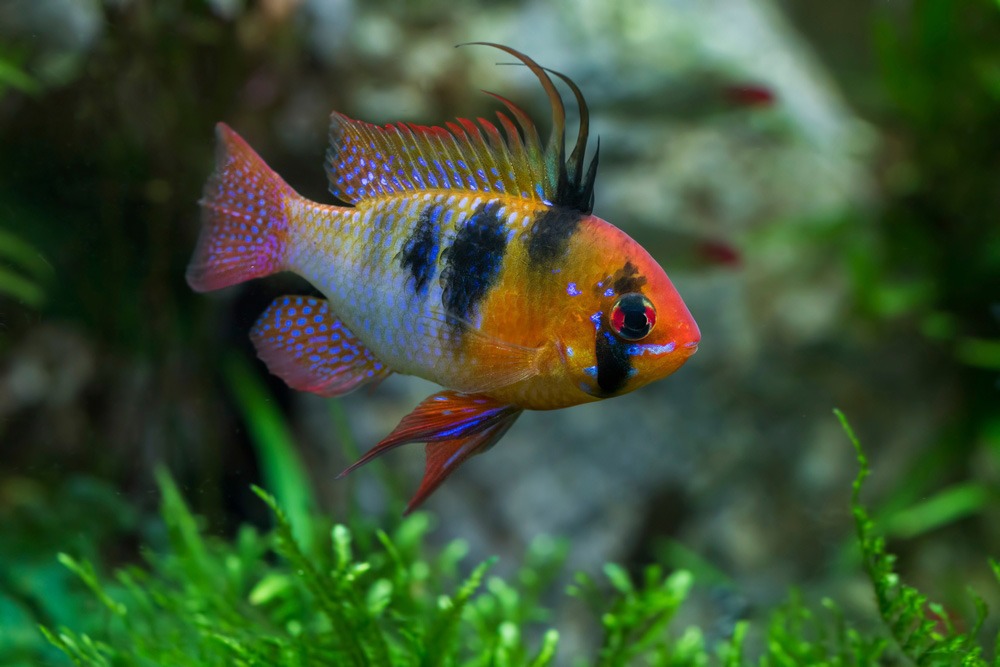
32. German Blue Ram
German Blue Ram (Mikrogeophagus ramirezi). For aquarists comparing species, the German Blue Ram is a useful example of a dwarf cichlid with specific compatibility requirements. Adults are commonly around 2.5 in, and a practical starting enclosure is 20+ gal, adjusted upward for groups, aquascaping, and filtration. It is generally described as territorial when breeding; observe individuals because breeding condition and cramped space can change behavior. Feed a varied species-appropriate diet in portions the fish can finish without polluting the water. Care level: Intermediate to advanced.
33. Cockatoo Dwarf Cichlid
Cockatoo Dwarf Cichlid (Apistogramma cacatuoides). Cockatoo Dwarf Cichlid is a dwarf cichlid valued for its recognizable appearance and behavior. Adults are commonly around 3.5 in, and a practical starting enclosure is 20+ gal, adjusted upward for groups, aquascaping, and filtration. Compatibility is guided by its territorial around caves nature and by whether it needs a school, territory, cave, or surface zone. Cycle the aquarium fully before purchase, keep ammonia and nitrite at zero, and avoid sudden temperature or pH changes. Care level: Intermediate.
34. Kribensis
Kribensis (Pelvicachromis pulcher). Among home-aquarium choices, the Kribensis stands out as a West African cichlid with clear space and social needs. Adults are commonly around 4 in, and a practical starting enclosure is 25+ gal, adjusted upward for groups, aquascaping, and filtration. Its usual temperament is territorial when breeding, so tank mates should be chosen by size, speed, fin shape, and feeding behavior. Provide hiding places or open swimming room according to its natural behavior, and maintain a consistent weekly care routine. Care level: Intermediate.
35. Convict Cichlid
Convict Cichlid (Amatitlania nigrofasciata). The Convict Cichlid is best understood as a Central American cichlid, not simply as a decorative fish. Adults are commonly around 5 in, and a practical starting enclosure is 30+ gal, adjusted upward for groups, aquascaping, and filtration. It is generally described as aggressive when breeding; observe individuals because breeding condition and cramped space can change behavior. Research group size and adult dimensions before stocking because juvenile store size can be misleading. Care level: Intermediate.
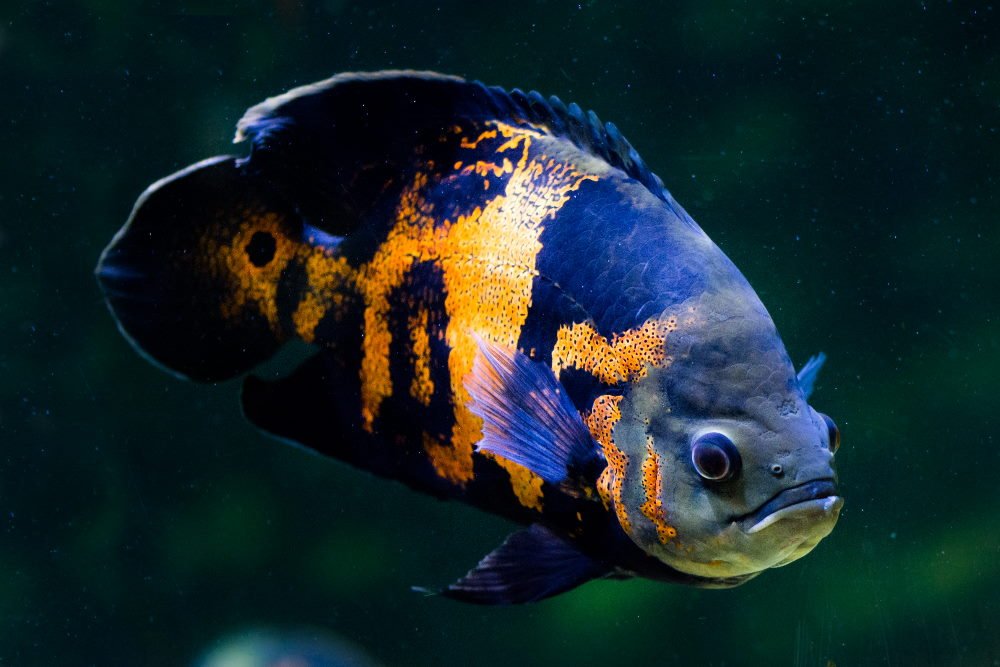
36. Oscar
Oscar (Astronotus ocellatus). For aquarists comparing species, the Oscar is a useful example of a large cichlid with specific compatibility requirements. Adults are commonly around 12–14 in, and a practical starting enclosure is 75+ gal for one, adjusted upward for groups, aquascaping, and filtration. Compatibility is guided by its large and predatory nature and by whether it needs a school, territory, cave, or surface zone. Feed a varied species-appropriate diet in portions the fish can finish without polluting the water. Care level: Intermediate to advanced.
37. Electric Blue Acara
Electric Blue Acara (Andinoacara pulcher hybrid form). Electric Blue Acara is a medium cichlid valued for its recognizable appearance and behavior. Adults are commonly around 6–8 in, and a practical starting enclosure is 40+ gal, adjusted upward for groups, aquascaping, and filtration. Its usual temperament is semi-aggressive, so tank mates should be chosen by size, speed, fin shape, and feeding behavior. Cycle the aquarium fully before purchase, keep ammonia and nitrite at zero, and avoid sudden temperature or pH changes. Care level: Intermediate.
38. Firemouth Cichlid
Firemouth Cichlid (Thorichthys meeki). Among home-aquarium choices, the Firemouth Cichlid stands out as a Central American cichlid with clear space and social needs. Adults are commonly around 6 in, and a practical starting enclosure is 40+ gal, adjusted upward for groups, aquascaping, and filtration. It is generally described as territorial; observe individuals because breeding condition and cramped space can change behavior. Provide hiding places or open swimming room according to its natural behavior, and maintain a consistent weekly care routine. Care level: Intermediate.
39. Peacock Cichlid
Peacock Cichlid (Aulonocara spp.). The Peacock Cichlid is best understood as a African Rift Lake cichlid, not simply as a decorative fish. Adults are commonly around 4–6 in, and a practical starting enclosure is 55+ gal, adjusted upward for groups, aquascaping, and filtration. Compatibility is guided by its semi-aggressive nature and by whether it needs a school, territory, cave, or surface zone. Research group size and adult dimensions before stocking because juvenile store size can be misleading. Care level: Intermediate.
40. Shell-dwelling Cichlid
Shell-dwelling Cichlid (Neolamprologus multifasciatus). For aquarists comparing species, the Shell-dwelling Cichlid is a useful example of a African Rift Lake cichlid with specific compatibility requirements. Adults are commonly around 1.5 in, and a practical starting enclosure is 15+ gal colony, adjusted upward for groups, aquascaping, and filtration. Its usual temperament is territorial colony fish, so tank mates should be chosen by size, speed, fin shape, and feeding behavior. Feed a varied species-appropriate diet in portions the fish can finish without polluting the water. Care level: Intermediate.

41. Bronze Corydoras
Bronze Corydoras (Corydoras aeneus). Bronze Corydoras is a freshwater catfish valued for its recognizable appearance and behavior. Adults are commonly around 2.5 in, and a practical starting enclosure is 20+ gal, adjusted upward for groups, aquascaping, and filtration. It is generally described as peaceful schooling; observe individuals because breeding condition and cramped space can change behavior. Cycle the aquarium fully before purchase, keep ammonia and nitrite at zero, and avoid sudden temperature or pH changes. Care level: Beginner.
42. Panda Corydoras
Panda Corydoras (Corydoras panda). Among home-aquarium choices, the Panda Corydoras stands out as a freshwater catfish with clear space and social needs. Adults are commonly around 2 in, and a practical starting enclosure is 20+ gal, adjusted upward for groups, aquascaping, and filtration. Compatibility is guided by its peaceful schooling nature and by whether it needs a school, territory, cave, or surface zone. Provide hiding places or open swimming room according to its natural behavior, and maintain a consistent weekly care routine. Care level: Beginner.
43. Pygmy Corydoras
Pygmy Corydoras (Corydoras pygmaeus). The Pygmy Corydoras is best understood as a nano catfish, not simply as a decorative fish. Adults are commonly around 1 in, and a practical starting enclosure is 10+ gal, adjusted upward for groups, aquascaping, and filtration. Its usual temperament is peaceful schooling, so tank mates should be chosen by size, speed, fin shape, and feeding behavior. Research group size and adult dimensions before stocking because juvenile store size can be misleading. Care level: Intermediate.
44. Kuhli Loach
Kuhli Loach (Pangio kuhlii). For aquarists comparing species, the Kuhli Loach is a useful example of a freshwater loach with specific compatibility requirements. Adults are commonly around 4 in, and a practical starting enclosure is 20+ gal, adjusted upward for groups, aquascaping, and filtration. It is generally described as peaceful and nocturnal; observe individuals because breeding condition and cramped space can change behavior. Feed a varied species-appropriate diet in portions the fish can finish without polluting the water. Care level: Beginner to intermediate.

45. Clown Loach
Clown Loach (Chromobotia macracanthus). Clown Loach is a large freshwater loach valued for its recognizable appearance and behavior. Adults are commonly around 12 in, and a practical starting enclosure is 100+ gal group, adjusted upward for groups, aquascaping, and filtration. Compatibility is guided by its social and active nature and by whether it needs a school, territory, cave, or surface zone. Cycle the aquarium fully before purchase, keep ammonia and nitrite at zero, and avoid sudden temperature or pH changes. Care level: Advanced planning.
46. Yoyo Loach
Yoyo Loach (Botia almorhae). Among home-aquarium choices, the Yoyo Loach stands out as a freshwater loach with clear space and social needs. Adults are commonly around 5–6 in, and a practical starting enclosure is 40+ gal group, adjusted upward for groups, aquascaping, and filtration. Its usual temperament is active; boisterous, so tank mates should be chosen by size, speed, fin shape, and feeding behavior. Provide hiding places or open swimming room according to its natural behavior, and maintain a consistent weekly care routine. Care level: Intermediate.
47. Bristlenose Pleco
Bristlenose Pleco (Ancistrus spp.). The Bristlenose Pleco is best understood as a suckermouth catfish, not simply as a decorative fish. Adults are commonly around 4–6 in, and a practical starting enclosure is 25+ gal, adjusted upward for groups, aquascaping, and filtration. It is generally described as peaceful; observe individuals because breeding condition and cramped space can change behavior. Research group size and adult dimensions before stocking because juvenile store size can be misleading. Care level: Beginner.
48. Otocinclus Catfish
Otocinclus Catfish (Otocinclus spp.). For aquarists comparing species, the Otocinclus Catfish is a useful example of a small algae-grazing catfish with specific compatibility requirements. Adults are commonly around 1.5–2 in, and a practical starting enclosure is 20+ gal mature tank, adjusted upward for groups, aquascaping, and filtration. Compatibility is guided by its peaceful schooling nature and by whether it needs a school, territory, cave, or surface zone. Feed a varied species-appropriate diet in portions the fish can finish without polluting the water. Care level: Intermediate.

49. Glass Catfish
Glass Catfish (Kryptopterus vitreolus). Glass Catfish is a transparent catfish valued for its recognizable appearance and behavior. Adults are commonly around 3–4 in, and a practical starting enclosure is 30+ gal group, adjusted upward for groups, aquascaping, and filtration. Its usual temperament is peaceful and shy, so tank mates should be chosen by size, speed, fin shape, and feeding behavior. Cycle the aquarium fully before purchase, keep ammonia and nitrite at zero, and avoid sudden temperature or pH changes. Care level: Intermediate.
50. Pictus Catfish
Pictus Catfish (Pimelodus pictus). Among home-aquarium choices, the Pictus Catfish stands out as a active catfish with clear space and social needs. Adults are commonly around 5 in, and a practical starting enclosure is 55+ gal, adjusted upward for groups, aquascaping, and filtration. It is generally described as predatory toward tiny fish; observe individuals because breeding condition and cramped space can change behavior. Provide hiding places or open swimming room according to its natural behavior, and maintain a consistent weekly care routine. Care level: Intermediate.
51. Upside-down Catfish
Upside-down Catfish (Synodontis nigriventris). The Upside-down Catfish is best understood as a African catfish, not simply as a decorative fish. Adults are commonly around 4 in, and a practical starting enclosure is 30+ gal, adjusted upward for groups, aquascaping, and filtration. Compatibility is guided by its peaceful to confident nature and by whether it needs a school, territory, cave, or surface zone. Research group size and adult dimensions before stocking because juvenile store size can be misleading. Care level: Intermediate.
52. Rainbow Shark
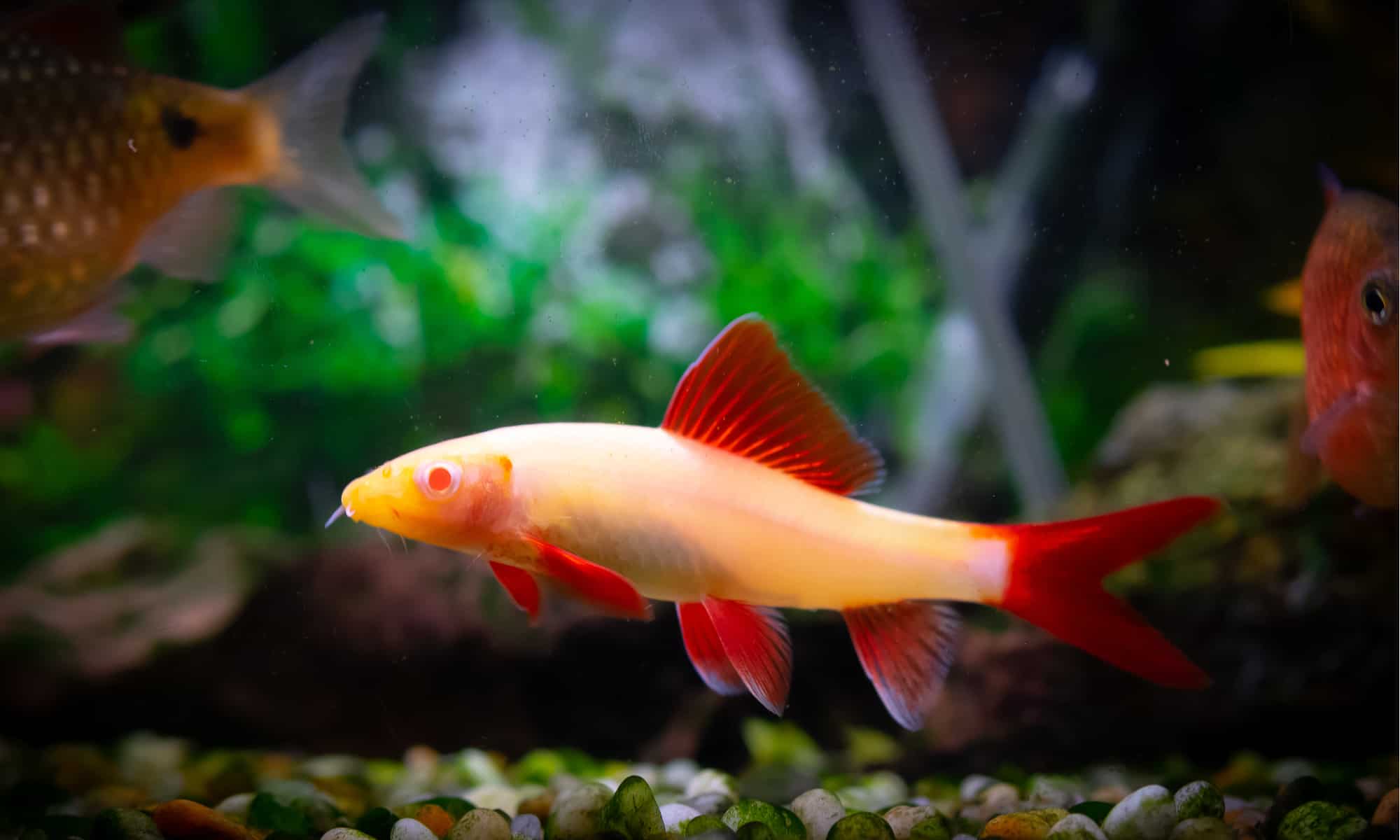
Rainbow Shark (Epalzeorhynchos frenatum). For aquarists comparing species, the Rainbow Shark is a useful example of a freshwater cyprinid with specific compatibility requirements. Adults are commonly around 6 in, and a practical starting enclosure is 55+ gal, adjusted upward for groups, aquascaping, and filtration. Its usual temperament is territorial, so tank mates should be chosen by size, speed, fin shape, and feeding behavior. Feed a varied species-appropriate diet in portions the fish can finish without polluting the water. Care level: Intermediate.
53. Siamese Algae Eater
Siamese Algae Eater (Crossocheilus oblongus). Siamese Algae Eater is a freshwater cyprinid valued for its recognizable appearance and behavior. Adults are commonly around 6 in, and a practical starting enclosure is 40+ gal, adjusted upward for groups, aquascaping, and filtration. It is generally described as active and social; observe individuals because breeding condition and cramped space can change behavior. Cycle the aquarium fully before purchase, keep ammonia and nitrite at zero, and avoid sudden temperature or pH changes. Care level: Intermediate.
54. Hillstream Loach
Hillstream Loach (Sewellia lineolata). Among home-aquarium choices, the Hillstream Loach stands out as a rheophilic loach with clear space and social needs. Adults are commonly around 2.5 in, and a practical starting enclosure is 20+ gal high flow, adjusted upward for groups, aquascaping, and filtration. Compatibility is guided by its peaceful nature and by whether it needs a school, territory, cave, or surface zone. Provide hiding places or open swimming room according to its natural behavior, and maintain a consistent weekly care routine. Care level: Intermediate.
55. Common Goldfish
Common Goldfish (Carassius auratus). The Common Goldfish is best understood as a cool-water carp, not simply as a decorative fish. Adults are commonly around 10–12+ in, and a practical starting enclosure is large tank or pond, adjusted upward for groups, aquascaping, and filtration. Its usual temperament is peaceful; heavy waste, so tank mates should be chosen by size, speed, fin shape, and feeding behavior. Research group size and adult dimensions before stocking because juvenile store size can be misleading. Care level: Intermediate planning.
56. Fancy Goldfish
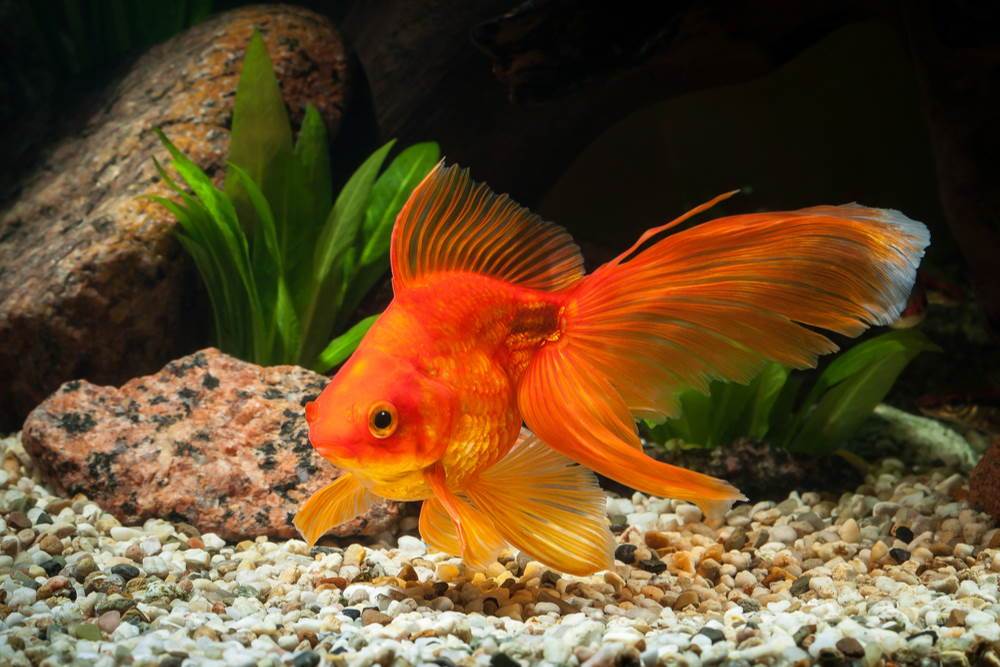
Fancy Goldfish (Carassius auratus varieties). For aquarists comparing species, the Fancy Goldfish is a useful example of a cool-water carp with specific compatibility requirements. Adults are commonly around 6–8+ in, and a practical starting enclosure is 30+ gal first fish, adjusted upward for groups, aquascaping, and filtration. It is generally described as peaceful; slow swimmer; observe individuals because breeding condition and cramped space can change behavior. Feed a varied species-appropriate diet in portions the fish can finish without polluting the water. Care level: Intermediate.
57. Japanese Ricefish
Japanese Ricefish (Oryzias latipes). Japanese Ricefish is a cool-water ricefish valued for its recognizable appearance and behavior. Adults are commonly around 1.5 in, and a practical starting enclosure is 10+ gal, adjusted upward for groups, aquascaping, and filtration. Compatibility is guided by its peaceful schooling nature and by whether it needs a school, territory, cave, or surface zone. Cycle the aquarium fully before purchase, keep ammonia and nitrite at zero, and avoid sudden temperature or pH changes. Care level: Beginner.
58. Blue Gularis Killifish
Blue Gularis Killifish (Fundulopanchax sjoestedti). Among home-aquarium choices, the Blue Gularis Killifish stands out as a freshwater killifish with clear space and social needs. Adults are commonly around 5 in, and a practical starting enclosure is 20+ gal, adjusted upward for groups, aquascaping, and filtration. Its usual temperament is predatory toward tiny fish, so tank mates should be chosen by size, speed, fin shape, and feeding behavior. Provide hiding places or open swimming room according to its natural behavior, and maintain a consistent weekly care routine. Care level: Intermediate.
59. Clown Killifish
Clown Killifish (Epiplatys annulatus). The Clown Killifish is best understood as a nano killifish, not simply as a decorative fish. Adults are commonly around 1.5 in, and a practical starting enclosure is 10+ gal covered, adjusted upward for groups, aquascaping, and filtration. It is generally described as peaceful surface fish; observe individuals because breeding condition and cramped space can change behavior. Research group size and adult dimensions before stocking because juvenile store size can be misleading. Care level: Intermediate.
60. Boesemani Rainbowfish
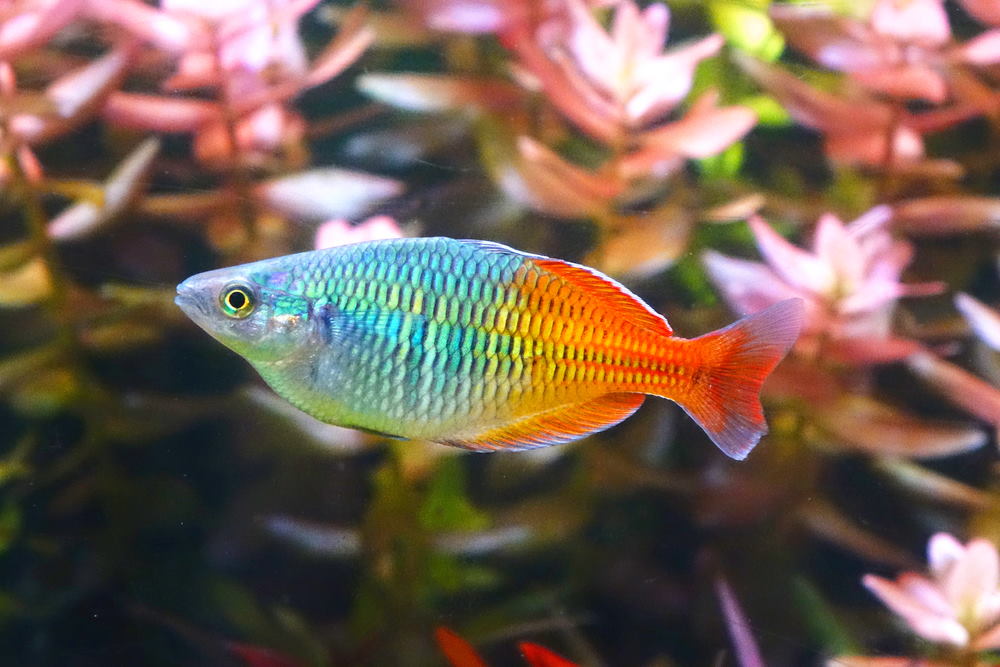
Boesemani Rainbowfish (Melanotaenia boesemani). For aquarists comparing species, the Boesemani Rainbowfish is a useful example of a freshwater rainbowfish with specific compatibility requirements. Adults are commonly around 4 in, and a practical starting enclosure is 40+ gal group, adjusted upward for groups, aquascaping, and filtration. Compatibility is guided by its peaceful and active nature and by whether it needs a school, territory, cave, or surface zone. Feed a varied species-appropriate diet in portions the fish can finish without polluting the water. Care level: Beginner to intermediate.
61. Dwarf Neon Rainbowfish
Dwarf Neon Rainbowfish (Melanotaenia praecox). Dwarf Neon Rainbowfish is a freshwater rainbowfish valued for its recognizable appearance and behavior. Adults are commonly around 3 in, and a practical starting enclosure is 30+ gal group, adjusted upward for groups, aquascaping, and filtration. Its usual temperament is peaceful and active, so tank mates should be chosen by size, speed, fin shape, and feeding behavior. Cycle the aquarium fully before purchase, keep ammonia and nitrite at zero, and avoid sudden temperature or pH changes. Care level: Beginner.
62. Threadfin Rainbowfish
Threadfin Rainbowfish (Iriatherina werneri). Among home-aquarium choices, the Threadfin Rainbowfish stands out as a delicate rainbowfish with clear space and social needs. Adults are commonly around 2 in, and a practical starting enclosure is 20+ gal, adjusted upward for groups, aquascaping, and filtration. It is generally described as peaceful; observe individuals because breeding condition and cramped space can change behavior. Provide hiding places or open swimming room according to its natural behavior, and maintain a consistent weekly care routine. Care level: Intermediate.
63. Peacock Gudgeon
Peacock Gudgeon (Tateurndina ocellicauda). The Peacock Gudgeon is best understood as a freshwater goby relative, not simply as a decorative fish. Adults are commonly around 3 in, and a practical starting enclosure is 20+ gal, adjusted upward for groups, aquascaping, and filtration. Compatibility is guided by its peaceful; cave spawner nature and by whether it needs a school, territory, cave, or surface zone. Research group size and adult dimensions before stocking because juvenile store size can be misleading. Care level: Beginner to intermediate.
64. Bumblebee Goby
Bumblebee Goby (Brachygobius spp.). For aquarists comparing species, the Bumblebee Goby is a useful example of a freshwater to brackish goby with specific compatibility requirements. Adults are commonly around 1.5 in, and a practical starting enclosure is 10+ gal species tank, adjusted upward for groups, aquascaping, and filtration. Its usual temperament is peaceful but specialized feeder, so tank mates should be chosen by size, speed, fin shape, and feeding behavior. Feed a varied species-appropriate diet in portions the fish can finish without polluting the water. Care level: Intermediate.

65. Scarlet Badis
Scarlet Badis (Dario dario). Scarlet Badis is a nano freshwater fish valued for its recognizable appearance and behavior. Adults are commonly around 0.8 in, and a practical starting enclosure is 5–10+ gal, adjusted upward for groups, aquascaping, and filtration. It is generally described as territorial males; observe individuals because breeding condition and cramped space can change behavior. Cycle the aquarium fully before purchase, keep ammonia and nitrite at zero, and avoid sudden temperature or pH changes. Care level: Intermediate.
66. Pea Puffer
Pea Puffer (Carinotetraodon travancoricus). Among home-aquarium choices, the Pea Puffer stands out as a freshwater puffer with clear space and social needs. Adults are commonly around 1 in, and a practical starting enclosure is 10+ gal species-focused, adjusted upward for groups, aquascaping, and filtration. Compatibility is guided by its territorial and predatory nature and by whether it needs a school, territory, cave, or surface zone. Provide hiding places or open swimming room according to its natural behavior, and maintain a consistent weekly care routine. Care level: Intermediate to advanced.
67. Congo Tetra
Congo Tetra (Phenacogrammus interruptus). The Congo Tetra is best understood as a African tetra, not simply as a decorative fish. Adults are commonly around 3 in, and a practical starting enclosure is 30+ gal group, adjusted upward for groups, aquascaping, and filtration. Its usual temperament is peaceful schooling, so tank mates should be chosen by size, speed, fin shape, and feeding behavior. Research group size and adult dimensions before stocking because juvenile store size can be misleading. Care level: Intermediate.
68. Silver Dollar
Silver Dollar (Metynnis spp.). For aquarists comparing species, the Silver Dollar is a useful example of a large characin with specific compatibility requirements. Adults are commonly around 6 in, and a practical starting enclosure is 55+ gal group, adjusted upward for groups, aquascaping, and filtration. It is generally described as peaceful; plant-eating; observe individuals because breeding condition and cramped space can change behavior. Feed a varied species-appropriate diet in portions the fish can finish without polluting the water. Care level: Intermediate.

69. Marbled Hatchetfish
Marbled Hatchetfish (Carnegiella strigata). Marbled Hatchetfish is a surface characin valued for its recognizable appearance and behavior. Adults are commonly around 1.5 in, and a practical starting enclosure is 20+ gal covered, adjusted upward for groups, aquascaping, and filtration. Compatibility is guided by its peaceful and shy nature and by whether it needs a school, territory, cave, or surface zone. Cycle the aquarium fully before purchase, keep ammonia and nitrite at zero, and avoid sudden temperature or pH changes. Care level: Intermediate.
70. Ropefish
Ropefish (Erpetoichthys calabaricus). Among home-aquarium choices, the Ropefish stands out as a primitive freshwater fish with clear space and social needs. Adults are commonly around 15–20 in, and a practical starting enclosure is 55+ gal covered, adjusted upward for groups, aquascaping, and filtration. Its usual temperament is predatory toward tiny fish, so tank mates should be chosen by size, speed, fin shape, and feeding behavior. Provide hiding places or open swimming room according to its natural behavior, and maintain a consistent weekly care routine. Care level: Advanced planning.
71. Senegal Bichir
Senegal Bichir (Polypterus senegalus). The Senegal Bichir is best understood as a primitive freshwater fish, not simply as a decorative fish. Adults are commonly around 10–12 in, and a practical starting enclosure is 55+ gal covered, adjusted upward for groups, aquascaping, and filtration. It is generally described as predatory; observe individuals because breeding condition and cramped space can change behavior. Research group size and adult dimensions before stocking because juvenile store size can be misleading. Care level: Intermediate to advanced.
72. African Butterflyfish
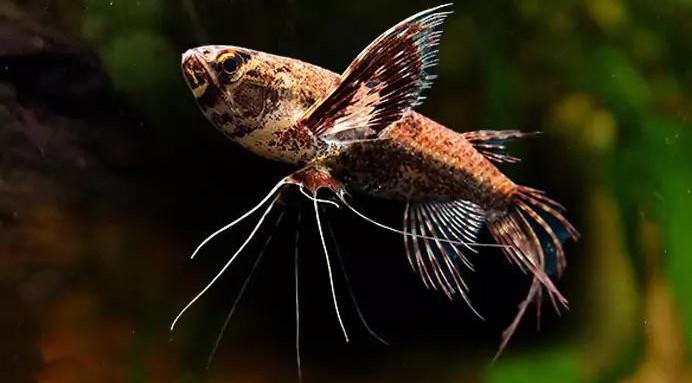
African Butterflyfish (Pantodon buchholzi). For aquarists comparing species, the African Butterflyfish is a useful example of a surface predator with specific compatibility requirements. Adults are commonly around 4–5 in, and a practical starting enclosure is 30+ gal covered, adjusted upward for groups, aquascaping, and filtration. Compatibility is guided by its predatory toward tiny fish nature and by whether it needs a school, territory, cave, or surface zone. Feed a varied species-appropriate diet in portions the fish can finish without polluting the water. Care level: Intermediate.
73. Banded Archerfish
Banded Archerfish (Toxotes jaculatrix). Banded Archerfish is a brackish fish valued for its recognizable appearance and behavior. Adults are commonly around 8–12 in, and a practical starting enclosure is 75+ gal, adjusted upward for groups, aquascaping, and filtration. Its usual temperament is active predator, so tank mates should be chosen by size, speed, fin shape, and feeding behavior. Cycle the aquarium fully before purchase, keep ammonia and nitrite at zero, and avoid sudden temperature or pH changes. Care level: Advanced.
74. Mono Sebae
Mono Sebae (Monodactylus sebae). Among home-aquarium choices, the Mono Sebae stands out as a brackish to marine fish with clear space and social needs. Adults are commonly around 8–10 in, and a practical starting enclosure is 100+ gal group, adjusted upward for groups, aquascaping, and filtration. It is generally described as active schooling; observe individuals because breeding condition and cramped space can change behavior. Provide hiding places or open swimming room according to its natural behavior, and maintain a consistent weekly care routine. Care level: Advanced.
75. Figure Eight Puffer
Figure Eight Puffer (Dichotomyctere ocellatus). The Figure Eight Puffer is best understood as a brackish puffer, not simply as a decorative fish. Adults are commonly around 3 in, and a practical starting enclosure is 20+ gal, adjusted upward for groups, aquascaping, and filtration. Compatibility is guided by its territorial; hard beak nature and by whether it needs a school, territory, cave, or surface zone. Research group size and adult dimensions before stocking because juvenile store size can be misleading. Care level: Intermediate to advanced.
76. Ocellaris Clownfish
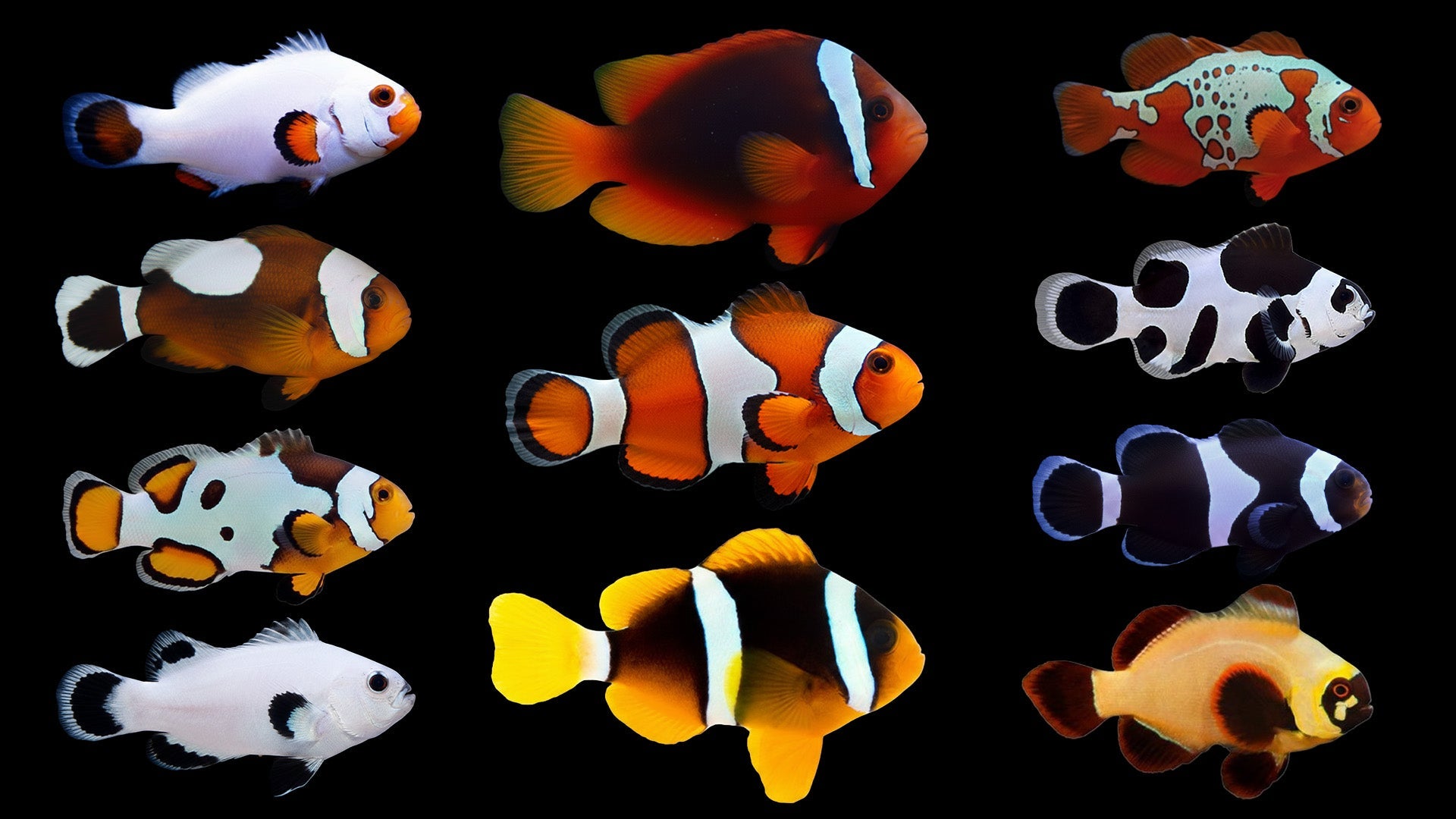
Ocellaris Clownfish (Amphiprion ocellaris). For aquarists comparing species, the Ocellaris Clownfish is a useful example of a marine reef fish with specific compatibility requirements. Adults are commonly around 3–4 in, and a practical starting enclosure is 20+ gal, adjusted upward for groups, aquascaping, and filtration. Its usual temperament is semi-aggressive pair, so tank mates should be chosen by size, speed, fin shape, and feeding behavior. Feed a varied species-appropriate diet in portions the fish can finish without polluting the water. Care level: Beginner marine.
77. Royal Gramma
Royal Gramma (Gramma loreto). Royal Gramma is a marine reef fish valued for its recognizable appearance and behavior. Adults are commonly around 3 in, and a practical starting enclosure is 20+ gal, adjusted upward for groups, aquascaping, and filtration. It is generally described as peaceful to territorial; observe individuals because breeding condition and cramped space can change behavior. Cycle the aquarium fully before purchase, keep ammonia and nitrite at zero, and avoid sudden temperature or pH changes. Care level: Beginner marine.
78. Firefish Goby
Firefish Goby (Nemateleotris magnifica). Among home-aquarium choices, the Firefish Goby stands out as a marine reef fish with clear space and social needs. Adults are commonly around 3 in, and a practical starting enclosure is 20+ gal covered, adjusted upward for groups, aquascaping, and filtration. Compatibility is guided by its peaceful and shy nature and by whether it needs a school, territory, cave, or surface zone. Provide hiding places or open swimming room according to its natural behavior, and maintain a consistent weekly care routine. Care level: Beginner marine.
79. Yellow Tang
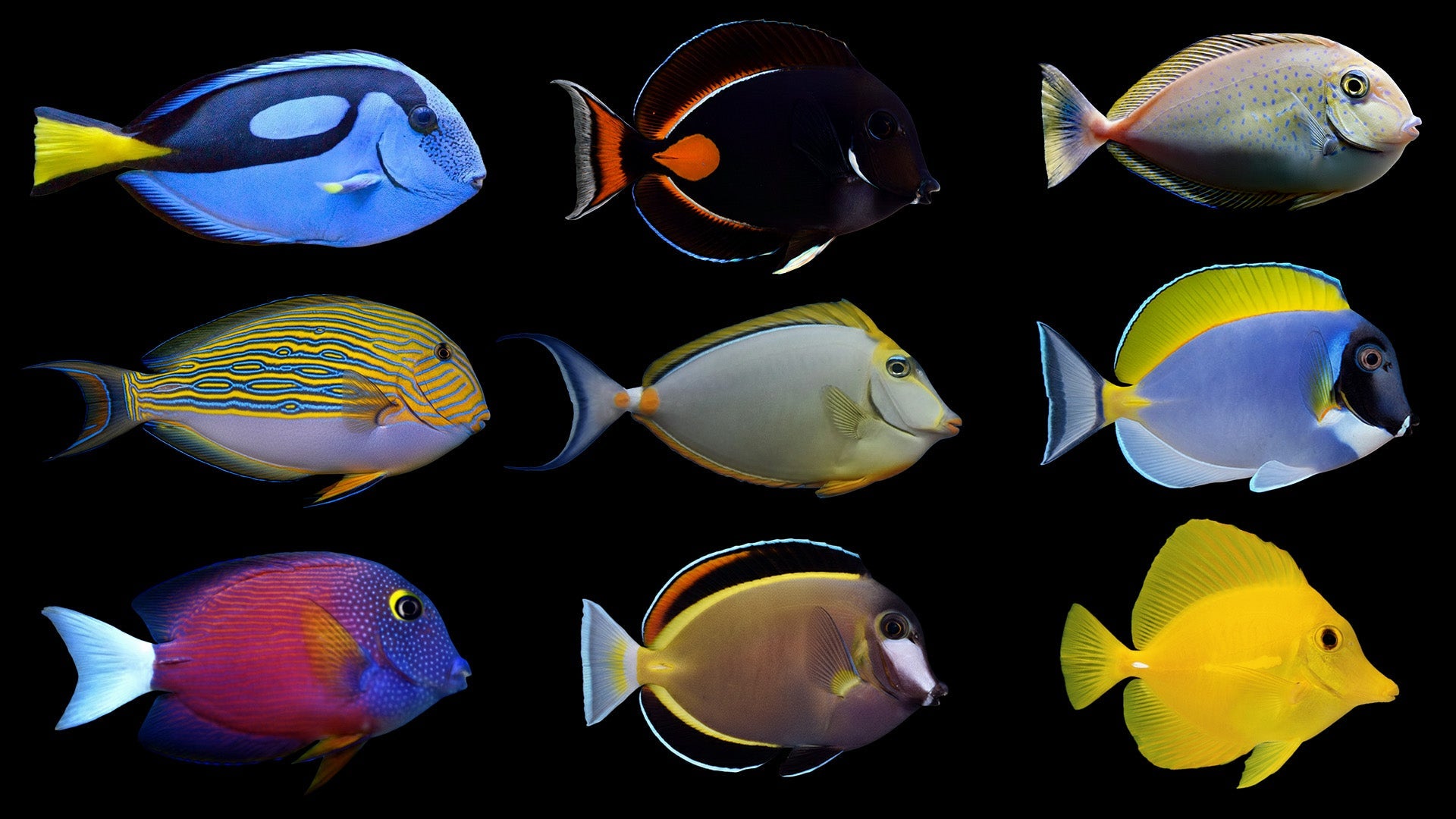
Yellow Tang (Zebrasoma flavescens). The Yellow Tang is best understood as a marine surgeonfish, not simply as a decorative fish. Adults are commonly around 8 in, and a practical starting enclosure is 75+ gal, adjusted upward for groups, aquascaping, and filtration. Its usual temperament is active; territorial with tangs, so tank mates should be chosen by size, speed, fin shape, and feeding behavior. Research group size and adult dimensions before stocking because juvenile store size can be misleading. Care level: Intermediate marine.
80. Blue Tang
Blue Tang (Paracanthurus hepatus). For aquarists comparing species, the Blue Tang is a useful example of a marine surgeonfish with specific compatibility requirements. Adults are commonly around 10–12 in, and a practical starting enclosure is 125+ gal, adjusted upward for groups, aquascaping, and filtration. It is generally described as active and social; observe individuals because breeding condition and cramped space can change behavior. Feed a varied species-appropriate diet in portions the fish can finish without polluting the water. Care level: Advanced planning.
How Are These Types of Fish Classified?
Aquarium fish can be classified by salinity, family, adult size, swimming zone, diet, reproductive strategy, and temperament. Freshwater, brackish, and marine are the most important first divisions because each requires different water preparation. Within those systems, hobbyists commonly group fish as livebearers, tetras, barbs, rasboras, cichlids, labyrinth fish, catfish, loaches, gobies, puffers, and reef fish.
Where Do Aquarium Fish Come From?
Popular aquarium fish originate from nearly every warm-water region, including South America, Central America, Africa, South and Southeast Asia, Australia, and coral reefs worldwide. Responsible fishkeeping favors captive-bred stock when available and traceable, legal collection where wild harvest is used. Never release aquarium animals into natural waterways.
How to Identify Different Types of Aquarium Fish
- Confirm the scientific name because common names can be shared by unrelated fish.
- Compare adult size, not store size.
- Look at mouth position to understand feeding zone.
- Check body shape, fin length, color pattern, and presence of barbels or an adipose fin.
- Observe whether the fish schools, forms pairs, hides, grazes, or defends territory.
- Ask whether the species is freshwater, brackish, or marine.
- Use reputable care references before mixing visually similar species.
Aquarium Care Notes
Cycle the filter before adding fish, test ammonia and nitrite, and stock slowly. Match temperature, hardness, pH, salinity, current, and oxygen to the species rather than forcing every fish into one community setup. Provide the correct group size, cover for jumpers, soft substrate for delicate bottom dwellers, and swimming room for active fish. Quarantine new animals when possible and avoid medication without a clear diagnosis.
Safety, Sustainability, and Conservation Notes
Choose healthy fish from responsible sellers, avoid dyed or surgically altered animals, and do not buy species that will outgrow your available space. Marine purchases deserve extra attention because many species are still wild collected. Never flush or release fish. Rehome responsibly through local clubs, stores, or experienced keepers if a setup can no longer meet the animal’s needs.
Fun Facts About Aquarium Fish
- Bettas and gouramis can breathe air with a labyrinth organ.
- Livebearers give birth to free-swimming young.
- Corydoras often gulp air at the surface.
- Archerfish can shoot water at insects.
- Pufferfish teeth grow continuously.
- Goldfish need far more room than a bowl provides.
- Discus care is strongly linked to stable, warm, clean water.
- Many tetras look best and behave better in proper schools.
- Marine tangs are constant swimmers and algae grazers.
- Scientific names reduce confusion between regional common names.
Final Thoughts on Types of Aquarium Fish
The best types of aquarium fish are the ones whose adult size, water requirements, diet, and behavior fit a specific, fully prepared system. Start with the tank and water conditions, then select compatible fish—never the other way around. Patient cycling, conservative stocking, and accurate species research create healthier fish and a far more rewarding aquarium.
Frequently Asked Questions
1. What are the easiest aquarium fish for beginners?
Well-researched guppies, platies, zebra danios, harlequin rasboras, bronze corydoras, and honey gouramis can be beginner-friendly in a cycled, correctly sized tank.
2. What fish can live in a small aquarium?
Small species such as chili rasboras, ember tetras, clown killifish, sparkling gouramis, and scarlet badis may fit modest aquariums, but group size and footprint still matter.
3. Can fish live in an uncycled tank?
Fish may survive temporarily, but exposure to ammonia and nitrite can injure or kill them. A fishless cycle is safer.
4. How many fish can I keep?
There is no reliable one-inch-per-gallon rule. Stocking depends on adult mass, activity, territory, filtration, oxygen, and water-change routine.
5. What is a community fish?
A community fish is compatible with other suitable species under shared water conditions, but “peaceful” does not guarantee compatibility in every tank.
6. Do schooling fish need companions?
Yes. Tetras, rasboras, danios, corydoras, rainbowfish, and many others behave more naturally in appropriate groups.
7. Can bettas live with other fish?
Some can in a suitable tank, but temperament varies. Avoid fin nippers and never keep two adult males together.
8. Can goldfish live in a bowl?
No. Goldfish grow large, produce heavy waste, need filtration, oxygen, and substantial swimming space.
9. Are plecos tank cleaners?
Plecos graze some surfaces but still need food and produce waste. They do not replace maintenance.
10. What fish eat algae?
Otocinclus, bristlenose plecos, Siamese algae eaters, and some livebearers graze algae, but each has different care needs and no fish solves every algae problem.
11. What is the best fish for a 10-gallon tank?
A single betta, a carefully planned nano school, or a small species-focused setup can work. Avoid large or very active fish.
12. What is the best fish for a 20-gallon tank?
Many small community fish work, including rasboras, tetras, corydoras, honey gouramis, and livebearers, depending on water chemistry and layout.
13. Which aquarium fish are aggressive?
Oscars, convict cichlids, many African cichlids, rainbow sharks, and pea puffers can be territorial or predatory.
14. Which fish are peaceful?
Ember tetras, harlequin rasboras, corydoras, honey gouramis, and many small rainbowfish are usually peaceful in proper groups and space.
15. Can freshwater and saltwater fish live together?
No. Their salinity and physiological needs are fundamentally different.
16. What is a brackish aquarium?
A brackish aquarium contains water saltier than freshwater but less saline than seawater, prepared to suit specific estuary species.
17. Do all tropical fish need a heater?
Most do, but cool-water species may not. Use the species’ temperature range and room conditions.
18. How often should aquarium water be changed?
Many tanks benefit from weekly partial changes, but frequency and volume depend on stocking, nitrate, feeding, and system stability.
19. What water tests are essential?
Ammonia, nitrite, nitrate, pH, and temperature are core freshwater tests. Hardness, alkalinity, and salinity are important when species require them.
20. Can I mix cichlids with community fish?
Sometimes, but cichlid size, territory, water chemistry, and breeding behavior must be considered carefully.
21. Why are fish chasing each other?
Chasing may be courtship, territorial defense, hierarchy, food competition, or stress from an undersized group.
22. How do I choose compatible tank mates?
Match adult size, temperament, water chemistry, temperature, swimming zone, diet, and activity level.
23. Should I quarantine new fish?
Quarantine reduces the chance of introducing parasites and disease and gives new fish time to recover and feed.
24. Can I add all fish at once?
Usually not. Adding fish gradually allows the biofilter and social environment to adjust.
25. What is overstocking?
Overstocking occurs when fish numbers, size, or behavior exceed the system’s space, oxygen, filtration, or maintenance capacity.
26. Why do fish jump?
Fish may jump naturally, chase prey, escape aggression, or react to poor water. Use a secure lid for known jumpers.
27. What should aquarium fish eat?
Use a varied diet appropriate to mouth size and feeding behavior, including quality prepared foods and suitable frozen, live, or plant foods.
28. How often should fish be fed?
Most adult community fish do well with small portions once or twice daily, but species, age, and temperature matter.
29. Are marine fish harder than freshwater fish?
Marine systems require salinity control, mature filtration, careful stocking, and often quarantine, so the learning curve is usually steeper.
30. Which fish need large tanks despite being sold small?
Oscars, clown loaches, common goldfish, ropefish, bichirs, archerfish, monos, blue tangs, and many plecos outgrow small tanks.
31. Can different gouramis live together?
Sometimes, but males may be territorial and species differ in size and temperament. Provide visual barriers and adequate space.
32. Are puffers community fish?
Most puffers are not reliable community fish because they can bite fins, prey on small animals, and require specialized diets.
33. What is the safest way to start fishkeeping?
Choose one modest community plan, complete a fishless cycle, buy a test kit, and add hardy compatible fish slowly.
34. Why should I use scientific names?
Scientific names prevent confusion when shops and regions use the same common name for different species.
35. What is the biggest beginner mistake?
Buying fish before researching adult size, social needs, and water requirements is one of the most common and costly mistakes.
Read more:
80 Types of Jack Fish: Complete ID Guide