

People searching for types of Birman cats are usually looking for the colors and patterns found within one pedigreed breed. This guide explains 20 practical varieties, shows how to tell them apart, and separates coat terminology from true breed identity. It also covers temperament, grooming, responsible selection, and the limits of visual identification.
Registry terminology is important: associations do not always recognize or name every color in exactly the same way. Use this article as a visual guide, then consult the current standard of the registry relevant to your country before breeding, registering, or showing a cat.
What Are the Main Types of Birman Cats?
The 20 types covered here are Seal Point, Blue Point, Chocolate Point, Lilac Point, Red Point, Cream Point, Seal Tortie Point, Blue-Cream Point, Chocolate Tortie Point, Lilac-Cream Point, Seal Lynx Point, Blue Lynx Point, Chocolate Lynx Point, Lilac Lynx Point, Red Lynx Point, Cream Lynx Point, Seal Tortie Lynx Point, Blue-Cream Lynx Point, Chocolate Tortie Lynx Point, and Lilac-Cream Lynx Point. They are coat varieties of the Birman, not separate breeds. Every well-bred example should retain the same essential structure: a sturdy semi-longhaired body, deep blue eyes, color-restricted points, and four white gloves that are the breed’s signature.
| No. | Variety | Key Coat Feature | Typical Pigment |
|---|---|---|---|
| 1 | Seal Point | deep seal-brown mask, ears, legs, and tail on a pale cream body | pink, edged by point color |
| 2 | Blue Point | cool blue-gray points on a bluish-white to beige body | pink with blue edging |
| 3 | Chocolate Point | warm milk-chocolate points on an ivory body | pink to cinnamon pink |
| 4 | Lilac Point | frosty pink-gray points on a magnolia-white body | lavender pink |
| 5 | Red Point | apricot-red points on a creamy white body | pink |
| 6 | Cream Point | pale buff-cream points on a near-white body | pink |
| 7 | Seal Tortie Point | seal points patched with red or cream | mottled pink and brown |
| 8 | Blue-Cream Point | blue-gray points softly patched with cream | mottled pink and blue |
| 9 | Chocolate Tortie Point | milk-chocolate points patched with red or cream | mottled pink and cinnamon |
| 10 | Lilac-Cream Point | lilac points patched with pale cream | mottled lavender pink |
| 11 | Seal Lynx Point | seal tabby stripes on the mask, legs, and tail | pink with dark edging |
| 12 | Blue Lynx Point | blue-gray tabby markings on light points | pink with blue edging |
| 13 | Chocolate Lynx Point | warm chocolate tabby markings on ivory | pink to cinnamon |
| 14 | Lilac Lynx Point | frosty lilac tabby markings | lavender pink |
| 15 | Red Lynx Point | red tabby bars on the face, legs, and tail | pink |
| 16 | Cream Lynx Point | pale cream tabby markings | pink |
| 17 | Seal Tortie Lynx Point | seal lynx markings mixed with red or cream patches | mottled |
| 18 | Blue-Cream Lynx Point | blue lynx markings mixed with cream | mottled |
| 19 | Chocolate Tortie Lynx Point | chocolate stripes with red or cream patches | mottled |
| 20 | Lilac-Cream Lynx Point | lilac stripes with pale cream patches | mottled |
1. Seal Point Birman
A seal point Birman is identified by deep seal-brown mask, ears, legs, and tail on a pale cream body. The nose leather and paw-pad pigment is generally pink, edged by point color, although exact shade can vary with age and registry wording. The strongest traditional contrast and often the easiest Birman variety for beginners to identify.
Judge this variety in natural indirect light and look at the roots, body ground color, face, legs, and tail separately. Kittens can change noticeably as pigment develops, so pedigree records and an experienced breeder are more dependable than a single photograph. Color does not determine sociability, intelligence, or health.
2. Blue Point Birman
A blue point Birman is identified by cool blue-gray points on a bluish-white to beige body. The nose leather and paw-pad pigment is generally pink with blue edging, although exact shade can vary with age and registry wording. A dilute version of seal that gives the cat a softer, cooler appearance.
Judge this variety in natural indirect light and look at the roots, body ground color, face, legs, and tail separately. Kittens can change noticeably as pigment develops, so pedigree records and an experienced breeder are more dependable than a single photograph. Color does not determine sociability, intelligence, or health.
3. Chocolate Point Birman
A chocolate point Birman is identified by warm milk-chocolate points on an ivory body. The nose leather and paw-pad pigment is generally pink to cinnamon pink, although exact shade can vary with age and registry wording. Chocolate is lighter and warmer than seal, especially on the mask and tail.
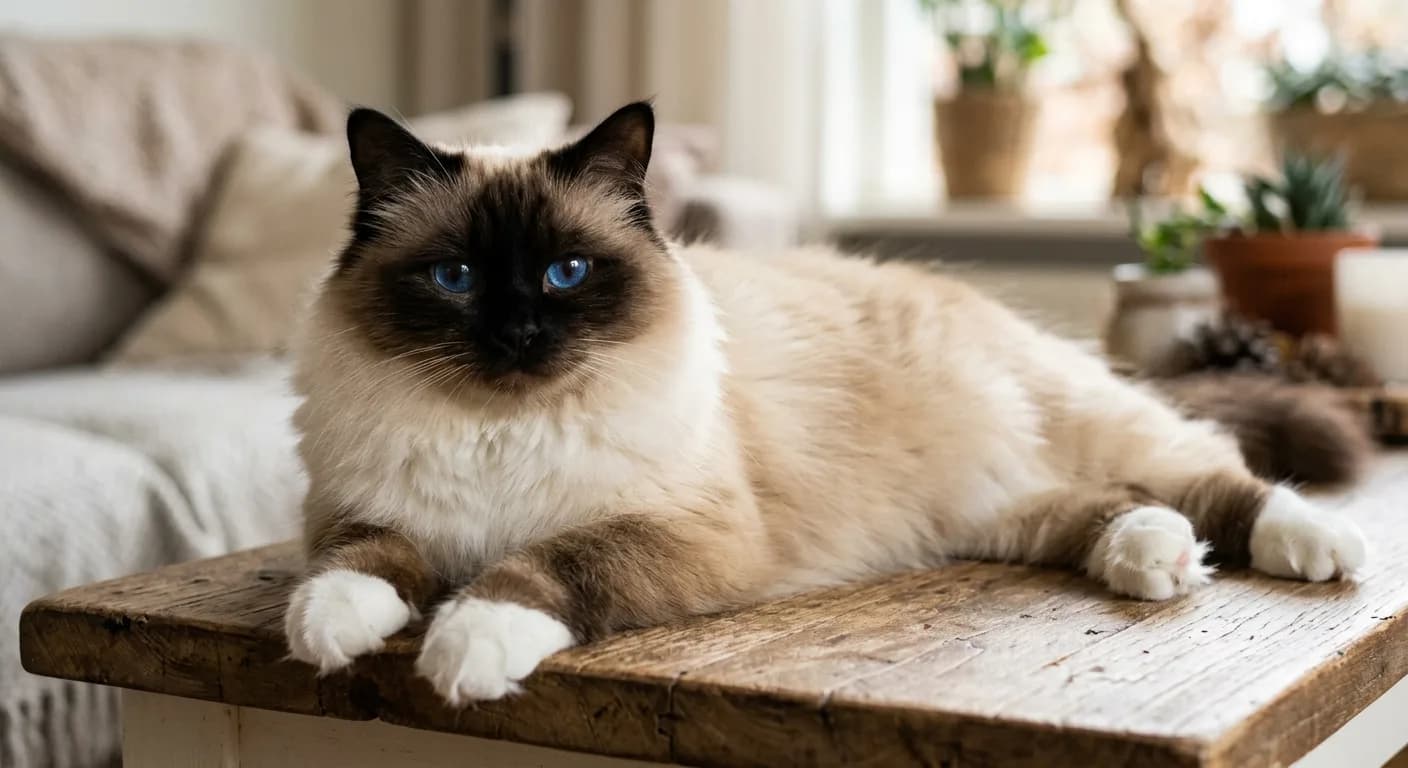
Judge this variety in natural indirect light and look at the roots, body ground color, face, legs, and tail separately. Kittens can change noticeably as pigment develops, so pedigree records and an experienced breeder are more dependable than a single photograph. Color does not determine sociability, intelligence, or health.
4. Lilac Point Birman
A lilac point Birman is identified by frosty pink-gray points on a magnolia-white body. The nose leather and paw-pad pigment is generally lavender pink, although exact shade can vary with age and registry wording. The palest classic point color and one that matures gradually.
Judge this variety in natural indirect light and look at the roots, body ground color, face, legs, and tail separately. Kittens can change noticeably as pigment develops, so pedigree records and an experienced breeder are more dependable than a single photograph. Color does not determine sociability, intelligence, or health.
5. Red Point Birman
A red point Birman is identified by apricot-red points on a creamy white body. The nose leather and paw-pad pigment is generally pink, although exact shade can vary with age and registry wording. The red may show faint tabby barring because of how orange pigment is expressed.

Judge this variety in natural indirect light and look at the roots, body ground color, face, legs, and tail separately. Kittens can change noticeably as pigment develops, so pedigree records and an experienced breeder are more dependable than a single photograph. Color does not determine sociability, intelligence, or health.
6. Cream Point Birman
A cream point Birman is identified by pale buff-cream points on a near-white body. The nose leather and paw-pad pigment is generally pink, although exact shade can vary with age and registry wording. A diluted red with low contrast and a delicate pastel look.
Judge this variety in natural indirect light and look at the roots, body ground color, face, legs, and tail separately. Kittens can change noticeably as pigment develops, so pedigree records and an experienced breeder are more dependable than a single photograph. Color does not determine sociability, intelligence, or health.
7. Seal Tortie Point Birman
A seal tortie point Birman is identified by seal points patched with red or cream. The nose leather and paw-pad pigment is generally mottled pink and brown, although exact shade can vary with age and registry wording. Usually female, this variety has an individual mosaic pattern that is never exactly repeated.

Judge this variety in natural indirect light and look at the roots, body ground color, face, legs, and tail separately. Kittens can change noticeably as pigment develops, so pedigree records and an experienced breeder are more dependable than a single photograph. Color does not determine sociability, intelligence, or health.
8. Blue-Cream Point Birman
A blue-cream point Birman is identified by blue-gray points softly patched with cream. The nose leather and paw-pad pigment is generally mottled pink and blue, although exact shade can vary with age and registry wording. A dilute tortie with blended pastel coloring rather than sharp black-and-red contrast.
Judge this variety in natural indirect light and look at the roots, body ground color, face, legs, and tail separately. Kittens can change noticeably as pigment develops, so pedigree records and an experienced breeder are more dependable than a single photograph. Color does not determine sociability, intelligence, or health.
9. Chocolate Tortie Point Birman
A chocolate tortie point Birman is identified by milk-chocolate points patched with red or cream. The nose leather and paw-pad pigment is generally mottled pink and cinnamon, although exact shade can vary with age and registry wording. The warm brown background makes the red patches look especially bright.
Judge this variety in natural indirect light and look at the roots, body ground color, face, legs, and tail separately. Kittens can change noticeably as pigment develops, so pedigree records and an experienced breeder are more dependable than a single photograph. Color does not determine sociability, intelligence, or health.
10. Lilac-Cream Point Birman
A lilac-cream point Birman is identified by lilac points patched with pale cream. The nose leather and paw-pad pigment is generally mottled lavender pink, although exact shade can vary with age and registry wording. One of the subtlest tortie-point combinations.
Judge this variety in natural indirect light and look at the roots, body ground color, face, legs, and tail separately. Kittens can change noticeably as pigment develops, so pedigree records and an experienced breeder are more dependable than a single photograph. Color does not determine sociability, intelligence, or health.
11. Seal Lynx Point Birman
A seal lynx point Birman is identified by seal tabby stripes on the mask, legs, and tail. The nose leather and paw-pad pigment is generally pink with dark edging, although exact shade can vary with age and registry wording. Facial pencil lines and ringed legs distinguish it from a solid seal point.

Judge this variety in natural indirect light and look at the roots, body ground color, face, legs, and tail separately. Kittens can change noticeably as pigment develops, so pedigree records and an experienced breeder are more dependable than a single photograph. Color does not determine sociability, intelligence, or health.
12. Blue Lynx Point Birman
A blue lynx point Birman is identified by blue-gray tabby markings on light points. The nose leather and paw-pad pigment is generally pink with blue edging, although exact shade can vary with age and registry wording. The rings and facial lines are cool and softly contrasted.
Judge this variety in natural indirect light and look at the roots, body ground color, face, legs, and tail separately. Kittens can change noticeably as pigment develops, so pedigree records and an experienced breeder are more dependable than a single photograph. Color does not determine sociability, intelligence, or health.
13. Chocolate Lynx Point Birman
A chocolate lynx point Birman is identified by warm chocolate tabby markings on ivory. The nose leather and paw-pad pigment is generally pink to cinnamon, although exact shade can vary with age and registry wording. Lighter and warmer than seal lynx, with clear but delicate stripes.
Judge this variety in natural indirect light and look at the roots, body ground color, face, legs, and tail separately. Kittens can change noticeably as pigment develops, so pedigree records and an experienced breeder are more dependable than a single photograph. Color does not determine sociability, intelligence, or health.
14. Lilac Lynx Point Birman
A lilac lynx point Birman is identified by frosty lilac tabby markings. The nose leather and paw-pad pigment is generally lavender pink, although exact shade can vary with age and registry wording. A pale variety whose pattern may require close viewing.
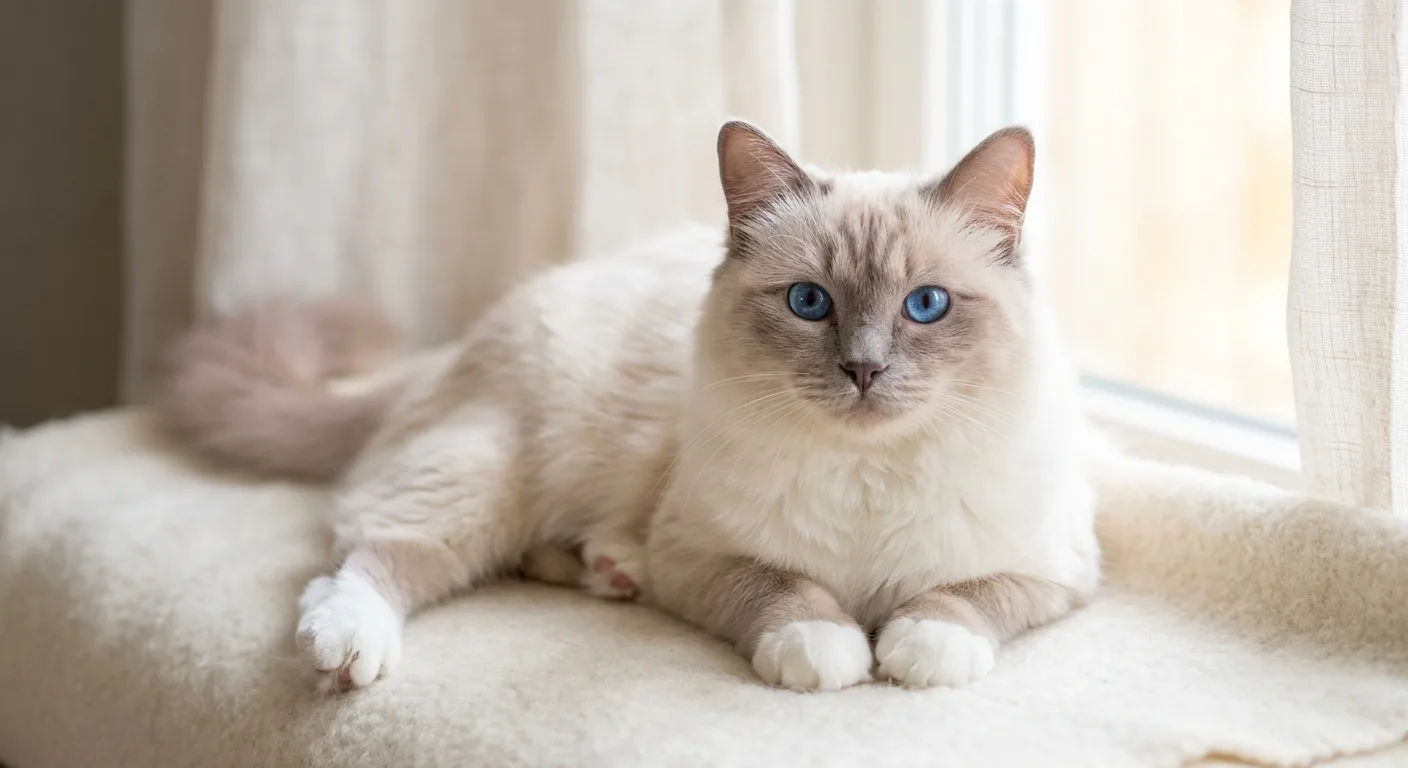
Judge this variety in natural indirect light and look at the roots, body ground color, face, legs, and tail separately. Kittens can change noticeably as pigment develops, so pedigree records and an experienced breeder are more dependable than a single photograph. Color does not determine sociability, intelligence, or health.
15. Red Lynx Point Birman
A red lynx point Birman is identified by red tabby bars on the face, legs, and tail. The nose leather and paw-pad pigment is generally pink, although exact shade can vary with age and registry wording. The lynx pattern makes the natural striping of red pigment easy to see.
Judge this variety in natural indirect light and look at the roots, body ground color, face, legs, and tail separately. Kittens can change noticeably as pigment develops, so pedigree records and an experienced breeder are more dependable than a single photograph. Color does not determine sociability, intelligence, or health.
16. Cream Lynx Point Birman
A cream lynx point Birman is identified by pale cream tabby markings. The nose leather and paw-pad pigment is generally pink, although exact shade can vary with age and registry wording. A low-contrast, pastel striped variety.
Judge this variety in natural indirect light and look at the roots, body ground color, face, legs, and tail separately. Kittens can change noticeably as pigment develops, so pedigree records and an experienced breeder are more dependable than a single photograph. Color does not determine sociability, intelligence, or health.
17. Seal Tortie Lynx Point Birman
A seal tortie lynx point Birman is identified by seal lynx markings mixed with red or cream patches. The nose leather and paw-pad pigment is generally mottled, although exact shade can vary with age and registry wording. Also called a torbie point; it combines tabby lines with tortoiseshell patching.
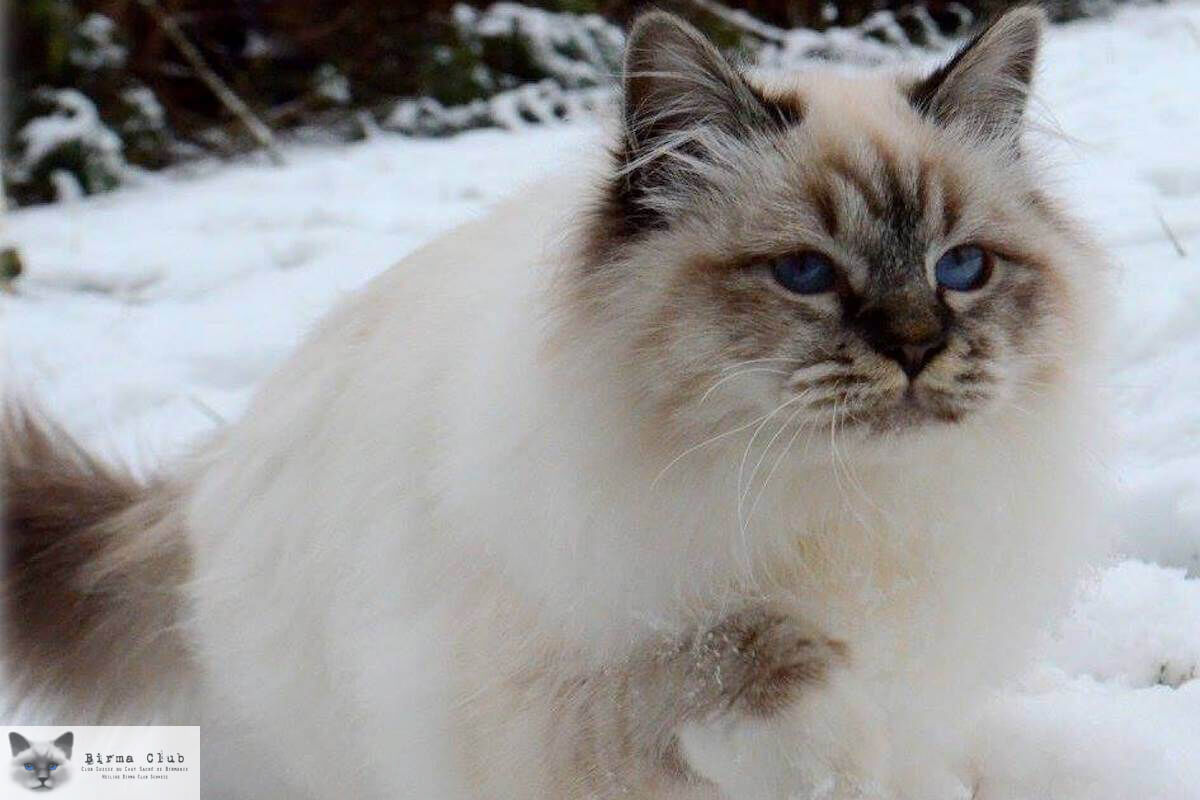
Judge this variety in natural indirect light and look at the roots, body ground color, face, legs, and tail separately. Kittens can change noticeably as pigment develops, so pedigree records and an experienced breeder are more dependable than a single photograph. Color does not determine sociability, intelligence, or health.
18. Blue-Cream Lynx Point Birman
A blue-cream lynx point Birman is identified by blue lynx markings mixed with cream. The nose leather and paw-pad pigment is generally mottled, although exact shade can vary with age and registry wording. A dilute torbie-point look with cool blue and warm cream.
Judge this variety in natural indirect light and look at the roots, body ground color, face, legs, and tail separately. Kittens can change noticeably as pigment develops, so pedigree records and an experienced breeder are more dependable than a single photograph. Color does not determine sociability, intelligence, or health.
19. Chocolate Tortie Lynx Point Birman
A chocolate tortie lynx point Birman is identified by chocolate stripes with red or cream patches. The nose leather and paw-pad pigment is generally mottled, although exact shade can vary with age and registry wording. A warm-toned patterned point with highly individual facial markings.
Judge this variety in natural indirect light and look at the roots, body ground color, face, legs, and tail separately. Kittens can change noticeably as pigment develops, so pedigree records and an experienced breeder are more dependable than a single photograph. Color does not determine sociability, intelligence, or health.
20. Lilac-Cream Lynx Point Birman
A lilac-cream lynx point Birman is identified by lilac stripes with pale cream patches. The nose leather and paw-pad pigment is generally mottled, although exact shade can vary with age and registry wording. A very soft combination in which the blue eyes and white gloves remain the clearest identifiers.
Judge this variety in natural indirect light and look at the roots, body ground color, face, legs, and tail separately. Kittens can change noticeably as pigment develops, so pedigree records and an experienced breeder are more dependable than a single photograph. Color does not determine sociability, intelligence, or health.
How Are These Types of Birman Cats Classified?
Cat colors are produced by interacting genes that control pigment type, pigment intensity, pattern, white spotting, silvering, and—in some breeds—temperature-sensitive points. Breeders describe the visible result as a phenotype. A solid, tabby, smoke, tortie, bicolor, or pointed label describes the coat; it does not create a separate breed.
Registries may divide colors into competition classes, combine similar varieties, or exclude a color from one breed while accepting it in another. That is why a factual answer to “how many” must name the registry or use a clearly explained practical list.
History and Origin of the Birman
The Birman is associated with a European breeding history surrounded by legends linking the breed with Burma; modern pedigrees were established in France. Breed history should be distinguished from folklore, and modern pedigrees should be evaluated through documented registration rather than appearance alone.
How to Identify Different Types of Birman Cats
- Start with structure: Look for a sturdy semi-longhaired body, deep blue eyes, color-restricted points, and four white gloves that are the breed’s signature.
- Check the roots: Part the coat to distinguish a solid from smoke, silver, or shaded coloring.
- Study the face and tail: These areas often reveal ticking, tabby rings, or point contrast most clearly.
- Compare warm and cool pigment: Brown, cinnamon, and red are warm; blue and lilac are diluted and cooler.
- Notice white placement: White gloves, mitts, chest patches, or bicolor areas can be breed-defining or pattern-defining.
- Allow for age: Kitten coats, ghost markings, eye color, and point intensity may change with maturity.
- Use records: A pedigree and registry description are more reliable than color guessing from a photograph.
Temperament and Everyday Life
The breed is generally described as gentle, sociable, moderately playful, and typically calmer than the more vocal Siamese-related breeds. Individuals still vary. Early handling, the mother’s behavior, household experience, health, and humane training all influence the adult cat. Provide hiding places, vertical territory, scratching posts, interactive play, clean litter boxes, and quiet rest areas.
Grooming and Care Tips
Comb once or twice weekly, paying attention behind the ears and under the legs. The silky coat usually mats less than a dense Persian coat.
- Trim nails regularly and introduce handling with rewards.
- Brush teeth with veterinary-approved products and arrange dental checks.
- Feed measured portions of complete, life-stage-appropriate food.
- Monitor weight, appetite, drinking, breathing, coat condition, and litter-box habits.
- Never use human medication or essential oils without veterinary direction.
Choosing a Healthy Birman
Prioritize health and temperament over a fashionable color. A responsible breeder explains the breed’s known risks, provides relevant test results for the parents, raises kittens in a clean social environment, uses a written contract, and will take a cat back if the owner can no longer provide care. Rescue is also worth considering.
Safety, Welfare, and Responsible Ownership
Keep cats indoors or provide a secure catio, enclosure, or carefully trained harness routine. Microchip the cat, keep identification current, desex cats not in responsible breeding programs, and maintain preventive veterinary care. Never breed solely to produce a rare color: genetic diversity, sound structure, and welfare must come first.
Fun Facts About Birman Cats
- Coat color and breed are different genetic concepts.
- Two kittens in one litter can inherit different colors or patterns.
- Sunlight and photography can make the same coat look warmer or cooler.
- Some kitten ghost markings fade as the adult coat develops.
- Dilute colors result when pigment granules are distributed differently in the hair.
- Tortoiseshell cats are overwhelmingly female because the key color gene is X-linked.
- White spotting can range from a small patch to an extensively white coat.
- Registry names for similar colors are not always identical.
- A color cannot prove that a cat is purebred.
- Good socialization is more predictive of household fit than coat color.
Final Thoughts on types of Birman cats
The most useful way to understand types of Birman cats is to treat them as coat varieties within one breed. Compare the pigment, pattern, roots, points, and white areas, but use pedigree records for confirmation. Whether you prefer a classic color or an unusual combination, choose for health, stable temperament, ethical breeding, and lifelong compatibility first.
Frequently Asked Questions
1. Are there truly different types of Birman cats?
There is one Birman breed. In everyday searches, “types” usually means accepted coat colors, patterns, or point varieties rather than separate breeds.
2. How many types of Birman cats are there?
This guide presents 20 useful varieties. The exact official total can differ because registries group colors and patterns differently and may revise their standards.
3. What is the most common Birman color?
Availability depends on region and breeder. Traditional colors usually appear more often than newer or recessive combinations, but registration data is the best local measure.
4. What is the rarest Birman color?
Rarity changes between countries and breeding programs. Recessive colors or complex pattern combinations may be less frequently seen, but “rare” is not a formal quality grade.
5. Do coat colors change a Birman cat’s personality?
No reliable rule links an accepted coat color with personality. Temperament is shaped more by genetics, early socialization, health, and daily experience.
6. How can I identify a purebred Birman?
Appearance alone cannot prove pedigree. Ask for registration records, a documented family tree, health information, and a written contract from a responsible breeder.
7. What body features define the Birman?
Birman cats are recognized by a sturdy semi-longhaired body, deep blue eyes, color-restricted points, and four white gloves that are the breed’s signature. Color should be evaluated only after the breed structure is understood.
8. Where did the Birman originate?
The breed is associated with a European breeding history surrounded by legends linking the breed with Burma; modern pedigrees were established in France. Modern registry histories are more dependable than romantic legends.
9. Are Birman cats good family pets?
Birman cats can be excellent companions when their gentle, sociable, moderately playful, and typically calmer than the more vocal Siamese-related breeds nature suits the household. Children should learn calm, respectful handling.
10. Are Birman cats good with other cats?
Many are sociable, but compatibility depends on the individuals. Use scent exchange, separate resources, and gradual supervised introductions.
11. Can a Birman live with a dog?
Often yes, especially with a calm, cat-safe dog. Give the cat high escape routes and conduct introductions slowly.
12. Are Birman cats indoor cats?
A secure indoor lifestyle protects them from traffic, disease, theft, predators, and uncontrolled breeding. A catio or harness training can add safe outdoor enrichment.
13. How much grooming does a Birman need?
Comb once or twice weekly, paying attention behind the ears and under the legs. The silky coat usually mats less than a dense Persian coat.
14. Do Birman cats shed?
Yes. All cats with hair shed to some degree, although coat length, density, season, nutrition, and indoor climate affect the amount.
15. Are Birman cats hypoallergenic?
No cat breed is guaranteed hypoallergenic. Allergens come mainly from proteins in saliva and skin secretions, not simply from shed hair.
16. How active are Birman cats?
Birman cats are generally gentle, sociable, moderately playful, and typically calmer than the more vocal Siamese-related breeds. Provide daily interactive play, climbing options, scratching surfaces, and food puzzles suited to the individual.
17. What should a Birman eat?
Feed a complete and balanced food appropriate for life stage and health status. A veterinarian can recommend portions and help monitor body condition.
18. How often should a Birman see a veterinarian?
Schedule a new-pet examination and then follow the veterinarian’s preventive-care plan. Kittens, seniors, and cats with ongoing conditions may need more frequent visits.
19. What health tests should breeders perform?
Testing should follow breed-specific veterinary and registry guidance and include relevant DNA, cardiac, eye, or other screening where indicated. Ask to see actual results for both parents.
20. Does color affect a Birman cat’s health?
Usually color is mainly cosmetic, but a few pigment traits can carry special considerations. A veterinarian and a knowledgeable breeder can explain risks relevant to a specific pairing.
21. Can two Birman kittens from one litter look different?
Yes. Littermates can inherit different color and pattern combinations, and their markings may develop at different rates.
22. When does a Birman cat’s adult color appear?
Some colors are obvious early, while ticking, shading, point contrast, and eye color may continue developing for months or longer.
23. What lighting is best for identifying coat color?
Bright indirect daylight is best. Warm indoor bulbs, camera processing, and screen settings can make cream, red, blue, lilac, or brown coats look misleading.
24. Do cat registries use the same color names?
No. One registry may use red where another uses sorrel, or lilac where another uses lavender. Always check the standard used for that particular show or pedigree.
25. Can a pet-quality Birman be healthy?
Yes. “Pet quality” commonly means the cat is not intended for exhibition or breeding; it is not a diagnosis. Health, temperament, and ethical care matter most.
26. How do I find a responsible Birman breeder?
Look for transparent health testing, clean living conditions, thoughtful socialization, written contracts, lifetime return support, and willingness to answer difficult questions.
27. What breeder warning signs should I avoid?
Avoid sellers who refuse health records, offer many litters continuously, will not discuss the parents, pressure immediate payment, or promise that a color is “healthier” without evidence.
28. Should I choose a Birman kitten by color?
Treat color as a preference after health, temperament, breeder ethics, and household fit. The most attractive coat will not compensate for poor socialization or inadequate care.
29. Can I adopt a Birman from a rescue?
Yes. Breed-specific rescues and general shelters sometimes receive pedigreed cats or convincing mixes. A rescue may describe appearance, but only documentation proves pedigree.
30. What is the best type of Birman for beginners?
There is no universally easiest color. Choose a healthy, well-socialized individual whose energy, grooming needs, and confidence match your experience and schedule.
31. Are mixed-breed cats with similar coloring Birman cats?
Not necessarily. Many coat colors and patterns occur across unrelated cats. Breed identity depends on ancestry, not a visual resemblance alone.
32. How long do Birman cats live?
Lifespan varies widely with inherited health, preventive veterinary care, nutrition, weight, accident prevention, and living conditions. Avoid guarantees based only on breed averages.
SEO Title
Meta Description
Suggested URL Slug
types-of-birman-cats