

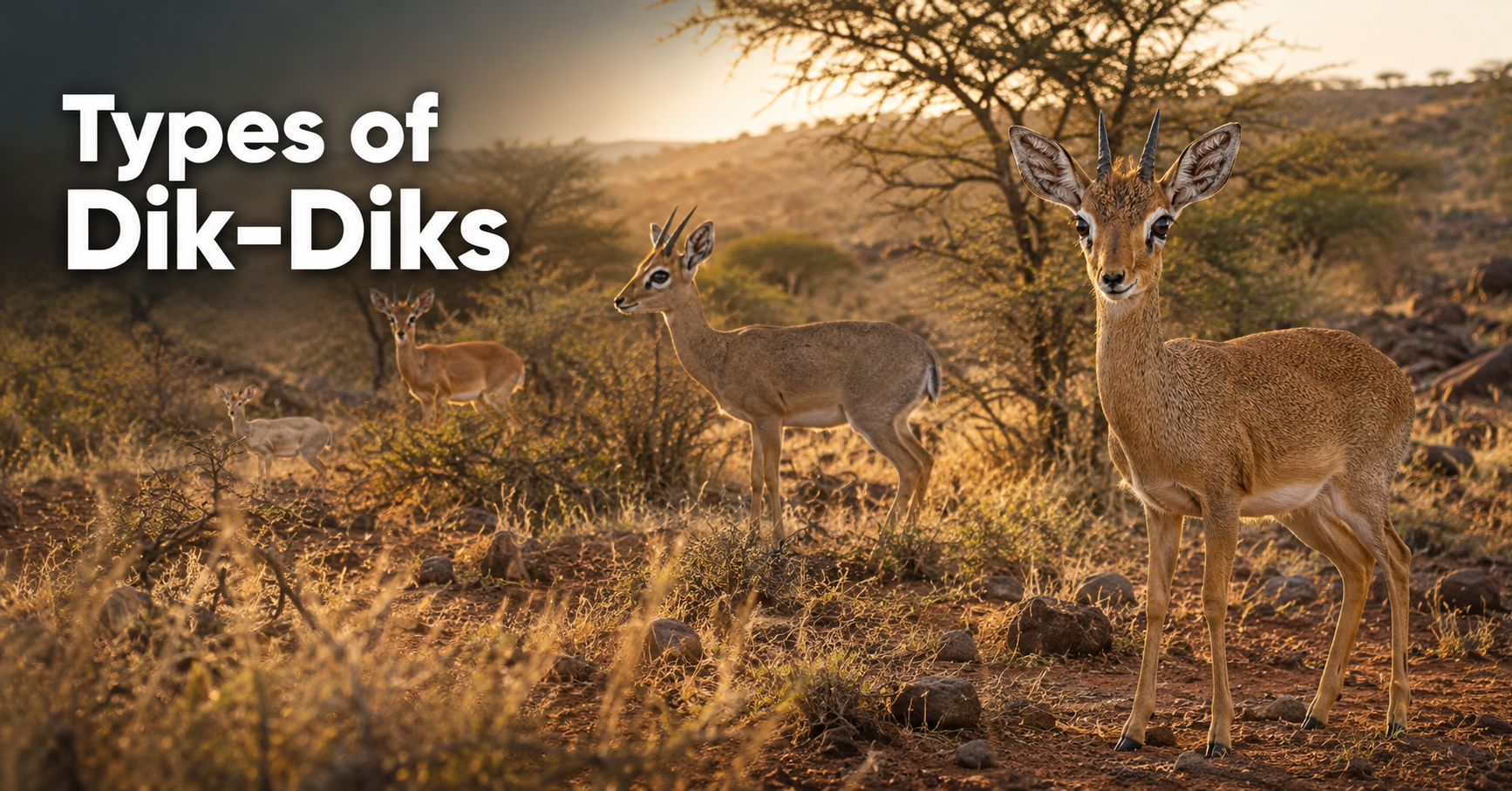
There are seven currently recognized types of dik-diks in the Mammal Diversity Database: Günther’s, Kirk’s, Salt’s, silver, Naivasha, Damara, and Ugogo dik-diks. Older field guides often list only four species because they combine the Naivasha, Damara, and Ugogo forms within Kirk’s dik-dik. This difference is a matter of changing taxonomy, not the discovery of three entirely unfamiliar animals.
All dik-diks are tiny African antelopes in the genus Madoqua. They have long snouts, large eyes, prominent preorbital glands, delicate legs, and coats that blend into dry bush. Females are usually slightly larger, while only males carry short horns, often partly hidden by a forehead crest. This guide compares the seven modern species, explains their ranges and identification clues, and shows how to observe these shy browsers responsibly.
What Are the Main Types of Dik-Diks?
The seven recognized species are Günther’s dik-dik (Madoqua guentheri), Kirk’s dik-dik (Madoqua kirkii), Salt’s dik-dik (Madoqua saltiana), silver dik-dik (Madoqua piacentinii), Naivasha dik-dik (Madoqua cavendishi), Damara dik-dik (Madoqua damarensis), and Ugogo dik-dik (Madoqua thomasi). They live mainly in dry bushland across eastern and northeastern Africa, with the Damara dik-dik forming a separate southwestern population in Namibia and Angola. Because several species look extremely similar, exact location is often the most useful field clue.
| Species | Scientific Name | Core Distribution | Useful Clue |
|---|---|---|---|
| Günther’s dik-dik | Madoqua guentheri | Horn of Africa and northern East Africa | Especially long, mobile snout |
| Kirk’s dik-dik | Madoqua kirkii | Southern Somalia and eastern Kenya under the narrower modern treatment | Classic grizzled Kirk’s-group appearance; range is essential |
| Salt’s dik-dik | Madoqua saltiana | Djibouti, Eritrea, Ethiopia, Somalia, and nearby northeastern Africa | Shorter snout than the long-nosed dik-dik group |
| Silver dik-dik | Madoqua piacentinii | Restricted parts of Somalia, with records associated with the Ethiopia-Somalia region | Pale silvery-gray upper coat and very limited range |
| Naivasha dik-dik | Madoqua cavendishi | Eastern Uganda, southwestern Kenya, and northwestern Tanzania | Rift Valley and Serengeti-Mara distribution |
| Damara dik-dik | Madoqua damarensis | Northern Namibia and southwestern Angola | Only dik-dik in the far southwestern, isolated range |
| Ugogo dik-dik | Madoqua thomasi | Central Tanzania | Geography is more dependable than subtle coat differences |
1. Günther’s Dik-Dik
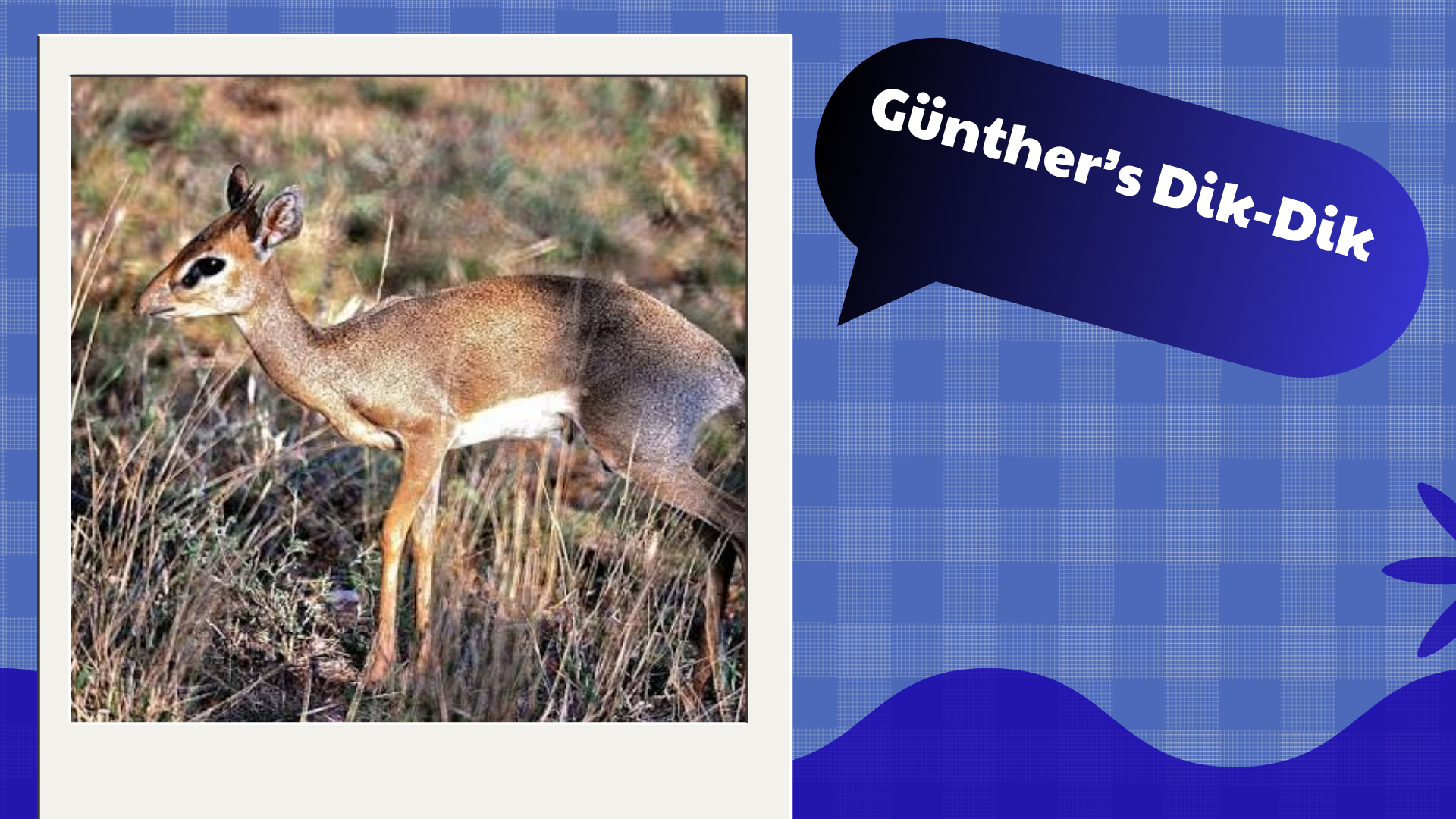
Günther’s dik-dik, Madoqua guentheri, is one of the most distinctive members of the genus because of its elongated, flexible snout. The nose projects forward like a small movable tube and helps the animal handle heat in dry environments. Blood vessels in the nasal region contribute to cooling, while the narrow muzzle allows selective feeding among thorny shrubs.
Its range includes southern Ethiopia, northern Kenya, southern and central Somalia, southeastern South Sudan, and northeastern Uganda. It inhabits arid and semi-arid bush, thorn scrub, and broken country where low vegetation supplies both cover and nutritious browse. Tall, dense grass is generally unsuitable because it blocks visibility and makes rapid escape more difficult.
The coat is typically grayish to yellow-brown or reddish-brown above, with paler underparts. Large eyes are surrounded by light markings, and the ears are broad relative to the small head. Both sexes carry a crest of forehead hair, but only males have horns. The horns are short, ringed at the base, and frequently hidden by the crest when viewed from the front.
Günther’s dik-dik feeds selectively on leaves, shoots, flowers, fruits, seeds, and pods. Its small digestive system requires high-quality, easily processed food rather than large quantities of coarse grass. Moisture from plants and dew reduces its dependence on open water. Feeding is concentrated in cooler hours, helping the animal conserve water and avoid heat stress.
Pairs defend small territories using dung middens, urine, and scent from their preorbital glands. A frightened animal usually darts into cover and may produce a sharp alarm call. For field identification, first confirm that the sighting falls within the species’ northern range, then compare the unusually long nose with nearby dik-dik species. Snout length is useful, but photographs taken at different angles can be deceptive.
2. Kirk’s Dik-Dik
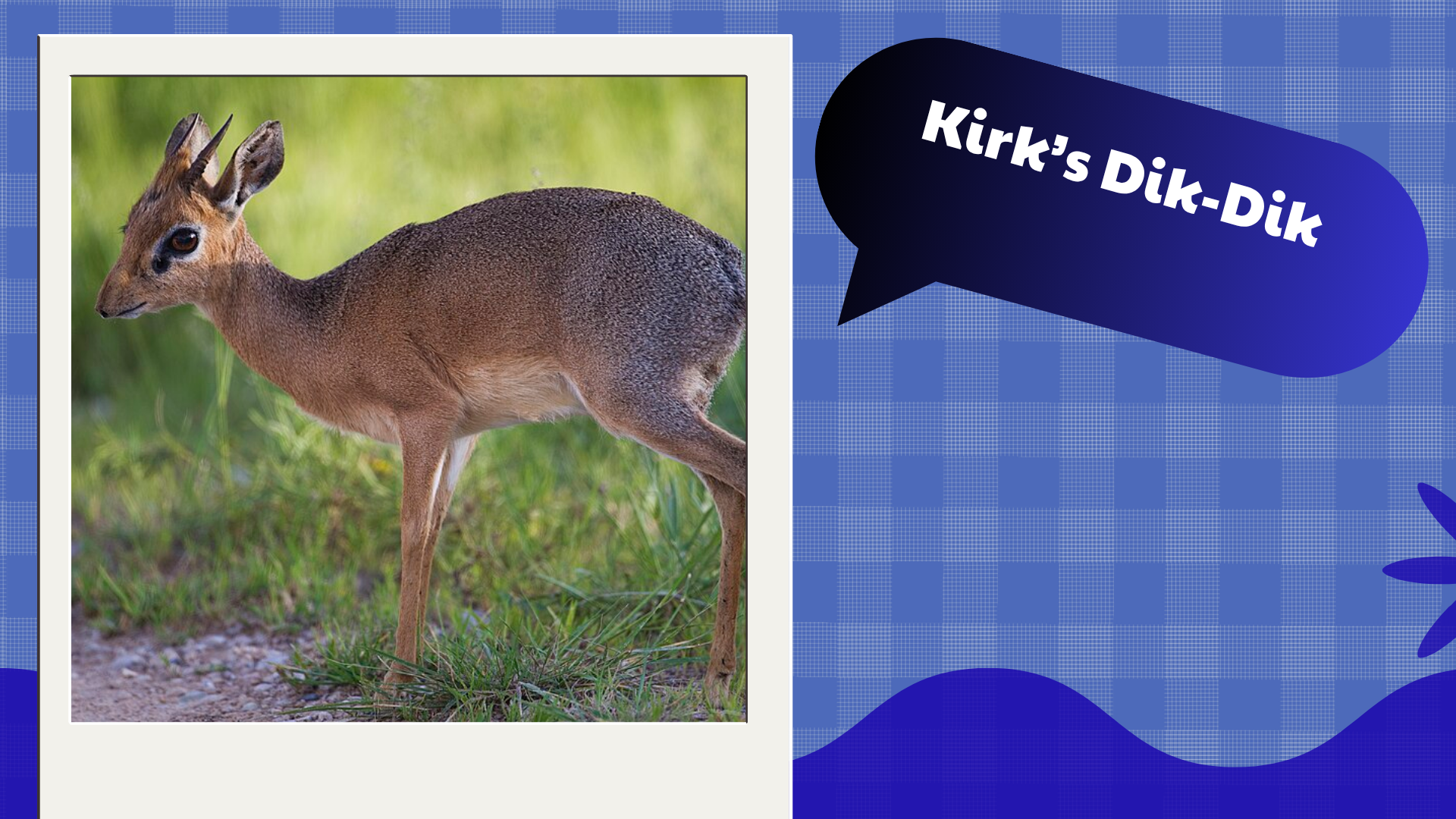
Kirk’s dik-dik, Madoqua kirkii, is the best-known dik-dik name in safari literature. Under older classifications, it included several populations from East Africa and the distant southwest of the continent. Current Mammal Diversity Database treatment uses a narrower definition centered on southern Somalia and eastern Kenya, while recognizing Naivasha, Damara, and Ugogo dik-diks separately.
This small antelope has a grizzled gray-brown to reddish-brown back, warmer flanks, pale underparts, large dark eyes, and a short tail. The head carries a mobile, slightly lengthened snout, although it is not as exaggerated as the nose of Günther’s dik-dik. Males have short horns concealed to varying degrees by a reddish or brown forehead crest. Females are hornless and usually a little larger.
Kirk’s dik-diks favor dry thornbush, scrub, and woodland edges with low cover. They need enough vegetation to hide from predators but avoid places where tall grass obstructs their view. Narrow paths through shrubs may become regular escape routes. Pairs often remain within a familiar territory and use consistent feeding, resting, and scent-marking sites.
The diet consists mainly of leaves and shoots from trees and shrubs, with smaller amounts of herbs, fruit, and fresh grass. Dik-diks select soft, low-fiber plant parts because their small bodies have high metabolic demands. Dew and plant moisture allow them to live without visiting exposed waterholes regularly.
Identification has become complicated by the taxonomic split. A dik-dik in the Serengeti-Mara region may still be called Kirk’s in an older guide, but current treatment may identify it as Naivasha dik-dik. A southern African animal formerly labeled Kirk’s may now be Damara dik-dik. Record the exact location and state which taxonomic system you are following rather than assuming that every familiar safari label remains current.
3. Salt’s Dik-Dik
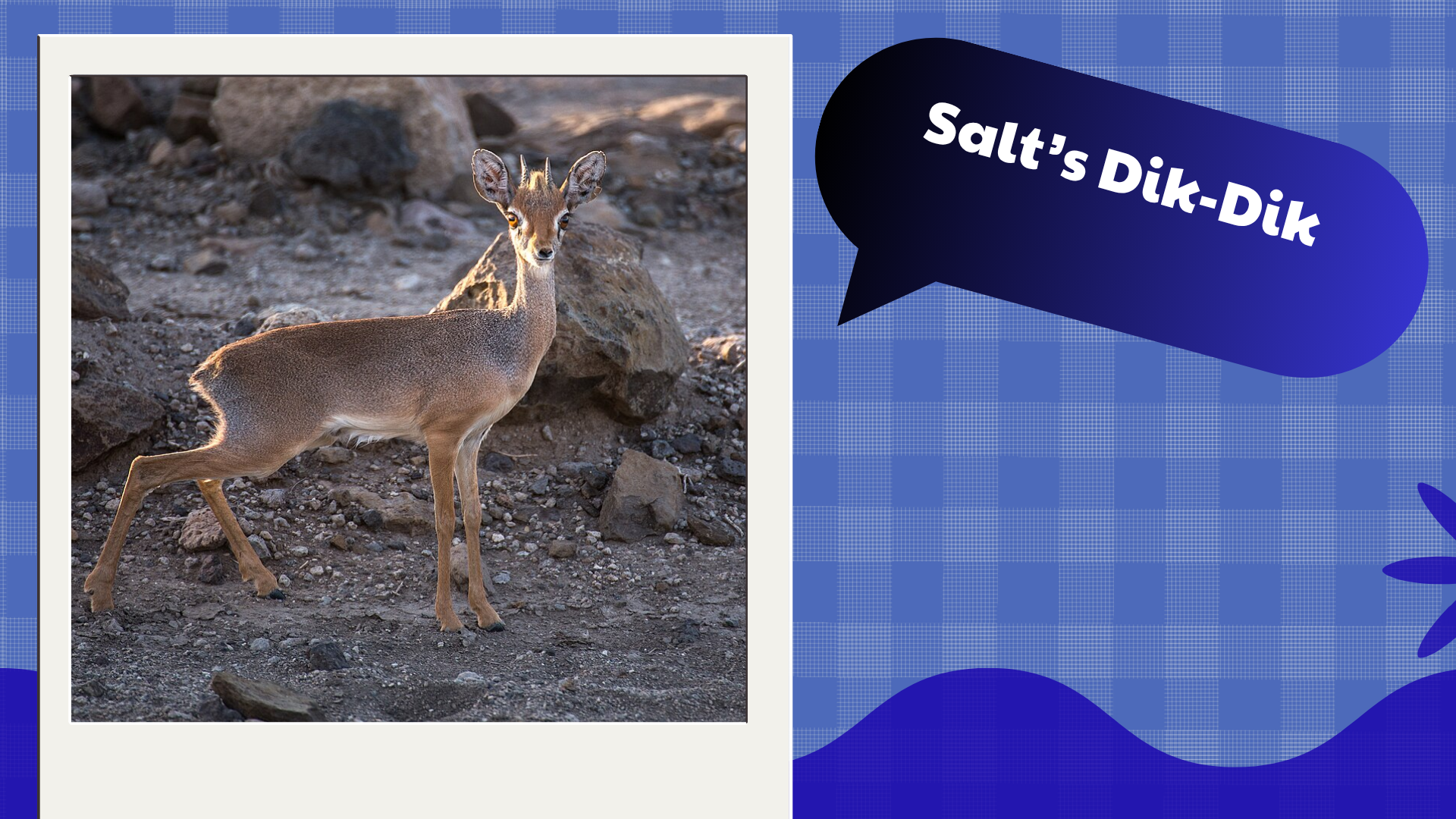
Salt’s dik-dik, Madoqua saltiana, occupies dry northeastern Africa. Its range includes Djibouti, Eritrea, northern Ethiopia, parts of Sudan, and Somalia, with exact boundaries varying among maps and taxonomic treatments. The species lives in rocky slopes, arid scrub, and low bush from hot lowlands into some elevated terrain.
Salt’s dik-dik belongs to the shorter-snouted branch of the genus rather than the long-nosed group containing Günther’s and Kirk’s relatives. Its soft coat varies geographically from grayish or fawn to warmer reddish tones. Pale underparts, large eyes, and a forehead crest create the typical dik-dik profile. Males carry small pointed horns; females do not.
Several named forms—including Phillip’s, Harrar, Swayne’s, and Lawrance’s dik-diks—have sometimes been elevated to species or treated as subspecies. The Mammal Diversity Database currently includes them within Salt’s dik-dik. This is one reason online lists can produce a much higher species count than more conservative references.
Like other dik-diks, Salt’s is primarily a browser. It chooses leaves, buds, shoots, flowers, and other nutrient-rich plant parts and can obtain much of its water from vegetation. Activity during the evening, night, and early morning reduces exposure to extreme daytime heat. Thick scrub provides shade and an immediate refuge from jackals, caracals, leopards, eagles, pythons, and other predators.
In the field, distinguish Salt’s from Günther’s by considering snout proportions and geography together. A short-looking nose alone is not enough, especially in a young animal or an angled photograph. Country, habitat, and the presence of neighboring species offer essential context. Where distributions approach one another, local guides and regional mammal references are more reliable than a general continent-wide chart.
4. Silver Dik-Dik
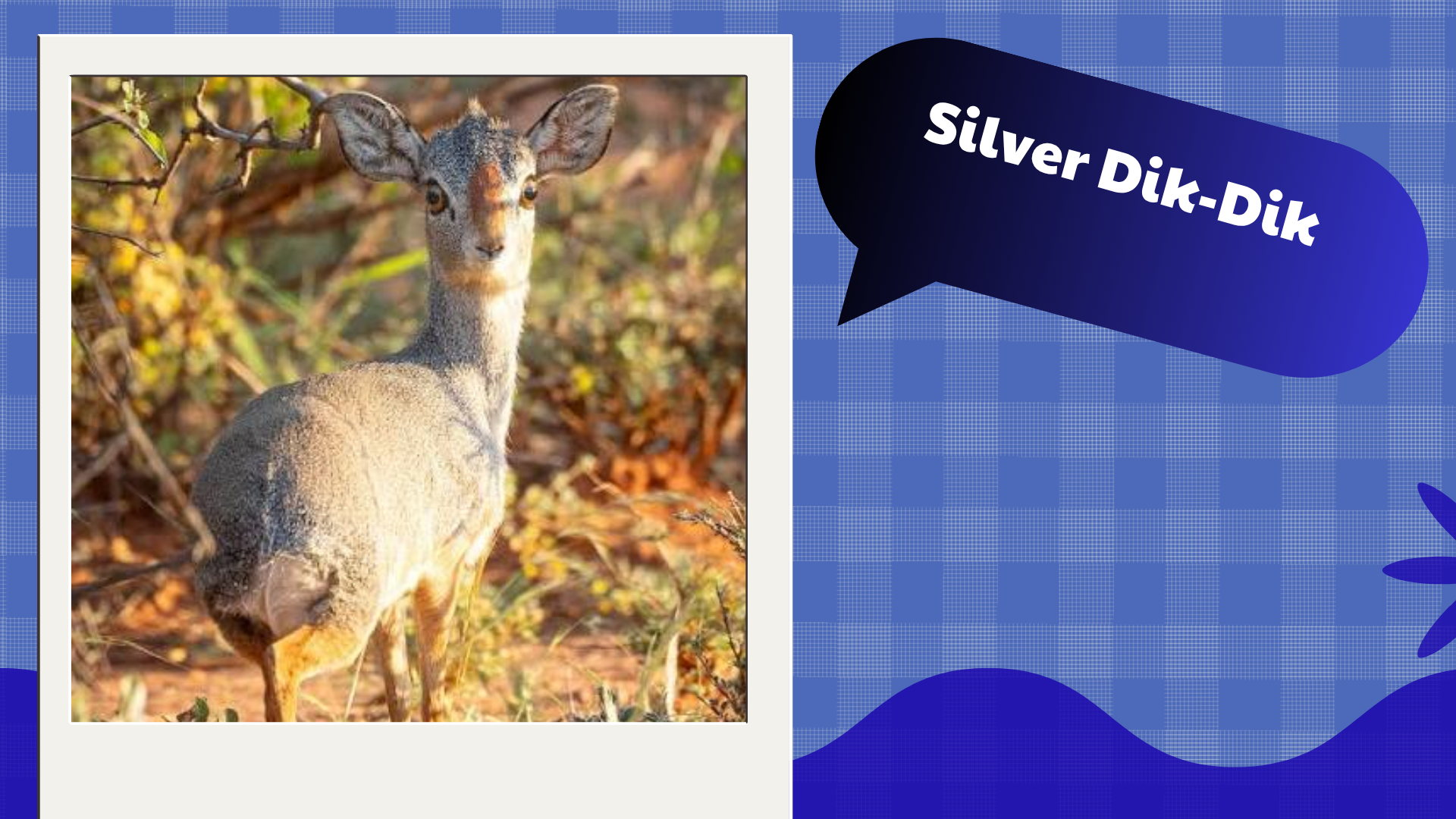
The silver dik-dik, Madoqua piacentinii, is a poorly known and range-restricted species associated mainly with central Somalia’s coastal region. Some modern database records also associate it with the broader Ethiopia-Somalia area, but its confirmed distribution is much smaller than that of Günther’s or Salt’s dik-dik. Limited access and limited field data make confident statements about its current abundance difficult.
Its common name comes from the pale silvery or gray appearance of the upper coat. The sides may show warmer tones, while the underparts are lighter. It belongs to the shorter-snouted subgenus with Salt’s dik-dik and has the same general shape: a tiny body, long delicate legs, large eyes, rounded ears, and a small crest. Adult males have short horns, whereas females are hornless.
Silver dik-diks occupy dry scrub and bushland where their muted coat blends with pale soil, stone, and woody vegetation. They browse selectively and probably rely heavily on moisture-rich leaves and shoots, as other members of the genus do. Because species-specific ecological studies are limited, details from better-studied dik-diks should not automatically be presented as measurements unique to the silver species.
The restricted range makes habitat condition and local security especially important. Livestock pressure, vegetation change, hunting, settlement, and prolonged instability may be relevant threats, but the scale of each problem requires current local evidence. When a species has not been assessed separately under a newer taxonomic treatment, “Not Evaluated” should not be mistaken for “safe.” It means sufficient species-level assessment may not yet be available.
Silver dik-dik identification should be approached cautiously. Pale coloration is useful only within the correct region; sun-bleached photographs can make other dik-diks look silver. A credible record should include precise location, multiple photographs, habitat notes, and expert review. Travelers should never attempt to flush a shy animal from cover for a clearer image.
5. Naivasha Dik-Dik
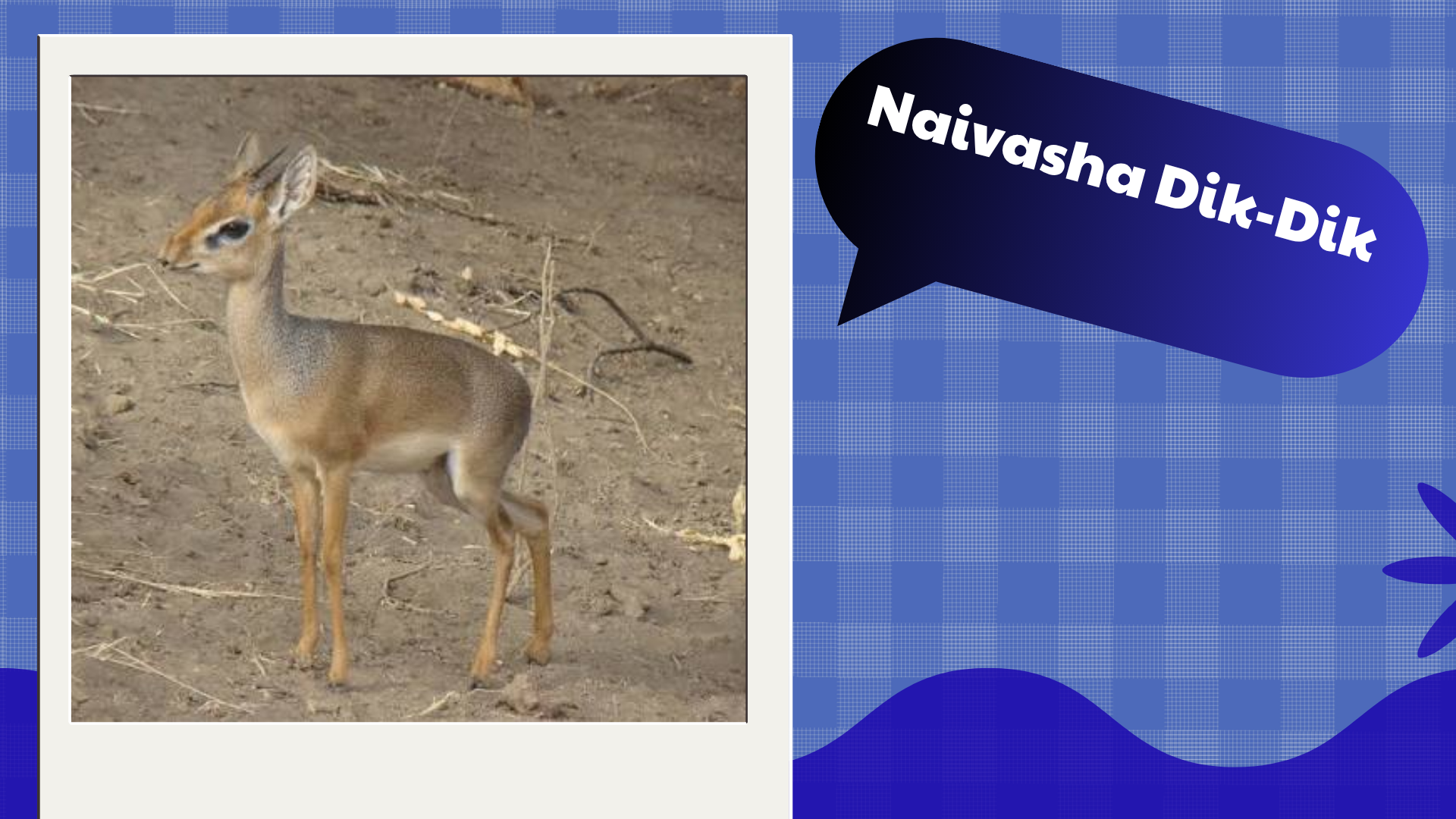
The Naivasha dik-dik, Madoqua cavendishi, is also called Cavendish’s dik-dik and has been associated with the name Hinde’s dik-dik. It was long treated within the Kirk’s dik-dik complex. Current Mammal Diversity Database treatment recognizes it as a species distributed across eastern Uganda, southwestern Kenya, and northwestern Tanzania, including the Rift Valley and parts of the Serengeti-Mara ecosystem.
Its appearance is extremely close to that of Kirk’s and Ugogo dik-diks. It has a grizzled gray-brown back, warmer sides, pale belly, large eyes with light rings, a forehead tuft, and an elongated but compact nose. Adult males carry short horns, which can disappear completely behind the crest in a head-on view. Females lack horns and may look more robust.
Naivasha dik-diks use bushland, thorn scrub, woodland edges, and other habitats with browse at a convenient height. They often benefit from a mosaic of open sightlines and dense escape cover. A pair may maintain a territory marked with dung, urine, and glandular secretions. Although commonly described as pair-living or monogamous, social behavior should not be simplified into a human-style lifelong bond in every case.
They feed on young leaves, shoots, herbs, flowers, and fruit, taking only limited grass. Water is largely obtained from food and dew. Resting during hot periods reduces moisture loss, while activity increases in the cooler morning, evening, and night hours.
Location is the strongest practical identification clue. Many safari operators and older books still call these animals Kirk’s dik-diks, especially in famous Kenyan and Tanzanian reserves. That usage is understandable under the older four-species model. A careful article or wildlife record can note both names: Naivasha dik-dik under the current split, formerly included within Kirk’s dik-dik.
6. Damara Dik-Dik
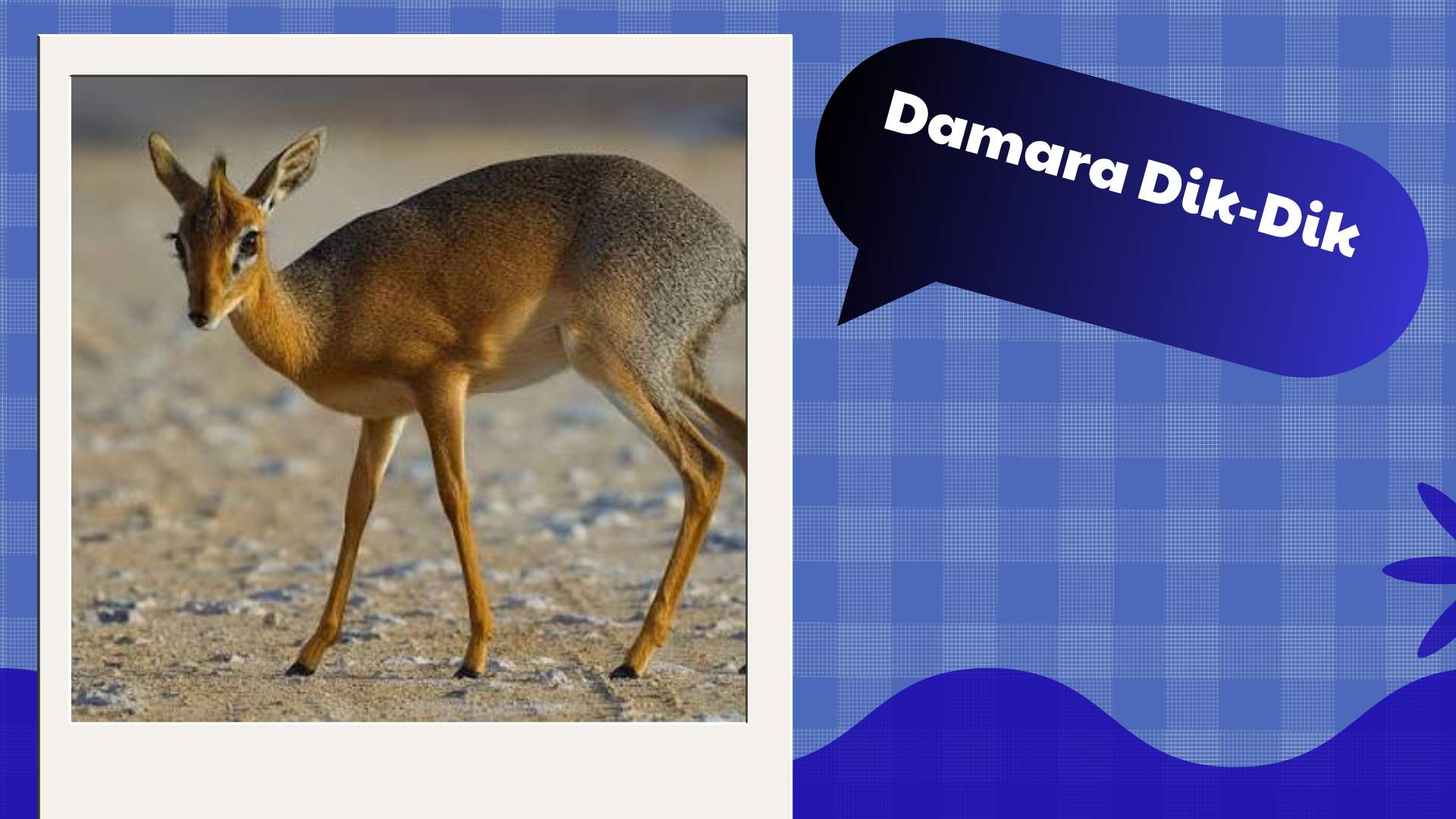
The Damara dik-dik, Madoqua damarensis, is the geographically isolated southern member of the modern seven-species list. It occurs in northern and northwestern Namibia and extends into southwestern Angola. Etosha National Park is among the best-known places where travelers may encounter it.
Older references usually treat the Damara form as a subspecies or population of Kirk’s dik-dik. Its separation as a full species explains why some sources still say that Kirk’s dik-dik occurs in both East Africa and Namibia. Under the newer arrangement, the southwestern population is Damara dik-dik, while Kirk’s has a more restricted northeastern range.
The Damara species has the classic long-snouted dik-dik build: a gray-brown grizzled back, warmer face and flanks, light underside, large eyes, broad ears, and a small forehead crest. Only males have horns. Coat shade varies with individual condition, dust, season, and light, so it is not sensible to identify a Namibian animal from color alone.
Habitat includes dry scrub, rocky bushland, and open woodland with low foliage. Damara dik-diks browse on selected leaves, shoots, flowers, and fruit and use plant moisture to limit the need for drinking. They remain close to cover and may freeze before darting along a familiar route through the bushes.
For safari identification, geography is unusually powerful because no other wild dik-dik species is expected across most of the Damara range. Confirm that the location is within northern Namibia or southwestern Angola and that the animal was not held or introduced on managed property. Photographing the whole animal and recording habitat is more valuable than trying to approach for a horn close-up.
7. Ugogo Dik-Dik
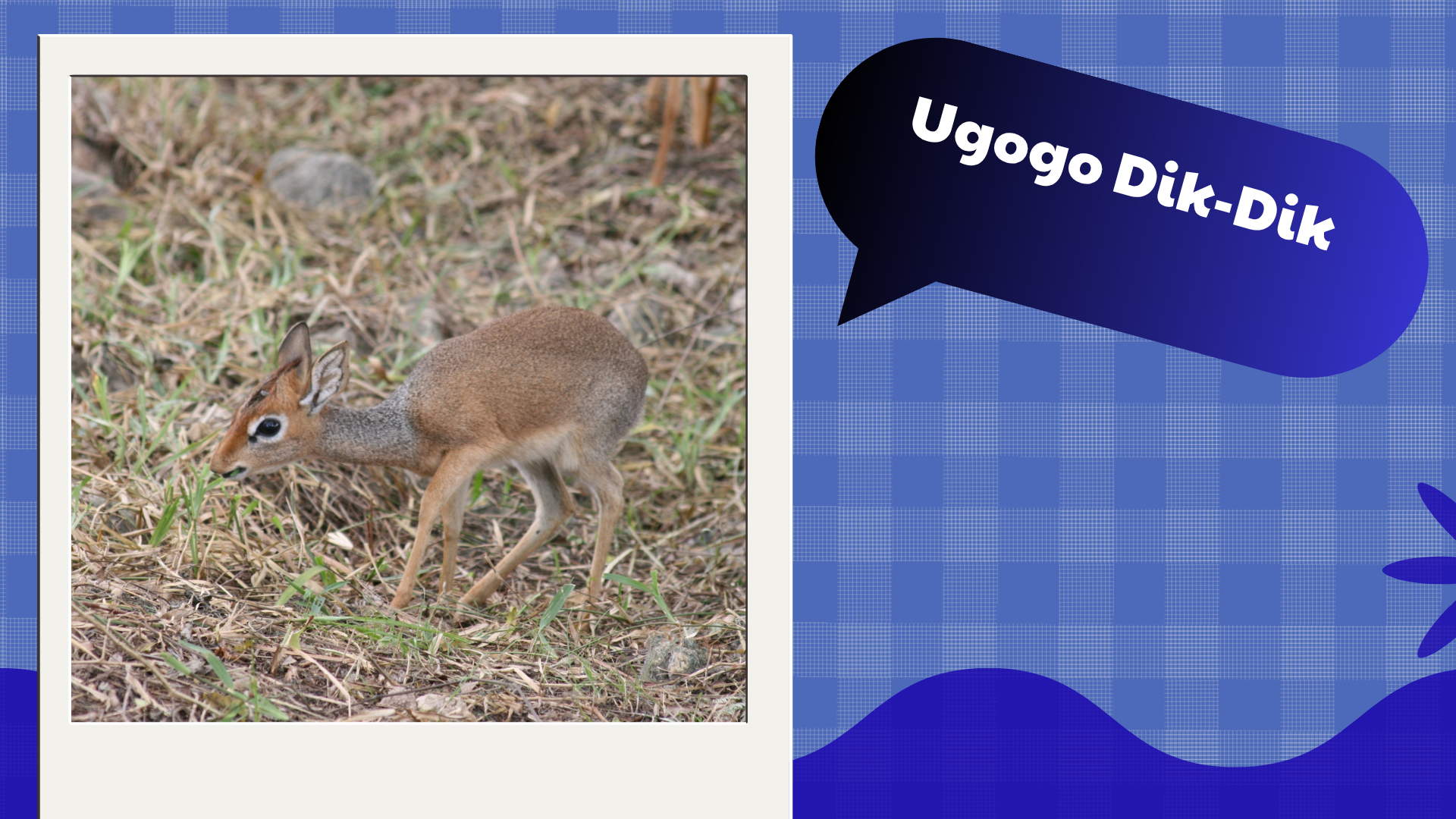
The Ugogo dik-dik, Madoqua thomasi, is also called Thomas’s dik-dik. It is a Tanzanian species split from the wider Kirk’s dik-dik complex and named for the Ugogo region of central Tanzania. Its modern recognition helps explain why a current species list is longer than the four-name list repeated by many general wildlife pages.
Ugogo dik-diks closely resemble neighboring members of the Kirk’s group. Their coat is generally grizzled gray-brown above with warmer brown areas, pale underparts, large dark eyes, and a prominent forehead crest. The flexible nose projects forward, and males carry short horns. Visual differences from Naivasha or Kirk’s dik-diks can be subtle and may not be reliable without specimens or high-quality comparative evidence.
The species occupies dry bushland and wooded savanna in Tanzania. It selects habitat that combines edible low shrubs with visibility and nearby concealment. Excessively tall grass can reduce habitat quality by blocking an animal’s view of approaching predators. Dik-diks may help shape low vegetation through repeated browsing within their small territories.
Pairs communicate through scent marks, dung sites, posture, and alarm calls. When danger appears, they often rely on concealment and a sudden fast dash rather than a long run across open ground. Their small size puts them within the prey range of many carnivores, raptors, and large snakes, so staying close to familiar cover is essential.
Field identification should begin with the exact Tanzanian location. A dik-dik in northwestern Tanzania may fall within Naivasha dik-dik range, while one in central areas associated with Ugogo may be M. thomasi. Range boundaries need continuing study, and sightings near possible contact zones deserve cautious labels.
How Are These Wild Animals Classified?
Dik-diks are mammals in the order Artiodactyla and family Bovidae. They belong to the genus Madoqua within the antelope tribe Antilopini. The genus is commonly divided into two subgenera: Madoqua, containing the shorter-snouted Salt’s and silver dik-diks, and Rhynchotragus, containing the more elongated-nosed species.
The seven-species treatment recognizes:
- Madoqua guentheri
- Madoqua kirkii
- Madoqua saltiana
- Madoqua piacentinii
- Madoqua cavendishi
- Madoqua damarensis
- Madoqua thomasi
The older four-species model recognizes Günther’s, Kirk’s, Salt’s, and silver dik-diks and places several regional forms inside Kirk’s. Other highly split proposals recognize still more species from populations currently included within Günther’s or Salt’s. Taxonomy remains a scientific hypothesis that can change with better genetic and geographic evidence.
Where Do These Wild Animals Live?
Most dik-diks live in eastern and northeastern Africa. Their combined range covers parts of Angola, Namibia, Tanzania, Kenya, Uganda, South Sudan, Sudan, Ethiopia, Eritrea, Djibouti, and Somalia. Distribution is patchy because each species requires suitable low browse and cover.
Typical habitat includes thornbush, arid scrub, dry woodland edges, rocky slopes, and vegetation along seasonal watercourses. Dik-diks avoid both completely open ground and dense tall grass. A mixture of low shrubs, narrow paths, and clear sightlines gives them food, shade, and escape cover.
They do not need permanent surface water when moisture-rich food and dew are available. This adaptation allows pairs to occupy dry territories that would be difficult for less water-efficient antelopes.
How to Identify Different Types of Dik-Diks
- Start with geography: Country, reserve, and precise region are more useful than coat shade for separating similar species.
- Check snout length: Günther’s has an especially elongated nose; Salt’s and silver dik-diks belong to the shorter-snouted group.
- Study coat tone: Silver dik-dik is notably pale and gray, but lighting can make other species appear similar.
- Look for horns: Only males have short horns. Horns help determine sex, not species.
- Notice the forehead crest: A dense tuft can hide a male’s horns and is common across the genus.
- Compare body proportions: Females are often slightly larger; age and sex must be considered before comparing species.
- Observe habitat: Dry low bush suggests dik-dik habitat, but several species occupy nearly identical vegetation.
- Record the rump and flanks: Full-side and rear photographs can preserve subtle pattern details for expert review.
- Use current range maps: Older guides may group Naivasha, Damara, and Ugogo animals under Kirk’s.
- Accept an uncertain identification: “Dik-dik, species uncertain” is better than a confident but unsupported label.
Dik-Dik Size, Adaptations, and Daily Life
Dik-diks generally stand about 30 to 40 centimeters at the shoulder, measure roughly 50 to 70 centimeters from head to body, and weigh around 3 to 6 kilograms. Species, sex, age, and local nutrition produce variation. Females are often slightly larger than males.
Their elongated noses help with selective feeding and cooling. Large eyes and ears detect danger, while preorbital glands release scent used to mark vegetation. Slender legs allow quick movement through narrow bush paths. The tan, gray, and reddish grizzling of the coat breaks up the body outline in dry vegetation.
Many dik-diks live as territorial pairs. They place dung in repeated sites and add scent marks around their boundaries. A calf remains hidden during its vulnerable early period and later disperses when mature enough to leave the parents’ territory.
What Do Dik-Diks Eat?
Dik-diks are selective browsers. Their diet includes tender leaves, shoots, buds, flowers, herbs, fruit, berries, seeds, and pods, with only limited fresh grass. Their small bodies have high metabolic needs, so they choose nutritious, easily digestible plant parts rather than coarse fiber.
Water conservation is a major adaptation. Plant moisture, dew, concentrated urine, dry droppings, and activity during cooler hours help reduce water loss. Dik-diks can live without regularly visiting open water, which also reduces exposure to predators.
Never feed a wild dik-dik. Human food can disturb digestion and natural territorial behavior. Leaving vegetation undamaged and watching from a distance gives the animal the best chance to feed normally.
Outdoor Tips for Finding and Observing Dik-Diks
- Search habitat edges. Scan beneath low shrubs, along dry stream beds, and beside narrow game trails.
- Go during cool hours. Early morning and late afternoon offer the best combination of activity and light.
- Stop after spotting one animal. Its mate may be standing quietly nearby.
- Listen for alarm calls. A sharp whistle or “dik-dik” sound may reveal a hidden pair, but do not imitate calls to provoke wildlife.
- Use binoculars before moving. Dik-diks can disappear into cover after only a few steps.
- Photograph the habitat. A wide contextual image can help confirm range and vegetation.
- Stay on permitted routes. Walking into brush may separate a pair, disturb a calf, or expose you to larger wildlife.
- Ask which taxonomy is used. A local checklist may use Kirk’s dik-dik broadly or recognize the newer splits.
Safety, Sustainability, and Conservation Notes
Dik-diks are not dangerous to respectful observers, but approaching them can cause serious stress. Their survival strategy depends on remaining hidden and minimizing unnecessary movement in hot, dry environments. Keep your distance, avoid surrounding an animal, and never chase it into the open for a photograph.
Conservation status varies by species and taxonomic treatment. Günther’s, Kirk’s, and Salt’s dik-diks have broad ranges and are commonly assessed as Least Concern. Newly split species such as Naivasha, Damara, and Ugogo dik-diks may not yet have separate global assessments. The poorly known silver dik-dik has a restricted distribution and needs reliable field data.
Habitat conversion, intensive browsing by livestock, hunting, roads, fencing, and settlement can affect local populations. Some disturbance creates low secondary vegetation that dik-diks can use, but severe habitat loss and fragmentation remain harmful. Conservation should protect connected bushland, maintain native plant diversity, and include local communities in land-use decisions.
Fun Facts About Dik-Diks
- Dik-diks are among the smallest antelopes in the world.
- The name is linked to their repeated alarm call.
- Only males have horns, but females are often slightly larger.
- The forehead crest can hide a male’s short horns.
- Dik-diks obtain most of their water from plants and dew.
- Preorbital glands near the eyes produce scent used for territorial marking.
- Many dik-diks live in pairs and share a small territory.
- Their mobile nose contributes to feeding and heat management.
- Older guides often list four species, while the current Mammal Diversity Database recognizes seven.
- A dik-dik may freeze in cover before escaping along a familiar bush path.
Final Thoughts on Types of Dik-Diks
The seven currently recognized types of dik-diks are Günther’s, Kirk’s, Salt’s, silver, Naivasha, Damara, and Ugogo dik-diks. The newer count reflects the splitting of regional populations that older guides included within Kirk’s dik-dik. Since these tiny antelopes often look alike, location, snout proportions, current range maps, and population history are more reliable than color alone. Patient, quiet observation protects these shy animals and usually produces better natural behavior than a close approach.
Frequently Asked Questions
1. How many types of dik-diks are there?
The Mammal Diversity Database currently recognizes seven species. Many older or general references list four because they use a broader definition of Kirk’s dik-dik.
2. What are the seven dik-dik species?
They are Günther’s, Kirk’s, Salt’s, silver, Naivasha, Damara, and Ugogo dik-diks.
3. Why do some sources say there are only four?
The four-species model combines Naivasha, Damara, and Ugogo dik-diks within the wider Kirk’s dik-dik complex.
4. What is the scientific genus of dik-diks?
All dik-diks belong to the genus Madoqua in the bovid family.
5. Which is the best-known dik-dik?
Kirk’s dik-dik is the name most familiar to safari travelers, partly because older guides applied it to several East and southern African populations.
6. Which dik-dik has the longest nose?
Günther’s dik-dik is particularly well known for its elongated, mobile snout.
7. Which dik-dik is the palest?
The silver dik-dik is named for its pale silvery-gray upper coat, although identification still requires the correct geographic range.
8. Which dik-dik lives in Namibia?
The Damara dik-dik occurs in northern and northwestern Namibia and extends into southwestern Angola.
9. Which dik-diks live in Tanzania?
Naivasha dik-dik occurs in northwestern Tanzania, while Ugogo dik-dik is associated with central Tanzania. Exact range boundaries require current local maps.
10. Which dik-diks live in Somalia?
Somalia supports several species, including Kirk’s, Günther’s, Salt’s, and silver dik-diks in different regions.
11. How can I identify a dik-dik species?
Start with exact location, then compare snout length, coat tone, flank and rump pattern, and current regional range maps.
12. Can coat color identify a dik-dik?
Color helps, but dust, light, season, age, and individual variation create overlap. It should never be the only clue.
13. How large is a dik-dik?
Most stand about 30 to 40 centimeters at the shoulder, measure roughly 50 to 70 centimeters in body length, and weigh around 3 to 6 kilograms.
14. Are female dik-diks larger than males?
Females are often slightly larger and heavier than males, although the difference can be difficult to judge in the field.
15. Do female dik-diks have horns?
No. Only males have horns, and their short horns may be partly hidden by the forehead crest.
16. What do dik-diks eat?
They eat tender leaves, shoots, buds, flowers, fruit, herbs, seeds, pods, and small amounts of fresh grass.
17. Do dik-diks drink water?
They obtain most of their water from plants and dew and can live without visiting open water regularly.
18. How do dik-diks stay cool?
Their nasal system helps manage heat, while resting during hot periods and feeding in cooler hours reduces water loss.
19. Where do dik-diks live?
They live in parts of eastern, northeastern, and southwestern Africa, mainly in dry bushland, thorn scrub, and open woodland.
20. Why do dik-diks avoid tall grass?
Tall grass blocks their view and can hide predators. They prefer low cover that provides both browse and clear escape routes.
21. Do dik-diks live alone?
They are commonly seen as territorial pairs, sometimes with a dependent calf. Young animals later disperse from the parents’ territory.
22. Do dik-diks mate for life?
They often maintain long-term pair bonds, but “mate for life” can oversimplify the variation in wild social and reproductive behavior.
23. How do dik-diks mark territory?
They use dung sites, urine, and scent from preorbital glands located near the eyes to mark vegetation and boundaries.
24. Why are dik-diks called dik-diks?
The name is associated with the sharp repeated alarm call made when they detect danger.
25. What predators eat dik-diks?
Predators include leopards, cheetahs, caracals, jackals, hyenas, baboons, eagles, pythons, and other carnivores large enough to catch them.
26. How do dik-diks escape predators?
They freeze in cover, give alarm calls, and sprint quickly through familiar narrow paths in dense vegetation.
27. Are dik-diks endangered?
Several widespread species are assessed as Least Concern, but restricted or newly split species may lack separate assessments and require better data.
28. Is the silver dik-dik endangered?
It has a restricted and poorly documented range. Its conservation needs should not be minimized merely because a current separate assessment may be unavailable.
29. Can dik-diks be kept as pets?
No. They are shy wild antelopes with specialized dietary, territorial, environmental, veterinary, and legal requirements.
30. Are dik-diks related to deer?
They are antelopes in the family Bovidae, not deer in the family Cervidae.
31. Are dik-diks the smallest antelopes?
They are among the smallest antelopes, though some other dwarf antelope species are comparable or smaller.
32. When is the best time to see dik-diks?
Early morning and late afternoon are often best because the animals are active and temperatures are cooler.
33. What should I photograph for identification?
Capture the face in profile, full side, rump, horns or forehead crest, surrounding habitat, and exact location.
34. What is the biggest dik-dik identification mistake?
The biggest mistake is assigning a species from coat color alone without checking location or the taxonomic system used by the source.
35. How should I observe dik-diks responsibly?
Stay quiet, use binoculars or a long lens, remain on permitted routes, and never chase, call in, feed, or flush them from cover.