

California has an extraordinary variety of fish, from cold-water trout in mountain streams to surfperch, rockfish, salmon, and sharks along the Pacific coast. This guide to the types of fish in California highlights 25 important native and introduced species found in the state’s rivers, lakes, reservoirs, estuaries, and ocean waters.
You will learn how to recognize each fish, where it lives, what it eats, how large it becomes, and why it matters to California’s ecosystems and anglers. Some species are popular sport fish, while others are rare, protected, or important indicators of healthy habitat.
What Are the Main Types of Fish in California?
The main types of fish in California include native trout, salmon, bass, sunfish, minnows, suckers, surfperch, rockfish, flatfish, sturgeon, and sharks. California waters contain both freshwater and saltwater species, including resident fish and migratory fish that move between rivers and the Pacific Ocean. The list below focuses on representative species that are ecologically important, commonly recognized, or especially useful for identification.
1. California Golden Trout
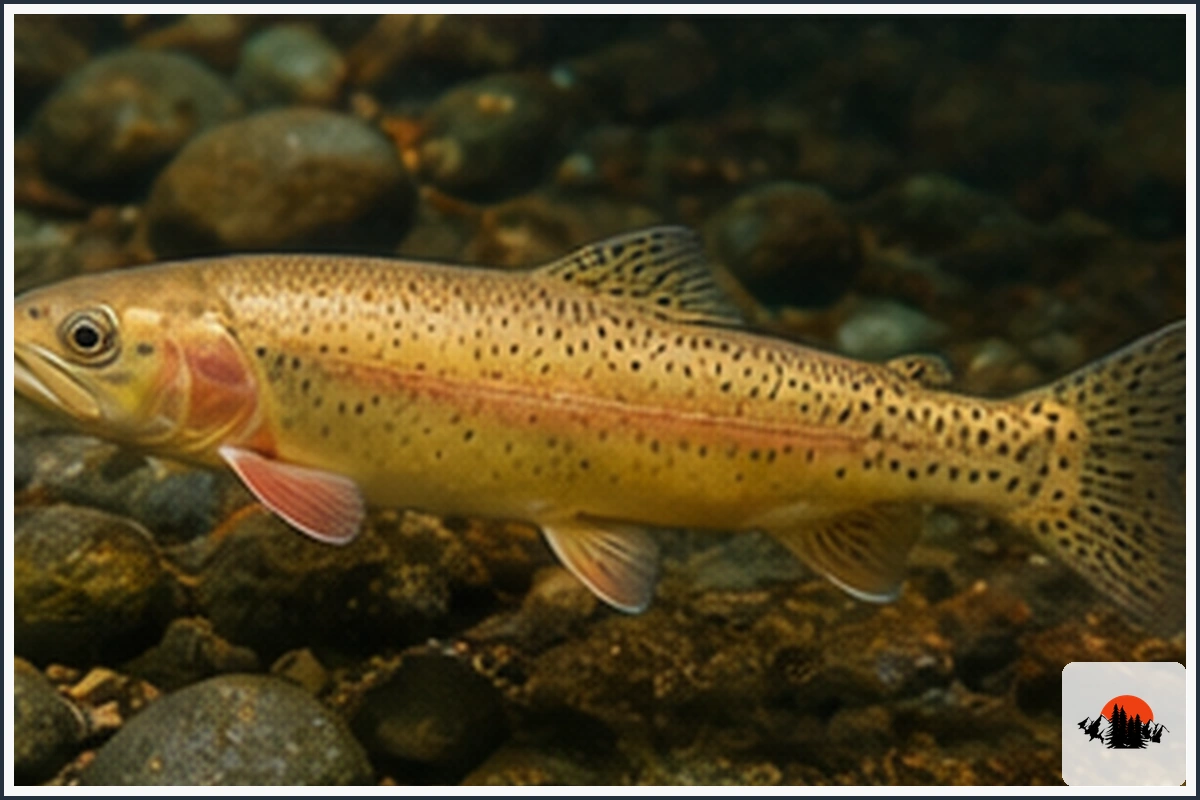
Scientific name: Oncorhynchus mykiss aguabonita
The California golden trout is the state freshwater fish and one of California’s most distinctive native trout. It has brilliant golden sides, a reddish lateral band, dark spots, and usually red or orange markings along the fins. It is closely associated with high-elevation streams and lakes in the southern Sierra Nevada.
Golden trout usually live in clear, cold, oxygen-rich water and feed on aquatic insects, terrestrial insects, and small organisms. Most are small because their mountain habitats have limited food, although larger individuals occur in suitable lakes. They are valued by anglers and hikers, but fragile alpine populations can be affected by introduced trout, habitat changes, drought, and warming water.
2. Coastal Rainbow Trout
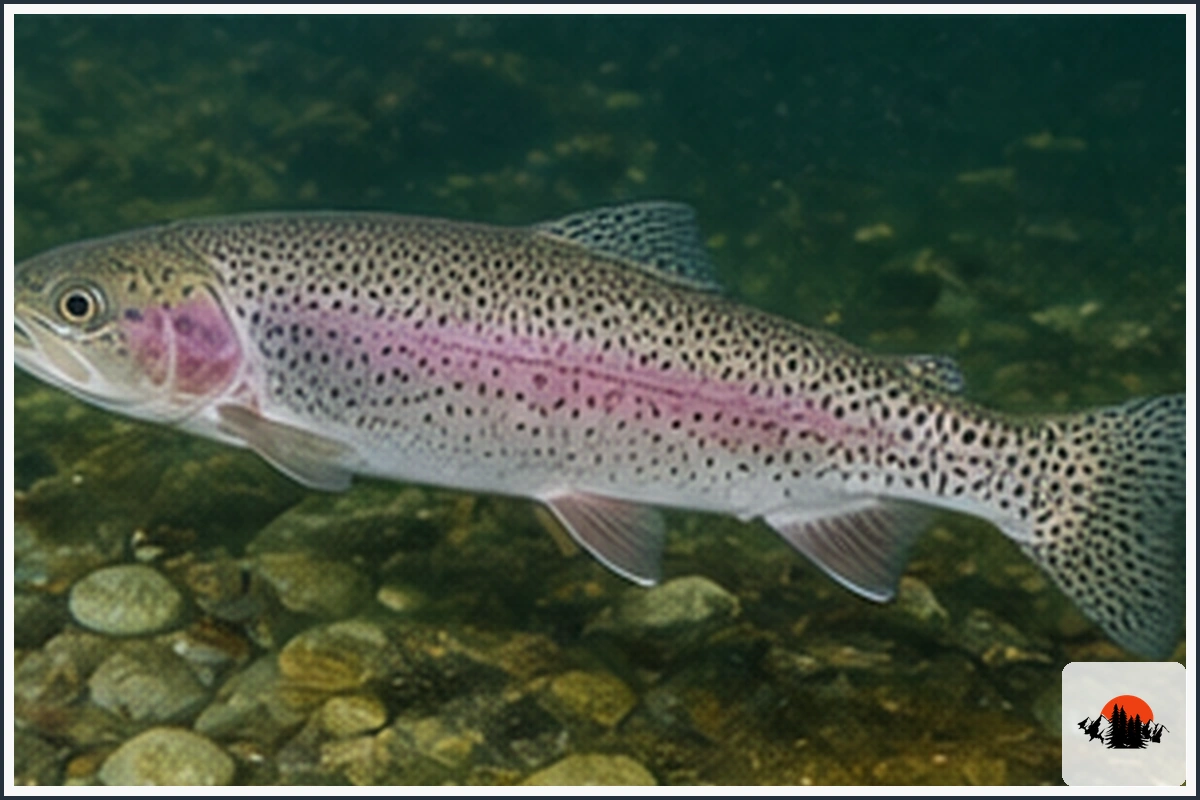
Scientific name: Oncorhynchus mykiss
Coastal rainbow trout are freshwater forms of a highly variable species that also includes steelhead. They typically have a streamlined body, dark spots, a pink or reddish stripe along the side, and a silvery or olive back. They occur in cool streams, rivers, and lakes along much of California’s coast and inland mountain regions.
These trout eat aquatic insects, insects that fall into the water, crustaceans, and occasionally small fish. Their size depends on habitat and food availability. Resident rainbow trout remain in freshwater, while steelhead migrate to the ocean before returning to freshwater to spawn.
3. Steelhead
Scientific name: Oncorhynchus mykiss
Steelhead are the migratory form of rainbow trout. They spend part of their lives in the Pacific Ocean, where abundant food allows them to grow larger, then return to California rivers and streams to reproduce. Ocean-going fish are usually more silvery and muscular than resident trout.
Steelhead eat insects, crustaceans, and small fish. Their runs depend on accessible river channels, suitable flow, cool water, and functioning stream habitat. California steelhead populations vary by watershed, and some groups are protected under federal law. Anglers must check current regulations before fishing for them.
4. Coastal Cutthroat Trout
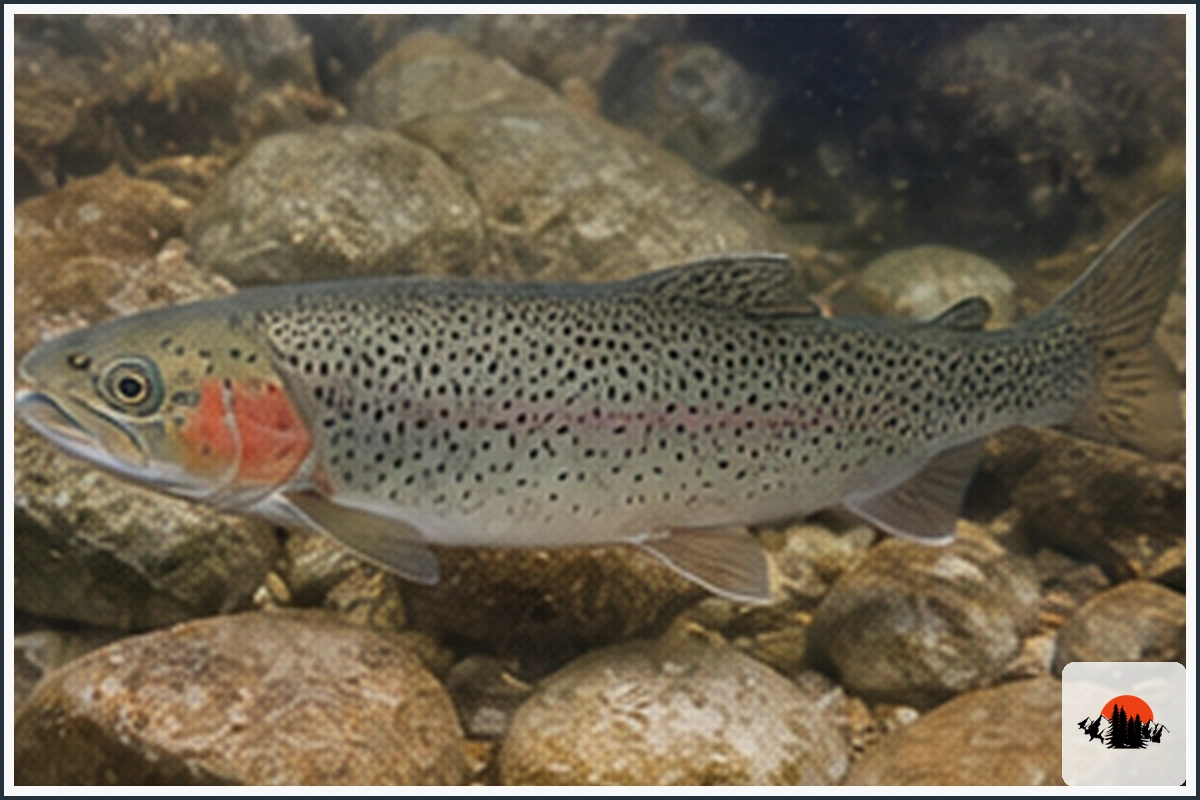
Scientific name: Oncorhynchus clarkii clarkii
Coastal cutthroat trout are native to cool coastal streams and connected waters in northern California. They often have a darker back, small spots, and distinctive reddish or orange marks beneath the jaw. Some remain in freshwater, while others migrate through estuaries or into the ocean.
They feed on aquatic insects, small crustaceans, fish eggs, and small fish. Coastal cutthroat trout prefer shaded streams with clean gravel, woody cover, and stable summer flows. Their presence can indicate relatively healthy cold-water habitat.
5. Chinook Salmon
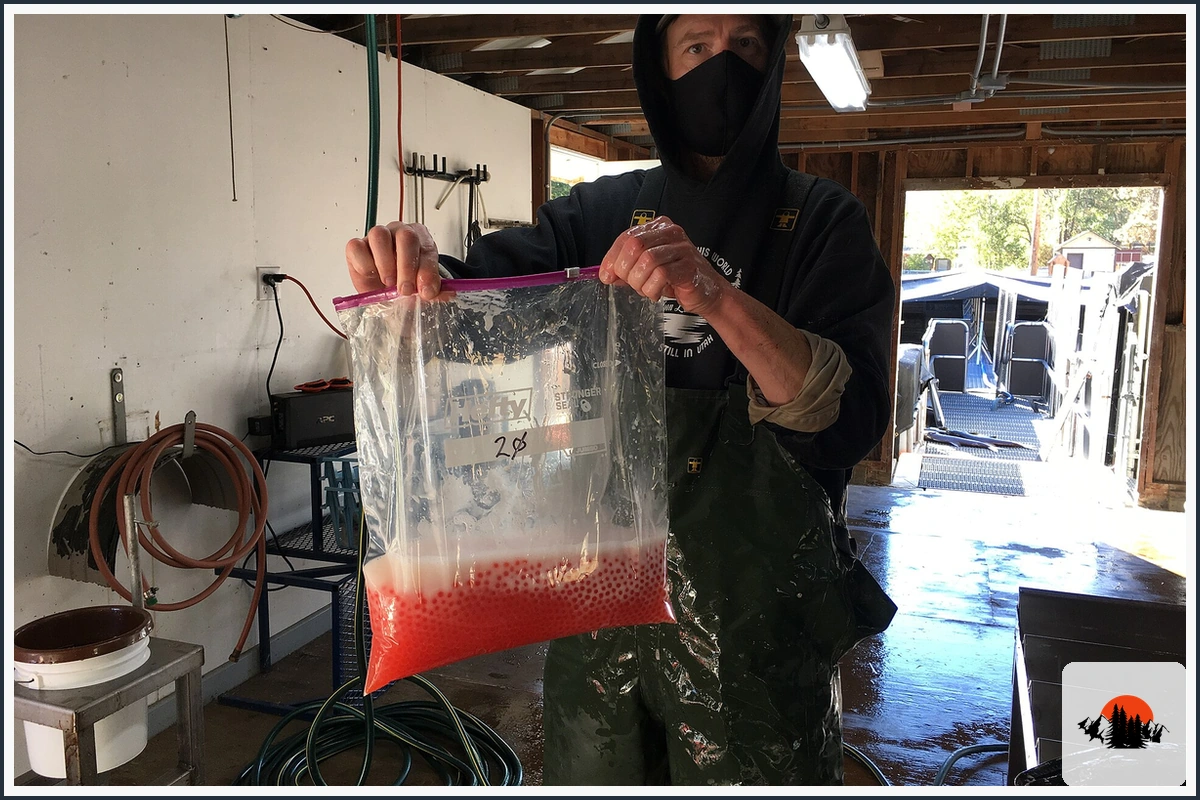
Scientific name: Oncorhynchus tshawytscha
Chinook salmon, also called king salmon, are among California’s largest native salmon. Adults have a dark back, black spots on the back and tail, and a silver body while at sea. They migrate from the Pacific Ocean into rivers such as the Sacramento, Klamath, and large northern coastal systems.
Young salmon eat aquatic insects and small aquatic animals, while adults at sea consume fish and squid. Chinook salmon stop feeding or feed very little during their spawning migration. Their populations are influenced by dams, water diversions, drought, warm water, ocean conditions, and loss of spawning habitat.
6. Coho Salmon
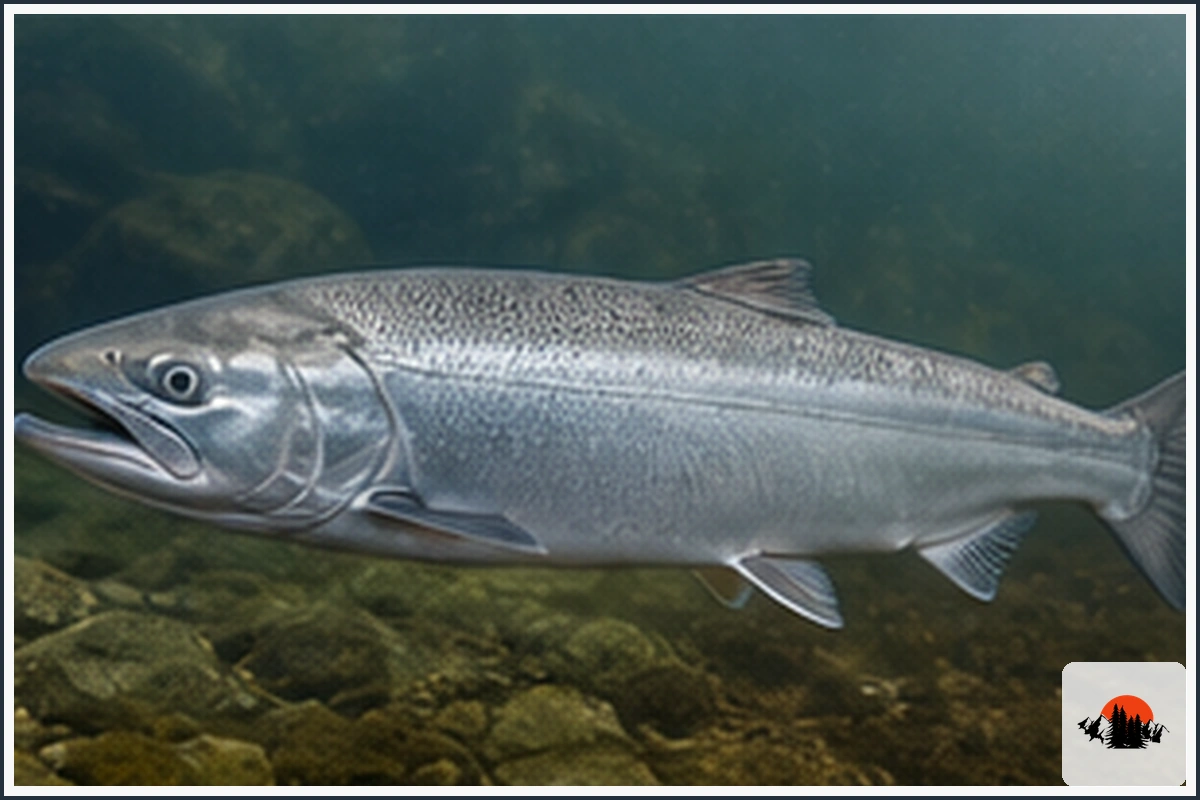
Scientific name: Oncorhynchus kisutch
Coho salmon are powerful migratory fish associated with cool coastal streams in northern California. Adults in the ocean are bright silver with dark backs. During spawning, they develop darker coloration and reddish sides.
Juvenile coho often remain in freshwater for more than a year, feeding on aquatic insects and small organisms before migrating to sea. Adults feed on fish and squid in the ocean. California coho salmon are seriously threatened in many watersheds, making habitat restoration, cold water, and unobstructed stream access especially important.
7. Sacramento Splittail
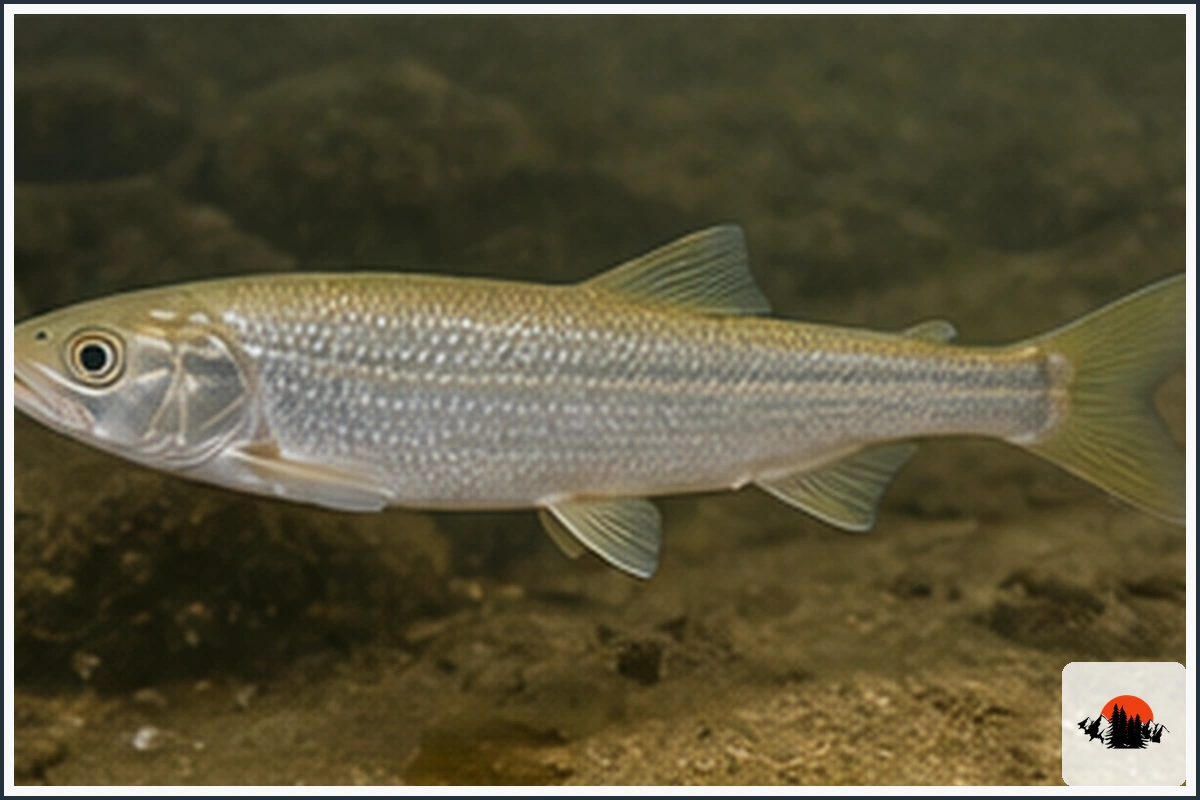
Scientific name: Pogonichthys macrolepidotus
The Sacramento splittail is a native minnow found in the Sacramento–San Joaquin river system and connected wetlands. It has a deep body, silvery sides, and a noticeably forked tail. During the breeding season, adults may develop small tubercles on the head and body.
Splittail eat aquatic plants, insects, small crustaceans, and other bottom-dwelling food. They are adapted to seasonally flooded areas where rising water creates spawning and nursery habitat. Floodplain loss, altered river flows, invasive species, and water-management changes have affected their range.
8. Sacramento Pikeminnow
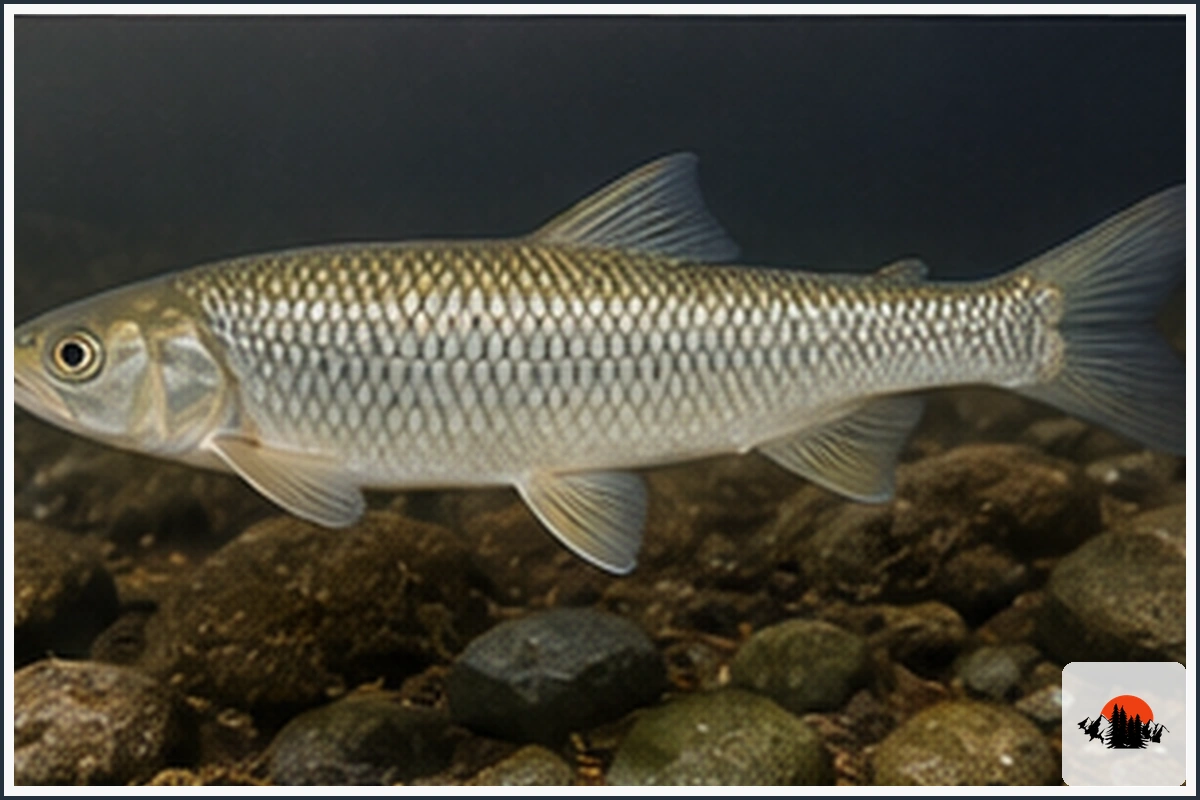
Scientific name: Ptychocheilus grandis
The Sacramento pikeminnow is a large native minnow found in rivers and reservoirs of central and northern California. It has a long, torpedo-shaped body, a pointed head, and a large mouth suited for capturing prey.
Young fish eat insects and small aquatic organisms, while adults may prey on fish, crayfish, and other animals. They prefer flowing water, deep pools, and rocky habitats. Although native, large pikeminnow can influence populations of smaller fish, including salmon and trout, in altered river systems.
9. California Roach
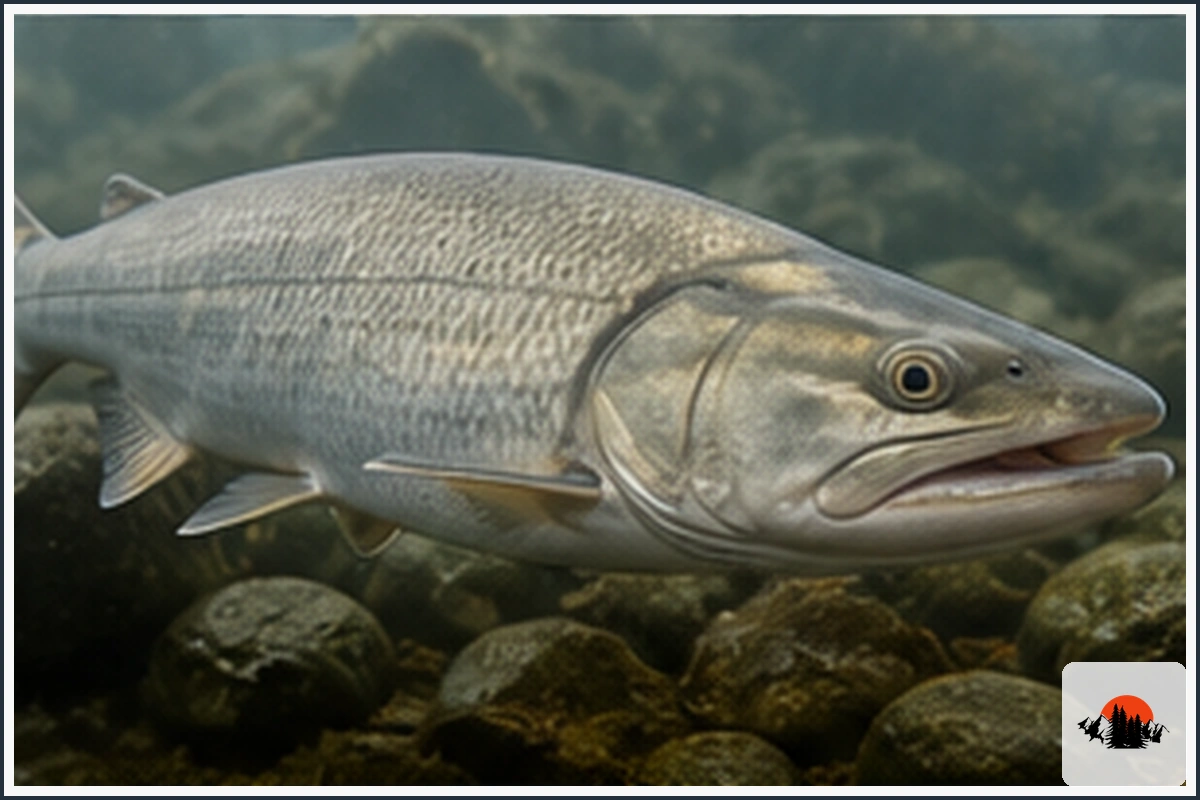
Scientific name: Hesperoleucus symmetricus
The California roach is a small native minnow found in streams, creeks, and some ponds across much of central and northern California. It is usually olive, gray, or bronze above with lighter sides and a compact body.
This adaptable fish eats algae, aquatic insects, and other small food items. California roach can tolerate warm water and low-flow conditions better than many native species, although severe drought, pollution, barriers, and invasive fish can still harm local populations. It is an important food source for larger fish, birds, and other predators.
10. Hardhead
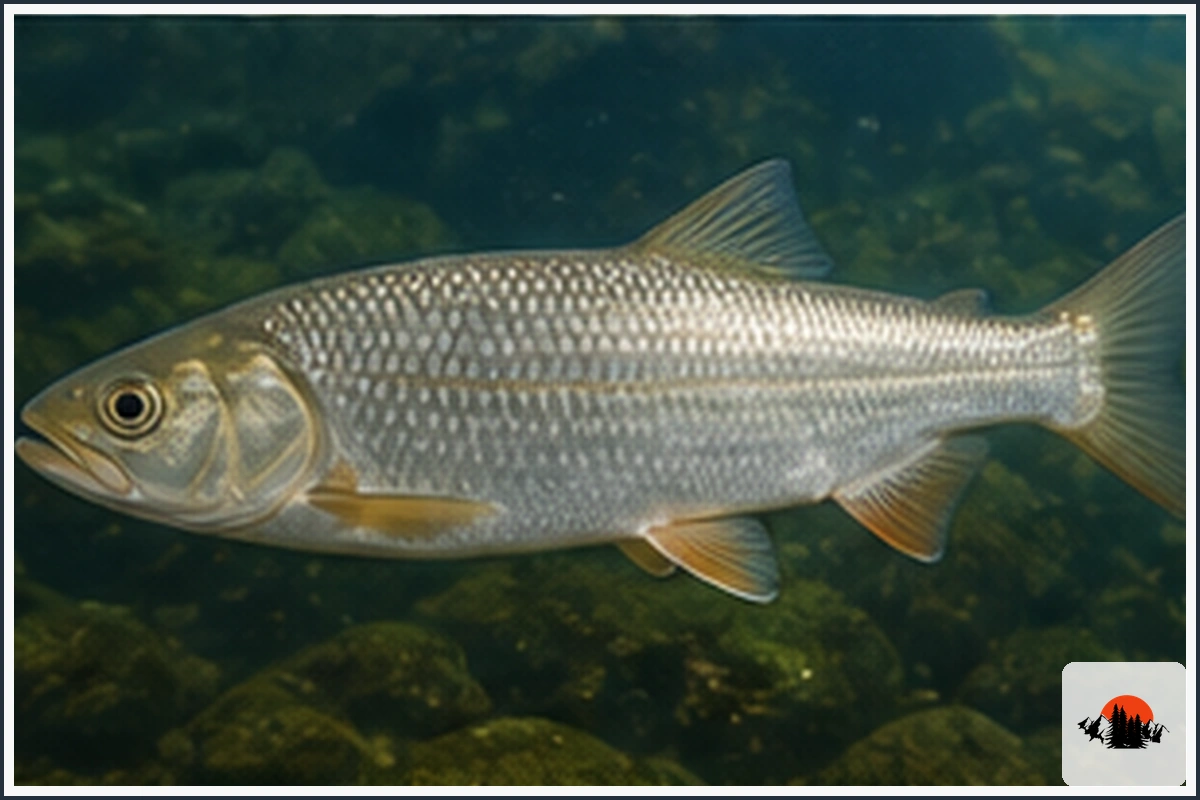
Scientific name: Mylopharodon conocephalus
The hardhead is a large native minnow of California’s Central Valley and interior river systems. It has a robust body, a broad head, and silvery to bronze coloration. It usually occupies deeper pools and runs in warm rivers.
Hardhead feed on insects, plant material, mollusks, and small aquatic animals. They often share habitat with Sacramento pikeminnow and other native fishes. Changes in natural flow, increased water temperatures, dams, and introduced predators have reduced or fragmented some populations.
11. Sacramento Sucker
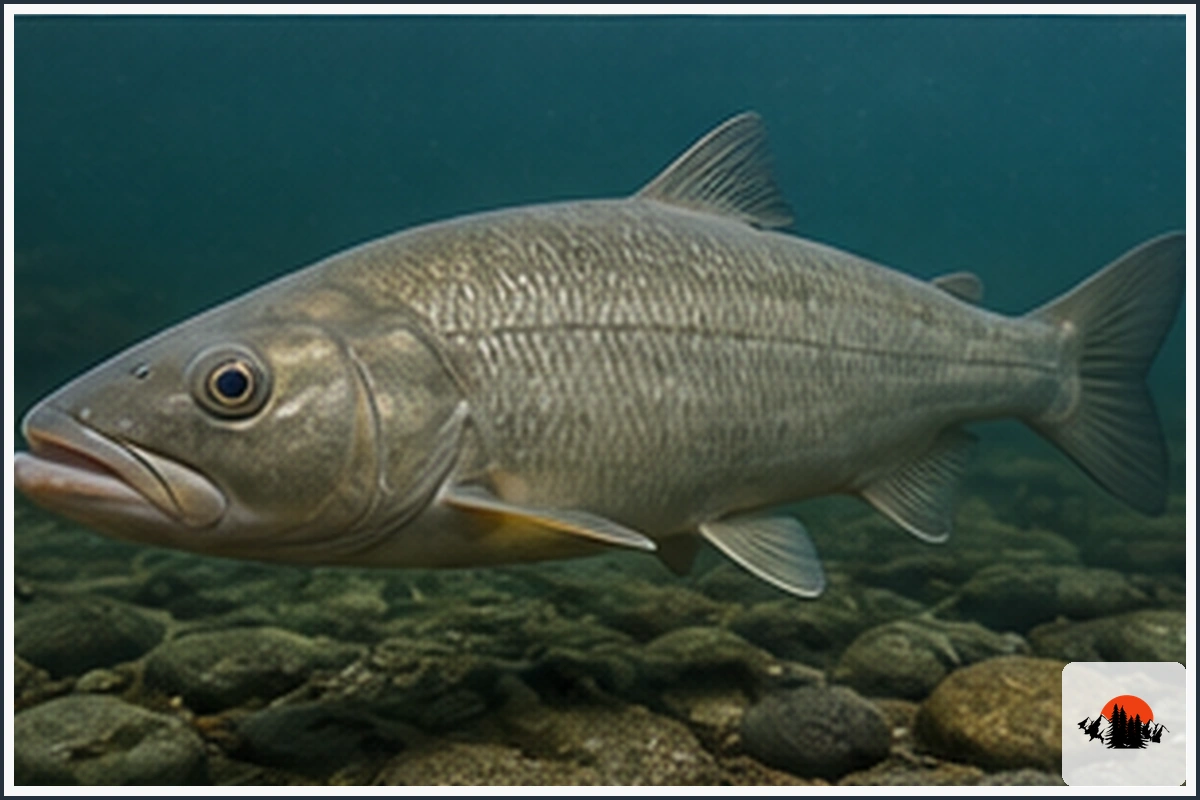
Scientific name: Catostomus occidentalis
The Sacramento sucker is a bottom-feeding native fish with a long body, a rounded snout, and thick, downward-facing lips. It is common in rivers and streams throughout much of the Sacramento and San Joaquin drainage and nearby watersheds.
It uses its mouth to scrape algae and collect small organisms from rocks and sediment. Sacramento suckers tolerate a broad range of conditions and can be important prey for larger fish, birds, and mammals. They are often seen in clear pools and slower sections of streams.
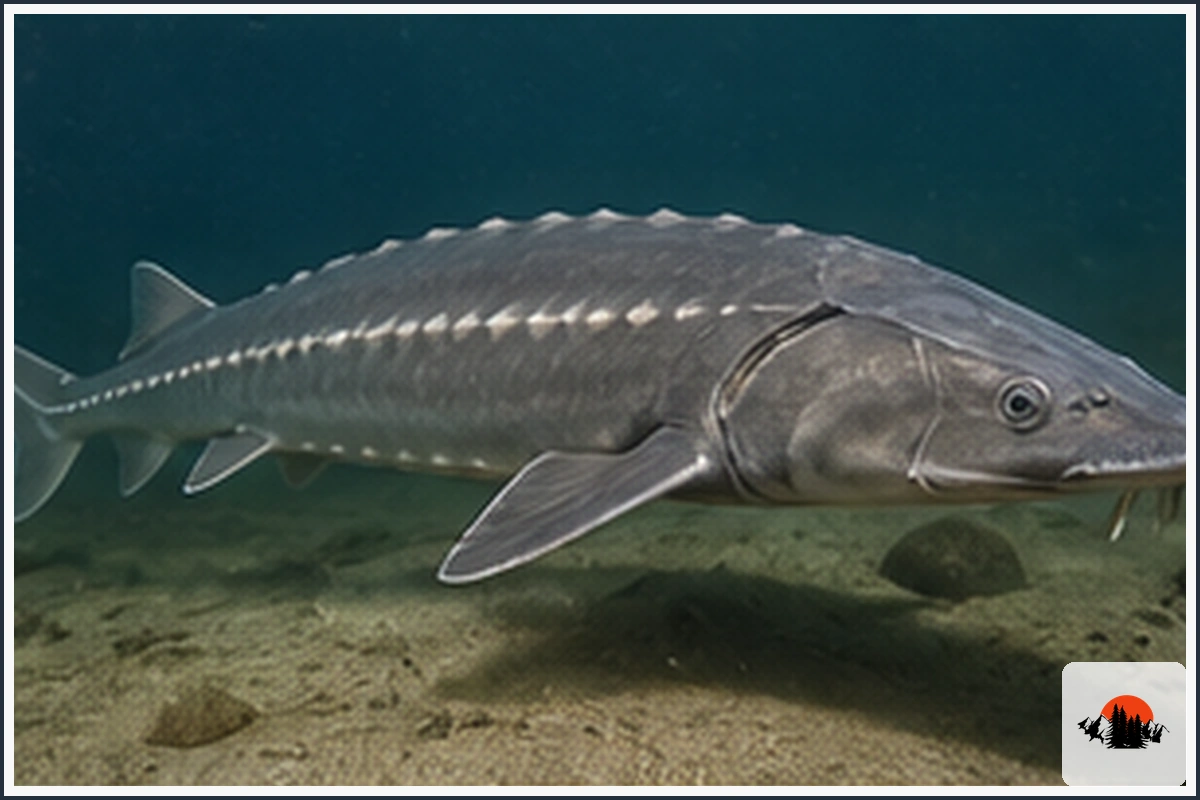
12. White Sturgeon
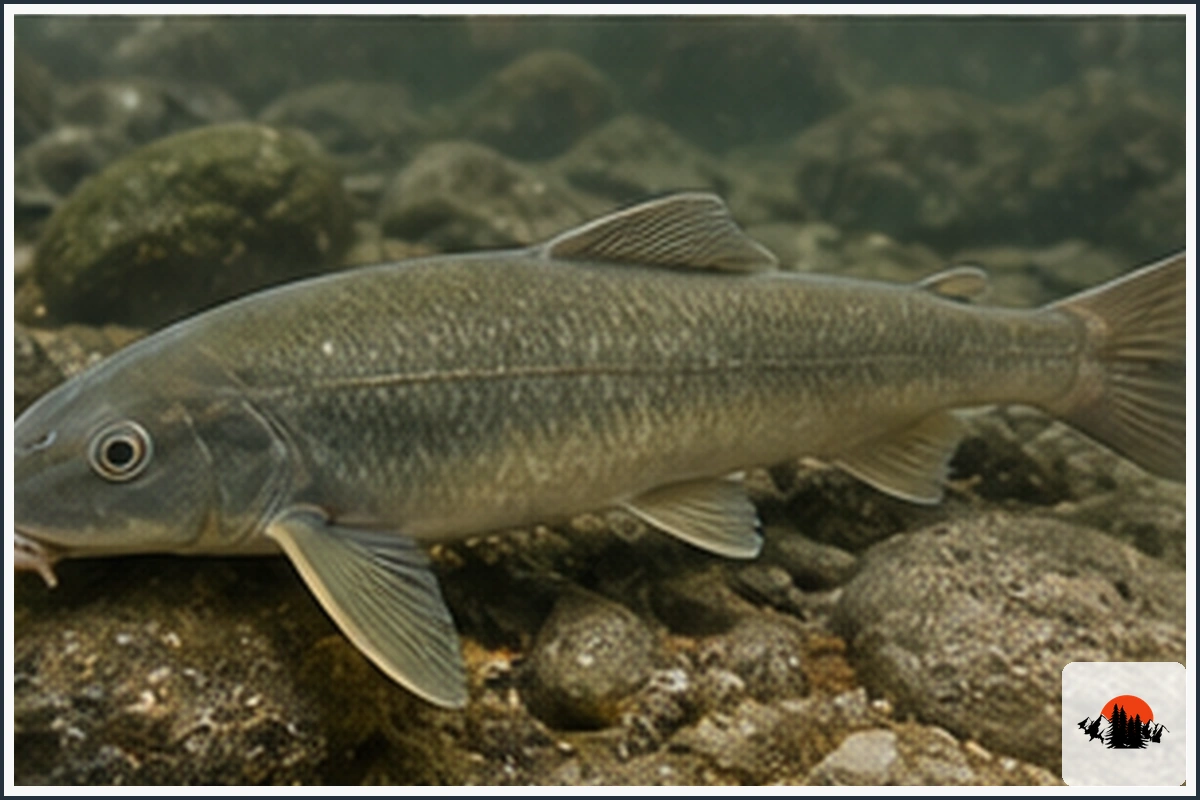
Scientific name: Acipenser transmontanus
White sturgeon are the largest freshwater and estuarine fish regularly found in California. They have long, cylindrical bodies, rows of bony plates, a pointed snout, and barbels near the mouth. Important populations occur in the Sacramento–San Joaquin Delta, San Francisco Bay, and associated rivers.
Sturgeon feed along the bottom on clams, crayfish, fish, and other aquatic animals. They can live for many decades and grow to exceptional sizes. Their populations require careful management because they mature slowly and depend on large connected river systems. Fishing regulations are strict and change over time.
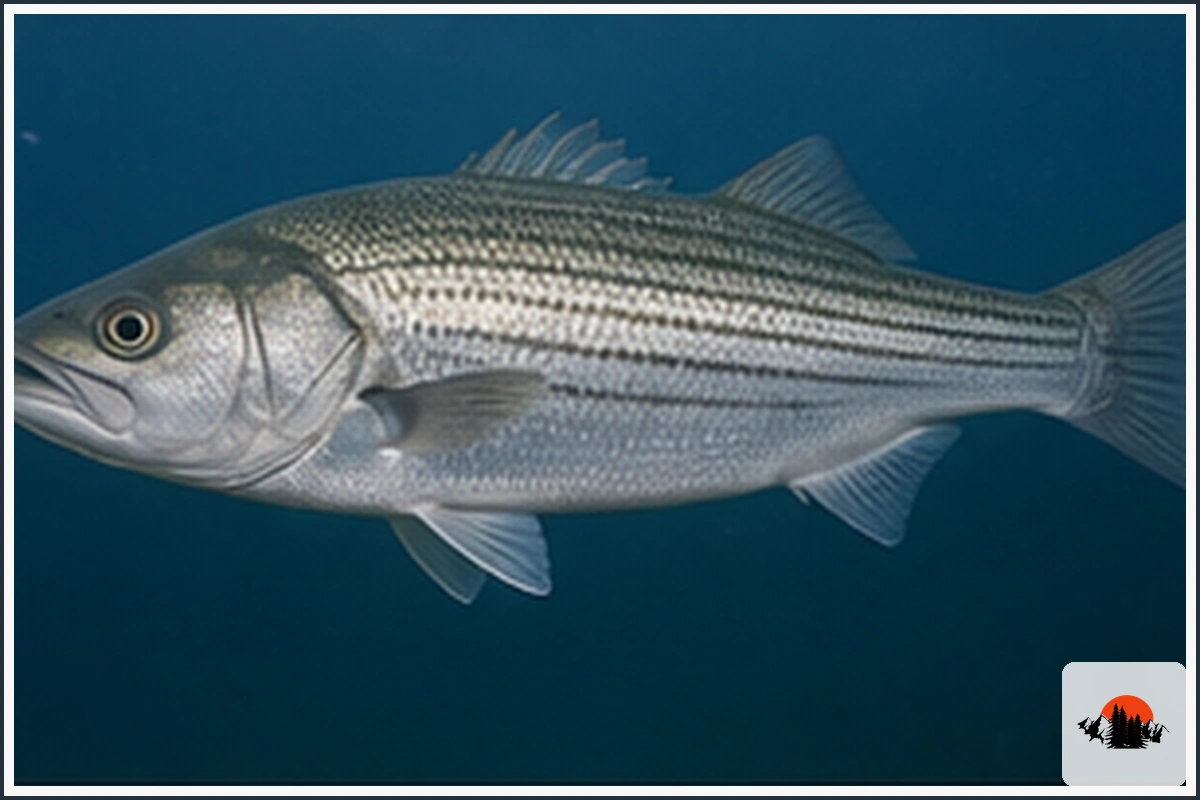
13. Striped Bass
Scientific name: Morone saxatilis
Striped bass are an introduced sport fish that became established in California after being stocked in the nineteenth century. They have a silvery body with several dark horizontal stripes and a deeply forked tail.
They live in rivers, reservoirs, estuaries, and coastal waters. Young striped bass eat insects and small crustaceans, while adults commonly prey on fish. They are popular with anglers but may compete with or consume native fish, including salmon and other species of conservation concern.
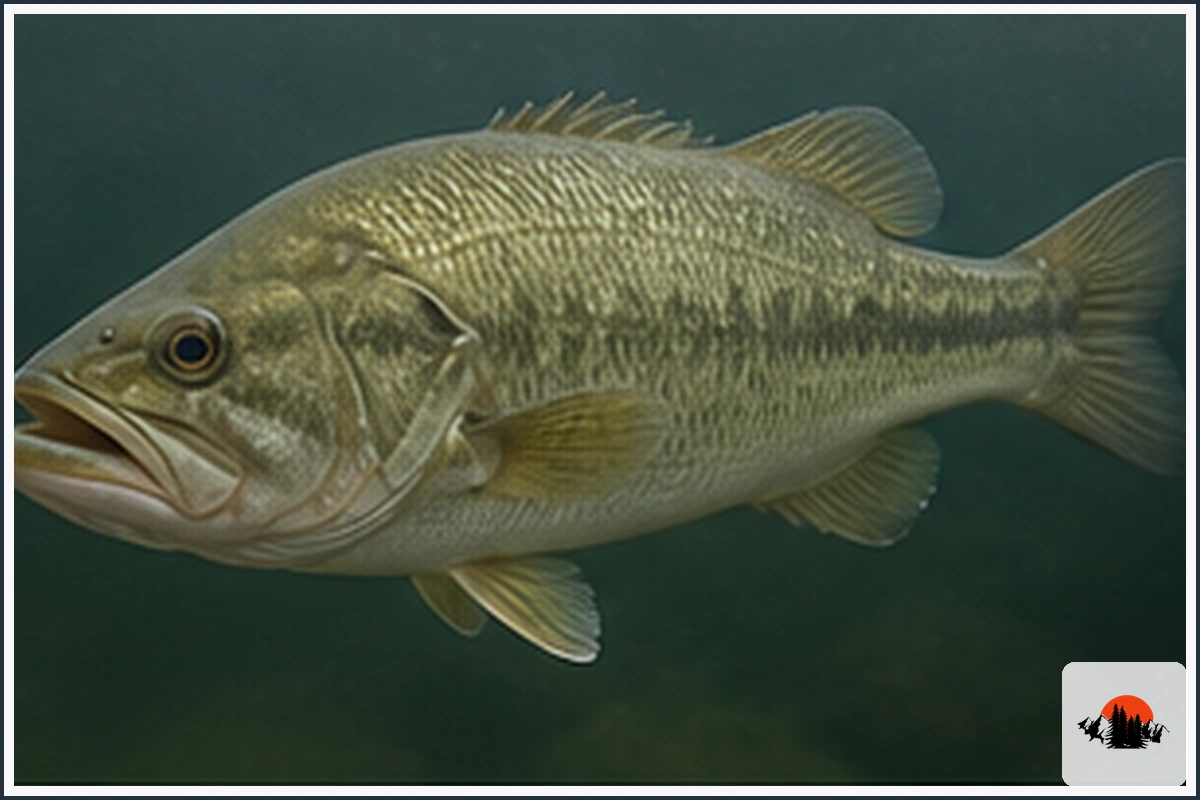
14. Largemouth Bass
Scientific name: Micropterus salmoides
Largemouth bass are one of California’s most popular freshwater sport fish. Their greenish body, dark lateral stripe, large mouth, and rounded dorsal fin make them relatively easy to identify. They are common in warm lakes, reservoirs, ponds, and slow-moving rivers.
Largemouth bass ambush prey from vegetation, brush, rocks, and submerged structures. They eat insects, crayfish, frogs, and fish. Anglers often target them with artificial lures and live bait where legal. Because they are nonnative in California, they can affect native fish communities in some waters.
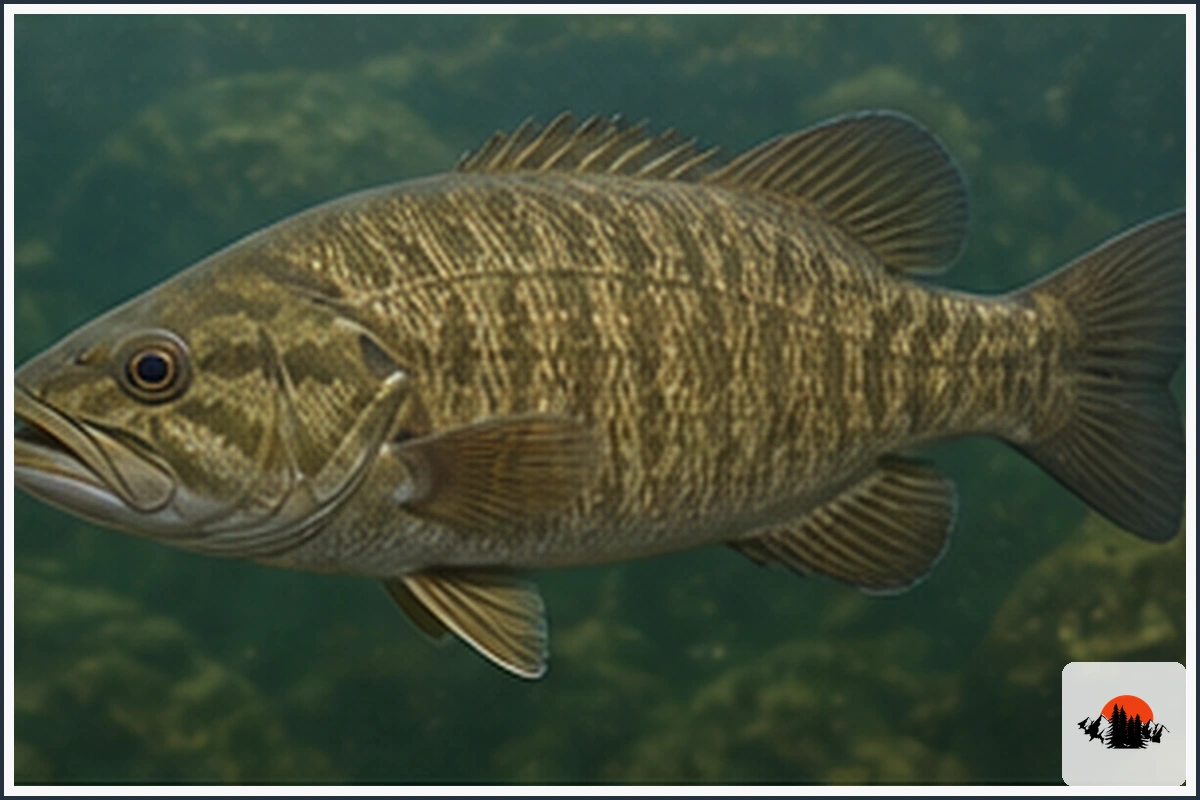
15. Smallmouth Bass
Scientific name: Micropterus dolomieu
Smallmouth bass are freshwater sport fish with bronze or brown sides, dark vertical bars, red or orange tones near the eyes, and a mouth that does not extend far behind the eye. They prefer rocky rivers, clear reservoirs, and cooler water than largemouth bass.
Smallmouth bass feed on crayfish, insects, and smaller fish. They are strong fighters and often hold near boulders, drop-offs, and current breaks. Like largemouth bass, they are introduced in many California waters and can prey on native fish.
16. Rainbow Trout
Scientific name: Oncorhynchus mykiss
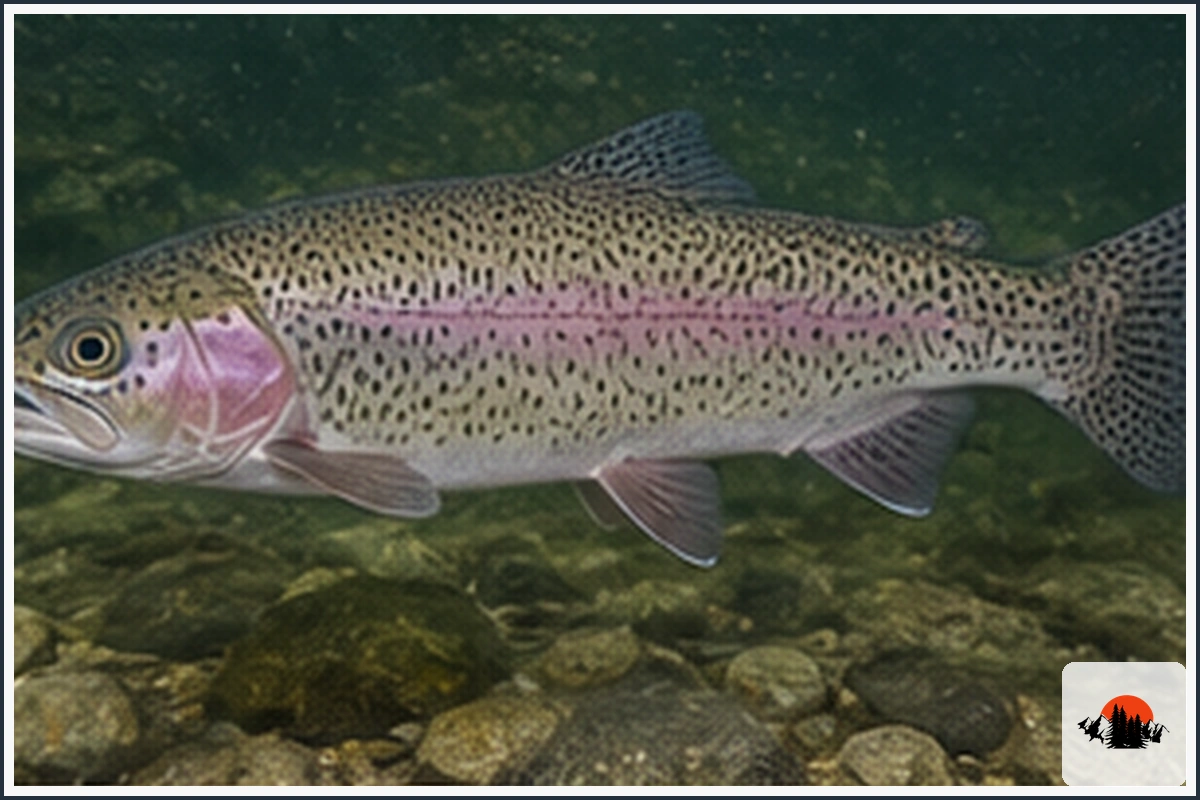
Rainbow trout are widely recognized by their pink side stripe, dark spots, and streamlined body. In California, the name may refer to hatchery fish, resident wild trout, or populations connected to steelhead. They occur in cold streams, lakes, reservoirs, and mountain waters.
Rainbow trout eat aquatic insects, terrestrial insects, small crustaceans, and small fish. They are among California’s most popular freshwater sport fish. Identification can be complicated because color and markings change with water clarity, season, age, and habitat.
17. California Halibut
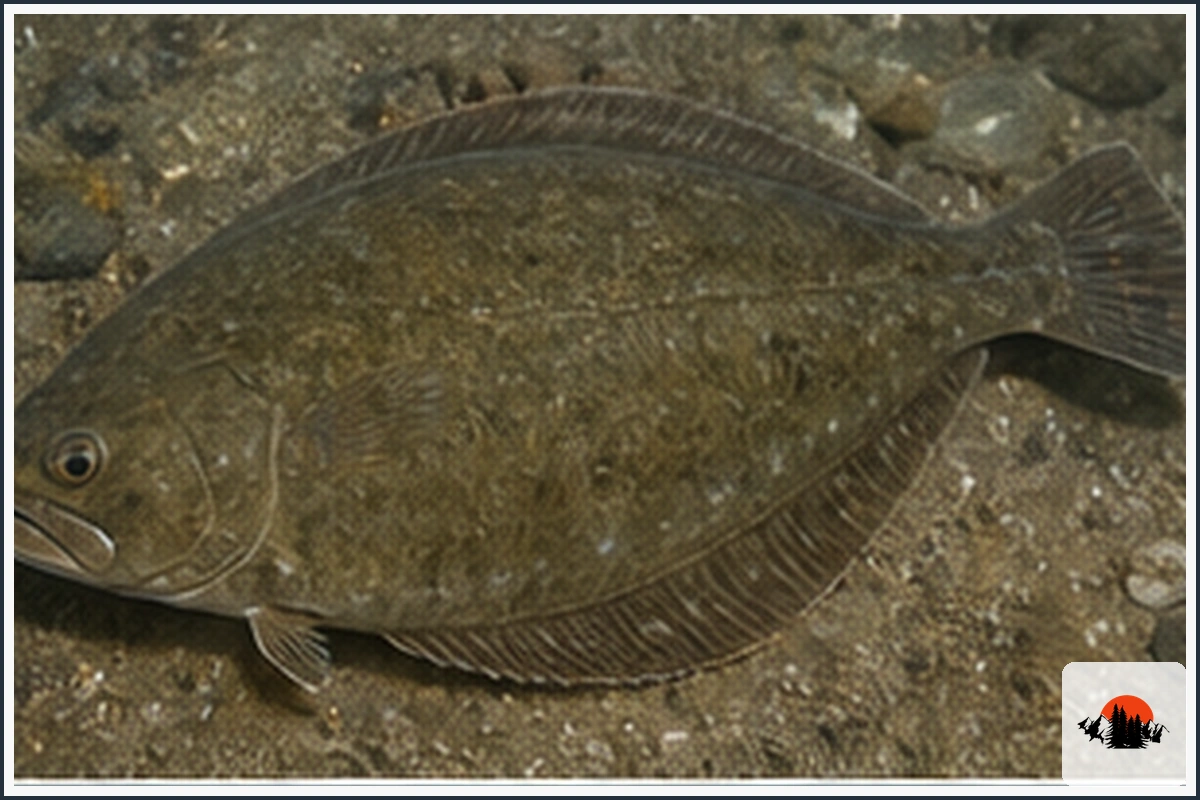
Scientific name: Paralichthys californicus
California halibut are large, left-eyed flatfish found in bays, estuaries, sandy coastal areas, and nearshore ocean waters. Their upper side is usually brown or olive with mottling, while the underside is pale. Both eyes move to one side as the fish develops.
They are ambush predators that bury themselves partly in sand and strike fish, anchovies, squid, and other prey. California halibut are important recreational and commercial fish. Anglers often find them near structure, channels, eelgrass edges, and sandy bottom close to deeper water.
18. Pacific Sardine
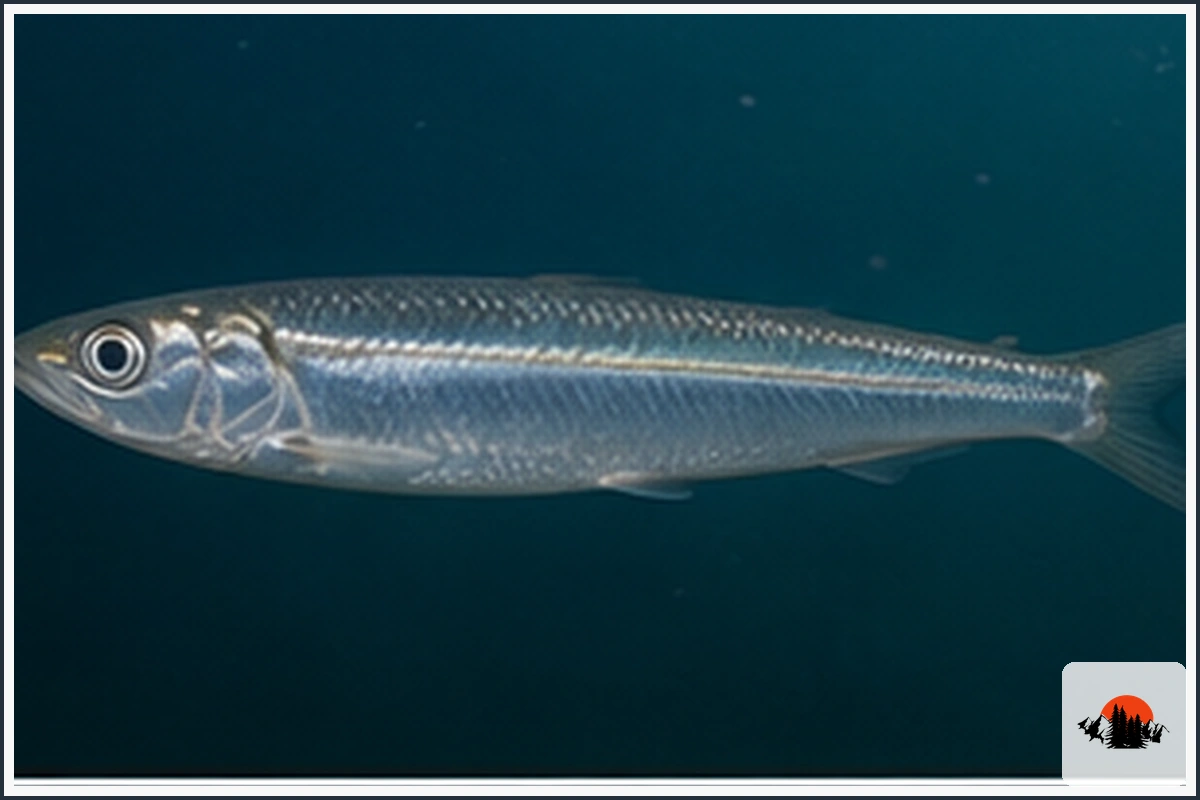
Scientific name: Sardinops sagax
Pacific sardines are small, streamlined schooling fish with a blue-green back, silver sides, and a series of dark spots that may be visible behind the gill cover. They occur along the Pacific coast and can form large schools.
Sardines feed mainly on plankton and are important prey for salmon, tuna, seabirds, seals, sea lions, and larger fish. Their abundance changes naturally with ocean temperature, currents, food availability, and broader climate patterns.
19. Pacific Anchovy
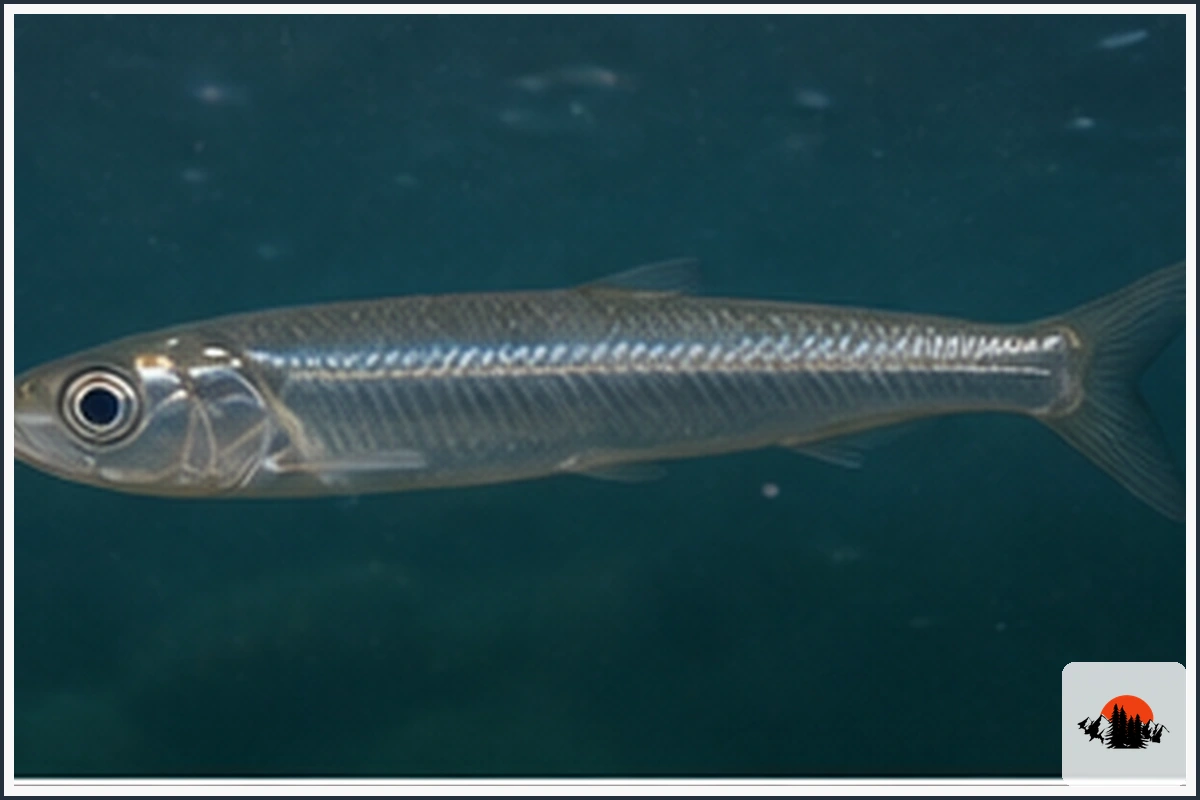
Scientific name: Engraulis mordax
Pacific anchovies are small schooling fish with slender bodies, silver sides, and bluish or greenish backs. They are common in coastal waters, bays, and estuaries, especially where plankton is abundant.
Anchovies filter and capture plankton, including tiny crustaceans and fish larvae. They are a crucial link between microscopic ocean life and larger predators such as salmon, seabirds, marine mammals, and tuna. Large schools may be visible near the surface when conditions are favorable.
20. Kelp Rockfish
Scientific name: Sebastes atrovirens
Kelp rockfish are compact marine fish associated with kelp forests, rocky reefs, and other nearshore structure. Their coloration is variable but often includes olive, brown, yellow, or mottled patterns that help them blend into vegetation and rocks.
They eat small fish, crustaceans, and other reef organisms. Kelp rockfish use complex habitat for shelter and feeding. As with other rockfish, they are slow-growing and can be vulnerable to excessive harvest, making responsible fishing and habitat protection important.
21. Vermilion Rockfish
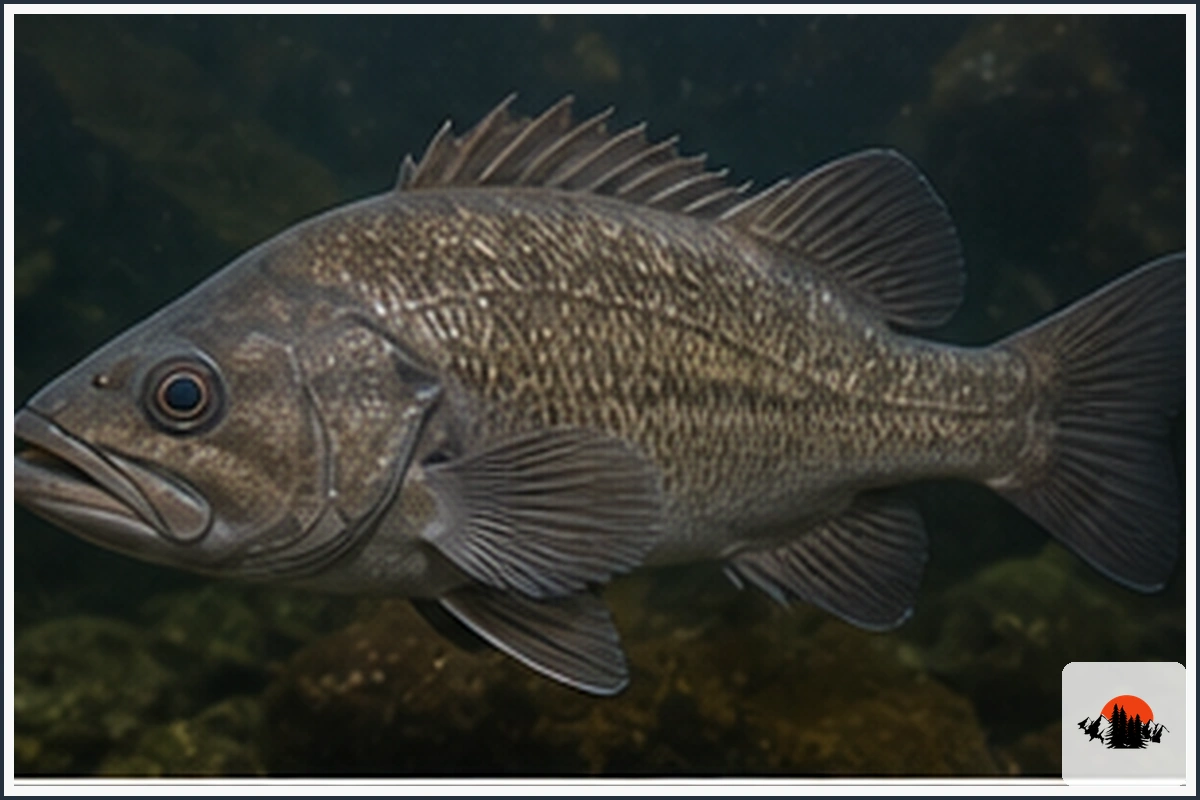
Scientific name: Sebastes miniatus
Vermilion rockfish are striking red or orange marine fish with darker markings and a deep-bodied shape. They usually inhabit rocky reefs, steep structure, and deeper coastal habitat than many nearshore species.
They feed on fish, squid, and crustaceans. Vermilion rockfish are valued by anglers for their appearance and firm meat, but they grow slowly and may live for many years. Regulations commonly include limits designed to protect spawning populations and larger breeding fish.
22. California Sheephead
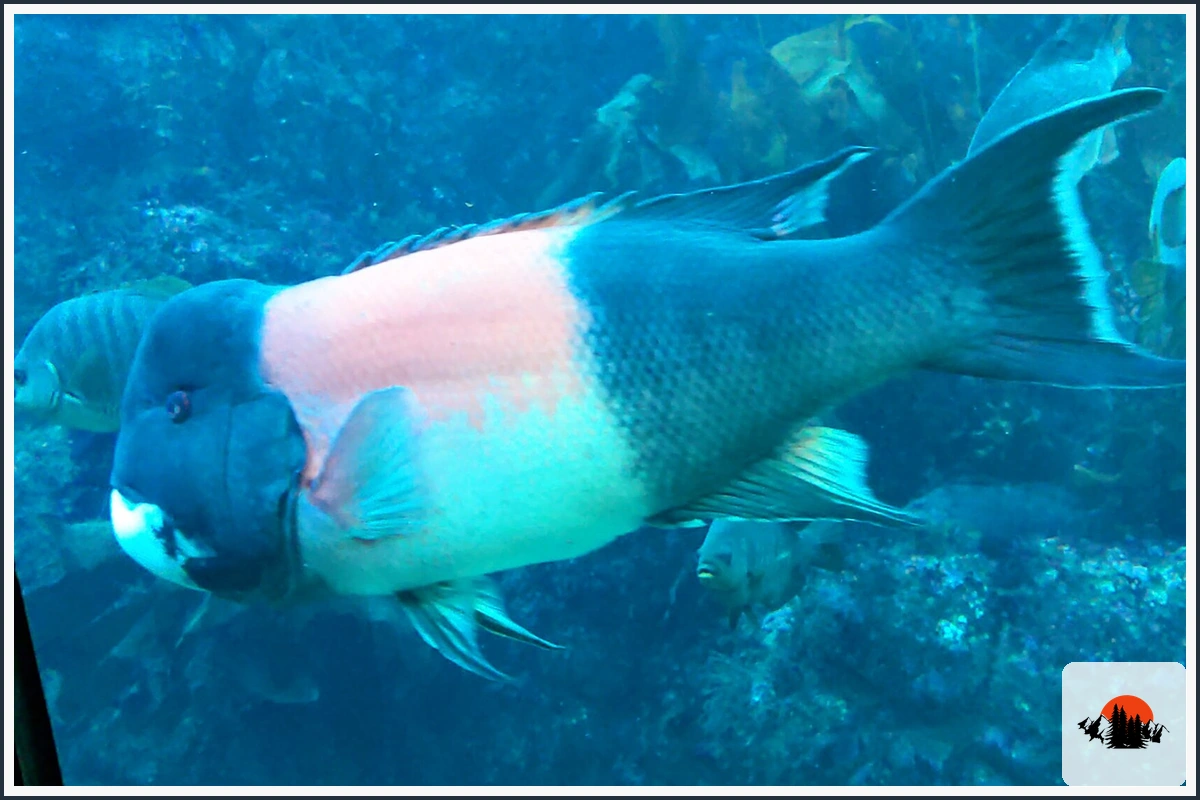
Scientific name: Semicossyphus pulcher
California sheephead are distinctive wrasse found around rocky reefs and kelp forests. Large adults have a black head, reddish-orange middle section, pale rear body, and prominent canine teeth. Females are generally smaller and have different coloration.
Sheephead use their strong teeth and jaws to crush sea urchins, crabs, snails, and other hard-shelled prey. They are important predators in kelp ecosystems and can influence the balance between sea urchins and kelp. They are also popular recreational fish in southern California.
23. Leopard Shark
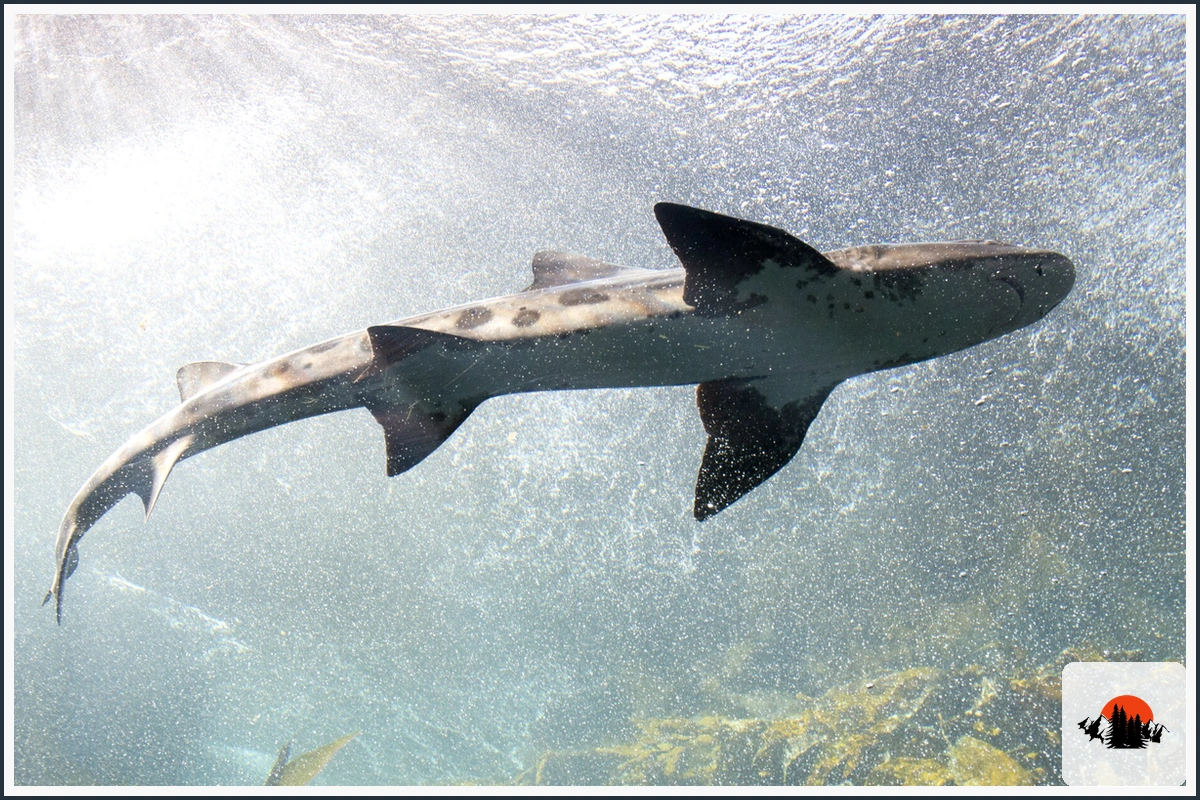
Scientific name: Triakis semifasciata
Leopard sharks are recognizable by their slender bodies and dark saddle-like spots and bars over a gray or bronze background. They commonly occur in shallow coastal waters, bays, estuaries, and sandy areas from northern to southern California.
They feed on bottom-dwelling fish, crabs, shrimp, worms, and other small animals. Leopard sharks are generally cautious around people and are often observed by divers and kayakers. Young sharks frequently use protected bays and estuaries as nursery habitat.
24. Soupfin Shark
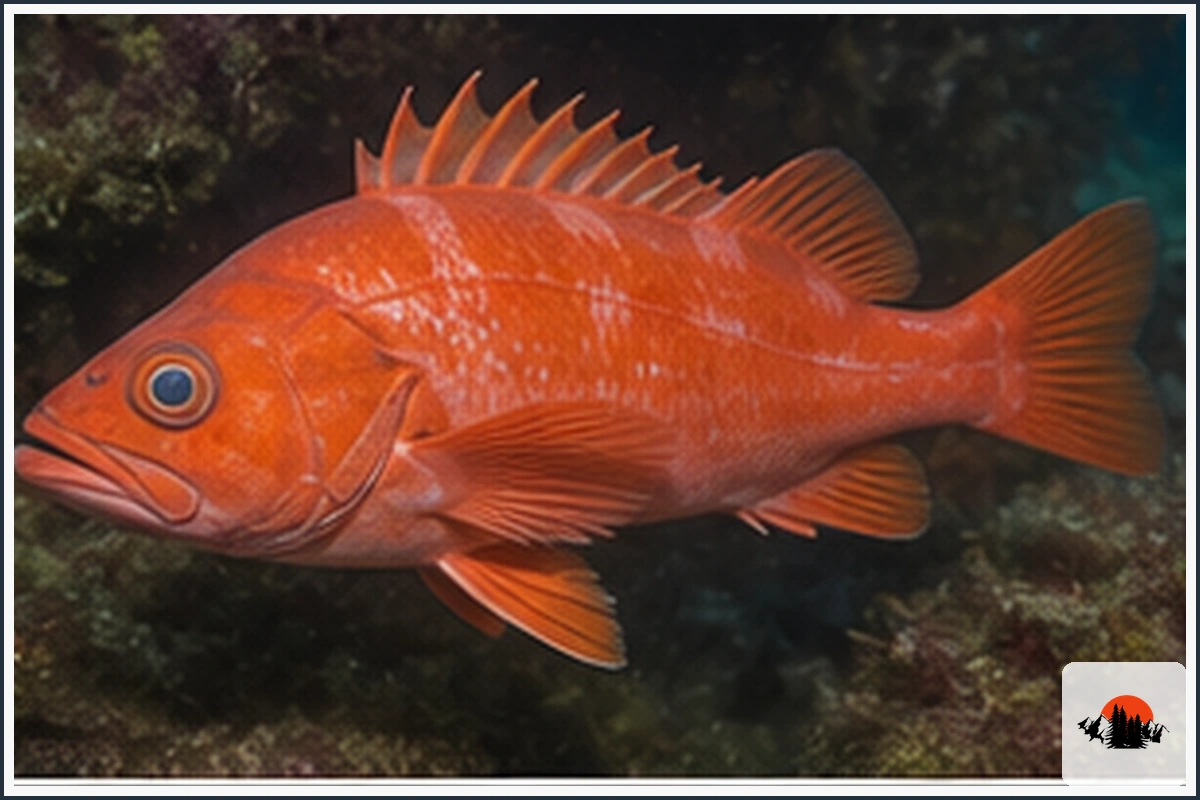
Scientific name: Galeorhinus galeus
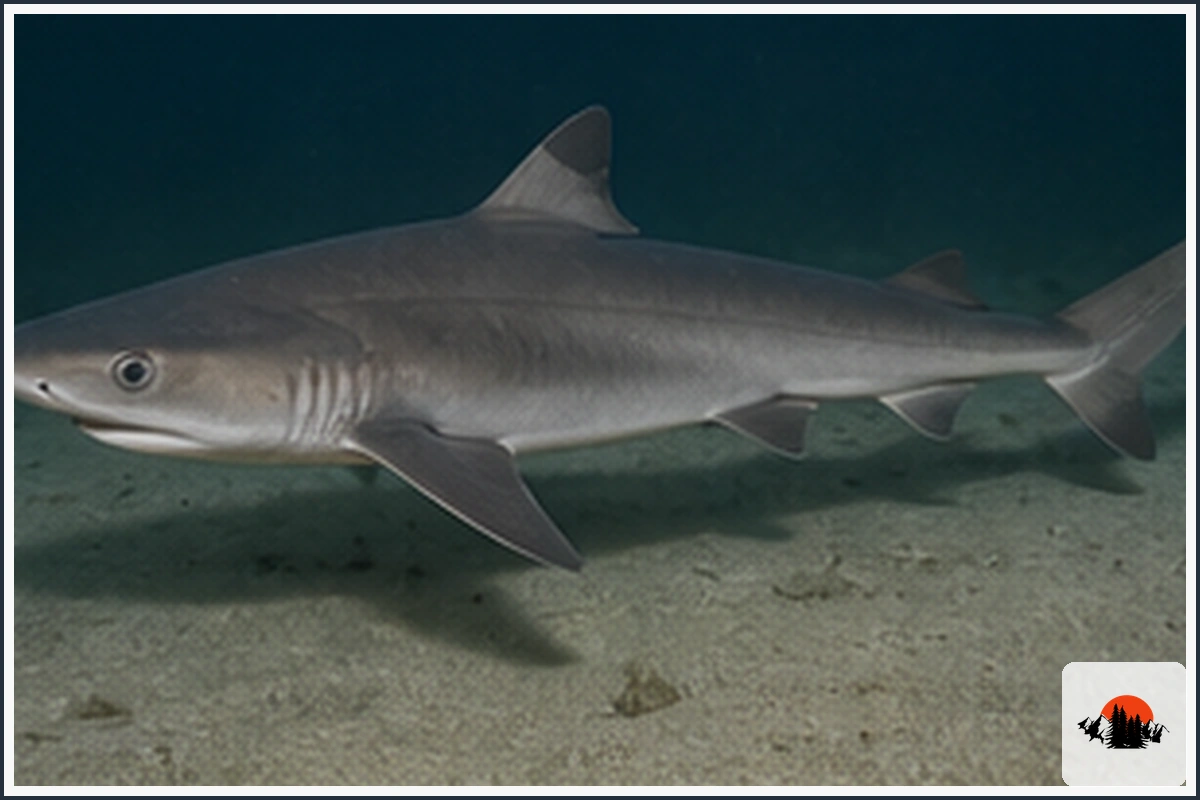
Soupfin sharks are slender gray sharks with pointed snouts and a long upper tail lobe. They may be found in coastal waters and estuaries, where they feed near the bottom or in the water column.
Their diet includes fish, squid, and crustaceans. Soupfin sharks have historically faced heavy fishing pressure, and their slow reproduction makes recovery difficult. Identification and fishing rules should be checked carefully because shark regulations can vary by location and species.
25. Bat Ray
Scientific name: Myliobatis californica
Bat rays are broad, wing-shaped rays with pointed pectoral fins and a long, slender tail. They are common in bays, estuaries, sandy bottoms, mudflats, and shallow coastal waters around California.
Bat rays use their flattened bodies and crushing plates to feed on clams, crabs, shrimp, worms, and other bottom-dwelling animals. They often stir sediment while feeding. Their tail spine can cause a painful injury, so people should give rays plenty of space and avoid handling them.
How Are These Types of Fish Classified?
California fish can be classified in several useful ways:
- Habitat: Freshwater fish live in rivers, streams, lakes, and reservoirs, while marine fish live in bays, estuaries, kelp forests, reefs, and offshore waters.
- Migration: Resident fish remain in one general habitat, while anadromous fish such as salmon and steelhead move between freshwater and the ocean.
- Body form: Trout are streamlined, flatfish are laterally flattened, rays have wing-like fins, and sturgeon have rows of bony plates.
- Native status: Some species evolved in California, while others, including largemouth bass and striped bass, were introduced.
- Feeding style: Fish may be predators, bottom feeders, plankton feeders, grazers, or generalist feeders.
Where Do These Fish Live?
California fish occupy a wide range of environments. Mountain streams support golden trout, rainbow trout, cutthroat trout, and salmonids. Central Valley rivers and wetlands provide habitat for suckers, minnows, splittail, salmon, and sturgeon. Warm lakes and reservoirs commonly contain bass, sunfish, trout, and introduced species.
Along the coast, bays and estuaries are important nursery areas for halibut, leopard sharks, anchovies, rays, and other fish. Kelp forests and rocky reefs support rockfish, sheephead, and many smaller species. Water temperature, dissolved oxygen, depth, vegetation, flow, salinity, and seasonal migration all influence where a fish is found.
How to Identify Different Types of Fish in California
- Check the habitat: Note whether the fish is in a cold stream, warm reservoir, tidal bay, sandy bottom, rocky reef, or kelp forest.
- Study body shape: Long and streamlined bodies suggest trout or salmon, while flat bodies indicate halibut or rays.
- Look at the mouth: Large mouths are common in bass, downward-facing lips occur in suckers, and barbels identify sturgeon.
- Notice markings: Rainbow stripes, leopard spots, rockfish colors, and salmon spots can be useful clues.
- Estimate size carefully: Age, habitat, food, and season cause substantial variation within the same species.
- Observe behavior: Schooling, bottom feeding, ambushing, jumping, and migration can narrow identification.
- Use local references: Fish identification apps, field guides, and California wildlife agency resources can confirm difficult sightings.
Fishing Tips and Notes
- Learn whether the water is regulated as inland, coastal, estuarine, or ocean habitat before fishing.
- Check current California fishing regulations, seasons, size limits, bag limits, and special closures.
- Use tackle appropriate for the species and release unwanted fish quickly with wet hands.
- Do not move live fish, bait, plants, or water between lakes and rivers.
- In streams, approach quietly and avoid trampling spawning gravel or shallow nursery areas.
- For marine fishing, identify rockfish, sharks, rays, and flatfish accurately before keeping a catch.
Safety, Sustainability, and Conservation Notes
California fish face pressures from drought, warming water, habitat loss, dams, water diversions, pollution, invasive species, overfishing, and changing ocean conditions. Salmon, steelhead, coho salmon, native minnows, and several other species require particular care.
- Follow all current California Department of Fish and Wildlife rules.
- Release protected or out-of-season fish immediately and carefully.
- Never release aquarium fish or bait into natural waters.
- Clean, drain, and dry boats, waders, nets, and gear to limit invasive species.
- Keep fish wet when handling them for release.
- Give sharks and rays space, and never handle a ray by the tail.
- Choose sustainable seafood and avoid wasting edible catch.
- Protect streamside vegetation, wetlands, eelgrass, kelp forests, and estuaries.
Fun Facts About Fish in California
- California golden trout is the state’s official freshwater fish.
- Steelhead and rainbow trout are forms of the same species.
- White sturgeon can live for many decades and reach enormous sizes.
- Salmon use smell and environmental cues to help return to their home rivers.
- California halibut begin life swimming upright before becoming flatfish.
- Leopard sharks often use shallow bays as nursery areas.
- Bat rays crush shellfish with specialized dental plates.
- California sheephead can change sex during their lives.
- Pacific anchovies and sardines form large schools that feed many predators.
- Some California fish are native, while many popular sport fish were introduced.
Final Thoughts on Types of Fish in California
The types of fish in California range from tiny native minnows and high-elevation trout to migrating salmon, giant sturgeon, colorful rockfish, rays, and coastal sharks. Learning their body shapes, habitats, markings, and behaviors makes fishing and wildlife observation more rewarding. Always identify fish carefully, follow local regulations, and help protect the rivers, wetlands, estuaries, reefs, and coastal waters they depend on.
Frequently Asked Questions
1. How many types of fish are found in California?
California has hundreds of fish species when freshwater, marine, estuarine, native, and introduced species are counted together. This guide covers 25 representative species rather than every documented fish.
2. What is California’s state freshwater fish?
California’s state freshwater fish is the California golden trout, a colorful native trout from high-elevation waters of the Sierra Nevada.
3. What is the most common fish in California?
There is no single most common fish statewide because abundance varies by habitat. Small schooling anchovies and sardines are widespread in coastal waters, while minnows, suckers, bass, and trout are common in different inland waters.
4. What fish are native to California?
Native examples include California golden trout, rainbow trout, steelhead, Sacramento sucker, Sacramento pikeminnow, California roach, hardhead, Sacramento splittail, salmon, sturgeon, anchovy, sardine, leopard shark, and bat ray.
5. What freshwater fish live in California?
Freshwater species include trout, salmon during their river migrations, suckers, minnows, bass, striped bass, sturgeon, and several sunfish and catfish species not listed in this guide.
6. What saltwater fish live off the California coast?
Coastal waters support halibut, anchovies, sardines, rockfish, sheephead, leopard sharks, soupfin sharks, bat rays, and many other marine species.
7. Are bass native to California?
Largemouth bass, smallmouth bass, and striped bass are introduced species in California. They are popular sport fish but can affect native fish communities.
8. Are trout native to California?
Several trout forms are native, including California golden trout, coastal rainbow trout, steelhead, and coastal cutthroat trout. Hatchery trout may also be stocked in selected waters.
9. What is the difference between rainbow trout and steelhead?
They are forms of the same species, Oncorhynchus mykiss. Rainbow trout usually remain in freshwater, while steelhead migrate to the ocean and return to freshwater to spawn.
10. What is California’s largest freshwater fish?
White sturgeon is generally considered California’s largest freshwater and estuarine fish. Large individuals can exceed six feet and weigh hundreds of pounds.
11. What fish migrate from the ocean into California rivers?
Chinook salmon, coho salmon, and steelhead migrate between the Pacific Ocean and California rivers. Migration timing differs among populations and watersheds.
12. Where can I find California golden trout?
California golden trout are mainly associated with high-elevation streams and lakes in the southern Sierra Nevada. Access can involve remote hiking and changing mountain conditions.
13. What fish are found in California lakes?
California lakes may contain trout, largemouth bass, smallmouth bass, striped bass, catfish, sunfish, carp, and native species depending on the lake’s temperature, elevation, and stocking history.
14. What fish live in the Sacramento-San Joaquin Delta?
The Delta supports striped bass, largemouth bass, catfish, sturgeon, salmon, splittail, Sacramento sucker, pikeminnow, and many other native and introduced fish.
15. What is the best fish to catch in California?
The best fish depends on location and personal preference. Trout, bass, salmon, striped bass, halibut, rockfish, and surfperch are popular targets, but regulations and seasons differ.
16. Are California fish safe to eat?
Many California fish can be safely eaten when caught legally and prepared properly. However, consumption advisories may apply to specific lakes, rivers, bays, or species, so check current local guidance.
17. What fish are protected in California?
Protection varies by species and population. Some salmon, steelhead, coho salmon, native fish, sharks, and sturgeon may have special rules, closures, or restrictions.
18. How can I identify a fish in California?
Record the location, water type, body shape, color, markings, mouth shape, fin structure, and approximate size. A regional fish guide or official identification resource can help confirm the species.
19. What is the difference between a shark and a ray?
Sharks have a streamlined body with vertical fins, while rays have broad, wing-like pectoral fins and flattened bodies. Both are cartilaginous fish with skeletons made primarily of cartilage.
20. Are leopard sharks dangerous?
Leopard sharks are generally cautious and are not considered a major threat to people. They should still be observed respectfully and never handled unnecessarily.
21. Can bat rays sting people?
Yes. Bat rays have a sharp spine on the tail that can cause a painful injury. Avoid stepping on or handling rays, especially in shallow water.
22. What do California trout eat?
California trout commonly eat aquatic insects, terrestrial insects, small crustaceans, fish eggs, and occasionally small fish. Diet varies with age, season, and habitat.
23. What do California halibut eat?
California halibut eat fish, squid, shrimp, and other small marine animals. They often lie partly buried in sand and ambush passing prey.
24. Why are salmon important to California?
Salmon transport marine nutrients into freshwater ecosystems, support predators and fisheries, and connect rivers, estuaries, and the ocean through their life cycle.
25. Why are native California fish important?
Native fish are part of California’s natural food webs and evolutionary history. They also help indicate the condition of rivers, wetlands, estuaries, and coastal habitats.
26. Are introduced fish harmful to California ecosystems?
Some introduced fish compete with native species, eat young fish, alter food webs, or spread disease. Their effects depend on the habitat and species involved.
27. Can I release aquarium fish into a California lake?
No. Releasing aquarium fish can introduce predators, parasites, disease, and invasive populations. Contact a responsible aquarium group or local agency instead.
28. What should I do if I catch a protected fish?
Release it promptly and carefully according to current regulations. Avoid dragging it across dry surfaces, support its body, and keep it in the water as much as possible.
29. What equipment helps identify fish?
A waterproof field guide, measuring tape, phone camera, identification app, and notes about location and habitat are useful. Do not rely on color alone.
30. Where can I find current California fishing regulations?
Check the California Department of Fish and Wildlife before fishing. Regulations can change by species, watershed, season, gear type, and conservation status.
31. What is the difference between freshwater and marine fish?
Freshwater fish live in water with very low salinity, while marine fish live in seawater. Some species, including salmon and steelhead, use both environments during their life cycle.
32. Do all California fish stay in the same place?
No. Some fish are relatively resident, while others migrate seasonally, move between depths, travel through estuaries, or migrate between rivers and the ocean.
33. What California fish live in kelp forests?
Kelp forests support rockfish, California sheephead, anchovies, sardines, sharks, rays, and many smaller reef-associated fish.
34. Why do fish need clean water?
Clean water provides oxygen, food, spawning areas, and suitable conditions for eggs and young fish. Pollution and sediment can damage gills, cover gravel, and reduce available habitat.
35. How can people help California fish?
Follow fishing rules, prevent invasive species, conserve water, protect streamside vegetation, reduce pollution, support habitat restoration, and observe wildlife without disturbing it.