

The types of Prairie dog are a fascinating group of burrowing rodents belonging to the squirrel family (Sciuridae). Despite their name, prairie dogs are not dogs at all—they are highly social ground squirrels native to the grasslands of North America. These animals play a crucial role in prairie ecosystems by aerating soil, supporting biodiversity, and providing shelter for many other species. Prairie dogs live in large underground colonies called “towns,” where they communicate through complex vocal calls and coordinated behaviors. In this guide, we explore 10 types of prairie dog, covering their identification features, habitats, behavior, and ecological importance. Each type shows unique adaptations to its environment, from high plains to desert grasslands.
1. Black-tailed Prairie Dog

The Black-tailed Prairie Dog is one of the most widespread and well-known types of Prairie dog. It is easily identified by its black-tipped tail, light brown fur, and compact body. This species is commonly found across the Great Plains of North America, including parts of the United States, Canada, and northern Mexico.
Black-tailed Prairie Dogs live in large colonies called towns, which can cover hundreds of acres. These towns are highly organized systems of burrows with multiple entrances, tunnels, and chambers. Each prairie dog has a role within the colony, including sentinel duty, where individuals stand upright to watch for predators.
They prefer open grasslands with short vegetation, which allows them to spot predators such as coyotes, hawks, and foxes. Their diet consists mainly of grasses, roots, seeds, and occasional insects.
One of the most important ecological roles of the Black-tailed Prairie Dog is soil engineering. Their digging activity improves soil aeration and nutrient cycling, which benefits plant growth and other wildlife species.
This species is highly social and communicates using a complex system of vocalizations. Scientists have discovered that prairie dogs can even distinguish between different types of predators using unique alarm calls.
Despite their ecological importance, they are sometimes considered pests due to their burrowing habits near farmland. However, they remain a key species in maintaining healthy grassland ecosystems.
2. White-tailed Prairie Dog
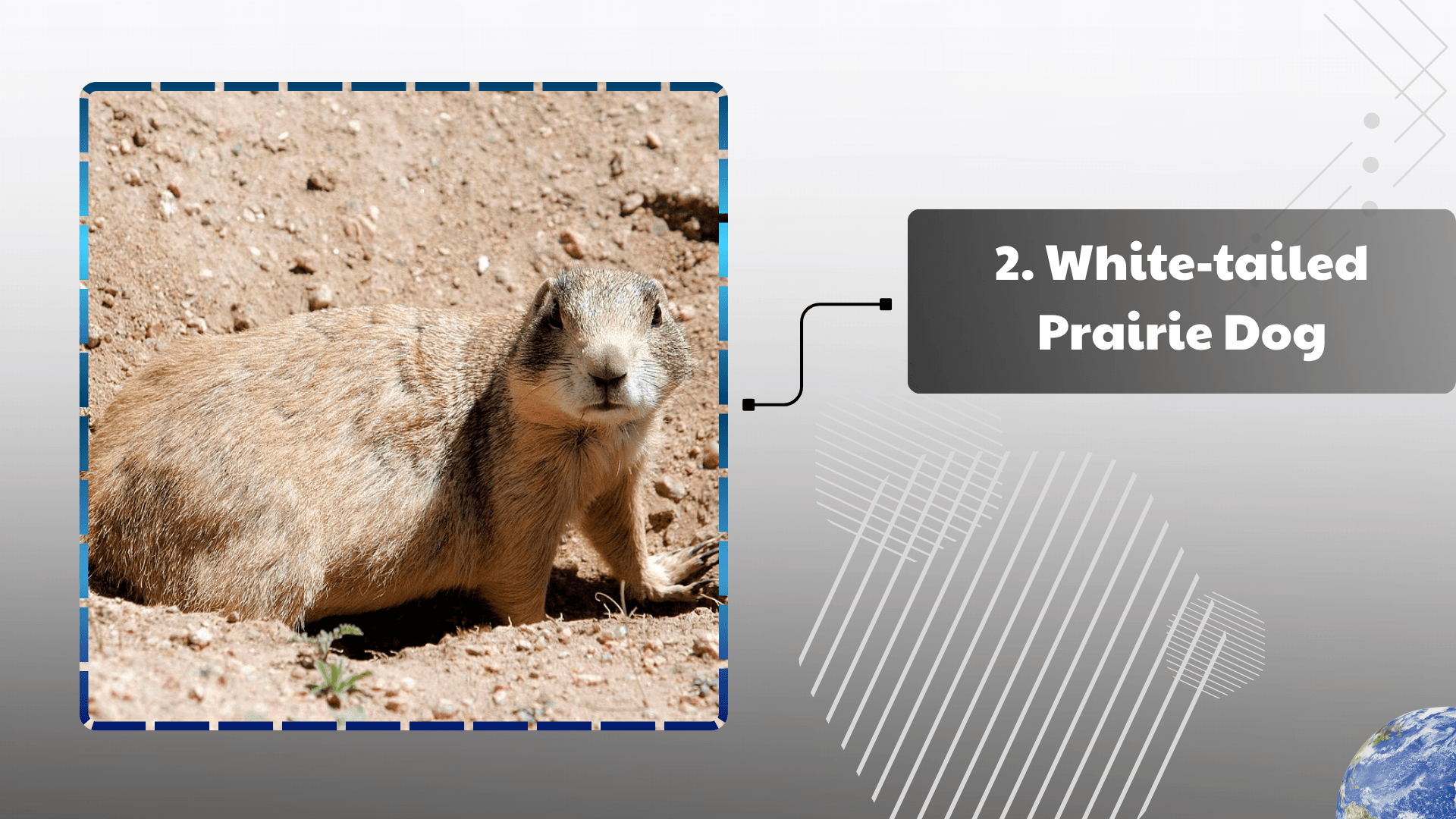
The White-tailed Prairie Dog is one of the most distinctive types of Prairie dog, named for its white-tipped tail and slightly larger body compared to some other species.
This species is found primarily in higher elevation areas, including parts of Wyoming, Colorado, Utah, and Montana. It prefers rocky slopes, mountain valleys, and dry shrublands rather than flat plains.
White-tailed Prairie Dogs are less colonial than black-tailed species, forming smaller and more scattered colonies. Their burrow systems are still complex but not as extensive.
Their diet includes grasses, herbs, seeds, and flowers. Because they live in more rugged environments, they often have to adapt their diet depending on seasonal availability.
One of their key survival strategies is vigilance. Individuals frequently stand upright on rocks or burrow mounds to scan for predators.
White-tailed Prairie Dogs play an important role in alpine and subalpine ecosystems by supporting predator-prey relationships and enhancing soil structure through digging.
3. Gunnison’s Prairie Dog
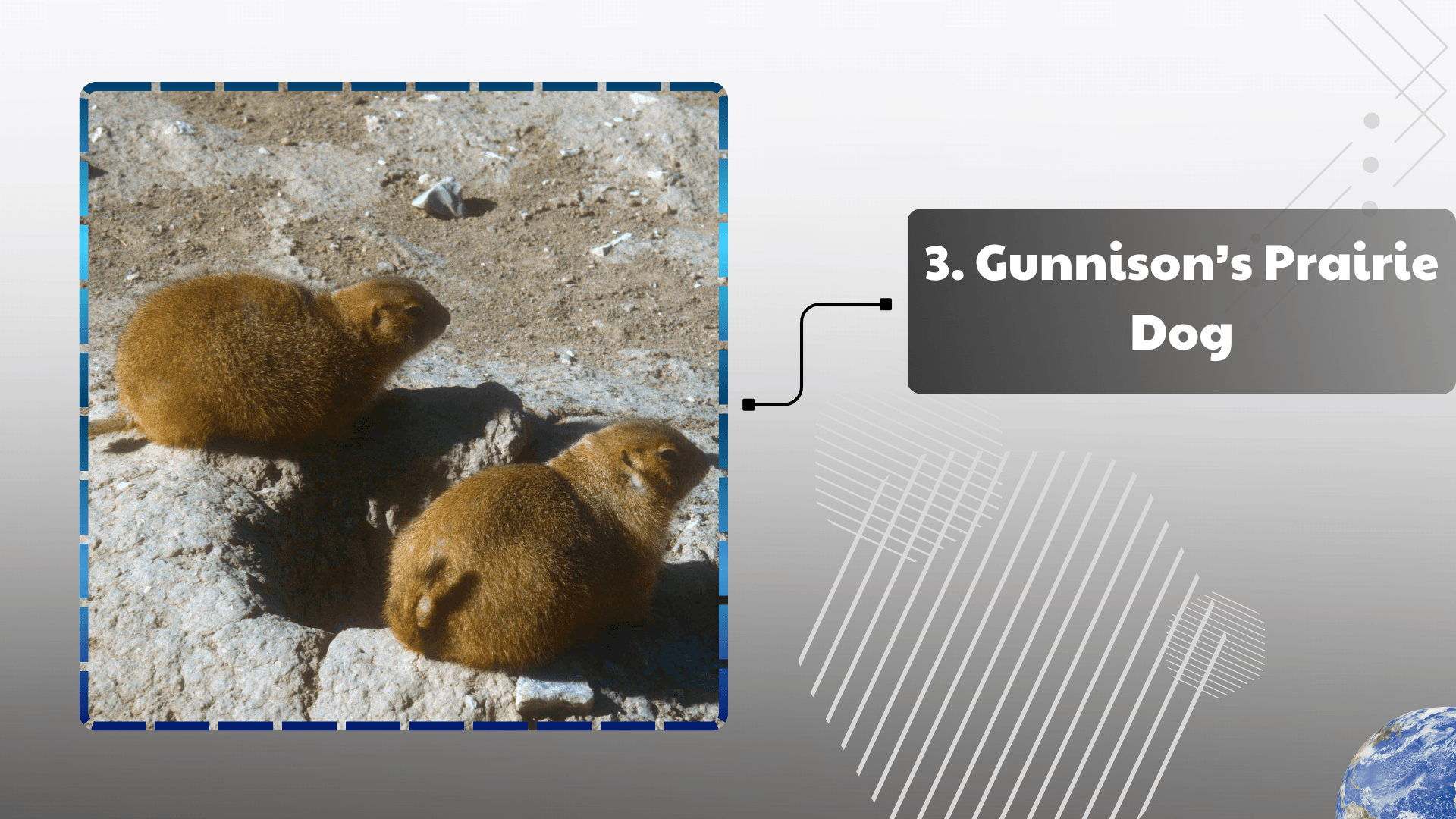
Gunnison’s Prairie Dog is one of the smaller and more localized types of Prairie dog, found mainly in the Four Corners region of the United States, including Arizona, New Mexico, Utah, and Colorado.
This species has a lighter body color with a short, brushy tail tipped in white or gray. It is often confused with the white-tailed prairie dog but can be distinguished by its size and vocal patterns.
Gunnison’s Prairie Dogs live in smaller colonies compared to black-tailed species. Their burrow systems are still well-developed but less expansive.
They prefer high desert grasslands and shrub-steppe habitats where vegetation is sparse but diverse. Their diet includes grasses, herbs, and seasonal plants.
This species is known for its complex communication system. Researchers have found that Gunnison’s Prairie Dogs use different alarm calls depending on predator type, size, and speed.
Habitat loss and disease have caused population declines in some areas, making conservation efforts important for long-term survival.
4. Utah Prairie Dog

The Utah Prairie Dog is one of the rarest types of Prairie dog and is endemic to the state of Utah in the United States. It is a federally protected species due to its declining population.
This species is smaller than many other prairie dogs and has a light brown coat with subtle variations in fur color depending on season and habitat.
Utah Prairie Dogs inhabit meadows, grasslands, and semi-arid valleys. They rely heavily on native vegetation for food and burrow construction.
They live in small colonies and are highly sensitive to environmental changes. Agricultural expansion and urban development have significantly reduced their natural habitat.
Their diet consists of grasses, herbs, and flowering plants. During dry seasons, they may rely on underground plant parts such as roots.
Conservation programs, including habitat restoration and predator management, have helped stabilize some populations, but they remain vulnerable.
5. Mexican Prairie Dog
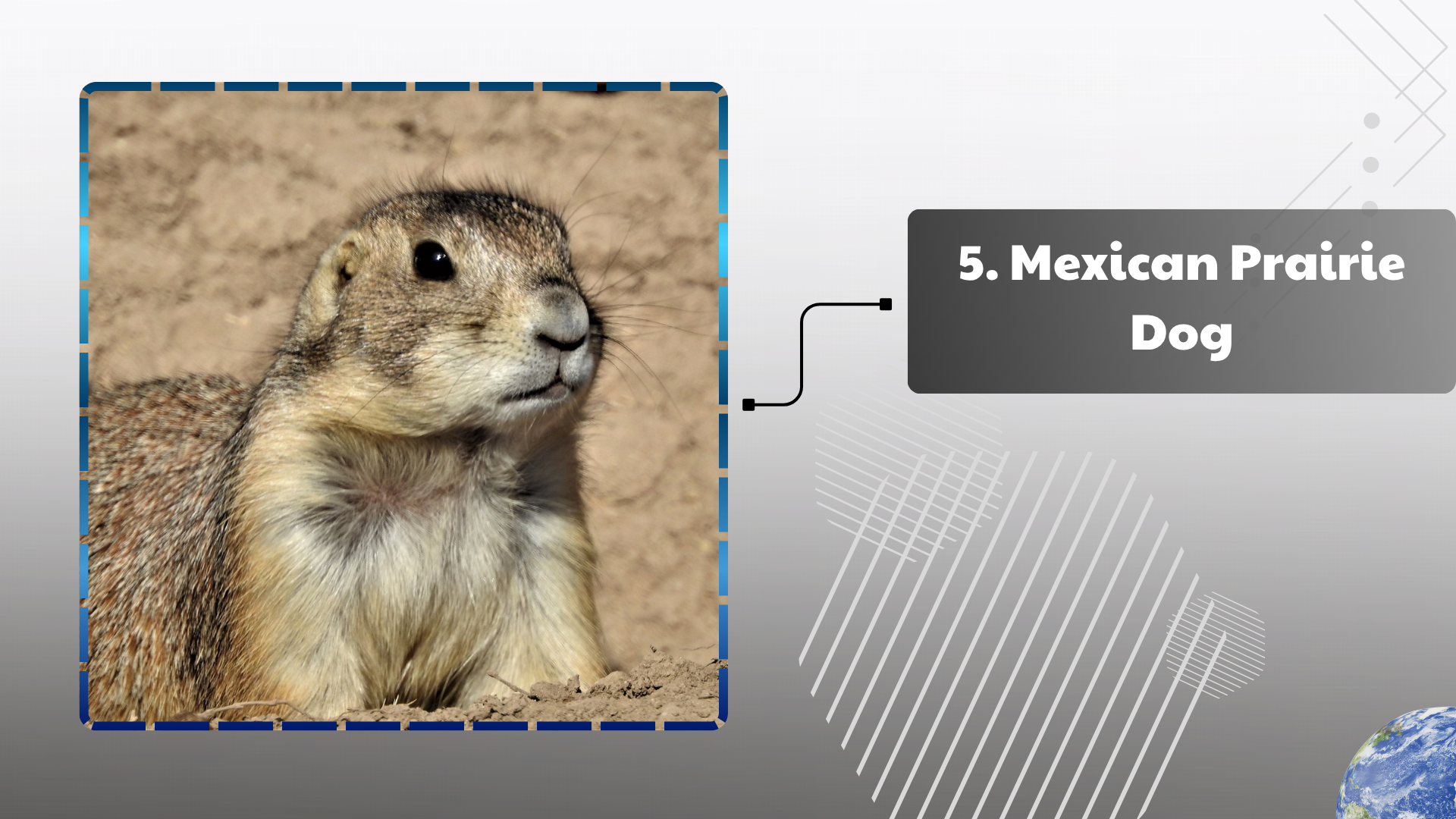
The Mexican Prairie Dog is one of the most endangered types of Prairie dog, found only in a limited region of northeastern Mexico.
This species has a pale sandy coat that helps it blend into dry desert grasslands. It is slightly smaller than some North American species.
Mexican Prairie Dogs live in highly structured colonies with interconnected burrow systems. These colonies are essential for their survival in harsh environments.
They feed primarily on grasses and desert plants. Water is rarely consumed directly, as they obtain moisture from vegetation.
Habitat destruction due to agriculture and land conversion has severely reduced their population. Today, conservation areas are critical for their survival.
Despite their endangered status, they play a key ecological role in desert grassland ecosystems by supporting soil health and biodiversity.
These first five types of Prairie dog highlight the diversity and ecological importance of prairie dog species across North America. In the next section, we will continue exploring the remaining types, including rare regional populations and specialized grassland dwellers.
6. Northern Black-tailed Prairie Dog
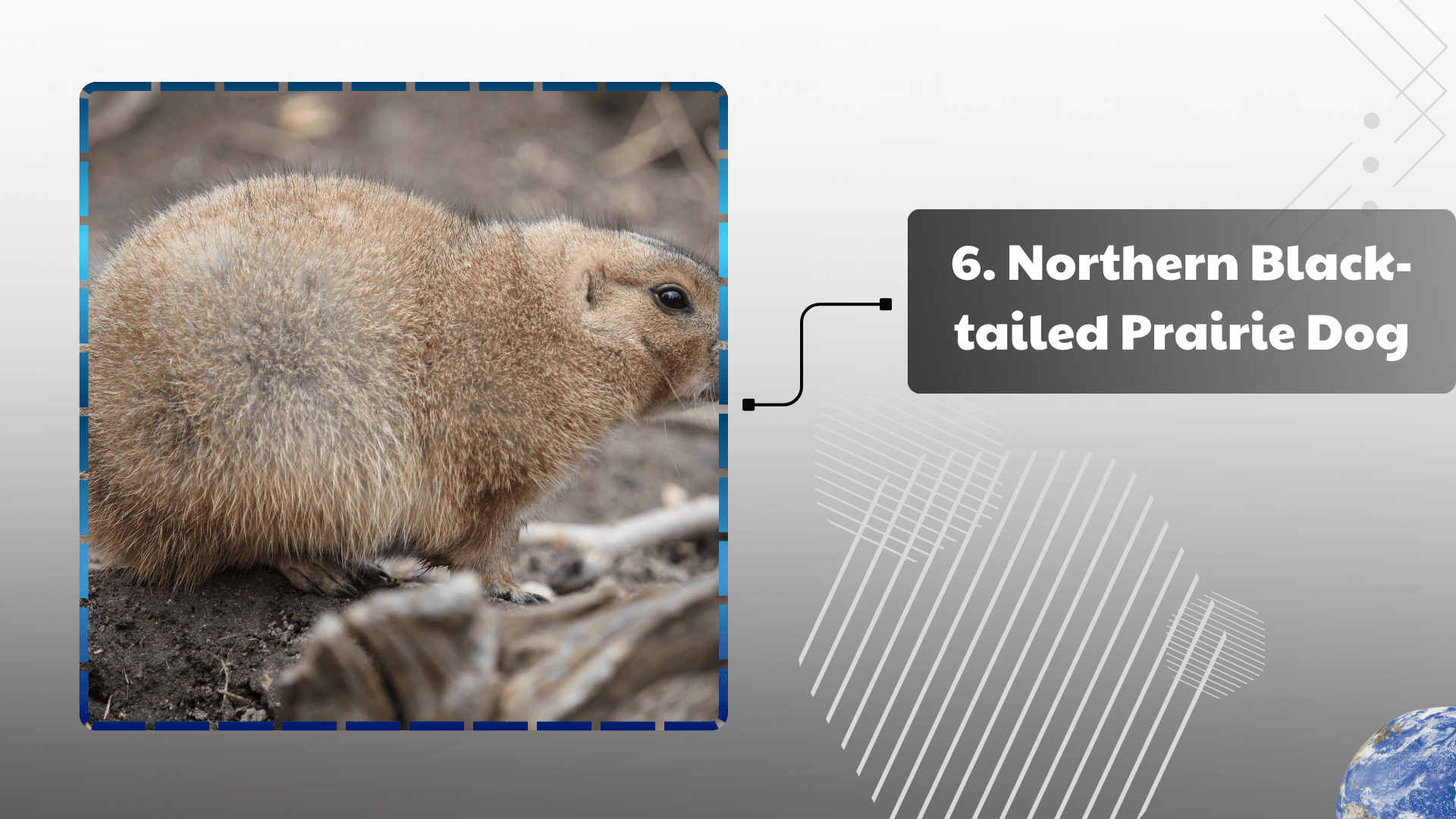
The Northern Black-tailed Prairie Dog is considered a regional variation of one of the most widespread types of Prairie dog. It is found mainly in the northern Great Plains, including parts of Montana, North Dakota, South Dakota, and southern Canada.
This prairie dog closely resembles the standard Black-tailed Prairie Dog but is generally adapted to colder climates and shorter growing seasons. Its fur can appear slightly thicker and lighter depending on seasonal changes.
Northern populations live in large prairie towns that can stretch across open grasslands. These colonies are highly organized, with burrow systems that include nesting chambers, escape tunnels, and food storage areas.
Their diet consists of grasses, roots, seeds, and seasonal wildflowers. During warmer months, they actively forage to build fat reserves for colder seasons.
One of the most important behaviors of this type is sentinel duty. Individuals stand upright on raised mounds to detect predators such as coyotes, eagles, and badgers, alerting the colony with sharp alarm calls.
Ecologically, they play a major role in shaping prairie ecosystems by increasing soil turnover and promoting plant diversity through grazing patterns.
7. Southern Black-tailed Prairie Dog
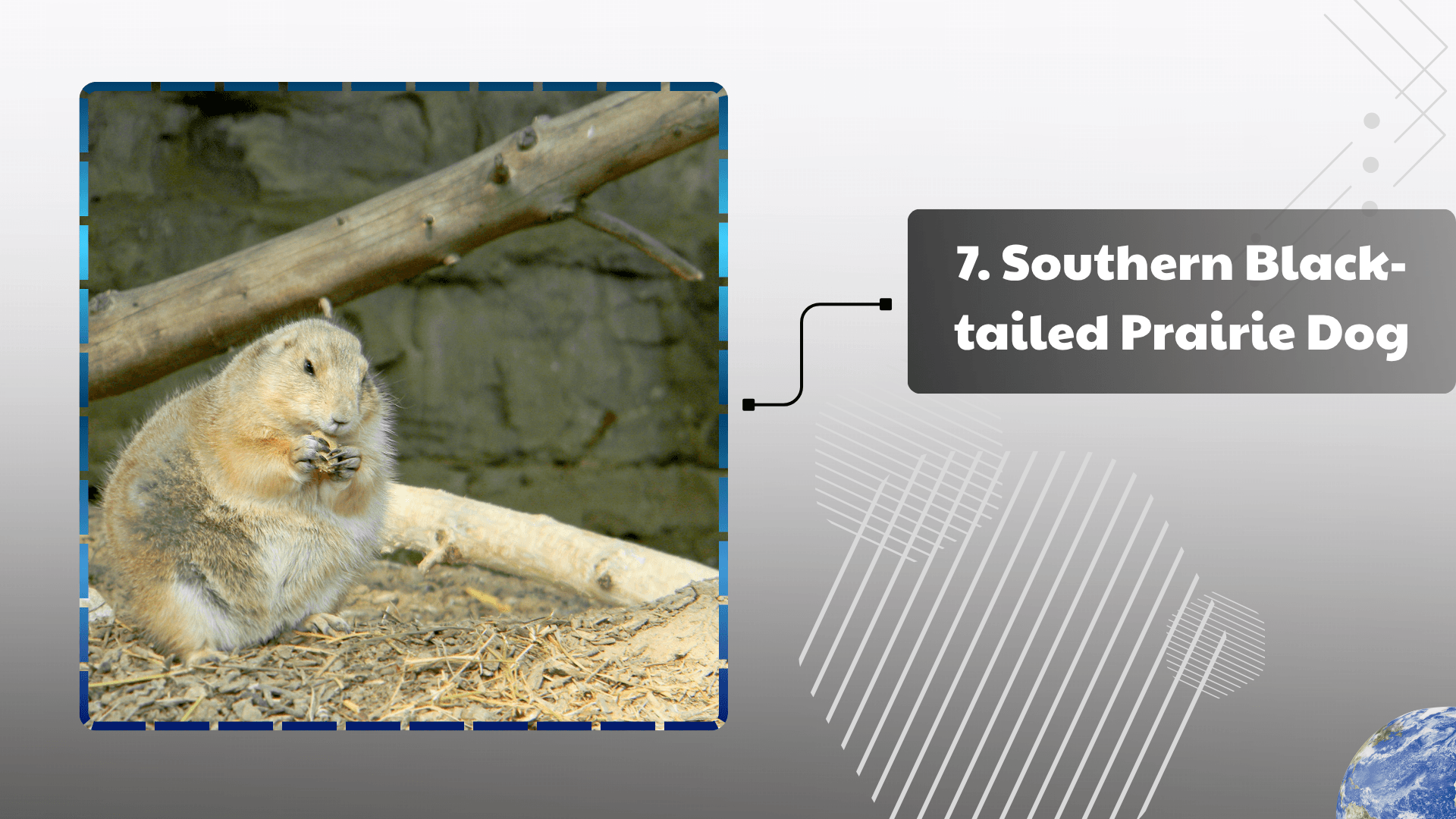
The Southern Black-tailed Prairie Dog represents another geographic form of the Black-tailed species and is one of the most recognizable types of Prairie dog in the southern Great Plains of the United States and northern Mexico.
This group tends to inhabit warmer, drier environments compared to its northern counterpart. As a result, they are more adapted to heat stress and sparse vegetation conditions.
Southern colonies can become extremely large, sometimes forming interconnected “towns” that cover vast stretches of grassland. These structures provide protection against predators and help regulate temperature within burrows.
Their diet includes grasses, cactus parts, seeds, and drought-resistant plants. In dry seasons, they rely heavily on underground plant roots for moisture.
Behaviorally, Southern Black-tailed Prairie Dogs are highly social and communicative. They use a complex system of vocal calls that vary depending on predator type, urgency, and distance.
Their digging activity improves soil aeration and nutrient cycling, making them a key ecological engineer in prairie environments.
8. Colorado Plateau Prairie Dog
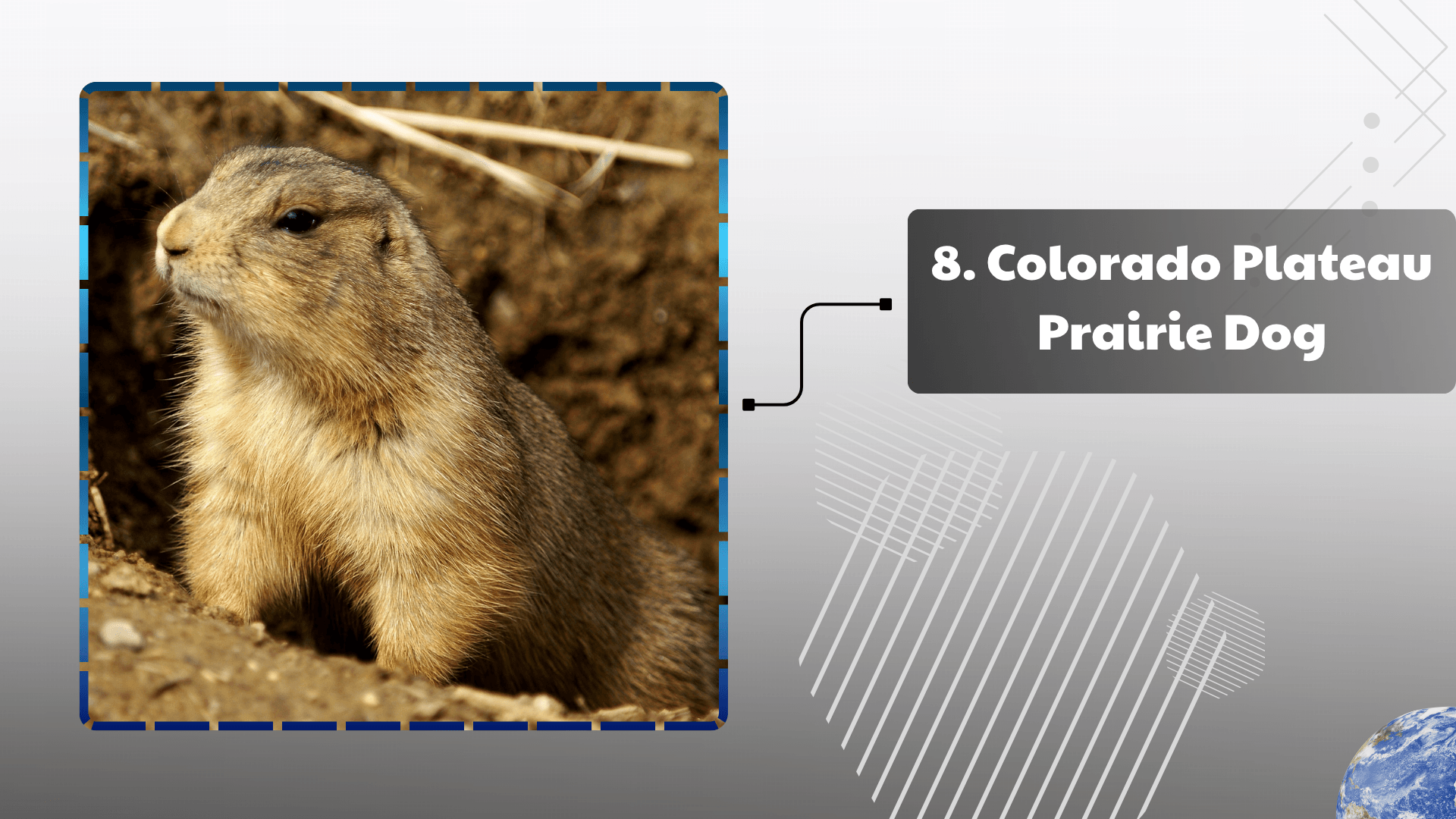
The Colorado Plateau Prairie Dog is a regional population associated with the broader types of Prairie dog, found in the elevated desert plateaus of Utah, Arizona, Colorado, and New Mexico.
This type is adapted to rocky terrain, sparse vegetation, and fluctuating temperatures typical of plateau ecosystems. Their burrows are often built in sandy soils or between rocky outcrops for added protection.
They are smaller in population density compared to classic prairie dog towns but still form organized colonies with social structures similar to other species.
Their diet includes desert grasses, shrubs, cactus flowers, and seasonal herbs. Water is rarely consumed directly, as moisture is obtained from plants.
Due to the harsh environment, they spend a significant portion of their time underground during extreme heat or cold conditions.
The Colorado Plateau Prairie Dog plays an important role in maintaining desert grassland ecosystems by supporting soil health and providing prey for predators such as hawks and foxes.
9. Rocky Mountain White-tailed Prairie Dog
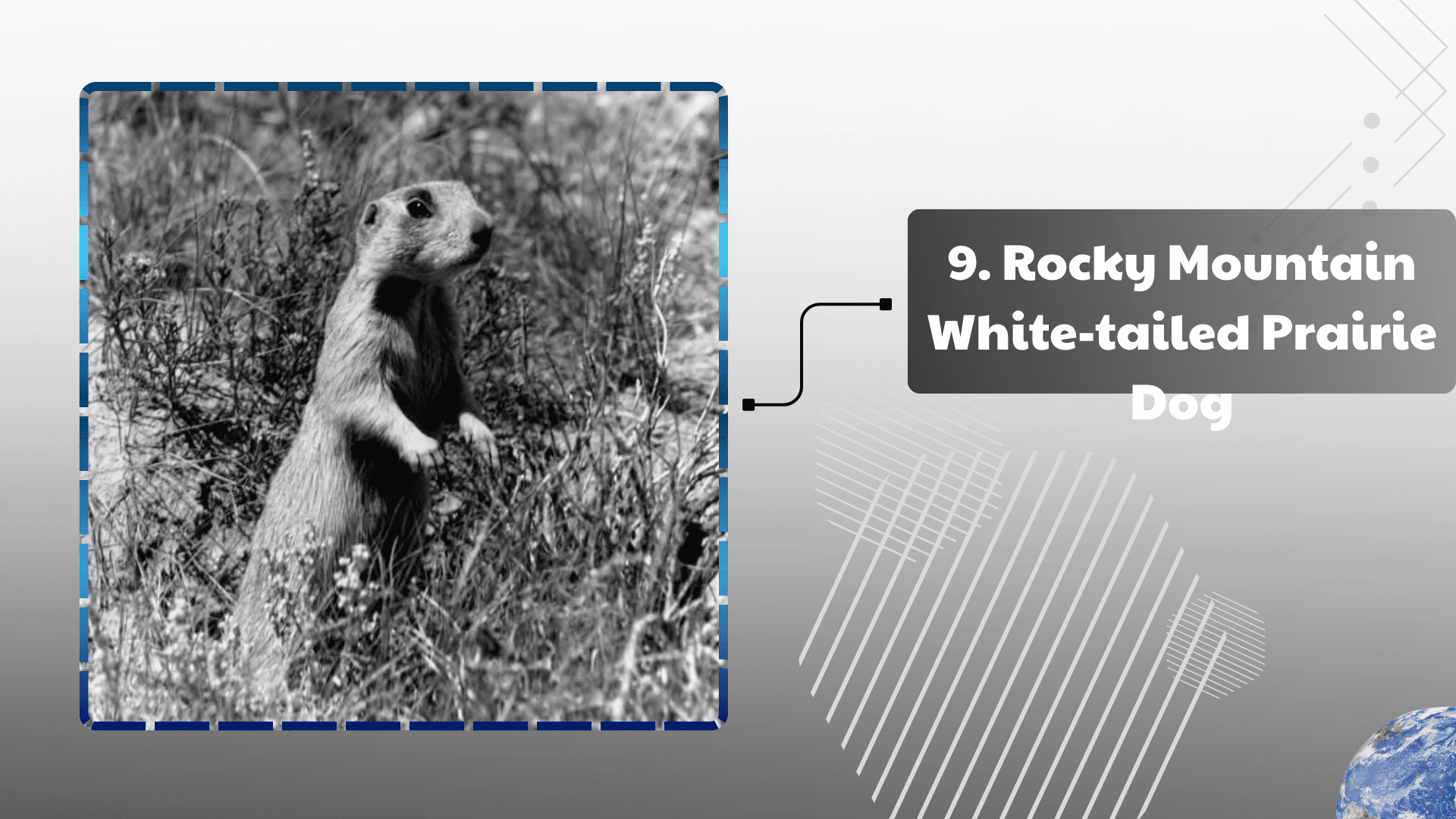
The Rocky Mountain White-tailed Prairie Dog is a high-altitude variation of the White-tailed species and is one of the more specialized types of Prairie dog.
It inhabits alpine and subalpine grasslands in mountainous regions of the western United States, including Wyoming, Colorado, and Utah.
This type is adapted to cooler temperatures and shorter growing seasons. Its fur tends to be slightly denser, helping it survive in colder climates.
Colonies are usually smaller and more scattered compared to lowland prairie dog towns. Burrows are often built near rocky slopes or protected valleys.
Their diet includes alpine grasses, wildflowers, and hardy shrubs. Seasonal food availability strongly influences their foraging behavior.
Because of their remote habitat, these prairie dogs are less frequently studied, but they remain an important part of mountain ecosystems by supporting biodiversity and soil structure.
10. Chihuahuan Prairie Dog
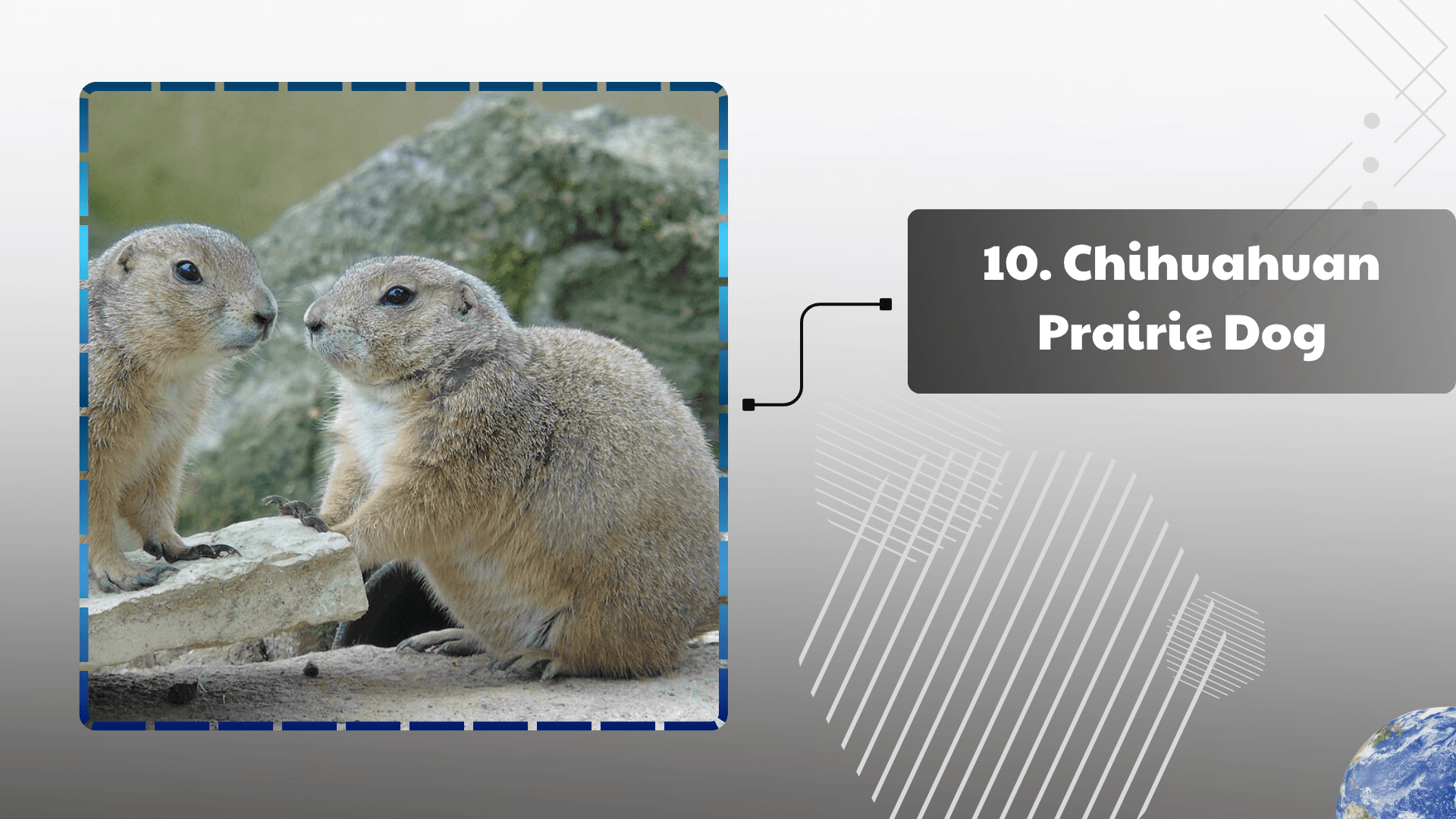
The Chihuahuan Prairie Dog is a regional form associated with the Mexican range and is one of the southernmost types of Prairie dog.
It inhabits the Chihuahuan Desert grasslands, where conditions are dry, hot, and highly seasonal. This environment requires strong adaptability to survive.
These prairie dogs form colonies in open desert plains where soil conditions allow burrow construction. Their underground systems help regulate temperature and provide protection from predators.
Their diet consists mainly of drought-resistant grasses, desert herbs, and shrubs. They rely heavily on seasonal vegetation cycles for survival.
Chihuahuan Prairie Dogs are highly social and use alarm calls to warn colony members of predators such as coyotes, snakes, and birds of prey.
Habitat loss due to agriculture and land development has reduced their range, making conservation efforts important in certain regions.
Conclusion: The Diversity of Prairie Dog Species
The 10 types of Prairie dog demonstrate how adaptable and ecologically important these small mammals are across North American grasslands, deserts, and mountain regions. From widespread black-tailed populations to rare Mexican and Utah species, each type contributes to ecosystem health through soil engineering, vegetation control, and supporting predator food chains.
Despite their ecological importance, many prairie dog populations face challenges such as habitat loss, disease, and human-wildlife conflict. Protecting their colonies helps preserve entire prairie ecosystems that depend on their burrowing and grazing behaviors.
Understanding the diversity of prairie dogs raises an important question: how many more hidden ecological roles do these small but powerful animals still hold within North America’s grassland ecosystems?
50+ FAQs About Types of Prairie Dog (Complete Wildlife Guide)
1. What is a prairie dog?
A prairie dog is a small burrowing rodent in the squirrel family (Sciuridae). Despite the name, it is not related to dogs. Prairie dogs are highly social animals that live in large underground colonies across North American grasslands.
2. How many types of prairie dogs are there?
There are five main recognized species of prairie dogs: Black-tailed, White-tailed, Gunnison’s, Utah, and Mexican prairie dogs. Some regional populations are also considered distinct types in ecological studies.
3. Where do prairie dogs live?
Prairie dogs live mainly in the grasslands, deserts, and high plains of North America, including the United States, Canada, and northern Mexico. They prefer open areas with short vegetation.
4. Why are they called prairie dogs?
They are called prairie dogs because of their bark-like alarm calls that sound similar to a dog’s bark, which they use to warn colony members of danger.
5. Are prairie dogs really dogs?
No, prairie dogs are rodents, not dogs. They are more closely related to squirrels, chipmunks, and marmots.
6. What do prairie dogs eat?
Prairie dogs are herbivores. They mainly eat grasses, roots, seeds, flowers, and sometimes small insects. Their diet depends on seasonal plant availability.
7. Are prairie dogs dangerous to humans?
Prairie dogs are not dangerous to humans. They are shy animals that avoid contact, although they may bite if threatened or handled.
8. Do prairie dogs live in groups?
Yes, prairie dogs live in large social colonies called “towns,” which can include hundreds or even thousands of individuals.
9. What is a prairie dog town?
A prairie dog town is a complex underground network of burrows and tunnels shared by a colony. These systems include nesting chambers, escape routes, and lookout mounds.
10. Are prairie dogs active during the day or night?
Prairie dogs are diurnal, meaning they are active during the day and sleep at night inside their burrows.
11. How do prairie dogs communicate?
They communicate using a sophisticated system of vocal calls, body postures, and alarm signals that can identify different predators.
12. Can prairie dogs recognize predators?
Yes, studies show prairie dogs can distinguish between predators such as hawks, coyotes, and humans using specific alarm calls.
13. Do prairie dogs hibernate?
No, prairie dogs do not fully hibernate. However, they may reduce activity during harsh winter conditions and rely on stored body fat.
14. How long do prairie dogs live?
In the wild, prairie dogs typically live 3 to 5 years due to predators and disease, but they can live longer in protected environments.
15. What predators eat prairie dogs?
Their main predators include hawks, eagles, coyotes, foxes, snakes, and badgers.
16. How do prairie dogs protect themselves?
They use alarm calls, group vigilance, and complex burrow systems with multiple escape exits to avoid predators.
17. Why do prairie dogs stand on their hind legs?
They stand upright to scan for predators and communicate danger signals to other members of the colony.
18. Are prairie dogs intelligent?
Yes, prairie dogs are highly intelligent for rodents. They have complex communication systems and social structures.
19. Do prairie dogs dig tunnels?
Yes, digging is essential to their survival. Their tunnels provide shelter, protection, and nesting spaces.
20. How deep are prairie dog burrows?
Burrows can reach several meters deep and include multiple chambers and tunnel exits for safety.
21. What is the largest prairie dog colony?
Some prairie dog towns in North America span hundreds of acres and contain thousands of individuals.
22. Do prairie dogs damage land?
They can affect grazing land due to burrowing and vegetation consumption, which sometimes leads to conflict with farmers.
23. Are prairie dogs important to ecosystems?
Yes, they are considered a “keystone species” because many other animals depend on their burrows and ecosystem role.
24. What animals use prairie dog burrows?
Animals like burrowing owls, snakes, rabbits, and insects often use abandoned prairie dog tunnels for shelter.
25. Do prairie dogs drink water?
They usually get most of their moisture from the plants they eat and rarely drink free-standing water.
26. Are prairie dogs social animals?
Yes, they are among the most social rodents, living in structured colonies with family groups and communication systems.
27. How do prairie dogs reproduce?
They breed once a year, and females give birth to litters underground in safe nesting chambers.
28. How many babies do prairie dogs have?
A typical litter includes 3 to 8 pups, depending on species and environmental conditions.
29. Do prairie dogs take care of their young?
Yes, mothers nurse and protect their pups until they are old enough to leave the burrow.
30. What is the most common prairie dog species?
The Black-tailed Prairie Dog is the most widespread and commonly observed species.
31. What is the rarest prairie dog species?
The Utah Prairie Dog is one of the rarest and is listed as a threatened species in the United States.
32. Are prairie dogs endangered?
Some species are threatened or endangered due to habitat loss, disease, and human activity.
33. What is the biggest threat to prairie dogs?
Habitat destruction, disease outbreaks (like sylvatic plague), and human control programs are major threats.
34. Can prairie dogs carry disease?
Yes, they can carry diseases such as sylvatic plague, which can affect colony populations significantly.
35. Do prairie dogs migrate?
No, prairie dogs are non-migratory and remain within their established colony territory.
36. Why are prairie dogs considered keystone species?
Because their digging, grazing, and social behavior shape ecosystems and support many other species.
37. Do prairie dogs fight each other?
Yes, they may fight over territory or mates, but most interactions within colonies are cooperative.
38. Can prairie dogs swim?
They can swim if necessary but prefer dry land and burrow environments.
39. How do prairie dogs build burrows?
They use their strong front claws to dig soil and create tunnels, chambers, and escape routes.
40. Do prairie dogs sleep at night?
Yes, they are nocturnal sleepers and stay in burrows at night for protection.
41. Why do prairie dogs bark?
Their “barks” are alarm calls used to warn colony members about predators.
42. Do prairie dogs store food?
They do not store large food reserves but rely on constant foraging and seasonal vegetation.
43. Are prairie dogs good for soil?
Yes, their digging improves soil aeration and nutrient distribution.
44. Do prairie dogs live in deserts?
Some species live in semi-arid and desert grasslands, especially in the southwestern United States and Mexico.
45. Can prairie dogs be pets?
They are wild animals and are not suitable or legal as pets in most regions.
46. Are prairie dogs active year-round?
Yes, they remain active throughout the year with seasonal changes in behavior.
47. What role do prairie dogs play in food chains?
They are both prey for predators and ecosystem engineers that support biodiversity.
48. How do prairie dogs detect danger?
They rely on vision, hearing, and sentinel behavior to detect approaching predators.
49. Do prairie dogs have territory boundaries?
Yes, colonies maintain defined territories defended by resident groups.
50. Why are prairie dogs important to study?
They help scientists understand grassland ecosystems, biodiversity, and species interactions.
51. What is the main takeaway about prairie dogs?
Prairie dogs are highly social, intelligent ecosystem engineers that play a vital role in maintaining healthy North American grasslands.