

Salamanders are some of the most fascinating amphibians on Earth. With smooth, moist skin, quiet movements, and an almost magical ability to regrow lost limbs, they capture the curiosity of nature lovers everywhere. From forest floors and mountain streams to hidden ponds and rocky rivers, these creatures thrive in places where water and land meet. In this guide to the Types of Salamanders, we explore 35 remarkable species from around the world. Each one has its own story, shape, and way of surviving. Whether you are a student, wildlife enthusiast, or just someone who enjoys learning about nature, this article will help you recognize, understand, and appreciate salamanders in a clear and friendly way.
Types of Salamanders
1. Eastern Newt (Notophthalmus viridescens)
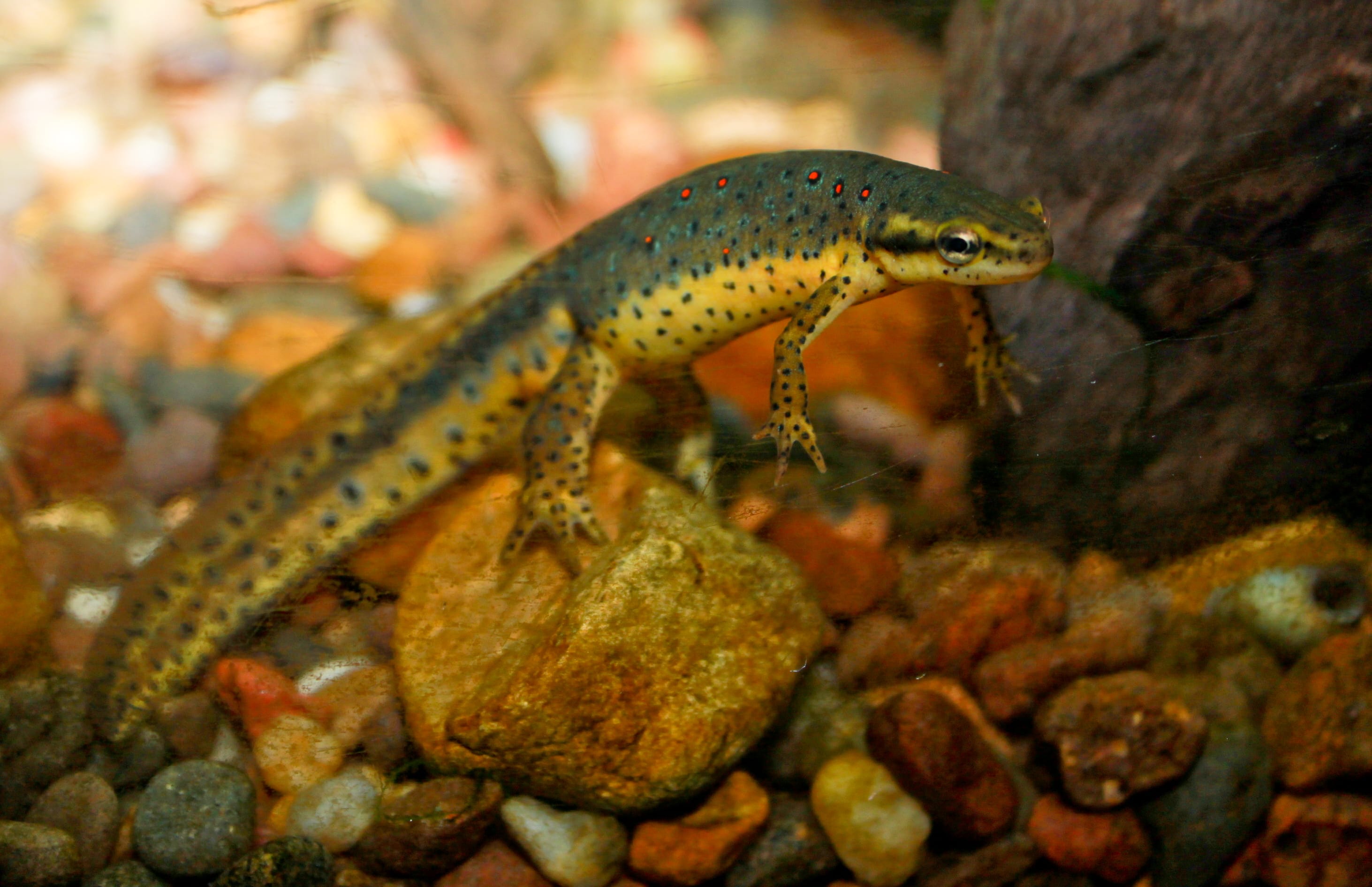
The Eastern Newt is one of the most familiar salamanders in North America, and it lives a life that feels like a three-act play. It begins as an aquatic larva, transforms into a bright orange land-dwelling “eft,” and finally returns to the water as an olive-green adult. This changing lifestyle is a fun fact that makes the species easy to remember.
Adults usually grow between 2.5 and 5 inches long. Their smooth skin is dotted with small red spots, each outlined in black, like tiny warning signs. These colors are not just for show. They tell predators that the newt’s skin contains mild toxins. One could say it is nature’s way of saying, “Look, but don’t touch.”
Eastern Newts prefer ponds, lakes, and slow streams, but the juvenile efts wander through damp forests for years before returning to water. They feed on insects, small invertebrates, and aquatic larvae. On a rainy day, you might spot one slowly crossing a trail, as if taking its time to enjoy the weather. Calm, adaptable, and widespread, the Eastern Newt is often the first salamander people learn to recognize.
2. Eastern Red-backed Salamander (Plethodon cinereus)
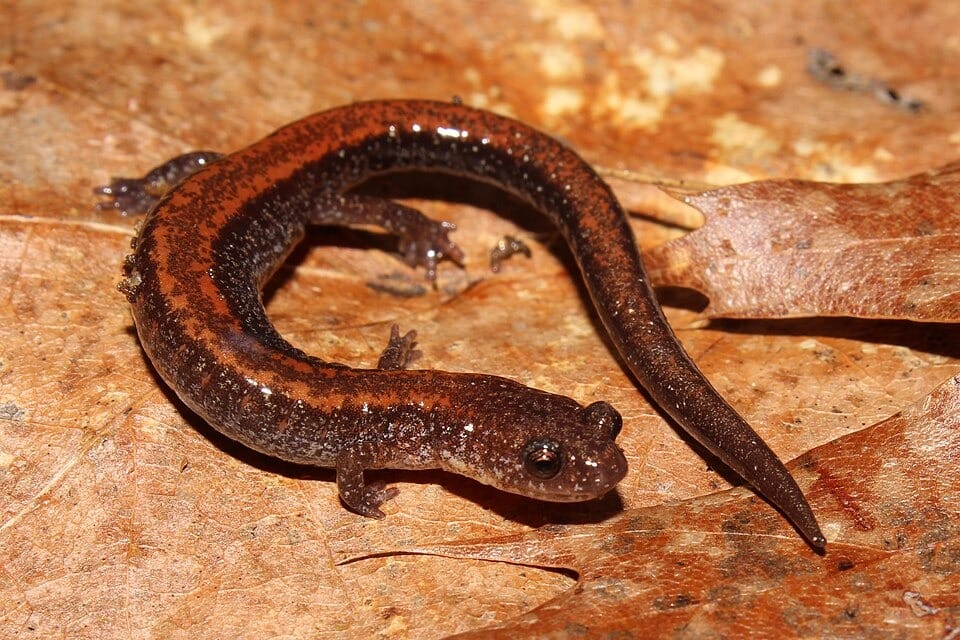
Small, secretive, and surprisingly common, the Eastern Red-backed Salamander is a true forest resident. It usually measures just 2.5 to 4 inches long, yet it plays a big role in woodland ecosystems. As a lungless salamander, it breathes through its skin, which is why it must stay in cool, moist places.
Most individuals have a gray body with a rusty red stripe running down the back, though some are completely dark. These little salamanders spend their lives under logs, stones, and leaf litter, coming out mainly at night or during rainy weather. If forests had librarians, this species would be quietly keeping things in order.
Their diet includes mites, ants, springtails, and other tiny creatures. They do not need standing water to breed, laying eggs on land instead. This makes them well suited to forest life. Although they are easy to overlook, their sheer numbers mean they are among the most abundant salamanders in eastern North America.
3. California Newt (Taricha torosa)
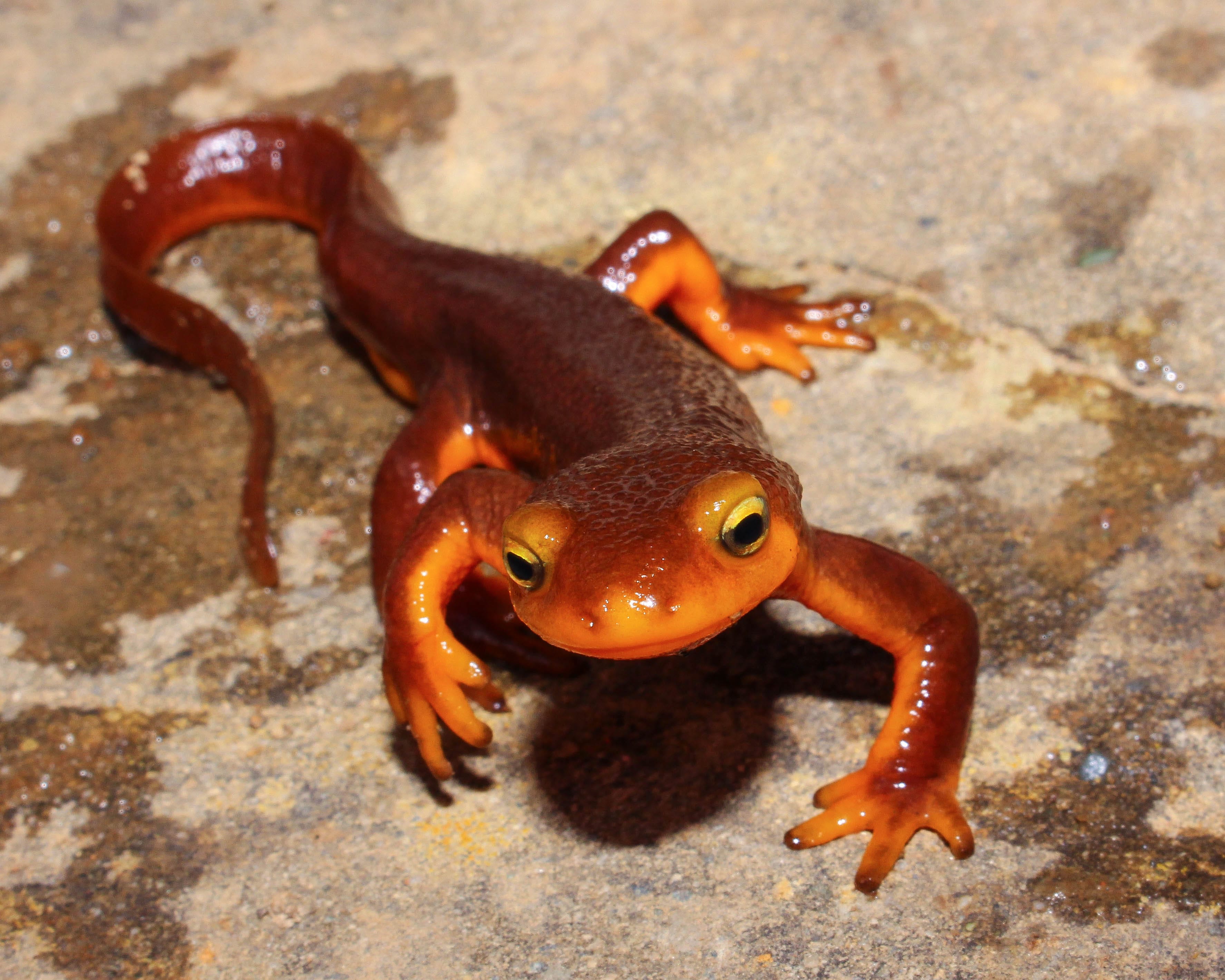
The California Newt is a bold character in the salamander family. With a stocky body and rough skin, it looks tougher than many of its smooth-skinned relatives. Adults reach about 5 to 8 inches in length and are usually dark brown or olive on top, with a bright orange belly.
That orange underside is more than decoration. When threatened, the newt may arch its back to show off this color, a pose sometimes called the “unken reflex.” It is a clear signal that powerful toxins live in its skin. Predators quickly learn that this is one meal best skipped.
California Newts live in woodlands and grasslands but return to ponds and slow streams to breed. During the rainy season, they migrate in large numbers, sometimes crossing roads in what looks like a tiny amphibian parade. They feed on insects, worms, and small aquatic animals. Watching one move through shallow water feels like seeing a living piece of the wild, calm and steady.
4. Spotted Salamander (Ambystoma maculatum)
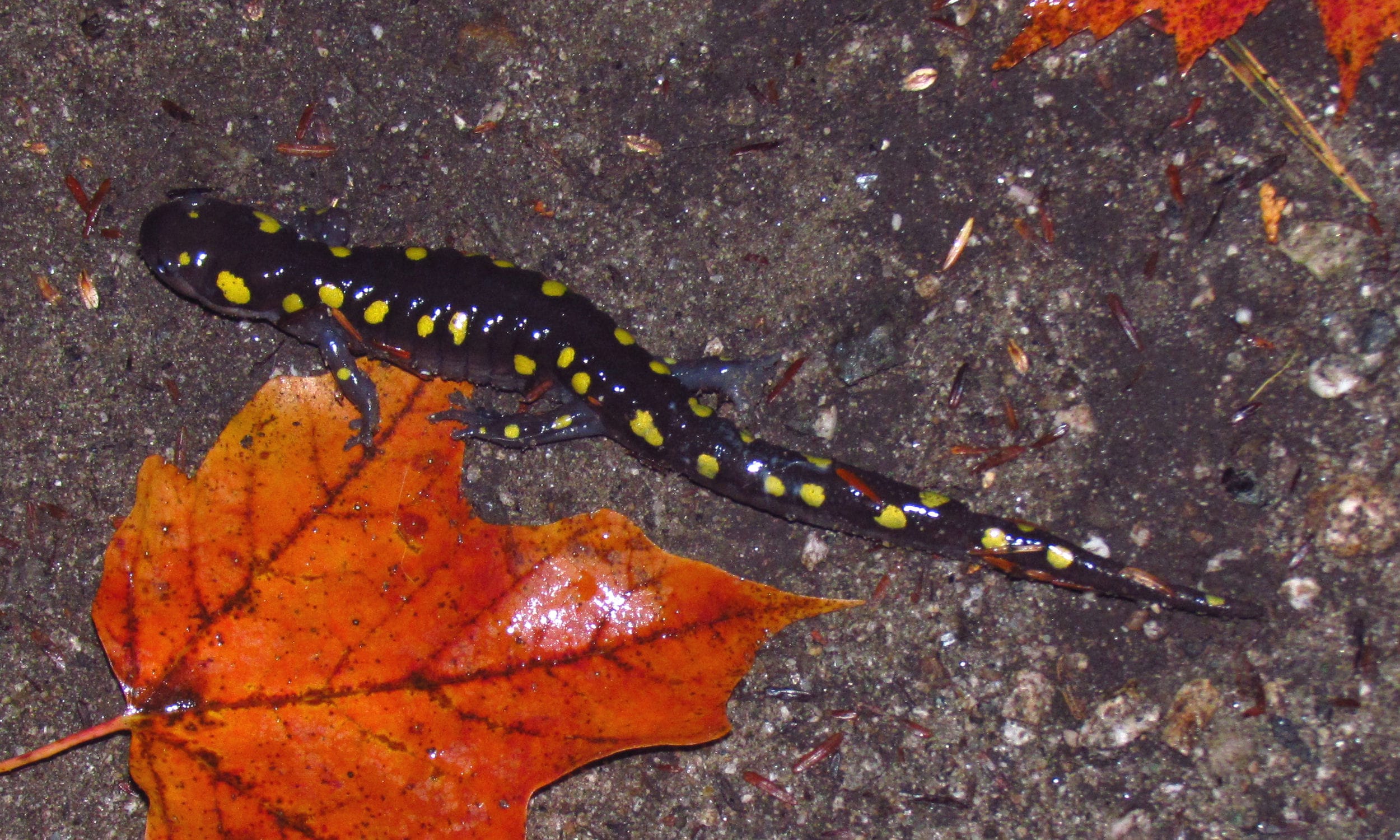
The Spotted Salamander is easy to recognize, thanks to its glossy black body decorated with bright yellow or orange spots. Adults can grow up to 10 inches long, making them one of the larger woodland salamanders in eastern North America.
For most of the year, this species lives underground in burrows or under logs, rarely seen by people. But on warm, rainy nights in early spring, they emerge in great numbers to migrate to breeding ponds. These events, often called “big nights,” feel like secret festivals of the forest.
Spotted Salamanders lay their eggs in jelly-like masses attached to plants in shallow water. The larvae grow in ponds before heading to land as juveniles. They feed on insects, worms, and slugs, helping control small invertebrate populations. Quiet and hidden for much of the year, this salamander reminds us that busy wildlife lives right beneath our feet.
5. California Slender Salamander (Batrachoseps attenuatus)
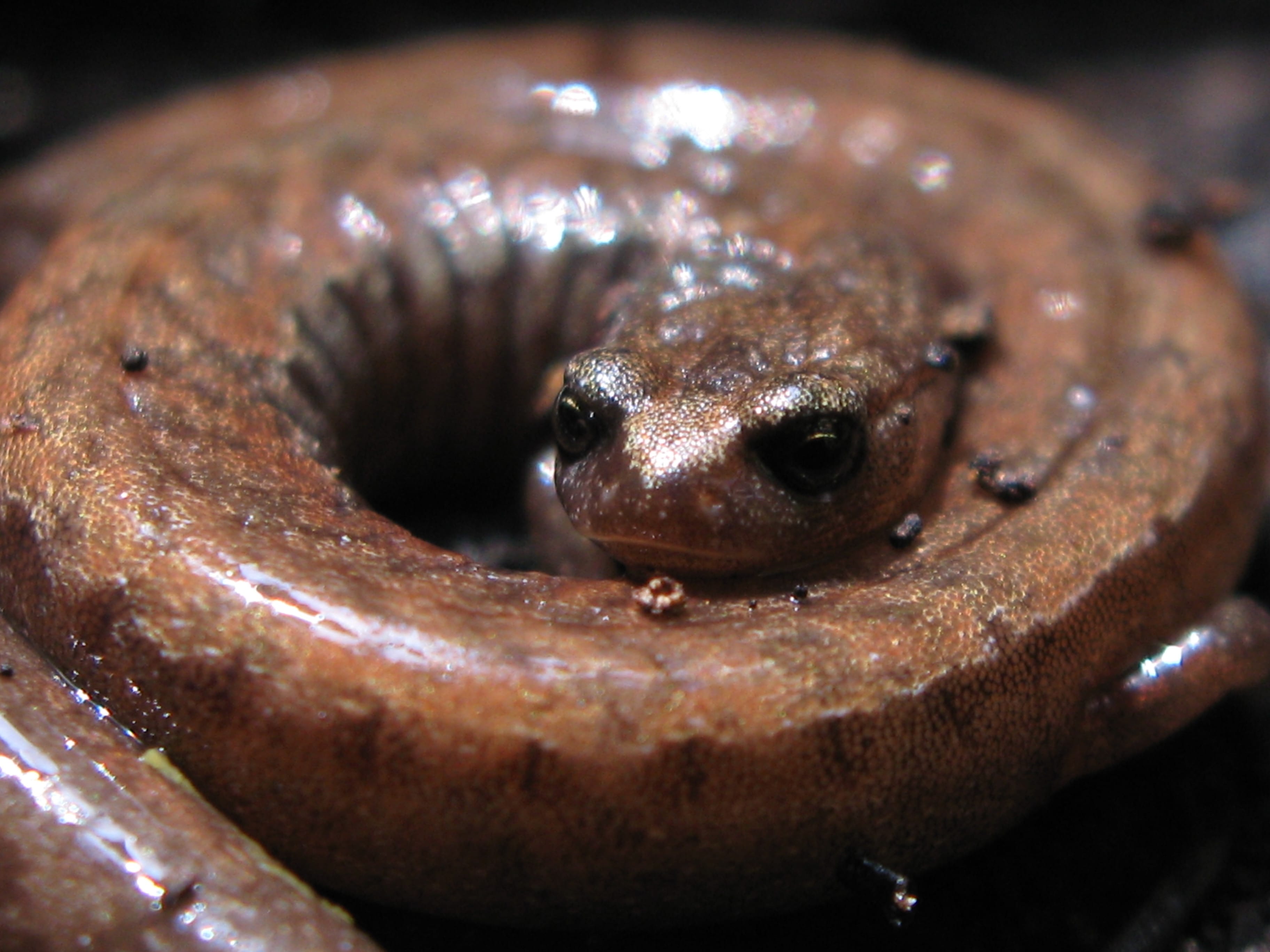
At first glance, the California Slender Salamander might be mistaken for a small worm or snake. With its long, thin body and tiny limbs, it looks built for squeezing into the narrowest spaces. Adults usually measure 3 to 5 inches, but they can stretch impressively when moving.
This species is common along the coast and foothills of California, living under rocks, logs, and leaf litter in moist habitats. Like other lungless salamanders, it depends on damp skin for breathing. It rarely ventures far from shelter, preferring the quiet safety of the forest floor.
California Slender Salamanders feed on tiny insects and soil invertebrates. They lay eggs on land, skipping the aquatic larval stage entirely. If you gently lift a log after rain, you might see one curled like a thin ribbon, ready to slip away in seconds. It is a small creature with a big talent for staying hidden.
“`html
6. Ensatina (Ensatina eschscholtzii)
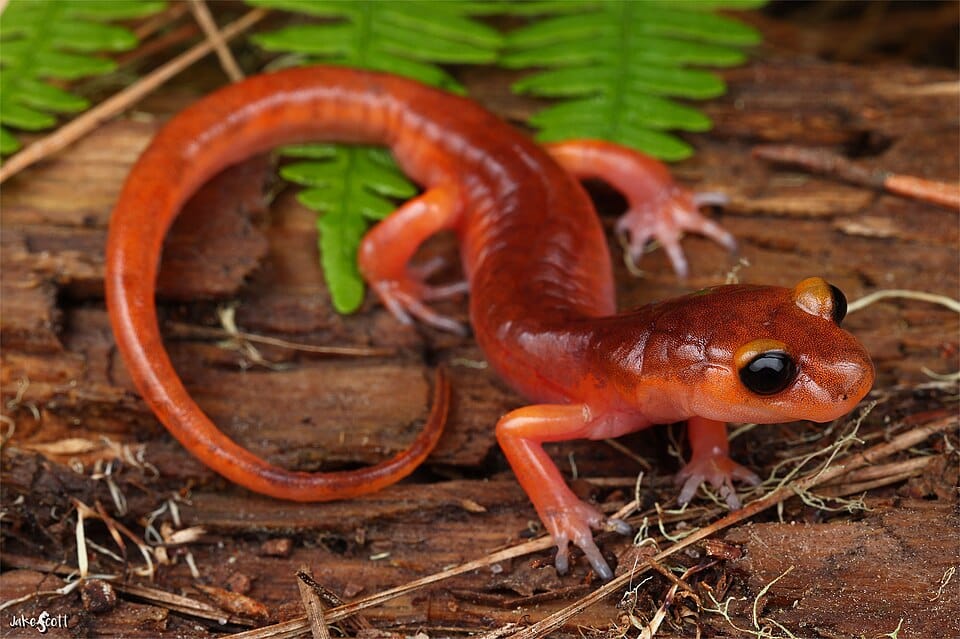
Ensatina is a small but eye-catching salamander found along the Pacific Coast of North America. At first glance, it looks simple, yet this species is famous among biologists because it forms a “ring” of closely related populations around California’s Central Valley. Each group looks slightly different, like nature experimenting with patterns and colors.
Most Ensatinas grow about 2.5 to 4 inches long. Their bodies are usually brown, tan, or orange, often with lighter bellies and bright eyes that seem too big for such a small face. They have slender tails and smooth skin, perfect for slipping through leaf litter.
Ensatinas live in moist forests, hiding under logs and rocks during the day. They feed on tiny insects, spiders, and other invertebrates. Instead of using water to breed, they lay eggs on land, and the young hatch as miniature versions of adults. Quiet and graceful, Ensatina salamanders show how much variety can exist in a small package.
7. Rough-skinned Newt (Taricha granulosa)

The Rough-skinned Newt is well known for its tough look and even tougher defense. Its dark brown to black back contrasts with a bright orange belly, a classic warning color in the animal world. Adults usually reach 6 to 8 inches long, making them fairly large among newts.
This species carries a powerful toxin in its skin. When threatened, it raises its head and tail to show the orange underside, as if saying, “Think twice, my friend.” This behavior has made it famous in stories about wildlife survival and predator-prey battles.
Rough-skinned Newts live in forests near ponds and lakes in the Pacific Northwest. During breeding season, they move into water, where they lay eggs and spend months swimming. They eat insects, worms, and small aquatic creatures. On land or in water, this newt moves slowly but with confidence, like it knows it has a secret weapon.
8. Northern Slimy Salamander (Plethodon glutinosus)
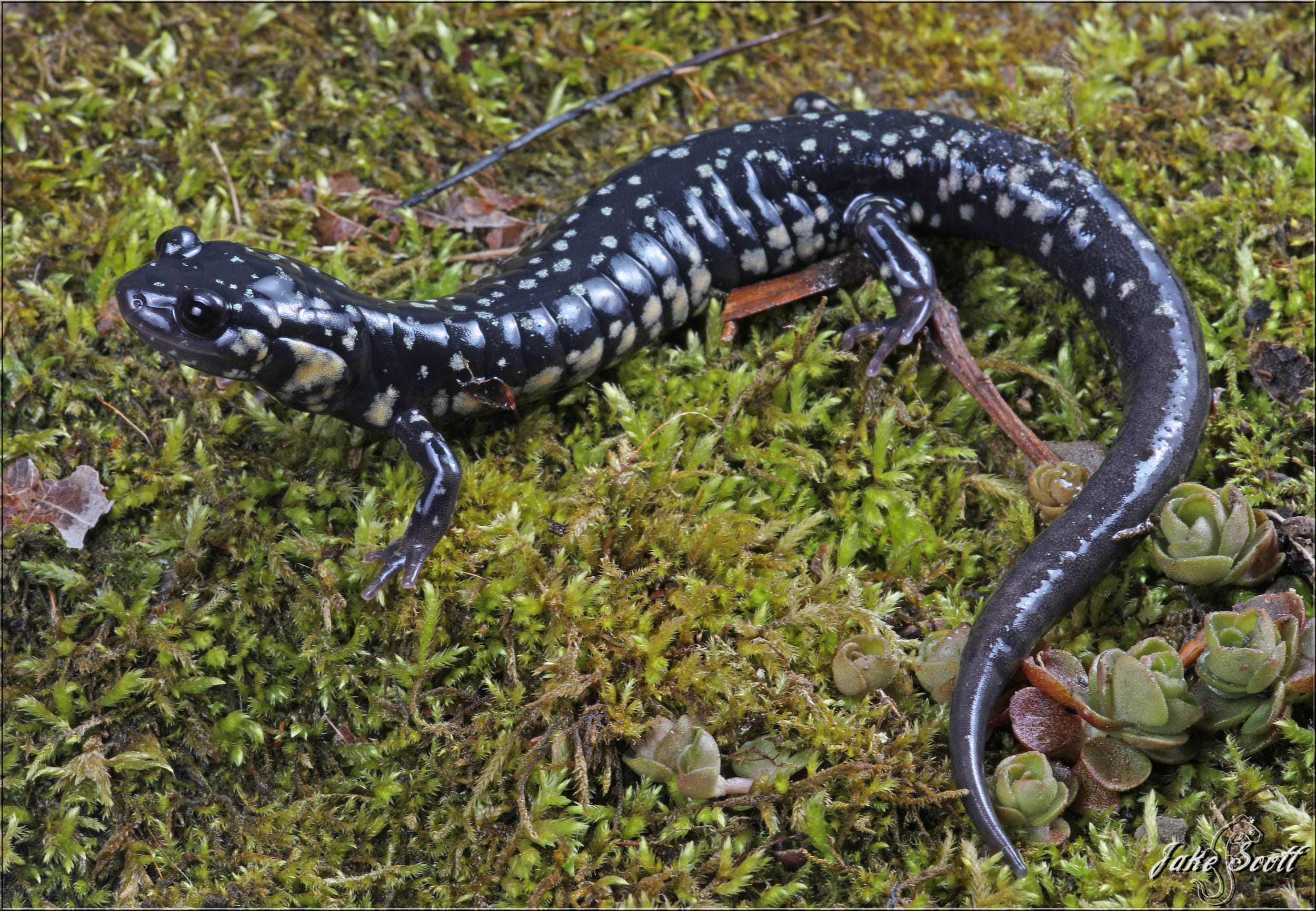
The Northern Slimy Salamander gets its name from a sticky surprise. When handled or threatened, it releases a glue-like secretion that can make predators regret their choice. It is not exactly polite, but it works.
These salamanders are usually dark gray or black, sometimes sprinkled with white or silver spots. Adults grow about 4 to 7 inches long and have sturdy bodies compared to many forest salamanders. Their skin is smooth and shiny, especially after rain.
They live in hardwood forests of eastern North America, spending most of their time under logs, rocks, and leaf litter. Like other lungless salamanders, they breathe through their skin and need moist conditions. They feed on insects, worms, and spiders. One might spot them slowly crawling at night, leaving a faint trail of slime, like a tiny signature on the forest floor.
9. Northern Two-lined Salamander (Eurycea bislineata)
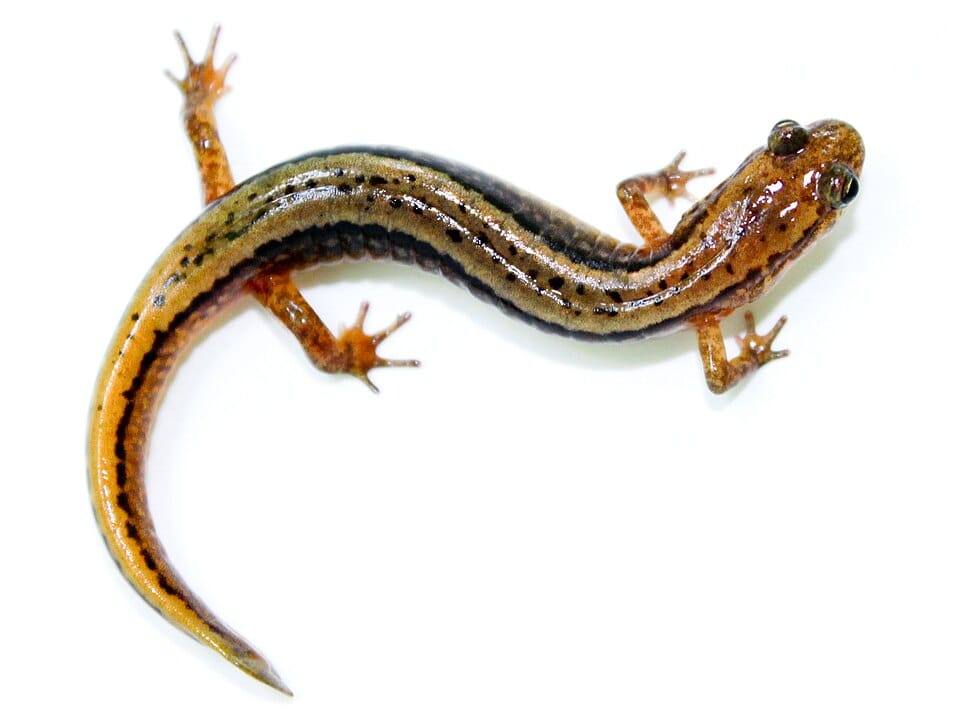
The Northern Two-lined Salamander is a small, lively species often seen near streams and springs. It is easy to recognize by the two dark lines running from its head down the sides of its yellowish body, as if drawn with a fine marker.
Adults usually measure 2.5 to 3.5 inches long. They have slender bodies and long tails, built for quick movements over wet rocks. Their bright colors make them stand out against muddy banks and mossy stones.
This salamander spends much of its life close to water. Larvae grow in streams, while adults stay nearby in damp areas. They feed on small insects and aquatic invertebrates. If you sit quietly by a clear stream, you might see one dart across a rock, then freeze, hoping you did not notice. It is a tiny acrobat of flowing water.
10. Southern Two-lined Salamander (Eurycea cirrigera)
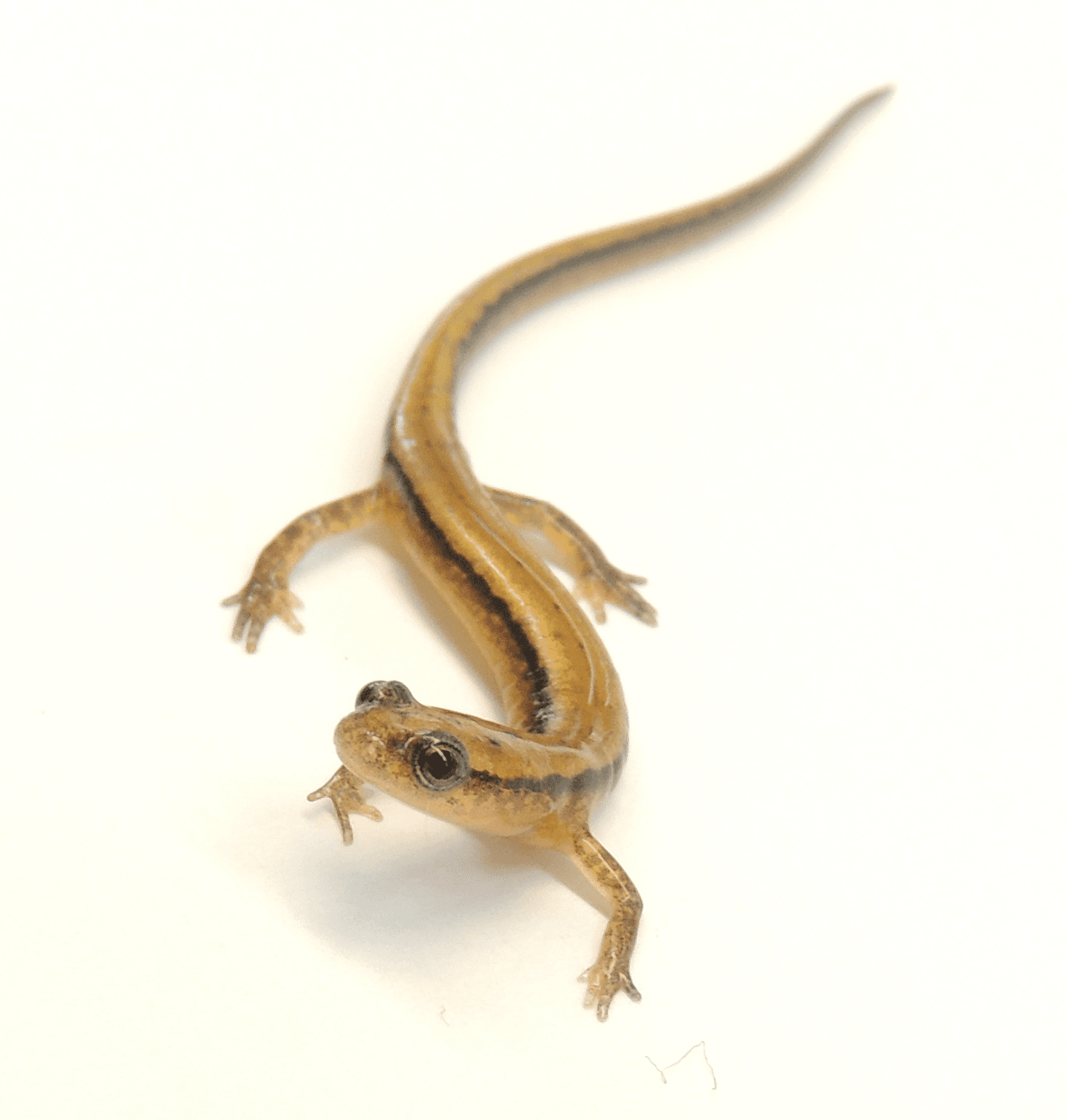
Very similar in appearance to its northern cousin, the Southern Two-lined Salamander also wears two dark stripes along a yellow body. The main differences are found in its range and subtle features, but to most eyes, it looks just as charming.
This species grows to about 3 to 4 inches long and is common in the southeastern United States. It prefers clean streams, seepages, and wet forest floors where it can hunt and hide with ease.
Southern Two-lined Salamanders feed on insects, small crustaceans, and larvae found in and near water. They are active at night and during wet weather. Picture one gliding over smooth stones in a shallow stream, tail swaying gently like a ribbon in the current. It is a simple scene, yet full of life.
11. Arboreal Salamander (Aneides lugubris)
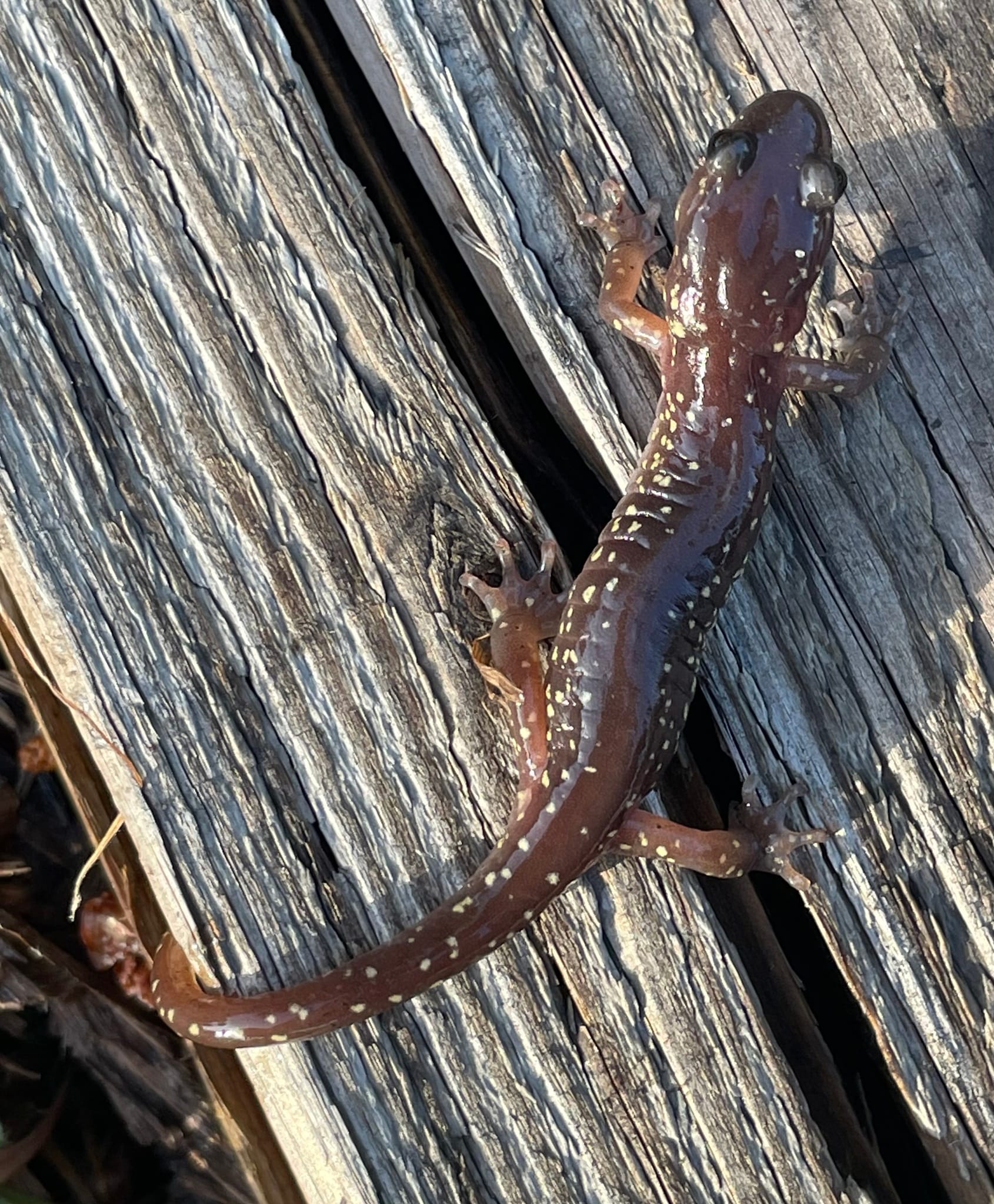
The Arboreal Salamander is a bit of a rebel among salamanders. While most prefer the ground, this one is known for climbing trees and shrubs. With strong toes and sharp teeth, it is well equipped for a life above the forest floor.
Adults grow around 4 to 6 inches long and are usually dark brown or gray with lighter spots. Their heads are broad, and their jaws are powerful for their size. This gives them a bold look, as if they mean business.
They live in coastal forests of California, hiding under bark, in crevices, and sometimes inside rotting wood. Arboreal Salamanders feed on insects, spiders, and even smaller salamanders. One might find them several feet above the ground, quietly waiting for prey. For a salamander, that is living life in the fast lane.
12. Marbled Salamander (Ambystoma opacum)
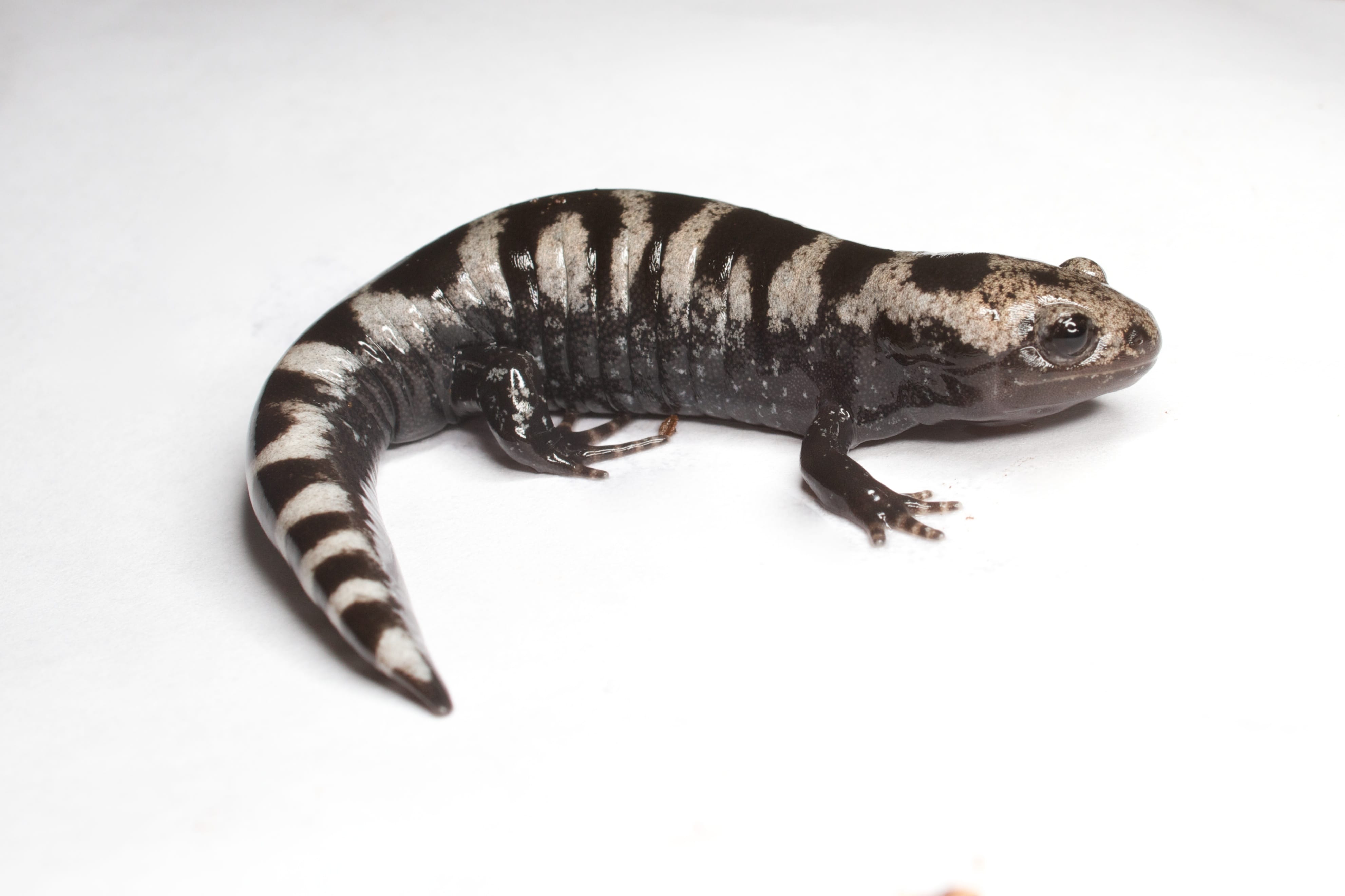
The Marbled Salamander looks like it was painted by an artist with a steady hand. Its black body is crossed with bold white or silvery bands, creating a striking pattern that stands out among fallen leaves.
Adults usually reach 3.5 to 5 inches in length. Unlike many salamanders, this species breeds in the fall. Females lay eggs in dry pond beds, and when winter rains fill the ponds, the eggs hatch. It is a clever way to get a head start before other species arrive.
Marbled Salamanders live in forests near seasonal pools. They feed on insects, worms, and small invertebrates. During cool evenings, you might see one slowly moving across the forest floor, its bright pattern glowing softly in the dim light, like a living piece of mosaic.
13. Northern Dusky Salamander (Desmognathus fuscus)
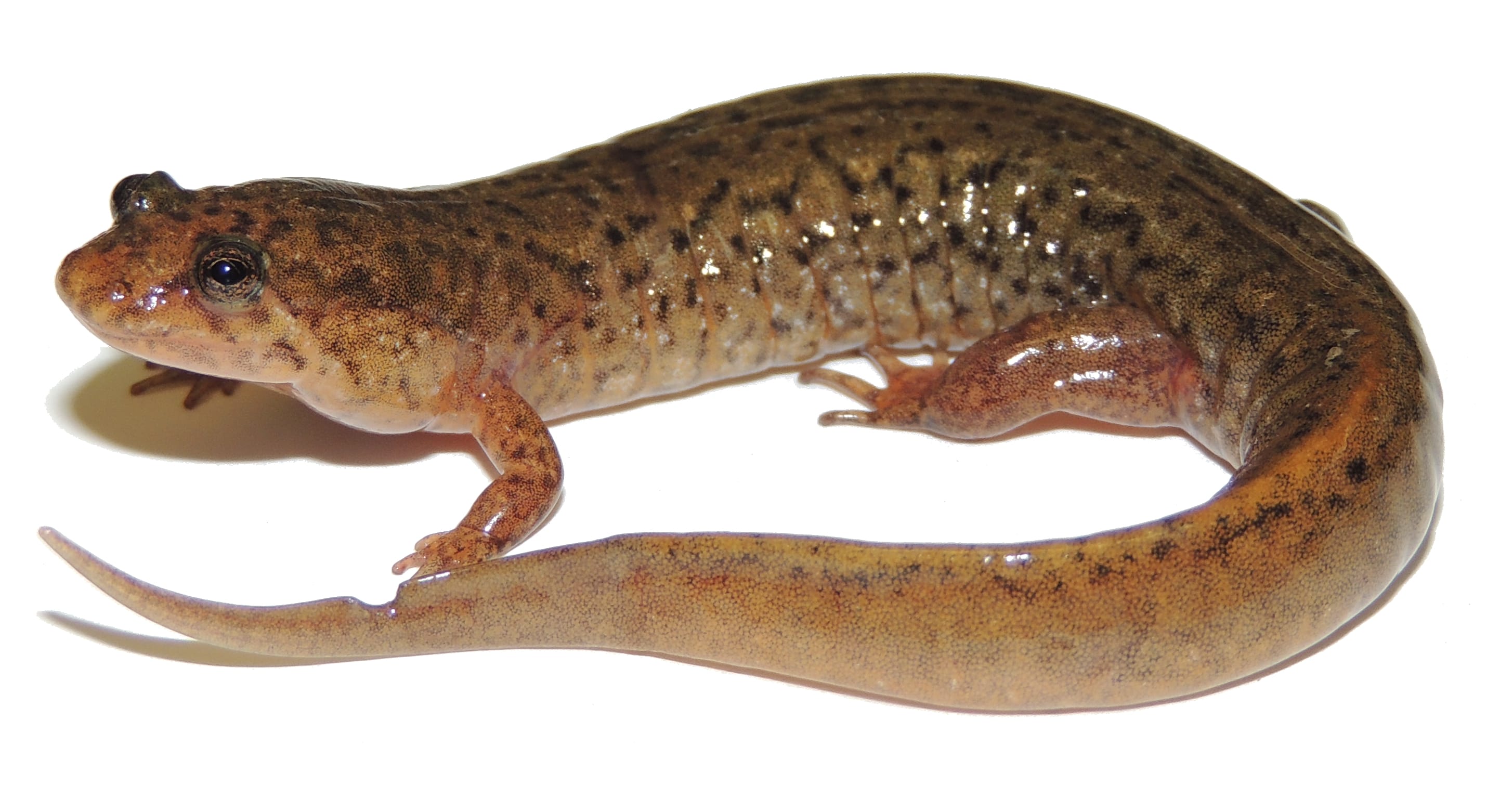
The Northern Dusky Salamander is a sturdy little species that enjoys life along streams and seeps. Its body is usually brown or gray with darker spots, blending perfectly with wet rocks and muddy banks.
Adults grow about 2.5 to 4.5 inches long and have strong legs for climbing over slippery surfaces. Their tails are slightly flattened, helping them move in shallow water.
These salamanders are active hunters, feeding on insects, worms, and small aquatic animals. They are often seen sitting at the edge of water, half in and half out, like they cannot quite decide which world they prefer. In truth, they enjoy both, making them true amphibian neighbors of streams.
14. Red Salamander (Pseudotriton ruber)
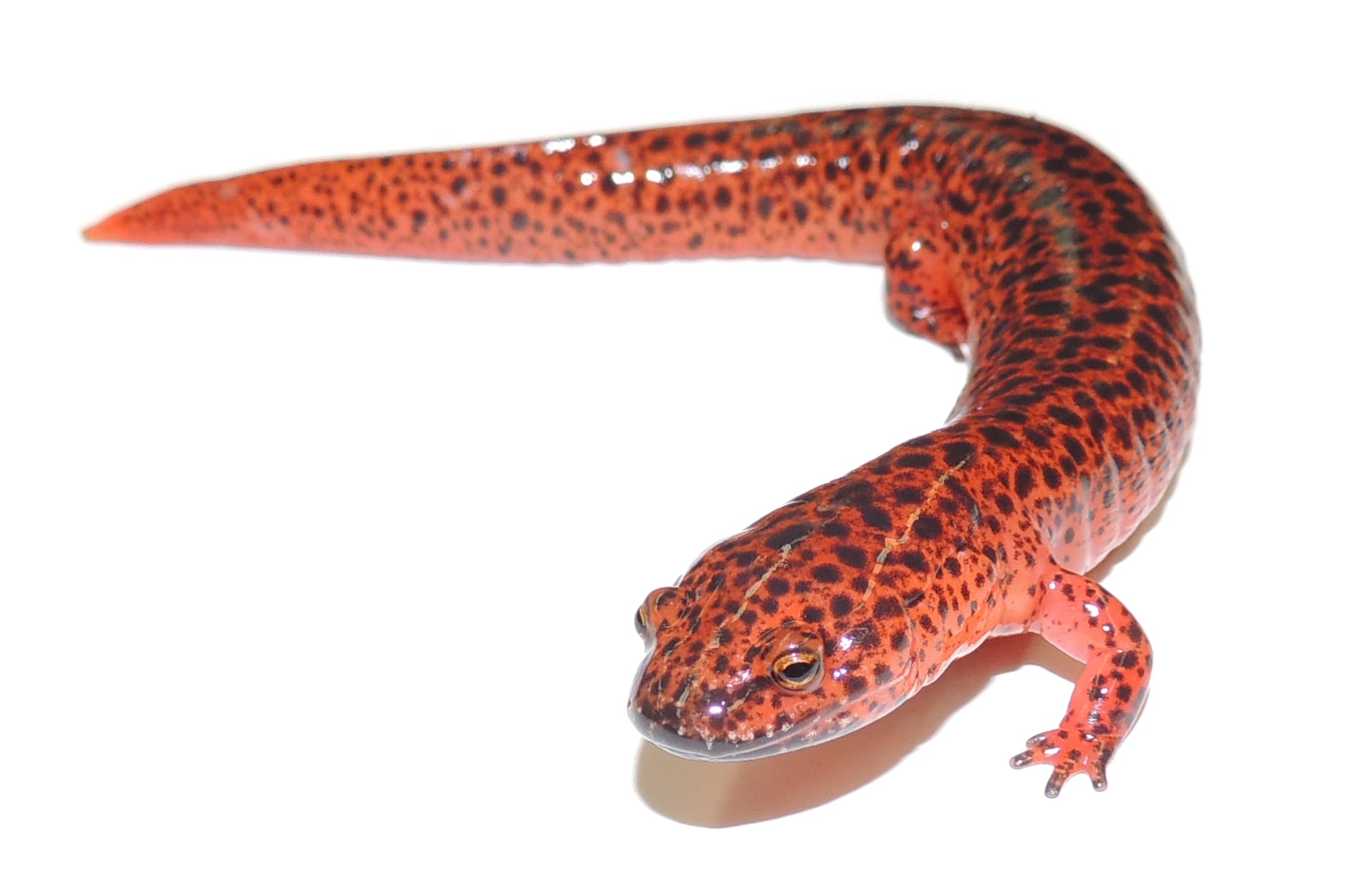
The Red Salamander is hard to miss. With its bright red or orange body covered in black spots, it looks like a glowing ember among wet leaves. Adults can reach 6 to 7 inches long, giving them a solid presence.
This species prefers cool, clean streams, springs, and seepages in forested areas. Its bold color warns predators that it may not be a tasty snack, though it is more show than danger.
Red Salamanders feed on insects, worms, snails, and small aquatic creatures. They are often found under rocks or logs near water. If you ever see one resting in a shallow spring, it feels like stumbling upon a hidden jewel, quietly shining in the shade.
15. Long-tailed Salamander (Eurycea longicauda)
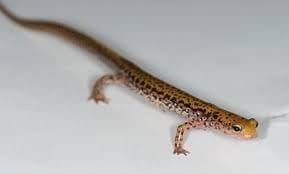
The Long-tailed Salamander lives up to its name, with a tail that can be longer than the rest of its body. Its yellow or orange color is marked with dark spots or stripes, giving it a lively, speckled look.
Adults usually grow 4 to 6 inches long, much of that length being tail. This long tail helps with balance and swimming, especially in rocky streams and caves where the species is often found.
Long-tailed Salamanders inhabit moist forests, springs, and cave entrances across parts of eastern North America. They feed on insects and other small invertebrates. One might see them slipping between stones near flowing water, tail waving gently behind like a banner. Graceful and adaptable, they round out this group of salamanders with quiet charm.
“`html
16. Blue-spotted Salamander (Ambystoma laterale)
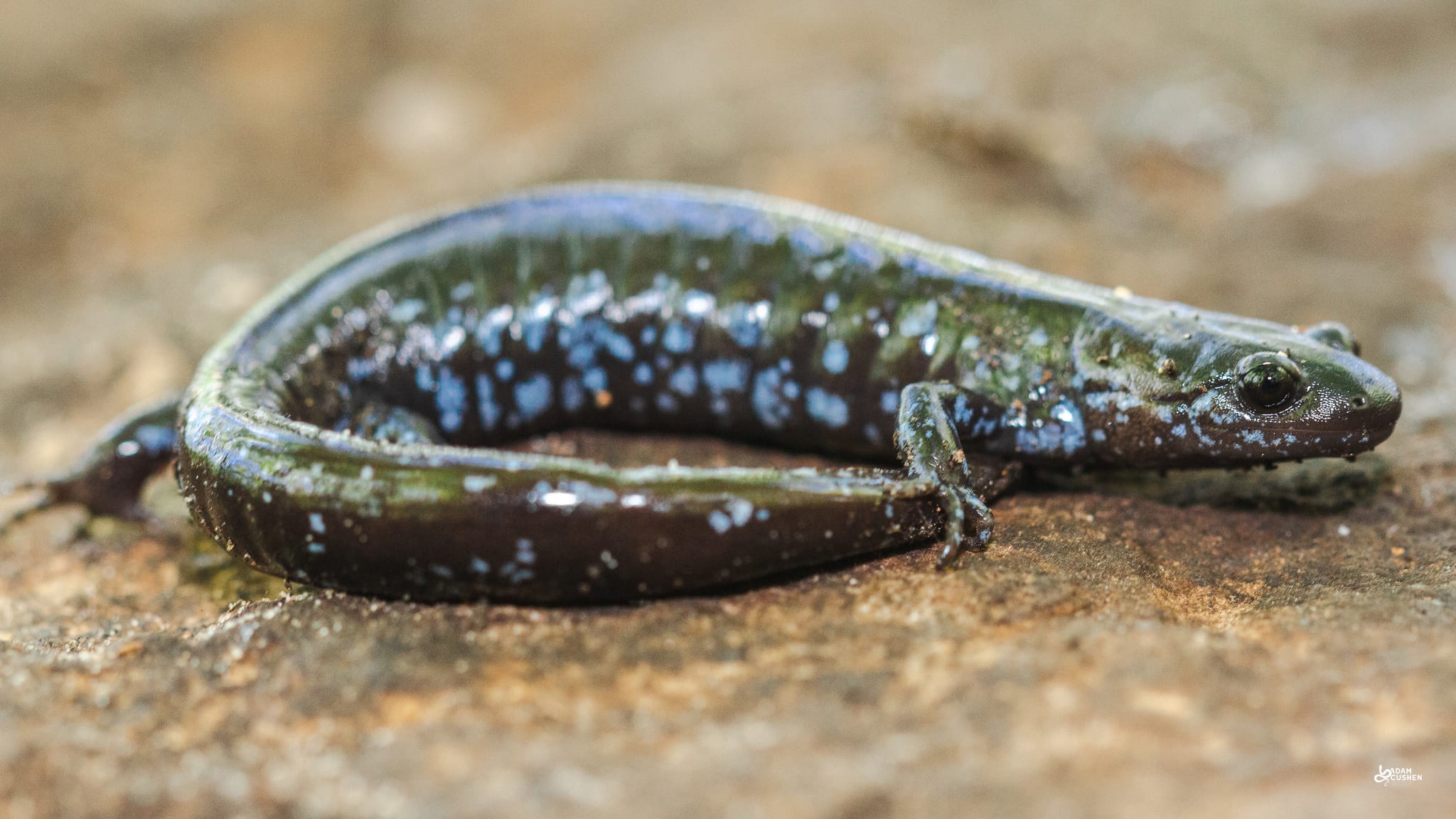
The Blue-spotted Salamander is a small woodland species with a dark body sprinkled with pale blue or whitish spots along its sides and tail. These speckles look like stars against a night sky, making this salamander easy to admire when seen up close.
Adults usually grow between 3.5 and 5 inches long. They spend most of their lives hidden under logs, stones, and leaf litter in moist forests, only coming out on rainy nights. Like many mole salamanders, they head to temporary pools in early spring to breed.
Blue-spotted Salamanders feed on insects, worms, and small invertebrates. Their secretive habits mean people rarely see them, but when they do appear, it feels like a small reward for paying attention to the forest floor.
17. Northwestern Salamander (Ambystoma gracile)

The Northwestern Salamander is a sturdy, dark-colored species found in the Pacific Northwest. Its smooth skin ranges from brown to almost black, and adults can reach impressive lengths of 6 to 9 inches.
This salamander is known for its flexible lifestyle. Some individuals remain aquatic with external gills, while others transform into land-dwelling adults. It is as if nature gives them two career options and lets them choose.
They live in forests, ponds, and slow streams, feeding on insects, worms, and small aquatic animals. Calm and slow-moving, Northwestern Salamanders are often seen resting quietly in shallow water or hiding under forest debris.
18. Long-toed Salamander (Ambystoma macrodactylum)
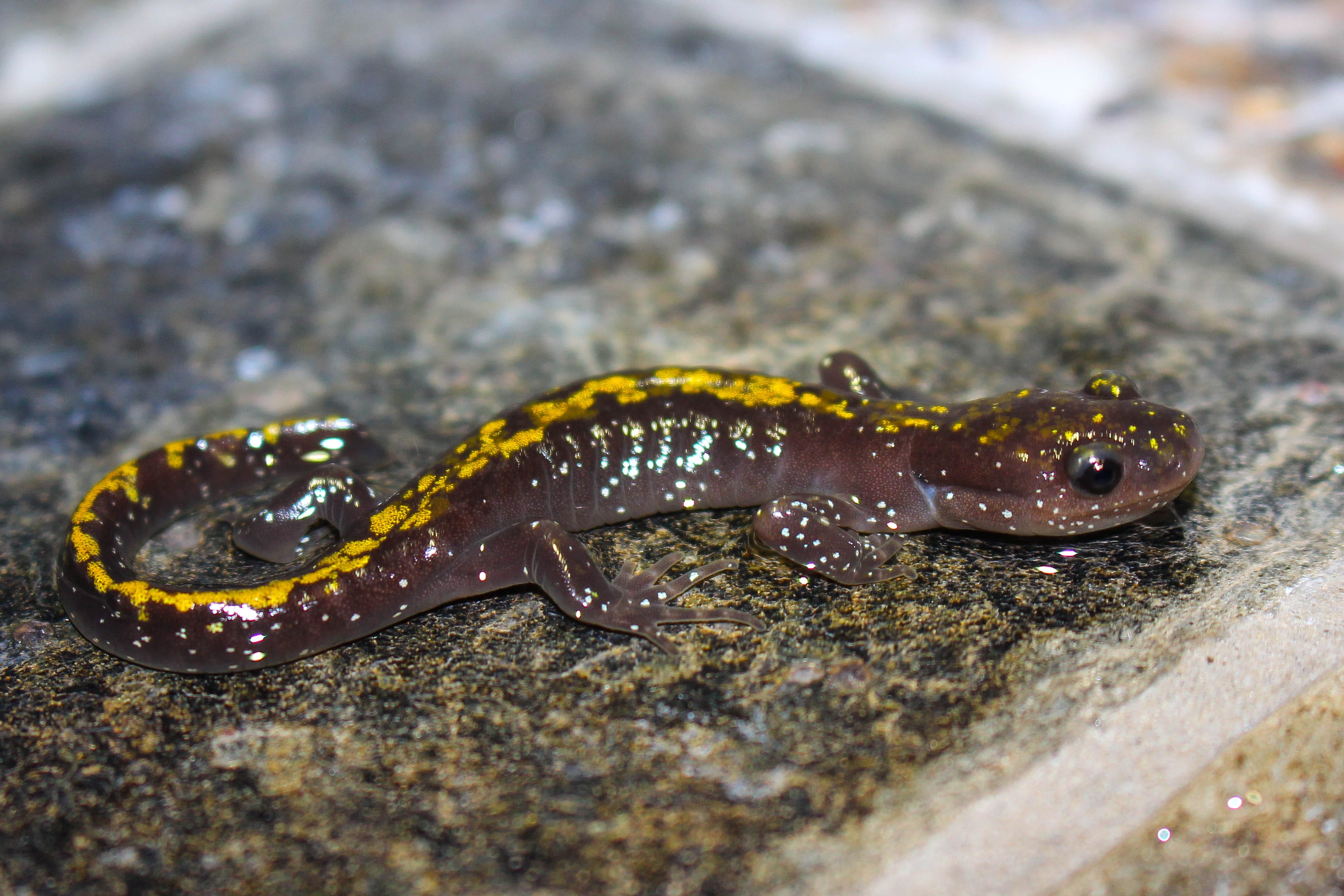
The Long-toed Salamander gets its name from its unusually long fourth toe on the hind foot, a small detail that helps tell it apart from similar species. Its body is dark with a bright yellow or green stripe along the back.
Adults usually measure 3 to 6 inches long. They live in a wide range of habitats, from forests and meadows to mountain ponds. This flexibility allows them to thrive across western North America.
Long-toed Salamanders breed in ponds and feed on insects and other small creatures. One might find them near water on cool evenings, quietly exploring their surroundings like careful hikers on a trail.
19. Four-toed Salamander (Hemidactylium scutatum)
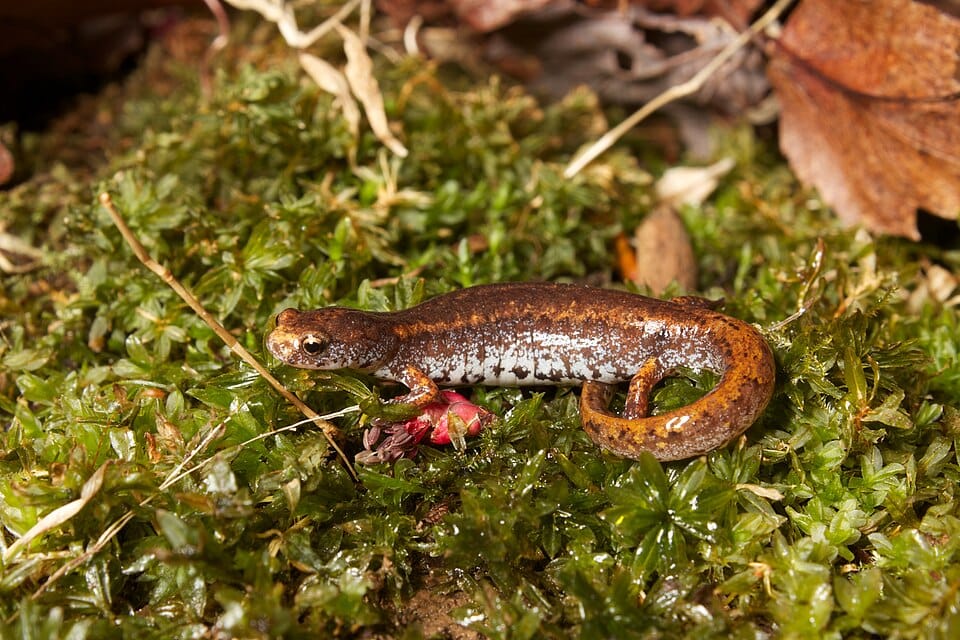
The Four-toed Salamander is small and delicate, rarely growing longer than 3.5 inches. As its name suggests, it has only four toes on its hind feet, a helpful clue for identification.
This species has a reddish-brown back, a white belly with black spots, and a slender body. It prefers mossy wetlands, bogs, and forested swamps where moisture is always close at hand.
Four-toed Salamanders lay their eggs in moss near water, and the larvae drop into pools after hatching. They feed on tiny insects and invertebrates. If you spot one curled under a log, it feels like finding a small forest secret tucked away in green moss.
20. Barred Tiger Salamander (Ambystoma mavortium)
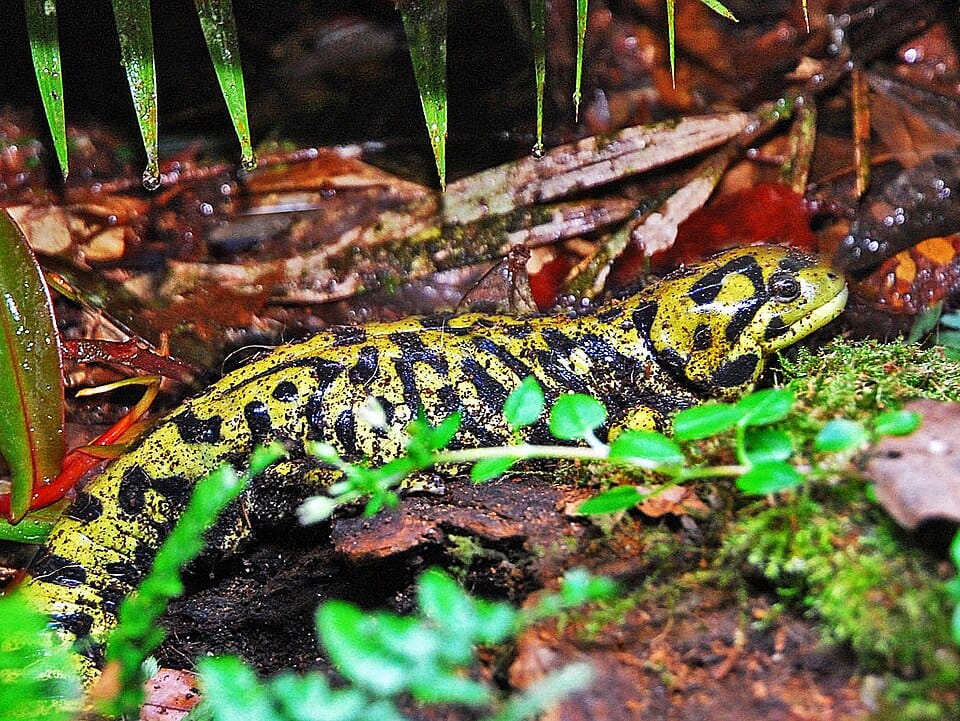
The Barred Tiger Salamander is bold in both size and pattern. With yellow bars or blotches across a dark body, it looks like it borrowed its design from a jungle cat. Adults can reach 8 to 10 inches long, making them among the largest terrestrial salamanders in North America.
They spend most of their lives underground in burrows, often using tunnels made by other animals. In spring, they emerge to breed in ponds and temporary pools, sometimes traveling surprising distances.
Barred Tiger Salamanders are powerful feeders, eating insects, worms, and even small vertebrates. Watching one move across wet ground is like seeing a slow but determined explorer on a nighttime mission.
21. California Giant Salamander (Dicamptodon ensatus)

The California Giant Salamander lives up to its name. Thick-bodied and strong, adults can grow up to 12 inches long. Their dark brown bodies and wide heads give them a prehistoric look, as if they stepped out of another age.
This species is closely tied to cold, fast-flowing streams in forested mountains of California. Some individuals remain aquatic for life, while others become terrestrial, hiding in damp forest shelters.
California Giant Salamanders feed on insects, crayfish, and even smaller salamanders. They are patient hunters, often waiting quietly under rocks. In their rocky stream homes, they are top predators, ruling their watery neighborhood with quiet authority.
22. Eastern Hellbender (Cryptobranchus alleganiensis)
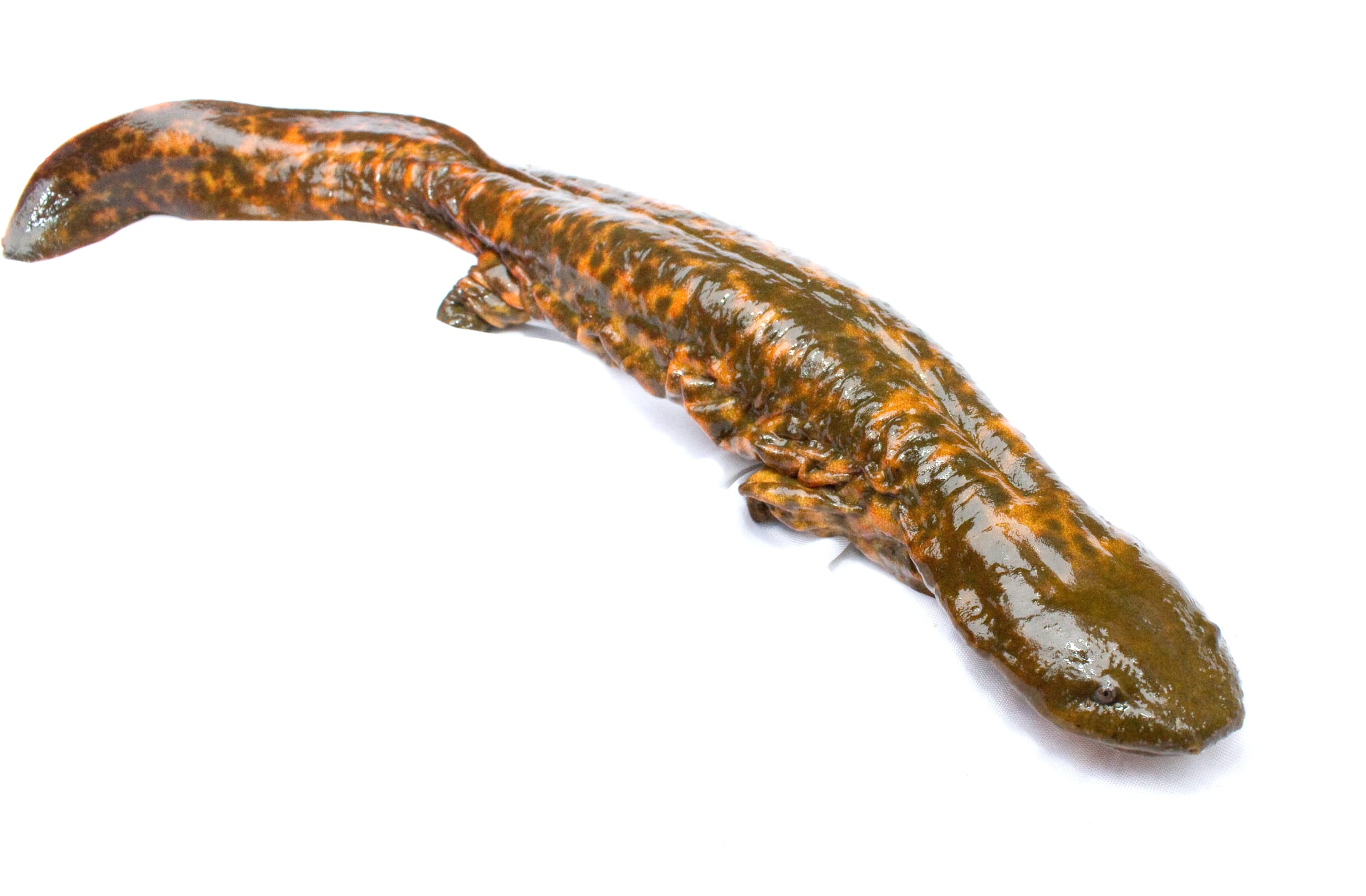
The Eastern Hellbender is one of the largest salamanders in the world, reaching lengths of 12 to 24 inches. Its flat body, wrinkled skin, and wide head give it a rather grumpy look, but it is harmless to people.
Hellbenders live in clear, fast-flowing rivers with large rocks where they can hide during the day. Their loose skin folds help absorb oxygen from the water, a clever trick for life in rushing streams.
They feed mainly on crayfish and small fish. Often called “snot otters” or “river devils,” these nicknames sound fierce, but in truth, Hellbenders are shy giants, slipping away when disturbed.
23. South China Giant Salamander (Andrias sligoi)
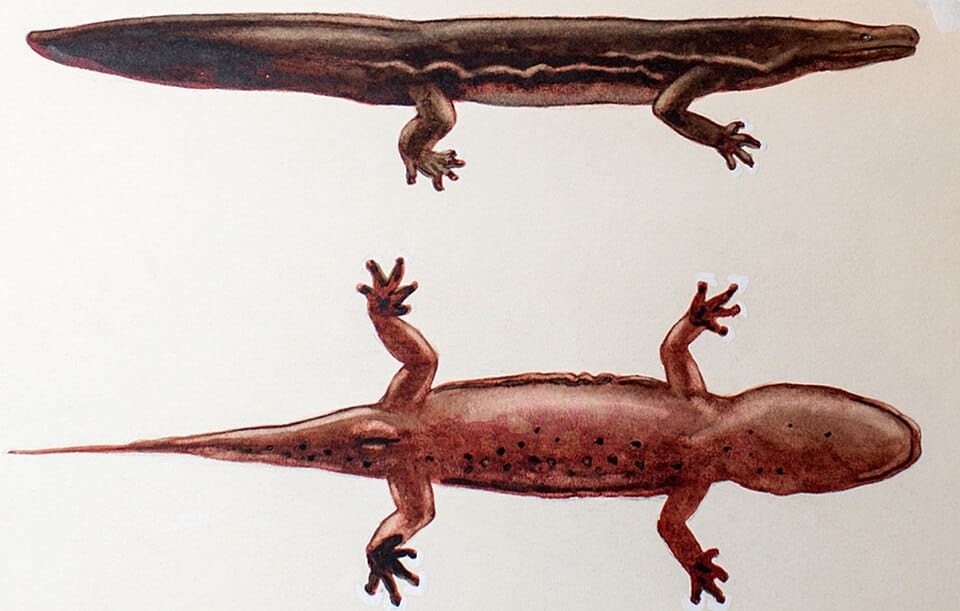
The South China Giant Salamander holds the title of the world’s largest amphibian. Adults can exceed 5 feet in length, making them true giants of the salamander family.
Its broad head, small eyes, and wrinkled skin give it a prehistoric appearance. This species lives in cool mountain streams and rivers, where it hides in underwater caves and crevices during the day.
South China Giant Salamanders feed on fish, frogs, and invertebrates, hunting mainly at night. Seeing one in the wild would feel like meeting a living fossil, a reminder of how ancient amphibians really are.
24. Japanese Giant Salamander (Andrias japonicus)

Closely related to its Chinese cousin, the Japanese Giant Salamander is another massive species, often growing over 4 feet long. Its mottled brown and black pattern blends perfectly with rocky riverbeds.
This salamander lives in cold, fast-flowing streams in Japan, where it shelters under rocks and logs. It is slow-moving but powerful, relying on ambush rather than speed to catch prey.
Japanese Giant Salamanders feed on fish, insects, and crustaceans. They have a long lifespan and are deeply respected in local culture. One might say they are quiet guardians of mountain rivers.
25. Persian Mountain Salamander (Paradactylodon persicus)

The Persian Mountain Salamander is a rare and beautiful species found in the highlands of Iran. Its dark body is marked with bright yellow spots and streaks, creating a striking contrast.
Adults usually grow around 6 to 8 inches long. They live near cold streams and springs in mountainous forests, where the air is cool and the water runs clear.
This salamander feeds on insects and small aquatic animals. Because of its limited range, it is especially sensitive to habitat changes. Spotting one would be like finding a jewel hidden among mountain stones.
26. Delicate-skinned Salamander (Ambystoma bombypellum)
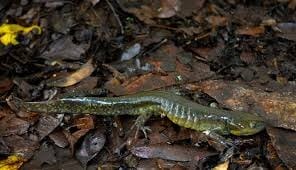
The Delicate-skinned Salamander is a rare species native to central Mexico. As its name suggests, it has thin, sensitive skin and a soft appearance, usually in shades of brown or gray.
Adults are medium-sized, reaching about 5 to 7 inches long. They inhabit cool streams and moist forests, often staying close to water throughout their lives.
They feed on insects and small aquatic creatures. Because they depend on clean, cool habitats, they are vulnerable to environmental changes. Their presence is a quiet sign of healthy mountain ecosystems.
27. Lake Pátzcuaro Salamander (Ambystoma dumerilii)

The Lake Pátzcuaro Salamander is an aquatic species from central Mexico. It looks somewhat like the famous axolotl, with external gills and a permanently aquatic lifestyle.
Adults can grow 6 to 10 inches long and are usually dark brown or black. They spend their entire lives in the waters of Lake Pátzcuaro and nearby channels.
These salamanders feed on insects, small fish, and invertebrates. Sadly, habitat loss has made them increasingly rare. In many ways, they represent both the beauty and fragility of freshwater life.
28. Leora’s Stream Salamander (Ambystoma leorae)
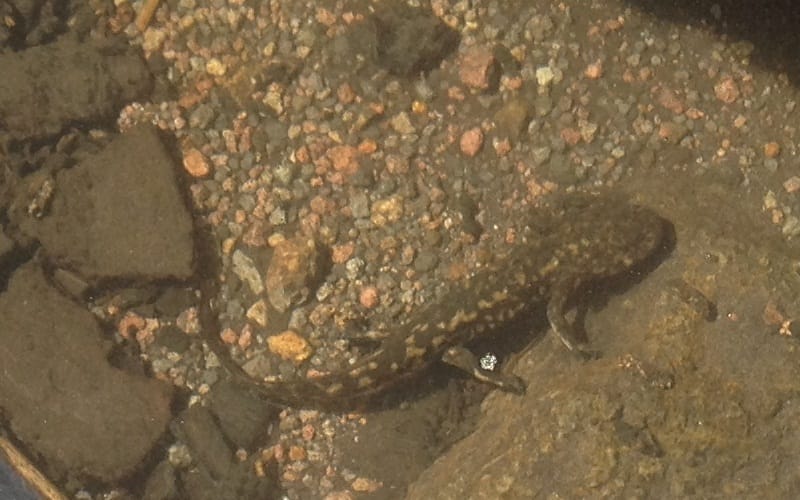
Leora’s Stream Salamander is another Mexican species tied closely to cold, clear mountain streams. It has a dark body with lighter markings and a strong, stocky build.
Adults usually reach about 5 to 7 inches long. Unlike many salamanders, some individuals remain aquatic, while others may venture onto land near streams.
This salamander feeds on insects and aquatic invertebrates. Its narrow range makes it special, yet also at risk. To see one would feel like stepping into a quiet corner of the mountains where time moves slowly.
29. Lake Lerma Salamander (Ambystoma lermaense)

The Lake Lerma Salamander once lived in the wetlands and lakes of central Mexico. It is an aquatic species with a dark body and feathery external gills.
Growing up to about 8 inches long, it spends its life swimming among plants and muddy bottoms, feeding on insects and small aquatic animals.
Today, this species is extremely rare due to habitat changes. It reminds us that salamanders, though resilient, still depend deeply on clean and stable freshwater homes.
30. Michoacan Stream Salamander (Ambystoma rivulare)
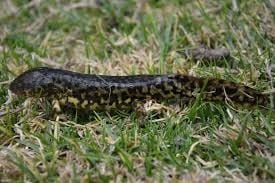
The Michoacan Stream Salamander lives in high-altitude streams of western Mexico. Its dark, smooth body and strong tail help it move through flowing water with ease.
Adults usually measure around 6 to 8 inches long. They prefer cold, oxygen-rich streams shaded by forests, where they can hide under rocks during the day.
This species feeds on insects and small aquatic creatures. Quiet and little known, it is a symbol of the hidden diversity found in mountain waters, waiting for careful eyes to notice.
“`html
31. Taylor’s Salamander (Ambystoma taylori)

Taylor’s Salamander is one of those species that feels almost mythical because of how rarely it is seen. Native to central Mexico, it lives in high-altitude lakes and wetlands, spending its entire life in water like some of its close relatives.
Adults usually grow around 6 to 9 inches long. They have dark, smooth skin and often keep their feathery external gills, giving them a look similar to the famous axolotl. This permanent aquatic form allows them to thrive in cool, oxygen-rich waters.
Taylor’s Salamanders feed on insects, small crustaceans, and other tiny aquatic animals. Because their habitat is limited, they are sensitive to changes in water quality. To imagine one gliding slowly through a mountain lake is to picture a quiet survivor in a fragile home.
32. Mexican Axolotl (Ambystoma mexicanum)
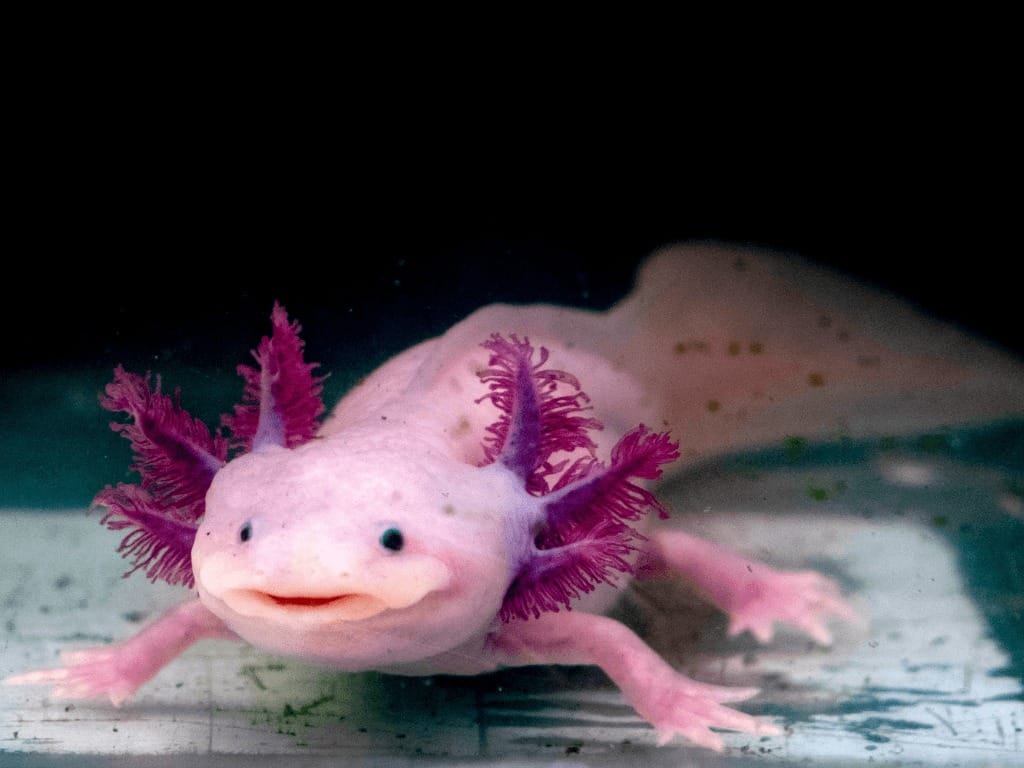
The Mexican Axolotl is without doubt the most famous salamander in the world. With its wide smile, frilly gills, and gentle expression, it looks like it is always posing for a photo. Yet behind that friendly face lies a remarkable animal.
Axolotls usually grow between 6 and 12 inches long and remain aquatic throughout their lives. Unlike most salamanders, they do not undergo full metamorphosis, keeping their larval features into adulthood. They can also regenerate lost limbs, parts of their heart, and even sections of their brain, a talent that has made them stars in scientific research.
In the wild, axolotls live in the canals and lakes around Mexico City, though their numbers have declined sharply. They feed on worms, insects, and small fish. Watching one float gently in the water feels like seeing a living cartoon, calm, curious, and oddly comforting.
33. Yellow-spotted Woodland Salamander (Plethodon pauleyi)

The Yellow-spotted Woodland Salamander is a forest-dwelling species from the Appalachian Mountains. Its dark body is decorated with bright yellow spots scattered across its back, giving it a speckled, starry look.
Adults are small, usually about 3 to 4.5 inches long. Like other lungless salamanders, they rely on moist skin to breathe, which keeps them tied to cool, damp woodland habitats under logs and stones.
They feed on insects, mites, and tiny invertebrates found in leaf litter. Quiet and seldom seen, this salamander is a gentle reminder that even the smallest forest corners hold hidden life, busy and important in its own way.
34. Larch Mountain Salamander (Plethodon larselli)

The Larch Mountain Salamander is a rare species found in a small area of the Pacific Northwest in the United States. It is named after Larch Mountain, one of the few places where it was first discovered.
This salamander is dark brown to black with lighter flecks and usually grows 3 to 4 inches long. It lives in moist talus slopes and rocky forests, hiding in cracks and crevices where cool air flows even in summer.
Larch Mountain Salamanders feed on tiny insects and other invertebrates. They do not need standing water to reproduce, laying eggs on land instead. Their hidden lifestyle makes them hard to spot, like shy neighbors who prefer to keep to themselves.
35. Talladega Seal Salamander (Desmognathus cheaha)

The Talladega Seal Salamander is a small, sturdy species found in the mountains of Alabama, especially around Mount Cheaha. It belongs to the dusky salamander group, known for their strong legs and streamside habits.
Adults usually measure about 3 to 4.5 inches long. Their bodies are dark brown or gray with subtle markings that blend into wet rocks and leaf litter. This camouflage helps them stay safe along cool mountain streams.
They feed on insects, worms, and small aquatic invertebrates. Often seen near flowing water, they move with quiet confidence over slick stones. Ending our list with this species feels fitting, a reminder that even in a single mountain range, nature can craft a salamander found nowhere else on Earth.
Conclusion
From the quiet forest floors of North America to the cold mountain streams of Asia and the high-altitude lakes of Mexico, salamanders show just how diverse and adaptable amphibians can be. Throughout this guide to the Types of Salamanders, we have met tiny woodland dwellers, bold newts, powerful stream hunters, and even giants that seem to belong to another age. Each species tells a different story, shaped by its habitat, diet, and way of life.
What makes salamanders especially fascinating is how closely their lives are tied to clean water and healthy forests. Because they breathe through their skin and rely on moist environments, they act like living barometers of ecosystem health. When salamanders are doing well, it often means their surroundings are, too. In that sense, spotting a salamander on a rainy night is like getting a quiet thumbs-up from nature.
These animals may be shy and often hidden, but their role in the natural world is anything but small. They help control insect populations, recycle nutrients in soil and streams, and provide food for larger wildlife. Some, like the axolotl, even guide scientific discoveries with their remarkable regenerative abilities. Others simply remind us to slow down and look closely at the ground beneath our feet.
As habitats change and freshwater systems face increasing pressure, many salamanders now depend on careful conservation to survive. Learning about them is a first step toward protecting the places they call home. Whether you are hiking through a forest, exploring a stream bank, or just reading with a cup of coffee, keep these quiet amphibians in mind. The next time you see a small, smooth shape slip into the leaves, you will know you have just met one of nature’s most subtle wonders.
Frequently Asked Questions About Salamanders
1. What are salamanders?
Salamanders are amphibians with moist skin, usually shaped like small lizards, that live in water, on land, or both.
2. How many types of salamanders are there?
There are more than 700 known species worldwide, grouped into many families and genera.
3. Where do salamanders live?
Salamanders live in forests, wetlands, streams, ponds, caves, and mountain regions, mostly in the Northern Hemisphere.
4. Are salamanders reptiles?
No. Salamanders are amphibians, meaning they rely on moist environments and often start life in water.
5. Do salamanders have lungs?
Some do, but many species are lungless and breathe through their skin and mouth lining.
6. What do salamanders eat?
They eat insects, worms, snails, spiders, and sometimes small fish or other tiny animals.
7. Are salamanders poisonous?
Some salamanders produce mild to strong toxins in their skin to deter predators, but most are harmless if left alone.
8. Can salamanders regenerate body parts?
Yes. Many species can regrow lost tails, limbs, and even parts of organs.
9. How big do salamanders get?
Sizes range from a few centimeters to over 5 feet in giant salamanders.
10. What is the largest salamander in the world?
The South China Giant Salamander is the largest living amphibian on Earth.
11. What is the smallest salamander?
Some tiny lungless salamanders grow less than 2 inches long as adults.
12. Are salamanders active during the day?
Most salamanders are nocturnal, meaning they are more active at night or during rainy weather.
13. Do salamanders need water to live?
All salamanders need moisture, but not all live in water. Some species live entirely on land in damp habitats.
14. How do salamanders reproduce?
Many lay eggs in water, while others lay eggs on land that hatch into miniature adults.
15. What is a newt?
Newts are a group of salamanders that often have rough skin and spend much of their adult life in water.
16. What is an axolotl?
The axolotl is a Mexican salamander that stays aquatic for life and keeps its larval features as an adult.
17. Are salamanders good pets?
Some species can be kept by experienced keepers, but many are protected and better admired in the wild.
18. How long do salamanders live?
Depending on the species, salamanders can live from a few years to over 20 years.
19. Do salamanders bite?
They rarely bite and are generally shy. If handled, they may try to escape rather than defend.
20. Why is salamander skin always wet?
They need moist skin to breathe and to prevent dehydration.
21. Can salamanders hear?
They do not hear like humans but can sense vibrations in their environment.
22. Are salamanders endangered?
Many species are threatened due to habitat loss, pollution, disease, and climate change.
23. What eats salamanders?
Birds, snakes, fish, mammals, and larger amphibians may prey on salamanders.
24. How do salamanders protect themselves?
They use camouflage, toxic skin secretions, and quick movements to avoid predators.
25. What is a lungless salamander?
It is a salamander that breathes entirely through its skin and mouth instead of lungs.
26. Are salamanders related to frogs?
Yes. Both are amphibians, but salamanders belong to a different order than frogs and toads.
27. Do salamanders make sounds?
Most are silent, though a few large species can make faint noises underwater.
28. What is metamorphosis in salamanders?
It is the process where larvae change into adult form, usually moving from water to land.
29. Why are salamanders important to ecosystems?
They help control insect populations and serve as food for other wildlife.
30. Can salamanders survive freezing temperatures?
Some species can tolerate freezing conditions by producing natural antifreeze chemicals.
31. How can you tell salamanders apart from lizards?
Salamanders have smooth, moist skin and no scales, while lizards have dry, scaly skin.
32. What is the best time to see salamanders in the wild?
Rainy nights in spring or fall are often the best times to spot them.
33. Do salamanders migrate?
Some species travel seasonally between forest homes and breeding ponds.
34. Can salamanders live in cities?
A few adaptable species can survive in parks and gardens if moisture and shelter are available.
35. What should you do if you find a salamander?
Observe gently and avoid handling. Let it continue on its way.
36. Are salamanders slimy?
They may feel slippery because of mucus on their skin, which helps keep them moist.
37. Do salamanders have teeth?
Yes, many have tiny teeth used to grip prey.
38. How fast do salamanders grow?
Growth rates vary by species and depend on food, temperature, and habitat.
39. Can salamanders change color?
Some species can slightly darken or lighten their color to match their surroundings.
40. What is the lifespan of an axolotl?
In good conditions, axolotls can live 10 to 15 years or more.
41. Do salamanders need sunlight?
They avoid direct sunlight because it dries their skin, preferring shade and damp areas.
42. How do salamanders find food?
They use sight, smell, and quick tongue movements to catch prey.
43. Are salamanders found worldwide?
They live on every continent except Antarctica, with the most species in North America.
44. Why are giant salamanders so large?
Cold, oxygen-rich waters and slow metabolisms allow them to grow to impressive sizes.
45. How can people help protect salamanders?
Protect wetlands and forests, reduce pollution, and respect wildlife habitats when exploring nature.
Read more:
- 25 Types of Pufferfish (Pictures And Identification)
- 30 Types of Newts (Pictures And Identification)
- 100 Types of Frogs (Pictures And Identification)
- 35 Types Of Amphibians (Pictures And Identification)
- 20 Types of Frogs in Illinois: Species Identification with Pictures
- What Do Tadpoles Eat? 30 Foods They Love the Most
- 120 Types of Reptiles (Pictures And Identification)