

Tenrecs are some of the most unusual small mammals on Earth. Native mainly to Madagascar, these fascinating animals look similar to hedgehogs, shrews, or even small rodents, but they belong to their own unique mammal group. This guide explores the main types of tenrecs, their appearance, habitats, diets, behaviors, and interesting facts for wildlife enthusiasts.
Although there are more than 30 recognized tenrec species, only a smaller number are commonly discussed because they represent the major body forms and lifestyles found within the family Tenrecidae. From spiny insect hunters to aquatic swimmers, each type shows how diverse these island mammals can be.
What Are the Main Types of Tenrecs?
The main types of tenrecs include spiny tenrecs, tailless tenrecs, aquatic tenrecs, and shrew-like tenrecs. Some of the best-known examples are the greater hedgehog tenrec, lesser hedgehog tenrec, lowland streaked tenrec, and web-footed tenrec. They vary greatly in size, habitat, and adaptations, but most share insect-eating habits and a strong connection to Madagascar’s forests and wetlands.
1. Greater Hedgehog Tenrec
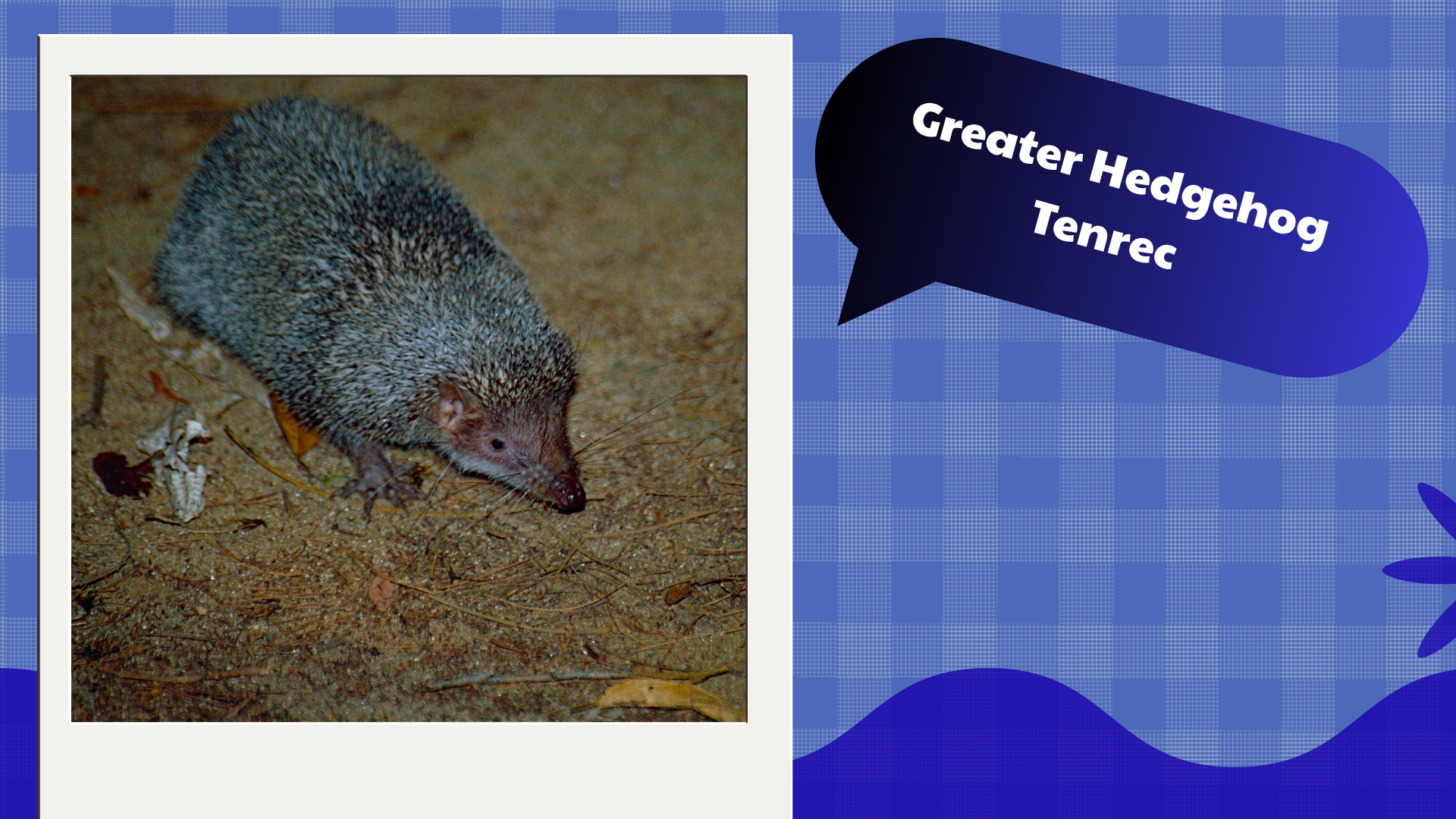
The greater hedgehog tenrec (Setifer setosus) is one of the most recognizable tenrecs because its body is covered with coarse spines that resemble a hedgehog. However, it is not closely related to true hedgehogs.
This species has a rounded body, short legs, and a pointed snout designed for searching through leaf litter. Adults usually grow around 20 to 25 cm long, making them one of the larger tenrec species.
Greater hedgehog tenrecs live throughout Madagascar in forests, grasslands, and agricultural areas. They are mainly nocturnal and spend the night searching for insects, worms, small vertebrates, and other small prey.
When threatened, this tenrec can curl its body and raise its spines as protection. During colder or drier periods, it may enter a state of reduced activity similar to hibernation.
2. Lesser Hedgehog Tenrec
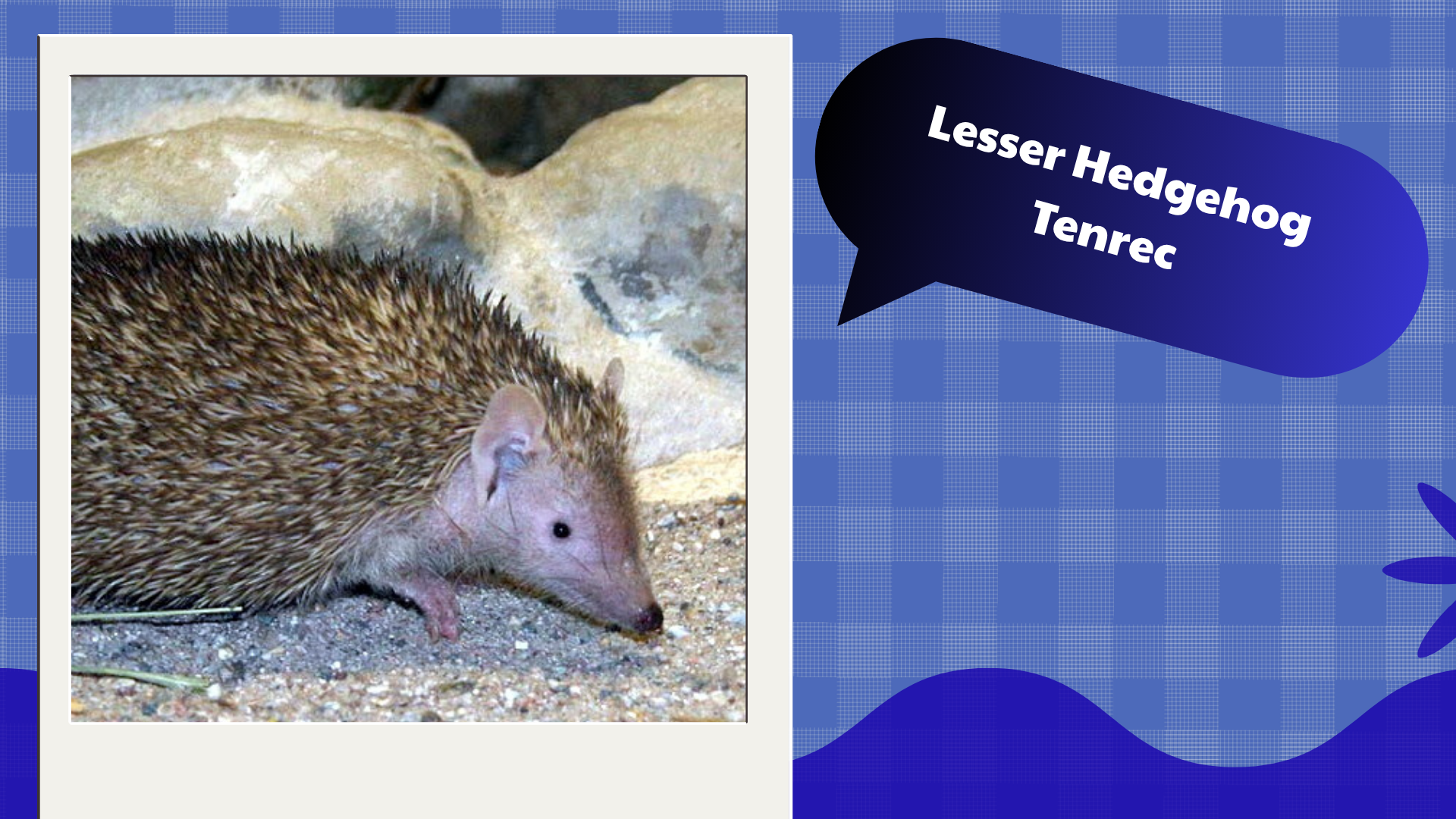
The lesser hedgehog tenrec (Echinops telfairi) is a smaller relative of the greater hedgehog tenrec. It is one of the most popular tenrec species kept by some exotic animal enthusiasts.
It has a compact body covered with sharp spines, a short tail, and a long nose used for detecting insects. Its size is usually around 13 to 18 cm, making it much smaller than many other tenrecs.
This species prefers dry forests and rocky environments in southwestern Madagascar. It hides during the day in burrows or natural shelters and becomes active at night.
Lesser hedgehog tenrecs mainly eat insects, larvae, worms, and other small invertebrates. Their excellent sense of smell helps them locate prey hidden beneath soil and vegetation.
3. Lowland Streaked Tenrec
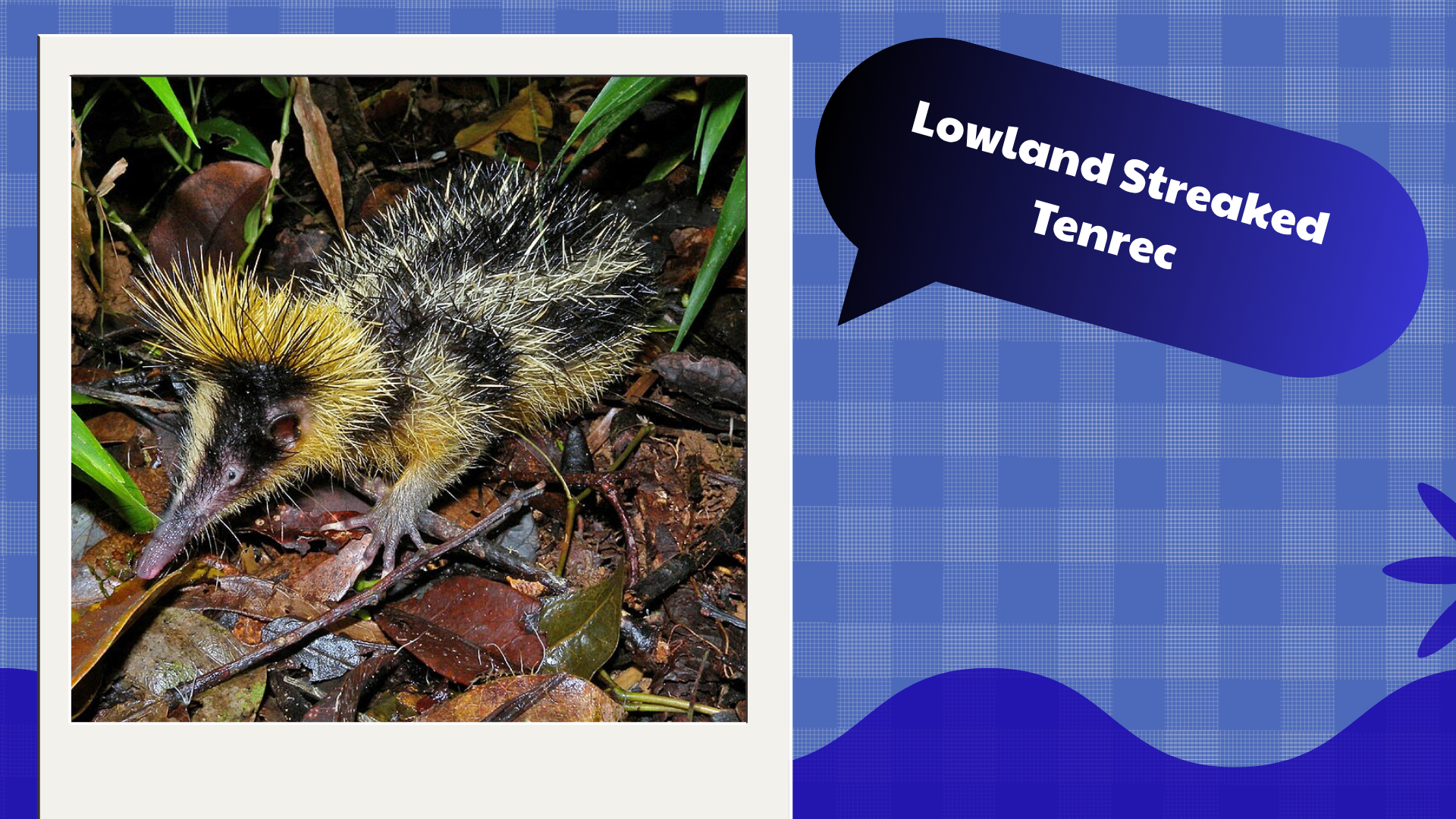
The lowland streaked tenrec (Hemicentetes semispinosus) is one of the most visually distinctive tenrecs. It has a black body covered with yellow stripes and sharp detachable spines.
This small mammal usually reaches about 14 to 17 cm in length. Unlike many tenrecs, it often lives in groups, especially mothers with their young.
Lowland streaked tenrecs are found in the eastern rainforests of Madagascar. They spend much of their time searching through moist soil for earthworms and insects.
A remarkable feature of this species is its ability to use specialized spines for defense. Young animals also have communication abilities involving tiny vibrating spines, helping them stay connected with their mother.
4. Highland Streaked Tenrec
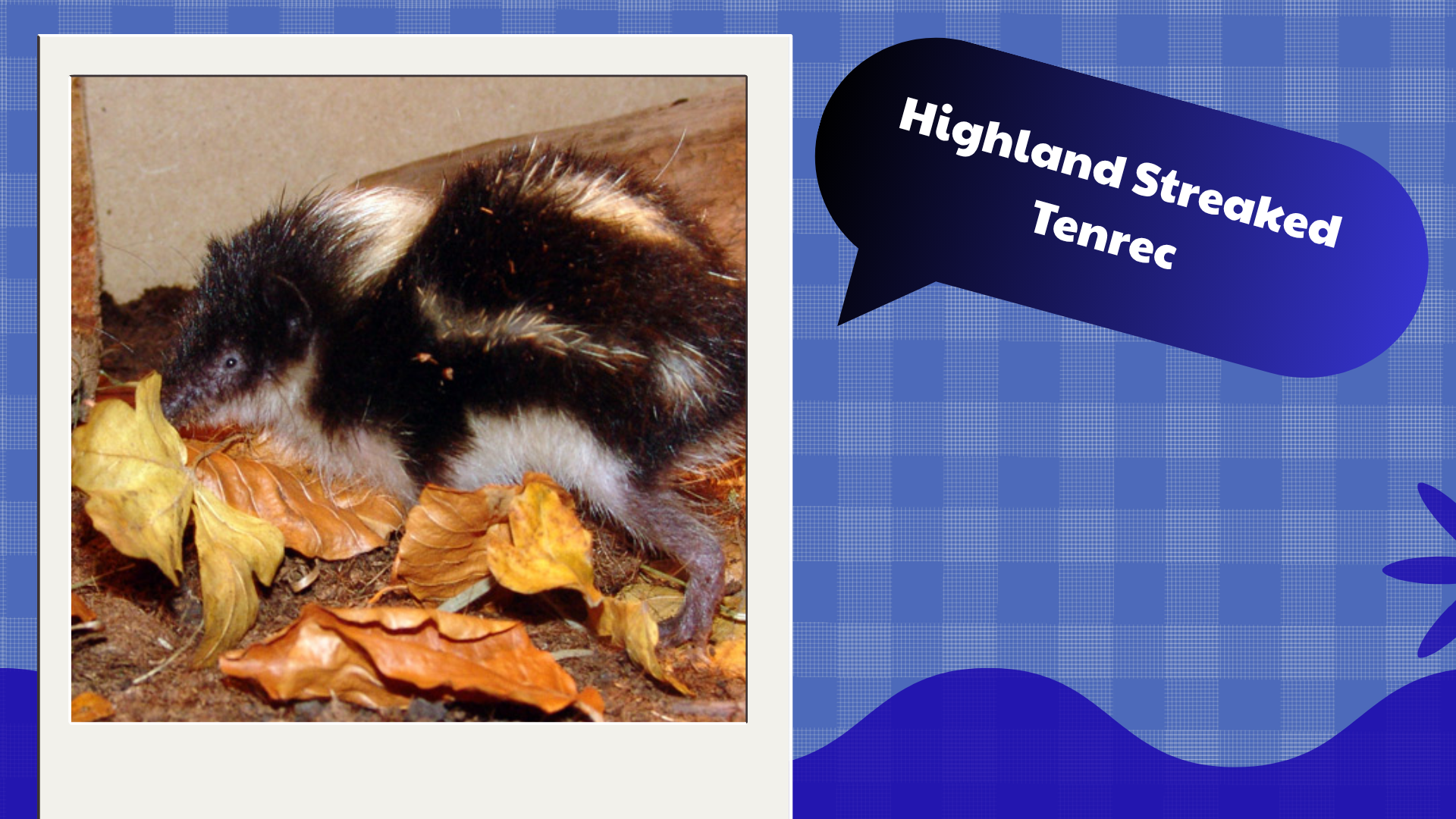
The highland streaked tenrec (Hemicentetes nigriceps) is closely related to the lowland streaked tenrec but lives in higher elevations.
It has a darker appearance, with black fur and lighter markings. Its body is covered with stiff spines that provide protection from predators.
This tenrec inhabits mountain forests and highland regions of Madagascar. Like other streaked tenrecs, it feeds mainly on insects and worms found in forest soil.
The highland streaked tenrec is adapted to cooler environments compared with many lowland relatives.
5. Web-Footed Tenrec
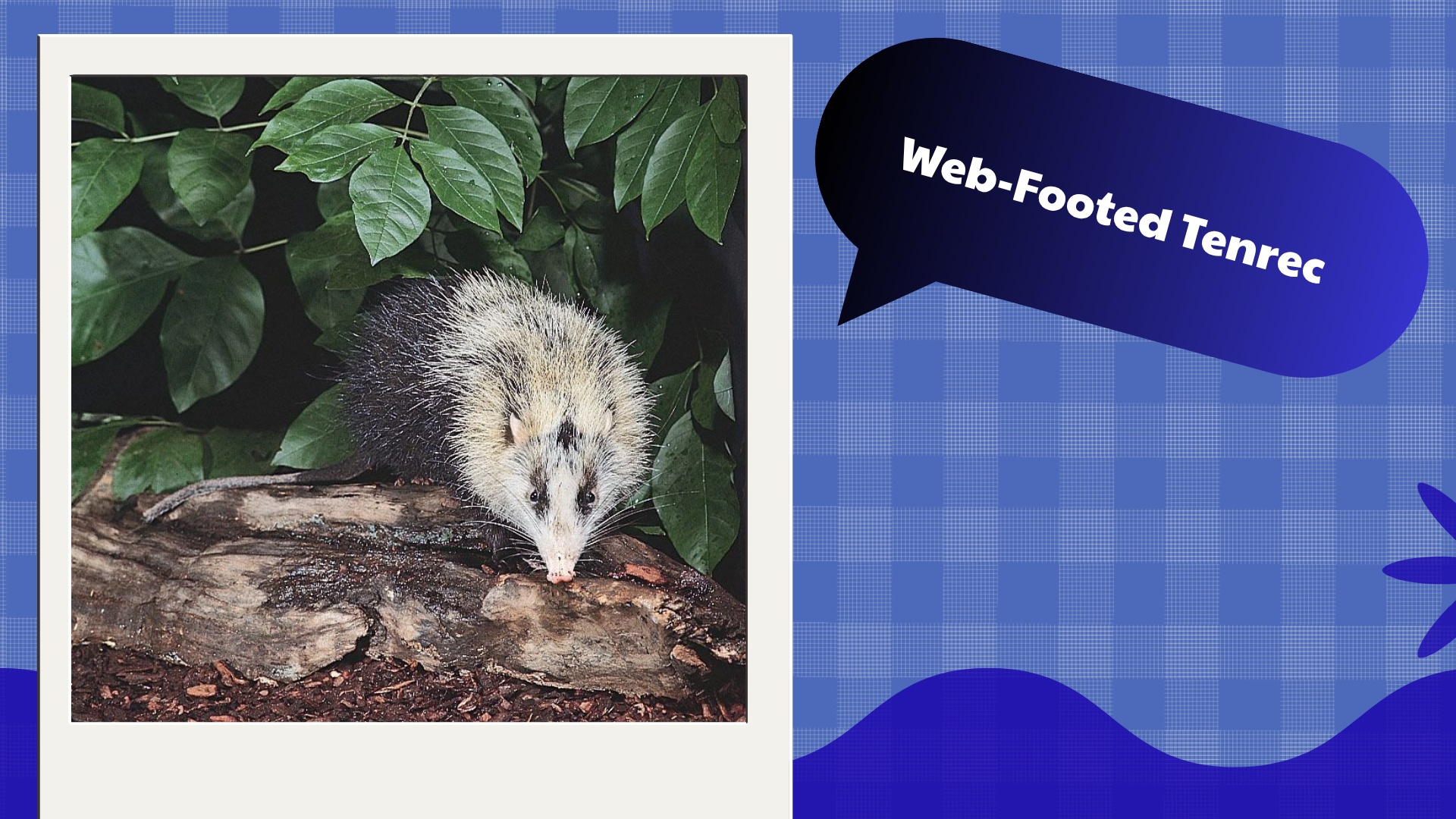
The web-footed tenrec (Limnogale mergulus) is one of the rarest and most specialized tenrecs. Unlike most members of its family, it is highly adapted for life in water.
This species has partially webbed feet, dense fur, and a streamlined body that helps it swim through mountain streams.
Web-footed tenrecs are found only in eastern Madagascar, where they depend on clean freshwater habitats. They hunt aquatic insects, small crustaceans, and other stream animals.
Because they require specific freshwater environments, habitat changes and pollution can threaten their survival.
6. Common Tenrec
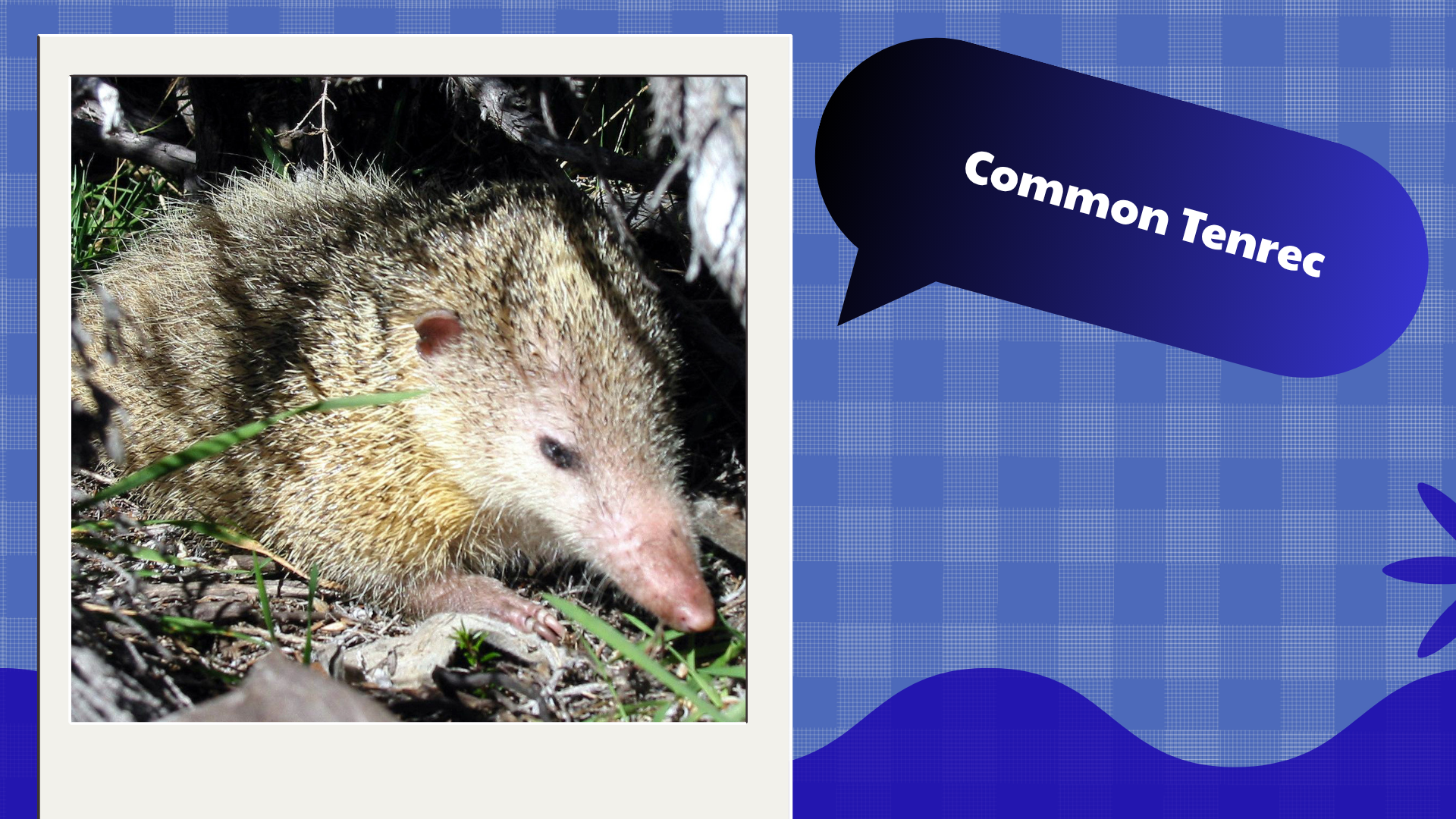
The common tenrec (Tenrec ecaudatus) is one of the largest species in the family Tenrecidae. It is sometimes called the tailless tenrec because adults have little or no visible tail.
This species can reach 30 to 40 cm in length and has a long snout, powerful claws, and coarse fur.
Common tenrecs live in forests, grasslands, and agricultural areas across Madagascar and nearby islands. They are mostly active at night and search for insects, frogs, eggs, fruits, and small animals.
The common tenrec has an unusually high reproductive rate compared with many other mammals, allowing populations to recover quickly in suitable habitats.
7. Shrew-Like Tenrecs
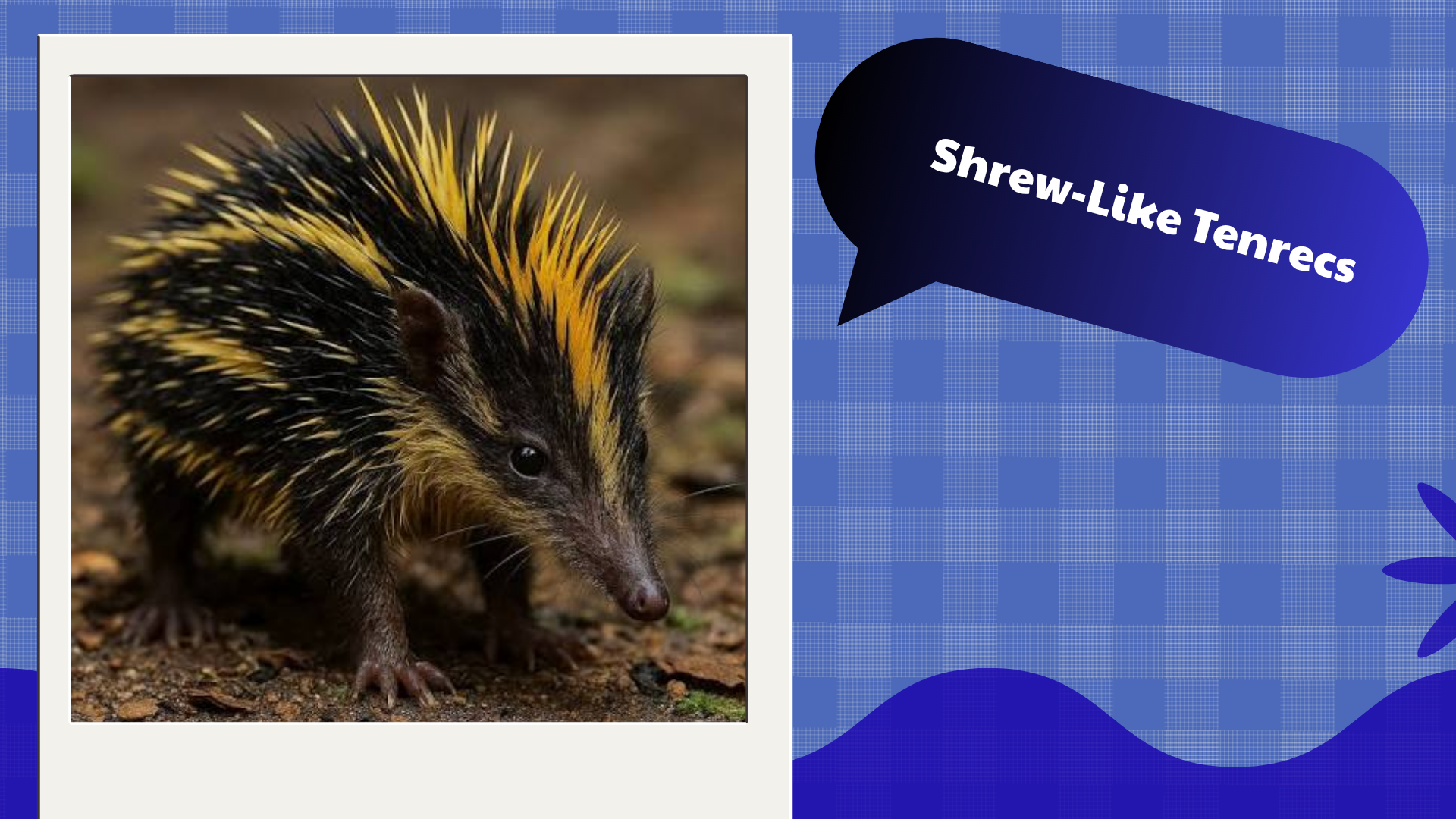
Shrew-like tenrecs include several small species with narrow bodies, long noses, and short fur. They often resemble true shrews because of their insect-hunting lifestyle.
These tenrecs are usually lightweight and highly active. They move through forests, grasslands, and wet habitats while searching for insects and other tiny prey.
Their small size allows them to explore spaces beneath leaves, roots, and rocks where larger predators cannot easily reach.
8. Aquatic and Semi-Aquatic Tenrec Species
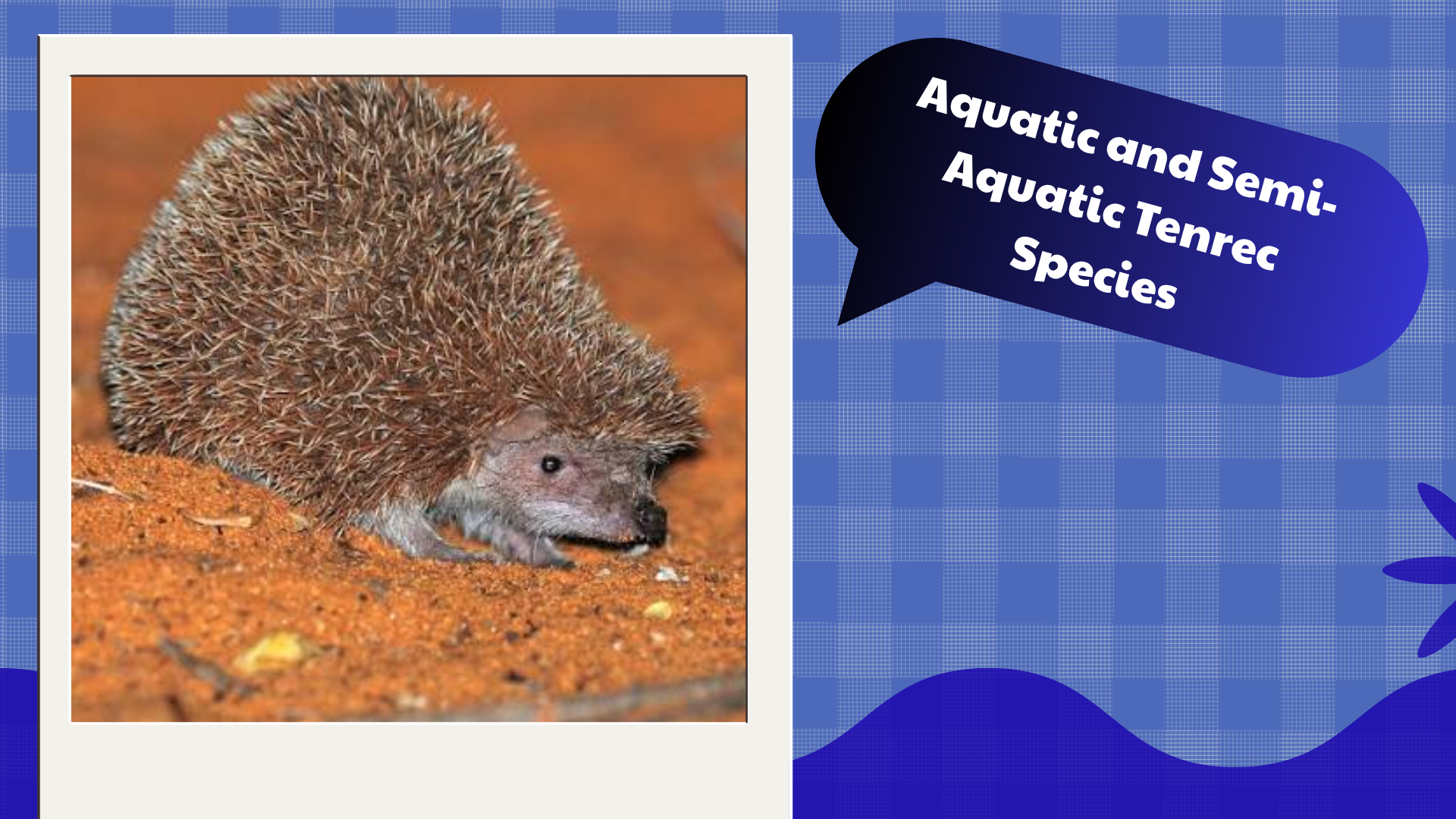
Some tenrecs have developed special adaptations for wet environments. The web-footed tenrec is the best-known example, but other species may also use streams and wetlands when searching for food.
These tenrecs demonstrate the remarkable diversity of Madagascar’s mammals. Their adaptations include swimming ability, dense fur, and specialized hunting techniques.
How Are These Wild Animals Classified?
Tenrecs belong to the family Tenrecidae within the order Eulipotyphla. They are classified separately from hedgehogs and shrews despite sharing some similar features.
| Group | Main Features | Examples |
|---|---|---|
| Hedgehog tenrecs | Spiny body and defensive posture | Greater hedgehog tenrec, lesser hedgehog tenrec |
| Streaked tenrecs | Striped appearance and detachable spines | Lowland streaked tenrec |
| Tailless tenrecs | Larger body and reduced tail | Common tenrec |
| Aquatic tenrecs | Swimming adaptations | Web-footed tenrec |
Where Do These Wild Animals Live?
Most tenrecs are found in Madagascar, an island famous for its unique wildlife. Different species occupy different environments, including:
- Tropical rainforests
- Dry forests
- Mountain habitats
- Grasslands
- Freshwater streams
- Agricultural landscapes
Madagascar’s long isolation has allowed tenrecs to evolve into many specialized forms that are rarely found anywhere else.
How to Identify Different Types of Tenrecs
- Body shape: Hedgehog tenrecs have round bodies, while shrew-like species are slimmer.
- Spines: Some species have strong defensive spines, while others have soft fur.
- Size: Tenrecs range from tiny insect hunters to larger tailless species.
- Habitat: Forest, dryland, and stream habitats can help identify species.
- Activity: Many tenrecs are nocturnal and easier to detect at night.
Outdoor Tips for Finding and Observing These Species
Wild tenrecs are best observed responsibly without disturbing their natural behavior. Wildlife enthusiasts should avoid handling wild animals and focus on habitat observation.
- Look for signs such as tracks, burrows, and feeding areas.
- Explore forest edges and leaf litter where insects are abundant.
- Use quiet observation methods during nighttime activities.
- Respect protected habitats and local wildlife regulations.
Safety, Sustainability, and Conservation Notes
Many tenrec species depend on Madagascar’s forests and freshwater ecosystems. Habitat loss, environmental changes, and human activity can affect their populations.
- Protecting native forests helps preserve tenrec habitats.
- Responsible wildlife tourism supports conservation efforts.
- Never remove wild animals from their natural environment.
- Protect freshwater habitats important for aquatic species.
Fun Facts About Tenrecs
- Tenrecs are among Madagascar’s most unique mammals.
- They are not true hedgehogs despite their similar appearance.
- Some tenrecs use spines for defense and communication.
- The common tenrec is one of the largest members of the family.
- Web-footed tenrecs are specialized freshwater hunters.
- Many tenrecs rely heavily on their sense of smell.
- Madagascar contains the majority of known tenrec diversity.
- Tenrecs have evolved different body forms for different habitats.
- Some species can reduce activity during unfavorable seasons.
- Tenrecs show how island environments encourage unique evolution.
Final Thoughts on Types of Tenrecs
The different types of tenrecs show the incredible diversity of Madagascar’s wildlife. From spiny hedgehog-like species to rare aquatic mammals, tenrecs have adapted to forests, dry regions, and streams in fascinating ways. Learning about these animals helps wildlife lovers better understand the importance of protecting unique ecosystems and exploring the natural world responsibly.
Frequently Asked Questions
1. What is a tenrec?
A tenrec is a small mammal belonging to the family Tenrecidae, mostly found in Madagascar.
2. How many species of tenrecs exist?
There are more than 30 recognized tenrec species, although only some are commonly discussed.
3. Are tenrecs related to hedgehogs?
No. Tenrecs only look similar to hedgehogs because of shared adaptations like spines.
4. Where do tenrecs live?
Most tenrecs live in Madagascar, with different species occupying forests, wetlands, and grasslands.
5. What do tenrecs eat?
Most tenrecs eat insects, worms, and other small animals, although some also consume fruits and eggs.
6. Are tenrecs dangerous?
Tenrecs are generally not dangerous to humans and usually avoid confrontation.
7. Are tenrecs nocturnal?
Many tenrec species are active mainly at night.
8. Can tenrecs swim?
Yes. The web-footed tenrec is especially adapted for swimming.
9. What is the largest tenrec?
The common tenrec is one of the largest species in the family.
10. What is the smallest tenrec?
Some shrew-like tenrecs are among the smallest members of the group.