

Georgia is home to a remarkable variety of turtles, from freshwater sliders and mud turtles to large snapping turtles and rare sea turtles along the coast. Learning the types of turtles in Georgia can help you identify them safely, understand where they live, and protect the wetlands, rivers, forests, and beaches they depend on.
This guide covers 14 turtle species commonly recognized as native or regularly occurring in Georgia. You will learn their scientific names, appearance, habitat, diet, behavior, range, and practical identification clues.
What Are the Main Types of Turtles in Georgia?
The main types of turtles in Georgia include freshwater turtles, terrestrial box turtles, snapping turtles, softshell turtles, and marine sea turtles. Georgia has both common species, such as the eastern box turtle and yellow-bellied slider, and protected coastal species, including the loggerhead and green sea turtle. Some turtles are widespread, while others occur only in specific rivers, wetlands, or barrier-island habitats.
1. Eastern Box Turtle
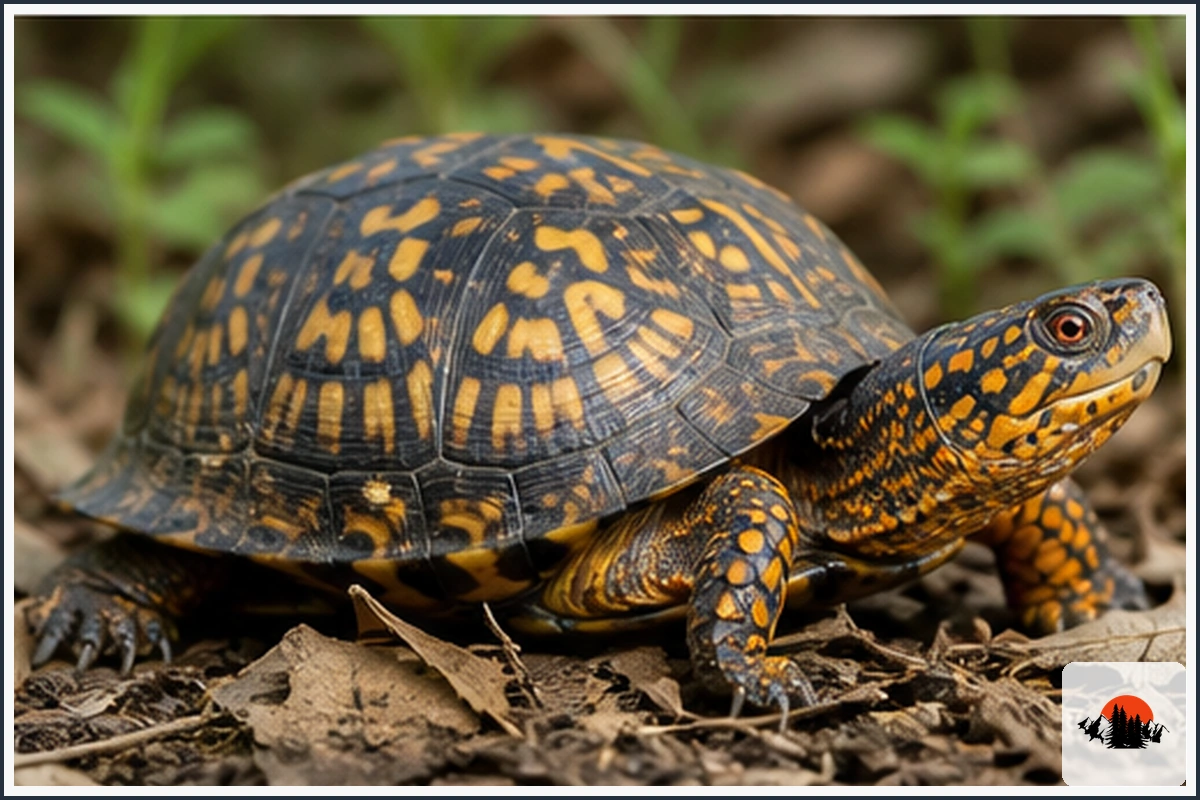
Scientific name: Terrapene carolina carolina
The eastern box turtle is one of Georgia’s most familiar land turtles. It has a tall, domed shell marked with yellow or orange lines, spots, or radiating patterns. Its hinged lower shell allows it to close tightly for protection.
These turtles live in forests, woodland edges, fields, and moist areas across much of Georgia. They eat a varied diet that may include mushrooms, berries, insects, earthworms, flowers, and fallen fruit. Eastern box turtles are slow-moving and often remain within a relatively small home range.
Look for this species on damp forest floors, especially after rain. Never take a wild box turtle home; relocation can separate it from its familiar territory and breeding area.
2. Common Snapping Turtle
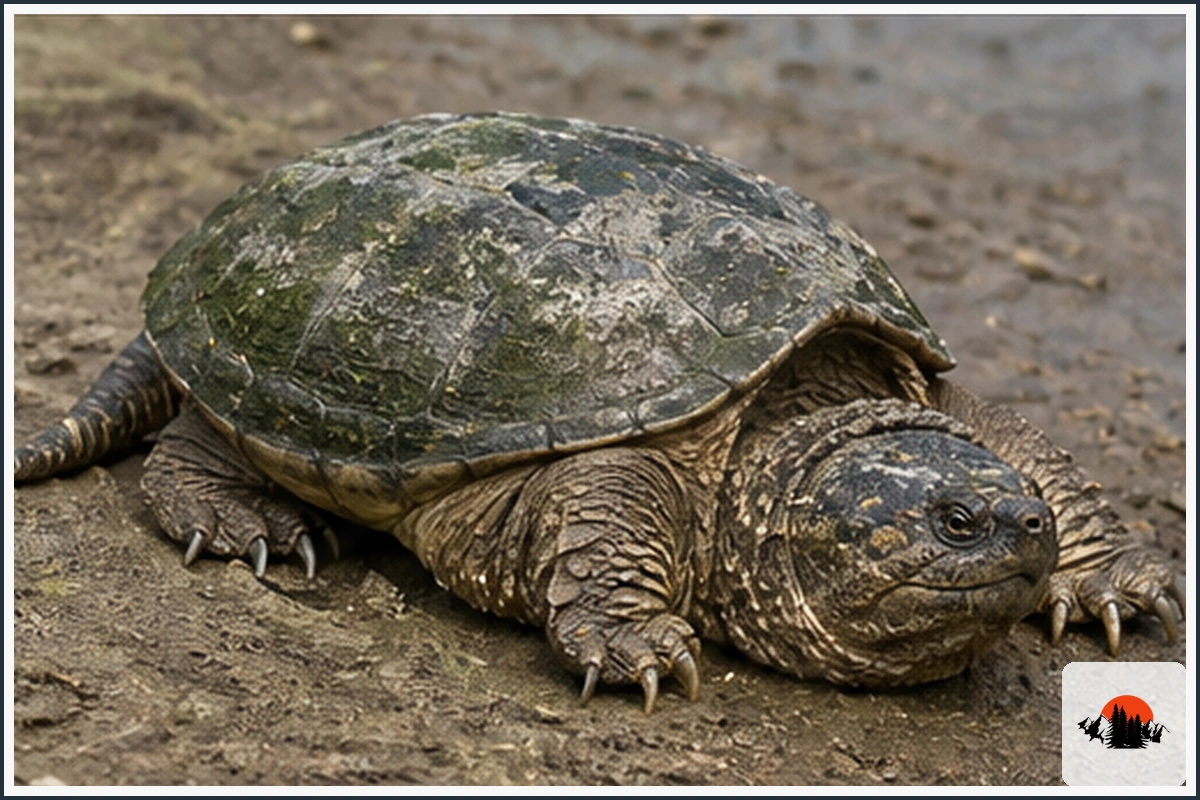
Scientific name: Chelydra serpentina
The common snapping turtle is a large freshwater turtle with a rugged shell, a long tail, powerful jaws, and a pointed head. Its shell is usually brown, olive, or dark gray and may become coated with algae.
It occurs in ponds, lakes, slow rivers, swamps, and wetlands throughout Georgia. Common snapping turtles are opportunistic feeders that eat fish, crayfish, frogs, aquatic plants, carrion, and other available animals.
They spend much of their time underwater and may be difficult to see. On land, especially during nesting season, they can move surprisingly quickly. Give them plenty of space and never attempt to handle one by the tail.
3. Alligator Snapping Turtle
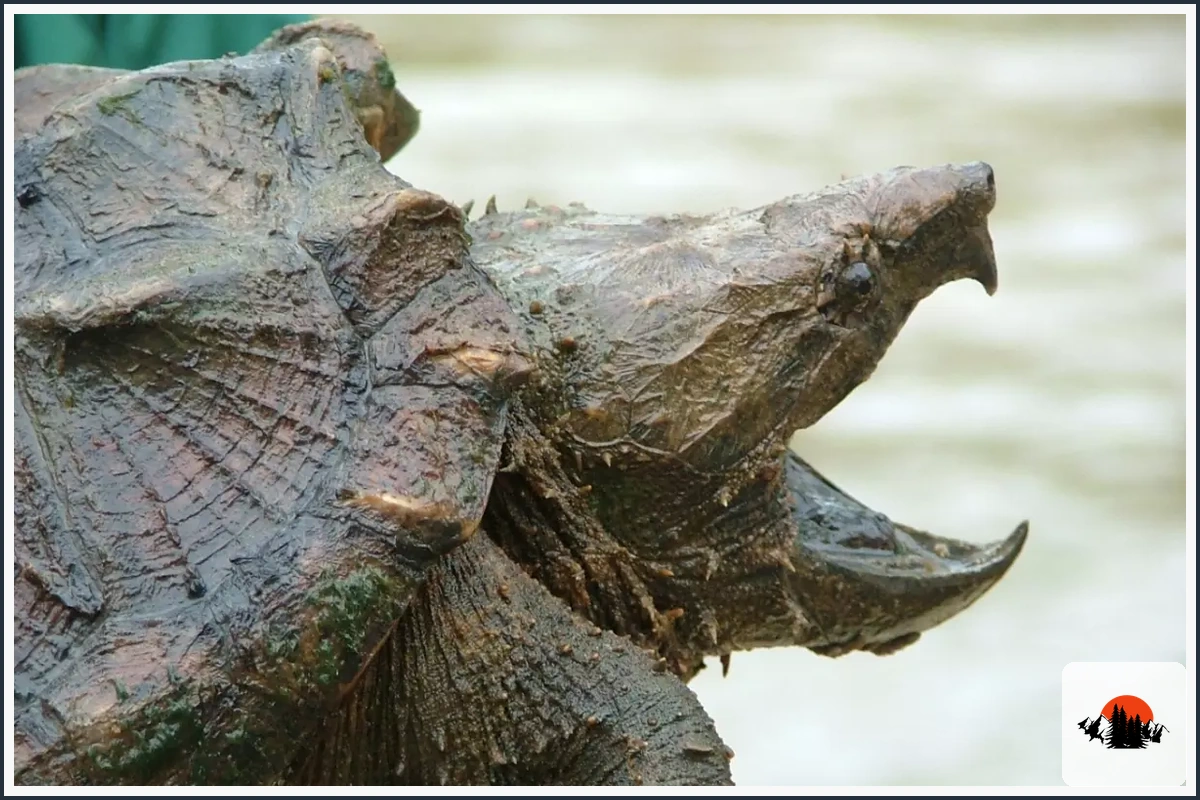
Scientific name: Macrochelys temminckii
The alligator snapping turtle is Georgia’s largest freshwater turtle. It has three prominent ridges running along its dark, heavily armored shell, creating a prehistoric appearance. Its large head and hooked beak are distinctive.
This species lives mainly in deep rivers, oxbow lakes, and connected waterways in southwestern and central parts of Georgia. It is an ambush predator that may eat fish, turtles, crayfish, frogs, snakes, and other aquatic animals.
An unusual feature is the wormlike lure on its tongue, which can attract fish close to its mouth. Alligator snapping turtles are protected in Georgia and should never be disturbed or collected.
4. Yellow-Bellied Slider
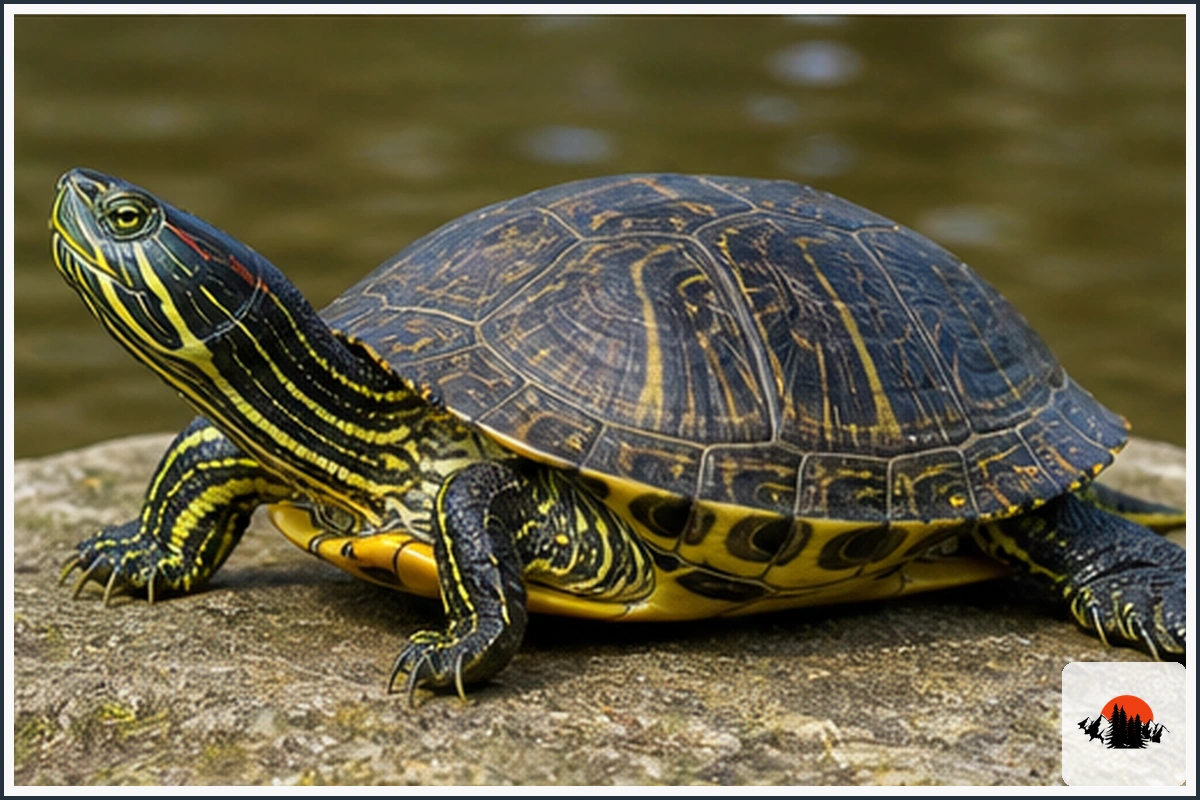
Scientific name: Trachemys scripta scripta
The yellow-bellied slider is a common basking turtle found in ponds, lakes, swamps, and slow-moving waterways. It has a dark green or brown shell, yellow markings behind the eyes, and a yellow underside.
Young sliders often have brighter markings than adults. They spend time on logs and banks warming themselves in the sun, then quickly slide into the water when startled.
Their diet changes with age. Young turtles eat more insects and other animal foods, while adults consume greater amounts of aquatic plants. Releasing unwanted pet sliders can harm native populations and introduce disease, so pets should be rehomed responsibly.
5. Common Musk Turtle
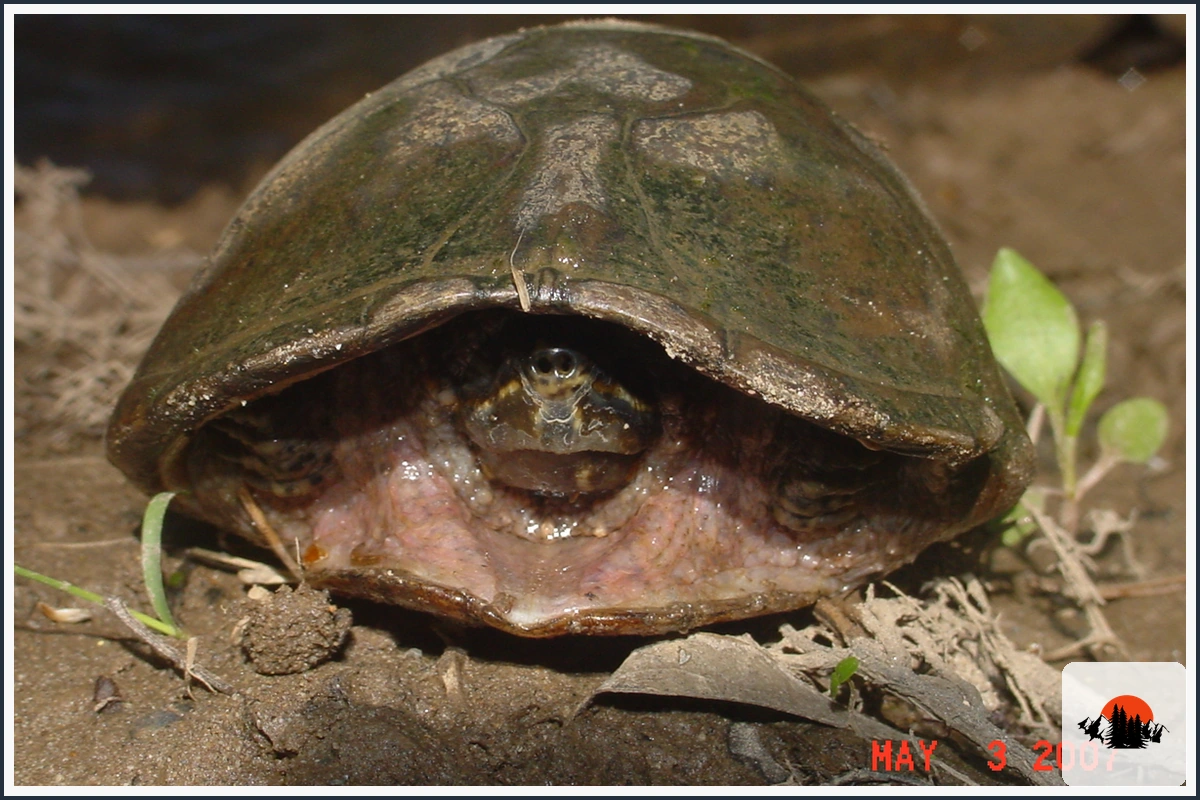
Scientific name: Sternotherus odoratus
The common musk turtle, sometimes called the stinkpot, is a small aquatic turtle with a dark, ridged shell and two pale stripes on the head. Adults are usually only a few inches long.
It lives in ponds, marshes, cypress swamps, and slow streams with soft bottoms. Common musk turtles spend much of their time walking along the bottom rather than basking in open view.
They eat aquatic insects, snails, crayfish, small fish, carrion, and some plant material. When threatened, they may release a strong-smelling substance, which explains the common name.
6. Eastern Mud Turtle
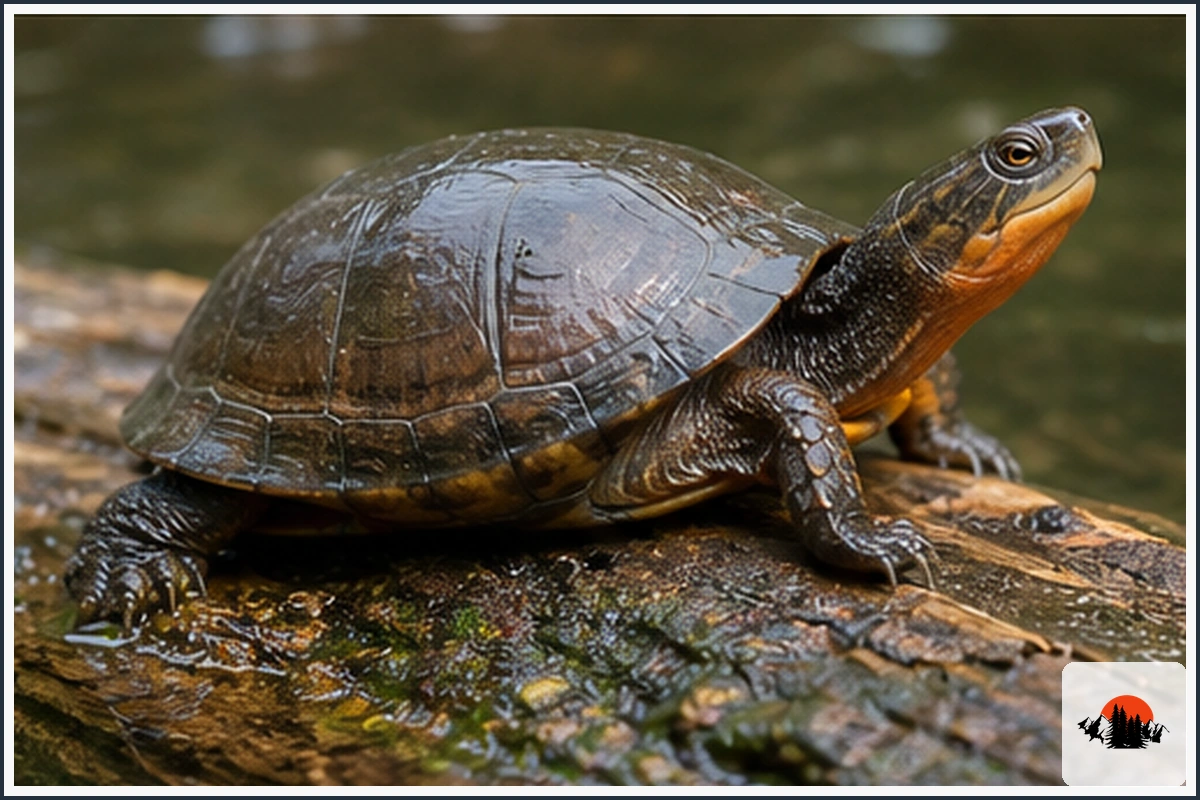
Scientific name: Kinosternon subrubrum
The eastern mud turtle is a small freshwater turtle with a smooth, dark brown or nearly black shell. Its lower shell is hinged and may show yellow or brown markings.
It prefers shallow ponds, marshes, swamps, ditches, and slow streams with muddy or soft bottoms. It may leave the water to travel between wetlands or search for food.
Eastern mud turtles eat insects, worms, snails, crayfish, carrion, and aquatic plants. Because they often hide in vegetation or mud, they are more commonly found by careful observation than by chance.
7. Striped Mud Turtle
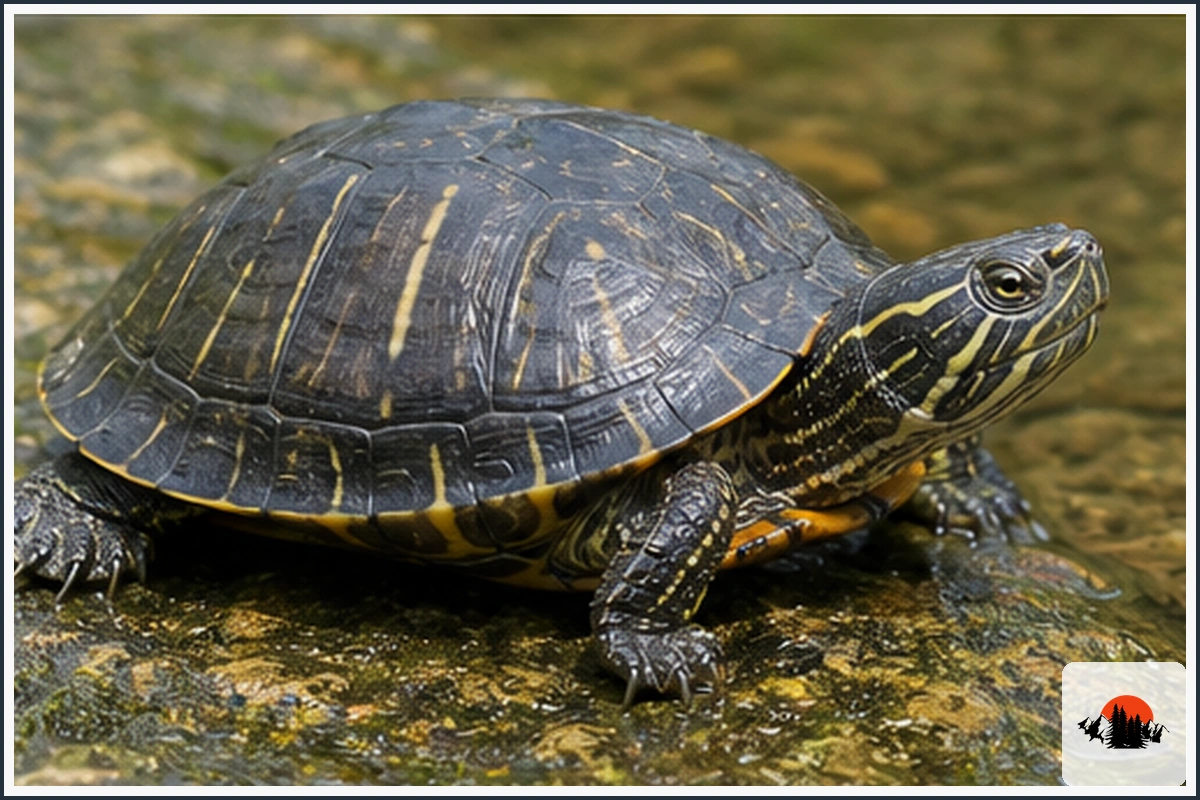
Scientific name: Kinosternon baurii
The striped mud turtle is a small turtle identified by three light stripes running lengthwise along its dark shell. It may also have yellow lines on the head and neck.
In Georgia, it is associated especially with shallow wetlands, ponds, marshes, and sluggish waters in the coastal plain. Its compact size allows it to move through dense aquatic vegetation.
This turtle feeds on insects, snails, worms, small aquatic animals, carrion, and plant material. It is secretive and may spend much of the day hidden beneath leaves, mud, or submerged cover.
8. Florida Softshell Turtle
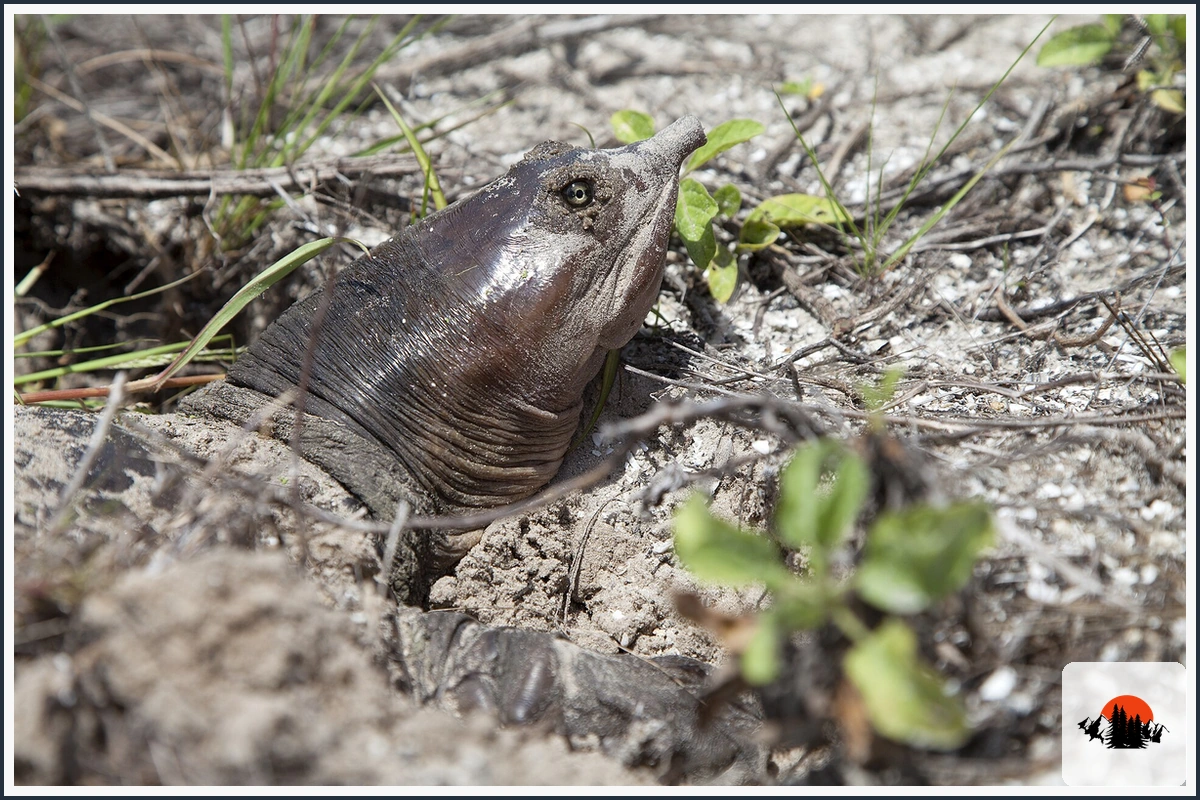
Scientific name: Apalone ferox
The Florida softshell turtle has a flexible leathery shell instead of hard scutes. Its shell is usually olive, tan, or brown, and its long neck, pointed nose, and webbed feet are well suited for aquatic life.
It occurs in ponds, lakes, marshes, canals, and slow-moving rivers, particularly in southern Georgia. Florida softshell turtles are strong swimmers and often bury themselves in sandy or muddy bottoms.
They eat fish, crayfish, insects, frogs, carrion, and other aquatic prey. Their soft shells make them vulnerable to rough handling, and their sharp claws should be respected.
9. Spiny Softshell Turtle
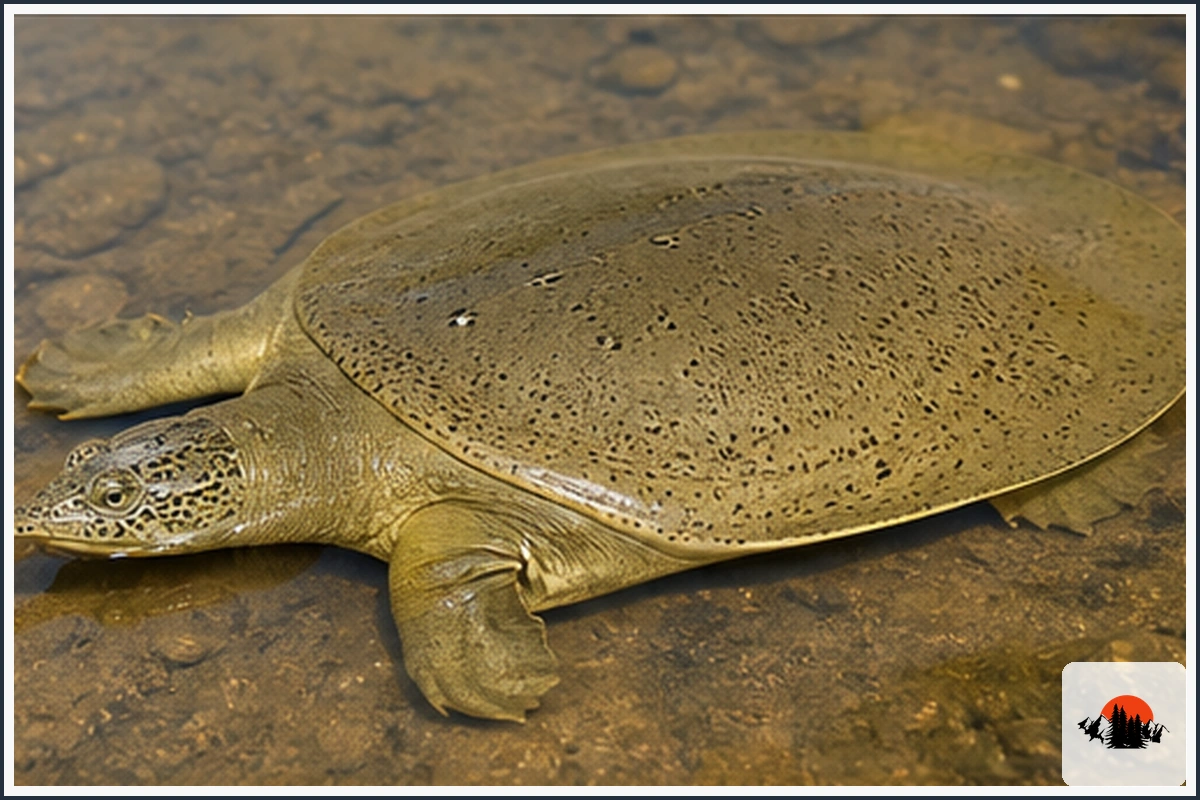
Scientific name: Apalone spinifera
The spiny softshell turtle has a flat, leathery shell with small spine-like projections along the front edge. Its coloring often includes dark spots or lines, while the underside is pale.
It prefers rivers, lakes, large ponds, and sandy or muddy shorelines. The species is an agile swimmer and may bask on exposed banks, logs, or sandbars.
Spiny softshell turtles eat fish, crayfish, insects, snails, frogs, and other aquatic animals. When threatened, they can move quickly both in water and across land.
10. Chicken Turtle
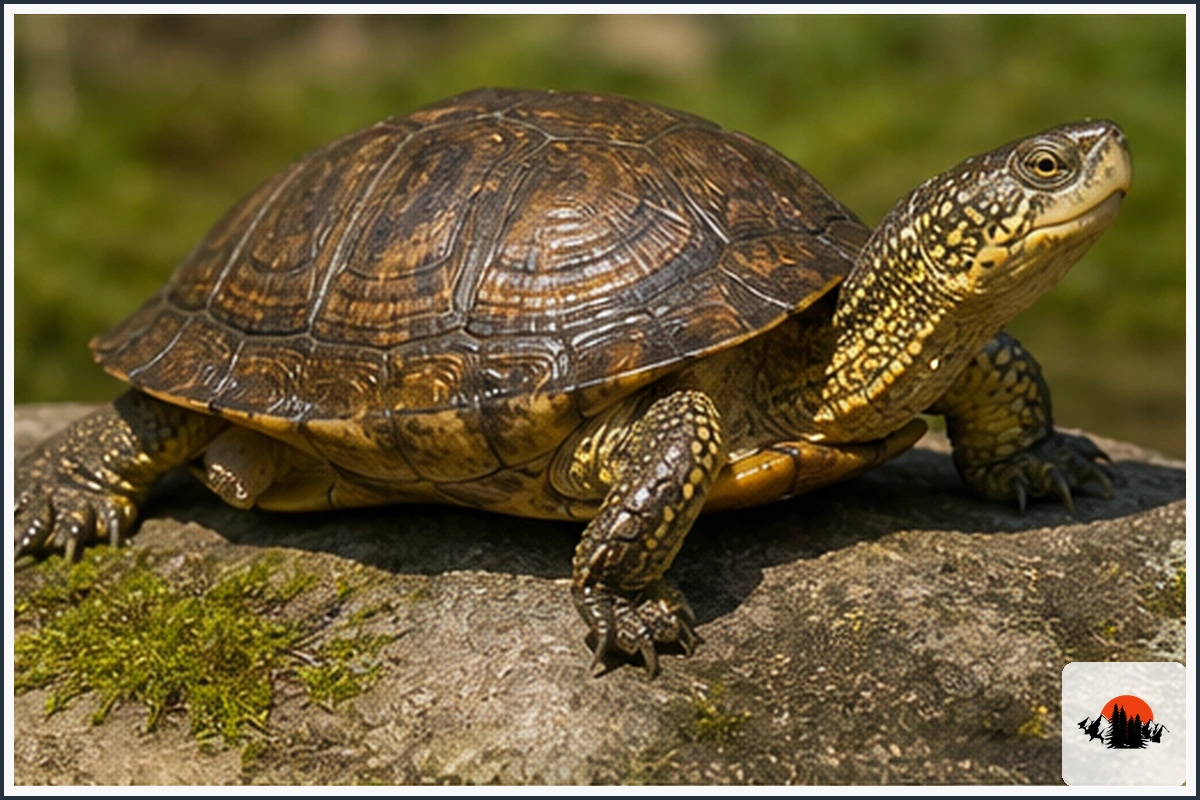
Scientific name: Deirochelys reticularia
The chicken turtle has a long neck, a narrow head, and a shell with a yellow netlike pattern. Yellow stripes on the neck and legs are useful identification features.
It uses ponds, marshes, swamps, temporary wetlands, and sluggish streams. Chicken turtles may travel over land between wetlands, particularly when seasonal water levels change.
Their diet includes crayfish, insects, tadpoles, frogs, snails, and aquatic plants. They are not usually aggressive, but they can be difficult to spot because they spend time in thick vegetation.
11. River Cooter
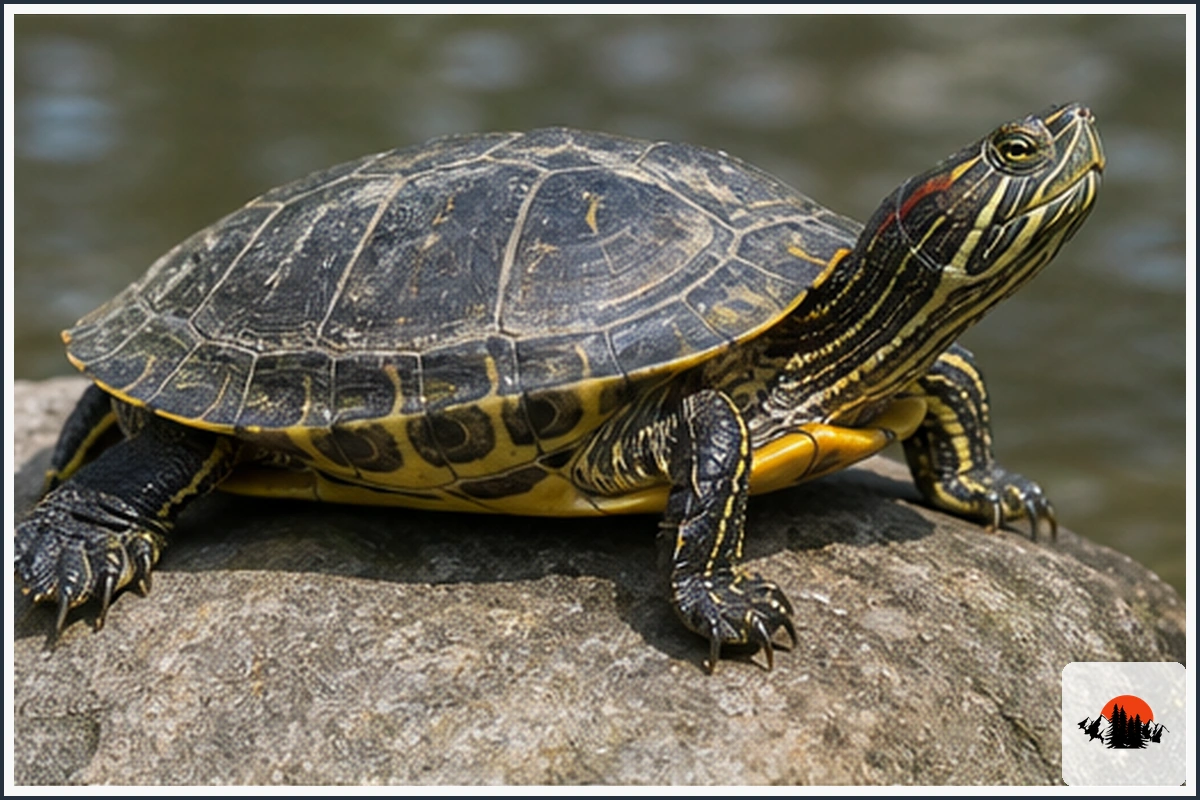
Scientific name: Pseudemys concinna
The river cooter is a medium to large freshwater turtle with a dark shell marked by yellow or orange lines. Its head and legs may also show bright striping.
It is commonly associated with rivers, creeks, lakes, and larger ponds with basking logs and aquatic vegetation. River cooters are strong swimmers and often bask in groups.
Adults eat substantial amounts of aquatic vegetation, although young turtles may consume more insects and other animal foods. A broad, dark shell and bright yellow facial markings help distinguish this turtle from several related sliders.
12. Gopher Tortoise
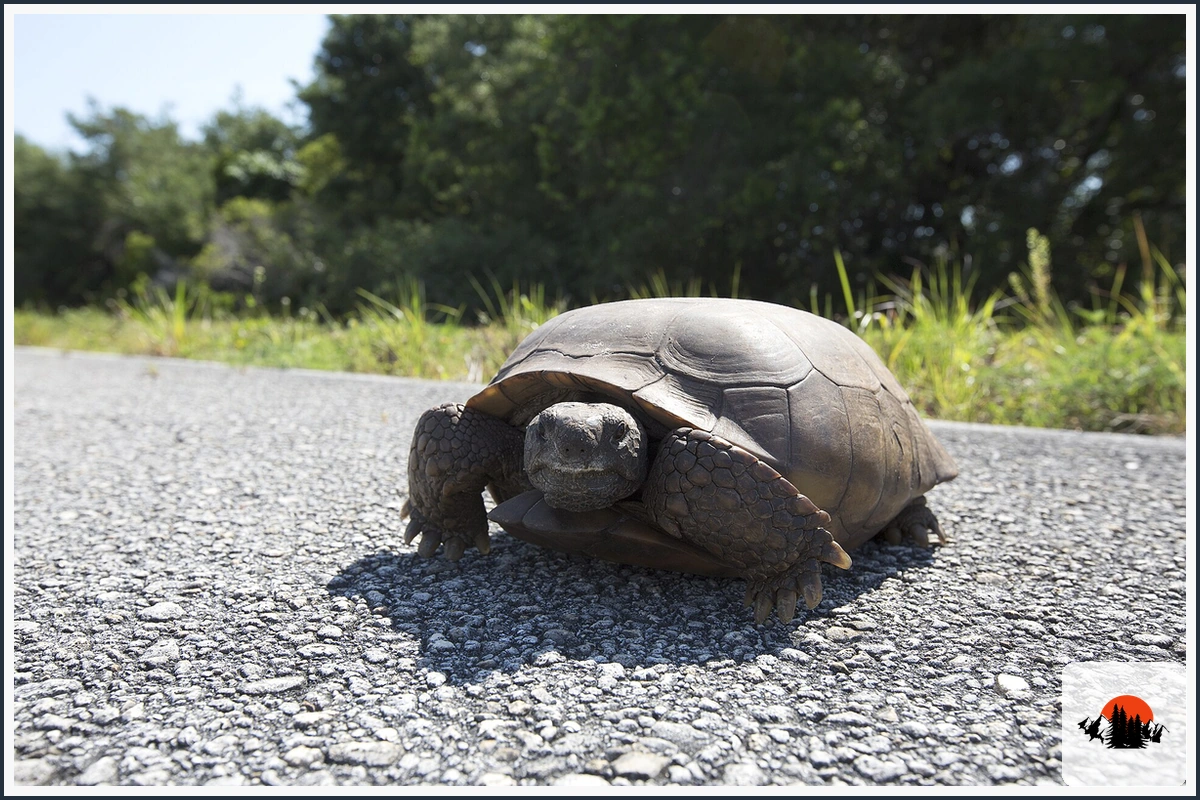
Scientific name: Gopherus polyphemus
The gopher tortoise is a land-dwelling tortoise rather than an aquatic turtle. It has sturdy elephant-like legs, shovel-shaped front feet, and a high-domed shell that is usually tan, brown, or gray.
It lives in sandy, well-drained habitats such as longleaf pine forests, sandhills, coastal plains, and open scrub. Gopher tortoises excavate deep burrows that provide shelter from heat, cold, fire, and predators.
These herbivores eat grasses, herbs, flowers, and other low-growing plants. Their burrows also shelter many other animals, making the gopher tortoise an important ecosystem species. It is protected in Georgia.
13. Loggerhead Sea Turtle
Scientific name: Caretta caretta
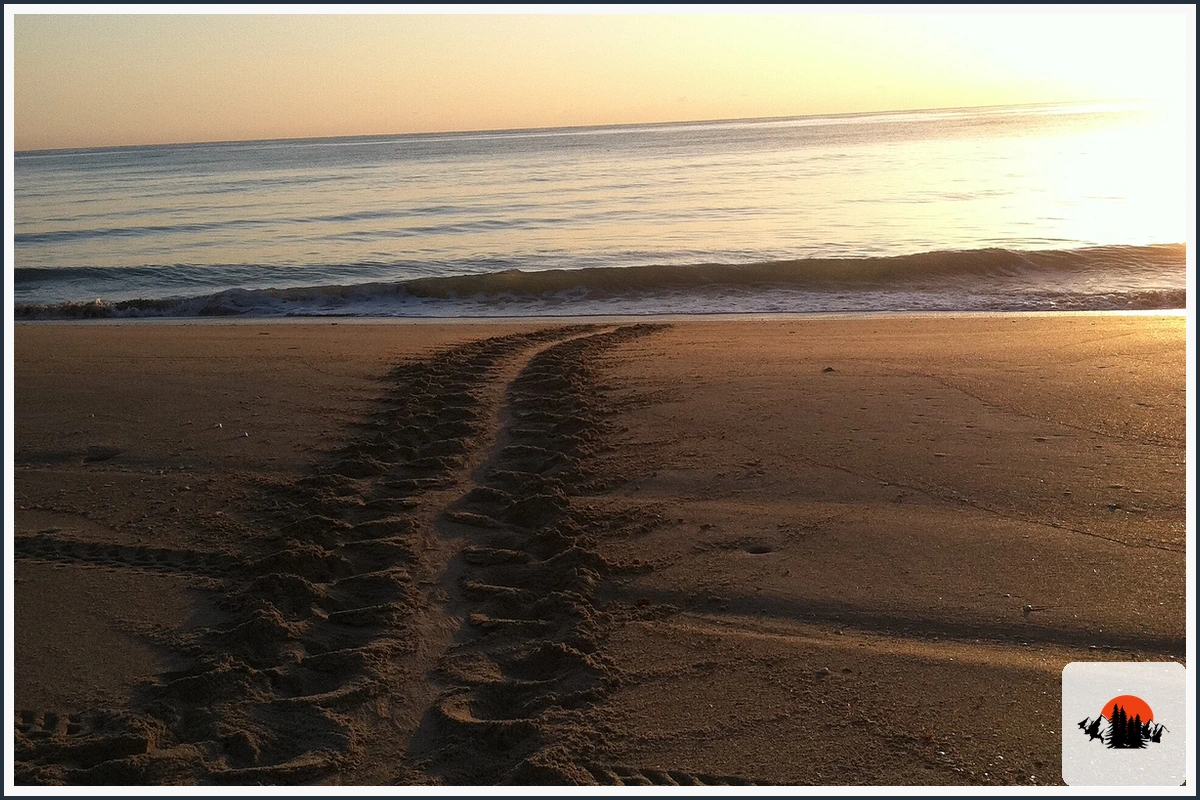
The loggerhead is Georgia’s most commonly nesting sea turtle. It has a large reddish-brown shell, a broad head, and powerful jaws adapted for crushing crabs, mollusks, and other hard-shelled prey.
Loggerheads use the Atlantic Ocean, coastal sounds, nearshore waters, and Georgia’s barrier-island beaches. Females come ashore at night during the nesting season to lay eggs.
Artificial lighting, beach furniture, pets, litter, and disturbance can harm nesting turtles and hatchlings. Beach visitors should keep a respectful distance, remove belongings, and avoid using flashlights near nests.
14. Green Sea Turtle
Scientific name: Chelonia mydas
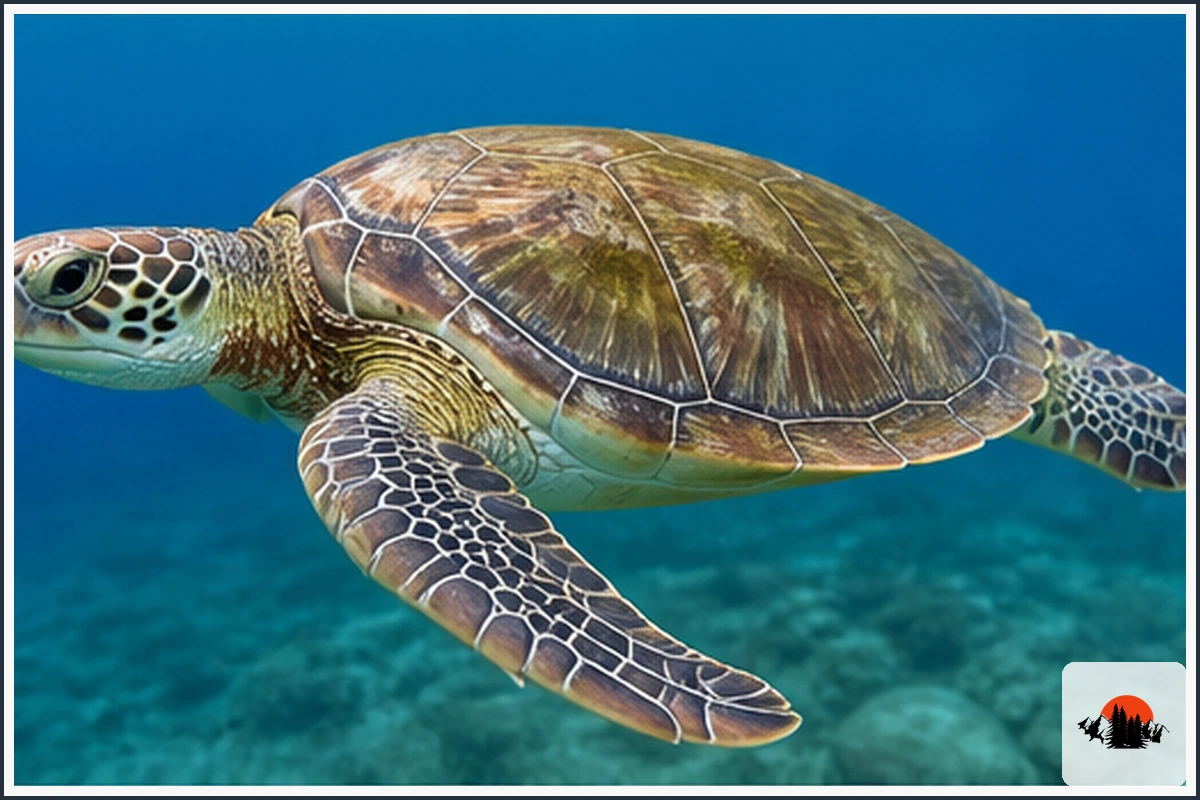
The green sea turtle has a smooth, oval shell that may appear olive, brown, or greenish. Its name refers to the color of its body fat, not necessarily the shell.
Green sea turtles use Georgia’s coastal waters and may forage in shallow marine habitats. Adults commonly eat seagrasses and algae, although young turtles may have a more varied diet.
They occasionally nest along Georgia’s coast and are protected throughout their range. Coastal residents and visitors can help by reducing plastic waste, avoiding harassment, and keeping nesting beaches dark and unobstructed.
How Are These Turtles Classified?
Georgia’s turtles can be grouped by lifestyle and habitat:
- Land turtles and tortoises: Eastern box turtles and gopher tortoises spend most of their lives on land.
- Freshwater turtles: Snapping turtles, sliders, mud turtles, musk turtles, cooters, chicken turtles, and softshell turtles live in ponds, rivers, swamps, or wetlands.
- Marine turtles: Loggerhead and green sea turtles spend most of their lives in the ocean and coastal waters.
- Hard-shelled turtles: Most Georgia turtles have a firm shell covered by scutes.
- Softshell turtles: Florida and spiny softshells have flexible leathery shells and flattened bodies.
Where Do These Turtles Live?
Turtles occur across Georgia’s mountains, Piedmont, coastal plain, wetlands, rivers, lakes, and barrier islands. Box turtles favor forests and woodland edges, while gopher tortoises require sandy upland habitats with suitable burrowing ground.
Freshwater species use slow rivers, ponds, swamps, marshes, oxbow lakes, and shallow wetlands. Softshell turtles are often associated with open water and sandy or muddy bottoms. Sea turtles depend on coastal waters and sandy beaches for feeding, migration, or nesting.
What Do Turtles in Georgia Eat?
- Herbivores: Gopher tortoises mainly eat grasses, herbs, flowers, and other plants.
- Omnivores: Box turtles, sliders, cooters, mud turtles, and snapping turtles eat combinations of plants and animals.
- Aquatic predators: Softshell turtles, snapping turtles, and musk turtles may eat fish, crayfish, frogs, insects, snails, and carrion.
- Marine feeders: Loggerheads specialize in hard-shelled prey, while adult green sea turtles mainly graze on seagrass and algae.
How to Identify Different Types of Turtles in Georgia
- Check the shell shape: Domed shells suggest box turtles or tortoises; flat leathery shells suggest softshells.
- Look for shell markings: Yellow stripes, radiating lines, netlike patterns, and dark ridges can separate similar species.
- Observe the habitat: Note whether the turtle is in a forest, sandy upland, pond, river, marsh, or beach.
- Notice the head: Broad heads may indicate snapping turtles, while yellow facial stripes are common in sliders and cooters.
- Estimate size carefully: Musk and mud turtles are small, while snapping turtles, cooters, tortoises, and sea turtles can become much larger.
- Watch behavior: Basking, burrowing, swimming, hiding in mud, and crossing roads can provide useful clues.
- Consider the season: Nesting movements are especially noticeable in spring and summer, but never disturb a nesting turtle.
Outdoor Tips for Finding and Observing These Turtles
- Visit wetlands, forest edges, ponds, rivers, and coastal habitats quietly.
- Use binoculars instead of approaching closely.
- Never pick up a wild turtle unless it is in immediate danger.
- If a turtle is crossing a road, move it only when safe and place it in the direction it was already traveling.
- Do not move a turtle to a different pond, forest, or neighborhood.
- Keep dogs leashed near nesting beaches and wetland edges.
- Record location, date, habitat, and visible features for responsible citizen science.
Safety, Sustainability, and Conservation Notes
Many Georgia turtles face habitat loss, road mortality, illegal collection, pollution, invasive species, and disturbance during nesting. Several species, including gopher tortoises, alligator snapping turtles, and sea turtles, receive legal protection.
Do not keep native turtles as pets without understanding state regulations and long-term care requirements. Never release aquarium turtles into Georgia waterways. At the coast, keep beaches clean, turn off unnecessary lights, and avoid touching hatchlings or nesting females.
Fishing lines, hooks, plastic, and discarded containers can injure turtles. Dispose of tackle properly and support wetland, river, forest, and beach conservation programs.
Fun Facts About Turtles in Georgia
- Gopher tortoise burrows can provide shelter for many other wildlife species.
- Eastern box turtles can close their hinged shells when threatened.
- Alligator snapping turtles use a wormlike tongue lure to attract prey.
- Common musk turtles may produce a strong odor when frightened.
- Softshell turtles can bury themselves in sand or mud while waiting for prey.
- Sea turtles can travel long distances between feeding and nesting areas.
- Loggerhead turtles have powerful jaws suited for crushing hard prey.
- Adult green sea turtles commonly graze on seagrass and algae.
- Some freshwater turtles travel over land between separated wetlands.
- Many turtles bask to warm their bodies and support normal activity.
Final Thoughts on Types of Turtles in Georgia
The types of turtles in Georgia range from forest-dwelling box turtles and burrowing gopher tortoises to river turtles, snapping turtles, and protected sea turtles. Identifying them by shell shape, markings, habitat, and behavior makes outdoor observations more rewarding. The best way to enjoy Georgia’s turtles is to watch from a respectful distance and help protect the habitats they need.
Frequently Asked Questions
1. How many types of turtles live in Georgia?
Georgia has more than 14 turtle species when all regularly occurring freshwater, terrestrial, and marine species are considered. This guide highlights 14 especially recognizable or important types.
2. What is the most common turtle in Georgia?
Common species include eastern box turtles, yellow-bellied sliders, common snapping turtles, and several pond and river turtles. Abundance varies by habitat and region.
3. Are there sea turtles in Georgia?
Yes. Loggerhead sea turtles regularly nest on Georgia beaches, and green sea turtles also use Georgia’s coastal waters and may nest there.
4. What is Georgia’s largest freshwater turtle?
The alligator snapping turtle is Georgia’s largest freshwater turtle. It has a massive head, a ridged shell, and a long tail.
5. What is Georgia’s largest land turtle?
The gopher tortoise is Georgia’s largest land-dwelling turtle-like reptile. It is recognized by its sturdy legs, domed shell, and deep burrows.
6. Are gopher tortoises found throughout Georgia?
No. They are mainly found in suitable sandy habitats of the Coastal Plain and other areas with well-drained soil and open vegetation.
7. What turtle has a yellow belly in Georgia?
The yellow-bellied slider is known for its yellow underside and yellow markings behind the eyes. Some related pond turtles may also have yellow markings.
8. How can I identify an eastern box turtle?
Look for a high-domed shell, yellow or orange patterning, and a hinged lower shell that can close around the body.
9. Are snapping turtles dangerous?
Snapping turtles usually avoid people, but they can bite if handled or cornered. Observe them from a distance and never grab one by the tail.
10. Can I keep a wild turtle as a pet?
It is best not to remove a wild turtle from its habitat. Collection may be illegal, and wild turtles often do poorly when taken from established territories.
11. What should I do if I find a turtle crossing the road?
If it is safe, help it cross in the direction it was already traveling. Do not carry it to a different location.
12. Where do Georgia turtles lay eggs?
Freshwater turtles often nest in sandy or loose soil near water, while box turtles and tortoises lay eggs in suitable ground habitats. Sea turtles nest on sandy beaches.
13. When do turtles nest in Georgia?
Many freshwater turtles nest during late spring and summer. Sea turtle nesting generally occurs during the warmer coastal months, with loggerheads being especially important nesters.
14. What do freshwater turtles in Georgia eat?
Their diets vary but may include aquatic plants, insects, crayfish, fish, snails, frogs, worms, carrion, and other small animals.
15. Do turtles hibernate in Georgia?
Many freshwater turtles become inactive during cold weather, often resting underwater or in mud. Box turtles and tortoises may also spend winter in sheltered ground locations.
16. Can turtles breathe underwater?
Turtles must breathe air, but some species can remain underwater for long periods by slowing their activity and using limited oxygen exchange through specialized tissues.
17. What is the difference between a turtle and a tortoise?
Turtles commonly refers to shelled reptiles associated with water, while tortoises are primarily land-dwelling. In everyday language, however, turtle may be used broadly for both.
18. Are softshell turtles common in Georgia?
Florida and spiny softshell turtles occur in suitable rivers, lakes, ponds, and wetlands. Their flat leathery shells help identify them.
19. What does a softshell turtle eat?
Softshell turtles commonly eat fish, crayfish, insects, snails, frogs, carrion, and other aquatic prey.
20. Are eastern box turtles aquatic?
No. Eastern box turtles are terrestrial and usually live in forests, woodland edges, fields, and other land habitats.
21. Are Georgia turtles protected?
Protection varies by species. Sea turtles, gopher tortoises, alligator snapping turtles, and other native species may have specific legal protections or collection restrictions.
22. Can I move a turtle to a better habitat?
No. Moving a turtle can separate it from its home range, nesting sites, and familiar resources. Only move a turtle off a roadway when necessary and place it in its original direction of travel.
23. What turtle has three ridges on its shell?
The alligator snapping turtle has three prominent ridges along its shell, especially noticeable in younger individuals.
24. What turtle has stripes on its shell?
Several species have shell stripes, including sliders, cooters, and striped mud turtles. Habitat and head markings help confirm the identification.
25. Are turtles good for Georgia ecosystems?
Yes. Turtles help transfer nutrients, control some prey populations, consume carrion or vegetation, and create or support habitat. Gopher tortoise burrows are especially valuable to many animals.
26. What are the biggest threats to Georgia turtles?
Major threats include habitat loss, road traffic, illegal collection, pollution, fishing gear, invasive species, disease, and disturbance at nesting sites.
27. How can I help sea turtles in Georgia?
Keep beaches clean, remove chairs and equipment at night, avoid bright lights, keep pets controlled, and never disturb nesting turtles or hatchlings.
28. Should I feed a wild turtle?
No. Feeding can alter natural behavior, attract animals to unsafe areas, and provide an unsuitable diet.
29. Can aquarium turtles be released in Georgia ponds?
No. Released pets may spread disease, compete with native turtles, or become invasive. Contact a responsible wildlife or reptile organization for rehoming options.
30. What is the easiest Georgia turtle to recognize?
The eastern box turtle is often easy to recognize because of its domed patterned shell and hinged lower shell. The gopher tortoise is also distinctive because of its shovel-like front legs and land-based lifestyle.
31. What should I do if I find an injured turtle?
Keep yourself safe, avoid unnecessary handling, and contact a licensed wildlife rehabilitator or local wildlife agency for advice.
32. Can turtles carry disease?
Like many reptiles, turtles can carry bacteria such as Salmonella. Wash your hands after contact and supervise children around turtles.
33. Do turtles feel pain?
Turtles have nervous systems and can be injured or stressed. Handle them as little as possible and never use them for entertainment or unnecessary photographs.
34. Why do turtles bask?
Basking allows turtles to warm their bodies, support normal metabolism, and sometimes dry their shells and skin.
35. Where can I see turtles in Georgia?
Look in appropriate public wetlands, ponds, rivers, forests, wildlife refuges, and coastal areas. Follow posted rules and observe quietly without disturbing wildlife.