

Learning the different types of ibex is a lesson in both mountain wildlife and careful taxonomy. These sure-footed wild goats live across steep landscapes in Europe, Asia, the Middle East, and northeastern Africa. Although every ibex has the compact build, cloven hooves, and permanent horns typical of the goat family, each species has its own horn shape, coat pattern, range, and conservation story.
This guide covers the six living species commonly treated as ibex: Alpine, Iberian, Siberian, Nubian, Walia, and the wild goat, which is also called the bezoar ibex. It also explains why some lists use different totals, how to identify each species, where they live, and how to observe them without disturbing sensitive mountain wildlife.
What Are the Main Types of Ibex?
The six main types of ibex are the Alpine ibex, Iberian ibex, Siberian ibex, Nubian ibex, Walia ibex, and wild goat or bezoar ibex. All belong to the genus Capra, but they occupy very different mountain systems. Regional names such as Himalayan ibex, Altai ibex, and Gobi ibex usually refer to populations or proposed subspecies of the Siberian ibex rather than universally accepted separate species.
| Type | Scientific Name | Main Range | Quick Identification Clue | Conservation Note |
|---|---|---|---|---|
| Alpine ibex | Capra ibex | European Alps | Heavy, backward-curving horns with bold front ridges | Recovered after historic overhunting |
| Iberian ibex | Capra pyrenaica | Spain and Portugal | Male horns sweep outward before curving back | Two recognized subspecies are extinct |
| Siberian ibex | Capra sibirica | Central Asian mountain systems | Very long scimitar-shaped horns and variable coat | Wide-ranging but declining in parts of its range |
| Nubian ibex | Capra nubiana | Arid mountains of northeastern Africa and the Middle East | Slender build, tan coat, dark leg markings, long horns | Fragmented populations face multiple pressures |
| Walia ibex | Capra walie | Simien Mountains of Ethiopia | Dark chest, pale muzzle, robust horns, restricted range | Critically endangered in its latest global assessment |
| Wild goat or bezoar ibex | Capra aegagrus | Eastern Mediterranean to western and central Asia | Narrow, laterally compressed horns with a sharp front edge | Wild populations are threatened by hunting and hybridization |
1. Alpine Ibex
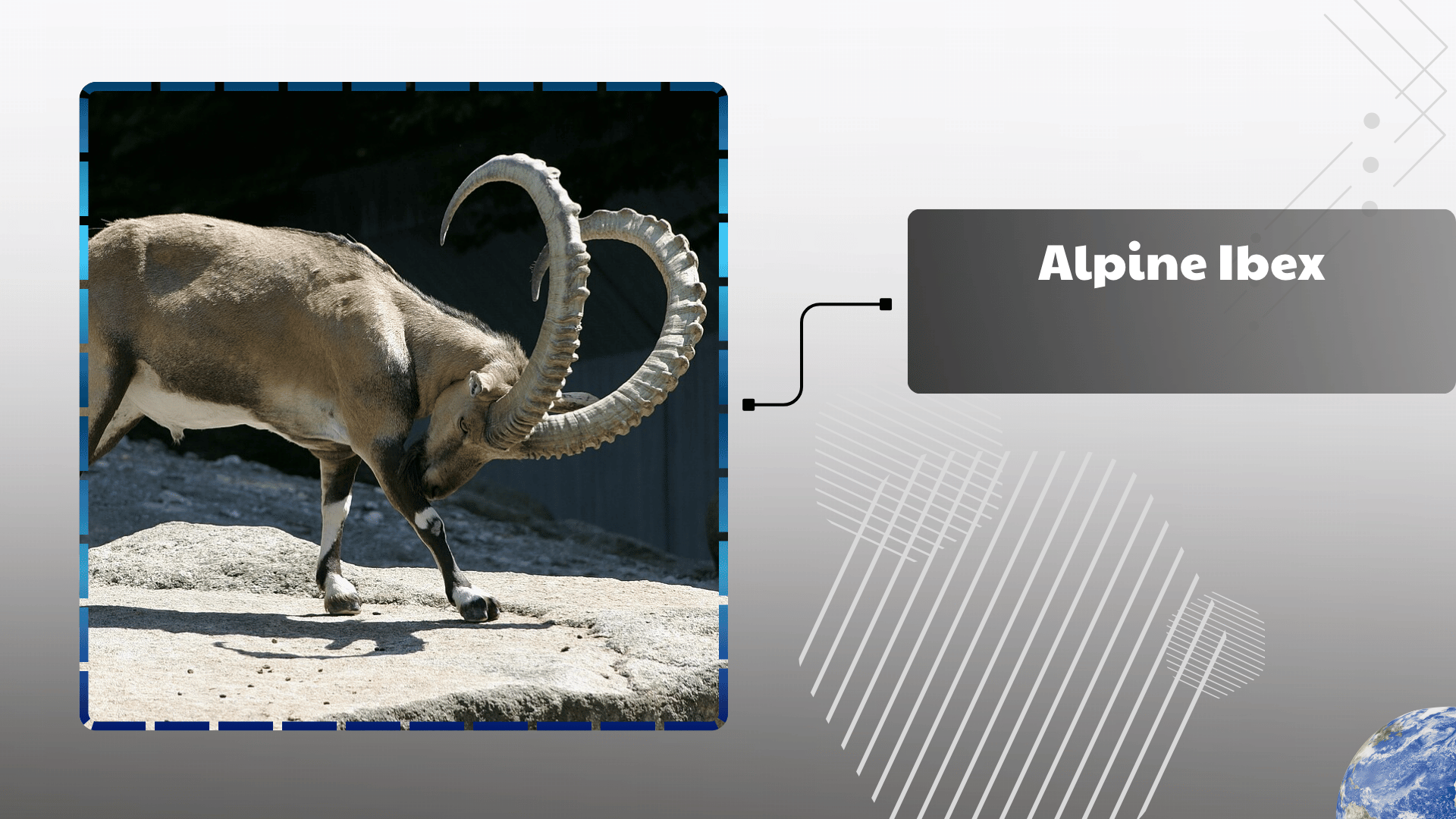
The Alpine ibex, Capra ibex, is the classic image many people picture when they hear the word ibex. It is native to the European Alps and occurs in high mountain country across countries including Italy, Switzerland, France, Austria, Germany, and Slovenia. Mature males are powerfully built and carry thick horns that rise from the forehead, curve backward, and display prominent transverse ridges. Females are smaller and have much shorter, slimmer horns.
Coat color changes with sex and season. Adult males commonly appear gray-brown to dark brown, while females and young animals are usually lighter. A heavy male may weigh around twice as much as an adult female. Body size alone is not the best field mark, however; the massive, knobbly horns of an older male are far more distinctive. Horn growth rings can provide age clues, but estimating age accurately from a distance requires experience and a clear side view.
Alpine ibex use rocky slopes, cliffs, alpine grasslands, and areas near the upper tree line. They feed mainly on grasses, herbs, shoots, and other available vegetation. Seasonal movement is important: animals may climb higher during warmer months and use lower or sunnier slopes when snow limits access to food. Their flexible cloven hooves have hard outer edges and softer gripping pads, giving them excellent traction on rock.
This species has one of Europe’s best-known wildlife recovery stories. By the early nineteenth century, hunting had reduced it to a small surviving population around what is now Gran Paradiso National Park in Italy. Protection, reintroductions, and translocations restored Alpine ibex to many parts of the Alps. The recovery remains a conservation success, but individual herds can still face disease, limited genetic diversity, climate-related habitat changes, and conflicts around management. For wildlife watchers, established alpine parks offer the best chance of seeing this species from marked trails with binoculars.
2. Iberian Ibex
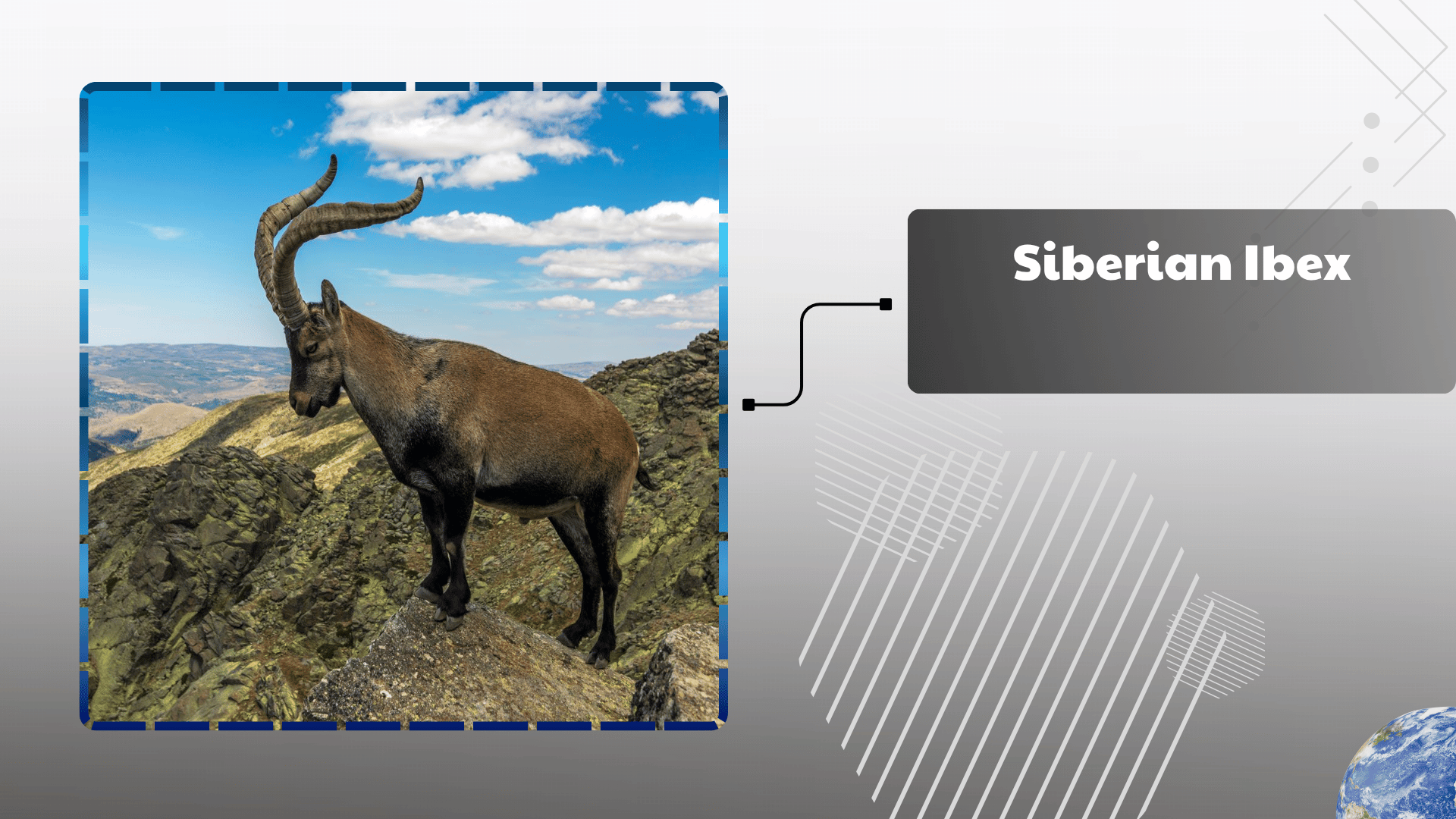
The Iberian ibex, Capra pyrenaica, is also called the Spanish ibex or Iberian wild goat. It is native to the Iberian Peninsula, with its strongest populations in the mountain ranges of Spain and a re-established presence in Portugal. Its most recognizable feature is the shape of the male’s horns. Instead of forming the relatively simple backward arc seen in an Alpine ibex, the horns often spread outward and upward before sweeping back, producing a broad silhouette when viewed from the front.
Adult males develop dark markings along the neck, shoulders, flanks, and legs, especially during the cooler season. Females have a plainer brown or gray-brown coat, a slimmer frame, and much smaller horns. Appearance differs among regions, and local hunting names do not always match formal scientific boundaries. Modern references generally recognize four historical subspecies: two survive, while the Portuguese ibex and Pyrenean ibex are extinct. The Pyrenean ibex, or bucardo, became famous when scientists briefly produced a cloned individual in 2003, although it did not survive.
Iberian ibex occupy an unusually broad range of mountain environments, from rocky Mediterranean scrub and pine woodland to high, open slopes. They browse shrubs and woody plants and graze grasses and herbs according to season and local availability. Herd composition also shifts through the year. Females and young commonly form groups, while adult males may live separately outside the breeding season.
The species as a whole is not currently among the most threatened ibex, but local conditions vary. Disease outbreaks, vehicle collisions, habitat fragmentation, severe drought, and poorly controlled population management can affect particular herds. Visitors should not confuse a locally abundant population with complete security across the species’ range. In the field, focus on horn shape, dark male markings, Mediterranean habitat, and location. Observations from public trails in protected mountain areas are safer for both people and animals than attempts to approach steep escape terrain.
3. Siberian Ibex
The Siberian ibex, Capra sibirica, is the largest and most geographically widespread ibex species. It ranges through a vast belt of Central Asian mountains, including parts of Afghanistan, China, India, Kazakhstan, Kyrgyzstan, Mongolia, Pakistan, Russia, Tajikistan, and Uzbekistan. Depending on location, people may call it the Asiatic, Himalayan, Altai, Gobi, Mongolian, Tian Shan, or Central Asian ibex. These names are useful geographically, but they should not automatically be counted as separate species.
Mature males are imposing animals with long, backward-curving, scimitar-like horns marked by strong ridges. They often have a beard, a darker dorsal stripe, and seasonally variable patches across the neck, shoulders, and back. Coat color can range from pale tan to gray-brown or very dark brown. Females are much smaller and carry shorter, narrower horns. The variation across this enormous range is one reason taxonomists continue to study whether some populations deserve recognition at a different level.
Siberian ibex favor broken cliffs, rocky slopes, alpine meadows, high steppe, and mountain desert. Many populations spend summer at high elevations and descend when winter snow covers forage. They eat grasses, sedges, herbs, leaves, and shoots. Rugged terrain helps them avoid predators, which can include snow leopards, wolves, brown bears, dholes, and large eagles that may take young kids.
A broad range does not eliminate conservation concerns. Population information is incomplete in many remote areas, and threats include illegal hunting, unsustainable harvest, competition with livestock, disturbance, fencing, disease transmission, and infrastructure development. Climate change can also alter forage, snow conditions, and access to seasonal habitat. When identifying this species, combine its location with its long horns and often bold winter coat; horn length alone is not enough. Responsible travelers should use local guides, avoid wintering groups, and never pressure animals toward cliffs for a photograph.
Because distant herds can be difficult to separate from domestic goats or other wild caprids, a clear record of the observation location is especially valuable.
4. Nubian Ibex
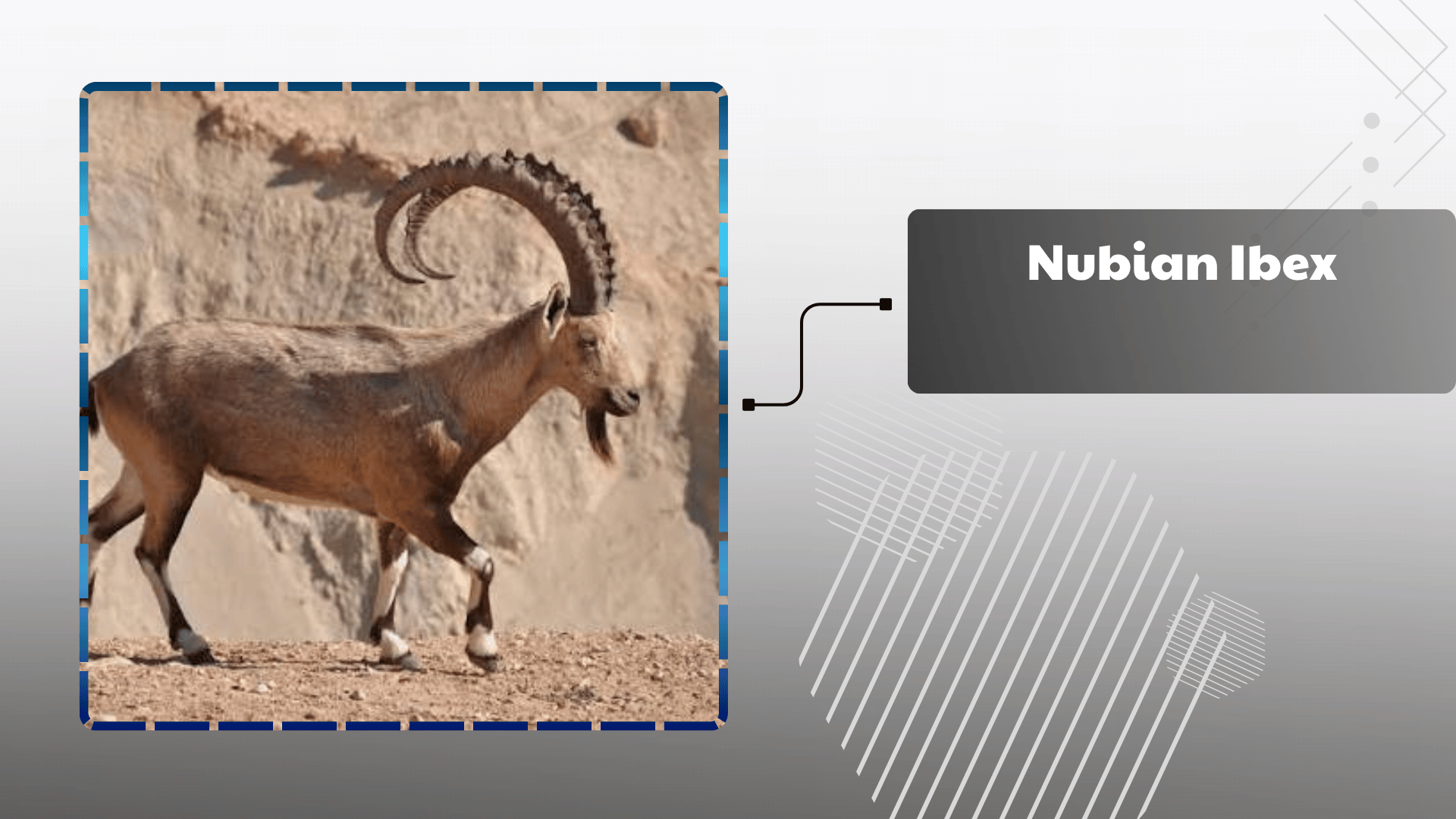
The Nubian ibex, Capra nubiana, is the desert specialist of the group. It lives in scattered populations among rocky mountains, wadis, escarpments, and desert cliffs in northeastern Africa and the Middle East. Its present distribution is fragmented, and surviving groups occur in only parts of the species’ historical range. Extreme heat and limited water set its habitat apart from the cooler alpine landscapes associated with most other ibex.
This is a relatively small, slender ibex. Both sexes have horns, but an adult male’s horns can grow impressively long in relation to its body. They form a graceful backward curve and show distinct ridges along the front. Typical adults have a sandy or reddish-tan coat that blends with desert rock. Males often show a dark dorsal stripe, dark markings on the legs, a beard, and contrasting pale areas on the belly and rump. Females are paler and less strongly marked.
Nubian ibex feed on grasses, herbs, shrubs, leaves, and desert plants, adjusting their diet to seasonal availability. They are often most active during cooler parts of the day and rest in shade or on protected ledges during intense heat. Their ability to use precipitous ground helps them escape predators and reach scattered forage, but it does not make them immune to human disturbance. Access roads, development around water sources, and repeated close approaches can reduce the security of limited habitat.
The species is globally threatened, with small and disconnected populations exposed to poaching, habitat loss, competition with livestock, drought, and reduced movement between suitable mountain areas. Conservation needs differ by country, so local rules and current protected-area guidance matter. For identification, look for a lean desert-adapted body, warm sandy color, striking male horns, and steep arid terrain. Never leave food or water to attract wild ibex; artificial congregation can change behavior, increase disease risk, and draw animals toward roads or people.
5. Walia Ibex
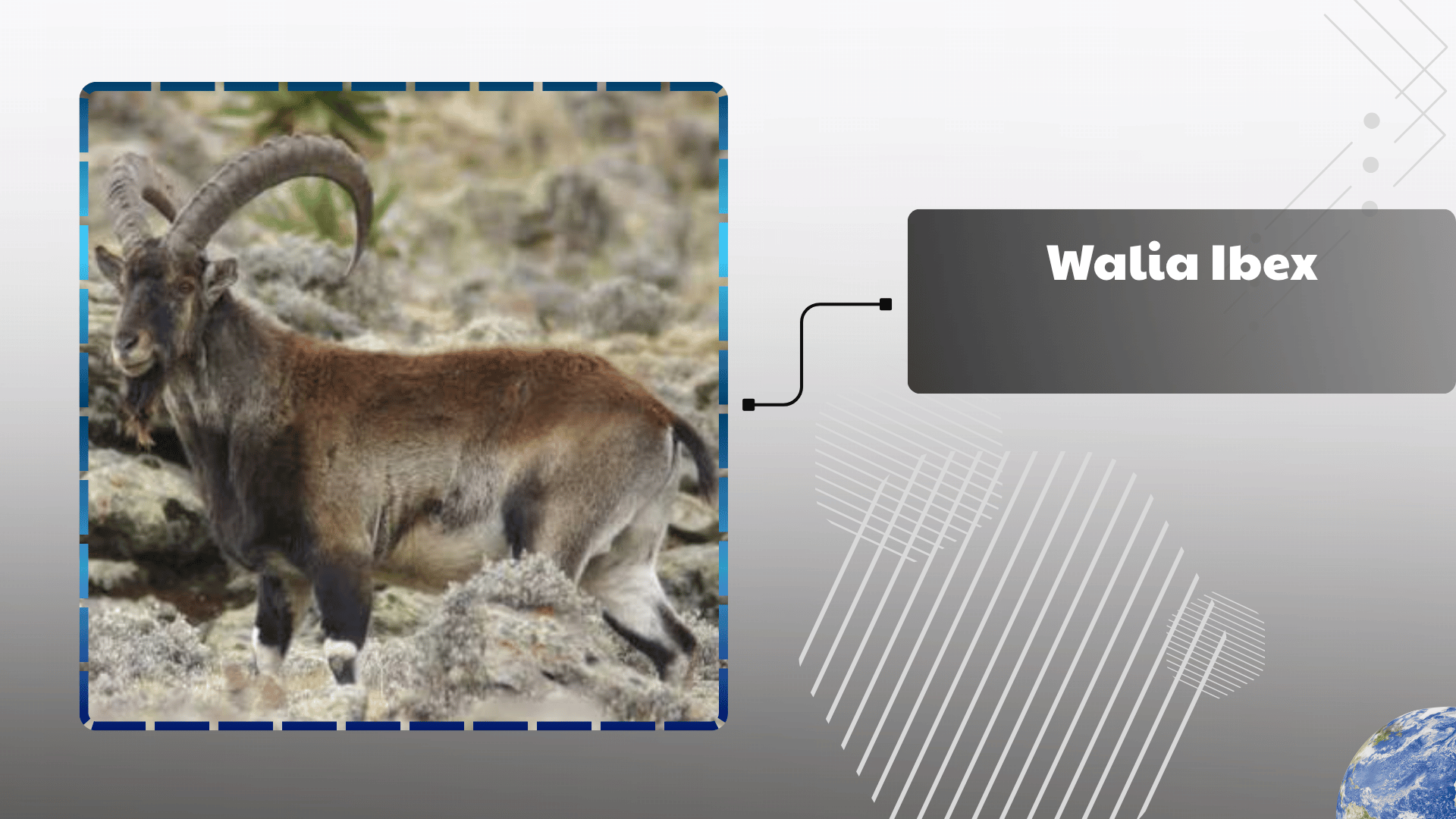
The Walia ibex, Capra walie, is the rarest and most geographically restricted species in this guide. It survives only in Ethiopia’s Simien Mountains, where steep escarpments, cliffs, montane grasslands, heath, and patches of highland vegetation create its specialized habitat. Its tiny range makes correct identification comparatively straightforward: a truly wild ibex in the Simien Mountains may be a Walia, while ibex seen elsewhere are not.
Walia ibex are robust, deep-chested animals. Adult males have large, ridged horns that curve backward, a dark brown coat, a blackish chest and beard, and contrasting paler areas around the muzzle and lower body. Females are smaller and less boldly marked, with shorter horns. The species resembles the Alpine ibex in general form, and scientists have debated their relationship, but major modern mammal references retain the Walia as a distinct species.
These ibex graze grasses and browse herbs, shrubs, lichens, creepers, and other mountain plants. They may stand on their hind legs to reach foliage. As with other ibex, females and young tend to form groups, while mature males can associate separately for part of the year. Leopards, hyenas, and other predators may take ibex, but the species’ most serious survival pressures are linked to its restricted range and human-driven habitat change.
The Walia ibex is now classified as Critically Endangered in its latest global assessment after renewed declines. Agricultural expansion, livestock competition, habitat degradation, disturbance, disease risk, and the danger of having nearly the entire population concentrated in one area make protection urgent. Anyone visiting the Simien Mountains should treat a sighting as a conservation privilege: remain with authorized guides, stay on approved routes, keep a long distance, and follow every park instruction. Images should be made with binoculars or a telephoto lens, never by chasing or surrounding a herd.
Long-term survival depends on strong habitat protection and close cooperation with the communities living around this exceptional mountain ecosystem.
6. Wild Goat or Bezoar Ibex
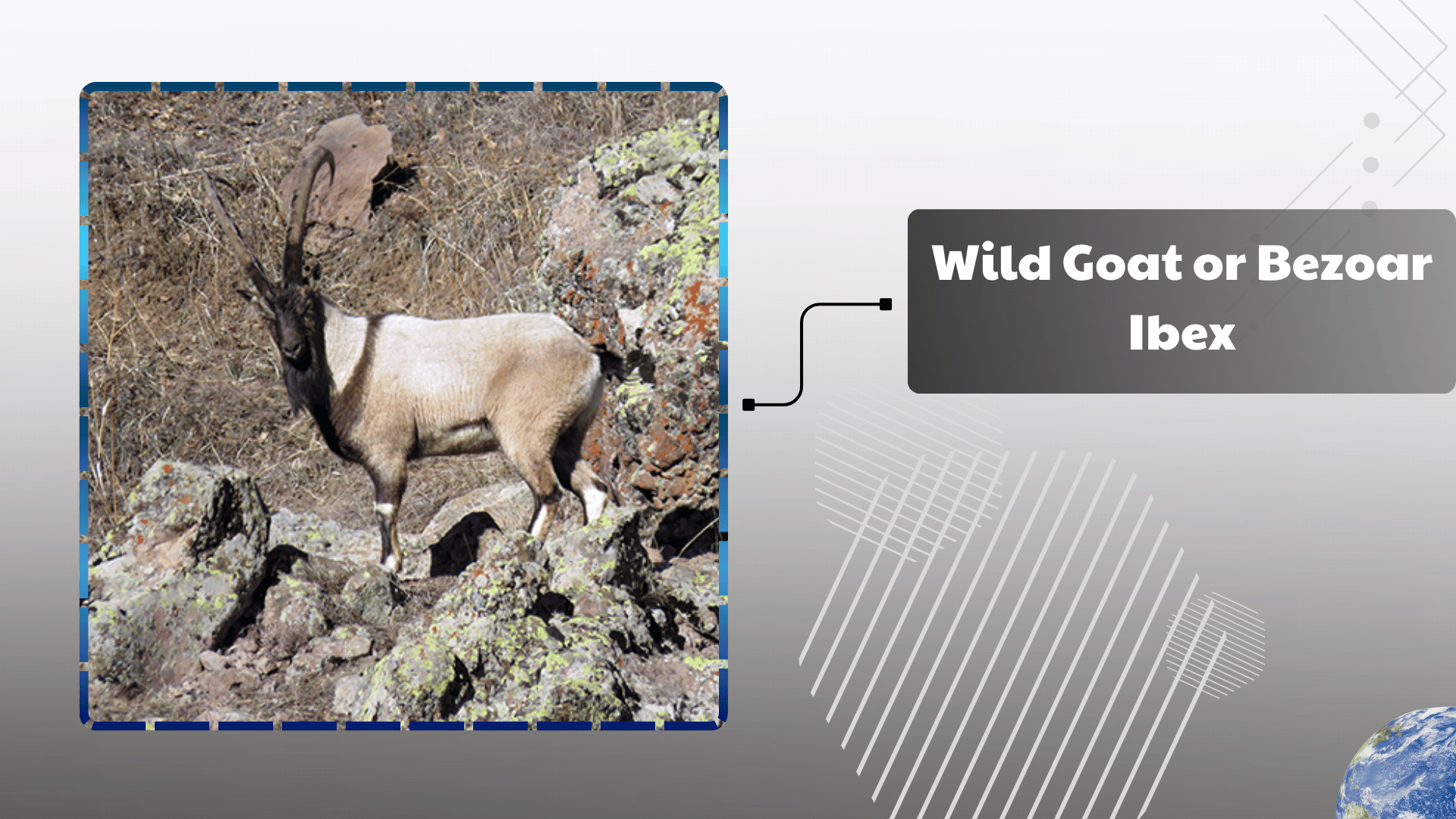
The wild goat, Capra aegagrus, is frequently called the bezoar goat or bezoar ibex. It ranges in fragmented populations from the eastern Mediterranean and Anatolia through parts of the Caucasus, the Middle East, and western Asia. The name creates confusion because many scientific authorities use wild goat as the primary common name, while general wildlife lists often include it among the types of ibex. Its close relationship to domestic goats also makes it especially important in the history of human-animal relationships.
Adult males usually have long, laterally compressed horns that curve backward in a relatively smooth arc. The front edge can look sharply keeled, distinguishing the horns from the thick, heavily ridged form of an Alpine ibex. Males often show a beard, dark shoulder and leg markings, and a dorsal stripe. Females are smaller, with short horns and a more uniform coat. Exact appearance varies across the species’ broad and broken distribution.
Wild goats occupy rocky hills, cliffs, open woodland, scrub, and mountain slopes. They browse leaves, twigs, shrubs, and herbs and also graze when grasses are available. They commonly use difficult rock as refuge but may descend to feed. This flexibility helped ancestral wild goats survive in varied landscapes and contributed to the domestication of goats in Southwest Asia thousands of years ago.
Truly wild populations face hunting, habitat loss, competition and disease exchange with livestock, and genetic mixing with free-ranging domestic or feral goats. Hybridization is particularly important because an animal that looks wild may not represent a genetically intact wild population. Field identification therefore depends on location and population history as well as appearance. Travelers should avoid labeling any horned feral goat a bezoar ibex, and conservation photography should never disclose sensitive locations where illegal hunting is a concern.
Reliable identification may require expert knowledge or genetic evidence when wild, domestic, and hybrid goats occur in the same landscape.
How Are These Wild Animals Classified?
Ibex belong to the family Bovidae, the subfamily Caprinae, and the genus Capra. This places them with goats and close relatives rather than deer. Unlike deer antlers, ibex horns are permanent structures with a bony core and a keratin sheath. They grow throughout life and are not shed annually.
The word ibex is a common-name category, not a perfectly defined scientific rank. The genus Capra also includes the markhor and the East and West Caucasian turs, which are close relatives but are not consistently called ibex. That is why some online lists show eight types: they relabel both turs as Caucasian ibexes. Other lists split regional forms of Siberian or Iberian ibex into separate entries. This guide follows a conservative species-level approach and counts the six living Capra species commonly identified as ibex or, in the case of Capra aegagrus, bezoar ibex.
Subspecies are another source of confusion. Regional populations may differ in horn shape, color, size, or genetics, but scientists do not always agree on where to draw subspecies or species boundaries. A name used by hunters, local guides, or tourism businesses may describe a regional form without representing a universally accepted taxonomic unit.
Where Do These Wild Animals Live?
Wild ibex occur naturally in the mountains of Europe, Asia, the Middle East, northeastern Africa, and East Africa. The Alpine ibex is centered in the European Alps, while the Iberian ibex lives on the Iberian Peninsula. The Siberian ibex occupies the broadest area, stretching across numerous Central Asian ranges. Wild goats occur farther west and south across a fragmented belt from the eastern Mediterranean into western Asia.
The two African species have sharply different ranges. Nubian ibex inhabit hot desert mountains around the Red Sea region and parts of the Middle East. Walia ibex are confined to Ethiopia’s Simien Mountains. Across these regions, steep terrain is not simply scenery: cliffs provide escape cover, sunny slopes expose winter forage, and elevation helps animals track changing plant growth through the seasons.
How to Identify Different Types of Ibex
- Start with location: Range is often the quickest way to separate Alpine, Iberian, Walia, and Nubian ibex.
- Study horn shape: Alpine males have thick, strongly ridged arcs; Iberian males often show a wide outward sweep; wild goats have narrower, laterally compressed horns.
- Check body build: Siberian and Alpine males can appear heavy and powerful, while Nubian ibex are usually more slender.
- Notice coat pattern: Dark chest markings suggest Walia; warm desert tan and dark legs fit Nubian; broad seasonal variation is common in Siberian ibex.
- Account for sex and age: Females and young males have much smaller horns and plainer coats than mature males.
- Consider the season: Winter coats are often longer, darker, and more strongly patterned than summer coats.
- Observe habitat: Desert cliffs point toward Nubian ibex, while European alpine meadow and rock favor Alpine ibex.
- Avoid using size alone: Distance, sex, age, and camera perspective can make size estimates unreliable.
- Do not count local names as species automatically: Himalayan, Altai, and Gobi ibex are generally placed within the Siberian ibex complex.
- Document rather than approach: A distant side-view photograph showing horns, coat, and terrain is more useful than a close but stressful encounter.
Outdoor Tips for Finding and Observing Ibex
- Research the protected area’s current access rules, seasonal closures, and guide requirements before traveling.
- Scan cliffs, grassy ledges, saddles, and sunny slopes during the cooler morning and late-afternoon hours.
- Use binoculars or a spotting scope before leaving a trail or viewpoint.
- Watch from below or across a valley rather than blocking an animal’s uphill escape route.
- Keep extra distance from females with kids and from herds using winter forage.
- Remain quiet, move slowly, and stop if animals stare repeatedly, bunch together, alarm-call, or begin to leave.
- Carry layers, sun protection, water, navigation tools, and traction suited to rapidly changing mountain conditions.
- Use a local naturalist or authorized mountain guide where terrain, regulations, or species identification is difficult.
Safety, Sustainability, and Conservation Notes
Ibex habitat can be more dangerous to visitors than the animals themselves. Loose rock, sudden weather, altitude, heat, and unprotected cliff edges require conservative decisions. Never follow an ibex onto terrain beyond your experience, and do not assume that its route is safe for a person.
Ethical observation means keeping enough distance for natural feeding, resting, and movement to continue. Do not feed ibex, use drones where wildlife may be disturbed, play sounds, or push animals toward a better camera angle. Dogs should be left at home or controlled exactly as local rules require.
Conservation priorities include protecting seasonal habitat and movement routes, limiting illegal hunting, reducing disease transmission from livestock, managing tourism, and maintaining genetic diversity. Hunting laws differ by country and population and can change; anyone involved in hunting must use current official regulations, permits, and species identification standards. Report suspected poaching or harassment to local authorities rather than confronting people in remote terrain.
Fun Facts About Ibex
- Ibex horns are permanent and are not shed each year like deer antlers.
- Both male and female ibex have horns, although male horns are usually much larger.
- Hard hoof edges grip small rock projections while softer central pads add traction.
- Adult males and female-family groups often live separately outside the breeding season.
- The Alpine ibex returned to much of the Alps after surviving in one small refuge.
- The Walia ibex is found naturally in only one Ethiopian mountain system.
- Nubian ibex are adapted to hot, extremely dry mountain landscapes.
- The Siberian ibex has more regional common names than any other species in this guide.
- The extinct Pyrenean ibex was the subject of a brief and unsuccessful cloning attempt.
- The wild goat is closely connected to the ancestry of domestic goats.
Final Thoughts on Types of Ibex
The six main types of ibex show how one mountain-adapted body plan can succeed from snowy Alpine cliffs to desert escarpments. Location, horn shape, build, coat pattern, and habitat offer the most reliable field clues. Just as important, names such as Himalayan or Gobi ibex should be understood as regional labels within a changing taxonomic picture, not automatically counted as separate species. Observe these wild goats from a respectful distance, follow local rules, and let every sighting deepen your appreciation for the fragile mountain landscapes they depend on.
Frequently Asked Questions
1. How many types of ibex are there?
There are six living species commonly treated as ibex in a practical species-level guide: Alpine, Iberian, Siberian, Nubian, Walia, and the wild goat or bezoar ibex. Totals vary when authors include Caucasian turs or split regional populations into additional types.
2. What is an ibex?
An ibex is a wild goat in the genus Capra, typically associated with steep, rocky terrain. Mature males are especially recognizable by their large, backward-curving horns.
3. Are ibex goats or deer?
Ibex are goats in the family Bovidae. Their horns are permanent and unbranched, unlike the branched antlers that most male deer grow and shed.
4. What is the scientific genus of ibex?
Ibex belong to the genus Capra. This genus also includes the markhor and Caucasian turs, which are not consistently called ibex.
5. Which is the largest ibex?
The Siberian ibex is generally regarded as the largest ibex species overall. Size varies by population, sex, age, nutrition, and measurement method, so individual Alpine males can also look extremely large.
6. Which is the smallest ibex?
The Nubian ibex is generally considered the smallest of the main ibex species. Its lean body is well suited to steep, hot, arid landscapes.
7. Which ibex is the rarest?
The Walia ibex is the rarest and most range-restricted species. Its only natural home is the Simien Mountains of Ethiopia, and it is Critically Endangered in the latest global assessment.
8. Where are ibex found?
Ibex live in mountain systems across Europe, Asia, the Middle East, northeastern Africa, and Ethiopia. Each species has a distinct natural range, although some have also been introduced outside it.
9. Do ibex live only at high elevations?
No. Many populations use high alpine terrain, but elevation varies by species, latitude, season, and local climate. Nubian ibex, for example, occupy arid cliffs that are not necessarily as high as Central Asian summer habitat.
10. Why do ibex live on cliffs?
Cliffs provide escape terrain from predators, secure resting places, and access to scattered forage. Ibex anatomy gives them excellent balance and hoof grip, but they also use meadows, scrub, woodland edges, and gentler slopes.
11. How do ibex avoid falling?
Their cloven hooves spread and adjust on uneven surfaces. A hard outer rim catches rock edges, while the softer pad inside increases contact and traction.
12. What do ibex eat?
Ibex are herbivores. Their diet can include grasses, sedges, herbs, leaves, shoots, shrubs, and lichens, with the exact mixture changing by habitat and season.
13. Do ibex drink water?
Yes, although access and frequency vary. Desert-adapted Nubian ibex can obtain part of their moisture from plants and adjust activity to heat, but water sources remain important.
14. Do female ibex have horns?
Yes. Females have permanent horns, but they are normally much shorter and slimmer than the horns of mature males.
15. What is a male ibex called?
A male may be called a buck or billy, a female a doe or nanny, and a young ibex a kid. Usage varies between regions and writers.
16. How can you tell a male ibex from a female?
Adult males are generally larger, heavier, more strongly marked, and equipped with much larger horns. Young males can resemble females, so horn thickness, body build, and group behavior should be considered together.
17. Are ibex aggressive toward people?
Wild ibex normally avoid close contact, but any large horned animal can be dangerous if cornered, habituated to food, or approached during the breeding season. Keep a generous distance and never attempt to touch or feed one.
18. Can ibex and domestic goats interbreed?
Yes, hybridization can occur between domestic goats and some wild Capra populations. Genetic mixing is a conservation concern for the wild goat in particular.
19. Is the bezoar ibex a separate species?
Bezoar ibex is a common name for the wild goat, Capra aegagrus, or sometimes more narrowly for its nominate form. It should not be counted twice as both a wild goat and a separate ibex species.
20. Is the Himalayan ibex a separate species?
Most broad modern references place the Himalayan ibex within Capra sibirica, the Siberian ibex. Research has identified substantial genetic differences among Asian populations, so its exact taxonomic treatment may continue to be debated.
21. Are Altai, Gobi, and Tian Shan ibex separate species?
They are usually treated as regional populations or proposed subspecies within the Siberian ibex complex. Common names used in travel or hunting contexts should not be assumed to represent accepted species.
22. Are Caucasian turs types of ibex?
East and West Caucasian turs are close relatives in the genus Capra, and some informal sources call them ibex. Most zoological treatments use the name tur, so this guide does not count them among the six ibex species.
23. What is the difference between an Alpine and Iberian ibex?
Alpine males generally have thick horns forming a strong backward arc with prominent front ridges. Iberian males usually have horns that spread more widely outward and often show stronger black patterning across the body.
24. What is the difference between a Nubian and Walia ibex?
Nubian ibex are slender, tan desert animals of northeastern Africa and the Middle East. Walia ibex are darker, more robust highland animals restricted to Ethiopia’s Simien Mountains.
25. Do ibex horns grow every year?
Yes. Horns are permanent and continue growing, although the growth rate changes with age, nutrition, health, and season. Visible rings can help trained observers estimate age, but they are easy to misread.
26. Do ibex shed their horns?
No. An ibex keeps its horns throughout life. Damage can occur, but normal annual shedding is a feature of antlers, not bovid horns.
27. What animals prey on ibex?
Predators vary by region and may include snow leopards, leopards, wolves, dholes, brown bears, hyenas, lynxes, foxes, and large eagles. Young kids are more vulnerable than healthy adults.
28. When is the best time to see ibex?
Early morning and late afternoon are often productive because animals may feed during cooler hours. The best season depends on the region, snow conditions, park access, and breeding or birthing periods.
29. Can you safely photograph wild ibex?
Yes, if you remain on safe terrain, use a telephoto lens, and allow the animals to behave normally. Back away if they stop feeding, stare repeatedly, bunch together, or move because of your presence.
30. Should people feed ibex?
No. Feeding can cause habituation, crowding, disease transmission, digestive problems, and dangerous encounters near roads or trails.
31. Are ibex endangered?
Conservation status differs by species and can change after reassessment. Alpine and Iberian ibex are comparatively secure overall, while Nubian, Siberian, wild goat, and especially Walia populations require varying levels of conservation attention.
32. What are the main threats to ibex?
Major threats include illegal or unsustainable hunting, habitat loss, livestock competition, disease, genetic mixing with domestic goats, infrastructure, disturbance, and climate-driven changes to mountain habitat.
33. Can ibex survive in hot deserts?
Nubian ibex are specialized for hot, arid mountains. They use shade, adjust daily activity, travel across cliffs efficiently, and feed on sparse desert vegetation.
34. How long do ibex live?
Lifespan varies among species, sex, and environment, but some ibex can reach the mid-to-late teens in the wild and may live longer under managed care. Predation, harsh winters, disease, injury, and food availability influence survival.
35. Why are ibex important to mountain ecosystems?
Ibex influence vegetation through grazing and browsing and provide prey for large carnivores. They also serve as flagship species whose protection can benefit extensive mountain habitats and other wildlife.