

The name types of mackerel fish covers several fast, streamlined fishes in the family Scombridae. Some are small schooling true mackerels, while others are large predatory Spanish mackerels or seerfishes. This guide focuses on species commonly called mackerel and explains their scientific names, ranges, markings, food uses, fishing relevance, and safety considerations.
What Are the Main Types of Mackerel Fish?
The main groups are true mackerels in Scomber, Indian mackerels in Rastrelliger, double-lined mackerels in Grammatorcynus, and Spanish mackerels in Scomberomorus. Atlantic, chub, blue, and Indian mackerels are generally smaller schooling fish. King mackerel, narrow-barred Spanish mackerel, cero, and related seerfishes are larger predators with sharp teeth.
Quick Comparison of Mackerel Species
| No. | Mackerel | Scientific Name | Group | Range |
|---|---|---|---|---|
| 1 | Atlantic Mackerel | Scomber scombrus | true mackerel | North Atlantic, Mediterranean, and Black Sea waters |
| 2 | Chub Mackerel | Scomber japonicus | true mackerel | temperate and subtropical Pacific waters |
| 3 | Blue Mackerel | Scomber australasicus | true mackerel | Indo-Pacific and western Pacific waters |
| 4 | Atlantic Chub Mackerel | Scomber colias | true mackerel | warm and temperate Atlantic waters |
| 5 | Indian Chub Mackerel | Scomber indicus | true mackerel | the northern Indian Ocean and Arabian Sea |
| 6 | Indian Mackerel | Rastrelliger kanagurta | Indian mackerel | tropical Indo-West Pacific coasts |
| 7 | Short Mackerel | Rastrelliger brachysoma | Indian mackerel | Southeast Asian and western Pacific coasts |
| 8 | Island Mackerel | Rastrelliger faughni | Indian mackerel | the eastern Indian Ocean and western Pacific |
| 9 | Red Sea Mackerel | Rastrelliger chrysozonus | Indian mackerel | the Red Sea |
| 10 | Shark Mackerel | Grammatorcynus bicarinatus | double-lined mackerel | northern Australian and nearby Indo-Pacific waters |
| 11 | Double-Lined Mackerel | Grammatorcynus bilineatus | double-lined mackerel | the tropical Indo-Pacific |
| 12 | Serra Spanish Mackerel | Scomberomorus brasiliensis | Spanish mackerel | the western Atlantic from Central to South America |
| 13 | King Mackerel | Scomberomorus cavalla | Spanish mackerel | the western Atlantic and Gulf region |
| 14 | Narrow-Barred Spanish Mackerel | Scomberomorus commerson | Spanish mackerel | the Indo-West Pacific |
| 15 | Monterrey Spanish Mackerel | Scomberomorus concolor | Spanish mackerel | the Gulf of California |
| 16 | Indo-Pacific King Mackerel | Scomberomorus guttatus | Spanish mackerel | the northern Indian Ocean and western Pacific |
| 17 | Korean Seerfish | Scomberomorus koreanus | Spanish mackerel | the northwestern Pacific and adjacent Asian seas |
| 18 | Streaked Seerfish | Scomberomorus lineolatus | Spanish mackerel | the Indian Ocean and western Pacific |
| 19 | Atlantic Spanish Mackerel | Scomberomorus macula | Spanish mackerel | the western Atlantic coast |
| 20 | Papuan Seerfish | Scomberomorus multiradiatus | Spanish mackerel | waters around southern New Guinea |
| 21 | Australian Spotted Mackerel | Scomberomorus munroi | Spanish mackerel | northern and eastern Australian waters |
| 22 | Japanese Spanish Mackerel | Scomberomorus niphonius | Spanish mackerel | the northwestern Pacific |
| 23 | Kanadi Kingfish | Scomberomorus plurilineatus | Spanish mackerel | the western Indian Ocean |
| 24 | Queensland School Mackerel | Scomberomorus queenslandicus | Spanish mackerel | northern Australian and nearby waters |
| 25 | Cero | Scomberomorus regalis | Spanish mackerel | the western Atlantic and Caribbean |
| 26 | Broad-Barred King Mackerel | Scomberomorus semifasciatus | Spanish mackerel | northern Australia and southern New Guinea |
| 27 | Pacific Sierra | Scomberomorus sierra | Spanish mackerel | the eastern Pacific |
| 28 | Chinese Seerfish | Scomberomorus sinensis | Spanish mackerel | East Asian coastal and estuarine waters |
| 29 | West African Spanish Mackerel | Scomberomorus tritor | Spanish mackerel | the eastern Atlantic along West Africa |
| 30 | Arabian Sparrow Seerfish | Scomberomorus avirostrus | Spanish mackerel | the Arabian Sea region |
1. Atlantic Mackerel
Atlantic Mackerel (Scomber scombrus) is a true mackerel found in North Atlantic, Mediterranean, and Black Sea waters. It can be identified by wavy dark bars above a silvery unspotted belly. Like most mackerels, it has a streamlined body and finlets that support efficient swimming.
It is widely used fresh, smoked, canned, or grilled. Freshness is critical because oily fish flavors strengthen quickly when handling and temperature control are poor.
2. Chub Mackerel
The Chub Mackerel, scientifically Scomber japonicus, belongs to the true mackerel group. Its distribution includes temperate and subtropical Pacific waters, and a useful identification clue is dark back bars with spots or mottling below the lateral line.
It is commonly grilled, canned, cured, or dried. Common preparations include grilling, broiling, smoking, curing, drying, or canning depending on size and tradition.
3. Blue Mackerel
Among the different types of mackerel fish, Blue Mackerel is associated with Indo-Pacific and western Pacific waters. This true mackerel shows blue-green wavy bars and a spotted lower body, helping separate it from other silver pelagic fishes.
It is sold fresh or frozen and often confused with other chub mackerels. Larger predatory mackerels require more attention to current mercury guidance than small plankton-feeding species.
4. Atlantic Chub Mackerel
Atlantic Chub Mackerel is the common name for Scomber colias, a true mackerel from warm and temperate Atlantic waters. Look for back bars plus small dusky lower-side spots. Regional market names can overlap, making the scientific name valuable.
It is important to commercial and recreational fisheries. Fishery status varies by stock and region, so responsible buying depends on origin and harvest method.
5. Indian Chub Mackerel
Indian Chub Mackerel (Scomber indicus) is a true mackerel found in the northern Indian Ocean and Arabian Sea. It can be identified by a chub-mackerel shape with diagnostic anatomical and genetic differences. Like most mackerels, it has a streamlined body and finlets that support efficient swimming.

It is a recently recognized regional Scomber species. Freshness is critical because oily fish flavors strengthen quickly when handling and temperature control are poor.
6. Indian Mackerel
The Indian Mackerel, scientifically Rastrelliger kanagurta, belongs to the Indian mackerel group. Its distribution includes tropical Indo-West Pacific coasts, and a useful identification clue is dark upper spots or bands and long gill rakers.
It is sold fresh, dried, salted, smoked, and canned. Common preparations include grilling, broiling, smoking, curing, drying, or canning depending on size and tradition.
7. Short Mackerel
Among the different types of mackerel fish, Short Mackerel is associated with Southeast Asian and western Pacific coasts. This Indian mackerel shows a deeper body than other Rastrelliger species, helping separate it from other silver pelagic fishes.
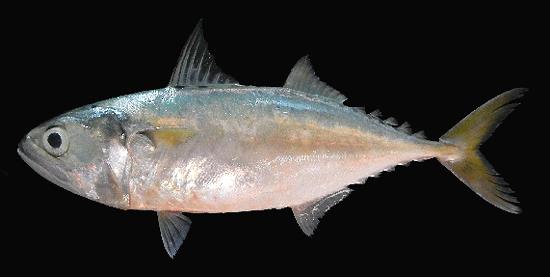
It is an important regional food fish. Larger predatory mackerels require more attention to current mercury guidance than small plankton-feeding species.
8. Island Mackerel
Island Mackerel is the common name for Rastrelliger faughni, a Indian mackerel from the eastern Indian Ocean and western Pacific. Look for a slender body and relatively short gill rakers. Regional market names can overlap, making the scientific name valuable.
It is a schooling coastal fish used locally. Fishery status varies by stock and region, so responsible buying depends on origin and harvest method.
9. Red Sea Mackerel
Red Sea Mackerel (Rastrelliger chrysozonus) is a Indian mackerel found in the Red Sea. It can be identified by an Indian-mackerel-like body with a longer upper jaw. Like most mackerels, it has a streamlined body and finlets that support efficient swimming.

It is recognized as a distinct Red Sea lineage. Freshness is critical because oily fish flavors strengthen quickly when handling and temperature control are poor.
10. Shark Mackerel
The Shark Mackerel, scientifically Grammatorcynus bicarinatus, belongs to the double-lined mackerel group. Its distribution includes northern Australian and nearby Indo-Pacific waters, and a useful identification clue is two lateral lines and a sleek silver body.
It is caught by commercial and recreational fishers. Common preparations include grilling, broiling, smoking, curing, drying, or canning depending on size and tradition.
11. Double-Lined Mackerel
Among the different types of mackerel fish, Double-Lined Mackerel is associated with the tropical Indo-Pacific. This double-lined mackerel shows two conspicuous lateral lines, helping separate it from other silver pelagic fishes.
It is a reef-edge predator of smaller fishes. Larger predatory mackerels require more attention to current mercury guidance than small plankton-feeding species.
12. Serra Spanish Mackerel
Serra Spanish Mackerel is the common name for Scomberomorus brasiliensis, a Spanish mackerel from the western Atlantic from Central to South America. Look for rows of yellowish spots on a long body. Regional market names can overlap, making the scientific name valuable.
It is eaten fresh, salted, smoked, frozen, or in ceviche. Fishery status varies by stock and region, so responsible buying depends on origin and harvest method.
13. King Mackerel
King Mackerel (Scomberomorus cavalla) is a Spanish mackerel found in the western Atlantic and Gulf region. It can be identified by a long body, sharp teeth, and deeply forked tail. Like most mackerels, it has a streamlined body and finlets that support efficient swimming.
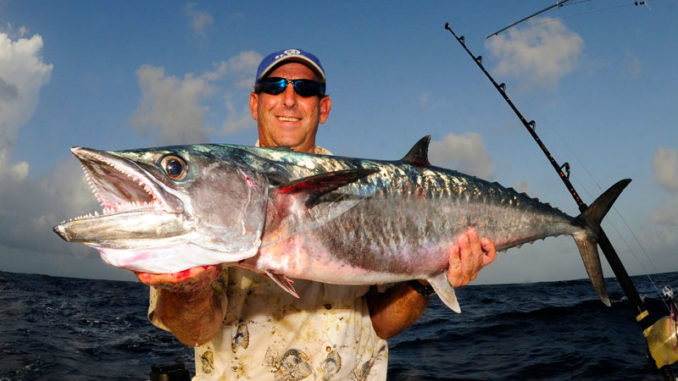
It is a major game and food fish. Freshness is critical because oily fish flavors strengthen quickly when handling and temperature control are poor.
14. Narrow-Barred Spanish Mackerel
The Narrow-Barred Spanish Mackerel, scientifically Scomberomorus commerson, belongs to the Spanish mackerel group. Its distribution includes the Indo-West Pacific, and a useful identification clue is many narrow vertical bars along the sides.
It is a large coastal predator and important fishery species. Common preparations include grilling, broiling, smoking, curing, drying, or canning depending on size and tradition.
15. Monterrey Spanish Mackerel
Among the different types of mackerel fish, Monterrey Spanish Mackerel is associated with the Gulf of California. This Spanish mackerel shows a long body with region-specific pattern and fin features, helping separate it from other silver pelagic fishes.
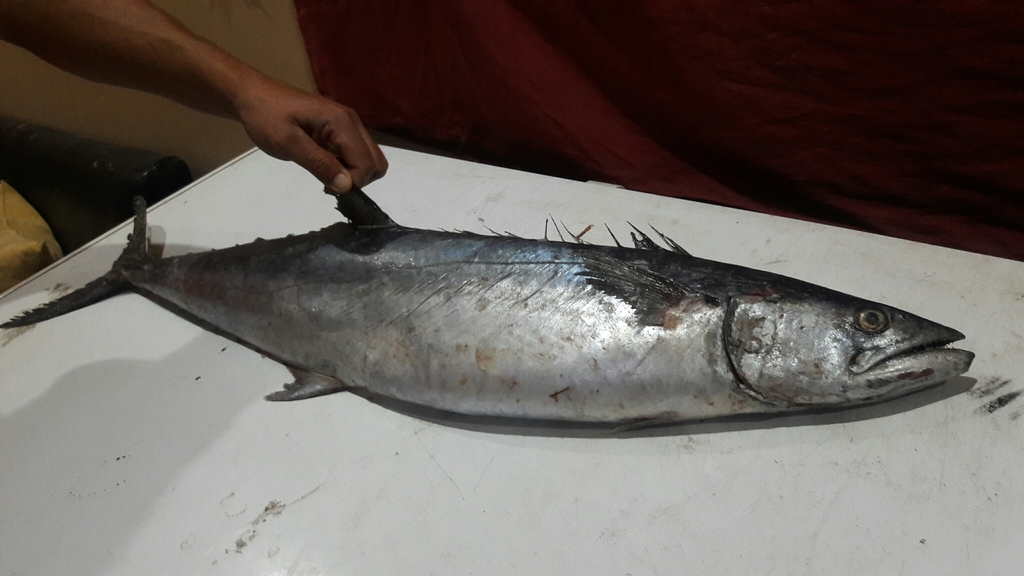
It is a restricted-range species requiring accurate identification. Larger predatory mackerels require more attention to current mercury guidance than small plankton-feeding species.
16. Indo-Pacific King Mackerel
Indo-Pacific King Mackerel is the common name for Scomberomorus guttatus, a Spanish mackerel from the northern Indian Ocean and western Pacific. Look for dark side spots and a toothed jaw. Regional market names can overlap, making the scientific name valuable.
It is widely marketed fresh and processed. Fishery status varies by stock and region, so responsible buying depends on origin and harvest method.
17. Korean Seerfish
Korean Seerfish (Scomberomorus koreanus) is a Spanish mackerel found in the northwestern Pacific and adjacent Asian seas. It can be identified by a long silver body with subtle bars or spots. Like most mackerels, it has a streamlined body and finlets that support efficient swimming.
It is a regional fishery species. Freshness is critical because oily fish flavors strengthen quickly when handling and temperature control are poor.
18. Streaked Seerfish
The Streaked Seerfish, scientifically Scomberomorus lineolatus, belongs to the Spanish mackerel group. Its distribution includes the Indian Ocean and western Pacific, and a useful identification clue is horizontal dark streaks on the upper sides.
It is valued for firm flesh. Common preparations include grilling, broiling, smoking, curing, drying, or canning depending on size and tradition.
19. Atlantic Spanish Mackerel
Among the different types of mackerel fish, Atlantic Spanish Mackerel is associated with the western Atlantic coast. This Spanish mackerel shows yellow spots on silver sides and a dark first dorsal fin, helping separate it from other silver pelagic fishes.
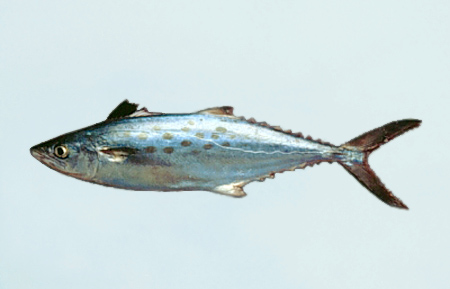
It is popular for light-tackle fishing and grilling. Larger predatory mackerels require more attention to current mercury guidance than small plankton-feeding species.
20. Papuan Seerfish
Papuan Seerfish is the common name for Scomberomorus multiradiatus, a Spanish mackerel from waters around southern New Guinea. Look for a localized form with distinctive fin-ray counts. Regional market names can overlap, making the scientific name valuable.
It is far less familiar than widespread relatives. Fishery status varies by stock and region, so responsible buying depends on origin and harvest method.
21. Australian Spotted Mackerel
Australian Spotted Mackerel (Scomberomorus munroi) is a Spanish mackerel found in northern and eastern Australian waters. It can be identified by prominent round spots along the body. Like most mackerels, it has a streamlined body and finlets that support efficient swimming.
It is targeted by commercial and recreational fisheries. Freshness is critical because oily fish flavors strengthen quickly when handling and temperature control are poor.
22. Japanese Spanish Mackerel
The Japanese Spanish Mackerel, scientifically Scomberomorus niphonius, belongs to the Spanish mackerel group. Its distribution includes the northwestern Pacific, and a useful identification clue is rows of dark spots or bars.
It is an important seasonal food fish in East Asia. Common preparations include grilling, broiling, smoking, curing, drying, or canning depending on size and tradition.
23. Kanadi Kingfish
Among the different types of mackerel fish, Kanadi Kingfish is associated with the western Indian Ocean. This Spanish mackerel shows multiple narrow dark lines along the sides, helping separate it from other silver pelagic fishes.
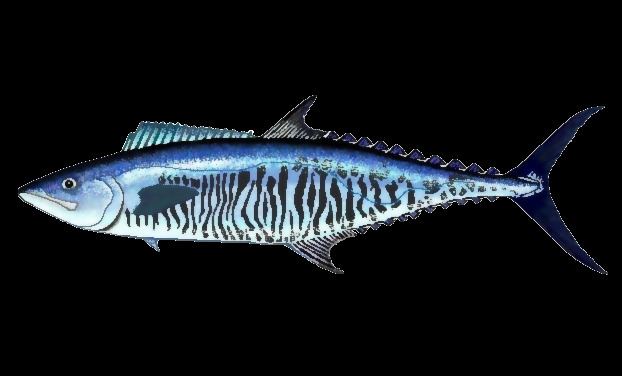
It is used fresh, frozen, or salted. Larger predatory mackerels require more attention to current mercury guidance than small plankton-feeding species.
24. Queensland School Mackerel
Queensland School Mackerel is the common name for Scomberomorus queenslandicus, a Spanish mackerel from northern Australian and nearby waters. Look for large side spots on a slender body. Regional market names can overlap, making the scientific name valuable.
It is a coastal schooling fish. Fishery status varies by stock and region, so responsible buying depends on origin and harvest method.
25. Cero
Cero (Scomberomorus regalis) is a Spanish mackerel found in the western Atlantic and Caribbean. It can be identified by a yellow-gold side stripe with spots and dashes above it. Like most mackerels, it has a streamlined body and finlets that support efficient swimming.
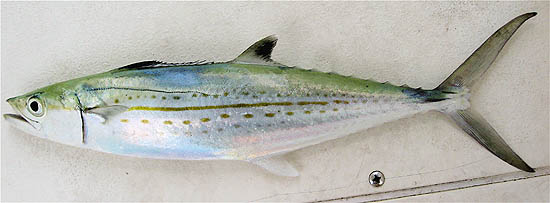
It is a valued reef-edge game and food fish. Freshness is critical because oily fish flavors strengthen quickly when handling and temperature control are poor.
26. Broad-Barred King Mackerel
The Broad-Barred King Mackerel, scientifically Scomberomorus semifasciatus, belongs to the Spanish mackerel group. Its distribution includes northern Australia and southern New Guinea, and a useful identification clue is broad vertical bars, especially in younger fish.
It is a coastal predator of turbid bays and reefs. Common preparations include grilling, broiling, smoking, curing, drying, or canning depending on size and tradition.
27. Pacific Sierra
Among the different types of mackerel fish, Pacific Sierra is associated with the eastern Pacific. This Spanish mackerel shows rows of yellow-orange spots on silver sides, helping separate it from other silver pelagic fishes.

It is common in artisanal and recreational fisheries. Larger predatory mackerels require more attention to current mercury guidance than small plankton-feeding species.
28. Chinese Seerfish
Chinese Seerfish is the common name for Scomberomorus sinensis, a Spanish mackerel from East Asian coastal and estuarine waters. Look for a very large elongated body with faint bars. Regional market names can overlap, making the scientific name valuable.
It is marketed as a large food fish. Fishery status varies by stock and region, so responsible buying depends on origin and harvest method.
29. West African Spanish Mackerel
West African Spanish Mackerel (Scomberomorus tritor) is a Spanish mackerel found in the eastern Atlantic along West Africa. It can be identified by rows of spots on a slender silver body. Like most mackerels, it has a streamlined body and finlets that support efficient swimming.
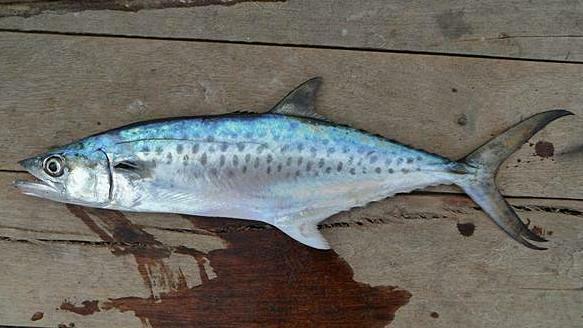
It is sold fresh, smoked, or dried. Freshness is critical because oily fish flavors strengthen quickly when handling and temperature control are poor.
30. Arabian Sparrow Seerfish
The Arabian Sparrow Seerfish, scientifically Scomberomorus avirostrus, belongs to the Spanish mackerel group. Its distribution includes the Arabian Sea region, and a useful identification clue is a distinct head and fin combination supported by genetic evidence.
It is a newly described seerfish showing that taxonomy still changes. Common preparations include grilling, broiling, smoking, curing, drying, or canning depending on size and tradition.
How Are These Types of Mackerel Fish Classified?
Mackerels are ray-finned fishes in the family Scombridae, which also contains tunas, bonitos, and wahoo. True mackerels belong to the tribe Scombrini. Spanish mackerels and seerfishes belong to Scomberomorini. Small plankton-feeding species and large fish-eating king mackerels share a fast-swimming body plan but differ greatly in size, teeth, ecology, and food-safety guidance.
Where Do Mackerel Fish Live?
Mackerels occur in temperate, subtropical, and tropical seas. True mackerels often form large offshore or shelf schools. Indian mackerels concentrate in warm, productive coastal waters. Spanish mackerels patrol beaches, reefs, estuaries, and shelf edges where baitfish gather. Many move seasonally as temperature, currents, spawning, and prey change.
How to Identify Different Types of Mackerel Fish
- Body: Streamlined and torpedo-shaped.
- Finlets: Small fins sit behind the second dorsal and anal fins.
- True mackerels: Usually smaller, with wavy back bars and smaller teeth.
- Spanish mackerels: Longer bodies, large mouths, sharp teeth, and spots, bars, or stripes.
- Indian mackerels: Deep to moderately deep bodies with long gill rakers.
- Market labels: Confirm species and origin whenever possible.
Fishing, Cooking, and Buying Tips
- Place mackerel on ice immediately after capture.
- Grill, broil, smoke, pickle, or can small mackerels.
- Cut large Spanish mackerels into steaks for grilling or smoking.
- Use citrus, ginger, mustard, herbs, or chile to balance rich flavor.
- Score thick skin lightly to reduce curling.
- Read current species-specific mercury guidance.
Safety, Sustainability, and Conservation Notes
Mercury levels are not the same across all mackerels. Small schooling species differ from large king and Spanish mackerels, so official advice should be checked by species. Histamine poisoning can occur when scombrid fish are not chilled properly, and cooking does not reliably remove histamine after it forms. Sustainability also varies by stock, country, season, and fishing method.
Fun Facts About Mackerel Fish
- Mackerels have finlets that help manage water flow.
- Many form schools of similarly sized fish.
- True mackerels often eat plankton and small fish.
- Spanish mackerels have sharp predatory teeth.
- Skin patterns can fade after capture.
- Some regions call mackerels kingfish.
- Jack mackerels are not true mackerels.
- The Red Sea mackerel was restored as a species after modern study.
- A new Arabian seerfish was described recently.
- Mackerels are important prey for larger ocean predators.
Final Thoughts on Types of Mackerel Fish
Understanding the different types of mackerel fish prevents confusion between small schooling mackerels and large predatory seerfishes. Atlantic mackerel, Indian mackerel, king mackerel, cero, Pacific sierra, and narrow-barred Spanish mackerel differ in range, markings, size, cooking use, and consumption guidance. Confirm the scientific name, keep fish very cold, and use stock-specific sustainability information.
Frequently Asked Questions
1. What is a mackerel?
A common name for several streamlined marine fishes, mainly in the family Scombridae.
2. How many mackerel species are there?
The count depends on whether only true mackerels or also Indian, double-lined, and Spanish mackerels are included.
3. What are true mackerels?
Species in the tribe Scombrini, especially Scomber and Rastrelliger.
4. What are Spanish mackerels?
Predatory Scomberomorus species with long bodies, sharp teeth, and spots, bars, or stripes.
5. Is king mackerel a true mackerel?
It is in the mackerel family but belongs to the Spanish mackerel group.
6. Is Atlantic mackerel the same as chub mackerel?
No; they are different species.
7. Is Indian mackerel the same as Indian chub mackerel?
No; they belong to different genera.
8. What is the largest mackerel?
Several Spanish mackerels grow much larger than true mackerels.
9. Which mackerel is good for grilling?
Atlantic, chub, Indian, blue, and many Spanish mackerels grill well.
10. Which mackerel is commonly canned?
Atlantic, chub, Indian, and related small mackerels are commonly canned.
11. Why is mackerel oily?
Its flesh stores fat that supports active swimming and seasonal energy needs.
12. Does all mackerel taste strong?
No; flavor varies with species, season, freshness, size, and preparation.
13. How can strong flavor be reduced?
Use very fresh fish and pair it with acid, herbs, mustard, ginger, or chile.
14. Can mackerel cause histamine poisoning?
Yes, when temperature control is poor.
15. Does cooking destroy histamine?
No; cooking does not reliably remove it.
16. Is every mackerel high in mercury?
No; mercury varies strongly by species and size.
17. Is king mackerel high in mercury?
It is commonly listed in official high-mercury warnings.
18. Can pregnant people eat mackerel?
Some smaller species may fit official guidance, while king mackerel may be restricted.
19. What does a mackerel look like?
Most have a torpedo-shaped body, forked tail, two dorsal fins, and finlets.
20. Why do mackerels have finlets?
They help manage water flow during fast swimming.
21. Do mackerels live in freshwater?
They are primarily marine, though some enter estuaries.
22. Do mackerels migrate?
Many move seasonally with temperature, prey, and spawning.
23. What do mackerels eat?
Small species eat plankton and small fish; large species hunt fish, squid, and crustaceans.
24. Are mackerel and tuna related?
Yes; both belong to Scombridae.
25. Is wahoo a mackerel?
Wahoo is in the mackerel family but is not normally called a mackerel species.
26. Are jack mackerels true mackerels?
No; they belong to Carangidae.
27. How should fresh mackerel be stored?
Keep it on ice or under reliable refrigeration.
28. Can mackerel be frozen?
Yes; wrap and freeze it quickly.
29. How are cero and Atlantic Spanish mackerel different?
Cero has a yellow-gold side stripe; Atlantic Spanish mackerel is known mainly for yellow spots.
30. Why do scientific names matter?
They clarify species, range, mercury advice, and fishery information.
Read more:
45 Types of Marine Fish: Habitats and Identification