

Australia is home to one of the world’s most diverse shark populations, from tiny bottom-dwelling sharks to enormous filter-feeding whale sharks. This guide to the types of sharks in Australia covers 25 notable species, including where they live, how to identify them, what they eat, and how they behave. Although sharks are often feared, most Australian species are shy, specialized predators that play important roles in healthy marine ecosystems.
What Are the Main Types of Sharks in Australia?
The main types of sharks in Australia include great white sharks, tiger sharks, bull sharks, whale sharks, reef sharks, hammerheads, wobbegongs, sawsharks, and several deep-water species. They occupy coastal beaches, coral reefs, estuaries, continental shelves, and the open ocean. Their appearance, size, diet, and behavior vary greatly, so identifying the species is more useful than treating all sharks as alike.
1. Great White Shark
Scientific name: Carcharodon carcharias. The great white shark is one of Australia’s best-known sharks, recognized by its gray upper body, white underside, pointed snout, and large triangular teeth. Adults commonly reach 4 to 5 meters, although larger individuals are possible.
Great white sharks occur around southern Australia, including waters near South Australia, Victoria, Tasmania, New South Wales, and Western Australia. They hunt fish, rays, seals, dolphins, and carrion. Juveniles often feed more heavily on fish and squid, while larger sharks can target marine mammals. They are powerful swimmers and important apex predators, but encounters with people remain uncommon.
2. Tiger Shark
Scientific name: Galeocerdo cuvier. Tiger sharks have broad heads, blunt snouts, strong jaws, and dark vertical bars that are most visible in younger animals. Adults may exceed 4 meters and are known for their broad diet.
They live in tropical and subtropical coastal waters around northern and eastern Australia, including reefs, bays, offshore islands, and estuaries. Tiger sharks eat fish, turtles, seabirds, rays, crustaceans, and other available prey. Their ability to consume many types of food helps them thrive in varied habitats. They are generally active at night and often patrol shallow coastal areas.
3. Bull Shark
Scientific name: Carcharhinus leucas. Bull sharks have a stocky body, short blunt snout, small eyes, and gray coloration. They can reach about 3.5 meters and are famous for tolerating fresh and brackish water.
In Australia, bull sharks occur along northern and eastern coasts and may travel far up rivers and estuaries. They eat fish, rays, turtles, birds, and other animals. Their ability to move between saltwater and freshwater makes them especially adaptable. Because they may use popular coastal waterways, swimmers should follow local warnings and avoid murky water, river mouths, and dawn or dusk conditions when advised.
4. Whale Shark
Scientific name: Rhincodon typus. The whale shark is the largest fish in the world, sometimes growing beyond 12 meters. Its broad head, huge mouth, checkerboard pattern, and pale spots make it easy to recognize.
Whale sharks are famous at Ningaloo Reef in Western Australia, where seasonal gatherings attract plankton and tourism. They also occur in northern Australian waters. Despite their size, whale sharks are gentle filter feeders that consume plankton, small fish, and fish eggs. They migrate widely and should always be observed with responsible wildlife-tourism practices.
5. Grey Reef Shark
Scientific name: Carcharhinus amblyrhynchos. Grey reef sharks have a streamlined gray body, broad rounded dorsal fin, and a darker edge on the tail. They commonly grow to around 2 meters.
This species lives around tropical coral reefs and rocky reef systems, especially in northern Australia. Grey reef sharks are active predators of reef fish, squid, octopuses, and crustaceans. They often patrol reef edges and channels during the day and may become more active at night. Divers should give them space, particularly if a shark displays stiff posture or exaggerated swimming movements.
6. Whitetip Reef Shark
Scientific name: Triaenodon obesus. The whitetip reef shark is slender, with a flattened head and distinctive white tips on the first dorsal fin and upper tail lobe. It usually reaches about 2 meters.
These nocturnal sharks rest in caves, under ledges, and around coral reefs during daylight hours. They emerge at night to hunt small reef fish, eels, octopuses, lobsters, and crabs. Whitetip reef sharks are common in tropical Australian waters and are generally calm when left undisturbed.
7. Blacktip Reef Shark
Scientific name: Carcharhinus melanopterus. The blacktip reef shark is identified by the bold black marking on the tip of its first dorsal fin, along with black-tipped fins and a streamlined body. It commonly grows to about 1.6 meters.
It inhabits shallow tropical reefs, lagoons, sandy flats, and coastal waters in northern Australia. Its diet includes small fish, squid, crustaceans, and occasionally sea snakes. Blacktip reef sharks are often seen in clear, shallow water and usually retreat when approached by divers or swimmers.
8. Silvertip Shark
Scientific name: Carcharhinus albimarginatus. Silvertip sharks have a robust body, broad head, and noticeable pale or silver edges along their fins. They can grow to approximately 3 meters.
This reef-associated species occurs in tropical offshore waters and around coral atolls, reef drop-offs, and oceanic islands. Silvertip sharks eat reef fish, tuna, rays, squid, and crustaceans. They are confident predators and should be observed carefully, especially in areas with limited escape routes.
9. Bronze Whaler
Scientific name: Carcharhinus brachyurus. Also called the copper shark, the bronze whaler has a bronze, olive-gray, or brownish upper body and a long, pointed snout. It may reach about 3.3 meters.
Bronze whalers occur in temperate and subtropical waters around much of Australia. They feed on schooling fish, squid, rays, and smaller sharks. They may gather near coastal headlands, bays, channels, and areas where fish are concentrated. Their seasonal movements can make them relevant to recreational and commercial fisheries.
10. Dusky Shark
Scientific name: Carcharhinus obscurus. Dusky sharks are large, streamlined sharks with a long snout, gray-brown back, and pale underside. They can grow beyond 3 meters and mature slowly.
They occur along continental shelves, coastal waters, and offshore areas around Australia. Dusky sharks eat bony fish, rays, squid, crustaceans, and other marine animals. Because they grow slowly and reproduce gradually, they are vulnerable to overfishing. Responsible fishing practices and conservation measures are important for their recovery.
11. Spinner Shark
Scientific name: Carcharhinus brevipinna. Spinner sharks are slender, fast-moving sharks with a pointed snout and long, narrow pectoral fins. They are named for their spectacular habit of leaping and spinning through schools of fish.
They live in warm coastal waters, bays, and offshore areas around northern and eastern Australia. Spinner sharks feed mainly on schooling fish and squid. Their rapid vertical attacks can send them briefly out of the water, making them an exciting sight for experienced wildlife observers.
12. Lemon Shark
Scientific name: Negaprion acutidens. The sicklefin lemon shark has a yellowish or brown-gray color, broad fins, and a blunt head. It can reach more than 3 meters.
This shark occurs in warm shallow coastal waters, lagoons, mangroves, and coral reef areas across northern Australia. It hunts fish, rays, crustaceans, and other bottom-associated prey. Lemon sharks often rest on the seafloor and may use sheltered nursery areas when young.
13. Tawny Nurse Shark
Scientific name: Nebrius ferrugineus. The tawny nurse shark has a broad flattened head, small eyes, barbels near the mouth, and a brown or tawny body. It commonly grows to around 3 meters.
Found around tropical reefs and rocky bottoms in northern Australia, this slow-moving shark is mostly nocturnal. It uses its powerful suction feeding ability to extract octopuses, crabs, sea urchins, and fish from crevices. It often rests beneath ledges during the day.
14. Zebra Shark
Scientific name: Stegostoma tigrinum. Young zebra sharks have dark bands and spots, while adults usually have a tan body covered with small dark spots. They have a long tail and distinctive barbels near the mouth.
Zebra sharks live on sandy bottoms, seagrass beds, and coral reefs in tropical Australian waters. They feed by vacuuming up mollusks, crustaceans, small fish, and other seafloor animals. Despite their size, they are generally slow-moving and peaceful when not disturbed.
15. Tasselled Wobbegong
Scientific name: Eucrossorhinus dasypogon. The tasselled wobbegong has a flattened body, mottled camouflage, and elaborate skin flaps around its head. These features help it disappear among coral, rocks, and sponges.
It occurs on tropical reefs and shallow coastal seafloors in northern Australia. This ambush predator waits motionless before swallowing fish, octopuses, and crustaceans. Divers should avoid touching or stepping near wobbegongs because a well-camouflaged shark can be difficult to see.
16. Banded Wobbegong
Scientific name: Orectolobus ornatus. The banded wobbegong has a flattened body with patterned bands, lobes around the mouth, and camouflage suited to rocky reefs and sandy bottoms.
It is found mainly along parts of Australia’s eastern and southern coasts. Banded wobbegongs are ambush hunters that consume fish, squid, octopuses, and crustaceans. Their ability to remain still makes careful observation essential for safe snorkeling and diving.
17. Spotted Wobbegong
Scientific name: Orectolobus maculatus. The spotted wobbegong is marked with intricate spots and saddles across a broad, flattened body. It may grow to around 3 meters.
This bottom-dwelling shark lives around rocky reefs, caves, jetties, and coastal seafloors in southern and eastern Australia. It often rests during the day and feeds at night on fish and invertebrates. Its excellent camouflage is one of its most important defenses.
18. Port Jackson Shark
Scientific name: Heterodontus portusjacksoni. The Port Jackson shark has a blunt head, ridged teeth, spines in front of its dorsal fins, and dark harness-like markings across its body. It usually grows to about 1.5 meters.
This distinctive shark lives in temperate waters along southern Australia, including rocky reefs, seagrass areas, and sandy bottoms. It feeds on sea urchins, shellfish, worms, and other bottom animals. Port Jackson sharks are often encountered by divers and are generally slow and nonaggressive.
19. Crested Horn Shark
Scientific name: Heterodontus galeatus. The crested horn shark has a blunt snout, prominent brow ridges, dorsal spines, and dark bands. Its stocky body is adapted to life on the seafloor.
It occurs along Australia’s eastern coast, especially around rocky reefs, kelp beds, and sheltered coastal habitats. The shark crushes sea urchins, mollusks, and crustaceans with its specialized teeth. It is mostly nocturnal and spends daylight hours resting in crevices.
20. Blind Shark
Scientific name: Brachaelurus waddi. The blind shark has small eyes, a broad head, short barbels, and a brown body. Despite its common name, it can see; the name refers to its habit of closing or covering its eyes when handled.
Blind sharks live in shallow coastal waters along eastern and southern Australia. They rest beneath rocks and ledges and feed on small fish, crabs, worms, and other seafloor animals. They are usually inactive during the day and forage after dark.
21. Southern Sawshark
Scientific name: Pristiophorus cirratus. Southern sawsharks have a long, flattened, toothed rostrum with barbels near its base. Their saw-like snout helps them detect and slash through prey.
They live on the seafloor in temperate waters around southern Australia, often along the continental shelf. Their diet includes fish, squid, and crustaceans. Sawsharks are not the same as sawfish; sawsharks are true sharks, while sawfish are rays.
22. Eastern Sawshark
Scientific name: Pristiophorus peroniensis. The eastern sawshark has the characteristic elongated toothed snout of sawsharks, along with a slender body and bottom-dwelling lifestyle.
It is associated with deeper coastal waters off southeastern Australia. The rostrum contains sensory structures that help locate prey in low-light conditions. Eastern sawsharks feed on fish and invertebrates close to the seafloor and are rarely seen by casual beach visitors.
23. Southern Lanternshark
Scientific name: Etmopterus baxteri. The southern lanternshark is a small deep-water shark with dark coloration and light-producing organs called photophores. It is much smaller than many familiar coastal sharks.
This species lives in deep waters around southern Australia and Tasmania. It feeds on small fish, squid, and crustaceans. Bioluminescence may help with camouflage or communication in the darkness of the deep ocean.
24. Cookiecutter Shark
Scientific name: Isistius brasiliensis. The cookiecutter shark is a small, cigar-shaped shark with a dark body and a glowing underside. It is named for the round plugs of flesh it removes from larger animals.
Cookiecutter sharks occur in deep offshore waters, including around Australia. They use specialized lower teeth and suction-like feeding behavior to bite whales, dolphins, tuna, and other large animals. They migrate vertically through the water column, often moving closer to the surface at night.
25. Goblin Shark
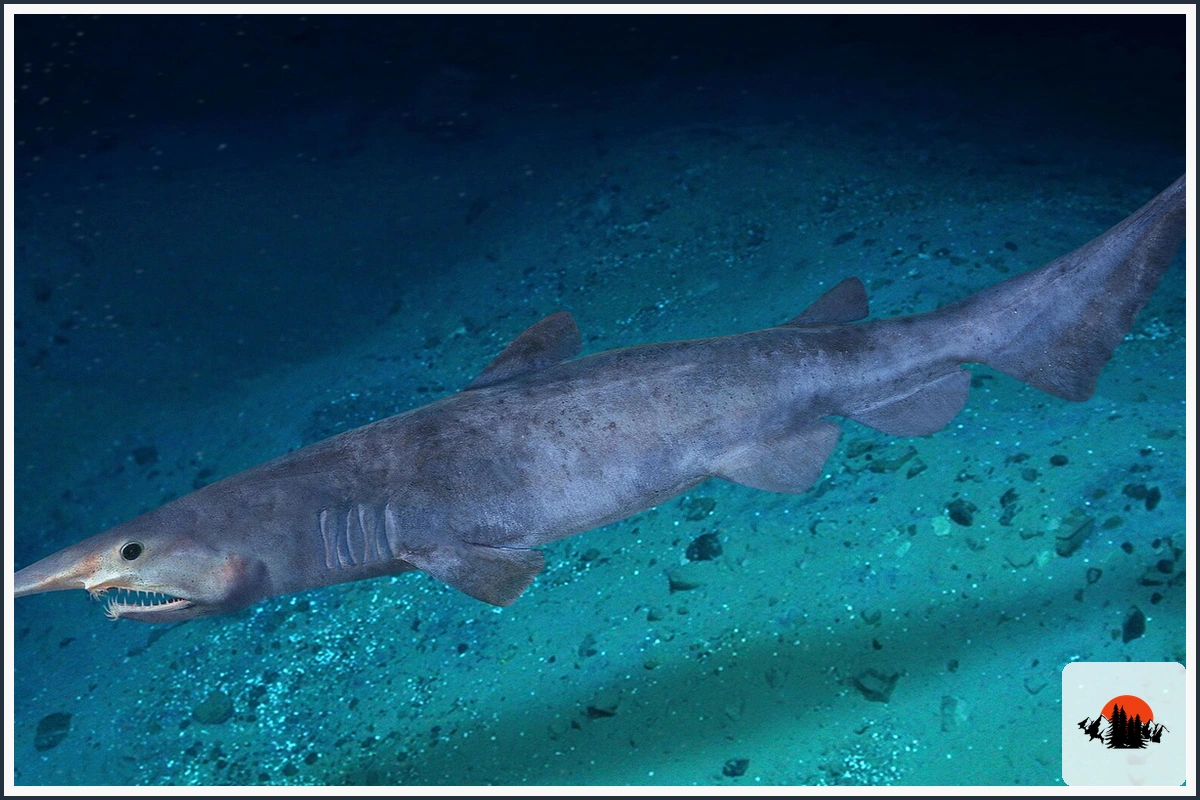
Scientific name: Mitsukurina owstoni. The goblin shark has a long flattened snout, flabby body, and highly protrusible jaws. Its pinkish-gray appearance and unusual face reflect its deep-sea lifestyle.
Goblin sharks are rare and live along deep continental slopes and submarine canyons around Australia. Their jaws shoot forward to capture fish, squid, and crustaceans. They are seldom encountered alive at the surface and remain one of the least understood Australian sharks.
How Are These Sharks Classified?
Australian sharks can be grouped by body shape, habitat, feeding strategy, and evolutionary relationships.
- Ground sharks: Many reef and coastal sharks, including bull sharks and tiger sharks, belong to the ground shark group.
- Carpet sharks: Wobbegongs, whale sharks, zebra sharks, and nurse sharks are commonly placed among carpet sharks.
- Bullhead sharks: Port Jackson sharks and horn sharks have crushing teeth and spines in front of their dorsal fins.
- Sawsharks: Sawsharks have long toothed snouts and barbels, unlike true sawfish.
- Deep-water sharks: Lanternsharks, cookiecutter sharks, and goblin sharks have specialized adaptations for life in darkness.
- Filter feeders: Whale sharks filter plankton and small organisms rather than actively hunting large prey.
Where Do These Sharks Live?
Australia’s sharks occupy almost every marine environment surrounding the continent. Tropical species occur around coral reefs, lagoons, mangroves, and warm coastal waters in Queensland, the Northern Territory, and northern Western Australia. Temperate species are common around rocky reefs, kelp forests, seagrass beds, bays, and continental shelves in southern Australia and Tasmania.
Some sharks, such as bull sharks, enter estuaries and rivers. Others, including goblin sharks and lanternsharks, live far offshore in deep water. The Great Barrier Reef, Ningaloo Reef, Shark Bay, southern coastal reefs, and offshore continental slopes are all important shark habitats.
What Do Australian Sharks Eat?
Shark diets depend on body size, habitat, and jaw structure. Common prey includes fish, squid, octopuses, rays, crabs, lobsters, sea urchins, mollusks, turtles, seabirds, and marine mammals.
- Whale sharks filter plankton, fish eggs, and tiny schooling animals.
- Wobbegongs ambush fish, octopuses, and crustaceans from the seafloor.
- Port Jackson sharks crush sea urchins and shelled prey.
- Reef sharks generally pursue small fish, squid, and crustaceans.
- Large tiger and great white sharks can consume bigger fish, rays, turtles, seals, and carrion.
- Deep-water sharks often feed on squid, small fish, and drifting or sinking organic matter.
How to Identify Different Types of Sharks in Australia
- Look at the snout: Blunt, pointed, flattened, or saw-like snouts can quickly narrow identification.
- Check the body shape: Streamlined bodies suggest active swimmers, while flattened bodies often indicate bottom-dwelling species.
- Observe markings: Stripes, spots, black fin tips, white fin tips, and harness patterns can be useful clues.
- Estimate the habitat: A coral reef, sandy bottom, estuary, beach, or deep offshore slope supports different species.
- Notice the fins: Dorsal spines, fin size, and unusual tail proportions help separate similar sharks.
- Consider the time of day: Many wobbegongs, catsharks, and other bottom species are more active at night.
- Use location carefully: Regional range is helpful, but several shark species overlap in Australian waters.
- Never handle a wild shark: Identification should be done from a safe distance using photographs and reliable field guides.
Fishing and Wildlife Observation Tips
When fishing in Australia, check state and territory regulations before targeting or retaining any shark. Rules may limit species, size, seasons, equipment, or possession, and protected species must be released immediately according to local requirements. Use strong tackle, minimize handling time, keep the shark in the water when possible, and avoid fishing near swimmers.
For wildlife observation, watch from a respectful distance and never feed or chase sharks. Divers should avoid blocking a shark’s escape route, especially near reefs, caves, or baitfish schools. Guided experiences at places such as Ningaloo Reef can provide safer, more educational encounters with whale sharks and other marine wildlife.
Safety, Sustainability, and Conservation Notes
Most sharks do not seek out people, but any large wild predator deserves respect. Follow beach closures, local shark alerts, and lifeguard instructions. Avoid swimming alone at dawn, dusk, or in murky water when local authorities identify increased risk. Do not enter the water near fishing activity, bait schools, or animal carcasses.
Sharks face threats from accidental capture, targeted fishing, habitat degradation, pollution, and climate-related changes. Species with slow growth and late maturity can be especially vulnerable. Support responsible seafood choices, follow catch limits, release protected species carefully, and never buy products made from illegally caught sharks or threatened rays.
Fun Facts About Sharks in Australia
- Australia is surrounded by waters containing tropical, temperate, and deep-sea shark species.
- The whale shark is the largest fish in the world, not a whale.
- Wobbegongs use camouflage to ambush prey from the seafloor.
- Bull sharks can tolerate both saltwater and freshwater.
- Port Jackson sharks use flattened teeth to crush hard-shelled prey.
- Sawsharks and sawfish are different kinds of animals.
- Some lanternsharks produce their own light.
- Cookiecutter sharks leave round bites in much larger animals.
- Young zebra sharks have stripes, but adults usually develop spots.
- Many shark species are more threatened by human activities than by natural predators.
Final Thoughts on Types of Sharks in Australia
Learning about the types of sharks in Australia reveals an extraordinary range of sizes, shapes, habitats, and feeding strategies. From reef-dwelling wobbegongs and Port Jackson sharks to giant whale sharks and deep-sea goblin sharks, each species has a specialized role in marine ecosystems. Careful identification, responsible fishing, safe observation, and habitat protection can help keep Australia’s shark diversity healthy for future generations.
Frequently Asked Questions
1. How many types of sharks live in Australia?
Australia has well over 100 recorded shark species in its surrounding waters. This article highlights 25 notable and recognizable examples rather than listing every deep-sea or rarely recorded species.
2. What is the largest shark in Australia?
The whale shark is the largest shark found in Australian waters and the largest fish in the world. It is a filter feeder and is not a typical hunting shark.
3. What is the most dangerous shark in Australia?
Great white, tiger, and bull sharks are among the species most often associated with serious incidents because of their size, habitat, and feeding behavior. However, encounters remain uncommon, and risk varies by location and conditions.
4. Are Australian sharks aggressive?
Most sharks avoid people. Their behavior depends on species, food availability, water conditions, and whether they feel threatened or trapped.
5. Which Australian sharks are found near beaches?
Species that may occur near beaches include bull sharks, bronze whalers, spinner sharks, juvenile great whites, and several smaller coastal sharks. Local conditions and season strongly influence sightings.
6. Can bull sharks live in Australian rivers?
Yes. Bull sharks can tolerate low-salinity water and may travel far into estuaries and rivers, particularly in northern and eastern Australia.
7. Where can people see whale sharks in Australia?
Ningaloo Reef in Western Australia is one of the best-known places for responsible whale shark encounters. Sightings depend on season, weather, and natural conditions.
8. Are whale sharks dangerous?
Whale sharks are generally gentle filter feeders, but they are still enormous wild animals. Swimmers should follow guide instructions, maintain distance, and avoid touching them.
9. What is a wobbegong shark?
A wobbegong is a flattened carpet shark with camouflage patterns and skin flaps around its head. It waits on the seafloor and ambushes passing prey.
10. Can wobbegong sharks bite people?
Wobbegongs are usually calm, but they can bite if stepped on, handled, or closely disturbed. Never touch or sit on one, even if it appears motionless.
11. What is the difference between a shark and a sawfish?
Sawsharks are true sharks with a toothed snout and barbels. Sawfish are rays with a similar-looking rostrum but different body structures and gill placement.
12. Which Australian sharks have black fin tips?
Blacktip reef sharks have especially recognizable black markings on their fins. Other species may also have darker fin tips, so habitat and body shape should be checked as well.
13. Which sharks live on coral reefs?
Grey reef sharks, whitetip reef sharks, blacktip reef sharks, silvertip sharks, zebra sharks, and several wobbegongs live around Australian coral reefs.
14. Which sharks live in deep water?
Goblin sharks, lanternsharks, cookiecutter sharks, sawsharks, and some catsharks inhabit deep offshore waters or continental slopes.
15. What do great white sharks eat?
Great white sharks eat fish, rays, squid, seals, dolphins, seabirds, and carrion. Their diet changes as they grow and move between habitats.
16. What do wobbegongs eat?
Wobbegongs ambush fish, octopuses, squid, crabs, lobsters, and other animals that pass close to their resting place.
17. Are Port Jackson sharks dangerous?
Port Jackson sharks are generally considered harmless to people and are slow-moving bottom feeders. They should still be left undisturbed in the water.
18. What does a Port Jackson shark look like?
It has a blunt head, ridges above the eyes, dorsal spines, and dark harness-like markings across its body.
19. Do sharks have bones?
Sharks have skeletons made primarily of cartilage rather than hard bone. This makes their bodies lighter and flexible.
20. Do sharks have scales?
Sharks have tiny tooth-like structures called dermal denticles. These create a rough skin texture and help reduce drag as they swim.
21. Do all Australian sharks need to keep swimming?
No. Some sharks must swim continuously to move water across their gills, while others can pump water over their gills while resting on the seafloor.
22. Are sharks protected in Australia?
Protection varies by species, state, territory, and fishery. Some sharks have strict protections or possession rules, so anglers must check current local regulations.
23. Should people feed sharks?
No. Feeding can alter natural behavior, attract sharks to people, and create safety problems. Wildlife should be observed without provisioning.
24. What should swimmers do if they see a shark?
Stay calm, avoid splashing, keep the shark in sight if possible, and move steadily toward shore or a boat. Follow lifeguard and local authority instructions.
25. Are shark numbers declining in Australia?
Some shark populations have declined because of fishing pressure, bycatch, habitat changes, and slow reproduction. Conservation status differs greatly between species.
26. Are sharks important to Australian ecosystems?
Yes. As predators, sharks help influence prey populations and food-web structure. Their presence can indicate functioning marine habitats.
27. What is the smallest shark in this guide?
The southern lanternshark and cookiecutter shark are among the smallest species listed, although their exact sizes vary by age and population.
28. Are goblin sharks commonly seen in Australia?
No. Goblin sharks live in deep water and are rarely encountered by divers or beachgoers. Most records come from deep-sea fishing or research.
29. Can sharks be kept in home aquariums?
Most Australian sharks are unsuitable for home aquariums because of their size, specialized needs, legal restrictions, and welfare requirements. Public aquariums may keep carefully selected small species under expert care.
30. What is the best way to identify an Australian shark?
Record the location, habitat, body shape, snout, fin markings, size, and behavior without approaching the animal. Use a reputable regional field guide or consult a marine biologist.