

The phrase types of Sphynx cats usually refers to color and pattern, not separate Sphynx breeds. Although the Sphynx looks hairless, most have fine down, and their skin displays the same pigment patterns that would appear in the fur of a coated cat.
This guide covers practical color groups—from white, black, blue, red, and cream to tabby, tortie, calico, pointed, mink, and sepia—while also explaining the grooming and health needs that matter more than color.
What Are the Main Types of Sphynx Cats?
Sphynx cats can display nearly every feline color and pattern. Common groupings include solid colors, bicolor, tabby, tortoiseshell, calico, point-restricted, mink, and sepia. Major cat registries treat these as color classes within the Sphynx breed rather than as separate breeds.
Other hairless cats such as Donskoy or Peterbald are different breeds, not “types of Sphynx.”
Sphynx Color and Pattern Types at a Glance
| Type | Appearance | What You Are Seeing | Care Difference |
|---|---|---|---|
| Solid | One dominant skin color | Base pigment | No special color-specific care |
| Bicolor | White/pink plus another color | White spotting + pigment | Sun protection still important |
| Tabby | Stripes or spots visible on skin | Tabby pattern genes | Same general skin care |
| Tortie/Calico | Multiple pigment patches | Sex-linked red/black genetics | Same general care |
| Point/Mink/Sepia | Darkened extremities or body contrast | Temperature-sensitive color expression | Same general care |
1. White Sphynx
A white Sphynx appears white to pink because there is little visible pigment in the skin and fine down. The cat is not necessarily completely hairless; many Sphynx have a soft peach-fuzz texture.

White or very pale skin can be sensitive to intense sun exposure. Sphynx cats should live primarily indoors, and owners should avoid unprotected prolonged sunbathing.
The color does not create a separate Sphynx breed. It is one pigment category within a breed that accepts a wide range of colors and patterns.
2. Black Sphynx
Black Sphynx cats show dark pigment across the skin and any fine hair that is present. Wrinkles, nose leather, and paw-pad color can make the overall black appearance especially dramatic.
Because Sphynx skin produces oils that would normally spread along a full coat, dark cats may show visible oily residue if grooming is neglected. Cleaning should be gentle and not so frequent that it irritates the skin.
Sun exposure can deepen visible color, which is one reason indoor management is useful.
3. Blue Sphynx
Blue is the dilute form of black and appears as a cool gray-blue skin tone. The color may look different depending on light, skin temperature, and the amount of fine fuzz present.
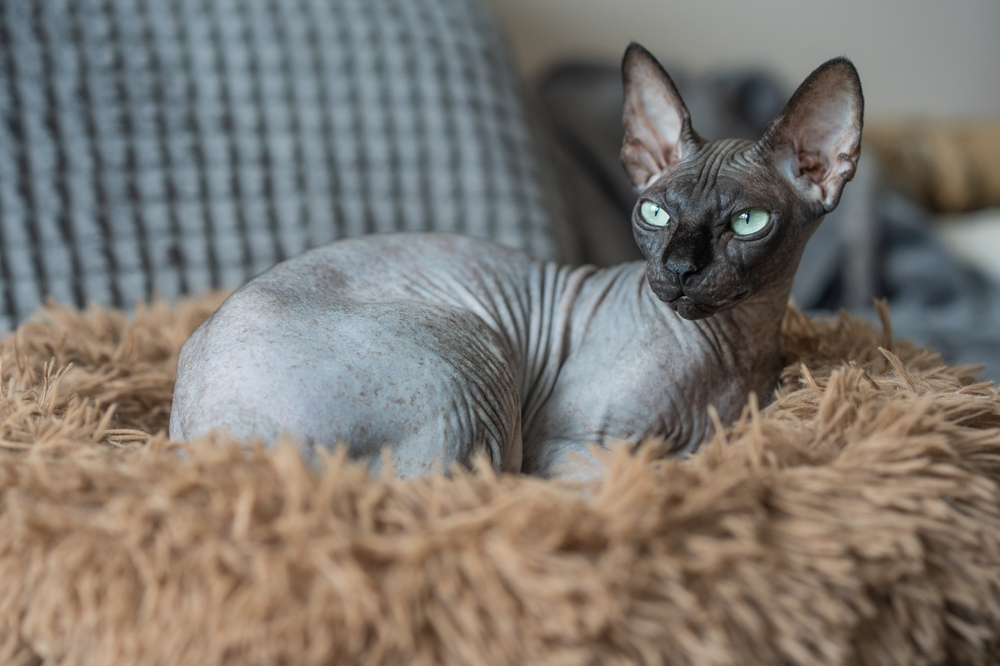
Blue Sphynx cats have the same body type and care requirements as other colors. The visible shade is skin and fine-hair pigment, not a special “blue skin” breed.
As with all Sphynx, warmth, skin hygiene, nail cleaning, and ear care require regular attention.
4. Red Sphynx
Red Sphynx cats show warm orange-to-red pigment. In hairless cats, tabby markings can sometimes be visible directly in the skin pattern even when there is little coat.
Red-based colors are influenced by sex-linked genetics, so their distribution in breeding populations differs between males and females.
Color should not be used to predict personality. Individual socialization and family line matter much more.
5. Cream Sphynx
Cream is the diluted form of red and appears as a pale warm buff or peach tone. The effect can be subtle on already-light skin.

Cream cats may show faint tabby patterning, especially on the face, legs, and tail. Fine down can make the color look slightly softer than the underlying skin.
Daily care is no different from other Sphynx colors: indoor temperature, skin condition, nails, ears, dental health, and weight all need attention.
6. Chocolate Sphynx
Chocolate Sphynx cats have warm chestnut-brown pigment. The color is distinct from black and can be especially noticeable on the nose, paw pads, and points of the face and limbs.

Because the Sphynx has minimal coat, pigmentation is displayed directly through the skin and down rather than through a full layer of fur.
Show terminology varies among registries, so breeders should use the exact registered color name when formal classification matters.
7. Champagne Sphynx
Champagne is a warm honey-beige shade used in some Sphynx color standards. It creates a soft tan appearance rather than the deeper brown of chocolate.
This is a color term, not a separate bloodline. A champagne Sphynx should still meet the same structural and temperament expectations as any other Sphynx.
Unusual color names can be confusing for pet buyers, so registration records are useful when a seller emphasizes rarity.
8. Platinum Sphynx
Platinum is a pale silvery-gray color category described in some standards. It can resemble a very soft gray or lavender-toned skin color.
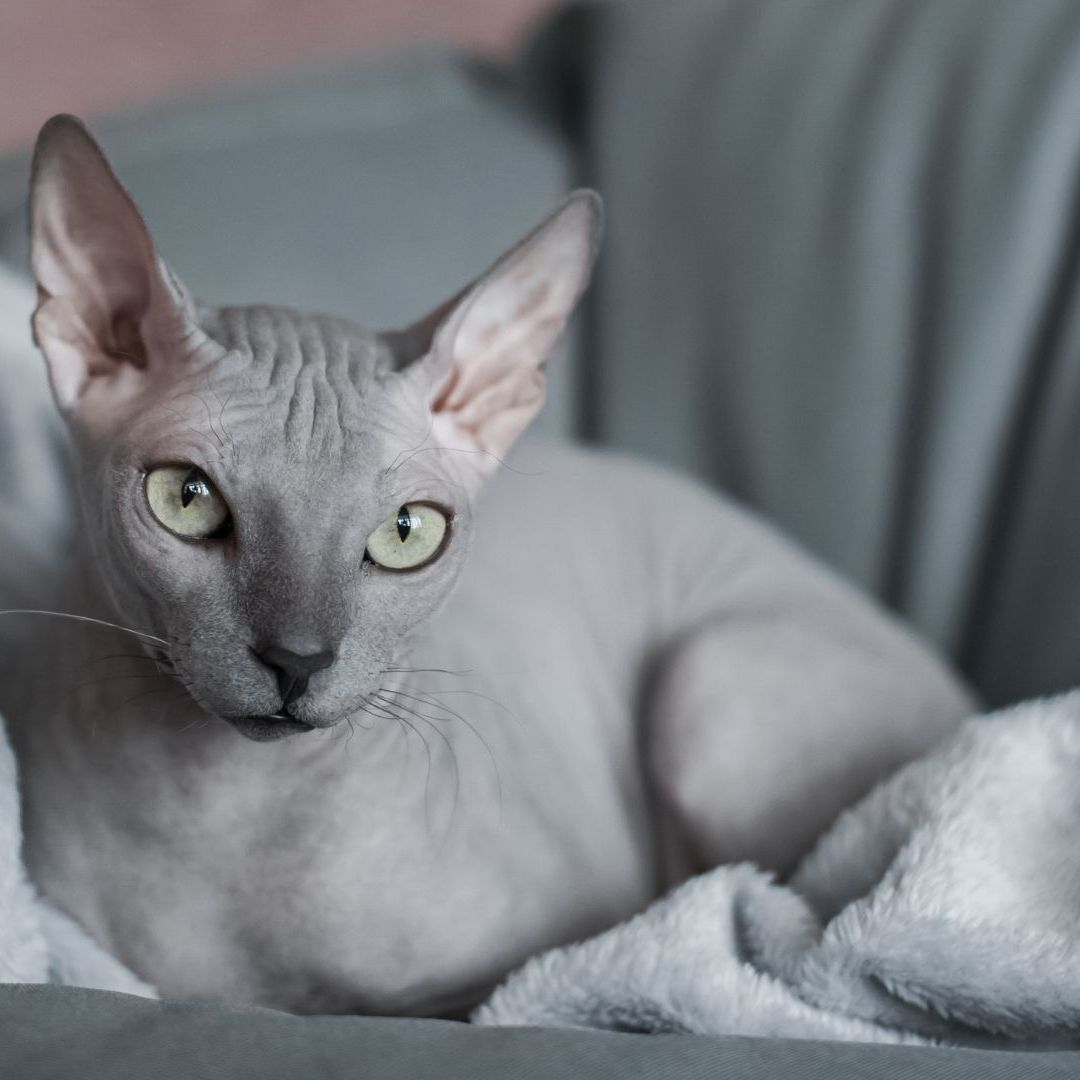
Lighting strongly affects how pale Sphynx colors appear in photographs. Natural light is more useful than heavily edited breeder photos when comparing shades.
As with champagne, platinum is a color class rather than a separate variety with different care or temperament.
9. Bicolor Sphynx
Bicolor Sphynx cats have white or pink areas combined with another color or pattern. The contrast can appear as sharply defined patches directly on the skin.
White distribution can occur on the face, feet, chest, body, or other areas. Show organizations may group bicolors into broad classes rather than naming every possible patch arrangement.
The pattern does not change the cat’s need for sun protection and indoor temperature management.
10. Tabby Sphynx
Tabby Sphynx cats can show classic, mackerel, spotted, or other tabby-style markings in skin pigment and fine down. This surprises people who assume a hairless cat cannot be “tabby.”
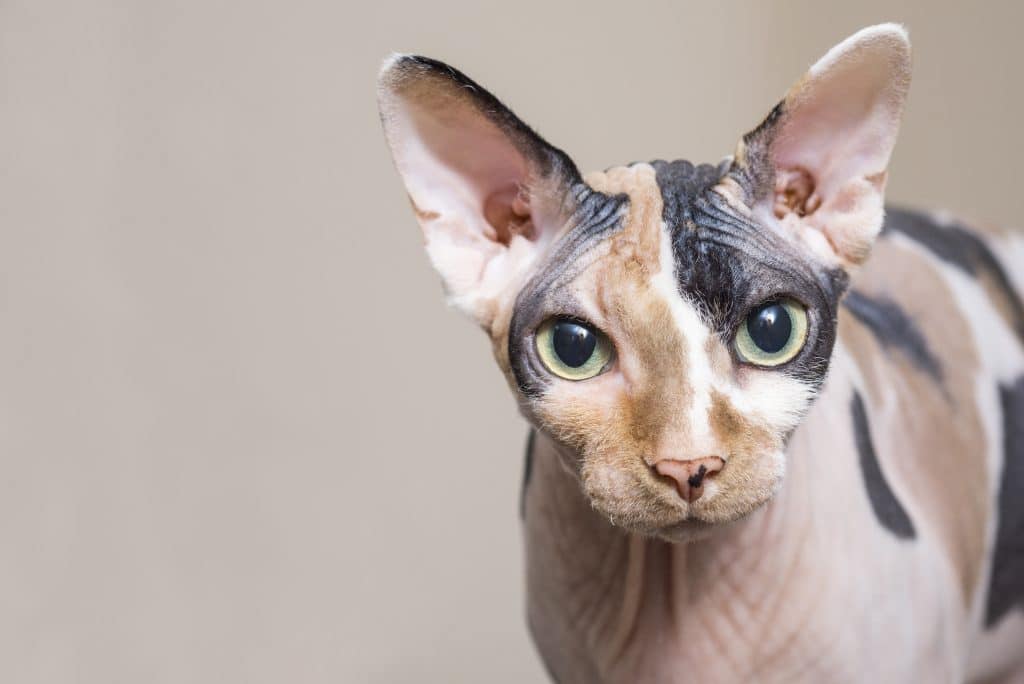
The same genetic pattern that would stripe a fully coated cat can remain visible in a Sphynx because pigment still develops in the skin and sparse hair.
Tabby is a pattern layer and can combine with several base colors.
11. Tortoiseshell Sphynx
Tortoiseshell Sphynx cats combine black-based and red-based pigment, producing patches or mottled areas on the skin. The pattern may look especially graphic because there is little fur to blur the edges.
Tortoiseshell cats are overwhelmingly female due to X-linked color genetics. Rare males can occur with atypical chromosome patterns.
Tortie is a color pattern, not a predictor of behavior.
12. Calico Sphynx
Calico combines white with tortoiseshell-style black and red patches. Dilute calico combines white with blue and cream. The skin can display all three color regions clearly.
Like tortoiseshell, calico is overwhelmingly female. The amount of white varies widely between individuals.
Calico Sphynx cats have the same grooming and health requirements as other colors.
13. Pointed Sphynx
Pointed Sphynx cats have darker pigment on the face, ears, feet, and tail with a lighter body. Blue eyes are often associated with point-restricted color genetics.
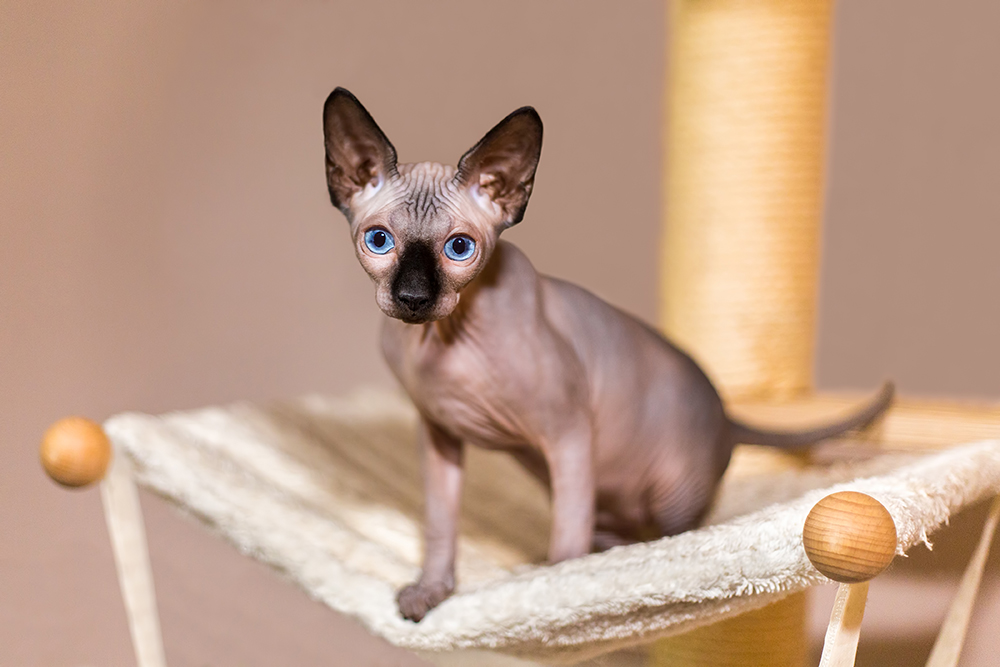
Because Sphynx have little fur, the point pattern appears through skin and fine down. The contrast may change somewhat with age and environment.
Pointed is a pattern, not a separate hairless breed.
14. Mink and Sepia Sphynx
Mink and sepia describe forms of temperature-sensitive color expression that are darker over the body than classic pointed cats. TICA recognizes Sphynx across traditional, pointed, mink, and sepia categories.
Eye color can differ from classic pointed cats, and the contrast between body and extremities is usually reduced.
These terms are useful for cat-fancy classification, but they do not imply different care needs.
How Are Sphynx Types Classified?
Sphynx color classification uses the same genetic concepts applied to coated cats: base color, dilution, tabby, tortie, white spotting, and temperature-sensitive point expression. Because the skin itself is visible, the pattern often looks like a painted design rather than a fur pattern.
Where Did Sphynx Cats Originate?
The modern Sphynx breed developed from naturally occurring hairless mutations in domestic cats, with breeding programs in North America helping establish the type. Despite the name, the modern breed was not created in ancient Egypt.
Breed standards emphasize a medium-sized, muscular cat with large ears, prominent cheekbones, a rounded abdomen, and the appearance of hairlessness without requiring perfectly bare skin.
How to Identify Different Types of Sphynx Cats
- Look for the base skin color first: white/pink, black, blue, red, cream, chocolate, or another shade.
- Check for white spotting to identify bicolor or calico patterns.
- Look for stripes or spots in the skin to identify tabby patterning.
- Look for mixed red and black-based pigment to identify tortie.
- Check whether the extremities are darker than the body for pointed, mink, or sepia expression.
- Use pedigree records to distinguish Sphynx from other hairless breeds.
Practical Care Tips for Sphynx Owners
- Keep the cat indoors or tightly control direct sun exposure.
- Clean skin gently as needed without over-bathing.
- Check ears regularly for wax buildup and irritation.
- Clean around nail beds and trim nails routinely.
- Provide warm bedding and comfortable room temperatures.
- Maintain dental care and routine veterinary screening.
Health and Responsible Breeding Notes
Hypertrophic cardiomyopathy is an important concern in the breed, so responsible breeding programs include cardiac screening and careful family-history tracking. Buyers should ask how parents are screened and how often breeding cats are re-evaluated.
Hairlessness should not be exaggerated into poor skin health or structural weakness. Responsible selection values sound anatomy, stable temperament, and overall health over novelty colors.
Fun Facts About Sphynx Cats
- Sphynx cats are not always completely hairless.
- Tabby stripes can be visible directly on the skin.
- Their body heat feels more obvious because there is little insulating fur.
- The breed name references the Egyptian Sphinx, but the modern breed developed much later.
- Hairlessness does not make Sphynx cats hypoallergenic.
- Black, blue, red, cream, tortie, calico, and pointed patterns can all occur.
- Sun exposure can intensify visible pigment.
- Skin oil that would normally coat fur remains on the skin.
- Sphynx cats often need more ear and nail cleaning than fully coated cats.
- Color does not change the breed’s core grooming needs.
Final Thoughts on Types of Sphynx Cats
The many types of Sphynx cats are color and pattern variations within one breed. From solid black and blue to tabby, tortie, calico, pointed, mink, and sepia, the visible skin can show nearly the full range of feline pigment genetics.
When choosing a Sphynx, put health screening, temperament, and realistic grooming expectations ahead of rare color.
Frequently Asked Questions
1. How many types of Sphynx cats are there?
Sphynx is one breed, but it occurs in many colors and patterns. Registries accept broad color classes rather than defining a small fixed number of separate Sphynx breeds.
2. Are there different breeds of Sphynx cats?
The Sphynx itself is one breed. Other hairless breeds exist, but they are not types of Sphynx.
3. Are Sphynx cats completely hairless?
Usually no. Many have fine down that feels like suede or peach skin, and some hair may be visible on the nose or ears.
4. What colors can Sphynx cats be?
They can occur in white, black, blue, red, cream, chocolate, champagne, platinum, bicolor, tabby, tortie, calico, pointed, mink, sepia, and many other combinations.
5. Can a Sphynx be tabby?
Yes. Tabby patterning can be visible in skin pigment and fine hair.
6. Can a Sphynx be calico?
Yes. White, black-based, and red-based patches can be visible directly on the skin.
7. Can a Sphynx be tortoiseshell?
Yes. Tortie pigment patterns can be clearly visible in the skin.
8. What is a pointed Sphynx?
It has darker pigment on the cooler extremities and a lighter body because of point-restricted color genetics.
9. What is a mink Sphynx?
Mink is a temperature-sensitive color category with less contrast than classic point coloration.
10. What is a sepia Sphynx?
Sepia is another color-expression category with relatively rich body pigment and less point contrast.
11. Are black Sphynx cats truly black?
They can show very dark skin and fine-hair pigment, though lighting and sun exposure can change how the color appears.
12. What is a blue Sphynx?
Blue is diluted black pigment, creating a cool gray-blue appearance.
13. Why do Sphynx cats feel warm?
Their body temperature is not necessarily abnormally high; without a full fur coat, body heat is felt more directly by your hand.
14. Do Sphynx cats get cold easily?
They can lose heat more readily than fully coated cats, so comfortable indoor temperatures and warm resting places are important.
15. Do Sphynx cats need baths?
Many need periodic bathing or wiping because skin oils are not distributed through a full coat. Frequency should be adjusted to the individual so the skin is not over-dried or irritated.
16. Do Sphynx cats need ear cleaning?
They often accumulate visible ear wax and need regular checks. Cleaning should be gentle and guided by a veterinarian if there is odor, redness, discharge, or irritation.
17. Why do Sphynx nails get dirty?
Skin oil and debris can collect around the nail beds and claws, so routine nail and toe cleaning is often needed.
18. Can Sphynx cats get sunburned?
Yes. With little protective coat, prolonged direct sun can damage the skin. Indoor living and controlled sun exposure are safest.
19. Should I put human sunscreen on a Sphynx?
Do not apply human sunscreen without veterinary guidance because ingredients may be unsafe if licked. The safest approach is limiting intense sun exposure.
20. Are Sphynx cats hypoallergenic?
No. Hairlessness does not eliminate Fel d 1 and other cat allergens found in saliva and skin secretions.
21. Do Sphynx cats shed?
They shed far less visible hair than coated cats, but they still lose fine down and skin cells.
22. Are Sphynx cats high maintenance?
They can be. Skin, ears, nails, temperature comfort, dental care, and social needs require regular attention.
23. Are Sphynx cats friendly?
Many are known for affectionate, social, attention-seeking behavior, but individuals vary.
24. Can Sphynx cats live with other pets?
Many can, especially with careful introductions and compatible personalities.
25. What health problems can Sphynx cats have?
Hypertrophic cardiomyopathy is an important breed health concern, and responsible breeders use cardiac screening. Individual cats can have other health issues as well.
26. How often should Sphynx cats have heart screening?
Screening plans should be discussed with a veterinarian or veterinary cardiologist because recommendations depend on age, family history, and breeding status.
27. Does Sphynx color affect health?
Most coat colors do not determine general health. Health screening and responsible breeding are more important than color rarity.
28. Are rare-color Sphynx cats more valuable?
Rarity is a marketing concept, not a health or temperament advantage. Choose health, welfare, and breeder transparency first.
29. How can I identify a purebred Sphynx?
Pedigree and registration records are more reliable than appearance alone. Several other hairless breeds and mixed cats can look superficially similar.
30. What is the best type of Sphynx for a first-time owner?
Choose an individual with a stable temperament from health-tested lines and be prepared for the breed’s skin, warmth, grooming, and social needs; color is secondary.